
- Home
- »
- Consumer F&B
- »
-
Sports Drink Market Size, Share & Growth Report 2026-2033GVR Report cover

Sports Drink Market (2026 - 2033)
Size, Share & Trends Analysis Report By Product (Hypotonic, Hypertonic, Isotonic), By Distribution Channel (Hypermarkets/Supermarkets, Convenience Stores, Specialty Stores, Online, Others), By Region, And Segment Forecasts
Market Size, 2025
$27.7MMarket Estimate, 2026
$30.1MMarket Forecast, 2033
$53.9MCAGR, 2026–2033
8.7%Sports Drink Market Summary
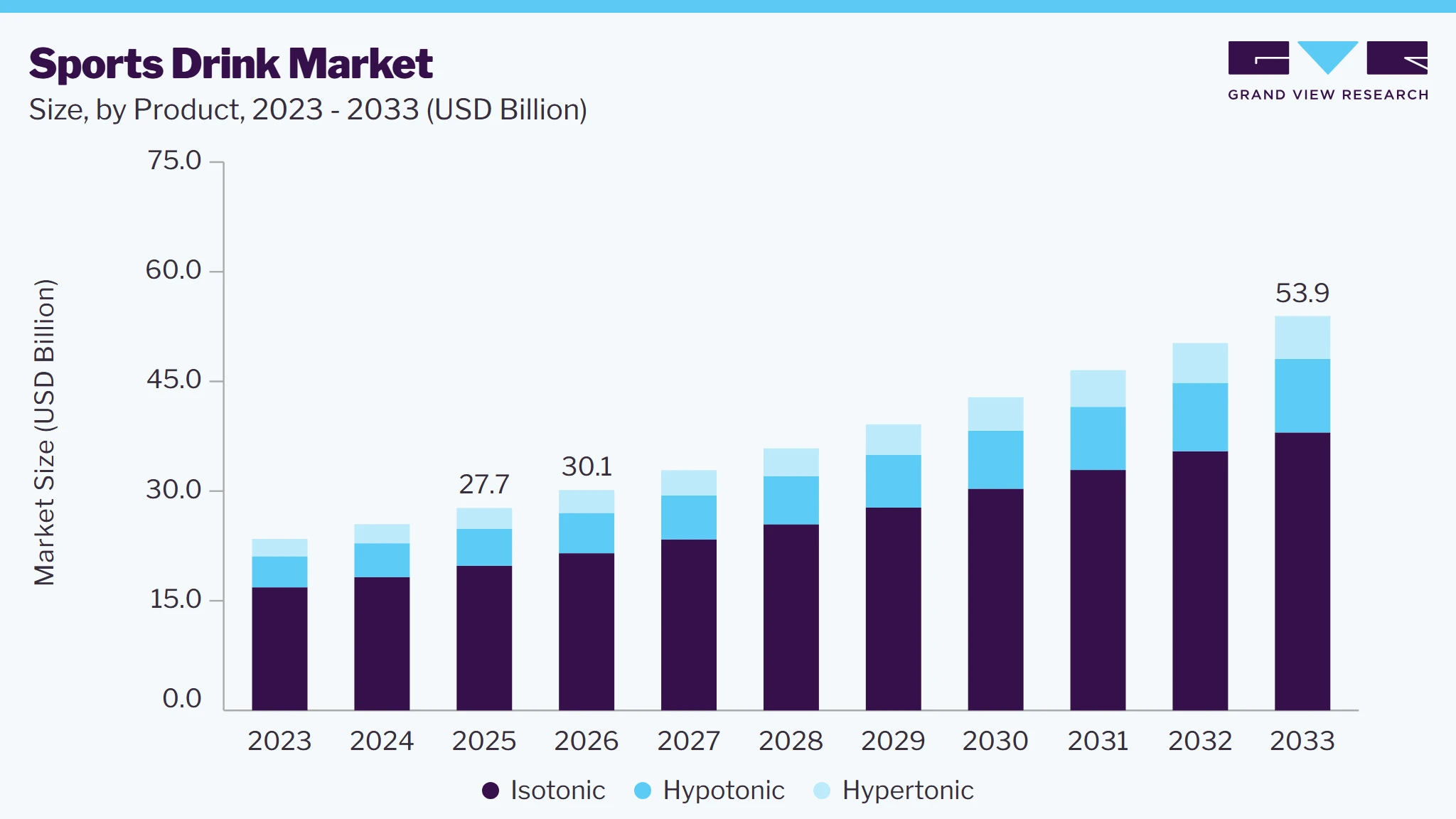
The global sports drink market size was valued at USD 27.7 billion in 2025 and is projected to grow from USD 30.1 billion in 2026 to USD 53.9 billion by 2033, at a CAGR of 8.7% from 2026 to 2033. North America dominated the market, accounting for a revenue share of 34.9% in 2025. Increasing participation in sports and fitness activities, effective branding & marketing strategies adopted by key companies, ease of availability, and changing lifestyles are significant growth-driving factors for this market.
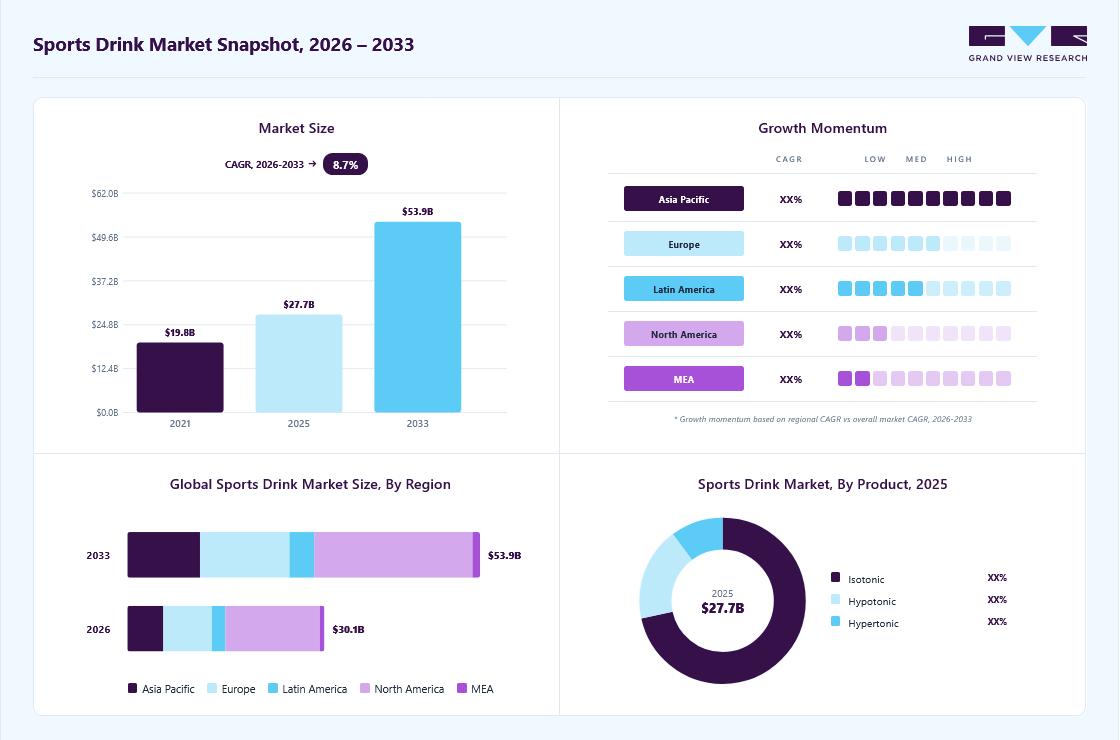 Source: Grand View Research, IR Documents, Primary Interviews, Paid DatabasesTo learn more about this report,
 Download Free Sample Report
Key Market Trends & Insights
- By product: Isotonic accounted for the largest market share of 71.5% in 2025.
- By distribution channel: Sales of sports drinks through the online channel are experiencing the fastest growth, projecting a CAGR of 11.7%.
Regional Highlights
- Largest regional market: North America (34.9% revenue share, 2025)
- Fastest-growing regional market: Asia Pacific (highest CAGR, 2026-2033)
- By country: The U.S. held the largest share in 2025
Key Market Trends & Insights
- Market Size in 2025: USD 27.7 Billion
- Estimated Market Size in 2026: USD 30.1 Billion
- Projected Market Size by 2033: USD 53.9 Billion
- CAGR (2026-2033): 8.7%
Three ways to get this report
Buy it, customize it, or ask a question.Ask an Analyst
Analyst response in 1 business day
- AccessReport author, directly
- Reply timeWithin 1 working day
- No sales callDirect answer only
- FormatEmail reply
- CostFree, no cost
Get the Full Report
What the study covers
- FormatsPDF · Excel · Dashboard
- Timeline2026–2033 annual, 2025 base
- Coverage20+ countries, 5 regions
- Companies10+ key players profiled
Customize the Report
20% free customization
- IncludeCountries, segments, points
- TailorTo your product definition
- ExtendDeeper competitor detail
- OrA fully bespoke study
- Turnaround5–10 working days
The increasing popularity of sports drinks made with clean-label ingredients and natural sources has generated greater demand for the product. Customers prefer natural and organic choices over drinks with added colors, synthetic ingredients, and sweeteners.
 To learn more about this report, Download Free Sample Report
Therefore, numerous sports drink companies are changing and innovating the formulations for these products. Natural coconut water, fruit extracts, and plant-based electrolyte sources are some natural & organic ingredients manufacturers use to attract greater customer engagement.
Furthermore, prominent businesses in the industry prioritize sustainable packaging options to cater to the eco-friendly preferences of their customer base. Advancements in packaging technology and distribution networks have played a crucial role in driving the growth of the sports drink market. Ease of availability, accessibility through offline stores, tie-ups and collaborations by companies and sporting clubs or teams, and efficient branding are some of the significant aspects expected to generate an upsurge in demand for this market during the forecast period.
Market Dynamics
The sports drink market is being supported by consumers increasingly seeking hydration products that combine electrolyte replenishment, performance support, and improved nutritional profiles. Traditional high-sugar formulations are facing greater scrutiny, encouraging brands to introduce products with reduced or zero sugar, cleaner ingredient lists, added vitamins, and targeted electrolyte blends. At the same time, sports drinks are extending beyond competitive athletics into gym sessions, recreational exercise, outdoor activities, travel, and everyday wellness routines. This expansion is broadening the consumer base and increasing consumption occasions. Product innovation is also enabling brands to address specific preferences through powders, sparkling beverages, and convenient single-serve formats. In March 2026, PepsiCo launched Gatorade Lower Sugar in the U.S., containing 75% less sugar than Gatorade Thirst Quencher, with no artificial flavors, sweeteners, or colors, reflecting the industry's shift toward more health-conscious hydration formulations.
The sports drink market faces pressure from increasing scrutiny of sugar content and formulation choices, particularly as sports drinks are increasingly consumed outside intensive exercise occasions. Higher-sugar formulations can face consumer resistance as well as regulatory measures designed to encourage beverage reformulation. This creates additional pressure on manufacturers to reduce sugar while maintaining the taste, electrolyte delivery, and energy characteristics expected from sports drinks. The issue is particularly relevant for brands positioned for everyday hydration, where consumers may have less need for carbohydrate-rich formulations. In November 2025, the UK Government confirmed that its Soft Drinks Industry Levy would be extended, with the sugar threshold subsequently being reduced from 5g to 4.5g per 100ml from January 2028. The policy is intended to encourage manufacturers to reduce sugar levels in beverages, adding further formulation pressure for products that fall within the levy thresholds.
The development of new beverage formats combined with functional ingredients is creating opportunities for sports drink manufacturers to differentiate their products from conventional still beverages. Sparkling formulations can provide a different consumption experience while allowing brands to combine electrolytes with ingredients associated with energy, focus, and exercise support. This approach can help manufacturers target consumers who want sports hydration in a more modern, lifestyle-oriented format, while also creating opportunities for premium positioning. In June 2026, BODYARMOR launched BODYARMOR FIT, its first sparkling sports drink, combining 290 mg of electrolytes with 60 mg of caffeine, choline, and green tea extract (EGCG), while maintaining a zero-sugar formulation. The launch demonstrates how manufacturers can use carbonation and multiple functional ingredients to create differentiated sports drinks and expand consumption beyond conventional workout occasions.
Analyst Perspective
The sports drink market is shifting from a narrow hydration proposition toward precision performance nutrition, where the competitive advantage increasingly depends on matching electrolyte composition, carbohydrate delivery, and functional benefits to specific activity intensity and duration. The central opportunity lies in moving beyond generic “hydration” positioning toward occasion-specific formulations for endurance athletes, gym users, recreational fitness consumers, and everyday active lifestyles. Brands that can combine scientifically credible formulations with convenient formats and low-sugar profiles are better positioned to capture consumption occasions outside traditional sports settings, turning sports drinks from a workout-specific purchase into a broader daily hydration routine.
Consumer Insights
Consumers are increasingly treating sports drinks as functional hydration products rather than beverages limited to traditional athletic activities. Convenience is becoming particularly relevant as consumers seek products that can be carried, prepared, and consumed around workouts, travel, and other active occasions. Circana data reported that U.S. sports-drink mix unit sales increased nearly 20% in the year ended March 2026, indicating stronger adoption of powder and other dilutable formats.
 To learn more about this report, Download Free Sample Report
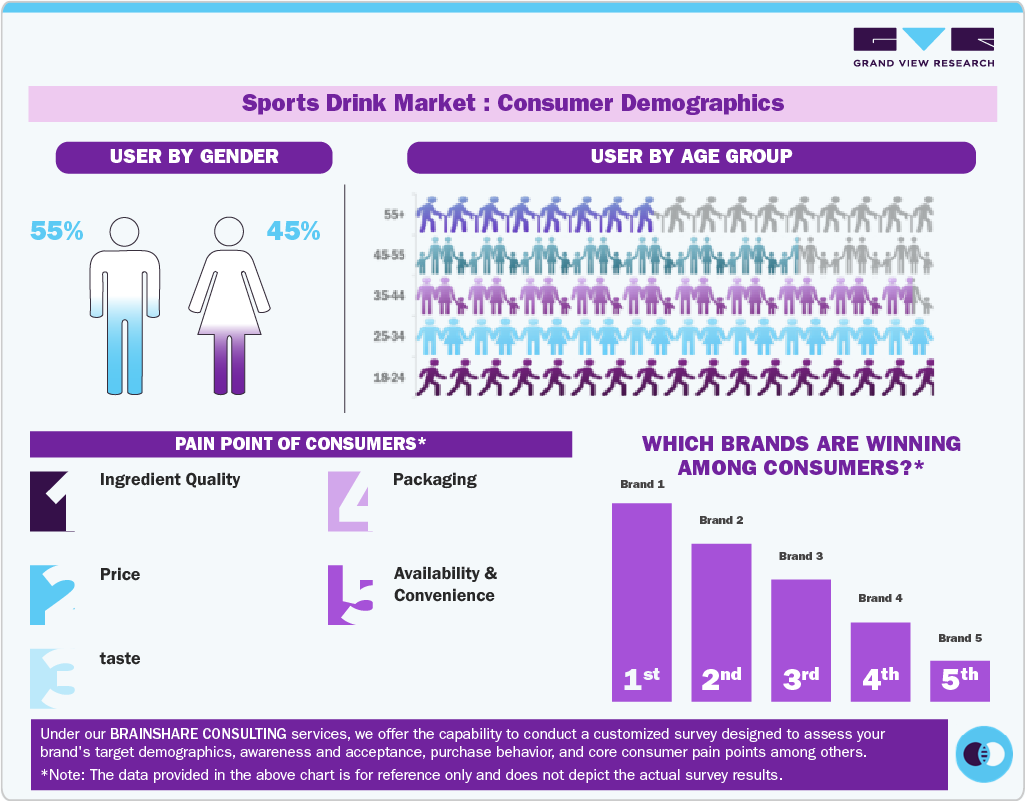
Italian Food News This shift reflects growing interest in sports hydration that can be customized according to individual needs, while also offering greater portability than conventional ready-to-drink bottles. Consumers are also increasingly attentive to electrolyte content, sugar levels, flavor variety, and added functional ingredients when selecting hydration products. As a result, sports drink consumption is expanding beyond competitive athletes toward gym users, recreational exercisers, outdoor enthusiasts, and consumers incorporating hydration products into everyday wellness routines. Manufacturers are responding through powdered mixes, reduced-sugar formulations, electrolyte-focused products, and multifunctional beverages, creating more consumption occasions and supporting category expansion.
Product Insights
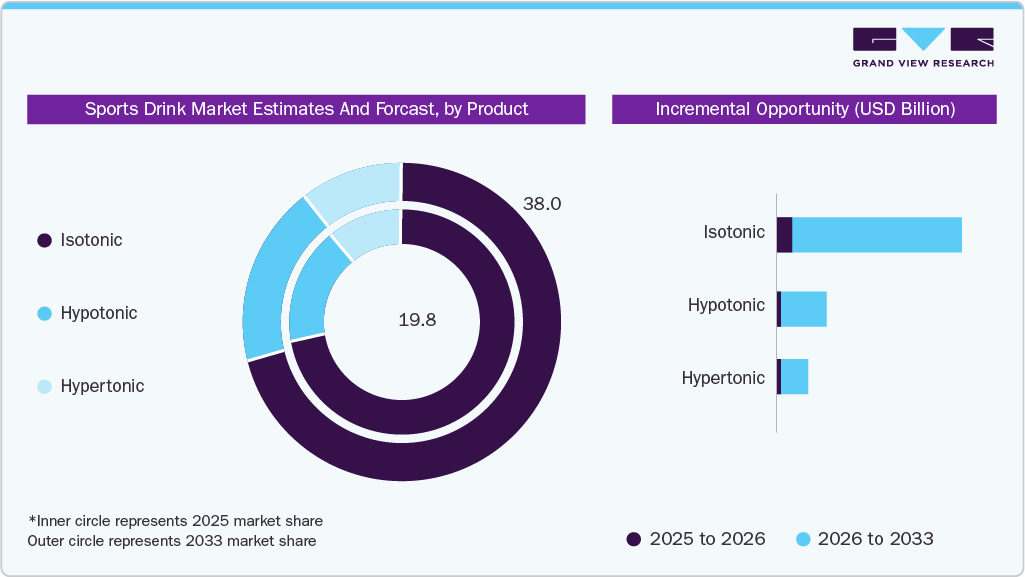
The Isotonic product dominates the market and accounts for a revenue share of 71.5% in 2025. Isotonic sports drinks contain levels of sugar and salt similar to those of the human body. Sports drinks offered in this category are preferred for the ability to replace fluids lost through sweat and ensure the availability of carbohydrates. Athletes involved in strenuous games, such as long-range running, organized team sports, and others, often prefer isotonic drinks. Growing sports participation, increasing collaborations with teams and individuals, ease of accessibility, and rising expenditure on fitness regimes are expected to drive demand for this segment.
 To learn more about this report, Download Free Sample Report
The hypertonic product is expected to grow with the fastest CAGR of 9.4% during the forecast period. Hypertonic beverages contain excess salt and sugar levels compared to the human body. They are often consumed after intensive exercise routines to increase daily carbohydrate consumption and replenish muscle glycogen levels. Some athletes prefer to consume hypertonic and isotonic sports drinks due to their dual benefits during long-distance events: fulfilling energy needs and replenishing lost fluids.
Distribution Channel Insights
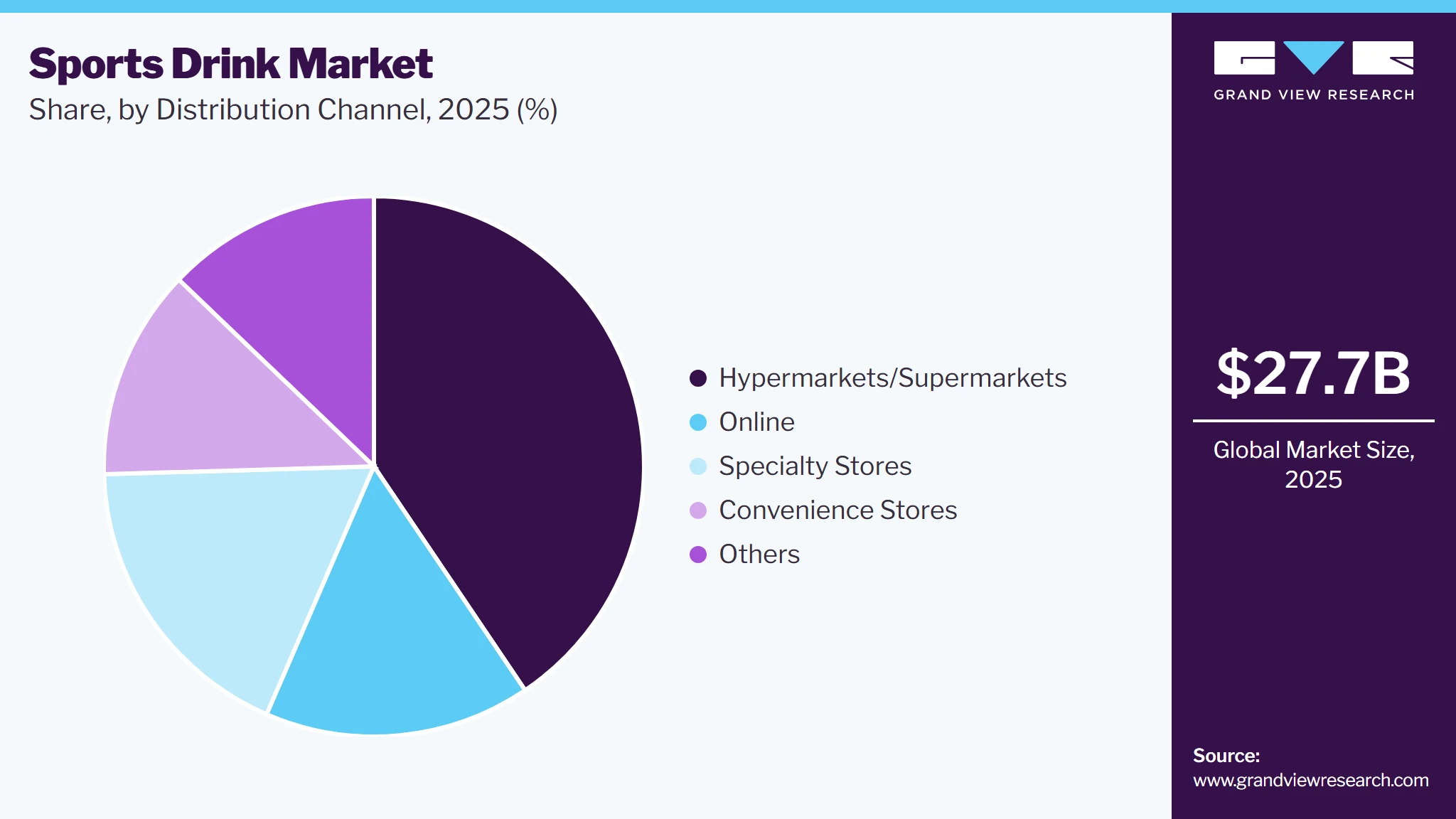
The sales of sports drinks through hypermarket & supermarket holds the largest share in the sports drink industry with a market share of 40.5% in 2025. The availability of various sports drinks, including different flavors and types, in hypermarkets and supermarkets has attracted a large consumer base. These retail stores offer a diverse range of sports drinks, catering to various preferences and dietary needs. In addition, discounts and special offers provided to frequent or repeat customers contribute to the growing sales volume through these channels.
 To learn more about this report, Download Free Sample Report
The sales of sports drinks through online distribution channel is expected to grow with the fastest CAGR of 11.7% from 2026 to 2033. Enhanced availability, presence of multiple global brands on e-commerce platforms, and ease of use are critical growth-driving factors for this segment. Furthermore, additional services provided by the online platforms, such as doorstep deliveries, enhanced customer assistance, display of detailed product information, availability of multiple payment alternatives, and discretion, are projected to develop greater penetration for this segment in the approaching years.
Regional Insights
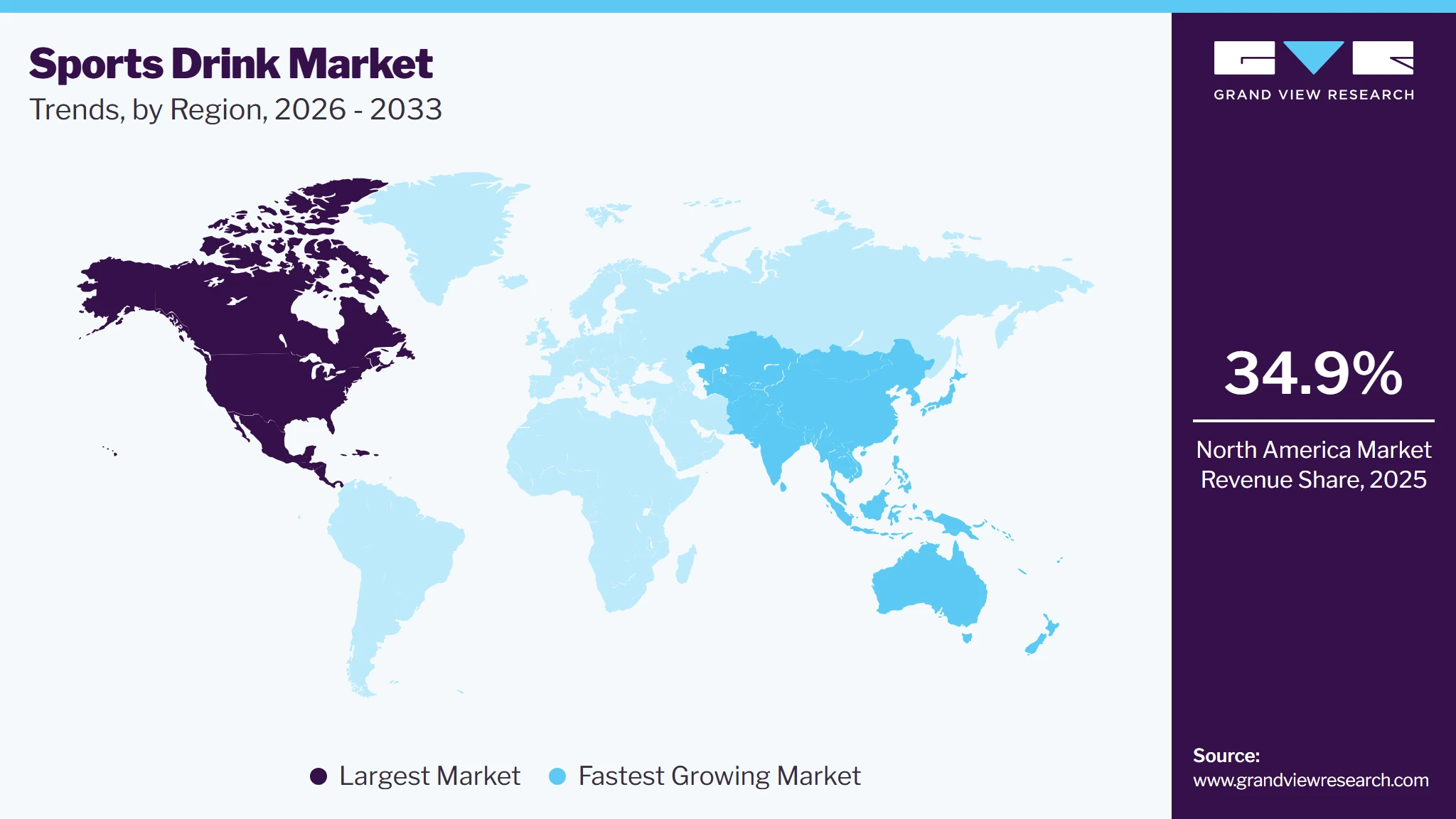
North America sports drink industry dominated the revenue share with 34.9% in 2025. The elevated popularity of sports beverages, changing dietary habits, and the rise in demand for natural and organic products have significantly contributed to the expansion of the sports drink market in the region. The North America region has contributed to the surge in demand for sports drink.
 To learn more about this report, Download Free Sample Report
U.S. Sports Drink Market Trends
The U.S. sports drink market dominated the regional industry with a share of 92.3% in 2025. Increasing sports participation, the presence of multiple global and domestic brands in the region, ease of availability, and enhanced distribution by the companies are expected to develop higher demand for this industry in the coming years. In addition, the large existing customer base, endorsements by sports icons and celebrities, effective branding strategies, collaborations with sports clubs, and technology advancements associated with manufacturing, procurements, and packaging are likely to fuel the growth of this market.
Europe Sports Drink Market Trends
Europe sports drink industry holds the revenue share of 27.6% in 2025. Consumers are more frequently seeking products that are easy to use, portable, and require minimal effort. Furthermore, the growing penetration of online shopping drives the market, allowing consumers to buy sports drinks from their homes quickly. The entry of multiple international brands in the region, the presence of numerous domestic brands, and many sporting events hosted in the region are projected to generate a rise in demand for this industry.
Germany sports drink market is expected to grow with a CAGR of 9.2% from 2026 to 2033. An increase in active participation in outdoor activities and sports, the presence of several sporting clubs and teams, a large number of sports tournaments organized in the country, and the availability of diverse product portfolios offered by the major industry participants are expected to fuel growth for this market during forecast years.
Asia Pacific Sports Drink Market Trends
Asia Pacific sports drink market is anticipated to witness fastest growth with a CAGR of 10.6% from 2026 to 2033 in the sports drink market. The rise in health awareness among consumers and the growing trend of sports and fitness activities contribute to the growth experienced by this industry in the region. Furthermore, the increasing income levels in countries such as India fuel the demand for sports beverages. The rise in inclination towards natural & organic product consumption has driven a large customer base towards adopting the premium range of sports drinks.
China sports drink market dominated the regional industry with a share of 36.7% in 2025. The rapid growth of e-commerce platforms in China has significantly boosted the accessibility and availability of sports drinks to a broader consumer base. In addition, large groups of athletes, teams, and clubs representing several sports are expected to drive demand for this market in the next few years.
CSA Sports Drink Market Trends
Central & South America’s sports drinks industry is expected to grow with a CAGR of 8.8% from 2026 to 2033. The market share of is being shaped by Brazil’s expanding distribution of sports beverages and increasing relevance of non-carbonated hydration products. In Brazil, Coca-Cola FEMSA reported that Powerade strengthened its market position through expanded availability across key distribution channels, supporting broader consumer access. The region is also seeing greater emphasis on health, fitness, and hydration, while manufacturers are developing reduced-sugar and differentiated formulations to address changing preferences.
MEA Sports Drink Market Trends
The Middle East sports drinks industry is expected to grow at a CAGR of 7.5% from 2026 to 2033. It is being shaped by rising fitness participation, extreme heat exposure, and the region’s expanding sports-event ecosystem. Saudi Arabia and the UAE are particularly important as fitness initiatives, gyms, running events, and professional sports are creating more regular hydration occasions. At the same time, growing health awareness is encouraging demand for reduced-sugar and functional formulations, while e-commerce and modern retail are improving product accessibility. In Saudi Arabia, the combination of health-conscious consumers, tourism, and sports partnerships is supporting category development, while the UAE is seeing strong demand from younger consumers and increasing adoption of functional and reduced-sugar sports drinks. euromonitor.com
Key Sports Drinks Company Insights
Some of the key companies in the sports drink market include PepsiCo, The Coca‑Cola Company, Danone S.A., Britvic plc, Abbott, and others. Owing to the growth in competition, the key industry participants have adopted strategies such as collaborations, tie-ups with influencers, teams, and clubs, effective distribution, enhanced packaging, and expansion of product portfolios.
- PepsiCo, an American multinational food, beverage, and snack corporation, offers an applauded range of sports drinks through its subsidiary. The Gatorade Company, a part of PepsiCo, offers innovative sports performance solutions tailored for athletes in various sports and competitions. The company operates in multiple regions and delivers a wide range of food and beverage products.
- The Coca‑Cola Company, an American multinational corporation, offers numerous brands in various beverage categories. The company focuses on building a diversified product portfolio, including water, sports drinks, coffee, and tea brands, including Powerade, the company's sports drink brand.
Key Sports Drinks Companies
The following key companies have been profiled for this study on the sports drink market.
-
PepsiCo
-
The Coca‑Cola Company
-
Danone S.A.
-
Britvic plc
-
Abbott.
-
AJE Group
-
Monster Energy Company
-
Congo Brands
-
Otsuka Pharmaceutical Co., Ltd.
-
Fraser & Neave Holdings Bhd
Competitive Benchmarking
Category
Operating Strategies
Competitive Edge
Weakness
Established Players (PepsiCo; The Coca-Cola Company; Danone S.A.; Britvic plc; Abbott; AJE Group; Otsuka Pharmaceutical Co., Ltd.; Fraser & Neave Holdings Bhd)
- Mature players focus on broadening hydration portfolios through low-sugar, functional, electrolyte-based, and performance-oriented products.
- They leverage established distribution networks, sports partnerships, regional expansion, and continuous product renovation.
- Strong brand recognition, extensive retail reach, and established consumer trust provide broad market access.
- Long-standing hydration expertise and diversified portfolios support scale and product innovation.
- Large organizational structures can slow response to rapidly changing consumer preferences.
- Dependence on conventional retail networks and established formulations can create gaps in emerging niche segments.
Emerging Players (Monster Energy Company; Congo Brands)
- Emerging players focus on rapid product innovation, digital-first marketing, distinctive flavors, and performance-oriented positioning.
- They prioritize younger consumers, social-media engagement, selective distribution expansion, and differentiated hydration formats.
- Agile brand development and strong digital engagement enable faster response to emerging consumer trends.
- Distinctive positioning and community-led marketing help create visibility beyond traditional sports-drink brands.
- Shorter category track records and narrower distribution networks limit scale relative to established players.
- Greater reliance on brand momentum and changing consumer preferences can increase competitive vulnerability.
Recent Developments
-
In June 2026, The Coca-Cola Company introduced BODYARMOR FIT, a sparkling sports drink containing electrolytes and caffeine, designed to extend sports hydration into everyday occasions. The launch adds carbonation and functional ingredients to the traditional sports-drink format, reflecting product innovation around energy and hydration.
-
In April 2026, PepsiCo announced the Gatorade Advanced Hydration System, introducing new products including Gatorade Lower Sugar and Gatorlyte Longer Lasting. The portfolio development focuses on differentiated hydration benefits, reduced sugar, and formulations positioned for everyday hydration in addition to sports use.
Sports Drink Market Report Scope
Report Attribute
Details
Market size in 2025
USD 27.7 billion
Estimated market size in 2026
USD 30.1 billion
Revenue forecast in 2033
USD 53.9 billion
Growth rate
CAGR of 8.7% from 2026 to 2033
Base year for estimation
2025
Historical data
2021 - 2025
Forecast period
2026 - 2033
Quantitative units
Revenue in USD million/billion and CAGR from 2026 to 2033
Report coverage
Revenue forecast, company ranking, competitive landscape, growth factors, and trends
Segments covered
Product, distribution channel, region
Regional scope
North America; Europe; Asia Pacific; Central & South America; MEA
Country scope
U.S.; Canada; Mexico; Germany; UK; France; Italy; Spain; China; Japan; India; Australia & New Zealand; Argentina; Brazil; and South Africa; Saudi Arabia
Key companies profiled
PepsiCo; The Coca‑Cola Company.; Danone S.A.; Britvic plc; Abbott.; AJE Group; Monster Energy Company.; Congo Brands; Otsuka Pharmaceutical Co., Ltd.; Fraser & Neave Holdings Bhd
Customization scope
Free report customization (equivalent up to 8 analysts working days) with purchase. Addition or alteration to country, regional & segment scope.
Pricing and purchase options
Avail customized purchase options to meet your exact research needs. Explore purchase options
Global Sports Drink Market Report Segmentation
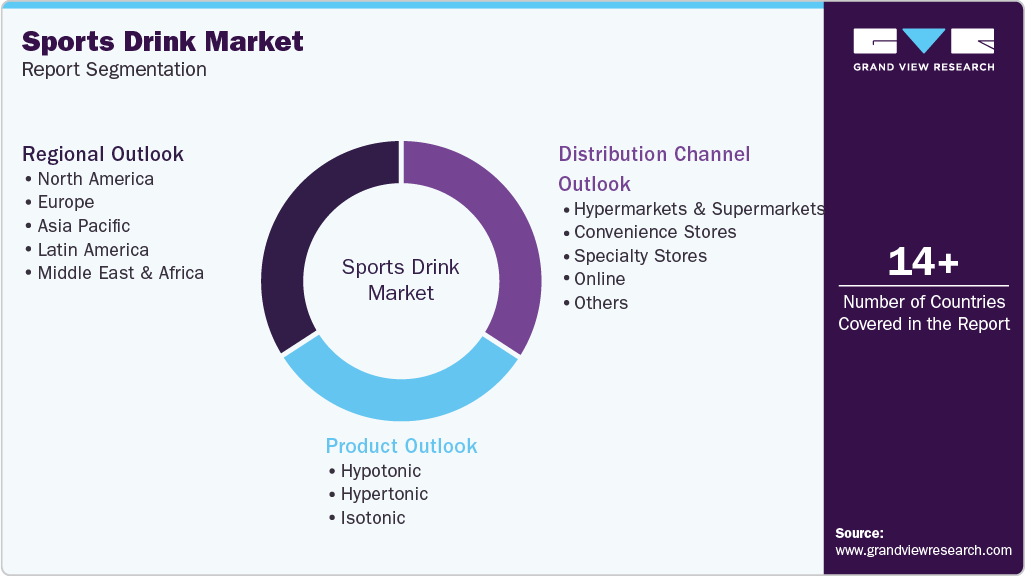
This report forecasts revenue growth at global, regional, and country levels and provides an analysis of the latest industry trends in each of the sub-segments from 2021 to 2033. For this study, Grand View Research has segmented the global sports drink market report based on product, form, packaging, distribution channel, and region:
 To learn more about this report, Download Free Sample Report
-
Product Outlook (Revenue, USD Million, 2021 - 2033)
-
Hypotonic
-
Hypertonic
-
Isotonic
-
-
Distribution Channel Outlook (Revenue, USD Million, 2021 - 2033)
-
Hypermarkets & Supermarkets
-
Convenience Stores
-
Specialty Stores
-
Online
-
Others
-
-
Regional Outlook (Revenue, USD Million, 2021 - 2033)
-
North America
-
U.S.
-
Canada
-
Mexico
-
-
Europe
-
Germany
-
UK
-
France
-
Italy
-
Spain
-
-
Asia Pacific
-
China
-
Japan
-
India
-
Australia & New Zealand
-
-
Latin America
-
Brazil
-
Argentina
-
-
Middle East and Africa (MEA)
-
South Africa
-
Saudi Arabia
-
-
Research Methodology
The sports drink market figures in this report are based on a proven research process that combines executive interviews with secondary research from proprietary databases, company filings, and recognized regulatory and institutional sources. Market size is built through value-chain sizing - reconciling supply-side and demand-side estimates - and triangulated with bottom-up and top-down approaches. Every estimate passes multiple levels of expert validation before publication, with each sports drink segment quantified using the revenue-capture definitions in the table below.
Segment Definition
Segment - Product
Revenue capture definition
Isotonic
This segment includes the sales of sports drinks with carbohydrate and electrolyte concentrations similar to body fluids. Revenue is generated through products formulated to support hydration and electrolyte replenishment during physical activity.
Hypotonic
This segment includes the sales of sports drinks with lower carbohydrate and electrolyte concentrations than body fluids. Revenue is generated through products designed for rapid hydration with relatively lower carbohydrate content.
Hypertonic
This segment includes the sales of sports drinks with higher carbohydrate concentrations than body fluids. Revenue is generated through products designed to provide higher carbohydrate intake and energy replenishment, particularly after intensive physical activity.
Estimation Model
Layer No.
Layer Name
Key Question
Description
01
Population Layer
Who consumes sports drinks?
Identify the addressable population based on sports participation, fitness activity, active lifestyles, and hydration requirements to define the potential consumer pool.
02
Retail Access Layer
Who can be reached through sales channels?
Apply region-specific retail penetration and sports drink availability across supermarkets, convenience stores, specialty stores, gyms, and e-commerce to derive the accessible market.
03
Consumption Layer
Who actively purchases sports drinks?
Apply sports drink consumption and purchase rates to the accessible population, accounting for consumption frequency, preferred product formats, and usage occasions such as exercise and hydration.
04
Monetisation Layer
How much revenue is generated?
Multiply active consumers by annual sports drink expenditure and incorporate channel-specific pricing across retail and foodservice to calculate the addressable market revenue.
Delivered Customizations
This report has been delivered with the following In-depth customizations
Client Request
Customization Delivered
Value Adds
Global Sports Drinks Consumer & Usage Preference Landscape
Assessed consumer preferences by hydration needs, exercise intensity, flavor preferences, sugar content, electrolyte composition, and functional ingredients across key consumer groups.
Helps identify high-demand product attributes, target consumer segments, and evolving hydration preferences.
Global Sports Drinks Product & Format Assessment
Analyzed sports drink formats, including ready-to-drink beverages, powders, concentrates, tablets, and single-serve formats, along with electrolyte and functional formulations.
Supports portfolio optimization, format selection, and identification of opportunities for product innovation and convenience-led growth.
Global Sports Drinks Pricing, Premiumization & Competitive Positioning
Evaluated pricing tiers, premium electrolyte formulations, sugar-free products, functional claims, ingredient differentiation, and value propositions across major markets.
Enables pricing strategy development, premium product positioning, and differentiation across consumer and performance-use segments.
Frequently Asked Questions About This Report
Some key players operating in the sports drink market include PepsiCo, Coca-Cola, Sportade, Pocari, 100Plus, and Lucozade.
Key factors that are driving the market growth include rising demand for these drinks among athletes and individuals engaged in intense physical activities and new product launches in hydration drinks.
Isotonic segment leads the sports drink market with a share of 71.5% in 2025.
Online distribution channel is the fastest growing channel with a CAGR of 11.7% from 2026 to 2033.
Asia Pacific is the fastest growing regional market with a CAGR of 10.6% from 2026 to 2033.
The global sports drink market size was estimated at USD 27.7 billion in 2025 and is expected to reach USD 30.1 billion in 2026.
The global sports drink market is expected to grow at a compound annual growth rate of 8.7% from 2026 to 2033 to reach USD 53.9 billion by 2033.
North America dominated the sports drink market with a share of 34.9% in 2025 This is attributed to changing consumer lifestyle resulting in a shift towards healthy dietary patterns in the U.S.
About the Author(s)
Consumer F&B Research Team
Consumer Goods · Consumer F&BThis report was authored by the consumer f&b research team at Grand View Research - comprising two research analysts, one senior research analyst, and one industry expert - with specialized expertise in the consumer f&b segment of the consumer goods industry. All findings are based on proprietary consumer goods databases, executive interviews, and regulatory analysis, subject to internal peer review prior to publication.
Last Updated:
Speak to Analyst

Customize this report to your needs - add regions, segments, or data points, with 20% free customization.
Or view our licence options:


ISO 9001:2015 & 27001:2022 Certified
We are GDPR and CCPA compliant! Your transaction & personal information is safe and secure. For more details, please read our privacy policy.


