
- Home
- »
- Homecare & Decor
- »
-
Standing Desks Market Size & Share Report, 2026-2033GVR Report cover

Standing Desks Market (2026 - 2033)
Size, Share & Trends Analysis Report By Product (Fixed, Manual, Electric, Converters, Bluetooth), By End Use (Residential, Commercial), By Distribution Channel, By Region, And Segment Forecasts
Market Size, 2025
$8.5BMarket Estimate, 2026
$9.0BMarket Forecast, 2033
$13.1BCAGR, 2026–2033
5.5%Standing Desks Market Summary
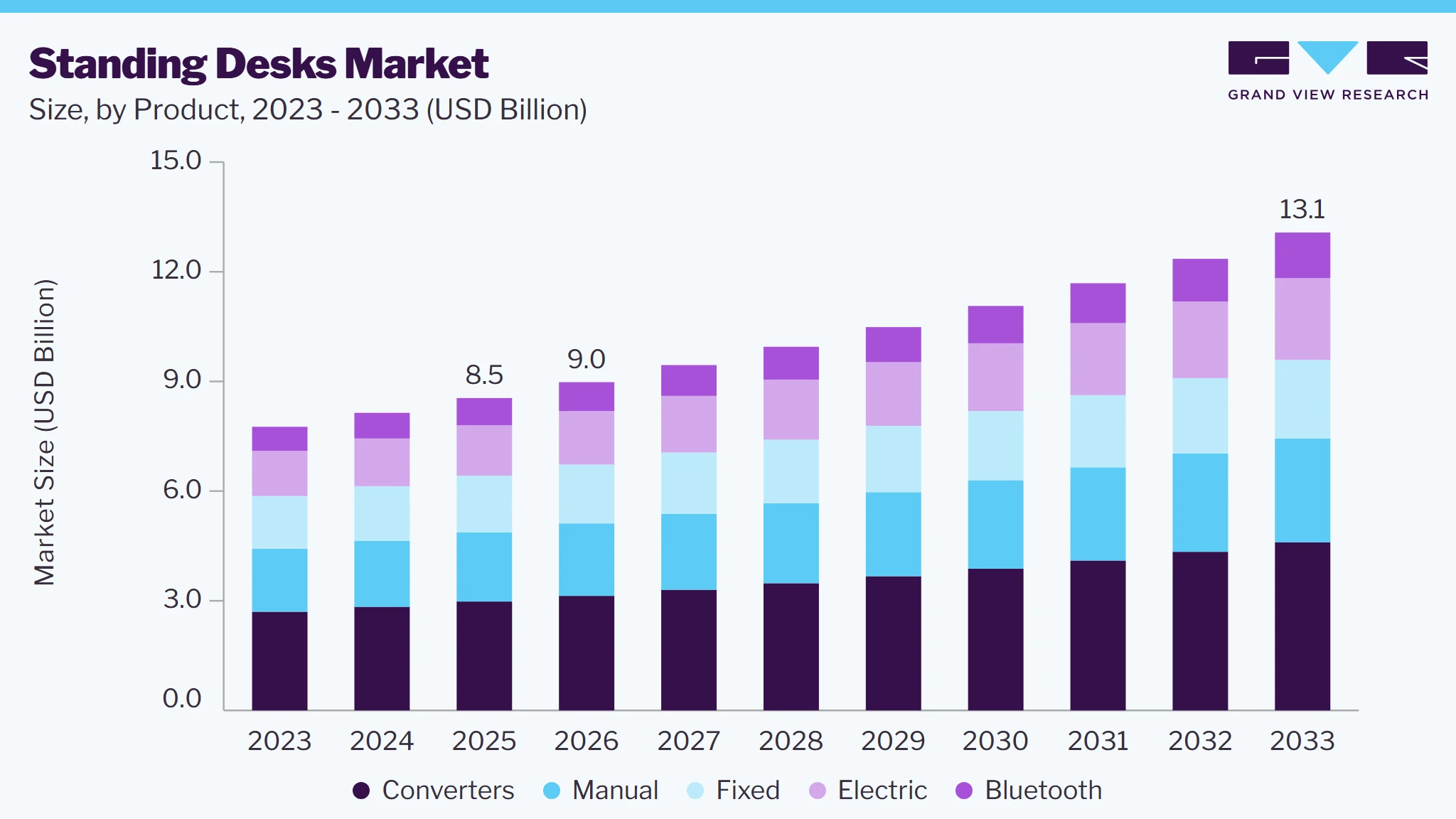
The global standing desks market size was valued at USD 8.5 billion in 2025 and is projected to grow from USD 9.0 billion in 2026 to USD 13.1 billion by 2033, at a CAGR of 5.5% from 2026 to 2033.The market in Asia Pacific dominated with a revenue share of 36.5% in 2025. The market has experienced significant growth and transformation over recent years, driven by a combination of health trends, technological innovations, and changing work environments.
 Source: Grand View Research, IR Documents, Primary Interviews, Paid DatabasesTo learn more about this report,
 Download Free Sample Report
Key Market Trends & Insights
- By product: Converters segment held the largest market share of 34.9% in 2025.
- By end use: Commercial segment held the largest market share of 78.2% in 2025.
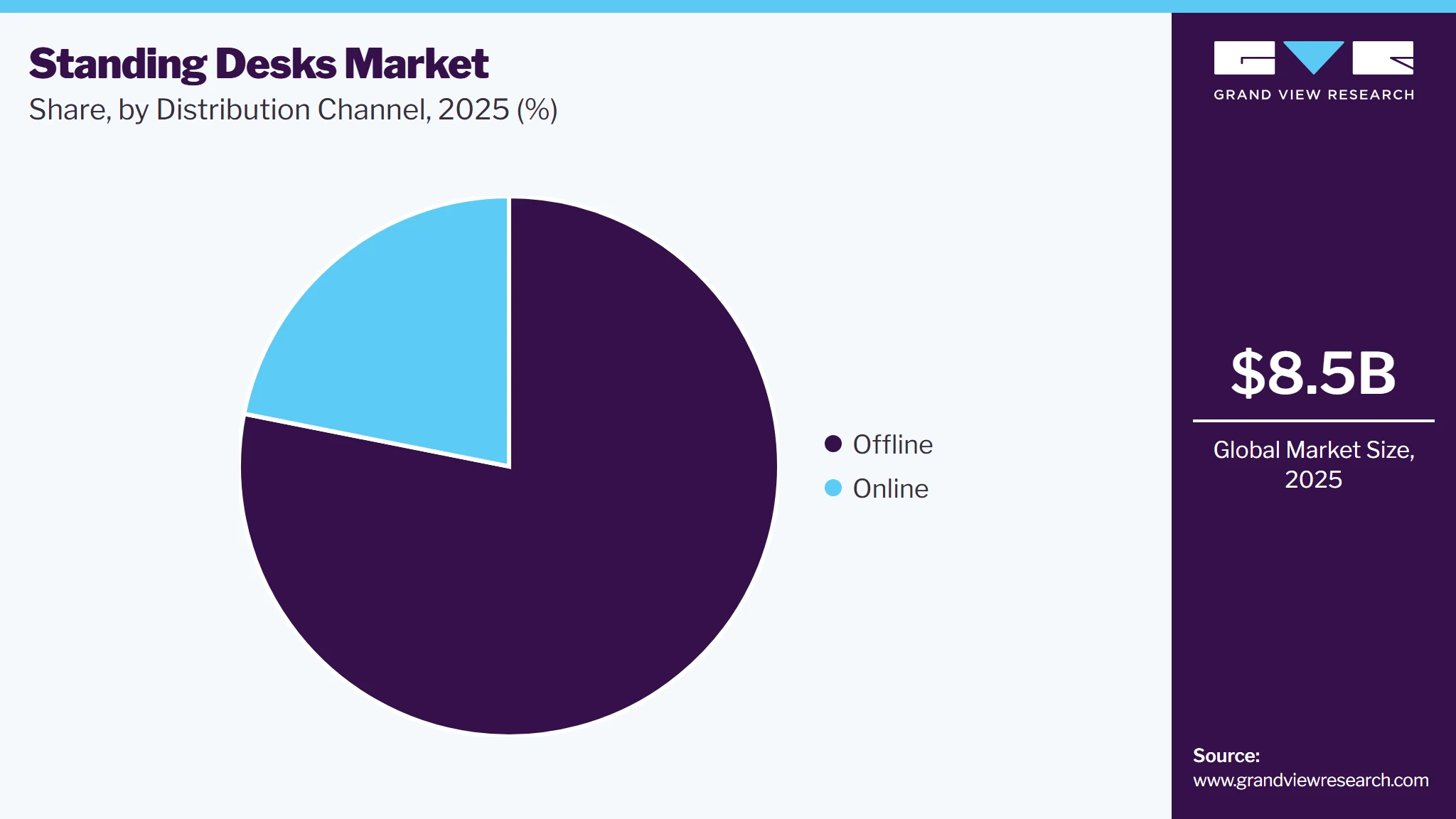
- By distribution channel: Offline segment held the largest market share of 78.1% in 2025.
Regional Highlights
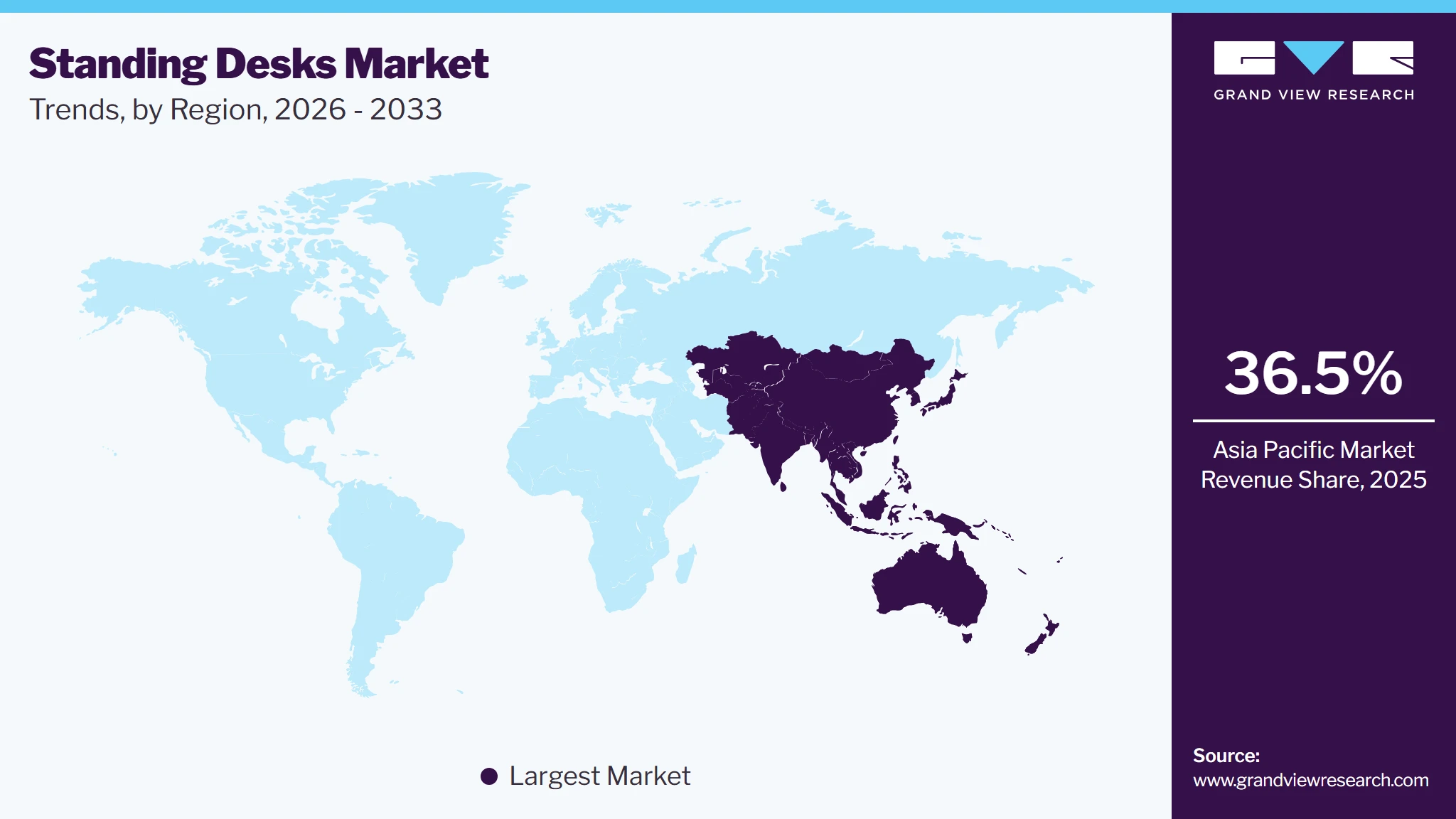
- Largest regional market: Asia Pacific (36.5% revenue share, 2025)
- By country: China held the largest market share in 2025.
Market Size & Forecast
- Market size in 2025: USD 8.5 Billion
- Estimated market size in 2026: USD 9.0 Billion
- Projected market size by 2033: USD 13.1 Billion
- CAGR (2026-2033): 5.5%
Three ways to get this report
Buy it, customize it, or ask a question.Ask an Analyst
Analyst response in 1 business day
- AccessReport author, directly
- Reply timeWithin 1 working day
- No sales callDirect answer only
- FormatEmail reply
- CostFree, no cost
Get the Full Report
What the study covers
- FormatsPDF · Excel · Dashboard
- Timeline2026–2033 annual, 2025 base
- Coverage20+ countries, 5 regions
- Companies10+ key players profiled
Customize the Report
20% free customization
- IncludeCountries, segments, points
- TailorTo your product definition
- ExtendDeeper competitor detail
- OrA fully bespoke study
- Turnaround5–10 working days
The popularity of standing desks has surged, particularly among office workers, freelancers, and even students, who are increasingly seeking ways to improve their health and productivity. This growth is attributed to rising health awareness, the increasing prevalence of sedentary lifestyles, and the growing body of research highlighting the health risks associated with prolonged sitting.
One of the key trends in the standing desk market is the integration of advanced technology and ergonomic design. Modern standing desks are not just height-adjustable but often come equipped with programmable presets, allowing users to easily switch between sitting and standing positions. This functionality caters to the growing demand for flexibility and customization in the workplace.
 To learn more about this report, Download Free Sample Report
For instance, products like the Uplift V2 and the VariDesk Pro Plus have garnered positive reviews for their ease of use and ergonomic benefits, reflecting the market's shift towards user-friendly and health-conscious designs.
Another significant trend is the increasing adoption of standing desks in corporate wellness programs. Companies are recognizing the benefits of providing employees with ergonomic furniture, which can lead to improved health outcomes and increased productivity.
According to a research highlighted by Techehs indicates that standing desks can boost productivity by 10-20%, as they encourage movement and reduce the likelihood of musculoskeletal issues. This productivity boost is linked to the fact that standing desks promote better posture, reduce back pain, and can even enhance mood and energy levels, as detailed by Progressive Desk. Such benefits make standing desks a valuable investment for employers aiming to foster a healthier, more productive work environment.
Moreover, the market has seen a rise in the popularity of convertible desks, which can switch between sitting and standing modes. These desks are particularly appealing to users who appreciate the flexibility to alternate their working position throughout the day. The growing interest in such products is reflected in the expanding range of convertible desk options available from various manufacturers. This versatility is a significant selling point, as it aligns with the modern work culture's emphasis on adaptability and personal comfort.
Consumer awareness about the health benefits of standing desks has also played a crucial role in market growth. Educational campaigns and increased media coverage have helped to inform the public about the dangers of prolonged sitting, such as increased risks of obesity, cardiovascular disease, and diabetes. This heightened awareness has led to greater consumer demand for standing desks as a preventative health measure. Additionally, many health professionals now recommend the use of standing desks as part of a broader strategy to combat sedentary behavior, further driving their popularity.
The standing desk market is also being shaped by broader societal trends, such as the rise of remote and hybrid work models. The COVID-19 pandemic accelerated the adoption of home office setups, and standing desks have become a popular choice for home workers looking to create healthier and more productive work environments. As per a blog by Purpleark in June 2022, the shift towards more flexible work arrangements has fueled demand for ergonomic home office furniture, including standing desks. This trend is expected to continue as remote work becomes a permanent fixture in many industries.
Innovation in the standing desk market is not limited to technological advancements; it also encompasses new materials and sustainable practices. Manufacturers are increasingly focusing on eco-friendly materials and production processes to appeal to environmentally conscious consumers. This focus on sustainability is evident in the offerings of companies like Fully, which markets its Jarvis standing desk as both ergonomic and environmentally friendly, using sustainable bamboo for its desktops.
In addition to health and productivity benefits, standing desks are also linked to improved mental well-being. Progressive Desk's research highlights that standing while working can enhance mood and reduce stress, as it encourages a more dynamic and engaging work posture. This psychological benefit is an important aspect of the standing desk's appeal, particularly in high-stress work environments where mental health is a growing concern.
Market Dynamics
The standing desk market is growing as businesses and consumers increasingly focus on workplace, employee wellness, and productivity. Standing desks allow users to alternate between sitting and standing positions, helping reduce back pain, poor posture, and other health issues linked to prolonged sitting. Rising adoption of remote and hybrid work arrangements has further boosted demand for home office furniture. Additionally, advancements such as electric height adjustment, memory presets, and smart connectivity features are enhancing product appeal and supporting market expansion.
The growing awareness of the adverse health effects associated with prolonged sitting is a key factor driving the adoption of standing desks worldwide. Modern work environments often require employees to spend extended hours seated in front of computers, contributing to health concerns such as back pain, neck strain, poor posture, obesity, cardiovascular issues, and musculoskeletal disorders. As employers and workers become increasingly conscious of these risks, demand for ergonomic workplace solutions that encourage movement and improve comfort has risen significantly.
Standing desks allow users to alternate between sitting and standing positions, helping reduce physical discomfort and promote better posture throughout the workday. Organizations are increasingly incorporating ergonomic furniture into office designs as part of broader employee wellness initiatives aimed at enhancing productivity and improving workplace satisfaction. The growing adoption of hybrid and remote work arrangements has further strengthened demand, as home-based professionals invest in ergonomic workstations to create healthier and more efficient work environments. As awareness of workplace wellness continues to increase, standing desks are expected to experience sustained demand across both commercial and residential sectors.
The relatively high cost of standing desks, particularly electric and smart models, remains a significant restraint for market growth. Advanced standing desks equipped with features such as motorized height adjustment, programmable memory settings, Bluetooth connectivity, and integrated cable management systems are often priced substantially higher than traditional office desks. This cost difference can discourage adoption among budget-conscious consumers, small businesses, startups, and organizations with large-scale office furnishing requirements.
Additionally, many employers may be hesitant to replace existing office furniture due to the significant upfront investment involved. In residential settings, consumers setting up home offices often prioritize essential equipment such as computers and monitors over premium ergonomic furniture. Economic uncertainty, inflationary pressures, and fluctuating corporate spending on office infrastructure can further limit purchasing decisions. As a result, despite increasing awareness of workplace wellness and ergonomic benefits, the higher initial cost of standing desks continues to be a key challenge affecting broader market penetration, particularly in price-sensitive regions and developing economies.
The increasing demand for smart office furniture and connected workplace solutions is creating significant growth opportunities in the standing desk market. Consumers and businesses are increasingly seeking desks equipped with advanced features such as electric height adjustment, programmable memory settings, Bluetooth connectivity, posture reminders, activity tracking, and integration with workplace wellness applications. These technologies enhance user convenience while encouraging healthier work habits and greater workplace productivity.
The expansion of hybrid work models and smart home offices is further supporting demand for technologically advanced standing desks. Manufacturers are investing in innovative designs that integrate wireless charging, cable management systems, IoT connectivity, and app-based controls to improve the overall user experience. As organizations continue to prioritize employee well-being and digital workplace transformation, the adoption of smart standing desks is expected to increase, creating new revenue opportunities for manufacturers and accelerating innovation across the ergonomic furniture industry.
Analyst Perspective
The standing desk market benefits from several long-term structural growth drivers, including rising awareness of workplace ergonomics and the continued expansion of hybrid and remote work models. As employers increasingly prioritize employee wellness, productivity, and workplace satisfaction, height-adjustable desks are evolving from optional office accessories into core components of modern workspace design. The most durable competitive advantage, however, will belong to manufacturers that successfully integrate ergonomic functionality, smart connectivity, and workplace analytics into a seamless user experience. Companies capable of combining adjustable workstations with wellness tracking, posture monitoring, and broader smart office ecosystems are likely to strengthen customer loyalty and command premium pricing as the market shifts toward technology-enabled workplace solutions.
Product Insights
Based on product, the converters segment led the market with the largest revenue share of 34.9% in 2025. The demand for converter standing desks is driven by their affordability and ease of use, allowing users to transform existing desks into standing workstations. This segment has seen a surge in popularity among remote workers and small businesses due to the cost-effective nature and simple installation process.
Bluetooth standing desks are expected to grow at the fastest CAGR over the forecast period. Bluetooth standing desks cater to tech-savvy users who value connectivity and smart features. These desks can be controlled via mobile apps, offering customizable settings and real-time analytics on standing and sitting times. The IKEA Idasen desk, which can be adjusted using a smartphone app, exemplifies this trend, appealing to modern offices looking for high-tech ergonomic solutions.
End-use Insights
Based on end use, the commercial segment led the market with the largest revenue share of 78.2% in 2025. Commercial standing desks are designed for durability and heavy usage, often featuring robust materials and advanced ergonomics. This segment is propelled by corporate wellness initiatives aimed at improving employee health and productivity. Companies like Steelcase lead this market with products like the Steelcase Series 7, which are engineered to withstand extensive daily use in office environments.
Standing desks sales in residential settings are projected to grow at the fastest CAGR of 7.1% from 2026 to 2033. The rise of remote work has significantly boosted the residential standing desks market. These desks emphasize aesthetics and compact designs to fit home environments. The FlexiSpot Home Office standing desk is a popular choice, combining functionality with style, making it ideal for home offices.
Distribution Channel Insights
Based on distribution channel, the offline channel led the market with the largest revenue share of 78.1% in 2025. Offline sales channels benefit from the ability to provide personalized customer experiences and immediate product demonstrations. Showrooms and retail stores like Office Depot offer customers the chance to physically test desks, contributing to informed purchasing decisions. This hands-on experience remains a key driver for offline sales.
 To learn more about this report, Download Free Sample Report
Online sales are expected to grow at the fastest CAGR of 6.9% from 2026 to 2033. The convenience and variety offered by online sales channels have driven significant growth in this segment. E-commerce platforms like Amazon provide a wide range of options, competitive pricing, and home delivery, making it easier for consumers to purchase standing desks. The increasing reliance on digital shopping, accelerated by the pandemic, continues to bolster this trend.
Regional Insights
North America standing desks market held a 27.4% share of the global revenue in 2025. North America is a leading market for standing desks, driven by high health awareness and the widespread adoption of ergonomic furniture in workplaces. Companies in this region are increasingly investing in employee wellness programs, which include providing standing desks. The presence of major manufacturers like Ergotron and Uplift Desk further strengthens the market.
U.S. Standing Desks Market Trends
The standing desks market in the U.S. is expected to grow at a CAGR of 4.8% over the forecast period. In the U.S., the standing desk market is particularly robust due to the strong emphasis on workplace health and productivity. The rapid growth of remote work has led to increased demand for home office setups, including standing desks. Innovations and high adoption rates in tech-centric cities like San Francisco and New York have also contributed to the market's expansion.
Asia Pacific Standing Desks Market Trends
Asia Pacific dominated the standing desk market with the largest revenue share of 36.5% in 2025. The standing desks market in the Asia Pacific is largely driven by increasing awareness of the importance of good posture and ergonomic practices. Countries like China, Japan, and South Korea are experiencing increased adoption of ergonomic furniture in response to the high prevalence of sedentary lifestyles. Local manufacturers are also entering the market, offering competitive and innovative products.
 To learn more about this report, Download Free Sample Report
Europe Standing Desks Market Trends
The standing desks market in Europe is projected to grow at a CAGR of 5.0% from 2026 to 2033. The standing desks market in Europe is driven by stringent workplace regulations and a strong focus on employee well-being. Countries such as Germany and the Scandinavian nations have been early adopters of ergonomic solutions. The market is characterized by a high demand for quality and sustainability, with companies like Fully and IKEA leading the way in offering eco-friendly standing desks.
Key Standing Desks Company Insights
The market features both established global firms and emerging players. Key industry leaders prioritize product innovation, differentiation, and distinctive designs in line with evolving consumer preferences. Leveraging extensive global distribution networks, these major players effectively reach diverse customer bases and tap into emerging markets.
Key Standing Desks Companies
The following key companies have been profiled for this study on the standing desks market.
-
Steelcase
-
Herman Miller
-
Haworth
-
Ergotron
-
Humanscale
-
Okamura
-
Varidesk, LLC
-
Inter IKEA Systems B.V.
-
Williams-Sonoma, Inc.
- Crate and Barrel
Competitive Benchmarking
Category
Operating Strategies
Competitive Edge
Weakness
Established Players (Steelcase, Herman Miller, Haworth, Humanscale, Ergotron)
Expand premium ergonomic furniture portfolios through continuous product innovation and workplace wellness solutions. Focus on enterprise contracts, hybrid workplace transformation projects, and integration of height-adjustable desks with broader office furniture ecosystems. Invest in smart desk technologies, sustainability initiatives, and global distribution networks.
Strong brand reputation and extensive relationships with corporate customers. Broad product portfolios, advanced ergonomic expertise, established dealer networks, and significant R&D capabilities. Ability to serve large-scale commercial projects and multinational clients.
Premium pricing limits penetration among budget-conscious customers. Dependence on corporate office spending exposes companies to economic slowdowns and fluctuations in commercial real estate activity. Longer product development cycles compared to smaller competitors.
Emerging Players (Varidesk, LLC, Inter IKEA Systems B.V., Williams-Sonoma, Inc., Crate & Barrel, Okamura)
Focus on affordable, consumer-oriented, and home-office-friendly standing desk solutions. Leverage e-commerce channels, direct-to-consumer sales, and omnichannel retail strategies. Introduce compact designs, standing desk converters, and smart features targeting remote and hybrid workers.
Competitive pricing, strong online visibility, broad consumer reach, and ability to quickly respond to changing workplace trends. Attractive product designs and growing presence in residential and small business segments.
Limited presence in large enterprise and institutional office projects. Lower brand recognition in commercial ergonomic furniture compared to established office furniture manufacturers. Margin pressure from intense competition and low-cost manufacturers.
Recent Developments
-
In November 2023, Herman Miller and Design Within Reach unveiled 3D product configurators on their North American retail websites. These configurators allow designers, customers, and trade professionals to utilize a self-service product configuration tool to visualize every possible combination, obtain accurate pricing during the design process, download images at any stage, and effortlessly share their designs with customers.
-
In July 2023, Haworth Inc. announced the establishment of its factory in Chennai, India, with an investment of approximately USD 8-10 million. The new facility, which is its second plant in the country, will be situated near its first factory. The new facility is expected to commence production by 2025. The factory was set to manufacture furniture for the domestic market and for exports to West Asia and Southeast Asia.
Standing Desks Market Report Scope
Report Attribute
Details
Market size in 2025
USD 8.5 billion
Estimated market size in 2026
USD 9.0 billion
Projected market size by 2033
USD 13.1 billion
Growth rate
CAGR of 5.5% from 2026 to 2033
Base year for estimation
2025
Historical data
2021 - 2024
Forecast period
2026 - 2033
Quantitative units
Revenue in USD million/billion and CAGR from 2026 to 2033
Report coverage
Revenue forecast, company ranking, competitive landscape, growth factors, and trends
Segments covered
Product, end use, distribution channel, region
Regional scope
North America; Europe; Asia Pacific; CSA; MEA
Country scope
U.S.; Canada; Mexico; U.K.; Germany; France; Italy; Spain; China; India; Japan; Australia; South Korea; Brazil; South Africa
Key companies profiled
Steelcase; Herman Miller; Haworth; Ergotron; Humanscale; Okamura; Varidesk, LLC; Inter IKEA Systems B.V.; Williams-Sonoma, Inc.; Crate and Barrel
Customization scope
Free report customization (equivalent up to 8 analysts' working days) with purchase. Addition or alteration to country, regional & segment scope.
Pricing and purchase options
Avail customized purchase options to meet your exact research needs. Explore purchase options
Global Standing Desks Market Report Segmentation
This report forecasts revenue growth at global, regional & country levels and provides an analysis of the latest industry trends and opportunities in each of the sub-segments from 2021 to 2033. For this study, Grand View Research has segmented the global standing desks market report on the basis of product, end use, distribution channel, and region:
-
Product Outlook (Revenue, USD Million, 2021 - 2033)
-
Fixed
-
Manual
-
Electric
-
Converters
-
Bluetooth
-
-
End-use Channel Outlook (Revenue, USD Million, 2021 - 2033)
-
Residential
-
Commercial
-
-
Distribution Channel Outlook (Revenue, USD Million, 2021 - 2033)
-
Offline
-
Online
-
-
Regional Outlook (Revenue, USD Million, 2021 - 2033)
-
North America
-
U.S.
-
Canada
-
Mexico
-
-
Europe
-
UK
-
Germany
-
France
-
Italy
-
Spain
-
-
Asia Pacific
-
China
-
India
-
Japan
-
Australia
-
South Korea
-
-
Central & South America
-
Brazil
-
-
Middle East & Africa (MEA)
-
South Africa
-
-
Research Methodology
The standing desks market figures in this report are based on a proven research process that combines executive interviews with secondary research from proprietary databases, company filings, and recognized regulatory and institutional sources. Market size is built through value-chain sizing - reconciling supply-side and demand-side estimates - and triangulated with bottom-up and top-down approaches. Every estimate passes multiple levels of expert validation before publication, with each standing desks segment quantified using the revenue-capture definitions in the table below.
Segment Definition
Segment - Product
Revenue capture definition
Fixed
This segment covers the revenues generated through the standing desk market from fixed standing desks, which are desks designed at a predetermined height and do not offer height-adjustment functionality. These desks provide a stable workspace for users who primarily work in a standing position and are commonly used in offices and industrial workstations where height customization is not required.
Manual
This segment covers the revenues generated through the standing desk market from manual standing desks, which allow users to adjust desk height using hand cranks, levers, or mechanical lift systems without requiring electricity. These desks offer flexibility at a lower cost than motorized alternatives and are popular among budget-conscious consumers and small office users.
Electric
This segment covers the revenues generated through the standing desk market from electric standing desks, which utilize electric motors to raise or lower the desktop through the push of a button. These desks often feature programmable memory presets, smooth height transitions, and enhanced ergonomic convenience, making them widely used in corporate offices and home workspaces.
Converters
This segment covers the revenues generated through the standing desk market from converter standing desks, which are desktop units placed on top of existing desks to transform traditional seated workstations into sit-stand workspaces. They provide a cost-effective solution for users seeking benefits without replacing existing furniture.
Bluetooth
This segment covers the revenues generated through the standing desk market from Bluetooth standing desks, which are smart desks equipped with Bluetooth connectivity that allows users to control height settings, track standing time, receive posture reminders, and manage desk functions through smartphone applications or connected devices. These desks support workplace wellness initiatives and smart office integration.
Estimation Model
Layer Name
Key Question
Description
Workforce Layer
Who needs ergonomic workstations?
Identify the addressable user base by analyzing the employed workforce, office workers, remote workers, and professionals spending prolonged hours at desks. This layer establishes the potential population susceptible to sedentary work habits, poor posture, and discomfort that drive demand for standing desks.
Workplace Accessibility Layer
Who can access standing desk solutions?
Apply region-specific office infrastructure, corporate workspace penetration, home office adoption, and purchasing power indicators to estimate the population with access to ergonomic furniture solutions. This layer filters the workforce into users who can realistically adopt standing desks.
Adoption Layer
Who actively purchases or uses standing desks?
Apply standing desk adoption rates across commercial and residential settings, considering factors such as ergonomic awareness, workplace wellness initiatives, hybrid work trends, and corporate investment in employee well-being. This layer converts the accessible population into active standing desk users and purchasers.
Monetisation Layer
How much revenue is generated?
Multiply active users and purchasing organizations by average selling prices (ASP) across fixed, manual, electric, converter, and Bluetooth standing desks. Incorporate replacement cycles, enterprise procurement contracts, and residential purchases to estimate total market revenue.
Delivered Customizations
This report has been delivered with the following In-depth customizations
Client Request
Customization Delivered
Value Adds
Standing Desk Product Type Trends (Fixed, Manual, Electric, Converter, Bluetooth)
Conducted a focused analysis of standing desk product categories covering fixed-height desks, manual height-adjustable desks, electric standing desks, desk converters, and Bluetooth-enabled smart desks. Evaluated innovation trends, consumer preferences, ergonomic features, and adoption patterns across residential and commercial applications.
Helps stakeholders identify high-growth product segments, assess technology adoption trends, and evaluate opportunities for product differentiation, premiumization, and smart furniture development.
Commercial & Residential Workspace Adoption Trends
Evaluated demand trends across commercial offices, coworking spaces, educational institutions, healthcare facilities, and residential home offices. Assessed the impact of hybrid work models, workplace wellness initiatives, employee ergonomics programs, and remote work expansion on standing desk adoption.
Provides insights into evolving workplace requirements, customer purchasing behavior, and emerging demand pockets, supporting market entry, expansion, and customer targeting strategies.
Smart Ergonomic Furniture & Workplace Wellness Opportunity Assessment
Assessed growth opportunities for electric and Bluetooth-enabled standing desks, including app connectivity, posture monitoring, activity reminders, programmable controls, and integration with smart office ecosystems. Examined barriers such as product costs, budget constraints, and workplace implementation challenges.
Supports investment and product development strategies by identifying emerging technology trends, workplace wellness opportunities, smart office readiness, and long-term growth potential within the ergonomic furniture market.
Frequently Asked Questions About This Report
The global standing desks market size was valued at USD 8.5 billion in 2025 and is estimated at USD 9.0 billion for 2026.
Some of the key players operating in the standing desks market include Steelcase; Herman Miller; Haworth; Ergotron; Humanscale; Okamura; Varidesk, LLC; Inter IKEA Systems B.V.; Williams-Sonoma, Inc.; Crate and Barrel
Key factors that are driving the standing desks market growth include rising health awareness, the increasing prevalence of sedentary lifestyles, and the growing body of research highlighting the health risks associated with prolonged sitting
The converters segment led with a 34.9% revenue share in 2025.
The commercial segment led with a 78.2% revenue share in 2025.
The offline segment led with a 78.1% revenue share in 2025.
Asia Pacific is the fastest-growing region over the forecasted period.
The global standing desks market is expected to grow at a CAGR of 5.5% from 2026 to 2033, reaching USD 13.1 billion by 2033.
Asia Pacific dominated the standing desks market with a share of around 36.5% in 2025.
About the Author(s)
Homecare & Decor Research Team
Consumer Goods · Homecare & DecorThis report was authored by the homecare & decor research team at Grand View Research - comprising two research analysts, one senior research analyst, and one industry expert - with specialized expertise in the homecare & decor segment of the consumer goods industry. All findings are based on proprietary consumer goods databases, executive interviews, and regulatory analysis, subject to internal peer review prior to publication.
Last Updated:
Speak to Analyst

Customize this report to your needs - add regions, segments, or data points, with 20% free customization.
Or view our licence options:


ISO 9001:2015 & 27001:2022 Certified
We are GDPR and CCPA compliant! Your transaction & personal information is safe and secure. For more details, please read our privacy policy.


