
- Home
- »
- Medical Devices
- »
-
Surgical Irrigation Market Size & Share Report, 2026-2033GVR Report cover
![Surgical Irrigation Market (2026 - 2033)Report]()
Surgical Irrigation Market (2026 - 2033)
Size, Share & Trends Analysis Report By Product Category (Irrigation Fluids, Irrigation Delivery Systems, Accessories & Components), By Delivery Technology (Gravity-Based), By Surgical Application, By End Use, By Region, And Segment Forecasts
Market Size, 2025
$2.2BMarket Estimate, 2026
$2.4BMarket Forecast, 2033
$3.8BCAGR, 2026–2033
6.8%Surgical Irrigation Market Summary
The global surgical irrigation market size was valued at USD 2.2 billion in 2025 and is projected to grow from USD 2.4 billion in 2026 to USD 3.8 billion by 2033, at a CAGR of 6.8% from 2026 to 2033. The market in North America dominated with a revenue share of 0.0% in 2025. The market is driven by the increasing global volume of surgical procedures, particularly minimally invasive and laparoscopic surgeries that require continuous fluid irrigation to maintain clear visualization and remove debris during operations.
Key Market Trends & Insights
- By product category: The irrigation fluids segment led the market with the largest revenue share in 2025.
- By delivery technology: The gravity-based segment led the market with the largest revenue share in 2025.
- By surgical application: The laparoscopic & general surgery segment led the market with the largest revenue share in 2025.
Regional Highlights
- Largest regional market: North America in 2025)
- The surgical irrigation industry in the U.S. held the largest revenue share in 2025.
Market Size & Forecast
- Market size in 2025: USD 2.2 Billion
- Estimated market size in 2026: USD 2.4 Billion
- Projected market size by 2033: USD 3.8 Billion
- CAGR (2026-2033): 6.8%
The rising prevalence of chronic diseases such as cancer, gastrointestinal disorders, and cardiovascular conditions, along with a rapidly aging population, has significantly increased the number of surgical interventions, thereby boosting demand for irrigation solutions and systems in hospitals and ambulatory surgical centers.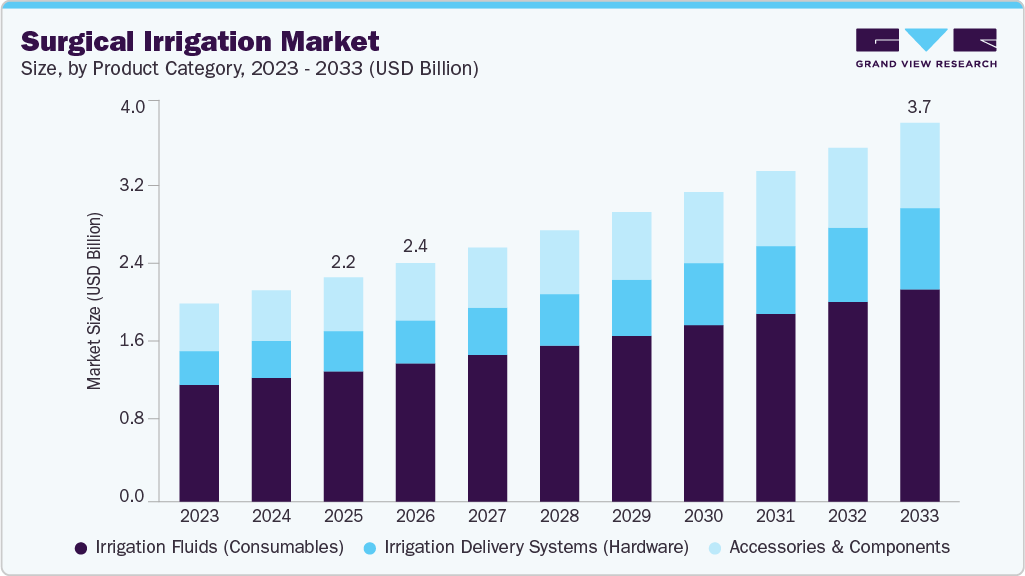
The rising prevalence of diabetic foot ulcers is a significant growth driver for the market. DFUs often require regular wound cleansing and debridement to remove necrotic tissue, bacteria, and debris, promoting proper healing and reducing the risk of infection. Surgical irrigators are widely used in the management of these wounds as they help deliver controlled fluid flow to effectively clean the wound site. With the rising global incidence of diabetes and associated complications such as DFUs, the demand for advanced wound care procedures and surgical irrigation systems is increasing, thereby supporting the growth of the market.
Key Statistics on Diabetic Foot Ulcers (DFUs) in Saudi Arabia (2024)
Parameter
Statistic
Lifetime risk of developing DFU in diabetes patients
19-34%
Mortality within 12 months of DFU
~5%
Mortality within 5 years of DFU
~42%
Amputation risk
Higher in patients with diabetes compared to non-diabetics
Source: NCBI
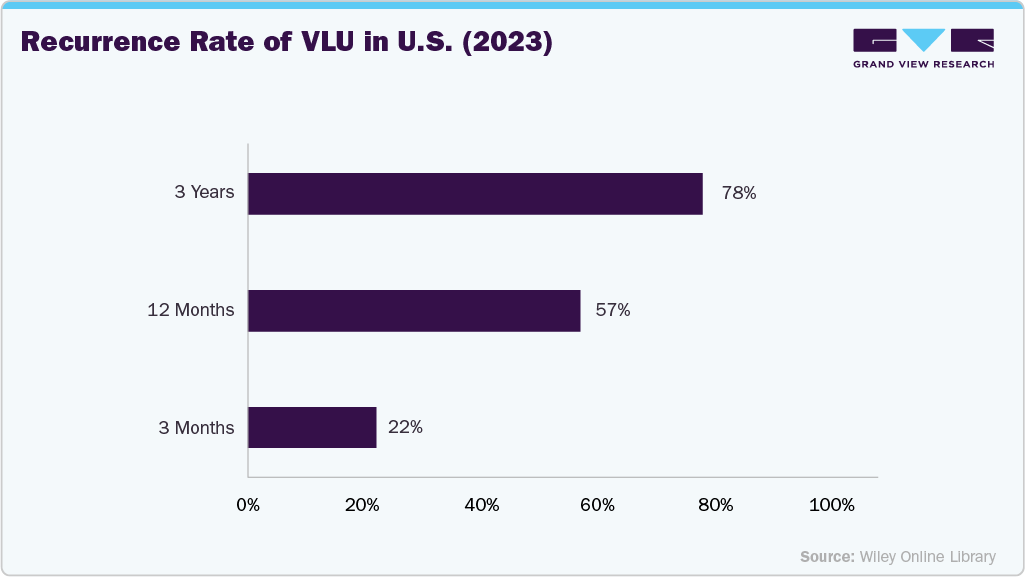
Venous leg ulcers drive growth in the market for surgical irrigation due to their chronic nature and the need for frequent wound cleansing during treatment. These ulcers often produce significant exudate and are highly susceptible to infection, requiring regular irrigation to remove debris, bacteria, and necrotic tissue. Surgical irrigation systems help maintain a clean wound environment, support debridement procedures, and promote effective healing. As the prevalence of venous insufficiency and chronic wound increases, demand for surgical irrigation devices in wound management continues to rise, driving market growth.
Prevalence and Recurrence Rate of VLU in U.S. (2023)
Country
Population Group
Prevalence
Recurrence Rate (3 Months)
Recurrence Rate (12 Months)
Recurrence Rate (3 Years)
United States
People aged 65 and above
4%
22%
57%
78%
Source: Wiley Online Library
Furthermore, the growth in surgical procedures and trauma cases is a key driver of the market. An increasing number of emergency and elective surgeries, including orthopedic, abdominal, and trauma-related procedures, require effective irrigation to cleanse the surgical site, remove blood, tissue debris, and contaminants, and maintain clear visualization during operations. In addition, the rising incidence of road accidents, sports injuries, and other trauma cases has increased the demand for surgical interventions, further boosting the need for surgical irrigation systems in hospitals and surgical centers. As healthcare facilities handle a higher volume of surgical and trauma cases, demand for efficient, reliable surgical irrigation devices is expected to grow.
Surgeries performed in Canada (April 1 - June 30, 2025)
Metric
Statistics
Surgeries Performed or Offered Within 3 Months
78%
Surgeries Performed or Offered Within 6 Months
88.50%
Surgeries Performed or Offered Within 12 Months
96.70%
Total Surgeries Performed
24,627
Source: Saskatchewan
Healthcare providers are placing strong emphasis on reducing surgical site infections (SSIs) and improving patient safety. Surgical irrigation helps remove bacteria, tissue debris, and other contaminants from the surgical site, thereby supporting sterile surgical environments. This increasing focus on infection control is encouraging hospitals to adopt advanced irrigation devices and sterile single-use solutions.
Continuous innovations in surgical irrigation systems, such as integrated suction-irrigation devices, automated pumps, and ergonomic handheld tools, are improving surgical efficiency and precision. These advancements help surgeons maintain optimal fluid control and enhance workflow in operating rooms, further driving the adoption of modern irrigation systems. For instance, in March 2026, Becton, Dickinson and Company, a global medical technology company, announced that it had received 510(k) clearance from the U.S. Food and Drug Administration for the Surgiphor 1000 mL antimicrobial irrigation system. Designed specifically for powered lavage procedures, Surgiphor 1000 mL is the first and only 1000 mL antimicrobial irrigation solution developed to support standardized surgical irrigation. The system provides an OR-ready solution that helps improve surgical efficiency while enhancing safety and clinical effectiveness during procedures.
"This FDA clearance reinforces BD's position as the global leader in surgical irrigation innovation," said Rian Seger, worldwide president of the BD Surgery business. "Surgiphor™ 1000mL is a unique solution that provides the consistency and safety surgical teams expect from BD, allowing them to focus on what matters most: providing better, safer care for their patients."
Market Concentration & Characteristics
The degree of innovation in the surgical irrigation industry is considered moderate to high, driven by ongoing advancements in surgical technologies, infection control solutions, and fluid management systems. Manufacturers are developing integrated suction-irrigation devices, automated irrigation pumps, and ergonomically designed handheld instruments to improve precision, ease of use, and surgical efficiency. In addition, innovations such as antimicrobial irrigation solutions, single-use sterile systems, and powered lavage devices are helping reduce surgical site infections and improve patient outcomes. The integration of improved fluid control mechanisms, disposable components, and compatibility with minimally invasive surgical systems is further supporting product development and market growth.
The level of mergers and acquisitions (M&A) activities in the market is moderate, as medical device companies continue to pursue strategic acquisitions to expand their surgical product portfolios, strengthen technological capabilities, and enhance their global market presence. Large medical technology companies are acquiring smaller specialized firms to gain access to innovative irrigation systems, advanced fluid management technologies, and complementary surgical products. These acquisitions also enable companies to broaden their distribution networks, accelerate product development, and strengthen their position in the operating room equipment and surgical consumables segments.
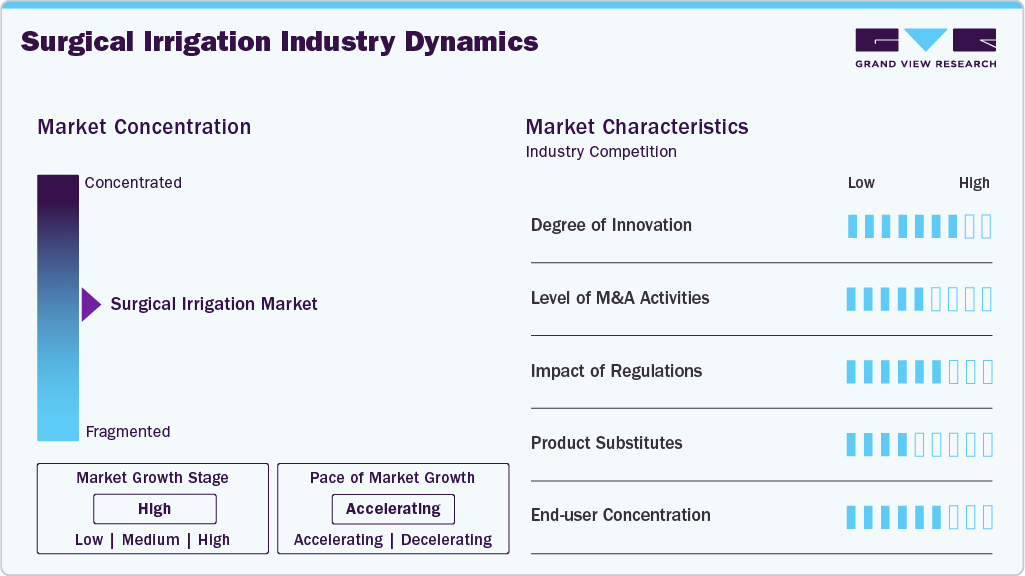
Regulations have a significant impact on the market, as irrigation devices and solutions must comply with strict safety, quality, and sterility standards set by regulatory authorities. Approvals and clearances from agencies such as the U.S. Food and Drug Administration and the European Medicines Agency are essential before products can be commercialized. These regulatory requirements ensure that surgical irrigation systems meet clinical safety and performance standards, particularly regarding infection control, biocompatibility, and fluid management.
The surgical irrigation industry demonstrates moderate to high end-use concentration, with the majority of demand coming from hospitals and large surgical centers where high volumes of procedures are performed. Hospitals account for the largest share due to the availability of advanced operating rooms, skilled surgical teams, and the frequent use of irrigation systems in procedures such as orthopedic, trauma, gastrointestinal, and general surgeries. In addition, ambulatory surgical centers (ASCs) are emerging as an important end-use segment as minimally invasive procedures continue to shift toward outpatient settings. The growing number of surgical procedures performed at these facilities is driving steady demand for surgical irrigation devices and solutions.
Product Category Insights
The irrigation fluids segment dominated the market in 2025 due to their essential and routine use across a wide range of surgical procedures. Irrigation fluids such as sterile saline and antiseptic solutions are required to continuously flush the surgical site, remove blood, tissue debris, and microorganisms, and maintain clear visualization for surgeons during operations. Their high consumption rate compared to reusable irrigation devices significantly contributes to their larger market share.
The irrigation delivery systems segment is expected to grow fastest during the forecast period, driven by the increasing adoption of advanced surgical technologies and the rising preference for controlled fluid management during procedures. Delivery systems such as suction-irrigation devices, pumps, and automated irrigation units enable precise fluid flow, improved visualization of the surgical field, and efficient removal of blood, debris, and contaminants. The growing use of minimally invasive and laparoscopic surgeries is further accelerating demand for these systems, as they enable surgeons to achieve greater control and efficiency during operations.
Delivery Technology Insights
Gravity-based dominated the market in 2025 due to its simplicity, reliability, and widespread use across various surgical procedures. Gravity-based irrigation systems rely on the natural flow of fluid from elevated containers, eliminating the need for complex equipment or power sources. This makes them cost-effective and easy to implement in operating rooms, particularly in hospitals and surgical centers that perform a high volume of procedures. In addition, these systems provide consistent fluid delivery for wound cleansing and surgical site irrigation, making them suitable for general surgery, trauma care, and wound management. Their affordability, ease of use, and minimal maintenance requirements have contributed to their continued dominance in the market.
The automated/electronic segment is expected to grow fastest during the forecast period, driven by increasing demand for advanced surgical technologies that enable precise, controlled fluid management. Automated irrigation systems enable surgeons to control fluid pressure and flow more precisely, improving visualization of the surgical field and reducing the risk of tissue damage during procedures. These systems also enhance workflow efficiency in operating rooms by minimizing manual adjustments and enabling consistent irrigation during complex surgeries.
Surgical Application Insights
Laparoscopic & general surgery dominated the market in 2025, largely due to the high volume of procedures performed in these categories and the essential role of irrigation in maintaining a clear operative field. Laparoscopic and general surgical procedures require continuous irrigation to remove blood, tissue debris, and contaminants, thereby improving surgeons' visibility during operations. The increasing adoption of minimally invasive laparoscopic techniques for procedures such as appendectomy, cholecystectomy, and hernia repair has further increased the use of irrigation systems. Additionally, the growing number of abdominal and gastrointestinal surgeries performed in hospitals and surgical centers has increased demand for surgical irrigation devices, thereby strengthening the segment’s dominance in the market.
The orthopedics & spine segment is expected to grow at the fastest rate during the forecast period. This growth is attributed to the increasing number of orthopedic procedures, such as joint replacements, fracture repairs, and spinal surgeries. These procedures require extensive irrigation to remove bone debris, blood, and contaminants while maintaining a clear surgical field and reducing the risk of infection. Irrigation is routinely used during orthopedic surgeries to cleanse the wound, remove nonviable tissue, and reduce bacterial contamination, thereby helping prevent surgical site infections and improving clinical outcomes.
End Use Insights
Hospitals dominated the market in 2025 due to the high volume of surgical procedures performed in hospital settings and the availability of advanced surgical infrastructure. Hospitals are the primary centers for complex and specialized surgeries, including orthopedic, laparoscopic, cardiovascular, and trauma procedures, all of which frequently require surgical irrigation to maintain a clear operative field and reduce the risk of infection. Additionally, hospitals typically have well-equipped operating rooms, trained surgical teams, and access to a wide range of irrigation devices and sterile fluids, which support the widespread use of surgical irrigation systems.
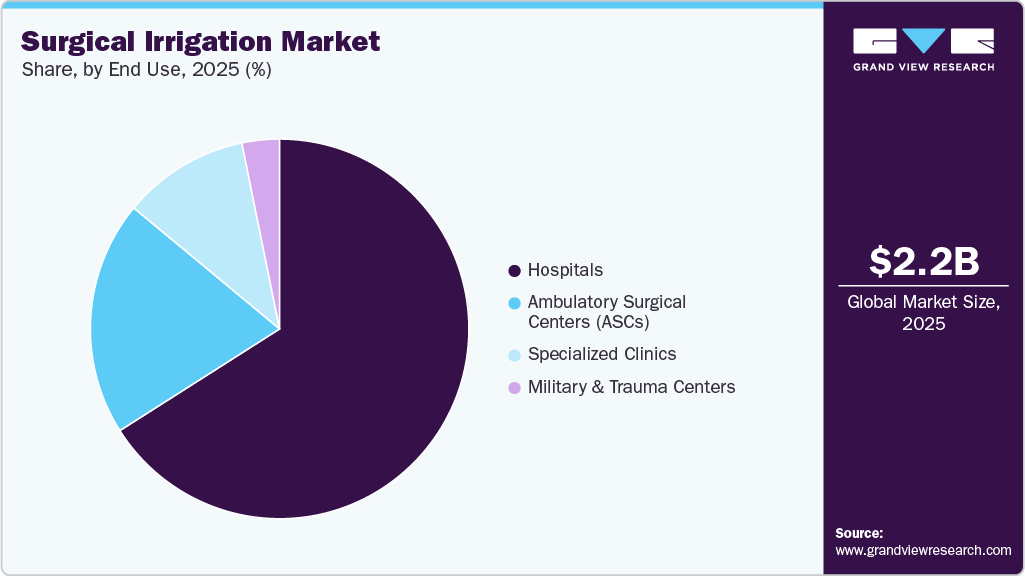
The ambulatory surgical centers (ASCs) segment is expected to grow the fastest during the forecast period, driven by the shift of surgical procedures from inpatient hospital settings to outpatient facilities. ASCs offer several advantages, including lower treatment costs, shorter procedure times, and faster patient recovery, making them an attractive option for both patients and healthcare providers. Procedures performed in ASCs can reduce overall treatment expenses by approximately 30-50% compared with hospitals, which encourages wider adoption of outpatient surgical services.
Regional Insights
The North America surgical irrigation industry held the largest share in 2025, supported by the region’s high surgical volumes and strong focus on infection prevention in operating rooms. Hospitals and outpatient surgical centers are increasingly adopting advanced irrigation systems and sterile irrigation fluids to reduce surgical site infections and improve procedural outcomes. The growing use of minimally invasive and laparoscopic surgeries is also increasing demand for efficient fluid delivery systems. In addition, continuous technological advancements in automated irrigation devices, single-use sterile kits, and antimicrobial irrigation solutions are supporting broader adoption across healthcare facilities.
U.S. Surgical Irrigation Market Trends
The U.S. surgical irrigation industry is expanding as healthcare providers increasingly adopt advanced surgical technologies and evidence-based infection control practices. The rising number of outpatient procedures performed in ambulatory surgical centers (ASCs) and specialty clinics is expanding the use of surgical irrigation systems beyond traditional hospital settings. In addition, the high prevalence of chronic wounds such as diabetic foot ulcers (DFU), venous leg ulcers (VLU), and pressure injuries, along with growing surgical volumes, is increasing the demand for irrigation solutions and delivery systems used during surgical procedures and wound debridement.
Europe Surgical Irrigation Market Trends
The Europe surgical irrigation industry is witnessing steady growth, driven by rising surgical procedures and stringent regulatory standards for patient safety and infection control. Healthcare providers across the region are adopting advanced irrigation technologies that support efficient fluid management during surgery. The rising use of minimally invasive procedures and improvements in hospital infrastructure are further supporting market expansion. In addition, strict quality and regulatory requirements across Europe continue to influence product development and encourage the adoption of high-performance irrigation systems.
The UK surgical irrigation industry is growing due to increasing emphasis on infection prevention and efficient surgical workflows within both public and private healthcare systems. Hospitals and surgical centers are increasingly utilizing advanced irrigation systems and sterile irrigation fluids during procedures to minimize contamination and improve patient outcomes. The growing number of orthopedic, gastrointestinal, and laparoscopic surgeries is also driving the demand for surgical irrigation devices. Furthermore, healthcare providers are focusing on cost-effective solutions that enhance surgical efficiency and reduce postoperative complications.
The France surgical irrigation industry is evolving as healthcare providers focus on improving surgical safety and infection control practices across hospitals and surgical centers. There is increasing adoption of irrigation systems that deliver controlled fluid and provide effective cleansing during surgical procedures. Growth in minimally invasive surgeries and the rising number of orthopedic and general surgical procedures are further driving demand for surgical irrigation devices. Additionally, clinicians are showing interest in technologies that offer reliable performance, ease of use, and improved clinical outcomes.
Asia Pacific Surgical Irrigation Market Trends
The Asia Pacific surgical irrigation industry is experiencing strong growth due to increasing healthcare investments, rising surgical volumes, and improving hospital infrastructure across emerging economies. The growing prevalence of chronic diseases and trauma cases is increasing the number of surgical procedures performed in the region. In addition, the adoption of advanced surgical technologies and the expansion of ambulatory surgical centers are contributing to higher demand for irrigation systems and sterile irrigation fluids. Increasing awareness regarding infection prevention during surgical procedures is also supporting market growth.
The Japan surgical irrigation industry is influenced by the country’s rapidly aging population, which has led to a higher incidence of orthopedic conditions and chronic diseases requiring surgical treatment. Hospitals are increasingly adopting advanced irrigation systems to improve surgical precision and reduce infection risks. The growing number of orthopedic, spine, and minimally invasive procedures is also supporting demand for efficient irrigation technologies.
Latin America Surgical Irrigation Market Trends
The Latin America surgical irrigation industry is gradually expanding due to increasing surgical procedures and improving healthcare infrastructure across the region. Hospitals and surgical centers are adopting modern irrigation systems to enhance infection control and improve surgical outcomes. Rising awareness among healthcare professionals about the importance of proper surgical site cleansing and fluid management is also supporting market adoption. In addition, the growing presence of global medical device manufacturers in the region is improving access to advanced irrigation technologies.
MEA Surgical Irrigation Market Trends
The MEA surgical irrigation industry is expanding as governments invest in healthcare modernization and hospital infrastructure development. Countries such as Saudi Arabia are strengthening their healthcare systems through initiatives such as Saudi Vision 2030, which is improving access to advanced surgical equipment and medical technologies. Increasing surgical volumes, rising trauma cases, and expanding outpatient surgical services are further driving demand for surgical irrigation systems. Additionally, healthcare providers across the region are adopting cost-effective and efficient irrigation solutions to improve infection control and surgical outcomes.
Key Surgical Irrigation Company Insights
The surgical irrigation industry is led by major wound care companies, including Stryker; B. Braun SE; Baxter International Inc.; Olympus Corporation; and Medtronic plc, among others. Large multinational players hold a significant share due to strong hospital networks and diversified product portfolios, while regional manufacturers compete in price-sensitive and niche segments. The market remains moderately fragmented, with dominance varying by region.
Key Surgical Irrigation Companies:
The following key companies have been profiled for this study on the surgical irrigation market.
- Stryker
- B. Braun SE
- Baxter International Inc.
- Olympus Corporation
- Medtronic plc
- Cardinal Health
- BD
- Smith & Nephew
- Zimmer Biomet
- KARL STORZ
- CONMED Corporation
- Irrimax Corporation
- CooperSurgical Inc.
Recent Developments
-
In March 2026, Becton, Dickinson and Company, a global medical technology company, announced that it has received 510(k) clearance from the U.S. Food and Drug Administration for its Surgiphor 1000 mL antimicrobial irrigation system. Designed specifically for powered lavage procedures, Surgiphor 1000 mL is the first and only 1000 mL antimicrobial irrigation solution developed for this purpose. The system offers a standardized, operating room-ready solution that helps improve surgical workflow while enhancing safety and clinical effectiveness during procedures.
-
In August 2024, Irrimax Corporation, a medical device manufacturer known for its antimicrobial wound lavage product IRRISEPT, has introduced new products and accessories designed to expand the use of its proprietary IRRISEPT solution with powered irrigation devices. These innovations enable broader application of the solution across multiple healthcare segments, particularly in surgical and wound care procedures. Through these developments, the company aims to support its mission of reducing infections, lowering healthcare costs, and improving patient outcomes by enhancing the effectiveness and convenience of surgical irrigation systems.
Surgical Irrigation Market Report Scope
Report Attribute
Details
Market size in 2025
USD 2.2 billion
Estimated market size in 2026
USD 2.4 billion
Projected market size by 2033
USD 3.8 billion
Growth rate
CAGR of 6.8% from 2026 to 2033
Base year for estimation
2025
Historical data
2021 - 2024
Forecast period
2026 - 2033
Quantitative units
Revenue in USD million and CAGR from 2026 to 2033
Report coverage
Revenue forecast, company ranking, competitive landscape, growth factors, and trends
Segments covered
Product category, delivery technology, surgical application, end use, region
Regional scope
North America; Europe; Asia Pacific; Latin America; MEA
Country scope
U.S.; Canada; Mexico; Germany; UK; France; Norway; Italy; Denmark; Sweden; Norway; Spain; China; Japan; India; South Korea; Australia; Thailand; Brazil; Saudi Arabia; UAE; South Africa; Kuwait
Key companies profiled
Stryker; B. Braun SE; Baxter International Inc.; Olympus Corporation; Medtronic plc; Cardinal Health; BD; Smith & Nephew; Zimmer Biomet; KARL STORZ; CONMED Corporation; Irrimax Corporation; CooperSurgical Inc.
Customization scope
Free report customization (equivalent up to 8 analysts working days) with purchase. Addition or alteration to country, regional & segment scope.
Pricing and purchase options
Avail customized purchase options to meet your exact research needs. Explore purchase options
Global Surgical Irrigation Market Report Segmentation
This report forecasts revenue growth at global, regional, and country levels and provides an analysis on the latest industry trends in each of the sub-segments from 2021 to 2033. For this study, Grand View Research has segmented the global surgical irrigation market report based on product category, delivery technology, surgical application, end use, and region:
-
Product Category Outlook (Revenue, USD Million, 2021 - 2033)
-
Irrigation Fluids (Consumables)
-
Normal Saline
-
Lactated Ringer’s
-
Sterile Water
-
Balanced Salt Solution (BSS)
-
Antimicrobial Irrigation Solutions
-
-
Irrigation Delivery Systems (Hardware)
-
Manual Systems
-
Powered Systems
-
Pulsed Lavage Systems
-
Endoscopic Irrigation Pumps
-
-
Accessories & Components
-
Suction-Irrigation Handpieces
-
Tubing Sets
-
Fluid Warming Devices
-
Pressure Infusion Bags
-
Reservoir Bags
-
-
-
Delivery Technology Outlook (Revenue, USD Million, 2021 - 2033)
-
Gravity-Based
-
Pressure-Infused
-
Automated/Electronic
-
Others
-
-
Surgical Application Outlook (Revenue, USD Million, 2021 - 2033)
-
Orthopedics & Spine
-
Laparoscopic & General Surgery
-
Arthroscopy
-
Urology
-
Ophthalmology
-
Wound & Trauma Care
-
Other Specialties
-
-
End Use Outlook (Revenue, USD Million; 2021 - 2033)
-
Hospitals
-
Ambulatory Surgical Centers (ASCs)
-
Specialized Clinics
-
Military & Trauma Centers
-
-
Regional Outlook (Revenue, USD Million, 2021 - 2033)
-
North America
-
U.S.
-
Canada
-
Mexico
-
-
Europe
-
Germany
-
UK
-
France
-
Italy
-
Spain
-
Sweden
-
Denmark
-
Norway
-
-
Asia Pacific
-
Japan
-
China
-
India
-
Australia
-
South Korea
-
Thailand
-
-
Latin America
-
Brazil
-
Argentina
-
-
Middle East & Africa
-
South Africa
-
Saudi Arabia
-
UAE
-
Kuwait
-
-
Frequently Asked Questions About This Report
Gravity-based held the largest revenue share 46.2% in 2025, while automated/electronic is the fastest-growing area.
Laparoscopic & general surgery held the largest share in 2025 and orthopedics & spine is the fastest-growing market.
The hospitals segment led with a revenue share in 2025, while ambulatory surgical centers (ASCs) is the fastest-growing segment.
The global surgical irrigation market size was estimated at USD 2.2 billion in 2025 and is expected to reach USD 2.4 billion in 2026.
The global surgical irrigation market is expected to grow at a compound annual growth rate of 6.8% from 2026 to 2033 to reach USD 3.8 billion by 2033.
The irrigation fluids segment led with a revenue share in 2025, while irrigation delivery systems is the fastest-growing segment.
Some key players operating in the surgical irrigation market include Stryker ; B. Braun SE; Baxter International Inc.; Olympus Corporation; Medtronic plc; Cardinal Health; BD; Smith & Nephew; Zimmer Biomet; KARL STORZ; CONMED Corporation; Irrimax Corporation; CooperSurgical Inc.
Key factors that are driving the market growth include the increasing global volume of surgical procedures, particularly minimally invasive and laparoscopic surgeries that require continuous fluid irrigation to maintain clear visualization and remove debris during operations.
About the Author(s)
Medical Devices Research Team
Healthcare · Medical DevicesThis report was authored by the medical devices research team at Grand View Research - comprising two research analysts, one senior research analyst, and one industry expert - with specialized expertise in the medical devices segment of the healthcare industry. All findings are based on proprietary healthcare databases, executive interviews, and regulatory analysis, subject to internal peer review prior to publication.
Last Updated:
Speak to Analyst


Customize this report to your needs — add regions, segments, or data points, with 20% free customization.
Or view our licence options:


ISO 9001:2015 & 27001:2022 Certified
We are GDPR and CCPA compliant! Your transaction & personal information is safe and secure. For more details, please read our privacy policy.


