
- Home
- »
- Medical Devices
- »
-
Surgical Navigation Systems Market Size Report, 2026-2033GVR Report cover
![Surgical Navigation Systems Market (2026 - 2033)Report]()
Surgical Navigation Systems Market (2026 - 2033)
Size, Share & Trends Analysis Report By Application (ENT, Orthopedic, Neurology, Dental), By Technology (Electromagnetic, Optical), By End-use (Hospitals, ASCs), By Region, And Segment Forecasts
Market Size, 2025
$9.6BMarket Estimate, 2026
$11.0BMarket Forecast, 2033
$26.9BCAGR, 2026–2033
13.7%Surgical Navigation Systems Market Summary
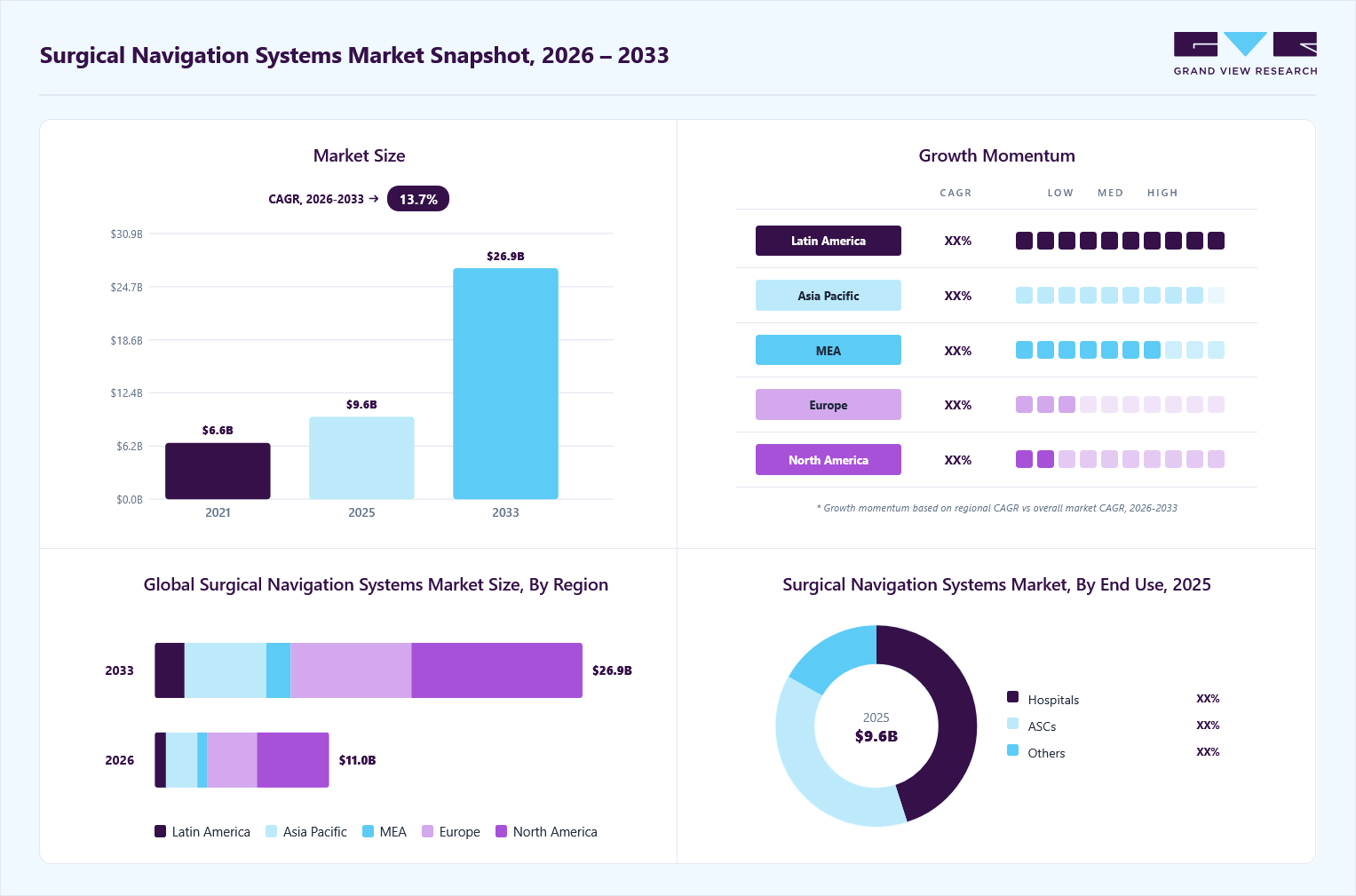
The global surgical navigation system market size was valued at USD 9.6 billion in 2025 and is projected to grow from USD 11.0 billion in 2026 to USD 26.9 billion by 2033, at a CAGR of 13.7% from 2026 to 2033. North America held the largest global share of 41.6% in 2025. The increasing demand for robot-assisted surgery, the growing need for minimally invasive surgical procedures, and the rising prevalence of target disorders are primarily expected to propel the growth.
Key Market Trends & Insights
- By technology: Electromagnetic segment led the market with revenue share of 41.4% in 2025.
- By application: Neurology segment held the largest market share of 35.5% in 2025.
- By end use: Hospital segment accounted for the largest revenue share in 2025.
Regional Highlights
- Largest regional market: North America (41.6% revenue share, 2025)
- Fastest-growing regional market: Asia Pacific (highest CAGR, 2026-2033)
- By country: The U.S. held the largest market share in 2025.
Market Size & Forecast
- Market size in 2025: USD 9.6 Billion
- Estimated market size in 2026: USD 11.0 Billion
- Projected market size by 2033: USD 26.9 Billion
- CAGR (2026-2033): 13.7%
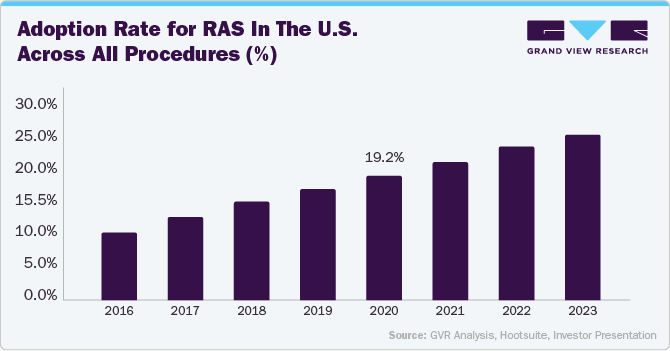
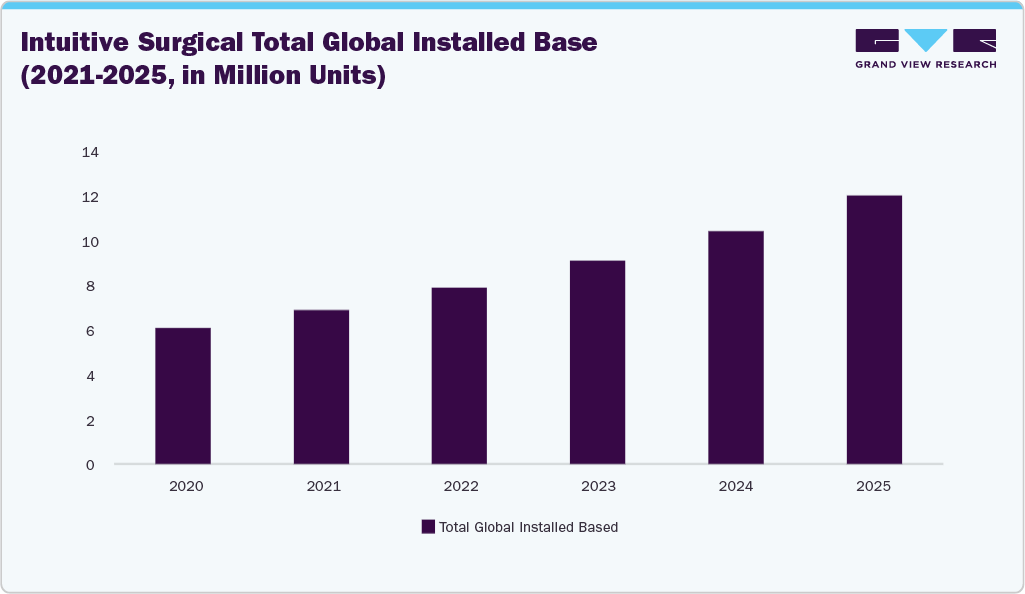
According to Intuitive Surgical's 2023 annual report, the installed base of da Vinci systems reached 8,606 units worldwide, with a substantial proportion located in key healthcare markets such as the U.S., Europe, and Asia. Moreover, an estimated 2,286,000 surgical procedures were completed using this technology in 2023 alone, highlighting the pivotal role of RAS in modern healthcare.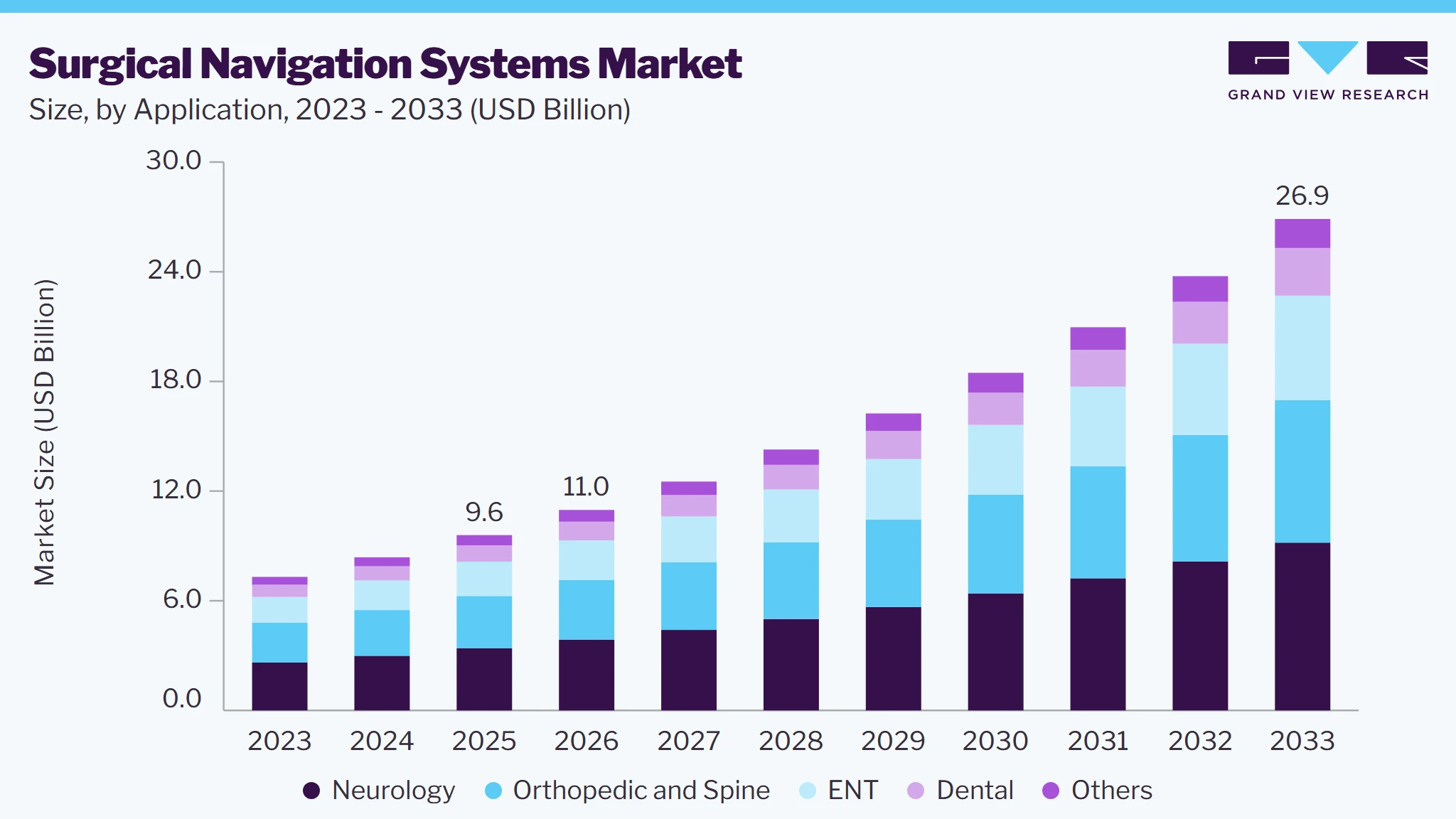
The adoption of minimally invasive surgeries to diagnose and treat various conditions is gaining wide acceptance globally. The introduction of image-guided systems and robotic systems for performing interventional procedures has resulted in surgeons' increased acceptance of minimally invasive surgeries. These procedures are an economical alternative to open surgeries. Moreover, healthcare budgets have slightly decreased as MIS costs are lower than open surgeries. Thus, increasing adoption of MIS aids in controlling healthcare-associated costs, thereby driving market growth.
Moreover, signs of aging, such as weakening of bones due to excessive loss of bone mass, common between 25 and 54 years of age, decreasing bone density, which becomes more prominent from 55 years & above, and the rapidly aging population is propelling the demand for orthopedic solutions globally. According to WHO's estimates published in October 2022, by 2030, one in six people worldwide will be aged 60 or above. People aged 60 and above will increase from 1 billion in 2020 to 1.4 billion in 2022. By 2050, the senior population aged 60 and above globally will double to 2.1 billion.
The growing recognition and support from government and regulatory bodies worldwide are driving the adoption of these systems. For instance, in January 2024, the National Safety Council, in collaboration with Amazon, introduced the MSD Solutions Index Pledge Community Report. This report highlights advancements in reducing musculoskeletal disorders in workplaces. Through a survey involving more than 50 prominent companies, the analysis pinpoints positive developments and areas needing improvement in preventing the most common workplace injury, which results in an annual cost of around USD 17 billion for employers. These factors are contributing to the growth of the surgical navigation systems market revenue.
Market Dynamics
The surgical navigation systems market is witnessing steady growth, driven by an increasing emphasis on surgical precision, patient safety, and improved clinical outcomes in complex procedures. These are advanced software and hardware platforms used intraoperatively to enable accurate, real-time positioning of surgical instruments within a three-dimensional anatomical framework. These systems integrate imaging modalities with tracking technologies, providing surgeons with continuous visual guidance during procedures.
Surgical navigation is increasingly adopted across multiple specialties, including neurosurgery, orthopedic surgery, spinal surgery, and ENT procedures, where anatomical precision is critical. The technology plays a key role in addressing challenges related to instrument placement accuracy, intraoperative orientation, and procedural consistency.
The market growth is supported by the rising adoption of minimally invasive surgical techniques, increasing volumes of orthopedic and neurological procedures, and continuous advancements in imaging, tracking systems, and navigation software. In addition, growing investments in operating room modernization, along with the integration of navigation platforms with robotic-assisted surgical systems, are expected to further accelerate market expansion over the forecast period.
The growing adoption of robot-assisted surgical systems is emerging as a key driver of the surgical navigation systems market, as healthcare providers increasingly prioritize precision, consistency, and minimally invasive approaches across complex procedures. Robot-assisted platforms enhance surgical accuracy, reduce variability, and improve patient outcomes, thereby accelerating the integration of advanced navigation and imaging guidance technologies in operating rooms.
By the end of 2025, the global installed base for Intuitive Surgical exceeded 11,000-12,000 units, with deployments concentrated in major healthcare markets including the United States, Europe, and rapidly expanding adoption in Asia-Pacific. This growing infrastructure has enabled a sharp increase in procedural throughput, with annual global robot-assisted surgical volumes exceeding 3.1-3.2 million procedures in 2025.
The robotic surgery ecosystem includes multiple system architectures and application-specific platforms, including multi-port systems, single-port systems, and adjunctive robotic technologies used in diagnostic and endoluminal procedures. This diversification has broadened the clinical applicability of robotic surgery beyond traditional specialties into areas such as thoracic surgery, colorectal procedures, and minimally invasive oncological interventions.
The shortage of trained surgeons and perioperative healthcare professionals capable of effectively operating surgical navigation systems remains a key restraint on market expansion. These systems require advanced proficiency in medical imaging interpretation, 3D anatomical mapping, intraoperative instrument tracking, and digitally guided surgical workflows, significantly increasing the learning curve compared to conventional surgical techniques.
The global healthcare system continues to face a structural workforce deficit. According to the World Health Organization (WHO), there is an estimated shortage of approximately 4.7 million surgeons, anesthetists, and obstetricians globally, with the burden most acute in low- and middle-income countries. In many regions, surgeon density remains extremely low, with studies indicating levels as low as 0.13-1.57 surgeons per 100,000 population in several LMICs, compared to significantly higher densities in high-income countries.
This workforce gap directly impacts the adoption of navigation-guided surgical systems, as effective utilization depends not only on availability of equipment but also on highly specialized clinical expertise and structured training ecosystems. Inadequate exposure to advanced surgical technologies during medical training further exacerbates adoption barriers, particularly in secondary and tertiary care centers.
Therefore, despite strong technological advancement and increasing demand for precision surgery, the limited availability of skilled surgical professionals and the steep learning curve associated with navigation-assisted procedures continue to act as a structural barrier to market penetration and scalability.
The integration of surgical navigation systems with robotic-assisted surgery, artificial intelligence (AI), and advanced imaging technologies represents one of the most significant growth opportunities in the market. Healthcare providers are increasingly investing in fully integrated digital operating rooms, where navigation, robotics, imaging, and AI-powered analytics operate within a unified surgical ecosystem to enhance precision, efficiency, and clinical outcomes.
AI-enabled surgical platforms are transforming both preoperative planning and intraoperative decision-making by enabling real-time anatomical mapping, predictive guidance, and enhanced visualization. These capabilities are particularly valuable in complex orthopedic, spinal, and neurosurgical procedures, where precision directly impacts patient safety and surgical success rates.
In parallel, surgical navigation manufacturers are increasingly embedding AI algorithms into their platforms to support implant positioning optimization, anomaly detection, workflow automation, and surgical decision support, thereby shifting navigation systems from visualization tools to intelligent surgical assistance platforms.
As hospitals continue to modernize operating rooms and adopt digitally integrated surgical ecosystems, demand is expected to shift toward multi-modal platforms that combine navigation, robotics, AI, and augmented visualization technologies. This transition is expected to unlock new revenue streams, including software licensing, system upgrades, and long-term service contracts.
Key Opportunities in the Market
Opportunity Area
Development / Example
Market Impact
AI-Powered Surgical Planning and Decision Support
AI is embedded into navigation systems to assist with preoperative planning, anatomical reconstruction, implant positioning, and intraoperative guidance.
Enhances surgical precision and workflow efficiency while enabling high-margin software-based revenue models and value-added clinical applications.
Augmented Reality (AR) and Mixed Reality Visualization
Next-generation navigation systems are integrating AR/MR technologies to project anatomical structures and instrument trajectories directly into the surgeon’s field of view.
Improves intraoperative visualization, enhances surgical precision, and supports the commercialization of premium, next-generation navigation platforms.
Market Concentration & Characteristics
The surgical navigation systems industry exhibits a moderate level of concentration. Characteristics include rapid technological advancements, such as the integration of artificial intelligence (AI) and remote monitoring. The industry showcases continuous innovation and expansion fueled by rising healthcare expenditure, the growing prevalence of chronic disorders, and the growing adoption of healthcare solutions.
The market is characterized by a high degree of innovation. Integrating Artificial Intelligence (AI) and Machine Learning (ML) in surgical navigation systems represents a significant advancement in modern medical technology. AI and ML algorithms enhance the precision and efficiency of these systems by analyzing vast amounts of data from preoperative imaging & real-time surgical data. This integration enables more accurate mapping of anatomical structures, reducing the likelihood of errors during surgery. For instance, AI-driven navigation systems can assist surgeons in planning complex procedures, predicting potential complications, and making real-time adjustments during surgery.
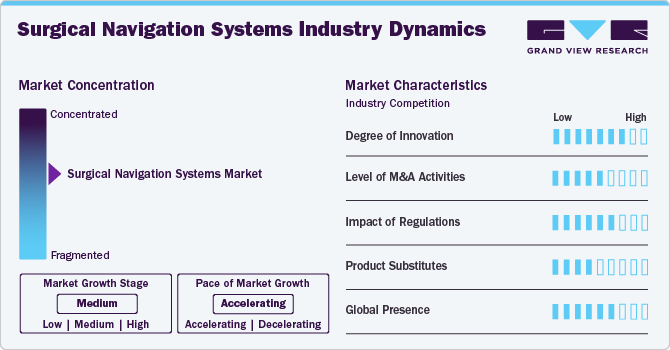
Regulations significantly impact the surgical navigation systems industry by ensuring patient safety, product quality, and efficacy. Companies invest substantial resources in R&D activities and regulatory submissions to obtain regulatory approval for pipeline products. For instance, in July 2023, Stryker announced the launch of its Q Guidance System, which offers cranial guidance software. It was further approved by the U.S. FDA in early 2023. This system aims to assist surgeons during cranial surgeries, such as craniotomies, skull base & transsphenoidal procedures, shunt placements, and biopsies. The software provides real-time guidance, enabling surgeons to accurately position instruments and identify patient anatomy.
Mergers and acquisitions in the industry are rising due to the need for research and development, reflecting the industry's dynamic nature. Companies are leveraging M&A activities to innovate and offer advanced solutions that meet the evolving needs of healthcare professionals. For instance, in January 2023, Orthofix, a global medical device company working majorly on spine and orthopedics, and SeaSpine, a medical technology company focusing on surgical disorders related to the spine, announced the completion of the merger of equals. The merger catalyzes Orthofix Medical, Inc. as the leading global orthopedics and spine company.
The substitutes for surgical navigation systems are fluoroscopy, ultrasound imaging, and robotic-assisted surgery systems. The presence of these substitutes creates competition which can drive innovation and improvements in existing systems as manufacturers strive to differentiate their products and maintain a competitive edge. Additionally, product substitutes may provide cost-effective alternatives, potentially influencing healthcare providers’ purchasing decisions. However, the introduction of substitutes could also fragment the market and create challenges for standardization and interoperability between different systems.
The industry is experiencing robust global expansion. Companies are implementing various strategies, such as distribution agreements, geographic expansion, and new product development, to improve their market penetration. For instance, in February 2024, Smith+Nephew announced a deal with NAVBIT for the exclusive distribution of the NAVBIT SPRINT in Australia. This technology is a compact, single-use, and user-friendly solution that provides orthopedic surgeons with a reliable navigation system for hip arthroplasty.
Analyst Perspective
The surgical navigation systems market is experiencing steady expansion, driven by the increasing demand for precision-guided, minimally invasive, and technology-assisted surgical procedures across orthopedic, spinal, neurosurgical, and ENT specialties. Hospitals and surgical centers are increasingly prioritizing systems that enhance intraoperative accuracy, reduce surgical variability, and improve patient outcomes, particularly in complex and high-risk procedures.
Advancements in imaging technologies, real-time instrument tracking, AI-assisted surgical planning, and robotic-assisted surgery integration are significantly broadening the clinical utility of surgical navigation platforms. These innovations are enabling more accurate preoperative planning, improved intraoperative decision-making, and enhanced surgical consistency across procedures.
A key competitive advantage in this market will lie with manufacturers and providers that successfully transition from standalone navigation systems to fully integrated digital surgery ecosystems. This includes the convergence of navigation with robotics, intraoperative imaging, augmented reality visualization, and AI-driven analytics within a unified operating room workflow.
Technology Insights
Based on technology, the electromagnetic segment led the market with the largest revenue share of 41.4 % in 2025. Electromagnetic systems are less expensive and provide a better line of sight compared to other surgical navigation systems which drives the segment growth. Electromagnetic Navigation (EMN) is a cutting-edge technology that has revolutionized the field of minimally invasive surgery. By providing real-time guidance to surgeons, EMN enables them to perform complex procedures with enhanced precision, leading to improved patient outcomes. According to a study by National Center for Biotechnology Information (NCBI), EMN is proven to be a safe and efficient method for percutaneous pedicle screw placement. The EMN system offers advantages over robot-assisted systems, including faster guidewire placement and reduced X-ray exposure.
The optical segment is anticipated to witness the fastest growth over the forecast period. Optical technologies offer high precision and accuracy, allowing for real-time tracking of surgical instruments and providing detailed anatomical information during procedures which drive the segment growth. For instance, NDI’s Polaris optical trackers have been widely adopted in the medical field due to their high performance and reliability. They are used for various applications such as orthopedic, neuro, ENT, spinal, and CMF surgeries. The trackers use infrared light to determine the position and orientation of surgical tools, providing accurate real-time feedback to surgeons.
Application Insights
Based on application, the neurology segment led the market with the largest revenue share of 35.5% in 2025. Substantial investments by private companies in neurology equipment, increasing R&D in the field of neurotherapy, the rising incidence of neurological illnesses, and the rapidly aging population are driving the segment growth. As per data published by the World Federation of Neurology in October 2023, neurological disorders are the second-highest cause of mortality and disability worldwide. According to a Global Burden of Disease (GBD) study, it is estimated that the number of individuals living with neurological disorders will double by 2050.
The ENT segment is anticipated to grow at the fastest CAGR over the forecast period. The rising prevalence of target disorders, such as ENT disorders, along with the increasing geriatric population is expected to propel segment growth. According to WHO, by 2050, about 2.5 billion individuals, or one in every four people, will have some degree of hearing loss. Furthermore, at least 700 million of these people are likely to require ear and hearing care, as well as other rehabilitative services, which is projected to drive the market growth.
End-use Insights
Based on end-use, the Hospital segment led the market with the largest revenue share of 45.0% in 2025. Technologically advanced medical devices are extensively used in hospitals to improve Point-of-Care. These devices simplify the treatment procedures and enable faster & more accurate results. Hospitals also provide a large array of treatment options for pain management and orthopedic procedures. Owing to these factors, the segment is expected to continue witnessing steady growth. Furthermore, ongoing technological innovations in medical devices can be attributed to the growing adoption of navigation systems over the forecast period.
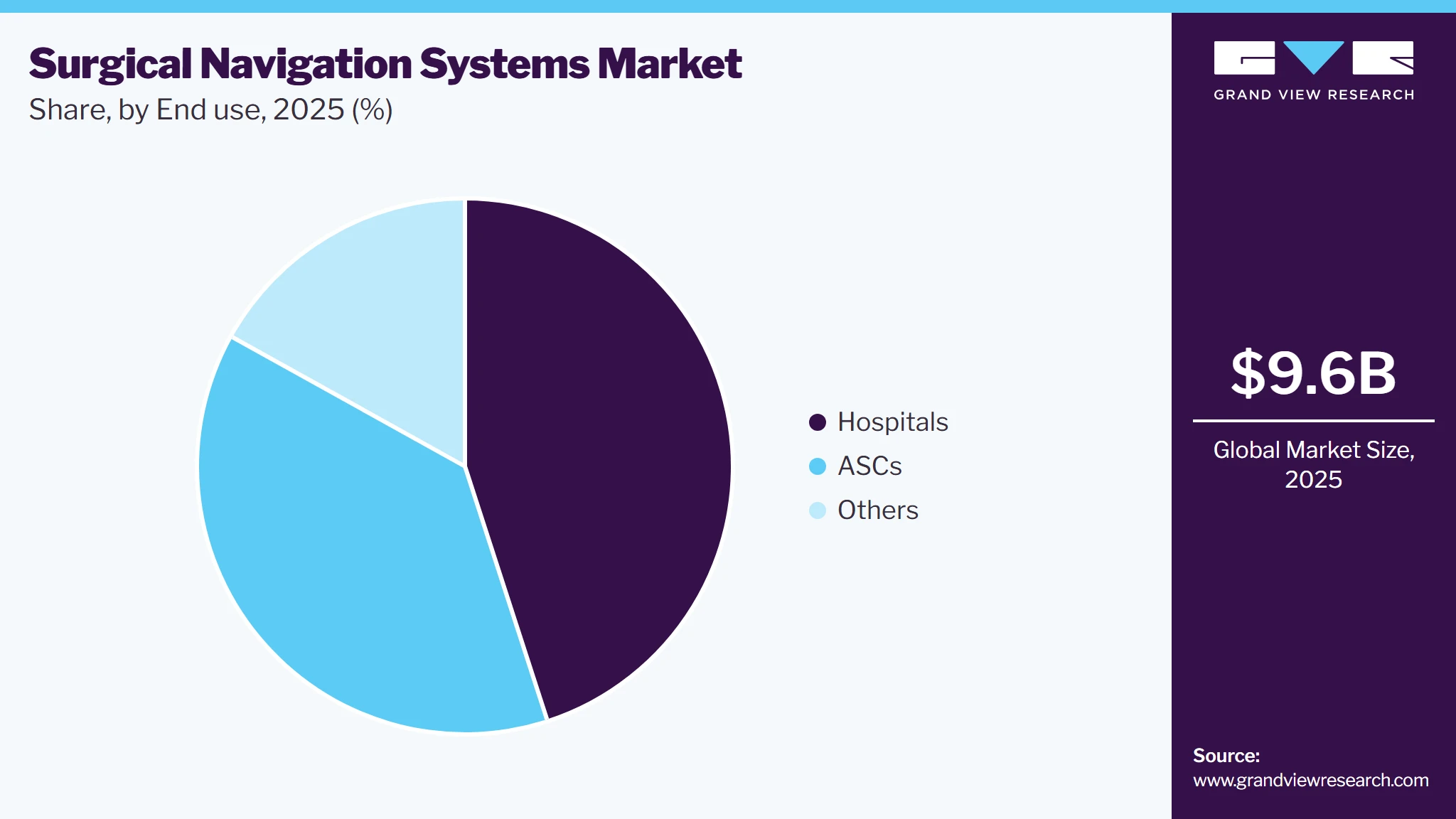
The ambulatory surgical centers (ASCs) segment is anticipated to grow at the fastest rate during the forecast period. High adoption of ASCs in developed countries, shortage of hospital beds, and scarce economic resources are some of the factors expected to boost the segment growth. Advantages of daycare surgery include a shorter waiting list, quick discharge, reduced procedural cost, and higher efficiency. These factors are expected to further fuel growth.
Regional Insights
North America dominated the surgical navigation system market with the largest revenue share of 41.6 % in 2025. Factors such as growing investment in advancing healthcare infrastructure and adopting advanced medical technologies contribute to the increasing adoption of surgical systems. For instance, in May 2022, post extensive review and collaboration with experts nationwide, the Healthcare Information and Management Systems Society, Inc. proposed an investment of approximately USD 36.7 billion over a decade to modernize state, local, territorial, and tribal public health infrastructure. This funding aims to enhance readiness for existing and emerging public health emergencies.

U.S. Surgical Navigation Systems Market Trends
The surgical navigation system market in the U.S. held the largest share in the North America region in 2025. The growth is attributed to the rising prevalence of osteoarthritis, osteoporosis, ENT issues, and neurological conditions. The increasing geriatric population in developed economies, such as the U.S. and Canada, is expected to propel the market. Furthermore, technological advancements in surgical navigation systems contribute to market growth. Incorporating artificial intelligence, machine learning, robotics, and real-time imaging technologies has greatly enhanced the precision and efficiency of surgeries. These technological improvements have minimized the risk of surgical complications and led to better patient outcomes. Thus, surgeons and healthcare facilities tend to adopt surgical navigation systems quickly, boosting market growth.
Europe Surgical Navigation Systems Market Trends
The surgical navigation systems market in Europe is witnessing growth fueled by greater healthcare spending and a growing older population with a higher incidence of bone injuries and obesity. Moreover, Europe has facilitated the integration of advanced surgical navigation systems in hospitals and clinics. In addition, the growing prevalence of chronic diseases and the rapidly aging population have necessitated more complex and specialized surgical procedures, fueling the demand for advanced navigation systems.
The UK surgical navigation systems market is one of the major markets in the European region. The growth is attributed to the increasing number of regulatory approvals; growing adoption of minimally invasive surgical procedures; agreements, partnerships, & collaborations among market players; rising incidence of neurological and orthopedic disorders; and high prevalence of ENT disorders. For instance, according to Brain Research UK, around 11 million people live with a neurological condition in the country. One in six UK individuals has a neurological condition. Thus, all the factors contribute to the growth of the market.
The surgical navigation systems market in Germany is projected to expand during the forecast period. The rising number of robot-assisted surgeries nationwide is expected to drive the demand for surgical navigation systems. According to NLM’s July 2023 article, the utilization of robot-assisted systems in general surgery has grown in recent years, with Germany showcasing a rapid increase in installations. In 2018, approximately 100 robot-assisted systems were in operation in German hospitals, and by 2022, this number had surged to over 200.
Asia Pacific Surgical Navigation Systems Market Trends
The Asia Pacific surgical navigation systems market is expected to grow at the fastest CAGR from 2026 to 2033. This growth can be attributed to an increasing aging population, growing healthcare awareness, and rapidly developing economies. The geriatric population is more susceptible to orthopedic disorders, presenting a large target population in the region, with Japan, China, and India being the major regional contributors. In addition, high-untapped opportunities, rising interest of companies in expanding their presence in this region, and continuous R&D activities by key market players for better innovative products are expected to fuel the market. For instance, in June 2023, Zeta Surgical successfully treated the first patient using its cranial navigation system in a pioneering human trial at the National Neuroscience Institute (NNI), Singapore.
China surgical navigation systems market is expected to grow at the fastest rate. The increasing demand for advanced surgical navigation systems for minimally invasive surgery encourages manufacturers to develop technologically advanced surgical navigation systems. Furthermore, favorable government initiatives and strategies propel market growth. For instance, according to the country’s National Healthcare Security Administration, China’s healthcare security system provided medical assistance to 250 million patients in 2023. Moreover, China’s medical assistance funds increased from USD 0.18 billion in 2005 to USD 10.2 billion in 2023. Thus, the rise in such programs can fuel market growth.
The India surgical navigation systems market holds a significant share of the Asia Pacific regional market revenue. The growing geriatric population and the rising prevalence of diseases, such as osteoarthritis and diabetes, are expected to drive the surgical navigation systems market in India. In addition, increasing road accidents are expected to drive the market during the forecast period. For instance, according to an article published by the International Journal of Health Sciences and Research in October 2023, India experiences a significantly higher rate of proliferative osteoarthritis on a global scale, with the occurrence of knee osteoarthritis in the country ranging between 22% and 39%.
Lating America Surgical Navigation Systems Market Trends
The surgical navigation systems market in Latin America is experiencing significant growth due to the presence of a large pool of healthcare human resources and tech entrepreneurs in the region. In addition, the use of immersive Augmented Reality (AR) in surgical navigation is a significant development in medical technology. According to a PR Newswire article published in November 2023, the first cranial surgery in Latin America was conducted using immersive AR surgical navigation, which signifies a major advancement in medical technology adoption in the region.
MEA Surgical Navigation Systems Market Trends
The surgical navigation systems market in the Middle East Africa is expected to witness significant growth over the forecast period. The growing adoption of advanced medical technologies is increasing awareness about the benefits of AR-based surgical navigation systems. This is expected to boost the demand for such advanced solutions in the region as healthcare providers seek to improve patient outcomes and surgical efficiency. For instance, in January 2022, an Omani hospital became the first in the Middle East and North Africa to adopt the ClarifEye AR spinal surgical navigation system. This development highlights the increasing acceptance and integration of cutting-edge navigation systems in healthcare.
Saudi Arabia surgical navigation systems market is anticipated to expand during the forecast period due to increasing awareness, knowledge, and training facilities provided. For instance, Surgical Navigation Technologies (SNT) provides crucial information driving the expansion of the surgical navigation systems market by educating healthcare professionals and institutions about the latest advancements & benefits. By highlighting its products’ precision, efficiency, and potential for improving surgical outcomes, SNT fosters confidence among surgeons & hospital administrators. Ultimately, by showcasing real-world applications and success stories, SNT’s website plays a pivotal role in driving adoption and growth within the surgical navigation systems market.
Key Surgical Navigation Systems Company Insights
The global market is highly competitive. Key companies deploy strategic initiatives, such as product development, launches, and sales & marketing strategies, to increase product awareness and regional expansions and partnerships to strengthen their market share. Market players are also involved in conducting clinical testing of their products, patent applications, and increasing product penetration.
Key Surgical Navigation Systems Companies
The following key companies have been profiled for this study on the surgical navigation systems market.
-
Medtronic
-
Corin Group
-
Amplitude Surgical
-
Siemens Healthineers AG
-
DePuy Synthes
-
KARL STORZ SE & CO.KG
-
B. Braun Melsungen AG
-
Zimmer Biomet
-
Smith+Nephew
-
Stryker
Competitive Benchmarking
Operating Strategies
Competitive Edge
Weaknesses
Mature Players: Medtronic, Stryker
- Focus on integrated surgical ecosystems combining navigation, robotics, implants, and digital OR platforms.
- Strengthen hospital contracts via enterprise-level agreements and capital equipment bundling.
- Strong global distribution networks and ability to offer end-to-end surgical solutions (implants + navigation + robotics).
- High R&D capability and financial strength enable continuous innovation and platform integration.
- High product complexity increases integration and regulatory burden.
- Large portfolio structures may slow innovation cycles.
- High pricing can limit adoption in cost-sensitive markets and ASCs
Emerging Players: Siemens Healthineers AG
- Focus on image-guided surgery suites, hybrid OR solutions, and AI-powered imaging analytics.
- Expand collaborations with surgical OEMs to embed navigation into imaging ecosystems.
- Strong leadership in medical imaging provides a natural advantage in image-to-navigation and real-time surgical visualization accuracy.
- Strong presence in hospital infrastructure and diagnostic ecosystems.
- Limited direct surgical device portfolio compared to orthopedic/implant leaders.
- Dependence on partnerships for surgical instrumentation and procedure-specific adoption.
Recent Developments
-
In June 2024, KARL STORZ Endoscopy-America, Inc., a branch of KARL STORZ SE & Co. KG, agreed to merge with Asensus Surgical, Inc. This merger would create a leading surgical robotics division within KARL STORZ.
-
In April 2024, Medtronic introduced its NeuroSmartTM Portable Micro Electrode Recording (MER) Navigation system in India for the treatment of Parkinson’s disease using DBS.
-
In July 2023, Stryker introduced the Q Guidance System along with Cranial Guidance Software to give surgeons an image-based planning and intraoperative guidance system. This system helps surgeons position instruments and identify patient anatomy during cranial surgery.
Surgical Navigation Systems Market Report Scope
Report Attribute
Details
Market size in 2025
USD 9.6 billion
Estimated market size in 2026
USD 11.0 billion
Projected market size by 2033
USD 26.9 billion
Growth rate
CAGR of 13.7% from 2026 to 2033
Historical data
2021 - 2025
Forecast period
2026 - 2033
Quantitative units
Revenue in USD million/billion and CAGR from 2026 to 2033
Report coverage
Revenue forecast, company ranking, competitive landscape, growth factors, and trends
Segments covered
Technology, application, end-use, region
Regional scope
North America; Europe; Asia Pacific; Latin America; MEA
Country scope
U.S.; Canada; Mexico; Germany; UK; France; Italy; Spain; Norway; Denmark; Sweden; China; Japan; India; South Korea; Australia; Thailand; Brazil; Argentina; Saudi Arabia; South Africa; UAE; Kuwait
Key companies profiled
Medtronic, Corin Group, Amplitude Surgical, Siemens Healthineers AG, DePuy Synthes,KARL STORZ SE & CO.KG, B. Braun Melsungen AG, Zimmer Biomet, Smith+Nephew, Stryker
Customization scope
Free report customization (equivalent up to 8 analysts' working days) with purchase. Addition or alteration to country, regional & segment scope.
Pricing and purchase options
Avail customized purchase options to meet your exact research needs. Explore purchase options
Global Surgical Navigation Systems Market Report Segmentation
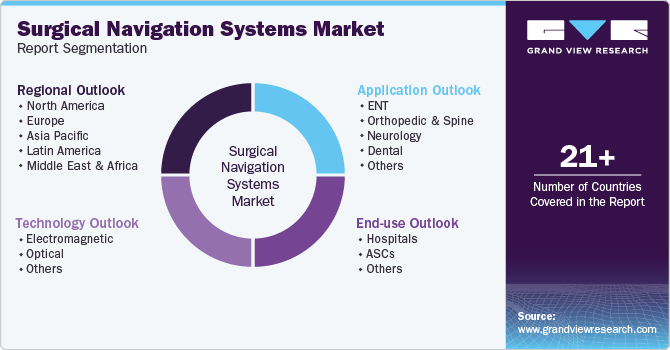
This report forecasts revenue growth at country levels and provides an analysis on the latest industry trends and opportunities in each of the sub-segments from 2021 to 2033. For the purpose of this study, Grand View Research has segmented the global surgical navigation systems market report on the basis of technology, application, end use, and region:
-
Surgical Navigation Systems Market by Technology Outlook (Revenue, USD Million, 2021 - 2033)
-
Electromagnetic
-
Optical
-
Others
-
-
Surgical Navigation Systems Market by Application Outlook (Revenue, USD Million, 2021 - 2033)
-
ENT
-
Orthopedic and Spine
-
Hip Surgery
-
Spine Surgery
-
Knee Surgery
-
-
Neurology
-
Dental
-
Others
-
-
Surgical Navigation Systems Market by End use Outlook (Revenue, USD Million, 2021 - 2033)
-
Hospitals
-
ASCs
-
Others
-
-
Surgical Navigation Systems Market by Region Outlook (Revenue, USD Million, 2021 - 2033)
-
North America
-
U.S.
-
Canada
-
Mexico
-
-
Europe
-
UK
-
Germany
-
France
-
Italy
-
Spain
-
Norway
-
Sweden
-
Denmark
-
-
Asia Pacific
-
Japan
-
China
-
India
-
Australia
-
South Korea
-
Thailand
-
-
Latin America
-
Brazil
-
Argentina
-
-
Middle East & Africa
-
South Africa
-
Saudi Arabia
-
UAE
-
Kuwait
-
-
Research Methodology
The surgical navigation systems market figures in this report are based on a proven research process that combines executive interviews with secondary research from proprietary databases, company filings, and recognized regulatory and institutional sources. Market size is built through value-chain sizing - reconciling supply-side and demand-side estimates - and triangulated with bottom-up and top-down approaches. Every estimate passes multiple levels of expert validation before publication, with each surgical navigation systems quantified using the revenue-capture definitions in the table below.
Segment Definition
Segment - Technology
Revenue capture definition
Electromagnetic
This segment includes surgical navigation systems that utilize electromagnetic field tracking technology to monitor the position of surgical instruments in real time. These systems are commonly used in procedures where direct line-of-sight tracking is difficult.
Optical
This segment includes navigation systems that use infrared cameras and optical trackers to provide real-time instrument localization and anatomical guidance during surgical procedures. Optical systems are widely used in orthopedic, spine, and neurosurgical applications.
Others
Alternative navigation technologies such as hybrid tracking systems and emerging navigation platforms that combine multiple tracking modalities to support surgical guidance and workflow optimization.
Segment - Application
Revenue capture definition
ENT
This segment includes surgical navigation systems used in ear, nose, and throat procedures, including sinus surgery, skull base surgery, and other complex ENT interventions requiring precise anatomical localization.
Orthopedic and Spine
This segment includes navigation systems utilized during orthopedic and spinal procedures for accurate implant placement, alignment correction, deformity management, and instrument guidance.
Orthopedic and Spine, by Type Segment
Hip Surgery
This segment includes surgical navigation systems used during hip replacement, hip resurfacing, and revision hip procedures. These systems assist surgeons in achieving accurate implant positioning, alignment, and restoration of joint biomechanics.
Spine Surgery
This segment includes surgical navigation systems utilized in spinal fusion, deformity correction, vertebral fixation, and other spine procedures. Navigation technology supports precise instrument guidance and implant placement while improving surgical accuracy.
Knee Surgery
This segment includes surgical navigation systems used in total knee replacement, partial knee replacement, and revision knee procedures. These systems help optimize implant alignment, ligament balancing, and overall procedural precision to improve patient outcomes.
Neurology
This segment includes navigation systems used in neurosurgical procedures such as brain tumor resection, cranial surgery, and other neurological interventions that require high levels of surgical precision.
Dental
This segment includes navigation systems used in dental implant placement, oral and maxillofacial surgery, and other dental procedures requiring accurate treatment planning and surgical guidance.
Others
Navigation systems used in additional surgical specialties such as trauma, oncology, and other procedures where image-guided surgical navigation supports clinical outcomes.
Segment - End-use
Revenue capture definition
Hospitals
This segment includes revenues generated from surgical navigation systems installed in public and private hospitals, where they are utilized across multiple surgical specialties and operating rooms.
Ambulatory Surgical Centers
This segment includes navigation systems deployed in outpatient surgical facilities that perform same-day procedures, particularly orthopedic, spine, and ENT surgeries.
Others
Navigation systems used in specialty clinics, academic medical centers, research institutions, and other healthcare facilities performing navigation-guided surgical procedures.
Estimation Model
This research methodology outlines the approach used to estimate the size of the global surgical navigation systems market for the period 2021 to 2033.
A triangulated market sizing approach was used, combining:
-
Bottom-Up Analysis based on installed base of surgical navigation systems, utilization rates per system, procedure throughput, and average selling price (ASP) trends
-
Top-Down Validation using surgical procedure volumes, hospital capital expenditure data, orthopedic and neurosurgical incidence rates, and industry association publications
-
Primary Research with surgeons, hospital procurement heads, biomedical engineers, OEMs, distributors, and healthcare consultants
Step-by-Step Market Estimation Process
1. Procedure-Driven Clinical Utilization Model
This model estimates market demand based on the number of surgeries requiring navigation-assisted guidance and the penetration of navigation systems across procedures.
-
Step 1: Country-level procedure volumes were collected for key specialties such as neurosurgery, orthopedic surgery, spine surgery, and ENT surgery using hospital databases, WHO datasets, and specialty associations (e.g., orthopedic and neurosurgical societies).
-
Step 2: A surgical navigation adoption rate was applied, estimating the percentage of procedures performed using navigation assistance. Adoption rates were derived from primary interviews, hospital surveys, and OEM disclosures.
-
Step 3: Average utilization per installed system was estimated (procedures per system per year), considering hospital type (tertiary care hospitals, academic centers, ASCs where applicable).
-
Step 4: Market size was derived by linking procedure volume × adoption rate × ASP per procedure equivalent (or system utilization equivalent).
-
Step 5: Calculations were performed at the country level and aggregated to regional and global estimates.
-
Step 6: Forecasts incorporated growth in minimally invasive surgery, aging population trends, and robotic surgery penetration.
2. Installed Base and Capital Equipment Revenue Model
This model estimates market size based on the installed base of surgical navigation systems and associated capital equipment revenue.
-
Step 1: Installed base of surgical navigation systems was estimated using OEM disclosures, hospital procurement records, tender databases, and distributor sales tracking.
-
Step 2: Average selling price (ASP) per system was benchmarked across product types (optical navigation, electromagnetic navigation, hybrid systems, robotic-integrated navigation platforms).
-
Step 3: Serviceable installed base was adjusted based on system lifecycle, replacement cycles, and upgrade frequency.
-
Step 4: Country-level revenue was calculated using installed systems × ASP + recurring service/software revenue.
-
Step 5: Regional and global market size was derived through aggregation of country-level estimates.
-
Step 6: Adjustments were applied for system upgrades, AI/software integration, and robotic compatibility enhancements.
3. Procedure-to-System Penetration Model
This model links surgical procedure volumes with navigation system penetration rates to validate demand consistency.
-
Step 1: Total annual surgical procedure volumes were mapped across orthopedic, spinal, neurosurgical, ENT, and other image-guided surgeries.
-
Step 2: Navigation penetration rate per procedure category was applied based on clinical adoption maturity (high in neurosurgery/spine, moderate in orthopedics, emerging in ENT).
-
Step 3: Number of navigation-assisted procedures was estimated at country and regional levels.
-
Step 4: Average revenue per procedure-equivalent utilization was derived using system utilization rates and service revenue models.
-
Step 5: Market size was validated against installed base and capital equipment models to ensure consistency.
-
Step 6: Forecasts incorporated increasing adoption of robotic-assisted and AI-integrated navigation systems.
Geographic Demand Potential Index (GDPI) Validation Model
A Geographic Demand Potential Index (GDPI) model was developed to benchmark demand for surgical navigation systems across countries and regions. The model incorporates key healthcare infrastructure and demand-side indicators:
-
Surgical Procedure Volume Density (per 100,000 population)
-
Healthcare Capital Expenditure (hospital investment intensity)
-
Penetration of Minimally Invasive and Robotic Surgery
-
Availability of Tertiary and Academic Hospitals (navigation adoption hubs)
Each country was assigned a normalized GDPI score to estimate its relative share of global demand for surgical navigation systems. These scores were used to validate outputs from the core models and ensure alignment with real-world adoption patterns and healthcare infrastructure maturity.
Final Market Triangulation
The final global surgical navigation systems market size was derived through triangulation of:
-
Procedure-Driven Clinical Utilization Model
-
Installed Base and Capital Equipment Revenue Model
-
Procedure-to-System Penetration Model
-
Geographic Demand Potential Index (GDPI) Validation Model
The weighted average of these models, validated through primary interviews and secondary industry sources, was used to generate historical estimates (2021-2025) and forecast projections (2026-2033) for the global surgical navigation systems market.
Delivered Customizations
This report has been delivered with the following In-depth customizations
Client Request
Customization Delivered
Value Adds
Procedure Volume Analysis by Surgical Specialty
Developed a comprehensive assessment of surgical navigation–assisted procedure volumes across key surgical specialties, including orthopedic & spine surgery, neurosurgery, ENT, and other image-guided procedures. The analysis evaluates procedure growth trends, navigation adoption rates, clinical utilization intensity, and regional variations in specialty-wise demand.
Enables stakeholders to identify high-growth surgical segments, optimize commercial and clinical strategy, prioritize product development pipelines, and target specialties with the highest navigation adoption potential and revenue contribution.
Hospital Adoption and Installed Base Assessment
Conducted an in-depth evaluation of surgical navigation system deployment across hospitals, ambulatory surgical centers (ASCs), and specialty surgical clinics. The study includes analysis of installed base distribution, capital equipment procurement cycles, replacement timelines, utilization rates, and regional penetration of navigation technologies.
Provides actionable insights for capital equipment sales strategy, customer segmentation, replacement cycle forecasting, expansion planning, and long-term installed base monetization through service contracts and upgrades.
AI, Robotics, and Digital Surgery Integration Assessment
Performed a detailed evaluation of the integration of surgical navigation systems with robotic-assisted surgery platforms, artificial intelligence, augmented reality (AR), mixed reality (MR), and advanced intraoperative imaging systems. The analysis benchmarks technology adoption maturity, innovation pipelines, and competitive positioning across global OEMs.
Helps stakeholders identify next-generation growth opportunities, strengthen platform differentiation, accelerate digital surgery strategy, and capture value from the convergence of navigation, robotics, and AI-enabled surgical ecosystems.
Frequently Asked Questions About This Report
Some key players operating in the surgical navigation systems market include Medtronic, Corin Group, Amplitude Surgical, Siemens Healthineers AG, DePuy Synthes,KARL STORZ SE & CO.KG, B. Braun Melsungen AG, Zimmer Biomet, Smith+Nephew, Stryker
Key factors that are driving the surgical navigation systems market growth include the rising demand for minimally invasive surgeries coupled with the increasing prevalence of target disorders such as osteoarthritis, brain cancer, and ENT disorders.
The global surgical navigation systems market size was estimated at USD 9.6 billion in 2025 and is expected to reach USD 11.0 billion in 2026.
The global surgical navigation systems market is expected to grow at a compound annual growth rate of 13.7% from 2026 to 2030 to reach USD 26.9 billion by 2033.
Neurology segment led the market with the largest revenue share of 35.5% in 2025. Substantial investments by private companies in neurology equipment, increasing R&D in the field of neurotherapy, the rising incidence of neurological illnesses, and the rapidly aging population are driving the segment growth.
North America dominated with a 41.6% revenue share in 2025.
Asia Pacific is the fastest-growing region over the forecast period.
Electromagnetic segment led the market with revenue share of 41.4% in 2025 while optical segment is is expected to be the fastest-growing market.
Based on end-use, the Hospital segment led the market with the largest revenue share of 45.0 % in 2025.
About the Author(s)
Medical Devices Research Team
Healthcare · Medical DevicesThis report was authored by the medical devices research team at Grand View Research - comprising two research analysts, one senior research analyst, and one industry expert - with specialized expertise in the medical devices segment of the healthcare industry. All findings are based on proprietary healthcare databases, executive interviews, and regulatory analysis, subject to internal peer review prior to publication.
Last Updated:
Speak to Analyst


Customize this report to your needs — add regions, segments, or data points, with 20% free customization.
Or view our licence options:


ISO 9001:2015 & 27001:2022 Certified
We are GDPR and CCPA compliant! Your transaction & personal information is safe and secure. For more details, please read our privacy policy.


