
- Home
- »
- Plastics, Polymers & Resins
- »
-
Sustainable Packaging For Food Market Size Report, 2033GVR Report cover
![Sustainable Packaging For Food Market Size, Share & Trends Report]()
Sustainable Packaging For Food Market (2025 - 2033) Size, Share & Trends Analysis Report By Material (Paper, Plastic, Metal, Glass), By Type (Flexible, Rigid, Semi-rigid), By Region, And Segment Forecasts
- Report ID: GVR-4-68040-783-8
- Number of Report Pages: 120
- Format: PDF
- Historical Range: 2021 - 2023
- Forecast Period: 2025 - 2033
- Industry: Bulk Chemicals
- Report Summary
- Table of Contents
- Segmentation
- Methodology
- Download FREE Sample
-
 Download Sample Report
Sustainable Packaging For Food Market Summary
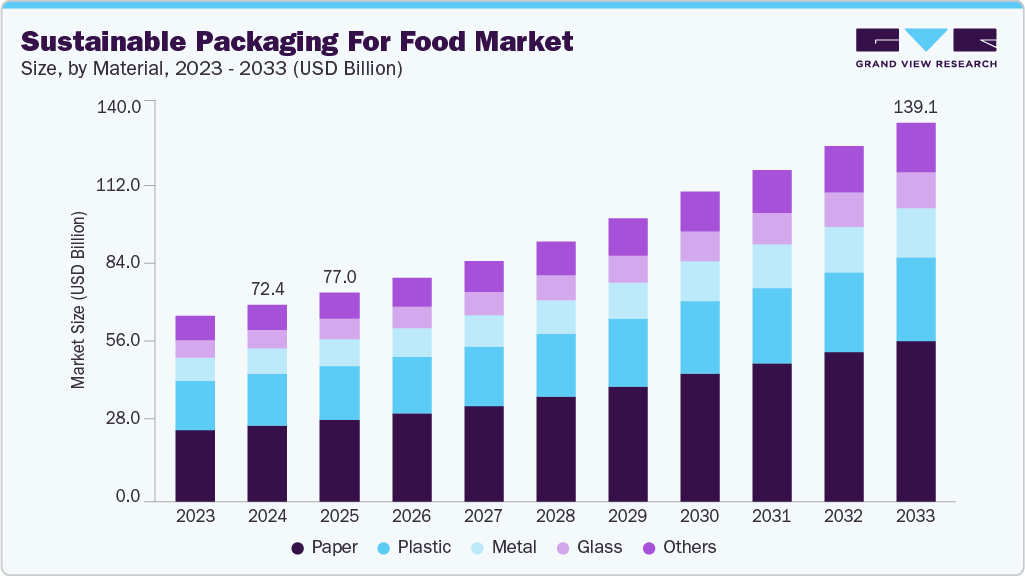
The global sustainable packaging for food market size was estimated at USD 72.41 billion in 2024 and is projected to reach USD 139.14 billion by 2033, growing at a CAGR of 7.7% from 2025 to 2033. The market is driven by increasing consumer demand for eco-friendly and recyclable packaging, alongside stringent government regulations promoting waste reduction and sustainability in the food industry.
Key Market Trends & Insights
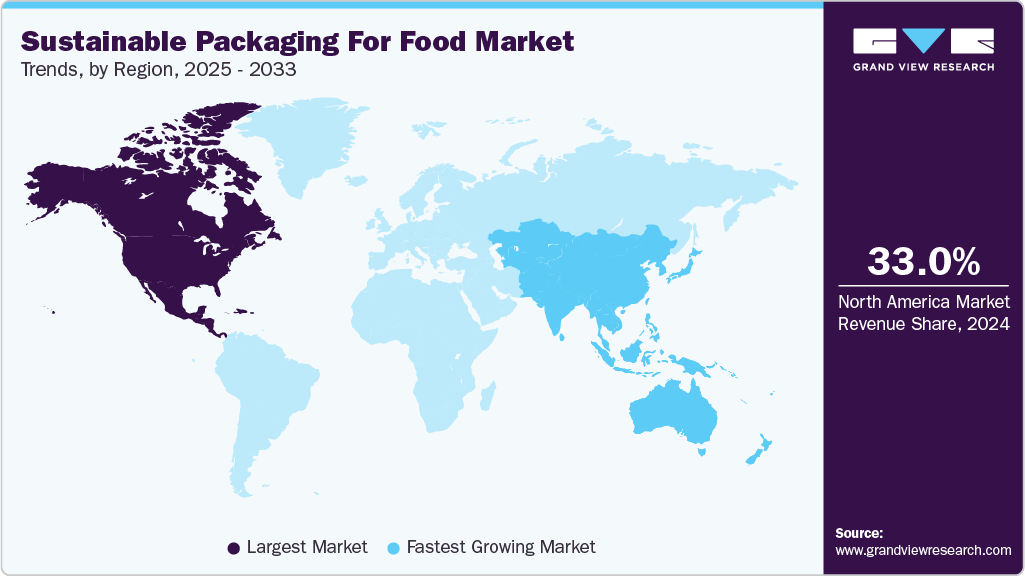
- North America dominated the sustainable packaging for food industry with the largest revenue share of over 33.0% in 2024.
- The sustainable packaging for food industry in the U.S. is expected to grow at a substantial CAGR of 8.1% from 2025 to 2033.
- By material, the paper segment is expected to grow at a considerable CAGR of 8.8% from 2025 to 2033 in terms of revenue.
- By type, the flexible packaging segment is expected to grow at a considerable CAGR of 8.1% from 2025 to 2033 in terms of revenue.
Market Size & Forecast
- 2024 Market Size: USD 72.41 Billion
- 2033 Projected Market Size: USD 139.14 Billion
- CAGR (2025-2033): 7.7%
- North America: Largest Market
- Asia Pacific: Fastest Growing Market
Consumer demand for eco-friendly packaging solutions is on the rise, with individuals increasingly seeking products that align with their environmental values. This shift in consumer behavior is prompting brands to adopt sustainable packaging materials and practices to meet these expectations. For instance, companies like ITC Ltd have reported a 2.4-fold increase in the use of sustainable plastic alternatives over 2022 to 2025, reflecting a broader industry trend towards sustainability.Regulatory pressures are also playing a pivotal role in shaping the sustainable packaging landscape. Governments worldwide are implementing stringent regulations to curb plastic waste and promote recycling. In the U.S., states such as California and New York have enacted bans on single-use plastics, compelling businesses to explore alternative materials such as molded fiber and bagasse. Similarly, the European Union's Single-Use Plastics Directive mandates compostable packaging for takeaway food, driving companies to adopt more sustainable practices.
Technological advancements are further accelerating the adoption of sustainable packaging solutions. Innovations in materials science have led to the development of biodegradable and compostable packaging options, such as bioplastics derived from renewable sources such as corn starch and sugarcane. These materials offer comparable performance to traditional plastics while reducing environmental impact. Companies such as Xampla are pioneering the use of plant protein-based packaging, aiming to replace billions of single-use plastic products with biodegradable alternatives.
The rise of e-commerce and food delivery services has also contributed to the demand for sustainable packaging. With the increasing popularity of online grocery shopping and meal delivery platforms, there is a growing need for packaging that ensures product safety and quality while minimizing environmental impact. For example, Uber Eats has partnered with companies offering eco-friendly packaging solutions to reduce the environmental footprint of food delivery services. This trend underscores the importance of sustainable packaging in meeting the needs of modern consumers and businesses alike.
Market Concentration & Characteristics
Sustainable packaging for food industry is experiencing rapid growth due to increasing awareness of environmental issues and consumer preference for eco-friendly products. The market is dynamic and influenced by evolving regulations, innovations in materials, and shifts in consumer behavior. Companies are actively investing in research and development to introduce biodegradable, compostable, and recyclable packaging solutions. The demand is particularly high in regions such as Europe, North America, and Asia Pacific, where consumers and governments are pushing for stricter environmental standards.
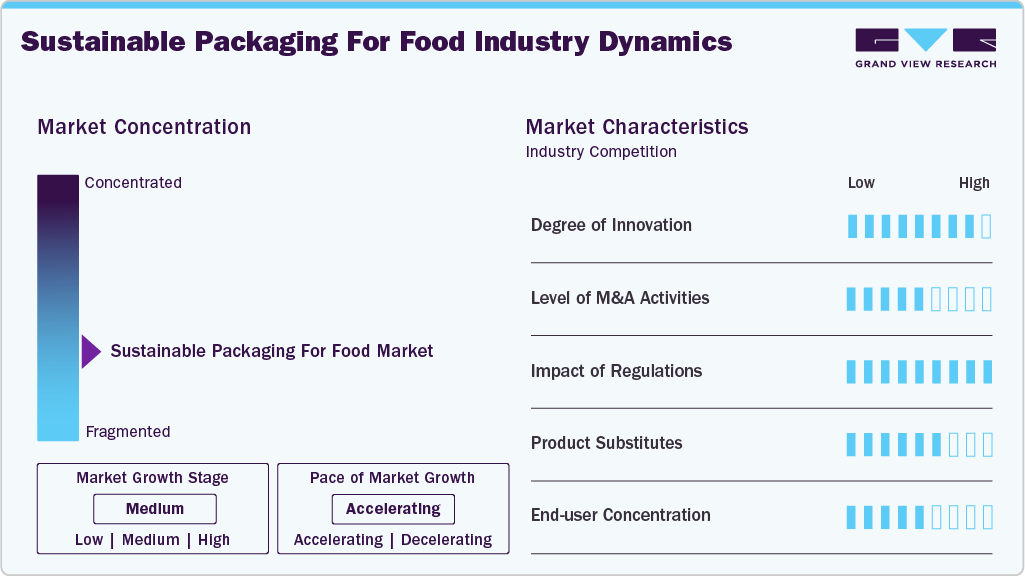
Innovation is a core characteristic of this market. Companies are investing in new materials, such as bioplastics made from cornstarch, sugarcane, or algae, and exploring advanced coatings that improve shelf life without compromising recyclability. Technological developments also include intelligent packaging solutions like biodegradable films with antimicrobial properties or packaging embedded with QR codes for traceability. These innovations not only enhance sustainability but also improve food safety, convenience, and shelf life.
Material Insights
The paper segment recorded the largest market revenue share of over 38.0% in 2024 and is expected to grow at the fastest CAGR of 8.8% during the forecast period. Paper is one of the most widely used sustainable packaging materials in the food industry due to its biodegradability, recyclability, and lightweight nature. It is commonly used for cartons, bags, trays, and wraps. For example, Kraft paper is widely used for sandwich wraps and bakery packaging, while paperboard cartons are used for cereals and ready-to-eat meals. The primary driver for paper packaging is environmental consciousness among consumers and strict government regulations on single-use plastics.
Plastic, despite its environmental concerns, is still used in sustainable food packaging when it is biodegradable, compostable, or recyclable. Examples include PLA (Polylactic Acid) containers for ready-to-eat meals, biodegradable PET bottles, and compostable cutlery. Advanced bio-based plastics made from cornstarch, sugarcane, or cellulose are increasingly replacing conventional plastics in packaging trays, films, and bottles. The versatility and durability of plastic, combined with innovations in bio-based and recyclable polymers, drive its adoption. Regulatory incentives for using biodegradable plastics in regions like Europe and North America further push manufacturers to adopt sustainable plastic solutions.
Type Insights
The flexible segment recorded the largest market share of over 46.0% in 2024 and is projected to grow at the fastest CAGR of 8.1% during the forecast period.Flexible packaging refers to packaging made from materials that can easily change shape without compromising structural integrity. It includes films, pouches, bags, wraps, and laminates. In the food industry, flexible packaging is widely used for snacks, ready-to-eat meals, frozen foods, and beverages such as juices in pouches. The main drivers include cost-efficiency, as flexible packaging uses less material and reduces shipping weight; consumer convenience, due to resealable and portable formats; and environmental awareness, as manufacturers increasingly adopt recyclable or compostable films.

Rigid packaging includes containers that maintain their shape and provide strong protection, such as bottles, jars, tubs, trays, and cartons. In sustainable food packaging, rigid formats are increasingly made from recycled plastics (rPET), glass, metals (aluminum, tin), and paperboard. This type is prominent in packaging dairy products, sauces, beverages, and frozen foods. Rigid packaging is valued for product protection, stackability, and premium presentation, often enhancing brand appeal.
Region Insights
North America sustainable packaging for food industry dominated the global market and accounted for the largest revenue share of over 33.0% in 2024. This positive outlook is due to strong environmental regulations, a mature food industry, and high consumer awareness. The U.S.andCanada are witnessing significant adoption of biodegradable, recyclable, and compostable packaging in the food sector, especially in fast-moving consumer goods (FMCG) and foodservice. Retail giants such as Walmart and Target have committed to reducing plastic usage, which encourages suppliers to switch to sustainable packaging. For instance, companies in the U.S. are increasingly using post-consumer recycled (PCR) plastics and paper-based packaging for ready-to-eat foods and beverages.
U.S. Sustainable Packaging For Food Market Trends
The U.S. sustainable packaging for food industry is driven by stringent environmental regulations, strong consumer demand for sustainable products, and leading corporate sustainability initiatives. Food brands and retailers such as Nestlé, PepsiCo, and Walmart are transitioning to recyclable, biodegradable, and compostable packaging. This includes the use of post-consumer recycled plastics, paperboard cartons, and plant-based films for snacks, beverages, and ready-to-eat meals. Moreover, strong infrastructure for recycling and waste management in the U.S. allows large-scale adoption of sustainable packaging solutions, positioning the country as a leader in the North America market.
Europe Sustainable Packaging For Food Market Trends
Europe’s sustainable packaging for food industry growth is due to stringent regulations, ambitious sustainability targets, and high environmental consciousness among consumers. The European Union’s Single-Use Plastics Directive and Packaging and Packaging Waste Directive have forced food manufacturers to adopt biodegradable, recyclable, or reusable packaging alternatives. Countries such as Germany, France, and the Netherlands are leading the charge, with businesses investing heavily in eco-friendly packaging innovations.
Germany sustainable packaging for food industry is a European leader due to its strict environmental regulations and circular economy initiatives. Policies such as the Packaging Act (VerpackG) require manufacturers to ensure their packaging is recyclable, incentivizing the use of paper, cardboard, and compostable bioplastics. Leading German food brands and retailers, including Aldi and Lidl, have committed to reducing plastic usage and increasing the share of recycled materials in packaging.
Asia Pacific Sustainable Packaging For Food Market Trends
Asia Pacific sustainable packaging for food industry is expected to grow at the fastest CAGR of 7.7% during the forecast period, owing to rapid urbanization, growing disposable incomes, and increasing awareness of environmental sustainability. Countries such as China, India, and Japan are witnessing rising demand for packaged food products, including ready-to-eat meals and beverages, which is fueling the adoption of eco-friendly packaging. Governments and local authorities are also implementing stricter regulations on single-use plastics and promoting biodegradable or recyclable alternatives, pushing manufacturers to adopt sustainable packaging solutions. For example, in China, the ban on certain single-use plastics has accelerated the adoption of paper-based, plant-based, and compostable packaging in the food sector.
Key Sustainable Packaging For Food Company Insights
The competitive environment of the sustainable packaging for food industry is highly dynamic and moderately fragmented, characterized by the presence of both global packaging giants and regional specialized players. Leading companies compete intensely on innovation, sustainability credentials, and cost-efficiency, with strategies including mergers & acquisitions, strategic partnerships, and the adoption of advanced biodegradable or recyclable materials.
Companies such as Tetra Pak, Amcor plc, Sealed Air, and Mondi focus on differentiating themselves through eco-friendly solutions, regulatory compliance, and customization for various food products, while emerging local players often leverage niche sustainable materials or regional supply chain advantages. This competitive landscape is further shaped by growing consumer demand for eco-conscious packaging, strict environmental regulations, and increasing investment in R&D for next-generation sustainable solutions.
-
In September 2025, UK-based Xampla raised USD 14.0 million in Series A funding to expand its Morro plant-based packaging, aiming to replace over 10 billion single-use plastics in five years. Made from regenerative plant proteins, Morro is plastic-free, biodegradable, and compostable, offering barrier properties for grease, oxygen, and moisture. The funding, led by Emerald Technology Ventures with support from BGF, Matterwave, Amadeus, and Horizons, will help Xampla scale across the UK, Europe, and Asia Pacific for products like takeaway linings, coffee cups, and sachets.
-
In May 2025, Amcor plc and Metsä Group partnered to create recyclable, biodegradable 3D molded fiber food packaging combining Metsä’s Muoto fiber with Amcor’s high-barrier films. Designed to protect perishable foods and extend shelf life, the packaging achieves over 80% recyclability in European paper streams, reflecting both companies’ commitment to sustainability and circular economy solutions, with commercial availability expected in Europe in late 2025.
-
In May 2025, Graphic Packaging International launched a paperboard sushi packaging range for European foodservice, helping operators comply with the EU Single-Use Plastics Directive. The portfolio includes plastic-free or <5% plastic clamshells, trays, pagoda boxes, and window options with fog-free cellulose, designed to maintain freshness, allow space-efficient storage, and meet growing consumer demand for sustainable packaging in the expanding European sushi market.
Key Sustainable Packaging For Food Companies:
The following are the leading companies in the sustainable packaging for food market. These companies collectively hold the largest market share and dictate industry trends.
- Amcor plc
- Sealed Air
- Sonoco Products Company
- Huhtamaki
- ProAmpac
- Graphic Packaging International, LLC
- Smurfit Westrock
- Mondi
- Stora Enso
- Tetra Pak
- SIG
- Constantia Flexibles
- Greiner Packaging
- Mayr-Melnhof Karton AG
- Pactiv Evergreen Inc.
Global Sustainable Packaging For Food Market Report Scope
Report Attribute
Details
Market size value in 2025
USD 77.00 billion
Revenue forecast in 2033
USD 139.14 billion
Growth rate
CAGR of 7.7% from 2025 to 2033
Historical data
2021 - 2023
Forecast period
2025 - 2033
Quantitative units
Revenue in USD million/billion and CAGR from 2025 to 2033
Report coverage
Revenue forecast, competitive landscape, growth factors, and trends
Segments covered
Material, type, region
Regional scope
North America; Europe; Asia Pacific; Latin America; Middle East & Africa
Country Scope
U.S.; Canada; Mexico; UK; Germany; France; Spain; Italy; China; Japan; India; South Korea; Australia; Argentina; Brazil; South Africa; Saudi Arabia; UAE
Key companies profiled
Amcor plc; Sealed Air; Sonoco Products Company; Huhtamaki; ProAmpac; Graphic Packaging International, LLC; Smurfit Westrock; Mondi; Stora Enso; Tetra Pak; SIG; Constantia Flexibles; Greiner Packaging; Mayr-Melnhof Karton AG; Pactiv Evergreen Inc.
Customization scope
Free report customization (equivalent up to 8 analyst’s working days) with purchase. Addition or alteration to country, regional, and segment scope.
Pricing and purchase options
Avail customized purchase options to meet your exact research needs. Explore purchase options
Global Sustainable Packaging For Food Market Report Segmentation
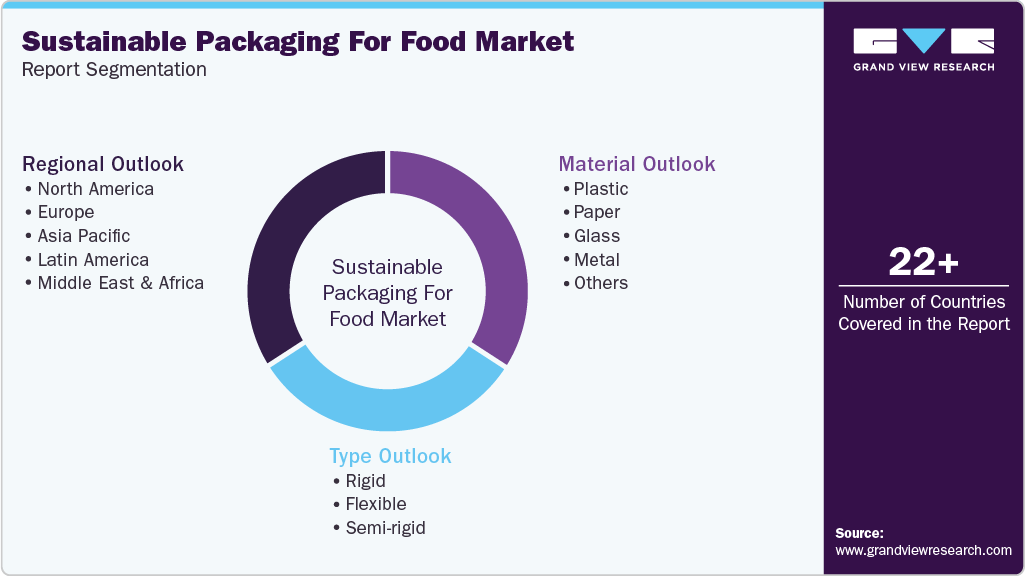
This report forecasts revenue growth at a global level and provides an analysis of the latest industry trends in each of the sub-segments from 2021 to 2033. For this study, Grand View Research has segmented the global sustainable packaging for food market report based on material, type, and region:
-
Material Outlook (Revenue, USD Million, 2021 - 2033)
-
Plastic
-
Paper
-
Glass
-
Metal
-
Others
-
-
Type Outlook (Revenue, USD Million, 2021 - 2033)
-
Rigid
-
Flexible
-
Semi-rigid
-
-
Region Outlook (Revenue, USD Million, 2021 - 2033)
-
North America
-
U.S.
-
Canada
-
Mexico
-
-
Europe
-
Germany
-
France
-
UK
-
Italy
-
Spain
-
-
Asia Pacific
-
China
-
India
-
Japan
-
Australia
-
South Korea
-
-
Latin America
-
Brazil
-
Argentina
-
-
Middle East & Africa
-
South Africa
-
Saudi Arabia
-
UAE
-
-
Frequently Asked Questions About This Report
b. The global sustainable packaging for food market was estimated at around USD 72.41 billion in the year 2024 and is expected to reach around USD 77.00 billion in 2025.
b. The global sustainable packaging for food market is expected to grow at a compound annual growth rate of 7.7% from 2025 to 2033 to reach around USD 139.14 billion by 2033.
b. The flexible packaging segment dominates the sustainable food packaging market due to its lightweight, cost-effective nature and ability to extend shelf life while reducing material usage.
b. The key players in the sustainable packaging for food market include Amcor plc; Sealed Air; Sonoco Products Company; Huhtamaki; ProAmpac; Graphic Packaging International, LLC; Smurfit Westrock; Mondi; Stora Enso; Tetra Pak; SIG; Constantia Flexibles; Greiner Packaging; Mayr-Melnhof Karton AG; and Pactiv Evergreen Inc.
b. The sustainable food packaging market is driven by rising consumer demand for eco-friendly products, stringent environmental regulations, and the shift toward circular economy practices.


Share this report with your colleague or friend.
Need a Tailored Report?
Customize this report to your needs — add regions, segments, or data points, with 20% free customization.


ISO 9001:2015 & 27001:2022 Certified
We are GDPR and CCPA compliant! Your transaction & personal information is safe and secure. For more details, please read our privacy policy.
Trusted market insights - try a free sample
See how our reports are structured and why industry leaders rely on Grand View Research. Get a free sample or ask us to tailor this report to your needs.













