
- Home
- »
- Medical Devices
- »
-
Thailand Energy Based Aesthetic Devices Market Report, 2033GVR Report cover
![Thailand Energy Based Aesthetic Devices Market Size, Share & Trends Report]()
Thailand Energy Based Aesthetic Devices Market (2026 - 2033) Size, Share & Trends Analysis Report By Product (RF, HIFU, Picosecond (PICO) Laser Devices), By End Use (Medspa, Dermatology Centers, Hospital/Surgery Centre), And Segment Forecasts
- Report ID: GVR-4-68040-900-5
- Number of Report Pages: 125
- Format: PDF
- Historical Range: 2021 - 2025
- Forecast Period: 2026 - 2033
- Industry: Healthcare
- Report Summary
- Table of Contents
- Segmentation
- Methodology
- Download FREE Sample
-
 Download Sample Report
Thailand Energy Based Aesthetic Devices Market Summary
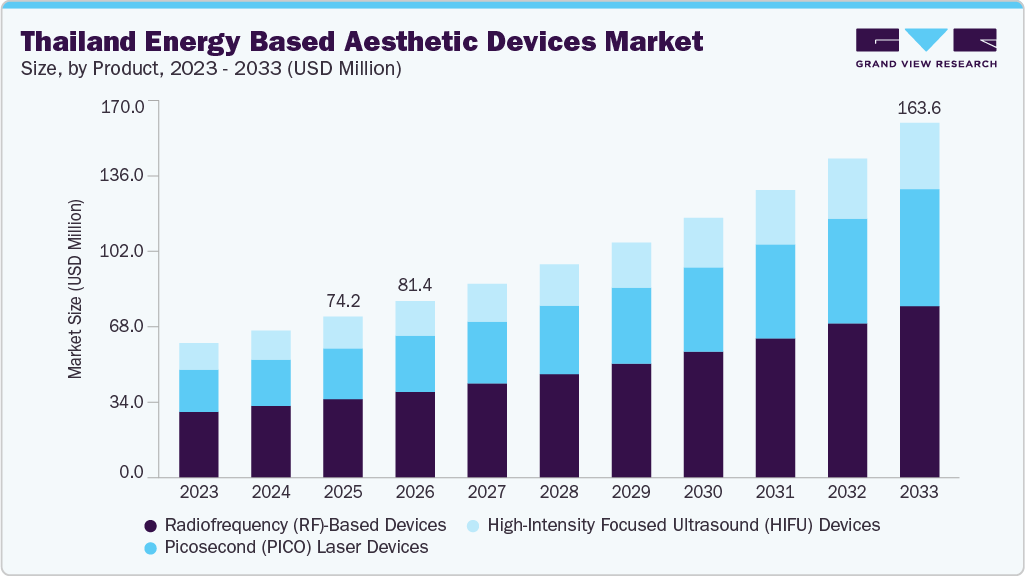
The Thailand energy based aesthetic devices market size was estimated at USD 74.2 million in 2025 and is projected to reach USD 163.6 million by 2033, growing at a CAGR of 10.5% from 2026 to 2033. This growth can be attributed to the increasing demand for non-invasive and minimally invasive aesthetic procedures, particularly treatments utilizing radiofrequency (RF), high-intensity focused ultrasound (HIFU), and laser technologies for skin tightening, rejuvenation, and body contouring. Thailand’s rapidly expanding medical tourism sector, supported by well-established aesthetic clinics and dermatology centers, continues to attract international patients seeking high-quality yet cost-effective cosmetic treatments. In addition, rising aesthetic awareness among younger populations, growing disposable incomes, and the availability of advanced energy-based technologies are driving market adoption.
Thailand’s beauty culture is deeply ingrained and evolving rapidly among younger generations. A growing number of consumers are investing in non-invasive aesthetic treatments using energy-based technologies, including radiofrequency (RF), high-intensity focused ultrasound (HIFU), and laser-based skin rejuvenation. This reflects a broader acceptance of self-care and appearance enhancement across the country. Domestic demand continues to rise as more Thai consumers view aesthetic procedures as a routine part of wellness and lifestyle choices, particularly treatments that provide visible results with minimal downtime.
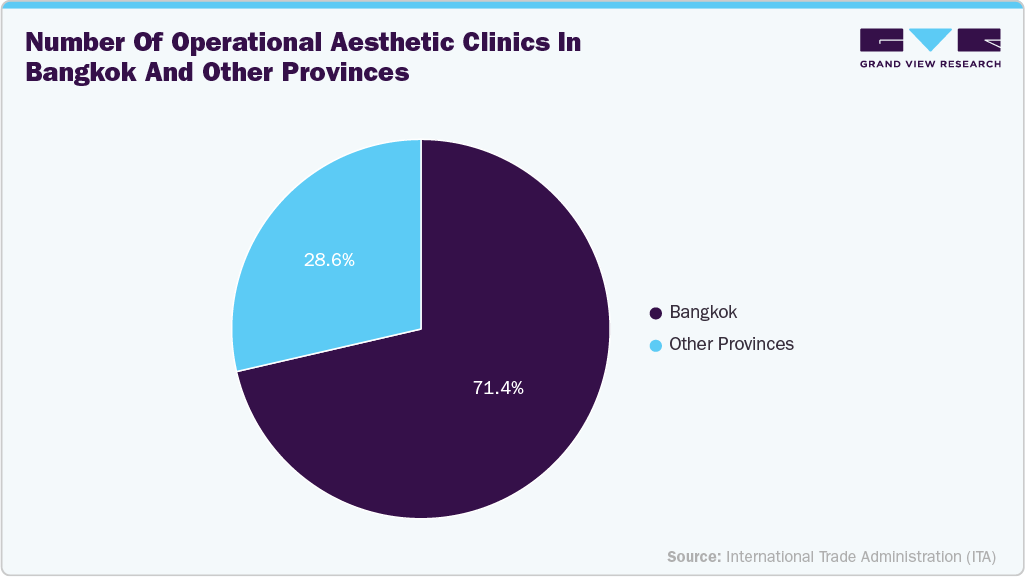
Clinic expansion is also transforming the market landscape. Thailand now hosts thousands of aesthetic clinics nationwide, particularly concentrated in Bangkok and other major urban centers. Local clinic chains and independent providers are opening new treatment centers equipped with modern energy-based devices, while also integrating digital consultation platforms and technology-enabled treatment planning. This expanding clinical infrastructure is further supporting the adoption of energy-based aesthetic technologies across the domestic market.
Aesthetic brands are scaling up infrastructure and local partnerships to support these trends. For instance, Merz Aesthetics Thailand has set a target for themselves to achieve 3 billion baht in revenue by 2028, fueled by clinic collaborations, training programs, and the introduction of advanced fillers and devices geared toward skin quality improvement. Such initiatives strengthen clinician access to premium aesthetic technologies, further boosting domestic uptake of device-based treatments.
Some of the key indicators supporting this growth of energy-based aesthetic treatments in Thailand include:
-
100,000+ aesthetic procedures are performed annually in Thailand (International Society of Aesthetic Plastic Surgery)
-
Approximately 2-3 million international medical tourists come to the country, seeking cosmetic and dermatology treatments (Thailand Ministry of Public Health)
-
Thousands of aesthetic clinics nationwide, among which, several are particularly concentrated in Bangkok and major urban centers. (International Trade Adminstration).
-
According to DataReportal, Thailand has over 85% of social media penetration, which ultimately increases consumer awareness and influences treatment decisions as well.
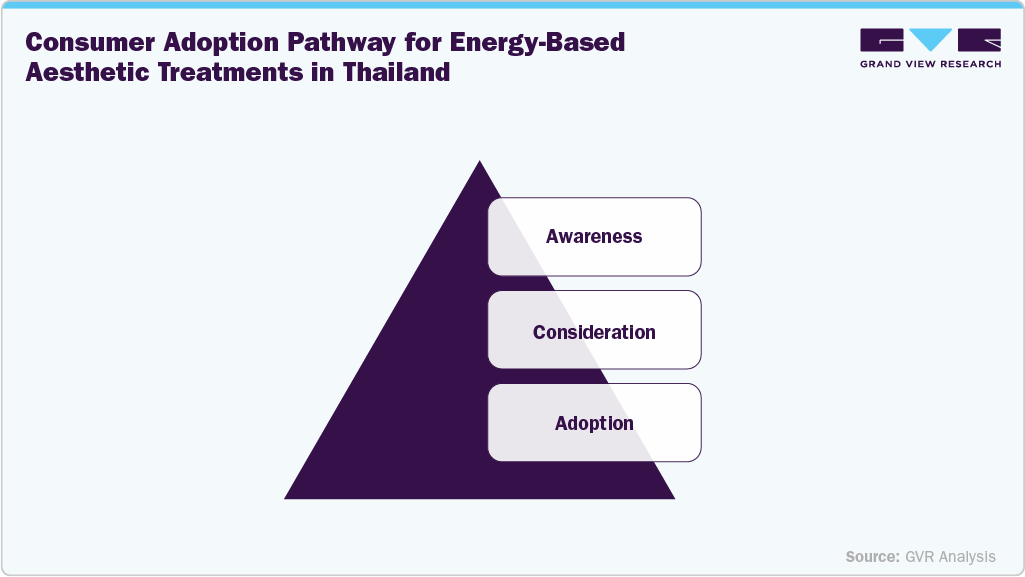
The figure illustrates the typical decision-making journey of consumers in Thailand as they adopt energy-based aesthetic treatments. The process begins with awareness, where individuals learn about aesthetic technologies such as radiofrequency (RF), high-intensity focused ultrasound (HIFU), and laser-based treatments through social media platforms, online research, and digital marketing campaigns by clinics. As awareness grows, consumers enter the consideration stage, where they evaluate available treatment options by consulting dermatologists or aesthetic practitioners, comparing technologies, and reviewing treatment outcomes. The final stage is adoption, where consumers proceed with energy-based procedures offered by clinics. This structured pathway highlights how increasing awareness, informed decision-making, and expanding clinic accessibility are driving the growing demand for energy-based aesthetic devices across Thailand.
Market Concentration & Characteristics
The energy-based aesthetic devices market in Thailand is moderately fragmented, characterized by a dual-structured competitive landscape. Premium institutions such as Bumrungrad International Hospital and Bangkok Hospital dominate the high-end segment, driven by advanced technologies and strong international medical tourism inflows. Conversely, a large base of small and mid-sized aesthetic clinics across Bangkok and key tourist hubs ensures broad service accessibility and competitive pricing. This structure results in limited market concentration, where leading players hold global visibility while smaller providers sustain volume demand, collectively shaping a dynamic, price-sensitive, and service-diverse market environment.
Thailand’s energy based aesthetic devices industry demonstrates a strong degree of innovation, driven by the introduction of advanced global technologies and their adaptation to local needs. For instance, Merz Aesthetics’ launch of regenerative biostimulators signals a shift toward natural, long-lasting treatments that leverage the body’s healing processes. Similarly, technologies showcased at IMCAS Asia 2025, such as Sylfirm X for treating darker skin with minimal downtime and Baz Biomedic’s Curejet needle-free injector, underline Thailand’s readiness to embrace multi-modality solutions tailored to regional demands.
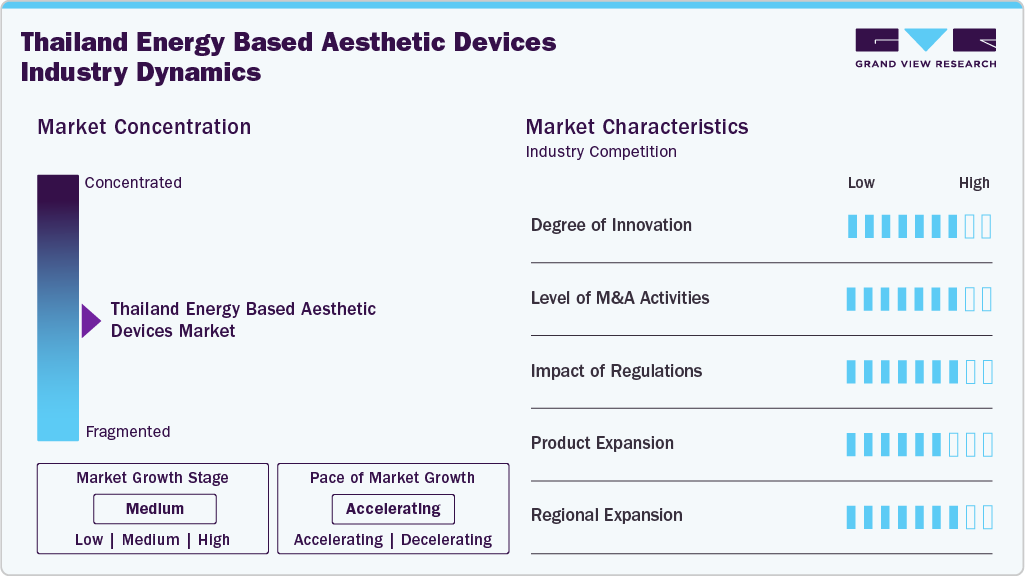
Thailand’s aesthetic medical device industry is building strength through strategic alliances that enhance manufacturing and market reach. For instance, the joint venture between K.N.A. Inter Pharma and Diamond Biotechnology, investing over THB 2.5 billion in a new Pathum Thani plant, marks a milestone in domestic production and positions Thailand as a regional hub. On the commercial side, Merz Aesthetics’ B2B2C model, with partnerships across 500+ clinics, enables wide distribution of innovations like Ultherapy, German botulinum toxin, and Swiss fillers, reinforcing its leadership in the market.
Regulations in Thailand play a pivotal role in shaping the energy-based aesthetic devices industry by enforcing safety, quality, and ethical marketing standards. While not governed by a single dedicated framework, oversight by authorities such as the Thai Food and Drug Administration under broader medical device laws enhances consumer trust and market credibility. For businesses, this regulatory environment ensures fair competition and encourages compliance with international standards, attracting global players. Consequently, both local and international companies are driven to prioritize certified, safe innovations, supporting sustainable and consumer-driven growth in the industry.
In the Thailand energy-based aesthetic devices market, substitutes primarily include non-energy-based treatments such as injectable procedures (e.g., botulinum toxin, dermal fillers) and topical skincare therapies. These alternatives are often preferred for their lower cost, minimal downtime, and wider accessibility across clinics. In addition, traditional cosmetic surgeries act as substitutes for more intensive results, though they involve higher risk and recovery time. The availability of these options creates moderate substitution pressure, particularly among price-sensitive consumers. However, energy-based devices maintain strong demand due to their non-invasive nature, precision, and ability to deliver consistent, technology-driven aesthetic outcomes.
Product Insights
The radiofrequency (RF)-based devices segment accounted for the largest share of 48.8% in 2025 within the Thailand energy-based aesthetic devices market and is expected to witness steady growth over the forecast period. This dominance is driven by increasing demand for non-invasive skin tightening, body contouring, and anti-aging treatments among both domestic and medical tourism patients. RF devices are widely adopted across clinics due to their safety profile, minimal downtime, and versatility across multiple indications. Growing awareness, rising disposable incomes, and expanding aesthetic clinic networks in urban and tourist hubs further support sustained adoption and segment growth.
The Picosecond (PICO) laser devices segment is expected to witness significant growth in the Thailand energy-based aesthetic devices market over the forecast period. This growth is driven by rising demand for advanced treatments targeting pigmentation, acne scars, and tattoo removal, particularly among younger consumers and medical tourists. PICO lasers offer faster results, reduced downtime, and improved safety across diverse skin types, making them increasingly preferred by practitioners. Expanding premium clinic networks, growing aesthetic awareness, and continuous technological advancements are further accelerating adoption, positioning this segment as a high-growth category within Thailand’s evolving aesthetic landscape.
End Use Insights
The Medspa segment dominated the Thailand energy-based aesthetic devices market in 2025, accounting for the largest revenue share of 43.0%. This leadership is driven by increasing consumer preference for non-invasive and wellness-oriented aesthetic treatments offered in a comfortable, spa-like environment. Medspas provide a wide range of advanced procedures, including laser therapies, RF treatments, and skin rejuvenation, attracting both domestic clients and international medical tourists. Their competitive pricing, accessibility across urban centers, and integration of personalized care services further strengthen their position, making them a key growth driver within Thailand’s aesthetic treatment ecosystem.
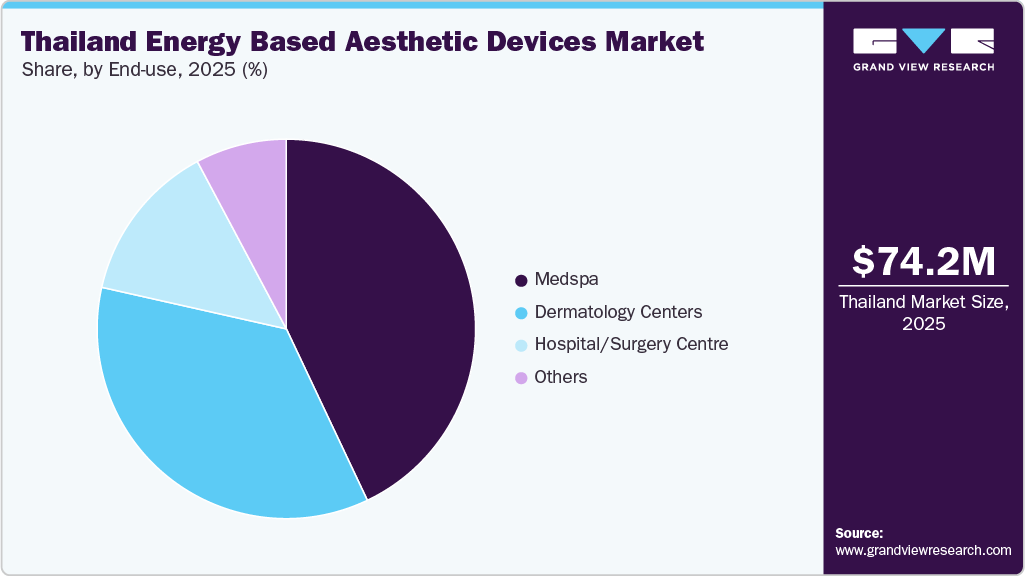
The dermatology centers segment is expected to grow significantly in the Thailand energy-based aesthetic devices market over the forecast period. This growth is driven by increasing patient preference for medically supervised aesthetic procedures, particularly for complex skin conditions such as pigmentation disorders, acne scars, and aging concerns. Dermatology centers offer advanced technologies combined with clinical expertise, ensuring higher safety and efficacy compared to non-medical settings. Rising awareness of skin health, growing demand for personalized treatments, and the expansion of specialized clinics in urban areas are further supporting segment growth, positioning dermatology centers as a key emerging segment in the market.
Key Thailand Energy Based Aesthetic Devices Company Insights
The Thailand Energy Based Aesthetic devices market is highly competitive, with key players such as Solta Medical, Sinclair, Candela Corporation hold significant positions. The major companies undertake various organic and inorganic strategies such as product introduction, collaborations, and regional expansion to serve the unmet needs of their customers.
Key Thailand Energy Based Aesthetic Devices Companies:
- Candela Corporation
- Sisram Medical (Alma Lasers)
- Solta Medical
- Cynosure Lutronic
- Quanta System S.p.A.
- WON TECH Co., Ltd.
- Fotona
- Sinclair
- El.En. S.p.A
- Cutera
- Classys
- Tentech
Recent Developments
-
In March 2025, Alma Lasers, a Sisram Medical company, introduced Alma Harmony, a state-of-the-art aesthetic platform featuring advanced technology and five integrated laser and light systems, enabling personalized, multi-wavelength treatments for diverse skin types and conditions. It offered enhanced energy, efficiency, and automated features for various aesthetic procedures, winning design awards globally.
-
In March 2025, ID Hospital signed an MOU with Sinclair to build Asia’s largest regenerative aesthetics center. The partnership will advance innovative treatments, clinical training, and regional leadership, featuring Sinclair’s solutions such as Elansé, Silhouette Soft, and Prime Raze.
-
In March 2024, WONTECH established its Southeast Asia headquarters in Thailand, promoting its Oligio monopolar RF skin-tightening technology as a key device for the regional aesthetic market.
Thailand Energy Based Aesthetic Devices Market Report Scope
Report Attribute
Details
Market size value in 2026
USD 81.4 million
Revenue forecast in 2033
USD 163.6 million
Growth rate
CAGR of 10.5% from 2026 to 2033
Actual period
2021 - 2025
Forecast period
2026 - 2033
Quantitative units
Revenue in USD million/billion and CAGR from 2025 to 2033
Report coverage
Revenue forecast, company ranking, competitive landscape, growth factors, and trends
Segments covered
Product and end use
Country scope
Thailand
Key companies profiled
Candela Corporation; Sisram Medical (Alma Lasers); Solta Medical; Cynosure Lutronic; Quanta System S.p.A.; WON TECH Co., Ltd.; Fotona; Sinclair; El.En. S.p.A; Cutera; Classys; Tentech
Customization scope
Free report customization (equivalent up to 8 analysts working days) with purchase. Addition or alteration to country, regional & segment scope.
Pricing and purchase options
Avail customized purchase options to meet your exact research needs. Explore purchase options
Thailand Energy Based Aesthetic Devices Market Report Segmentation
This report forecasts revenue growth at country levels and provides an analysis of the latest industry trends and opportunities in each of the sub-segments from 2021 to 2033. For this study, Grand View Research has segmented the Thailand energy based aesthetic devices market report on the basis of product and end use:
-
Product Outlook (Revenue, USD Million, 2021 - 2033)
-
Radiofrequency (RF)-Based Devices
-
High-Intensity Focused Ultrasound (HIFU) Devices
-
Picosecond (PICO) Laser Devices
-
-
End Use (Revenue, USD Million, 2021 - 2033)
-
Hospital/Surgery Centre
-
Medspa
-
Dermatology Centers
-
Others
-
Frequently Asked Questions About This Report
b. The Thailand energy based aesthetic devices market size was estimated at USD 74.2 million in 2025 and is expected to reach USD 81.4 million in 2026.
b. The Thailand energy based aesthetic devices market is expected to grow at a compound annual growth rate of 10.5% from 2026 to 2033 to reach USD 163.6 million by 2033.
b. The radiofrequency (RF)-based devices segment accounted for the largest share of 48.8% in 2025 within the Thailand energy-based aesthetic devices market and is expected to witness steady growth over the forecast period. This dominance is driven by increasing demand for non invasive skin tightening, body contouring, and anti-aging treatments among both domestic and medical tourism patients.
b. Some key players operating in the Thailand energy based aesthetic devices market include Candela Corporation, Sisram Medical (Alma Lasers), Solta Medical, Cynosure Lutronic, Quanta System S.p.A., WON TECH Co., Ltd., Fotona, Sinclair, El.En. S.p.A, Cutera, Classys, Tentech
b. Key factors that are driving the Thailand energy based aesthetic devices market growth include the increasing demand for non-invasive and minimally invasive aesthetic procedures, particularly treatments utilizing radiofrequency (RF), high-intensity focused ultrasound (HIFU), and laser technologies for skin tightening, rejuvenation, and body contouring. Thailand’s rapidly expanding medical tourism sector, supported by well-established aesthetic clinics and dermatology centers, continues to attract international patients seeking high-quality yet cost-effective cosmetic treatments.


Share this report with your colleague or friend.
Need a Tailored Report?
Customize this report to your needs — add regions, segments, or data points, with 20% free customization.


ISO 9001:2015 & 27001:2022 Certified
We are GDPR and CCPA compliant! Your transaction & personal information is safe and secure. For more details, please read our privacy policy.
Trusted market insights - try a free sample
See how our reports are structured and why industry leaders rely on Grand View Research. Get a free sample or ask us to tailor this report to your needs.













