
- Home
- »
- Medical Devices
- »
-
Therapeutic Botulinum Toxin Type A Market Report 2026-2033GVR Report cover

Therapeutic Botulinum Toxin Type A Market (2026 - 2033)
Size, Share & Trends Analysis Report By Application (On-Label, Off-Label), By End Use (Hospitals, Specialty Clinics), By Region, And Segment Forecasts
Market Size, 2025
$5.2BMarket Estimate, 2026
$5.6BMarket Forecast, 2033
$11.0BCAGR, 2026–2033
10.2%Therapeutic Botulinum Toxin Type A Market Summary
The global therapeutic botulinum toxin type A market size was valued at USD 5.2 billion in 2025 and is projected to grow from USD 5.6 billion in 2026 to USD 11.0 billion by 2033, at a CAGR of 10.2% from 2026 to 2033. The market in North America dominated with a revenue share of 61.8% in 2025. This growth is primarily driven by the rising prevalence of neurological and chronic conditions such as migraine, spasticity, and movement disorders, increasing demand for minimally invasive treatment options, and strong clinical evidence supporting its safety and efficacy.
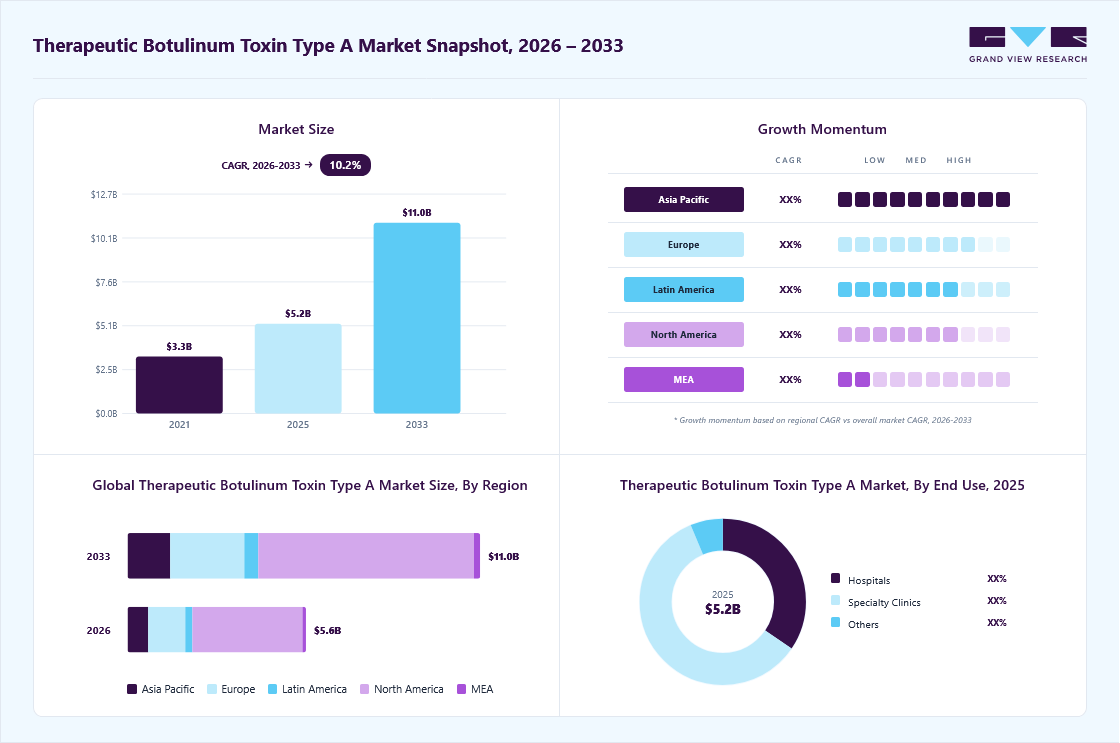 Source: Grand View Research, IR Documents, Primary Interviews, Paid DatabasesTo learn more about this report,
 Download Free Sample Report
Key Market Trends & Insights
- By application: On-label segment held the largest market share of 90.5% in 2025.
- By end-use: Specialty clinics segment held the largest market share of 59.1% in 2025.
Regional Highlights
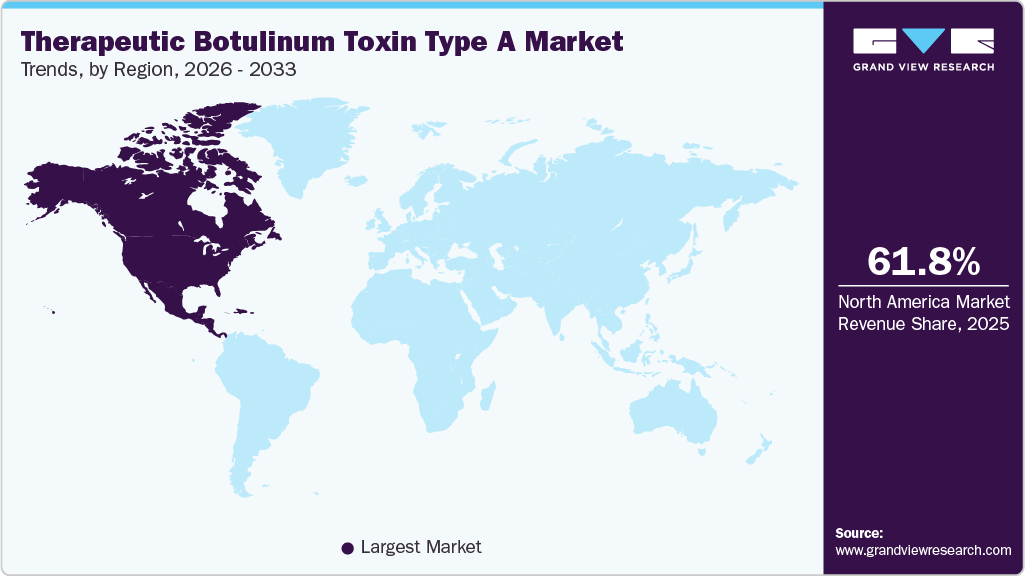
- Largest regional market: North America (61.8% revenue share, 2025)
- By country: The U.S. held the largest market share in 2025
Market Size & Forecast
- Market size in 2025: USD 5.2 Billion
- Estimated market size in 2026: USD 5.6 Billion
- Projected market size by 2033: USD 11.0 Billion
- CAGR (2026-2033): 10.2%
Prism AI by Grand View Research Free to tryAsk a question about the therapeutic botulinum toxin type a marketTry asking✓Every figure cited from GVR research Prefer the report? Download free sample →
Additionally, expanding therapeutic indications, growing awareness among patients and healthcare providers, and improved access to treatment through specialty clinics and reimbursement support are further contributing to market expansion. The increasing prevalence of neurological and neuromuscular disorders is a major factor driving the demand in the therapeutic botulinum toxin type A industry. Botulinum toxin injections are widely used to treat conditions involving abnormal muscle activity or nerve signaling. Disorders such as spasticity (upper and lower limbs), chronic migraine, dystonia, blepharospasm, and strabismus are among the most common indications for which botulinum toxin type A is used to reduce muscle overactivity and improve patient function. As the global burden of neurological disorders continues to rise due to aging populations and improved diagnosis rates, the demand for effective symptom-management therapies such as botulinum toxin injections has increased significantly.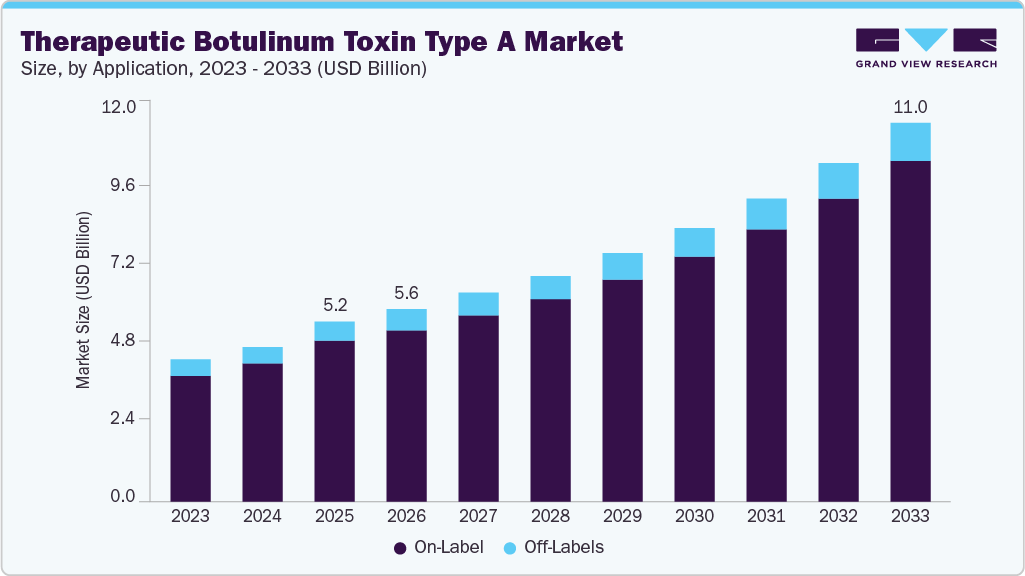 To learn more about this report, Download Free Sample Report
Among these conditions, chronic migraine has emerged as one of the major therapeutic applications for botulinum toxin type A, after its use for people suffering from spasticity in upper and lower limbs. Patients suffering from chronic migraine experience frequent headache episodes that can severely impact quality of life and productivity. Therapeutic Botulinum Toxin Type A has emerged as an established, on-label treatment for chronic migraine prevention. Approved by regulatory authorities, it is specifically indicated for adults with chronic migraine and not for episodic migraine. The treatment involves injecting small, controlled doses of the neurotoxin into specific head and neck muscle groups following a standardized injection paradigm. Commercially, Botulinum Toxin Type A is widely recognized through products such as Botox, developed by Allergan (now part of AbbVie). Its on-label use in spasticity and chronic migraine has expanded treatment options and established it as a cornerstone therapy in neurology practice.
Market Concentration & Characteristics
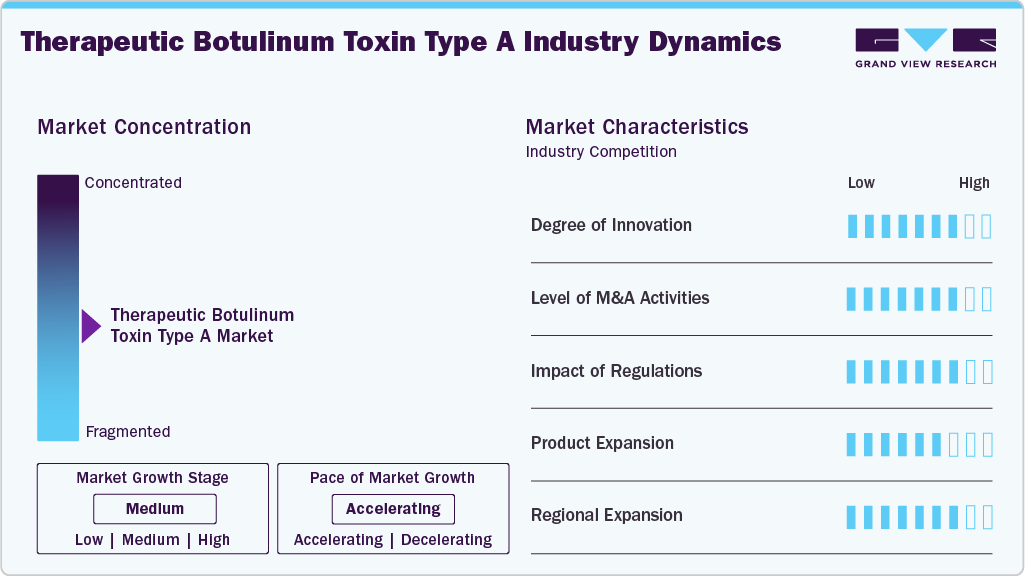
The therapeutic botulinum toxin type A market is moderately concentrated, with a few major pharmaceutical companies accounting for a significant share of global revenues. Leading players such as AbbVie (Allergan Aesthetics), Ipsen, Merz Pharma, Medytox, Daewoong Pharmaceutical, and Hugel dominate the market through well-established product portfolios and strong global distribution networks. These companies benefit from extensive clinical evidence supporting their products for various neurological and neuromuscular disorders, as well as long-standing physician familiarity with botulinum toxin therapies.
The therapeutic botulinum toxin type A market demonstrates continuous innovation driven by advancements in formulation technologies, expanded therapeutic indications, and improved treatment protocols. Pharmaceutical companies are increasingly investing in clinical research to enhance efficacy, duration of action, and patient outcomes. Innovations include next-generation toxin formulations with improved stability and purification processes, as well as research aimed at extending the duration of therapeutic effects to reduce injection frequency. In addition, ongoing clinical trials are exploring new treatment applications for neurological and urological conditions, further strengthening the role of botulinum toxin type A as a versatile neuromodulator in modern medicine.
 To learn more about this report, Download Free Sample Report
The therapeutic botulinum toxin type A industry experiences moderate merger and acquisition (M&A) activity as companies seek to expand their neurology and specialty therapeutics portfolios. Major pharmaceutical players such as AbbVie, Ipsen, and Merz Pharma continue to pursue strategic collaborations, licensing agreements, and regional distribution partnerships to strengthen their global market presence. Emerging toxin manufacturers from Asia, including Medytox, Daewoong Pharmaceutical, and Hugel, are increasingly forming international partnerships to expand access to their botulinum toxin products in new markets.
Regulation plays a critical role in shaping the therapeutic botulinum toxin type A market by ensuring strict standards for safety, efficacy, and manufacturing quality. Regulatory agencies such as the U.S. Food and Drug Administration (FDA), the European Medicines Agency (EMA), and other national health authorities require comprehensive clinical trials and detailed pharmacological data before approving botulinum toxin therapies for new indications. In addition, manufacturers must comply with rigorous biologics manufacturing standards and post-market surveillance requirements. While these regulatory frameworks increase development timelines and compliance costs, they also enhance physician confidence, reduce the risk of adverse events, and ensure the long-term credibility of botulinum toxin therapies within clinical practice.
Product substitutes in the market include oral medications, surgical interventions, and alternative neuromodulation therapies for the management of neurological and neuromuscular disorders. For example, oral pharmacological treatments such as muscle relaxants, anticholinergic medications, and migraine preventive drugs are commonly used to manage conditions like spasticity and chronic migraine. In certain cases, surgical interventions or implantable neuromodulation devices may be considered for patients who do not respond to pharmacological treatments. Although these alternatives may offer therapeutic benefits, botulinum toxin injections remain widely preferred due to their targeted mechanism of action, minimally invasive administration, and relatively favorable safety profile.
Regional expansion in the therapeutic botulinum toxin type A industry is driven by increasing awareness of neuromuscular disorders, improvements in healthcare infrastructure, and growing adoption of minimally invasive treatment options across both developed and emerging economies. Pharmaceutical companies are expanding their geographic presence by pursuing regulatory approvals and establishing distribution networks in Asia-Pacific, Latin America, and the Middle East. In addition, expanding healthcare access and improved diagnosis rates for neurological conditions are contributing to higher treatment adoption in these regions. As clinical research continues to validate new therapeutic indications, manufacturers are expected to further strengthen their presence in emerging markets, supporting long-term market growth.
Application Insights
The on-label segment accounted for the largest revenue share of 90.5% in 2025. The on-label therapeutic use of botulinum toxin type A (BoNT-A) represents a well-established, rapidly expanding segment of the global neurotoxin market. “On-label” refers to indications that have received regulatory approval from agencies such as the U.S. FDA, the EMA, and other national authorities, ensuring validated safety and efficacy and standardized dosing protocols. These approved uses have significantly boosted physician confidence, expanded reimbursement coverage, and driven widespread clinical adoption. BoNT-A is widely approved for multiple therapeutic indications across neurology, ophthalmology, and rehabilitation medicine. Key on-label indications include chronic migraine, cervical dystonia, blepharospasm, strabismus, upper and lower limb spasticity, and overactive bladder. In these conditions, BoNT-A acts by inhibiting acetylcholine release at neuromuscular junctions, resulting in temporary muscle relaxation or reduced glandular activity.
The off-label segment is estimated to register a significant CAGR from 2026 to 2033. The therapeutic use of botulinum toxin type A (BoNT-A) off-label represents a dynamic and expanding segment of the neurotoxin market. “Off-label” refers to clinical applications that are not formally approved by regulatory authorities but are supported by emerging clinical evidence, physician experience, and patient demand. Despite the absence of official labeling, off-label use is widespread across specialties, particularly in neurology, pain management, dermatology, and gastroenterology.
End Use Insights
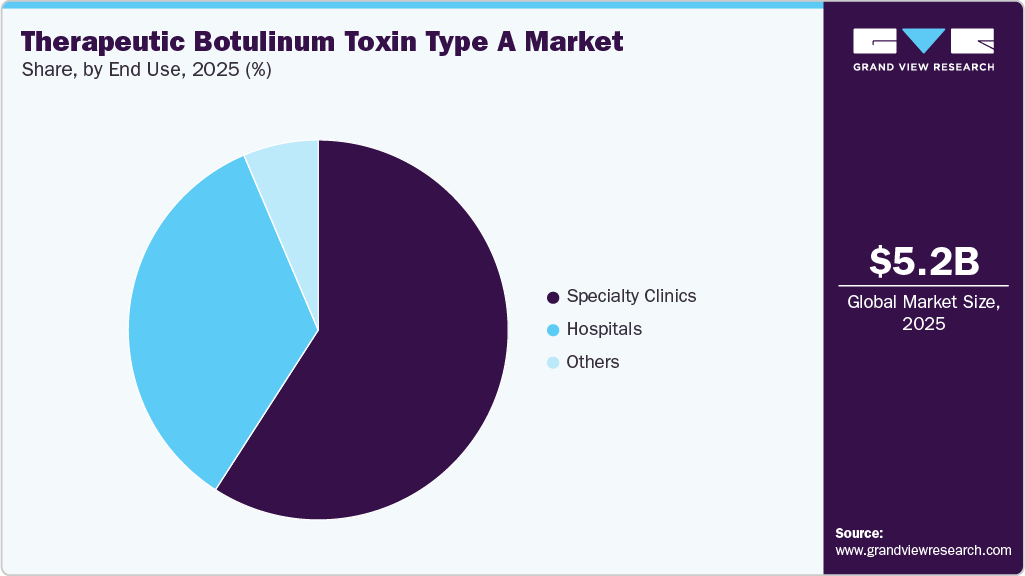
The specialty clinics segment accounted for the largest share of 59.1% in 2025. Specialty clinics represent a rapidly growing segment in the therapeutic botulinum toxin type A market, driven by increasing patient preference for targeted, outpatient-based care. These clinics, including neurology, dermatology, and ophthalmology centers, offer focused expertise, shorter waiting times, and cost-effective treatment options compared to hospitals. In specialty clinics, botulinum toxin type A is widely used for on-label indications such as chronic migraine, cervical dystonia, blepharospasm, spasticity, and overactive bladder. Neurology clinics, for instance, frequently administer botulinum toxin injections for chronic migraine prevention following standardized protocols, ensuring effective symptom management.
 To learn more about this report, Download Free Sample Report
The others segment in the therapeutic botulinum toxin type A market is expected to witness the fastest CAGR during the forecast period. This segment plays a crucial role in expanding treatment accessibility beyond traditional hospital and specialty clinic settings, including Ambulatory Surgical Centers (ASCs), rehabilitation centers, medspas, and academic and research institutes, each contributing uniquely to market growth and adoption. Ambulatory Surgical Centers (ASCs) are increasingly important delivery settings due to their cost-effectiveness, shorter procedure times, and growing preference for minimally invasive outpatient care. Rehabilitation centers represent another significant component, especially in the management of neurological and musculoskeletal disorders. Medspas are emerging as an important extension of this segment, particularly in bridging therapeutic and aesthetic applications.
Regional Insights
North America held the largest market share, exceeding 61.8% in 2025, and is projected to experience strong growth in the coming years. North America is the most mature and dominant regional market for therapeutic botulinum toxin type A, supported by expanding use in the management of multiple chronic and neurological conditions, strong healthcare infrastructure, and growing clinical acceptance. Originally popular for aesthetic use, botulinum toxin type A is now widely used for therapeutic indications such as chronic migraine, cervical dystonia, post-stroke spasticity, overactive bladder, and hyperhidrosis, significantly broadening its patient base. The increasing prevalence of neurological and musculoskeletal disorders, particularly among the aging population, is further driving demand, as these conditions often require long-term, minimally invasive treatment options.
 To learn more about this report, Download Free Sample Report
In addition, the region’s advanced healthcare systems, high awareness among physicians and patients, and availability of trained specialists contribute to higher diagnosis and treatment rates. The growing preference for non-surgical procedures, driven by their safety, convenience, and shorter recovery times, also supports the adoption of botulinum toxin therapies. Moreover, ongoing product innovations, new clinical approvals, and the potential entry of cost-effective biosimilars are improving accessibility and treatment outcomes, thereby reinforcing market growth across North America.
U.S. Therapeutic Botulinum Toxin Type A Market Trends
The U.S. continues to play a central role in the North America therapeutic botulinum toxin type A industry. The competitive scenario of the U.S. market is dominated by a few established players, including AbbVie, Ipsen, and Merz Pharma. AbbVie leads the U.S. market with its flagship product Botox, leveraging strong brand recognition, extensive FDA-approved therapeutic indications, and continuous investment in R&D and clinical trials to expand its pipeline. According to the Migraine Research Foundation, migraine remains a significant public health burden in the U.S., affecting approximately 39 million people and nearly 12% of the population, with more than 4 million individuals experiencing chronic migraine with at least 15 headache days per month. The condition also leads to around 1.2 million emergency department visits annually, highlighting its severity and need for effective long-term treatments such as preventive therapies. This large patient pool directly drives demand, as therapeutic botulinum toxin type A is an FDA-approved preventive treatment for chronic migraine and is widely used in patients who do not respond to conventional therapies.
Europe Therapeutic Botulinum Toxin Type A Market Trends
Europe held the second-largest share of the therapeutic botulinum toxin type A industry, exceeding 20.8% in 2025, and is expected to witness sustained growth in the coming years. The demand for therapeutic botulinum toxin type A across Europe is rising steadily, primarily due to the growing burden of neurological and chronic conditions where the toxin has proven clinical efficacy. One of the most significant drivers is the increasing prevalence of chronic migraine, a condition defined as headaches occurring on ≥15 days per month.
The UK therapeutic botulinum toxin type A market is highly consolidated, with three major players, Ipsen, AbbVie, and Merz Pharma, holding the dominant share due to strong regulatory approvals and integration within NHS treatment pathways. According to the National Institute for Health and Care Excellence (NICE), Botox, Dysport, and Xeomin have established marketing authorizations in the UK for post-stroke spasticity and related neurological indications, demonstrating their entrenched clinical use. These companies primarily compete through lifecycle management strategies such as label expansions and indication broadening. For example, in June 2023, Xeomin received MHRA approval for the treatment of lower limb spasticity, strengthening Merz’s position in comprehensive spasticity care. AbbVie continues to expand Botox’s clinical and aesthetic indications through regulatory approvals, reinforcing brand leadership and physician familiarity.
The competitive landscape of the therapeutic botulinum toxin type A market in Germany is highly consolidated and led by three dominant players, AbbVie, Ipsen, and Merz Pharma, which collectively account for the majority of approved and clinically used products in the country. A major factor supporting market growth in Germany is the strong clinical integration of botulinum toxin therapies within neurology and rehabilitation practices, particularly for conditions such as spasticity, cervical dystonia, and chronic migraine. Germany’s advanced healthcare system and specialist-driven care model enable widespread administration of these therapies in both hospital and outpatient settings. Additionally, continuous clinical research and innovation, often led by German institutions and companies, support expanded therapeutic use and reinforce physician confidence.
Asia Pacific Therapeutic Botulinum Toxin Type A Market Trends
Asia Pacific held a significant share of the therapeutic botulinum toxin type A industry in 2025 and is expected to witness sustained growth in the coming years. The demand for therapeutic botulinum toxin type A in the Asia Pacific region is rising significantly, driven by a combination of increasing neurological disease burden, demographic changes, expanding clinical evidence, and improving healthcare access. One of the most prominent drivers is the high and growing prevalence of migraine disorders, for which botulinum toxin type A is an established preventive treatment in chronic cases.
According to an article published by the National Library of Medicine in March 2025, Asia recorded approximately 683 million prevalent migraine cases, reflecting a massive patient pool requiring long-term management. In addition, country-level data highlights the scale of the issue; for instance, China alone reported over 184 million migraine cases. The chronic and disabling nature of migraine, combined with recurrence and limited response to oral medications, is increasingly driving clinicians toward botulinum toxin therapy, particularly in urban neurology centers across Asia Pacific.
Another key factor is the rising burden of stroke and post-stroke spasticity, which is particularly high in Asia due to aging populations and lifestyle-related risk factors. Stroke remains one of the leading causes of disability-adjusted life years (DALYs) in Asian populations, especially among individuals over 50 years of age. Clinical evidence shows that around one-third of stroke survivors develop spasticity, a condition commonly treated with botulinum toxin type A injections to improve muscle control and quality of life. A 2024 real-world study published by Frontiers Media SA conducted across multiple Asian countries further demonstrated that over 96% of patients receiving botulinum toxin type A for upper limb spasticity showed clinical improvement, reinforcing its therapeutic value in routine care.
China’s therapeutic botulinum toxin type A market is expanding rapidly, driven by the rapid expansion of regulatory approvals and the shift from a historically restricted market to a more diversified competitive landscape. The market in China is transitioning from a historically limited, highly regulated space into a more competitive multi-player environment, with both global and Asian companies establishing presence through regulatory approvals and partnerships. Among the specified players, AbbVie, Ipsen, Medytox, Merz Pharma, and Hugel represent the top commercially active competitors in China, while Daewoong Pharmaceutical is an emerging entrant pursuing regulatory expansion.
Latin America Therapeutic Botulinum Toxin Type A Market Trends
Latin America accounted for over 4.0% of the therapeutic botulinum toxin type A industry in 2025 and is expected to witness sustained growth in the coming years. This growth is supported by the growing burden of neurological and chronic disorders, the increasing clinical adoption, and expanding healthcare access across the region. One of the primary drivers is the high prevalence of migraine, a key indication for botulinum toxin therapy in chronic cases. Epidemiological studies across Latin American countries show that migraine affects a significant share of the population, with prevalence rates ranging from 4% to 17% depending on the country and disproportionately impacting women.
In addition, migraines remain underdiagnosed in the region, with a large proportion of patients seeking medical care only after disease progression, increasing the likelihood of requiring advanced therapies such as botulinum toxin type A. This large, untreated, and undertreated patient pool is a major factor contributing to the growing demand.
The competitive landscape of the therapeutic botulinum toxin type A market in Brazil is characterized by the dominance of multinational players with established brands and regulatory approvals from Agência Nacional de Vigilância Sanitária (ANVISA). The major key players in the country include Ipsen, AbbVie, Merz Pharma, and Medytox. AbbVie maintains a strong position through its globally recognized Botox brand and continuous expansion of therapeutic indications. At the same time, Ipsen has secured a significant share in Brazil through aggressive commercialization and a broad clinical portfolio, reportedly capturing a notable portion of the neurotoxin segment. Merz Pharma differentiates itself with a purified formulation (Xeomin) that appeals to clinicians concerned about immunogenicity.
Middle East & Africa Therapeutic Botulinum Toxin Type A Market Trends
Middle East & Africa accounted for nearly 2.0% of the therapeutic botulinum toxin type A industry in 2025. The growth is fueled by the increasing burden of neurological disorders such as migraine, stroke, and muscle spasticity, along with improving clinical adoption and healthcare infrastructure. One of the most significant drivers is the high prevalence of migraine disorders across the region. According to the study published by Springer Nature in December 2024, migraine prevalence in the Middle East ranges from 2.6% to 32% of the population, with women being disproportionately affected.
Moreover, a 2024 study reported that migraine prevalence in countries like Nigeria can reach around 16%, reinforcing the scale of the burden. Given that botulinum toxin type A is an established preventive treatment for chronic migraine, particularly in refractory cases, this high disease prevalence is directly contributing to increased demand across neurology clinics in the region.
Saudi Arabia’s therapeutic botulinum toxin type A market is shaped by strong participation from multinational and emerging Asian pharmaceutical companies. The key players include AbbVie, Ipsen, Merz Pharma, Medytox, and Daewoong Pharmaceutical. AbbVie leads the market with Botox due to its early entry and broad therapeutic approvals. At the same time, Ipsen and Merz Pharma compete through differentiated formulations and strong physician engagement strategies in neurology and rehabilitation. These companies are increasingly targeting both therapeutic and adjacent clinical applications to strengthen their market position.
The growth of the market in Saudi Arabia is supported by expanding clinical applications, including its growing use in dental and maxillofacial treatments alongside traditional neurological indications. In dentistry, botulinum toxin is increasingly utilized for conditions such as bruxism, temporomandibular joint (TMJ) disorders, sialorrhea, and orofacial pain management. A November 2023 population-based study conducted in Saudi Arabia highlighted that awareness and use of Botox in dental applications, including the treatment of muscle spasms, are rising significantly among patients and healthcare providers.
Key Therapeutic Botulinum Toxin Type A Company Insights
Some of the key companies in the Therapeutic Botulinum Toxin Type A Market include AbbVie, Inc., Ipsen, and Merz Pharma, among others. Most companies focus on R&D activities to develop technologically advanced products to gain a competitive edge. Companies are also adopting various strategies, such as mergers and acquisitions, joint ventures, and the development of low-cost equipment, especially for developing economies.
Key Therapeutic Botulinum Toxin Type A Companies:
The following key companies have been profiled for this study on the therapeutic botulinum toxin type a market.
- AbbVie, Inc.
- Ipsen
- Merz Pharma
- Medytox
- Hugel, Inc.
- Daewoong Pharmaceutical
Recent Developments
-
In January 2026, Ipsen announced new data on Dysport for neurological conditions at the TOXINS 2026 conference. Interim results from the EPITOME study showed 45.7% of stroke survivors developed spasticity within a year. The findings highlight underdiagnosis and low treatment rates, emphasizing the need for earlier detection and improved post-stroke care.
-
In May 2025, Allergan Aesthetics (an AbbVie company) received approval from the Medicines and Healthcare Products Regulatory Agency for BOTOX to temporarily improve moderate to severe platysma prominence in adults. This marks the first UK-approved non-surgical neurotoxin treatment for this condition, offering aesthetic and psychological benefits with a well-established safety profile.
-
In January 2025, Hugel received UAE approval in January 2025 for its botulinum toxin Botulax across 50IU, 100IU, and 200IU doses for aesthetic and therapeutic uses. Covering five indications, the launch, supported by Medica Group, strengthens Hugel’s expansion strategy across the rapidly growing Middle East and North Africa market.
-
In November 2024, Hugel partnered with Medica Group in November 2024 to expand Botulax distribution across the Middle East and North Africa. Leveraging Medica’s regional network, the collaboration aims to strengthen market presence and capture growth opportunities in the rapidly expanding MENA medical aesthetics sector.
Therapeutic Botulinum Toxin Type A Market Report Scope
Report Attribute
Details
Market size in 2025
USD 5.2 billion
Estimated market size in 2026
USD 5.6 billion
Projected market size by 2033
USD 11.0 billion
Growth rate
CAGR of 10.2% from 2026 to 2033
Historical data
2021 - 2024
Forecast period
2026 - 2033
Quantitative units
Revenue in USD billion/million and CAGR from 2026 to 2033
Report coverage
Revenue forecast, company ranking, competitive landscape, growth factors, and trends
Segments covered
Application, end use, region
Regional scope
North America; Europe; Asia Pacific; Latin America; MEA
Country scope
U.S.; Canada; UK; Germany; France; Italy; Spain; Norway: Japan; China; India; Australia; South Korea; Brazil; Mexico; South Africa; Saudi Arabia; UAE
Key companies profiled
AbbVie, Inc.; Ipsen; Merz Pharma; Medytox; Hugel, Inc.; Daewoong Pharmaceutical
Customization scope
Free report customization (equivalent to 8 analyst’s working days) with purchase. Addition or alteration to country, regional & segment scope
Pricing and purchase options
Avail customized purchase options to meet your exact research needs. Explore purchase options
Global Therapeutic Botulinum Toxin Type A Market Report Segmentation
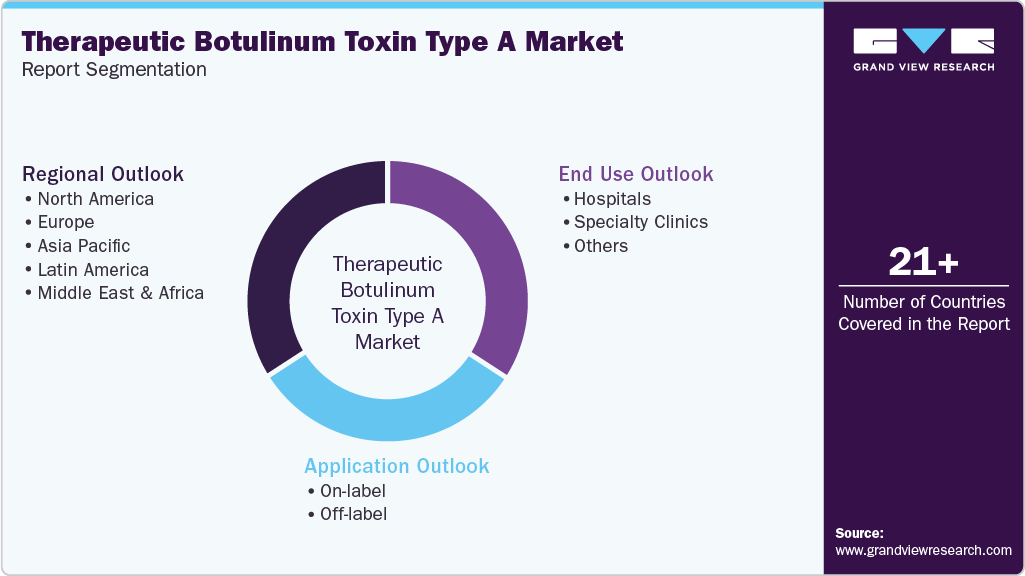
This report forecasts revenue growth at the global, regional & country levels and provides an analysis of the latest industry trends in each of the sub-segments from 2021 to 2033. For this study, Grand View Research has segmented the therapeutic botulinum toxin type A market report based on application, end use, and region:
 To learn more about this report, Download Free Sample Report
-
Application Outlook (Revenue, USD Million, 2021 - 2033)
-
On-label
-
Chronic Migraine
-
Spasticity (Upper Limb / Lower Limb)
-
Dystonia
-
Blepharospasm
-
Strabismus
-
Overactive Bladder
-
Others (hyperhidrosis, sialorrhea)
-
-
Off-label
-
-
End Use Outlook (Revenue, USD Million, 2021 - 2033)
-
Hospitals
-
Specialty Clinics
-
Others
-
-
Regional Outlook (Revenue, USD Million, 2021 - 2033)
-
North America
-
U.S.
-
Canada
-
-
Europe
-
UK
-
Germany
-
France
-
Italy
-
Spain
-
-
Asia Pacific
-
China
-
Japan
-
South Korea
-
Australia
-
India
-
-
Latin America
-
Brazil
-
Mexico
-
-
MEA
-
South Africa
-
Saudi Arabia
-
UAE
-
-
Frequently Asked Questions About This Report
The global therapeutic botulinum toxin type A market size was estimated at USD 5.2 billion in 2025 and is expected to reach USD 5.6 billion in 2026.
The global therapeutic botulinum toxin type A market is expected to grow at a compound annual growth rate of 10.2% from 2026 to 2033 to reach USD 11.0 billion by 2033.
Key factors that are driving the therapeutic botulinum toxin type A market growth include the rising prevalence of neurological and chronic conditions such as migraine, spasticity, and movement disorders, increasing demand for minimally invasive treatment options, and strong clinical evidence supporting its safety and efficacy. Additionally, expanding therapeutic indications, growing awareness among patients and healthcare providers, and improved access to treatment through specialty clinics and reimbursement support are further contributing to market expansion.
The on-label segment led with a 90.5% revenue share in 2025, while the off-label segment to register a significant CAGR from 2026 to 2033.
North America dominated the therapeutic botulinum toxin type A market with a share of 61.8% in 2025. North America represents the most mature and dominant regional market for therapeutic botulinum toxin type A, supported by expanding role in the management of multiple chronic and neurological conditions, strong healthcare infrastructure, and growing clinical acceptance.
Some key players operating in the therapeutic botulinum toxin type A market include AbbVie, Ipsen, Merz Pharma, and Medytox, Hugel, Daewoong Pharmaceutical
The specialty clinics segment led with a 59.1% revenue share in 2025.
About the Author(s)
Medical Devices Research Team
Healthcare · Medical DevicesThis report was authored by the medical devices research team at Grand View Research - comprising two research analysts, one senior research analyst, and one industry expert - with specialized expertise in the medical devices segment of the healthcare industry. All findings are based on proprietary healthcare databases, executive interviews, and regulatory analysis, subject to internal peer review prior to publication.
Last Updated:
Speak to Analyst

Customize this report to your needs - add regions, segments, or data points, with 20% free customization.
Or view our licence options:


ISO 9001:2015 & 27001:2022 Certified
We are GDPR and CCPA compliant! Your transaction & personal information is safe and secure. For more details, please read our privacy policy.


