
- Home
- »
- Advanced Interior Materials
- »
-
Thermostat Market Size, Share & Trends Report, 2026-2033GVR Report cover

Thermostat Market (2026 - 2033)
Size, Share & Trends Analysis Report, By Product (Smart, Mechanical, Programmable), By Application (New Construction, Retrofit & Renovation), By End Use, By Distribution Channel, By Connectivity Technology, By Region, And Segment Forecasts
Market Size, 2025
$7.4BMarket Estimate, 2026
$8.2BMarket Forecast, 2033
$22.5BCAGR, 2026–2033
15.5%Thermostat Market Summary
The global thermostat market size was valued at USD 7.4 billion in 2025 and is projected to grow from USD 8.2 billion in 2026 to USD 22.5 billion by 2033, at a CAGR of 15.5% from 2026 to 2033. North America dominated the market, accounting for a revenue share of 35.0% in 2025. This robust growth is primarily driven by the rising demand for energy-efficient temperature control solutions and the increasing penetration of smart home technologies.
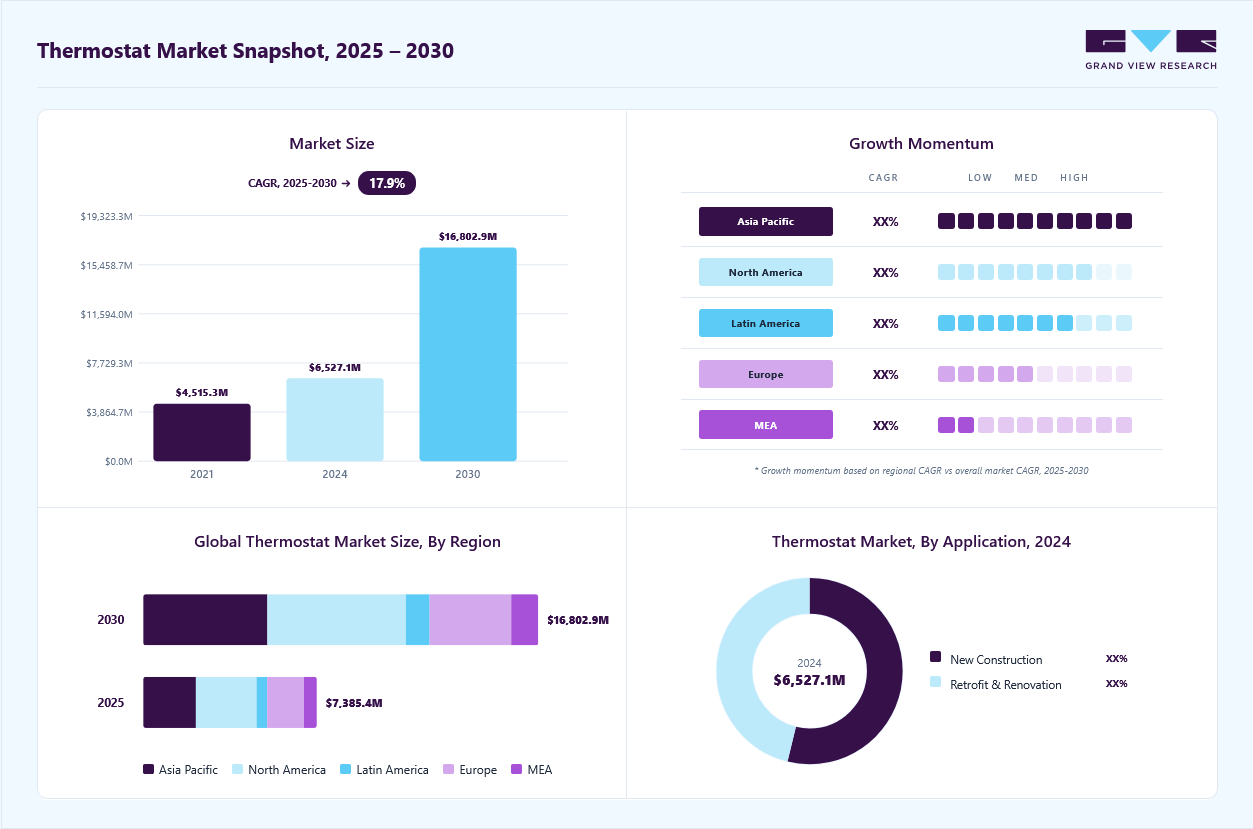 Source: Grand View Research, IR Documents, Primary Interviews, Paid DatabasesTo learn more about this report,
 Download Free Sample Report
 Key Market Trends & Insights
- By product: Smart thermostat segment dominated the market, with a revenue share of 67.9% in 2025.
- By application: New construction segment held the largest market share of 53.8% in 2025.
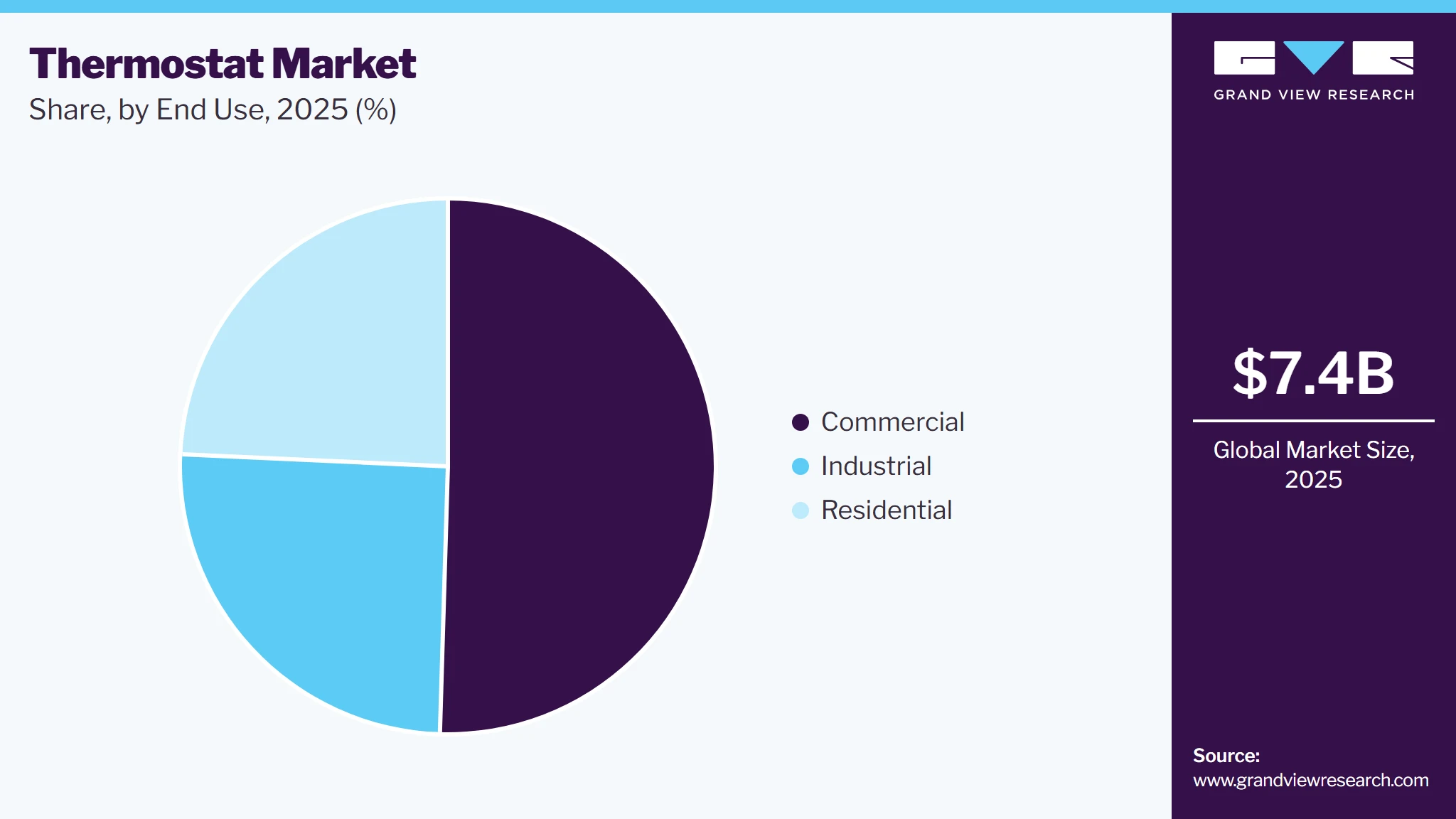
- By end use: Commercial segment held the largest revenue share of 50.5% in 2025.
- By distribution channel: Retail stores segment accounted for the largest revenue share of 44.0% in 2025.
- By connectivity technology: Wireless segment dominated the market, with a revenue share of 55.4% in 2025.
Regional Highlights
- Largest regional market: North America (35.0% revenue share, 2025)
- Fastest-growing regional market: Asia Pacific (highest CAGR, 2026-2033)
- By country: The U.S. held the largest market share in 2025.
Market Size & Forecast
- Market size in 2025: USD 7.4 Billion
- Estimated market size in 2026: USD 8.2 Billion
- Projected market size by 2033: USD 22.5 Billion
- CAGR (2026-2033): 15.5%
Three ways to get this report
Buy it, customize it, or ask a question.Ask an Analyst
Analyst response in 1 business day
- AccessReport author, directly
- Reply timeWithin 1 working day
- No sales callDirect answer only
- FormatEmail reply
- CostFree, no cost
Get the Full Report
What the study covers
- FormatsPDF · Excel · Dashboard
- Timeline2026–2033 annual, 2025 base
- Coverage20+ countries, 5 regions
- Companies10+ key players profiled
Customize the Report
20% free customization
- IncludeCountries, segments, points
- TailorTo your product definition
- ExtendDeeper competitor detail
- OrA fully bespoke study
- Turnaround5–10 working days
As households and commercial buildings become more connected, smart thermostats are gaining popularity for their ability to offer automated climate control, remote access, and integration with voice assistants and IoT ecosystems. Furthermore, escalating energy prices and growing awareness of sustainability and carbon footprint reduction motivate consumers to invest in intelligent temperature management systems that optimize energy consumption and reduce utility bills.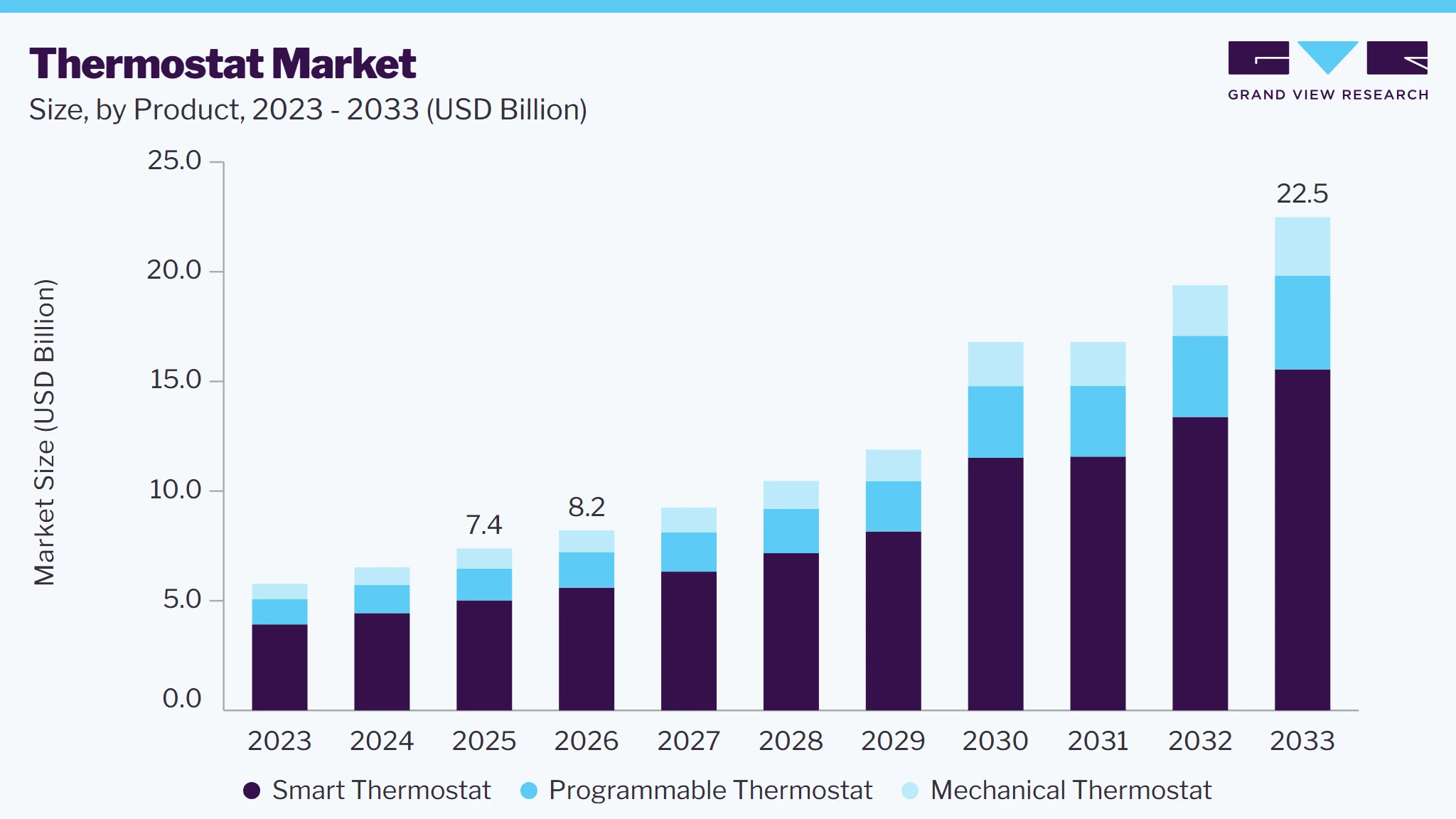 To learn more about this report, Download Free Sample Report
 In addition, technological advancements have made thermostats smarter and more efficient, allowing users to control temperatures remotely and save energy. Growing environmental awareness pushes consumers to adopt eco-friendly solutions, while government initiatives support energy conservation through incentives and regulations. These factors drive increased demand for advanced thermostats, contributing to the steady market growth.
Market Dynamics
The global thermostat market is characterized by a growing transition toward intelligent, connected solutions, driven by increasing emphasis on energy efficiency and the expanding adoption of smart home technologies. The competitive landscape is evolving from conventional programmable thermostats to Wi-Fi-enabled and AI-assisted smart thermostats that offer remote monitoring, automated temperature optimization, and integration with broader building management and home automation systems. This transformation is further encouraged by government initiatives promoting energy conservation and stricter efficiency standards across residential, commercial, and industrial sectors. Mature markets continue to generate steady demand through high consumer awareness and widespread smart home adoption, while emerging economies present attractive growth opportunities supported by rapid urbanization, infrastructure development, and increasing construction activity.
The increasing adoption of smart home technologies and energy-efficient building solutions is a significant driver of the global thermostat market. Consumers and commercial facility managers are increasingly deploying smart thermostats to optimize heating and cooling operations, reduce energy consumption, and improve occupant comfort through automated temperature control and remote monitoring.
The integration of thermostats with IoT platforms, voice assistants, and building management systems has further enhanced their functionality, making them an essential component of connected homes and commercial buildings. Furthermore, government initiatives promoting energy conservation, smart infrastructure development, and stricter building efficiency standards are encouraging the replacement of conventional thermostats with intelligent, connected solutions.
The relatively high initial investment associated with smart thermostats continues to restrain market adoption, particularly among cost-sensitive residential consumers and small businesses. Beyond the device cost, installation expenses can increase when older HVAC systems require wiring upgrades or professional configuration.
In addition, compatibility challenges with legacy heating and cooling equipment often limit seamless integration, making replacement decisions more complex. Growing concerns regarding cybersecurity, data privacy, and the collection of user behavior data in connected devices also remain important considerations that may discourage adoption among privacy-conscious consumers and organizations.
The growing demand for intelligent, personalized climate management presents substantial opportunities for thermostat manufacturers. Advances in artificial intelligence, machine learning, occupancy sensing, and predictive analytics are enabling thermostats to automatically adapt to user behavior, optimize HVAC performance, and improve overall energy efficiency. Increasing integration with renewable energy systems, smart grids, home energy management platforms, and utility demand-response programs is further expanding the application scope of connected thermostats.
Additionally, rapid urbanization, rising construction of smart residential and commercial buildings, and the growing adoption of subscription-based energy management services are creating new revenue opportunities for manufacturers while strengthening long-term customer engagement and product differentiation.
Market Concentration & Characteristics
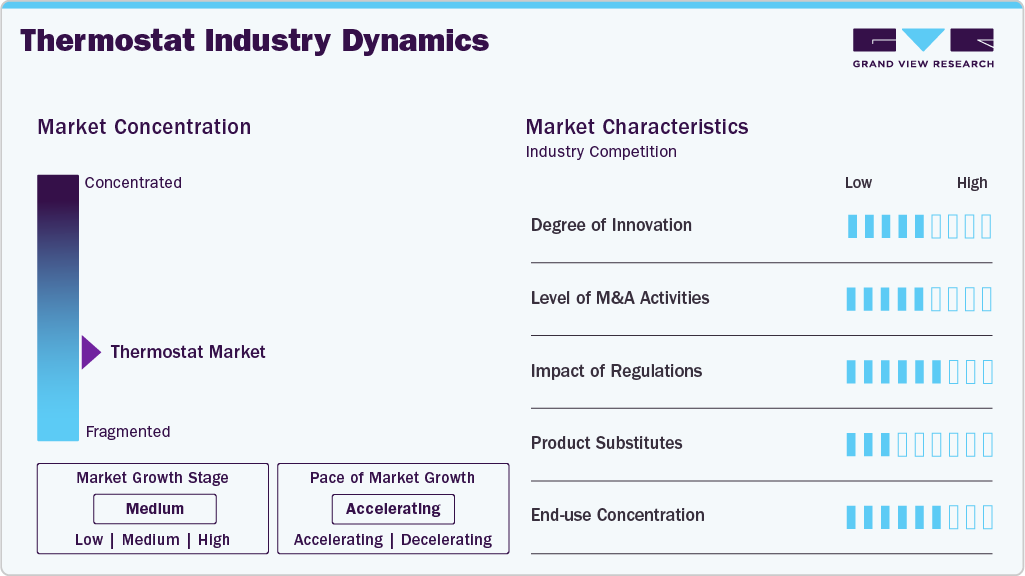
The global thermostat industry is highly fragmented, with a mix of large multinational companies and regional players competing for market share. Key manufacturers are investing in research and development to integrate advanced technologies like artificial intelligence, machine learning, and voice control into their products. Collaborations with energy providers and smart home platforms enhance product interoperability and expand market reach. Furthermore, companies are introducing affordable models to cater to a broader consumer base, leveraging government energy efficiency programs to incentivize adoption. These approaches aim to offer integrated energy management solutions, improve user experience, and capture a larger market share in the competitive landscape.
 To learn more about this report, Download Free Sample Report
 The thermostat industry is influenced by various regulatory frameworks aimed at promoting energy efficiency and environmental sustainability. In the U.S., the Energy Star program, managed by the Environmental Protection Agency (EPA), sets performance standards for energy-efficient products, including thermostats, encouraging manufacturers to develop energy-saving technologies. In the European Union, the Ecodesign Directive establishes mandatory ecological requirements for energy-using products, aiming to reduce energy consumption and other negative environmental impacts. Moreover, India's Bureau of Energy Efficiency (BEE) implements the Standards & Labeling Program, mandating energy efficiency ratings for appliances, including air conditioners, to inform consumers and promote energy conservation.
Advanced air quality monitoring in modern thermostats represents a significant innovation in home climate control. These smart thermostats now have built-in sensors that continuously measure indoor pollutants, particulate matter, carbon dioxide levels, and humidity. The thermostats regulate temperature by capturing and analyzing real-time environmental data and provide users with timely alerts and actionable recommendations, such as increasing ventilation, adjusting HVAC settings, or activating air purifiers.
Analyst Perspective
The thermostat market is experiencing robust growth as consumers and businesses increasingly prioritize energy efficiency, smart building technologies, and improved indoor comfort. Rising adoption of connected HVAC systems, expanding smart home ecosystems, and stringent energy efficiency regulations are driving demand for advanced thermostats capable of optimizing heating and cooling operations. Smart thermostats equipped with Wi-Fi connectivity, remote monitoring, occupancy sensing, and AI-based temperature control are becoming increasingly popular in residential and commercial buildings due to their ability to reduce energy consumption and operating costs. In addition, growing investments in building automation, green buildings, and HVAC modernization are accelerating the replacement of conventional thermostats with intelligent, programmable solutions.
Product Insights
Based on product, the smart thermostat segment led the market with the largest revenue share of 67.9% in 2025. This dominance is driven by the increasing adoption of smart home technologies and the rising demand for energy-efficient solutions. Advancements in artificial intelligence and connectivity have enhanced the user experience. For instance, in November 2024, NRG Energy and Renew Home partnered to distribute 650,000 AI-enabled thermostats in Texas by 2035, aiming to reduce electricity demand by 1 gigawatt equivalent to the consumption of 200,000 homes. Utilizing Google Cloud's AI and machine learning, the initiative will optimize HVAC usage, enhancing grid resilience and lowering energy costs.
The programmable thermostat segment is growing due to several key factors. Internet of Things (IoT) technology advancements have enabled seamless integration with smart home ecosystems, allowing users to control their thermostats remotely via smartphones or voice assistants like Amazon Alexa and Google Assistant. This integration enhances user convenience and energy efficiency. Furthermore, increasing consumer awareness of energy conservation and sustainability drives demand for programmable thermostats, as they offer automated scheduling and adaptive learning features that optimize heating and cooling based on occupancy patterns and weather conditions.
Application Insights
Based on application, the new construction segment led the market with the largest revenue share of 53.8% in 2025 due to rising demand for smart, energy-efficient buildings. Builders increasingly integrate smart thermostats during construction to meet regulatory standards, improve energy ratings, and attract tech-savvy buyers seeking automated climate control, convenience, and long-term cost savings in modern homes.
Retrofit & renovation is expected to grow as homeowners and businesses upgrade HVAC systems with smart thermostats. These upgrades improve energy efficiency, reduce utility costs, and meet increasing demand for smart home integration. Moreover, government incentives and rising environmental awareness drive further adoption in the renovation sector.
Distribution Channel Insights
Based on distribution channel, the retail stores segment led the market with the largest revenue share of 44.0% in 2025 due to their capacity to handle bulk orders, provide immediate product availability, and offer personalized service. These stores cater to residential and commercial sectors, facilitating large-scale purchases and installations, which is advantageous for contractors and businesses seeking efficient procurement solutions.
Online is expected to grow due to the increasing preference for online shopping, which offers consumers convenience, a broader product range, competitive pricing, and easy feature and review comparisons. The rise of e-commerce platforms and direct-to-consumer sales from manufacturers further contributes to this growth.
Connectivity Technology Insights
Based on connectivity technology, the wirelesssegment led the market with the largest revenue share of 55.4% in 2025 due to its reliable and stable connectivity. Wired thermostats are preferred in commercial and industrial settings for their consistent performance, ensuring uninterrupted operation. In addition, advancements in wired connectivity technologies enhance integration capabilities, increasing adoption in environments requiring secure, robust connections.
Wireless is expected to grow due to increasing demand for flexible, easy-to-install solutions. Wireless thermostats offer remote access, smart home integration, and minimal wiring, making them ideal for modern homes and renovations. Their convenience and compatibility with mobile apps and voice assistants drive adoption.
End Use Insights
Based on end use, the commercial segment led the market with the largest revenue share of 50.5% in 2025 due to increasing demand for energy-efficient solutions in businesses. Smart thermostats offer centralized control, automation, and significant cost savings on energy bills. Their ability to integrate with building management systems makes them ideal for large-scale applications in offices, retail spaces, and hospitality industries.
 To learn more about this report, Download Free Sample Report
 Residential is expected to grow due to increasing demand for energy-efficient solutions and smart home integration. Homeowners are adopting smart thermostats to optimize energy use, reduce utility costs, and enhance comfort through remote control and automation. Government incentives and rising environmental awareness further drive adoption.
Regional Insights
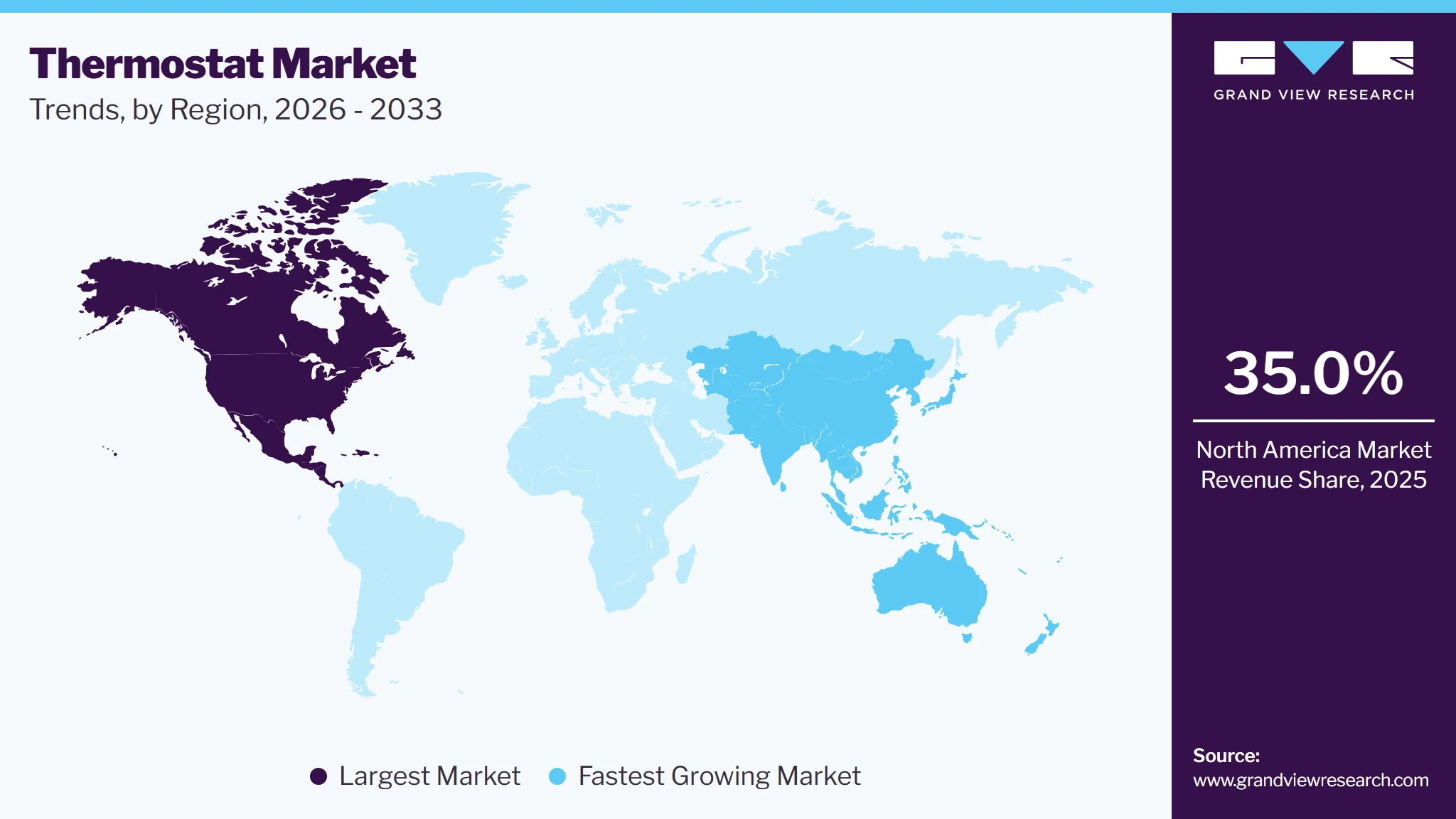
North America dominated the thermostat market with the largest revenue share of 35.0% in 2025 share driven by strong technological infrastructure, high adoption of smart home systems, and the presence of leading manufacturers. Supportive government policies promoting energy efficiency and high consumer awareness have driven widespread adoption of smart and programmable thermostats across residential and commercial sectors, securing the region’s leading position.
 To learn more about this report, Download Free Sample Report
 U.S. Thermostat Market Trends
The thermostat market in the U.S. held the largest share in the North America region in 2025, driven by increasing advancements in thermostats. Significant investments in research and development, along with increasing partnerships and collaborations, further accelerate market expansion.
Asia Pacific Thermostat Market Trends
The thermostat industry in the Asia Pacific is anticipated to grow at the fastest CAGR from 2026 to 2033, increasing adoption of smart home technologies, and rising demand for energy-efficient solutions. Government initiatives promoting green buildings and expanding middle-class income support market expansion across residential and commercial sectors.
China thermostat marketis projected to grow at a CAGR of 19.3% over the forecast period due to smart city projects and energy-saving regulations. With increasing digitalization and consumer awareness of smart home benefits, demand for programmable and smart thermostats is rising. Local manufacturing capabilities and government support further fuel domestic market development.
The thermostat market in India is projected to grow at a CAGR of 18.8% over the forecast period. This market is growing due to rising energy costs, growing middle-class adoption of smart technologies, and expanding urban infrastructure. Government-led energy efficiency programs and increasing awareness about home automation are encouraging consumers to upgrade to smart and programmable thermostats in residential and commercial buildings.
Europe Thermostat Market Trends
The thermostat market in Europe is propelled by increasing environmental awareness, demand for energy-efficient solutions, and rising adoption of smart home technologies. Stringent energy regulations and government incentives for energy savings further propel the market, particularly in the residential and commercial sectors.
France thermostat market is expected to grow at a rapid CAGR of 17.6% over the forecast period due to strong governmental support for energy-efficient initiatives. Consumer demand for smart thermostats to reduce energy costs and improve comfort is rising, particularly in urban areas, supported by sustainability trends and advanced building technologies.
The thermostat market in Italy is expected to grow at a rapid CAGR of 19.4% over the forecast period, driven by an increase in smart home adoption. With more consumers seeking to optimize energy use and reduce costs, Italy’s residential and commercial sectors are embracing programmable and smart thermostats for improved control and convenience.
Latin America Thermostat Market Trends
The thermostat market in Latin America is driven by increasing urbanization, rising disposable incomes, and a growing emphasis on energy efficiency. Consumers are adopting smart thermostats to optimize energy consumption and reduce utility costs, particularly in residential and commercial sectors.
Argentina thermostat market is projected to grow at a CAGR of 17.8% over the forecast period as consumers seek energy-efficient solutions amid rising energy costs. The adoption of smart thermostats is increasing in urban areas, driven by greater awareness of energy conservation and the benefits of automated climate control systems.
Middle East & Africa Thermostat Market Trends
The thermostat market in the Middle East and Africa is driven by rapid urbanization, increasing energy consumption, and a growing emphasis on energy efficiency. Governments are implementing policies to promote smart technologies, including thermostats, to optimize energy use in residential and commercial buildings. Adopting smart home technologies also contributes to the demand for advanced thermostat solutions.
The thermostat market in Saudi Arabia is projected to grow at a CAGR of 16.8% over the forecast period, propelled by its Vision 2030 initiative, which focuses on diversifying the economy and promoting sustainability. The country is investing in smart city projects and infrastructure development, increasing the deployment of energy-efficient technologies like smart thermostats.
Key Thermostat Company Insights
Some key players operating in the market include Nest Labs(Google) and Honeywell, among others.
-
Nest Labs specializes in smart home products, including thermostats, smoke detectors, and security systems. Known for its sleek design and user-friendly interfaces, Nest combines artificial intelligence and connectivity to offer intuitive home automation solutions that enhance comfort, convenience, and energy efficiency.
-
Honeywell has a long history of engineering home comfort, security, and energy control innovations. The company offers various products, from traditional thermostats to smart home devices. Honeywell stands out for its durable, reliable solutions and strong presence in residential and commercial settings.
Key Thermostat Companies:
The following key companies have been profiled for this study on the thermostat market.
- Alphabet (Google Nest)
- Honeywell International
- Emerson Electric
- Ecobee
- Johnson Controls
- Siemens
- Trane Technologies
- Carrier Corporation
- Resideo Technologies
- Bosch Thermotechnology
- Legrand
- Centrica Hive
- Control4 Corporation
- Vivint
- Tado
Recent Developments
-
In January 2025, Ecobee launched an affordable smart thermostat that offers key features like energy savings, smart home integration, and remote control. The device is designed to provide users with an easy-to-use, cost-effective solution for optimizing home temperature and improving energy efficiency.
-
In January 2025, Honeywell Home launched a new X2S smart thermostat that supports Matter, allowing seamless integration with various ecosystems. It’s compatible with Alexa, Google Home, Apple Home, and Samsung SmartThings, enabling users to customize temperature and monitor statistics through voice commands and apps.
Thermostat Market Report Scope
Report Attribute
Details
Market size in 2025
USD 7.4 billion
Estimated market size in 2026
USD 8.2 billion
Projected market size by 2033
USD 22.5 billion
Growth rate
CAGR of 15.5% from 2026 to 2033
Base year for estimation
2025
Historical data
2021 - 2024
Forecast period
2026 - 2033
Quantitative units
Revenue in USD billion and CAGR from 2026 to 2033
Report coverage
Revenue forecast, company ranking, competitive landscape, growth factors, and trends
Segments covered
Product, application, end use, distribution channel, connectivity technology, region
Regional scope
North America; Europe; Asia Pacific; Latin America; Middle East & Africa
Country scope
U.S.; Canada; Mexico; Germany; France; Spain; Italy; UK; China; India; Japan; South Korea; Australia; Brazil; Argentina; Saudi Arabia; UAE; South Africa
Key companies profiled
Honeywell International Inc., Resideo Technologies, Inc., Emerson Electric Co., Google Nest (Alphabet Inc.), Ecobee Inc., Siemens AG, Schneider Electric SE, Danfoss A/S, Bosch Thermotechnology, Johnson Controls International plc.
Customization scope
Free report customization (equivalent up to 8 analysts' working days) with purchase. Addition or alteration to country, regional & segment scope.
Pricing and purchase options
Avail customized purchase options to meet your exact research needs. Explore purchase options
Global Thermostat Market Report Segmentation
This report forecasts revenue growth at global, regional & country levels and provides an analysis on the industry trends in each of the sub-segments from 2021 to 2033. For this study, Grand View Research has segmented the global thermostat market based on product, application, end use, distribution channel, connectivity technology, and region:
-
Product Outlook (Revenue, USD Million, 2021 - 2033)
-
Smart Thermostat
-
Mechanical Thermostat
-
Programmable Thermostat
-
-
Application Outlook (Revenue, USD Million, 2021 - 2033)
-
New Construction
-
Retrofit & Renovation
-
-
End Use Outlook (Revenue, USD Million, 2021 - 2033)
-
Residential
-
Commercial
-
Industrial
-
-
Distribution Channel Outlook (Revenue, USD Million, 2021 - 2033)
-
Online
-
Retail Stores
-
Wholesale Stores
-
Others
-
-
Connectivity Technology Outlook (Revenue, USD Million; 2021 - 2033)
-
Wired
-
Wireless
-
-
Regional Outlook (Revenue, USD Million; 2021 - 2033)
-
North America
-
U.S.
-
Canada
-
Mexico
-
-
Europe
-
Germany
-
France
-
Spain
-
Italy
-
UK
-
-
Asia Pacific
-
China
-
India
-
Japan
-
South Korea
-
Australia
-
-
Latin America
-
Brazil
-
Argentina
-
-
Middle East & Africa
-
Saudi Arabia
-
UAE
-
South Africa
-
-
Competitive Benchmarking
Category
Operating Strategies
Competitive Edge
Weakness
Established Players (e.g., Honeywell International Inc., Resideo Technologies, Inc., Emerson Electric Co., Google Nest (Alphabet Inc.), Siemens AG, Schneider Electric SE, Johnson Controls International plc.)
- Invest in smart thermostat innovation, AI-enabled energy management, and IoT integration.
- Expand product portfolios through strategic partnerships with HVAC OEMs, utilities, and smart home ecosystem providers.
- Strengthen global distribution networks while focusing on commercial buildings, residential replacements, and connected building solutions.
- Strong global brand recognition and extensive distribution channels.
- Comprehensive thermostat portfolios supported by advanced software, cloud connectivity, and building automation expertise.
- Significant R&D capabilities and established relationships with HVAC manufacturers, contractors, and enterprise customers.
- Premium product pricing may limit adoption in price-sensitive markets.
- Large organizational structures can slow product development and decision-making.
- Dependence on mature North American and European markets limits growth potential compared to emerging regions.
Emerging & Regional Players (e.g., Ecobee Inc., Danfoss A/S, Bosch Thermotechnology)
- Focus on smart, energy-efficient thermostat solutions tailored to residential and regional commercial markets.
- Differentiate through user-friendly mobile applications, sustainability initiatives, and integration with smart home ecosystems.
- Expand market presence through regional partnerships, HVAC installers, and digital sales channels.
- Strong specialization in smart thermostat technologies and energy-efficient climate control
- Greater flexibility to introduce innovative features and respond quickly to changing customer requirements.
- Strong regional presence and growing brand recognition in selected markets.
- Smaller global distribution and market reach than multinational competitors.
- Lower brand visibility in several emerging and developing economies.
- Limited financial resources for large-scale acquisitions, marketing, and global expansion initiatives compared with established industry leaders.
Research Methodology
The Flocculants And Coagulants market figures in this report are based on a proven research process that combines executive interviews with secondary research from proprietary databases, company filings, and recognized regulatory and institutional sources. Market size is built through value-chain sizing - reconciling supply-side and demand-side estimates - and triangulated with bottom-up and top-down approaches. Every estimate passes multiple levels of expert validation before publication, with each Flocculants And Coagulants segment quantified using the revenue-capture definitions in the table below.
Segment Definition
Segment - Product
Revenue Capture Definition
Smart Thermostat
Revenue generated from the sale of Wi-Fi-enabled and connected thermostats offering remote monitoring, smartphone control, voice assistant integration, learning capabilities, scheduling, and energy management features.
Mechanical Thermostat
Revenue generated from the sale of conventional non-programmable thermostats that manually regulate HVAC systems using mechanical components without digital or connectivity features.
Programmable Thermostat
Revenue generated from the sale of digital thermostats that allow users to preset heating and cooling schedules to improve energy efficiency without requiring advanced smart connectivity.
Segment - Application
Revenue Capture Definition
New Construction
Revenue generated from thermostat sales installed in newly constructed residential, commercial, and industrial buildings as part of new HVAC system installations.
Retrofit & Renovation
Revenue generated from thermostat sales for replacement or upgrade of existing thermostat systems during building renovations and HVAC modernization projects.
Segment - End Use
Revenue Capture Definition
Residential
Revenue generated from thermostat sales for homes, apartments, and other residential buildings to improve indoor comfort and energy efficiency.
Commercial
Revenue generated from thermostat sales for offices, retail buildings, hotels, healthcare facilities, educational institutions, and other commercial establishments.
Industrial
Revenue generated from thermostat sales for manufacturing facilities, warehouses, utilities, laboratories, and other industrial applications requiring temperature control.
Segment - Distribution Channel
Revenue Capture Definition
Online
Revenue generated from thermostat sales through company websites, e-commerce platforms, and online marketplaces.
Retail Stores
Revenue generated from thermostat sales through home improvement stores, electronics retailers, appliance stores, and HVAC retail outlets.
Wholesale Stores
Revenue generated from thermostat sales through wholesalers, distributors, and HVAC equipment suppliers serving contractors and commercial customers.
Others
Revenue generated from thermostat sales through direct manufacturer sales, HVAC contractors, OEM partnerships, system integrators, and other specialized distribution channels.
Segment - Connectivity Technology
Revenue Capture Definition
Wired
Revenue generated from thermostat sales utilizing wired communication with HVAC systems through low-voltage wiring or building automation networks.
Wireless
Revenue generated from thermostat sales featuring wireless communication technologies such as Wi-Fi, Bluetooth, Zigbee, Z-Wave, Thread, and other IoT connectivity protocols.
Estimation Model
Layer Name
Key Question
Description
Temperature Control Demand Layer
Where are thermostats required?
Analyze demand across residential, commercial, and industrial buildings. Assess HVAC system installations, heating and cooling equipment penetration, smart home adoption, building automation trends, and temperature control requirements to establish the addressable demand for thermostats.
Construction & HVAC Infrastructure Investment Layer
Where is new equipment demand being created?
Evaluate investments in residential housing, commercial buildings, industrial facilities, healthcare, hospitality, educational infrastructure, and smart building projects. Assess new construction, renovation activities, HVAC replacement cycles, and energy-efficiency retrofit programs that drive procurement of new thermostats.
Technology Penetration Layer
Which thermostat technologies are being deployed?
Segment demand by product type (smart, programmable, and non-programmable), connectivity, application, end-use industry, and distribution channel. Apply adoption rates based on energy efficiency requirements, user preferences, building automation integration, HVAC compatibility, and regulatory standards.
Revenue Generation Layer
How much market revenue is generated?
Estimate annual shipments of thermostats by product type, application, end-use industry, and region. Quantify revenues generated exclusively from the sale of new thermostats supplied to HVAC OEMs, distributors, retailers, contractors, and building owners.
Delivered Customizations
This report has been delivered with the following In-depth customizations
Client Request
Customization Delivered
Value Adds
Competitive Benchmarking
Benchmarked leading thermostat manufacturers based on product portfolio, technology capabilities, smart thermostat offerings, connectivity features, geographic presence, financial strength, and strategic positioning, while differentiating established companies from emerging and regional players.
Provided a comprehensive view of the competitive landscape, enabling the client to evaluate market positioning, identify technology leaders, assess competitive strengths, and benchmark strategic initiatives across the thermostat market.
Regional Segmentation
Refined regional analysis by evaluating thermostat demand across North America, Europe, Asia Pacific, Latin America, and the Middle East & Africa, considering smart home adoption, HVAC installation trends, building construction activity, energy-efficiency regulations, and replacement demand.
Delivered deeper regional insights, helping the client identify high-growth markets, understand regional demand variations, and prioritize expansion and investment strategies.
Opportunity Assessment
Assessed emerging growth opportunities by analyzing smart thermostat adoption, AI-enabled temperature control, wireless connectivity, retrofit and renovation activities, building automation, and integration with smart home and energy management systems across end-use industries.
Identified high-potential growth areas and technology adoption trends, enabling the client to prioritize product development, strengthen market entry strategies, and capitalize on evolving customer requirements.
Frequently Asked Questions About This Report
North America dominated the thermostat market with the largest revenue share of 35.0% in 2025.
Key factors include increasing adoption of smart homes and building automation systems, rising demand for energy-efficient HVAC solutions, growing investments in commercial infrastructure, increasing integration of IoT-enabled connected devices, and stringent energy efficiency regulations.
The global thermostat market size was valued at 7.4 billion in 2025 and is estimated at USD 8.2 billion in 2026.
The global thermostat market, in terms of revenue, is expected to grow at a compound annual growth rate of 15.5% from 2026 to 2033, to reach USD 22.5 billion by 2033.
The commercial segment accounted for the largest revenue share of 50.5% in 2025 due to increasing demand for energy-efficient solutions in businesses.
The smart thermostat segment led the market with the largest revenue share of 67.9% in 2025 while programmable thermostat segment is second fastest growing market
Asia Pacific is the fastest-growing region over the forecast period.
Key trends include increasing adoption of AI-enabled smart thermostats, growing integration with smart home ecosystems and voice assistants, rising demand for wireless connectivity technologies, and expanding deployment of thermostats in energy-efficient and green buildings.
Some of the key players operating in the market are Honeywell International Inc., Resideo Technologies, Inc., Emerson Electric Co., Google Nest (Alphabet Inc.), Ecobee Inc., Siemens AG, Schneider Electric SE, Danfoss A/S, Bosch Thermotechnology, and Johnson Controls International plc.
About the Author(s)
Advanced Interior Materials Research Team
Advanced Materials · Advanced Interior MaterialsThis report was authored by the advanced interior materials research team at Grand View Research - comprising two research analysts, one senior research analyst, and one industry expert - with specialized expertise in the advanced interior materials segment of the advanced materials industry. All findings are based on proprietary advanced materials databases, executive interviews, and regulatory analysis, subject to internal peer review prior to publication.
Last Updated:
Speak to Analyst

Customize this report to your needs - add regions, segments, or data points, with 20% free customization.
Or view our licence options:


ISO 9001:2015 & 27001:2022 Certified
We are GDPR and CCPA compliant! Your transaction & personal information is safe and secure. For more details, please read our privacy policy.


