
- Home
- »
- Pharmaceuticals
- »
-
Thrombosis Drugs Market Size, Share, Industry Report, 2033GVR Report cover
![Thrombosis Drugs Market Size, Share & Trends Report]()
Thrombosis Drugs Market (2025 - 2033) Size, Share & Trends Analysis Report By Disease Type (Deep Vein Thrombosis, Pulmonary Embolism), By Drug Class, By Distribution Channel, By Region, And Segment Forecasts
- Report ID: GVR-4-68040-793-4
- Number of Report Pages: 150
- Format: PDF
- Historical Range: 2018 - 2023
- Forecast Period: 2025 - 2033
- Industry: Healthcare
- Report Summary
- Table of Contents
- Segmentation
- Methodology
- Download FREE Sample
-
 Download Sample Report
Thrombosis Drugs Market Summary
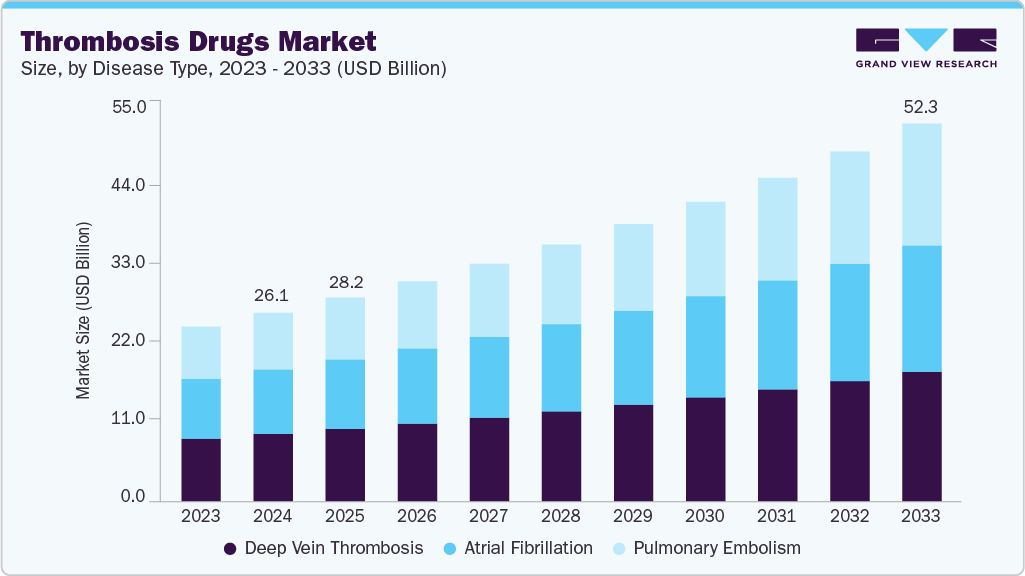
The global thrombosis drugs market size was estimated at USD 26.11 billion in 2024 and is projected to reach USD 52.30 billion by 2033, growing at a CAGR of 8.03% from 2025 to 2033. The growth of this market is primarily driven by the high prevalence of cardiovascular diseases (CVDs) worldwide, as conditions such as heart attack, stroke, and venous thromboembolism (VTE) increase the demand for effective anticoagulant therapies.
Key Market Trends & Insights
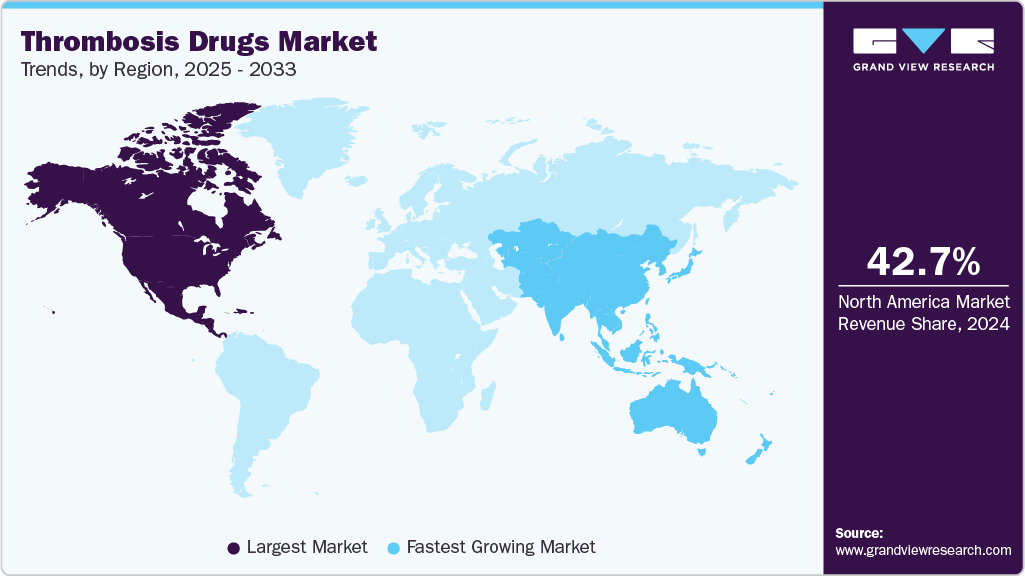
- North America thrombosis drugs market held the largest share of 42.73% of the global market in 2024.
- The Asia Pacific market is expected to grow significantly at the fastest CAGR of 9.31% over the forecast period.
- By disease type, deep vein thrombosis segment accounted for 35.73% of the revenue in 2024.
- By drug class, the factor Xa inhibitors segment held the largest revenue share of 50.98% in 2024.
- By distribution channel, the hospital pharmacies segment held the largest market share of 49.98% in 2024.
Market Size & Forecast
- 2024 Market Size: USD 26.11 Billion
- 2033 Projected Market Size: USD 52.30 Billion
- CAGR (2025-2033): 8.03%
- North America: Largest market in 2024
- Asia Pacific: Fastest-growing market
An aging global population further contributes to market growth, since older adults are more susceptible to thrombosis and related complications. Advances in anticoagulant therapies, including safer and more convenient oral options, improve patient outcomes and encourage wider adoption. In addition, the rising prevalence of lifestyle-related diseases such as obesity, diabetes, and hypertension, combined with growing awareness of thrombosis risks and increased healthcare expenditure, continues to support sustained market expansion.Product innovation and regulatory approvals drive the thrombosis drugs industry by expanding treatment options and raising clinician confidence. Recent drug and device advances, including faster, easier-to-administer clot-dissolving medicines and improved oral anticoagulants, make treatment more effective and simpler to deliver, which supports market growth by increasing clinical uptake. For instance, in March 2025, Genetech's TNKase, a clot-dissolving agent, received the U.S. Food and Drug Administration (FDA) approval for treating acute ischemic stroke (AIS). It is delivered as a single five-second intravenous (IV) bolus, providing a quicker and simpler option than the standard Activase, which requires an IV bolus followed by a 60-minute infusion.
Global awareness initiatives, such as World Thrombosis Day, organized by the International Society on Thrombosis and Hemostasis (ISTH), help to highlight the importance of thrombosis prevention and early detection, thereby indirectly supporting the thrombosis drugs market.
Market Concentration & Characteristics
High degree of innovation drives the thrombosis drugs market by accelerating drug development and enhancing preclinical testing. In January 2025, Taiwan's National Laboratory of Applied Research on Biotechnology (NLAC), developed “The Laser-induced Thrombosis on a Chip System,” under the National Applied Research Laboratories (NARLabs) and the National Science and Technology Council (NSTC). The system replicates blood clot formation using human vascular cells and blood to create localized thrombus models for assessing drug efficacy and dosage.
High entry barriers exist due to stringent regulatory approvals, substantial R&D costs, and the need for robust clinical trials. Established players benefit from brand recognition, extensive distribution networks, and economies of scale. Manufacturing complexities, especially for biologics and LMWH products, further limit new entrants. Intellectual property protections and patent landscapes create additional challenges. These factors collectively restrict competition to well-capitalized companies with regulatory expertise.
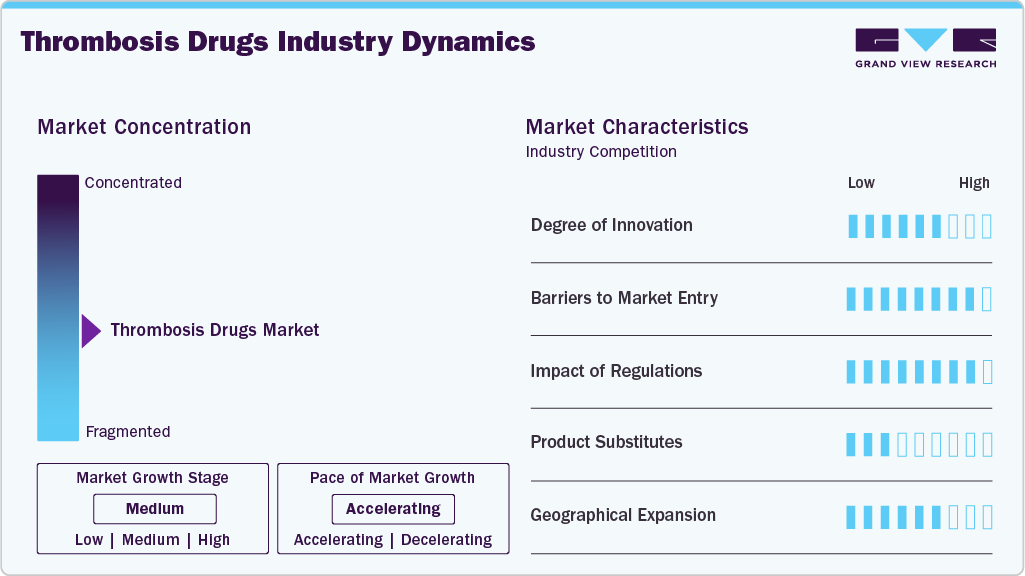
Regulatory frameworks strongly influence market dynamics, ensuring drug safety, efficacy, and quality. Agencies like the FDA, EMA, and CDSCO impose rigorous clinical and post-marketing requirements. Compliance with anticoagulant-specific monitoring, labeling, and pharmacovigilance guidelines affects market entry and operations. Frequent updates to regulatory standards can impact product approvals and timelines. Overall, regulatory oversight promotes patient safety while shaping competitive strategies.
The market faces moderate pressure from substitutes such as antiplatelet drugs, thrombolytics, and mechanical interventions like IVC filters. Lifestyle management and preventive therapies also act as indirect substitutes in low-risk populations. However, anticoagulants remain the primary choice for most thrombotic conditions due to superior efficacy. Switching between drug classes depends on patient risk profiles, comorbidities, and physician preference. Substitutes influence pricing, adoption, and product differentiation strategies.
North America and Europe dominate the thrombosis drugs market due to advanced healthcare infrastructure and high disease awareness. Emerging markets in Asia-Pacific and Latin America are witnessing rapid growth driven by increasing prevalence, improving healthcare access, and rising patient awareness. Companies are expanding distribution, partnerships, and local manufacturing to capitalize on these regions. Regional regulatory variations and reimbursement policies influence expansion strategies. Geographical diversification helps companies balance revenue streams and mitigate market risks.
Disease Type Insights
The deep vein thrombosis segment dominated the market with the largest revenue share of 35.73% in 2024. This growth is primarily driven by the rising prevalence of venous thromboembolism (VTE) worldwide, coupled with increased awareness of thrombosis-related complications among patients and healthcare providers. Lifestyle factors such as prolonged immobility, sedentary behavior, obesity, and smoking contribute significantly to the incidence of DVT, especially in aging populations. The availability and adoption of advanced anticoagulant therapies, including direct oral anticoagulants (DOACs) and low-molecular-weight heparins, have further strengthened treatment outcomes, encouraging more patients to seek timely intervention. Additionally, improvements in diagnostic technologies and preventive care initiatives are supporting early detection and management of DVT cases. These combined factors are expected to sustain the segment’s leadership in the thrombosis drugs market, while also driving research and development toward safer and more effective therapies for thrombotic disorders.
The pulmonary embolism (PE) segment is expected to grow at the fastest CAGR over the forecast period. The increasing global incidence of the condition and advancements in diagnostic and therapeutic interventions drives the market growth. PE is one of the leading causes of cardiovascular morbidity and mortality, responsible for about 100,000 deaths annually in the U.S. alone. Significant strides have been made in PE management in response to the rising incidence. As per the study in July 2025, the successful outpatient treatment of low-risk PE patients using direct oral anticoagulants (DOACs) achieved a 30-day recurrence rate of only 1.0%.
Drug Class Insights
The factor Xa inhibitors segment dominated the market, with the largest revenue share of 50.98% 2024. The expansion of clinical indications and the growth of outpatient and preventive care are driving the segment's growth. In May 2025, a study published on EurekAlert reported that in patients over 80 with NVAF, treatment with factor Xa inhibitors was associated with significantly fewer cardiovascular events than other anticoagulants.
The heparins segment is expected to register the third-highest CAGR over the forecast period, due to their widespread use in both prophylactic and therapeutic management of thrombosis. Heparins, including unfractionated heparin (UFH) and low-molecular-weight heparin (LMWH), are preferred for their rapid onset of action, predictable anticoagulant effects, and established safety profile. Increasing hospitalizations, surgical procedures, and the rising prevalence of cardiovascular disorders drive the demand for heparin-based therapies. Additionally, technological advancements in heparin formulations, such as longer-acting and more targeted variants, are enhancing patient adherence and treatment outcomes. Growing awareness among clinicians about the benefits of LMWH over traditional oral anticoagulants in certain high-risk populations further supports market expansion. The segment’s robust growth is also fueled by its critical role in managing acute thrombotic events, particularly in patients with deep vein thrombosis, pulmonary embolism, and atrial fibrillation.
Distribution Channel Insights
The hospital pharmacies segment held the largest market revenue share of 49.98% in 2024. The market is driven by the increasing incidence of thrombotic diseases, advancements in drug development, and the need for specialized medication management. Hospital pharmacies play a pivotal role in the healthcare system by ensuring the safe and effective use of medications. The segment is expected to maintain a significant market share, driven by the ongoing demand for specialized medications and the integration of advanced technologies in medication management.
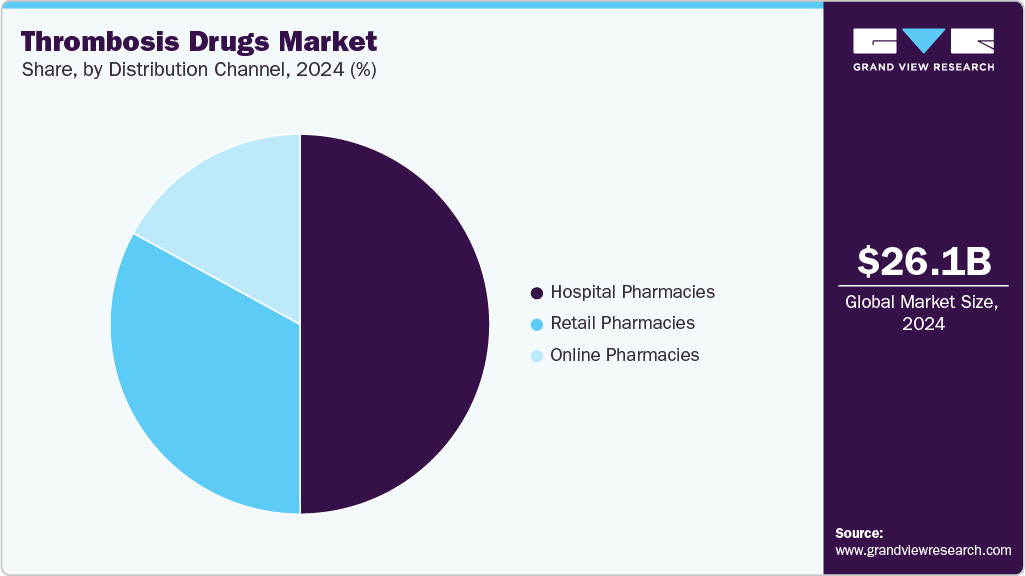
The online pharmacies segment is expected to grow at the fastest CAGR over the forecast period. The market is driven by increasing digital adoption, rising patient preference for home delivery, and the convenience of accessing prescription medications remotely. Online pharmacies provide patients easy access to anticoagulants, antiplatelet agents, and other thrombosis drugs, particularly for chronic conditions requiring long-term therapy.
Regional Insights
North America dominated the thrombosis drugs market with a revenue share of 42.73% 2024. This growth is driven by a high prevalence of CVDs such as deep vein thrombosis (DVT) and PE, an aging population, and widespread adoption of DOACs. Advanced healthcare infrastructure and early disease detection programs also support increased usage of thrombosis therapies.
U.S. Thrombosis Drugs Market Trends
The U.S. represents the largest share within North America because of a high incidence of atrial fibrillation and venous thromboembolism. Hospitals provide advanced anticoagulants and specialized treatment protocols. Lifestyle-related factors, including obesity and sedentary behavior, increase thrombotic risks. Rapid diagnostic tools enable timely therapy initiation in clinical settings. Research and clinical trials introduce novel drug formulations. Patient preference for oral anticoagulants over injectable supports consistent demand.
Europe Thrombosis Drugs Market Trends
The European thrombosis drugs market is growing steadily. Key drivers include an aging population, the increasing prevalence of thromboembolic disorders, and the broad adoption of novel oral anticoagulants in countries such as Germany, France, Italy, and the UK. National healthcare policies supporting CVD prevention also reinforce market growth.
The UK Thrombosis Drugs market benefits from advanced hospital infrastructure and rising venous thromboembolism cases. Access to specialized anticoagulants and diagnostic facilities enables timely intervention. Atrial fibrillation prevalence drives sustained therapy use. Clinical studies on low-molecular-weight heparins and direct oral anticoagulants support product adoption. Patient awareness of thrombosis symptoms encourages preventive therapy. Increasing surgical procedures and hospitalizations fuel market growth.
The Germany Thrombosis Drugs market exhibits strong market growth due to high rates of cardiovascular disorders and thrombotic conditions. Hospitals provide extensive access to modern anticoagulants and monitoring facilities. Patients increasingly prefer oral therapies for better adherence. Research initiatives and clinical trials expand product innovation and availability. Awareness of thrombotic risks post-surgery supports early therapy adoption. High-quality hospital care maintains consistent drug utilization across the country.
The France Thrombosis Drugs market shows steady market expansion supported by deep vein thrombosis and pulmonary embolism prevalence. Use of direct oral anticoagulants and heparin therapies ensures effective treatment. Patient education improves early diagnosis and adherence to therapy. Cardiovascular disease burden maintains continuous therapy demand. Clinical infrastructure facilitates access to advanced therapies. Ongoing research and new product launches strengthen treatment options.
Asia Pacific Thrombosis Drugs Market Trends
The thrombosis drugs market in the Asia Pacific is expected to witness the fastest CAGR of 9.31% over the forecast period, supported by a large and aging population, rising prevalence of thrombotic disorders, and increasing healthcare awareness. Improved access to hospitals and clinics and growing adoption of anticoagulants in urban and rural regions fuel the segment’s growth.
The Japan Thrombosis Drugs market demonstrates strong market growth due to an aging population and rising atrial fibrillation cases. Hospitals provide easy access to advanced anticoagulants. Patients increasingly prefer oral therapies for better compliance. Cardiovascular disorders continue to drive the need for thrombosis management. Clinical studies introduce safer formulations and therapeutic options. Awareness programs improve early detection and reduce complications.
The China Thrombosis Drugs market experiences rapid market expansion with increasing venous thromboembolism cases and urban lifestyle-related risks. Hospitals and clinics improve access to anticoagulants and heparins. Adoption of direct oral anticoagulants enhances patient convenience. Awareness of thrombotic complications after surgery boosts preventive therapy demand. Pharmaceutical companies focus on local production and distribution. Research and clinical trials promote innovative therapies and wider accessibility.
Latin America Thrombosis Drugs Market
Latin America shows moderate growth due to rising cardiovascular disease prevalence and hospitalizations. Urban medical centers increasingly adopt anticoagulants for treatment. Awareness campaigns support early detection of thrombotic events. Clinical education programs strengthen adherence to therapy protocols. Increasing surgeries and hospital admissions sustain demand for medications. Regional pharmaceutical distribution expands product availability across key markets.
The Brazil Thrombosis Drugs market contributes significantly to Latin America’s market through high deep vein thrombosis and atrial fibrillation prevalence. Low-molecular-weight heparins and direct oral anticoagulants are increasingly used. Hospitals provide rapid diagnostics for timely therapy initiation. Patient education programs improve adherence to treatment. Lifestyle-related risk factors maintain ongoing drug demand. Research collaborations enhance the availability of innovative therapies nationwide.
Middle East & Africa (MEA) Thrombosis Drugs Market
MEA shows steady growth with rising awareness of thrombotic diseases and improving healthcare access. Hospitals and specialty clinics provide low-molecular-weight heparins and oral anticoagulants. Increasing cardiovascular disorders drive therapy adoption. Clinical training strengthens early diagnosis and treatment outcomes. Hospitalizations and surgeries sustain consistent demand for drugs. Pharmaceutical companies expand supply chains to meet regional needs.
The Saudi Arabia Thrombosis Drugs market exhibits market growth supported by rising deep vein thrombosis and pulmonary embolism cases. Hospitals provide modern anticoagulants and monitoring services. Cardiovascular disease prevalence maintains consistent therapy usage. Awareness initiatives enhance patient understanding and adherence. Increasing surgical procedures stimulate preventive anticoagulant therapy. Clinical trials and research encourage adoption of innovative treatments.
Key Thrombosis Drugs Company Insights
The global thrombosis drugs market is highly competitive, dominated by established pharmaceutical companies such as Bristol-Myers Squibb, Johnson & Johnson, Boehringer Ingelheim, SANOFI, AstraZeneca, and Pfizer. These players leverage extensive R&D capabilities, strategic partnerships, and mergers and acquisitions to strengthen their market position. Key offerings include oral anticoagulants, factor Xa inhibitors, and antiplatelet therapies, with products like Eliquis gaining significant adoption. Regional expansion, lifecycle management strategies, and portfolio diversification are central to sustaining growth. Emerging players such as Ionis Pharmaceuticals and Aspen Holdings focus on niche innovations, while global giants maintain leadership through broad therapeutic coverage, strong brand presence, and robust clinical evidence.
Key Thrombosis Drugs Companies:
The following are the leading companies in the thrombosis drugs market. These companies collectively hold the largest market share and dictate industry trends.
- Bristol-Myers Squibb Company
- Johnson & Johnson
- Boehringer Ingelheim International GmbH
- SANOFI
- AstraZeneca
- Pfizer Inc.
- CSL
- Novo Nordisk A/S
- Takeda Pharmaceutical Company Limited
- Ionis Pharmaceuticals
- Grifols, S.A.
- Aspen Holdings
Recent Developments
-
In September 2025, CSL Limited entered into a strategic collaboration with Dutch biotech company VarmX to develop VMX-C001, a novel treatment to restore blood coagulation in patients on Factor Xa inhibitors who require urgent surgery or experience severe bleeding.
-
In July 2025, Bristol Myers Squibb and Pfizer announced an innovative direct-to-patient purchasing option for Eliquis through their Eliquis 360 Support resource.
Thrombosis Drugs Market Report Scope
Report Attribute
Details
Market size value in 2025
USD 28.19 billion
Revenue forecast in 2033
USD 52.30 billion
Growth rate
CAGR of 8.03% from 2025 to 2033
Base year for estimation
2024
Historical data
2018 - 2023
Forecast period
2025 - 2033
Quantitative units
Revenue in USD million/billion and CAGR from 2025 to 2033
Report coverage
Revenue forecast, company ranking, competitive landscape, growth factors, trends
Segments covered
Disease type, drug class, distribution channel, region
Regional scope
North America; Europe; Asia Pacific; Latin America; Middle East & Africa
Country scope
U.S.; Canada; Mexico; UK; Germany; France; Italy; Spain; Denmark; Sweden; Norway; China; Japan; India; Australia; South Korea; Thailand; Brazil; Argentina; South Africa; Saudi Arabia; UAE; Kuwait
Key company profiled
Bristol-Myers Squibb Company; Johnson & Johnson; Boehringer Ingelheim International GmbH; SANOFI; AstraZeneca; Pfizer Inc.; CSL; Novo Nordisk A/S; Takeda Pharmaceutical Company Limited; Ionis Pharmaceuticals; Grifols, S.A.; Aspen Holdings
Customization scope
Free report customization (equivalent up to 8 analysts working days) with purchase. Addition or alteration to country, regional & segment scope.
Pricing and purchase options
Avail customized purchase options to meet your exact research needs. Explore purchase options
Global Thrombosis Drugs Market Report Segmentation
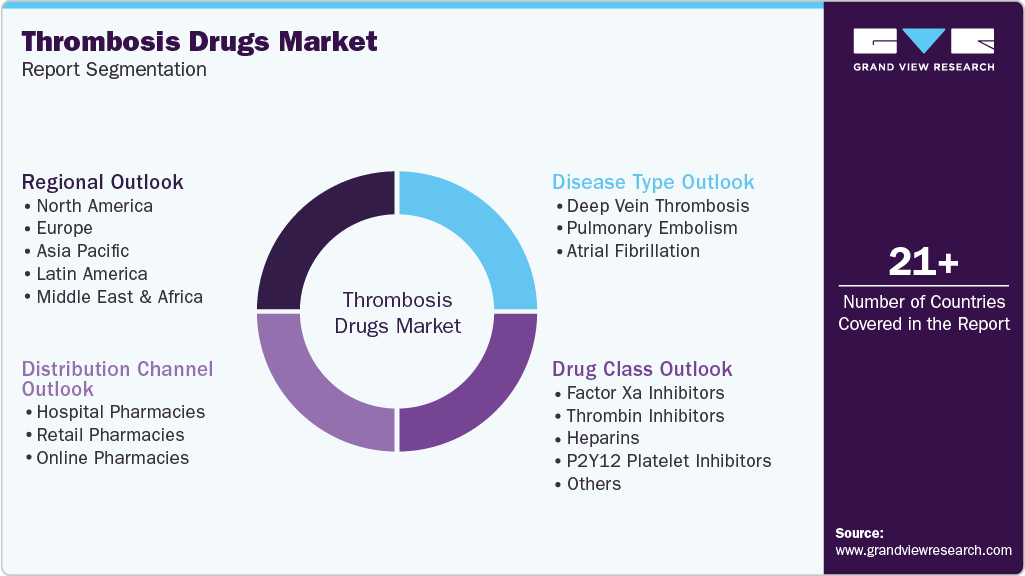
This report forecasts revenue growth at global, regional, and country levels and provides an analysis of the latest industry trends in each of sub-segments from 2021 to 2033. For this study, Grand View Research has segmented the global thrombosis drugs market report based on disease type, drug class, distribution channel, and region:
-
Disease Type Outlook (Revenue, USD Million, 2021 - 2033)
-
Deep Vein Thrombosis
-
Pulmonary Embolism
-
Atrial Fibrillation
-
-
Drug Class Outlook (Revenue, USD Million, 2021 - 2033)
-
Factor Xa Inhibitors
-
Thrombin Inhibitors
-
Heparins
-
P2Y12 Platelet Inhibitors
-
Others
-
-
Distribution ChannelOutlook (Revenue, USD Million, 2021 - 2033)
-
Hospital Pharmacies
-
Retail Pharmacies
-
Online Pharmacies
-
- Regional Outlook (Revenue, USD Million, 2021 - 2033)
-
North America
-
U.S.
-
Canada
-
Mexico
-
-
Europe
-
UK
-
Germany
-
France
-
Italy
-
Spain
-
Denmark
-
Sweden
-
Norway
-
-
Asia Pacific
-
Japan
-
China
-
India
-
Australia
-
South Korea
-
Thailand
-
-
Latin America
-
Brazil
-
Argentina
-
-
Middle East & Africa
-
South Africa
-
Saudi Arabia
-
UAE
-
Kuwait
-
-
Frequently Asked Questions About This Report


Share this report with your colleague or friend.
Need a Tailored Report?
Customize this report to your needs — add regions, segments, or data points, with 20% free customization.


ISO 9001:2015 & 27001:2022 Certified
We are GDPR and CCPA compliant! Your transaction & personal information is safe and secure. For more details, please read our privacy policy.
Trusted market insights - try a free sample
See how our reports are structured and why industry leaders rely on Grand View Research. Get a free sample or ask us to tailor this report to your needs.













