
- Home
- »
- Healthcare
- »
-
Topical Pain Relief Market Size & Share Report, 2026-2033GVR Report cover

Topical Pain Relief Market (2026 - 2033)
Size, Share & Trends Analysis Report By Product (Gels, Ointments, Roll-ons, Sprays), By Therapeutic Application (Arthritis & Joint Pain, Muscle Pain & Strains), By Active Ingredients, By Distribution Channel, By End-use, By Regional, And Segment Forecasts
Market Size, 2025
$11.4BMarket Estimate, 2026
$12.1BMarket Forecast, 2033
$18.8BCAGR, 2026–2033
6.5%Topical Pain Relief Market Summary
The global topical pain relief market size was valued at USD 11.4 billion in 2025 and is projected to grow from USD 12.1 billion in 2026 to USD 18.8 billion by 2033, at a CAGR of 6.5% from 2026 to 2033. North America dominated the market, accounting for the largest revenue share of 39.3% in 2025. The rising prevalence of musculoskeletal conditions, arthritis, and localized muscle and joint pain is increasing the need for convenient pain-management options.
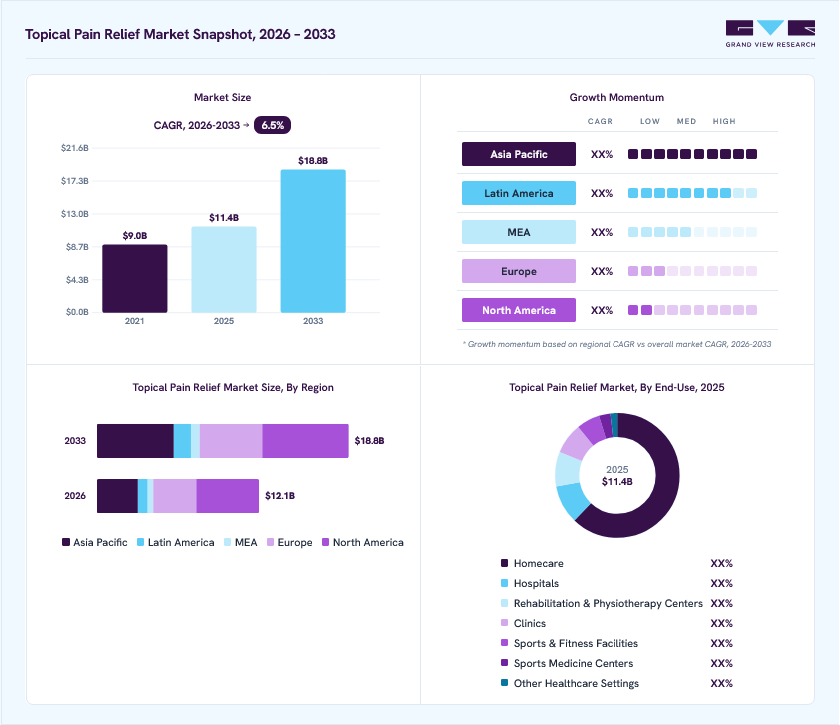 Source: Grand View Research, IR Documents, Primary Interviews, Paid DatabasesTo learn more about this report,
 Download Free Sample Report
Key Market Trends & Insights
- By product: Gels segment held the largest market share of 28.0% in 2025.
- By therapeutic application: Arthritis & joint pain segment held the largest market share of 30.0% in 2025.
- By active ingredients: Counterirritants/rubefacients segment held the largest market share of 34.0% in 2025.
- By distribution channel: Retail pharmacies & drug stores segment held the largest market share of 41.9% in 2025.
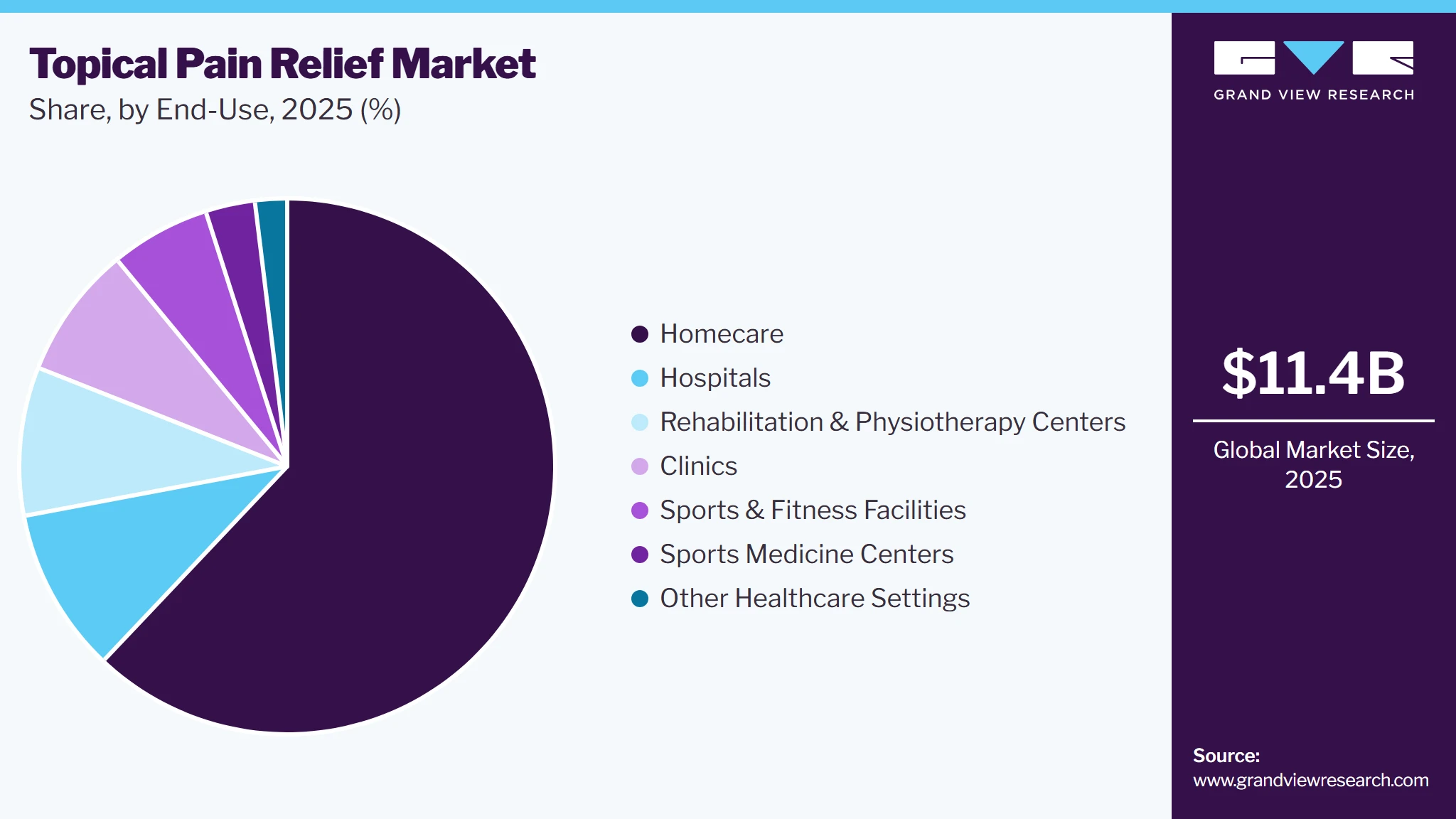
- By end use: Homecare segment held the largest market share of 62.1% in 2025.
Regional Highlights
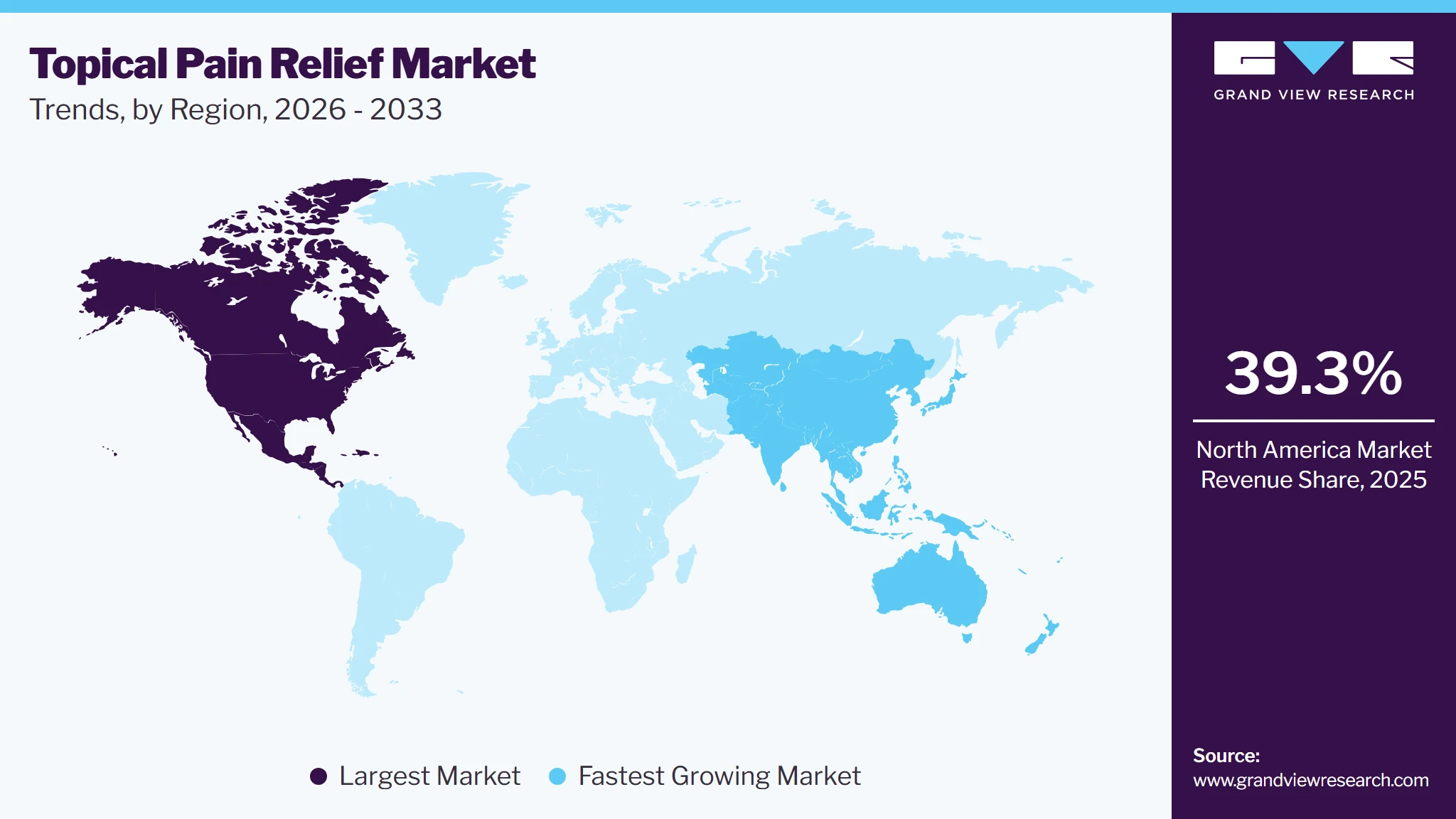
- Largest regional market: North America (39.3% revenue share, 2025)
- Fastest-growing regional market: Asia Pacific (highest CAGR, 2026-2033)
- By country: The U.S. dominated North America with the largest revenue share in 2025
Market Size & Forecast
- Market size in 2025: USD 11.4 Billion
- Estimated market size in 2026: USD 12.1 Billion
- Projected market size by 2033: USD 18.8 Billion
- CAGR (2026-2033): 6.5%
Prism AI by Grand View Research Free to tryAsk a question about the topical pain relief marketTry asking✓Every figure cited from GVR research Prefer the report? Download free sample →
Growing consumer preference for OTC and self-care treatments supports demand for topical creams, gels, patches, and roll-ons as non-invasive alternatives to oral medications. In addition, the expanding elderly population and participation in sports/physical activities are increasing the incidence of joint pain, muscle soreness, sprains, and other localized conditions, further supporting market growth.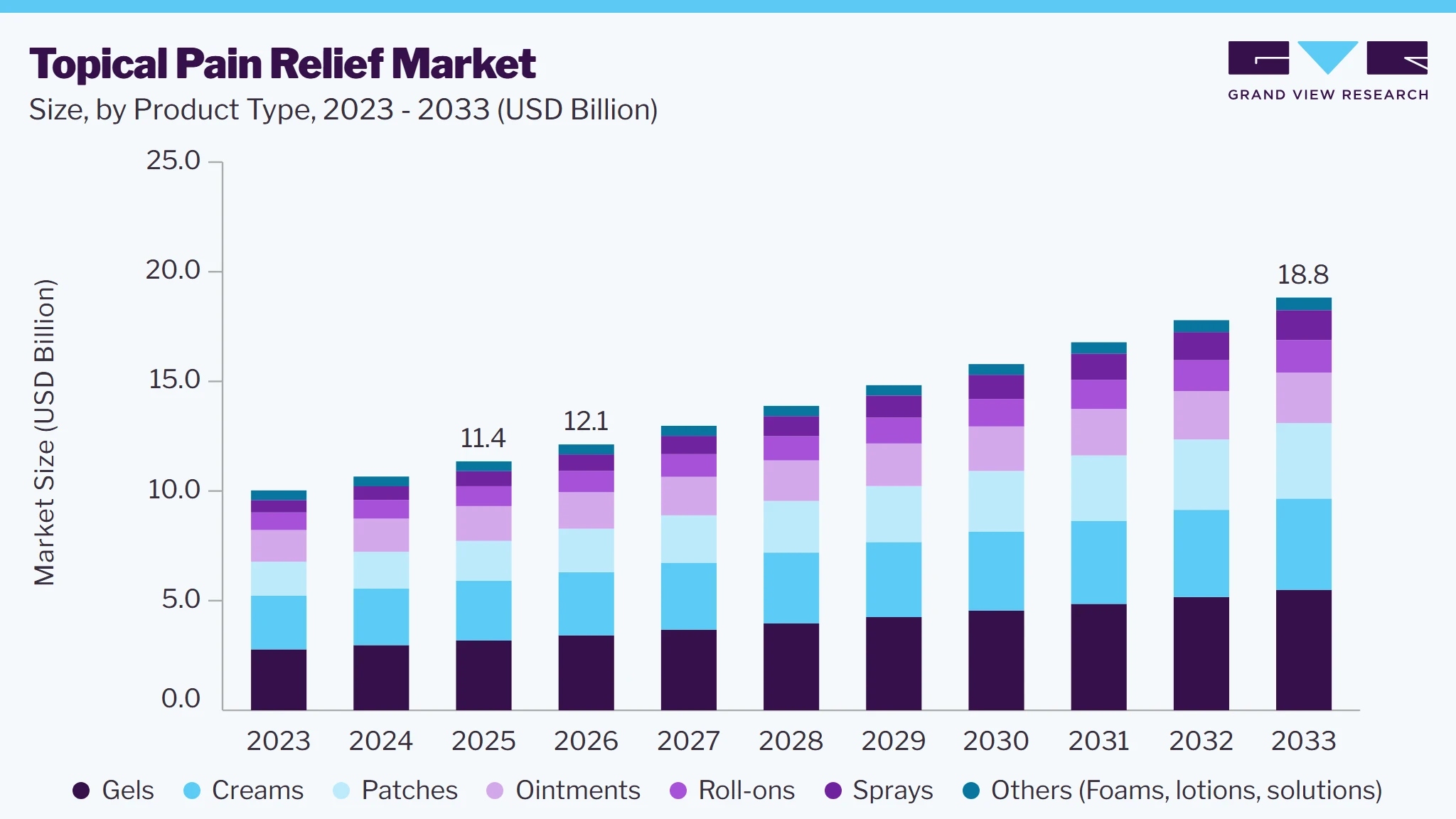 To learn more about this report, Download Free Sample Report
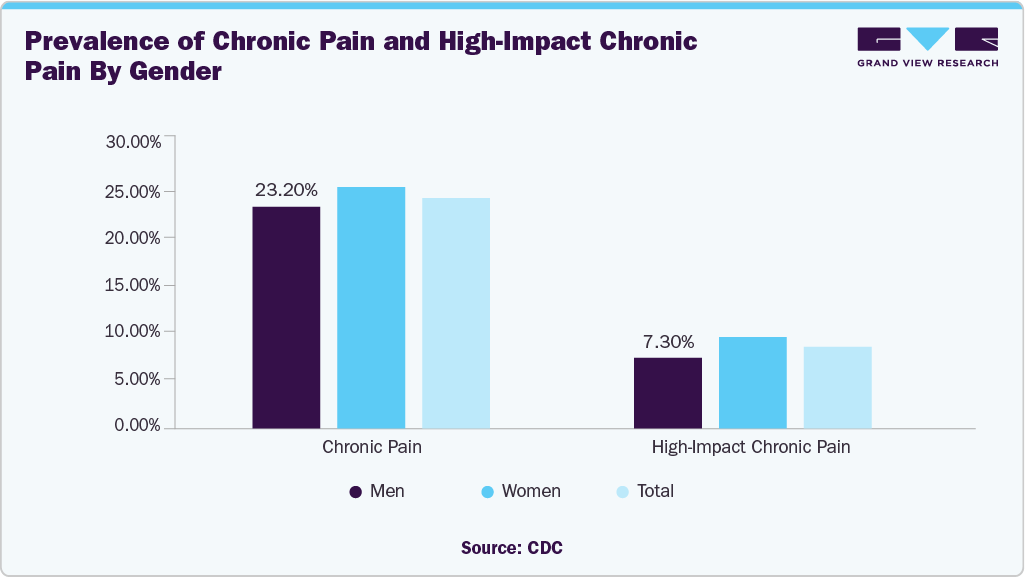
The rising prevalence of chronic pain is increasing demand for topical pain-relief products, including creams, gels, patches, and sprays, as patients seek convenient options to manage persistent discomfort. The growing incidence of back pain, neuropathic pain, and other long-term pain conditions is expanding the use of localized therapies, particularly for patients seeking alternatives to oral medications.
 To learn more about this report, Download Free Sample Report
The rising prevalence of musculoskeletal disorders and arthritis is driving demand for topical pain relief such as creams, gels, patches, and sprays. Increasing joint pain, stiffness, and localized inflammation, particularly among aging populations, is encouraging patients to use convenient topical therapies for targeted symptom relief. Growing preference for non-invasive, self-administered pain management is further supporting market adoption.
UK Musculoskeletal Condition & Pain Statistics By Diagnosis Type
Condition
Estimated Number
Low back pain
9.5 million
Chronic pain
19.2-29 million
Osteoarthritis
10 million
Gout
1.6 million
Axial spondyloarthritis
220,000
Psoriatic arthritis
200,000
Rheumatoid arthritis
450,000
Juvenile idiopathic arthritis
10,000
Axial spondyloarthritis
60,000
Source: The State of Musculoskeletal Health 2025
The expansion of OTC and self-care products is driving the topical pain relief industry by improving access to convenient, non-prescription treatments for minor muscle and joint pain. Wider availability through pharmacies, supermarkets, and e-commerce platforms enables consumers to manage pain at home, supporting product adoption and repeat purchases. The expansion of OTC/self-care distribution is evident in the broad assortments of topical pain relief now offered by major U.S. retailers. In 2026, CVS Pharmacy lists more than 260 topical pain-relief products, including lidocaine patches, Biofreeze patches, and Voltaren gel, while Walgreens offers more than 200 topical pain-relief products with same-day delivery and shipping options. This wide OTC availability makes topical treatments easier to purchase and supports their use for self-managed muscle and joint pain.
Market Dynamics
The topical pain relief industry is driven by the increasing prevalence of musculoskeletal and chronic pain, an aging population, and growing consumer preference for convenient, localized, and non-invasive pain-management options. Competition is intensifying as established pharmaceutical companies and consumer health brands expand their portfolios to include gels, creams, patches, sprays, and roll-ons. Product innovation, including long-lasting patches, mess-free formats, and improved drug-delivery technologies, is creating opportunities for differentiation. At the same time, competition from oral analgesics, generic products, private-label brands, and regulatory requirements continues to influence pricing and market expansion.
The increasing burden of arthritis, back pain, joint disorders, and other musculoskeletal conditions is driving demand for topical pain-relief products. Topical gels, creams, patches, sprays, and roll-ons offer convenient, localized application and are increasingly preferred for managing mild-to-moderate muscle and joint pain. The growing aging population and participation in sports and physical activities further expand the consumer base for these products. Furthermore, increasingawareness of self-care and OTC pain-management options is encouraging consumers to seek accessible treatments for recurring pain. In addition, the availability of topical formulations with different active ingredients and application formats is broadening consumer choice and supporting market penetration.
The topical pain relief industry is constrained by the risk of skin irritation, redness, burning sensations, allergic reactions, and other local adverse effects associated with certain active ingredients. These concerns may discourage prolonged or repeated use, particularly among consumers with sensitive skin. Product effectiveness can also vary with formulation, application area, and pain severity, potentially limiting consumer satisfaction. In addition, some consumers continue to prefer oral analgesics or other pain-management therapies, creating competition for topical products.
The development of advanced topical formulations, including long-lasting patches, fast-absorbing gels, sprays, roll-ons, and enhanced drug-delivery systems, creates significant opportunities in the topical pain relief industry. Manufacturers can differentiate products through improved absorption, extended-duration relief, and mess-free application. Growing consumer interest in portable and easy-to-use pain-management products also supports premium and specialized formulations. In addition, expanding e-commerce and direct-to-consumer channels can improve accessibility and enable companies to reach broader consumer segments.
Market Concentration & Characteristics
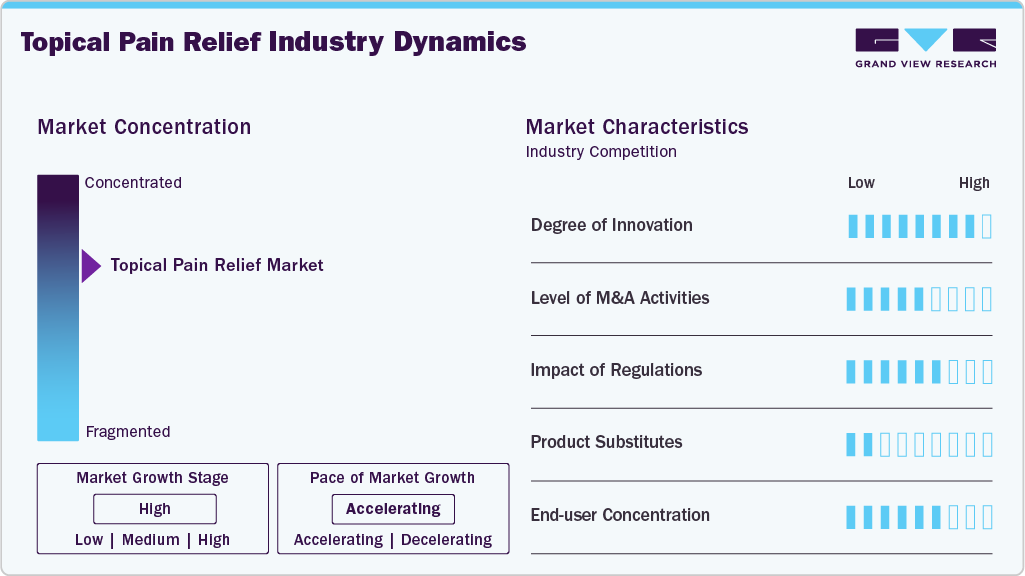
The topical pain relief industry has a moderate-to-high degree of innovation, driven by the development of fast-acting, long-lasting, and targeted formulations. Manufacturers are introducing advanced transdermal patches, micro emulsion gels, roll-ons, heat- and cooling-based formulations, and combination products to improve drug delivery, convenience, skin absorption, and the duration of relief.
The global market exhibits a moderate level of M&A activity, with companies primarily using acquisitions and strategic investments to strengthen pain-relief portfolios, gain control of established brands, and expand into high-growth markets. Activity is supported by the broader consumer-health sector’s ongoing portfolio reshaping, although innovation and geographic expansion remain more prominent growth strategies than large-scale acquisitions. In May 2026, Haleon and UEFA Medical announced a multi-year scientific partnership, making Haleon UEFA Medical’s first-ever Health Partner. The collaboration focuses on developing clinically informed, evidence-based approaches to football-related pain management to support player health and recovery.
 To learn more about this report, Download Free Sample Report
Anna Nightingale, Global Head of R&D OTC and Global Head of Regulatory, Haleon, said: “Football inspires millions to stay active, but when pain strikes, many people are left unsure which solutions are best suited to help keep them moving. Through this partnership with UEFA Medical, we hope to deliver clear, credible approaches that support safe movement and recovery, helping people stay active and keep moving with confidence.”
Eran Gefen, VP and Head of Medical & Scientific Affairs, OTC, Haleon, said: “Haleon’s role in this collaboration is to bring medical expertise that strengthens the scientific guidance available to healthcare professionals managing pain in active individuals. By combining Haleon’s trusted pain-relief expertise and portfolio of pain-relief and sensorial relief brands - recommended by consumers and healthcare professionals alike - with UEFA’s specialist knowledge, we can provide clearer, evidence‑informed advice that supports self-care, a safe return to movement, and helps people choose pain solutions that are right for their needs.”
Dr Zoran Bahtijarević, UEFA Chief of Medical and Anti-Doping, said: “Collaborating with Haleon allows us to combine our deep expertise in football medicine with a partner who brings decades of leadership in pain relief. Together, we can generate the evidence and scientific understanding that will further support clinicians, teams, and players across the game.”
The impact of regulations on the topical pain relief industry is moderate to high, as manufacturers must comply with requirements covering permitted active ingredients, concentrations, indications, labeling, safety, testing, and manufacturing practices. In the U.S., FDA OTC Monograph M017 establishes specific conditions for external analgesic products, while products outside these conditions require an approved drug therapeutic application, increasing regulatory and commercialization requirements.
The homecare/consumer segment is expected to have the highest end-use concentration in the global market, as most products are OTC and designed for convenient, localized self-administration. Hospitals, clinics, rehabilitation centers, and sports facilities represent secondary end-use settings, particularly for prescription-strength products and clinically managed musculoskeletal or sports-related pain.
Analyst Perspective
The topical pain relief market is expected to maintain significant growth, supported by increasing preference for convenient, non-invasive pain management and the availability of creams, gels, patches, sprays, and other formulations. Demand is likely to remain particularly strong for products targeting arthritis, muscle and joint pain, sports-related injuries, and localized neuropathic pain. Product innovation, wider OTC availability, and expanding retail and online access are expected to remain important factors shaping the market.
Product Insights
The gels segment led the market with the largest revenue share of 28.0% in 2025, supported by the convenience, ease of spreading, and non-greasy application of gel-based formulations. Their ability to provide localized delivery along with a cooling sensation makes gels widely used for muscle, joint, and other localized pain.
The sprays segment is expected to grow at the fastest CAGR during the forecast period, driven by the convenience of quick, contact-free application and even coverage over affected areas. Spray formulations are used for muscle, joint, and sports-related pain, particularly among consumers seeking portable and easy-to-apply pain relief options.
Therapeutic Application Insights
The arthritis & joint pain segment led the market with the largest revenue share of 30.0% in 2025, driven by the widespread use of topical products for localized pain from osteoarthritis and other joint conditions. Creams, gels, patches, and other topical formulations are commonly used for accessible joints such as the knees and hands, providing targeted relief with convenient application.
The neuropathic pain segment is expected to grow at the fastest CAGR during the forecast period, supported by the increasing use of topical treatments for localized nerve-related pain. Lidocaine and capsaicin-based formulations are gaining attention for conditions such as diabetic peripheral neuropathy and postherpetic neuralgia, particularly where localized treatment is preferred.
Active Ingredients Insights
The counterirritants/rubefacients segment led the market with the largest revenue share of 34.0% in 2025, supported by the widespread use of ingredients such as menthol, camphor, methyl salicylate, and capsaicin in topical pain-relief formulations. These ingredients provide cooling, warming, or other sensory effects that help temporarily relieve minor muscle and joint aches, which is why they are common in creams, gels, balms, and patches.
The local anesthetics segment is expected to grow at the fastest CAGR during the forecast period, driven by demand for topical products that provide targeted, temporary numbing and pain relief. The increasing use of lidocaine- and benzocaine-based formulations in creams, ointments, gels, and patches for minor skin conditions and localized pain applications is expected to support segment growth.
Distribution Channel Insights
The retail pharmacies & drug stores segment led the market with the largest revenue share of 41.9% in 2025, driven by the broad availability of OTC topical pain relief products and consumers’ preference for purchasing them from easily accessible physical stores. Pharmacies and drug stores also provide immediate product availability and basic guidance on selecting suitable creams, gels, sprays, and patches.
The online pharmacies & e-commerce platforms segment is expected to grow at the fastest CAGR during the forecast period, supported by increasing consumer preference for convenient doorstep delivery and easy access to a broad range of topical pain-relief products. Online channels also enable consumers to compare products, prices, and formulations, while pharmacies such as Apollo Pharmacy and PharmEasy offer multiple creams, gels, sprays, and balms through their digital platforms.
End Use Insights
The homecare segment led the market with the largest revenue share of 62.1% in 2025. Driven by the convenience of self-administered pain relief and the widespread availability of OTC topical products. Consumers commonly use creams, gels, sprays, patches, and roll-ons at home for temporary relief from muscle aches, joint pain, strains, and minor injuries, supporting strong demand through pharmacies, supermarkets, and online channels.
 To learn more about this report, Download Free Sample Report
The sports & fitness facilities segment is expected to grow at the fastest CARG during the forecast period, supported by rising participation in gyms, fitness centers, recreational sports, and organized physical activities. Increasing use of topical creams, gels, sprays, and patches for managing exercise-related muscle soreness, strains, and minor injuries is expected to strengthen demand across these facilities.
Regional Insights
North America dominated the global topical pain relief market with the largest revenue share of 39.3% in 2025, driven by the high prevalence of arthritis and musculoskeletal pain, as well as strong consumer demand for convenient OTC treatments. In the U.S., FDA-approved, monograph-based topical analgesics address conditions such as arthritis, backache, strains, sprains, and bruises, thereby supporting broad adoption of these products.
 To learn more about this report, Download Free Sample Report
U.S. Topical Pain Relief Market Trends
The topical pain relief market in the U.S. accounted for the largest revenue share in North America in 2025, driven by the widespread use of OTC products for localized muscle, joint, arthritis, back, sprain, strain, and minor injury pain. Market growth is supported by consumer preference for convenient self-care treatments, while FDA OTC Monograph M017 provides a defined regulatory pathway for compliant topical external analgesics, including requirements for active ingredients and labeling.
Europe Topical Pain Relief Market Trends
The topical pain relief market in Europe is witnessing rapid growth, driven by the widespread use of topical analgesics for musculoskeletal pain, osteoarthritis, minor trauma, sprains, bruising, and back pain. Topical NSAIDs such as diclofenac and ketoprofen are established treatment options, with products available in gels, creams, sprays, and patches across European markets.
The UK topical pain relief market is a well-established segment, supported by demand for convenient treatments for osteoarthritis, muscle pain, sprains, strains, and localized musculoskeletal conditions. Topical NSAIDs such as ibuprofen and diclofenac are widely available in gels, patches, and plasters, with some products available OTC through pharmacies. The market is also supported by NHS/NICE recommendations for topical NSAIDs in osteoarthritis, particularly knee osteoarthritis and other affected joints.
The topical pain relief market in France is experiencing significant growth, supported by the use of topical NSAIDs such as diclofenac and ibuprofen for localized muscle and tendino-ligament pain, minor sprains and contusions, and painful osteoarthritis. In March 2026, France’s Haute Autorité de Santé (HAS) maintained the indications for diclofenac 1% gel for minor trauma, muscle and tendino-ligament pain, and osteoarthritis flare-ups. This established clinical use, combined with demand for localized pain-management solutions, supports the continued development of the French market.
Asia Pacific Topical Pain Relief Market Trends
The topical pain relief market in the Asia Pacific is anticipated to grow at the fastest CAGR during the forecast period, supported by the region’s large aging population, increasing prevalence of musculoskeletal conditions, and growing preference for accessible self-care treatments. Japan remains a key market, with Hisamitsu’s Salonpas offering patches, gels, creams, and sprays across Asian markets. In 2025, Hisamitsu launched Salonpas Diclofenac Patch in Vietnam and S-CUP in Hong Kong, demonstrating continued product expansion and innovation in the region.
The China topical pain relief market is supported by the high burden of musculoskeletal conditions, joint pain, muscle soreness, and minor injuries, creating demand for localized pain-management products. Growing awareness of self-care and non-invasive pain-relief options, along with the availability of topical patches, gels, creams, and balms through pharmacies and online channels, supports market development. The country’s large and aging population further provides a broad consumer base for topical pain-relief products.
Latin America Topical Pain Relief Market Trends
The topical pain relief market in Latin America is supported by the substantial burden of musculoskeletal conditions, low back pain, arthritis, and minor injuries, which creates demand for localized pain-management products. The availability of topical NSAIDs, analgesic creams, gels, sprays, and patches, together with growing emphasis on self-care and accessible pain management, supports market development across the region. Topical NSAIDs such as diclofenac are established options for localized musculoskeletal pain.
Middle East & Africa Topical Pain Relief Market Trends
The topical pain relief market in the Middle East & Africa is supported by the growing burden of musculoskeletal conditions, including back pain, osteoarthritis, muscle pain, and sports-related injuries. The increasing preference for convenient, non-invasive, and self-administered pain-management options is driving the use of topical gels, creams, balms, sprays, and patches. The region’s expanding healthcare access and large population base provide further opportunities for topical pain-relief products.
Key Topical Pain Relief Company Insights
The topical pain relief industry is competitive, led by companies such as Haleon, Hisamitsu Pharmaceutical, Johnson & Johnson, Bayer, and Reckitt. Haleon’s Voltaren and Hisamitsu’s Salonpas have strong brand presence, while regional and generic players compete through pricing, formulations, and distribution. Market shares, therefore, remain concentrated among established consumer-health companies, with competition increasing from innovative topical gels, creams, sprays, and patches.
Key Topical Pain Relief Companies
The following key companies have been profiled for this study on the topical pain relief market.
-
AdvaCare Pharma
-
Bayer AG
-
Cipla Health Ltd.
-
Haleon
-
Kenvue Brands LLC. (Kimberly-Clark Corporation)
-
Hisamitsu Pharmaceutical Co., Inc.
-
The Procter & Gamble Company
-
Reckitt (Biofreeze)
Competitive Benchmarking
Category
Operating Strategies
Competitive Edge
Weakness
Established Players (Bayer AG, Haleon, The Procter & Gamble Company)
- Maintain broad portfolios across creams, gels, patches, sprays, roll-ons, and balms.
- Focus on expanding distribution through pharmacies, supermarkets, mass retailers, and e-commerce.
- Invest in product extensions such as stronger formulations, targeted applications, and convenient delivery formats.
- Strong brand recognition and consumer trust.
- Established retail and pharmacy distribution networks.
- Greater manufacturing scale and ability to support large-volume production.
- Large organizations can be slower to respond to niche consumer needs.
- Established products may face price competition from generics and private-label products.
- Extensive portfolios can create higher marketing and operational complexity.
Emerging Players (AdvaCare Pharma, Kenvue Brands LLC.)
- Target specific pain conditions or consumer groups, such as sports recovery, neuropathic pain, or sensitive skin.
- Use digital marketing, social commerce, and direct-to-consumer channels to build awareness.
- Introduce differentiated formulations, natural ingredients, innovative applicators, and convenient formats.
- Greater flexibility in product development and commercialization.
- Ability to respond quickly to changing consumer preferences.
- Stronger focus on niche applications and innovative delivery formats.
- Limited brand awareness compared with established brands.
- Smaller distribution networks and lower bargaining power with retailers.
- Limited financial resources for large-scale advertising and clinical/product development.
Recent Developments
-
In May 2026, Haleon and UEFA Medical announced a multi-year scientific partnership, making Haleon UEFA Medical’s first-ever Health Partner. The collaboration focuses on developing clinically informed, evidence-based approaches to football-related pain management to support player health and recovery.
-
In June 2025, Haleon completed the acquisition of the remaining 12% equity interest in Tianjin TSKF Pharmaceutical Co. Ltd. (TSKF), its OTC joint venture in China, for RMB 1.623 billion (approximately £0.2 billion). The transaction made TSKF a wholly owned subsidiary of Haleon, strengthening the company’s control over its Chinese OTC healthcare business.
-
In July 2025, Biofreeze introduced two new topical pain-relief products, the Dry Stick and lidocaine Ultraflex Patch, designed to provide convenient, mess-free relief for consumers with active lifestyles.
Topical Pain Relief Market Report Scope
Report Attribute
Details
Market size in 2025
USD 11.4 billion
Estimated market size in 2026
USD 12.1 billion
Projected market size by 2033
USD 18.8 billion
Growth rate
CAGR of 6.5% from 2026 to 2033
Base year for estimation
2025
Historical data
2021 - 2024
Forecast period
2026 - 2033
Quantitative units
Revenue in USD billion, and CAGR from 2026 to 2033
Report coverage
Revenue forecast, company ranking, competitive landscape, growth factors, and trends
Segments covered
Product, therapeutic application, active ingredients, distribution channel, end use, region
Regional scope
North America; Europe; Asia Pacific; Latin America; MEA
Country scope
U.S.; Canada; Mexico; Germany; UK; France; Norway; Italy; Denmark; Sweden; Spain; China; Japan; India; South Korea; Australia; Brazil; KSA; UAE; South Africa
Key companies profiled
AdvaCare Pharma; Bayer AG; Cipla Health Ltd.; Haleon; Kenvue Brands LLC. (Kimberly-Clark Corporation); Hisamitsu Pharmaceutical Co., Inc.; The Procter & Gamble Company; Reckitt (Biofreeze)
Customization scope
Free report customization (equivalent up to 8 analysts working days) with purchase. Addition or alteration to country, regional & segment scope.
Pricing and purchase options
Avail customized purchase options to meet your exact research needs. Explore purchase options
Global Topical Pain Relief Market Report Segmentation
This report forecasts revenue growth at global, regional, and country levels and provides an analysis of the latest industry trends in each of the sub-segments from 2021 to 2033. For this study, Grand View Research has segmented the global topical pain relief market report based on the product, therapeutic application, active ingredients, distribution channel, end use, and region:
-
Product Outlook (Revenue, USD Billion, 2021 - 2033)
-
Gels
-
Ointments
-
Roll-ons
-
Sprays
-
Creams
-
Patches
-
Others
-
-
Therapeutic Application Outlook (Revenue, USD Billion, 2021 - 2033)
-
Arthritis & Joint Pain
-
Muscle Pain & Strains
-
Back & Neck Pain
-
Neuropathic Pain
-
Bruises & Minor Injuries
-
Sports Injuries
-
-
Active Ingredients Outlook (Revenue, USD Billion, 2021 - 2033)
-
NSAIDs
-
Diclofenac
-
Ibuprofen
-
Ketoprofen
-
Piroxicam
-
Others
-
-
Counterirritants / Rubefacients
-
Menthol
-
Camphor
-
Methyl Salicylate
-
Others
-
-
Capsaicinoids
-
Capsaicin
-
Capsicum Oleoresin
-
-
Local Anesthetics
-
Lidocaine
-
Benzocaine & Others
-
-
Other Active Ingredients
-
Herbal formulations
-
CBD (where applicable)
-
Combination formulations
-
-
-
Distribution Channel Outlook (Revenue, USD Billion, 2021 - 2033)
-
Hospital Pharmacies
-
Retail Pharmacies & Drug Stores
-
Online Pharmacies & E-Commerce Platforms
-
Supermarkets / Mass Merchandisers
-
Others
-
-
End Use Outlook (Revenue, USD Billion, 2021 - 2033)
-
Homecare
-
Hospitals
-
Clinics
-
Sports & Fitness Facilities
-
Rehabilitation & Physiotherapy Centers
-
Sports Medicine Centers
-
Other Healthcare Settings
-
-
Regional Outlook (Revenue, USD Billion, 2021 - 2033)
-
North America
-
U.S.
-
Canada
-
Mexico
-
-
Europe
-
Germany
-
UK
-
France
-
Italy
-
Spain
-
Sweden
-
Denmark
-
Norway
-
-
Asia Pacific
-
Japan
-
China
-
India
-
Australia
-
South Korea
-
Thailand
-
-
Latin America
-
Brazil
-
Argentina
-
-
Middle East & Africa
-
South Africa
-
Saudi Arabia
-
UAE
-
Kuwait
-
-
Research Methodology
The topical pain relief market figures in this report are based on a proven research process that combines executive interviews with secondary research from proprietary databases, company filings, and recognized regulatory and institutional sources. Market size is built through value-chain sizing-reconciling supply-side and demand-side estimates-and triangulated with bottom-up and top-down approaches. Every estimate passes multiple levels of expert validation before publication, with each topical pain relief segment quantified using the revenue-capture definitions in the table below.
Segment Definition
Segment - Product
Revenue capture definition
Gels
Revenue generated from topical pain-relief products formulated as gels and applied directly to the skin for localized pain relief.
Creams
Revenue generated from topical analgesic products in cream formulations used for localized muscle, joint, and other pain relief.
Patches
Revenue generated from medicated topical patches designed to deliver pain-relieving active ingredients through or onto the skin over an extended period.
Ointments
Revenue generated from semi-solid topical pain-relief formulations applied directly to affected skin areas.
Roll-ons
Revenue generated from topical pain-relief products dispensed through a rolling applicator for convenient, targeted application.
Sprays
Revenue generated from topical pain-relief formulations delivered as a spray for quick and convenient application to affected areas.
Others (Foams, lotions, solutions)
Revenue generated from topical pain-relief products provided in foam, lotion, solution, or other formulations not classified under the primary product segments.
Delivered Customizations
This report has been delivered with the following In-depth customizations
Client Request
Customization Delivered
Value Adds
Country-specific analysis
Market assessment customized by country, including demand patterns, regulatory environment, consumer preferences, distribution structure, and key local competitors
Helps identify country-level opportunities, market-entry priorities, and regulatory considerations
Product share analysis
Customized assessment of market shares across gels, creams, patches, sprays, ointments, and other formulations, along with leading product categories
Enables identification of high-performing product formats and areas for portfolio expansion
Competitive analysis
Customized benchmarking of mature and emerging players based on product portfolio, pricing, distribution reach, formulation innovation, brand positioning, and strategic initiatives
Supports competitor benchmarking, differentiation strategies, and identification of competitive gaps
Frequently Asked Questions About This Report
The global topical pain relief products market size was valued at USD 11.4 billion in 2025 and is estimated at USD 12.1 billion for 2026.
The global topical pain relief products market is expected to grow at a CAGR of 6.5% from 2026 to 2033, reaching USD 18.8 billion.
The counterirritants/rubefacients held the largest share of 34.0% in 2025, while local anesthetics is the fastest-growing segment over the forecast period.
The retail pharmacies & drug stores held the largest share of 41.9% in 2025, while online pharmacies & e-commerce platforms is the fastest-growing segment over the forecast period.
The homecare held the largest share of 62.1% in 2025, while sports & fitness facilities is the fastest-growing segment over the forecast period.
Key factors include the rising prevalence of musculoskeletal conditions, arthritis, and localized muscle and joint pain, increasing the need for convenient pain-management options. Growing consumer preference for OTC and self-care treatments supports demand for topical creams, gels, patches, and roll-ons as non-invasive alternatives to oral medications.
North America dominated with a 39.3% revenue share in 2025.
Key players include AdvaCare Pharma, Bayer AG, Cipla Health Ltd., Haleon, Kenvue Brands LLC. (Kimberly-Clark Corporation), Hisamitsu Pharmaceutical Co.,Inc., The Procter & Gamble Company, Reckitt (Biofreeze).
The gels segment held the largest share of 28.0% in 2025, while sprays is the fastest-growing segment over the forecast period.
The arthritis & joint pain held the largest share of 30.0% in 2025, while neuropathic pain is the fastest-growing segment over the forecast period.
About the Author(s)
Healthcare Research Team
Research · HealthcareThis report was authored by the healthcare research team at Grand View Research - comprising two research analysts, one senior research analyst, and one industry expert - with specialized expertise in the healthcare segment of the research industry. All findings are based on proprietary research databases, executive interviews, and regulatory analysis, subject to internal peer review prior to publication.
Last Updated:
Speak to Analyst

Customize this report to your needs - add regions, segments, or data points, with 20% free customization.
Or view our licence options:


ISO 9001:2015 & 27001:2022 Certified
We are GDPR and CCPA compliant! Your transaction & personal information is safe and secure. For more details, please read our privacy policy.


