
- Home
- »
- Advanced Interior Materials
- »
-
UHT Processing Market Size & Share Report, 2026-2033GVR Report cover

UHT Processing Market (2026 - 2033)
Size, Share & Trends Analysis Report By Operation (Direct Heating, Indirect Heating), By Form (Liquid, Semi Liquid), By Application (Milk, Dairy Products, Beverages), By Region And Segment Forecasts
Market Size, 2025
$5.1BMarket Estimate, 2026
$5.4BMarket Forecast, 2033
$8.2BCAGR, 2026–2033
6.2%UHT Processing Market Summary
The global UHT processing market size was valued at USD 5.1 billion in 2025 and is projected to grow from USD 5.4 billion in 2026 to USD 8.2 billion by 2033, at a CAGR of 6.2% from 2026 to 2033. Europe dominated the market, accounting for a revenue share of 28.4% in 2025. The increasing consumption of processed beverages and dairy products across the world is expected to drive the market growth. Owing to the rising health consciousness, the demand for ultra-high temperature processing (UHT) is expected to grow over the forecast period.
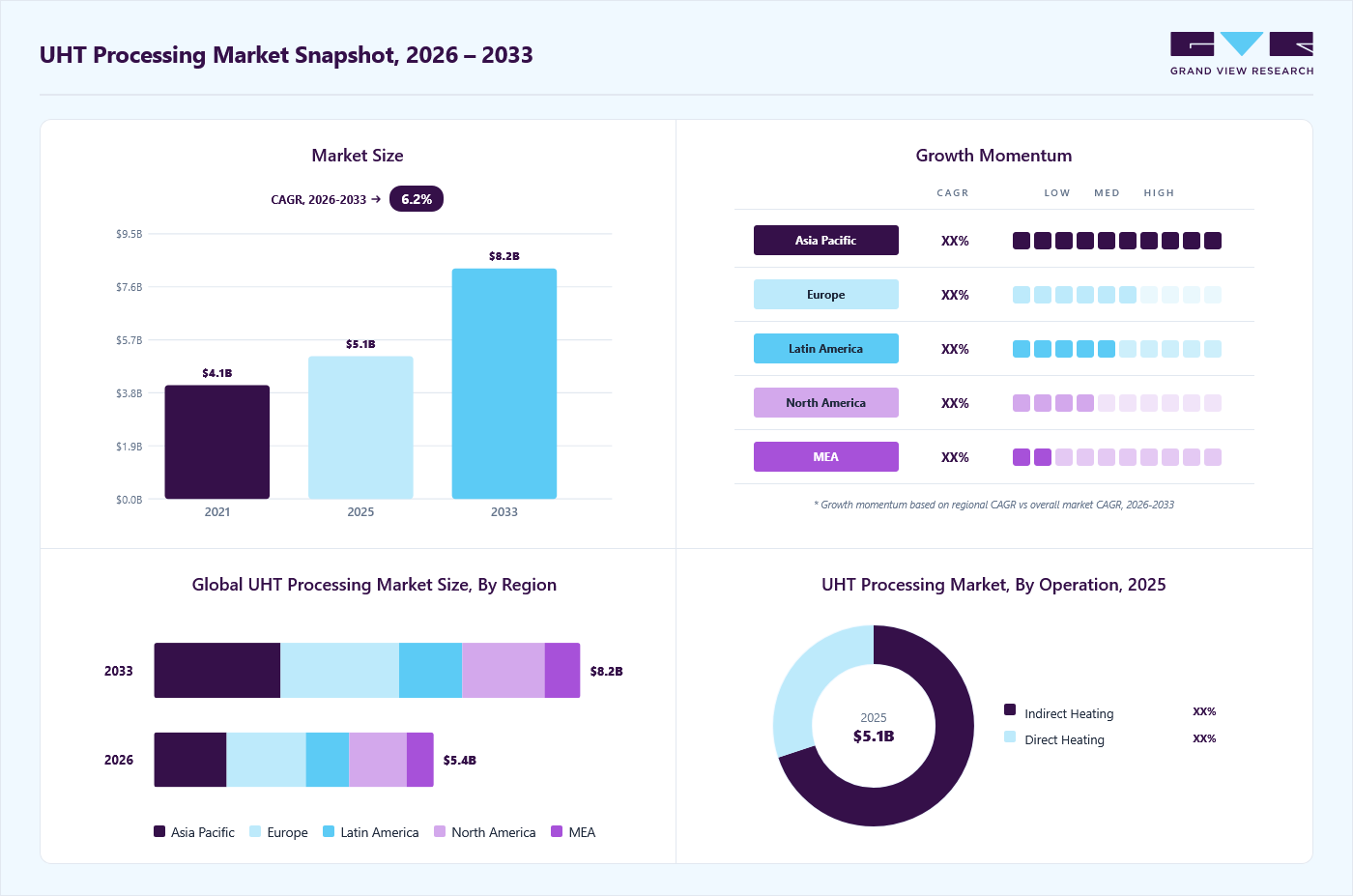 Source: Grand View Research, IR Documents, Primary Interviews, Paid DatabasesTo learn more about this report,
 Download Free Sample Report
 Key Market Trends & Insights
- By operation: Indirect heating segment led the market with the largest revenue share of 69.8% in 2025.
- By form: Liquid segment led the market with the largest revenue share of 71.3% in 2025.
- By application: Milk segment led the market with the largest revenue share of 49.0% in 2025
Regional Highlights
- Largest regional market: Europe (28.4% revenue share, 2025)
- By country: The Italy held the largest market share in 2025.
Market Size & Forecast
- Market size in 2025: USD 5.1 Billion
- Estimated market size in 2026: USD 5.4 Billion
- Projected market size by 2033: USD 8.2 Billion
- CAGR (2026-2033): 6.2%
Three ways to get this report
Buy it, customize it, or ask a question.Ask an Analyst
A direct answer, usually in 1 working day
- AccessReport author, directly
- Reply timeWithin 1 working day
- No sales callDirect answer only
- FormatEmail reply
- CostFree, no cost
Get the Full Report
What the study covers
- FormatsPDF · Excel · Dashboard
- Timeline2026–2033 annual, 2025 base
- Coverage20+ countries, 5 regions
- Companies10+ key players profiled
Customize the Report
20% free customization
- IncludeCountries, segments, points
- TailorTo your product definition
- ExtendDeeper competitor detail
- OrA fully bespoke study
- Turnaround5–10 working days
In UHT processing, the high temperatures are applied for only a short time, which is effective in killing harmful bacteria while better preserving the nutritional value and flavor of the food & beverages compared to traditional pasteurization methods that require longer heating times. Further, UHT-processed products are ready to use without the need for further preparation, which is convenient for consumers. The aseptic packaging system used in UHT processes also makes it easy to transport and store products, reducing the risk of contamination. Aseptic packaging refers to the sterile filling of a product into a container under aseptic conditions and then hermetically sealing the containers so that recontamination is prevented. This innovation allowed UHT-treated products to maintain sterility and extend shelf life without refrigeration.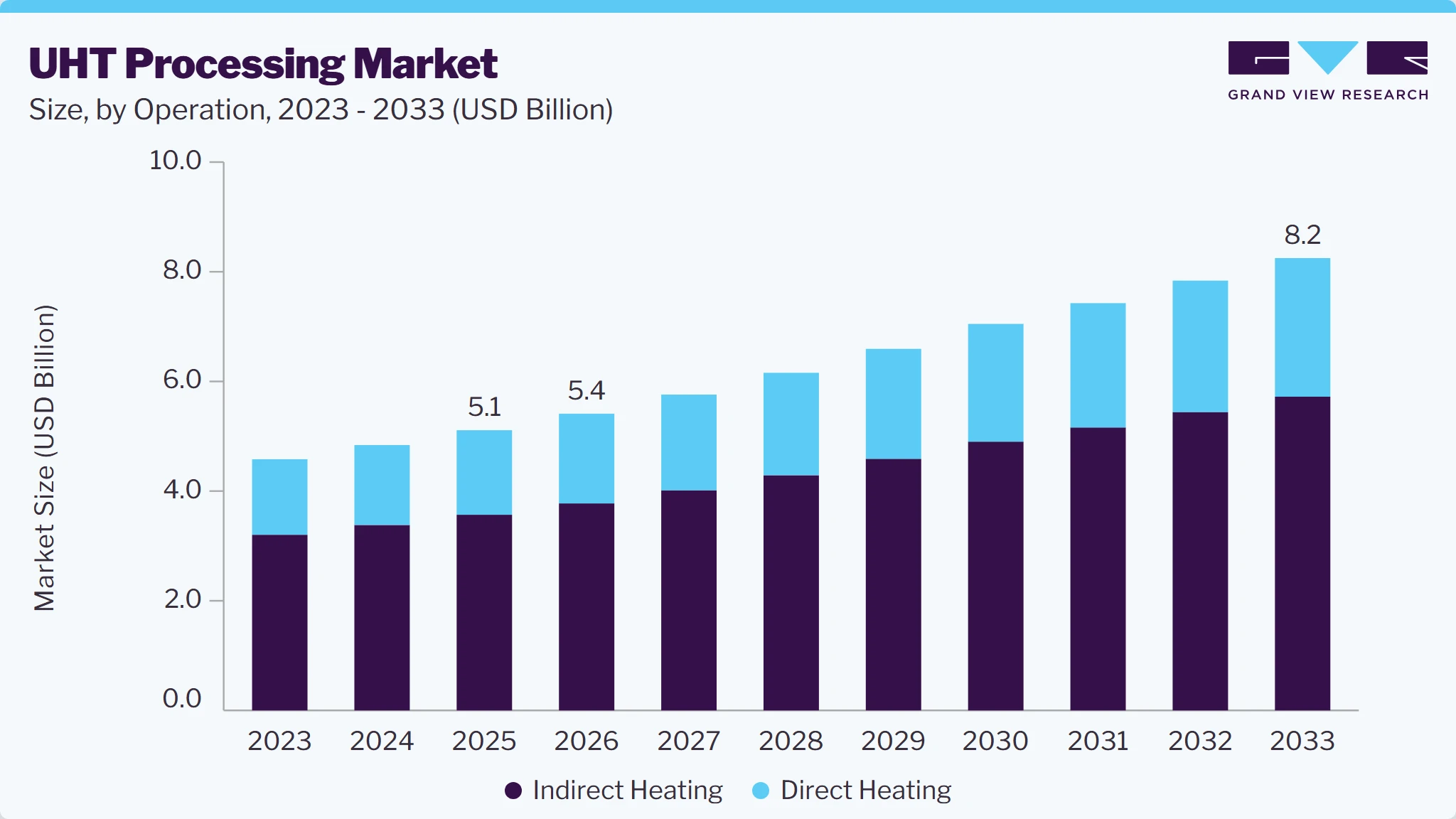 To learn more about this report, Download Free Sample Report
 Additionally, technological advancements and integration of various technologies has led to the development of the UHT processing systems with the addition of new features. For instance, integrated homogenization technologies have improved the physical stability and texture of UHT products. Also, new developments have led to modern sensor technology and control systems incorporated in UHT processing systems that ensure precise temperature control and processing consistency.
Market Dynamics
The UHT (Ultra-High Temperature) Processing market is driven by the growing demand for shelf-stable food and beverage products, increasing preference for extended product shelf life without refrigeration, and continuous advancements in aseptic processing technologies. Food and beverage manufacturers are investing in high-efficiency UHT systems to improve production throughput, maintain product quality, and meet stringent food safety standards while reducing operational costs. The market is also benefiting from expanding consumption of dairy products, plant-based beverages, liquid nutritional products, and ready-to-drink formulations across both developed and emerging economies. At the same time, high capital investment requirements, complex system integration, and the need for specialized technical expertise remain challenges for smaller manufacturers.
The increasing consumer preference for shelf-stable dairy, plant-based beverages, juices, soups, and liquid nutritional products is driving the adoption of UHT processing systems. UHT technology extends product shelf life while preserving nutritional value and sensory characteristics, enabling manufacturers to reduce cold chain dependence and expand product distribution across domestic and international markets. The growing need for food safety, convenience, and efficient large-scale production further strengthens investments in advanced UHT processing equipment.
The adoption of UHT processing equipment requires substantial capital expenditure for processing units, aseptic packaging systems, and supporting infrastructure. Installation, validation, and maintenance demand skilled technical expertise, while integrating UHT systems into existing production lines can increase implementation time and operational complexity. These factors present challenges for small and medium-sized food manufacturers with limited investment capacity.
The development of energy-efficient UHT systems integrated with automation, real-time process monitoring, and predictive maintenance capabilities is creating significant opportunities for market expansion. Manufacturers are increasingly investing in intelligent processing solutions that improve production efficiency, optimize energy consumption, and ensure consistent product quality. Growing adoption of sustainable manufacturing practices and digital production management is further encouraging the modernization of UHT processing facilities across the global food and beverage industry.
Analyst Perspective
The UHT processing market is growing steadily as food and beverage manufacturers increasingly invest in advanced thermal processing technologies to enhance product safety, extend shelf life, and improve production efficiency. Growing consumer preference for shelf-stable dairy products, plant-based beverages, ready-to-drink beverages, and nutritional products is accelerating the adoption of UHT processing systems integrated with aseptic packaging lines. In addition, manufacturers are focusing on energy-efficient processing technologies, automated control systems, and continuous production solutions to optimize operational efficiency while preserving product quality and nutritional value. The expansion of organized food processing industries in emerging economies, coupled with increasing demand for convenient packaged foods, continues to create opportunities for equipment suppliers. As production capacities expand and food safety regulations become more stringent, manufacturers offering high-performance, automated, and application-specific UHT processing systems are expected to benefit from sustained long-term market growth.
Operation Insights
“The demand for indirect heating segment is expected to grow at a significant CAGR of 6.6% from 2025 to 2033 in terms of revenue”
Based on operation, the indirect heating segment led the market with the largest revenue share of 69.8% in 2025. Indirect heating methods have been witnessing significant growth due to the increasing demand for shelf-stable and sterile liquid products. UHT processing is achieved by heating the product indirectly, meaning the heating medium, usually steam or hot water, and the product does not come into direct contact with each other.
The direct heating segment is anticipated to grow at a CAGR of 6.3% from 2025 to 2033. In direct heating, the product is directly exposed to the heating medium (steam), allowing for very rapid heating and cooling phases. Steam injections are steam infusion are two main types of methods used for direct heating in UHT processing. In this type of heating operation, owing to the direct contact of heat source with the product, the time for processing is reduced compared to the indirect heating.
Form Insights
“The demand for liquid segment is expected to grow at a significant CAGR of 6.7% from 2025 to 2033 in terms of revenue”
Based on form, the liquid segment led the market with the largest revenue share of 71.3% in 2025. The liquid products that are being UHT processed for increasing shelf-life includes milk, diary alternative milk, juices, etc. The consumption of dairy alternatives is rising rapidly owing to increasing awareness pertaining to lactose intolerance and availability of suitable and nutritious products substituting diary milk. This is particularly likely to drive the demand for UHT processing over the forecast period.
The semi liquid segment is anticipated to grow at a significant CAGR of 6.0% over the forecast period. The semi liquid products that are processed include yogurt, sauces, soups, baby food, desserts, tomato and fruit preparations, etc. Advantages such as extended shelf life, safety, quality preservation, and eco-friendly processing are expected to propel the UHT processing demand for semi liquid products.
Application Insights
“The demand for beverages segment is expected to grow at a significant CAGR of 7.0% from 2025 to 2033 in terms of revenue”
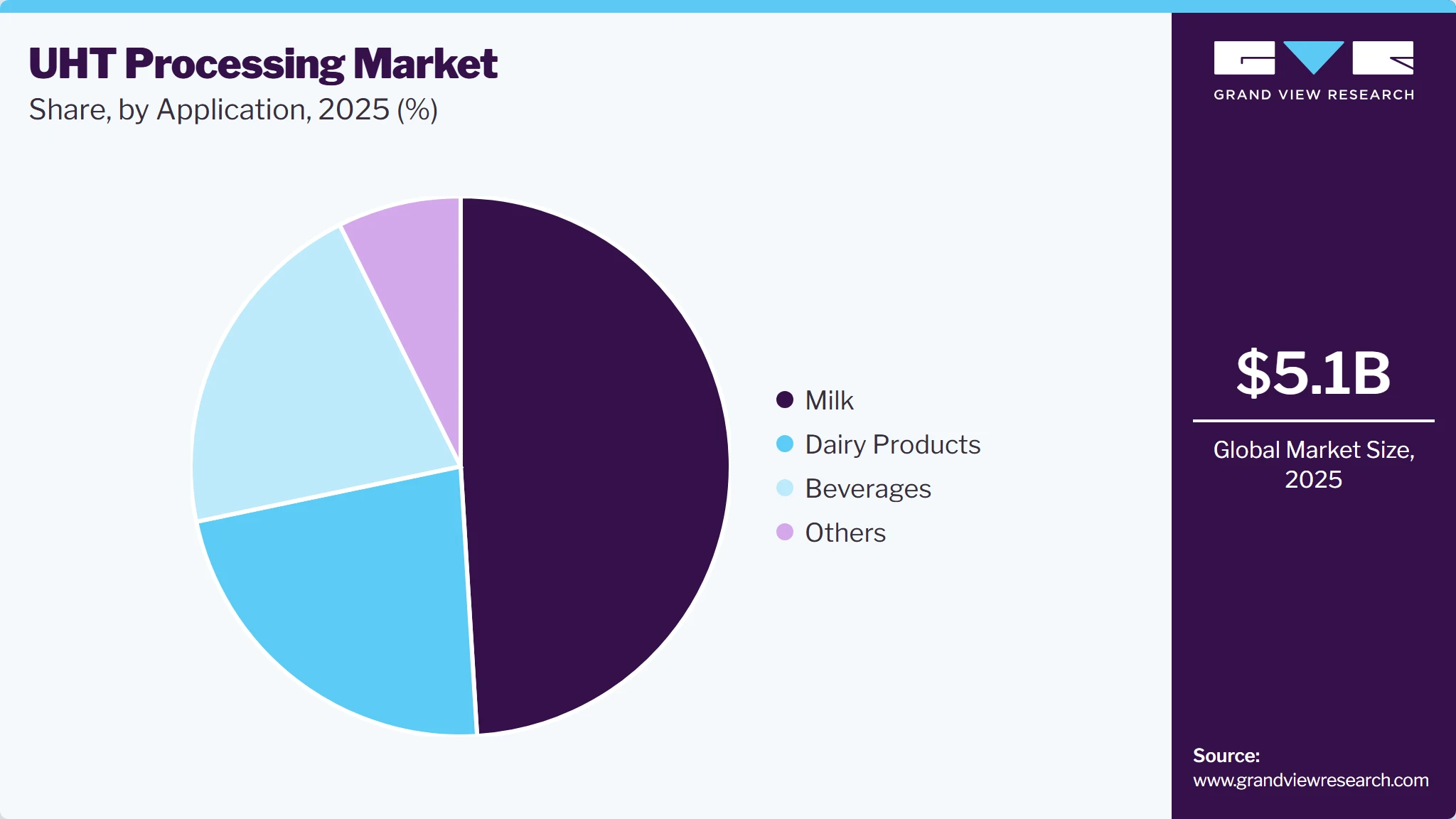
Based on application, the milk segment led the market with the largest revenue share of 49.0% in 2025. Milk is a largely consumed product across the world on daily basis, which includes whole milk, skimmed milk, and flavored milk. UHT processing is particularly advantageous for milk, allowing it to be stored for long periods without refrigeration.
 To learn more about this report, Download Free Sample Report
 The beverages segment is anticipated to grow at a CAGR of 7.0% over the forecast period. UHT processing is ideal for preserving the flavor, color, and nutritional content of fruit and vegetable juices. It enables these beverages to be stored for months without spoilage, expanding their market reach. Furthermore, for ready-to-drink (RTD) tea, and coffee products, UHT processing allows these products to retain taste and freshness over long periods. It makes it convenient for consumers to enjoy these beverages without the need for brewing or refrigeration. The rising consumption of these products and expansion of the processing facilities is anticipated to boost the growth of the market over the forecast period.
Regional Insights
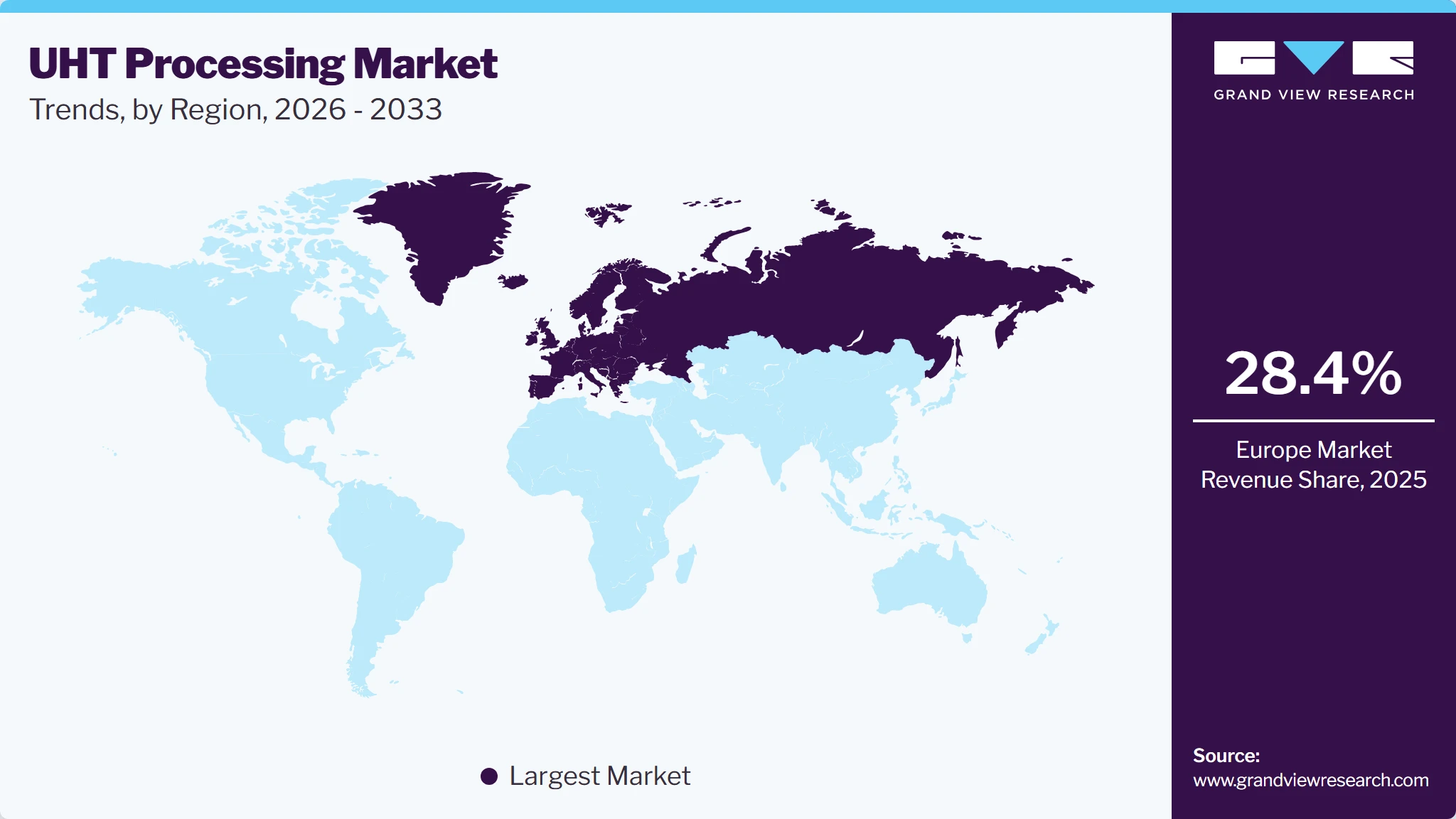
Europe dominated the UHT processing market with the largest revenue share of 28.4% in 2025. The stringent regulatory frameworks and strict compliance of the norms are attributed to the high demand for the UHT processing. Economies such as Germany, Italy, France, Spain, Sweden, etc. are characterized by the highly developed and industrialized are, with a high adoption of UHT processing in European food and beverage industry.
 To learn more about this report, Download Free Sample Report
 The UHT processing market in Germany is led the market with a market revenue share of 27.8% in 2025. The UHT processing market in Italy held the largest share in the Europe region in 2025Over the forecast period, the German market is likely to witness lucrative growth owing to rising expansion of production facilities and increasing demand for the UHT processed products from the growing population. Further, the key players are investing in the technological advancement to introduce more enhanced systems.
North America UHT Processing Market Trends
North America UHT processing market is likely to grow at a robust growth rate owing to the economic developments in countries such as U.S., Canada, and Mexico. The health and wellness trend are influencing the ultra-high temperature processing market. Consumers in these countries are increasingly seeking out healthier beverage options, including UHT-processed plant-based milks (almond, soy, oat) and fortified/functional drinks
Asia Pacific UHT Processing Market Trends
“Asia Pacific to witness fastest market growth at 8.6% CAGR over the forecast period”
The ultra-high temperature processing market in Asia Pacific is anticipated to witness highest CAGR of 8.6% over the forecast period. The economic development in China, India, South Korea, Japan, Indonesia, etc. and rising consumer purchasing power is positively impacting the growth of UHT processing market. The demand for processed food products in these countries is rising rapidly owing to the globalization of the food & beverage industry.
Key UHT Processing Company Insights
Some key players operating in the market include GEA Group Aktiengesellschaft, JBT Corporation, Krones AG, and Alfa Laval, among others.
-
GEA Group is a globally recognized engineering company based in Germany, specializing in process technology and components for sophisticated production processes in various end-user markets. GEA Group operates worldwide, providing a wide array of technology and solutions in areas such as food, beverage, pharmaceuticals, energy, and environmental technology.
-
JBT Corporation is a worldwide technology provider of solutions to the food processing and air transportation industries. Company has diversified its offerings, focusing on equipment and services that enhance efficiency, safety, and sustainability for its customers for various end use industries.
Proxes GmbH, Reda S.P.A., and Goma Engineering, etc. are some emerging market participants in the market.
- Proxes GmbH is a prominent player in the process technology field, mainly focusing on the food, chemical, pharmaceutical, and cosmetics industries. The core areas of operation of the company include food processing, pharmaceutical, cosmetics, chemical processing, etc.
-
Reda S.P.A. is an innovative and leading company specialized in designing, manufacturing, and supplying high-quality processing equipment for the dairy, food, pharmaceutical, and chemical industries.
Key UHT Processing Companies:
The following key companies have been profiled for this study on the uht processing market.
-
Alfa Laval
-
GEA Group Aktiengesellschaft
-
Iwai Kikai Kogyo Co. Ltd.
-
MicroThermics
-
Neologic Engineers Private Ltd.
-
Proxes GmbH
-
Reda S.P.A.
-
Shanghai Triowin Intelligent Machinery
-
SPX FLOW
-
Tetra Laval International S.A.
-
Elecster Oyj
-
Shanghai Jimei Food Machinery
-
Goma Engineering
-
JBT Corporation
-
Krones AG
Competitive Benchmarking
Category
Operating Strategies
Competitive Edge
Weakness
Established Players (e.g., Tetra Pak, GEA Group AG, SPX FLOW, Alfa Laval AB, Krones AG, JBT Corporation)
- Focus on complete turnkey UHT processing and aseptic packaging solutions integrated with automation and digital monitoring.
- Expand global presence through continuous R&D, strategic partnerships, service networks, and investments in energy-efficient and sustainable processing technologies.
- Strong global brand recognition, broad product portfolios, extensive engineering expertise, and comprehensive after-sales support.
- Ability to deliver large-scale, customized processing lines with advanced automation, regulatory compliance, and long-term customer relationships.
- Premium pricing and high capital costs may limit adoption among small and medium-sized processors.
- Longer project execution cycles and complex system integration can extend implementation timelines.
Emerging & Regional Players (e.g., Akoustis Technologies Inc., Tai-Saw Technology Co., Ltd., regional players)
- Focus on cost-effective and customized UHT processing solutions tailored to regional dairy and beverage manufacturers.
- Strengthen market presence through localized manufacturing, flexible engineering, distributor partnerships, and expansion into developing markets.
- Competitive pricing, shorter delivery times, and the ability to customize equipment for specific production capacities and regional requirements.
- Strong understanding of local customer needs and greater flexibility in project execution.
- Limited global distribution and service networks compared to multinational competitors.
- Smaller R&D budgets and lower international brand recognition may restrict participation in large-scale global projects.
Recent Developments
-
In January 2024, Tetra Pak and Absolicon launched a standardized solution for industrial UHT equipment powered by renewable thermal energy through a collaboration. Tetra Pak’s UHT processing system is the first of its kind to incorporate a scalable solar thermal supply.
-
In March 2024, Fraugroup announced new product development, a new UHT cream pasteurizer combining advanced technology and optimized design for the operation at up to 140°C. The new machine guarantees enhanced food safety and preservation of organoleptic characteristics of milk cream.
UHT Processing Market Report Scope
Report Attribute
Details
Market size in 2025
USD 5.1 billion
Estimated market size in 2026
USD 5.4 billion
Projected market size by 2033
USD 8.2 billion
Growth rate
CAGR of 6.2% from 2026 to 2033
Base year for estimation
2025
Historical data
2021 - 2024
Forecast period
2026 - 2033
Quantitative units
Revenue in USD billion and CAGR from 2026 to 2033
Report coverage
Revenue forecast, company ranking, competitive landscape, growth factors, and trends
Segments covered
Operation, form, application, region
Regional scope
North America; Europe; Asia Pacific; Latin America; Middle East & Africa
Country scope
U.S.; Canada; Mexico; UK; Germany; France; Italy; Spain; China; India; Japan; South Korea; Australia; Brazil; Argentina; Saudi Arabia; South Africa; UAE
Key companies profiled
Tetra Pak (Tetra Laval International S.A.); GEA Group AG; SPX FLOW, Inc.; Alfa Laval AB; Krones AG; JBT Corporation; Elecster Oyj; REDA S.p.A.; Iwai Kikai Kogyo Co., Ltd.; Shanghai Triowin Intelligent Machinery Co., Ltd.
Customization scope
Free report customization (equivalent up to 8 analysts' working days) with purchase. Addition or alteration to country, regional & segment scope.
Pricing and purchase options
Avail customized purchase options to meet your exact research needs. Explore purchase options
Global UHT Processing Market Report Segmentation
This report forecasts revenue growth at global, regional & country levels and provides an analysis on the industry trends in each of the sub-segments from 2021 to 2033. For this study, Grand View Research has segmented the UHT processing market based on the operation, form, application, and region:
-
Operation Outlook (Revenue, USD Million, 2021 - 2033)
-
Direct Heating
-
Indirect Heating
-
-
Form Outlook (Revenue, USD Million, 2021 - 2033)
-
Liquid
-
Semi Liquid
-
-
Application Outlook (Revenue, USD Million, 2021 - 2033)
-
Milk
-
Dairy Alternatives
-
Beverages
-
Others
-
-
Regional Outlook (Revenue, USD Million, 2021 - 2033)
-
North America
-
U.S.
-
Canada
-
Mexico
-
-
Europe
-
UK
-
Italy
-
Germany
-
Spain
-
France
-
-
Asia Pacific
-
China
-
India
-
Japan
-
South Korea
-
Australia
-
-
Latin America
-
Brazil
-
Argentina
-
-
Middle East & Africa
-
Saudi Arabia
-
South Africa
-
UAE
-
-
Research Methodology
The UHT processing market figures in this report are based on a proven research process that combines executive interviews with secondary research from proprietary databases, company filings, and recognized regulatory and institutional sources. Market size is built through value-chain sizing - reconciling supply-side and demand-side estimates - and triangulated with bottom-up and top-down approaches. Every estimate passes multiple levels of expert validation before publication, with each UHT processing segment quantified using the revenue-capture definitions in the table below.
Segment Definition
Segment - Operation
Revenue Capture Definition
Direct Heating
The segment refers to UHT processing systems that heat products through direct steam injection or steam infusion, enabling rapid heating and cooling while preserving product quality. The segment captures revenue generated from the sale of direct heating UHT processing systems across all end-use industries.
Indirect Heating
The segment refers to UHT processing systems that transfer heat through indirect methods such as plate, tubular, or scraped surface heat exchangers without direct steam contact. The segment captures revenue generated from the sale of indirect heating UHT processing systems across all end-use industries.
Segment - Form
Revenue Capture Definition
Liquid
The segment refers to UHT processing systems designed for low-viscosity liquid food and beverage products requiring commercial sterilization and extended shelf life. The segment captures revenue generated from the sale of liquid UHT processing systems across all end-use industries.
Semi Liquid
The segment refers to UHT processing systems developed for medium- to high-viscosity food products requiring aseptic thermal processing. The segment captures revenue generated from the sale of semi-liquid UHT processing systems across all end-use industries.
Segment - Application
Revenue Capture Definition
Milk
The segment refers to UHT processing systems supplied for the production of shelf-stable milk products. The segment captures revenue generated from the sale of UHT processing systems for milk applications.
Dairy Products
The segment refers to UHT processing systems supplied for processing plant-based dairy alternatives, including soy, oat, almond, coconut, and similar beverages. The segment captures revenue generated from the sale of UHT processing systems for dairy alternative applications.
Beverages
The segment refers to UHT processing systems supplied for the production of shelf-stable beverages, including juices, tea, coffee, functional drinks, and nutritional beverages. The segment captures revenue generated from the sale of UHT processing systems for beverage applications.
Others
The segment refers to UHT processing systems supplied for other food applications, including soups, sauces, liquid eggs, baby food, desserts, and similar aseptically processed products. The segment captures revenue generated from the sale of UHT processing systems for all other applications not covered under the above segments.
Estimation Model
Layer Name
Key Question
Description
Food & Beverage Processing Demand Layer
Where is UHT processing required?
Analyze demand across dairy products, plant-based beverages, juices, soups, sauces, ready-to-drink beverages, liquid nutritional products, and other shelf-stable food applications. Assess production volumes, shelf-life requirements, aseptic packaging adoption, and food safety regulations to establish the addressable demand for UHT processing systems.
Food Manufacturing & Processing Capacity Layer
Where is new equipment demand being created?
Evaluate investments in dairy processing plants, beverage manufacturing facilities, food processing units, and aseptic packaging lines. Assess greenfield projects, production capacity expansions, facility modernization, and replacement of conventional thermal processing equipment that drive procurement of new UHT processing systems.
Technology Adoption Layer
Which UHT processing technologies are being deployed?
Segment demand by heating technology, processing system, capacity, automation level, and end-use application. Apply adoption rates based on product type, processing efficiency, sterilization performance, energy consumption, production throughput, and regulatory compliance. Assess the increasing adoption of automated, energy-efficient, and continuous UHT processing systems integrated with aseptic filling technologies to improve product quality and operational efficiency.
Revenue Generation Layer
How much market revenue is generated?
Estimate annual shipments of UHT processing systems by technology, processing capacity, application, and region. Quantify revenues generated exclusively from the sale of new UHT processing equipment supplied to dairy processors, beverage manufacturers, food processing companies, contract manufacturers, and other industrial end users.
Delivered Customizations
This report has been delivered with the following In-depth customizations
Client Request
Customization Delivered
Value Adds
Competitive Benchmarking
A competitive benchmarking analysis was conducted by evaluating established UHT processing equipment manufacturers based on product portfolio, processing technologies, aseptic integration capabilities, manufacturing footprint, geographic presence, strategic partnerships, innovation pipeline, and competitive positioning within the UHT processing market.
This benchmarking enabled stakeholders to assess the competitive landscape, identify technology and product differentiation opportunities, evaluate the capabilities of leading manufacturers, and formulate effective market positioning and growth strategies.
Regional Segmentation
A comprehensive regional analysis was provided across major markets, assessing demand for UHT processing equipment, food and beverage production trends, adoption of aseptic processing technologies, regulatory compliance requirements, manufacturing capacity, and investment patterns. The study also evaluated the contribution of major countries to regional market performance.
The regional assessment helped stakeholders identify high-growth markets, prioritize regional expansion strategies, optimize manufacturing and distribution investments, and align business plans with region-specific food processing trends and regulatory requirements.
Opportunity Assessment
A detailed opportunity assessment was conducted by evaluating the growing demand for shelf-stable food and beverages, expansion of dairy and plant-based beverage production, advancements in energy-efficient and automated UHT processing systems and increasing investments in aseptic manufacturing infrastructure across global markets.
This assessment enabled stakeholders to identify high-growth investment opportunities, prioritize technology development initiatives, strengthen market expansion strategies, and capitalize on increasing demand for efficient, sustainable, and high-capacity UHT processing solutions across the food and beverage industry.
Frequently Asked Questions About This Report
Asia Pacific is anticipated to be one of the fastest-growing regional markets over the forecast period, driven by increasing consumption of packaged dairy products, rapid urbanization, expanding food and beverage manufacturing, and rising investments in modern food processing infrastructure.
The indirect heating segment led the market with the largest revenue share of 69.8% in 2025.
The liquid segment accounted for the largest revenue share of 71.3% in 2025.
Italy held the largest share of the Europe UHT processing market in 2025.
The global UHT processing market size was valued at USD 5.1 billion in 2025 and is expected to be USD 5.4 billion in 2026.
The global UHT processing market, in terms of revenue, is expected to grow at a compound annual growth rate (CAGR) of 6.2% from 2026 to 2033 to reach USD 8.2 billion by 2033.
Europe dominated the UHT processing market with the largest revenue share of 28.4% in 2025.
Some of the key players operating in the UHT processing market include Alfa Laval, GEA Group Aktiengesellschaft, Iwai Kikai Kogyo Co. Ltd., MicroThermics, Neologic Engineers Private Ltd., Proxes GmbH, Reda S.P.A., Shanghai Triowin Intelligent Machinery, SPX FLOW, Tetra Laval International S.A., Elecster Oyj, Shanghai Jimei Food Machinery, Goma Engineering, JBT Corporation, and Krones AG.
Key factors driving the market's growth include rising demand for shelf-stable food and beverages, increasing consumption of dairy and plant-based beverages, growing preference for minimally processed products with extended shelf life, and expanding food processing capacity in emerging economies.
About the Author(s)
Advanced Interior Materials Research Team
Advanced Materials · Advanced Interior MaterialsThis report was authored by the advanced interior materials research team at Grand View Research - comprising two research analysts, one senior research analyst, and one industry expert - with specialized expertise in the advanced interior materials segment of the advanced materials industry. All findings are based on proprietary advanced materials databases, executive interviews, and regulatory analysis, subject to internal peer review prior to publication.
Last Updated:
Speak to Analyst

Customize this report to your needs - add regions, segments, or data points, with 20% free customization.
Or view our licence options:


ISO 9001:2015 & 27001:2022 Certified
We are GDPR and CCPA compliant! Your transaction & personal information is safe and secure. For more details, please read our privacy policy.


