
- Home
- »
- Advanced Interior Materials
- »
-
Ultrapure Water Treatment Systems Market Report, 2026-2033GVR Report cover

Ultrapure Water Treatment Systems Market (2026 - 2033)
Size, Share & Trends Analysis Report By Technology (Reverse Osmosis, Ion Exchange, Ultrafiltration), By Application (Cleaning, Etching, Ingredient), By End-use (Semiconductor), By Region, And Segment Forecasts
Market Size, 2025
$11.0BMarket Estimate, 2026
$11.5BMarket Forecast, 2033
$15.9BCAGR, 2026–2033
4.8%Ultrapure Water Treatment Systems Market Summary
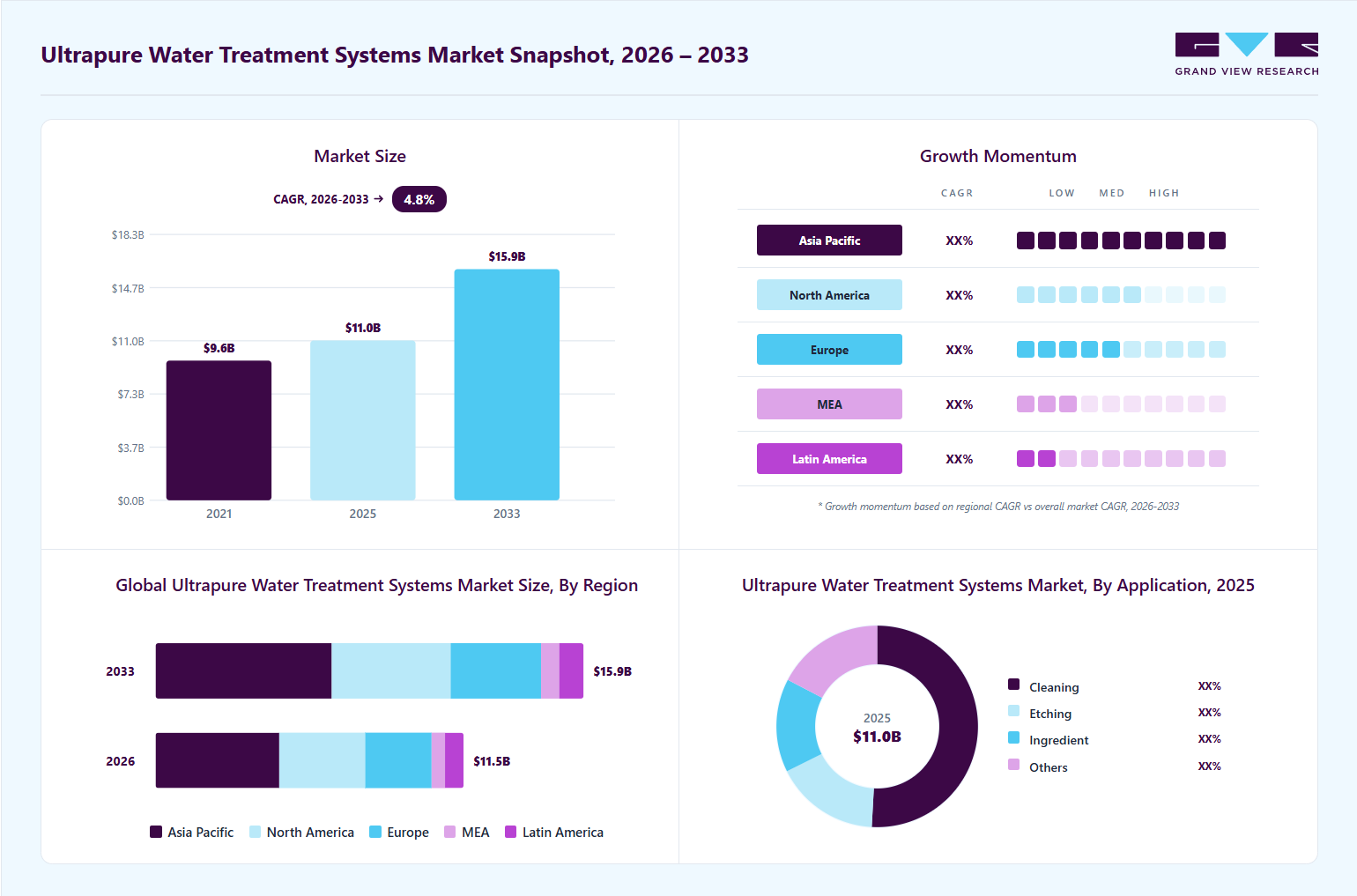
The global ultrapure water treatment systems market size was valued at USD 11.0 billion in 2025 and is projected to grow from USD 11.5 billion in 2026 to USD 15.9 billion by 2033, at a CAGR of 4.8% from 2026 to 2033. Asia Pacific dominated the global market with the largest revenue share of 40.0% in 2025. The global ultrapure water treatment systems industry is being driven by the rising demand in the semiconductor and electronics industry, where high-quality water is essential for wafer washing and cleaning.
 Source: Grand View Research, IR Documents, Primary Interviews, Paid DatabasesTo learn more about this report,
 Download Free Sample Report
Key Market Trends & Insights
- By technology: Reverse osmosis segment held the largest revenue share of 41.2% in 2025.
- By application: Cleaning segment held the largest revenue share of 50.9% in 2025.
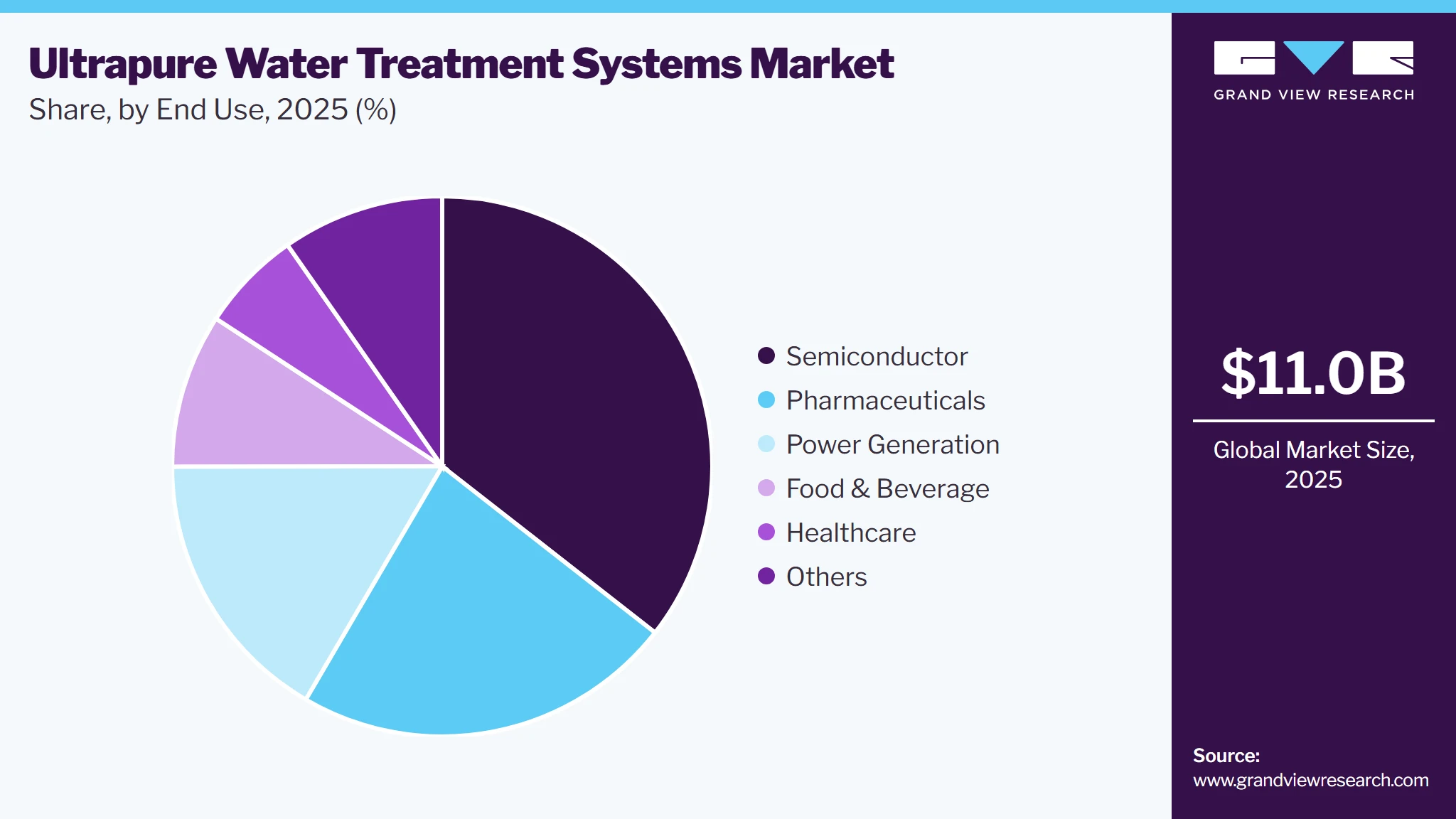
- By end-use: Semiconductor segment held the largest revenue share of 35.6% in 2025.
Regional Highlights
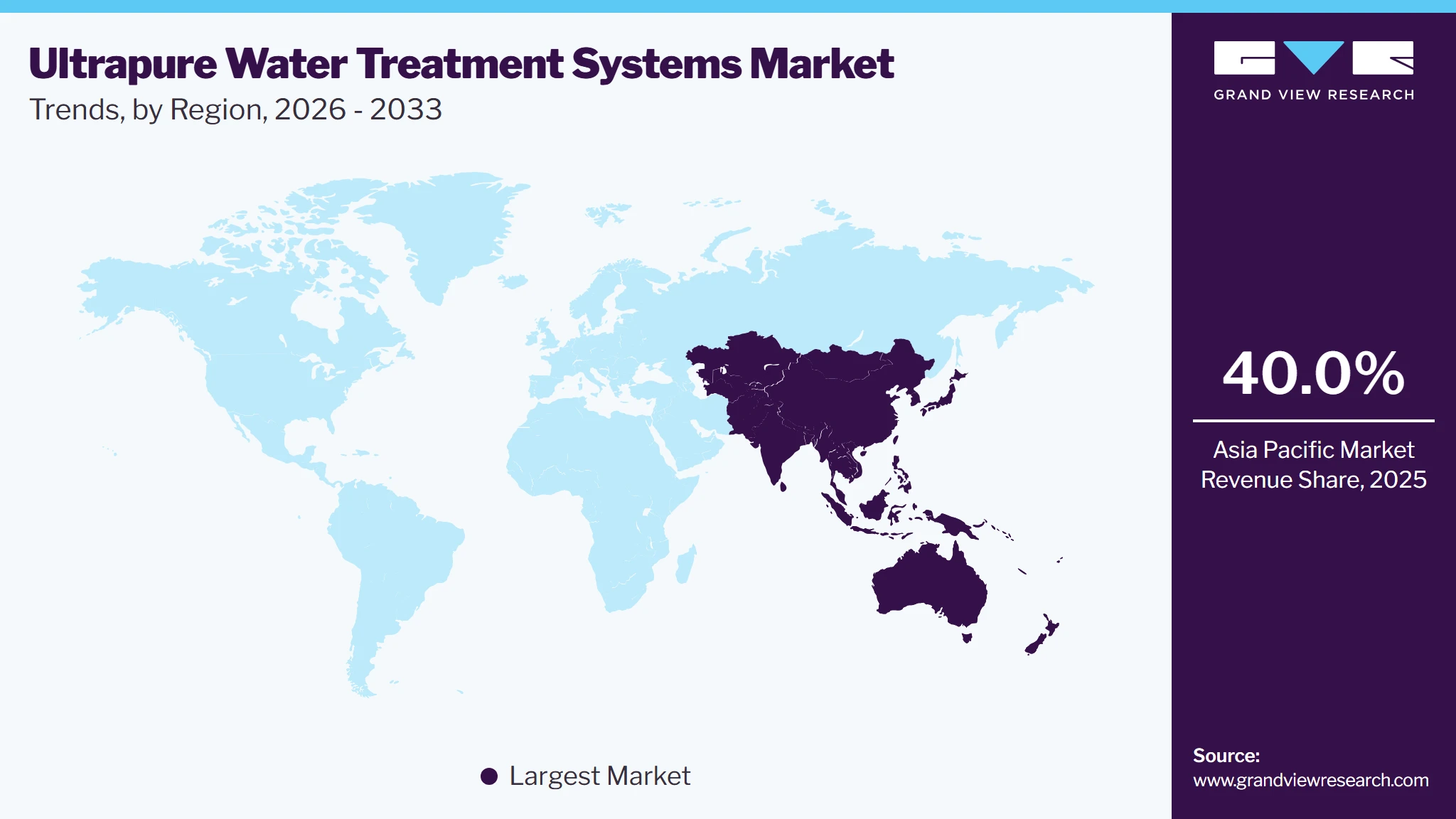
- Largest regional market: Asia Pacific (40.0% revenue share, 2025)
- By country: The UV disinfection equipment market in the U.S. held the largest share in the North America region in 2025.
Market Size & Forecast
- Market size in 2025: USD 11.0 Billion
- Estimated market size in 2026: USD 11.5 Billion
- Projected market size by 2033: USD 15.9 Billion
- CAGR (2026-2033): 4.8%
Prism AI by Grand View Research Free to tryAsk a question about the ultrapure water treatment systems marketTry asking✓Every figure cited from GVR research Prefer the report? Download free sample →
The growing adoption of advanced microelectronics and nanotechnology further supports this trend. Moreover, the pharmaceutical and biotechnology sectors are witnessing significant expansion, requiring ultrapure water for critical processes such as drug formulation and equipment sterilization. Growing concerns over product quality and contamination are accelerating adoption. Technological advancements in water purification systems, such as reverse osmosis and electrode ionization, are improving efficiency and lowering operational costs. The surge in demand from power generation facilities, especially in Asia-Pacific, is further enhancing market prospects. To learn more about this report, Download Free Sample Report
Market Dynamics
Ultrapure water treatment systems are advanced water purification systems designed to remove dissolved solids, organic compounds, microorganisms, particles, and other contaminants to achieve extremely high water purity levels. They are widely used in semiconductor manufacturing, pharmaceuticals, power generation, and electronics production where water quality directly affects process performance and product quality. The ultrapure water treatment systems market is growing due to increasing semiconductor fabrication activities, expansion of pharmaceutical manufacturing, and rising demand for contamination-free production environments. Industries are increasingly investing in advanced filtration, reverse osmosis, deionization, and ultraviolet treatment technologies to meet stringent quality standards. Growth in electronics manufacturing, biotechnology research, healthcare infrastructure, and industrial automation is further driving demand for ultrapure water treatment systems worldwide.
The ultrapure water treatment systems market is primarily driven by increasing demand from the semiconductor and electronics manufacturing industries. Ultrapure water is essential for wafer fabrication, microchip production, and precision cleaning processes where even trace contaminants can affect product quality and yield. Growing investments in semiconductor fabrication plants, advanced electronics manufacturing, and data center infrastructure are significantly increasing demand for reliable ultrapure water systems. The expansion of artificial intelligence, 5G technology, electric vehicles, and consumer electronics production is further supporting semiconductor output worldwide. As manufacturers focus on achieving higher production efficiency, product quality, and process reliability, adoption of advanced ultrapure water treatment technologies continues to increase across critical electronics manufacturing operations.
High installation and operational costs remain a significant restraint for the ultrapure water treatment systems market. These systems require advanced filtration, reverse osmosis, deionization, ultraviolet oxidation, and monitoring technologies to achieve extremely high water purity levels. Initial capital investments can be substantial, particularly for large-scale semiconductor, pharmaceutical, and power generation facilities. In addition, continuous maintenance, membrane replacement, energy consumption, and water quality monitoring contribute to ongoing operational expenses. Small and medium-sized manufacturers may face challenges in justifying these investments, particularly in regions with lower industrial budgets. The complexity of system operation and the need for skilled personnel further increase ownership costs, potentially limiting adoption among cost-sensitive end users.
The rapid expansion of pharmaceutical and biotechnology industries presents a significant opportunity for the ultrapure water treatment systems market. Ultrapure water is widely used in drug formulation, laboratory testing, biotechnology research, vaccine production, and sterile manufacturing processes where strict quality standards must be maintained. Increasing global investments in healthcare infrastructure, biologics production, and pharmaceutical research are driving demand for advanced water purification systems. Regulatory requirements related to product quality, contamination control, and manufacturing compliance are further encouraging adoption of ultrapure water technologies. Additionally, growth in personalized medicine, cell and gene therapies, and biotechnology innovation is expected to create new opportunities for high-performance water treatment systems across pharmaceutical and life sciences applications.
Market Concentration & Characteristics
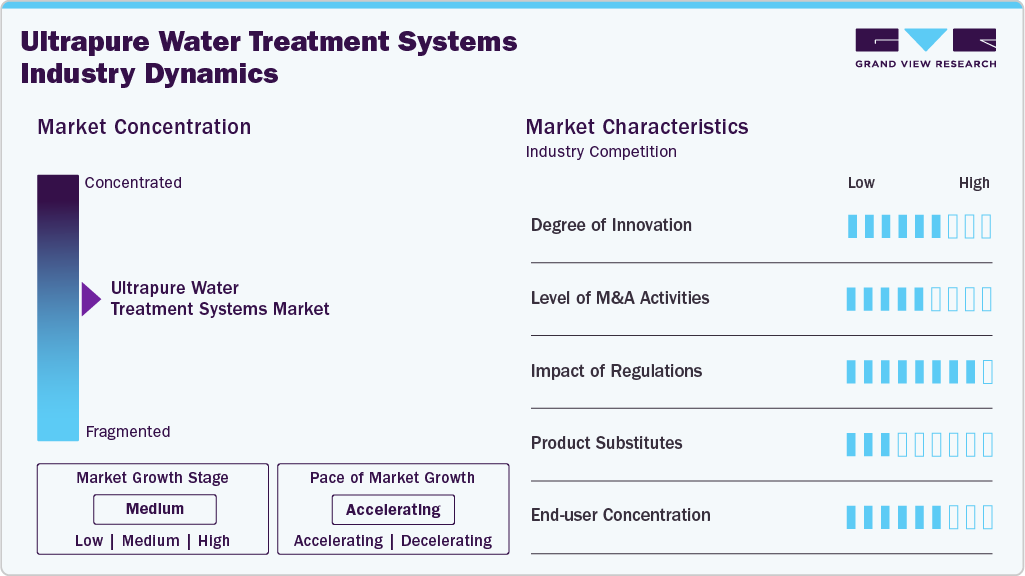
The global ultrapure water treatment systems industry is moderately concentrated, with a few major players holding significant market share. These key companies focus on technological advancements and strategic partnerships to maintain competitiveness. However, regional players and new entrants also contribute to market diversity. This blend of dominant firms and smaller participants creates a semi-consolidated competitive landscape.
The ultrapure water treatment systems industry exhibits a high degree of innovation, driven by advancements in filtration, ion exchange, and membrane technologies. Companies are investing in R&D to enhance system efficiency and reduce energy consumption. Integration of IoT and automation for real-time monitoring is gaining traction. These innovations help meet the stringent quality standards of end-use industries.
 To learn more about this report, Download Free Sample Report
Mergers and acquisitions are moderately active in the market, aimed at expanding technological capabilities and global presence. Larger firms often acquire specialized companies to enhance their product portfolios. These strategic moves help companies enter new markets and strengthen customer relationships. M&A activities also foster faster adoption of emerging technologies.
Regulations significantly shape the ultrapure water treatment systems industry, particularly in industries like semiconductors and pharmaceuticals. Standards from organizations such as ASTM and USP enforce strict water quality requirements. Compliance with environmental and wastewater discharge norms further drives demand for advanced treatment systems. Regulatory pressure encourages innovation and system upgrades.
Analyst Perspective
The ultrapure water treatment systems market is expected to experience strong growth driven by increasing investments in semiconductor manufacturing, pharmaceutical production, biotechnology research, and advanced healthcare infrastructure. Rising demand for contamination-free production environments and stringent water quality standards are encouraging adoption of advanced purification technologies such as reverse osmosis, ultrafiltration, ion exchange, and electrode deionization. The semiconductor industry will remain a key demand generator due to expanding chip fabrication capacity worldwide. Additionally, sustainability initiatives, water reuse programs, and growing industrial automation are supporting market expansion. Continuous technological advancements in monitoring, filtration efficiency, and system integration are expected to create long-term growth opportunities across industrial and institutional end-use sectors.
Technology Insights
Based on technology, the reverse osmosis segment led the market with the largest revenue share of 41.2% in 2025, due to its high efficiency in removing dissolved solids and contaminants. It is widely adopted across industries such as semiconductors, pharmaceuticals, and power generation. RO systems offer reliable performance and scalability, making them ideal for both large and small operations. The combination of cost-effectiveness and broad applicability reinforces its leading position.
Electrode ionization segment is expected to grow at the fastest CAGR of 7.9% from 2025 to 2033 in terms of revenue, driven by increasing demand for sustainable and chemical-free water purification solutions. It is widely adopted in sectors like microelectronics, biotechnology, and laboratories that require ultra-low conductivity water. EDI systems offer benefits such as low operating costs, continuous operation, and minimal environmental impact. The rising focus on green technologies and stringent water quality regulations are accelerating its global adoption.
Application Insights
Based on application, the cleaning segment led the market with the largest revenue share of 50.9% in 2025. Cleaning is the dominating application segment, especially in the semiconductor and electronics industries, where ultrapure water is essential for removing microscopic contaminants from wafers. The high frequency of cleaning steps in manufacturing processes drives consistent demand. Precision cleaning ensures product quality and prevents yield losses. As chip architectures become more complex, cleaning requirements further intensify.
The ingredient segment is expected to grow at a considerable CAGR of 6.0% from 2025 to 2033 in terms of revenue, due to its rising use in pharmaceuticals, food & beverage, and healthcare sectors. Ultrapure water is increasingly used as a direct component in injectable drugs, formulations, and high-purity beverages. Strict quality and safety standards boost adoption in these sensitive applications. Growing consumer health awareness and regulatory oversight are accelerating segment growth.
End-use Insights
Based on end use, the semiconductor segment led the market with the largest revenue share of 35.6% in 2025, owing to its stringent water purity requirements for wafer production and chip fabrication. Even minor impurities can compromise product quality, driving the need for high-performance water systems. With the global rise in electronics and chip demand, this segment maintains strong investment. The concentration of fabs in Asia-Pacific further boosts market share.
 To learn more about this report, Download Free Sample Report
The pharmaceuticals segment is expected to grow at the fastest CAGR of 5.2% from 2025 to 2033 in terms of revenue, due to increasing drug production and regulatory emphasis on contamination-free processes. Ultrapure water is essential for formulation, cleaning, and lab work in this sector. Growth in biotechnology and vaccine development is accelerating demand. Rising global healthcare needs and stringent quality standards fuel rapid expansion.
Regional Insights
The North America ultrapure water treatment systems market is anticipated to grow at a significant CAGR of 4.6% during the forecast period, driven by advanced pharmaceutical and healthcare sectors, especially in the U.S. Strong regulatory standards drive the adoption of ultrapure water systems across industries. Continued investments in R&D and technology upgrades sustain market growth. However, market saturation in key sectors results in moderate expansion rates.
U.S. Ultrapure Water Treatment Systems Market Trends
The ultrapure water treatment systems market in the U.S. accounted for the largest market revenue share of 78.9% in North America in 2024, due to the strong presence of pharmaceutical, biotechnology, and semiconductor industries. Stringent regulations from the FDA and EPA drive the adoption of high-purity water systems. The rise in data centers and advanced manufacturing facilities further boosts demand. Ongoing technological advancements support long-term market growth.
The Canada ultrapure water treatment systems market is witnessing steady growth, driven by increasing investments in healthcare and life sciences. The push for cleaner industrial processes and environmental sustainability is encouraging adoption. Government support for innovation and clean technologies strengthens market development. Growth in research laboratories also contributes to rising demand.
Asia Pacific Ultrapure Water Treatment Systems Market Trends
Asia Pacific dominated the ultrapure water treatment systems market with the largest revenue share of 40.0% in 2025, owing to its dominant semiconductor and electronics manufacturing industry, particularly in China, Taiwan, South Korea, and Japan. The region also benefits from growing pharmaceutical production and rapid urbanization. Favorable government policies and substantial foreign investments in technology sectors further drive demand. High-volume industrial activity ensures a steady requirement for ultrapure water solutions.
 To learn more about this report, Download Free Sample Report
The ultrapure water treatment systems market in the China held the largest share in the Asia Pacific region in 2025, due to its dominant semiconductor and electronics manufacturing industry. Government initiatives supporting high-tech industries and clean production drive adoption. The expansion of the pharmaceutical and biotechnology sectors further fuels demand for ultrapure water. Rising environmental regulations are also encouraging the use of advanced purification technologies.
The India ultrapure water treatment systems market is witnessing strong growth, due to increasing investments in pharmaceuticals, healthcare, and electronics manufacturing. The "Make in India" initiative has accelerated industrial development and infrastructure upgrades. Demand is also rising from research institutions and clean energy projects. Growing awareness about water quality and compliance requirements supports market expansion.
Europe Ultrapure Water Treatment Systems Market Trends
The ultrapure water treatment systems market in Europe is driven by its well-established biotechnology, food & beverage, and life sciences industries. Environmental regulations and sustainability goals encourage the use of advanced water treatment solutions. Germany, the UK, and France are leading contributors in the region. Demand is steady but comparatively slower than in Asia Pacific due to mature market dynamics.
The Germany ultrapure water treatment systems market is growing due to its strong base in pharmaceuticals, biotechnology, and advanced manufacturing. The country’s focus on high-quality production standards drives demand for reliable water purification systems. Environmental regulations and energy-efficient technologies support sustainable adoption. Ongoing R&D investments in life sciences and semiconductors further boost market expansion.
The ultrapure water treatment systems market in the UK is expanding steadily, driven by advancements in the healthcare, pharmaceutical, and food & beverage sectors. Strict water quality standards and regulatory compliance push the need for ultrapure water solutions. Increasing investments in research facilities and biotech startups also enhance demand. In addition, a growing emphasis on sustainability and automation supports long-term growth.
Middle East & Africa Ultrapure Water Treatment Systems Market Trends
The ultrapure water treatment systems market in the Middle East and Africa is anticipated to witness at the fastest CAGR during the forecast period, due to increasing investments in desalination, power generation, and healthcare infrastructure. Demand for high-purity water is rising with the development of new industrial hubs and pharmaceutical projects. Sustainability initiatives and water scarcity concerns are pushing the adoption of advanced purification systems. The region’s emerging economies present untapped potential for long-term market expansion.
The Saudi Arabia ultrapure water treatment systems market is growing significantly due to rising demand from the expanding semiconductor, pharmaceutical, and industrial sectors. Large-scale investments in desalination and advanced water treatment infrastructure are supporting this trend. The government’s Vision 2030 initiative emphasizes sustainable water management, encouraging the use of high-purity systems. These factors, combined with industrial diversification efforts, are driving steady market growth.
Latin America Ultrapure Water Treatment Systems Market Trends
The ultrapure water treatment systems market in Latin America is experiencing growing demand for ultrapure water systems, fueled by expansion in the pharmaceutical and food processing industries. Brazil and Argentina are the primary markets due to industrial development and rising health standards. Government initiatives for improved water infrastructure are creating new opportunities. However, limited technical expertise and funding challenges may constrain faster growth.
The Brazil ultrapure water treatment systems market is growing steadily due to rising demand from the pharmaceutical, electronics, and chemical sectors. Increased focus on water quality and stricter environmental standards are driving the adoption of advanced treatment technologies. The shift toward sustainable, chemical-free solutions like electrode ionization is also supporting market expansion. In addition, the development of smart water infrastructure is encouraging broader use of high-purity water systems across industries.
Key Ultrapure Water Treatment Systems Company Insights
Some of the key players operating in the market include TORAY INDUSTRIES, INC., Danaher Corporation, and Merck KGaA
-
Toray Industries offers a wide range of membrane-based water treatment technologies, including reverse osmosis (RO), ultrafiltration (UF), nanofiltration (NF), and microfiltration (MF) membranes. Their solutions are used in ultrapure water systems for semiconductors, pharmaceuticals, and power generation. The company also develops eco-efficient membranes that reduce energy consumption and chemical usage. Toray continues to innovate with advanced materials to improve system performance and sustainability.
-
Danaher Corporation, through its subsidiaries like Pall and Trojan Technologies, provides advanced water purification systems, including filtration, disinfection, and separation technologies. It serves high-purity applications in life sciences, microelectronics, and diagnostics. The company’s offerings include ultrafiltration, ion exchange, UV disinfection, and real-time monitoring solutions. Danaher emphasizes integrated, digitally enabled systems for high-efficiency and compliance-driven operations.
Key Ultrapure Water Treatment Systems Companies
The following key companies have been profiled for this study on the ultrapure water treatment systems market.
-
TORAY INDUSTRIES, INC.
-
Danaher Corporation
-
Merck KGaA
-
Pentair.
-
Eaton
-
Culligan Water
-
OVIVO Inc.
-
Applied Membranes Inc.
-
Evoqua Water Technologies
-
Kurita Water Industries Ltd
-
ECOLAB
-
Dupont
-
Veolia
-
Suez
-
3M
Competitive Benchmarking
Category
Operating Strategies
Competitive Edge
Weakness
Established Players (e.g., Danaher Corporation, Merck KGaA, DuPont, Veolia, Kurita Water Industries Ltd.)
- Focus on large-scale turnkey projects, global service networks, advanced membrane technologies, digital monitoring platforms, and long-term maintenance contracts.
- Invest in high-purity water solutions for semiconductor, pharmaceutical, and power generation applications while expanding regional manufacturing and support capabilities.
- Strong brand recognition, extensive installed base, proven technology performance, and global distribution networks.
- Broad product portfolios, strong engineering expertise, regulatory compliance capabilities, and long-standing relationships with major industrial customers provide significant advantages in large-scale ultrapure water treatment projects.
- Higher operating costs, complex organizational structures, and longer decision-making processes.
- Dependence on large capital projects and continuous investment in research, development, and compliance can impact flexibility and responsiveness to rapidly changing market requirements.
Emerging & Regional Players (e.g., Applied Membranes Inc., OVIVO Inc., Culligan Water)
- Focus on niche purification applications, customized system designs, regional market expansion, and cost-competitive offerings.
- Compete through flexible pricing, faster project execution, localized technical support, and adoption of innovative filtration and water treatment technologies.
- Greater operational agility, faster customization capabilities, and lower overhead costs.
- Ability to address specific customer requirements, respond quickly to market opportunities, and provide strong local support in targeted industries and geographic markets.
- Limited global presence, smaller service networks, and lower brand recognition.
- Restricted financial resources may constrain large-scale project execution, advanced technology development, and expansion into highly regulated industries requiring extensive validation and certification processes.
Recent Developments
-
In June 2025, Aquatech acquired Century Water, a Singapore-based company focused on ultrapure water and wastewater recycling for high-tech industries. This acquisition enhances Aquatech’s presence in Southeast Asia and strengthens its expertise in advanced water treatment solutions. It also supports the company’s growth in the semiconductor and pharmaceutical markets through localized operations.
-
In February 2025, Toray Industries introduced a high-efficiency ultrafiltration membrane designed to reduce CO₂ emissions by minimizing the need for frequent cleaning in RO systems. The membrane offers strong water permeability while cutting down on biopolymer buildup, easing operational strain. Pilot tests showed improved performance and longer membrane life, with mass production set to begin in mid-2025.
-
In July 2024, Silanna Semiconductor adopted a tailored three-stage ultrapure water system at its Brisbane facility to meet stringent purity standards. The setup includes processes like reverse osmosis, electrode ionization, UV treatment, and polishing to achieve high resistivity and low TOC levels. The system delivers exceptional performance with minimal downtime and optimized chemical use. This solution supports the company’s efficiency, sustainability, and precision manufacturing goals.
Ultrapure Water Treatment Systems Market Report Scope
Report Attribute
Details
Market size in 2025
USD 11.0 billion
Estimated market size in 2026
USD 11.5 billion
Projected market size by 2033
USD 15.9 billion
Growth rate
CAGR of 4.8% from 2026 to 2033
Base year for estimation
2025
Historical data
2021 - 2024
Forecast period
2026 - 2033
Quantitative units
Revenue in USD million/billion, and CAGR from 2026 to 2033
Report coverage
Revenue forecast, company ranking, competitive landscape, growth factors, and trends
Segments covered
Technology, application, end-use, region
Regional scope
North America; Europe; Asia Pacific; Latin America; Middle East & Africa
Country scope
U.S.; Canada; Mexico; UK; Germany; France; Spain; Italy; China; Japan; India ; South Korea; Australia, Brazil; Argentina; Saudi Arabia; UAE; South Africa
Key companies profiled
TORAY INDUSTRIES, INC.; Danaher Corporation; Merck KGaA; Pentair.; Eaton; Culligan Water; OVIVO Inc.; Applied Membranes Inc.; Evoqua Water Technologies; Kurita Water Industries Ltd; ECOLAB; Dupont; Veolia; 3M
Customization scope
Free report customization (equivalent up to 8 analysts' working days) with purchase. Addition or alteration to country, regional & segment scope.
Pricing and purchase options
Avail customized purchase options to meet your exact research needs. Explore purchase options
Global Ultrapure Water Treatment Systems Market Report Segmentation
This report forecasts revenue growth at global, regional, and country levels and provides an analysis of the latest industry trends in each of the sub-segments from 2021 to 2033. For this study, Grand View Research has segmented the global ultrapure water treatment systems market report based on technology, application, end-use, and region:
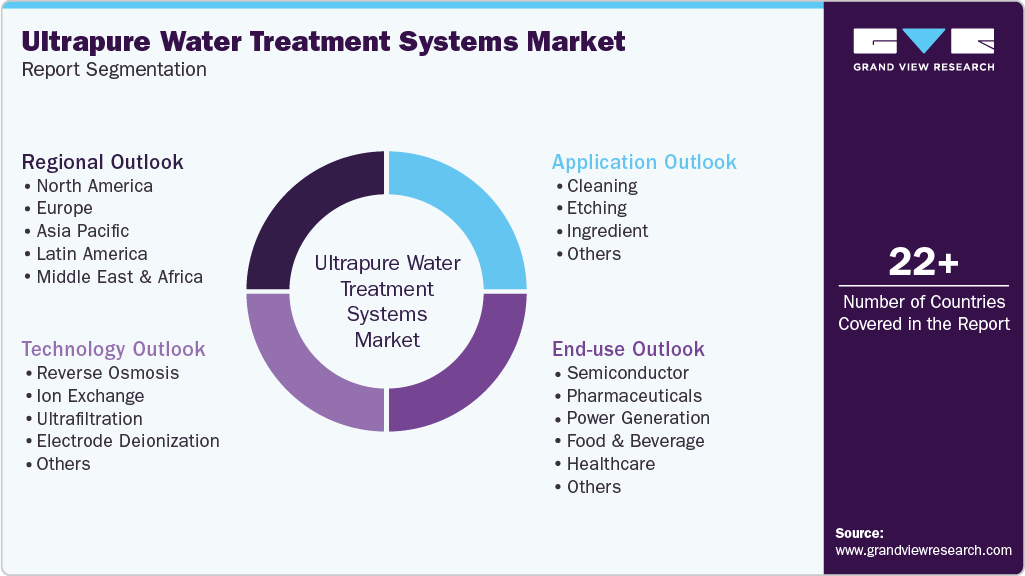 To learn more about this report, Download Free Sample Report
-
Technology Outlook (Revenue, USD Million, 2021 - 2033)
-
Reverse Osmosis
-
Ion Exchange
-
Ultrafiltration
-
Electrode Deionization
-
Others
-
-
Application Outlook (Revenue, USD Million, 2021 - 2033)
-
Cleaning
-
Etching
-
Ingredient
-
Others
-
-
End-use Outlook (Revenue, USD Million, 2021 - 2033)
-
Semiconductor
-
Pharmaceuticals
-
Power Generation
-
Food & Beverage
-
Healthcare
-
Others
-
-
Regional Outlook (Revenue, USD Million, 2021 - 2033)
-
North America
-
U.S.
-
Canada
-
Mexico
-
-
Europe
-
Germany
-
France
-
Italy
-
Spain
-
UK
-
-
Asia Pacific
-
China
-
India
-
Japan
-
South Korea
-
Australia
-
-
Latin America
-
Brazil
-
Argentina
-
-
Middle East and Africa
-
Saudi Arabia
-
UAE
-
South Africa
-
-
Research Methodology
Segment Definition
Technology
Revenue Capture Definition
Reverse Osmosis
Revenue is generated through the sale of reverse osmosis systems used to remove dissolved salts, organic contaminants, and impurities from feed water.
Ion Exchange
Revenue is captured through ion exchange systems used for water softening, demineralization, and removal of ionic contaminants.
Ultrafiltration
Revenue is generated through ultrafiltration systems that remove suspended solids, bacteria, viruses, and colloidal particles from water streams.
Electrode Deionization
Revenue is derived from electrodeionization systems used to produce continuously purified water without chemical regeneration.
Others
This segment includes ultraviolet oxidation, activated carbon filtration, membrane degasification, and advanced purification technologies. Revenue is supported by specialized water treatment requirements, stringent quality standards, and increasing adoption of integrated ultrapure water production systems.
Segment - Application
Revenue Capture Definition
Cleaning
Revenue is generated through ultrapure water systems used for equipment cleaning, component rinsing, and contamination control processes.
Etching
Revenue is captured through water treatment systems supporting semiconductor wafer etching and precision electronics manufacturing processes.
Ingredient
Revenue is derived from ultrapure water systems supplying purified water used directly as an ingredient in pharmaceutical formulations, food and beverage products, biotechnology applications, and laboratory preparations.
Others
This segment includes laboratory testing, analytical processes, boiler feed water preparation, cooling systems, and research applications. Revenue is supported by diverse industrial and scientific requirements for high-purity water across multiple end-use sectors.
Segment -End-use
Revenue Capture Definition
Semiconductor
Revenue is generated through ultrapure water treatment systems used in wafer fabrication, chip manufacturing, and semiconductor cleaning processes.
Pharmaceuticals
Revenue is captured through systems supplying ultrapure water for drug manufacturing, formulation, laboratory testing, and sterile processing applications.
Power Generation
Revenue is generated through ultrapure water systems used for boiler feed water, steam generation, and turbine operations.
Food & Beverage
Revenue is derived from water purification systems used in beverage production, ingredient preparation, processing operations, and equipment sanitation.
Healthcare
Revenue is captured through ultrapure water systems used in hospitals, diagnostic laboratories, dialysis centers, and medical research facilities.
Others
This segment includes biotechnology, research laboratories, chemicals, cosmetics, and industrial manufacturing applications. Revenue is supported by specialized water purity requirements, process optimization initiatives, and increasing adoption of advanced water treatment technologies.
Estimation Model
Name Key Question Description
High-Purity Water Demand Layer
Which industries require ultrapure water?
The estimation begins by identifying industries where water purity is critical for production quality and operational efficiency. These include semiconductor manufacturing, pharmaceuticals, power generation, food & beverage processing, healthcare facilities, biotechnology laboratories, and electronics manufacturing.
Technology Adoption Layer
Which facilities utilize ultrapure water treatment systems?
The potential demand base is refined by assessing the adoption of purification technologies such as reverse osmosis, ion exchange, ultrafiltration, and electrode deionization. Industries with stringent water quality requirements, particularly semiconductors and pharmaceuticals, typically exhibit higher adoption rates.
System Installation & Upgrade Layer
What drives annual equipment demand?
Annual demand is estimated by analyzing new semiconductor fabrication facilities, pharmaceutical manufacturing plants, healthcare infrastructure developments, and industrial expansion projects. Replacement of aging water purification systems and capacity enhancement initiatives also contribute to demand.
Market Revenue Layer
How is market revenue calculated?
Revenue is estimated from the sale of ultrapure water treatment equipment, including reverse osmosis systems, ion exchange units, ultrafiltration systems, and electrode deionization systems. Equipment demand is driven by semiconductor, pharmaceutical, healthcare, and power generation industries.
Delivered Customizations
This report has been delivered with the following In-depth customizations
Client Request
Customization Delivered
Value Adds
Regional Segmentation
Detailed regional analysis was conducted across North America, Europe, Asia Pacific, Latin America, and Middle East & Africa, including key countries such as the U.S., Germany, China, India, Brazil, and Saudi Arabia. The study assessed semiconductor manufacturing, pharmaceutical production, power generation activities, healthcare infrastructure, water reuse initiatives, and regulatory standards influencing ultrapure water treatment system adoption.
Helped identify high-growth regional markets, country-level opportunities, and evolving demand trends across semiconductor, pharmaceutical, healthcare, and industrial sectors. The analysis also supported market entry planning, regional expansion strategies, and identification of emerging high-purity water demand hubs.
Competitive Benchmarking
Comprehensive benchmarking was conducted for major market participants based on product portfolio, purification technologies, regional presence, engineering expertise, and distribution network strength. The assessment also compared established and emerging players operating in the ultrapure water treatment systems market.
Assisted clients in understanding competitor positioning, technology strengths, and market gaps. The study supported strategic planning, partnership evaluation, and differentiation opportunities across semiconductor manufacturing, pharmaceutical production, healthcare facilities, and industrial water treatment applications.
Opportunity Assessment
In-depth opportunity assessment was conducted by analyzing semiconductor fab investments, pharmaceutical manufacturing expansion, healthcare infrastructure development, industrial water reuse programs, and increasing demand for contamination-free production environments. The study also identified opportunities in advanced membrane technologies, smart monitoring systems, and sustainable water treatment solutions.
Enabled clients to identify high-growth investment areas, prioritize regional expansion strategies, and evaluate future revenue opportunities across semiconductor, pharmaceutical, healthcare, power generation, and industrial sectors. The analysis also supported technology adoption planning and long-term business growth initiatives.
Frequently Asked Questions About This Report
Some of the key players operating in the global ultrapure water treatment systems market include TORAY INDUSTRIES, INC.; Danaher Corporation; Merck KGaA; Pentair.; Eaton; Culligan Water; OVIVO Inc.; Applied Membranes Inc.; Evoqua Water Technologies; Kurita Water Industries Ltd; ECOLAB; Dupont; Veolia; Suez; 3M
The global ultrapure water treatment systems market is driven by increasing demand from the semiconductor, pharmaceutical, and power industries requiring stringent water purity. Technological advancements and rising regulatory standards for water quality further accelerate market growth.
The global ultrapure water treatment systems market size was estimated at USD 11.0 billion in 2025 and is expected to be USD 11.5 billion in 2026.
The global ultrapure water treatment systems market, in terms of revenue, is expected to grow at a compound annual growth rate of 4.8% from 2026 to 2033 to reach USD 15.9 billion by 2033.
The reverse osmosis (RO) segment led the market with the largest revenue share of 41.2% in 2025, due to its high efficiency in removing dissolved solids and contaminants.
Asia Pacific dominated the ultrapure water treatment systems market with the largest revenue share of 40.0% in 2025.
Asia Pacific is anticipated to be one of the fastest-growing regional markets over the forecast period, driven by expanding semiconductor fabrication facilities, electronics manufacturing growth, and increasing industrial investments.
The cleaning segment accounted for the largest revenue share of 50.9% in 2025.
The semiconductor segment led the market with the largest revenue share of 35.6% in 2025.
About the Author(s)
Advanced Interior Materials Research Team
Advanced Materials · Advanced Interior MaterialsThis report was authored by the advanced interior materials research team at Grand View Research - comprising two research analysts, one senior research analyst, and one industry expert - with specialized expertise in the advanced interior materials segment of the advanced materials industry. All findings are based on proprietary advanced materials databases, executive interviews, and regulatory analysis, subject to internal peer review prior to publication.
Last Updated:
Speak to Analyst

Customize this report to your needs - add regions, segments, or data points, with 20% free customization.
Or view our licence options:


ISO 9001:2015 & 27001:2022 Certified
We are GDPR and CCPA compliant! Your transaction & personal information is safe and secure. For more details, please read our privacy policy.


