
- Home
- »
- Nutraceuticals & Functional Foods
- »
-
Urology Supplements Market Size & Share Report, 2033GVR Report cover

Urology Supplements Market (2026 - 2033)
Size, Share & Trends Analysis Report By Type (Multi-ingredient, Single Ingredient), By Application (Urinary Tract Infections, Kidney Health, Prostate Health, Bladder Health), By Formulation, By Distribution Channel, By Region, And Segment Forecasts
Market Size, 2025
$2.0BMarket Estimate, 2026
$2.2BMarket Forecast, 2033
$3.9BCAGR, 2026–2033
8.6%Urology Supplements Market Summary
The global urology supplements market size was valued at USD 2.0 billion in 2025 and is projected to grow from USD 2.2 billion in 2026 to USD 3.9 billion by 2033, at a CAGR of 8.6% from 2026 to 2033. Asia Pacific dominated the market, accounting for a revenue share of 35.6% in 2025. The market has observed significant growth in recent years owing to increasing awareness, the prevalence of kidney-related problems, and the rising geriatric population. Moreover, the growing demand for safe and effective alternatives to traditional medications is anticipated to fuel market growth.
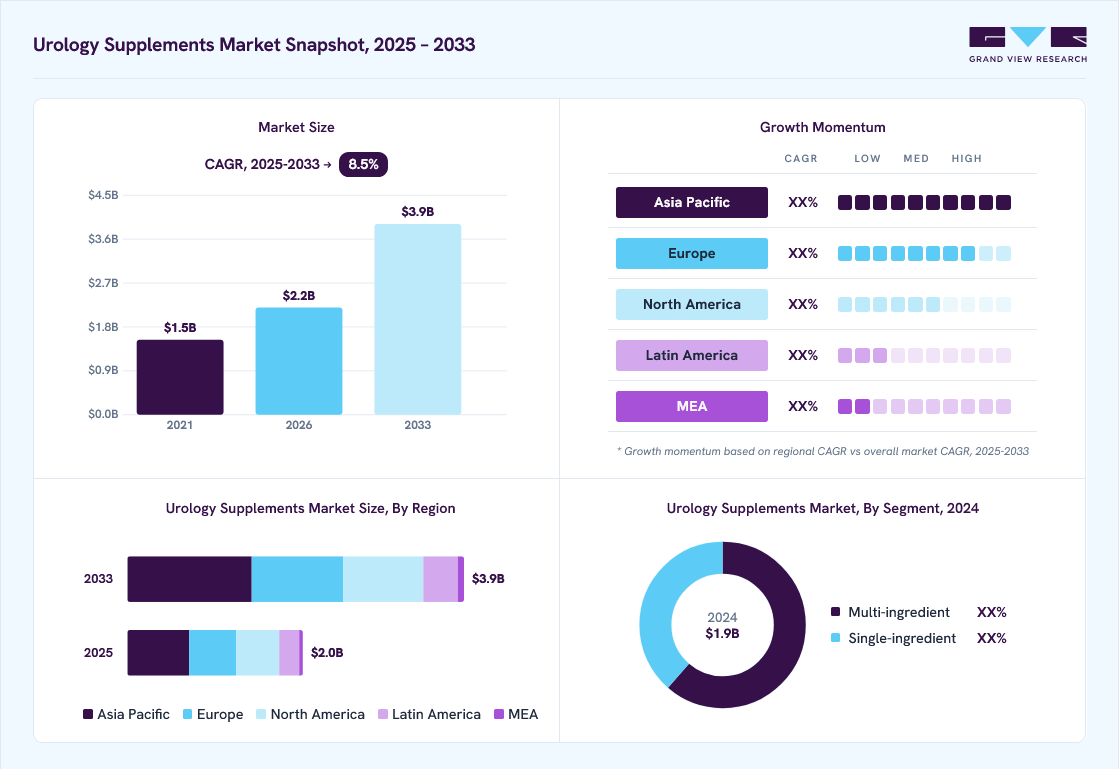 Source: Grand View Research, IR Documents, Primary Interviews, Paid DatabasesTo learn more about this report,
 Download Free Sample Report
 Key Market Trends & Insights
- By type: The multi-ingredient segment held the highest market share of 62.6% in 2025.
- By application: The urinary tract infections segment held the highest market share of 37.8% in 2025.
- By formulation: The capsule segment held the highest market share of 38.2% in 2025.
Regional Highlights:
- Largest regional market: Asia Pacific ( revenue share, 2025)
- By country: China held the largest market share in 2025.
Market Size & Forecast
- Market size in 2025: USD 2.0 Billion
- Estimated market size in 2026: USD 2.2 Billion
- Projected market size by 2033: USD 3.9 Billion
- CAGR (2026-2033): 8.6%
Three ways to get this report
Buy it, customize it, or ask a question.Ask an Analyst
A direct answer, usually in 1 working day
- AccessReport author, directly
- Reply timeWithin 1 working day
- No sales callDirect answer only
- FormatEmail reply
- CostFree, no cost
Get the Full Report
What the study covers
- FormatsPDF · Excel · Dashboard
- Timeline2026–2033 annual, 2025 base
- Coverage20+ countries, 5 regions
- Companies10+ key players profiled
Customize the Report
20% free customization
- IncludeCountries, segments, points
- TailorTo your product definition
- ExtendDeeper competitor detail
- OrA fully bespoke study
- Turnaround5–10 working days
Furthermore, the shift toward convenient, targeted, and preventive supplementation is expanding the category beyond traditional condition-focused products. Consumers are increasingly favoring multi-ingredient formulations that combine several active ingredients in a single product, while e-commerce is making specialized urology supplements more accessible and allowing consumers to research formulations privately before purchase.
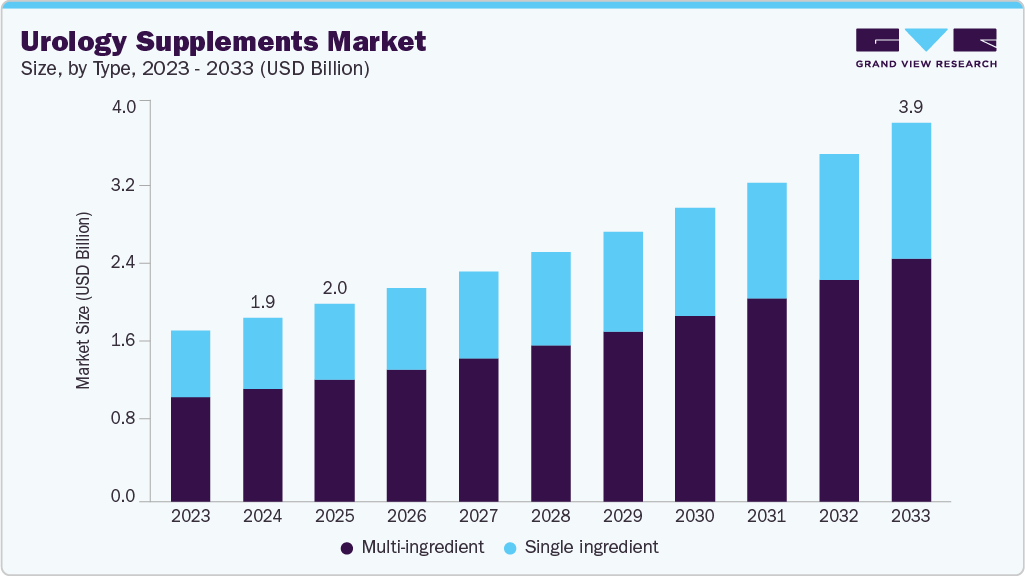 To learn more about this report, Download Free Sample Report
 Market Dynamics
The rising prevalence of urological disorders is creating a broader consumer base for supplements targeting urinary, prostate, bladder, and kidney health. Conditions such as urinary tract infections (UTIs), benign prostatic hyperplasia (BPH), kidney stones, and overactive bladder are becoming increasingly common, supported by population aging, inadequate hydration, sedentary lifestyles, and changing dietary patterns. This growing disease burden is encouraging consumers to adopt preventive and supportive approaches, particularly through ingredients such as cranberry, D-mannose, saw palmetto, pumpkin seed extract, magnesium, and probiotics. Increasing awareness of the potential side effects and long-term use associated with certain conventional therapies is also encouraging interest in natural and well-tolerated alternatives.
For instance, in September 2025, Modicare Limited introduced Well Cranberry + D-Mannose under its Well Sci-Vedic range, positioned to support urinary tract health in women. The launch reflects the industry's response to growing urinary-health awareness and the expanding demand for targeted, ingredient-focused supplementation.
The growing use of natural ingredients in urology supplements is accompanied by concerns regarding the consistency and strength of clinical evidence supporting their efficacy. Although ingredients such as cranberry, D-mannose, probiotics, and botanical extracts are widely marketed for urinary and prostate health, variations in dosage, formulation, active-compound concentration, and study outcomes make it difficult for consumers and healthcare professionals to assess their effectiveness. This uncertainty can limit repeat purchases and physician-led adoption, particularly among consumers seeking clinically validated solutions.
For instance, in October 2025, the European Association of Urology (EAU) highlighted that evidence for cranberry products and D-mannose in recurrent cystitis prevention remains inconsistent, with differences in formulations and study methodologies limiting standardized recommendations. The EAU nevertheless recognizes the growing relevance of non-antibiotic approaches, indicating that stronger clinical evidence and standardized formulations are needed to support wider adoption of urology nutraceuticals.
The market for urology supplements presents an opportunity for manufacturers to develop targeted formulations that address specific urinary-health needs while improving convenience and adherence. Rather than relying solely on single-ingredient capsules, brands can combine cranberry, D-mannose, probiotics, hibiscus, minerals, and other complementary ingredients, while introducing powders, effervescent sachets, gummies, and liquid formats. Such innovation can help manufacturers differentiate products for women, aging consumers, and individuals seeking daily urinary-health support. For instance, in April 2025, SYNEVIT introduced VOLURINE, combining D-mannose and cranberry extract for urinary tract support.
Analyst Perspective
The market is transitioning from broad urinary-health positioning toward condition-specific, evidence-led supplementation, with cranberry, D-mannose, probiotics, and botanical combinations increasingly being formulated around distinct urinary and prostate-health needs. The key competitive opportunity is not simply expanding product breadth, but building clinically credible, targeted formulations with transparent ingredient standardization and preventive-health positioning that can convert intermittent users into daily consumers. Companies that successfully bridge supplements with pharmacy credibility, e-commerce education, and personalized urinary-health needs are likely to capture greater consumer trust and sustain premium pricing as the category matures.
Consumer Insights
Consumer interest in urology supplements is increasingly supported by demand for targeted urinary-health solutions and the broader adoption of supplements among older consumers. SPINS recorded 3.2% year-over-year dollar growth for the Urinary Tract Health supplement segment in the 52 weeks ending June 16, 2024, based on SPINS Natural Channel. This demand is further supported by changing attitudes toward preventive health, with consumers increasingly seeking products that can be incorporated into daily wellness routines. NielsenIQ reported in 2025 that 57% of consumers place greater importance on aging well than they did five years earlier, strengthening the opportunity for supplements addressing age-associated prostate, bladder, and urinary concerns.
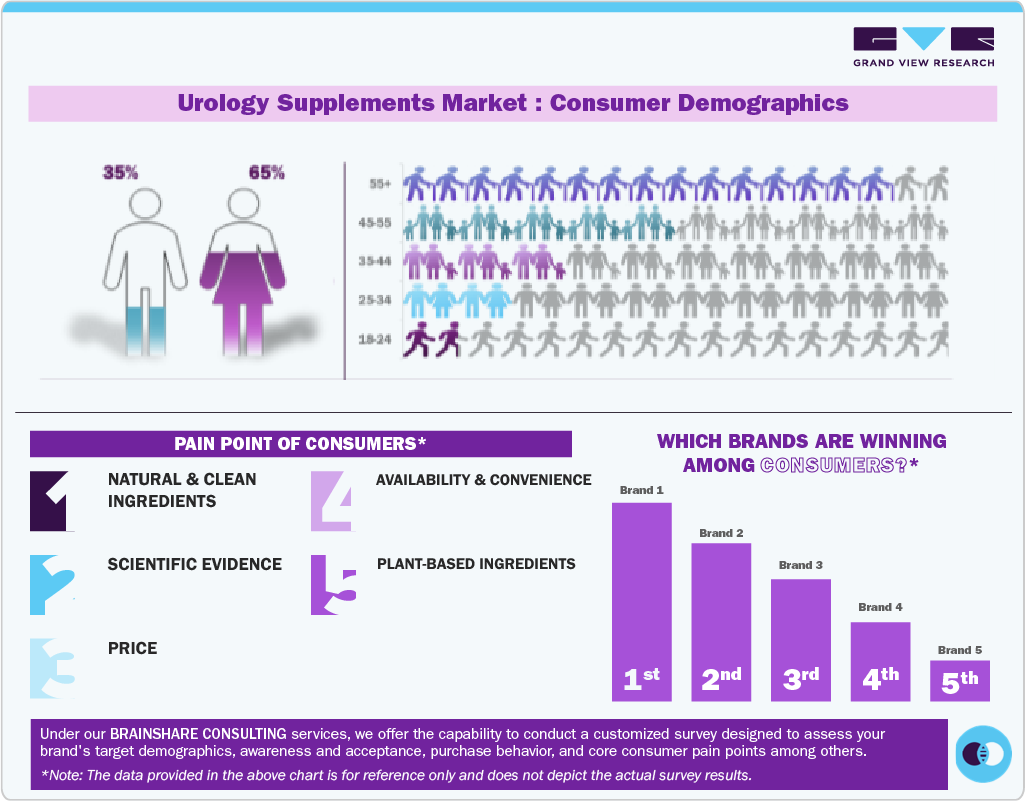 To learn more about this report, Download Free Sample Report
 Product selection is also becoming more informed, as consumers increasingly evaluate ingredient composition, health claims, and perceived efficacy before purchase. This favors formulations featuring recognizable ingredients such as cranberry, D-mannose, saw palmetto, pumpkin seed extract, and probiotics, particularly when products provide clearly defined benefits and transparent labeling.
Application Insights
The urinary tract infection (UTI) segment dominated the market with a revenue share of 37.8% in 2025. Growing awareness of UTIs and their risk factors has increased consumer interest in preventive measures, including supplements. The high prevalence of UTIs means a significant market demand for supplements to prevent and manage these infections, particularly those formulated with cranberry extract, D-mannose, and probiotics. As consumers increasingly seek natural, non-antibiotic solutions, the UTI supplement segment is expected to remain a major growth driver in the urology supplements industry.
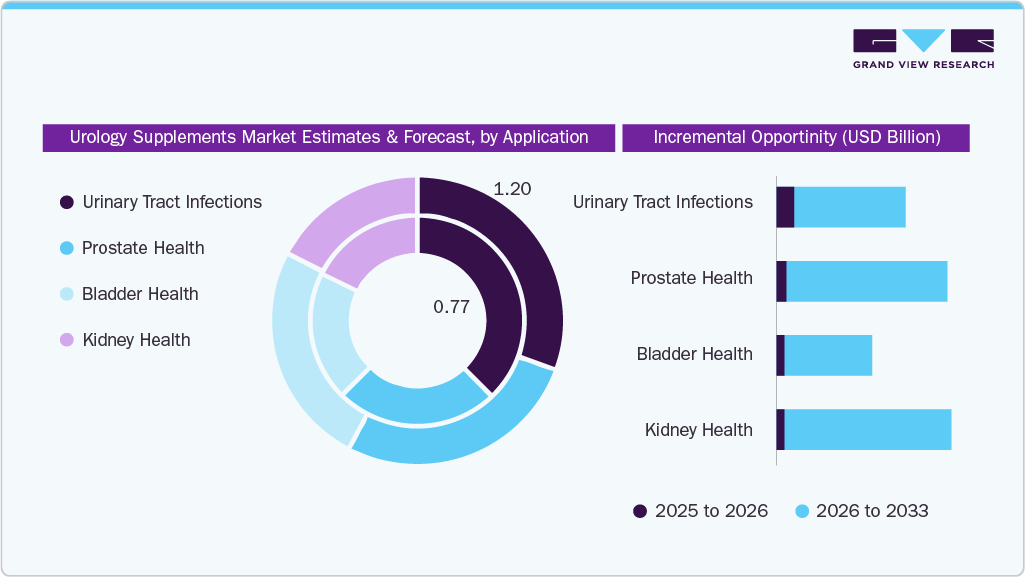 To learn more about this report, Download Free Sample Report
 The urology supplements for bladder health is expected to grow at a significant CAGR of 12.4% over the forecast period. Growing awareness of bladder-related concerns, including urinary urgency, frequency, overactive bladder, and age-associated changes in bladder function, is encouraging consumers to adopt preventive approaches to urinary wellness. Aging populations are contributing to this trend as older adults become more attentive to maintaining bladder control and overall urinary function. At the same time, increasing interest in self-care and non-pharmaceutical options is supporting demand for dietary supplements formulated with ingredients such as pumpkin seed extract, saw palmetto, cranberry, probiotics, and botanical compounds. Manufacturers are responding by developing targeted formulations specifically positioned around bladder comfort, urinary control, and daily bladder support. This expanding focus on condition-specific products is expected to strengthen consumer awareness and support demand for bladder-health supplements throughout the forecast period.
Formulation Insights
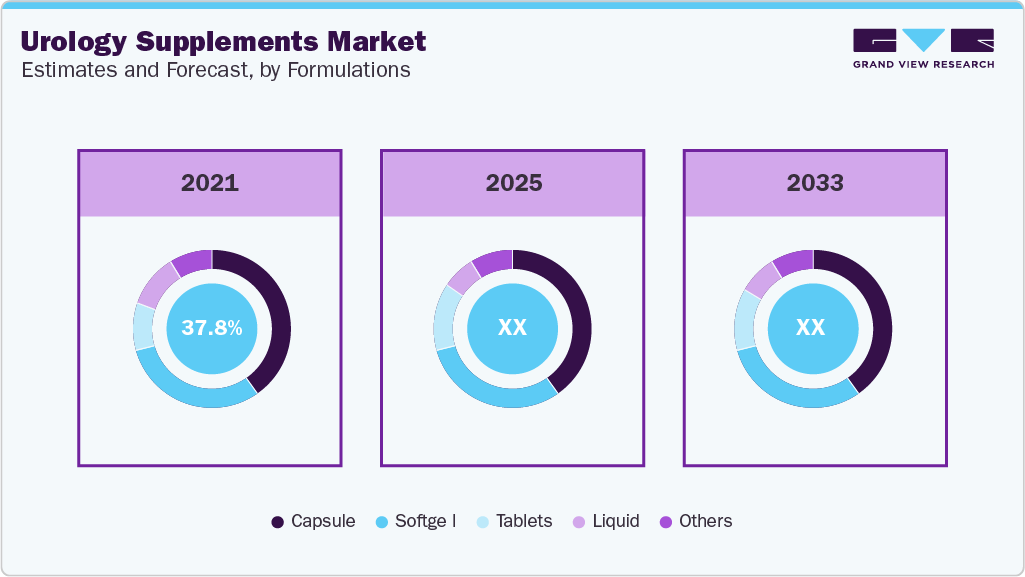
The capsule form segment dominated the market with a share of 38.2% in 2025. Capsules are one of the most convenient dosage forms for supplements. They are easy to swallow and do not have a strong taste or odor, making them more palatable for consumers than other forms such as tablets or powders. This ease of use contributes to the popularity of capsules among consumers, driving their dominance in the market.
 To learn more about this report, Download Free Sample Report
 The liquid form segment is expected to grow at the fastest CAGR of 11.3% from 2026 to 2033. Liquid supplements offer convenient consumption and can be easier to administer for consumers who have difficulty swallowing conventional tablets or capsules. This format also provides manufacturers with greater flexibility to develop drinkable formulations combining multiple urinary-health ingredients, including cranberry, D-mannose, botanical extracts, and vitamins or minerals. The growing availability of liquid and ready-to-consume supplement formats is supporting consumer interest in more convenient delivery options, particularly among older adults who represent an important consumer group for prostate, bladder, and urinary-health products.
Type Insights
The multi-ingredient urology supplements segment accounted for the largest market share of 62.6% in 2025. Growth is supported by increasing consumer preference for comprehensive urological care, growing interest in natural and preventive solutions, and the potential complementary benefits offered by combining multiple active ingredients within a single formulation. Manufacturers are increasingly developing products that pair established urinary-health ingredients to address different mechanisms of urinary support. For instance, in January 2025, Theralogix launched TheraCran Max, combining 1,000 mg of D-mannose with cranberry extract providing 40 mg of soluble proanthocyanidins (PACs) in a single daily supplement. The company positioned the formulation as a dual-action approach to urinary tract health, illustrating the industry's shift toward combining complementary ingredients rather than relying on a single active component.
The single-ingredient segment is expected to register a significant CAGR of 10.3% from 2026 to 2033. Single-ingredient supplements often offer specific benefits for urological health, such as supporting prostate health, promoting urinary tract function, or addressing issues like urinary incontinence. Consumers are increasingly seeking targeted solutions for their health concerns, which drives the demand for single-ingredient supplements.
Distribution Channel Insights
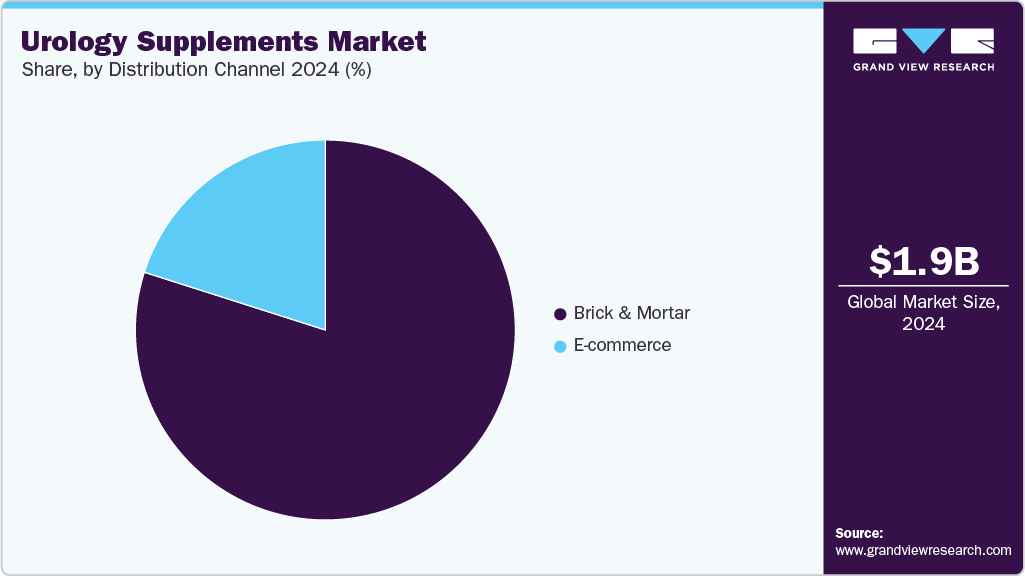
The sales of urology supplements through brick-and-mortar dominated the market with a revenue share of 79.0% in 2025. The rising trend among medical professionals to recommend supplements for urological health issues, such as urinary tract health, prostate health, and bladder function, is anticipated to boost the brick-and-mortar segment in the market.
 To learn more about this report, Download Free Sample Report
 The sales of urology supplements through e-commerce channel is expected to register a CAGR of 6.6% from 2026 to 2033, supported by increasing consumer involvement in healthcare decisions and the growing use of online platforms for purchasing specialized health products. Online channels offer greater convenience, privacy, product variety, and access to detailed information on ingredients and formulation, making them particularly relevant for urology supplements addressing sensitive urinary and prostate-health concerns.
For instance, in April 2026, Uqora expanded its portfolio to Target stores and Target.com, introducing products including Uqora Flush Advanced+, Uqora Defend, Uqora Promote, and its UTI Emergency Kit. The company’s Flush Advanced+ is a drink-mix supplement combining whole-fruit cranberry powder and D-mannose for proactive urinary-health support. This expansion demonstrates how urology supplement brands are increasingly using established e-commerce platforms alongside direct channels to broaden consumer reach. Such developments are expected to improve product accessibility and encourage online discovery, trial, and repeat purchasing of urology supplement.
Regional Insights
The North America urology supplements market held a significant global revenue share of 24.4% in 2025. The market’s growth is driven by factors such as heightened awareness of urological health, the escalating prevalence of lifestyle-related urological conditions, and the convenient availability of supplement-based solutions. Moreover, the increasing awareness of urological health and shifts in lifestyle patterns have spurred a surge in consumers seeking noninvasive, enduring approaches to enhance their overall urological well-being, fostering robust demand for urology supplements across the region.
 To learn more about this report, Download Free Sample Report
 U.S Urology Supplements Market Trends
The urology supplements industry in the U.S holds the largest share of 89.5% in 2025, driven by proactive, preventive, and condition-specific urinary-health solutions, particularly as consumers seek alternatives that can complement conventional care. Products targeting recurrent UTIs, bladder function, and prostate health are increasingly incorporating clinically studied ingredients such as cranberry, D-mannose, probiotics, and botanical extracts. Convenient delivery formats and omnichannel availability are also gaining importance, with brands expanding beyond traditional capsules into drink mixes and other easy-to-use formats.
Europe Urology Supplements Market Trends
The urology supplements industry in Europe is expected to grow at a CAGR of 8.8% from 2026 to 2033, supported by a rapidly aging population, increasing prevalence of urological disorders such as benign prostatic hyperplasia (BPH) and urinary tract infections (UTIs), and growing consumer awareness around men’s health and preventive care. Moreover, favorable healthcare infrastructure, high disposable incomes, and strong regulatory frameworks promoting product safety and efficacy contribute to market growth. The rise of e-commerce and direct-to-consumer sales channels in Europe further enhances accessibility, driving demand for innovative and natural urology supplement products across the region.
The urology supplements industry in the UK is expected to grow significantly over the forecast period. Increasing geriatric population, growing demand for organic supplements, and rising preference for supplements are anticipated to drive the market growth.
The urology supplements industry in Germany is expected to grow with the fastest CAGR of 12.2% from 2026 to 2033, supported by Germany’s aging population, strong pharmacy infrastructure, and growing consumer interest in self-directed healthcare. Consumers are showing greater interest in targeted formulations containing ingredients such as cranberry, D-mannose, saw palmetto, and botanical extracts, while combination products are gaining relevance for addressing multiple aspects of urological wellness. Pharmacy-led recommendations and online purchasing are developing alongside each other, giving consumers access to both professional guidance and broader product selections.
Asia Pacific Urology Supplements Market Trends
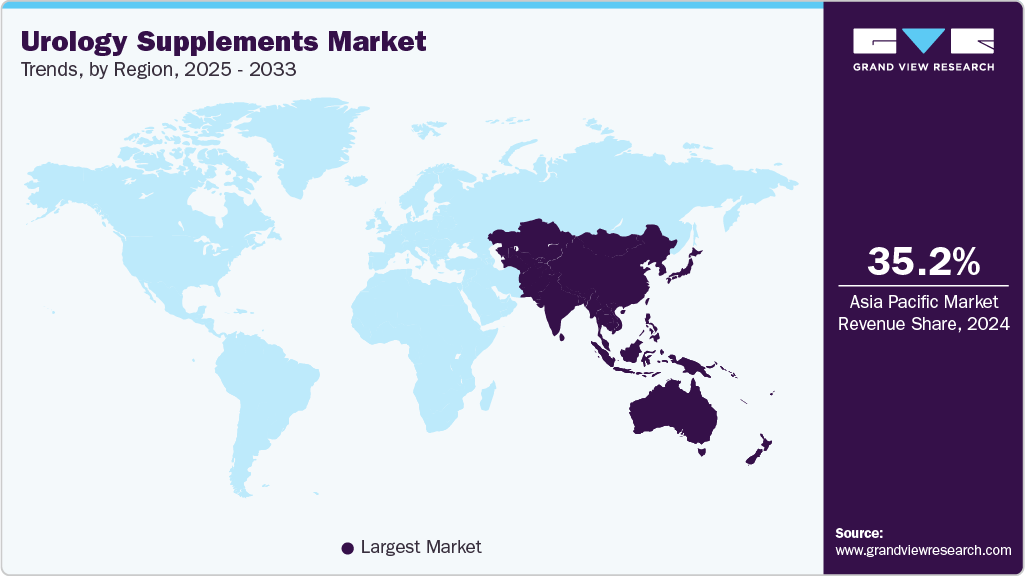
The urology supplements industry in Asia Pacific dominated the global market with a revenue share of 35.6% in 2025 and is anticipated to grow at the fastest CAGR of 9.6% from 2026 to 2033. There is a growing awareness and interest in health & wellness among consumers across the APAC region. People are becoming more conscious of their lifestyle habits and seeking urology products that promote overall well-being. As disposable income rises in APAC countries, consumers are willing to spend more on health-enhancing products.
The urology supplements industry in China accounts the largest revenue share of 27.6% in 2025 due to the rising geriatric population and growing demand for urology supplements. Moreover, increasing health awareness, urbanization, and expanding healthcare infrastructure are driving consumers toward preventive healthcare solutions. The popularity of traditional herbal ingredients and modern supplements also supports market expansion. Growing availability through online platforms further boosts accessibility and adoption across diverse demographics.
Latin America Urology Supplements Market Trends
The urology supplements industry in Latin America is expected to grow at a CAGR of 6.7% from 2026 to 2033, influenced by greater awareness of preventive urinary health, expanding interest in functional nutrition, and rising acceptance of natural health solutions. Consumers are becoming more receptive to supplements that can be incorporated into everyday wellness routines rather than used only after symptoms appear. Women’s urinary health represents an important area of demand, particularly for products positioned around recurrent UTI prevention and general urinary-system support.
Middle East & Africa Urology Supplements Market Trends
The urology supplements industry in MEA is expected to grow at a CAGR of 6.4% from 2026 to 2033. Middle Eastern countries such as Saudi Arabia, Qatar, the United Arab Emirates (UAE), and Kuwait are prospering economies witnessing significant growth in the demand for urology supplements. This surge is driven by several factors, including a growing middle-class population, increasing disposable incomes, and a rising awareness of urological health and wellness. Rapid urbanization and evolving lifestyles have contributed to the prevalence of sedentary occupations and unhealthy dietary habits, leading to a higher incidence of urological issues such as urinary tract infections, kidney stones, and prostate problems.
Key Urology Supplements Company Insights
The urology supplements industry is characterized by several well-established players who maintain leadership through diverse product portfolios, strategic partnerships, and continuous innovation in formulation and sourcing. Key companies such as Theralogix, Nature’s Bounty, Solaray, and among othes have secured significant market share by offering high-quality supplements targeting prostate health, urinary tract support, and sexual wellness. Their strong distribution networks, trusted brand reputations, and focus on natural, evidence-backed ingredients enable them to meet growing consumer demand.
Emerging and mid-sized companies are expanding their footprint by introducing innovative blends and targeted solutions tailored to specific urological conditions, such as benign prostatic hyperplasia (BPH), urinary tract infections (UTIs), and overactive bladder symptoms. These firms emphasize transparency, clinical validation, and sustainable sourcing to appeal to an increasingly health-conscious consumer base prioritizing efficacy and safety.
Market leaders continue to dominate by combining traditional herbal wisdom with modern scientific research and customer-centric approaches, solidifying their positions in a competitive landscape. As awareness around men’s health, preventive care, and natural alternatives grows globally, the market is poised for sustained expansion.
With rising demand for holistic and non-invasive urological support, the market landscape is shaped by regulatory compliance, quality standards, and evolving consumer preferences toward clean-label and ethically produced supplements. Strategic collaborations, mergers and acquisitions, and technological advancements in ingredient bioavailability will be pivotal in defining the market’s future trajectory. Companies that successfully blend innovation with trust and accessibility will drive long-term growth in this dynamic sector.
Key Urology Supplements Companies
The following key companies have been profiled for this study on the urology supplements market.
-
Theralogix
-
Nature's Bounty
-
Solaray
-
Puritan's Pride
-
Schiff Nutrition
-
ZAHLER
-
Natrol, LLC.
-
Biotexlife
-
Himalaya Wellness.
-
Himalayan Organics
Competitive Benchmarking
Category
Operating Strategies
Competitive Edge
Weakness
Established Players (Theralogix; Nature’s Bounty; Solaray; Puritan’s Pride; Schiff Nutrition; Natrol, LLC.; Himalaya Wellness)
- Mature players focus on broadening urology portfolios across urinary tract, prostate, kidney, and men's health needs, while leveraging established brands, science-backed formulations, herbal expertise, and extensive retail and online distribution.
- Established players benefit from strong brand recognition, broad product portfolios, established distribution networks, and consumer trust built through long-term presence in the supplements industry.
- Broad portfolio structures can make differentiation within urology supplements more difficult, while strong reliance on mainstream retail channels increases competition for shelf space and consumer attention.
Emerging Players (ZAHLER; Biotexlife; Himalayan Organics)
- Emerging players adopt focused, niche strategies centered on targeted formulations, natural and herbal ingredients, clean-label positioning, and digital-first distribution to build traction in specific urology and wellness applications.
- Emerging brands can respond quickly to changing consumer preferences, introduce specialized formulations, and use online channels to reach targeted health-conscious consumers with differentiated positioning.
- Limited brand awareness, narrower distribution networks, and smaller product portfolios can restrict their ability to compete with established players and build large-scale consumer reach.
Recent Developments
-
In June 2026, Solv Wellness introduced GennaMD, a urologist-recommended urinary-health supplement formulated with 36 mg of cranberry proanthocyanidins (PACs) sourced from whole cranberry juice extract. The product is positioned for urinary tract support and reflects the growing use of clinically studied cranberry compounds in targeted urology supplements.
-
In April 2026, Uqora expanded its urinary-health portfolio with Flush Advanced+, a drink-mix supplement combining 500 mg of whole-fruit cranberry powder with 2,000 mg of D-mannose per serving. The formulation is designed to support urinary tract health in healthy women and demonstrates increasing innovation in convenient, multi-ingredient urinary-health formats.
-
In April 2026, pHemmePure entered the urinary and feminine wellness supplement category with a four-ingredient formulation containing D-mannose, cranberry extract, dandelion extract, and hibiscus. The product illustrates manufacturers' increasing focus on combination formulations addressing urinary and women's wellness needs.
-
In January 2025, Theralogix launched TheraCran Max, a cranberry and d-mannose urinary health supplement, NSF certified and made in the USA, available online via Theralogix and Amazon.
Urology Supplements Market Report Scope
Report Attribute
Details
Market size in 2025
USD 2.0 billion
Estimated market size in 2026
USD 2.2 billion
Revenue forecast in 2033
USD 3.9 billion
Growth rate
CAGR of 8.6% from 2026 to 2033
Actual data
2021 - 2025
Forecast period
2026 - 2033
Quantitative units
Revenue in USD billion, and CAGR from 2026 to 2033
Report coverage
Revenue forecast, company ranking, competitive landscape, growth factors, and trends
Segments covered
Type, application, formulation, distribution channel, region
Regional scope
North America; Europe; Asia Pacific; Latin America; MEA
Country scope
U.S.; Canada; Mexico; UK; Germany; France; Italy; Spain; Denmark; Sweden; Norway; India; China; Japan; Australia; South Korea; Thailand; Brazil; Argentina; Saudi Arabia; UAE; South Africa; Kuwait
Key companies profiled
Theralogix; Nature's Bounty; Solaray; Puritan's Pride; Schiff Nutrition; ZAHLER; Natrol, LLC.; Biotexlife; Himalaya Wellness.; Himalayan Organics
Customization scope
Free report customization (equivalent up to 8 analyst’s working days) with purchase. Addition or alteration to country, regional & segment scope.
Global Urology Supplements Market Report Segmentation
This report forecasts revenue growth at global, regional, and country levels and provides an analysis of the latest industry trends in each of the sub-segments from 2021 to 2033. For this study, Grand View Research has segmented the global urology supplements market report based on type, application, formulation, distribution channel, and region.
-
Type Outlook (Revenue, USD Billion, 2021 - 2033)
-
Multi-ingredient
-
Single ingredient
-
-
Application Outlook (Revenue, USD Billion, 2021 - 2033)
-
Urinary Tract infections
-
Kidney Health
-
Prostate Health
-
Bladder Health
-
-
Formulation Outlook (Revenue, USD Billion, 2021 - 2033)
-
Capsules
-
Softgels
-
Tablets
-
Liquid
-
Others
-
-
Distribution Channel Outlook (Revenue, USD Billion, 2021 - 2033)
-
Brick & Mortar
-
E-commerce
-
-
Regional Outlook (Revenue, USD Billion, 2021 - 2033)
-
North America
-
U.S.
-
Canada
-
Mexico
-
-
Europe
-
Germany
-
UK
-
France
-
Italy
-
Spain
-
Denmark
-
Sweden
-
Norway
-
-
Asia Pacific
-
China
-
Japan
-
India
-
South Korea
-
Australia
-
Thailand
-
-
Latin America
-
Brazil
-
Argentina
-
-
Middle East & Africa
-
South Africa
-
Saudi Arabia
-
UAE
-
Kuwait
-
-
Research Methodology
The urology supplements market figures in this report are based on a proven research process that combines executive interviews with secondary research from proprietary databases, company filings, and recognized regulatory and institutional sources. Market size is built through value-chain sizing - reconciling supply-side and demand-side estimates - and triangulated with bottom-up and top-down approaches. Every estimate passes multiple levels of expert validation before publication, with each urology supplements segment quantified using the revenue-capture definitions in the table below.
Segment Definition
Segment - Type
Revenue capture definition
Multi-ingredient
This segment includes the sales of urology supplements containing two or more active ingredients formulated to support multiple aspects of urinary and reproductive health. Revenue is generated through combination products targeting areas such as prostate health, urinary function, bladder support, and overall urological wellness.
Single-ingredient
This segment includes the sales of urology supplements containing one primary active ingredient intended to address a specific urological health need. Revenue is generated through focused formulations such as cranberry, saw palmetto, D-mannose, or pumpkin seed extract supplements.
Segment - Distribution Channel
Revenue capture definition
Brick & Mortar
This segment includes sales of urology supplements through physical retail outlets such as pharmacies, drugstores, supermarkets, and specialty health stores. Revenue is generated through in-store purchases supported by pharmacist guidance, product visibility, and immediate availability.
E-commerce
This segment includes sales of urology supplements through online marketplaces, brand websites, and digital health retailers. Revenue is generated through online purchases supported by broader product selection, home delivery, subscription options, and consumer reviews.
Estimation Model
Layer No.
Layer Name
Key Question
Description
01
Epidemiology Layer
Who has a relevant urological need?
Estimate the adult population experiencing urinary, prostate, bladder, or other urological health concerns to define the addressable consumer pool.
02
Consumer Access Layer
Who can access urology supplements?
Apply age-, income-, and supplement-purchasing-based filters to estimate the population with practical access to urology-focused supplements.
03
Behavioral Layer
Who actively uses urology supplements?
Apply supplement adoption and urology-health product usage rates to convert the accessible population into active consumers.
04
Revenue Generation Layer
How is market revenue generated?
Multiply active consumers by average annual spending on urology supplements across B2C retail/e-commerce and B2B healthcare or wellness channels.
Delivered Customizations
This report has been delivered with the following In-depth customizations
Client Request
Customization Delivered
Value Adds
Global Urology Supplements Consumer & Preference Landscape
Assessed consumer preferences across urinary tract, prostate, kidney, and bladder health supplements, including ingredient preferences, dosage forms, health priorities, and purchase considerations.
Helps identify high-demand health needs and consumer attributes for targeted product positioning and portfolio planning.
Global Urology Supplements Product & Format Assessment
Evaluated key product categories, including cranberry, D-mannose, saw palmetto, pumpkin seed, and multi-ingredient formulations, across capsules/tablets, powders, liquids, and gummies.
Supports portfolio optimization, format selection, and identification of whitespace for differentiated product development.
Global Urology Supplements Pricing & Premiumization Landscape
Analyzed pricing structures across mainstream and premium urology supplements, considering ingredient quality, formulation complexity, clinical positioning, certifications, and brand positioning.
Enables pricing strategy development, premium positioning, and stronger value differentiation across consumer segments.
Frequently Asked Questions About This Report
The urology supplements are consumed most in the capsule form accounting the share of 38.2% in 2025.
Brick & Mortar segment is the fastest growing segment for the urology supplements market with a CAGR of 9.1% from 2026 to 2033.
Asia Pacific region dominates the Urology supplements market with a share of 35.6% in 2025 and it is the fastest growing region with a CAGR of 9.6% from 2026 to 2033.
The global urology supplements market size was valued at USD 2.0 billion in 2025 and is estimated at USD 2.2 billion for 2026.
The global urology supplements market is expected to grow at a CAGR of 8.6% from 2026 to 2033, reaching USD 3.9 billion by 2033.
The urinary tract infection segment dominated the market for urology supplements and held the largest revenue share of 37.8% in 2025.
Some key players operating in the urology supplements market include Theralogix, Nature's Bounty, Solaray, Puritan's Pride, Schiff Nutrition, ZAHLER, Natrol, LLC., Biotexlife, Himalaya Wellness., and Himalayan Organics
Key factors that are driving the market growth include growing geriatric population, increasing awareness among consumers, and rising consumer base in several regions.
About the Author(s)
Nutraceuticals & Functional Foods Research Team
Consumer Goods · Nutraceuticals & Functional FoodsThis report was authored by the nutraceuticals & functional foods research team at Grand View Research - comprising two research analysts, one senior research analyst, and one industry expert - with specialized expertise in the nutraceuticals & functional foods segment of the consumer goods industry. All findings are based on proprietary consumer goods databases, executive interviews, and regulatory analysis, subject to internal peer review prior to publication.
Last Updated:
Speak to Analyst

Customize this report to your needs - add regions, segments, or data points, with 20% free customization.
Or view our licence options:


ISO 9001:2015 & 27001:2022 Certified
We are GDPR and CCPA compliant! Your transaction & personal information is safe and secure. For more details, please read our privacy policy.


