
- Home
- »
- Medical Devices
- »
-
Urology Ultrasound Devices Market Size Report, 2025-2030GVR Report cover

Urology Ultrasound Devices Market (2025 - 2030)
Size, Share & Trends Analysis Report By Type (Handheld, Compact), By Application (Diagnosis, Treatment Planning), By Disease, By End-use, By Region, And Segment Forecasts
Market Size, 2024
$1.2BMarket Estimate, 2026
$1.4BMarket Forecast, 2030
$1.7BCAGR, 2025–2030
6.2%Urology Ultrasound Devices Market Trends
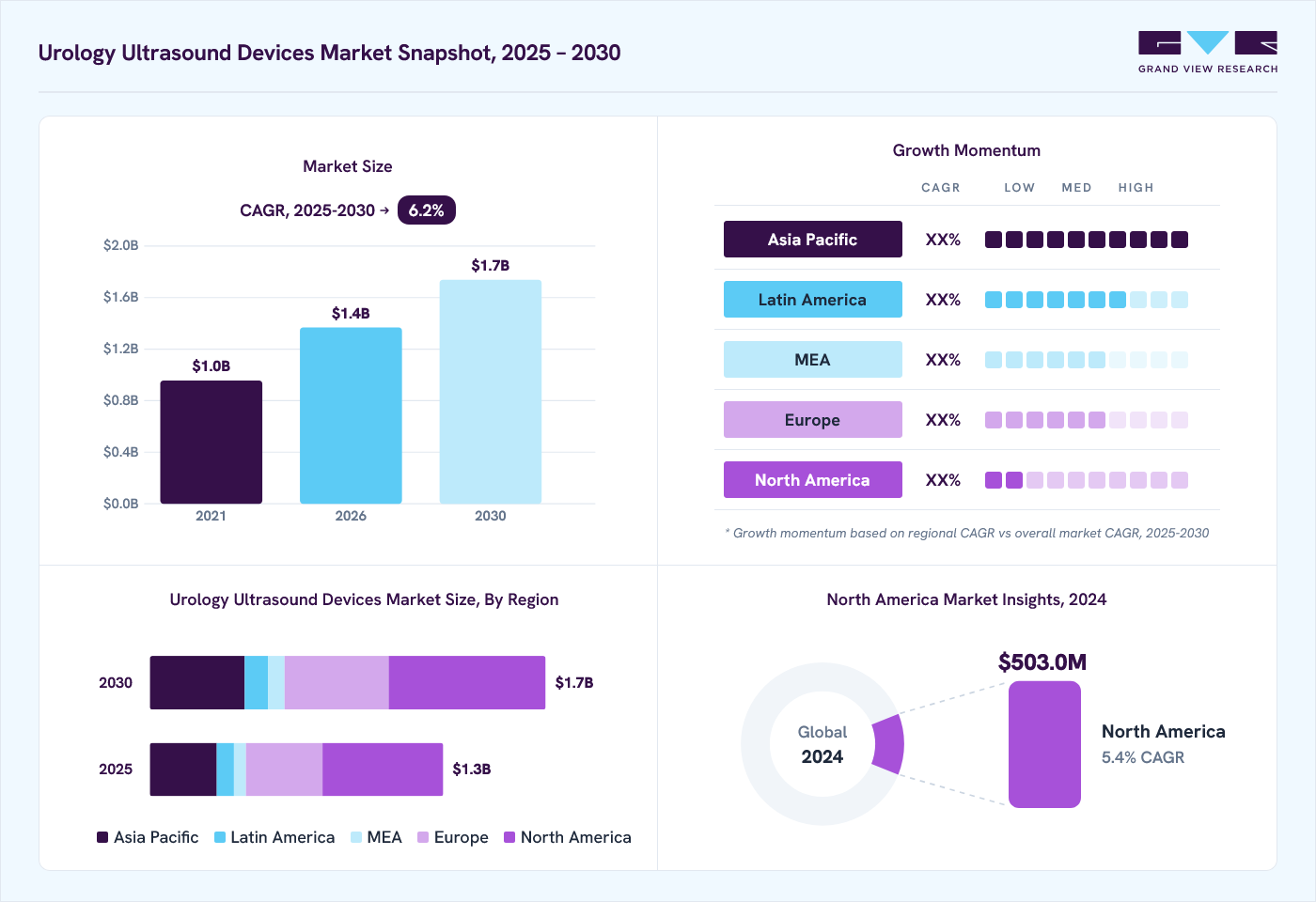
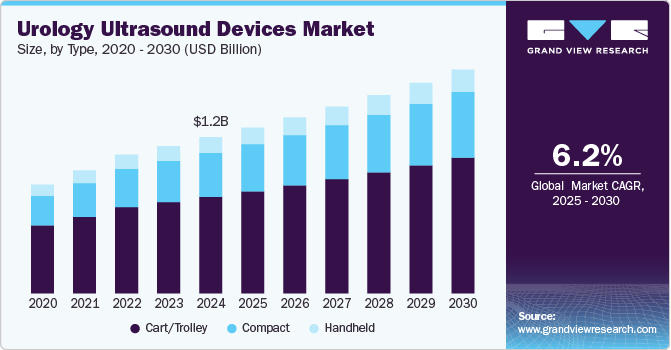
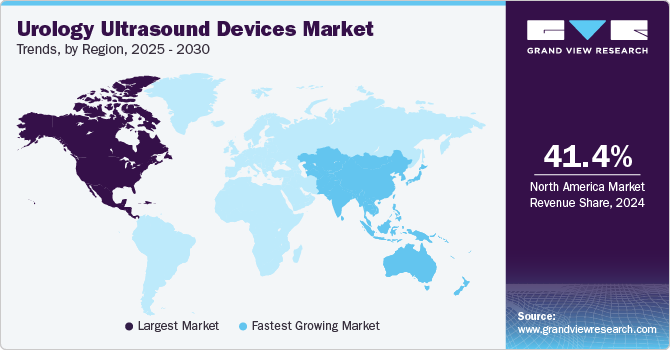
The global urology ultrasound devices market size was valued at USD 1.2 billion in 2024 and is projected to grow from USD 1.4 billion in 2026 to USD 1.7 billion by 2030, at a CAGR of 6.2% from 2025 to 2030. North America dominated the market, accounting for a revenue share of 41.4% in 2024. Major factors contributing to the industry growth include the rising prevalence of urological disorders like kidney stones and prostate cancer, technological advancements such as AI-enabled and portable ultrasound devices, and the aging population, which is more prone to urological conditions. These factors, coupled with increasing awareness and early detection efforts, are fueling the market's expansion.
 Source: Grand View Research, IR Documents, Primary Interviews, Paid DatabasesTo learn more about this report,
 Download Free Sample Report
 Urology ultrasound systems are highly efficient as they provide a non-invasive, safe, and cost-effective method for diagnosing, monitoring, and guiding treatments for various urological conditions. They deliver real-time imaging, enabling accurate visualization of the kidneys, bladder, prostate, and other urological structures, which is essential for detecting issues like kidney stones, benign prostatic hyperplasia (BPH), and prostate cancer. Additionally, their portability and ease of use make them ideal for point-of-care diagnostics and outpatient settings, allowing for faster clinical decisions. Advanced features, such as Doppler imaging, 3D/4D capabilities, and AI integration, enhance diagnostic precision and enable detailed treatment planning. Furthermore, urology ultrasounds assist in guiding minimally invasive procedures like biopsies, catheter placements, and stone removal, ensuring greater accuracy and reducing the risk of complications. Their versatility also extends to post-surgical evaluations and monitoring of chronic urological conditions, making them indispensable tools in modern urology care.
 To learn more about this report, Download Free Sample Report
 The growing prevalence of urological conditions such as kidney stones, benign prostatic hyperplasia (BPH), prostate cancer, urinary tract infections (UTIs), and bladder dysfunction is further contributing to the market growth. These conditions are becoming increasingly common due to factors such as aging populations, sedentary lifestyles, dietary habits, and rising rates of obesity and diabetes. For instance, prostate cancer remains one of the most diagnosed cancers among men globally, while kidney stones affect millions annually, driving the demand for effective diagnostic and monitoring tools. The increasing burden of these conditions highlights the critical role of urology ultrasound systems in early detection, treatment planning, and follow-up care, thereby propelling market expansion.
Market Concentration & Characteristics
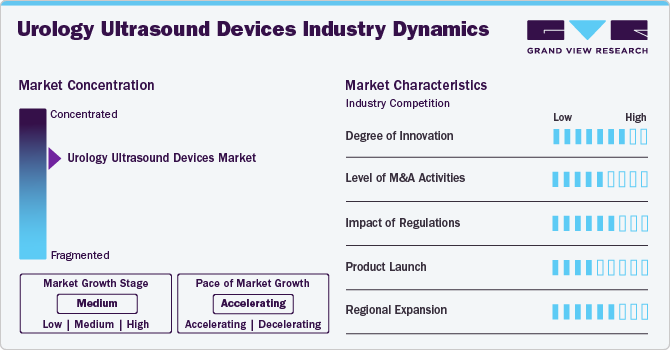
The industry is accelerating at significant growth, driven by technological advancements, such as AI-enabled imaging and portable devices, the rising prevalence of urological disorders like kidney stones, prostate cancer, and bladder dysfunction, and the growing geriatric population, which is more susceptible to such conditions. Additionally, increasing awareness of early diagnosis, the demand for minimally invasive procedures, and advancements in healthcare infrastructure further contribute to the industry's rapid expansion.
Companies are strategically focusing on launching products to strengthen their presence and address the evolving needs of the urology ultrasound industry. These innovations often include advanced features such as AI integration, 3D/4D imaging, and enhanced portability with handheld devices, catering to both hospital and point-of-care settings. For instance, in September 2024, GE Healthcare introduced its enhanced Venue ultrasound systems along with a new solution that is setting the pace for point-of-care ultrasound (POCUS). Designed for maximum portability, this system combines the powerful, familiar Venue software with AI-enabled tools, delivering uncompromised image quality. It also features wireless probe functionality, seamlessly integrated with Vscan Air handheld ultrasound systems for added convenience and flexibility.
 To learn more about this report, Download Free Sample Report
 The degree of innovation in the industry is high, driven by advancements such as GE HealthCare's launch of the Prostate Volume Assist (PVA) in March 2024. This urology-focused artificial intelligence (AI) software feature is designed to assist clinicians in prostate imaging, guiding biopsies, and supporting treatment planning. As a global leader in ultrasound-guided urology solutions, GE HealthCare’s introduction of AI-based tools like PVA highlights the industry's commitment to enhancing diagnostic precision, improving workflow efficiency, and advancing patient outcomes through cutting-edge technology.
Industry players are actively engaging in mergers and acquisitions as a key strategy to strengthen their position, diversify their product offerings, and stimulate growth. For instance, in July 2024, GE Healthcare announced its agreement to acquire Intelligent Ultrasound Group PLC’s (Intelligent Ultrasound) clinical artificial intelligence (AI) software business for a total consideration of approximately USD 51 million.
The impact of regulations on urological ultrasound is significant, as they ensure the safety, efficacy, and quality of devices used in diagnostics and treatment. Strict regulatory frameworks, such as those established by the FDA in the U.S. and the European CE marking, mandate rigorous testing, clinical evaluations, and compliance with technical standards before government approval.
Manufacturers are actively involved in launching new products to meet evolving industry demands and technological advancements. In November 2023, Siemens Healthineers unveiled the ACUSON Maple, a versatile and cost-effective ultrasound system designed for rapid diagnosis and assessment across all clinical settings. Equipped with artificial intelligence (AI)-powered features, it enhances daily clinical performance and supports users of all experience levels.
The geographical reach of the industry is expanding, driven by strong demand in developed regions like North America and Europe and rapid growth in Asia-Pacific, Latin America, and Middle East & Africa due to rising healthcare investments, aging populations, and improved access to diagnostics.
Type Insights
The cart/trolley segment dominated the industry and accounted for the largest revenue share of 61.8% in 2024. This can be attributed to its high image quality, advanced features, and widespread use in hospitals and diagnostic centers. These systems are well-suited for handling a large volume of patients and complex procedures, making them a preferred choice for comprehensive diagnostics and treatment planning. Additionally, their versatility and ability to support multiple applications in urology further contribute to their market dominance.
The compact urology ultrasound segment is expected to grow at the fastest CAGR of 6.95% over the forecast period. This is owing to its portability, cost-effectiveness, and ease of use in diverse clinical settings. These systems are increasingly preferred in outpatient clinics, point-of-care diagnostics, and smaller healthcare facilities due to their space-saving design and ability to deliver high-quality imaging. Additionally, advancements in technology and rising demand for flexible, mobile solutions are further driving the growth of this segment.
Application Insights
The diagnosis segment dominated the industry and accounted for the largest revenue share of 34.6% in 2024. This is due to the rising prevalence of urological disorders such as kidney stones, prostate cancer, and bladder dysfunction. The segment's growth is further driven by the increasing demand for non-invasive and accurate diagnostic tools, enabling early detection and effective treatment planning. Furthermore, advancements in ultrasound imaging technologies, including AI integration and 3D/4D imaging, have enhanced diagnostic precision, thus expanding the segment growth
The screening segment is expected to grow at the fastest CAGR of over 8.16% during the forecast period. This is due to the increasing emphasis on early detection of urological disorders, such as prostate cancer and kidney diseases. Rising awareness campaigns and health initiatives promoting regular screening, especially among high-risk populations like the elderly, are driving demand. Moreover, advancements in portable and handheld ultrasound devices have made screening more accessible in outpatient settings and remote areas, further boosting the segment's growth.
Disease Insights
The prostate disorder segment held the largest market share of 36.8% in 2024 and is also expected to grow at the fastest rate over the forecast period. This is due to the increasing prevalence of prostate-related conditions, such as benign prostatic hyperplasia (BPH) and prostate cancer, which are common among aging men. Additionally, advancements in prostate imaging and biopsy guidance through ultrasound technologies have improved diagnostic accuracy, contributing to the increasing demand for urology ultrasound systems in prostate disorder management. As awareness and screening for prostate conditions rise, this segment is expected to grow significantly.
The kidney disorders segment is also expected to grow significantly over the forecast period. This is due to the rising prevalence of kidney-related conditions such as kidney stones, chronic kidney disease (CKD), and renal tumors. The increasing global burden of risk factors like obesity, hypertension, and diabetes—which contribute to kidney disorders—further drives the demand for effective diagnostic tools. Ultrasound remains a preferred method for diagnosing kidney conditions due to its non-invasive nature, cost-effectiveness, and ability to provide real-time imaging. As early detection and management of kidney disorders become more prioritized, the segment is expected to grow at a substantial rate.
End Use Insights
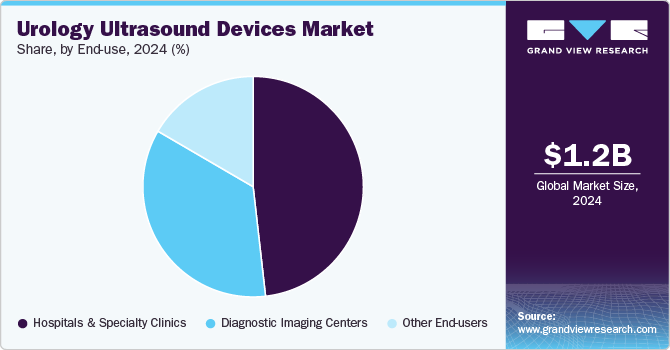
Hospitals and specialty clinics held the largest revenue share of 48.2% in 2024, owing to the high demand for advanced diagnostic tools and comprehensive urological care. Hospitals and specialty clinics typically handle a large volume of complex urological conditions, requiring high-quality imaging for diagnosis, treatment planning, and procedure guidance. The availability of advanced ultrasound systems, coupled with skilled professionals and a wide range of services, makes these healthcare facilities the primary users of urology ultrasound equipment. Additionally, hospitals and specialty clinics are well-equipped to accommodate the advanced features of modern ultrasound systems, further expanding their dominance in the market
 To learn more about this report, Download Free Sample Report
 The diagnostic imaging centers segment is expected to witness the fastest CAGR of 6.41% during the forecast period. This growth is driven by the increasing demand for accessible, high-quality diagnostic services, particularly for the early detection and management of chronic urological conditions. Advances in ultrasound technology, including improvements in image quality, portability, and AI integration, have made urology ultrasound more effective and efficient in outpatient settings. The rising prevalence of conditions such as kidney stones and prostate disorders, combined with the growing focus on non-invasive diagnostic methods, further contributes to the segment's expansion.
Regional Insights
North America urology ultrasound devices market held the largest share of 41.4% in 2024, driven by advanced healthcare infrastructure, widespread adoption of innovative medical technologies, and significant investment in research and development. The region benefits from the strong presence of major market players such as Philips, GE Healthcare, Siemens, and others, who are actively engaged in the development and launch of advanced urology ultrasound solutions. These companies are focusing on AI-enhanced imaging, portable ultrasound devices, and other cutting-edge technologies, reinforcing North America's leadership in the urology ultrasound sector.
 To learn more about this report, Download Free Sample Report
 U.S. Urology Ultrasound Devices Market Trends
The urology ultrasound devices market in the U.S. held the largest share in the North American region in 2024. This is attributed to its advanced healthcare infrastructure, high healthcare spending, and the early adoption of innovative technologies. The presence of leading ultrasound manufacturers and a strong focus on research and development further drive growth. Additionally, the rising prevalence of urological conditions, such as kidney stones, prostate disorders, and bladder dysfunction, along with increasing awareness of early detection, contributes to the growing demand for urology ultrasound systems in the U.S.
Europe Urology Ultrasound Devices Market Trends
The urology ultrasound devices market in Europe held a significant share in 2024. This is owing to the presence of both major global players and strong local companies competing to capture a substantial portion of the market. The region's competitive landscape is further fuelled by continuous innovation and strategic initiatives by key players. For instance, in September 2024, Butterfly Network announced the launch of its third-generation handheld point-of-care ultrasound (POCUS) system in Europe. This move is part of the company's strategy to enhance its market position by providing portable, high-quality ultrasound solutions that cater to the growing demand for non-invasive and accessible urology diagnostics.
The UK urology ultrasound devices market is experiencing significant growth, driven by factors such as the increasing prevalence of urological conditions like prostate cancer, kidney stones, and bladder disorders. The rising aging population and growing awareness of early detection and non-invasive diagnostic methods are further fuelling demand. Additionally, the UK’s advanced healthcare system, favorable reimbursement policies, and the adoption of innovative ultrasound technologies, including AI-powered solutions and portable devices, are contributing to the expansion of the market.
The urology ultrasound devices market in France is expected to grow over the forecast period, driven by the increasing prevalence of urological conditions and strategic initiatives by key manufacturers. For instance, in September 2024, Sonio received the CE mark for its AI-powered Sonio Detect, expanding its ultrasound reporting solutions in France after achieving FDA clearance and success in the U.S. market. Such advancements in AI-integrated ultrasound technology are enhancing diagnostic accuracy and workflow efficiency, contributing to the growing demand for urology ultrasound solutions in France.
Germany urology ultrasound devices market is experiencing significant growth, driven by factors such as the rising prevalence of urological disorders like prostate cancer, kidney stones, and bladder diseases. The country’s advanced healthcare infrastructure, high adoption of innovative ultrasound technologies, and strong focus on early diagnosis and non-invasive treatment methods contribute to this growth.
Asia Pacific Urology Ultrasound Devices Market Trends
The urology ultrasound devices market in Asia Pacificis expected to witness the fastest CAGR of 7.20% over the forecast period. This growth is primarily driven by the rising demand for advanced ultrasound technologies, fuelled by factors such as the growing prevalence of urological conditions like kidney stones, prostate disorders, and bladder diseases. Additionally, the region's aging population, increasing healthcare investments, and expanding access to innovative diagnostic tools, particularly in emerging markets like China, India, and Southeast Asia, are further accelerating market growth.
China urology ultrasound devices market is expected to grow at a notable growth rate over the forecast period, driven largely by the increasing incidence of urological conditions such as kidney stones, prostate disorders, and bladder diseases. Additionally, the rising demand for advanced diagnostic tools and therapeutic devices, supported by government healthcare initiatives and improvements in healthcare infrastructure, further contributes to the market's growth. As China continues to prioritize advancements in healthcare technology, the urology ultrasound devices market is expected to expand significantly.
The urology ultrasound devices market in Japan is significantly driven by technological advancements, the growing adoption of advanced medical devices, and growing awareness among healthcare professionals and the general public regarding early detection of urological conditions. Japan’s aging population and the increasing prevalence of prostate disorders, kidney diseases, and bladder conditions are key factors contributing to the demand for effective diagnostic tools.
Latin America Urology Ultrasound Devices Market Trends
The urology ultrasound devices market in Latin Americais expected to grow owing to the increasing awareness of medical technology and its effectiveness in improving patient outcomes. As healthcare providers and patients become more informed about the benefits of advanced medical devices, particularly in terms of accurate diagnostics and efficient treatment, the demand for these technologies is rising. Additionally, the growing prevalence of urological conditions, such as kidney stones, prostate disorders, and bladder diseases, further drives the need for reliable diagnostic solutions.
Middle East & Africa Urology Ultrasound Devices Market Trends
The urology ultrasound devices market in the Middle East & Africais experiencing notable growth, driven by the increasing adoption of advanced medical technologies and a growing focus on improving healthcare infrastructure. As healthcare systems in the region modernize, there is a rising demand for advanced diagnostic and therapeutic devices that offer more accurate and efficient patient care. Additionally, governments in the region are making substantial investments to upgrade healthcare facilities and expand access to quality medical services. This trend is particularly evident in the Gulf Cooperation Council (GCC) countries, where there is a strong push to diversify healthcare capabilities and reduce reliance on medical tourism by developing advanced healthcare systems locally. These factors are contributing to the growth of the urology ultrasound devices market in the region.
Key Urology Ultrasound Devices Company Insights
The leading players are actively expanding their product portfolios through a variety of strategies to stay competitive and increase their market share. These strategies include regular product enhancements to integrate the latest technological innovations, forming strategic partnerships, and exploring acquisition opportunities to broaden their offerings. Additionally, securing government approvals for their products is crucial to meet regulatory requirements and ensure market compliance, allowing them to effectively penetrate new markets and maintain their leadership positions in the rapidly evolving industry.
Key Urology Ultrasound Devices Companies:
The following are the leading companies in the urology ultrasound devices market. These companies collectively hold the largest market share and dictate industry trends.
- Koninklijke Philips N.V.
- GE Healthcare
- Siemens Healthineers AG
- Canon Medical Systems
- Mindray Medical International Limited
- Samsung Medison Co., Ltd.
- FUJIFILM SonoSite, Inc.
- Konica Minolta Inc.
- Esaote
Three ways to get this report
Buy it, customize it, or ask a question.Ask an Analyst
Analyst response in 1 business day
- AccessReport author, directly
- Reply timeWithin 1 working day
- No sales callDirect answer only
- FormatEmail reply
- CostFree, no cost
Get the Full Report
What the study covers
- FormatsPDF · Excel · Dashboard
- Timeline2025–2030 annual, 2024 base
- Coverage20+ countries, 5 regions
- Companies10+ key players profiled
Customize the Report
20% free customization
- IncludeCountries, segments, points
- TailorTo your product definition
- ExtendDeeper competitor detail
- OrA fully bespoke study
- Turnaround5–10 working days
Recent Developments
-
In January 2024, Siemens Healthineers expanded its partnership with City Cancer Challenge (C/Can) on a global scale, aiming to provide support for C/Can city projects in low- and middle-income countries.
-
In February 2024, GE Healthcare unveiled a strategic collaboration with Biofourmis, with the aim of improving continuity of care by facilitating safe, effective, and accessible care in the home, thus supporting patients beyond the hospital environment. This collaboration harnesses the collective expertise of two industry leaders to expand and deliver innovative care-at-home solutions at scale.
-
In October 2024, GE Healthcare announced the launch of the new Versana Premier, the latest addition to the Versana ultrasound family. This system offers reliable, affordable, and easy-to-use ultrasound technology, designed to provide versatile solutions for a wide range of clinical needs.
Urology Ultrasound Devices Market Report Scope
Report Attribute
Details
Market size in 2024
USD 1.2 billion
Estimated market size in 2026
USD 1.4 billion
Projected market size by 2030
USD 1.7 billion
Growth rate
CAGR of 6.2% from 2025 to 2030
Actual period
2018 - 2024
Forecast period
2025 - 2030
Quantitative units
Revenue in USD million/billion and CAGR from 2025 to 2030
Report coverage
Revenue forecast, company ranking, competitive landscape, growth factors, and trends
Segments covered
Type, application, disease, end-use, region
Regional scope
North America, Europe, Asia Pacific, Latin America, MEA
Country scope
U.S.; Canada; Mexico; UK; Germany; France; Italy; Spain; Denmark; Sweden; Norway; Japan; China; India; Australia; Thailand; South Korea; Brazil; Argentina; South Africa; Saudi Arabia; UAE; Kuwait
Key companies profiled
Koninklijke Philips N.V.; GE Healthcare; Siemens Healthineers AG; Canon Medical Systems; Mindray Medical International Limited; Samsung Medison Co., Ltd.; FUJIFILM SonoSite, Inc.; Konica Minolta Inc.; Esaote
Customization scope
Free report customization (equivalent up to 8 analyst’s working days) with purchase. Addition or alteration to country, regional & segment scope
Pricing and purchase options
Avail customized purchase options to meet your exact research needs. Explore purchase options
Global Urology Ultrasound Devices Market Report Segmentation
This report forecasts revenue growth at global, regional, and country levels and provides an analysis of the latest industry trends in each of the sub-segments from 2018 to 2030. For this study, Grand View Research has segmented the global urology ultrasound devices market report on the basis of type, application, disease, end-use, and region:
-
Type Outlook (Revenue, USD Million, 2018 - 2030)
-
Handheld
-
Compact
-
Cart/Trolley
-
-
Application Outlook (Revenue, USD Million, 2018 - 2030)
-
Diagnosis
-
Treatment Planning
-
Guidance for Procedures
-
Monitoring
-
Screening
-
-
Disease Outlook (Revenue, USD Million, 2018 - 2030)
-
Prostate Disorders
-
Kidney Disorders
-
Bladder Disorders
-
Testicular Disorders
-
Post-Surgical Evaluation
-
Other Disorders
-
-
End-use Outlook (Revenue, USD Million, 2018 - 2030)
-
Hospitals & Specialty Clinics
-
Diagnostic Imaging Centers
-
Other End Users
-
-
Regional Outlook (Revenue, USD Million, 2018 - 2030)
-
North America
-
U.S.
-
Canada
-
Mexico
-
-
Europe
-
UK
-
Germany
-
France
-
Italy
-
Spain
-
Denmark
-
Sweden
-
Norway
-
-
Asia Pacific
-
Japan
-
China
-
India
-
Australia
-
Thailand
-
South Korea
-
-
Latin America
-
Brazil
-
Argentina
-
-
Middle East & Africa
-
South Africa
-
Saudi Arabia
-
UAE
-
Kuwait
-
-
Frequently Asked Questions About This Report
The global uterine fibroids treatment devices market size was valued at USD 7.0 billion in 2024 and is estimated at USD 8.4 billion for 2026.
The global uterine fibroids treatment devices market is expected to grow at a CAGR of 9.4% from 2025 to 2030, reaching USD 12.2 billion by 2030.
Some key players operating in the urology ultrasound market include Koninklijke Philips N.V.; GE Healthcare; Siemens Healthineers AG; Canon Medical Systems; Mindray Medical International Limited; Samsung Medison Co., Ltd.; FUJIFILM SonoSite, Inc.; Konica Minolta Inc.; Esaote
Key factors that are driving the market growth include the rising prevalence of urological disorders like kidney stones and prostate cancer, technological advancements such as AI-enabled and portable ultrasound devices, and the aging population, which is more prone to urological conditions
North America dominated with a revenue share of 48.2% in 2024. This is attributable to advanced healthcare infrastructure, widespread adoption of innovative medical technologies, and significant investment in research and development.
About the Author(s)
Medical Devices Research Team
Healthcare · Medical DevicesThis report was authored by the medical devices research team at Grand View Research - comprising two research analysts, one senior research analyst, and one industry expert - with specialized expertise in the medical devices segment of the healthcare industry. All findings are based on proprietary healthcare databases, executive interviews, and regulatory analysis, subject to internal peer review prior to publication.
Last Updated:
Speak to Analyst

Customize this report to your needs - add regions, segments, or data points, with 20% free customization.
Or view our licence options:


ISO 9001:2015 & 27001:2022 Certified
We are GDPR and CCPA compliant! Your transaction & personal information is safe and secure. For more details, please read our privacy policy.


