
- Home
- »
- Medical Devices
- »
-
U.S. Anal Fistula Repair Procedures Market Report, 2033GVR Report cover

U.S. Anal Fistula Repair Procedures Market (2026 - 2033)
Size, Share & Trends Analysis Report By CPT Code (46280, 46275, 46288, 46706, 46707), By Age Group (Below 18 Years, 18–44 Years, 45–64 Years), By Sex (Male, Female), By Disease Etiology, By Site Of Service, By Region, And Segment Forecasts
Market Size, 2025
$173.4MMarket Estimate, 2026
$182.6MMarket Forecast, 2033
$264.2MCAGR, 2026–2033
5.4%U.S. Anal Fistula Repair Procedures Market Summary
The U.S. anal fistula repair procedures market size was valued at USD 173.4 million in 2025 and is projected to grow from USD 182.6 million in 2026 to reach USD 264.2 million by 2033, at a CAGR of 5.4% from 2026 to 2033.
Key Market Trends & Insights
- By CPT code: 46280 segment held the largest market share of 56.5% in 2025.
- By age group: 18-44 years’ segment held the largest market share of 48.1% in 2025.
- By disease etiology: Cryptoglandular/non-Crohn’s anal fistula segment held a dominant market share of 83.9% in 2025.
- By sex: Male segment held the largest market share in 2025.
- By site of service: Ambulatory surgery centers segment held the largest revenue share of 43.0% in 2025.
Market Size & Forecast
- Market Size in 2025: USD 173.4 Million
- Estimated Market Size in 2026: USD 182.6 Million
- Projected Market Size by 2033: USD 264.2 Million
- CAGR (2026-2033): 5.4%
Three ways to get this report
Buy it, customize it, or ask a question.Ask an Analyst
Analyst response in 1 business day
- AccessReport author, directly
- Reply timeWithin 1 working day
- No sales callDirect answer only
- FormatEmail reply
- CostFree, no cost
Get the Full Report
What the study covers
- FormatsPDF · Excel · Dashboard
- Timeline2026–2033 annual, 2025 base
- Coverage20+ countries, 5 regions
- Companies10+ key players profiled
Customize the Report
20% free customization
- IncludeCountries, segments, points
- TailorTo your product definition
- ExtendDeeper competitor detail
- OrA fully bespoke study
- Turnaround5–10 working days
Comprehensive insurance coverage and a well-established colorectal care infrastructure in the U.S. improve patient access to advanced anal fistula repair procedures, thus supporting higher procedure volumes.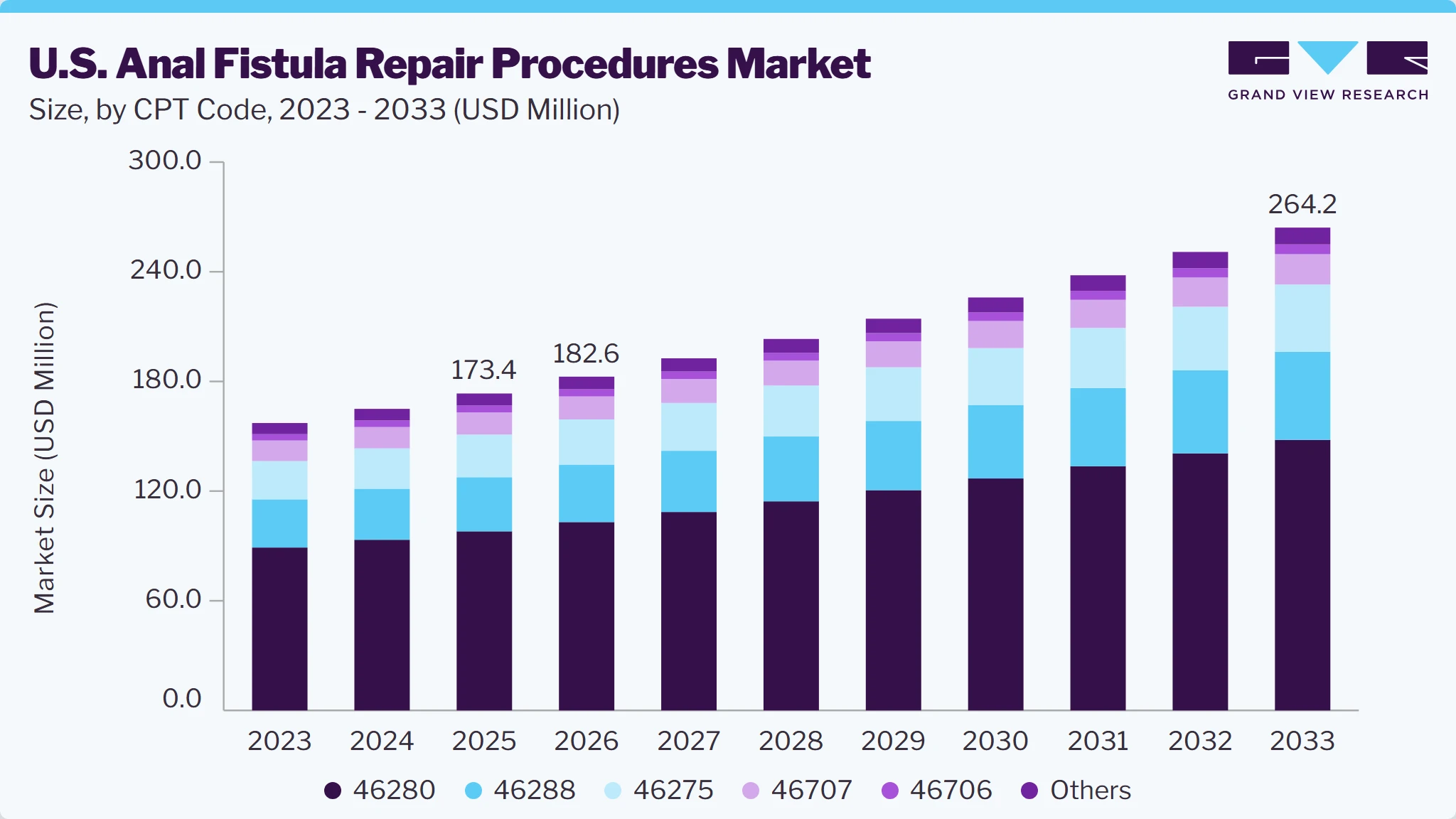 Source: Grand View Research, IR Documents, Primary Interviews, Paid DatabasesTo learn more about this report,
 Download Free Sample Report
Moreover, increasing use of minimally invasive procedures is improving clinical outcomes, reducing postoperative complications, and driving the demand for advanced anal fistula repair procedures.
Market Dynamics
The rising prevalence of anal fistulas and Crohn's disease, the increasing adoption of minimally invasive and sphincter-preserving procedures, and continuous advancements in colorectal surgical technologies are driving growth in the U.S. anal fistula repair procedures market. Growing awareness regarding early diagnosis, improved access to specialized colorectal care, and the availability of innovative treatment options such as Ligation of the Intersphincteric Fistula Tract (LIFT), Fistula Laser Closure (FiLaC), Video-Assisted Anal Fistula Treatment (VAAFT), and stem cell-based therapies, and stem cell-based therapies are further supporting market expansion by improving clinical outcomes and reducing recurrence rates.
Furthermore, increasing investments in healthcare infrastructure, ongoing clinical research, and the development of advanced surgical devices are creating new opportunities for market growth. However, the market continues to face challenges such as the high cost of advanced procedures, limited availability of specialized colorectal surgeons, and the complexity of treating recurrent and Crohn's disease-associated fistulas. Despite these challenges, the continued shift toward minimally invasive, sphincter-preserving treatment approaches is expected to drive sustained market growth over the forecast period.
Crohn's disease is one of the leading causes of complex anal fistulas, as chronic inflammation can penetrate the intestinal wall, forming abnormal tracts around the anal canal. According to data published in August 2025 by MyCrohnsAndColitisTeam, citing the Crohn's & Colitis Foundation, nearly 1 in 100 people in the U.S. live with Crohn's disease, indicating a large patient population at risk of developing perianal fistulas that often require surgical intervention. This reflects a substantial patient population at risk of developing fistula-related complications.
The growing use of biologic therapies has improved disease management; however, many patients with persistent or recurrent fistulas continue to require procedures such as, fistulotomy, seton placement, and advancement flap repair to achieve fistula closure and preserve sphincter function. Furthermore, continuous advancements in sphincter-preserving surgical techniques, improved diagnostic imaging, and increasing availability of specialized colorectal surgeons are enhancing treatment outcomes and reducing recurrence rates.
The high cost of advanced anal fistula repair procedures remains a significant restraint for the U.S. anal fistula repair procedures market. Minimally invasive techniques require specialized surgical equipment, advanced imaging systems, and highly skilled colorectal surgeons, resulting in higher treatment costs than conventional fistula surgery. According to CMS FY2024 reimbursement data published in 2026, the average hospital charge for anal fistula repair (CPT 46288) was approximately USD 2,742, while the Medicare reimbursement rate was USD 555, highlighting the substantial cost burden associated with the procedure.
Furthermore, patients with complex or Crohn's disease-associated anal fistulas often require multiple surgeries, prolonged follow-up, and adjunctive biologic therapy, further increasing the overall cost of treatment. The financial burden on patients and healthcare providers, particularly where insurance coverage is limited for advanced procedures, may restrict the widespread adoption of innovative fistula repair technologies, thereby hindering market growth.
Techniques such as LIFT, FiLaC, VAAFT, and stem cell-based therapies are increasingly preferred over conventional surgical methods for their ability to preserve anal sphincter function, reduce postoperative pain, minimize the risk of fecal incontinence, shorten recovery time, and improve patient quality of life. Furthermore, continuous advancements in laser technology, endoscopic visualization, and regenerative medicine, along with increasing surgeon expertise and expanding availability of specialized colorectal centers, are expected to accelerate the adoption of these advanced procedures and create substantial growth opportunities for the market over the forecast period.
Case Study published by Journal of Surgical Case Reports in June 2026: Combined Sphincter-Preserving Approaches for Complex Perianal Fistula
Clinical Challenge
Complex perianal fistulas are associated with a high recurrence rate and are difficult to treat using conventional fistulotomy because of the significant risk of anal incontinence. Existing sphincter-preserving techniques also show variable long-term success rates, creating the need for more effective treatment strategies.
Study Objective
-
To evaluate the effectiveness of combining multiple sphincter-preserving surgical techniques for the treatment of complex perianal fistulas.
-
To minimize fistula recurrence while preserving anal sphincter function and maintaining patient quality of life
Patient Assessment
A 34-year-old female with a complex perianal fistula underwent endoanal ultrasound (EAU) and contrast-enhanced MRI, which confirmed a branched Grade IV complex fistula with secondary extensions. A loose seton was initially placed to ensure adequate drainage before definitive surgery.
Surgical Approach
The patient underwent a combination of three sphincter-preserving procedures:
-
FiLaC (Fistula Laser Closure) for laser ablation of the secondary fistula tract.
-
LIFT (Ligation of the Intersphincteric Fistula Tract) to interrupt the main fistula tract.
-
Transanal/Mucosal Advancement Flap (TAFR/MAF) to close the internal fistula opening and promote healing
Key Findings
-
The patient experienced an uneventful postoperative recovery and was discharged on the fifth postoperative day.
-
During 11 months of follow-up, no fistula recurrence or anal incontinence was reported, and normal anal sphincter function was preserved. The findings demonstrated that combining multiple sphincter-preserving techniques may improve healing outcomes while reducing recurrence in complex perianal fistulas.
Market Impact
The successful use of combined minimally invasive sphincter-preserving techniques highlights the growing shift toward advanced anal fistula repair procedures. Increasing adoption of these innovative approaches is expected to improve clinical outcomes, reduce postoperative complications, and support the growth of the U.S. anal fistula repair procedures market.
Market Concentration & Characteristics
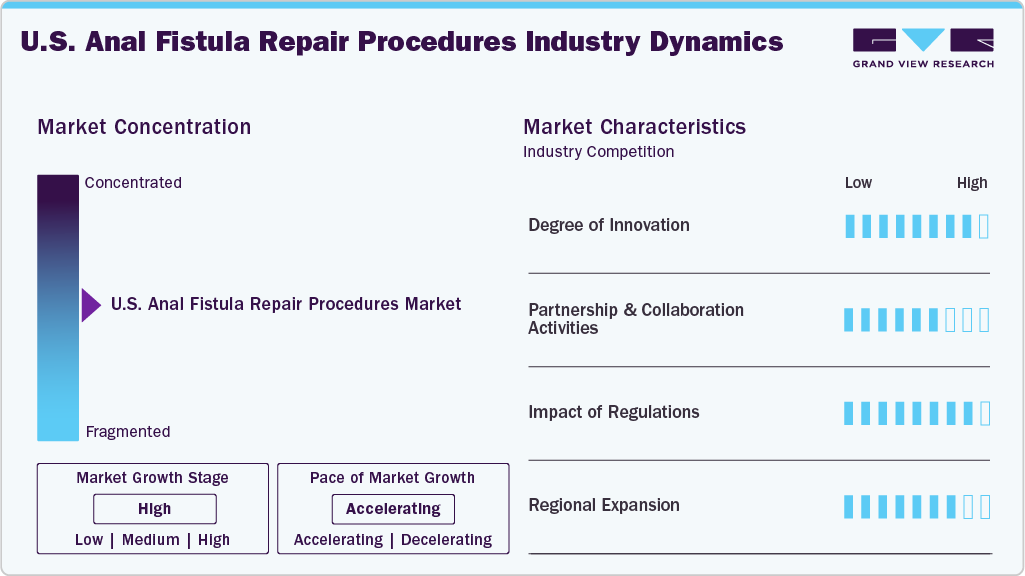
The market is characterized by moderate to high innovation focused on improving clinical outcomes for patients with complex anal fistulas. The introduction of FDA-approved bioHealx technology represents a significant advancement, as it offers a minimally invasive, sphincter-preserving treatment option that enhances fistula closure while minimizing tissue damage and reducing the risk of postoperative fecal incontinence. For instance, in August 2025, Northwell Staten Island University Hospital became the first healthcare center in the U.S. to perform procedures using the bioHealx device, demonstrating the rapid adoption of next-generation fistula repair technologies in clinical practice. Such innovations are encouraging healthcare providers to transition from conventional surgical approaches toward advanced, tissue-preserving procedures that offer improved healing, lower recurrence rates, and faster patient recovery.
The market is experiencing a moderate level of partnership and collaboration activity, driven by the need to develop more effective and minimally invasive treatment options for complex anal fistulas. Medical device manufacturers, biotechnology companies, hospitals, and academic institutions are increasingly collaborating on clinical research, product development, physician training, and evidence generation to improve treatment outcomes. These collaborations are supporting the validation of sphincter-preserving procedures, regenerative therapies, biologic implants, and advanced wound-healing technologies. In addition, strategic partnerships are helping accelerate regulatory approvals, expand commercialization efforts, strengthen physician adoption, and improve patient access to innovative anal fistula repair solutions across the U.S.
 To learn more about this report, Download Free Sample Report
Regulatory policies significantly influence market growth through FDA approvals, Medicare reimbursement policies, CPT coding updates, and the American Society of Colon and Rectal Surgeons (ASCRS) clinical practice guidelines. Successful commercialization of new fistula repair technologies depends heavily on regulatory clearance and favorable reimbursement. In addition, evolving clinical guidelines increasingly recommend sphincter-preserving procedures for complex anal fistulas, encouraging healthcare providers to adopt advanced treatment options.
The market is experiencing moderate regional expansion, driven by expanding access to specialized colorectal care beyond major metropolitan areas. Healthcare providers are expanding colorectal surgery programs, ASCs, and gastrointestinal specialty clinics into underserved regions to improve patient access to advanced anal fistula treatments. Moreover, continued investments in healthcare infrastructure, physician training, and referral networks are expected to strengthen access to procedures and contribute to steady market expansion in both urban and semi-urban regions.
Analyst Perspective
The U.S. anal fistula repair procedures market is anticipated to grow steadily, driven by a higher prevalence of anorectal disorders, more cases of Crohn's disease-related fistulas, and increased use of minimally invasive, sphincter-preserving techniques. Advances in colorectal surgery, such as LIFT procedures, advancement flap repair, endoscopic methods, and biologic-assisted therapies, are improving outcomes and reducing recurrence and complications. The shift toward outpatient care is increasing procedure volumes at ambulatory surgery centers and hospital outpatient departments, supported by favorable reimbursement and cost-effective treatment options. Moreover, awareness, earlier diagnosis, improved access to specialized surgeons, and ongoing investment in surgical innovation are expected to further boost the adoption of procedures.
CPT Code Insights
The 46280 segment held the largest market share of 56.5% in 2025. This was attributed to the widespread use of fistulotomy for the treatment of simple and low-complexity anal fistulas, owing to its high clinical success rate, straightforward surgical technique, and broad adoption among colorectal surgeons. According to NCBI data published in March 2023, approximately 80% of colorectal surgeons consider fistulotomy the gold standard treatment for simple anal fistulas. Its widespread clinical acceptance, high healing rates, and established long-term outcomes continue to support its extensive use in the U.S., contributing to the dominance of the CPT 46280 segment.
The 46288 segment is expected to grow at the fastest CAGR over the forecast period. This growth is attributed to the increasing adoption of endorectal advancement flap repair for the treatment of complex, recurrent, and Crohn's disease-associated anal fistulas, where preservation of anal sphincter function is a key treatment objective. According to a Medscape article published in August 2024, endorectal advancement flap procedures are recommended for patients with anal fistulas, particularly when sphincter preservation is essential. The growing preference for sphincter-preserving surgical techniques, along with the increasing number of complex anal fistula cases treated at specialized colorectal centers across the U.S., is expected to drive the rapid growth of the CPT 46288 segment during the forecast period.
Age Group Insights
The 18-44 years segment held the largest market share of 48.1% in 2025. The higher incidence of anorectal abscesses and anal fistulas among younger adults is a key factor driving the dominance of the 18-44 years segment. According to the American Society of Colon and Rectal Surgeons (ASCRS) 2022 Clinical Practice Guidelines, anorectal abscesses may occur at any age; however, the peak incidence is observed among individuals aged 20-40 years. As anal fistulas commonly develop following anorectal abscesses, this age group represents a significant share of patients requiring surgical repair procedures in the U.S. In addition, awareness of anorectal disorders, earlier diagnosis, and improved access to specialized colorectal care have contributed to higher treatment rates, supporting the segment's leading market position
The 45-64 years segment is expected to grow at the fastest CAGR over the forecast period. Individuals in this age group are more likely to require surgical intervention due to delayed healing, recurrent infections, and the presence of multiple comorbidities. In addition, increasing awareness of colorectal disorders, participation in routine medical examinations, and improved access to specialized colorectal surgeons are driving higher treatment rates. The growing preference for sphincter-preserving procedures and the expansion of advanced colorectal surgery services across the U.S. are further expected to support the rapid growth of this segment during the forecast period.
Sex Insights
The male segment held the largest market share in 2025.The higher incidence of anorectal abscesses and anal fistulas among males is a key factor contributing to the dominance of the male segment. According to the American Society of Colon and Rectal Surgeons (ASCRS) 2022 Clinical Practice Guidelines, anorectal abscesses occur more frequently in males than females, with the peak incidence observed among adults aged 20-40 years. As anal fistulas commonly develop following anorectal abscesses, men account for a significant proportion of patients requiring anal fistula repair procedures in the U.S. Furthermore, the higher prevalence of perianal infections and earlier clinical presentation among male patients has contributed to greater utilization of surgical treatment, supporting the segment's leading market position.
The female segment is expected to grow at the fastest CAGR over the forecast period. This segment’s growth is supported by the increasing diagnosis of Crohn's disease and other inflammatory bowel disorders among women, along with rising awareness of anorectal conditions and improved healthcare-seeking behavior. Women are increasingly opting for early surgical intervention to prevent recurrent infections and preserve long-term quality of life. In addition, the growing availability of sphincter-preserving procedures and personalized treatment approaches has improved clinical outcomes, encouraging uptake of these procedures. Expanding access to specialized colorectal care and advances in minimally invasive surgical techniques are further expected to drive the growth of the female segment during the forecast period.
Disease Etiology Insights
The cryptoglandular/non-crohn’s anal fistula segment held the largest market share of 83.9% in 2025. This was attributed to the predominance of cryptoglandular infections as the underlying cause of anal fistulas, leading to a higher volume of surgical repair procedures than for fistulas associated with Crohn's disease. According to a systematic review published in the Journal of Clinical Medicine in March 2026, approximately 90% of perianal fistulas are of cryptoglandular origin, while Crohn's disease accounts for a substantially smaller proportion of cases. The high disease burden established surgical treatment pathways, and widespread availability of colorectal surgical services have contributed to the dominance of the cryptoglandular/non-Crohn's anal fistula segment in the U.S. market.
The crohn’s disease-associated anal fistula segment is expected to grow at the fastest CAGR over the forecast period, driven by the rising prevalence of Crohn’s disease, increased diagnosis of fistulizing complications, and adoption of advanced repair procedures. The National Institutes of Health (NIH) estimates that about 1 million people in the U.S. have Crohn’s disease, representing a substantial patient population requiring ongoing management and potential surgery. Growing use of seton placement, advancement flap repair, LIFT procedures, and minimally invasive closure techniques is fueling market growth. In addition, advances in biologic therapies, improved diagnostics, and new repair methods are improving treatment outcomes and accelerating the segment’s expansion in the U.S. anal fistula repair procedure market.
Site of Service Insights
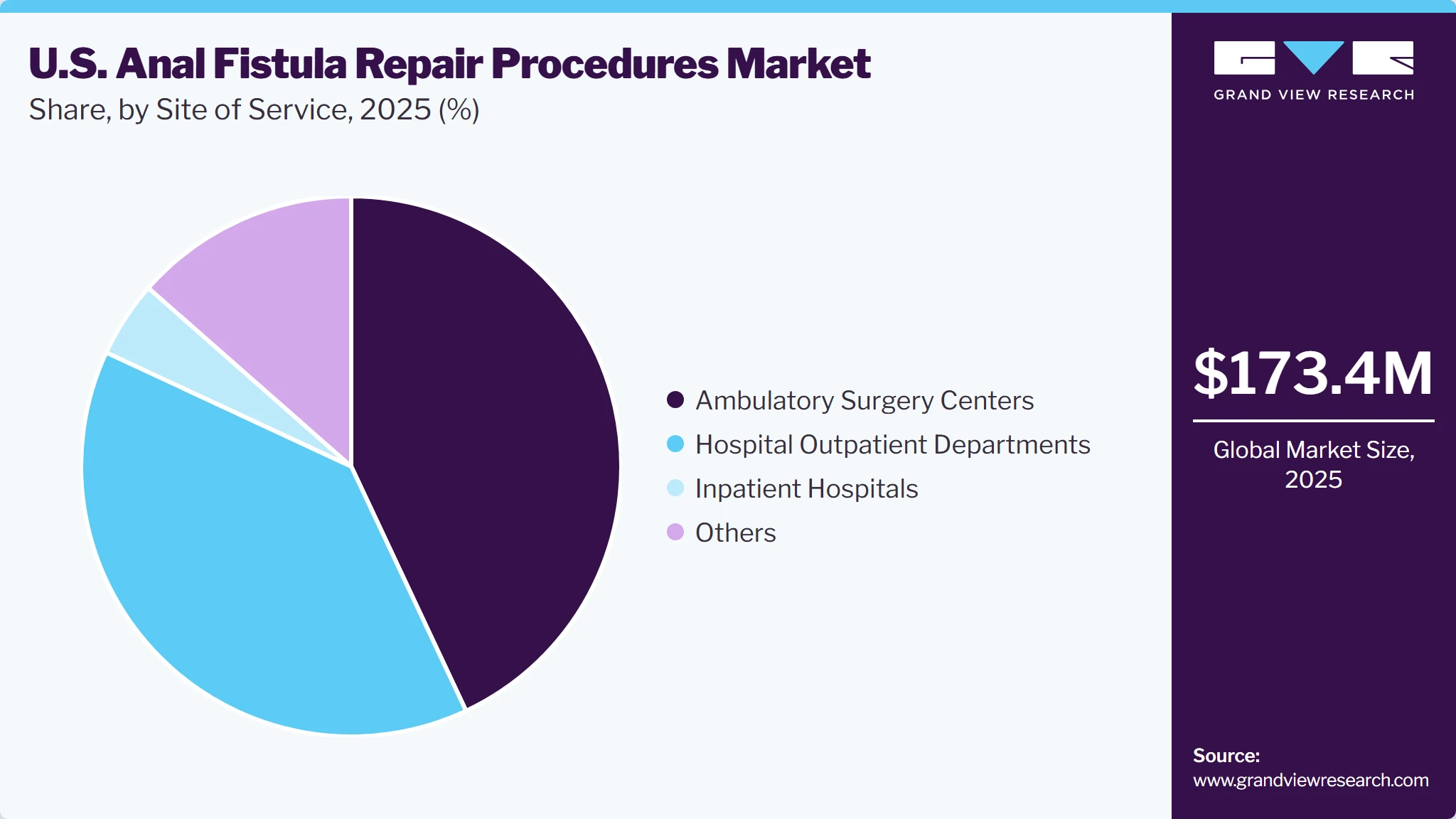
The ambulatory surgery centers segment held the largest revenue share of 43.0% in 2025. The shift toward outpatient surgical care, cost benefits relative to hospital-based procedures, and greater access to specialized colorectal services have led ASCs to capture the largest share of revenue. The Ambulatory Surgery Center Association (ASCA) reported in March 2026 that there are over 6,500 Medicare-certified ASCs in the U.S., highlighting the growth of outpatient surgical infrastructure. ASCs are increasingly chosen for anal fistula repair procedures due to shorter recovery times, reduced hospital stays, and greater procedural efficiency. In addition, advances in minimally invasive techniques, rising healthcare costs, and the adoption of value-based care models are driving the shift of anal fistula repair procedures from hospitals to ambulatory surgery centers (ASCs).
 To learn more about this report, Download Free Sample Report
The hospital outpatient departments segment is expected to grow at the fastest CAGR over the forecast period. The availability of specialized colorectal surgeons, advanced surgical technologies, and integrated diagnostic and post-operative care facilities makes hospital outpatient departments suitable for treating complex anal fistulas. Moreover, the growing prevalence of Crohn’s disease-associated fistulas and the need for multidisciplinary treatment approaches are increasing patient preference for hospital-based outpatient care. The shift toward reducing inpatient admissions and improving procedural efficiency is further supporting the expansion of this segment.
Regional Insights
The Southeast accounted for the largest share of 29.0% in the U.S. anal fistula repair procedures market in 2025. The region's dominance is supported by its large patient population, well-established colorectal care infrastructure, and rising burden of inflammatory bowel disease (IBD). According to the GI Urgent Care of Florida article published in December 2025, inflammatory bowel disease profoundly affects Central Florida residents, with the region experiencing a distinctive disease burden driven by demographic diversity, migration and urbanization patterns, increasing pediatric IBD cases, and the growing need for multidisciplinary care. As Crohn's disease is a major risk factor for complex perianal fistulas, these regional trends contribute to increasing demand for anal fistula repair procedures across the Southeast. The article also highlights the availability of same-day access to board-certified gastroenterologists through specialized urgent care services equipped with advanced diagnostic capabilities, further supporting early diagnosis and timely surgical intervention.
The Southeast continues to strengthen its position through the expansion of specialized colorectal surgery programs, ASCs, and advanced sphincter-preserving treatment options. Major healthcare providers across Florida, Georgia, North Carolina, and Tennessee continue to invest in comprehensive gastrointestinal and colorectal services, improving patient access to minimally invasive procedures. Furthermore, the integration of multidisciplinary disease management, including nutritional counseling, mental health support, and IBD management, is expected to increase treatment uptake and reinforce the Southeast's leading position in the market.
West U.S. Anal Fistula Repair Procedures Market Trends
The West is the fastest-growing region in the U.S. anal fistula repair procedures market during the forecast period.The region's growth is supported by the presence of nationally recognized colorectal surgery centers, rapid adoption of minimally invasive treatment techniques, and strong participation in clinical research. States such as California, Washington, and Oregon have a high concentration of specialized colorectal surgeons and academic medical institutions that routinely manage complex anal fistulas using sphincter-preserving approaches.
For instance, at the 2025 Annual Meeting of the American Society of Colon and Rectal Surgeons (ASCRS), researchers from Cedars-Sinai Medical Center presented real-world evidence evaluating advanced therapy combined with definitive surgical closure for Crohn's disease-associated anal fistulas, highlighting the region's continued leadership in advancing evidence-based treatment strategies for complex fistula management. This strong research ecosystem, combined with ongoing adoption of advanced sphincter-preserving procedures, is expected to support steady market growth across the Western U.S.
Key U.S. Anal Fistula Repair Procedures Company Insights
Companies operating in the market are focused on strategic initiatives such as expanding their colorectal surgery portfolios, developing advanced sphincter-preserving technologies, obtaining regulatory approvals, and strengthening collaborations with hospitals and ambulatory surgery centers. Market participants are also investing in minimally invasive surgical solutions, biologic therapies, and surgeon training programs to improve clinical outcomes and expand procedure adoption. These strategies are expected to support long-term market growth and enhance the availability of innovative treatment options across the U.S.
Key U.S. Anal Fistula Repair Procedures Companies:
-
HCA Healthcare
-
Mayo Clinic
-
Cleveland Clinic
-
Mass General Brigham
-
Johns Hopkins Medicine
-
Mount Sinai Health System
-
NYU Langone Health
-
Surgery Partners, Inc.
-
Stanford Health Care
-
UCLA Health
Competitive Benchmarking
Category
Operating Strategies
Competitive Edge
Weakness
Established Players (e.g., HCA Healthcare, Mayo Clinic, Cleveland Clinic, Mass General Brigham, Johns Hopkins Medicine, Mount Sinai Health System, NYU Langone Health)
Focus on expanding specialized colorectal surgery services, investing in advanced surgical technologies, conducting clinical research, and strengthening multidisciplinary care across large hospital networks.
Strong brand recognition, highly experienced colorectal surgeons, advanced healthcare infrastructure, robust research capabilities, and extensive referral networks for managing complex anal fistula cases.
High operating costs, lengthy patient wait times at tertiary care centers, and limited accessibility in rural and underserved regions.
Emerging Players (e.g, Surgery Partners, Inc., Stanford Health Care, UCLA Health)
Expand through ASCs, physician partnerships, outpatient procedure offerings, and adoption of minimally invasive anal fistula repair techniques to improve efficiency and reduce costs.
Lower procedural costs, shorter waiting times, faster patient throughput, and greater flexibility in adopting outpatient surgical models.
Limited capability to treat highly complex or recurrent anal fistulas, smaller geographic presence, and comparatively lower investment in research and advanced clinical trials.
Recent Developments
-
In August 2025, Northwell’s Staten Island University Hospital became the first medical center in the U.S. to perform procedures using the newly FDA-approved BioHealx Anal Fistula Device, a novel absorbable implant designed to preserve anorectal anatomy and promote natural healing in patients with complex anal fistulas.
“Historically, these surgeries have been long, complex and traumatic to the anorectum. They've also carried the risk of recurrence and incontinence. The BioHealx device is intuitive, efficient and minimizes surgical trauma. If we can replicate the European outcomes, this could set a new standard of care in fistula treatment.”
--Bonomo.
-
In July 2024, Mayo Clinic continued to expand its advanced colorectal surgery capabilities by offering the latest sphincter-preserving therapies for anal fistula management. Its treatment portfolio included seton placement, fibrin glue therapy, standard fistulotomy, and Ligation of the Intersphincteric Fistula Tract (LIFT) for patients with complex anal fistulas, enabling personalized treatment while preserving healthy anorectal tissue and function
U.S. Anal Fistula Repair Procedures Market Report Scope
Report Attribute
Details
Market size in 2025
USD 173.4 million
Estimated market size in 2026
USD 182.6 million
Projected market size by 2033
USD 264.2 million
Growth rate
CAGR of 5.4% from 2026 to 2033
Base Year
2025
Actual data
2021 - 2024
Forecast period
2026 - 2033
Quantitative units
Revenue in USD million and CAGR from 2026 to 2033
Report coverage
Revenue forecast, company ranking, competitive landscape, growth factors, and trends
Segments covered
CPT code, age group, sex, disease etiology, site of service, region
Region scope
Southeast, West, Southwest, Midwest, Northeast
Key companies profiled
HCA Healthcare; Mayo Clinic; Cleveland Clinic; Mass General Brigham; Johns Hopkins Medicine; Mount Sinai Health System; NYU Langone Health; Surgery Partners, Inc.; Stanford Health Care; UCLA Health
Customization scope
Free report customization (equivalent up to 8 analysts working days) with purchase. Addition or alteration to country, regional & segment scope.
Pricing and purchase options
Avail customized purchase options to meet your exact research needs. Explore purchase options
U.S. Anal Fistula Repair Procedures Market Report Segmentation
This report forecasts revenue growth at country levels and provides an analysis of the industry trends in each of the sub-segments from 2021 to 2033. For the purpose of this study, Grand View Research has segmented the U.S. anal fistula repair procedures market on the basis of CPT code, age group, sex, disease etiology, site of service, and region:
-
CPT Code Outlook (Revenue, USD Million, Volume, Units, 2021 - 2033)
-
46280
-
46275
-
46288
-
46706
-
46707
-
Others
-
-
Age Group Outlook (Revenue, USD Million, 2021 - 2033)
-
Below 18 Years
-
18-44 Years
-
45-64 Years
-
65 Years and Above
-
-
Sex Outlook (Revenue, USD Million, 2021 - 2033)
-
Male
-
Female
-
-
Disease Etiology Outlook (Revenue, USD Million, 2021 - 2033)
-
Cryptoglandular/Non-Crohn’s Anal Fistula
-
Crohn’s Disease-associated Anal Fistula
-
Others
-
-
Site of Service Outlook (Revenue, USD Million, 2021 - 2033)
-
Ambulatory Surgery Centers
-
Hospital Outpatient Departments
-
Inpatient Hospitals
-
Others
-
-
Regional Outlook (Revenue, USD Million, 2021 - 2033)
-
Northeast
-
Midwest
-
Southeast
-
Southwest
-
West
-
Research Methodology
The U.S. anal fistula repair procedures market figures in this report are based on a proven research process that combines executive interviews with secondary research from proprietary databases, company filings, and recognized regulatory and institutional sources. Market size is built through value-chain sizing-reconciling supply-side and demand-side estimates-and triangulated with bottom-up and top-down approaches. Every estimate passes multiple levels of expert validation before publication, with each U.S. anal fistula repair procedures segment quantified using the revenue-capture definitions in the table below.
Segment Definition
Segment - CPT Code
Revenue capture definition
46280
Refers to surgical treatment of transsphincteric, suprasphincteric, or extrasphincteric anal fistulas requiring complex fistula repair techniques. It is commonly used for procedures involving greater sphincter preservation.
46275
Covers fistulotomy or fistulectomy performed for simple anal fistulas. It is generally indicated for superficial fistulas with minimal involvement of the anal sphincter.
46288
Refers to the placement of a seton for staged management of complex anal fistulas. This procedure helps control infection while preserving anal sphincter function.
46706
Represents repair procedures involving anorectal fistulas using advanced surgical reconstruction techniques. It is primarily utilized for complex or recurrent fistula cases.
46707
Covers more extensive reconstructive procedures for complicated anorectal fistulas requiring advanced tissue repair. It is commonly performed when standard fistula repair methods are insufficient.
Others
Includes additional CPT codes associated with anal fistula diagnosis, drainage, adjunctive procedures, and emerging minimally invasive repair techniques not covered under the primary procedure codes.
Segment - Age Group
Revenue capture definition
Below 18 Years
Includes pediatric and adolescent patients undergoing anal fistula repair procedures, primarily for congenital conditions, inflammatory bowel disease, or recurrent anorectal infections.
18-44 Years
Represents young adult patients who commonly undergo anal fistula repair due to cryptoglandular infections, trauma, or inflammatory bowel disease, including Crohn’s disease.
45-64 Years
Includes middle-aged adults with a higher incidence of chronic anorectal disorders requiring surgical intervention. This group accounts for a substantial volume of anal fistula repair procedures.
65 Years and Above
Encompasses elderly patients requiring anal fistula treatment, often influenced by age-related comorbidities, delayed wound healing, and complex disease management.
Segment - Sex
Revenue capture definition
Male
Includes male patients undergoing anal fistula repair procedures. The higher prevalence of anal fistulas among men contributes to a larger procedural volume in this segment.
Female
Represents female patients receiving anal fistula repair procedures, including cases associated with inflammatory bowel disease, obstetric injuries, and recurrent anorectal infections.
Segment - Disease Etiology
Revenue capture definition
Cryptoglandular/Non-Crohn’s Anal Fistula
Refers to anal fistulas arising from infected anal glands and anorectal abscesses. It represents the most common etiology requiring surgical repair.
Crohn’s Disease-associated Anal Fistula
Includes fistulas that develop as a complication of Crohn’s disease. These cases often require specialized surgical techniques combined with long-term medical management.
Segment - Site of Service
Revenue capture definition
Ambulatory Surgery Centers
Refers to outpatient surgical facilities where eligible anal fistula repair procedures are performed with same-day discharge, offering cost-effective and efficient care.
Hospital Outpatient Departments
Includes outpatient units within hospitals equipped to perform anal fistula repair procedures requiring specialized surgical expertise and advanced perioperative support.
Inpatient Hospitals
Represents hospital settings where patients requiring complex anal fistula repair, extensive reconstruction, or postoperative monitoring are admitted for inpatient care.
Others
Includes physician offices, specialty colorectal clinics, and other healthcare facilities where selected anal fistula-related procedures and follow-up interventions are performed.
Estimation Model
Model Details
This research methodology outlines the process for estimating the size of the U.S. anal fistula repair procedures market for the period from 2021 to 2033. The market has been segmented by CPT code, age group, sex, disease etiology, and site of service. The objective is to generate robust market estimates using multiple estimation models validated through extensive secondary research, claims databases, reimbursement data, hospital procedure volumes, and primary interviews with colorectal surgeons, ambulatory surgery centers, hospitals, and industry experts.
Step-by-Step Market Estimation Process
Procedure Volume and Disease Incidence Model
-
Step 1: Annual U.S. patient population diagnosed with anal fistula was estimated using epidemiological studies, NIH, CDC, peer-reviewed publications, hospital databases, and healthcare registries.
-
Step 2: The proportion of patients undergoing surgical intervention was estimated based on disease severity, recurrence rates, treatment guidelines, physician interviews, and published clinical studies.
-
Step 3: Procedure volumes were categorized by CPT code (46280, 46275, 46288, 46706, 46707, and others) using reimbursement databases, Medicare claims, commercial insurance data, and hospital procedural statistics.
-
Step 4: Average reimbursement values for each CPT code were estimated using Medicare Physician Fee Schedules, commercial payer reimbursement benchmarks, and ASC payment schedules.
-
Step 5: Market size was calculated by multiplying annual procedure volume × average reimbursement per procedure across all CPT codes.
-
Step 6: Historical and forecast estimates incorporated increasing diagnosis rates, greater adoption of sphincter-preserving procedures, improvements in minimally invasive techniques, and expanding outpatient surgical care.
Healthcare Facility Revenue Model
-
Step 1: Major providers performing anal fistula repair procedures, including hospitals, ambulatory surgery centers (ASCs), hospital outpatient departments, and specialty colorectal centers, were identified through CMS databases, hospital registries, and healthcare associations.
-
Step 2: Annual procedure volumes performed across each healthcare setting were estimated using hospital discharge databases, ASC utilization reports, Medicare claims, and primary interviews.
-
Step 3: Average procedural revenue generated by each site of service was estimated based on reimbursement schedules, facility charges, payer mix, and procedure complexity.
-
Step 4: Revenue generated across hospitals, ASCs, hospital outpatient departments, and other facilities was aggregated to estimate the overall U.S. market.
-
Step 5: Market estimates were validated using hospital financial reports, CMS utilization statistics, payer databases, and expert interviews.
-
Step 6: Forecast assumptions incorporated expansion of ambulatory surgery centers, increasing outpatient procedure volumes, favorable reimbursement policies, and growing adoption of minimally invasive fistula repair.
Procedure Demand Potential Index (PDPI) Validation Model
In addition to the core estimation models, a PDPI was developed to validate market estimates across the U.S. The model incorporates five key indicators:
-
Prevalence of Anal Fistula
-
Surgical Treatment Rate
-
Healthcare Access and Colorectal Specialist Availability
-
Reimbursement Coverage for Anal Fistula Procedures
-
Adoption of Minimally Invasive and Sphincter-Preserving Techniques
Each patient segment and site of service was assigned a normalized PDPI score to estimate its relative contribution to market demand. The results were used to validate the market estimates generated through Models 1-3 and ensure alignment with clinical practice patterns and procedural volumes.
Final Market Triangulation
-
Procedure Volume and Disease Incidence Model
-
Healthcare Facility Revenue Model
-
Procedure Demand Potential Index (PDPI) Validation Model
The weighted average of these four models, supported by extensive secondary research and primary interviews with colorectal surgeons, hospitals, ambulatory surgery centers, reimbursement specialists, healthcare providers, and industry experts, was used to generate the final historical market estimates (2021-2025) and forecast projections (2026-2033) for the U.S. anal fistula repair procedures market.
Delivered Customizations
This report has been delivered with the following In-depth customizations
Client Request
Customization Delivered
Value Adds
Analysis of state-level procedure opportunities
Delivered a comprehensive state-level assessment of the U.S. anal fistula repair procedures market by evaluating procedure volumes, prevalence of Crohn's disease and cryptoglandular fistulas, reimbursement variations, healthcare infrastructure, availability of colorectal specialists, and procedure adoption trends across major states.
Enabled identification of priority states for commercial expansion, optimized sales territory planning, supported healthcare investment decisions, and helped stakeholders focus on regions with the highest procedural demand and reimbursement potential.
Expanded evaluation of advanced sphincter-preserving technologies
Included a detailed technology assessment covering Ligation of the LIFT, FiLaC, VAAFT, endorectal advancement flap, stem cell therapy, biologic plugs, sealants, and emerging biomaterial-based repair techniques
Provided comprehensive insights into emerging treatment technologies, helping manufacturers, investors, and healthcare providers evaluate innovation opportunities, product development strategies, and future market adoption trends.
Reimbursement benchmarking
Developed an extensive reimbursement analysis covering CPT-specific Medicare reimbursement, commercial payer reimbursement, payer mix analysis, site-of-service reimbursement comparison (ASC, HOPD, inpatient, office), historical reimbursement trends, state-level reimbursement variability, and total U.S. spending estimates based on procedure volumes and allowed amounts.
Supported pricing strategy development, reimbursement planning, health economic assessments, market access planning, and evaluation of financial opportunities across different payer segments and healthcare settings.
Frequently Asked Questions About This Report
The U.S. anal fistula repair procedures market size was valued at USD 173.4 million in 2025 and is estimated at USD 182.6 million for 2026.
The U.S. anal fistula repair procedures market is anticipated to grow at a CAGR of 5.4% over the forecast period from 2026 to 2033 to reach a value of USD 264.2 million in 2033.
The 46280 code segment held the largest market share of 56.5% in 2025. This was attributed to the widespread use of fistulotomy for the treatment of simple and low-complexity anal fistulas, owing to its high clinical success rate, straightforward surgical technique, and broad adoption among colorectal surgeons.
Comprehensive insurance coverage and well-established colorectal care infrastructure in the U.S. improve patient access to advanced anal fistula repair procedures, thus supporting higher procedure volumes. Moreover, increasing use of minimally invasive procedures is improving clinical outcomes, reducing postoperative complications, and driving the demand for advanced anal fistula repair procedures.
Key players in the market include HCA Healthcare, Mayo Clinic, Cleveland Clinic, Mass General Brigham, Johns Hopkins Medicine, Mount Sinai Health System, NYU Langone Health, Surgery Partners, Inc., Stanford Health Care, UCLA Health.
The 18–44 years segment held the largest market share of 48.1% in 2025. The higher incidence of anorectal abscesses and anal fistulas among younger adults is a key factor driving the dominance of the 18–44 years segment.
The male segment held the largest market share in 2025. The higher incidence of anorectal abscesses and anal fistulas among males is a key factor contributing to the dominance of the male segment.
The cryptoglandular/non-crohn’s anal fistula segment held the largest market share of 83.9% in 2025.
About the Author(s)
Medical Devices Research Team
Healthcare · Medical DevicesThis report was authored by the medical devices research team at Grand View Research - comprising two research analysts, one senior research analyst, and one industry expert - with specialized expertise in the medical devices segment of the healthcare industry. All findings are based on proprietary healthcare databases, executive interviews, and regulatory analysis, subject to internal peer review prior to publication.
Last Updated:
Speak to Analyst

Customize this report to your needs - add regions, segments, or data points, with 20% free customization.
Or view our licence options:


ISO 9001:2015 & 27001:2022 Certified
We are GDPR and CCPA compliant! Your transaction & personal information is safe and secure. For more details, please read our privacy policy.


