
- Home
- »
- Animal Health
- »
-
U.S. Animal Ultrasound Market Size, Industry Report, 2033GVR Report cover
![U.S. Animal Ultrasound Market Size, Share & Trends Report]()
U.S. Animal Ultrasound Market (2025 - 2033) Size, Share & Trends Analysis Report By Solution (Equipment, Accessories/Consumables, PACS), By Animal, By Type, By Technology, By Application, By End Use, And Segment Forecasts
- Report ID: GVR-4-68040-836-7
- Number of Report Pages: 150
- Format: PDF
- Historical Range: 2021 - 2024
- Forecast Period: 2025 - 2033
- Industry: Healthcare
- Report Summary
- Table of Contents
- Segmentation
- Methodology
- Download FREE Sample
-
 Download Sample Report
U.S. Animal Ultrasound Market Summary
The U.S. animal ultrasound market size was estimated at USD 132.72 million in 2024 and is projected to reach USD 245.08 million by 2033, growing at a CAGR of 7.19% from 2025 to 2033. The market growth is primarily driven by the expanding applications of ultrasound within the veterinary sector, a rising companion animal population, coupled with enhanced adoption rates, growing awareness of animal healthcare, and increasing adoption of pet insurance.
Key Market Trends & Insights
- The U.S. animal ultrasound market is expected to grow significantly from 2025 to 2033.
- By animal, the small animals segment held the largest market share of 63.12% in 2024.
- By solution, the equipment segment held the largest market share in 2024.
- By type, the 2-D ultrasound imaging segment held the largest market share in 2024.
Market Size & Forecast
- 2024 Market Size: USD 132.72 Million
- 2033 Projected Market Size: USD 245.08 Million
- CAGR (2025-2033): 7.19%
- By Animal: Small Animals Segment held the Largest Revenue Share in 2024
Moreover, ongoing and increasingly frequent webinars, training programs, and virtual continuing education sessions focused on animal ultrasound are creating substantial growth opportunities for the veterinary ultrasound market. These training programs help veterinarians, technicians, and students enhance their diagnostic imaging skills, boosting their confidence and encouraging them to incorporate ultrasound into their regular clinical practice. For example, Esaote has scheduled a webinar called “Ultrasound Examination of the Chicken Coelom” in the U.S. on November 20, 2025. This training session is designed to help veterinary professionals better understand how to apply ultrasound technology to evaluate critical coelomic organs in chickens, both in normal physiological conditions and in the presence of disease. By offering such species-specific and clinically focused education, the event supports broader adoption of ultrasound in avian medicine and reinforces the growing need for advanced imaging tools across diverse veterinary practice areas.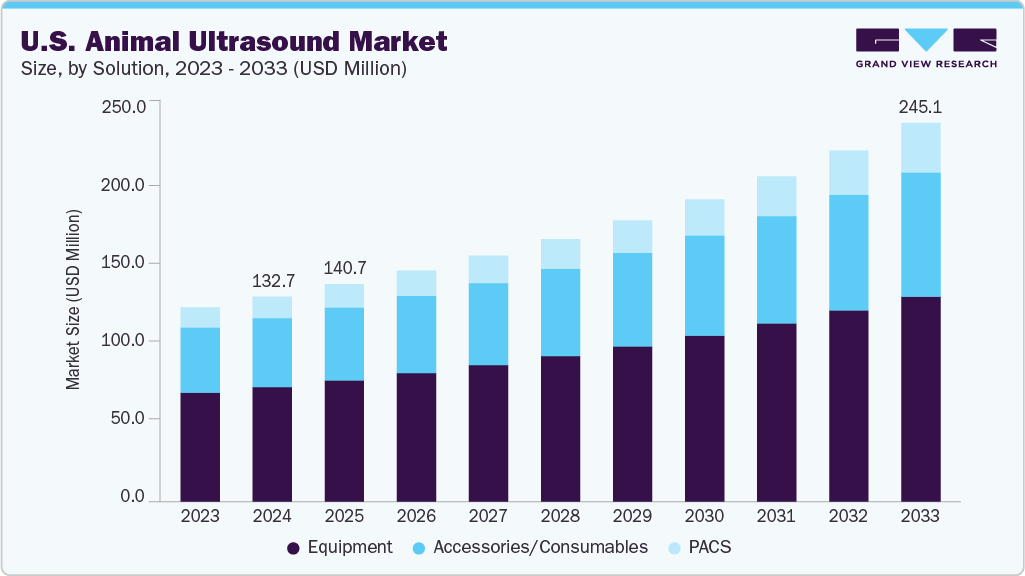
Furthermore, according to an article published by Michigan State University, in November 2025, Ultrasound has become a key tool for managing reproduction in small ruminants, helping farmers accurately detect pregnancies, determine gestational age, and estimate litter size. This allows them to use resources more efficiently and maintain healthier flocks or herds. Recent improvements in B-mode ultrasound units-like battery-powered portable designs, headset displays, water-assisted probes, and wireless streaming to tablets or smartphones-have made field scanning faster, easier, and more flexible. At the same time, newer devices provide better image quality even in affordable models, enabling earlier and more precise fetal checks on-site. These advances in portability, imaging, and cost-effectiveness are encouraging more widespread use of ultrasound in small ruminant reproduction, supporting better herd management.
Product Pricing Analysis by Type
Product
Product Category
Product Type
Price Range (USD)
Animal Ultrasound Equipment
Console/Cart-Based Ultrasound
New Equipment
USD 10,000 - USD 50,000+
Animal Ultrasound Equipment
Portable/Handheld Ultrasound
New Equipment
USD 8,373 - USD 14,839
Animal Ultrasound Equipment
Portable/Handheld Ultrasound
Refurbished Equipment
USD 3,499 - USD 11,999
Animal Ultrasound Equipment
Console/Cart-Based Ultrasound
Refurbished Equipment
USD 1,999 - USD 2,199
Accessories/Consumables
Ultrasound Gel
~
USD -8.47 - USD 57.00 per 250ml Bottle
The product pricing analysis for the U.S. animal ultrasound industry considers the cost structures associated with major solution categories, including console/cart-based systems, portable and handheld devices, transducers/probes, and consumables. Ultrasound prices differ widely depending on features, imaging quality, and portability. Lower-cost handheld devices are primarily used for on-farm pregnancy checks, while more expensive console systems in clinics offer advanced functions, such as Doppler and 3D/4D imaging. On top of the initial purchase, ongoing costs such as ultrasound gel, probe covers, cloud storage subscriptions, and yearly service contracts add to the total cost of ownership and create steady revenue streams for manufacturers and veterinary service providers.
Market Concentration
The U.S. animal ultrasound market is fairly competitive, dominated by a few major manufacturers and distributors that account for the majority of sales. These companies have an advantage due to their strong brand reputation, wide service networks, and established relationships with veterinary hospitals and specialty clinics. High costs for research, regulatory approval, and the need for staff training and after-sales support make it difficult for new players to enter the market. Consequently, mergers, partnerships, and collaborations among existing companies influence pricing, product development, and access to the market across the U.S.
Market Characteristics
The U.S. animal ultrasound market’s growth is driven by rapid innovations in ultrasound devices. Recent improvements in ultrasound technology have made it easier to detect and evaluate conditions that were once hard to assess with traditional ultrasound. For instance, as noted by Merck & Co., Inc. in April 2025, the pancreas was previously difficult to image, which limited the ability to diagnose pancreatic issues. Today, however, ultrasound is commonly used to examine animals suspected of having pancreatic disease.
The market is experiencing moderate mergers and acquisitions as leading imaging companies seek to expand their veterinary portfolios. For instance, in March 2024, Mars completed the acquisition of Cerba HealthCare’s stakes in Cerba Vet and ANTAGENE, strengthening its Science & Diagnostics division with expanded veterinary diagnostic and genetic testing capabilities across the French market.
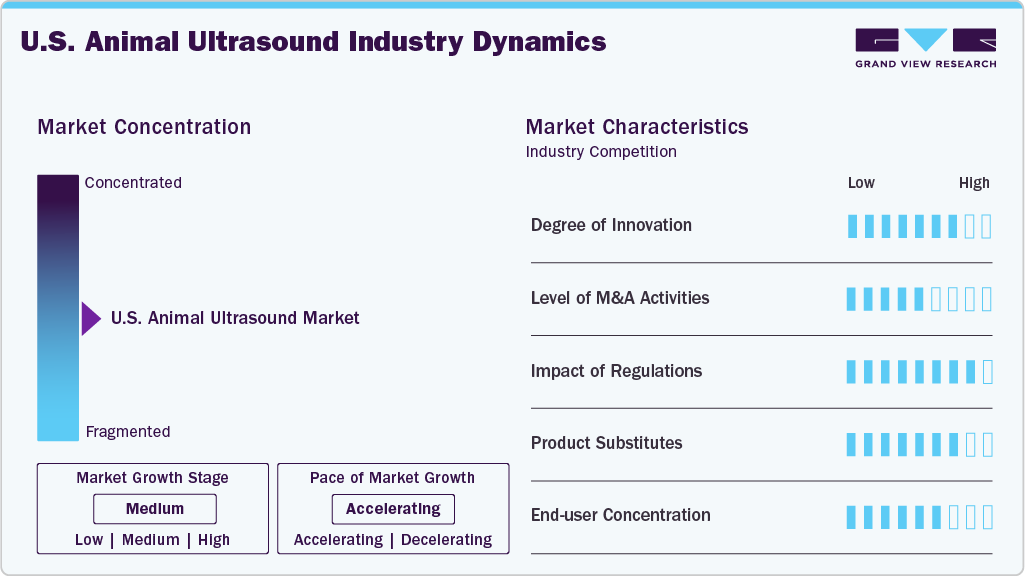
In the U.S., animal ultrasound systems are primarily regulated by the U.S. Food and Drug Administration (FDA), with oversight differing from that of human medical devices. Most veterinary ultrasound systems fall under FDA Class I or Class II device categories, depending on their design and intended use.
Product alternatives, such as X-ray, CT, and MRI, exist in the market; however, ultrasound holds a strong position due to its non-invasive nature, cost-effectiveness, portability, and real-time imaging capabilities. The risk of substitution is minimal for routine exams and reproductive work; however, it becomes somewhat higher in complex orthopedic or neurological cases, where CT or MRI provides better detail.
End use concentration in the U.S. animal ultrasound industry means that most demand comes from a small set of high-volume users, which heavily influences how the market evolves. When big veterinary hospitals, specialty clinics, and corporate chains make up the majority of purchases, manufacturers tailor their products, pricing, and services to meet their requirements. This leads to high-end ultrasound systems, advanced imaging features, and long-term service agreements becoming standard in the market.
Solution Insights
The equipment segment dominated the U.S. animal ultrasound market, with the largest revenue share of 55.90% in 2024, owing to the introduction of advanced products by leading manufacturers. For instance, in May 2024, Esaote North America launched the MyLab FOX, a veterinary ultrasound system engineered for both versatility and high-precision imaging. The system features flexible hardware, modern probes, and built-in connectivity, making it easy to use in various veterinary settings, from general practices to specialized clinics. Its design helps veterinarians perform quicker and more accurate diagnostics while making day-to-day operations smoother and more efficient.
The PACS segment is projected to grow at the fastest CAGR from 2025 to 2033. Demand for PACS is rising because modern ultrasound systems, including advanced handheld devices such as Butterfly iQ3 Vet and Clarius HD3 Vet, as well as cart-based systems like Esaote MyLab FOX, produce large, high-resolution image files that require secure, centralized storage. Cloud-based PACS solutions let veterinarians upload ultrasound scans directly from the device, view them on tablets or computers, and share them with radiologists for second opinions. For instance, IMV Imaging offers ultrasound PACS integrated with its equine and companion-animal systems, allowing clinicians to manage all their ultrasound data in one place.
Animal Insights
The small animals segment dominated the U.S. animal ultrasound industry in 2024, with the largest revenue share, and is expected to grow at the fastest CAGR over the forecast period, driven by rising pet ownership and increasing demand for pet insurance. For instance, according to the American Pet Products Association's 2024-2025 National Pet Owners Survey, in the U.S., approximately 66% of households, or roughly 94 million families, own a pet, up from 82 million in 2023. Among these pets, there are more than 68 million dogs and 49 million cats. According to the American Pet Products Association (APPA), U.S. pet owners spent approximately USD 152 billion on veterinary care in 2024, underscoring the growing investment in the health and well-being of their animals.
The large animals is expected to be the second-fastest growing segment during the forecast period, due to the rising need for advanced, field-ready imaging solutions in equine sports medicine, livestock fertility management, and large-breed companion animal care. Performance horses are increasingly requiring detailed musculoskeletal ultrasounds to detect tendon and ligament injuries, guide treatments, and monitor recovery. This has created demand for ultrasound systems that offer deep imaging, wide panoramic views, and measurement tools. For instance, equine hospitals and referral centers utilize technologies such as Samsung’s MV-Flow, LumiFlow, and S-Shearwave Imaging to visualize blood flow in soft tissues and measure tendon healing more accurately, thereby helping horses return to work sooner.
Type Insights
The 2-D ultrasound imaging segment accounted for the largest revenue share of the U.S. animal ultrasound market in 2024, due to its essential role in routine veterinary diagnostics and treatment. 2-D ultrasound provides real-time grayscale images that enable veterinarians to clearly visualize organ structures, monitor pregnancies, assess abdominal and chest conditions, guide biopsies, and examine muscles, joints, and the heart. Its ability to work across different animals, from pets to horses and livestock, makes it the go-to choice for general practices, specialty clinics, and field veterinarians. Because it provides accurate diagnostic information at a lower cost than more advanced imaging, B-mode ultrasound is still widely used in everyday veterinary practice.
The 3-D/4-D ultrasound imaging segment is projected to grow at the fastest CAGR during the forecast period, by offering more detailed, dynamic, and accurate diagnostic capabilities compared to traditional 2-D systems. 3-D and 4-D ultrasound technology enables veterinarians to visualize animal anatomy in three dimensions and in real-time, making it easier to detect and monitor complex health issues in both small and large animals. The improved imaging helps with more accurate treatment planning, reduces diagnostic errors, and speeds up workflow, making these systems especially useful for advanced and specialty veterinary clinics. Due to these benefits, the demand for 3-D/4-D ultrasound machines is increasing, prompting manufacturers to focus on developing and supplying these systems to a greater number of veterinary practices.
Technology Insights
The digital imaging segment held the largest revenue share of the U.S. animal ultrasound market in 2024, as it delivers superior image quality, faster processing, and seamless data management compared to traditional analog systems. Digital ultrasound systems provide high-resolution images, real-time enhancements (such as speckle reduction, harmonic imaging, and automatic gain optimization), and improved diagnostic Digital ultrasound systems deliver high-resolution images and real-time enhancements-such as speckle reduction, harmonic imaging, and automatic gain adjustment-improving diagnostic accuracy for a wide range of veterinary applications, including cardiology, abdominal exams, reproductive assessments, and musculoskeletal evaluations. They also offer advanced features, such as Color Doppler, 3D/4D imaging, and elastography, which are increasingly applied in both pets and livestock. For example, modern platforms like the GE LOGIQ V2 Vet and Mindray Vetus series utilize digital beamforming, enabling veterinarians to clearly visualize small structures, such as cat and dog organs, equine tendons, and bovine reproductive systems.
The contrast imaging segment is expanding rapidly with the fastest CAGR over the forecast period from 2025 to 2033. Contrast imaging is gaining popularity in equine and livestock diagnostics, particularly for assessing blood flow in musculoskeletal injuries, reproductive organs, and gastrointestinal tissues. Early detection in these areas can directly affect an animal’s performance and overall herd productivity. Its safety, minimal side effects, and fast imaging process make it a preferred choice over more invasive or expensive methods, supporting the steady growth of this segment.
Application Insights
The abdominal segment held the largest share of the U.S. animal ultrasound market in 2024, primarily due to the increasing prevalence of abdominal diseases, which have become common and clinically significant conditions affecting pets. The abdominal segment primarily includes urology & obstetrics/gynecology, as well as other abdominal evaluations. Issues such as persistent vomiting, diarrhea, sudden weight loss, abdominal swelling, and urinary problems frequently prompt veterinarians to request abdominal imaging. A wide range of high-prevalence conditions, including gastrointestinal obstructions, inflammatory bowel disease, liver and kidney disorders, pancreatitis, bladder stones, and urinary tract disease originating in the abdomen, make abdominal ultrasound an essential first-line diagnostic tool.
The oncology segment is expected to grow at the fastest CAGR over the forecast period. Ultrasound has emerged as a key diagnostic tool in veterinary oncology due to its ability to provide noninvasive, real-time imaging of internal organs. It enables veterinarians to detect masses, cysts, metastases, and structural abnormalities without the need for surgical intervention. The technology is especially valuable for examining the liver, spleen, kidneys, lymph nodes, and abdominal cavity-common sites for cancer development or spreading. For example, in cases of splenic hemangiosarcoma, ultrasound often serves as the initial test to identify suspicious lesions or internal bleeding, guiding timely diagnosis and treatment.
End Use Insights
Theveterinary clinics & hospitals segment held the largest share of the U.S. animal ultrasound industry in 2024. Market growth is primarily driven by these systems’ ability to deliver fast diagnostics and support immediate treatment. Veterinary clinics invest in advanced ultrasound equipment to handle higher patient volumes and complex cases, such as abdominal, cardiac, and small-animal imaging, maximizing system efficiency and clinical outcomes. Moreover, innovations like portable handheld ultrasound devices and cloud-based image management have reduced costs, making point-of-care ultrasound increasingly accessible and boosting its adoption across practices.
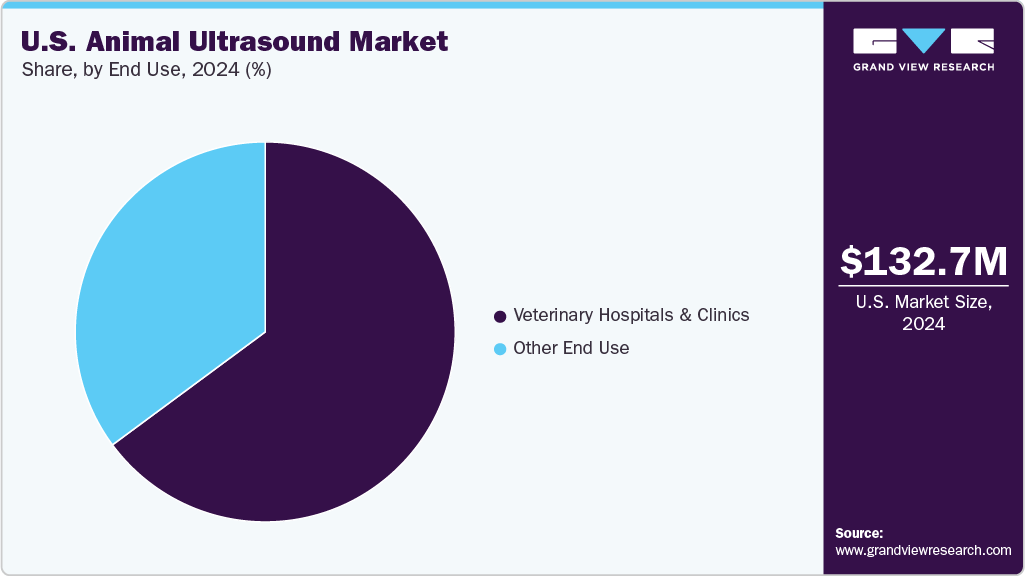
The other end use segment, including veterinary diagnostic laboratories, academic institutions, and research centers, is projected to grow at the fastest CAGR from 2025 to 2033. Nowadays, many veterinary diagnostic laboratories provide 90% coverage for pet diagnostic tests and procedures related to any accident, disease, or injury. Furthermore, the growing number of insured pets, along with an increase in the adoption of veterinary diagnostic imaging across the globe, is another factor responsible for segment growth. For instance, according to the North American Pet Health Insurance Association (NAPHIA), in 2024, there were 7.03 million insured pets in the North America, an increase of 12.2% from the 6.25 million total pets insured in 2023. This demonstrates the rise in the number of diagnostic tests performed on animals in facilities across the country.
Key U.S. Animal Ultrasound Company Insights
Some key players operating in the U.S. animal ultrasound market include IDEXX; Esaote SpA; Mars Inc. (Sound & Heska); FUJIFILM Holdings America Corporation; Shenzhen Mindray Bio-Medical Electronics; and Siemens Healthcare Limited (PLH Medical Ltd.). Established players in the market focus on collaboration, agreement, and investment, which is expected to boost the market growth.
Key U.S. Animal Ultrasound Companies:
- IDEXX
- Esaote SpA
- Mars Inc. (Sound & Heska)
- FUJIFILM Holdings America Corporation
- Siemens Healthcare Limited (PLH Medical Ltd.)
- Samsung Healthcare
- ASUSTeK Computer Inc.
- IMV Imaging
- Avante Animal Health
- Contec Medical Systems Co. Ltd.
Recent Developments
-
In October 2025,Probo Veterinary partnered with Improve Veterinary Education and Mindray to supply Vetus ultrasound systems, supporting global training programs and enhancing veterinary ultrasound education through integrated systems, expert support, and advanced imaging technology.
-
In August 2025, Esaote North America partnered with Epica International to combine MRI, ultrasound, and CT portfolios, expanding imaging reach across human and veterinary segments while strengthening distribution, market penetration, and clinical adoption
-
In October 2025, Butterfly launched the next-generation iQ3 Vet, built on P4.3 Ultrasound-on-Chip technology with faster data transfer, enhanced imaging, and ergonomic design, expanding advanced POCUS capabilities in the U.S. and Canada.
U.S. Animal Ultrasound Market Report Scope
Report Attribute
Details
Market size value in 2025
USD 140.68 million
Revenue forecast in 2033
USD 245.08 million
Growth rate
CAGR of 7.19% from 2025 to 2033
Actual data
2021 - 2024
Forecast period
2025 - 2033
Quantitative units
Revenue in USD Million and CAGR from 2025 to 2033
Report coverage
Revenue forecast, company ranking, competitive landscape, growth factors, and trends
Segments covered
Animal, solution, type, technology, application, and end use
Key companies profiled
IDEXX; Esaote SpA; Mars Inc. (Sound & Heska); FUJIFILM Holdings America Corporation; Siemens Healthcare Limited (PLH Medical Ltd.); Samsung Healthcare; ASUSTeK Computer Inc.; IMV Imaging; Avante Animal Health; Contec Medical Systems Co. Ltd.
Customization scope
Free report customization (equivalent up to 8 analysts working days) with purchase. Addition or alteration to country, regional & segment scope.
Pricing and purchase options
Avail customized purchase options to meet your exact research needs. Explore purchase options
U.S. Animal Ultrasound Market Report Segmentation
This report forecasts revenue growth at the country level and provides an analysis of the latest industry trends in each of the sub-segments from 2021 to 2033. For this study, Grand View Research has segmented the U.S. animal ultrasound market report based on animal, solution, type, technology, application, and end use:
-
Animal Outlook (Revenue, USD Million, 2021 - 2033)
-
Small Animals
-
Large Animals
-
-
Solution Outlook (Revenue, USD Million, 2021 - 2033)
-
Equipment
-
Console/Cart-Based Ultrasound
-
Portable/Handheld Ultrasound
-
Accessories/Consumables
-
PACS
-
-
Type Outlook (Revenue, USD Million, 2021 - 2033)
-
2-D Ultrasound Imaging
-
3-D/4-D Ultrasound Imaging
-
Doppler Imaging
-
-
Technology Outlook (Revenue, USD Million, 2021 - 2033)
-
Digital Imaging
-
Contrast Imaging
-
-
Application Outlook (Revenue, USD Million, 2021 - 2033)
-
Orthopedics
-
Cardiology
-
Oncology
-
Abdominal
-
Other Applications
-
-
End Use Outlook (Revenue, USD Million, 2021 - 2033)
-
Veterinary Hospitals & Clinics
-
Other End Use
-
Frequently Asked Questions About This Report
b. The global U.S. animal ultrasound market size was estimated at USD 132.72 million in 2024 and is expected to reach USD 140.68 million in 2025.
b. The global U.S. animal ultrasound market is expected to grow at a compound annual growth rate of 7.19% from 2025 to 2033 to reach USD 245.08 billion by 2027.
b. On the basis of application, abdominal segment held the largest share of the market in 2024, due to abdominal diseases becoming common and clinically significant conditions affecting pets. Abdominal segment mainly includes urology & obstetrics/gynecology and other abdominal evaluations.
b. Some key players operating in the U.S. animal ultrasound market include IDEXX, Esaote SpA, Mars Inc. (Sound & Heska), FUJIFILM Holdings America Corporation, Siemens Healthcare Limited (PLH Medical Ltd.), Samsung Healthcare, ASUSTeK Computer Inc., IMV Imaging, Avante Animal Health, and Contec Medical Systems Co. Ltd.
b. Key factors that are driving the market growth include expanding applications of ultrasound within the veterinary sector, rising companion animal population, coupled with enhanced adoption rates, growing awareness about animal healthcare, and rising adoption of pet insurance.


Share this report with your colleague or friend.
Need a Tailored Report?
Customize this report to your needs — add regions, segments, or data points, with 20% free customization.


ISO 9001:2015 & 27001:2022 Certified
We are GDPR and CCPA compliant! Your transaction & personal information is safe and secure. For more details, please read our privacy policy.
Trusted market insights - try a free sample
See how our reports are structured and why industry leaders rely on Grand View Research. Get a free sample or ask us to tailor this report to your needs.













