
- Home
- »
- Consumer F&B
- »
-
U.S. Hair Health Supplements Market, Industry Report, 2033GVR Report cover
![U.S. Hair Health Supplements Market Size, Share & Trends Report]()
U.S. Hair Health Supplements Market (2026 - 2033) Size, Share & Trends Analysis Report By Ingredient Type, By Ingredient (Vitamin, Minerals, Botanical Extracts, Marine Extracts), By Application, By Form, By Type, By End User, By Distribution Channel, And Segment Forecasts
- Report ID: GVR-4-68040-834-2
- Number of Report Pages: 90
- Format: PDF
- Historical Range: 2021 - 2025
- Forecast Period: 2026 - 2033
- Industry: Consumer Goods
- Report Summary
- Table of Contents
- Segmentation
- Methodology
- Download FREE Sample
-
 Download Sample Report
U.S. Hair Health Supplements Market Summary
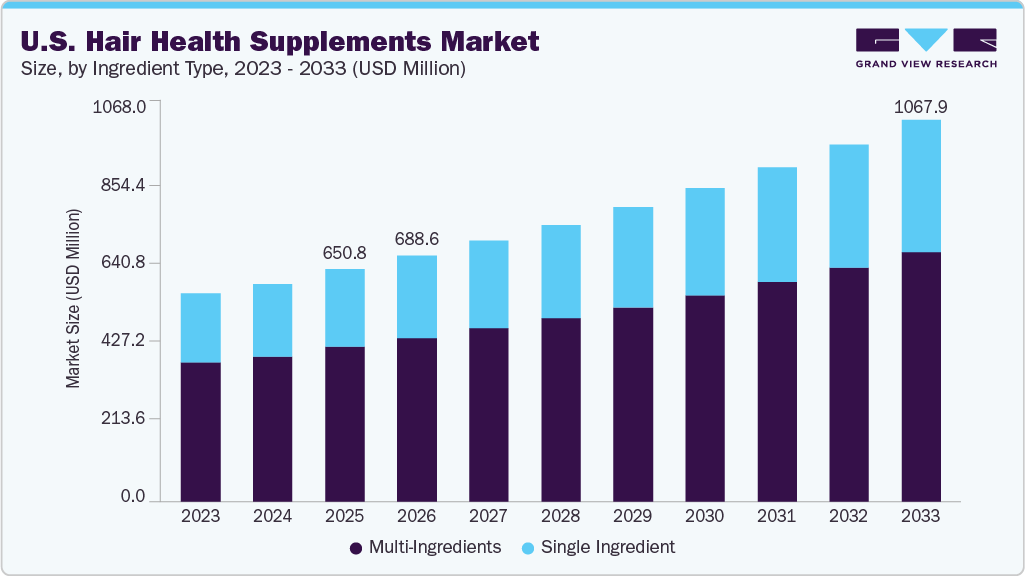
The U.S. hair health supplements market size was estimated at USD 650.8 million in 2025 and is projected to reach USD 1,067.9 million by 2033, growing at a CAGR of 6.4% from 2026 to 2033. The market is experiencing robust growth as consumers increasingly prioritize proactive wellness and targeted nutritional solutions for hair care.
Key Market Trends & Insights
- By Ingredient type, the multi-ingredient supplements segment led the U.S. hair health supplements market, accounting for a revenue share of 66.6% in the year 2025.
- By Ingredient, vitamins led the U.S. hair health supplements industry, accounting for a revenue share of 24.8% in the year 2025.
- By Application, hair health supplements used for hair growth/thinning/loss accounted for a revenue share of 54.3% in the year 2025.
- By Form, gummies hair health supplements accounted for a revenue share of 34.6% in the year 2025.
Market Size & Forecast
- 2025 Market Size: USD 650.8 Million
- 2033 Projected Market Size: USD 1,067.9 Million
- CAGR (2026-2033): 6.4%
Rising awareness of hair thinning, hair loss, and scalp issues across different age groups is fueling demand, particularly among working professionals and aging populations. The growing influence of social media, celebrity endorsements, and wellness trends highlighting the importance of “inner beauty” has further increased consumer interest in supplements that support hair strength, shine, and overall scalp health.Stress, lifestyle changes, and dietary deficiencies are also major factors driving the growth of the U.S. hair health supplements industry. High-stress levels, poor nutrition, and exposure to environmental pollutants contribute to hair fall and weakened strands, prompting consumers to turn to scientifically formulated supplements. Vitamins such as biotin, folic acid, zinc, and vitamin D, along with amino acids and botanical extracts, are increasingly incorporated into daily routines to mitigate these effects.
Convenience and product innovation play a crucial role in shaping U.S. consumer behavior. Capsules, soft gels, gummies, powders, and liquid supplements provide tailored solutions that cater to modern lifestyles, enabling precise dosing, enhanced absorption, and multitasking benefits. E-commerce platforms, subscription services, and direct-to-consumer models have made these products easily accessible nationwide, supporting repeat purchases and brand loyalty. The combination of awareness, lifestyle-driven needs, innovation, and accessible distribution channels continues to drive growth in the U.S. hair health supplement market.
Consumer Insights
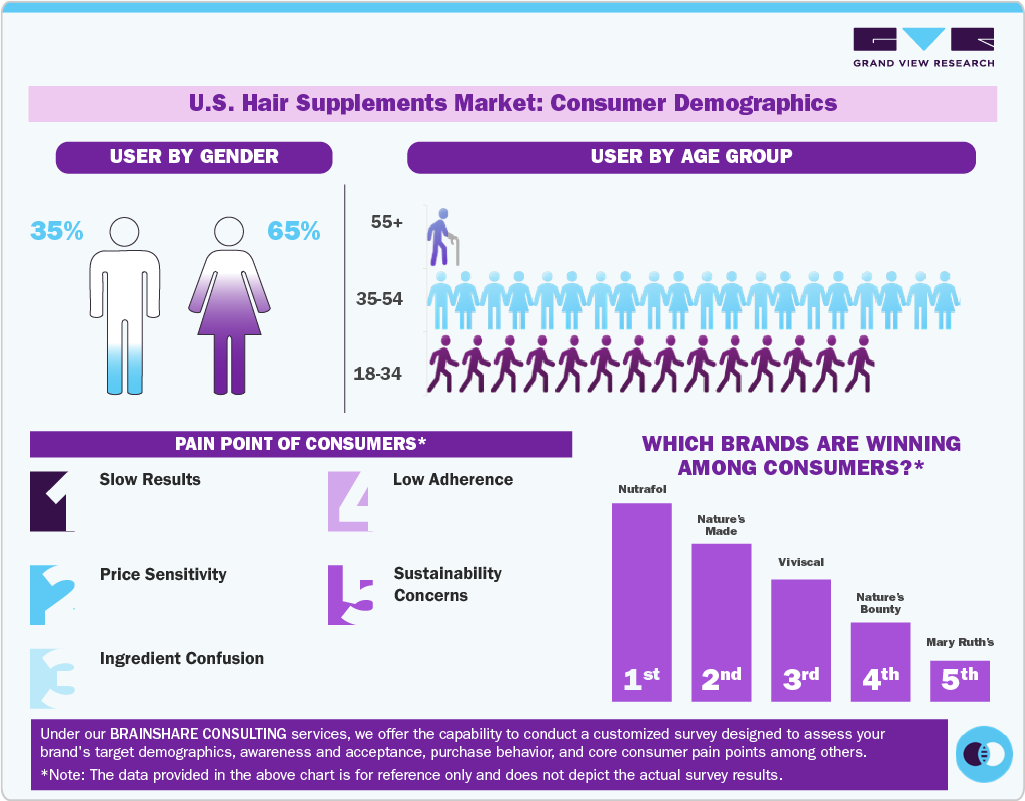
The hair-health supplements market shows a female-skewed demand, with women accounting for approximately 60-65% of the market, particularly in growth, maintenance, and greying supplements. Women tend to focus on beauty-from-within solutions, targeting hair thickness, shine, and prevention of thinning or greying. They are also more likely to purchase supplements as part of a broader hair, skin, and nail routine, often preferring formats like gummies or softgels. As a result, brands targeting this segment should emphasize nourishment, hormone balance, and holistic wellness.
On the other hand, the male segment primarily drives the demand for hair-loss supplements, especially those targeting androgenetic alopecia and male pattern baldness. Men tend to seek faster, clinically backed solutions with proven efficacy in stopping hair loss or regrowing hair. While men represent a smaller share of growth supplements, the need for hair-loss products is high, presenting an opportunity for brands to focus on performance-driven messaging. To effectively enter the market, brands could consider a dual-approach strategy: one line targeting women for beauty and prevention, and a separate, clinically oriented line for men focusing on hair loss and density.
Medihair's global survey of 4,284 individuals reveals that male baldness prevalence is notably high in all three focus markets: 42.68% in the U.S., 40.94% in Canada, and 40.19% in the U.K., ranking them among the top countries globally for hair thinning. This large, affected population directly strengthens demand for non-prescription, wellness-oriented solutions, making hair health supplements an attractive first step for men seeking early intervention before moving to pharmaceuticals or clinical treatments. With rising awareness of appearance, stress-related shedding, lifestyle-driven thinning, and growing interest in “inside-out” hair wellness, these prevalence rates indicate a substantial and sustained consumer base for hair growth, anti-thinning, and scalp-support supplements across all three markets
Women are the primary consumers of hair health supplements, often incorporating them into broader beauty and wellness routines. Their motivations include hair thinning, breakage, postpartum changes, and a desire for overall hair vitality, leading to more consistent and long-term use. Men, though historically less involved, are increasingly adopting these products as awareness of early hair loss, scalp health, and stress-related shedding grows. Their use is typically more results-driven, focusing on targeted benefits such as strengthening roots, reducing hair fall, or supporting regrowth. Women prefer multi-ingredient blends that include collagen, biotin, and botanical complexes, while men tend to favor solutions that emphasize DHT balancing, protein support, or clinically validated formulations. Both groups are driving the category’s shift from beauty to a more functional, wellness-oriented focus.
Ingredient Type Insights
The multi-ingredient supplements segment led the U.S. hair health supplements market, accounting for a revenue share of 66.6% in the year 2025. Multi-ingredient supplements benefit from advancements in scientific formulation and clinical validation, reinforcing their credibility and market appeal. The segment is evolving with the integration of personalized regimens based on genetic profiles and lifestyle factors, facilitated by AI and digital consultation services. This ability to tailor combinations to individual needs supports better consumer engagement and satisfaction.
The single-ingredient supplements segment is projected to grow at a CAGR of 6.9% over the forecast period of 2026-2033. Single-ingredient supplements, such as biotin, collagen peptides, vitamin D, and saw palmetto, are highly regarded for their clear and direct benefit profiles, which enable consumers to target specific hair health needs with confidence. The simplicity of these products facilitates easier evaluation of effectiveness and perceived safety, attributes that are particularly valued by health-conscious consumers and those with sensitivities to multiple ingredients. Moreover, the targeted nature of these supplements supports rapid hair growth outcomes, which is a critical concern for many users dealing with thinning or hair loss.
Ingredient Insights
Vitamins led the U.S. hair health supplements industry, accounting for a revenue share of 24.8% in the year 2025. Growth in this segment has been reinforced by rising consumer concerns related to stress-induced alopecia, micronutrient deficiencies, and aging-related hair thinning. Vitamins such as vitamin A, vitamin C, vitamin D, vitamin E, vitamin B12, niacin, biotin, folic acid, and multivitamin combinations are widely used due to their essential roles in cellular regeneration, antioxidant defense, and keratin synthesis. Biotin, in particular, has been a focal point, supported by numerous clinical studies linking its deficiency to hair thinning and shedding.
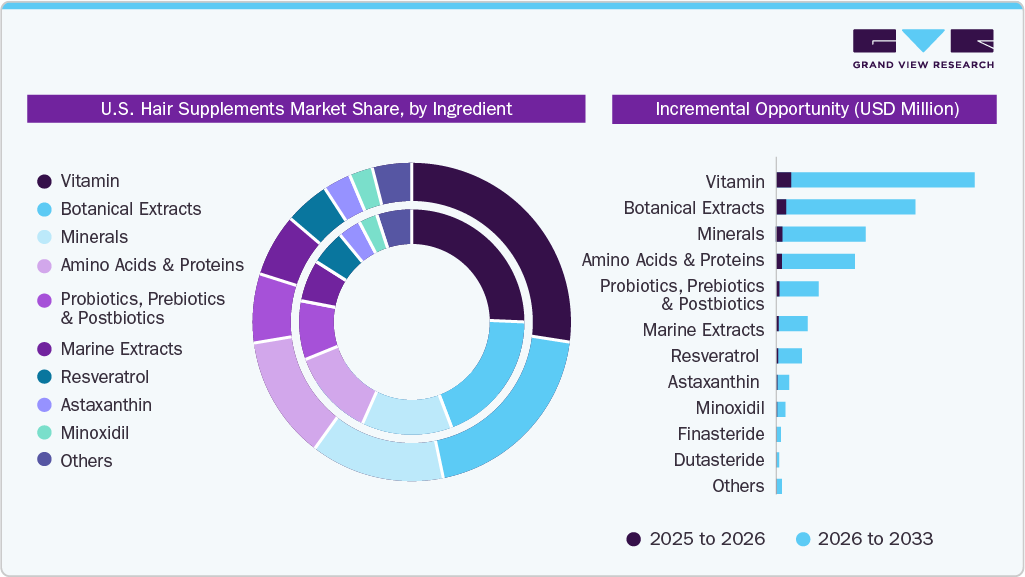
The botanical extracts segment is projected to grow at a CAGR of 6.9% over the forecast period of 2026-2033. The increasing prevalence of hair loss and thinning, attributed to stress, environmental factors, and aging, is prompting consumers to seek natural alternatives to synthetic chemicals. Technological advancements in extraction methods have enhanced the bioavailability and efficacy of botanical actives, enabling manufacturers to develop more potent and standardized formulations. Market growth is further stimulated by the digitalization of beauty and wellness retail channels, enabling direct-to-consumer sales with personalized botanical supplement options.
Application Insights
Hair health supplements used for hair growth/thinning/loss accounted for a revenue share of 54.3% in the year 2025 within the U.S. hair health supplements market, driven by heightened consumer attention to scalp health, hormonal imbalances, lifestyle stressors, and early-onset thinning across both men and women. Demand continues to rise as shoppers seek non-invasive, nutrition-based solutions that address underlying deficiencies and support long-term follicle strength. Formulations featuring key micronutrients, including biotin, zinc, vitamin D, folate, and amino acid complexes, remain central to this category due to their roles in promoting keratin formation, improving scalp circulation, and supporting healthier growth cycles.
Hair health supplements used for scalp care/health are projected to grow at a CAGR of 6.5% over the forecast period of 2026-2033. Rising concerns related to product buildup, inflammation, pollution exposure, and microbiome imbalance are encouraging consumers to adopt nutritional solutions that address scalp wellness from within. Formulations featuring ingredients such as omega-3 fatty acids, probiotics, vitamin E, zinc, and anti-inflammatory botanical extracts are gaining popularity for their ability to support the skin's barrier function, improve circulation, and regulate sebum production. Advances in nutraceutical science are enabling the development of targeted blends that address issues such as dryness, sensitivity, and flaking, thereby reinforcing interest in this category.
Form Insights
Gummies hair health supplements accounted for a revenue share of 34.6% in the year 2025 within the U.S. hair health supplements industry. The demand for hair health gummy supplements is rising steadily as consumers increasingly prioritize enjoyable, convenient, and consistent supplement routines. Gummies eliminate the discomfort associated with swallowing pills, making them especially appealing to younger users, busy professionals, and individuals with pill fatigue. Their pleasant flavors, soft texture, and candy-like format foster higher compliance, encouraging users to maintain long-term hair nourishment routines that support visible results.
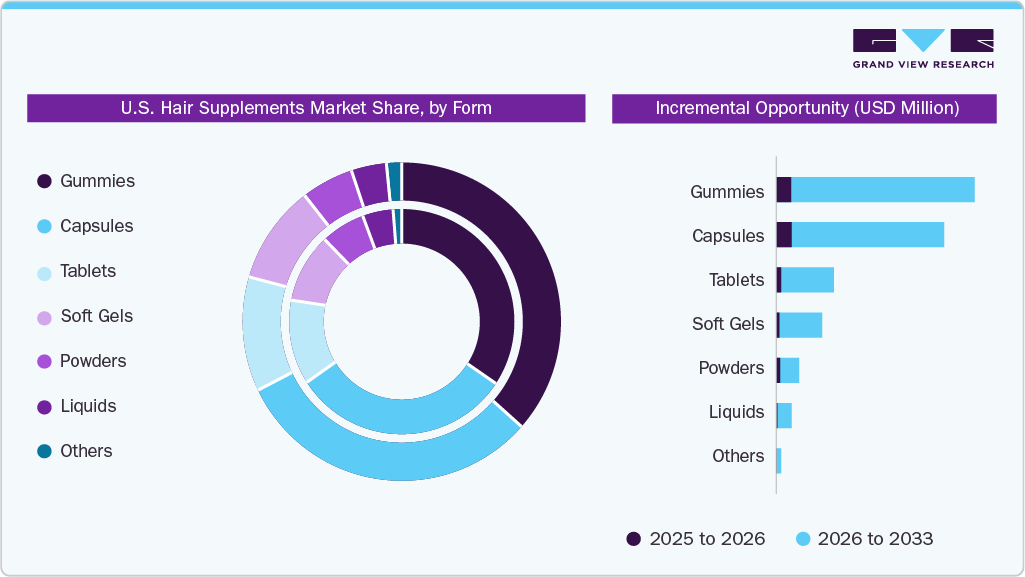
Capsule hair health supplements are projected to grow at a CAGR of 6.6% over the forecast period of 2026-2033. Increasing stress levels, lifestyle imbalances, nutritional gaps, and hair concerns following illness are prompting consumers to seek clinically supported supplements. Capsules ensure precise dosing and improved ingredient stability, preserving the potency of vitamins, minerals, amino acids, and botanical extracts throughout their shelf life. The market is also witnessing greater innovation; for instance, in May 2025, Garden of Life expanded its Dr. Formulated line with new capsule-based products designed to support men's hair growth, featuring ingredients such as vitamin B12, folate, and zinc. These developments reinforce consumer trust in capsule formats as reliable, long-term solutions rather than short-term cosmetic fixes.
Type Insights
OTC (Over-the-Counter) hair health supplements accounted for a revenue share of 90.1% in the year 2025 within the U.S. hair health supplements market. In the U.S., the OTC market continues to expand as consumers increasingly rely on accessible, self-care solutions for their everyday health needs. According to the U.S. Food & Drug Administration (FDA), U.S. consumers take about 2.9 billion retail trips annually to purchase OTC products, highlighting the strong and consistent demand for non-prescription health items. This high frequency of OTC purchases reflects rising health awareness, a preference for convenient remedies, and growing trust in OTC solutions across the country.
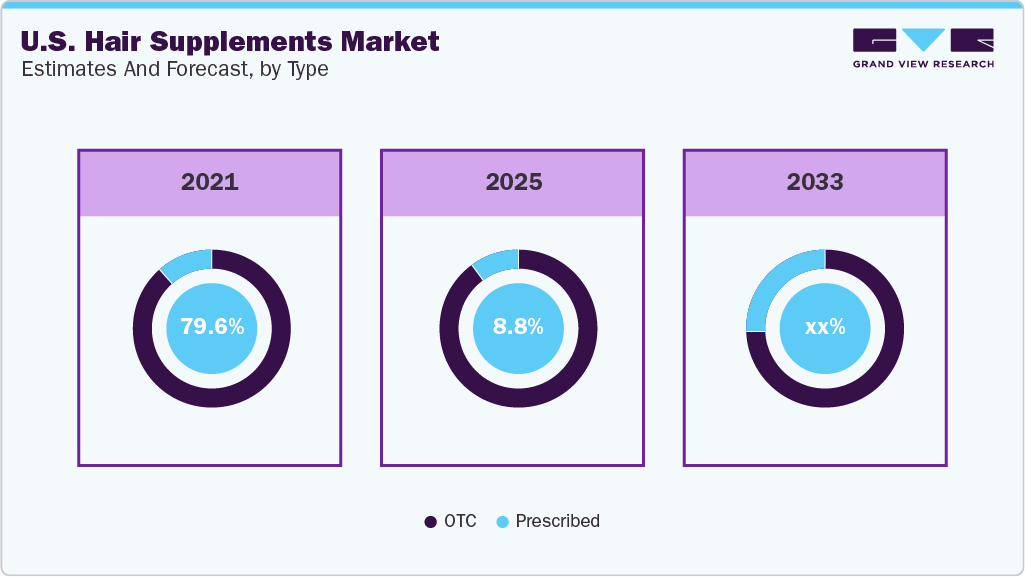
Prescribed hair health supplements are projected to grow at a CAGR of 4.7% over the forecast period of 2026-2033. The prescribed segment of the hair health supplements market continues to expand as more individuals seek medically supervised solutions for persistent or clinically significant hair concerns. Healthcare professionals recommend these supplements to address issues such as severe nutrient deficiencies, hormonal imbalances, thyroid disorders, autoimmune conditions, and advanced alopecia. With higher-potency formulations and condition-specific ingredients, prescribed supplements play an essential role for consumers who require targeted and regulated therapeutic support.
End User Insights
Female hair health supplements accounted for a revenue share of 65.5% in the year 2025 within the U.S. hair health supplements industry. Women in this segment are increasingly seeking formulations that combine core vitamins with targeted actives, such as biotin, collagen peptides, iron, and adaptogenic botanicals, to offer comprehensive support for strength, density, and reduced breakage. The category’s appeal is reinforced by clean-label preferences, gluten-free and vegan options, and formulas designed to complement broader beauty and wellness routines. Brands frequently tailor products to specific life stages, ranging from prenatal and postnatal blends to supplements for perimenopausal and aging-related hair changes, making the segment highly responsive to diverse needs.
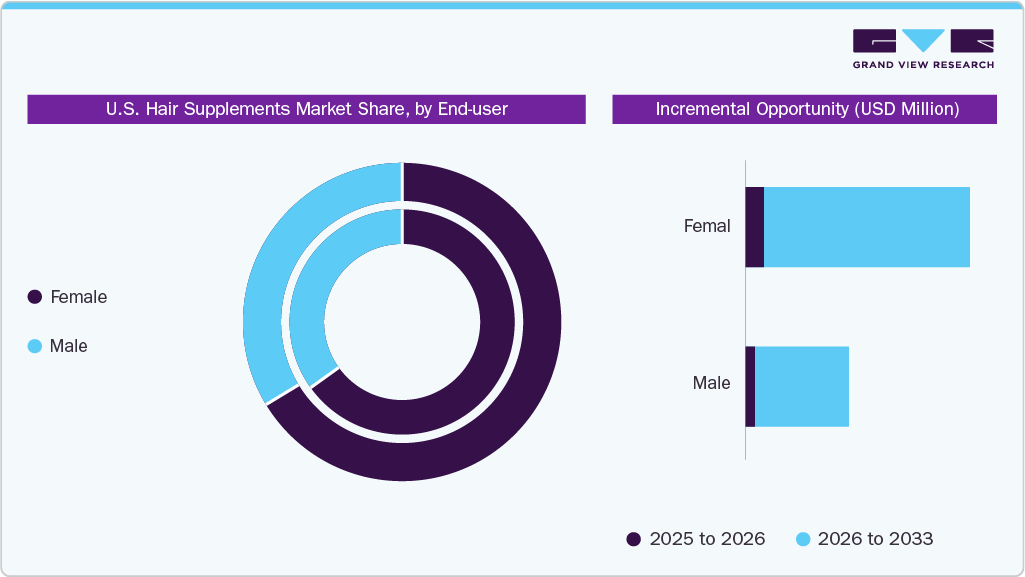
Male hair health supplements are projected to grow at a CAGR of 5.9% over the forecast period of 2026-2033. Products tailored to men emphasize simplicity, measurable outcomes, and routine-friendly dosing, aligning with consumer preferences for low-maintenance solutions that support scalp strength, density retention, and reduced shedding. The category is also seeing momentum from convenient subscription models, dermatologist-endorsed brands, and clean-label formulas designed for daily use. With expanding availability across pharmacies, online platforms, grooming retailers, and wellness outlets, male-oriented supplements continue to attract students, professionals, athletes, and aging consumers seeking practical, non-invasive options for managing hair thinning and maintaining long-term follicular health.
Distribution Channel Insights
Offline sales of hair health supplements accounted for a revenue share of 74.5% in 2025 within the U.S. hair health supplements market. Pharmacies, supermarkets, health-food chains, and specialty nutrition stores offer a tactile, trust-building environment where shoppers can compare formulations, verify ingredient lists, examine dosage details, and discuss concerns with trained staff. These outlets also provide targeted recommendations for issues such as thinning, breakage, hormonal shedding, or scalp discomfort, helping buyers navigate a wide range of vitamins, botanical blends, and clinically oriented supplements. In-store promotions, loyalty rewards, bundled discounts, and the ability to make immediate purchases reinforce convenience, while pharmacist or consultant support improves confidence in product efficacy and safety.
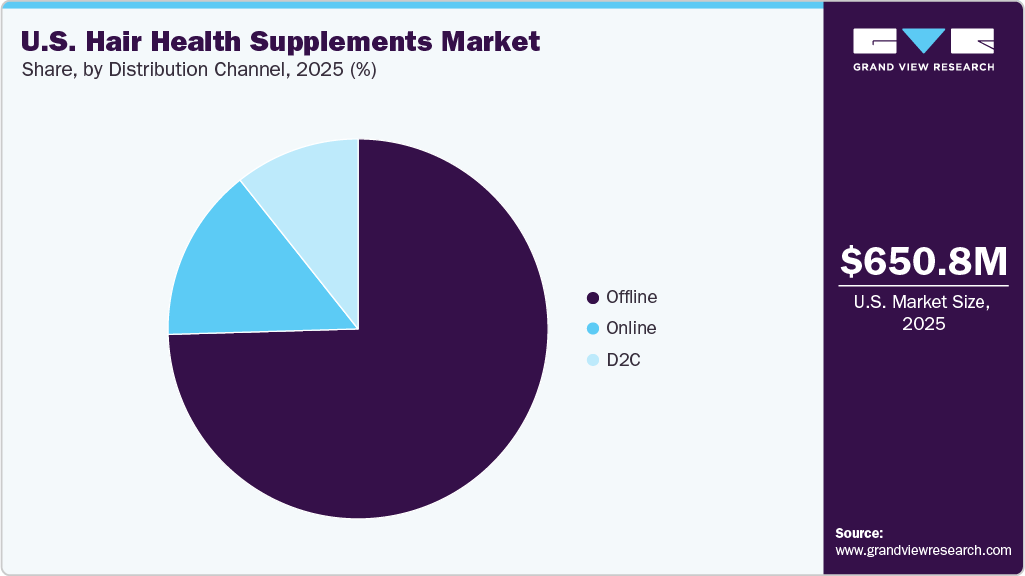
Online sales of hair health supplements are projected to grow at a CAGR of 8.3% over the forecast period of 2026-2033. E-commerce platforms make it easier to explore a wide spectrum of formulations, from biotin blends and collagen boosters to botanical extracts and DHT-focused complexes, supported by detailed ingredient breakdowns, clinical claims, and user testimonials that help shoppers evaluate efficacy and suitability. Subscription models, auto-refill options, and personalized recommendation tools further streamline routine adherence, appealing to buyers seeking consistent, low-effort supplementation. Frequent promotional pricing, fast shipping, and flexible return policies enhance accessibility for both entry-level and premium offerings. At the same time, the growing influence of dermatologists, wellness creators, and targeted ads across social media accelerates discovery among younger, digitally active consumers.
Key U.S. Hair Health Supplements Company Insights
The U.S. hair health supplements market is shaped by a mix of long-established nutraceutical companies and emerging wellness brands that continue to advance ingredient science, formulation quality, and user-focused benefits for consumers seeking targeted hair support. Manufacturers are prioritizing clinically aligned blends, clean-label ingredients, and evidence-backed actives that address concerns such as thinning, breakage, shedding, and scalp imbalance. Products increasingly feature optimized vitamin complexes, bioavailable minerals, collagen peptides, amino acids, adaptogens, and botanical extracts designed to strengthen follicles, improve density, and support healthier growth cycles.
U.S. consumers place strong emphasis on transparency, safety, and visible results, driving brands to refine dosage standards, improve labeling clarity, and introduce formats ranging from gummies and capsules to powders and liquid concentrates. Market expansion is supported by broad omnichannel availability across pharmacies, beauty retailers, supermarkets, specialty wellness stores, and rapidly growing digital platforms offering subscription models and personalized supplement plans. Social media education, dermatologist collaborations, and influencer-driven testimonials further accelerate awareness, encouraging both younger and older consumers to incorporate hair-focused supplements into their long-term wellness routines. By combining scientific innovation, approachable pricing, and extensive retail accessibility, brands are deepening category penetration across diverse lifestyles and demographic groups in the U.S.
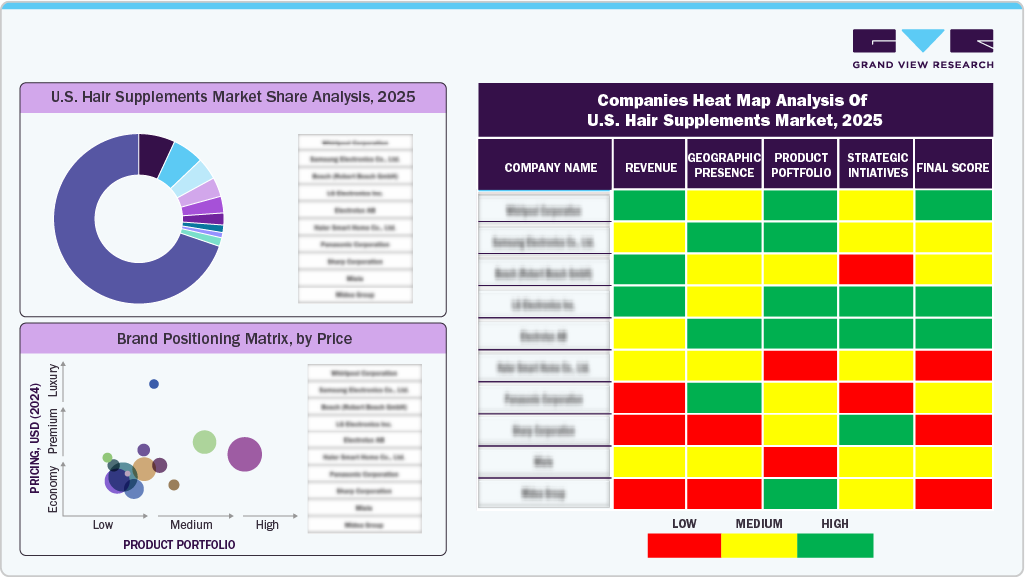
Key U.S. Hair Health Supplements Companies:
- Nutrafol
- Nature's Made
- Viviscal
- Nature's Bounty
- Mary Ruth's
- Vegamour
- Olly
- Lemme
- HUM
- Phyto Paris
- New Nordic
Recent Developments
-
In September 2025, Nutrafol became the first and only hair-growth supplement brand to earn the NSF International Certified for Sport certification and simultaneously announced a multi-year partnership with Major League Baseball (MLB), naming itself the league’s Official Hair Growth Partner. This dual move signals a strong push in the wellness-and-sports crossover zone, leveraging rigorous third-party verification and a high-profile sporting platform to raise standards and awareness for hair-health nutraceuticals.
-
In November 2024, Kourtney Kardashian Barker’s wellness brand, Lemme, introduced a new hair-growth and anti-shedding capsule called Lemme Grow, a biotin-free formula developed with a keratin complex, L-cysteine, silica, and a vitamin blend. The supplement is specifically designed for individuals with sensitive skin and hair, and has been clinically proven to promote thicker, fuller hair and reduce shedding over a 12-week period.
U.S. Hair Health Supplements MarketReport Scope
Report Attribute
Details
Market size value in 2026
USD 688.6 million
Revenue forecast in 2033
USD 1,067.9 million
Growth rate
CAGR of 6.4% from 2026 to 2033
Actuals
2021 - 2025
Forecast period
2026 - 2033
Quantitative units
Revenue in USD million and CAGR from 2026 to 2033
Report coverage
Revenue forecast, company ranking, competitive landscape, growth factors, and trends
Segments covered
Ingredient type, ingredient, application, form, type, end user, distribution channel
Key companies profiled
Nutrafol; Nature's Made; Viviscal; Nature's Bounty; Mary Ruth's; Vegamour; Olly; Lemme; HUM; Phyto Paris; New Nordic
Customization scope
Free report customization (equivalent up to 8 analysts working days) with purchase. Addition or alteration to country, regional & segment scope.
Pricing and purchase options
Avail customized purchase options to meet your exact research needs. Explore purchase options
U.S. Hair Health Supplements Market Report Segmentation
This report forecasts revenue growth at the country level and provides an analysis of the latest trends and opportunities in each of the sub-segments from 2021 to 2033. For this study, Grand View Research has segmented the U.S. hair health supplements market report based on ingredient type, ingredient, application, form, type, end user, and distribution channel:
-
Ingredient Type Outlook (Revenue, USD Million, 2021 - 2033)
-
Single Ingredient
-
Multi-Ingredients
-
-
Ingredient Outlook (Revenue, USD Million, 2021 - 2033)
-
Vitamin
-
Vitamin A
-
Vitamin C
-
Vitamin D
-
Vitamin E
-
Vitamin B12
-
Niacin
-
Biotin
-
Folic Acid
-
Multivitamin
-
-
Minerals
-
Botanical Extracts
-
Marine Extracts
-
Amino Acids & Proteins
-
Collagen
-
Keratin
-
Cysteine
-
Others
-
-
Probiotics, Prebiotics & Postbiotics
-
Resveratrol
-
Astaxanthin
-
Minoxidil
-
Finasteride
-
Dutasteride
-
Others
-
-
Application Outlook (Revenue, USD Million, 2021 - 2033)
-
Scalp Care/Health
-
Hair Growth/Thinning/Loss
-
Aging Hair
-
Hair Strength/Quality
-
Hair Thinning Prevention
-
Others
-
-
Form Outlook (Revenue, USD Million, 2021 - 2033)
-
Tablets
-
Capsules
-
Soft gels
-
Powders
-
Gummies
-
Liquids
-
Others
-
-
Type Outlook (Revenue, USD Million, 2021 - 2033)
-
OTC
-
Prescribed
-
-
End User Outlook (Revenue, USD Million, 2021 - 2033)
-
Male
-
Millennials
-
Gen X
-
Gen Z
-
Baby Boomers
-
-
Female
-
Pregnant Women
-
Millennials
-
Gen X
-
Gen Z
-
-
Non-Pregnant Women
-
Millennials
-
Gen X
-
Gen Z
-
Baby Boomers
-
-
-
-
Distribution Channel Outlook (Revenue, USD Million, 2021 - 2033)
-
Offline
-
Hypermarkets
-
Supermarkets/Grocery Stores
-
Discount Stores
-
Department Stores (Including Discounted)
-
Pharmacies
-
Drug Stores
-
Specialty Stores
-
Beauty & Cosmetic Stores
-
Health & Supplement Stores
-
-
Practitioner
-
Direct Sales
-
Travel Retail Stores
-
Others
-
-
D2C
-
Online
-
Amazon
-
Other Online Retail Stores
-
-
Frequently Asked Questions About This Report
b. The U.S. hair health supplements market size was estimated at USD 650.8 million in 2025 and is expected to reach USD 688.6 million in 2026.
b. The U.S. hair health supplements market is expected to grow at a compound annual growth rate of 6.4% from 2026 to 2033 to reach USD 1,067.9 million by 2033.
b. Multi-ingredient hair health supplements accounted for a revenue share of 66.6% in the year 2025 within the U.S. hair health supplements industry, supported by strong consumer preference for comprehensive, all-in-one formulations, increasing clinical validation of combined nutrient blends, and product differentiation designed to address multiple hair concerns.
b. Some key players operating in the U.S. hair health Nutrafol; Nature's Made; Viviscal; Nature's Bounty; Mary Ruth's; Vegamour; Olly; Lemme; HUM; Phyto Paris; New Nordic
b. Key factors that are driving the U.S. hair health supplements market growth include growing concern around hair thinning and hair fall associated with aging, stress, dietary gaps, and hormonal changes; rising consumer shift toward clean-label, plant-based, and rapid expansion of direct-to-consumer and e-commerce channels.


Share this report with your colleague or friend.
Need a Tailored Report?
Customize this report to your needs — add regions, segments, or data points, with 20% free customization.


ISO 9001:2015 & 27001:2022 Certified
We are GDPR and CCPA compliant! Your transaction & personal information is safe and secure. For more details, please read our privacy policy.
Trusted market insights - try a free sample
See how our reports are structured and why industry leaders rely on Grand View Research. Get a free sample or ask us to tailor this report to your needs.













