
- Home
- »
- Medical Devices
- »
-
U.S. Hemostatic Sealants in Arterial Surgery Market Report 2033GVR Report cover

U.S. Hemostatic Sealants in Arterial Surgery Market (2026 - 2033) Size, Share & Trends Analysis Report By Product (Fibrin-based, Combination, Synthetic/Polymer-based Sealants), By End Use (Public Hospitals, Private Hospitals), By Application, By Disease Indication, And Segment Forecasts
Market Size, 2025
$95.5MMarket Estimate, 2026
$97.7MMarket Forecast, 2033
$114.6MCAGR, 2026–2033
2.3%U.S. Hemostatic Sealants in Arterial Surgery Market Summary
The U.S. hemostatic sealants in arterial surgery market size was estimated at USD 95.5 million in 2025 and is projected to reach USD 114.6 million by 2033, growing at a CAGR of 2.3% from 2026 to 2033. Market growth is primarily driven by the increasing burden of peripheral artery disease (PAD), aortic aneurysms, and other vascular disorders requiring surgical intervention.
Key Market Trends & Insights
- By product, the fibrin-based sealants segment had the largest market share of 41.8% in 2025.
- By application, the arterial surgery with graft replacement (Artificial vessel replacement) segment had the largest market share of 79.0% in 2025.
- Based on end use, the public hospitals segment is expected to account for the largest share of 54.5% in 2025.
Market Size & Forecast
- 2025 Market Size: USD 95.5 Million
- 2033 Projected Market Size: USD 114.6 Million
- CAGR (2026-2033): 2.3%
Prism AI by Grand View Research Free to tryAsk a question about the U.S. hemostatic sealants in arterial surgery marketTry asking✓Every figure cited from GVR research Prefer the report? Download free sample →
According to the CDC, nearly 8.5 million Americans are affected by PAD, with the disease being particularly prevalent among the aging population and patients with diabetes, hypertension, obesity, and smoking-related cardiovascular conditions. The growing volume of arterial bypass procedures, aneurysm repairs, carotid endarterectomies, and other complex vascular surgeries is increasing the demand for advanced hemostatic sealants that can reduce intraoperative bleeding, improve surgical efficiency, and lower the risk of postoperative complications.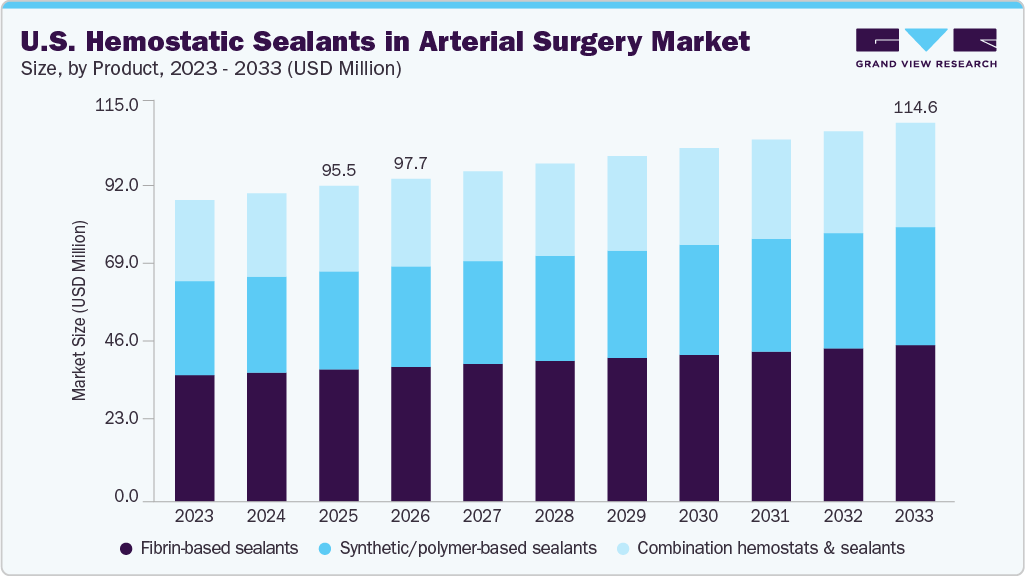 Source: Grand View Research, IR Documents, Primary Interviews, Paid DatabasesTo learn more about this report,
 Download Free Sample Report
In addition, the rising adoption of minimally invasive and endovascular procedures, along with continuous technological advancements in bioresorbable and synthetic sealant products, is further supporting market expansion. Government initiatives and healthcare organizations are also emphasizing improved cardiovascular care and surgical outcomes, encouraging hospitals and surgical centers to adopt advanced bleeding management solutions. Together, these factors are contributing to the increasing utilization of hemostatic sealants in arterial surgery across the U.S.
The U.S. is the most dominant and most procedure-intensive national market for hemostatic sealants in arterial surgery in North America. Its combination of the world’s largest absolute vascular surgery caseload, a rapidly aging cardiovascular patient population, a well-resourced hospital infrastructure, and a favorable FDA regulatory environment makes it the single most important geography for hemostatic sealant manufacturers operating in the arterial surgery segment. The four key disease indications, namely, aortic aneurysms, peripheral artery disease, carotid artery disease, and other acute conditions, including aortic dissection and traumatic arterial injury, each generate a distinct and well-defined CPT-coded procedural demand base that directly drives hemostatic sealant utilization.
 To learn more about this report, Download Free Sample Report
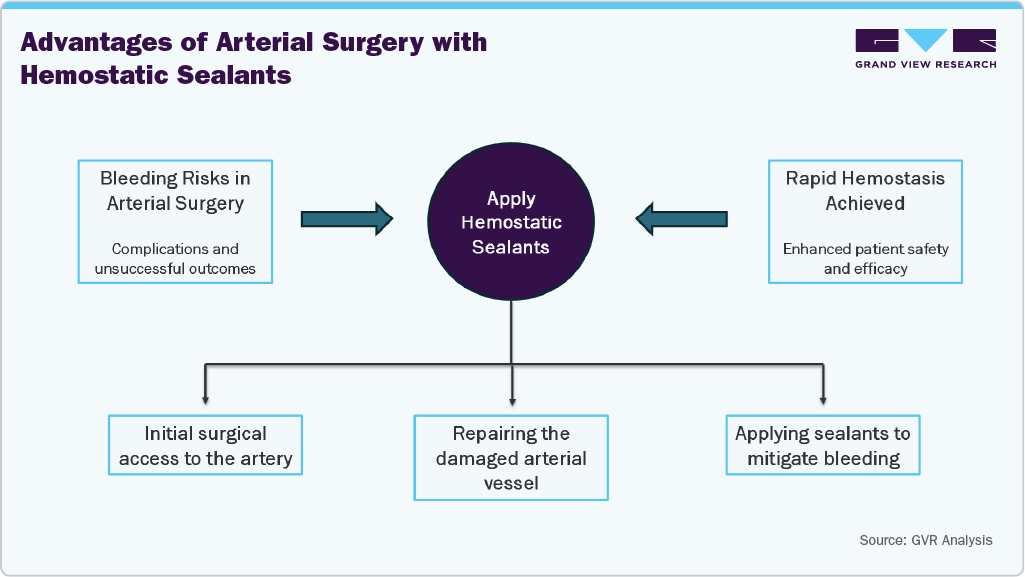
The figure above highlights the importance of hemostatic sealants in improving outcomes during arterial procedures, where bleeding control remains a critical intraoperative challenge. Arterial surgeries involve operating on high-pressure blood vessels, making patients particularly vulnerable to excessive blood loss and related complications. As illustrated, surgeons first gain access to the affected artery and repair the damaged vessel through suturing, graft placement, or reconstruction techniques. Hemostatic sealants are then applied at the surgical site to reinforce vessel closure and rapidly control bleeding. By accelerating hemostasis, these products help improve procedural safety, reduce the risk of complications, and support better overall clinical outcomes.
Technological advancements in surgical sealants are further supporting market growth and clinical utilization. Modern hemostatic products are being designed with improved adhesion, rapid polymerization, enhanced flexibility, and bioresorbability, making them suitable for delicate vascular applications. Fibrin-based, collagen-based, and synthetic polymer sealants are increasingly being used depending on the complexity of the procedure and the severity of bleeding. Furthermore, minimally invasive and endovascular-assisted vascular procedures are becoming increasingly common in the U.S. According to the Society for Vascular Surgery (SVS), endovascular aneurysm repair (EVAR) now accounts for the majority of AAA repair procedures in the country, due to its shorter recovery time and lower perioperative morbidity compared to open surgery. This shift is driving demand for advanced sealants that perform effectively in challenging, minimally invasive surgical environments.
The growing emphasis on patient safety and complication reduction is expected to further strengthen the use of hemostatic sealants in arterial surgery across the U.S. Healthcare providers are increasingly integrating advanced bleeding management technologies into standardized vascular surgery protocols to improve recovery times and reduce healthcare resource utilization. Studies have shown that effective intraoperative hemostasis can significantly decrease surgical revision rates and transfusion-related complications, both of which contribute substantially to hospital costs. In addition, the aging U.S. population is expected to increase demand for vascular interventions over the coming decade. According to the U.S. Census Bureau, adults aged 65 years and older are projected to exceed 80 million by 2040, representing a major pool susceptible to vascular disease and arterial surgical procedures. As surgical techniques continue to evolve and the burden of cardiovascular disease rises, hemostatic sealants are expected to remain an essential component of modern arterial surgery practices.
Market Dynamics
Advancements in synthetic and bioactive hemostatic technologies are significantly supporting market growth. Modern sealants, such as cyanoacrylate-based adhesives, PEG-based sealants, and polysaccharide hydrogels, provide rapid and reliable bleeding control during high-pressure vascular procedures, making them more effective than traditional sutures or manual compression methods. Recent innovations have improved biocompatibility, adhesive strength, biodegradability, and antimicrobial properties, increasing their adoption in cardiovascular and endovascular surgeries. For instance, advanced products such as Glubran 2 and AristaTM AH have demonstrated procedural success rates of approximately 94-100% in vascular applications, highlighting their growing clinical reliability. In addition, the increasing use of minimally invasive vascular procedures and ready-to-use applicator systems is further driving demand for advanced hemostatic technologies across U.S. hospitals and surgical centers.
The high cost of advanced hemostatic sealants remains a major restraint limiting their broader adoption in the U.S. arterial surgery market. Although these products offer improved bleeding control and surgical efficiency, their premium pricing creates financial challenges for hospitals and healthcare systems already burdened by rising cardiovascular treatment costs. According to the CDC, cardiovascular disease caused over 919,000 deaths in the U.S. in 2023, while related healthcare expenditures exceeded USD 168 billion between 2021 and 2022. In vascular surgery, bleeding-related complications can significantly increase hospitalization costs, with studies reporting incremental costs of over USD 15,000 per vascular procedure. While advanced sealants can help reduce complications, their high upfront cost often limits widespread use, particularly in cost-sensitive hospitals and smaller healthcare facilities. Procurement teams must therefore balance clinical benefits against budget constraints, which continues to restrict market penetration of premium hemostatic technologies.
Market Characteristics & Concentration
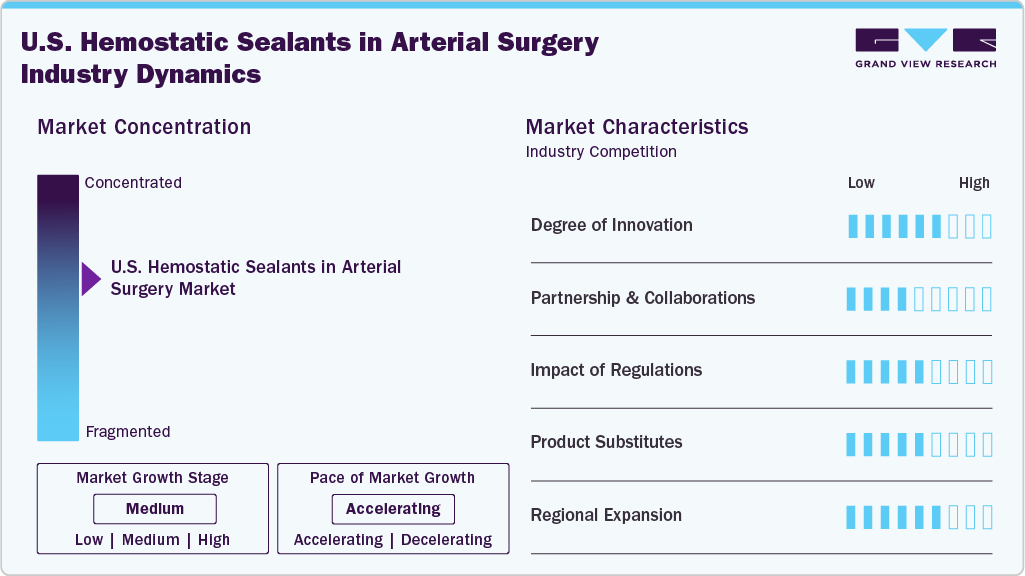
The U.S. hemostatic sealants in arterial surgery industry is moderately concentrated, with major players such as Baxter International, Johnson & Johnson, Becton, Dickinson and Company, and CryoLife playing a significant role in the market. These companies offer advanced hemostatic and sealant products designed for vascular and cardiovascular surgeries, including fibrin sealants, synthetic adhesives, collagen-based hemostats, and bioactive matrices. The market is being continuously shaped by technological advancements focused on rapid hemostasis, improved biocompatibility, enhanced adhesion strength, and minimally invasive delivery systems. In addition, the rising prevalence of cardiovascular diseases, peripheral artery disease (PAD), and aortic aneurysms in the U.S. is increasing the volume of arterial surgical procedures, thereby driving demand for advanced bleeding management technologies and attracting innovation-focused market participants.
The U.S. hemostatic sealants in arterial surgery industry is witnessing significant innovation in synthetic and bioactive surgical technologies. Manufacturers are increasingly developing next-generation products with rapid polymerization, antimicrobial properties, bioresorbability, and improved flexibility for use in high-pressure arterial environments. Recent advancements include PEG-based sealants, cyanoacrylate adhesives, and polysaccharide hydrogel technologies designed to improve intraoperative bleeding control and reduce postoperative complications. In addition, innovations in ready-to-use applicator systems and laparoscopic or catheter-based delivery platforms are supporting the growing adoption of minimally invasive vascular procedures. The increasing integration of advanced biomaterials and tissue-compatible adhesives is improving surgical precision and enhancing patient outcomes across arterial and cardiovascular surgeries.
 To learn more about this report, Download Free Sample Report
Partnerships and collaborations are playing an important role in expanding product innovation and strengthening market presence in the U.S. Medical device companies are increasingly collaborating with hospitals, research institutions, and vascular surgery centers to improve product performance and accelerate clinical adoption. Strategic partnerships focused on biomaterial research, bioactive polymer development, and minimally invasive surgical technologies are supporting the commercialization of advanced sealants for cardiovascular and arterial procedures. In addition, collaborations between manufacturers and healthcare systems are helping improve physician training, procedural efficiency, and adoption of advanced bleeding management protocols in vascular surgery.
The U.S. market is subject to stringent regulatory oversight to ensure product safety, efficacy, and biocompatibility. The U.S. Food and Drug Administration (FDA) regulates surgical sealants and hemostatic agents used in arterial surgery through premarket approval (PMA), 510(k) clearance pathways, and quality system regulations. Manufacturers must comply with strict clinical testing, ISO 10993 biocompatibility standards, sterility requirements, and labeling regulations before commercialization. Regulatory scrutiny is particularly high for products intended for internal vascular use due to the potential risks of thrombosis, embolism, inflammatory reactions, and tissue toxicity. These regulatory requirements increase development timelines and costs but also support physician confidence and patient safety in the market.
Traditional sutures, staples, manual compression techniques, electrocautery devices, and conventional hemostatic agents act as substitutes for advanced hemostatic sealants in arterial surgery. In some vascular procedures, surgeons may rely on mechanical vessel closure methods or topical hemostats rather than premium sealant products due to cost or product availability. In addition, advancements in minimally invasive endovascular techniques and improved surgical instruments are helping reduce bleeding risks during certain arterial procedures, potentially limiting the use of advanced sealants in selected cases. However, despite the availability of substitutes, hemostatic sealants remain important in complex vascular surgeries, where rapid and reliable bleeding control is critical to improving surgical outcomes.
Product Insights
The fibrin-based sealants segment had the largest market share of 41.8% in 2025, primarily due to their strong adoption in arterial and cardiovascular surgeries for rapid bleeding control and high biocompatibility. These sealants are widely preferred in procedures such as vascular grafting and aortic repair because they mimic the body’s natural clotting process while supporting tissue healing. Segment growth is also supported by ongoing product innovations and launches in the U.S. market focused on improving ease of application, sealing strength, and surgical efficiency, further increasing their adoption across hospitals and vascular surgery centers.
The combination hemostats and sealants segment is growing at a 2.5% CAGR, driven by increasing demand for multifunctional products that provide both rapid hemostasis and durable tissue sealing during complex arterial surgeries. These products are gaining adoption in vascular and cardiovascular procedures because they help reduce blood loss, improve surgical efficiency, and minimize postoperative complications. Growth in the segment is also supported by ongoing product advancements in the U.S., including the development of combination formulations with enhanced adhesion strength, bioresorbability, and ease of application for minimally invasive and high-pressure vascular procedures.
Application Insights
The arterial surgery with graft replacement (Artificial vessel replacement) segment had the largest market share of 79.0% in 2025, primarily due to the high volume of vascular bypass procedures, aortic aneurysm repairs, and complex arterial reconstructions performed in the U.S. These procedures often involve significant bleeding risks, increasing the need for advanced hemostatic sealants to reinforce graft anastomosis, improve vessel sealing, and reduce intraoperative blood loss. Segment growth is further supported by the rising prevalence of peripheral artery disease (PAD) and aortic disorders, along with increasing adoption of advanced vascular graft technologies and minimally invasive surgical techniques across U.S. hospitals and cardiovascular centers.
The arterial repair/reconstruction without graft segment is growing at a significant CAGR during the forecast period, driven by the increasing demand for multifunctional products that provide both rapid hemostasis and durable tissue sealing during complex arterial surgeries. This is driven by the increasing adoption of vessel-preserving surgical techniques and minimally invasive vascular procedures in the U.S. These procedures often require effective bleeding management to control suture-line leakage and improve surgical precision without the use of artificial grafts. The growing prevalence of peripheral artery disease (PAD), traumatic vascular injuries, and localized arterial defects further supports demand for advanced hemostatic sealants in repair and reconstruction procedures. In addition, ongoing advancements in bioactive and synthetic sealant technologies are improving hemostatic efficiency and supporting wider adoption across cardiovascular and vascular surgery centers.
Disease Indication Insights
The aortic aneurysms segment had the largest market share of 41.5% in 2025. Aortic aneurysms represent a major clinical indication driving market growth. These aneurysms occur when the aortic wall weakens and enlarges, creating a life-threatening risk of rupture and severe internal bleeding. The rising prevalence of hypertension, smoking, obesity, and cardiovascular diseases, along with the rapidly aging population across the country. Hemostatic sealants are extensively used during aortic aneurysm surgeries to control bleeding, reinforce vascular grafts, and reduce blood loss at anastomotic sites. Products such as fibrin sealants, polyethylene glycol (PEG)-based sealants, collagen patches, thrombin-gelatin matrices, and surgical glues are increasingly utilized in complex vascular reconstruction procedures.
The Others {incl. aortic dissection, traumatic arterial injury} segment is growing at a significant CAGR during the forecast period, driven by the increasing incidence of emergency vascular conditions and trauma-related arterial procedures in the U.S. Complex cases such as aortic dissections and traumatic arterial injuries often involve severe bleeding risks, creating strong demand for advanced hemostatic sealants to achieve rapid bleeding control and improve surgical outcomes. Growth in this segment is further supported by advancements in emergency vascular surgery techniques, rising adoption of endovascular interventions, and increasing availability of high-performance synthetic and bioactive sealants across trauma centers and cardiovascular hospitals.
End Use Insight
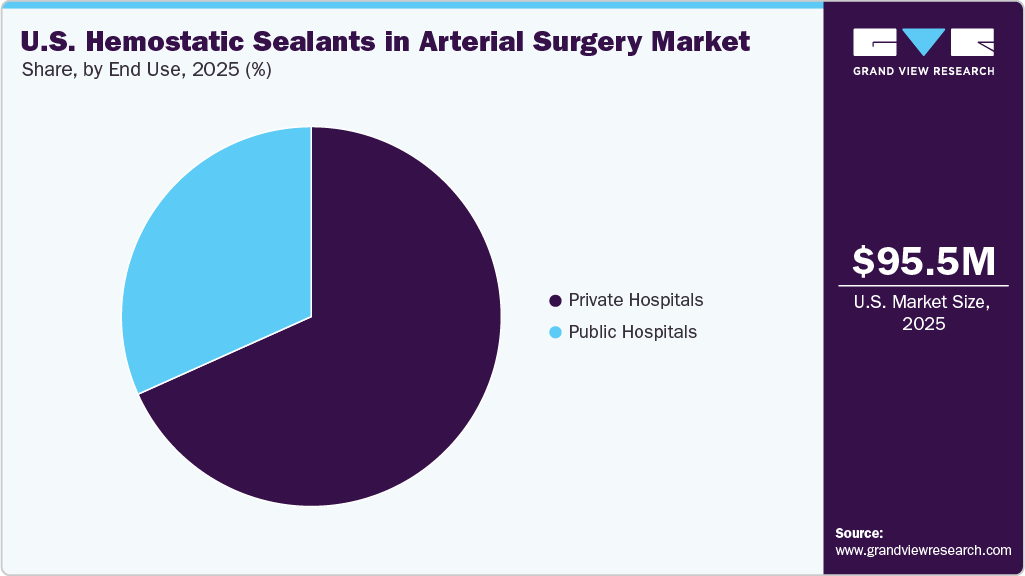
The public hospitals segment is expected to account for the largest share of 54.5% in 2025, due to their strong adoption of advanced vascular surgery technologies, minimally invasive procedures, and premium surgical care pathways. These hospitals frequently perform complex arterial surgeries, including aortic aneurysm repair, carotid endarterectomy, peripheral bypass surgery, and traumatic vascular reconstruction, all of which require rapid and reliable hemostasis. Private hospitals in the U.S. are investing heavily in hybrid operating rooms and robotic-assisted vascular surgery platforms, which has accelerated demand for flowable, easy-to-apply sealants compatible with minimally invasive arterial procedures. Products such as Baxter International Inc.'s FLOSEAL, Johnson & Johnson's SURGICEL, and Becton, Dickinson and Company's ARISTA AH are widely preferred in private surgical centers because they support faster recovery and improved surgical precision.
 To learn more about this report, Download Free Sample Report
The public hospitals segment is expected to grow significantly at a CAGR of 2.5% during the forecast period, driven by the rising volume of cardiovascular and emergency vascular procedures performed across government-funded healthcare institutions in the U.S. Public hospitals are increasingly adopting advanced hemostatic sealants to improve bleeding management, reduce surgical complications, and enhance patient outcomes in arterial surgeries. Growth in this segment is further supported by increasing healthcare investments, expanding access to cardiovascular care, and the growing burden of peripheral artery disease (PAD), aortic aneurysms, and trauma-related vascular injuries among the U.S. population.
Key U.S. Hemostatic Sealants in Arterial Surgery Company Insights
The U.S. market is moderately competitive, with several key players. The major market players are focused on expanding their geographical presence, forming partnerships to enhance procedural efficiency and patient care, leveraging key collaboration initiatives, and exploring mergers and acquisitions.
Key U.S. Hemostatic Sealants in Arterial Surgery Companies:
- Ethicon
- Baxter International
- Corza Medical
- Integra LifeSciences Corporation
- Artivion
- Becton, Dickinson and Company (BD)
- Teleflex
Competitive Benchmarking
Operating Strategies
Competitive Edge
Weaknesses
Mature Players: Ethicon
- Mature players are focusing on expanding their advanced hemostatic sealant portfolios across vascular, cardiovascular, and arterial surgery applications to strengthen their market presence in the U.S.
- These companies prioritize innovation in fibrin-based, PEG-based, and synthetic sealant technologies while leveraging strong hospital partnerships, physician training programs, and nationwide distribution networks.
- Established companies maintain a strong competitive advantage through broad product portfolios, FDA-approved technologies, extensive clinical validation, and strong relationships with hospitals and cardiovascular surgery centers.
- Their ability to invest heavily in R&D, product innovation, and minimally invasive surgical solutions supports continued adoption in complex arterial procedures.
- High R&D costs, strict FDA regulatory requirements, and expensive manufacturing processes increase operational expenses and commercialization timelines.
- Mature players also face pricing pressure from hospitals focused on cost optimization and reimbursement limitations in certain vascular procedures.
Emerging Players: Artivion
- Emerging players focus on niche vascular applications, bioactive material innovation, and cost-effective hemostatic technologies to differentiate themselves in the market.
- Many companies emphasize minimally invasive delivery systems, synthetic polymer development, and strategic collaborations with research institutions and hospitals.
- Their flexibility, faster innovation cycles, and focus on specialized arterial-surgery applications enable them to address evolving surgical and bleeding-management needs.
- Emerging companies are also benefiting from increasing demand for next-generation bioresorbable and antimicrobial sealants.
- Limited financial resources, smaller distribution networks, and regulatory approval challenges restrict large-scale commercialization and market expansion.
- These companies may also face difficulties competing with established brands that already have strong surgeon familiarity and hospital procurement relationships.
Recent Developments
-
In July 2025, Teleflex acquired all of Biotronik's Vascular Intervention business, significantly expanding its interventional portfolio with a broad range of coronary and peripheral vascular therapeutic products. The acquisition strengthens Teleflex's commercial infrastructure and clinical relationships in the vascular surgery market, a key downstream channel for hemostatic sealant utilization, and accelerates its presence in high-growth peripheral arterial procedure segments.
-
In April 2025, Baxter launched the room-temperature stable Hemopatch Sealing Hemostat, specifically designed to eliminate cold-chain storage requirements in hospital and ambulatory surgical center settings. The innovation directly addresses a long-standing OR logistics challenge for biologic hemostatic products, improving accessibility across community hospitals, trauma centers, and outpatient vascular surgery programs in North America.
U.S. Hemostatic Sealants in Arterial Surgery Market Report Scope
Report Attribute
Details
Market size value in 2026
USD 97.7 million
Revenue forecast in 2033
USD 114.6 million
Growth rate
CAGR of 2.3% from 2026 to 2033
Actual period
2021 - 2025
Forecast period
2026 - 2033
Quantitative units
Revenue in USD million/billion and CAGR from 2026 to 2033
Report coverage
Revenue forecast, company ranking, competitive landscape, growth factors, and trends
Segments covered
Product, application, disease indication, end use
Key companies profiled
Ethicon; Baxter International; Corza Medical; Integra LifeSciences Corporation; Artivion; Becton; Dickinson and Company (BD); Teleflex
Customization scope
Free report customization (equivalent up to 8 analysts working days) with purchase. Addition or alteration to country, regional & segment scope
Pricing and purchase options
Avail customized purchase options to meet your exact research needs. Explore purchase options
U.S. Hemostatic Sealants in Arterial Surgery Market Report Segmentation
This report forecasts revenue growth at the country level and analyzes the latest industry trends in each sub-segments from 2021 to 2033. For this study, Grand View Research has segmented the U.S. hemostatic sealants in arterial surgery market report based on product, application, disease indication, and end use:
-
Product Outlook (Revenue, USD Million, 2021 - 2033)
-
Fibrin-based Sealants
-
Synthetic/Polymer-based Sealants
-
Combination Hemostats & Sealants
-
-
Application Outlook (Revenue, USD Million, 2021 - 2033)
-
Arterial Surgery with Graft Replacement (Artificial Vessel Replacement)
-
35556, 35566
-
35656, 35661, 35666
-
35081, 35082, 35091, 35092, 35102, 35103
-
33858, 33859, 33863, 33864, 33871, 33875, 33877
-
-
Arterial Repair/Reconstruction without Graft
-
35301
-
35371
-
35206
-
35286
-
35226, 35256
-
-
-
Disease Indication Outlook (Revenue, USD Million, 2021 - 2033)
-
Aortic Aneurysms
-
Peripheral Artery Disease
-
Carotid Artery Disease
-
Others
-
-
End Use Outlook (Revenue, USD Million, 2021 - 2033)
-
Public Hospitals
-
Private Hospitals
-
Delivered Customizations
This report has been delivered with the following In-depth customizations
Client Request
Customization Delivered
Value Adds
Average Selling Price (ASP) Analysis by Key Hemostatic Brands
Developed a detailed ASP (Average Selling Price) analysis of leading hemostatic sealant brands used in arterial and vascular surgeries across the U.S. The study evaluated pricing trends by product type (fibrin-based, PEG-based, synthetic, and combination sealants), hospital procurement patterns, reimbursement considerations, competitive pricing strategies, and adoption across hospitals and cardiovascular surgery centers.
Enables stakeholders to benchmark competitor pricing, assess premium versus value-based product positioning, identify pricing pressures across hospital systems, and develop optimized commercialization and market penetration strategies for the U.S. arterial surgery market.
Supply Chain/Value Chain Analysis, U.S. - Holistic Analysis on MedTech & Hemostatic Sealants
Conducted a comprehensive supply chain and value chain assessment covering raw material suppliers, biomaterial manufacturers, sealant developers, contract manufacturers, distributors, hospitals, and vascular surgery end-users in the U.S. The analysis also evaluated regulatory pathways, procurement dynamics, distribution networks, inventory management, and key operational bottlenecks impacting market growth.
Provides actionable insights into supply-side risks, sourcing dependencies, manufacturing challenges, distribution efficiencies, and strategic opportunities for partnerships, localization, and operational optimization within the U.S. hemostatic sealants ecosystem.
Number of Individuals with Target Disease Analysis
Delivered an epidemiology-based analysis of the U.S. patient population affected by major arterial and vascular diseases requiring surgical intervention. The study included prevalence and incidence trends, age-group analysis, procedure volumes, disease burden projections, and regional distribution patterns for aortic aneurysms, peripheral artery disease (PAD), carotid artery disease, and other arterial disorders.
Enables stakeholders to identify high-growth patient segments, forecast procedural demand, evaluate long-term market opportunities, prioritize target indications, and align product development and commercialization strategies with evolving vascular disease burden trends in the U.S. healthcare market.
Frequently Asked Questions About This Report
The U.S. hemostatic sealants in arterial surgery market size was estimated at USD 95.5 million in 2025 and is expected to reach USD 97.7 million in 2026.
The U.S. hemostatic sealants in arterial surgery market is expected to grow at a compound annual growth rate of 2.3% from 2026 to 2033 to reach USD 114.6 million by 2033.
The fibrin-based sealants segment dominated the U.S. hemostatic sealants in arterial surgery market, with a 41.8% share in 2025, primarily due to their strong adoption in arterial and cardiovascular surgeries for rapid bleeding control and high biocompatibility.
Some key players operating in the U.S. hemostatic sealants in arterial surgery market include Ethicon, Baxter International, Corza Medical, Integra LifeSciences Corporation, Artivion, Becton, Dickinson and Company (BD), and Teleflex
Key factors that are driving the market growth include the increasing burden of peripheral artery disease (PAD), aortic aneurysms, and other vascular disorders, requiring surgical intervention.
About the Author(s)
Medical Devices Research Team
Healthcare · Medical DevicesThis report was authored by the medical devices research team at Grand View Research - comprising two research analysts, one senior research analyst, and one industry expert - with specialized expertise in the medical devices segment of the healthcare industry. All findings are based on proprietary healthcare databases, executive interviews, and regulatory analysis, subject to internal peer review prior to publication.
Last Updated:
Speak to Analyst

Customize this report to your needs - add regions, segments, or data points, with 20% free customization.
Or view our licence options:


ISO 9001:2015 & 27001:2022 Certified
We are GDPR and CCPA compliant! Your transaction & personal information is safe and secure. For more details, please read our privacy policy.


