
- Home
- »
- Homecare & Decor
- »
-
U.S. Hospitality Mattress Market Size, Industry Report, 2033GVR Report cover
![U.S. Hospitality Mattress Market Size, Share & Trends Report]()
U.S. Hospitality Mattress Market (2025 - 2033) Size, Share & Trends Analysis Report By Type (Innerspring, Foam, Hybrid), By Size (Single, Double, Queen, King), By End Use (Hotels & Resorts, Vacation Rental, Hostels), And Segment Forecasts
- Report ID: GVR-4-68040-690-3
- Number of Report Pages: 90
- Format: PDF
- Historical Range: 2021 - 2024
- Forecast Period: 2025 - 2033
- Industry: Consumer Goods
- Report Summary
- Table of Contents
- Segmentation
- Methodology
- Download FREE Sample
-
 Download Sample Report
U.S. Hospitality Mattress Market Summary
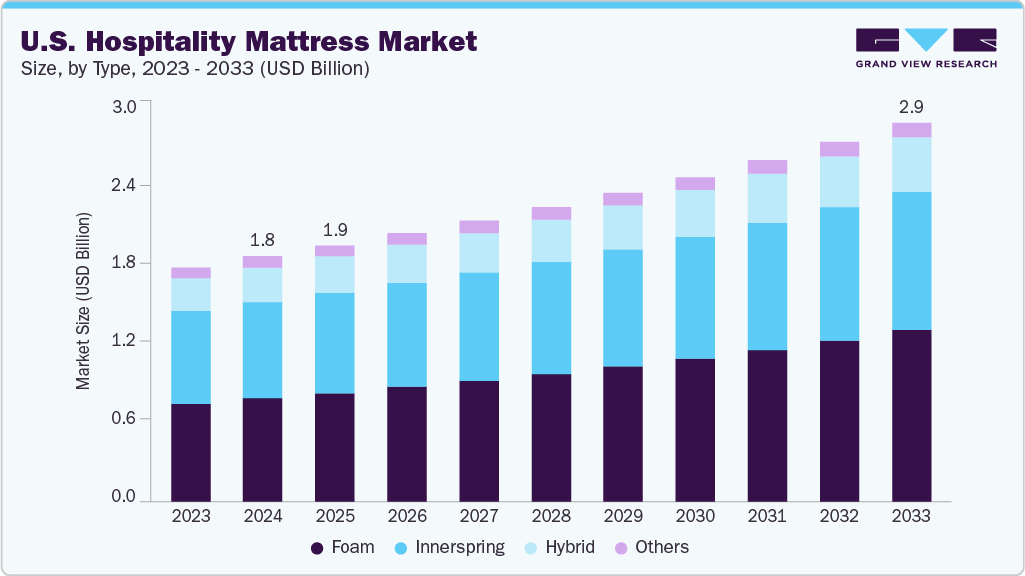
The U.S. hospitality mattress market size was estimated at USD 1,896.3 million in 2024 and is expected to grow at a CAGR of 5.0% from 2025 to 2033. The demand for the U.S. hospitality mattress is primarily driven by the need to enhance guest comfort and satisfaction, as a restful sleep experience directly impacts reviews and repeat business. Many hotels now market signature sleep experiences with custom-designed mattresses to differentiate their brand and build customer loyalty.
Additionally, regular renovation and replacement cycles, typically every 5 to 7 years, and growing guest expectations around wellness have increased investment in high-quality mattresses offering orthopedic support, hypoallergenic materials, and improved sleep quality.
Sustainability and ESG commitments are becoming increasingly important in the U.S. hospitality mattress market, as hotels strive to align with environmentally responsible practices and appeal to eco-conscious travelers. This includes adopting mattresses made from organic or recycled materials, such as natural latex, plant-based foams, or recycled steel coils, and adherence to green certifications like CertiPUR-US or GREENGUARD. A notable example is Marriott International’s “Sustain Serve 360” initiative, which incorporates sustainable sourcing practices across its properties, including eco-friendly bedding and mattresses designed to reduce environmental impact while maintaining guest comfort.
One of the main factors boosting demand in the U.S. hospitality mattress market is the ongoing expansion of hotel and resort infrastructure. The country continues to see growth in hotel construction, renovations, and conversions, which directly increases the need for new bedding solutions. According to Lodging Econometrics, between January and March 2025, 161 new hotels with 18,767 rooms opened across the U.S. Additionally, hotel conversion and renovation activities reached a record high in Q1 2025, with 2,050 projects involving 269,435 rooms.
The integration of IoT-enabled mattresses is a growing trend among luxury hotels aiming to enhance the guest experience. These smart mattresses incorporate embedded sensors to track sleep patterns, body movements, temperature, and pressure points, allowing for real-time adjustments to ensure personalized comfort. Especially valuable in the luxury market, this technology improves the sleep experience and fosters guest loyalty.
Major hotel chains in the U.S. actively form partnerships with mattress manufacturers to offer exclusive, brand-specific sleep solutions that meet their guests’ expectations. For example, Hilton works with Serta Simmons Bedding to create the proprietary Hilton Serenity Bed, which features individually pocketed coils, gel-infused memory foam, and reinforced edges designed for hotel-grade durability and comfort. These mattresses are sold directly through Hilton to homes. Additionally, Marriott International has formed a strategic partnership with Tempur Sealy Hospitality to supply high-quality mattresses across several hotels, including Marriott Hotels, Sheraton, and Westin. This collaboration ensures consistent sleep comfort by offering a range of Sealy Posturepedic and Tempur-Pedic mattresses specifically tailored to meet brand standards.
Trump Tariff Impact
Trump-era tariffs have significantly affected the U.S. hospitality mattress market, mainly by raising the cost of imported raw materials and finished products. According to Furniture Today, the implementation of a 10% universal tariff in April 2025 and reciprocal duties on certain import sources has caused notable price increases for key components like foam, cover fabrics, coils, lumber, and steel. Consequently, mattress manufacturers face increased cost pressures, which are being passed on to hospitality buyers through higher mattress prices, especially impacting procurement during property renovations or replacement cycles.
In response, manufacturers are diversifying their supply chains to reduce dependence on high-tariff countries like China. This involves relocating production to Southeast Asia, Mexico, or even bringing operations back to the U.S. While this shift creates logistical and operational challenges, it aims to ensure long-term cost stability and lessen the risks of future trade disruptions. For the hospitality industry, tariff-driven cost increases have strained renovation budgets, causing some hotels to delay mattress replacements or prolong their use and potentially affect guest comfort and overall service quality.
Buyers’ Behavioral Analysis
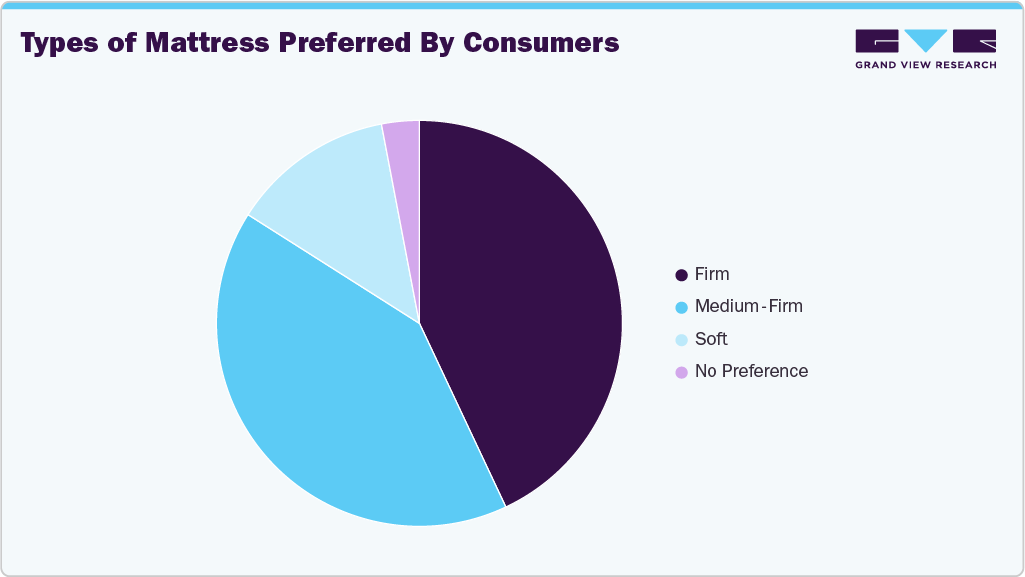
Consumer mattress preferences are critical in shaping guest expectations within the hospitality industry. Most travelers seek comfort comparable to their home environment, so hotels must carefully consider mattress firmness when outfitting guest rooms. Prioritizing firm and medium-firm mattresses allows hotels to cater to the broadest segment of guests, enhancing sleep quality and overall satisfaction. By aligning mattress selection with widely preferred comfort levels, hospitality providers can improve guest experiences, encourage repeat bookings, and maintain a strong reputation in an increasingly competitive industry.
Type Insights
The foam mattress accounted for a 42.15% revenue share of the U.S. hospitality mattress market in 2024 due to its strong balance of comfort, cost-efficiency, and operational convenience. It offers excellent pressure relief and motion isolation, enhancing guest satisfaction across various body types. Additionally, its lightweight design makes it easier to handle during installation and replacement, which benefits hotel operations. Coupled with its affordability compared to hybrid or latex models, foam mattresses are a practical choice for large-scale hospitality procurement. For example, Tempur Sealy International is a leading U.S. brand that supplies memory foam and hybrid mattresses to major hotel chains, including Marriott and Hilton, through its dedicated Tempur Sealy Hospitality division.
The hybrid mattress is projected to grow at a CAGR of 5.1% from 2025 to 2033 due to its ability to combine the support of innerspring coils with the comfort of foam or latex layers, providing an optimal balance for a variety of guest preferences. These mattresses offer better pressure relief, motion isolation, and edge support, making them ideal for high-traffic settings like hotels and resorts. Their durability and extended lifespan also enhance cost-efficiency over time. As guest expectations around sleep quality and wellness continue to increase, hybrid mattresses have become more popular, especially in upscale and luxury properties. An example is Serta Simmons Bedding, which supplies hybrid mattress solutions to major hotels such as Hilton Garden Inn and Embassy Suites, helping them deliver a superior sleep experience.
Size Insights
The queen-size mattress accounted for 43.63% of the U.S. hospitality mattress market in 2024. Queen-size mattresses provide the perfect balance of comfort, space efficiency, and versatility across different property types. They offer ample sleeping space for individuals and couples while helping hotels optimize room layouts, especially in popular formats used by brands like Holiday Inn Express and Fairfield Inn & Suites. Queen mattresses take up less space than king-size beds, allowing for more efficient room design and lower furnishing costs without sacrificing guest comfort. This makes them a practical and favored choice in the hospitality industry.
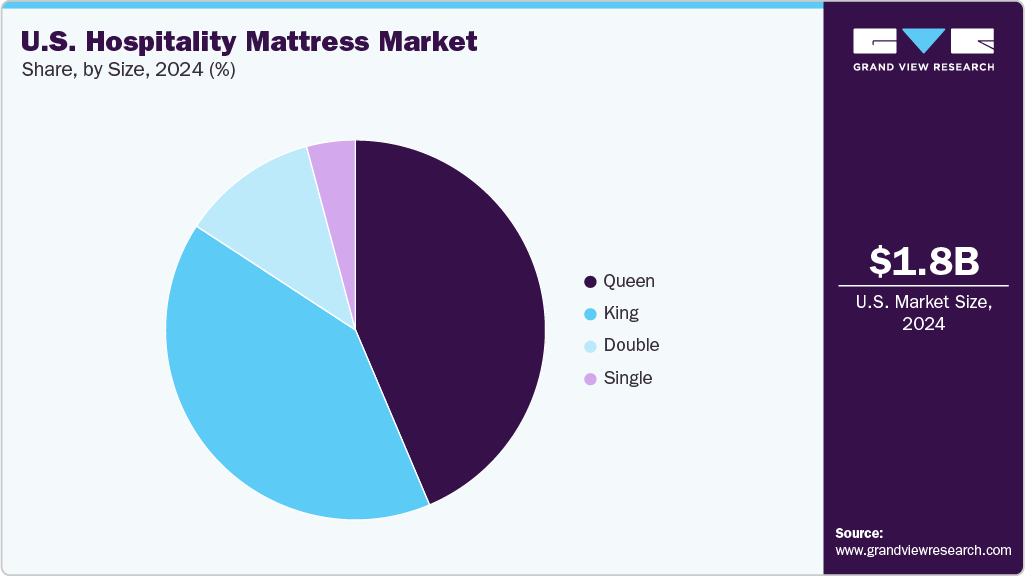
The king size mattress is expected to grow at a CAGR of 5.6% from 2025 to 2033. King-size mattresses offer superior space and comfort, particularly appealing to couples, families, and premium travelers. This trend is especially prominent in upscale and luxury hotel segments like The Ritz-Carlton, Waldorf Astoria, and JW Marriott, where spacious accommodations and high-quality sleep experiences are essential brand standards. Additionally, these mattresses are often viewed as a symbol of luxury, contributing to higher guest ratings and improved online reviews. As domestic and international travel continues to rebound, the preference for larger sleeping arrangements is expected to remain a key growth area in the industry.
End Use Insights
Mattresses for hotels and resorts accounted for a 72.17% revenue share of the hospitality mattress industry in 2024. Hotels and resorts have large room inventories, standardized quality expectations, and strong partnerships with leading mattress manufacturers. These properties are committed to delivering a consistent and high-quality sleep experience across all locations, leading to regular mattress upgrades every few years. Furthermore, guests expect a high level of comfort and uniformity, which drives hotels and resorts to invest in durable, commercial-grade mattresses. Collaborations with top brands like Serta Simmons and Tempur Sealy also ensure tailored bedding solutions that reinforce brand identity and guest satisfaction.
The mattresses for hostels are expected to grow at a CAGR of 6.0% from 2025 to 2033, largely driven by the increasing number of budget-conscious and experience-seeking travelers, including millennials, Gen Z, solo adventurers, and backpackers. These groups are increasingly favoring affordable, community-based accommodations that offer authentic, localized experiences in urban destinations. This trend is further supported by the surge in micro-adventures and the expansion of hostel chains and venture-backed startups, which are rapidly scaling operations across popular U.S. cities. As a result, there is a growing need for space-efficient, cost-effective, and durable mattresses tailored to high-occupancy, fast-turnover environments.
Key U.S. Hospitality Mattress Company Insights
The U.S. hospitality mattress industry combines well-established brands and emerging manufacturers. Leading companies actively respond to evolving hospitality trends by innovating sleep solutions and broadening their product portfolios to enhance comfort, durability, and sustainability. This strategic adaptation helps them maintain a competitive edge and strengthen their position in a dynamic industry.
-
Serta Simmons Bedding, LLC (SSB) is one of the largest and most established mattress manufacturers in North America. The company is headquartered in Doraville, Georgia, and serves both consumer and commercial markets. SSB is a key supplier to major hotel chains in the hospitality sector, offering specialized mattress lines designed for durability, comfort, and high guest turnover.
-
Tempur Sealy International, Inc. is the world’s largest bedding provider and a leader in sleep innovation and omnichannel retail strategies. With a heritage tracing back to the Tempur‑Pedic and Sealy brands, the company designs, manufactures, and distributes a broad portfolio, including Tempur‑Pedic, Sealy, Sealy Posturepedic, Stearns & Foster, plus private-label and OEM offerings to customers in over 100 countries. Its hospitality division delivers tailored sleep solutions for hotels, resorts, and lodging operators, combining memory foam, hybrid innersprings, adjustable sleep systems, and cooling technologies with strong warranties and consistency across global properties.
Key U.S. Hospitality Mattress Companies:
- Serta Simmons Bedding, LLC
- Tempur Sealy International, Inc.
- King Koil Licensing Company, Inc.
- Hilding Anders International AB
- Corsicana Mattress Company
- Restonic Mattress Corporation.
- KINGSDOWN, INC.
- Whitestone Home Furnishings, LLC (Saatva)
- Therapedic International
- Brooklyn Bedding, LLC
Recent Developments
-
In April 2025, MLILY USA debuted its hospitality mattress program at the AAHOA Convention in New Orleans. The company showcased a dual‑sided concept mattress, firm on one side, plush on the other, emphasizing custom design flexibility, scalable U.S.-based manufacturing, and a “good‑better‑best” product model. This launch positions MLILY as an emerging supplier for hotel chains needing tailored bedding solutions with clinical research backing.
-
In January 2025, Tempur Sealy launched an all-new Sealy Posturepedic lineup, featuring PrecisionFit coils designed to adapt to individual body shapes and maintain spinal alignment. The collection includes four tiers: Posturepedic, Plus, Pro, and Elite. It offers support and cooling technologies (MAXSUPPORT, DURAFLEX coil edge, SealyChill) catering to mid-range and premium segments.
-
In October 2024, Piana Sleep partnered with Reveille Hospitality to roll out the eco‑friendly “Rinnovo” mattress in upscale and luxury U.S. hotel properties. Their collaboration focuses on sustainability, offering recycled-material construction, antimicrobial features via SmartSilver, temperature-regulating cooling, and a circular take‑back program for old mattresses.
-
In April 2024, Westin introduced its Next Generation Heavenly Bed, a complete redesign developed in collaboration with Simmons Bedding. The updated Heavenly Bed includes a plush-top innerspring mattress with gel‑infused memory foam, antimicrobial silver fiber covers, and hypoallergenic bedding. It aims to enhance guest wellness and elevate sleep quality across more than 240 global properties.
U.S. Hospitality Mattress Market Report Scope
Report Attribute
Details
Market size value in 2025
USD 1,983.1 million
Revenue forecast in 2033
USD 2,931.4 million
Growth rate
CAGR of 5.0% from 2025 to 2033
Actual data
2021 - 2024
Forecast period
2025 - 2033
Quantitative units
Revenue in USD Million, and CAGR from 2025 to 2033
Report coverage
Revenue forecast, company ranking, competitive landscape, growth factors, and trends
Segments covered
Type, size, and end use
Country scope
U.S.
Key companies profiled
Serta Simmons Bedding, LLC; Tempur Sealy International, Inc.; King Koil Licensing Company, Inc.; Hilding Anders International AB; Corsicana Mattress Company; Restonic Mattress Corporation.; KINGSDOWN, INC.; Whitestone Home Furnishings, LLC (Saatva); Therapedic International; Brooklyn Bedding, LLC.
Customization
Free report customization (equivalent up to 8 analysts working days) with purchase. Addition or alteration to country, regional & segment scope.
Pricing and purchase options
Avail customized purchase options to meet your exact research needs. Explore purchase options
U.S. Hospitality Mattress Market Report Segmentation
This report forecasts revenue growth at the country level and provides an analysis of the latest industry trends and opportunities in each of the sub-segments from 2021 to 2033. For the purpose of this study, Grand View Research has segmented the U.S. hospitality mattress market report by type, size, and end use.
-
Type Outlook (Revenue, USD Million, 2021 - 2033)
-
Innerspring
-
Foam
-
Hybrid
-
Others
-
-
Size Outlook (Revenue, USD Million, 2021 - 2033)
-
Single
-
Double
-
Queen
-
King
-
-
End Use Outlook (Revenue, USD Million, 2021 - 2033)
-
Hotels & Resorts
-
Vacation Rental
-
Hostels
-
Others
-
Frequently Asked Questions About This Report
b. The U.S. hospitality mattress market was estimated at USD 1,896.3 million in 2024 and is expected to reach USD 1,983.1 million in 2025.
b. The U.S. hospitality mattress market is expected to grow at a compound annual growth rate of 5.0% from 2025 to 2033 to reach USD 2,931.4 million by 2033.
b. The foam mattress accounted for a revenue share of 42.15% of the U.S. hospitality mattress market in 2024 due to their strong balance of comfort, cost-efficiency, and operational convenience.
b. Some of the key players in the U.S. hospitality mattress market is Serta Simmons Bedding, LLC; Tempur Sealy International, Inc.; King Koil Licensing Company, Inc.; Hilding Anders International AB; Corsicana Mattress Company; Restonic Mattress Corporation.; KINGSDOWN, INC.; Whitestone Home Furnishings, LLC (Saatva); Therapedic International; Brooklyn Bedding, LLC.
b. The demand for a U.S. hospitality mattress is primarily driven by the need to enhance guest comfort and satisfaction, as a restful sleep experience directly impacts reviews and repeat business. Many hotels now market signature sleep experiences with custom-designed mattresses to differentiate their brand and build customer loyalty.


Share this report with your colleague or friend.
Need a Tailored Report?
Customize this report to your needs — add regions, segments, or data points, with 20% free customization.


ISO 9001:2015 & 27001:2022 Certified
We are GDPR and CCPA compliant! Your transaction & personal information is safe and secure. For more details, please read our privacy policy.
Trusted market insights - try a free sample
See how our reports are structured and why industry leaders rely on Grand View Research. Get a free sample or ask us to tailor this report to your needs.













