
- Home
- »
- Clinical Diagnostics
- »
-
U.S. HSV Testing Market Size & Share, Industry Report 2033GVR Report cover
![U.S. HSV Testing Market Size, Share & Trends Report]()
U.S. HSV Testing Market (2025 - 2033) Size, Share & Trends Analysis By Type (HSV-1/HSV-2 Combines, HSV-1, HSV-2), By Test Type, By Sample Type (Blood, Swabs, Cerebrospinal Fluid), By End Use, By Region, And Segment Forecasts
U.S. HSV Testing Market Summary
The U.S. HSV testing market size was estimated at USD 205.0 million in 2024 and is expected to grow at a CAGR of 5.24% from 2025 to 2033. The market includes a range of diagnostic solutions designed for the accurate and timely detection of herpes simplex virus types 1 and 2. Testing methods span from conventional serological assays to advanced molecular platforms, enabling reliable clinical decision-making across hospitals, diagnostic laboratories, and outpatient settings. These tests are widely used for managing sexually transmitted infections and prenatal screening, with increasing adoption in decentralized and point-of-care environments as the demand for rapid and accessible testing grows.
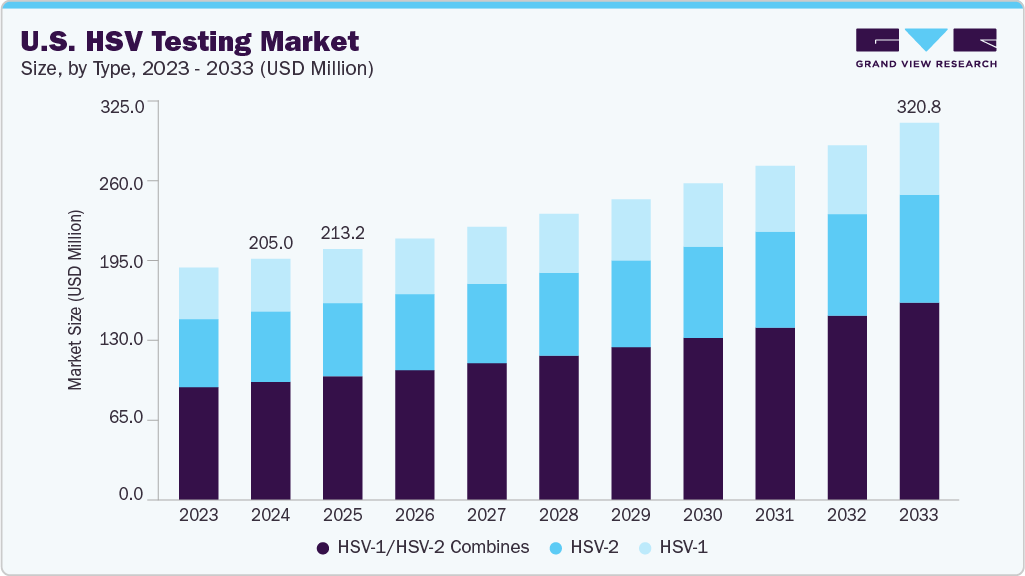
Ongoing advancements in molecular diagnostic technologies continue to improve the sensitivity and turnaround time of HSV testing in the U.S. Multiplex PCR platforms that detect HSV alongside other STIs are gaining preference in outpatient clinics and emergency departments. Moreover, newer test kits with streamlined sample-to-answer workflows have received regulatory clearance, facilitating broader use in primary and urgent care environments.
In a significant regulatory update, the FDA formally classified HSV nucleic acid-based assays for central nervous system (CNS) infections as Class II (special controls) in June 2025. This change applies to qualitative in vitro diagnostics for detecting and differentiating HSV-1 and HSV-2 in cerebrospinal fluid samples, and it provides a clearer, more streamlined path to market compared to the previous Class III status. By reducing regulatory burdens while ensuring safety and effectiveness, this reclassification is expected to accelerate the availability of CNS-directed HSV tests, benefiting hospitals and neurology centers.
Government-led STI surveillance and prevention efforts are also driving market growth. Public health campaigns focused on adolescent and reproductive health are increasing patient demand for accessible, reliable HSV screening. Furthermore, collaborations between federal health agencies (such as the CDC and NIH) and private diagnostic companies are helping to reduce testing disparities across urban and underserved communities.
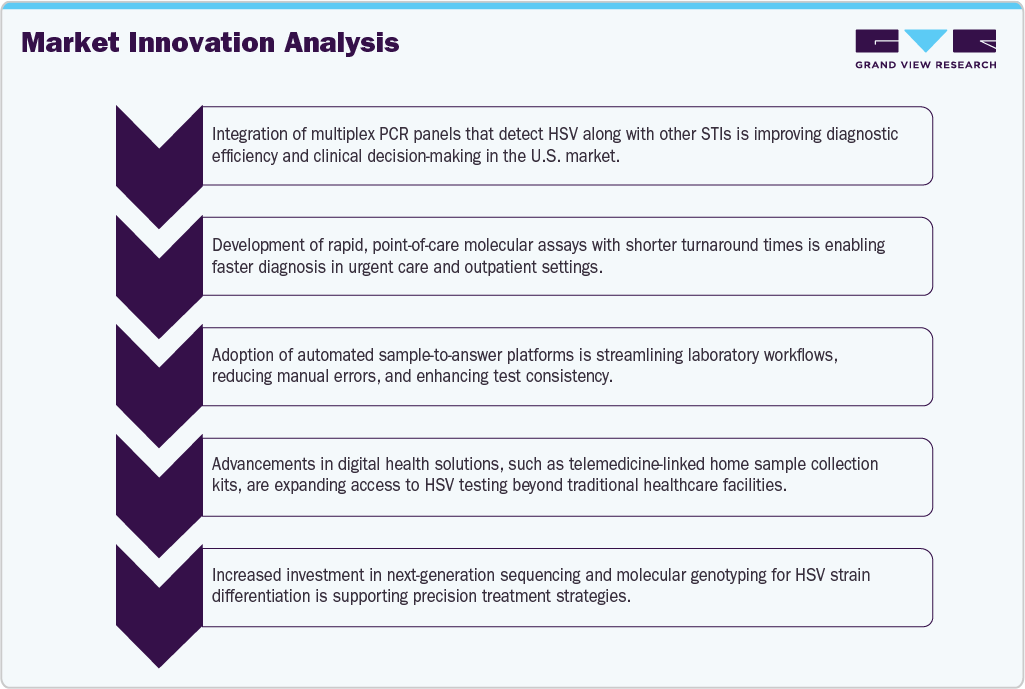
Overall, the U.S. HSV testing industry is evolving with a strong emphasis on advanced molecular technologies and improved accessibility. The integration of multiplex panels, rapid point-of-care solutions, and automated workflows is streamlining diagnostic processes while reducing turnaround times. Digital health initiatives, including telemedicine-driven testing and home collection kits, are expanding the reach of testing services to underserved populations. In addition, growing interest in genotyping and next-generation sequencing is aligning diagnostic capabilities with emerging treatment approaches, supporting better patient management and targeted therapeutic interventions.
Market Concentration & Characteristics
Innovation in the U.S. HSV testing market is high, with a strong focus on faster, more sensitive, and easy-to-use diagnostic solutions. Advancements in molecular diagnostics, such as multiplex PCR platforms and fully automated sample-to-answer systems, are improving detection accuracy for HSV-1 and HSV-2. Integration with digital health solutions, including smartphone applications and cloud-based data systems, is enhancing result accessibility and teleconsultation services. Growing demand for minimally invasive testing methods and home-based test kits continues to drive innovation.
Mergers and acquisitions are moderately active, with diagnostic firms aiming to expand their STI testing portfolios through the acquisition of specialized assay developers. These strategic deals enhance access to advanced HSV diagnostic technologies and strengthen market presence. Partnerships between diagnostic companies and digital health platforms are also increasing, enabling broader test accessibility and streamlined connectivity.
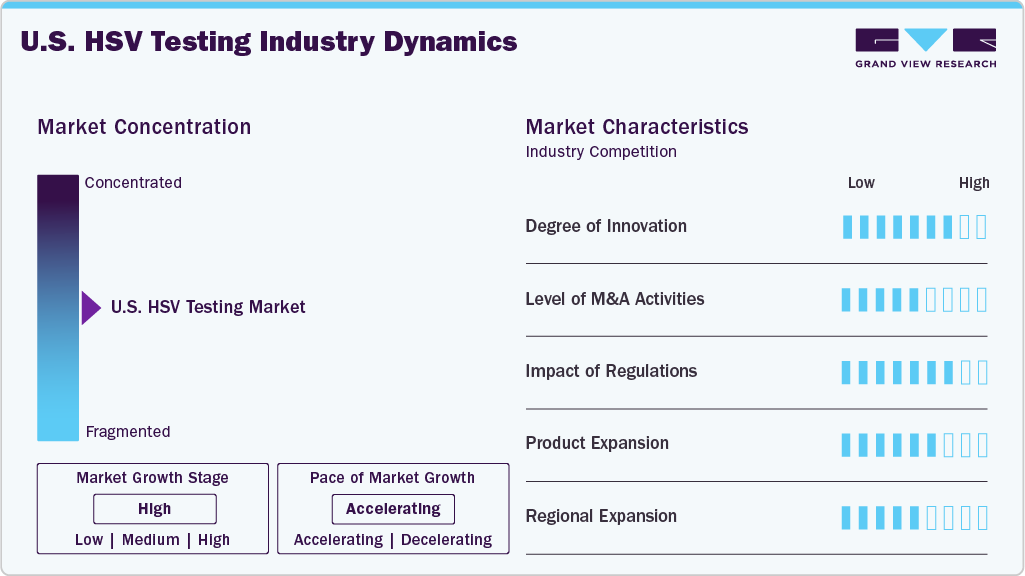
Regulatory oversight remains critical in shaping the U.S. HSV testing landscape. FDA approvals for molecular-based and point-of-care HSV tests are essential for clinical adoption, with streamlined pathways such as the recent Class II classification of HSV nucleic acid-based assays for CNS infections supporting innovation. National guidelines emphasizing sexual health screening are further driving test utilization, while growing data privacy requirements and home testing regulations are influencing market strategies.
The U.S. HSV testing industry is witnessing steady product diversification, with launches of rapid molecular HSV test kits, combined STI panels, and automated sample-to-answer devices for clinical and decentralized settings. Manufacturers are improving test performance, ease of use, and compatibility with electronic health record systems. The direct-to-consumer test kit segment is expanding, catering to the need for privacy and convenience in HSV testing.
While the U.S. remains a dominant market, efforts to broaden access are evident across urban, rural, and underserved regions. Public health programs and collaborations between federal agencies and private providers are addressing disparities in test availability. Telehealth-driven solutions and mail-in testing services are extending HSV testing to remote and low-resource areas, ensuring wider market reach.
Type Insights
The HSV‑1/HSV‑2 combined tests segment accounted for the largest market share of 48.94% in 2024, driven by the growing demand for comprehensive screening solutions that detect both virus types in a single test. These dual-target molecular assays are widely adopted in clinical laboratories, sexual health clinics, and public health programs due to their efficiency, diagnostic accuracy, and ability to guide appropriate treatment strategies. The increasing emphasis on detecting asymptomatic infections, particularly in prenatal and reproductive health screening, has further accelerated the use of combined testing kits. A notable recent development occurred in February 2025, when Clinical Pathology Laboratories (CPL) discontinued the use of HSV IgM testing due to low specificity and in line with updated CDC guidelines. This shift has increased reliance on HSV‑1/HSV‑2 combined IgG and molecular assays, which deliver more accurate and clinically relevant results in U.S. diagnostic settings.
In addition, the compatibility of combined tests with automated platforms and point-of-care workflows has made them a preferred option across decentralized healthcare settings, such as urgent care centers and outpatient clinics. Their ability to deliver quick and reliable results supports timely clinical decisions, which is crucial in managing HSV infections effectively. The rising preference for multiplex solutions, which combine HSV testing with screening for other STIs, is also contributing to the steady adoption of these combined kits in the U.S. market.
The HSV-2 segment is anticipated to grow steadily, driven by the clinical need to accurately identify infections linked to genital herpes and the higher risk of neonatal transmission. Rising awareness of HSV-2-related complications, coupled with its association with co-infections like HIV, is encouraging the use of targeted testing solutions. Expanding STI screening initiatives among high-risk groups and advancements in molecular platforms with improved sensitivity and specificity are enhancing diagnostic accuracy. The integration of HSV-2 assays into multiplex STI panels and their critical role in prenatal and reproductive healthcare settings are further supporting segment growth in the U.S. market.
Test Type Insights
Serological tests held the largest share of the U.S. HSV testing industry in 2024, supported by their widespread use in routine screening, cost-effectiveness, and ease of implementation compared to molecular methods. These tests are widely used to detect HSV antibodies, making them valuable for identifying past exposure and asymptomatic cases. Their applications extend across prenatal screening, population-level surveillance, and general STI testing. A 2024 comparative study published in the Journal of Clinical Microbiology highlighted that automated HSV‑2 IgG serological assays achieved over 97% sensitivity and 98% specificity, demonstrating ongoing improvements in assay performance and reliability in the U.S. diagnostic settings.
Despite their strong market position, serological assays face limitations in detecting early-stage infections and differentiating between active and latent HSV. As a result, molecular testing methods, which offer higher accuracy and rapid results, are gaining traction, particularly in urgent care and outpatient settings. However, due to their affordability, scalability, and compatibility with high-throughput laboratory systems, serological tests continue to dominate the U.S. HSV Testing Market.
The point-of-care (PoC) tests segment in the U.S. is expected to grow at the fastest rate over the forecast period, driven by the rising need for rapid and accessible diagnostic solutions. PoC HSV tests support immediate clinical decisions in urgent care centers, sexual health clinics, and community outreach programs, particularly where quick results are essential. This growth is strengthened by evolving healthcare models that focus on early detection, reduced follow-up visits, and expanded screening in non-traditional settings. Technological improvements, such as portable molecular devices and integrated sample-to-result systems, are boosting both accuracy and ease of use. In addition, the growing adoption of PoC testing in prenatal care and remote testing programs is fueling demand. As U.S. healthcare systems prioritize speed, convenience, and wider access, PoC HSV testing is becoming an important driver of market growth.
Sample Type Insights
Blood-based testing dominated the U.S. HSV testing market in 2024, with the largest share due to its high accuracy, widespread clinical use, and ability to detect both HSV-1 and HSV-2 antibodies. Blood samples are extensively used in hospital laboratories, prenatal screening programs, and routine sexual health assessments. Their reliability in detecting past infections and asymptomatic cases has made them the preferred choice for serological testing. Advancements in assay technologies, such as high-sensitivity ELISA and chemiluminescence methods, have improved result precision and shortened processing times. In addition, blood-based tests are frequently included in broader STI testing panels, enabling efficient multi-pathogen detection. Despite the emergence of non-invasive alternatives, the strong diagnostic reliability and compatibility of blood samples with high-throughput laboratory platforms ensure their continued dominance across U.S. clinical and public health settings.
The cerebrospinal fluid (CSF) segment is expected to grow at the fastest CAGR of 6.18% over the forecast period, driven by the rising need for accurate and rapid detection of HSV-related central nervous system (CNS) infections, such as herpes simplex encephalitis and meningitis. HSV PCR testing on CSF samples remains the gold standard in suspected CNS cases due to its high sensitivity and specificity. Demand for CSF-based testing is increasing in emergency departments and intensive care units, where timely diagnosis is essential for starting antiviral therapy and preventing severe neurological complications. Technological advancements, such as improved nucleic acid amplification methods, automated sample-to-result systems, and better integration with hospital laboratory workflows, are making CSF testing more efficient and accessible. Supportive regulatory measures and the ongoing focus on advanced molecular diagnostics are further expected to boost the adoption of CSF-based tests in U.S. healthcare settings.
End Use Insights
The hospitals segment dominated the U.S. HSV testing industry with the largest revenue share in 2024, reflecting their key role in diagnosing and managing both acute and asymptomatic HSV infections. These facilities rely on accurate and timely diagnostic tools to guide treatment decisions, particularly in prenatal care, STI management, and neurological cases involving suspected HSV encephalitis. The presence of advanced laboratory infrastructure and trained personnel allows hospitals to utilize both serological and molecular testing methods based on clinical requirements. Key drivers for this segment include the increasing incidence of HSV-related complications, greater awareness of neonatal herpes prevention, and the rising need for integrated STI screening. Technological improvements such as high-throughput analyzers, automated sample handling systems, and real-time PCR platforms continue to enhance diagnostic efficiency and reliability in U.S. hospital settings.
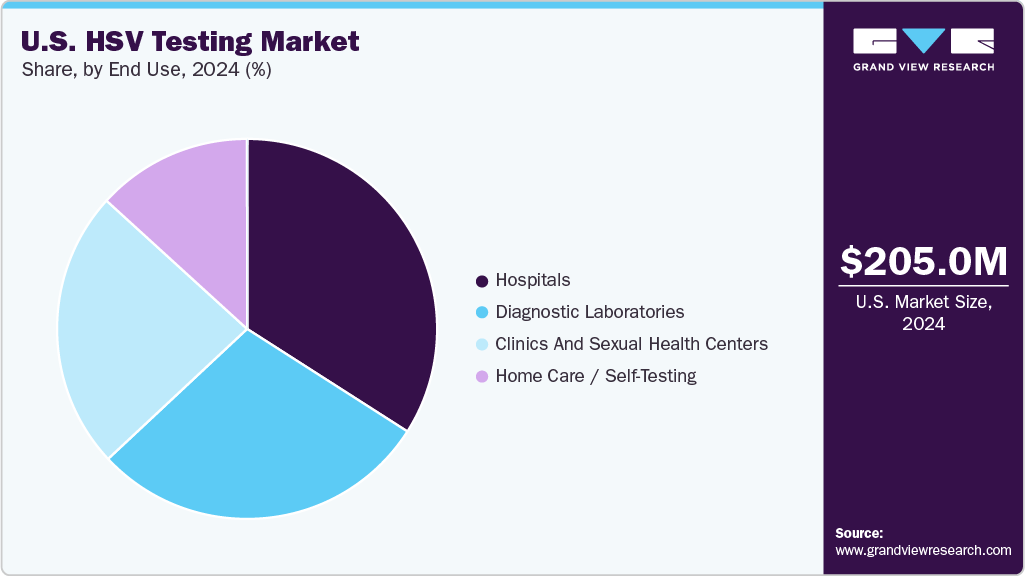
The home care and self-testing segment is expected to grow at the fastest CAGR over the forecast period, driven by the rising demand for privacy, convenience, and early detection of HSV infections. Growing awareness of sexual health and the availability of easy-to-use at-home test kits are enabling individuals to perform screenings without visiting a clinic. This trend is supported by the increased use of digital platforms that offer remote result access and teleconsultation services. The shift toward self-monitoring, which gained momentum during the COVID-19 pandemic, has strengthened the demand for decentralized diagnostic options. Modern test kits now feature simplified sample collection methods, such as finger-prick blood tests or oral swabs, along with smartphone-guided instructions and cloud-enabled reporting. As individuals take greater control over their sexual health and preventive care becomes a priority, the home testing segment is emerging as a key growth area.
Key U.S. HSV Testing Company Insights
Key participants in the U.S. HSV testing market are actively focusing on developing type-specific diagnostic tools and securing regulatory approvals to expand their portfolios. Strategic partnerships, collaborations, and acquisitions are commonly pursued to strengthen clinical presence and improve access to advanced diagnostic technologies. These initiatives aim to enhance the accuracy, speed, and reliability of HSV detection across both serological and molecular platforms. There is also a growing emphasis on integrating HSV tests into broader STI panels and point-of-care solutions, supporting streamlined diagnostics across hospital laboratories, outpatient centers, and remote care settings. Such strategies are positioning market participants to better meet the demand for rapid and comprehensive HSV testing in the U.S.
Key U.S. HSV Testing Companies:
- F. Hoffmann-La Roche Ltd.
- Abbott
- Thermo Fisher Scientific Inc.
- BD
- Bio-Rad Laboratories, Inc.
- bioMérieux SA
- DiaSorin S.p.A.
- Hologic, Inc.
- Cepheid
- QuidelOrtho Corporation
Recent Developments
-
In July 2025, the U.S. NIH Adult & Adolescent Opportunistic Infections Guidelines updated the Herpes Simplex Virus section with expanded diagnostic direction for people with HIV. The update states that HSV DNA PCR is the preferred test for suspected mucocutaneous HSV lesions because it is more sensitive than culture and advises that suspected infections be confirmed in the lab rather than judged on symptoms alone. The guidance also supports the use of type-specific serology in appropriate evaluations, which helps identify prior exposure in patients without clear lesions. These recommendations are expected to influence testing algorithms in U.S. HIV care programs and support demand for both molecular and serologic HSV testing across hospital and outpatient channels.
-
In June 2025, the U.S. FDA issued a Final Order classifying herpes simplex virus (HSV) nucleic acid-based assays intended for detecting central nervous system (CNS) infections-such as HSV-related meningitis and encephalitis-as Class II medical devices. This classification establishes a clear regulatory pathway with special controls for molecular diagnostic developers, particularly those working with cerebrospinal fluid (CSF) samples. The decision is expected to encourage further innovation in PCR-based HSV testing and may facilitate broader application to serum- and lesion-swab-based NAAT platforms within clinical settings.
-
In January 2025, a study published in Clinical Infectious Diseases emphasized the growing importance of antiviral-resistance testing for herpes simplex virus (HSV) in the U.S. market. The research highlighted that certain HSV cases are failing to respond to standard nucleoside analog therapies, such as acyclovir and valacyclovir, due to emerging resistant strains. The study recommends integrating genotypic and phenotypic resistance assays into diagnostic workflows to guide appropriate treatment selection. This development is expected to drive demand for advanced molecular testing solutions and laboratory-developed assays tailored for HSV resistance detection.
-
In December 2023, the U.S. FDA issued a safety communication warning about the potential for false-positive results in serological tests for HSV-2, particularly when index values are near the assay’s cutoff. The agency emphasized that misinterpretation of low-positive results could lead to incorrect diagnoses if not confirmed through supplemental testing. In line with CDC guidelines, the communication advised healthcare providers to use confirmatory testing-such as Western blot-before making clinical decisions. This development highlights ongoing concerns related to test specificity and reinforces the importance of diagnostic accuracy and quality control in HSV serologic testing.
U.S. HSV Testing Market Report Scope
Report Attribute
Details
Market size value in 2025
USD 213.18 million
Revenue forecast in 2033
USD 320.76 million
Growth rate
CAGR of 5.24% from 2025 to 2033
Actual data
2021 - 2024
Forecast period
2025 - 2033
Quantitative units
Revenue in USD billion and CAGR from 2025 to 2033
Report coverage
Revenue forecast, company ranking, competitive landscape, growth factors, and trends
Segments covered
Type, test type, sample type, end use, and region
Key companies profiled
F. Hoffmann-La Roche Ltd.; Abbott; Thermo Fisher Scientific Inc.; BD; Bio-Rad Laboratories, Inc.; bioMérieux SA; DiaSorin S.p.A.; Hologic, Inc.; Cepheid; QuidelOrtho Corporation
Customization scope
Free report customization (equivalent up to 8 analyst’s working days) with purchase. Addition or alteration to country, regional & segment scope.
U.S. HSV Testing Market Report Segmentation
This report forecasts revenue growth and provides an analysis of the latest trends in each of the sub-segments from 2021 to 2033. For this study, Grand View Research has segmented the U.S. HSV Testing market report based on type, test type, sample type, end use, and region:
-
Type Outlook (Revenue, USD Million, 2021 - 2033)
-
HSV-1/HSV-2 Combines
-
HSV-1
-
HSV-2
-
-
Test Type Outlook (Revenue, USD Million, 2021 - 2033)
-
Serological tests
-
Direct detection tests
-
PCR
-
Viral culture
-
-
Point-of-care tests
-
-
Sample Type Outlook (Revenue, USD Million, 2021 - 2033)
-
Blood
-
Swabs
-
Cerebrospinal fluid
-
-
End Use Outlook (Revenue, USD Million, 2021 - 2033)
-
Hospitals
-
Diagnostic laboratories
-
Clinics and sexual health centers
-
Home care / self-testing
-
Frequently Asked Questions About This Report
The U.S. HSV testing market size was estimated at USD 205.0 million in 2024 and is expected to reach USD 213.18 million in 2025.
The U.S. HSV testing market is expected to grow at a compound annual growth rate of 5.24% from 2025 to 2033 to reach USD 320.76 million by 2033
On the basis of type, HSV 1/HSV 2 combined tests accounted for the largest market share of 48.94% in 2024, driven by the growing demand for comprehensive screening solutions that detect both virus types in a single test.
Some key players operating in the U.S. HSV testing market include F. Hoffmann-La Roche Ltd.; Abbott; Thermo Fisher Scientific Inc.; BD; Bio-Rad Laboratories, Inc.; bioMérieux SA; DiaSorin S.p.A.; Hologic, Inc.; Cepheid; QuidelOrtho Corporation
Key factors that are driving the market growth as these tests are widely used for managing sexually transmitted infections and prenatal screening, with increasing adoption in decentralized and point-of-care environments as the demand for rapid and accessible testing grows.
About the Author(s)
Clinical Diagnostics Research Team
Healthcare · Clinical DiagnosticsThis report was authored by the clinical diagnostics research team at Grand View Research - comprising two research analysts, one senior research analyst, and one industry expert - with specialized expertise in the clinical diagnostics segment of the healthcare industry. All findings are based on proprietary healthcare databases, executive interviews, and regulatory analysis, subject to internal peer review prior to publication.
Last Updated:
Speak to Analyst

Need a Tailored Report?
Customize this report to your needs — add regions, segments, or data points, with 20% free customization.
Or view our licence options:


ISO 9001:2015 & 27001:2022 Certified
We are GDPR and CCPA compliant! Your transaction & personal information is safe and secure. For more details, please read our privacy policy.












