
- Home
- »
- Consumer F&B
- »
-
U.S. Meal Kit Delivery Services Market, Industry Report 2033GVR Report cover

U.S. Meal Kit Delivery Services Market (2026 - 2033) Size, Share & Trends Analysis Report By Meal Type (Vegan, Vegetarian, Non-vegetarian), By Offering (Heat & Eat, Cook & Eat), By Service (Single, Multiple), By Platform (Online, Offline), And Segment Forecasts
U.S. Meal Kit Delivery Services Market Summary
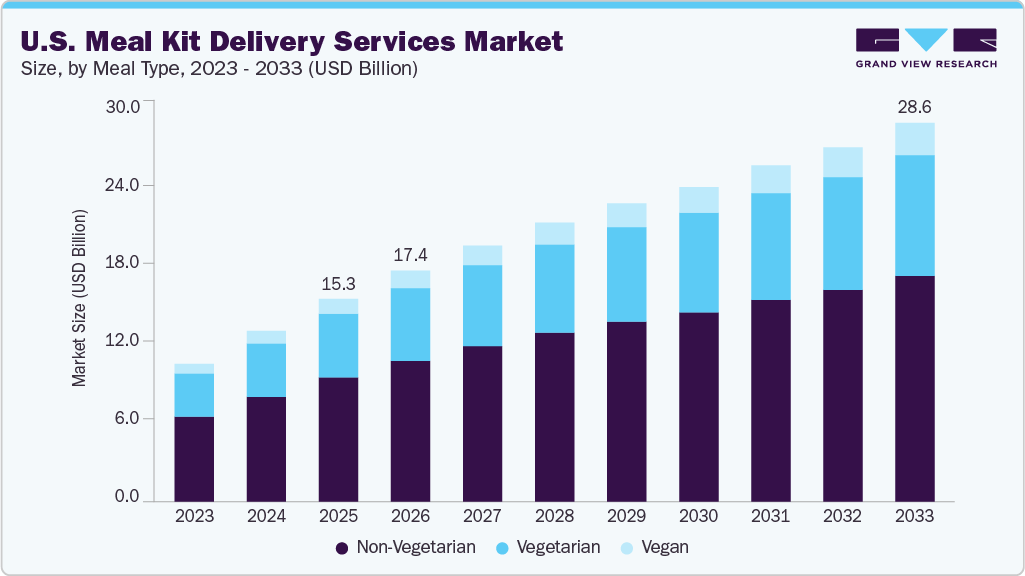
The U.S. meal kit delivery services market size was estimated at USD 15.29 billion in 2025 and is projected to reach USD 28.57 billion by 2033, growing at a CAGR of 7.3% from 2026 to 2033. The market growth is propelled by a confluence of lifestyle and technology trends that are expanding its consumer base.
Key Market Trends & Insights
- By meal type, the non-vegetarian segment held the largest market share of 61.2% in 2025.
- By offering, the cook & eat segment held the largest market share of 61.1% in 2025.
- By service, the single service held the largest market share of 58.4% in 2025.
- By platform, the online segment held the largest market share of 64.5% in 2025.
Market Size & Forecast
- 2025 Market Size: USD 15.29 Billion
- 2033 Projected Market Size: USD 28.57 Billion
- CAGR (2026-2033): 7.3%
Three ways to get this report
Buy it, customize it, or ask a question.Ask an Analyst
Analyst response in 1 business day
- AccessReport author, directly
- Reply timeWithin 1 working day
- No sales callDirect answer only
- FormatEmail reply
- CostFree, no cost
Get the Full Report
What the study covers
- FormatsPDF · Excel · Dashboard
- Timeline2026–2033 annual, 2025 base
- Coverage20+ countries, 5 regions
- Companies10+ key players profiled
Customize the Report
20% free customization
- IncludeCountries, segments, points
- TailorTo your product definition
- ExtendDeeper competitor detail
- OrA fully bespoke study
- Turnaround5–10 working days
Health‑conscious shoppers are gravitating toward ready‑to‑cook solutions that promise nutritionally balanced meals, portion control, and clean‑label ingredients. At the same time, the rise of flex‑working arrangements has increased demand for convenient, home‑cooked options that can be prepared in under 30 minutes.According to the United States Environmental Protection Agency, 94% of the food thrown away ends up in landfills or combustion facilities. In 2025, the United States wastes approximately 60 million tons of food annually, making food the largest component of municipal solid waste in landfills and highlighting the continued scale of food loss across the supply chain.
 Source: Grand View Research, IR Documents, Primary Interviews, Paid DatabasesTo learn more about this report,
 Download Free Sample Report
 According to Foodprint, the U.S. wastes roughly 40% of its food; that is, 125 to 160 billion pounds of food are wasted every year, much of which is perfectly edible and nutritious. Food is lost or wasted for a number of reasons, including overproduction, overbuying, poor planning, and confusion over labels and safety.
Food waste also has a staggering price tag, costing the country approximately USD 218 billion per year. Uneaten food puts unnecessary strain on the environment by wasting valuable resources such as water and farmland. At a time when 12% of the U.S. households are food insecure, reducing food waste by just 15% could provide enough sustenance to feed more than 25 million people annually.
Households are responsible for the largest portion of all food waste. ReFED estimates that U.S. households waste 76 billion pounds of food per year. Approximately 40% to 50% of food waste happens at the consumer level, costing them USD 1,800 per year. In terms of total mass, fresh fruits and vegetables account for the largest losses at the consumer level, followed by dairy, meat, and seafood.
Meal kit delivery services are an ideal solution, as meal planning significantly reduces food waste. Meal kits include ingredients in the exact quantities required to prepare a meal, since each portion is pre-measured. Some companies offer larger portions but still provide calorie counts and nutritional information for the portions.
Consumer Insights for the U.S. Meal Kit Delivery Services Market
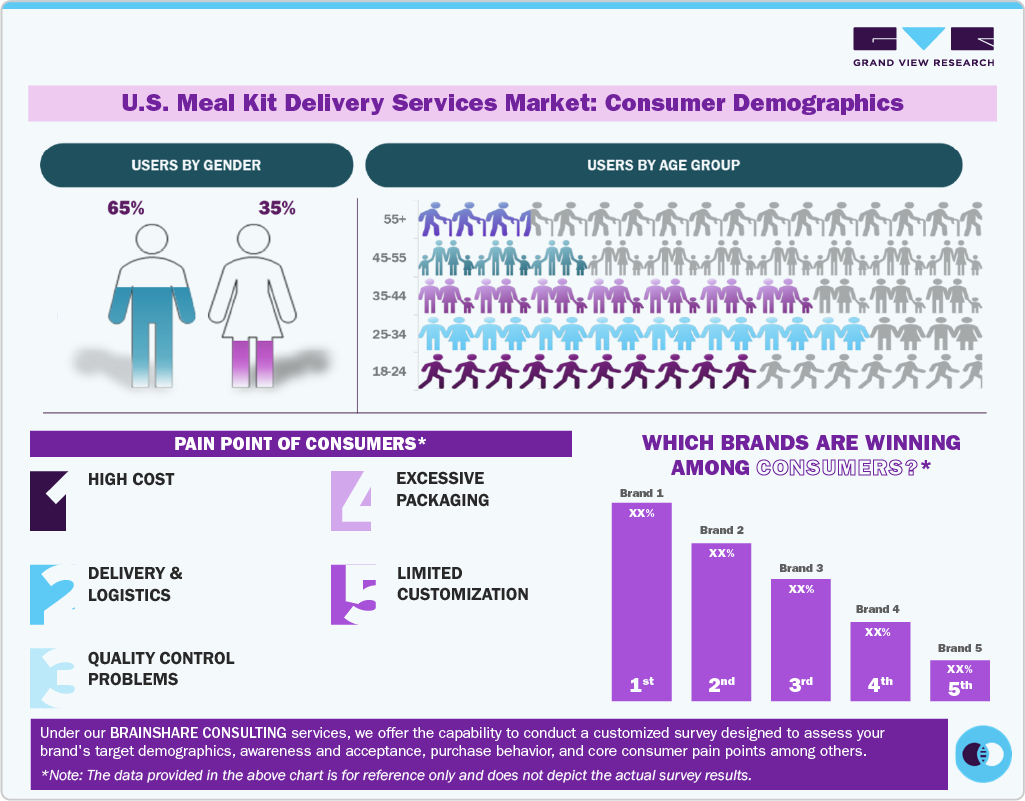
Convenience remains the dominant factor driving consumer adoption of meal kit delivery services in the United States, as modern consumers seek efficient solutions to reduce meal planning and grocery shopping time. More than 60% of consumers use meal kits primarily for convenience, while approximately 47% cite saving time on meal planning as their main reason for subscribing. Additionally, meal kit users save an average of 4.2 hours per week on cooking preparation and planning, making these services highly attractive to working professionals and dual-income households.
 To learn more about this report, Download Free Sample Report
 Meal Type Insights
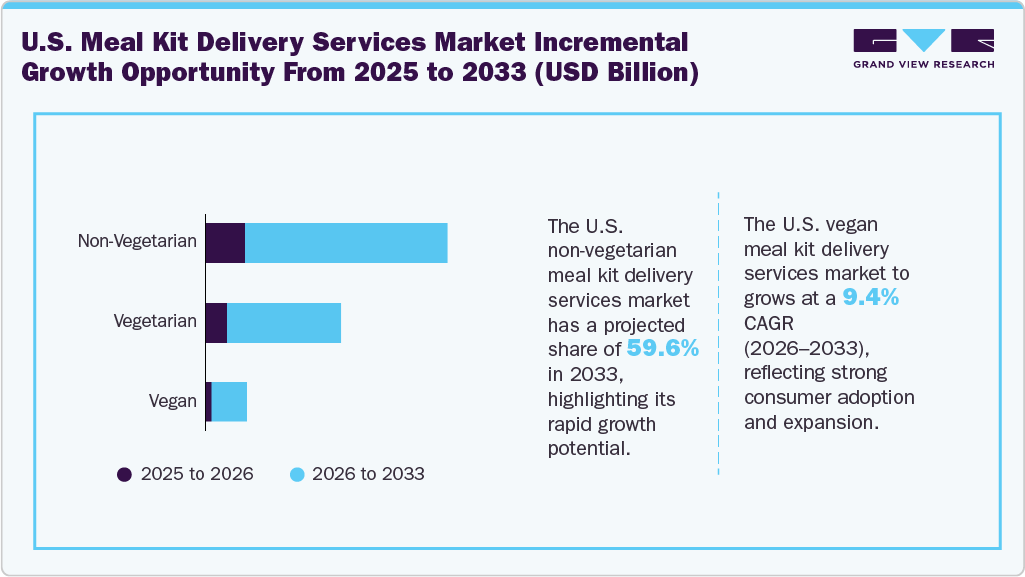
The U.S. non-vegetarian meal kit delivery services market held a share of 61.2% in 2025, driven by strong consumer preference for high-protein, traditional meal options featuring chicken, beef, seafood, and pork, which align with mainstream American dietary habits. Protein-rich diets are widely associated with muscle maintenance, weight management, and satiety, leading consumers to prioritize meat-based meal kits for perceived nutritional completeness and taste satisfaction.
Additionally, meal kit providers such as HelloFresh, Blue Apron, and Home Chef have expanded their portfolios to include chef-designed meat-based meals, such as steak dinners, chicken bowls, and seafood recipes, appealing to households seeking restaurant-quality meals at home. Furthermore, meat-based meal kits offer familiarity and align with conventional consumption patterns, as over 85% of U.S. consumers regularly consume meat, reinforcing sustained demand and contributing to the segment’s dominant revenue share.
 To learn more about this report, Download Free Sample Report
 The U.S. vegan meal kit delivery services market is expected to grow with a CAGR of 9.4% from 2026 to 2033, driven by increasing consumer awareness of health, environmental sustainability, and ethical food consumption, which is encouraging the adoption of plant-based diets. Consumers are increasingly seeking meal kits featuring plant proteins such as lentils, chickpeas, tofu, and plant-based meat alternatives, as they are associated with lower cholesterol, improved heart health, and reduced environmental impact.
In response, major meal kit providers, including Purple Carrot and Sunbasket, have expanded vegan offerings, introducing fully plant-based menus and customizable vegetarian meal plans to attract flexitarian and vegan consumers. Additionally, growing concerns about climate change and food sustainability are influencing purchasing decisions, as plant-based meals generate significantly lower greenhouse gas emissions compared to animal-based foods. The increasing availability, improved taste, and greater mainstream acceptance of plant-based meal kits are therefore accelerating the growth of the vegan segment over the forecast period.
Offering Insights
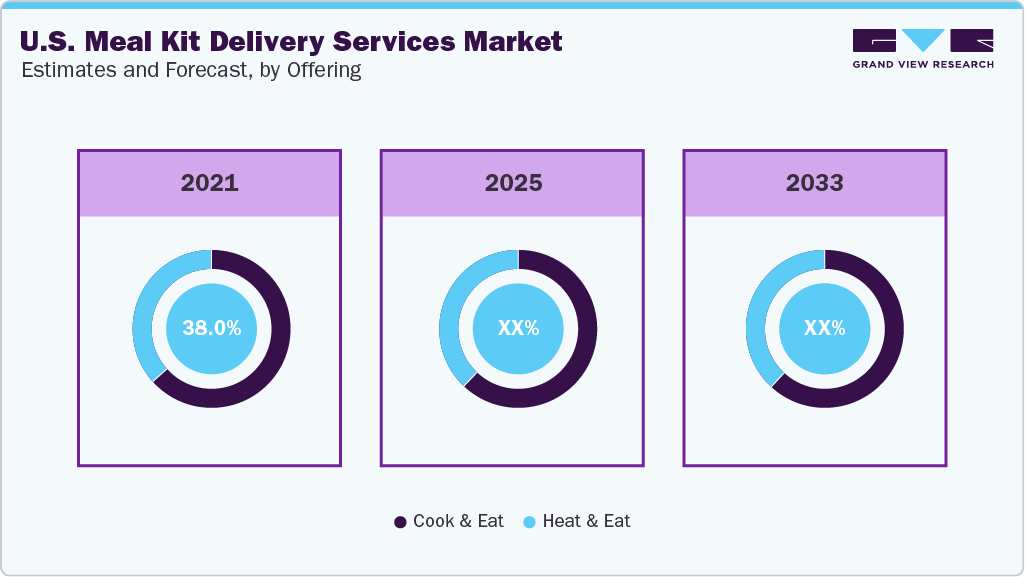
The U.S. cook & eat meal kit delivery services market segment held a share of 61.1% in 2025, driven by strong consumer interest in fresh, home-cooked meals combined with convenience and culinary engagement. Consumers increasingly prefer cook-and-eat meal kits because they provide pre-portioned ingredients and step-by-step instructions, enabling users to prepare restaurant-quality meals at home while retaining control over freshness, portion size, and ingredient quality. This format appeals particularly to millennials and families seeking healthier alternatives to takeout while also enjoying the cooking experience as a recreational activity.
Additionally, cook-and-eat kits are perceived as more cost-effective than fully prepared meals and align with growing consumer interest in improving cooking skills and dietary transparency. Meal kit providers such as HelloFresh and Blue Apron have expanded diverse cook-and-eat menus, including global cuisines and diet-specific recipes, further strengthening segment adoption.
 To learn more about this report, Download Free Sample Report
 The heat & eat segment is expected to grow at a CAGR of 7.9% from 2026 to 2033, driven by rising demand for ultra-convenient, ready-to-eat meal solutions among busy professionals, urban consumers, and time-constrained households. These meals require minimal preparation time, typically only reheating, making them highly attractive to consumers with demanding work schedules or limited cooking interest. The segment is also benefiting from improvements in food preservation technologies, packaging innovations, and expanded offerings of fresh, refrigerated ready meals with high nutritional value.
Companies such as Freshly and Factor have expanded their offerings of fully prepared meal options focused on health, protein content, and dietary customization, accelerating consumer adoption. Furthermore, the increasing normalization of food delivery services and hybrid work lifestyles is contributing significantly to the growth of the heat & eat segment.
Service Insights
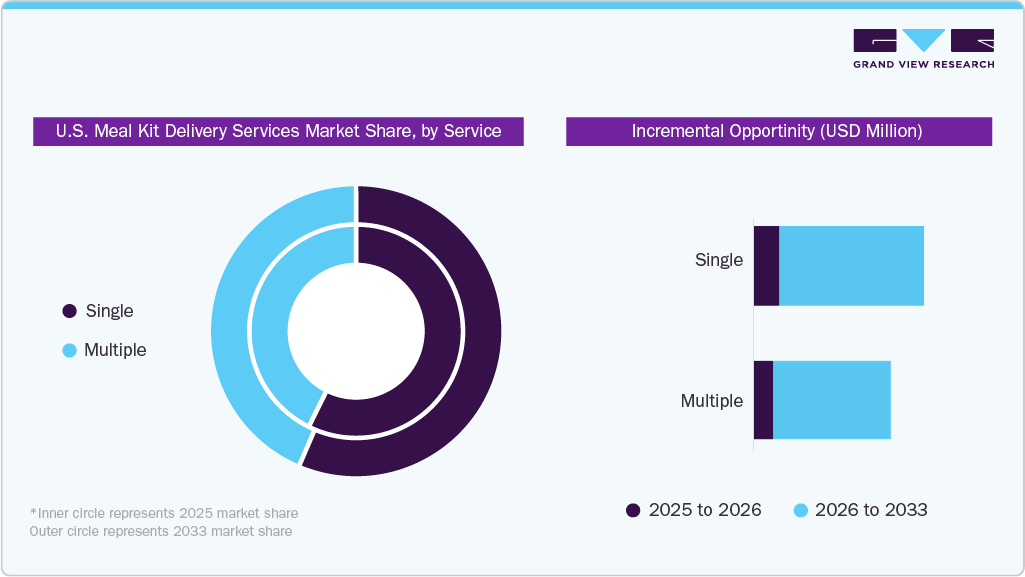
The U.S. single meal kit delivery services market segment accounted for a share of 58.4% in 2025, driven by the growing demand among single-person households, young professionals, and urban consumers seeking portion-controlled and convenient meal solutions. The number of single-person households in the United States has increased significantly, creating strong demand for meal kits tailored to individual consumption without food waste. Single-service meal kits also offer flexibility and affordability, allowing consumers to explore meal kit services without committing to larger portions or long-term subscriptions. Additionally, these offerings appeal to health-conscious individuals focused on calorie management, portion control, and personalized dietary preferences, contributing to widespread adoption.
 To learn more about this report, Download Free Sample Report
 The U.S. multiple meal kit delivery services market segment is expected to grow at a CAGR of 7.8% from 2026 to 2033, due to increasing adoption among families and multi-person households seeking convenient and cost-efficient meal solutions. Multi-serving meal kits provide better per-serving value and simplify weekly meal planning for households with multiple members. Rising family participation in meal preparation activities and the growing trend of shared home dining experiences are further supporting segment growth. Additionally, meal kit providers are expanding family-friendly menu options, including kid-friendly recipes and bulk meal plans, which enhances adoption among households seeking convenience, nutrition, and affordability. As meal kits become integrated into routine weekly grocery planning, multi-serving subscriptions are expected to experience strong growth over the forecast period.
Platform Insights
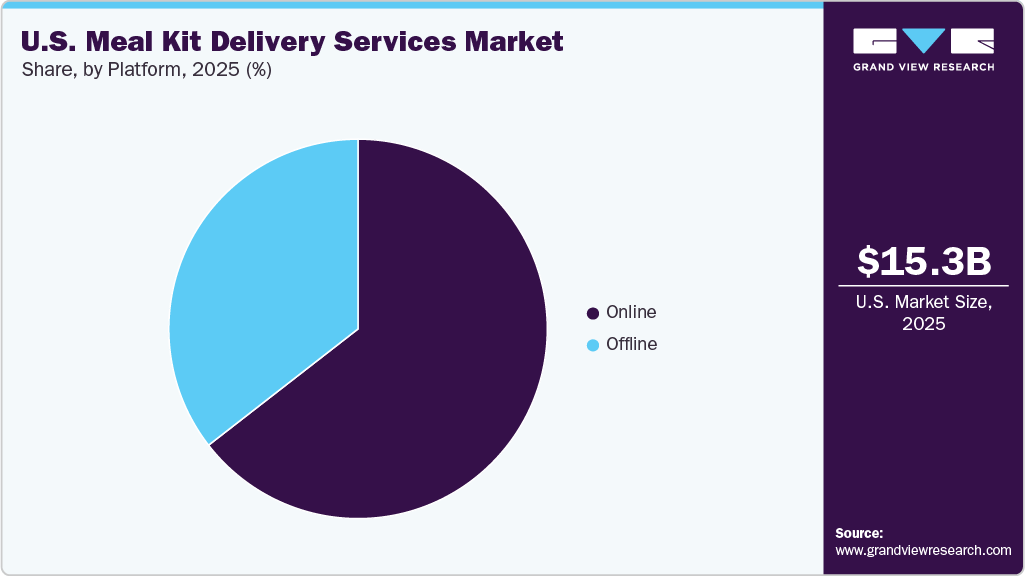
The sales of meal kit delivery services in the U.S. meal kit delivery services industry through online platforms accounted for a share of 64.5% in 2025, driven by the subscription-based digital business models adopted by leading meal kit providers such as HelloFresh, Blue Apron, and Home Chef. These companies operate predominantly through direct-to-consumer e-commerce platforms, offering flexible subscriptions, customizable menus, doorstep delivery, and app-based account management. The increasing penetration of smartphones, digital payment systems, and AI-powered personalization tools has enhanced consumer engagement and retention.
Additionally, hybrid and remote work trends have increased reliance on home delivery solutions, reinforcing recurring online purchases. The convenience of browsing menus, selecting dietary preferences, skipping deliveries, and scheduling shipments digitally has positioned online channels as the preferred distribution mode among millennials and urban professionals. Strong investments in last-mile logistics, cold-chain infrastructure, and data-driven marketing strategies have further solidified online channels as the primary revenue contributor.
 To learn more about this report, Download Free Sample Report
 The sales of meal kit delivery services in the U.S. meal kit delivery services market through offline platform is expected to grow at a CAGR of 7.6% from 2026 to 2033, driven by the expanding retail partnerships and the integration of meal kits into supermarket and grocery store shelves. Retailers are increasingly offering branded and private-label meal kits in physical stores to attract impulse buyers and consumers who prefer immediate purchase without subscription commitments. Companies such as Home Chef (through retail partnerships with Kroger) have strengthened brick-and-mortar presence, making meal kits accessible to traditional grocery shoppers. The offline channel benefits from consumer trust in in-store freshness, the ability to visually inspect products, and avoidance of delivery fees.
Additionally, the rise of grab-and-go refrigerated sections in supermarkets is encouraging first-time users to make trial purchases. As retailers continue to enhance merchandising, in-store branding, and cold-chain display systems, offline distribution is expected to grow rapidly over the forecast period.
Key U.S. Meal Kit Delivery Services Company Insights
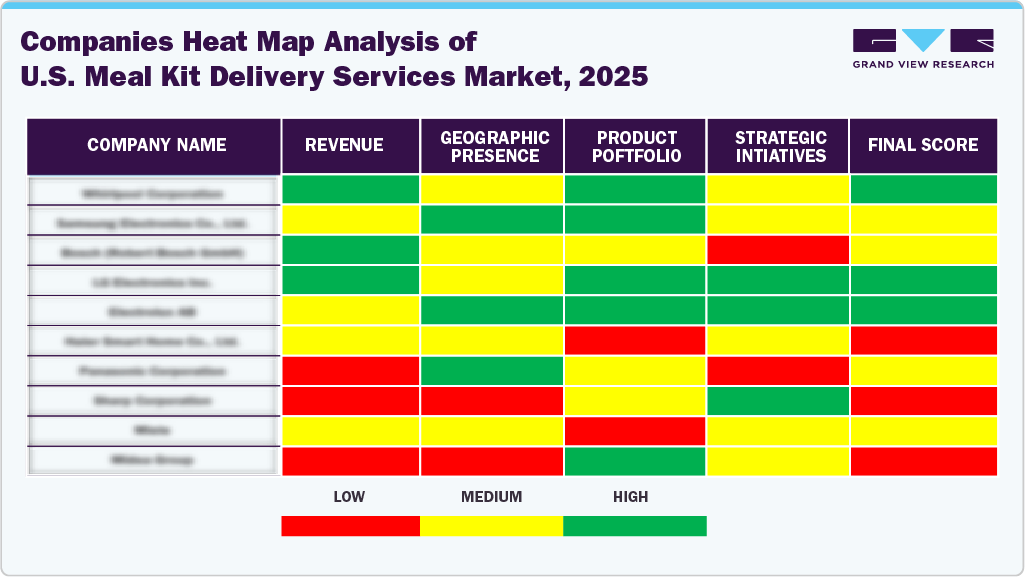
The competitive landscape of the U.S. meal kit delivery services market is highly consolidated, with a few dominant global players and several niche and retailer-backed companies competing through product innovation, menu variety, pricing strategies, and omnichannel distribution. Strategic acquisitions, private-label expansion, and strong partnerships with grocery retailers characterize the market.
HelloFresh is the dominant player in the U.S. meal kit delivery services industry, supported by its extensive menu portfolio, vertically integrated supply chain, and multiple sub-brands, including Green Chef and EveryPlate. The company’s competitive advantage has been strengthened through advanced logistics infrastructure, AI-based menu planning, and direct-to-consumer delivery networks. Its ability to offer diverse options, including vegetarian, calorie-smart, and family meal kits, has enabled it to maintain leadership among millennials and working professionals. The company has also expanded into ready-to-eat offerings through its Factor brand, targeting convenience-focused consumers.
 To learn more about this report, Download Free Sample Report
 Key U.S. Meal Kit Delivery Services Companies:
- Blue Apron, LLC
- Freshly Inc.
- HelloFresh
- Sun Basket
- Relish Labs LLC (Home Chef)
- Gobble
- Marley Spoon Inc.
- Purple Carrot
- Fresh n' Lean
- Hungryroot
Recent Developments
-
In July 2025, Xoom Foods, a U.S.-based company, launched a heat-and-eat meal subscription service that delivers fully cooked meals to consumers across the U.S. The service aims to provide restaurant-quality, ready-to-eat dishes within minutes, catering to the growing demand for convenient yet nutritious meal options.
-
In August 2025, LT Foods, an India-based company, launched the DAAWAT Thai Green Curry Rice Kit, a new “cook and eat” product. The kit combines jasmine rice with pre-mixed coconut milk and spices and contains no artificial colors or preservatives.
U.S. Meal Kit Delivery Services Market Report Scope
Report Attribute
Details
Market value size in 2026
USD 17.41 billion
Revenue forecast in 2033
USD 28.57 billion
Growth rate
CAGR of 7.3% from 2026 to 2033
Actual data
2021 - 2025
Forecast period
2026 - 2033
Quantitative units
Revenue in USD million/billion, and CAGR from 2026 to 2033
Report coverage
Revenue forecast, company ranking, competitive landscape, growth factors, and trends
Segments covered
Meal type, offering, service, platform
Key companies profiled
Blue Apron, LLC; Freshly Inc.; HelloFresh; Sun Basket; Relish Labs LLC (Home Chef); Gobble; Marley Spoon Inc.; Purple Carrot; Fresh n' Lean; Hungryroot
Customization scope
Free report customization (equivalent up to 8 analysts’ working days) with purchase. Addition or alteration to country, regional & segment scope.
Pricing and purchase options
Avail customized purchase options to meet your exact research needs. Explore purchase options
U.S. Meal Kit Delivery Services Market Report Segmentation
This report forecasts revenue growth at the country levels and provides an analysis of the latest industry trends and opportunities in each of the sub-segments from 2021 to 2033. For this study, Grand View Research has segmented the U.S. meal kit delivery services market report based on meal type, offering, service, and platform:
-
Meal Type Outlook (Revenue, USD Billion, 2021 - 2033)
-
Vegan
-
Vegetarian
-
Non-vegetarian
-
-
Offering Outlook (Revenue, USD Billion, 2021 - 2033)
-
Heat & Eat
-
Cook & Eat
-
-
Service Outlook (Revenue, USD Billion, 2021 - 2033)
-
Single
-
Multiple
-
-
Platform Outlook (Revenue, USD Billion, 2021 - 2033)
-
Online
-
Offline
-
Frequently Asked Questions About This Report
The global U.S. meal kit delivery services market size was estimated at USD 15.29 billion in 2025 and is expected to reach USD 17.41 billion in 2026.
The U.S. meal kit delivery services market is expected to grow at a compound annual growth rate (CAGR) of 7.3% from 2025 to 2033 to reach USD 28.57 billion by 2033.
The U.S. non-vegetarian meal kit delivery services market accounted for the largest share of 61.2% in 2025, driven by rising consumer demand for convenient, protein-rich ready-to-cook meals, fueled by busy lifestyles and increasing preference for home dining.
Some key players operating in the U.S. meal kit delivery services market include Blue Apron, LLC, Freshly Inc., HelloFresh, Sun Basket, Relish Labs LLC (Home Chef), Gobble, Marley Spoon Inc., Purple Carrot, Fresh n' Lean, and Hungryroot.
Key factors driving growth in the U.S. meal kit delivery services market include increasing consumer preference for convenient and time-saving meal solutions due to busy work schedules and evolving lifestyles. Rising health consciousness, along with growing demand for fresh, portion-controlled, and customizable meals, is encouraging consumers to shift from traditional takeout to meal kits.
About the Author(s)
Consumer F&B Research Team
Consumer Goods · Consumer F&BThis report was authored by the consumer f&b research team at Grand View Research - comprising two research analysts, one senior research analyst, and one industry expert - with specialized expertise in the consumer f&b segment of the consumer goods industry. All findings are based on proprietary consumer goods databases, executive interviews, and regulatory analysis, subject to internal peer review prior to publication.
Last Updated:
Speak to Analyst

Customize this report to your needs - add regions, segments, or data points, with 20% free customization.
Or view our licence options:


ISO 9001:2015 & 27001:2022 Certified
We are GDPR and CCPA compliant! Your transaction & personal information is safe and secure. For more details, please read our privacy policy.


