
- Home
- »
- Medical Devices
- »
-
U.S. Patient Positioning And Support Aids Market Report 2033GVR Report cover
![U.S. Patient Positioning And Support Aids Market Size, Share & Trends Report]()
U.S. Patient Positioning And Support Aids Market (2026 - 2033) Size, Share & Trends Analysis Report By Product (Gel And Foam Positioners, Fluidized Positioners, Sling-Based Positioning Aids, Repositioning And Turning Systems), By End Use (Hospitals, Rehabilitation Centers, Nursing Homes), And Segment Forecasts
- Report ID: GVR-4-68040-506-2
- Number of Report Pages: 200
- Format: PDF
- Historical Range: 2021 - 2025
- Forecast Period: 2026 - 2033
- Industry: Healthcare
- Report Summary
- Table of Contents
- Segmentation
- Methodology
- Download FREE Sample
-
 Download Sample Report
U.S. Patient Positioning And Support Aids Market Summary
The U.S. patient positioning and support aids market size was estimated at USD 559.94 million in 2025 and is projected to reach USD 959.44 million by 2033, growing at a CAGR of 6.6% from 2026 to 2033. Increasing volume of surgical procedures, the growing elderly population, and advancements in healthcare infrastructure.
Key Market Trends & Insights
- By product, the gel and foam positioners segment led the market with the largest revenue share in 2025.
- By end use, the hospitals segment led the market with the largest revenue share in 2025.
Market Size & Forecast
- 2025 Market Size: USD 559.94 Million
- 2033 Projected Market Size: USD 959.44 Million
- CAGR (2026-2033): 6.6%
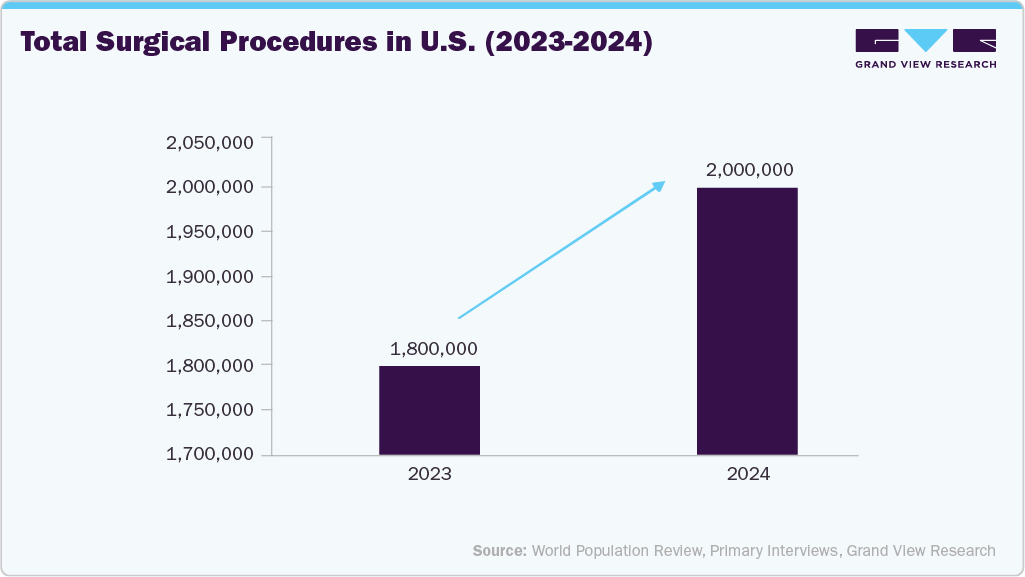
As the aging population rises, the prevalence of chronic diseases and conditions requiring surgical interventions, such as joint replacements and cardiovascular procedures, also increases. This drives demand for effective patient positioning and support aids to ensure safety, comfort, and optimal access during procedures. The increasing number of surgical procedures is expected to boost the demand for U.S. patient positioning and support aids. The surgeries require positioning and support aids such as fluidized positioners, gel positioners, pillows, wedges, transfer aids, repositioning products, turning systems, slide sheets, and offloading devices to prevent the patient from pressure ulcers and to move the patient from one area to another area post-surgical procedures. Various surgical procedures, such as orthopedic, neurosurgeries, and cosmetic surgeries, are being carried out. According to World Population Review, approximately 2 million surgical procedures were performed in the United States in 2024.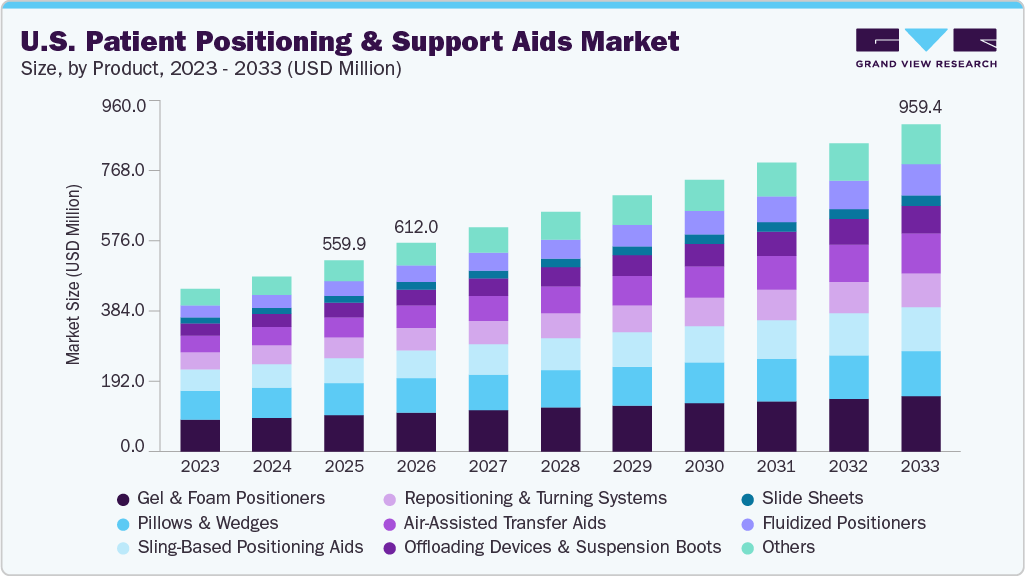
The figure below presents the total number of surgical procedures performed in the U.S. in 2023 and 2024, highlighting the increase in surgical volume over the period.
In addition, diagnostic tests such as echocardiograms, cardiac catheterizations, and imaging studies such as CT and MRI scans rely on effective patient positioning to provide precise, accurate results. The increasing adoption of minimally invasive techniques and robotic-assisted surgeries in cardiology further boosted the need for advanced positioning aids designed for precision and stability. Moreover, the aging population, which is more susceptible to CVD, contributes to a rising demand for these aids in hospital and ambulatory care settings. The focus on reducing pressure injuries, optimizing comfort, and adhering to stringent safety standards further supports the growth of this market segment. According to the American Health Association, in 2024, there were 931,578 cardiovascular disease deaths in the U.S. This was an increase of less than 3,000 from the previous year. The age-adjusted death rate for CVD in 2024 was 233.3 per 100,000, which was a 4.0% increase from 2023.
Furthermore, the increasing number of orthopedic surgeries, such as hip and knee replacement surgeries that need U.S. patient positioning and support aids, is anticipated to propel market growth over the forecast period. According to data published by the American College of Rheumatology in February 2024, about 544,000 hip and 790,000 total knee replacements are performed annually in the U.S.
For instance, according to the American Academy of Orthopaedic Surgeons, in November 2024, the American Joint Replacement Registry (AJRR) surpassed 4 million captured hip and knee arthroplasty procedures, reflecting the growing volume of joint replacement surgeries in the United States.
“Surpassing 4 million captured hip and knee arthroplasty procedures solidifies AJRR’s status as the largest orthopaedic registry by annual procedure count. This achievement reflects our collective commitment to improving patient care and gathering data that can influence the quality and effectiveness of treatments across the nation. The success of the AJRR wouldn’t be possible without the support and contributions of our participating sites, surgeons and industry partners.” said James I. Huddleston, III, MD, FAAOS, chair of the AJRR Steering Committee.
Rising awareness about patient safety is a key factor driving the growth of the U.S. patient positioning and support aids market. As healthcare professionals and patients become more aware of how to prevent injuries during patient handling, the demand for innovative and effective solutions that ensure safety and comfort increases. Improper patient handling can lead to pressure injuries for patients and musculoskeletal disorders among healthcare workers. To address this, industry stakeholders are publishing knowledge articles to improve understanding of proper patient handling and raising awareness about the safety of patients and healthcare workers. For instance, the American Nurses Association (ANA) is working to create a safer environment for nurses through its Safe Patient Handling and Mobility (SPHM) programs and advocacy efforts.
In addition, in December 2024, Medline’s Clinical Solutions Manager published an article on how ICU nurses can prevent work-related musculoskeletal disorders. These articles and programs raise awareness about patient positioning and safety, which is expected to boost market growth over the forecast period.
Moreover, companies are launching patient positioning equipment that enhances patient and staff safety. For instance, in February 2024, Xodus Medical introduced two innovative variations of its lift-free patient positioning instrument, the Pink Pad Air-Assist. It includes the launch of the Pink Pad Air-Assist Trendelenburg + and the Pink Pad Air-Assist EXT + Trendelenburg.
Market Concentration & Characteristics
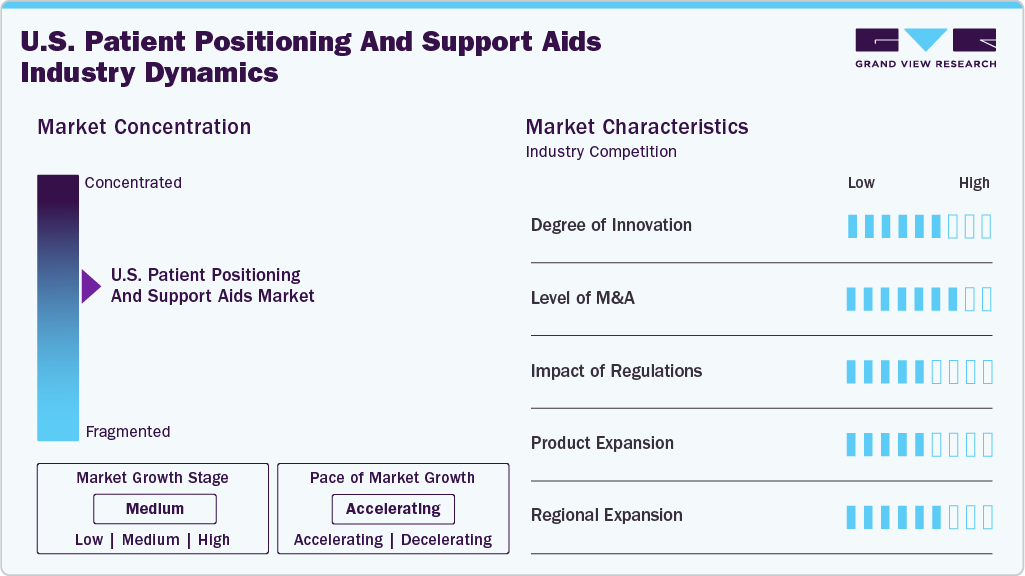
The market growth stage is moderate, and the pace of its growth is accelerating. The market is characterized by acquisitions, partnerships, technological advancements, and increasing regulatory approval for novel product launches.
The degree of innovation in the U.S. patient positioning and support aids market is high, driven by technological advancements, a growing focus on patient safety, and the increasing demand for ergonomically designed systems. Manufacturers utilize lightweight, durable, and hypoallergenic materials to improve patient comfort and ease of use. Pressure-reducing materials, such as memory foam and gel-infused surfaces, are increasingly incorporated to minimize the risk of pressure ulcers and improve long-term usability.
-
In April 2024, Pelstar LLC, a manufacturer of patient handling products, introduced its latest innovation, the Safe Turning and Repositioning (STAR) System. This system helps caregivers turn and reposition patients at the bedside.
The level of mergers and acquisitions (M&A) in the U.S. patient positioning and support aids market has been moderately active. Larger players are acquiring smaller, specialized companies to expand their product portfolios and strengthen their market position. Consolidation enables companies to offer comprehensive solutions, catering to a wider range of procedures and patient needs.
-
In February 2025, State Street Corporation and Mizuho Financial Group, Inc., announced that they entered into an agreement under which State Street would acquire Mizuho’s global custody and related businesses outside Japan. These operations support Mizuho’s Japanese clients' overseas investment activities.
Regulations significantly influence the U.S. patient positioning and support aids market. These regulations ensure the safety, efficacy, and quality of products used in healthcare settings. Stringent FDA requirements and compliance with standards such as ISO certifications are pivotal in shaping product design, manufacturing processes, and market entry strategies.
Product expansion is a key growth strategy in this market, driven by technological advancements and the growing demand for specialized solutions. Companies are introducing innovative products, such as motorized positioning aids, imaging-compatible devices, and bariatric systems, to cater to diverse patient needs and surgical requirements. The focus on enhancing ergonomics, reducing hospital-acquired injuries, and integrating smart technologies is accelerating product diversification.
-
In February 2024, Xodus Medical announced the introduction of two new variations of its widely recognized lift-free patient positioning device, the Pink Pad Air-Assist. Since its launch in summer 2023, the Pink Pad Air-Assist has achieved strong market adoption and positive clinical reception. Building on customer feedback and increasing demand for advanced positioning solutions, the company expanded the product line to address a broader range of surgical positioning requirements and enhance patient and caregiver safety.
Companies seek to strengthen their presence in high-demand areas. Urban regions with advanced healthcare infrastructure offer significant opportunities, while rural and underserved areas are being targeted for growth through partnerships with local distributors and healthcare providers. Expanding regional footprints increases market share and address disparities in access to advanced patient positioning and support aids across the U.S.
Product Insights
The gel and foam positioners segment dominated the market in 2025. The gel and foam positioners segment is the rising prevalence of pressure injuries, particularly among immobile patients and those recovering from surgical procedures. Gel and foam positioners are designed to distribute weight evenly, reducing pressure points and enhancing patient comfort during extended periods of immobility. Advancements in technology also contribute to the growth of this segment. Manufacturers are constantly innovating their products, incorporating advanced materials that enhance the performance of gel and foam positioners. These materials provide better pressure redistribution, temperature regulation, and moisture management, crucial for maintaining skin integrity and patient comfort.
For instance, in August 2023, U.S. Surgitech, Inc., one of the prominent medical device manufacturers, announced that it had been granted a patent for its innovative SurgyPad patient positioning system. The SurgyPad is an advanced patient positioning system that improves safety and comfort during surgical procedures. Its innovative design features integrated arm protectors, an anti-skid strip along the back, and additional safety straps to ensure exceptional patient security. Made with moisture-absorbing, high-rebound foam, the SurgyPad offers optimal support and even pressure distribution reducing the risk of post-operative complications.
Fluidized positioners are anticipated to grow fastest over the forecast period. The adaptability of fluidized positioners enhances their usability across various clinical environments, including surgical theaters, intensive care units, and long-term care facilities. They aid in multiple procedures, such as surgeries and diagnostic imaging, where precise positioning is crucial for patient safety and procedural efficacy. One of the primary driving factors is the growing prevalence and incidence of pressure ulcers. For instance, according to the Agency for Healthcare Research and Quality, more than 2.5 million individuals in the U.S. develop pressure ulcers annually. These conditions continue to be prevalent across all age groups and settings following surgery.
End Use Insights
The hospital end use segment dominated the market in 2025. The growth of the hospital segment in the patient positioning and support aids market can be attributed to the increasing prevalence of chronic diseases, which has led to a surge in surgical interventions. Procedures such as orthopedic surgeries, cardiothoracic surgeries, and laparoscopic surgeries contribute significantly to the demand for effective patient positioning solutions. Hospitals are investing in ergonomic and innovative positioning systems to optimize surgical outcomes and enhance patient safety.
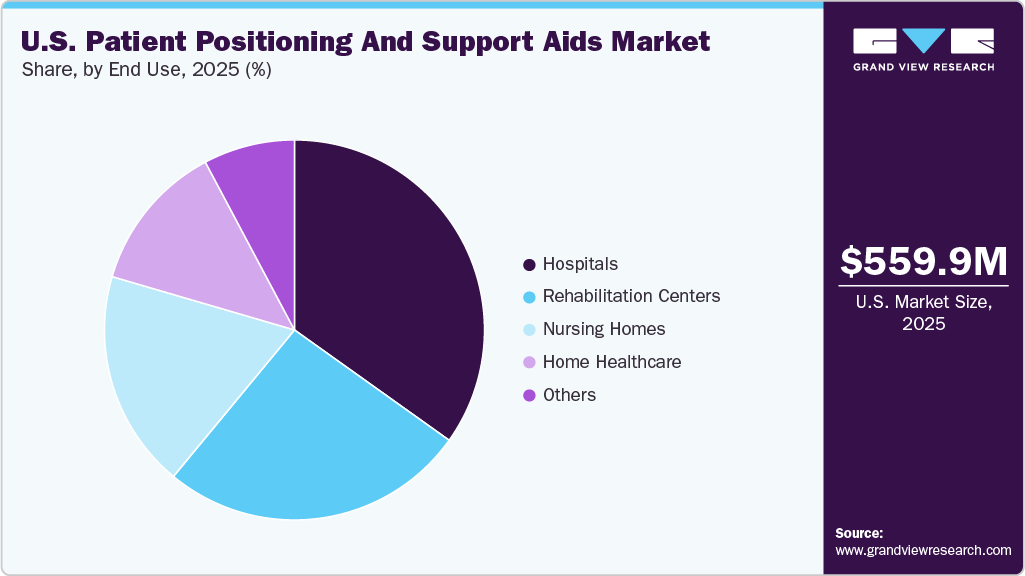
The rehabilitation center segment is anticipated to grow at the fastest over the forecast period. The rising incidence of disabilities results from various factors, including aging populations, obesity, and chronic conditions such as stroke and arthritis. As the number of patients requiring rehabilitative services continues to increase, the demand for effective patient positioning aids has also grown. These aids enhance patients’ comfort during rehabilitation sessions and facilitate better therapist access, promoting efficient therapeutic practices. Technological advancements have further transformed the landscape of patient positioning aids used in rehabilitation centers. Innovations in materials and ergonomic design have led to the development of more versatile and adjustable devices, capable of accommodating a wide range of patient needs.
Key U.S. Patient Positioning And Support Aids Company Insights
The key players operating in the U.S. market are adopting product approval to increase the reach of their products in the market and improve the availability of their products in diverse geographical areas, along with expansion as a strategy to enhance production/research activities. In addition, several market players are acquiring smaller players to strengthen their market position. This strategy enables companies to increase their capabilities, expand their product portfolios, and improve their competencies.
Key U.S. Patient Positioning And Support Aids Companies:
- Medline Industries
- Cardinal Health
- Etac AB
- Soule Medical
- Xodus Medical Inc.
- Arjo
- EHOB
- DeRoyal Industries, Inc.
- Hillrom (Baxter)
- Guldmann
- ANSELL LTD
- Smith & Nephew
- Mölnlycke Health Care AB
- Stryker
- STERIS
- Spry
- Skytron, LLC
- CONMED Corporation
- Invacare Corporation
- Drive DeVilbiss Healthcare
- GF Health Products (Graham-Field)
- AliMed
- Joerns Healthcare (MasVida)
- Savaria Corporation
- Blue Chip Medical Products
- Permobil group (Investor AB)
- Mizuho OSI (State Street)
Recent Developments
-
In January 2026, Drive Medical, a global manufacturer and distributor of durable medical equipment and respiratory products, announced that it has entered into a definitive agreement to acquire Compass Health Brands, a diversified provider of branded and private-label consumer medical products.
-
In October 2025, Xodus Medical announced the launch of the Freeman Arm Positioner, an advanced solution designed to streamline and enhance arm positioning for patients undergoing a wide range of surgical procedures.
-
In August 2025, HKW, a middle-market private equity firm specializing in growth-oriented businesses, partnered with the Cherubini family to recapitalize AliMed Inc., supporting the company’s continued expansion and strategic development initiatives.
-
In October 2024, ifm efector, inc. (IFM), a leading innovator in sensors, controls, and software for industrial automation, announced the launch of its latest product, the MVQ301 process valve positioner. This new addition is the third in IFM’s MVQ series of pneumatic quarter-turn valve sensors. Designed for precision and efficiency, the MVQ301 serves dual valve positioner and sensor functions, enabling enhanced process control and automation.
-
In August 2024, Collette Health launched its new Position Monitoring feature, further enhancing its innovative fall prevention system. This advanced tool is designed to tackle the critical issue of hospital-acquired pressure injuries, a significant concern in healthcare settings. By continuously monitoring patient positioning, the feature enabling healthcare providers identify, and address risks associated with prolonged immobility, improving patient outcomes and reducing injury-related costs.
U.S. Patient Positioning And Support Aids Market Report Scope
Report Attribute
Details
Market size value in 2026
USD 612.01 million
Revenue forecast in 2033
USD 959.44 million
Growth rate
CAGR of 6.6% from 2025 to 2033
Actual data
2021 - 2025
Forecast period
2026 - 2033
Quantitative units
Revenue in USD million and CAGR from 2026 to 2033
Report coverage
Revenue forecast, company ranking, competitive landscape, growth factors, trends, and volume analysis
Segments covered
Product, end use
Country scope
U.S
Key companies profiled
Spry; Medline Industries; Arjo; EHOB; DeRoyal Industries Inc.; Etac AB; Hillrom (Baxter); Guldmann; ANSELL LTD; Mölnlycke Health Care AB; Stryker; Soule Medical; STERIS; Cardinal Health; Skytron, LLC; CONMED Corporation; Invacare Corporation; Drive DeVilbiss Healthcare; GF Health Products (Graham-Field); AliMed; Joerns Healthcare (MasVida); Savaria Corporation; Blue Chip Medical Products; Permobil Group (Investor AB); Mizuho OSI (State Street); Smith & Nephew; Xodus Medical Inc.
Customization scope
Free report customization (equivalent up to 8 analysts working days) with purchase. Addition or alteration to country, & segment scope.
Pricing and purchase options
Avail customized purchase options to meet your exact research needs. Explore purchase options
U.S. Patient Positioning And Support Aids Market Report Segmentation
This report forecasts revenue growth at country levels and provides an analysis of the latest trends in each of the sub-segments from 2021 to 2033. For this study, Grand View Research has segmented the U.S. patient positioning and support aids market report based on product and end use:
-
Product Outlook (Revenue, USD Million, 2021 - 2033)
-
Gel and Foam Positioners
-
Reusable Gel Positioners
-
Disposable Foam Positioners
-
-
Pillows and Wedges
-
Bed Wedge
-
Positioning Pillows
-
-
Sling-Based Positioning Aids
-
Repositioning and Turning Systems
-
Air-Assisted Transfer Aids
-
Offloading Devices and Suspension Boots
-
Slide Sheets
-
Fluidized Positioners
-
Fluidized Positioners
-
Flo-Lock Filtered Positioners
-
-
Others
-
-
End Use Outlook (Revenue, USD Million, 2021 - 2033)
-
Hospitals
-
Rehabilitation Centers
-
Nursing Homes
-
Home Healthcare
-
Others
-
Frequently Asked Questions About This Report
b. Key factors driving the market growth include increasing Medicare reimbursement for telehealth services, reducing emergency room visits and hospitalization rates, and technological innovation in communication technology.
b. The global U.S. patient positioning and support aids market size was estimated at USD 559.94 million in 2025 and is expected to reach USD 612.01 million in 2026.
b. The global U.S. patient positioning and support aids market is expected to grow at a compound annual growth rate of 6.6% from 2026 to 2033 to reach USD 959.44 million by 2033.
b. The gel and foam positioners segment dominated the market in 2024 and is expected to register a significant CAGR from 2026 to 2033.
b. Some key players operating in the U.S. patient positioning and support aids market include Spry; Medline Industries; Arjo; EHOB; DeRoyal Industries Inc.; Etac AB; Hillrom (Baxter); Guldmann; ANSELL LTD; Mölnlycke Health Care AB; Stryker; Soule Medical; STERIS; Cardinal Health; Skytron, LLC; CONMED Corporation; Invacare Corporation; Drive DeVilbiss Healthcare; GF Health Products (Graham-Field); AliMed; Joerns Healthcare (MasVida); Savaria Corporation; Blue Chip Medical Products; Permobil Group (Investor AB); Mizuho OSI (State Street); Smith & Nephew; Xodus Medical Inc.


Share this report with your colleague or friend.
Need a Tailored Report?
Customize this report to your needs — add regions, segments, or data points, with 20% free customization.


ISO 9001:2015 & 27001:2022 Certified
We are GDPR and CCPA compliant! Your transaction & personal information is safe and secure. For more details, please read our privacy policy.
Trusted market insights - try a free sample
See how our reports are structured and why industry leaders rely on Grand View Research. Get a free sample or ask us to tailor this report to your needs.













