
- Home
- »
- Medical Devices
- »
-
U.S. Pharmacy Market Size, Share & Growth Report, 2033GVR Report cover

U.S. Pharmacy Market (2026 - 2033)
Size, Share & Trends Analysis Report By Product (Prescription, OTC), By Type (Hospital Pharmacy, Retail Pharmacy, ePharmacy), By Ownership, By Country, And Segment Forecasts
Market Size, 2025
$801.6BMarket Estimate, 2026
$878.1BMarket Forecast, 2033
$1,707.0BCAGR, 2026–2033
10.0%U.S. Pharmacy Market Summary
The U.S. pharmacy market size was valued at USD 801.6 billion in 2025 and is projected to grow from USD 878.1 billion in 2026 to USD 1707.0 billion by 2033, at a CAGR of 10.0% from 2026 to 2033. The growth is attributed to the rising prevalence of chronic diseases, the high utilization of prescription drugs, and the increasing elderly population in the country.
Key Market Trends & Insights
- By product: The prescription segment held the largest revenue share in 2025.
- By type: The retail chains segment held the largest revenue share of 47.4% in 2025.
- By ownership: The chain segment is expected to register the fastest CAGR during the forecast period.
Market Size & Forecast
- Market size in 2025: USD 801.6 Billion
- Estimated market size in 2026: USD 878.1 Billion
- Projected market size by 2033: USD 1707.0 Billion
- CAGR (2026-2033): 10.0%
Three ways to get this report
Buy it, customize it, or ask a question.Ask an Analyst
Analyst response in 1 business day
- AccessReport author, directly
- Reply timeWithin 1 working day
- No sales callDirect answer only
- FormatEmail reply
- CostFree, no cost
Get the Full Report
What the study covers
- FormatsPDF · Excel · Dashboard
- Timeline2026–2033 annual, 2025 base
- Coverage20+ countries, 5 regions
- Companies10+ key players profiled
Customize the Report
20% free customization
- IncludeCountries, segments, points
- TailorTo your product definition
- ExtendDeeper competitor detail
- OrA fully bespoke study
- Turnaround5–10 working days
A report published in January 2024 by American Heart Association (AHA) highlights a significant awareness gap surrounding cardiovascular health in the U.S. Despite heart disease remaining the country’s leading cause of death for more than 100 years, 51% of surveyed U.S. adults did not identify it as the leading cause of death, while 18% incorrectly identified cancer as the leading cause. This lack of awareness is particularly concerning because cardiovascular disease affects 48.6% of the U.S. population, and 46.7% of adults have high blood pressure, with 38% of those individuals unaware of their condition.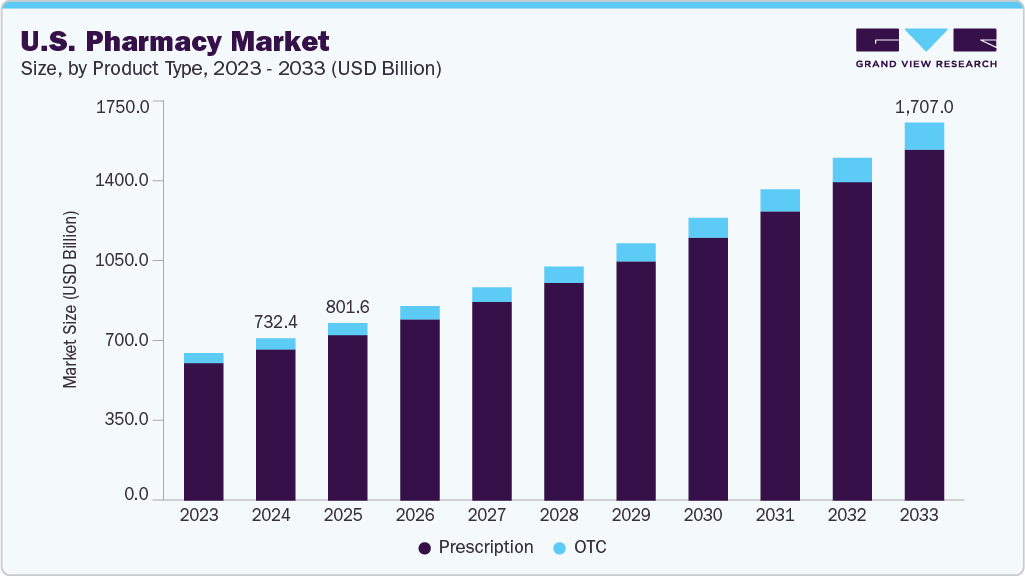 Source: Grand View Research, IR Documents, Primary Interviews, Paid DatabasesTo learn more about this report,
 Download Free Sample Report
 The section below outlines the key factors driving the growth of the U.S. market for pharmacy, highlighting the rising prevalence of chronic diseases and the increasing need for prescription medications and long-term medication management. It also examines the growing adoption of specialty drugs and high-cost therapies, the expansion of pharmacy-based healthcare services such as vaccinations, chronic disease management, and medication counseling, and the increasing integration of digital technologies, ePharmacies, mail-order services, and tele-pharmacy.
Market Dynamics
The market is expected to witness significant growth due to the increasing demand for specialty drugs. With advancements in medical technology and an aging population, more individuals require specialized medication, leading to an increase in demand for these drugs. As a result, pharmacies are expanding their offerings to include a wider range of specialty drugs, which is driving growth in the industry. Moreover, specialty medicines are the largest opportunity for pharmacies in the U.S. as they enable health systems to improve patient outcomes. The high cost of these drugs impacts the overall economies of scale in the market.
Specialty Drug Spend Is Shifting from Price to Utilization
• Specialty drug spending remains high: Specialty drug trend reached 10.8% gross and 12.5% net of rebates in 2025, with gross costs of $1,548 PMPY.
• Utilization is the main growth driver: Utilization contributed 10.6 percentage points of the 10.8% trend, while cost per claim contributed only 0.1 percentage point.
• More patients are using specialty drugs: Members using at least one specialty drug increased from 4.4% in 2023 to 5.5% in 2025.
• Biosimilars are reshaping the market: Overall biosimilar share increased from 22.6% in 2023 to 56.3% in 2025. Humira biosimilars reached 82.4% share in 2025.
• Newer therapies are gaining adoption: Utilization increased for Skyrizi (+31%), Rinvoq (+27%), Dupixent (+20%), and Tremfya (+16%).
• Key implication: Biosimilars are reducing cost-per-claim growth, but increasing patient utilization, expanded indications, and new specialty therapies continue to drive overall spending upward.
 To learn more about this report, Download Free Sample Report
 Case Study: Specialty Drug Launches Driving the U.S. Pharmacy Market
The U.S. specialty pharmaceutical market is increasingly influenced by new high-value therapies, including biosimilars and advanced treatments such as cell and gene therapies. Recent launches highlighted in AscellaHealth’s Q4 2024 Specialty and Rare Pipeline Digest demonstrate how innovation, pricing strategy, and targeted treatment can reshape market dynamics.
Key Developments
• Attruby (acoramidis) by BridgeBio offers a lower-priced alternative to Pfizer’s Vyndaqel/Vyndamax for ATTR-CM, expanding access and increasing competitive pricing pressure.
• Itovebi (inavolisib) from Genentech addresses endocrine-resistant, PIK3CA-mutated breast cancer and shows superior efficacy, creating new clinical adoption opportunities.
• Crenessity (crinecerfont) by Neurocrine Biosciences improves disease management in congenital adrenal hyperplasia by reducing steroid dependency, highlighting patient-centric therapeutic value.
Market Impact
These launches show how therapies with clear clinical benefit, targeted indications, and strategic pricing drive specialty pharmacy growth. They enhance provider uptake, improve patient access, and guide formulary and stocking decisions across the pharmacy and payer landscape.
Conclusion
Specialty drug innovation supported by real-time pipeline intelligence continues to be a major driver of market expansion, shaping treatment standards and competitive positioning.
Health insurance coverage and proximity to home are the major parameters patients prefer when selecting retail pharmacies. Under federal Medicaid law, pharmacy coverage is considered an optional benefit. However, all states have decided to provide coverage for outpatient prescription medications to all eligible individuals and most other enrollees in the Medicaid programs of the state. The Centers for Medicare & Medicaid Services (CMS) is taking initiatives to lower the total out-of-pocket expenses of beneficiaries and enable access to care. For instance, in May 2022, CMS finalized a pharmacy price concessions provision as part of the Contract Year 2023 Medicare Advantage and Part D final rule. This provision is expected to have several benefits, including a reduction in total beneficiary out-of-pocket costs, improved price transparency, better alignment with pharmacy payment arrangements, and the ability of CMS to assess the payment practices of Part D plan sponsors & Pharmacy Benefit Managers (PBMs) with respect to pharmacies under the Medicare Part D program.
Furthermore, HCSC’s launch of a national healthcare brand in July 2025 represents a significant development that is likely to drive growth in the market. By expanding its brand presence nationwide, HCSC aims to improve access to quality care, including integrated pharmacy services, for a broader population. This development can increase prescription volumes as more members gain coverage and convenient access to medications, preventive care, and chronic disease management programs.
Moreover, the increasing direct-to-consumer access and price transparency initiatives are driving the market demand. The Pharmaceutical Research and Manufacturers of America (PhRMA) announced the launch of a new website, AmericasMedicines.com, in January 2026. This platform aims to connect patients directly with pharmaceutical companies that offer discounted medications, bypassing traditional intermediaries such as pharmacies and insurers. This initiative is a response to mounting pressure from the Trump administration to reduce U.S. drug prices and eliminate intermediaries that contribute to high costs. It aligns with broader industry efforts to simplify access to medications and reduce out-of-pocket expenses for consumers.
Product recalls have a significant impact on the U.S. market for pharmacy. When a product is recalled, it can lead to a loss of consumer trust & confidence in the brand and the pharmacy that sold the product. This can result in decreased sales for the pharmacy and a negative impact on its reputation. In June 2024, Glenmark Pharmaceuticals Inc., USA, voluntarily recalled 114 batches of its Potassium Chloride Extended-Release Capsules (750 mg) due to failed dissolution. These capsules are used to treat or prevent low potassium levels in the blood. The recall was prompted by concerns that the capsules did not dissolve properly, potentially leading to hyperkalemia condition characterized by elevated potassium levels-which can result in irregular heartbeats and, in severe cases, cardiac arrest. In response to these recurring issues, the U.S. FDA issued a warning letter to Glenmark in July 2025. The letter highlighted significant violations of current good manufacturing practices (CGMP) at the Pithampur facility, including inadequate investigations into test failures and improper dissolution of extended-release formulations.
The opportunity analysis for the market involves identifying areas where pharmaceutical retailers, manufacturers, and service providers can grow, capture new revenue, or expand market share. Key opportunities in this market are driven by demographic trends, technological advancements, evolving patient needs, and healthcare policy changes.
Moreover, the UCSF PharmTech to PharmD Pathway Program highlights a significant opportunity in the U.S. market by addressing workforce shortages, improving access to pharmacy care, and creating pathways for career advancement. An opportunity analysis based on this initiative reveals several strategic insights.
• Workforce Expansion and Addressing Pharmacy Deserts: California alone has about nine million residents living in “pharmacy deserts,” where access to a pharmacy is more limited than access to a supermarket. Programs such as UCSF’s initiative present an opportunity to expand the pharmacist workforce, particularly in underserved and rural areas such as the Central Valley. By creating structured pathways for pharmacy technicians to advance into PharmD roles, the program directly targets regions with low pharmacy coverage, enhancing healthcare accessibility and supporting public health goals.
• Talent Pipeline Development: While three-quarters of pharmacy technicians aspire to earn a PharmD, only 1% follow through. This reveals a latent pool of motivated professionals whose potential remains untapped. The program’s free, year-long hybrid model offers academic guidance, mentorship, and career support, reducing barriers and increasing the likelihood that technicians transition into pharmacist roles. For pharmacy chains, health systems, and community clinics, this represents an opportunity to recruit skilled, loyal staff from an existing labor pool rather than relying solely on external graduates.
One of the most pressing challenges facing the market is the persistent shortage of essential medications, which the American Medical Association has described as an “urgent public health crisis” and a threat to national security. These shortages affect millions of patients, particularly those with chronic conditions, mental health disorders, and cancer, creating serious public health risks. Drugs commonly in short supply include ADHD medications, cancer treatments, opioids, anesthetics, antibiotics, and certain steroids such as triamcinolone, as well as widely used medications such as lorazepam.
Operational and supply chain pressures are a primary driver of these shortages. Manufacturing issues limited raw materials, and disruptions in the pharmaceutical supply chain led to inconsistent availability. The shortages peaked in the first quarter of 2024, with 323 active drug shortages in the U.S., although the number fell to 214 by September 2025. Despite this improvement, many critical drugs remain scarce, affecting large patient populations.
Market Concentration & Characteristics:
The market is moderately fragmented, with many small players entering the market and launching new innovative products. The degree of innovation is medium, and the level of mergers & acquisitionsactivity is medium. The impact of regulations on the market is high; level of product substitute is medium and regional expansion of players is medium.
The degree of innovation in industry is steadily increasing, driven by advances in specialty pharmaceuticals, personalized medicine, digital health integration, and value-based care models. Pharmacies are no longer limited to dispensing medications; they are evolving into clinical support hubs that manage complex therapies such as biologics, specialty injectables, and cell and gene therapies. In September 2025, Novartis announced to launch a Direct-to-Patient (DTP) platform for its top-selling biologic, Cosentyx (secukinumab), in the U.S. in November 2025. This initiative aims to offer cash-paying patients access to Cosentyx at a 55% discount off the list price, aligning the cost with the average savings typically retained by insurers and pharmacy benefit managers.
 To learn more about this report, Download Free Sample Report
 The market players are leveraging strategies such as collaborations, partnerships, and acquisitions, to promote the reach of their offerings and increase their services capabilities. In October 2025, CVS Pharmacy expanded its footprint by acquiring 63 former Rite Aid and Bartell Drugs locations across Idaho, Oregon, and Washington. The company also assumed responsibility for the prescription records of 626 pharmacies in 15 states, increasing its patient reach by over nine million individuals.
Regulations play a crucial role in the market, dictating operational standards and care delivery. The Poison Prevention Packaging Act mandates child-resistant packaging for household substances and medication. Non-child-resistant packaging may be requested for patients who have difficulty opening it. Emergency medications may be exempt from these requirements. Moreover, the Drug Enforcement Administration (DEA) enforces the Controlled Substances Act and regulates controlled substances. Pharmacists who handle controlled substances must register with the DEA.
The growth of product substitutes in the industry is being driven largely by the increasing availability of generics, biosimilars, and therapeutic alternatives that offer comparable clinical effectiveness at lower cost. As healthcare payers and PBMs push to reduce prescription spending, formulary strategies increasingly prioritize lower-cost substitutes, steering patients toward generics or preferred brands through tiered copays, prior authorizations, and substitution programs at the pharmacy counter. At the same time, growing consumer price sensitivity and rising out-of-pocket costs have encouraged patients to request lower-cost alternatives directly.
California alone has about nine million residents living in “pharmacy deserts,” where access to a pharmacy is more limited than access to a supermarket. Programs such as UCSF’s initiative present an opportunity to expand the pharmacist workforce, particularly in underserved and rural areas such as the Central Valley. By creating structured pathways for pharmacy technicians to advance into PharmD roles, the program directly targets regions with low pharmacy coverage, enhancing healthcare accessibility and supporting public health goals.
Analyst Perspective
The U.S. pharmacy industry is fueled by the growing prevalence of chronic diseases, increasing demand for prescription medications, and the expanding role of pharmacies in preventive healthcare and patient management. The rise of specialty pharmaceuticals, vaccination services, medication therapy management, and digital pharmacy platforms is further transforming the industry and expanding access to healthcare services. The key competitive advantage lies with pharmacy providers that successfully integrate medication dispensing with digital health solutions, home delivery, patient engagement programs, and value-added healthcare services. By creating a seamless and personalized healthcare experience, pharmacies can improve patient loyalty, enhance medication adherence, and strengthen their long-term market position.
Product Insights
The prescription segment dominated the market with a revenue share in 2025. This can be attributed to the increasing burden of chronic diseases and the growing aging population, which is expected to drive the demand for prescription drugs. TrumpRx represents a major shift toward direct-to-consumer (DTC) prescription drug purchasing in the U.S., with the platform designed to connect patients directly to participating pharmaceutical manufacturers rather than dispensing medicines itself. Launched following the Trump administration’s most-favored-nation (MFN) pricing agreements, the platform is expected to provide substantial cash-pay discounts on several high-cost medicines, particularly GLP-1 therapies. For example, reported monthly prices could fall to approximately USD 350 for Ozempic and Wegovy and USD 346 for Zepbound, compared with substantially higher list prices, while certain oral GLP-1 treatments could start at around USD 150.
The OTC segment is anticipated to grow at the fastest CAGR during the forecast period. The OTC segment is expected to witness growth due to new service & product launches and innovations, including the approval of certain prescription medications for OTC use. For instance, Camber Pharmaceuticals launched 24 new products during the first half of 2025, comprising generic drugs, specialty generics, and OTC medications, demonstrating its continued focus on expanding access to affordable treatments. The company, which has operated in the U.S. for 18 years, has built a portfolio of more than 250 products, including 20 specialty drugs and 16 OTC products.
Type Insights
The retail chains segment held the dominant revenue share of 47.4% in 2025. The rapid rise in the number of independent pharmacies & chains and the availability of medications in mass retailers & supermarkets in the U.S. is expected to drive the retail pharmacy segment growth. Moreover, the presence of large chains of retail pharmacy providers, such as Walmart Inc., Walgreens Boots Alliance, Inc., Rite Aid Corp, CVS Health, and others, is anticipated to support segment growth. For instance, CVS Health opened its first pharmacy-focused CVS Pharmacy location in Houston in July 2026, at 8503A Gulf Freeway in South Houston, as part of a broader plan to open nearly 20 smaller pharmacy-focused locations in selected U.S. communities. The initiative is designed to improve access to medications and pharmacist-led care, particularly in communities where pharmacy access gaps exist, while allowing CVS to optimize the size and location of its retail footprint.
The long-term-care pharmacies are expected to grow at the fastest CAGR during the forecast period. This is driven by demographic and clinical forces (rapid growth of the 65+ population and rising chronic, multi-morbid disease burden), plus operational and regulatory pressures that favor specialized dispensing and clinical services facilities and families demand unit-dose/blister packaging, medication reconciliation, adherence programs and clinical reviews to reduce polypharmacy and avoid costly hospital readmissions; meanwhile technology (automation, single-dose blister machines, ADMs and pharmacy-EHR integrations), vertical consolidation and investor interest (IPOs and roll-ups) are making LTC pharmacy services more efficient and scalable.
Ownership Insights
The pharmacy chains segment dominated the market with the largest revenue share in 2025 and is expected to grow the fastest from 2026 to 2033. Significant competitive rivalry among key players is one of the key factors expected to drive market growth. The need to compete with other players in the market often leads to consolidation and expansion strategies by chain pharmacies to maintain their share. Some major service providers in the U.S. chain pharmacy are CVS Health, Rite Aid Corp., Walgreens Boots Alliance Inc., Walmart Inc., Kroger, and others. For instance, in January 2024, Kroger announced the extension of its partnership with Centene Corporation’s pharmacy network. This extension aims to provide patients with increased opportunities to save on essential prescriptions. The agreement ensures continued access to the Kroger Family of Pharmacies for approximately 700,000 Centene members throughout 2024.
 To learn more about this report, Download Free Sample Report
 The independent pharmacies segment is expected to have substantial growth over the forecast period. Major factors driving segment growth include flexibility & personalized customer relationships, entrepreneurial opportunities, profitability, differentiated services, and community engagement. Independent pharmacies have the advantage of building strong relationships with customers, offering tailored services, and meeting specific needs. In addition, owning an independent pharmacy provides pharmacists with the opportunity for entrepreneurship and the ability to shape the direction of their business.
Country Insights
The Southeast U.S. pharmacy industry held a significant revenue share in 2025 driven by the region’s high burden of chronic diseases, including diabetes, hypertension, cardiovascular diseases, and obesity, which generates sustained demand for prescription medications, refills, and medication-management services. The region’s large and growing population, particularly in states such as Florida, Georgia, North Carolina, and South Carolina, is expanding the patient base and supporting pharmacy network growth. In addition, significant rural and underserved populations increase reliance on community pharmacies as convenient points of healthcare access, particularly where physician availability and healthcare infrastructure are limited.
The West U.S. pharmacy industry is expected to grow at a significant CAGR during the forecast period. The growth in the region is driven by the expansion of pharmacist-led healthcare services. Pharmacies across Western states are increasingly positioned as accessible healthcare points for vaccinations, screenings, medication counseling, chronic disease management, and other preventive services. The CDC notes that community pharmacists are geographically accessible, commonly operate extended hours, and generally do not require appointments, making them particularly valuable for patients who face barriers to traditional healthcare access.
Key U.S. Pharmacy Company Insights:
The market is led by major retail chains, independent pharmacies, and specialty pharmacies that together influence drug access and pricing. CVS Health, Walgreens, and Walmart dominate retail dispensing and are expanding digital and clinical services. PBM leaders such as OptumRx, Express Scripts, and CVS Caremark shape reimbursement and formulary controls. Specialty pharmacies such as Accredo and AllianceRx Walgreens Prime focus on high-cost and complex therapies, offering patient support programs to improve adherence. Health system pharmacies such as Kaiser Permanente also play a growing role by integrating care and pharmacy services to improve outcomes.
Key U.S. Pharmacy Companies
The following key companies have been profiled for this study on the U.S. pharmacy market.
-
Walgreens
-
CVS
-
Walmart
-
The Kroger Co.
-
Publix Pharmacy
-
Albertsons
-
Costco Wholesale Corporation
-
Kaiser Permanente
-
Amazon Pharmacy (PillPack)
-
Hims & Hers Pharmacy
-
ExactCare Pharmacy.
-
Alto Pharmacy
-
Capsule Corporation
-
BlinkRx (Blink Health)
-
Avita Pharmacy
-
Tarrytown Pharmacy Inc.
-
The Medicine Shoppe Pharmacy
-
Sullivan's Pharmacy and Medical Supply
-
Honeybee Health
-
Good Neighbor Pharmacy
-
Andrews Pharmacy
-
Dinno Health
-
Island Family Pharmacy
-
Gloyer's Pharmacy
-
Huntington Pharmacy
-
Daniel's Pharmacy
-
Apteek Pharmacy & Compounding
-
V-Care Pharmacy
-
Randol Mill Pharmacy
-
Boca Pharmacy & Home Health Center
-
Grand Avenue Pharmacy
-
Skenderian Apothecary
-
Doyle’s Pharmacy
-
Gary Drug Co
-
Care Rx Pharmacy
-
Palm Harbor Pharmacy
-
DiRx Inc.
-
Allen Family Drug
-
ScriptCo Pharmacy
Competitive Benchmarking
Category
Operating Strategies
Competitive Edge
Weakness
Established Players (e.g., CVS Health, Walgreens Boots Alliance, Cencora, McKesson Corporation)
Expand pharmacy networks through acquisitions, strategic partnerships, and omnichannel healthcare models. Invest in e-pharmacy platforms, specialty pharmacy services, digital prescription management, home delivery, vaccination programs, and integrated healthcare solutions. Strengthen relationships with healthcare providers, insurers, and pharmaceutical manufacturers.
Strong brand recognition, extensive retail and distribution networks, broad product portfolios, significant purchasing power, and advanced digital infrastructure. Ability to leverage economies of scale, negotiate favorable supplier agreements, and provide comprehensive healthcare services across multiple markets.
High operating and labor costs, complex regulatory compliance requirements, and exposure to reimbursement pressures. Large organizational structures can slow decision-making and limit agility in responding to rapidly changing consumer preferences and emerging market trends.
Emerging Players (e.g., Capsule, PharmEasy, Truepill, regional e-pharmacies and independent pharmacy networks)
Focus on digital-first pharmacy models, personalized patient engagement, prescription delivery services, telepharmacy integration, medication adherence programs, and niche therapeutic areas. Utilize technology-driven platforms, mobile applications, and direct-to-consumer strategies to improve convenience and accessibility.
Greater flexibility in adopting innovative technologies, stronger focus on customer experience, and ability to serve underserved or specialized patient segments. Agile business models enable rapid adaptation to changing healthcare and consumer trends.
Limited financial resources, smaller customer bases, and lower brand recognition compared to established players. Dependence on external funding, challenges in scaling operations, and increasing competition from large pharmacy chains and healthcare ecosystems may restrict growth potential.
Recent Developments
-
In August 2025, Sycamore Partners acquired Walgreens Boots Alliance (WBA) representing a major private-equity transaction in the U.S. retail pharmacy and healthcare services sector, with a total potential transaction value of up to USD 23.7 billion.
Angela Humphreys, Chair of the Healthcare Practice Group and Co-Chair of the Healthcare Private Equity Team said:
“We are very proud of the outstanding multidisciplinary work of the Bass, Berry & Sims healthcare team as led by Mike, Dawn and Jeanne Marie. Being able to deliver this level of support across pharmacy, primary care and ancillary services, insured products and 340B speaks to the depth of our experience and strength of our healthcare team of attorneys,”
-
In April 2025, Hims & Hers entered a partnership with Novo Nordisk to expand access to Wegovy-based obesity care, which concluded in June 2025 following regulatory and contractual disputes.
CEO and founder of Hims & Hers said:
“We’re excited to work with Novo Nordisk, a company known for breakthrough innovation in clinical medicine and a strong portfolio of medications,” . “Bringing our teams together and continuing to explore our shared commitment and focus on delivering the future of healthcare has been inspiring. We share a vision of what consumer-centered healthcare looks like, and this is just the first step towards delivering that future.”
-
In February 2025, BlinkRx appointed Donald Trump Jr., Partner at 1789 Capital, to its Board of Directors following 1789 Capital’s lead investment in the company’s USD 140 million Series D funding round. The move strengthens BlinkRx’s strategic leadership as it continues expanding access and affordability in digital pharmacy fulfillment.
Co-Founder and CEO of BlinkRx said:
"We're thrilled to welcome Donald Trump Jr. to our Board as we build a better healthcare experience nationwide," Don shares our passion and determination for improving the lives of everyday Americans. We look forward to working closely with him to drive innovation and advance the health and well-being of all patients."
U.S. Pharmacy Market Report Scope
Report Attribute
Details
Revenue forecast in 2025
USD 801.6 billion
Revenue forecast in 2026
USD 878.1 billion
Revenue forecast in 2033
USD 1707.0 billion
Growth rate
CAGR of 10.0% from 2026 to 2033
Actual data
2021 - 2025
Forecast data
2026 - 2033
Quantitative units
Revenue in USD billion and CAGR from 2026 to 2033
Report coverage
Revenue forecast, company ranking, competitive landscape, growth factors, and trends
Segments covered
Type, product, ownership
Country scope
U.S.
Key companies profiled
Walgreens; CVS; Walmart; The Kroger Co.; Publix Pharmacy; Albertsons; Costco Wholesale Corporation; Kaiser Permanente; Amazon Pharmacy (PillPack); Hims & Hers Pharmacy; ExactCare Pharmacy; Alto Pharmacy; Capsule Corporation; BlinkRx (Blink Health); Avita Pharmacy; Tarrytown Pharmacy Inc.; The Medicine Shoppe Pharmacy; Sullivan's Pharmacy and Medical Supply; Honeybee Health; Good Neighbor Pharmacy; Andrews Pharmacy; Dinno Health; Island Family Pharmacy; Gloyer's Pharmacy; Huntington Pharmacy; Daniel's Pharmacy; Apteek Pharmacy & Compounding; V-Care Pharmacy; Randol Mill Pharmacy; Boca Pharmacy & Home Health Center; Grand Avenue Pharmacy; Skenderian Apothecary; Doyle’s Pharmacy; Gary Drug Co; Care Rx Pharmacy; Palm Harbor Pharmacy; DiRx Inc.; Allen Family Drug; ScriptCo Pharmacy
Customization scope
Free report customization (equivalent up to 8 analysts working days) with purchase. Addition or alteration to country, regional & segment scope.
Pricing and purchase options
Avail customized purchase options to meet your exact research needs. Explore purchase options
U.S. Pharmacy Market Report Segmentation
This report forecasts revenue growth at a country level and provides an analysis of the latest industry trends in each of the sub-segments from 2021 to 2033. For this study, Grand View Research has segmented the U.S. pharmacy market report based on type, product, and ownership.
-
Type Outlook (Revenue, USD Billion, 2021 - 2033)
-
Retail chains (e.g., Walgreens, CVS)
-
Supermarket pharmacies
-
Health system / hospital pharmacies
-
Independent pharmacies
-
Mail-order pharmacies
-
Specialty / central fill pharmacies
-
Long-term care and defense-related pharmacies
-
ePharmacy
-
Others
-
-
Product Outlook (Revenue, USD Billion, 2021 - 2033)
-
Prescription
-
OTC
-
-
Ownership Outlook (Revenue, USD Billion, 2021 - 2033)
-
Chain
-
Independent
-
-
Country Outlook (Revenue, USD Billion, 2021 - 2033)
-
Southeast
-
Southwest
-
West
-
Midwest
-
Northeast
-
Research Methodology
The U.S. pharmacy market figures in this report are based on a proven research process that combines executive interviews with secondary research from proprietary databases, company filings, and recognized regulatory and institutional sources. Market size is built through value-chain sizing-reconciling supply-side and demand-side estimates-and triangulated with bottom-up and top-down approaches. Every estimate passes multiple levels of expert validation before publication, with each U.S. pharmacy segment quantified using the revenue-capture definitions in the table below.
Segment Definition
Segment - Product
Revenue capture definition
Prescription
A medical prescription is an order issued by a qualified healthcare professional to a pharmacist for a treatment to be provided to their patient
OTC
It refers to medications that can be purchased without a prescription from a licensed healthcare professional. These drugs are typically considered safe and effective for self-medication when used as directed on the label and in accordance with the guidance of a healthcare professional. Consumers can directly purchase OTC drugs from pharmacies, drugstores, supermarkets, and other retail outlets without the need for a prescription
Segment - Pharmacy
Revenue capture definition
Retail Chain Pharmacies
Large, multi-location pharmacy networks operating under common branding and management systems. They provide prescription dispensing, OTC products, immunizations, wellness clinics, medication counseling, and other healthcare services. Their key strengths include national reach, standardized operations, and integration with healthcare payers and PBMs.
Supermarket Pharmacies
Pharmacy departments located within grocery and supermarket stores, such as Kroger, Albertsons, and Walmart. They combine prescription services with routine grocery shopping, offering convenience and often integrating pharmacy services with loyalty programs, vaccinations, health screenings, and preventive care.
Health System / Hospital Pharmacies
Pharmacies operating within hospitals, outpatient facilities, and integrated healthcare systems. They primarily serve inpatients and discharged patients and provide medication management, compounding, clinical support, and drug-utilization services. They also help reduce medication errors and support continuity of care between hospitals and patients' homes.
Independent Pharmacies
Privately owned pharmacies or small community-based pharmacy chains that emphasize personalized patient care and local accessibility. They commonly offer compounding, medication synchronization, chronic disease management, and other customized services, allowing them to build strong relationships and patient loyalty.
Mail-Order Pharmacies
Pharmacies that dispense medications through centralized fulfillment centers and deliver them directly to patients through postal or courier services. They primarily serve patients requiring long-term medications and offer convenience, automated refills, and potential cost savings. This model is widely used by insurers and PBMs.
Specialty / Central Fill Pharmacies
Specialty pharmacies dispense high-cost and complex medications for conditions such as cancer, multiple sclerosis, autoimmune diseases, and rare disorders, while providing patient education, clinical monitoring, and insurance coordination. Central fill pharmacies process prescriptions at high-volume centralized facilities on behalf of multiple retail locations to improve efficiency and consistency.
Long-Term Care and Defense-Related Pharmacies
Pharmacies serving institutional populations such as nursing homes, assisted living facilities, military personnel, veterans, and their families. They provide customized medication packaging, adherence programs, medication management, and regulatory compliance services tailored to institutional and defense-related healthcare requirements.
ePharmacy
Digital or online pharmacies that allow patients to order prescription and OTC medications through online platforms and receive them through home delivery. Many integrate telehealth consultations, electronic prescriptions, digital payment, subscription models, and automated refills, emphasizing convenience and digital engagement.
Others
Includes academic, clinical, research, and other specialized pharmacy settings. Academic pharmacies focus on pharmaceutical education, training, and research, while clinical pharmacies emphasize evidence-based medication management, therapeutic optimization, and collaboration with physicians and other healthcare professionals.
Segment - Ownership
Revenue capture definition
Chain
Pharmacies owned and operated by a corporate organization with multiple locations under a common brand, standardized operations, and centralized management. Examples include CVS, Walgreens, and Rite Aid.
Independent
Privately owned pharmacies operated by an individual pharmacist, family, or small ownership group, typically serving a local community with greater flexibility and personalized patient services.
Estimation Model
Model Details
This chapter outlines the approach used to estimate and forecast the U.S. pharmacy market, covering both prescription (Rx) revenue and over-the-counter (OTC) revenue. The methodology uses a bottom-up approach, relying on prescription fill volumes, OTC unit sales, and average realized prices, drawn from both primary and secondary sources. Forecasts are developed for the period 2021 to 2033, with 2025 as the base year.
Market Definition
The U.S. pharmacy market includes all revenues generated by retail, chain, independent, specialty, and mail-order pharmacies through the sale of prescription medications and OTC health products.
Three Pillars of Market Estimation
Secondary Market Research
Data Sources:
-
Government Reports & Health Data: CMS Medicare Part D Drug Utilization files, National Health Expenditure (NHE) data, CDC and AHRQ healthcare utilization datasets.
-
Company Disclosures: SEC filings (10-K/10-Q), investor presentations, and segment reporting from major chains (CVS Health, Walgreens Boots Alliance, Walmart, Kroger, Costco, Albertsons).
-
Pharmacy Benefit Managers (PBMs): Public disclosures from OptumRx, CVS Caremark, and Express Scripts, including prescription volume and revenue mix.
-
Industry Associations: National Association of Chain Drug Stores (NACDS), American Pharmacists Association (APhA), PhRMA reports on prescription and OTC volumes.
-
Academic & Clinical Literature: Research studies on drug utilization patterns, generic penetration, adherence rates, and consumer behavior for OTC/self-care.
Analysis Focus:
-
Historical Data: Market reports for 2021 - 2025.
-
Prevalence Data: Chronic disease incidence (diabetes, cardiovascular, obesity) from WHO, CDC, and U.S. health agencies to validate demand drivers.
-
Pricing & Packages: Extraction of average prescription reimbursement (ARP) after rebates, and average unit prices for OTC medicines from retail data.
Primary Market Intelligence
This includes biannual primary research to validate assumptions, align with real-world market dynamics, and capture insights directly from pharmacy operators, PBMs, and consumers.
In-Depth Interviews (IDIs)
- Respondents:
-
Retail pharmacy executives (chain and independent)
-
Pharmacists and pharmacy managers (urban, suburban, and rural settings)
-
PBM (Pharmacy Benefit Manager) executives and payers
-
Consumer health specialists focusing on OTC categories
-
- Discussion modules (core):
-
Prescription dispensing trends and changes in fill patterns (30-, 60-, 90-day)
-
Pricing, reimbursement, and discounting dynamics (insurance coverage vs. out-of-pocket)
-
OTC sales mix, consumer behavior, and self-care trends
-
Challenges in inventory management, staffing, and regulatory compliance
-
Market drivers such as aging population, chronic disease management, and growth of specialty pharmacy
-
Forecasting for prescription volume, specialty vs. generic adoption, and OTC category growth
-
Completed IDIs (by year):
Year
Number of IDIs Conducted
2021
238
2022
262
2023
277
2024
289
2025
198 (till Q3)
Selected Transcripts (Summarized)
“We are seeing a steady rise in 90-day prescriptions, particularly through mail-order channels, as PBMs push for higher adherence and lower costs.”
- National Chain Pharmacy Director“OTC sales of digestive health and immunity products surged post-COVID, and customers are more aware of probiotics and vitamins than ever before.”
- Independent Pharmacy Owner“Specialty drugs now make up more than half of our pharmacy revenue, even though they are dispensed in relatively small volumes.”
- Specialty Pharmacy Manager“Generic substitution remains high-about 85%-but biologics and specialty medications are driving revenue growth.”
- PBM ExecutiveMarket Modeling & Forecasting
The U.S. pharmacy market has been estimated and forecast using a dual-model approach:
Model 1: Volume-Price Analysis
We estimated prescription volumes in the U.S. Pharmacy Market by combining secondary data with channel-level modeling and then normalizing all fills to 30-day equivalents. The process was structured as follows:
Step 1: Prescription volume estimation
Defining the Unit of Measurement
-
Prescription counts were standardized to 30-day equivalents to account for the prevalence of 60-day and 90-day dispensing.
-
Conversion factors applied:
-
1 × 90-day fill = 3 × 30-day equivalents
-
1 × 60-day fill = 2 × 30-day equivalents
-
This normalization ensured comparability across pharmacy channels and payer types.
Data Sources
- Government Data:
-
CMS Medicare Part D Drug Utilization files (prescription counts by NDC, days’ supply, cost).
-
Medicaid State Drug Utilization Data.
-
DoD TRICARE pharmacy utilization.
-
- Commercial Data:
-
IQVIA National Prescription Audit (NPA).
-
NACDS Rx volume summaries.
-
- Industry Disclosures:
-
Chain pharmacy filings (CVS, Walgreens, Walmart, Kroger, Costco).
-
PBM disclosures (OptumRx, CVS Caremark, Express Scripts).
-
- Associations:
-
NCPA Digest (independent pharmacy utilization).
-
APhA reports on dispensing patterns.
-
Delivered Customizations
This report has been delivered with the following In-depth customizations
Client Request
Customization Delivered
Value Adds
Prescription Volume Analysis by Drug Category
Developed a comprehensive volume assessment of prescription and OTC medications segmented by cardiovascular drugs, diabetes therapies, oncology products, respiratory medications, antibiotics, specialty pharmaceuticals, and wellness products. The study evaluates prescription volumes, refill frequency, patient demographics, payer mix, and regional demand patterns.
Enables stakeholders to identify high-volume therapeutic categories, optimize inventory planning, improve procurement strategies, and prioritize investments in high-growth drug segments.
Home Delivery & Last-Mile Fulfillment Analysis
Assessed home delivery adoption, fulfillment models, logistics networks, customer preferences, and delivery performance across pharmacy channels.
Supports optimization of delivery operations, customer convenience, and patient retention strategies.
Vaccination & Preventive Care Services Assessment
Examined pharmacy-based vaccination programs, health screenings, wellness consultations, and preventive healthcare services across key markets.
Helps stakeholders expand healthcare service offerings, increase foot traffic, and diversify revenue streams.
Frequently Asked Questions About This Report
The U.S. pharmacy market size was estimated at USD 801.6 billion in 2025 and is estimated at USD 878.1 billion for 2026
The U.S. pharmacy market is expected to grow at a compound annual growth rate of 10.0% from 2026 to 2033, reaching USD 1707.0 billion by 2033
Some key players operating in the U.S. pharmacy market include Walgreens, CVS, Walmart, The Kroger Co., Publix Pharmacy, Albertsons, Costco Wholesale Corporation, Kaiser Permanente, Amazon Pharmacy (PillPack), Hims & Hers Pharmacy, ExactCare Pharmacy, Alto Pharmacy, Capsule Corporation
Key factors that are driving the market growth include the rising prevalence of chronic diseases, high utilization of prescription drugs, and the increasing elderly population in the country.
The prescription segment dominated the market with a revenue share in 2025. This can be attributed to the increasing burden of chronic diseases and the growing aging population, which is expected to drive the demand for prescription drugs
The pharmacy chains segment dominated the market with the largest revenue share in 2025 and is expected to grow the fastest from 2026 to 2033. Significant competitive rivalry among key players is one of the key factors expected to drive market growth.
The Southeast region held the largest revenue share in 2025, driven by the region’s high burden of chronic diseases, including diabetes, hypertension, cardiovascular diseases, and obesity, which generates sustained demand for prescription medications, refills, and medication-management services.
The retail chains segment dominated the U.S. pharmacy market by type segment with a share of 47.4% in 2025. This is attributable to the growing number of independent pharmacies and chains, along with the availability of medications in supermarkets & mass retailers in the country
About the Author(s)
Medical Devices Research Team
Healthcare · Medical DevicesThis report was authored by the medical devices research team at Grand View Research - comprising two research analysts, one senior research analyst, and one industry expert - with specialized expertise in the medical devices segment of the healthcare industry. All findings are based on proprietary healthcare databases, executive interviews, and regulatory analysis, subject to internal peer review prior to publication.
Last Updated:
Speak to Analyst

Customize this report to your needs - add regions, segments, or data points, with 20% free customization.
Or view our licence options:


ISO 9001:2015 & 27001:2022 Certified
We are GDPR and CCPA compliant! Your transaction & personal information is safe and secure. For more details, please read our privacy policy.


