
- Home
- »
- Advanced Interior Materials
- »
-
UV Air Purifier Market Size, Share, Trends Report, 2026-2033GVR Report cover

UV Air Purifier Market (2026 - 2033)
Size, Share & Trends Analysis Report By Type (Fixed, Portable), By Application (Residential, Commercial, Industrial), By Power (Less than 70W, 71W - 100W, More than 140W), By Region, And Segment Forecasts
Market Size, 2025
$2.2BMarket Estimate, 2026
$2.5BMarket Forecast, 2033
$4.7BCAGR, 2026–2033
9.5%UV Air Purifier Market Summary
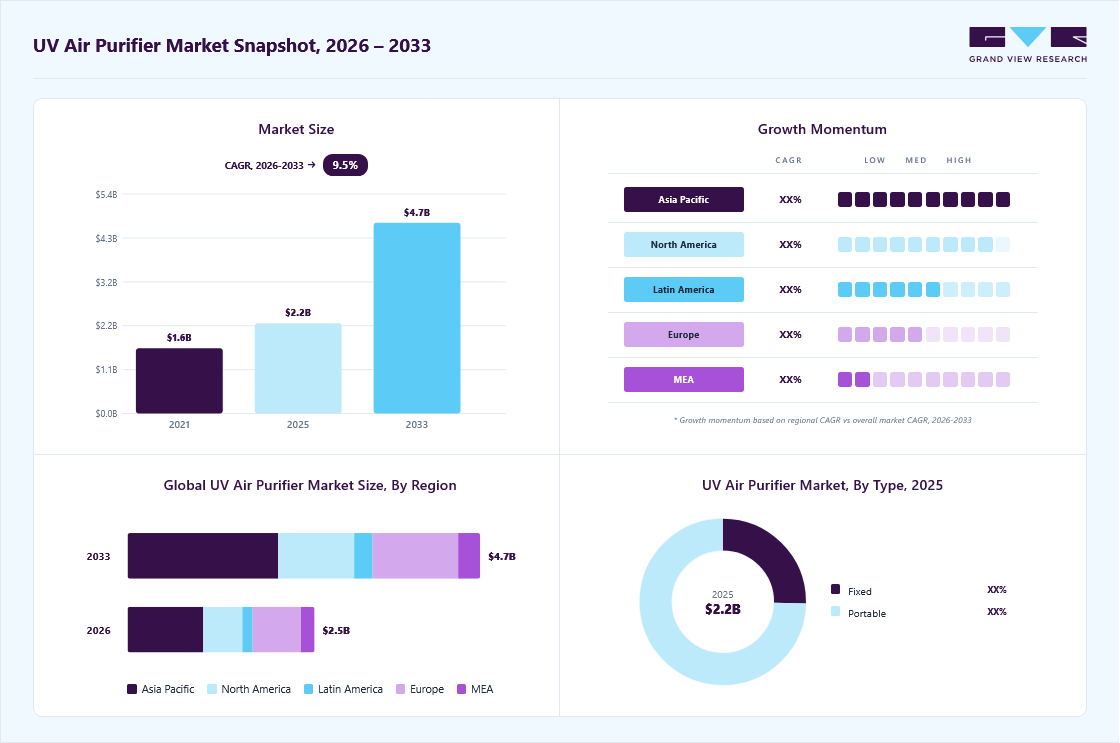
The global UV air purifier market size was valued at USD 2.2 billion in 2025 and is projected to grow from USD 2.5 billion in 2026 to USD 4.7 billion by 2033, at a CAGR of 9.5% from 2026 to 2033. The market in Asia Pacific dominated with a revenue share of 39.8% in 2025. The market for UV air purifiers is poised to witness significant expansion, supported by technological innovation, growing consumer awareness, and increasing disposable income.
 Source: Grand View Research, IR Documents, Primary Interviews, Paid DatabasesTo learn more about this report,
 Download Free Sample Report
 Key Market Trends & Insights
- By power: 71W-100W power segment held the largest market share of 39.3% in 2025.
- By type: Portable segment held the largest market share of 74.7% in 2025.
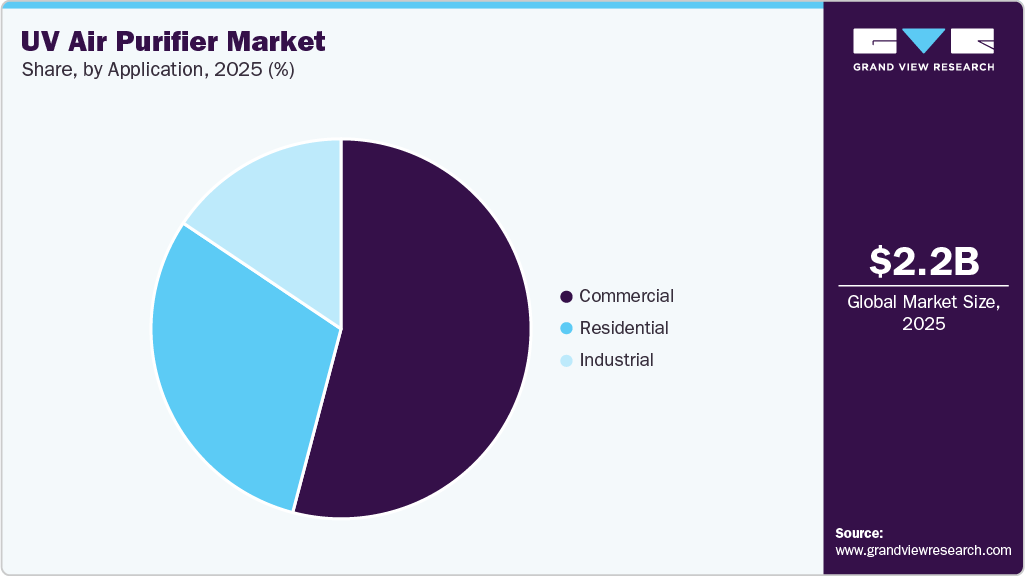
- By application: Commercial segment held the largest market share of 54.1% in 2025.
Regional Highlights
- Largest regional market: Asia Pacific (39.8% revenue share, 2025)
- By country: India held the largest market share in 2025
Market Size & Forecast
- Market size in 2025: USD 2.2 Billion
- Estimated market size in 2026: USD 2.5 Billion
- Projected market size by 2033: USD 4.7 Billion
- CAGR (2026-2033): 9.5%
Three ways to get this report
Buy it, customize it, or ask a question.Ask an Analyst
Analyst response in 1 business day
- AccessReport author, directly
- Reply timeWithin 1 working day
- No sales callDirect answer only
- FormatEmail reply
- CostFree, no cost
Get the Full Report
What the study covers
- FormatsPDF · Excel · Dashboard
- Timeline2026–2033 annual, 2025 base
- Coverage20+ countries, 5 regions
- Companies10+ key players profiled
Customize the Report
20% free customization
- IncludeCountries, segments, points
- TailorTo your product definition
- ExtendDeeper competitor detail
- OrA fully bespoke study
- Turnaround5–10 working days
Furthermore, rising indoor air quality concerns, regulatory developments, and smart product integration are expected to foster market growth. UV air purifiers incorporate ultraviolet light-emitting elements designed to inactivate airborne microorganisms. Mold spores, bacteria, and viruses are neutralized when air circulates through the UV irradiation chamber, minimizing the possibility of these contaminants re-entering indoor spaces and enhancing protection levels. Compared with conventional filtration-based purifiers, the risk of contaminant release during filter replacement is comparatively lower. Improved microbial inactivation efficiency, reduced maintenance concerns, and enhanced safety features are contributing to the broader adoption of UV air purification systems.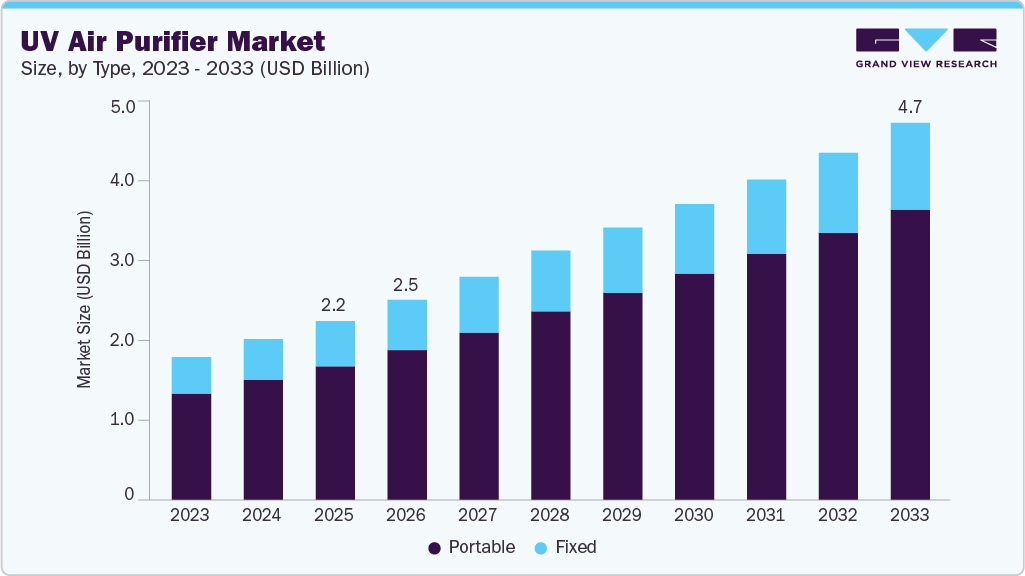 To learn more about this report, Download Free Sample Report
 In addition, UV air purifiers are commonly deployed in healthcare and wellness facilities, including clinics, hospitals, and diagnostic centers, where airborne pathogen concentration is relatively high. These systems assist in lowering microbial load by exposing circulating air to germicidal UV radiation within the unit. Increasing global healthcare expenditure and development of new medical facilities are supporting product demand. Growing emphasis on infection control protocols and indoor air quality standards is further expected to encourage the installation of UV air purifiers over the forecast period.
Market Concentration & Characteristics
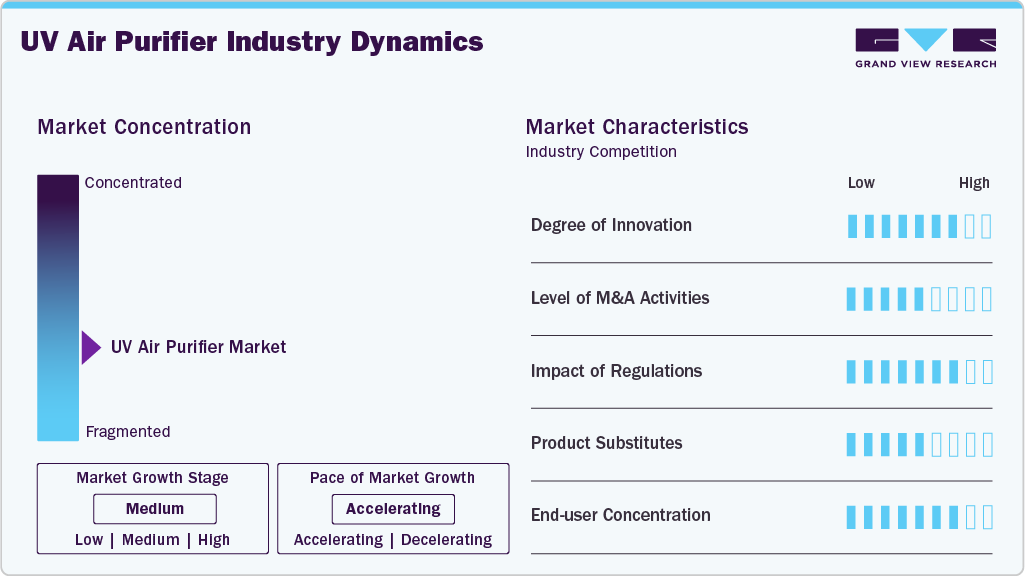
The market is in a high-growth phase, with the rate of expansion expected to gain momentum over the forecast period. Competitive intensity remains strong due to the presence of numerous global and regional manufacturers actively operating within the industry. The market structure is relatively fragmented, with multiple manufacturers competing across different price points and application segments. Product development efforts are primarily focused on enhancing disinfection efficiency and improving technologies designed to eliminate airborne contaminants with greater performance and operational effectiveness.
Regulatory frameworks and indoor air quality (IAQ) standards play a significant role in shaping the UV air purifier industry by influencing product design, performance requirements, and adoption rates. Government bodies and health organizations across regions have established guidelines and standards related to air quality, ventilation, and exposure limits to airborne contaminants, encouraging the deployment of advanced air purification solutions in residential, commercial, and institutional settings. In addition, certifications and compliance requirements, such as safety standards for ultraviolet (UV) radiation exposure and performance validation for microbial inactivation, are driving manufacturers to develop more efficient and reliable systems. However, varying regulatory stringency across regions, coupled with evolving guidelines on UV-C efficacy and safety, can pose challenges in terms of product approvals and market entry.
 To learn more about this report, Download Free Sample Report
 Companies in the UV air purifier industry focus on strategies such as new product launches, technological enhancements, and geographic expansion to strengthen their market presence. Many prominent players are also improving their reach through online distribution channels by developing dedicated digital platforms and collaborating with e-commerce providers. For instance, in November 2022, Havells India introduced the Meditate air purifier featuring UV-C and UV-A lamps, which was made available through the Amazon online marketplace. Increasing incorporation of multi-layer filtration, energy-efficient designs, and smart connectivity features is further influencing product development trends.
Expanding urban populations and continuous development of residential infrastructure are expected to create growth opportunities for manufacturers, particularly in metropolitan regions. Consumer awareness regarding indoor air quality, along with evolving purchasing patterns, supports product adoption in urban areas. In addition, growing construction of commercial establishments and industrial facilities requiring controlled indoor environments is contributing to sustained demand for UV air purification solutions.
Drivers, Opportunities & Restraints
Market growth is driven by the increasing prevalence of respiratory disorders and the growing emphasis on maintaining indoor air quality across residential, commercial, and healthcare environments. Rising urbanization, escalating pollution levels, and heightened exposure to airborne pathogens and allergens are supporting the adoption of UV-based disinfection technologies. Technological advancements, including multi-stage filtration, smart monitoring capabilities, and improvements in UV lamp efficiency and operational safety, are strengthening product demand. Expansion of healthcare infrastructure and the implementation of stricter indoor air quality standards are further encouraging the deployment of UV air purification systems across multiple end-use sectors.
Opportunities are emerging from the growing integration of UV air purification solutions within smart buildings and connected home ecosystems. Increasing investments in workplace safety and indoor environmental quality across corporate spaces, educational institutions, and public infrastructure are supporting broader adoption. Advancements in UV-LED technology, offering improved energy efficiency and longer operational lifespan, are creating new avenues for product innovation. A growing focus on retrofitting existing HVAC systems with UV-based disinfection modules, along with regulatory initiatives promoting healthy buildings and sustainability certifications, is expected to support market expansion. Expanding construction activities across emerging economies are also contributing to favorable growth prospects.
However, the market faces certain restraints, including higher initial costs compared to conventional air purification technologies, which may limit adoption in price-sensitive regions. Limited awareness regarding UV-based systems in developing economies further restricts penetration. Moreover, the availability of alternative air purification technologies, such as HEPA-based solutions, in addition to the need to comply with regulatory safety standards may increase product development costs, pose challenges for manufacturers operating in the market for UV air purifiers.
Power Insights
The 71W-100W power segment accounted for the largest share in 2025, holding 39.3% of the global revenue in 2025. The segment is supported by its suitability for medium-sized indoor environments across residential and commercial applications. These UV air purifiers provide balanced airflow performance and effective UV disinfection coverage without excessive energy consumption, making them preferred for offices, classrooms, retail stores, and hospitality spaces. Manufacturers are also focusing on optimizing performance, durability, and operational efficiency within this power range, further supporting adoption across diverse end-use settings.
The less than 70W segment is projected to grow at the fastest CAGR of 10% from 2026 to 2033. The segment’s growth is driven by increasing demand for compact and portable UV air purifiers designed for localized air treatment in residential apartments, small offices, and personal workspaces. Lower energy consumption, ease of placement, and reduced operating costs are encouraging adoption among cost-sensitive users. Expanding penetration of space-efficient appliances and increasing preference for point-of-use air purification solutions are further supporting the segment’s expansion across the globe.
Type Insights
The portable segment represented a key segment in 2025 with a majority revenue share of 74.7%. These purifiers are standalone, movable units designed for localized air purification in smaller or flexible-use spaces such as homes, hotel rooms, classrooms, clinics, and small offices. They offer ease of installation, user convenience, and mobility, allowing users to shift the unit based on changing requirements. The demand for portable purifiers is sustained, particularly preferred in residential and light commercial settings, due to their lower upfront cost, compact design, and suitability for personal or room-specific air quality management. Increasing consumer awareness regarding indoor hygiene and respiratory health also continues to contribute to the segment's growth.
The fixed segment is projected to expand at a CAGR of 8% over the forecast period. Growing construction across residential, commercial, and industrial sectors, particularly in emerging economies, fosters a growing need for continuous and centralized air disinfection. Fixed UV air purifiers, commonly integrated into Heating, Ventilation, and Air Conditioning (HVAC) systems, air ducts, or wall-mounted units, are increasingly preferred in hospitals, offices, manufacturing facilities, schools, and public buildings where maintaining consistent indoor air quality is essential. Their ability to provide large-area purification, reduce manual intervention, and support long-term operational efficiency is accelerating adoption, particularly in high-occupancy and high-risk settings.
Application Insights
The commercial segment accounted for the largest revenue share of 54.1% in 2025, due to widespread deployment across office buildings, educational institutions, hospitality establishments, healthcare centers, and other high-occupancy public facilities. Strong emphasis on maintaining indoor air quality in densely populated environments and adherence to ventilation and hygiene standards are encouraging adoption. Moreover, growing development of commercial infrastructure, including corporate offices, retail complexes, and co-working spaces, is further supporting demand. Increasing integration of ultraviolet air purification systems within centralized ventilation setups and facility management practices is also contributing to segment dominance.
 To learn more about this report, Download Free Sample Report
 The industrial segment is expected to register considerable growth over the forecast period. Demand is supported by the need to control airborne contaminants such as dust, fumes, and microbial pollutants within manufacturing environments. Industries such as food processing, pharmaceuticals, electronics, and automotive, among others, require improved air quality to maintain operational standards and product integrity. Growing construction and expansion of manufacturing facilities combined with increasing focus on occupational health and safety are expected to support the installation of Ultraviolet (UV) air purification systems over the forecast period.
Regional Insights
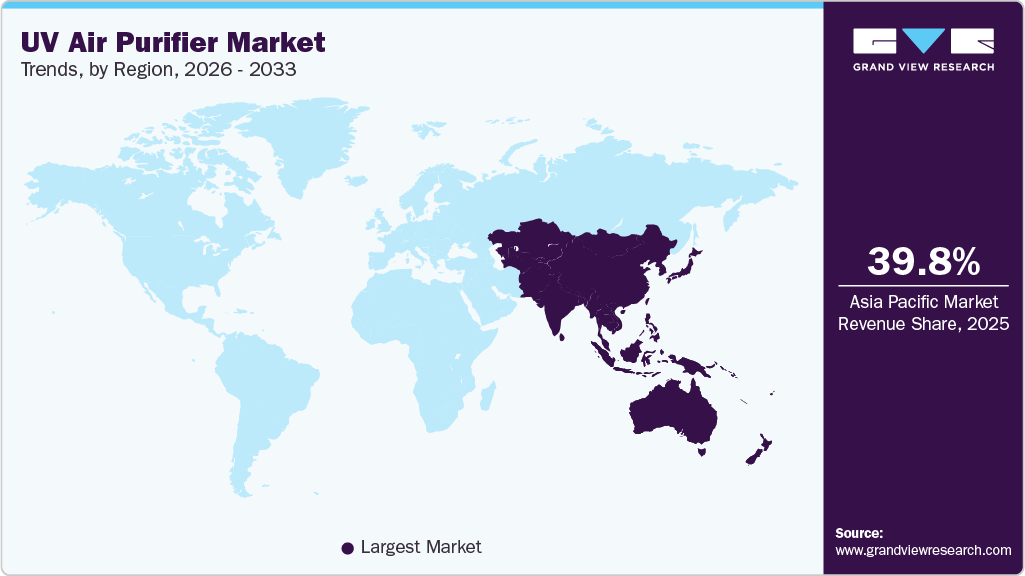
The Asia Pacific UV air purifier market accounted for the largest revenue share of 39.8% in 2025, supported by a substantial consumer base, rapid urbanization, and expanding commercial infrastructure. The region hosts a major share of the global population, with the United Nations indicating that more than 60% of the world’s population resides in the Asia Pacific. Increasing industrial activity, growing construction of residential complexes, and heightened awareness regarding indoor air quality are encouraging adoption. The presence of domestic manufacturers and widening retail and e-commerce distribution channels is further strengthening market penetration.
 To learn more about this report, Download Free Sample Report
 China UV Air Purifier Market Trends
The UV air purifier market in China is driven by dense urban population, ongoing urban development, and increasing concerns related to indoor air pollution. Demand from residential apartments, offices, and hospitality establishments is expanding due to a greater focus on healthier indoor environments. Government initiatives targeting pollution control and improvements in building ventilation standards are supporting adoption.
India UV air purifier market is estimated to be the fastest growing market during the forecast period with a projected CAGR of 12.5% in terms of revenue. The India UV air purifier industry growth is primarily driven by deteriorating urban air quality and a heightened post-pandemic focus on microbial disinfection. Key factors include the seasonal surge in hazardous smog across major cities like Delhi and Mumbai, which has transitioned air purifiers from luxury items to essential household utilities. Moreover, the rapid growth of construction across all sectors in the country is expected to considerably contribute to market growth.
North America UV Air Purifier Market Trends
The North America UV air purifier market growth is supported by increasing awareness regarding indoor air quality, elevated pollution levels, and the need to control airborne disease transmission. Adoption across commercial offices, healthcare facilities, and educational institutions is contributing to regional demand. Integration of UV purification with High-Efficiency Particulate Air (HEPA) filtration and smart monitoring systems is improving product performance and operational efficiency. Regulatory frameworks emphasizing workplace safety and ventilation standards are encouraging upgrades to air handling infrastructure. Renovation of commercial buildings and modernization of ventilation systems are supporting installations. Rising demand from residential users, along with growing investments in healthcare infrastructure and continued development of large commercial facilities, is expected to sustain regional market growth over the forecast period.
The UV air purifier market in the U.S. is projected to lead the regional market, supported by strong demand across commercial and industrial sectors. Expansion of domestic manufacturing activities and modernization of production facilities are encouraging deployment of UV air purifiers. Industrial operators are adopting UV air purifiers to maintain controlled indoor environments and comply with workplace safety standards. Rising incidence of respiratory disorders and growing exposure to allergens, volatile organic compounds, and particulate matter are strengthening the need for advanced indoor air purification solutions. Ongoing development of commercial infrastructure, including offices, hospitality establishments, and food service outlets, is creating opportunities for market participants. Upgrades to ventilation systems in existing buildings and integration of advanced purification technologies within smart building frameworks are expected to support continued market growth.
Europe UV Air Purifier Market Trends
The UV air purifier market in Europe is supported by increasing air pollution from vehicular emissions, industrial activities, and urban development. Growing awareness regarding indoor environmental quality and the adoption of smart, user-friendly appliances are encouraging product deployment across residential and commercial settings. Implementation of stringent indoor air quality regulations by regional authorities, aimed at reducing exposure to airborne contaminants, is further supporting market expansion. Increasing renovation of commercial buildings and upgrades to ventilation infrastructure are also contributing to demand for UV air purification systems.
The UV air purifier market in Germany is expected to grow at a steady pace over the forecast period. Strong compliance with occupational health and safety standards across commercial buildings, healthcare facilities, and institutional infrastructure is encouraging installation of air purification systems. Increasing focus on maintaining controlled indoor environments in hospitals, laboratories, and office spaces is supporting demand for advanced air quality solutions. Upgrades to existing ventilation systems and the adoption of energy-efficient indoor air quality technologies are expected to sustain the growth of the UV air purifier industry in Germany.
UK UV air purifier market is primarily driven by rigorous indoor air quality standards and a national focus on infection control within the healthcare and education sectors. Following the implementation of updated building regulations, there is significant momentum toward integrating UV-C technology into existing HVAC systems to mitigate airborne pathogens in high-density public spaces. Furthermore, rising urbanization and high levels of seasonal allergens in cities like London have boosted residential demand for hybrid purification systems. This growth is further sustained by the Green Building trend, which prioritizes energy-efficient, smart-enabled UV LED devices as a core component of modern corporate wellness and environmental sustainability strategies.
Middle East & Africa Global UV Air Purifier Market Trends
The UV air purifier market in the Middle East & Africa is expected to grow steadily, driven by increasing air pollution levels, expanding urban population, and improving disposable income across several countries. Frequent dust storms, traffic congestion, and industrial emissions are contributing to poor outdoor air quality, encouraging the adoption of UV air purifier. Rapid construction of residential and commercial buildings, along with higher occupancy in enclosed spaces, is increasing demand for effective air quality management solutions. Growing awareness regarding respiratory health, expansion of commercial infrastructure, and rising adoption of smart building technologies are additional factors supporting regional market growth.
The UV air purifier market in Saudi Arabia is projected to expand over the forecast period, supported by government initiatives aimed at strengthening healthcare infrastructure and improving public health standards. Investments under Saudi Vision 2030 are encouraging the development of hospitals, wellness centers, and large commercial facilities, increasing demand for air purification solutions. The government’s planned investment of approximately USD 65 billion in healthcare infrastructure under Vision 2030 as per the International Trade Administration, is expected to support the deployment of UV air purifiers across healthcare and commercial spaces. Growth in hospitality projects, airport expansions, and office developments is further contributing to market demand.
Latin America UV Air Purifier Market Trends
The UV air purifier market in Latin America is projected to grow steadily over the forecast period, supported by an expanding urban population and increasing industrial and commercial development. Growing concerns regarding air pollution in major cities and heightened awareness of respiratory health are encouraging the adoption of indoor air purification products. Development of commercial infrastructure, including offices, retail spaces, and healthcare facilities, is strengthening demand. Government initiatives focused on improving environmental standards and upgrades to building ventilation systems are further contributing to regional market expansion.
The UV air purifier market in Brazil is expected to grow steadily, supported by improving consumer purchasing power and the expansion of the middle-class population. Increasing air pollution levels in major urban centers and greater awareness regarding respiratory health are encouraging demand for indoor air quality solutions. Expansion of distribution networks and e-commerce platforms is improving product accessibility across metropolitan areas. Growing focus on maintaining hygienic indoor environments in workplaces, healthcare facilities, and educational institutions is anticipated to support continued market growth in Brazil.
Key UV Air Purifier Company Insights
Some of the key players operating in the market include DAIKIN INDUSTRIES, LTD and Honeywell International Inc.
-
DAIKIN INDUSTRIES, LTD. is a global manufacturer specializing in air conditioning, refrigeration, and climate control technologies. Headquartered in Osaka, Japan, the company operates manufacturing and sales facilities across Asia Pacific, Europe, and North America. Daikin invests its resources in energy-efficient HVAC systems, refrigerant technologies, and indoor environmental solutions. Its portfolio spans residential air conditioners, commercial HVAC systems, UV air purifiers, and industrial refrigeration equipment, supported by continuous investments in research and development and sustainability initiatives.
-
Honeywell International Inc. is a diversified technology and manufacturing company headquartered in Charlotte, U.S.. The company operates across multiple business segments, including aerospace, building technologies, performance materials, and industrial automation. Its product range includes building management systems, sensors, industrial controls, personal protective equipment, and indoor air quality solutions. The company maintains a strong global presence with 750 sites spread across 80 nations with over 99,000 employees.
Key UV Air Purifier Companies:
The following key companies have been profiled for this study on the UV air purifier market.
- Air Oasis LLC
- Aetaire International
- Guardian Technologies LLC
- Airpura Industries
- Alfaa UV
- Fresh-Aire UV
- UV Resources,
- Steril-Aire
- Lumalier Corporation
- UV Angel
- UV Smart
- Tru-D SmartUVC, American Ultraviolet
- Atlantic Ultraviolet Corporation
- UV Heal SafeAir
Recent Developments
-
In April 2026, Portronics introduced the AIR X smart HEPA air purifier in the Indian market. The model incorporates a four-stage filtration system consisting of a pre-filter, activated carbon layer, cold catalyst, and True H13 HEPA filter, supported by integrated UV sterilization for microbial reduction. The device offers a Clean Air Delivery Rate (CADR) of 249 m³/h and is suitable for spaces up to 50 m³. It is designed for residential and office applications, featuring low-noise operation, multiple airflow settings, and smart control functionality for enhanced indoor air quality management.
-
In July, 2024, SOTO PLUS launched the SOTO-Y6 air purification system incorporating UV-PCO (ultraviolet photocatalytic oxidation) technology for advanced air sterilization. The system utilizes ultraviolet irradiation combined with photocatalytic oxidation to neutralize airborne microorganisms, volatile organic compounds, and unpleasant odors. The product is designed for deployment in healthcare facilities, laboratories, and commercial indoor environments requiring continuous air disinfection, supporting improved indoor air quality and infection control standards.
UV Air Purifier Market Report Scope
Report Attribute
Details
Market size in 2025
USD 2.2 billion
Estimated market size in 2026
USD 2.5 billion
Projected market size by 2033
USD 4.7 billion
Growth rate
CAGR of 9.5% from 2026 to 2033
Base year for estimation
2025
Historical data
2021 - 2024
Forecast period
2026 - 2033
Quantitative units
Revenue in USD million and CAGR from 2026 to 2033
Report coverage
Revenue forecast, company market position analysis, competitive landscape, growth factors, and trends
Segments covered
Type, power, application, region
Regional scope
North America; Europe; Asia Pacific; Latin America; Middle East & Africa
Country Scope
U.S.; Canada; Mexico; UK; Germany; France; Italy; Spain; China; India; Japan; South Korea; Australia; Brazil; Argentina; Saudi Arabia; UAE; South Africa
Key companies profiled
Air Oasis LLC; Aetaire International; Guardian Technologies LLC; Airpura Industries; Alfaa UV; Fresh-Aire UV; UV Resources; Steril-Aire; Lumalier Corporation; UV Angel; UV Smart; Tru-D SmartUVC; American Ultraviolet; Atlantic Ultraviolet Corporation; UV Heal SafeAir.
Customization scope
Free report customization (equivalent up to 8 analysts working days) with purchase. Addition or alteration to country, regional & segment scope.,
Pricing and purchase options
Avail customized purchase options to meet your exact research needs. Explore purchase options
Global UV Air Purifier Market Report Segmentation
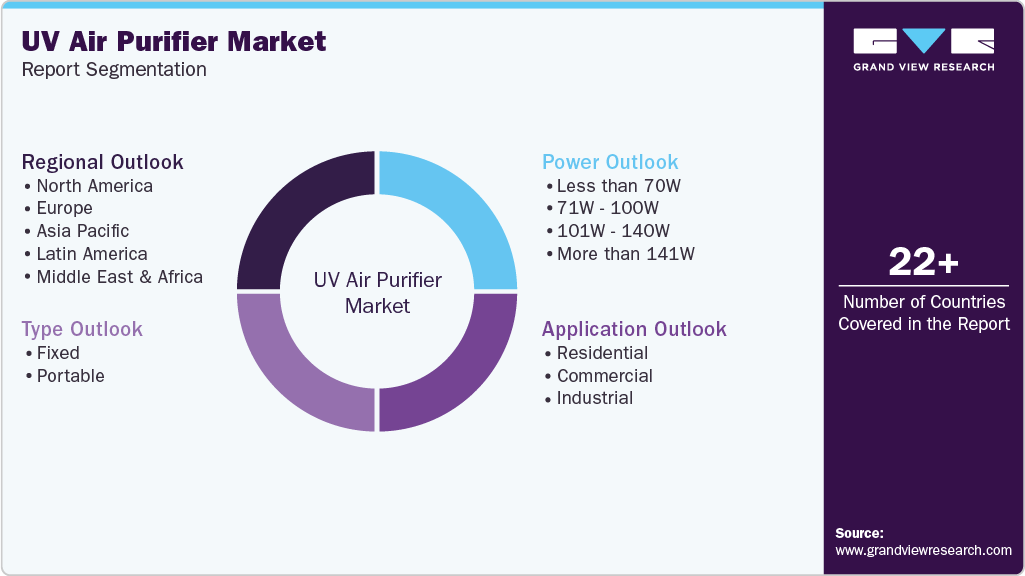
This report forecasts revenue growth at global, regional, and country levels and provides an analysis of the latest industry trends in each of the sub-segments from 2021 to 2033. For this study, Grand View Research has segmented the global UV air purifier market report based on type, power, application, and region:
 To learn more about this report, Download Free Sample Report
 -
Type Outlook (Revenue, USD Million, 2021 - 2033)
-
Fixed
-
Portable
-
-
Power Outlook (Revenue, USD Million, 2021 - 2033)
-
Less than 70W
-
71W - 100W
-
101W - 140W
-
More than 141W
-
-
Application Outlook (Revenue, USD Million, 2021 - 2033)
-
Residential
-
Commercial
-
Industrial
-
-
Regional Outlook (Revenue, USD Million, 2021 - 2033)
-
North America
-
U.S.
-
Canada
-
Mexico
-
-
Europe
-
Germany
-
UK
-
France
-
Italy
-
Spain
-
-
Asia Pacific
-
China
-
India
-
Japan
-
Australia
-
-
Latin America
-
Brazil
-
Argentina
-
-
Middle East and Africa
-
UAE
-
Saudi Arabia
-
South Africa
-
-
Frequently Asked Questions About This Report
The 71W-100W power segment led with a 39.3% revenue share in 2025, while the less than 70w segment is the fastest-growing.
The portable segment led with a 74.7% revenue share in 2025.
The commercial segment led with a 54.1% revenue share in 2025.
The global UV air purifier market size was valued at USD 2.2 billion in 2025 and is estimated at USD 2.5 billion for 2026.
The global UV air purifier market is expected to grow at a CAGR of 9.5% from 2026 to 2033, reaching USD 4.7 billion by 2033.
Asia Pacific dominated with a 39.8% revenue share in 2025.
Key players include Air Oasis LLC; Aetaire International; Guardian Technologies LLC; Airpura Industries; Alfaa UV; Fresh-Aire UV; UV Resources; Steril-Aire; Lumalier Corporation; UV Angel; UV Smart; Tru-D SmartUVC; American Ultraviolet; Atlantic Ultraviolet Corporation; UV Heal SafeAir.
The key factors that are driving the UV air purifier market include the rising regulatory compliance, increasing air pollution, growing awareness regarding health consciousness, and new product launches.
About the Author(s)
Advanced Interior Materials Research Team
Advanced Materials · Advanced Interior MaterialsThis report was authored by the advanced interior materials research team at Grand View Research - comprising two research analysts, one senior research analyst, and one industry expert - with specialized expertise in the advanced interior materials segment of the advanced materials industry. All findings are based on proprietary advanced materials databases, executive interviews, and regulatory analysis, subject to internal peer review prior to publication.
Last Updated:
Speak to Analyst

Customize this report to your needs - add regions, segments, or data points, with 20% free customization.
Or view our licence options:


ISO 9001:2015 & 27001:2022 Certified
We are GDPR and CCPA compliant! Your transaction & personal information is safe and secure. For more details, please read our privacy policy.


