
- Home
- »
- Animal Health
- »
-
Veterinary Endoscopes & Endoscopic Instruments Market Report, 2033GVR Report cover

Veterinary Endoscopes & Endoscopic Instruments Market (2026 - 2033)
Size, Share & Trends Analysis Report By Product (Equipment, Instruments & Accessories, Consumables), By Type (Disposable, Reusable), By Animal, By Procedure, By Application, By End Use, By Region, And Segment Forecasts
Market Size, 2025
$625.0MMarket Estimate, 2026
$657.7MMarket Forecast, 2033
$1,015.7MCAGR, 2026–2033
6.4%Veterinary Endoscopes & Endoscopic Instruments Market Summary
The global veterinary endoscopes & endoscopic instruments market size was valued at USD 625.0 million in 2025 and is projected to grow from USD 657.7 million in 2026 to USD 1,015.7 million by 2033, at a CAGR of 6.4% from 2026 to 2033. The market in North America dominated with a revenue share of 36.2% in 2025. Key factors driving growth in the veterinary endoscopes & endoscopic instruments industry include the rising prevalence of gastrointestinal, respiratory, urinary, and reproductive disorders among companion animals, particularly aging pets.
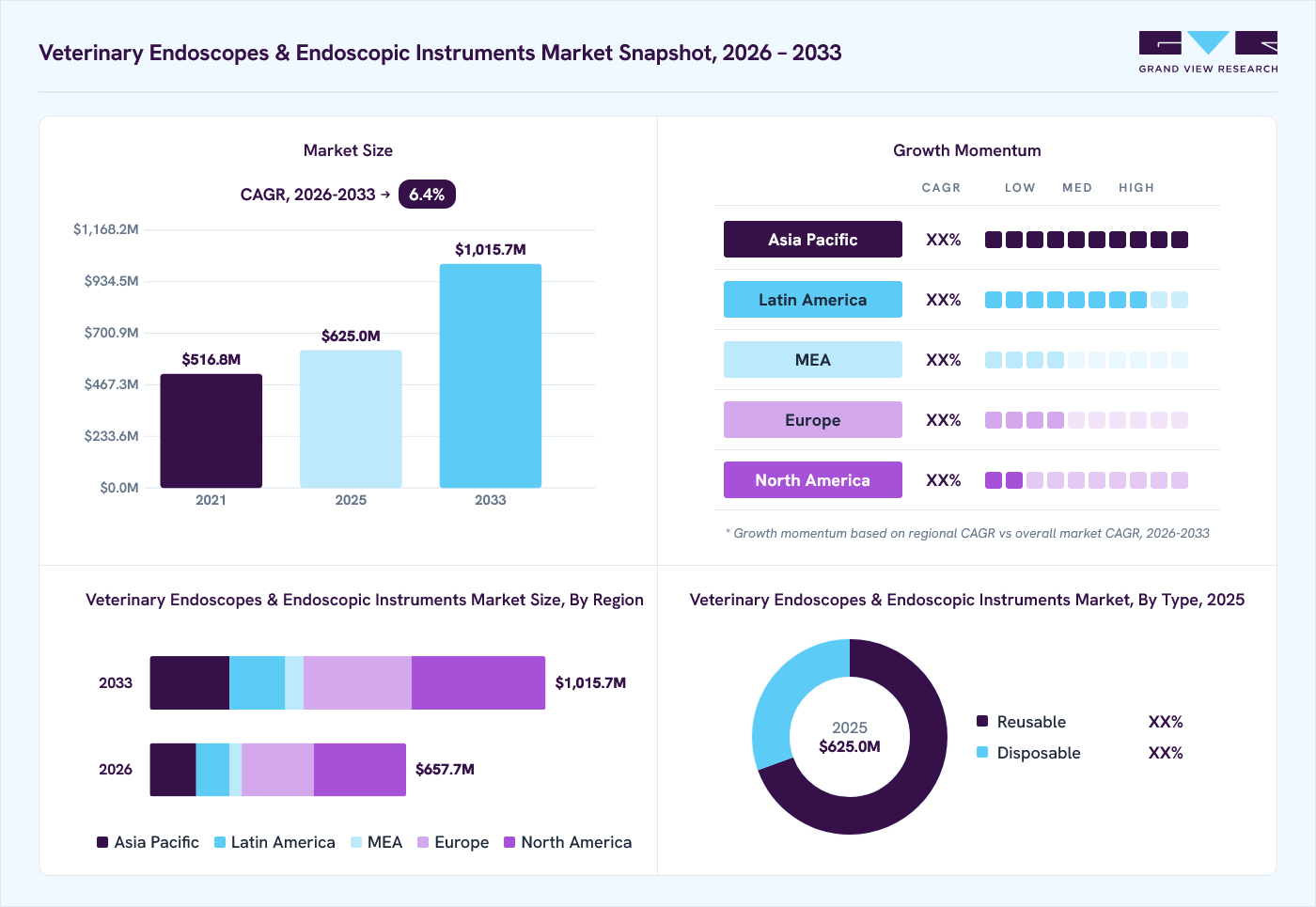 Source: Grand View Research, IR Documents, Primary Interviews, Paid DatabasesTo learn more about this report,
 Download Free Sample Report
Key Market Trends & Insights
- By product: Instruments & accessories segment held the largest market share of 45.5% in 2025.
- By type: Reusable segment held the largest market share of 69.4% in 2025.
- By animal: Small animals segment held the largest market share of 63.5% in 2025.
- By procedure: Gastrointestinal procedures segment held the largest market share of 53.4% in 2025.
- By application: Diagnostic segment held the largest market share of 63.7% in 2025.
- By end use: Specialty & referral centers segment held the largest market share of 37.4% in 2025.
Regional Highlights
- Largest regional market: North America (36.2% revenue share, 2025)
- Fastest-growing regional market: Asia Pacific (highest CAGR, 2026-2033)
- By country: The U.S. held the largest market share in 2025
Market Size & Forecast
- Market size in 2025: USD 625.0 Million
- Estimated market size in 2026: USD 657.7 Million
- Projected market size by 2033: USD 1,015.7 Million
- CAGR (2026-2033): 6.4%
Prism AI by Grand View Research Free to tryAsk a question about the veterinary endoscopes & endoscopic instruments marketTry asking✓Every figure cited from GVR research Prefer the report? Download free sample →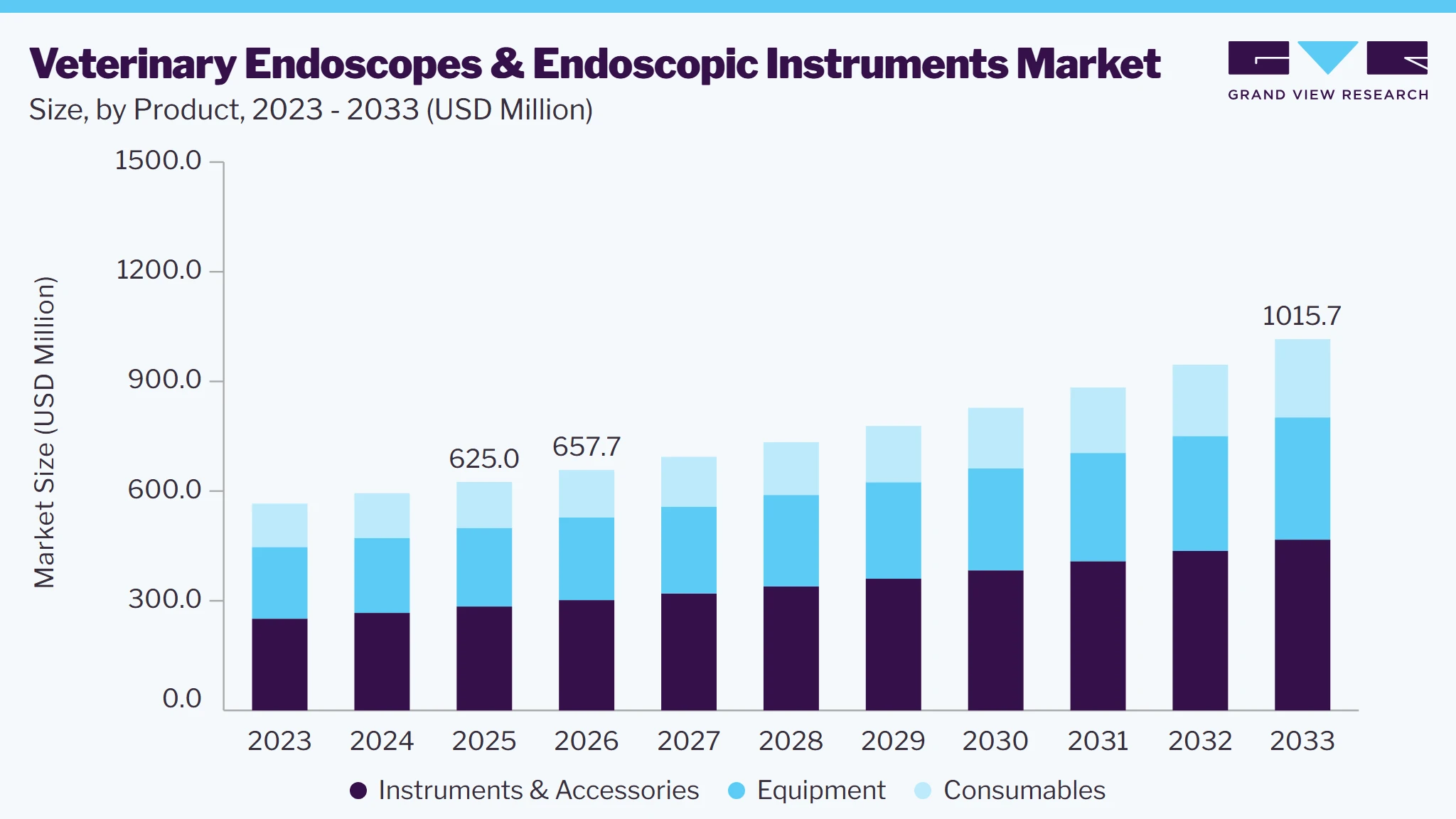 To learn more about this report, Download Free Sample Report
Growing pet ownership and increasing adoption of advanced veterinary healthcare services are expanding the patient population undergoing diagnostic and therapeutic procedures. In addition, the increasing adoption of minimally invasive techniques among veterinary hospitals and specialty clinics is improving access to endoscopic procedures, supporting demand for reusable endoscopes and associated instruments.Market Dynamics
The veterinary endoscopes and endoscopic instruments market is growing steadily as more pets develop digestive, respiratory, urinary, and reproductive problems. This growth is also helped by more people owning pets, using better veterinary healthcare, and knowing more about less invasive tests and treatments. Improvements in endoscope imaging, flexible and rigid scopes, viewing tools, and special instruments are making diagnoses more accurate and helping vets use these procedures in hospitals and clinics. Also, increased spending on pet care and better access to expert veterinary services are encouraging the use of advanced endoscopic procedures. However, the high the cost of endoscopic equipment, the need for maintenance, and the shortage of trained veterinary staff may slow market growth somewhat.
Moreover, the regulatory landscape for the veterinary endoscopes & endoscopic instruments market is evolving as veterinary authorities place greater emphasis on the safety, performance, and quality of diagnostic and surgical devices. Regulatory agencies continue to establish requirements for the design, manufacturing, sterilization, performance, and quality control of veterinary medical devices and endoscopic equipment compliance with applicable manufacturing standards. In addition, increasing harmonization of medical device regulations across major markets and growing support for veterinary healthcare innovation are facilitating product development, market expansion, and wider adoption of advanced endoscopic systems and instruments.
The increasing prevalence of gastrointestinal disorders among companion animals is a major factor driving the growth of the veterinary endoscopes & endoscopic instruments market. For instance, in August 2024, researchers from Gyeongsang National University and Western University of Health Sciences published a study evaluating capsule endoscopy for detecting gastric foreign bodies in dogs. The study reported 99.1% sensitivity and 90.4% specificity for capsule endoscopy, indicating its potential for identifying gastric foreign bodies in veterinary patients. The growing need to diagnose gastrointestinal conditions and identify foreign bodies is increasing demand for minimally invasive visualization and retrieval procedures. Furthermore, advances in veterinary endoscopic technologies are expanding their application across diagnostic and therapeutic procedures, supporting greater adoption of endoscopes and associated instruments in veterinary practice.
The high cost of veterinary endoscopic equipment and procedures remains a significant restraint on the veterinary endoscopes & endoscopic instruments market. Endoscopic procedures require specialized equipment, trained veterinary personnel, anesthesia, procedure rooms, and post-procedure monitoring, resulting in substantial costs for veterinary facilities and pet owners. These expenses can be particularly burdensome in regions with limited access to specialized veterinary hospitals or lower household spending on animal healthcare. In addition, equipment maintenance, sterilization, repair, and periodic replacement contribute to the operating costs of veterinary endoscopy. Consequently, the financial burden of endoscopic diagnosis and treatment can limit adoption in smaller veterinary practices and restrict access to advanced, minimally invasive procedures.
The expanding adoption of pet insurance presents a significant growth opportunity for the Veterinary Endoscopes & Endoscopic Instruments Market by improving affordability and access to advanced veterinary procedures. For instance, in April 2025, the North American Pet Health Insurance Association reported that 6.4 million pets were insured in the U.S. at the end of 2024, representing a 20.7% increase from the previous year. The report also stated that USD 4.7 billion in premiums were generated in the U.S. during 2024, while USD 3.1 billion in claims were paid.
As veterinary endoscopy can involve considerable expenses for specialized equipment, anesthesia, imaging, hospitalization, and professional services, broader insurance coverage can reduce the financial burden of advanced procedures. This may encourage pet owners to pursue diagnostic examinations and minimally invasive interventions when clinically indicated. Despite this growth, pet insurance penetration remains relatively low compared with the overall pet population. Furthermore, NAPHIA's 2026 industry data reported 7.6 million insured pets across North America at the end of 2025, representing an 8.5% increase from 2024. As insurance coverage expands and awareness of veterinary healthcare financing increases, improved affordability of advanced procedures is expected to create opportunities for greater adoption of endoscopic systems and instruments.
Market Concentration & Characteristics
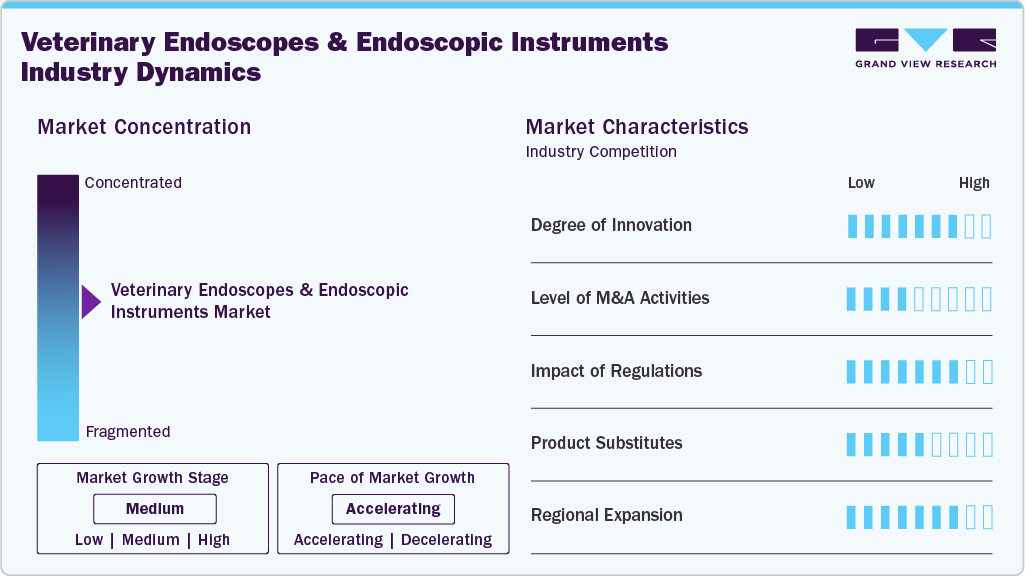
The veterinary endoscopes & endoscopic instruments industry is positioned at a moderate level of market concentration, characterized by the presence of established medical device and veterinary equipment companies offering endoscopes, visualization systems, and specialized endoscopic instruments. Established players leverage broad product portfolios, established distribution networks, and relationships with veterinary hospitals and specialty clinics to maintain competitive positions. However, the presence of specialized manufacturers offering veterinary-specific endoscopic systems and procedure-specific instruments contributes to a competitive market environment.
The industry demonstrates a high degree of innovation, driven by advancements in veterinary imaging, visualization, and minimally invasive technologies. High-definition imaging, flexible endoscopes, capsule endoscopy, improved light sources, and specialized instruments are expanding the applications of endoscopy across gastrointestinal, respiratory, urinary, and reproductive procedures. These advancements are expected to improve diagnostic precision, facilitate minimally invasive interventions, and support the development of advanced veterinary endoscopic systems.
 To learn more about this report, Download Free Sample Report
The industry is witnessing low to moderate merger and acquisition activity, with established medical device and veterinary healthcare companies expanding their endoscopy and minimally invasive procedure portfolios through acquisitions and strategic transactions. These activities strengthen product offerings, enhance technological capabilities, and broaden geographic reach.
The sector is influenced by veterinary medical device regulations governing the safety, performance, manufacturing, sterilization, and quality of endoscopes and endoscopic instruments. Regulatory requirements across major markets influence product development and commercialization, while established quality standards support the availability of safe and reliable veterinary endoscopic equipment.
The threat of product substitutes is moderate, as radiography, ultrasonography, computed tomography, and magnetic resonance imaging can support the diagnosis of several veterinary conditions. However, these modalities cannot provide the same direct visualization of internal surfaces, biopsy collection, or foreign body retrieval capabilities offered by endoscopic procedures.
Companies are actively pursuing regional expansion by strengthening distribution networks, establishing strategic partnerships, and increasing their presence in emerging veterinary healthcare markets. Rising companion animal ownership and improving access to specialized veterinary services are creating new growth opportunities across Asia Pacific, Latin America, and the Middle East and Africa.
Analyst Perspective
The veterinary endoscopes & endoscopic instruments market is expected to witness steady growth, supported by increasing adoption of minimally invasive diagnostic and surgical procedures in veterinary care. Growing companion animal healthcare expenditure and rising demand for advanced diagnostic solutions are encouraging veterinary hospitals and specialty clinics to invest in endoscopy systems. Technological advancements in high-definition imaging, flexible endoscopes, portable systems, and integrated visualization platforms are improving procedure accuracy and usability. Increasing veterinary specialization across gastroenterology, respiratory diagnostics, arthroscopy, and laparoscopic procedures is further supporting market demand.
Product Insights
The instruments & accessories segment dominated the market with a share of 45.5% in 2025, owing to the broad range of specialized instruments required for veterinary endoscopic procedures. Biopsy forceps, grasping forceps, retrieval baskets, snares, and other procedure-specific accessories are used across diagnostic and therapeutic applications, including tissue sampling and foreign body removal. The increasing use of minimally invasive gastrointestinal, respiratory, urinary, and reproductive procedures is contributing to demand for these instruments and accessories. Additionally, the expanding use of endoscopy across veterinary hospitals and specialty practices is supporting recurring demand for procedure-specific accessories.
The consumables segment is expected to grow at the fastest rate over the forecast period, driven by the increasing volume of veterinary endoscopic procedures and greater adoption of disposable and procedure-specific components. Endoscopic interventions require consumable products for biopsy, tissue sampling, foreign body retrieval, irrigation, insufflation, and other procedural needs. Increasing use of minimally invasive techniques and the expansion of specialized veterinary diagnostic services are expected to sustain demand for consumables used in endoscopic procedures.
Type Insights
The reusable segment dominated the market with a share of 69.4% in 2025, due to the repeated use of reusable endoscopic systems across diagnostic and therapeutic veterinary procedures. Reusable endoscopes can be utilized across multiple procedures after appropriate cleaning, disinfection, and sterilization, supporting their use in veterinary hospitals and specialty practices with established endoscopy infrastructure. Additionally, the availability of interchangeable instruments and accessories compatible with reusable systems supports their application across gastrointestinal, respiratory, urinary, and reproductive procedures. Ongoing improvements in imaging quality, maneuverability, and system design are further supporting the adoption of reusable veterinary endoscopes.
The disposable segment is estimated to grow at the fastest CAGR over the forecast period, owing to increasing interest in single-use endoscopic technologies that reduce reprocessing requirements and cross-contamination concerns. For instance, in June 2024, researchers from Cornell University College of Veterinary Medicine published a study evaluating a disposable flexible endoscope for open cholangioscopy in canine cadavers. The disposable endoscope enabled visualization of the common bile duct, cystic duct, and hepatic ducts in all eight canine cadavers evaluated, demonstrating its feasibility for veterinary biliary procedures. This development supports the potential application of disposable endoscopes in specialized veterinary procedures and may contribute to greater adoption of single-use systems. Furthermore, the elimination of repeated reprocessing requirements can improve procedural workflow and reduce the operational burden associated with reusable equipment, supporting demand for disposable veterinary endoscopes.
Animal Insights
The small animals segment dominated the market with a share of 63.5% in 2025, owing to the large canine patient population and extensive use of endoscopic procedures for gastrointestinal, respiratory, urinary, and other conditions. Endoscopy is commonly used in dogs for foreign body retrieval, biopsy collection, airway examination, and evaluation of chronic gastrointestinal disorders. Additionally, the broad availability of veterinary hospitals and specialty centers offering advanced diagnostic and minimally invasive procedures is supporting demand for endoscopes and endoscopic instruments in canine care.
The large animals segment is estimated to grow at the significant rate over the forecast period owing to increasing adoption of advanced diagnostic procedures and minimally invasive techniques for equine gastrointestinal, respiratory, and urinary conditions. The growing availability of flexible endoscopy and specialized veterinary services is improving access to procedures such as gastrointestinal examination, biopsy collection, and foreign body retrieval. Furthermore, increasing demand for advanced technology in large animal healthcare and expansion of specialty veterinary facilities are expected to support greater utilization of endoscopic systems and instruments.
Procedure Insights
The gastrointestinal procedures segment dominated the market with a share of 53.4% in 2025, due to the broad application of endoscopy for diagnosing and treating gastrointestinal conditions in companion animals. Gastrointestinal endoscopy enables direct visualization of the esophagus, stomach, duodenum, colon, and other gastrointestinal structures, and supports biopsy collection and foreign body retrieval. Additionally, the increasing use of endoscopy for chronic vomiting, diarrhea, gastrointestinal bleeding, suspected foreign bodies, and other digestive disorders is supporting demand for gastrointestinal procedures. Improvements in endoscopic visualization, maneuverability, and procedure-specific instruments are further supporting adoption across veterinary hospitals and specialty practices.
The respiratory procedures segment is estimated to grow at the fastest CAGR over the forecast period, owing to the increasing use of bronchoscopy for diagnosing and managing respiratory disorders in companion animals. Bronchoscopy enables direct examination of the airways and supports procedures such as bronchoalveolar lavage, airway sampling, and foreign body retrieval. For instance, in March 2025, researchers from Justus-Liebig-University Giessen evaluated high-flow oxygen therapy in 20 privately owned dogs undergoing diagnostic bronchoscopy and bronchoalveolar lavage. The study assessed oxygenation during the procedures, supporting the continued clinical use of bronchoscopy in veterinary respiratory diagnostics. Increasing utilization of bronchoscopic procedures for airway examination and sample collection is expected to support demand for flexible bronchoscopes and specialized respiratory instruments in veterinary practice.
Application Insights
The diagnostic segment dominated the market with a share of 63.7% in 2025, due to the extensive use of endoscopy for visual examination, biopsy collection, and identification of abnormalities across multiple veterinary conditions. Endoscopic procedures enable direct visualization of internal structures and support diagnostic evaluation of gastrointestinal, respiratory, urinary, and reproductive disorders. Additionally, the increasing use of endoscopy to investigate chronic gastrointestinal symptoms, airway abnormalities, foreign bodies, and other internal conditions is driving demand for diagnostic procedures. Improvements in image resolution, maneuverability, and visualization systems are further supporting the adoption of veterinary endoscopy for diagnostic applications.
The surgical/interventional segment is estimated to grow at the fastest CAGR over the forecast period, owing to increasing adoption of minimally invasive endoscopic procedures for foreign body retrieval, biliary interventions, tissue sampling, and other therapeutic applications. For instance, in June 2024, researchers from Cornell University College of Veterinary Medicine evaluated open cholangioscopy using a disposable flexible endoscope in eight canine cadavers. The procedure enabled visualization of the common bile duct, cystic duct, and hepatic ducts in all eight cadavers, while selected endoscopic tools could also be passed through the working channel. The researchers concluded that open transcholecystic cholangioscopy could provide a diagnostic and therapeutic tool for obstructive biliary disease. This development supports the use of endoscopic systems in minimally invasive veterinary interventions and may contribute to the broader adoption of endoscopic procedures for therapeutic purposes.
End Use Insights
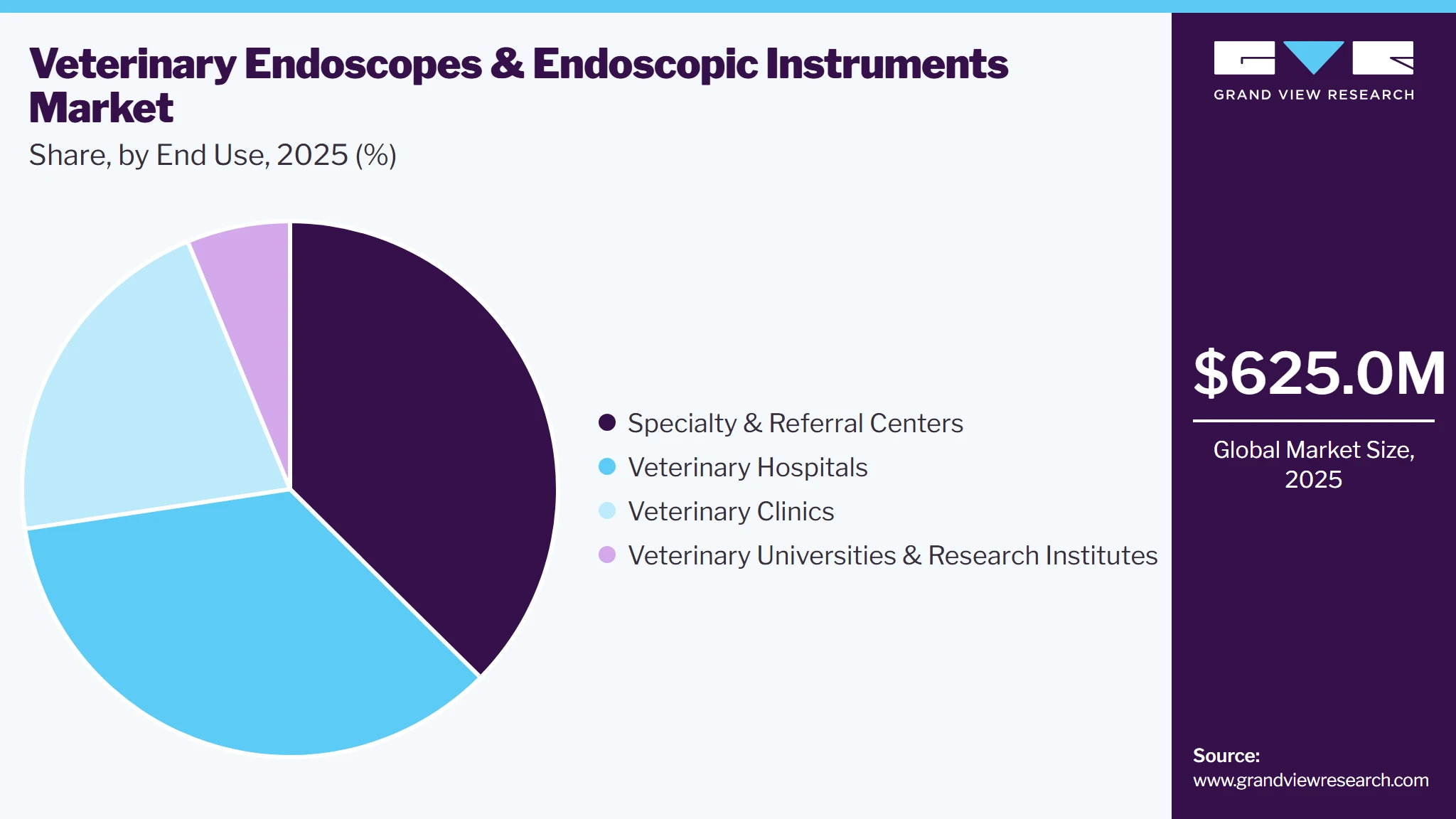
The specialty & referral centers segment accounted for the largest revenue share of 37.4% in 2025 and is also expected to grow at the fastest CAGR over the forecast period. This is due to their central role in the diagnosis and treatment of complex conditions requiring advanced endoscopic procedures in companion animals. These facilities provide specialized gastrointestinal, respiratory, urinary, and reproductive endoscopy, as well as biopsy collection, foreign body retrieval, and minimally invasive interventions. Their access to advanced visualization systems, specialized endoscopic instruments, and experienced veterinary professionals enables detailed examination and procedure-specific treatment. Furthermore, the increasing number of referrals for complex cases and the expansion of specialized veterinary services are strengthening demand for endoscopic equipment and instruments through this channel.
 To learn more about this report, Download Free Sample Report
The veterinary hospitals segment is estimated to grow significantly over the forecast period. This is owing to the increasing availability of advanced diagnostic and minimally invasive procedures within veterinary hospitals. These facilities are increasingly incorporating endoscopic systems to evaluate gastrointestinal and respiratory conditions, retrieve foreign bodies, collect tissue samples, and perform selected interventional procedures. In addition, the expansion of veterinary hospital infrastructure, increasing availability of trained veterinary specialists, and rising demand for advanced companion animal healthcare are supporting the adoption of endoscopes and endoscopic instruments across veterinary hospitals.
Regional Insights
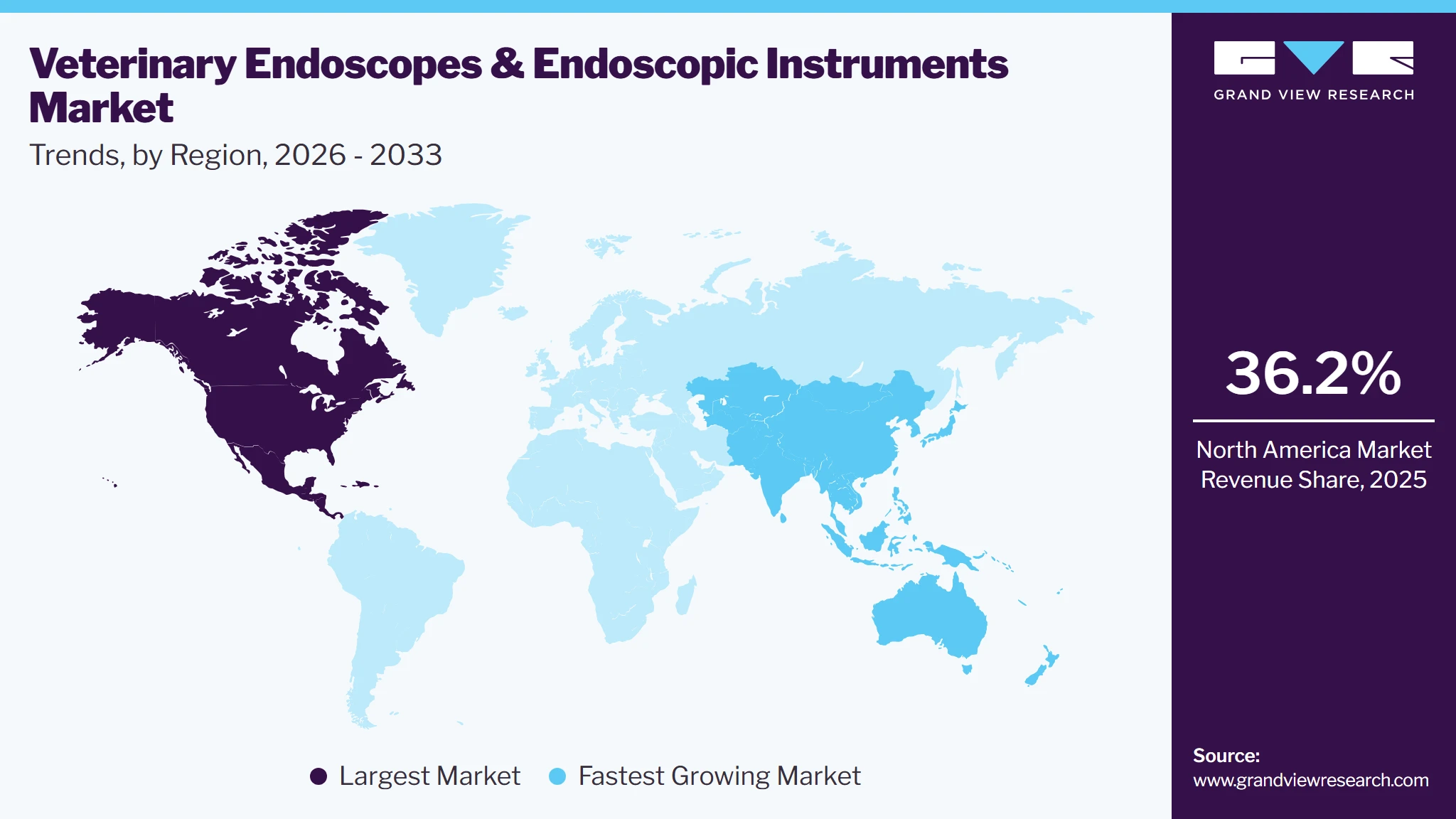
The North America veterinary endoscopes & endoscopic instruments market held the largest share of 36.2% in 2025. The market is driven by the region's well-established veterinary healthcare infrastructure and high adoption of advanced diagnostic and minimally invasive procedures. The presence of specialty and referral veterinary centers supports the availability of endoscopic systems for gastrointestinal, respiratory, urinary, and other procedures. In addition, established medical device manufacturers, specialized veterinary facilities, and increasing demand for advanced companion animal healthcare are supporting market expansion. Furthermore, greater access to specialized veterinary professionals and advanced diagnostic equipment is contributing to the adoption of endoscopic procedures across the region.
 To learn more about this report, Download Free Sample Report
U.S. Veterinary Endoscopes & Endoscopic Instruments Market Trends
The veterinary endoscopes & endoscopic instruments market in the U.S. accounted for the largest share in the North America market, driven by the country's well-established veterinary healthcare infrastructure, large network of specialty and referral centers, and high availability of advanced diagnostic and minimally invasive procedures. The presence of specialized veterinary hospitals with endoscopy capabilities supports the use of endoscopic systems for gastrointestinal, respiratory, urinary, and other procedures. In addition, the strong presence of veterinary medical-device companies and the continued development of advanced visualization and minimally invasive technologies are supporting product availability and adoption. Furthermore, high expenditure on companion animal healthcare and increasing demand for specialized veterinary services are contributing to the country's leading market position.
The Canada veterinary endoscopes & endoscopic instruments market is expected to grow at a significant CAGR during the forecast period, supported by increasing availability of advanced minimally invasive veterinary procedures and specialized facilities. For instance, in January 2024, the Centre hospitalier universitaire vétérinaire of the Université de Montréal opened its Centre of Excellence in Interventional Medicine, featuring an integrated veterinary interventional medicine suite with an endoscopy equipment column. The facility supports minimally invasive procedures across respiratory, urinary, cardiovascular, and other applications and provides specialized training for veterinary professionals. This expansion of advanced veterinary infrastructure is supporting access to endoscopic procedures and creating opportunities for greater adoption of endoscopes and associated instruments in Canada.
Europe Veterinary Endoscopes & Endoscopic Instruments Market Trends
The veterinary endoscopes & endoscopic instruments market in Europe is supported by a well-developed veterinary healthcare infrastructure, increasing expenditure on companion animal healthcare, and growing adoption of advanced diagnostic procedures. The region benefits from established veterinary hospitals and specialty centers that provide minimally invasive diagnostic and therapeutic services. Rising demand for gastrointestinal, respiratory, urinary, and other endoscopic procedures, coupled with increasing availability of specialized veterinary equipment, is supporting market growth. Furthermore, advancements in veterinary imaging and endoscopic technologies are expanding the use of minimally invasive procedures across European veterinary practices.
The UK veterinary endoscopes & endoscopic instruments market is expected to grow significantly over the forecast period, driven by the country's established network of specialty veterinary hospitals and increasing availability of minimally invasive diagnostic and therapeutic procedures. The Royal Veterinary College provides minimally invasive endoscopic procedures for gastrointestinal, thoracic, and other conditions, including biopsy collection and selected therapeutic interventions. The availability of specialized endoscopic services within referral veterinary facilities supports demand for advanced visualization systems and procedure-specific instruments. Furthermore, increasing access to specialist veterinary care and the broader adoption of minimally invasive techniques are expected to support market growth in the UK.
The veterinary endoscopes & endoscopic instruments market in Germany held the largest share in 2025 in Europe, supported by the country's established veterinary healthcare infrastructure, advanced veterinary research capabilities, and availability of specialized diagnostic services. For instance, in 2024, researchers at the University of Veterinary Medicine Hannover conducted a study that included endoscopic examination of the upper and lower airways in horses undergoing bronchoalveolar lavage. The study used an Olympus endoscope to evaluate airway structures, demonstrating the clinical use of endoscopic visualization in veterinary respiratory procedures. The presence of established veterinary research institutions and continued clinical application of endoscopic technologies is supporting demand for advanced endoscopes and associated instruments in Germany.
Asia Pacific Veterinary Endoscopes & Endoscopic Instruments Market Trends
Theveterinary endoscopes & endoscopic instruments market in the Asia Pacificis expected to grow at the fastest CAGR over the forecast period,driven by increasing companion animal ownership, rising expenditure on veterinary healthcare, and gradual expansion of veterinary infrastructure across emerging economies. Improving access to veterinary hospitals and specialty services is increasing the availability of advanced diagnostic and minimally invasive procedures. Growing awareness of companion animal health, urbanization, and increasing demand for specialized veterinary care are supporting greater utilization of endoscopic procedures. Additionally, international veterinary equipment companies are expanding their presence across the region through distribution networks, local partnerships, and broader product availability.
The India veterinary endoscopes & endoscopic instruments market is expected to grow at a notable CAGR across the APAC region from 2026 to 2033. This growth is supported by increasing companion animal ownership, urbanization, and expanding access to veterinary healthcare services. The development of specialized veterinary hospitals and diagnostic facilities is increasing access to advanced procedures, including endoscopic examination and minimally invasive interventions. Furthermore, rising expenditure on companion animal healthcare and greater awareness of advanced diagnostic options are supporting the adoption of veterinary endoscopes and associated instruments in India.
The market for veterinary endoscopes & endoscopic instruments in Australia is witnessing considerable growth, driven by the country's established veterinary healthcare system, high access to specialized veterinary services, and adoption of advanced diagnostic procedures. Veterinary hospitals and referral centers provide endoscopic services for gastrointestinal, respiratory, and other conditions requiring direct visualization and tissue sampling. Furthermore, increasing demand for minimally invasive procedures and continued development of veterinary specialty services are supporting the adoption of advanced endoscopic systems and instruments across Australia.
Latin America Veterinary Endoscopes & Endoscopic Instruments Market Trends
The veterinary endoscopes & endoscopic instruments market in Latin America is growing at a lucrative rate, driven by the gradual modernization of veterinary healthcare systems, increasing companion animal ownership, and improving access to specialized veterinary services. Rising expenditure on companion animal healthcare is encouraging greater use of advanced diagnostic and minimally invasive procedures. The growing availability of specialty veterinary hospitals and imported medical equipment is improving access to endoscopic technologies. Moreover, expanding veterinary clinic networks and increasing awareness of advanced diagnostic procedures are supporting market development across the region.
The Argentina veterinary endoscopes & endoscopic instruments market is expected to witness steady growth over the forecast period, supported by the country's established veterinary healthcare sector and increasing demand for specialized companion animal services. The expansion of veterinary clinics and specialty practices is increasing access to advanced diagnostic procedures, including gastrointestinal and respiratory endoscopy. Furthermore, greater availability of specialized veterinary professionals and increasing expenditure on companion animal healthcare are supporting the adoption of advanced diagnostic equipment and minimally invasive procedures in Argentina.
Middle East & Africa Veterinary Endoscopes & Endoscopic Instruments Market Trends
The veterinary endoscopes & endoscopic instruments market in the Middle East & Africa is advancing, driven by improvements in veterinary healthcare infrastructure, rising companion animal ownership, and growing awareness of advanced veterinary diagnostics. The rising development of veterinary hospitals and specialty clinics is expanding access to diagnostic imaging and minimally invasive procedures. Growth in premium companion animal healthcare, particularly in GCC countries, is supporting demand for advanced veterinary equipment. Furthermore, increasing participation of international veterinary equipment manufacturers and expansion of specialized veterinary services are creating opportunities for market development across the region.
The South Africa veterinary endoscopes & endoscopic instruments market is expected to grow at a considerable rate during the forecast period, driven by the expansion of veterinary practices and improving access to specialized companion animal healthcare in major metropolitan areas. Veterinary hospitals and referral practices are increasingly providing advanced diagnostic procedures for complex gastrointestinal, respiratory, and other internal conditions. Furthermore, the availability of specialized veterinary professionals and increasing demand for minimally invasive procedures are supporting the adoption of endoscopic systems and associated instruments.
The veterinary endoscopes & endoscopic instruments market in the UAE is anticipated to register healthy growth during the forecast period, supported by the development of premium companion animal healthcare services and increasing expenditure on advanced veterinary diagnostics. The expansion of specialty veterinary hospitals and referral centers is improving access to sophisticated diagnostic and minimally invasive procedures. Furthermore, the presence of international veterinary healthcare providers and the growing availability of specialized veterinary equipment are supporting the adoption of endoscopic systems and instruments in the UAE.
Key Veterinary Endoscopes & Endoscopic Instruments Company Insights
The veterinary endoscopes & endoscopic instruments market is moderately concentrated, with the presence of established medical device companies, veterinary healthcare providers, and specialized veterinary endoscopy manufacturers. Leading players such as KARL STORZ, STERIS, SonoScape Medical Corp., Shenzhen Mindray Animal Medical Technology Co., Ltd., Eickemeyer KG, Firefly Global, Biovision Veterinary Endoscopy, MDS Vet, VetVu, and Dr. Fritz Endoscopes compete by expanding their endoscopy portfolios, developing advanced imaging and visualization technologies, offering flexible and rigid endoscopic systems, and strengthening their veterinary distribution and service networks.
Key Veterinary Endoscopes & Endoscopic Instruments Companies
The following key companies have been profiled for this study on the veterinary endoscopes & endoscopic instruments market:
-
STERIS
-
SonoScape Medical Corp
-
SHENZHEN MINDRAY ANIMAL MEDICAL TECHNOLOGY CO., LTD.
-
Firefly Global
-
KARL STORZ
-
Biovision Veterinary Endoscopy, LLC
-
MDS Vet
-
VetVu (Swiss Precision Products, Inc,)
-
Eickemeyer KG
-
Dr. Fritz Endoscopes GmbH
Competitive Benchmarking
Operating Strategies
Competitive Edge
Weaknesses
Mature Players: STERIS; SonoScape Medical Corp; Shenzhen Mindray Animal Medical Technology Co., Ltd.; KARL STORZ; Eickemeyer KG
- Established players focus on expanding comprehensive veterinary endoscopy portfolios covering flexible and rigid endoscopes, visualization systems, cameras, light sources, surgical instruments, and accessories. They prioritize product innovation, high-definition imaging, ergonomic designs, multi-species applications, and integration of endoscopy systems with broader veterinary diagnostic and surgical workflows. Companies with broader medical-device capabilities leverage existing R&D, manufacturing, regulatory, and distribution infrastructure to strengthen their veterinary presence. They also use distributor networks, specialist sales teams, practitioner training, and complete system offerings to increase adoption.
- Strong brand recognition, broad product portfolios, established manufacturing capabilities, extensive distribution networks, and relationships with veterinary hospitals and specialist practices. KARL STORZ and Eickemeyer have particularly strong veterinary-specific portfolios covering multiple animal types and procedures. SonoScape benefits from its broader veterinary imaging portfolio, while STERIS has capabilities across endoscopy equipment and related infrastructure.
- Higher product development and manufacturing costs, relatively complex organizational structures, and longer commercialization cycles. Broad portfolios can make rapid customization for niche veterinary applications more difficult. Companies with substantial human-healthcare operations may also face challenges in allocating dedicated resources to the comparatively smaller veterinary endoscopy market.
Emerging Players: Firefly Global; Biovision Veterinary Endoscopy, LLC; MDS Vet; VetVu (Swiss Precision Products, Inc.); Dr. Fritz Endoscopes GmbH
- Specialized players focus primarily on veterinary-specific requirements, including portable, compact, flexible, rigid, wireless, and procedure-specific endoscopy systems. Their strategies emphasize affordability, modular configurations, portability, customization, direct customer support, and application-specific solutions. These companies also use veterinary distributors, direct sales, hands-on training, and technical support to establish close relationships with practitioners and smaller veterinary practices.
- Strong veterinary specialization enables faster adaptation to clinical requirements, greater product customization, and focused solutions for small- and large-animal applications. Firefly differentiates through portable and wireless visualization solutions; Biovision through customized veterinary endoscopy suites; MDS through accessible and portable systems; VetVu through veterinary-specific flexible and semi-flexible scopes; and Dr. Fritz through a dedicated veterinary endoscopy portfolio.
- Smaller scale, narrower product portfolios, lower brand visibility, and comparatively limited financial resources can constrain R&D investment and geographic expansion. Dependence on distributors can limit market access in some countries, while smaller installed bases may make it difficult to create integrated ecosystems spanning scopes, cameras, processors, instruments, and accessories.
Recent Developments
-
In July 2025, Dr. Fritz Endoscopes GmbH launched the Video-Compact-System 7, a wireless veterinary endoscopy system designed for small-animal practices. The system integrates wireless video transmission and LED illumination without requiring a video tower or external light source and is intended for rhinoscopy, laryngoscopy, dental endoscopy, otoscopy, vaginoscopy, and dermoscopy.
-
In March 2025, Eickemeyer introduced the EickView 5-in-1 Endoscopy System as a new addition to its veterinary endoscopy portfolio. The mobile system combines a 15.6-inch Full HD display, an LED light source, an integrated air-pressure pump, digital data storage, and compatibility with both flexible and rigid endoscopes, enabling diagnostic and surgical endoscopic procedures to be performed with a single system.
-
In July 2024, Firefly Global introduced the KT2170 Wireless HD Veterinary Endoscopy Set for veterinary professionals. The system combines a wireless HD endoscopy camera, compact LED light source, stainless-steel instruments, and optical components, and supports connection with iPhone, iPad, and Android devices. The system is designed for diagnostic and surgical veterinary endoscopy and is compatible with several third-party endoscopes.
Veterinary Endoscopes & Endoscopic Instruments Market Report Scope
Report Attribute
Details
Market size in 2025
USD 625.0 million
Estimated market size in 2026
USD 657.7 million
Projected market size by 2033
USD 1,015.7 million
Growth Rate
CAGR of 6.4% from 2026 to 2033
Actual data
2021 - 2025
Forecast period
2026 - 2033
Quantitative units
Revenue in USD million and CAGR from 2026 to 2033
Report coverage
Revenue forecast, company ranking, competitive landscape, growth factors, and trends
Segments covered
Product, type, animal, procedure, application, end use, region
Regional scope
North America; Europe; Asia Pacific; Latin America; MEA
Country scope
U.S.; Canada; Mexico; UK; Germany; France; Italy; Spain; Denmark; Sweden; Norway; Japan; China; India; Australia; Thailand; South Korea; Brazil; Argentina; South Africa; Saudi Arabia; UAE; Kuwait; Oman; Qatar
Key companies profiled
STERIS; SHENZHEN MINDRAY ANIMAL MEDICAL TECHNOLOGY CO., LTD.; Firefly Global; KARL STORZ; SonoScape Medical Corp; Biovision Veterinary Endoscopy, LLC; MDS Vet; VetVu (Swiss Precision Products, Inc,); Eickemeyer KG; Dr. Fritz Endoscopes GmbH
Customization scope
Free report customization (equivalent up to 8 analysts working days) with purchase. Addition or alteration to country, regional & segment scope.
Pricing and purchase options
Avail customized purchase options to meet your exact research needs. Explore purchase options
Global Veterinary Endoscopes & Endoscopic Instruments Market Report Segmentation
This report forecasts revenue growth at global, regional, and country levels and provides an analysis of the latest industry trends in each of the sub-segments from 2021 to 2033. For this study, Grand View Research has segmented the global veterinary endoscopes & endoscopic instruments market report based on product, type, animal, procedure, application, end use, and region.
-
Product Outlook (Revenue, USD Million, 2021 - 2033)
-
Equipment
-
Flexible Endoscopes
-
Rigid Endoscopes
-
Video Processors & Imaging Systems
-
-
Instruments & Accessories
-
Biopsy Forceps
-
Grasping Forceps
-
Retrieval Forceps
-
Retrieval Baskets
-
Snares
-
Cytology Brushes
-
Other Endoscopic Instruments
-
-
Consumables
-
-
Type Outlook (Revenue, USD Million, 2021 - 2033)
-
Disposable
-
Reusable
-
-
Animal Outlook (Revenue, USD Million, 2021 - 2033)
-
Small Animals
-
Dogs
-
Cats
-
Other Small Animals
-
-
Large Animals
-
Horses
-
Bovine
-
Other Large Animals
-
-
-
Procedure Outlook (Revenue, USD Million, 2021 - 2033)
-
Gastrointestinal Procedures
-
Respiratory Procedures
-
Urogenital Procedures
-
ENT Procedures
-
Other Endoscopic Procedures
-
-
Application Outlook (Revenue, USD Million, 2021 - 2033)
-
Diagnostic
-
Surgical/Interventional
-
-
End Use Outlook (Revenue, USD Million, 2021 - 2033)
-
Veterinary Clinics
-
Veterinary Hospitals
-
Specialty & Referral Centers
-
Veterinary Universities & Research Institutes
-
-
Regional Outlook (Revenue, USD Million, 2021 - 2033)
-
North America
-
U.S.
-
Canada
-
Mexico
-
-
Europe
-
UK
-
Germany
-
France
-
Italy
-
Spain
-
Norway
-
Sweden
-
Denmark
-
-
Asia Pacific
-
Japan
-
India
-
China
-
South Korea
-
Thailand
-
Australia
-
-
Latin America
-
Brazil
-
Argentina
-
-
Middle East and Africa (MEA)
-
South Africa
-
Saudi Arabia
-
UAE
-
Kuwait
-
Oman
-
Qatar
-
-
Research Methodology
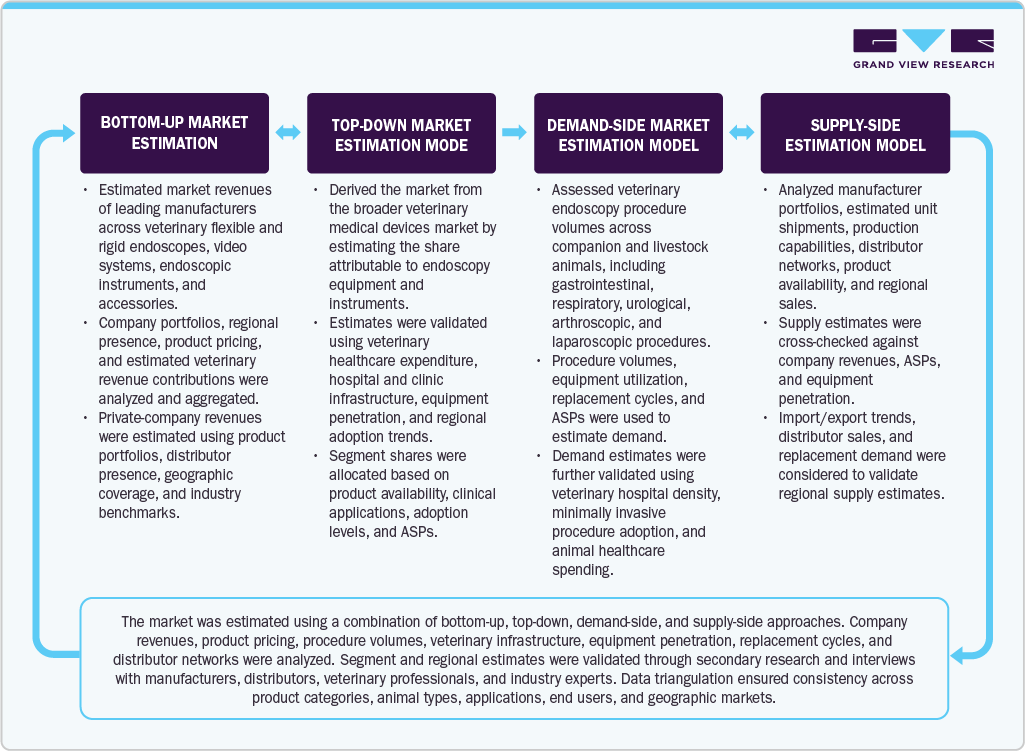
The veterinary endoscopes & endoscopic instruments marketfigures in this report are based on a proven research process that combines executive interviews with secondary research from proprietary databases, company filings, and recognized regulatory and institutional sources. Market size is built through value-chain sizing-reconciling supply-side and demand-side estimates-and triangulated with bottom-up and top-down approaches. Every estimate passes multiple levels of expert validation before publication, with eachveterinary endoscopes & endoscopic instrumentssegment quantified using the revenue-capture definitions in the table below.
Segment Definition
Product
Revenue capture definition
Equipment
Equipment segment accounts for revenue generated from veterinary endoscopic equipment used for diagnostic and therapeutic procedures in companion and other animals, including flexible endoscopes, rigid endoscopes, video processors and imaging systems.
Instruments & Accessories
This segment accounts for revenue generated from instruments and accessories used with veterinary endoscopic systems during diagnostic and therapeutic procedures, including biopsy forceps, grasping forceps, retrieval forceps, retrieval baskets, snares, cytology brushes, and other endoscopic instruments.
Consumables
Consumables segment accounts for revenue generated from consumable products used during veterinary endoscopic procedures, including single-use instruments, biopsy and retrieval components, irrigation and insufflation supplies, and other disposable products required for endoscopic procedures.
Type
Revenue capture definition
Disposable
Disposable segment accounts for revenue generated from single-use veterinary endoscopes and endoscopic products designed for one-time procedures, including disposable flexible endoscopes and other single-use visualization and procedural devices.
Reusable
This segment accounts for revenue generated from veterinary endoscopes and endoscopic products designed for repeated use across multiple procedures following appropriate cleaning, disinfection, and sterilization, including reusable flexible and rigid endoscopes and related systems.
Animal
Revenue capture definition
Dogs
The dogs segment accounts for revenue generated from veterinary endoscopes and endoscopic instruments used for diagnostic and therapeutic procedures performed in dogs.
Cats
The cats segment accounts for revenue generated from veterinary endoscopes and endoscopic instruments used for diagnostic and therapeutic procedures performed in cats.
Other small animals
This segment accounts for revenue generated from veterinary endoscopes and endoscopic instruments used for diagnostic and therapeutic procedures performed in small animals other than dogs and cats, including rabbits, ferrets, and rodents.
Procedure
Revenue capture definition
Gastrointestinal Procedures
This segment accounts for revenue generated from veterinary endoscopes and endoscopic instruments used for examination, biopsy, foreign body retrieval, and other diagnostic or therapeutic procedures involving the gastrointestinal tract.
Respiratory Procedures
This segment accounts for revenue generated from veterinary endoscopes and endoscopic instruments used for examination, sampling, foreign body retrieval, and other diagnostic or therapeutic procedures involving the respiratory tract. Urogenital Procedures
This segment accounts for revenue generated from veterinary endoscopes and endoscopic instruments used for examination, biopsy, tissue sampling, and other diagnostic or therapeutic procedures involving the urinary and reproductive systems.
ENT Procedures
This segment accounts for revenue generated from veterinary endoscopes and endoscopic instruments used for examination, biopsy, foreign body retrieval, and other diagnostic or therapeutic procedures involving the ear, nose, and throat.
Other Endoscopic Procedures
This segment accounts for revenue generated from veterinary endoscopes and endoscopic instruments used for procedures outside gastrointestinal, respiratory, urogenital, and ENT applications, including arthroscopic and other specialized endoscopic procedures.
Application
Revenue capture definition
Diagnostic
Diagnostic segment accounts for revenue generated from veterinary endoscopes and endoscopic instruments used to visualize internal anatomical structures, identify abnormalities, collect tissue samples, and support diagnostic evaluation of animal health conditions.
Surgical/Interventional
This segment accounts for revenue generated from veterinary endoscopes and endoscopic instruments used to perform minimally invasive therapeutic and interventional procedures, including foreign body retrieval, tissue removal, and other endoscopic treatments.
End Use
Revenue capture definition
Veterinary Clinics
This segment accounts for revenue generated from veterinary endoscopes and endoscopic instruments purchased or utilized by veterinary clinics for routine and specialized diagnostic and therapeutic procedures.
Veterinary Hospitals
This segment accounts for revenue generated from veterinary endoscopes and endoscopic instruments purchased or utilized by veterinary hospitals for advanced diagnostic, surgical, and therapeutic procedures.
Specialty & Referral Centers
This segment accounts for revenue generated from veterinary endoscopes and endoscopic instruments purchased or utilized by specialty and referral centers for complex diagnostic, minimally invasive, and interventional procedures requiring specialized expertise and equipment.
Veterinary Universities & Research Institutes
This segment accounts for revenue generated from veterinary endoscopes and endoscopic instruments purchased or utilized by veterinary universities and research institutes for clinical training, veterinary research, diagnostic studies, and development of endoscopic procedures.
Estimation Model
 To learn more about this report, Download Free Sample Report
Customization Table
Client Request
Customization Delivered
Value Adds
Segment-Level Opportunity Analysis
Delivered detailed assessment across endoscope types, technologies, animal types, applications, procedures, end users, and distribution channels, identifying dominant and fastest-growing segments with supporting market rationale and future growth potential.
This enables clients to prioritize high-growth product and application areas, optimize portfolio investments, and identify attractive revenue opportunities aligned with increasing demand for minimally invasive veterinary diagnostics and procedures.
Regional Market Assessment
Delivered country- and region-level analysis covering North America, Europe, Asia Pacific, Latin America, and the Middle East & Africa, including veterinary healthcare infrastructure, pet ownership trends, livestock population, adoption of minimally invasive procedures, technology penetration, and regulatory factors influencing endoscope adoption.
This helps clients identify high-potential geographic markets, prioritize expansion investments, assess regional adoption barriers, and develop localized market-entry and distribution strategies. North America remains a leading market, while Asia Pacific presents significant expansion potential, supported by growing veterinary infrastructure and rising livestock healthcare needs.
Competitive Benchmarking
Provided comprehensive profiling of leading veterinary endoscope and endoscopic instrument manufacturers, including product portfolios, flexible and rigid endoscope offerings, imaging technologies, product launches, strategic partnerships, distribution capabilities, and competitive positioning across key markets.
This helps clients benchmark against competitors, identify technology and product portfolio gaps, evaluate opportunities for differentiation, and formulate strategies to strengthen market positioning. The competitive assessment also highlights the distinction between broad medical-device companies and specialized veterinary endoscopy players.
Frequently Asked Questions About This Report
North America dominated with a 36.2% revenue share in 2025.
Asia Pacific is the fastest-growing region over the forecast period.
The diagnostic segment led with a 63.7% revenue share in 2025, while the surgical/interventional segment is the fastest-growing.
The global veterinary endoscopes & endoscopic instruments market size was valued at USD 625.0 million in 2025 and is estimated at USD 657.7 million for 2026.
The global veterinary endoscopes & endoscopic instruments market is expected to grow at a CAGR of 6.4% from 2026 to 2033, reaching USD 1,015.7 million by 2033.
Key factors include the rising prevalence of gastrointestinal, respiratory, urinary, and reproductive disorders among companion animals, particularly aging pets, increasing pet ownership, and increasing adoption of minimally invasive techniques.
The instruments & accessories segment led with a 45.5% revenue share in 2025, while the consumables segment is the fastest-growing segment.
The reusable segment led with a 69.4% revenue share in 2025, while the disposable segment is the fastest-growing segment.
The small animals segment held the largest revenue share of 63.5% in 2025, and is the fastest-growing segment.
Key players include SHENZHEN MINDRAY ANIMAL MEDICAL TECHNOLOGY CO., LTD.; Firefly Global; Merck Product Health; KARL STORZ; SonoScape Medical Corp; Biovision Veterinary Endoscopy, LLC; UltiMed, Inc.; MDS Vet; VetVu (Swiss Precision Products, Inc,); Eickemeyer KG.
About the Author(s)
Animal Health Research Team
Healthcare · Animal HealthThis report was authored by the animal health research team at Grand View Research - comprising two research analysts, one senior research analyst, and one industry expert - with specialized expertise in the animal health segment of the healthcare industry. All findings are based on proprietary healthcare databases, executive interviews, and regulatory analysis, subject to internal peer review prior to publication.
Last Updated:
Speak to Analyst

Customize this report to your needs - add regions, segments, or data points, with 20% free customization.
Or view our licence options:


ISO 9001:2015 & 27001:2022 Certified
We are GDPR and CCPA compliant! Your transaction & personal information is safe and secure. For more details, please read our privacy policy.


