
- Home
- »
- Animal Health
- »
-
Veterinary Injectable Vitamin Manufacturing Market Report 2033GVR Report cover

Veterinary Injectable Vitamin Manufacturing Market (2026 - 2033)
Size, Share & Trends Analysis Report By Animal (Companion, Production), By Manufacturing Type, By Molecule, By Product, By Region, And Segment Forecasts
Market Size, 2025
$343.4MMarket Estimate, 2026
$356.1MMarket Forecast, 2033
$560.4MCAGR, 2026–2033
6.7%Veterinary Injectable Vitamin Manufacturing Market Summary
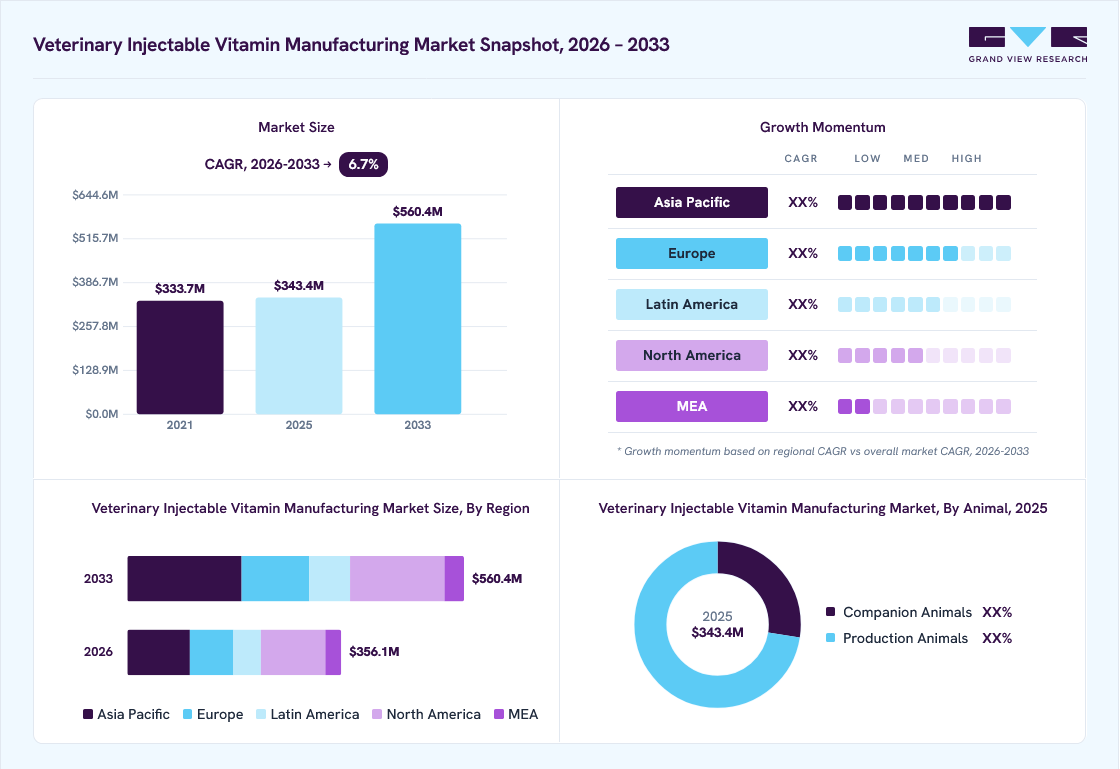
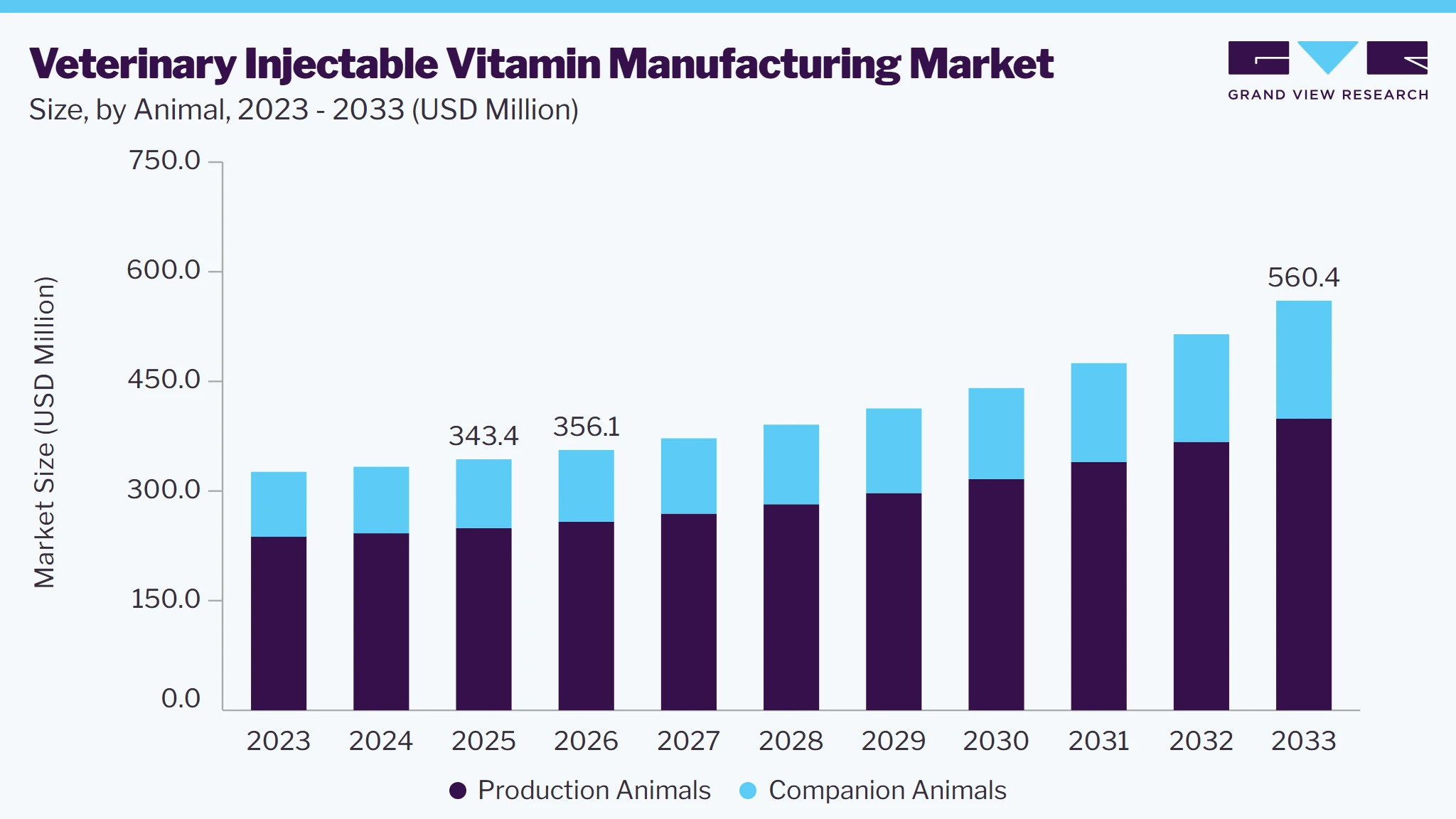
The global veterinary injectable vitamin manufacturing market size was valued at USD 343.4 million in 2025 and is projected to grow from USD 356.1 million in 2026 to USD 560.4 million by 2033, at a CAGR of 6.7% from 2026 to 2033. North America dominated the market, accounting for the largest revenue share of 30.4% in 2025. The market is driven by factors such as increasing demand for injectable vitamin supplements across companion and production animals, increasing prevalence of vitamin deficiencies, growing livestock and poultry production, and advances in formulation, sterile manufacturing, and combination injectable vitamin products.
 Source: Grand View Research, IR Documents, Primary Interviews, Paid DatabasesTo learn more about this report,
 Download Free Sample Report
 Key Market Trends & Insights
- By animal: Production animal segment led the market with the largest revenue share of 72.6% in 2025.
- By molecule: Vitamin B-complex segment led the market with the largest revenue share of 27.7% in 2025.
- By product: Finished drug products manufacturing segment led the market with the largest revenue share of 58.7% in 2025.
- By manufacturing type: In-house segment accounted for the largest market share of 62.0% in 2025.
Regional Highlights
- Largest regional market: North America (30.4% revenue share, 2025)
- Fastest-growing regional market: Asia Pacific (highest CAGR, 2026-2033)
- By country: The U.S. held the largest market share in 2025
Market Size & Forecast
- Market size in 2025: USD 343.4 Million
- Estimated market size in 2026: USD 356.1 Million
- Projected market size by 2033: USD 560.4 Million
- CAGR (2026-2033): 6.7%
Three ways to get this report
Buy it, customize it, or ask a question.Ask an Analyst
A direct answer, usually in 1 working day
- AccessReport author, directly
- Reply timeWithin 1 working day
- No sales callDirect answer only
- FormatEmail reply
- CostFree, no cost
Get the Full Report
What the study covers
- FormatsPDF · Excel · Dashboard
- Timeline2026–2033 annual, 2025 base
- Coverage20+ countries, 5 regions
- Companies10+ key players profiled
Customize the Report
20% free customization
- IncludeCountries, segments, points
- TailorTo your product definition
- ExtendDeeper competitor detail
- OrA fully bespoke study
- Turnaround5–10 working days
 To learn more about this report, Download Free Sample Report
 Market Dynamics
The market is witnessing significant growth driven by rising livestock production, increasing focus on animal productivity, and growing demand for nutritional interventions across food-producing animals. In addition, expansion in meat, dairy, and egg production is increasing the need to maintain adequate vitamin levels during growth, reproduction, pregnancy, lactation, and other periods of elevated physiological demand, supporting the use of injectable vitamin formulations.
Furthermore, increasing adoption of species-specific and multivitamin formulations is prompting manufacturers to expand their production capabilities and develop products with the nutritional requirements of cattle, pigs, poultry, sheep, and other livestock.
Moreover, high manufacturing complexity and stringent regulatory requirements related to sterility, contamination control, process validation, quality testing, and GMP compliance are increasing capital and operating costs and creating entry barriers for small and mid-sized manufacturers. These manufacturing and compliance challenges are increasing demand for contract and outsourced manufacturing services as veterinary pharmaceutical companies seek access to specialized sterile production facilities, established quality systems, technical capabilities, and scalable capacity. The expansion of dedicated veterinary manufacturing infrastructure is therefore expected to create further opportunities for specialized contract manufacturers serving global animal-health companies.
Rising livestock production and the growing focus on improving animal productivity are increasing the need for veterinary nutritional interventions, supporting demand for injectable vitamin manufacturing. According to the OECD-FAO Agricultural Outlook 2025-2034, global production of meat, dairy products, and eggs is projected to increase by 17% through 2034, while global inventories of cattle, sheep, pigs, and poultry are projected to increase by 7%. This expansion is expected to be supported by productivity gains, particularly in middle-income countries, as demand for animal-source foods increases.
As livestock producers seek to achieve higher output from expanding animal populations, maintaining adequate vitamin status becomes important across growth, reproduction, pregnancy, lactation, and other periods of elevated physiological demand. This is increasing the use of injectable vitamin formulations as part of veterinary nutritional management, thereby supporting demand for vitamin APIs and finished injectable products. For manufacturers, the expanding livestock base creates opportunities to increase production capacity and develop species-specific and multivitamin formulations targeting the nutritional requirements of major food-producing animals.
High manufacturing complexity and stringent regulatory requirements are restraining market growth by increasing production costs, facility requirements, and compliance obligations. Injectable veterinary products require stringent controls over sterility, contamination prevention, formulation quality, equipment qualification, and process validation.
Small and mid-sized manufacturers seeking to enter the market or expand across countries with different regulations might face challenges due to the high costs and lengthy processes, which can delay product launches and limit the expansion of manufacturing capacity. This may encourage smaller companies to use contract manufacturers with established sterile production and regulatory capabilities, creating opportunities for specialized manufacturing providers.
The increasing complexity of veterinary injectable manufacturing is encouraging companies to use third-party manufacturers. Contract manufacturers with specialized facilities, technical expertise, and regulatory capabilities can help companies produce injectable products without building their own manufacturing infrastructure. Since injectable products require controlled production environments, validated processes, and specialized equipment, outsourcing allows companies to expand their product portfolios and enter new markets while reducing the need for large investments in in-house facilities.
The increasing expansion of manufacturers across regions creates an opportunity for market growth. For instance, in September 2025, Sai Life Sciences opened Unit VI in Bidar, India, a dedicated facility for veterinary API production. As specialized manufacturing infrastructure is expanding, veterinary pharmaceutical companies can access external production capacity while reducing the capital and operational requirements associated with establishing dedicated facilities. This model can support faster product scale-up and provide access to established quality and regulatory systems, particularly for companies entering new geographic markets.
R&D Landscape
 To learn more about this report, Download Free Sample Report
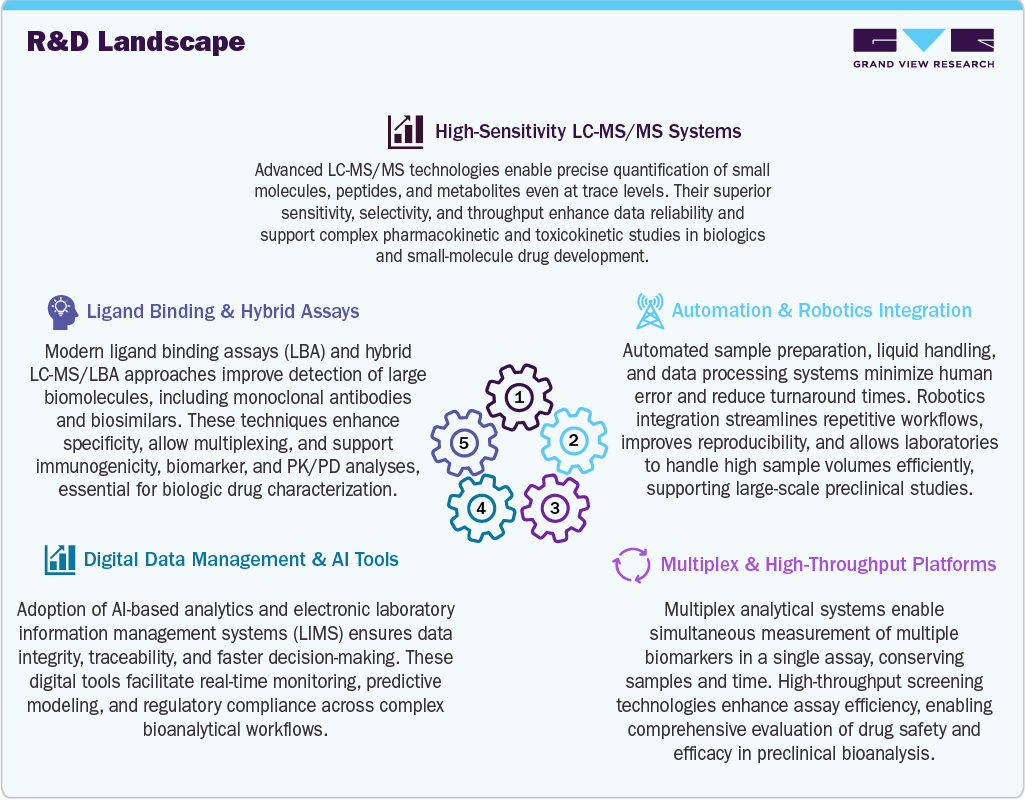
 Veterinary injectable vitamin manufacturing is experiencing a structural shift beyond traditional batch processing to integrated, high-precision formulation platforms. In addition, advanced active pharmaceutical ingredient (API) development and specialized formulation engineering are compressing product optimization cycles, enabling manufacturers to enhance B-complex and multi-vitamin complexes for greater purity, solubility, and efficacy.
The commercial impact resides in species-tailored formulation architectures such as custom dosage profiles and route optimizations replacing generic dosing models, ensuring targeted metabolic correction across companion animals, livestock, and poultry. This operational ecosystem is expanding digital and supervisory integration, in which real-time parameter tracking, predictive analytics, and electronic batch records are reducing process deviations and protecting product integrity from raw material synthesis through final commercial release.
Market Concentration & Characteristics
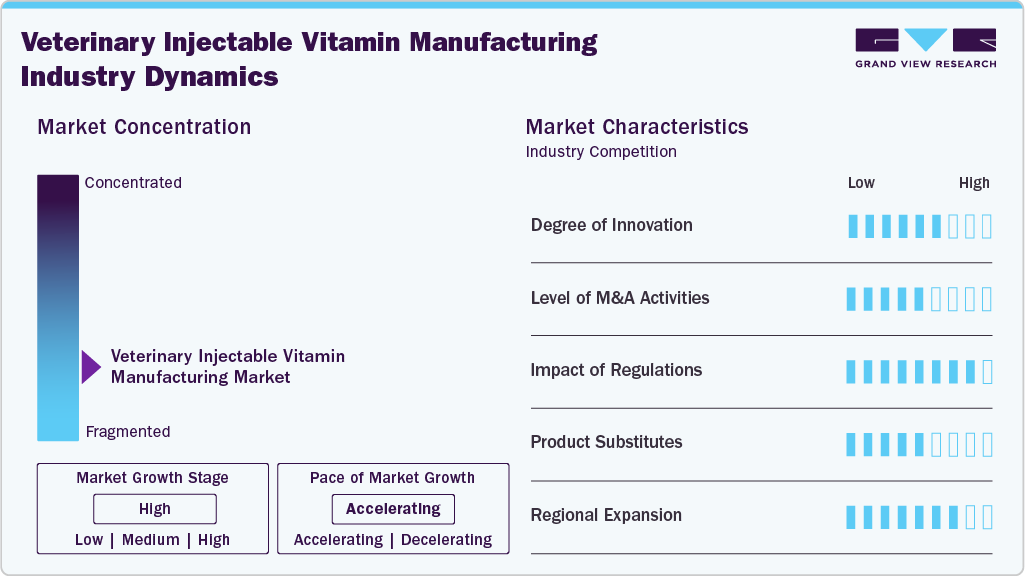
The veterinary injectable vitamin manufacturing industry includes a competitive landscape. It consists of established animal-health companies, regional manufacturers, and API suppliers providing vitamin B-complex, vitamin B12, vitamin D3, and multi-vitamin injectable formulations across production and companion animals. Key manufacturers are benefitting from wide distribution networks, established regulatory capabilities, formulation expertise, and sterile manufacturing infrastructure, while regional producers compete through localized product portfolios, cost-efficient production, and access to emerging livestock markets.
Innovation intensity is moderate, as veterinary injectable vitamins are based largely on established vitamin molecules, while differentiation is increasingly occurring through formulation development, combination products, dosage optimization, stability, and manufacturing processes. Manufacturers are developing injectable formulations that combine multiple vitamins and nutritional components to address deficiencies, recovery, stress, and metabolic requirements in animals. For instance, in December 2025, the Australian Pesticides and Veterinary Medicines Authority (APVMA) registered Promin Plus B12 Injection for Cattle, an injectable formulation from Virbac Australia containing zinc, copper, manganese, selenium, and vitamin B12. Advances in sterile formulation and controlled manufacturing also support improvements in product consistency and shelf life. This positions formulation capability, product customization, manufacturing efficiency, and quality control as important competitive factors rather than the discovery of entirely new vitamin molecules.
 To learn more about this report, Download Free Sample Report
 M&A activity is moderate, with consolidation occurring more broadly across animal health, veterinary pharmaceuticals, and animal nutrition rather than being concentrated specifically within injectable vitamin manufacturing. Strategic transactions can provide access to established manufacturing facilities, vitamin portfolios, distribution networks, and complementary animal-nutrition capabilities. For instance, in February 2026, DSM-Firmenich announced an agreement to divest its Animal Nutrition & Health business to CVC Capital Partners for an enterprise value of USD 2.5 billion, covering a business with significant exposure to animal nutrition and vitamin-related products. Such transactions can reshape supplier structures and create opportunities for companies to broaden manufacturing and distribution capabilities.
Regulatory requirements have a high impact because injectable vitamin products require controlled manufacturing, quality testing, appropriate formulation controls, and compliance with veterinary drug regulations in the markets where they are manufactured and sold. Requirements covering manufacturing practices, product composition, sterility where applicable, stability, labeling, and registration can increase development and production costs.
It presents a medium impact, as injectable vitamins might compete with oral liquids, powders, tablets, boluses, feed premixes, water-soluble vitamins, and other nutritional supplementation dosage forms. Whereas oral and feed-based products can address routine vitamin supplementation at lower administration complexity, while injectable formulations are relevant where rapid administration, targeted dosing, or treatment of animals is required. Manufacturers of injectable vitamins must differentiate through dosage convenience, absorption characteristics, combination formulations, and suitability for specific veterinary applications.
Regional expansion in the veterinary injectable vitamin manufacturing sector is shaped by the need for localized production, shorter supply chains, scalable sterile manufacturing, and improved access to animal health products. Asia Pacific is emerging as a major manufacturing base, supported by its large livestock and companion-animal population, established pharmaceutical infrastructure, and growing availability of contract manufacturing capabilities.
Analyst Perspective
The market is entering a phase where manufacturing flexibility, sterile-capacity access, and formulation breadth are becoming stronger determinants of competitive position than basic vitamin availability. Injectable vitamin products remain relatively established, but manufacturers are expanding beyond single-vitamin formulations toward multivitamin, vitamin-mineral, and vitamin-amino-acid combinations that address deficiency, recovery, stress, reproduction, and productivity requirements across livestock and companion animals.
Animal Insights
The production animals segment accounted for the largest market share of 72.6% in 2025. The segment includes poultry, swine, bovine, and other production species. Demand for injectable vitamins is increasing with the expansion of intensive livestock and poultry production, where higher productivity targets and physiological stress increase nutritional requirements. Injectable vitamins support growth, feed utilization, reproductive performance, immunity, and recovery during disease, vaccination, transportation, weaning, and reduced feed intake. The expansion of organized and vertically integrated farming is also encouraging standardized preventive health programs, supporting recurring demand for manufactured injectable vitamin formulations across commercial animal production systems.
The companion animals segment is anticipated to grow at the fastest CAGR over the forecast period. The segment includes dogs, cats, and other companion species. Growth is driven by rising pet ownership, increasing veterinary healthcare expenditure, greater awareness of preventive nutrition, and growing demand for nutritional support during illness, recovery, and periods of reduced food intake. Injectable vitamins are used when rapid systemic availability and accurate dosing are required, particularly for animals with vitamin deficiencies, weakness, metabolic stress, or inadequate oral intake. The increasing availability of vitamin B-complex, vitamin B12, vitamin D3, and multivitamin injectable formulations through veterinary clinics is broadening treatment options, while expanding companion-animal healthcare infrastructure is supporting greater adoption of injectable vitamin products.
Molecule Insights
Vitamin B-complex segment dominated the market in 2025 with a share of 27.7%. The segment is supported by its broad application in production and companion animals and its role in energy metabolism, immune function, appetite, and recovery from nutritional stress. Its multi-vitamin composition also enables manufacturers to address diverse deficiency and supportive-care requirements through a single injectable formulation. For instance, in July 2024, a study published in Veterinary Medicine and Science found that B-complex injections administered to pregnant Sannen goats improved the performance and health status of goats and their offspring, while increasing plasma B-vitamin concentrations and immunoglobulin levels. These broad applications and positive animal-health outcomes support sustained demand for injectable B-complex formulations.
The vitamin D3 segment is anticipated to grow at the fastest CAGR over the forecast period, supported by its role in calcium and phosphorus metabolism, skeletal development, intestinal function, and overall physiological development across production animals. In addition, the expansion of injectable applications that enable targeted supplementation is supporting the segment growth. For instance, in May 2026, a study published in Poultry Science evaluated in-ovo Vitamin D3 injection in chicks from late-cycle laying eggs and found that Vitamin D3 treatment improved hatchability, promoted intestinal development through 14 days post-hatch, and supported immune-related responses. The study used doses of 2.5, 5.0, and 7.5 μg of Vitamin D3 per egg, demonstrating the potential of injectable administration to address nutritional deficiencies during early development. Such evidence-based studies are expanding the application of Vitamin D3 injectable formulations beyond conventional deficiency correction toward targeted nutritional and developmental interventions, supporting faster segment growth.
Product Insights
The finished drug products manufacturing dominated the market with a share of 58.7% in 2025. The segment is growing due to increasing demand for ready-to-administer formulations, expansion of veterinary pharmaceutical production, outsourcing by animal health companies, and the need for sterile manufacturing capabilities. Manufacturers are offering formulation development, sterile filling, packaging, quality testing, and regulatory support, enabling veterinary pharmaceutical companies to access scalable production capacity without establishing dedicated manufacturing facilities.
The API manufacturing segment is expected to grow at a significant CAGR over the forecast period, due to increasing demand for pharmaceutical-grade vitamin ingredients, supply-chain control, cost-efficient sourcing, and outsourcing of ingredient production. In addition, rising livestock production, expanding veterinary pharmaceutical manufacturing, and increasing animal healthcare expenditure are encouraging investments in specialized API capabilities. Greater availability of dedicated veterinary API infrastructure is enabling manufacturers to secure reliable raw materials, improve production scalability, and manage supply risks.
Furthermore, contract manufacturing partnerships are creating opportunities for specialized API producers to aid veterinary pharmaceutical companies in the market. For instance, in October 2025, Virbac reported that a local manufacturing partnership in China enabled production of its first generic veterinary drug, following the establishment of an animal-health-dedicated plant by a long-standing active-ingredient supplier. This development supports localized sourcing, supply diversification, and expanded manufacturing capacity for veterinary vitamin injectable products globally.
Manufacturing Type Insights
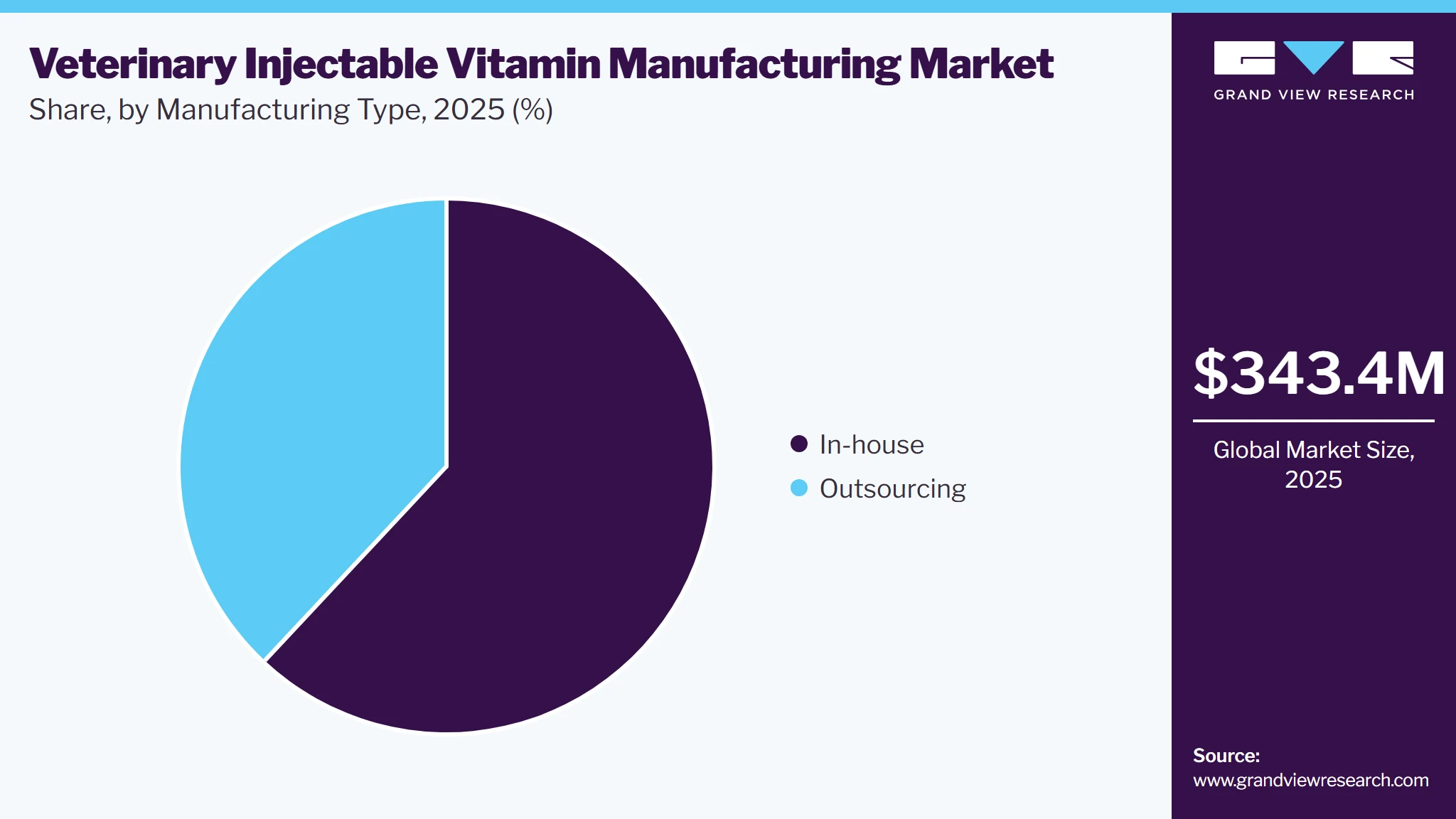
The in-house segment accounted for the largest market share of 62.0% in 2025, supported by animal health companies seeking control over formulation quality, sterile production, capacity utilization, and supply continuity. In addition, internal manufacturing provides flexibility to optimize vitamin combinations for different species and indications while reducing dependence on external suppliers. In addition, more control over manufacturing processes enables companies to maintain consistent quality specifications and strengthen compliance with stringent veterinary pharmaceutical standards across markets.
 To learn more about this report, Download Free Sample Report
 The outsourcing segment is the fastest-growing, with the highest CAGR over the forecast period, driven by rising demand for flexible capacity, specialized sterile manufacturing, and lower capital requirements. Contract manufacturing enables veterinary pharmaceutical companies to expand injectable vitamin portfolios without establishing dedicated production, quality-control, and technical infrastructure. Recent investments in specialized animal-health manufacturing are supporting this model. For instance, in February 2025, Sypharma, a contract development and manufacturing organization, reported a tenfold increase in operational capacity for animal-health products following a USD 6.4 million upgrade to its IV manufacturing plant.
Regional Insights
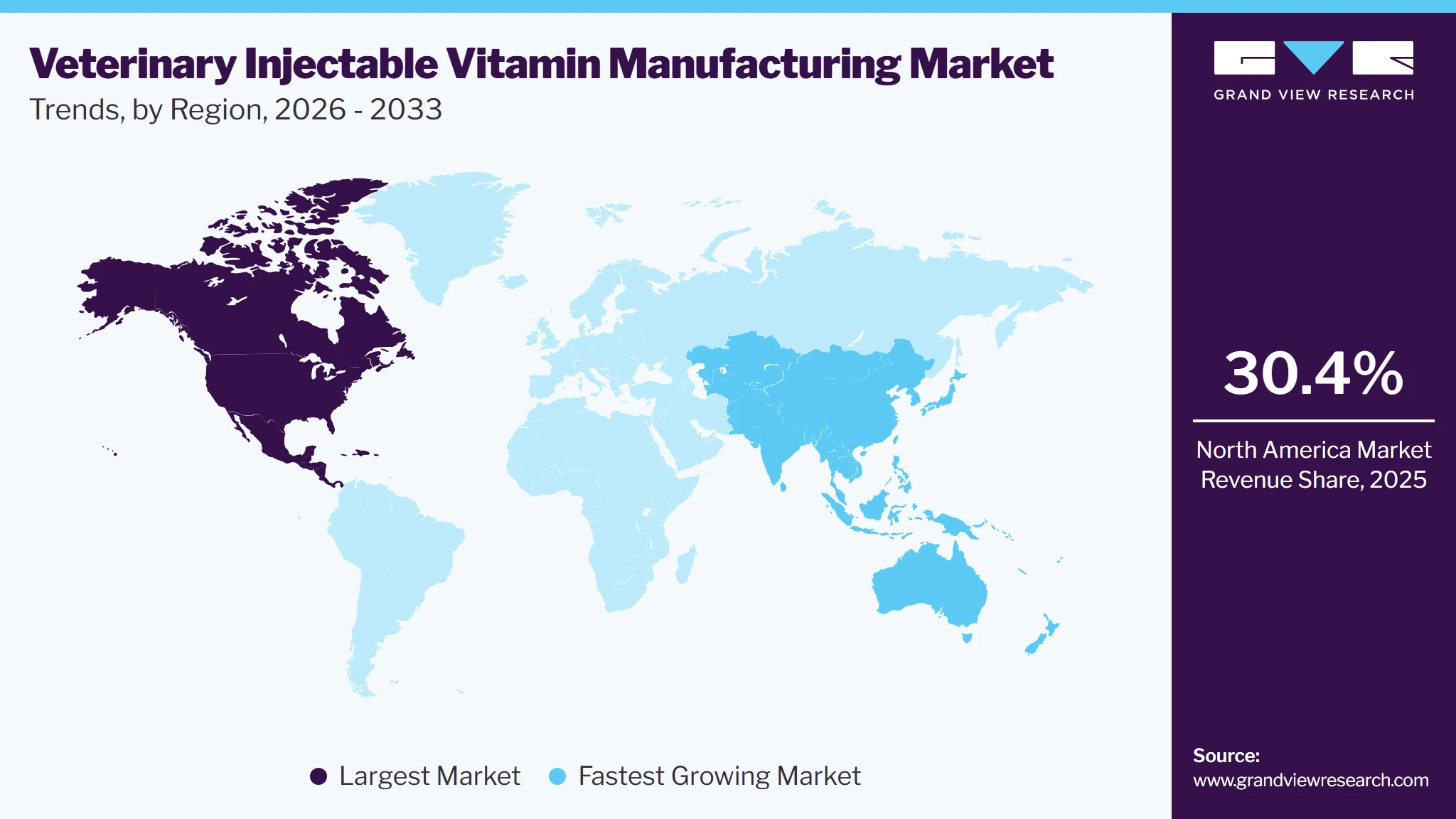
North America held the largest revenue share of 30.4% in 2025, supported by strong veterinary healthcare infrastructure, increasing companion-animal healthcare expenditure, and a well-developed animal-health manufacturing base. The region’s manufacturing capabilities are relevant to injectable vitamin production, as these formulations require technical production, quality control, and distribution infrastructure. In addition, the companies are expanding their manufacturing facilities to support the segment growth. For instance, in May 2025, Merck Animal Health announced an investment of USD 895 million to expand its manufacturing and R&D facilities in De Soto, Kansas, including USD 860 million for the existing manufacturing facility. Such investments indicate increasing expansion of large-scale animal-health production capacity in the U.S., supporting the region’s established manufacturing base for veterinary pharmaceutical products.
 To learn more about this report, Download Free Sample Report
 U.S. Veterinary Injectable Vitamin Manufacturing Market Trends
The veterinary injectable vitamin manufacturing market in the U.S. held the largest share in North America in 2025. The market is driven by its increasing production animal base, expansion of veterinary pharmaceutical manufacturing capabilities, and wide use of injectable nutritional therapies in livestock and clinical settings. The injectable vitamin B-complex formulations are used in cattle, sheep, and other animals to manage deficiencies, support metabolism, and supplement nutrition, creating an increasing demand for finished injectable products.
Canada veterinary injectable vitamin manufacturing marketis supported by a large production-animal base and continuous use of injectable formulations for targeted nutritional supplementation. For instance, in July 2026, Canada’s cattle and calf inventories reached 12.1 million head, up 3.2% year over year, expanding the animal base requiring preventive and therapeutic nutritional care. Injection of vitamin A, D3, and B12 products are approved for cattle, swine, horses, and sheep in Canada, supporting demand for multi-species formulations. This livestock base creates opportunities for manufacturers to expand injectable vitamin portfolios targeting deficiency management, recovery, and nutritional support.
Europe Veterinary Injectable Vitamin Manufacturing Market Trends
The veterinary injectable vitamin manufacturing market in Europe is witnessing steady growth driven by established livestock production, stringent quality and food-safety requirements, high veterinary standards, and continued demand for nutritional interventions that address vitamin deficiencies and production-related stress. In addition, European regulatory oversight places particular attention on withdrawal periods and user safety for injectable vitamins used in food-producing animals. These requirements increase the importance of controlled formulation, manufacturing consistency, labeling, and regulatory documentation, supporting demand for specialized veterinary injectable manufacturing capabilities.
Germany veterinary injectable vitamin manufacturing market held a notable share in Europe in 2025, supported by established livestock and companion-animal healthcare systems, a well-regulated veterinary medicines market, and continued availability of injectable vitamin formulations. Demand is further supported by the country's large population of production animals and growing focus on preventive animal nutrition, deficiency management, and recovery support.
The veterinary injectable vitamin manufacturing market in the UK is driven by increasing requirements for stringent quality control and process consistency across sterile veterinary formulations. Manufacturers are required to maintain controlled in-process testing, finished-product specifications, and packaging standards to ensure product quality and regulatory compliance. In addition, rising demand for injectable supplementation in livestock and companion animals is further supporting consistent production requirements, where rapid vitamin delivery and accurate dosing are needed. These factors are encouraging manufacturers to improve production efficiency, quality systems, and technical capabilities, supporting the UK market development.
Asia Pacific Veterinary Injectable Vitamin Manufacturing Market Trends
The veterinary injectable vitamin manufacturing market in the Asia Pacific is expected to grow at the fastest CAGR over the forecast period, supported by its large livestock and aquaculture production base, expansion of commercial farming, increasing focus on animal productivity, and increasing adoption of preventive animal nutrition. In addition, injectable vitamins are gaining importance where producers and veterinarians require accurate dosing and rapid absorption for deficient, weak, stressed, or recovering animals. In addition, the region is strengthening domestic manufacturing capabilities for veterinary vitamin products, thereby improving local supply and reducing dependence on imported finished formulations.
China veterinary injectable vitamin manufacturing market held a significant share in the Asia Pacific in 2025, driven by a large veterinary pharmaceutical manufacturing ecosystem, and increasing emphasis on animal health and production efficiency. Injectable vitamin B-complex and vitamin A, D3, and E formulations available for cattle, pigs, sheep, poultry, dogs, and cats demonstrate broad species coverage in the domestic market. Manufacturers are also supplying standardized injectable formulations for nutritional deficiency correction and production-stress management.
The veterinary injectable vitamin manufacturing market in India is estimated to grow at the fastest rate over the forecast period, driven by the expansion of commercial dairy production, increasing awareness of preventive animal nutrition, and the development of domestic veterinary pharmaceutical manufacturing. Injectable B-complex, methylcobalamin, and multivitamin formulations are widely used across all animals, supporting demand from veterinary hospitals, farms, distributors, and public-sector institutions.
Latin America Veterinary Injectable Vitamin Manufacturing Market Trends
The veterinary injectable vitamin manufacturing market in Latin America is expected to grow significantly during the forecast period, supported by the region's large livestock population, expanding poultry and dairy production, increasing emphasis on animal productivity, and growing use of nutritional interventions during deficiency and production. Expansion of veterinary pharmaceutical manufacturing and regulatory systems is improving the availability of standardized products, while the region's strong livestock and animal-protein industries create sustained demand for nutritional support.
Brazil veterinary injectable vitamin manufacturing marketheld a significant share in Latin America in 2025, driven by its livestock and poultry industries, developed animal-feed sector, growing veterinary pharmaceutical capabilities, and rising demand for scientifically formulated animal nutrition products. The availability of domestic veterinary pharmaceutical manufacturing and a large commercial farming base provides manufacturers with opportunities to expand sterile injectable production, multispecies formulations, and regional distribution.
Middle East & Africa Veterinary Injectable Vitamin Manufacturing Market Trends
The veterinary injectable vitamin manufacturing market in MEA is witnessing steady growth, driven by the expansion of livestock and poultry production, nutritional deficiencies associated with climatic and production stresses, increasing focus on preventive animal healthcare, and the modernization of veterinary services. Injectable vitamins are relevant for cattle, sheep, goats, and companion animals requiring rapid supplementation or supportive treatment.
South Africa veterinary injectable vitamin manufacturing market held a notable share in MEA in 2025, supported by a well-developed livestock and poultry sector, veterinary services, and availability of registered vitamin injection products for production and companion animals. For instance, Virbac South Africa markets Vitamin B Co, an injectable B-complex formulation indicated for cattle, horses, cats, and dogs experiencing vitamin B-complex deficiency, indicating multispecies demand for injectable nutritional products.
The veterinary injectable vitamin manufacturing market in Saudi Arabia is supported by rising demand for animal health products, particularly for livestock and companion animals, alongside expanding local pharmaceutical manufacturing capabilities. Injectable vitamin formulations such as AD3E and multivitamin products are already manufactured domestically, supporting local supply. In addition, the Saudi Food and Drug Authority (SFDA) continues to strengthen veterinary medicine registration, quality, and safety requirements, encouraging formal market development. Growing livestock healthcare needs and investments in domestic pharmaceutical infrastructure are expected to support demand for veterinary injectable vitamin products.
Key Veterinary Injectable Vitamin Manufacturing Company Insights
The market is highly fragmented, with competition distributed across a broad base of global, regional, and local manufacturers. Market participants compete through diverse injectable vitamin portfolios, manufacturing capabilities, regulatory approvals, formulation expertise, pricing, and established veterinary distribution networks. The presence of multiple manufacturers across different vitamin types, animal species, and geographic markets further contributes to the fragmented competitive structure, with no single company accounting for a dominant share of the overall market.
Key Veterinary Injectable Vitamin Manufacturing Companies
The following key companies have been profiled for this study on the veterinary injectable vitamin manufacturing market:
-
Supriya Lifescience Ltd.
-
dsm-firmenich
-
Zhejiang NHU
-
Zhejiang Medicine Co., Ltd.
-
Zoetis Services LLC
-
Merck & Co., Inc.
-
Virbac
-
Phibro Animal Health Corporation
-
Elanco
-
Ourofino Animal Health
Competitive Benchmarking
Operating Strategies
Competitive Edge
Weaknesses
Mature Players: Merck & Co., Inc., Zoetis Inc., Virbac, Phibro Animal Health Corporation, Adisseo
- Focus on large-scale production of high-purity Vitamin APIs (e.g., Vitamin A, E, D3, B-complex) and complete specialized animal health injectable/supplement solutions. Maintain strong global supply chains, continuous compliance with international veterinary GMP standards, and direct partnerships with livestock integration networks and distributor channels.
- Unmatched economies of scale, extensive global distribution networks, advanced regulatory compliance capabilities, robust multi-country product registrations, and strong brand trust in feed and clinical veterinary applications.
- Higher overhead and complex organizational structures reduce flexibility for fast local customization, vulnerability to raw material pricing shifts, and stringent global environmental or regulatory oversight.
Emerging Players: Alivira Animal Health, Vetnova, Supriya Lifescience Ltd., AMGIS Lifescience Ltd.
- Concentrate on high-volume chemical synthesis and supply of active vitamin ingredients (e.g., Vitamin B12/Methylcobalamin, B1/B2, Menadione/Vitamin K3) or specialized contract manufacturing (CDMO) of injectable veterinary formulations. Emphasize cost-effective production, key regulatory certifications (WHO-GMP, USFDA, EDQM), and flexible, custom batching.
- High agility in product customization and toll manufacturing, cost-effective synthesis, strong market positions in niche vitamin derivatives (e.g., Vitamin K3, targeted B-vitamins), and strong export presence across emerging markets.
- Narrower direct access to downstream clinical veterinary sales channels; elevated exposure to bulk chemical API spot price volatility and potential trade/tariff barriers in export markets.
Recent Developments
-
In July 2026, Elanco continued its partnership with Meet the Need through the Prolaject campaign in New Zealand. Prolaject is an injectable vitamin B12 and vitamin B12-with-selenium product range used by farmers to address cobalt and selenium deficiencies in livestock during key production periods.
-
In January 2026, Boehringer Ingelheim India partnered with Alivira Animal Health to distribute and promote its companion animal portfolio across India. This partnership aimed to expand sales coverage in urban and rural markets, improve product accessibility, and capitalize on increasing pet ownership and preventive healthcare adoption.
Veterinary Injectable Vitamin Manufacturing Market Report Scope
Report Attribute
Details
Market size in 2025
USD 343.4 million
Estimated market size in 2026
USD 356.1 million
Projected market size by 2033
USD 560.4 million
Growth rate
CAGR of 6.7% from 2026 to 2033
Actual data
2021 - 2025
Forecast period
2026 - 2033
Quantitative units
Revenue in USD million and CAGR from 2026 to 2033
Report coverage
Revenue forecast, company ranking, competitive landscape, growth factors, and trends
Segments covered
Animal, molecule, product, manufacturing type, region
Regional scope
North America; Europe; Asia Pacific; Latin America; MEA
Country scope
U.S.; Canada; Mexico; UK; Germany; France; Italy; Spain; Denmark; Sweden; Norway; Japan; China; India; Thailand; South Korea; Australia; Brazil; Argentina; South Africa; UAE; Saudi Arabia; Kuwait; Qatar; Oman
Key companies profiled
Supriya Lifescience Ltd.; dsm-firmenich; Zhejiang NHU; Zhejiang Medicine Co., Ltd.; Zoetis Services LLC; Merck & Co., Inc; Virbac; Phibro Animal Health Corporation; Elanco; Ourofino Animal Health
Customization scope
Free report customization (equivalent up to 8 analysts working days) with purchase. Addition or alteration to country, regional & segment scope.
Pricing and purchase options
Avail customized purchase options to meet your exact research needs. Explore purchase options
Global Veterinary Injectable Vitamin Manufacturing Market Report Segmentation
This report forecasts revenue growth at global, regional, and country levels and provides an analysis of the latest industry trends in each of the sub-segments from 2021 to 2033. For this study, Grand View Research has segmented the global veterinary injectable vitamin manufacturing market report based on animal, molecule, product, manufacturing type, and region:
-
Animal Outlook (Revenue, USD Million, 2021 - 2033)
-
Production Animals
-
Bovine
-
Swine
-
Poultry
-
Sheep & Goat
-
Others
-
-
Companion Animals
-
Dogs
-
Cats
-
Others
-
-
-
Molecule Outlook (Revenue, USD Million, 2021 - 2033)
-
Vitamin B-Complex
-
Vitamin B12
-
Vitamin K
-
Vitamin D3
-
Vitamin A
-
Vitamin C
-
Vitamin E
-
Others
-
-
Product Outlook (Revenue, USD Million, 2021 - 2033)
-
API Manufacturing
-
Finished Drug Products Manufacturing
-
-
Manufacturing Type Outlook (Revenue, USD Million, 2021 - 2033)
-
In-house
-
Outsourcing
-
-
Regional Outlook (Revenue, USD Million, 2021 - 2033)
-
North America
-
U.S.
-
Canada
-
Mexico
-
-
Europe
-
UK
-
Germany
-
France
-
Italy
-
Spain
-
Denmark
-
Sweden
-
Norway
-
-
Asia Pacific
-
Japan
-
China
-
India
-
Australia
-
Thailand
-
South Korea
-
-
Latin America
-
Brazil
-
Argentina
-
-
Middle East & Africa
-
South Africa
-
UAE
-
Saudi Arabia
-
Kuwait
-
Qatar
-
Oman
-
-
Research Methodology
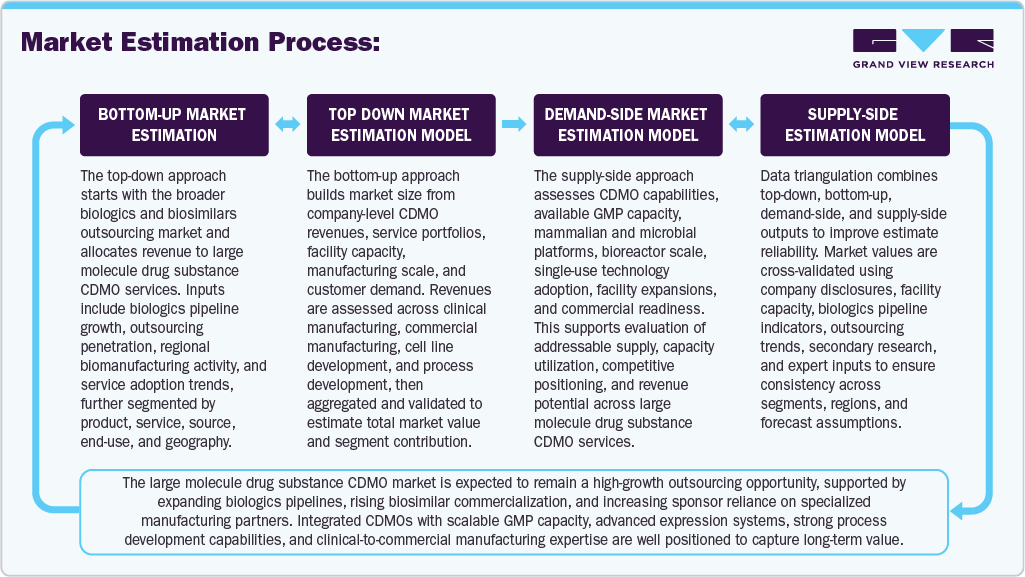
The veterinary injectable vitamin manufacturing market figures in this report are based on a proven research process that combines executive interviews with secondary research from proprietary databases, company filings, and recognized regulatory and institutional sources. Market size is built through value-chain sizing-reconciling supply-side and demand-side estimates-and triangulated with bottom-up and top-down approaches. Every estimate passes multiple levels of expert validation before publication, with each veterinary injectable vitamin manufacturing segment quantified using the revenue-capture definitions in the table below.
Segment Definition
Animal
Definition
Companion Animals
Captures revenue utilized for the manufacturing of injectable veterinary vitamin products intended for companion animals. This segment includes sterile injectable vitamin formulations administered to maintain health, treat vitamin deficiencies, support recovery, and improve physiological function in non-food-producing animals.
Dogs
Captures revenue utilized for the manufacturing of injectable veterinary vitamin products specifically formulated and marketed for canine use.
Cats
Captures revenue utilized for the manufacturing of injectable veterinary vitamin products specifically formulated and marketed for feline use.
Others
Captures revenue utilized for the manufacturing of injectable veterinary vitamin products intended for other companion animals, including horses, rabbits, pet birds, and exotic pets.
Production Animals
Captures revenue utilized for the manufacturing of injectable veterinary vitamin products intended for food-producing animals to support growth, reproduction, metabolic health, productivity, and disease recovery. This segment excludes companion animals.
Bovine
Captures revenue utilized for the manufacturing of injectable veterinary vitamin products intended for dairy and beef cattle.
Poultry
Captures revenue utilized for the manufacturing of injectable veterinary vitamin products intended for broilers, layers, breeders, and other commercial poultry. Feed additives and drinking-water vitamin supplements are excluded.
Swine
Captures revenue utilized for the manufacturing of injectable veterinary vitamin products intended for pigs across all production stages.
Sheep & Goats
Captures revenue utilized for the manufacturing of injectable veterinary vitamin products intended for ovine and caprine species.
Others
Captures revenue utilized for the manufacturing of injectable veterinary vitamin products intended for other production animals, including camels, aquaculture species, and other commercially farmed livestock.
Molecule
Definition
Vitamin B-Complex
Captures revenue utilized for the manufacturing of injectable veterinary Vitamin B-Complex formulations containing two or more B-group vitamins for companion and production animals. Standalone Vitamin B12 injectable products are classified under the Vitamin B12 segment.
Vitamin B12
Captures revenue utilized for the manufacturing of injectable veterinary Vitamin B12 formulations, including cyanocobalamin, hydroxocobalamin, and other Vitamin B12 derivatives, intended for companion and production animals.
Vitamin K
Captures revenue utilized for the manufacturing of injectable veterinary Vitamin K formulations used to support blood coagulation and metabolic health in companion and production animals.
Vitamin D3
Captures revenue utilized for the manufacturing of injectable veterinary Vitamin D3 (cholecalciferol) formulations used to support calcium metabolism, skeletal development, and immune function.
Vitamin A
Captures revenue utilized for the manufacturing of injectable veterinary Vitamin A formulations intended to support vision, reproduction, epithelial integrity, and immune health.
Vitamin C
Captures revenue utilized for the manufacturing of injectable veterinary Vitamin C formulations used for antioxidant support, immune function, stress management, and tissue repair.
Vitamin E
Captures revenue utilized for the manufacturing of injectable veterinary Vitamin E formulations intended to support reproductive performance, antioxidant activity, muscular function, and immune health.
Others
Captures revenue utilized for the manufacturing of other injectable veterinary vitamin formulations, including combination injectable formulations such as AD3E, ADE, multivitamin injectables, and other commercially marketed vitamin combinations.
Product
Definition
API Manufacturing
Captures revenue utilized for the manufacturing of vitamin active pharmaceutical ingredients intended for the production of injectable veterinary vitamin formulations. This segment includes pharmaceutical-grade vitamin APIs supplied to finished dosage manufacturers and contract manufacturers, but excludes finished formulated injectable products.
Finished Drug Product Manufacturing
Captures revenue utilized for the manufacturing of sterile, market-ready injectable veterinary vitamin products for veterinary use. This segment excludes bulk APIs and intermediate raw materials.
Manufacturing Type
Definition
In-house
Captures revenue utilized for injectable veterinary vitamin products manufactured within facilities owned or directly controlled by the product owner, registration holder, or animal health company. This includes vertically integrated manufacturing operations where production is performed internally.
Outsourcing
Captures revenue generated from injectable veterinary vitamin products manufactured by third-party Contract Manufacturing Organizations (CMOs) or Contract Development and Manufacturing Organizations (CDMOs) on behalf of product owners or registration holders under contractual manufacturing agreements.
Estimation Model
 To learn more about this report, Download Free Sample Report
 Delivered Customizations
This report has been delivered with the following In-depth customizations
Client Request
Customization Delivered
Value Adds
Market Intelligence & Stakeholder GTM Study: Global Veterinary Injectable Vitamin Manufacturing Market
Detailed evaluation of commercial livestock integrators, dairy herds, veterinary clinics, specialty contract manufacturing organizations (CMOs), and regional veterinary distributors. Covers bulk active pharmaceutical ingredient (API) sourcing, thermal stability and shelf-life requirements, multi-vitamin vs. single-vitamin injection adoption rates, and unmet demand for bioavailable water-dispersible formulations. Includes manufacturing capacity mapping and a phased go-to-market entry roadmap.
This supports market-entry sequencing, identifies priority veterinary segments for early engagement, strengthens positioning against legacy generic manufacturers, and enables development of a phased market penetration strategy aligned with livestock production cycles and local regulatory compliance deadlines.
Regulatory & Trade-Flow Assessment: Injectable Veterinary Vitamin Import & Production Corridors
In-depth assessment of cGMP veterinary sterile injectable standards, API import tariffs, maximum residue limits (MRLs), shelf-life degradation threshold regulations, and drug master file (DMF) requirements across key markets. Includes country-level regulatory risk scoring, comparative approval-timeline analysis by product formulation (sterilized aqueous solutions, oil-based suspensions), and identification of supply-chain bottlenecks.
It helps organizations select the optimal product formulation and sterile packaging format for market entry, anticipate regulatory approval timelines such as EMA or FDA CVM review cycles, minimize compliance risk, and structure regional distribution agreements that navigate import barriers efficiently.
Competitive Benchmarking: Veterinary Injectable Vitamin Manufacturers in High-Growth Markets
Delivered detailed competitive profiling of established and emerging parenteral veterinary manufacturers, covering species-specific product focus (bovine, swine, equine, companion animals), product-portfolio depth (Vitamin B-complex, Vitamin AD3E, injectable minerals), sterile manufacturing capacities, contract packaging capabilities, pricing strategies, and regional distributor networks. Includes SWOT analysis and identification of white-space opportunities.
This enables clients to identify competitive gaps in the global injectable vitamin landscape, evaluate contract manufacturing or distribution partnership opportunities, benchmark pricing and formulation stability against market incumbents, and formulate differentiated commercial strategies supported by region-specific competitive intelligence.
About the Author(s)
Animal Health Research Team
Healthcare · Animal HealthThis report was authored by the animal health research team at Grand View Research - comprising two research analysts, one senior research analyst, and one industry expert - with specialized expertise in the animal health segment of the healthcare industry. All findings are based on proprietary healthcare databases, executive interviews, and regulatory analysis, subject to internal peer review prior to publication.
Last Updated:
Speak to Analyst

Customize this report to your needs - add regions, segments, or data points, with 20% free customization.
Or view our licence options:


ISO 9001:2015 & 27001:2022 Certified
We are GDPR and CCPA compliant! Your transaction & personal information is safe and secure. For more details, please read our privacy policy.


