
- Home
- »
- Animal Health
- »
-
Veterinary Precision Medicine Market Size Report, 2026-2033GVR Report cover
![Veterinary Precision Medicine Market (2026 - 2033)Report]()
Veterinary Precision Medicine Market (2026 - 2033)
Size, Share & Trends Analysis Report By Type, By Animal (Dogs, Cats), By Therapeutic Area (Oncology, Infectious Diseases, Immunology & Autoimmune Disorders, Musculoskeletal Disorders), By Customer, By Region, And Segment Forecasts
Market Size, 2025
$558.9MMarket Estimate, 2026
$623.9MMarket Forecast, 2033
$1,509.5MCAGR, 2026–2033
13.5%Veterinary Precision Medicine Market Summary
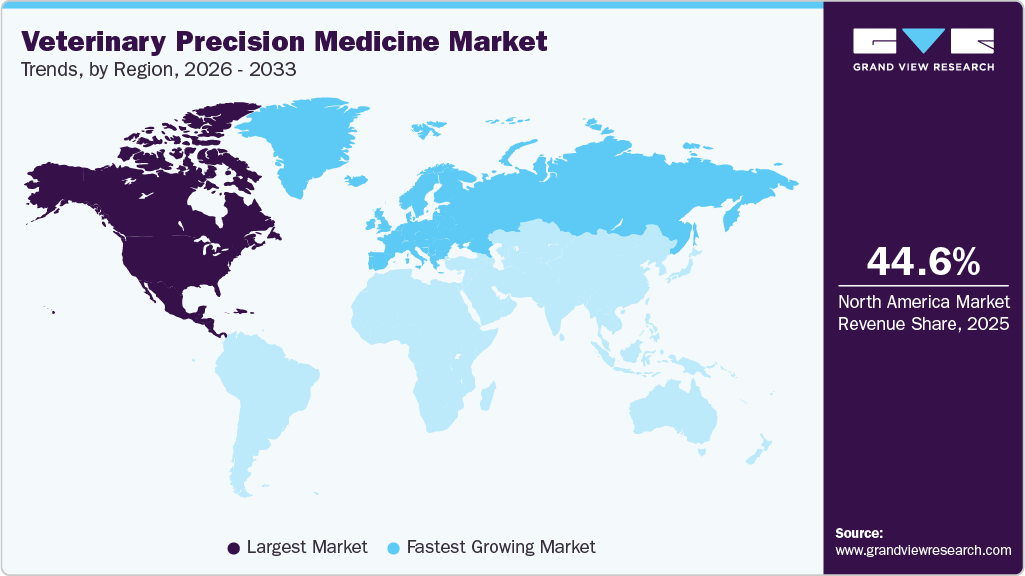
The global veterinary precision medicine market size was valued at USD 558.9 million in 2025 and is projected to grow from USD 623.9 million in 2026 to USD 1,509.5 million by 2033, at a CAGR of 13.5% from 2026 to 2033. The North America held the largest share of 44.6% of the global market in 2025. The market is growing due to factors such as rising companion animal cancer prevalence, pet humanization boosting treatment investment, AI/ML advancing bioinformatics capabilities, and comparative oncology attracting institutional investment.

Key Market Trends & Insights
- By type: Diagnostic & pathology segment held the largest market share of 39.3% in 2025.
- By animal: Dogs segment held the largest market share in 2025.
- By therapeutic area: Oncology segment held the largest market share in 2025.
- By customers: Veterinary hospitals & clinics segment held the largest market share in 2025.
Regional Highlights
- Largest regional market: North America (44.6% revenue share, 2025)
- By country: The U.S. held the largest share in 2025
Market Size & Forecast
- Market size in 2025: USD 558.9 Million
- Estimated market size in 2026: USD 623.9 Million
- Projected market size by 2033: USD 1,509.5 Million
- CAGR (2026-2033): 13.5%
The global veterinary precision medicine industry encompasses genomic profiling, molecular diagnostics, precision therapy guidance, and bioinformatics services delivered across companion and production animals, spanning oncology, infectious diseases, immunology, and other therapeutic areas. Commercial service adoption is currently primarily in canine oncology, with expanding applications in feline and other species. The integration of artificial intelligence and machine learning into bioinformatics platforms has significantly elevated the clinical utility of veterinary precision medicine services. Computational models are now capable of converting complex multi-omics and live-cell datasets into individualized, actionable treatment guidance; a capability that was not achievable through conventional genomic analysis alone.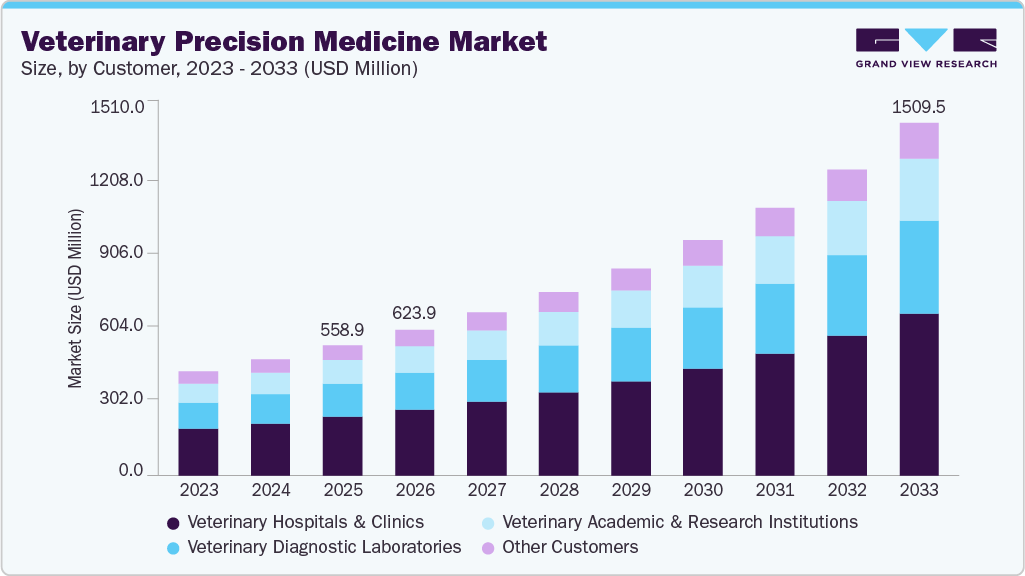
For instance, ImpriMed's platform represents the most commercially validated application of this shift. Its Drug Response Predictions service uses AI models trained on extensive, clinically proven data sources to generate personalized treatment predictions for canine cancer patients, analyzing the efficacy of up to 13 commonly prescribed blood cancer drugs on patients' living cells, with results delivered within 6 to 7 days. Dogs with relapsed B-cell lymphoma treated under ImpriMed's AI-guided predictions recorded a median survival time of 160 to 187 days, as published in Frontiers in Oncology, and 95% of surveyed veterinary oncologists reported satisfaction with the service. To date, ImpriMed's tests have been applied to over 3,700 canine and feline patients over five years, with over 10,000 individual samples analyzed. Furthermore, AI applications are expanding beyond drug response prediction into imaging diagnostics, where machine learning algorithms are being trained to detect tumor-associated abnormalities in radiographic and histopathological data. This broadening of AI utility across the diagnostic and bioinformatics service stack positions the technology as a structural market driver rather than a niche capability.
The translational value of companion animal cancer models is accelerating institutional and commercial investment in veterinary precision medicine infrastructure. Naturally occurring cancers in companion animals share key biological and molecular characteristics with human malignancies, with cross-species insights already informing advances such as limb-sparing surgical techniques derived from canine osteosarcoma research and improved understanding of hormonal influences in human breast cancer through feline mammary tumor studies. A study published in February 2026, conducted across institutions including the Wellcome Sanger Institute, the University of Guelph, and the University of Bern, mapped the oncogenome of the domestic cat across nearly 500 tumor samples sourced from five countries. The study was funded by the EveryCat Health Foundation, CVS Group, Wellcome, the Natural Sciences and Engineering Research Council of Canada, and the Swiss National Science Foundation. This scale of multi-national, multi-funder investment signals a structural shift in how comparative oncology is being prioritized at the institutional level.
In addition, expanding comparative oncology research through broad, multicenter veterinary clinical trials is identified as essential for bridging gaps between preclinical findings and clinical practice, with collaborative networks spanning academic institutions, veterinary practices, industry partners, and regulatory bodies forming translational research frameworks. This institutional convergence is directly expanding the demand and funding base for veterinary precision medicine services.
KOL Insights on Veterinary Precision Medicine Industry
Category
KOL Insight
Implication
Genomics & Preventive Care
• Precision medicine is the future of veterinary care
• Focus on identifying hidden genetic mutations for prediction and prevention• Shift toward earlier, data-driven clinical decisions
• Growth in genetic testing and screening tools
• Expansion of preventive and risk-based care models
• Higher adoption in academic and referral settings
Oncology & Immunotherapy
• Personalized cancer care is gaining traction in pets
• Immunotherapies are becoming more accessible
• Strong link between human and veterinary oncology
• Rising demand for veterinary immunotherapies
• Increased translational research opportunities
• Expansion of targeted oncology treatments
AI & Functional Precision Medicine
• AI combined with live-cell drug testing predicts treatment response
• Reduces trial-and-error prescribing
• Veterinary data can support human oncology advancements
• Growth in AI-based treatment selection platforms
• Expansion of functional precision medicine
• Stronger investment in oncology decision-support tools
Advanced Diagnostics & Digital Health
• AI, genomics, PCR, NGS, biosensors, and wearables are reshaping diagnostics
• Veterinarians need digital and analytical skills
• Technology is improving detection and prediction accuracy
• Broad expansion of advanced diagnostics beyond oncology
• Growth in connected and real-time monitoring tools
• Increasing integration of digital health platforms
Clinical Utility & Regulation
• Diagnostics should provide clear, actionable insights, not just data
• Focus on early intervention and clinical usability
• Need for stronger validation and regulatory clarity
• Demand for user-friendly and clinically actionable diagnostics
• Increased focus on evidence-backed products
• Regulatory standards will shape market trust and adoption
Market Concentration
The global veterinary precision medicine market is highly concentrated, given the limited number of providers with validated, specialist precision medicine capabilities. While large diagnostics corporations such as Zoetis and IDEXX Laboratories maintain broad market presence, true precision medicine competencies spanning genomic profiling, AI-driven drug response prediction, and cell therapy services remain confined to a small group of specialized providers, including ImpriMed, FidoCure, Anivive Lifesciences, PetDx, and LEAH Labs.
Market Characteristics
Innovation intensity in the veterinary precision medicine industry is high, driven by rapid advancement across genomic sequencing, AI-driven bioinformatics, liquid biopsy, and cell and gene therapy platforms. Providers are continuously expanding service capabilities beyond conventional diagnostics into molecularly guided treatment protocols. ImpriMed's multimodal AI models, FidoCure's NGS-based tumor profiling, and LEAH Labs' CAR-T cell therapy development represent the current frontier of innovation. The comparative oncology framework further accelerates cross-species translational research, sustaining a high-velocity innovation cycle across service categories.
M&A activity in this sector remains nascent but directionally significant. The consolidation of Anivive Lifesciences with Vidium Animal Health reflects a strategic pattern of capability aggregation, combining genomic diagnostics with oncopathology under a single service umbrella. Larger diagnostics incumbents are expected to pursue targeted acquisitions of specialized precision medicine providers to supplement organic capabilities. As clinical validation data accumulates and revenue visibility improves among early-stage providers, acquisition activity is projected to increase, particularly from pharmaceutical, biotech, and veterinary diagnostics companies seeking to integrate precision medicine services.
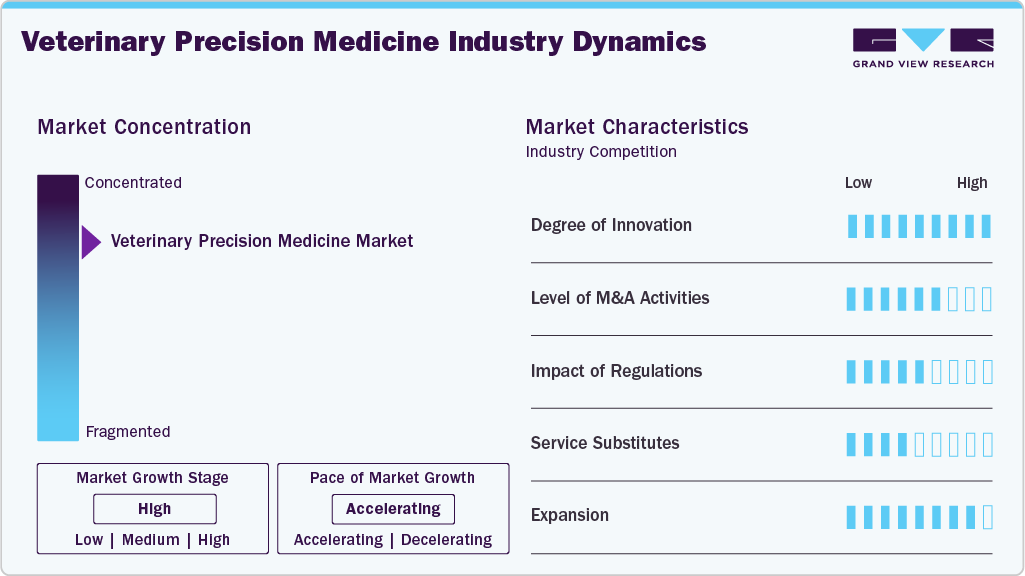
Regulatory frameworks governing veterinary precision medicine services remain underdeveloped relative to the pace of industry innovation. Unlike human diagnostics, veterinary genomic and AI-driven services currently operate without standardized approval pathways in most jurisdictions, creating both operational flexibility and validation ambiguity. Regulatory bodies such as the USDA and APHIS in the U.S. are beginning to oversee molecular diagnostics. At the same time, the absence of harmonized international frameworks across the EU and Asia Pacific introduces compliance variability. Clearer regulatory guidance is anticipated to formalize entry requirements and service credentialing standards.
The threat of service substitution is low. Conventional veterinary diagnostics, including standard histopathology, cytology, and empirical chemotherapy protocols, represent the primary alternatives but lack the molecular specificity and individualized treatment guidance that precision medicine services deliver. Transitioning back to empirical treatment approaches carries measurable clinical risk, particularly in oncology, where genomic profiling and AI-driven drug response predictions have demonstrated statistically significant improvements in patient outcomes. The absence of comparable substitute services capable of replicating precision-level clinical outputs further limits substitution risk across the market.
Geographic and service-line expansion represents a key strategic theme across the market. Commercially, expansion is currently concentrated in North America, with providers progressively expanding into Europe and select Asia Pacific markets. In the Asia Pacific, emerging developments such as the launch of precision cancer testing for companion dogs in South Korea and PETcision's accelerator partnership in China signal growing regional momentum. Furthermore, service expansion beyond canine oncology into feline diagnostics, equine genomics, and production animal molecular screening is broadening the addressable market across species and therapeutic areas.
Type Insights
The diagnostic & pathology segment dominated the veterinary precision medicine market with the largest revenue share of 39.3% in 2025. This position is attributed to the segment's established role as the primary clinical entry point for precision medicine workflows, encompassing histopathology, cytology, AI-assisted imaging, biomarker testing, and companion diagnostics. High order volumes from veterinary oncology clinics, combined with the relatively standardized and scalable nature of laboratory-based diagnostic services, sustain the segment's revenue leadership across key markets, including the U.S. and Western Europe, reflecting diagnostics' foundational role across the wider veterinary medicine market.
The precision therapy & treatment segment is expected to grow at the fastest CAGR over the forecast period, driven by the accelerating commercialization of genomically guided immunotherapy protocols, cancer vaccine platforms, and cell and gene therapy services, signaling a meaningful convergence between the veterinary pharmaceuticals market and molecularly guided therapeutic development. Providers such as Elias Animal Health and LEAH Labs are expanding autologous immunotherapy and CAR-T cell therapy offerings, while increasing clinical validation data is strengthening veterinary oncologists' confidence in molecularly guided treatment selection. Furthermore, rising owner willingness to pursue advanced therapeutic interventions for companion animals is directly expanding the addressable patient base for precision treatment services.
Animal Insights
The dogs segment dominated the veterinary precision medicine industry with the largest revenue share in 2025, underscoring the segment's outsized influence within the broader companion animal medicine market. The high commercial maturity of canine-specific precision platforms and the elevated cancer prevalence relative to other companion species drive the segment. Many validated precision medicine services currently in clinical deployment, including FidoCure's NGS tumor profiling, ImpriMed's AI-driven drug response predictions, VetOmics' Canine CGP, and PetDx's OncoK9 liquid biopsy, are developed and validated specifically for canine patients. High pet humanization trends and owner investment capacity further consolidate the segment's revenue dominance.
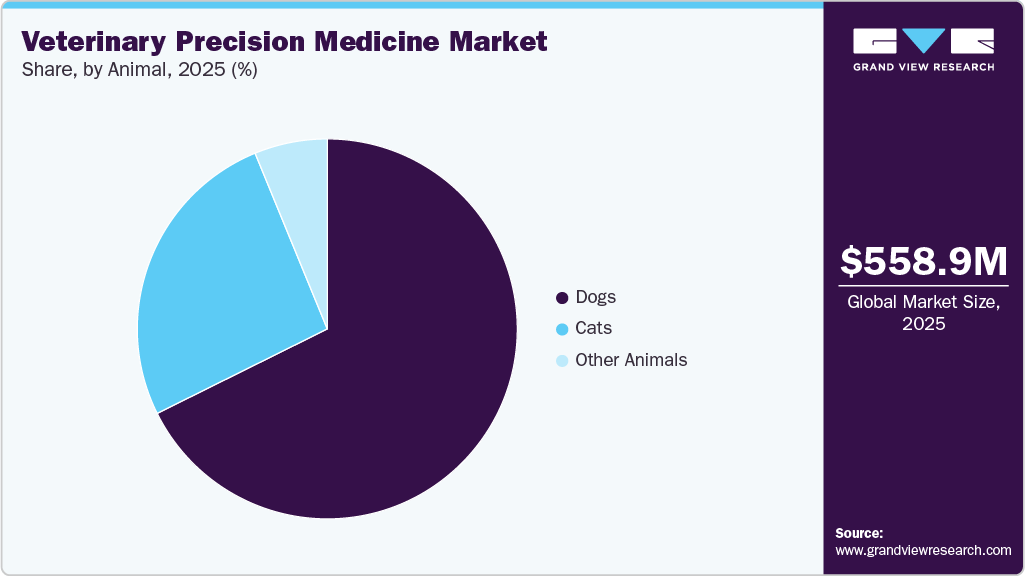
The cats segment is projected to grow at the fastest CAGR during the forecast period, driven by increasing extension of canine-validated precision platforms into feline applications, particularly for lymphoma, mammary carcinomas, and injection-site sarcomas. For instance, a February 2026 study published in Science mapped the feline oncogenome across nearly 500 tumor samples from five countries, providing the genomic reference infrastructure necessary to accelerate feline-specific assay development, further broadening the scope of the companion animal medicine market beyond its historically canine-centric precision focus. Moreover, ImpriMed's expansion of chemosensitivity testing into feline patients and growing clinical recognition of feline cancer prevalence are key contributors to segment growth.
Therapeutic Area Insights
The oncology segment accounted for the largest revenue share of the veterinary precision medicine market in 2025 and is expected to grow at the fastest CAGR over the forecast period. This dominance is owed to the high cancer prevalence in companion animals, particularly dogs, where malignancies such as lymphoma, hemangiosarcoma, and mast cell tumors present at rates broadly comparable to human populations. All leading precision service providers, including ImpriMed, FidoCure, Anivive Lifesciences, and VetOmics, are concentrated in oncology, reflecting both clinical demand and the segment's established reimbursement and referral infrastructure within specialty veterinary practices.
Infectious diseases is the second-fastest growing segment, driven by rising demand for molecular and genomic diagnostic services capable of delivering rapid pathogen identification, antimicrobial resistance profiling, and host-pathogen interaction analysis. Conventional culture-based diagnostics are increasingly being replaced by PCR- and next-generation sequencing-based platforms that enable targeted selection of antimicrobial therapy. Furthermore, growing awareness of zoonotic disease surveillance within the One Health framework is increasing institutional investment in precision-level infectious disease diagnostics across both companion and production animal populations.
Customers Insights
The veterinary hospitals & clinics constituted the largest revenue share of the veterinary precision medicine market in 2025. Specialty oncology clinics represent the highest-volume service commissioners, ordering genomic panels, AI diagnostic reports, and targeted therapy guidance from providers including FidoCure, ImpriMed, and Anivive to support individualized clinical decision-making. The segment's scale reflects the centrality of point-of-care settings in driving service adoption, as board-certified veterinary oncologists remain the primary clinical gatekeepers for precision medicine service utilization across companion animal oncology workflows.
The veterinary diagnostics laboratories segment is expected to grow at the fastest CAGR over the forecast period, driven by their expanding role as the operational infrastructure for precision medicine service delivery at scale. Reference laboratories are progressively integrating provider platforms, including SearchLight DNA, VetOmics CGP, and OncoK9, into standardized service menus, enabling broader geographic access to precision diagnostics beyond specialist clinic networks. In addition, increasing sample volumes from veterinary practices without in-house molecular capabilities are directing outsourced diagnostic demand toward centralized laboratory networks, supporting sustained volume and revenue growth.
Regional Insights
The North America veterinary precision medicine market dominated with the largest revenue share of 44.6% in 2025 and is expected to grow at the fastest CAGR over the forecast period, reflecting its leadership position within the broader veterinary medicine market. The region is supported by mature oncology care, frequent use of genomic testing, and a strong base of specialty hospitals, academic centers, and commercial service providers. Recent activity around precision immunotherapies, AI-driven drug response tools, and new AAHA oncology guidance points to deeper clinical adoption across dogs and cats.
U.S. Veterinary Precision Medicine Market Trends
The veterinary precision medicine industry in the U.S. accounted for the largest revenue share of North America in 2025, supported by advanced veterinary oncology networks, broad access to testing, and strong translational research. AAHA’s 2026 oncology guidelines and ImpriMed’s AI-based drug response platform show how precision workflows are entering routine care. Academic activity from WSU and comparative oncology programs also supports earlier mutation detection, biomarker research, and treatment matching. The market is concentrated among dog owners, who are more open to molecular testing and personalized cancer care.
The Canada veterinary precision medicine market accounted for the second-largest share in 2025, driven by research-led adoption and strong comparative oncology activity. The University of Guelph’s work on canine osteosarcoma demonstrates how veterinary cancer research is advancing biomarker discovery and translational medicine. The growth in the country also follows the same pattern seen in the U.S., with rising interest in genomic testing, specialty oncology, and diagnostic support for companion animals. The country remains research-heavy, with clinical uptake building from university and referral settings outward.
Europe Veterinary Precision Medicine Market Trends
The Europe veterinary precision medicine industry is the second-largest region. This region is being shaped by specialist veterinary care, robust diagnostic infrastructure, and the growing use of AI, imaging, and digital pathology. The region is moving toward more structured oncology pathways and one-health-driven diagnostics. Recent work on advanced CT imaging in the UK and broader European reviews on AI-based veterinary diagnostics point to growing use of precision workflows in clinical decision-making. Adoption is strongest in companion animal oncology, where molecular diagnostics and imaging are becoming more routine.
The veterinary precision medicine market in the UK held the largest revenue share in 2025 and is expected to grow at the fastest CAGR over the forecast period. Specialist oncology practices, active adoption of diagnostics, and a strong one-health research culture characterize the market. The CMA’s current review of veterinary services for household pets shows how closely the market is being watched. At the same time, a next-generation CT scanner built for precision medicine signals continued investment in advanced imaging. Clinical demand is rising around cancer diagnosis, treatment planning, and better quality-of-life management for pets.
The Germany veterinary precision medicine market is expected to grow at the second-fastest CAGR over the forecast period. The country’s growth is influenced by digitalization in veterinary practice and the broader acceptance of telemedical and data-driven tools. German veterinarians are already reporting an increase in the use of digital approaches, and recent studies show practical benefits of telemedicine in underserved settings. That digital base supports future precision medicine workflows, especially where imaging, clinical decision support, and biomarker-led triage are used together in companion animal care.
Asia Pacific Veterinary Precision Medicine Market Trends
The Asia Pacific veterinary precision medicine industry is expected to grow at a lucrative CAGR over the forecast period. The region's growth can be attributed to rising pet ownership, expanding diagnostic capacity, and faster adoption of AI-enabled veterinary tools. The region is seeing more work on genomic testing, sequencing, and digital decision support in companion animal care. One-health discussions, AI adoption in clinics, and growing interest in precision oncology are lifting the market, positioning the region as an emerging growth frontier within the global companion animal medicine market. China and Japan are the main growth anchors in companion animal precision medicine.
The veterinary precision medicine market in China held the largest revenue share in 2025,andis expected to grow at the fastest CAGR from 2026 to 2033. The market is gaining from heavy AI use in veterinary practice, rising interest in precision diagnostics, and a growing clinical focus on companion animal oncology. For instance, a March 2026 Frontiers study found that 71.0% of surveyed veterinary professionals already used AI tools, even though many reported low familiarity. That gap creates room for faster adoption of precision workflows, especially in cancer care and diagnostics.
The veterinary precision medicine market in Japan is driven by a strong clinical research base and growing interest in precision oncology. For instance, a January 2026 multicenter study by Yamaguchi University on anti-PD-1 antibody therapy in dogs with oral malignant melanoma demonstrates the country’s active role in biomarker-linked treatment research. This kind of study supports the use of predictive markers, targeted therapy selection, and more structured oncology pathways for companion animals.
Latin America Veterinary Precision Medicine Market Trends
The veterinary precision medicine industry in Latin America is growing as companion animal care becomes more specialized and diagnostic awareness rises across urban pet markets. The region is seeing more interest in feline oncology, dog tumor epidemiology, and digital health engagement among pet owners. Brazil is a key anchor due to its veterinary research base and large companion animal population. Growth is still moderate compared to North America, Europe, or Asia Pacific, but oncology diagnostics and molecular testing are moving into broader clinical use.
The Brazil veterinary precision medicine market is gaining momentum due to stronger veterinary oncology research and greater awareness of disease monitoring in companion animals. The Federal University of Minas Gerais has published work on feline oncology, and São Paulo data on canine tumors shows a sizable clinical base for cancer diagnostics. Digital engagement studies in Rio de Janeiro also point to rising pet-owner involvement in health management. These factors support future uptake of genomic testing, pathology, and precision treatment guidance.
Middle East & Africa Veterinary Precision Medicine Market Trends
The veterinary precision medicine industry in MEA is anticipated to grow at a lucrative CAGR during the forecast period, as animal health systems become more formalized and diagnostic infrastructure expands. Veterinary regulation, laboratory accreditation, and disease-control programs are improving in several countries, laying the groundwork for precision diagnostics and targeted treatment support. Growth is still concentrated in companion animal care in urban centers, with livestock health and zoonotic disease control also shaping service demand.
South Africa veterinary precision medicine market held the largest revenue share of MEAin 2025 and is expanding due to established veterinary education, robust laboratory capabilities, and a growing diagnostics culture. Local institutions are actively engaged in molecular laboratory diagnostics and veterinary training, which support future precision medicine use. The market is still in its early stages, but the presence of research infrastructure and animal health regulations gives it a stronger base than many neighboring markets. Companion animal oncology and infectious disease diagnostics are the most likely entry points.
The veterinary precision medicine market in Saudi Arabia is experiencing significant growth, driven by expanding veterinary diagnostics, disease control, and laboratory capacity under a more structured animal health framework. MEWA’s veterinary health and laboratory departments, the ISO-accredited Riyadh Veterinary Diagnostic Laboratory, and the new animal disease research center in Arar all point to a stronger diagnostic base. That foundation supports future precision medicine use in both companion and production animals, especially where genomic testing and targeted diagnostics can improve case management.
Key Veterinary Precision Medicine Company Insights
The market is concentrated, with leadership held by Zoetis and IDEXX Laboratories through integrated diagnostics and clinical reach. Precision-focused firms such as ImpriMed and FidoCure are expanding their market share in oncology, supported by AI-driven treatment guidance and the adoption of genomic testing.
Key Veterinary Precision Medicine Companies:
The following key companies have been profiled for this study on the veterinary precision medicine market.
- Zoetis
- Idexx Laboratories
- ImpriMed
- FidoCure (One Health Company)
- Anivive Lifesciences (Vidium Animal Health)
- VetOmics Animal Health
- LEAH Labs
- Elias Animal Health
- testblu diagnostics GmbH
- PetDx
- Torigen, Inc
- Oxford BioDynamics
Recent Developments
-
In April 2026, a next-generation CT scanner was installed at a UK veterinary research facility, The Royal (Dick) School of Veterinary Studies, offering high-resolution imaging with laser-guided precision to support advanced diagnostics and targeted interventions in large animals. This advances precision medicine capabilities by improving disease visualization, targeted treatment, and translational research across animal and human health under the One Health framework.
-
In March 2026, a South Korea-based startup, CaniCatiCare, launched a precision cancer diagnostic test for companion dogs, named CaniCancer, with early clinical use across hundreds of cases and adoption in multiple animal hospitals. This signals the accelerating commercialization of genomic diagnostics in veterinary oncology, with Asia emerging as a high-growth region for scalable, clinic-integrated precision testing platforms.
-
In October 2025, Chemify expanded operations into Glasgow’s Health Innovation Hub, a purpose-built life sciences facility designed to support precision medicine technologies from R&D through commercialization. This highlights increasing investment in integrated innovation hubs that accelerate translation of precision technologies into clinical use, strengthening ecosystem-driven growth across diagnostics, therapeutics, and data-driven veterinary medicine.
Veterinary Precision Medicine Market Report Scope
Report Attribute
Details
Market size in 2025
USD 558.9 million
Estimated market size in 2026
USD 623.9 million
Projected market size by 2033
USD 1,509.3 million
Growth rate
CAGR of 13.5% from 2026 to 2033
Actual data
2021 - 2025
Forecast period
2026 - 2033
Quantitative units
Revenue in USD million/billion and CAGR from 2026 to 2033
Report coverage
Revenue forecast, company ranking, competitive landscape, growth factors, and trends
Segments covered
Type, animal, therapeutic area, customer, and region
Regional scope
North America; Europe; Asia Pacific; Latin America; MEA
Country scope
U.S.; Canada; Mexico; UK; Germany; France; Italy; Spain; Denmark; Sweden; Norway; Netherlands; Japan; China; India; Thailand; South Korea; Australia; Brazil; Argentina; South Africa; UAE; Saudi Arabia; Kuwait; Qatar; Oman
Key companies profiled
Zoetis; Idexx Laboratories; ImpriMed; FidoCure (One Health Company); Anivive Lifesciences (Vidium Animal Health); VetOmics Animal Health; LEAH Labs; Elias Animal Health; testblu diagnostics GmbH; PetDx; Torigen, Inc.; Oxford BioDynamics
Customization scope
Free report customization (equivalent up to 8 analysts working days) with purchase. Addition or alteration to country, regional & segment scope.
Pricing and purchase options
Avail customized purchase options to meet your exact research needs. Explore purchase options
Global Veterinary Precision Medicine Market Report Segmentation
This report forecasts revenue growth at the global, regional, and country levels and provides an analysis of the latest industry trends in each of the sub-segments from 2021 to 2033. For this study, Grand View Research has segmented the veterinary precision medicine market report based on type, animal, therapeutic area, customer, and region:
-
Type Outlook (Revenue, USD Million, 2021 - 2033)
-
Genomic Profiling & Sequencing
-
Diagnostic & Pathology
-
Precision Therapy & Treatment
-
Bioinformatics & Data Analytics
-
-
Animal Outlook (Revenue, USD Million, 2021 - 2033)
-
Dogs
-
Cats
-
Other Animals
-
-
Therapeutic Area Outlook (Revenue, USD Million, 2021 - 2033)
-
Oncology
-
Infectious Diseases
-
Immunology & Autoimmune Disorders
-
Musculoskeletal Disorders
-
Other Therapeutic Areas
-
-
Customer Outlook (Revenue, USD Million, 2021 - 2033)
-
Veterinary Hospitals & Clinics
-
Veterinary Academic & Research Institutions
-
Veterinary Diagnostic Laboratories
-
Other Customers
-
-
Regional Outlook (Revenue, USD Million, 2021 - 2033)
-
North America
-
U.S.
-
Canada
-
Mexico
-
-
Europe
-
UK
-
Germany
-
France
-
Italy
-
Spain
-
Denmark
-
Sweden
-
Norway
-
-
Asia Pacific
-
China
-
Japan
-
India
-
Australia
-
South Korea
-
Thailand
-
-
Latin America
-
Brazil
-
Argentina
-
-
Middle East & Africa
-
South Africa
-
Saudi Arabia
-
UAE
-
Kuwait
-
Oman
-
Qatar
-
-
Frequently Asked Questions About This Report
North America dominated the market with 44.6% revenue share in 2025.
The diagnostic & pathology segment led with a 39.3% revenue share in 2025, while the precision therapy & treatment segment is the fastest-growing.
The dogs segment held the largest revenue share in 2025, while the cats segment is the fastest-growing.
Veterinary hospitals & clinics segment held the largest share in 2025, while the veterinary diagnostics laboratories segment is the fastest-growing.
The global veterinary precision medicine market size was estimated at USD 558.9 million in 2025 and is expected to reach USD 623.9 million in 2026.
The global veterinary precision medicine market is expected to grow at a compound annual growth rate of 13.5% from 2026 to 2033 to reach USD 1,509.5 million by 2033.
Which therapeutic area segment accounted for the largest veterinary precision medicine market share?Oncology segment held the largest revenue share in 2025 and is expected to grow at the fastest rate over the forecast period. This dominance is owed to the high cancer prevalence in companion animals, particularly dogs, where malignancies such as lymphoma, hemangiosarcoma, and mast cell tumors present at rates broadly comparable to human populations.
Some key players operating in the veterinary precision medicine market include Zoetis, Idexx Laboratories, ImpriMed, FidoCure (One Health Company), Anivive Lifesciences (Vidium Animal Health), VetOmics Animal Health, LEAH Labs, Elias Animal Health, testblu diagnostics GmbH, PetDx, Torigen, Inc, and Oxford BioDynamics.
Key factors that are driving the market growth include rising companion animal cancer prevalence, pet humanization boosting treatment investment, AI/ML advancing bioinformatics capabilities, comparative oncology attracting institutional investment.
About the Author(s)
Animal Health Research Team
Healthcare · Animal HealthThis report was authored by the animal health research team at Grand View Research - comprising two research analysts, one senior research analyst, and one industry expert - with specialized expertise in the animal health segment of the healthcare industry. All findings are based on proprietary healthcare databases, executive interviews, and regulatory analysis, subject to internal peer review prior to publication.
Last Updated:
Speak to Analyst


Customize this report to your needs — add regions, segments, or data points, with 20% free customization.
Or view our licence options:


ISO 9001:2015 & 27001:2022 Certified
We are GDPR and CCPA compliant! Your transaction & personal information is safe and secure. For more details, please read our privacy policy.


