
- Home
- »
- Pharmaceuticals
- »
-
Alzheimer's Drug Market Intelligence & Forecast Analysis, 2033GVR Report cover
![Alzheimer's Drug-Level Market Intelligence, Commercial Forecasting, Estimations & Portfolio Report]()
Alzheimer's Drug-Level Market Intelligence, Commercial Forecasting, Estimations & Portfolio Analysis, 2021 - 2033
Overview
The global Alzheimer's drugs market was valued at USD 10.9B in 2025 and is projected to expand at a CAGR of 5.2% from 2026 to 2033. The market is transitioning from volume-driven symptomatic therapies to value-driven disease-modifying therapies (DMTs). Leqembi (lecanemab) and Kisunla (donanemab) are accelerating this shift, particularly in the U.S., where favorable reimbursement, established infusion infrastructure, and early physician adoption support commercial uptake. China is also emerging as a key growth market following the approval of anti-amyloid therapies and the continued expansion of dementia diagnosis and treatment infrastructure. Meanwhile, symptomatic therapies such as Aricept (donepezil), Namenda (memantine), Exelon (rivastigmine), and Razadyne (galantamine) continue to account for the majority of treatment volumes, especially in cost-sensitive markets where generic drugs remain the standard of care.
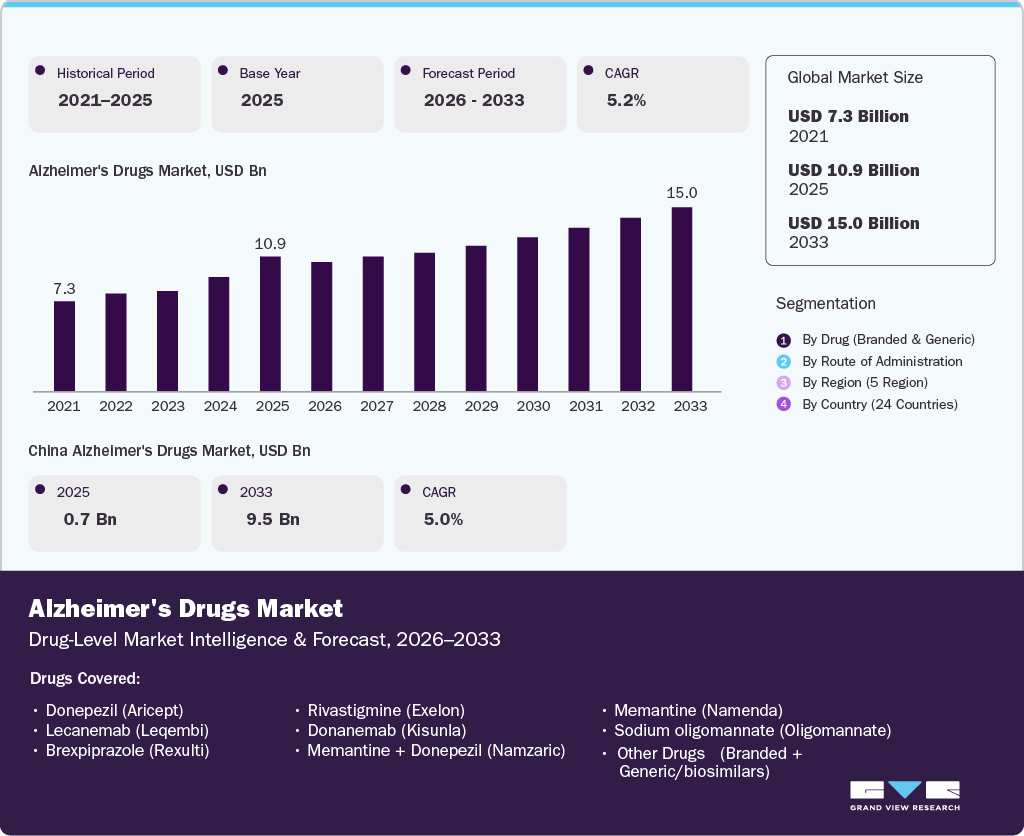
GVR's Alzheimer's drug intelligence database tracks 10+ branded and generic formulations across 20+ molecules from symptomatic therapies (Donepezil/Aricept, Memantine/Namenda, Rivastigmine/Exelon, Galantamine/Razadyne) to the new anti-amyloid class (Lecanemab/Leqembi, Donanemab/Kisunla). Of the estimated 55 million people living with dementia worldwide, Alzheimer's accounts for 60–70% of cases. Cholinesterase inhibitors and NMDA antagonists still anchor volume in price-sensitive, genericized markets, while anti-amyloid DMTs are capturing value-based growth in the U.S., Japan, and some European markets, gated by reimbursement and diagnostic-access constraints.
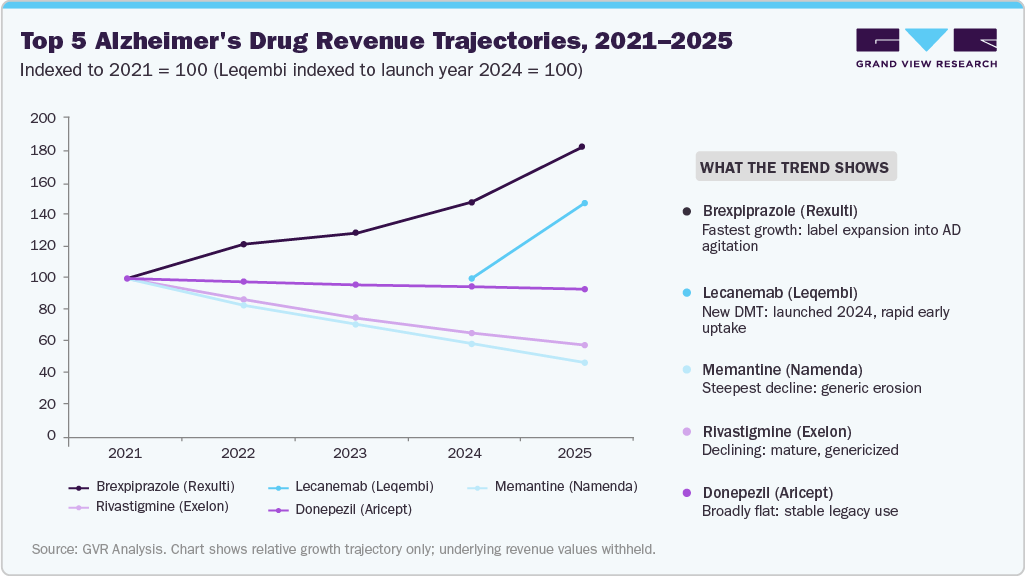
The market is witnessing two distinct growth trajectories. Disease-modifying therapies are driving revenue growth, while mature oral therapies continue to experience pricing pressure from generic competition. Leqembi demonstrates strong early commercial adoption as the first widely adopted disease-modifying therapy, while Rexulti (brexpiprazole) has emerged as one of the fastest-growing products following its approval for agitation associated with Alzheimer's disease, an indication not addressed by traditional symptomatic therapies. In contrast, Aricept, Namenda, and Exelon have entered mature lifecycle stages, with widespread generic availability limiting revenue growth despite maintaining high prescription volumes.
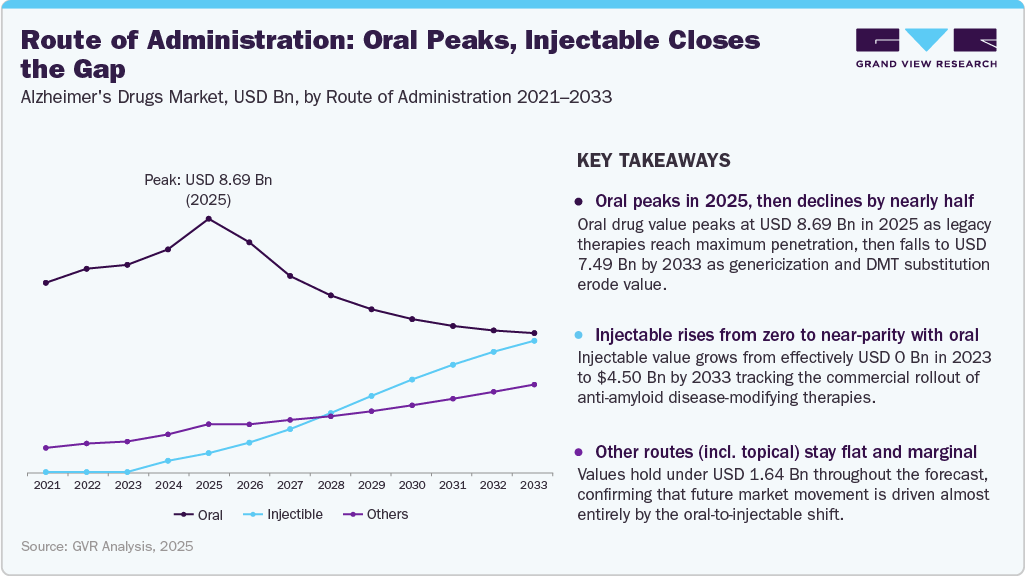
Looking ahead, market expansion will depend not only on new product launches but also on improvements in healthcare infrastructure and access to treatment. Wider availability of biomarker testing, reimbursement coverage, infusion capacity, and earlier diagnosis will determine the pace of DMT adoption across regions. Companies are also focusing on lifecycle management to improve patient convenience. For example, Eisai's subcutaneous formulation of Leqembi, introduced in 2025, aims to reduce reliance on infusion centers and improve treatment accessibility, while future innovations in at-home administration and less frequent dosing are expected to support broader adoption. As a result, the revenue mix is expected to shift steadily from mature, generic oral therapies toward differentiated, high-value biologics over the forecast period.
Net effect: revenue mix in this market is shifting away from volume-driven generics and toward mechanism-differentiated, higher-value entrants
Current Market Scenario
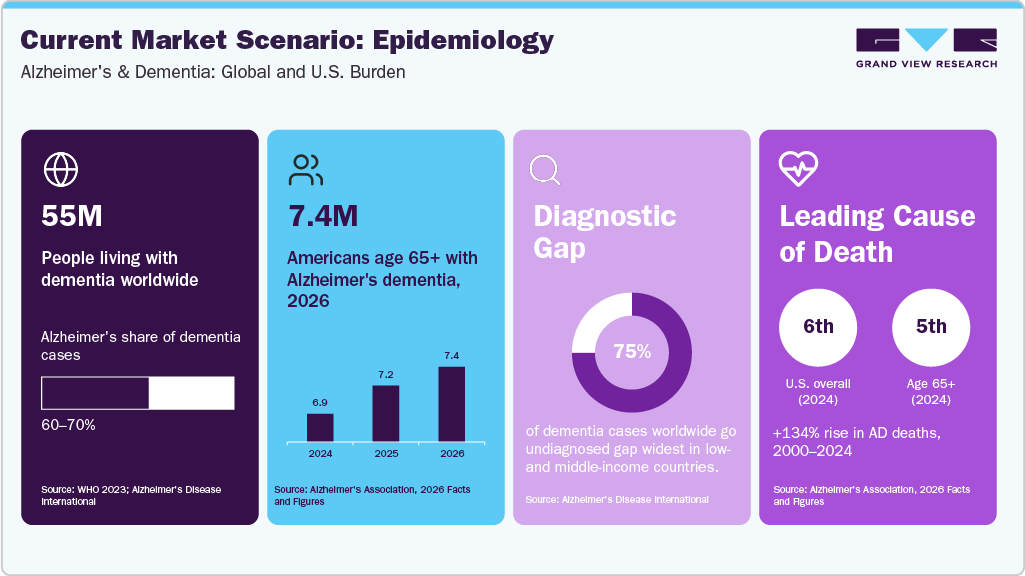
The Alzheimer's drug market is bifurcating. Oral therapies (Donepezil, Memantine, Rivastigmine) still command the highest volume globally due to low cost and formulary depth, but offer only symptomatic relief; generic competition keeps this segment volume-stable but value-capped. The disease-modifying class (Lecanemab/Leqembi and Donanemab/Kisunla) is the growth engine, as the first therapies shown to slow, not just mask, cognitive decline. US uptake reflects this: anti-amyloid patients grew from ~2,500 (Jan 2024) to ~13,500 (Jan 2025), with cumulative lecanemab starts reaching ~13,400 by late 2025.
DMT growth is constrained by infrastructure, not demand. PET/CSF confirmation of amyloid pathology, recurring MRI monitoring for ARIA, and infusion-capacity limits all cap the pace of adoption. Eisai's 2025 subcutaneous Leqembi formulation is the first move to ease this bottleneck, and further at-home or less-frequent dosing is the clearest lever for volume expansion.
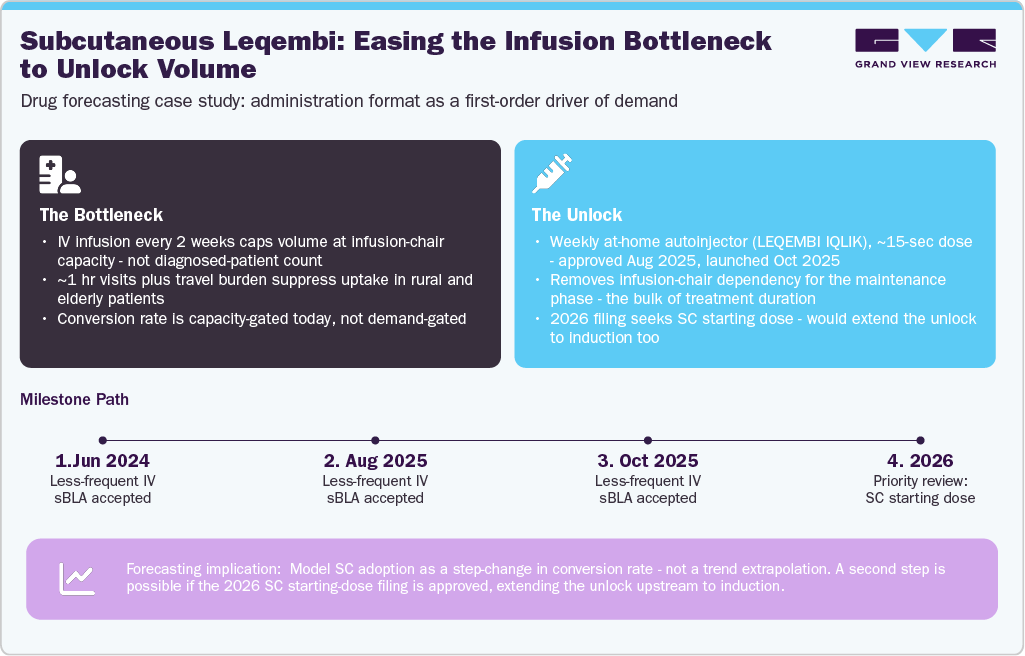
Table: Drug Estimations & Forecast 2025 & 2033 by Country (USD Mn)
Country
2025
2033
Analyst Perspective
Brexpiprazole
U.S.
2,407.6
995.9
Growth is expected to moderate as disease-modifying therapies gradually replace symptomatic treatment approaches.
Germany
283.3
121.0
Demand is expected to soften as treatment shifts toward innovative disease-modifying options.
UK
189.7
80.2
Uptake is projected to decline amid increasing adoption of disease-modifying therapies.
France
114.8
46.3
Market growth is likely to weaken due to evolving treatment practices and limited long-term uptake.
Memantine
U.S.
541.5
286.4
Utilization is expected to decline as anti-amyloid therapies reshape the treatment landscape.
Germany
80.6
42.5
Demand is projected to decrease with the gradual transition toward disease-modifying treatments.
France
43.5
25.0
Symptomatic use is expected to decline as disease-modifying therapies gain clinical acceptance.
UK
54.1
30.2
Market demand is anticipated to contract as newer therapies gain greater adoption.
Source: GVR Analysis
Competitive Landscape
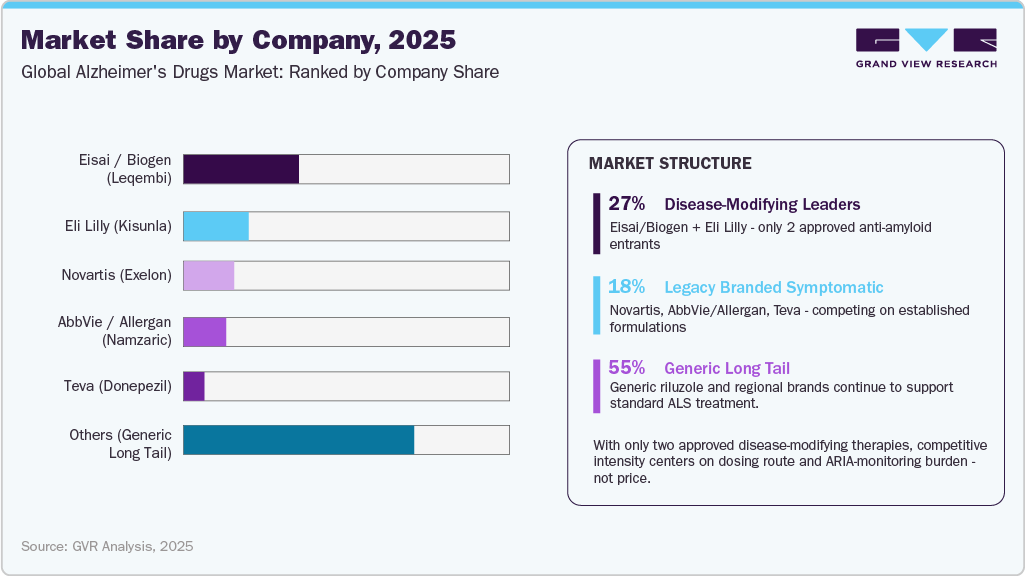
The Alzheimer's drugs market is moderately fragmented, with competition divided between disease-modifying therapies and established symptomatic treatments. In the disease-modifying segment, Eisai, together with its commercialization partner Biogen, leads the market with Leqembi (lecanemab), while Eli Lilly's Kisunla (donanemab), launched later, is steadily expanding its presence. At present, no other approved therapy competes at a similar level in this category.
The symptomatic treatment segment is significantly more fragmented, comprising numerous branded and generic manufacturers of donepezil, memantine, rivastigmine, and galantamine. Competition in this segment is largely driven by pricing and broad generic availability.
With only two approved disease-modifying therapies, competition in the DMT segment is focused on product differentiation rather than price. Factors such as dosing frequency, route of administration, and safety monitoring requirements are expected to play an important role in shaping future market share as more convenient treatment options become available.
Market Dynamics
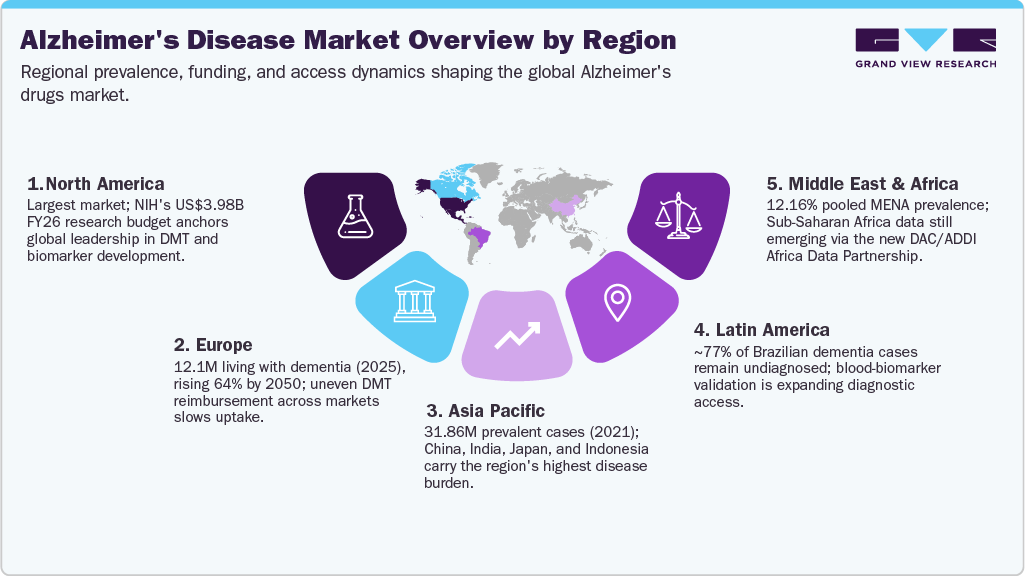
Growing public investment for Alzheimer's disease research is accelerating the development of disease-modifying therapies, biomarker discovery, precision diagnostics, and clinical research infrastructure. According to the National Institute on Aging (NIA) FY2026 Professional Judgment Budget, nearly 6.9 million Americans are living with Alzheimer's disease, and the FY2026 professional judgment budget estimates that USD 4.0 billion is required to support Alzheimer's disease and Alzheimer's disease-related dementias research. The report prioritizes investment in early detection, therapeutic development, translational research, clinical trials, and implementation of precision medicine approaches, reinforcing innovation across the Alzheimer's treatment landscape.
The Alzheimer’s treatment landscape is undergoing a significant shift with the introduction of disease-modifying therapies targeting amyloid pathology. The U.S. FDA's traditional approval of Leqembi (lecanemab-irmb) marked the first confirmation of clinical benefit for an amyloid beta-directed therapy, moving treatment beyond symptomatic management and accelerating adoption of biomarker-based diagnosis, early intervention, and investment in Alzheimer's therapeutic development. This regulatory milestone is expected to stimulate innovation, expand treatment eligibility, and strengthen the commercialization of next-generation disease-modifying therapies.
Key Market Trends
“Anti-Amyloid Therapies Are Shifting Alzheimer's Care From Symptom Management to Disease Modification”
Lecanemab (Leqembi) and donanemab (Kisunla) are the first therapies shown to slow, rather than only mask, cognitive decline in early Alzheimer's disease, and adoption is accelerating faster than initial forecasts assumed. U.S. patients on anti-amyloid therapy grew from an estimated 2,500 in January 2024 to roughly 13,500 by January 2025. Commercially, Leqembi's global sales reached USD 121 million in Q3 2025, up 82% year-on-year, while Kisunla's quarterly sales rose from USD 48.6 million to USD 70 million between Q2 and Q3 2025. This shift is redirecting pharmaceutical investment away from legacy symptomatic drugs and toward amyloid- and tau-targeted pipelines.
“Blood-Based Biomarker Tests Are Expanding the Diagnosed and Treatable Patient Pool”
Diagnostic access has long limited Alzheimer's drug uptake, since eligibility for anti-amyloid therapy requires confirmed amyloid pathology through PET imaging or cerebrospinal fluid testing, both costly and limited in availability. This is changing with blood-based biomarker tests, following the FDA's first approval of a blood test for Alzheimer's diagnosis, Fujirebio's Lumipulse G pTau217/ß-Amyloid 1-42 Plasma Ratio, in May 2025. As these tests move from clinical trials into routine primary care, they are expected to shorten the diagnostic pathway and expand the pool of patients eligible for disease-modifying treatment.
ROA Analysis
Regional Analysis
U.S. Alzheimer’s Drugs Market
The U.S. Alzheimer's disease drugs market is supported by its large elderly population, advanced healthcare system, and strong focus on research and early diagnosis. According to the 2025 Alzheimer's Association Facts and Figures, 7.2 million Americans aged 65 years and older are living with Alzheimer's dementia, and 74% of these individuals are aged 75 years or older. About 1 in 9 people (11%) aged 65 years and older have Alzheimer's dementia. The market is expanding with the availability of disease-modifying therapies such as Leqembi (lecanemab) and Kisunla (donanemab), along with established medicines, including donepezil and memantine, for symptom management. Increased use of biomarker testing, brain imaging, and supportive Medicare coverage for eligible patients is improving early diagnosis and treatment access, supporting continued market growth in the United States.
UK Alzheimer’s Drugs Market
The United Kingdom is one of the largest markets for Alzheimer's disease in Europe, supported by its aging population, universal healthcare system, and strong focus on dementia research and early diagnosis. According to Alzheimer’s Research UK, 982,000 people were living with dementia in the UK in 2024, and this number is expected to increase to 1.4 million by 2040. Alzheimer's disease is the most common type of dementia, accounting for around 60–80% of all dementia cases in the UK. The UK continues to improve access to diagnosis through NHS memory services and biomarker research while investing in innovative treatments and clinical trials. Government initiatives, research funding, and growing awareness of early diagnosis are supporting the Alzheimer's market growth across the country.
Germany Alzheimer’s Drugs Market
Germany is one of the leading Alzheimer's markets in Europe, supported by its large aging population, well-developed healthcare system, and strong focus on dementia research. According to the Deutsche Alzheimer Gesellschaft (German Alzheimer Association), around 1.8 million people were living with dementia in Germany in 2023, with 364,000–445,000 new cases diagnosed during the year. Alzheimer's disease is the most common cause of dementia in the country. Germany continues to improve early diagnosis through memory clinics and specialist neurological care while investing in research through organizations such as the German Center for Neurodegenerative Diseases (DZNE). Increasing disease awareness, an expanding elderly population, and ongoing development of new diagnostic tools and therapies are expected to drive the growth.
France Alzheimer’s Drugs Market
France is one of the major Alzheimer’s markets in Europe, supported by its aging population, universal healthcare system, and strong government focus on dementia care and research. According to France Alzheimer, around 1.4 million people were living with Alzheimer’s or related dementias in France in 2025, and this number is expected to reach 2.2 million by 2050. France continues to strengthen early diagnosis through memory clinics and national dementia programs while supporting research through institutions such as Santé publique France and the Paris Brain Institute. Growing disease awareness, improved diagnostic services, and the introduction of innovative therapies are expected to support the continued growth of the Alzheimer’s market in France.
Japan Alzheimer’s Drugs Market
Japan is one of the largest Alzheimer’s drug markets in Asia, supported by its rapidly aging population, universal healthcare system, and strong government focus on dementia care. According to Japan's Ministry of Health, Labour and Welfare (MHLW), approximately 4.4 million people were living with dementia in 2022, and this number is projected to increase to 5.8 million by 2040. Japan continues to strengthen its Alzheimer's market through expanded use of biomarker-based diagnosis, specialized memory clinics, and increased investment in dementia research. The country's national dementia strategy promotes early diagnosis, better patient care, and support for caregivers, which is expected to improve access to treatment and drive continued market growth.
China Alzheimer’s Drugs Market
China is the largest Alzheimer’s drugs market in the Asia-Pacific region, driven by its rapidly aging population and growing healthcare investment. According to the China Alzheimer Report 2025, 13.1 million people in China were living with Alzheimer's and related dementias (ADRD) in 2019, accounting for 25.5% of the global ADRD population, while more recent estimates indicate 9.83 million people aged 60 years and older were living with Alzheimer's disease. China is strengthening its Alzheimer's care by expanding memory clinics, increasing the use of biomarker-based diagnosis, and implementing the Healthy China Action (2019–2030) to improve early screening, standardized diagnosis, and long-term disease management.
Brazil Alzheimer’s Drugs Market
Brazil is one of the leading Alzheimer's drugs markets in Latin America, driven by its rapidly aging population and increasing healthcare focus on neurodegenerative diseases. According to the Brazilian Alzheimer's Association (ABRAz) and the Brazilian Hospital Services Company (EBSERH), approximately 1.2 million people are living with Alzheimer's in Brazil, with around 100,000 new cases diagnosed each year. The country is strengthening Alzheimer's care through the National Dementia Report (ReNaDe), released by the Ministry of Health in 2024, which aims to improve early diagnosis, patient care, and healthcare planning. In addition, Brazil is expanding research on Alzheimer's and increasing awareness through national initiatives, which is expected to support the continued growth of the Alzheimer's drugs market.
Brazil is one of the largest Alzheimer's drugs markets in Latin America, driven by its aging population and growing focus on dementia care. Around 1.2 million people are living with Alzheimer's, with nearly 100,000 new cases reported each year. To address this growing burden, the Ministry of Health launched the National Dementia Report (ReNaDe) in 2024, aiming to improve early diagnosis, patient care, and long-term healthcare planning.
The country is also strengthening its diagnostic capabilities. A recent Brazilian study found that the blood-based biomarker plasma pTau217 identified Alzheimer's-related brain changes with 94% accuracy, while an estimated 77% of dementia cases remain undiagnosed. As Brazil expands access to early diagnosis and dementia care, it is laying a stronger foundation for the future adoption of disease-modifying therapies for Alzheimer's.
Saudi Arabia Alzheimer’s Drugs Market
Saudi Arabia is an emerging Alzheimer's drugs market in the Middle East, supported by an aging population, increasing healthcare investment, and growing awareness of neurodegenerative diseases under Vision 2030. According to the Saudi Ministry of Health, approximately 130,000 people are living with Alzheimer's in the Kingdom. The country is strengthening Alzheimer's care by expanding specialized neurology services, promoting early diagnosis, and increasing public awareness through national campaigns such as World Alzheimer's Day. In addition, Saudi Arabia is investing in research into Alzheimer's and genetic risk factors to improve understanding of the disease and support the development of precision medicine. These initiatives are expected to improve patient management and drive the growth of the Alzheimer's disease market in Saudi Arabia.
UAE Alzheimer’s Drugs Market
The United Arab Emirates is an emerging Alzheimer's drugs market in the Middle East, supported by rising life expectancy, increasing healthcare investment, and a growing focus on early diagnosis of neurodegenerative diseases. According to Economist Impact (2025), 4.1% of people aged 60 years and older in the UAE are living with dementia. A major recent development is the launch of the UAE's first genomics-driven clinical trial to prevent Alzheimer's disease in Abu Dhabi. The study, led by M42's Insights Research Organization and Solutions (IROS) in collaboration with the Department of Health Abu Dhabi and Halia Therapeutics, uses data from the Emirati Genome Programme to identify individuals at high genetic risk before symptoms develop, supporting precision medicine and preventive Alzheimer's care.
Analyst Perspective
- Market value is shifting from symptomatic care to disease modification
Traditional therapies such as Aricept, Exelon, Namenda, and Namzaric continue to dominate treatment volumes due to their established use and generic availability. However, premium-priced disease-modifying therapies such as Leqembi and Kisunla are expected to drive the market value despite treating a smaller patient population.
- Healthcare infrastructure will become a stronger growth driver than patient prevalence
Future adoption will depend on early diagnosis, biomarker testing, reimbursement policies, infusion capacity, and physician confidence in managing treatment-related risks. As a result, the U.S. and other developed markets are expected to remain the primary contributors, while emerging markets continue to rely largely on lower-cost symptomatic therapies.
- Route of administration (RoA) is emerging as a key competitive differentiator
Companies are increasingly focusing on improving treatment convenience to expand patient access and adherence. For example, Eisai's 2025 subcutaneous formulation of Leqembi represents the first major step toward reducing infusion-related bottlenecks. Future innovations, including at-home administration and less-frequent dosing regimens, are expected to further accelerate market penetration and support long-term revenue growth.
- Lifecycle management is expanding revenue opportunities beyond cognitive symptoms
Manufacturers are broadening their portfolios to address additional disease burdens. For instance, Rexulti's approval for agitation associated with Alzheimer's demonstrates how targeting behavioral symptoms can create incremental revenue streams while differentiating products in an increasingly competitive market.


Customize this report to your needs - add regions, segments, or data points, with 20% free customization.
Or view our licence options:


ISO 9001:2015 & 27001:2022 Certified
We are GDPR and CCPA compliant! Your transaction & personal information is safe and secure. For more details, please read our privacy policy.


