
- Home
- »
- Pharmaceuticals
- »
-
Pancreatic Cancer Drug Market Intelligence, Forecast & Portfolio Analysis, 2033GVR Report cover
![Pancreatic Cancer Drug-Level Market Intelligence, Commercial Forecasting, Estimations & Portfolio Report]()
Pancreatic Cancer Drug-Level Market Intelligence, Commercial Forecasting, Estimations & Portfolio Analysis, 2021-2033
Overview
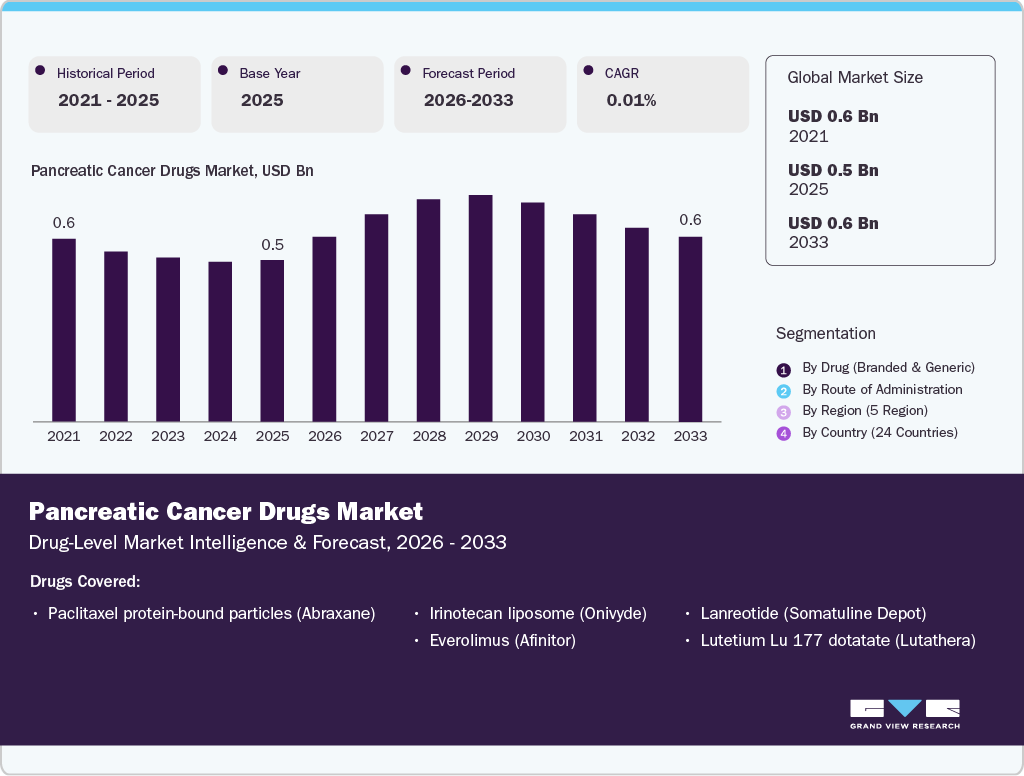
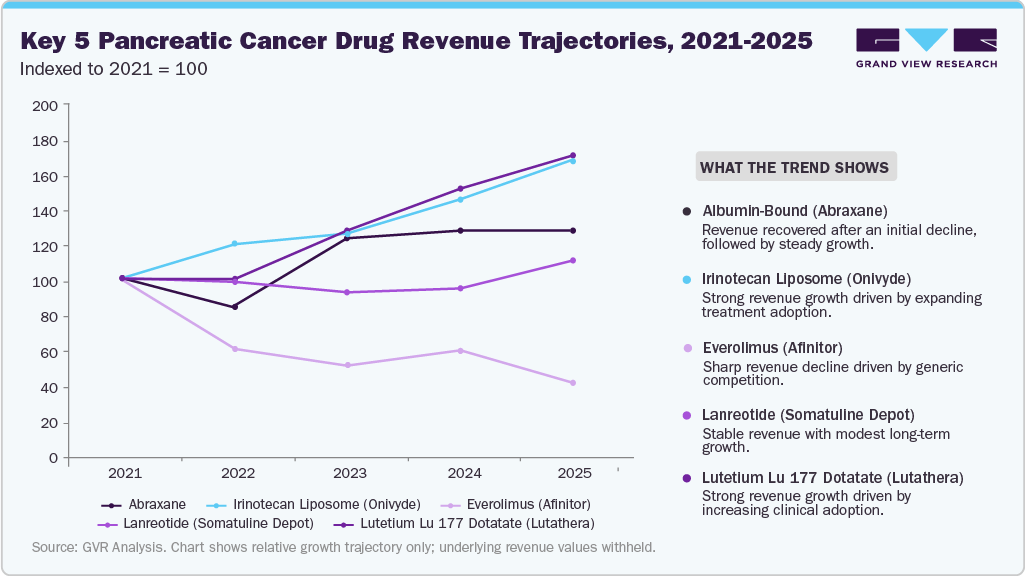
The global pancreatic cancer drugs market was valued at USD 0.5B in 2025 and is projected to remain a stable USD 0.6B by 2033. This analysis covers 5 leading marketed drugs for pancreatic cancer. Abraxane (paclitaxel protein-bound particles for injectable suspension) was approved by the U.S. FDA in September 2013 in combination with gemcitabine for metastatic disease. It was the first new FDA-approved treatment for this disease in nearly eight years. Abraxane generated USD 0.3B in revenue in 2025 and is projected to reach USD 0.5B by 2033, supported by its continued use as a first-line treatment. However, the launch of Apotex's generic version in April 2022 and Sandoz's generic version in October 2024 increased market competition by offering lower-cost alternatives. This is expected to put pressure on Abraxane's pricing during the forecast period.
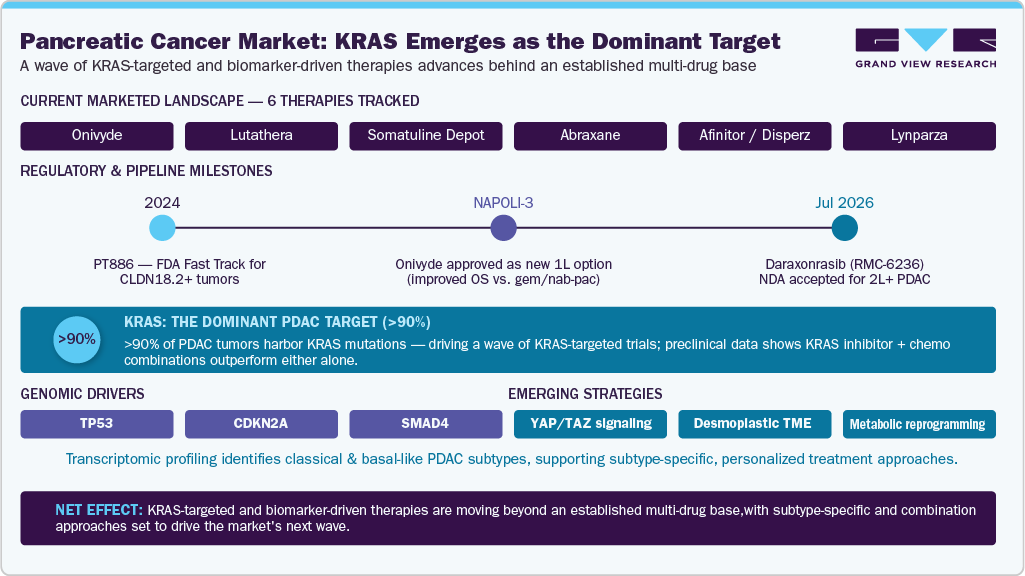
According to the National Cancer Institute, more than 90% of pancreatic ductal adenocarcinomas (PDAC) harbor KRAS gene mutations, making KRAS a major focus of drug development. Several KRAS-targeted therapies are currently under clinical investigation, while preclinical studies have shown that combining KRAS inhibitors with chemotherapy reduces tumor growth and metastasis more effectively than either approach alone. The NCI also highlighted PT886, which received U.S. FDA Fast Track designation in 2024 for the treatment of advanced or metastatic gastric, gastroesophageal junction, pancreatic, and other CLDN18.2-positive solid tumors. GVR's analysis covers more than 5 marketed drugs, including Onivyde, Lutathera, Somatuline Depot, Abraxane, Afinitor/Afinitor Disperz, and Lynparza.
Recent advances in research have identified KRAS as the dominant therapeutic target, while other genomic alterations involving TP53, CDKN2A, and SMAD4 continue to guide next-generation drug development. Emerging strategies are increasingly focused on targeting YAP/TAZ signaling, overcoming the desmoplastic tumor microenvironment, and modulating metabolic reprogramming to improve treatment response. Transcriptomic profiling has also identified classical and basal-like PDAC subtypes, supporting subtype-specific treatment approaches and the development of more personalized therapies.
Net effect: Increasing focus on KRAS-targeted therapies, molecularly guided treatment approaches, and innovative pipeline candidates is expected to accelerate therapeutic innovation and drive future market growth.
Current Market Scenario
According to the World Cancer Research Fund, adenocarcinoma of pancreas was the 12th most diagnosed cancer worldwide in 2022, with 510,992 new cases and 467,409 deaths reported globally. China, the United States, and Japan accounted for the highest number of incident cases, while Uruguay recorded the highest age-standardized incidence rate (11.4 per 100,000 population In June 2026, IDEAYA Biosciences entered a clinical collaboration with Roche to evaluate targeted therapies for MTAP-deleted PDAC, reflecting the growing industry focus on biomarker-defined patient populations and combination treatment strategies. Such collaborations strengthen the clinical pipeline and support the development of more personalized therapeutic options.
The drug pipeline continues to advance with the development of mutation-specific targeted therapies. In 2026, a first-in-human Phase I clinical trial published in the New England Journal of Medicine demonstrated that the investigational KRAS G12D-targeted protein degrader setidegrasib showed antitumor activity in previously treated advanced pancreatic malignancy. In July 2026, the U.S. FDA accepted the New Drug Application (NDA) for daraxonrasib (RMC-6236) for the treatment of previously treated metastatic PDAC. The findings show the potential of next-generation targeted therapies to address an important unmet need in treatment.
Novotech's Pancreatic Cancer Global Clinical Trial Landscape (2024) highlights the continued expansion of the drug development pipeline, comprising approximately 164 preclinical candidates, 233 early-phase clinical-stage drugs, 29 Phase III candidates, and 11 marketed therapies. The report also shows that small molecules remain the leading drug type, while targeted therapies, immunotherapies, antibody-drug conjugates, cancer vaccines, and cell therapies continue to expand the pipeline. This growing pipeline reflects ongoing efforts to develop more effective treatment options for the disease.
Strategic Partnerships and Collaborations
Companies are increasingly forming strategic partnerships to support the development of innovative therapies for adenocarcinoma of the pancreas. These collaborations focus on advancing clinical programs, evaluating combination therapies, and bringing new treatment options to patients. The table below summarizes notable collaborations announced in 2025-2026.
Date
Collaboration
Description
2026
IDEAYA Biosciences & Roche
Clinical collaboration to evaluate IDE892 in combination with Roche's RG6505 for patients with MTAP-deleted, RAS-mutant adenocarcinoma of pancreas.
2026
Tango Therapeutics & Revolution Medicines
Ongoing clinical collaboration (active before 2025) evaluating vopimetostat with Revolution Medicines' RAS(ON) inhibitors (daraxonrasib, zoldonrasib) in MTAP-deleted, RAS-mutant pancreatic and lung carcinoma; June 2026 data showed 92% ORR (objective response rate) in the daraxonrasib/pancreatic cohort.
2026
Erasca & Tango Therapeutics
Clinical trial collaboration and supply agreement to evaluate ERAS-0015 with vopimetostat in MTAP-deleted PDAC and MTAP-deleted RAS-mutant NSCLC.
2026
Revolution Medicines & Bristol Myers Squibb
Clinical collaboration to evaluate daraxonrasib with navlimetostat (BMS's PRMT5 inhibitor) in patients with RAS-mutant, MTAP-deleted PDAC.
2025
Takeda & Innovent Biologics
Global licensing and collaboration agreement for IBI343, a CLDN18.2-targeted ADC, to advance its development for gastric and adenocarcinoma of pancreas outside Greater China; $1.2B upfront payment, deal closed December 2025.
2025
Bayer & Kumquat Biosciences
Exclusive global license and collaboration to develop and commercialize Kumquat's KRAS G12D inhibitor, complementing Bayer's precision oncology portfolio in pancreatic, colorectal, and lung cancer; Kumquat eligible for up to $1.3 billion in milestones plus royalties.
Competitive Landscape
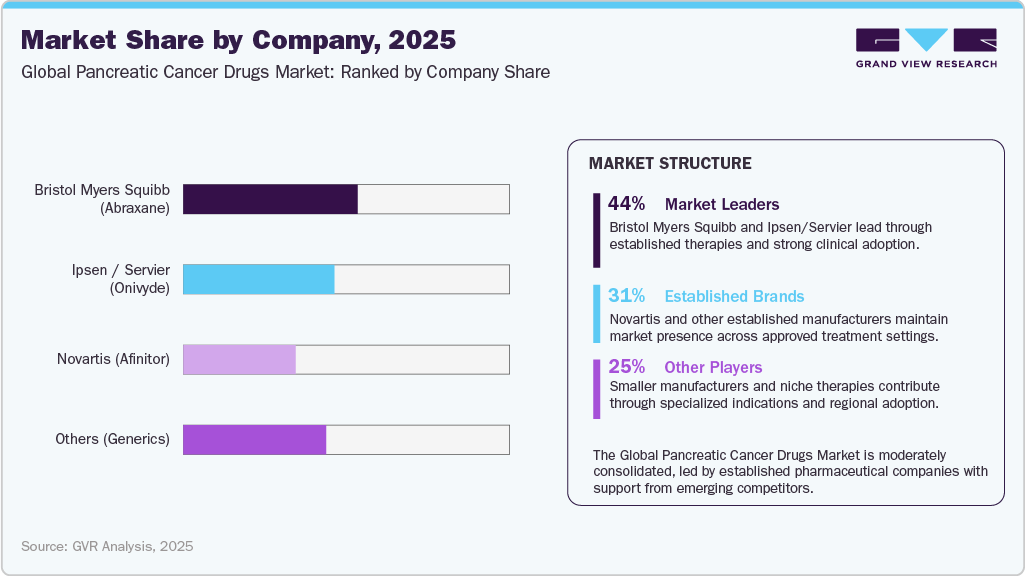
The pancreatic cancer drugs market includes several marketed therapies, including chemotherapy, targeted therapy, peptide receptor radionuclide therapy (PRRT), and somatostatin analogs. Key marketed drugs such as Onivyde, Gemzar, Abraxane, Lynparza, Lutathera, Somatuline Depot, and Afinitor are approved for the treatment of adenocarcinoma of pancreas and pancreatic neuroendocrine tumors (pNETs), addressing different treatment settings and patient populations. A significant recent development was the U.S. FDA approval of Onivyde (irinotecan liposome) in combination with oxaliplatin, fluorouracil, and leucovorin (NALIRIFOX) in February 2024 for the first-line treatment of metastatic pancreatic adenocarcinoma. The approval was based on the Phase III NAPOLI 3 trial, which demonstrated a significant improvement in overall survival compared with gemcitabine plus nab-paclitaxel, establishing a new first-line treatment option for eligible patients.
Company
Key Marketed Drugs
Drug Position
Ipsen
Onivyde
Approved for first- and second-line metastatic pancreatic adenocarcinoma in combination therapy.
Eli Lilly and Company
Gemzar (gemcitabine)
Standard chemotherapy for locally advanced and metastatic adenocarcinoma of pancreas.
Bristol Myers Squibb
Abraxane (nab-paclitaxel)
Approved with Gemzar as a first-line treatment for metastatic pancreatic adenocarcinoma.
AstraZeneca & Merck
Lynparza (olaparib)
Maintenance therapy for germline BRCA-mutated metastatic pancreatic adenocarcinoma.
Novartis
Lutathera (lutetium Lu 177 dotatate)
Approved for somatostatin receptor-positive pancreatic neuroendocrine tumors (pNETs).
Ipsen
Somatuline Depot (lanreotide)
Approved for unresectable or metastatic pancreatic neuroendocrine tumors (pNETs).
Novartis
Afinitor (everolimus)
Approved for progressive, unresectable or metastatic pancreatic neuroendocrine tumors (pNETs).
Market Dynamics
The U.S. FDA's Orphan Drug Designation for avutometinib in combination with defactinib for the treatment of carcinoma of the pancreas highlights increasing regulatory support for innovative therapies targeting high unmet medical needs. The designation is expected to accelerate clinical development, provide regulatory and financial incentives, encourage investment in novel targeted therapies, and strengthen the drug development pipeline.
Advances in artificial intelligence (AI) and deep learning algorithms are improving the prediction of pancreatic neoplasm risk by analyzing disease trajectories in electronic health records (EHRs). These models enable the early prediction of the disease in high-risk individuals, supporting earlier diagnosis, improving patient selection for treatment, and expanding opportunities for carcinoma of the pancreas screening and therapeutic intervention.
Key Market Trends
“KRAS-Targeted Therapies Are Reshaping the Pancreatic Cancer Treatment Landscape”
The emergence of daraxonrasib, a RAS(ON) multi-selective inhibitor, is expected to transform the pancreatic carcinoma market by improving outcomes for patients with advanced disease. Clinical data showed the drug nearly doubled overall survival, while receiving FDA Breakthrough Therapy and Orphan Drug designations. This is expected to accelerate the adoption of targeted therapies and expand treatment opportunities.
“Growing Development of Personalized mRNA Cancer Vaccines”
The development of personalized mRNA-lipoplex vaccines targeting somatic mutation-derived neoantigens is emerging as a major trend in the market. These vaccines have demonstrated the ability to generate long-lived functional CD8+ T cells in patients with PDAC, supporting durable anti-tumor immunity and advancing personalized immunotherapy approaches.
Regional Analysis
U.S. Pancreatic Cancer Drugs Market
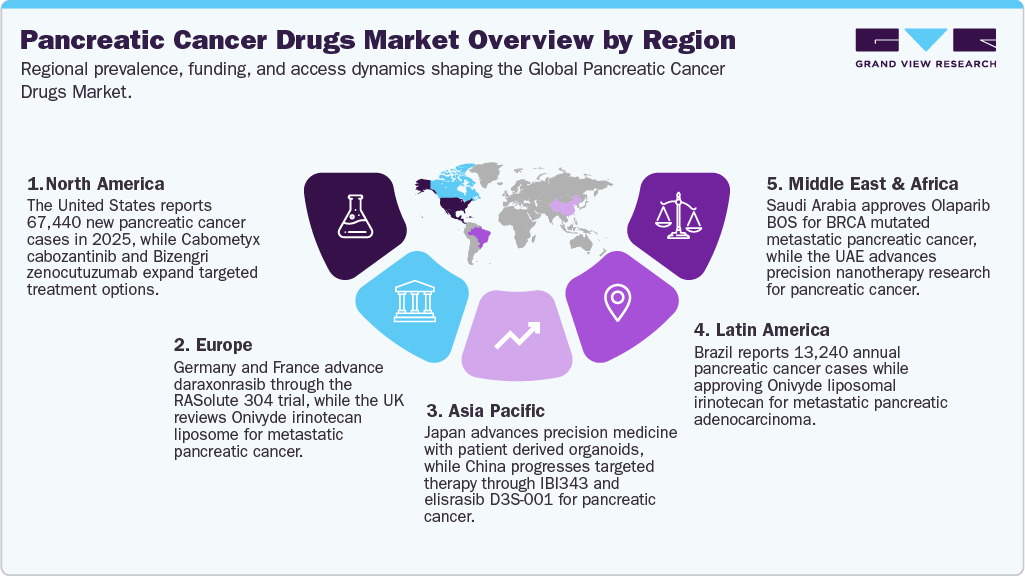
Cabometyx received U.S. FDA approval in March 2025 for cabozantinib (Cabometyx) to treat previously treated, unresectable, locally advanced, or metastatic well-differentiated pancreatic neuroendocrine tumors (pNETs) based on results from the Phase III CABINET trial. In December 2024, the U.S. FDA granted accelerated approval to zenocutuzumab (Bizengri) as the first and only targeted systemic therapy for adults with advanced, unresectable, or metastatic pancreatic adenocarcinoma harboring an NRG1 gene fusion after progression on prior systemic therapy. According to the American Cancer Society, an estimated 67,440 new cases and 51,980 deaths are expected in the United States in 2025, accounting for about 3% of all new cases and 7% of all deaths.
UK Pancreatic Cancer Drugs Market
According to Cancer Research UK, around 11,500 people are diagnosed with carcinoma of the pancreas each year in the UK, accounting for 3% of all cases, while approximately 10,200 people die from the disease annually, representing 6% of all deaths. The UK also reports a 10-year survival rate of 4.3%, highlighting the need for more effective treatment options and earlier detection. Onivyde (irinotecan liposome injection) was not recommended for routine NHS use in England after NICE terminated its appraisal in April 2025 because the company did not submit the evidence required to assess irinotecan liposome (Onivyde) in combination with oxaliplatin, fluorouracil, and leucovorin for the first-line treatment of untreated metastatic carcinoma of the pancreas.
Germany Pancreatic Cancer Drugs Market
Approximately 19,900 people developed pancreatic neoplasm in Germany in 2023, while nearly the same number died from the disease. The 5-year prevalence was 11,300 among women and 12,000 among men, and the 5-year relative survival rate was 11%, highlighting the significant unmet need for effective therapies for carcinoma of the pancreas and supporting market growth. In April 2026, the European Commission granted orphan designation to daraxonrasib (RMC-6236) for the treatment of carcinoma of the pancreas in the European Union, supporting its continued development for patients with limited treatment options. In June 2026, the EU Clinical Trials Information System (CTIS) registered the Phase III RASolute 304 trial evaluating daraxonrasib in patients with resected PDAC. The multinational study includes France among the participating countries, providing French patients access to an investigational targeted therapy.
France Pancreatic Cancer Drugs Market
In France, an estimated 15,991 new cases were diagnosed in 2023, including 8,323 cases in men and 7,668 in women, with incidence continuing to increase in both sexes. The incidence continues to increase, particularly among individuals aged over 50 years, rising by 1.6% annually in men and 2.1% annually in women between 2010 and 2023. In June 2026, the EU Clinical Trials Information System (CTIS) registered the Phase III RASolute 304 trial evaluating daraxonrasib as an adjuvant treatment for resected PDAC. The multinational study includes France among the participating countries, supporting patient access to an investigational targeted therapy.
Japan Pancreatic Cancer Drugs Market
According to the IARC GLOBOCAN 2024 estimates, Japan recorded 46,521 new cases, 44,335 deaths, and 37,783 five-year prevalent cases in 2024. The disease accounted for 4.4% of all cases and 9.7% of all cancer deaths, ranking as the seventh most diagnosed malignancy and the fourth leading cause of cancer-related mortality in the country. In 2023, researchers at the University of Tokyo developed patient-derived pancreatic cancer organoids to improve anticancer drug screening and support precision medicine in Japan.
China Pancreatic Cancer Drugs Market
In January 2025, China's National Medical Products Administration (NMPA) granted Breakthrough Therapy Designation to IBI343, a CLDN18.2-targeting antibody-drug conjugate (ADC) developed by Innovent Biologics, for the treatment of CLDN18.2-positive advanced PDAC after prior systemic therapy. D3 Bio presented positive Phase II clinical data in 2026 for elisrasib (D3S-001), a next-generation KRAS G12C inhibitor, demonstrating positive efficacy and a manageable safety profile in previously treated PDAC. China recorded 122,597 new cases, 112,030 deaths, and 119,897 five-year prevalent cases in 2024. The disease is ranked as the tenth most diagnosed malignancy and the sixth leading cause of cancer-related mortality in the country.
Brazil Pancreatic Cancer Drugs Market
The Brazilian National Cancer Institute (INCA) has estimated approximately 13,240 new cases annually during 2026–2028, including 6,330 cases in men and 6,910 in women. The disease ranks as the ninth most common cancer in the country, excluding non-melanoma skin carcinoma. Onivyde (liposomal irinotecan) was approved by ANVISA in April 2025 for the treatment of adults with metastatic adenocarcinoma of pancreas following progression on gemcitabine-based therapy, expanding second-line treatment options in Brazil.
Saudi Arabia Pancreatic Cancer Drugs Market
Saudi Arabia recorded 618 new cases, 593 deaths, and 750 five-year prevalent cases in 2024. This malignancy ranked as the 13th most diagnosed cancer and the seventh leading cause of cancer-related mortality in the country. In March 2025, the Saudi Food and Drug Authority (SFDA) approved olaparib (Olaparib BOS) for the maintenance treatment of germline BRCA1/2-mutated metastatic adenocarcinoma of pancreas, expanding access to targeted therapy in Saudi Arabia.
UAE Pancreatic Cancer Drugs Market
According to the latest IARC GLOBOCAN estimates, the United Arab Emirates recorded 190 new cases, 190 deaths, and 216 five-year prevalent cases in 2024. This disease is ranked as the 14th most diagnosed carcinoma and the eighth leading cause of cancer-related mortality in the country. In February 2026, researchers at NYU Abu Dhabi developed precision nanotherapy for a disease that showed promising preclinical efficacy, reflecting the UAE's growing focus on innovative therapeutics.
Analyst Perspective
Shift Toward Precision Oncology.
The market is transitioning from conventional chemotherapy to precision medicine, with KRAS-targeted therapies, biomarker-driven treatment strategies, and personalized approaches emerging as the primary growth drivers.
- Strong Pipeline Supporting Future Competition.
A strong pipeline comprising targeted therapies, immunotherapies, antibody-drug conjugates (ADCs), and mRNA-based vaccines indicates increasing competition and significant opportunities for companies with differentiated clinical assets.
- Strategic Collaborations Enhancing Innovation.
Partnerships between biotechnology firms and pharmaceutical companies are accelerating clinical development, expanding combination therapy research, and strengthening commercialization strategies for next-generation treatments.
- Regulatory Environment Favoring Novel Therapies.
Faster regulatory approvals and special designations for new therapies are helping companies bring innovative treatments to the market more quickly.


Customize this report to your needs - add regions, segments, or data points, with 20% free customization.
Or view our licence options:


ISO 9001:2015 & 27001:2022 Certified
We are GDPR and CCPA compliant! Your transaction & personal information is safe and secure. For more details, please read our privacy policy.


