The Future of Mental Health Care: Innovations and Emerging Trends
The global healthcare ecosystem is hitting a critical inflection point. According to data from the World Health Organization (WHO), mental health conditions account for 1 in every 6 years lived with disability worldwide. Yet, traditional care models, bound by localized practices, clinician shortages, and high out-of-pocket costs, can no longer meet demand.
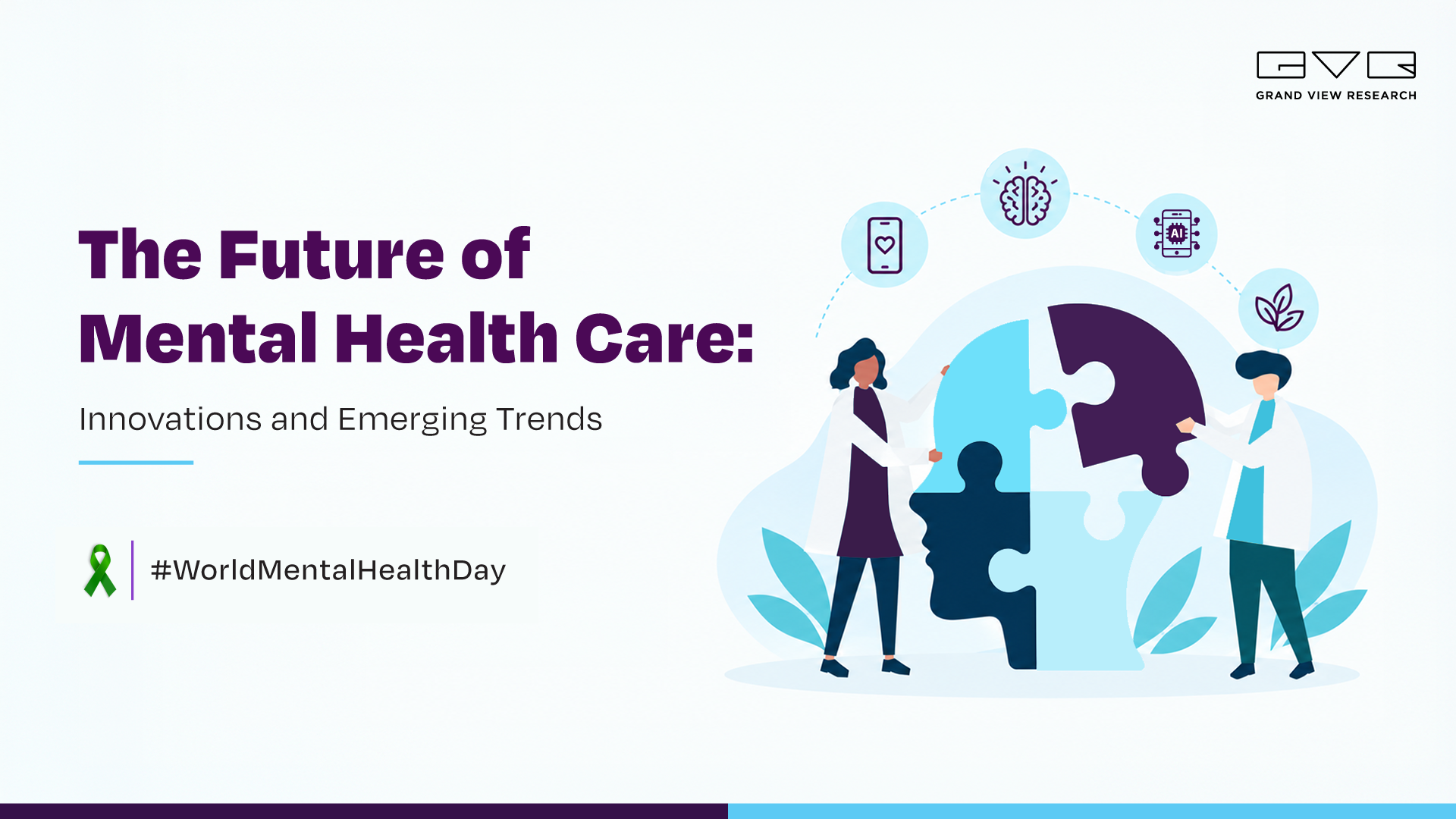
Enter digital health. What began as basic wellness logging has evolved into critical healthcare infrastructure. Driven by artificial intelligence and mobile-first delivery, digital interventions are reshaping how mental healthcare is accessed, delivered, and scaled.
The Mental Health Apps Market Reaches Institutional Scale
The mental health apps market is transitioning from consumer-facing wellness tools to integrated, clinician-backed therapeutics. Estimated to reach USD 17.52 billion by 2030, the sector's expansion reflects a fundamental shift toward decentralized behavioral care.
Three key dynamics are driving this evolution:
-
From Tracking to Targeted Intervention: Early apps focused on passive mood logs and guided meditation. Today’s platforms deliver structured Cognitive Behavioral Therapy (CBT) programs, real-time biometric tracking, and seamless telepsychiatry hand-offs.
-
Dominance of Mood & Anxiety Verticals: Software addressing depression and anxiety accounts for the largest market share, driven by high global prevalence and CBT's natural adaptability to digital delivery.
-
Payor & Employer Coverage: Health plans and enterprise wellness programs are embedding digital therapeutics directly into benefits packages. By funding these platforms, employers aim to cut long-term health claims while improving workforce retention.
AI-Powered Predictive Diagnostics Take Center Stage
The growth of AI in mental health market, expanding at a rapid 23.3% CAGR during 2026 to 2033, highlights an industry-wide push toward predictive analytics and personalized care. Rather than diagnosing conditions reactively, AI models identify mental health risks before acute episodes occur.
This continuous digital care loop relies on three main layers:
-
Digital Phenotyping & Speech Analytics: Machine learning algorithms evaluate passive data, such as typing speed variations, vocal acoustics during consultations, and wearable biometrics, to detect subtle markers of depression or mania.
-
Predictive Risk Triage: Health systems use NLP models during patient intake to automatically stratify risk. High-risk patients are flagged for immediate clinician review, while mild cases are directed toward self-guided software.
-
Public Health Conversational Agents: Global health organizations are exploring empathetic AI to broaden care access. A prime example is the WHO’s S.A.R.A.H. (Smart AI Resource Assistant for Health), designed to deliver scalable health education and basic guidance across underserved regions.
Chatbots Evolve into Front-Line Triage Tools
As conversational models advance, the chatbot-based mental health apps market has carved out a distinct role in first-line support. With specialist waiting lists extending for months, AI-driven conversational agents serve as round-the-clock supportive tools.
Crucially, these chatbots are not replacing human therapists. Instead, they act as scalable bridges:
The Care Gap Fix: While traditional in-person care offers high-touch human connection during scheduled appointments, conversational agents offer immediate 24/7 access at a fraction of the cost.
Clinical evaluations cited by public health agencies indicate that rule-based and generative CBT chatbots effectively help users manage mild-to-moderate anxiety symptoms. By offering real-time coping strategies during moments of acute stress, chatbots empower individuals to build emotional resilience before stepping into a doctor's office.
The Rise of Home-Centric Care & Prescription Digital Therapeutics
Mental health surveys such as ‘Telehealth: A quarter-trillion-dollar post-COVID-19 reality?’ and ‘How COVID-19 has changed the way US consumers think about healthcare’ highlight a permanent consumer shift toward at-home health monitoring, remote diagnostics, and virtual consultation models. Mental health delivery has proven particularly adaptable to this shift:
-
Telepsychiatry Consolidation: Virtual care has cemented its position as a primary delivery channel, expanding coverage into rural care deserts.
-
Prescription Digital Therapeutics (PDTs): Regulatory bodies, including the U.S. FDA, continue to grant clearance for prescription software (such as Rejoyn for major depressive disorder), treating app-based interventions as formal medical treatments.
-
Hybrid Model Dominance: Leading healthcare providers are deploying hybrid care models that pair automated AI tools with human clinicians, ensuring patients receive continuous support between formal therapy sessions.
What’s Next: Overcoming Ethical & Data Governance Hurdles
For digital mental health care to reach its full potential, industry leaders must address three core operational challenges:
-
Protecting Sensitive PHI: Mental health platforms collect highly personal health information (PHI). Strict compliance with global privacy standards (e.g., HIPAA, GDPR) is vital to maintaining user trust.
-
Mitigating Algorithmic Bias: AI models must be trained on diverse demographic datasets to prevent systematic bias in symptom evaluation and risk assessment. Safety protocols must immediately escalate acute crisis situations to human emergency services.
-
Establishing Clinical Standards: With thousands of wellness apps available in public app stores, regulatory bodies and health systems must establish clear clinical guidelines to separate validated digital therapeutics from unverified tools.
The Bottom Line
The future of mental health care belongs to a hybrid model. By combining the infinite scalability of artificial intelligence with the empathy of human clinicians, technology is making mental health care more proactive, personalized, and accessible worldwide.
Talk to an analyst
Tell us what you need. We reply within one working day.
Service Guarantee
-
Insured Buying
This report has a service guarantee. We stand by our report quality.
-
Confidentiality
Your transaction & personal information is safe and secure.
-
Custom research service
Design an exclusive study to serve your research needs.
-
24/5 Research support
Get your queries resolved from an industry expert.