
- Home
- »
- Healthcare IT
- »
-
AI In Mental Health Market Size & Share Report, 2026-2033GVR Report cover

AI In Mental Health Market (2026 - 2033)
Size, Share & Trends Analysis Report By Offering (Software, Services), By Technology (ML, NLP), By Disorder (Anxiety, Depression, Schizophrenia, Post-Traumatic Stress Disorder, Insomnia), By Region, And Segment Forecasts
Market Size, 2025
$1.7BMarket Estimate, 2026
$2.1BMarket Forecast, 2033
$9.1BCAGR, 2026–2033
23.3%AI In Mental Health Market Summary
The global AI in mental health market size was valued at USD 1.7 billion in 2025 and is projected to grow from USD 2.1 billion in 2026 to USD 9.1 billion by 2033, at a CAGR of 23.3% from 2026 to 2033. The market in North America dominated with a revenue share of 33.9% in 2025. The market growth is driven by factors such as the increasing prevalence of mental disorders and heightened awareness regarding mental health as a significant health concern.
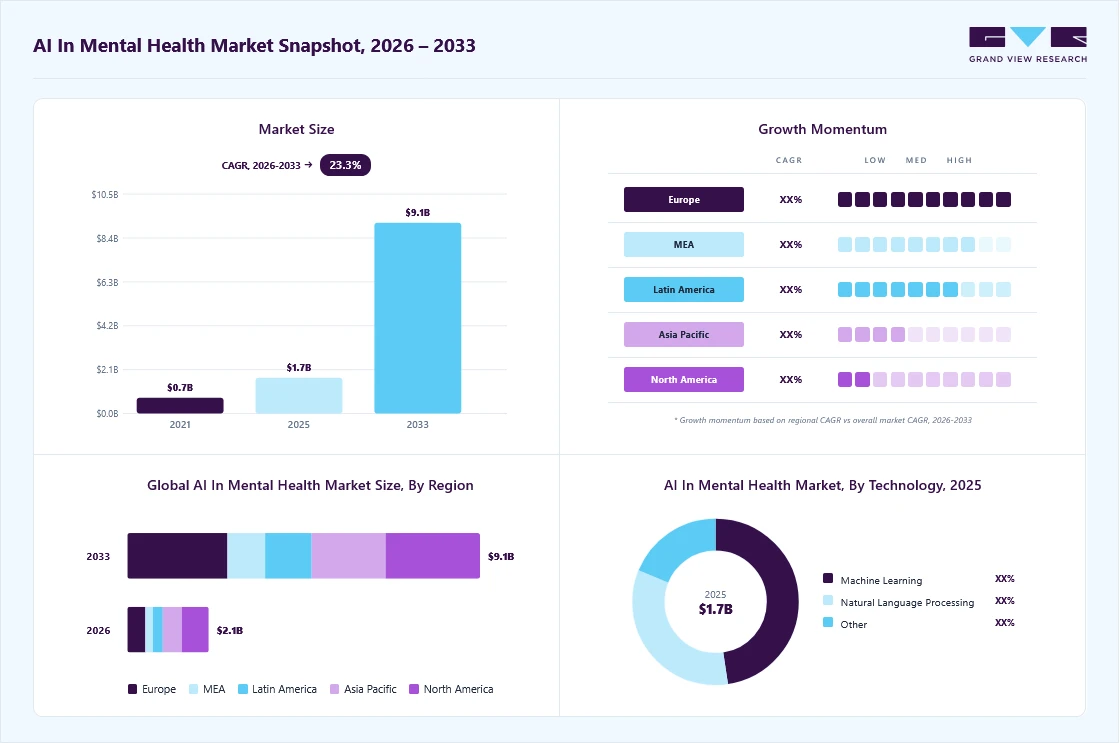 Source: Grand View Research, IR Documents, Primary Interviews, Paid DatabasesTo learn more about this report,
 Download Free Sample Report
 Key Market Trends & Insights
- By offering: Software segment held the largest market share of 75.8% in 2025.
- By technology: Machine learning segment held the largest market share of 47.0% in 2025.
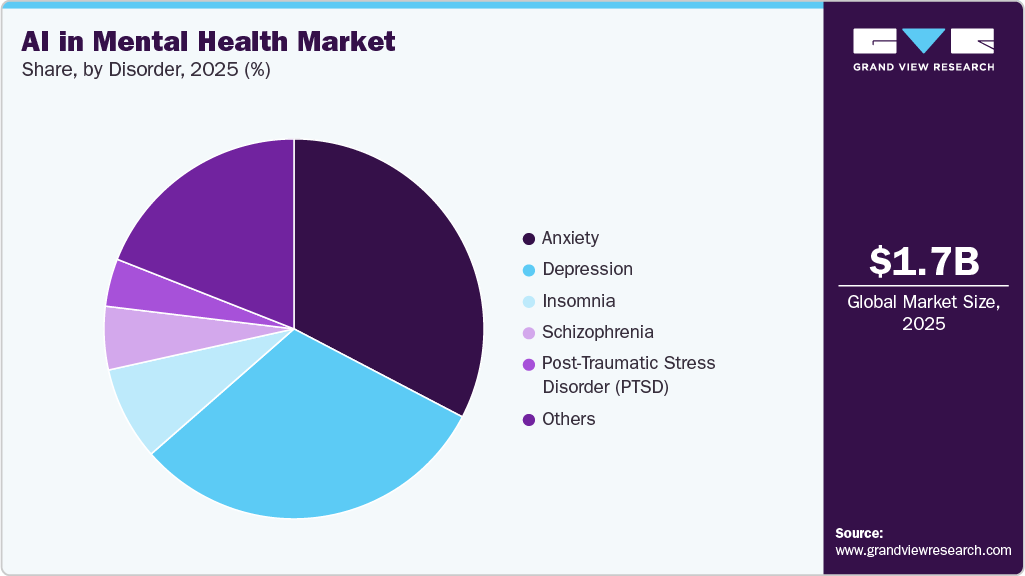
- By disorder: Anxiety segment held the largest market share of 32.1% in 2025.
Regional Highlights
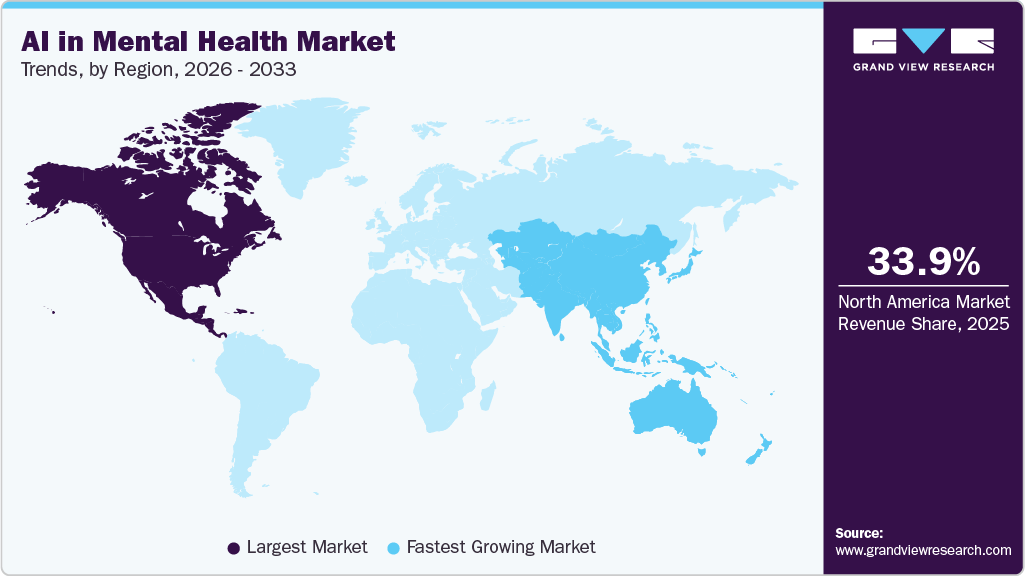
- Largest regional market: North America (33.9% revenue share, 2025)
- Fastest-growing regional market: Asia Pacific (highest CAGR, 2026-2033)
- By country: U.S. held the largest market share in 2025
Market Size & Forecast
- Market size in 2025: USD 1.7 Billion
- Estimated market size in 2026: USD 2.1 Billion
- Projected market size by 2033: USD 9.1 Billion
- CAGR (2026-2033): 23.3%
Three ways to get this report
Buy it, customize it, or ask a question.Ask an Analyst
Analyst response in 1 business day
- AccessReport author, directly
- Reply timeWithin 1 working day
- No sales callDirect answer only
- FormatEmail reply
- CostFree, no cost
Get the Full Report
What the study covers
- FormatsPDF · Excel · Dashboard
- Timeline2026–2033 annual, 2025 base
- Coverage20+ countries, 5 regions
- Companies10+ key players profiled
Customize the Report
20% free customization
- IncludeCountries, segments, points
- TailorTo your product definition
- ExtendDeeper competitor detail
- OrA fully bespoke study
- Turnaround5–10 working days
According to a June 2022 World Health Organization (WHO) report, approximately 970 million people worldwide were living with a mental disorder in 2019, with depression and anxiety being the most prevalent. These organizations are taking several steps to implement and promote AI technologies in mental health. For instance, in April 2024, the WHO launched S.A.R.A.H., a groundbreaking digital health promoter prototype. Powered by advanced generative AI, S.A.R.A.H. features an enhanced empathetic response capability. Utilizing new language models and cutting-edge technology, it provides 24/7 engagement on various health topics, accessible in 8 languages and available on any device.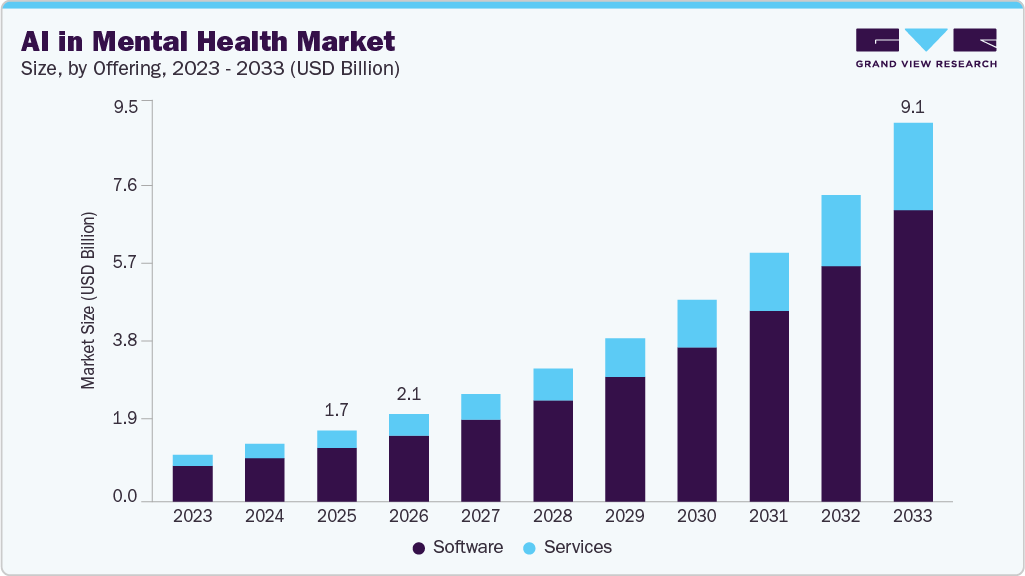 To learn more about this report, Download Free Sample Report
 Governments worldwide are increasingly recognizing the significant role of AI in advancing mental healthcare and are allocating funding to support research and development in this field. For instance, according to an article by the National Institutes of Health (NIH) published in June 2023, the National Institute of Mental Health (NIMH), a division of the US National Institutes of Health, has allocated funds for over 400 grants dedicated to research into advanced technologies such as AI and machine learning applications for mental health. Moreover, the growth of telehealth services has highlighted the need for remote mental health screening tools that can be seamlessly integrated into virtual care delivery systems.
Technological advancements in AI, including machine learning (ML) and natural language processing (NLP), have enabled the development of sophisticated tools that can diagnose, monitor, and treat mental health conditions with greater accuracy and personalization. Increased investment from venture capitalists and private equity firms has provided funding for startups and established companies to innovate and expand their offerings. Additionally, the growing acceptance of digital health solutions among healthcare providers and patients has facilitated the integration of AI technologies into everyday mental healthcare practices. These drivers collectively propel AI in the mental health market toward greater innovation, efficiency, and effectiveness in delivering accessible, personalized care.
Market Concentration & Characteristics
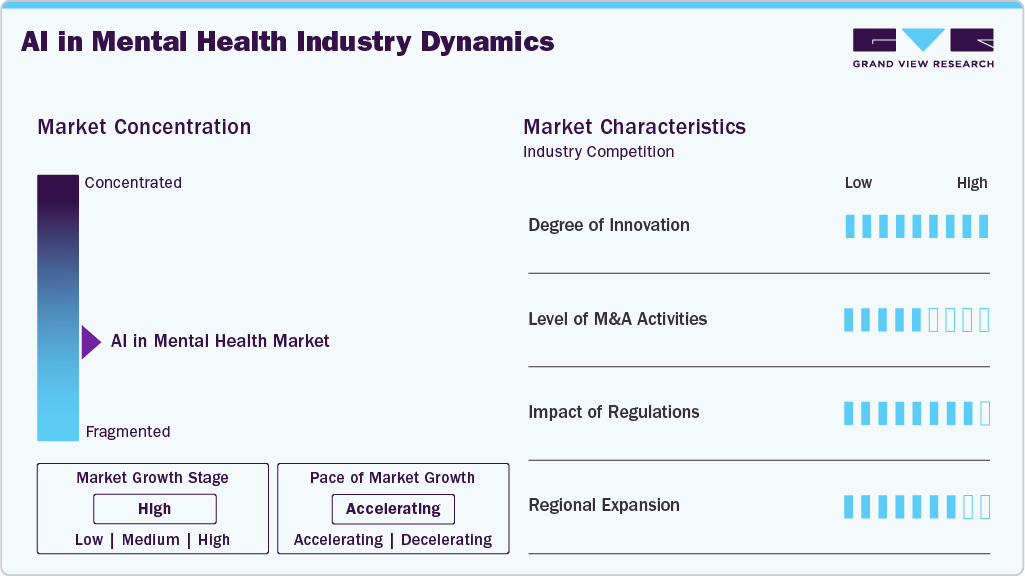
The chart below illustrates the relationship between industry concentration, characteristics, and participants. The x-axis represents the level of industry concentration, ranging from low to high. The y-axis represents various industry characteristics, including industry competition, level of partnerships & collaboration activities, degree of innovation, impact of regulations, and regional expansion. The Artificial intelligence in mental health market is fragmented, with the presence of several emerging solution providers dominating the market. The degree of innovation and the impact of regulations on the industry are high. The level of merger & acquisition activities is moderate. Moreover, the regional expansion of industry is high.
The market is characterized by a high degree of innovation, driven by the integration of advanced technologies and the emergence of numerous startups dedicated to transforming mental health care. These innovations include the development of sophisticated AI algorithms and machine learning models, such as deep learning, enhancing the accuracy of diagnoses, predicting patient outcomes, and personalize treatment plans. For instance, in October 2025, Lyra Health launched the first clinical-grade AI for mental health, combining AI with evidence-based care and strict safety protocols. Lyra AI provides 24/7 support, risk flagging, and escalation pathways, backed by a global provider network.
 To learn more about this report, Download Free Sample Report
 Key players are implementing various strategic initiatives, such as product launches and mergers and acquisitions, to strengthen their market presence. For instance, in January 2022, Headspace Health recently announced its acquisition of Sayana, an AI-based mental health and wellness company based in San Francisco. This strategic move aims to enhance Headspace Health's capacity to offer personalized self-care solutions to its users. This acquisition follows the merger of Headspace and Ginger last year, creating Headspace Health, a company now valued at USD 3 billion. The merger combined Ginger's therapy and coaching services with Headspace's expertise in mindfulness and meditation.
The FDA in the U.S. has established guidelines for AI-based tools. Regulations such as the Health Insurance Portability and Accountability Act (HIPAA) and the General Data Protection Regulation (GDPR) in Europe influence data usage and sharing. Compliance with international standards such as the International Organization for Standardization (ISO) is necessary for market access and is expected to impact product development processes.
The growth of the artificial intelligence in mental health market is propelled by significant growth and diversification across various parts of the world. North America, particularly the U.S., with robust technological infrastructure and substantial investments, has fostered the development of numerous AI-driven mental health startups. For example, companies like Woebot and Headspace Health use AI to provide real-time mental health support and personalized care, catering to a broad spectrum of mental health needs.
Case Study & Insights
Effectiveness of AI Chatbots in Providing Self-Help Depression Interventions for University Students
-
Background: Depression significantly affects the lives of many university students. Mobile-based therapy chatbots are emerging as a helpful tool for young adults dealing with depression. Previous trials often had short follow-up periods, leaving a gap in evidence for their effectiveness under pragmatic conditions.
-
Objective: The primary goal of this study was to compare the effectiveness of a therapy chatbot to bibliotherapy, a well-established self-help psychological intervention. The study aimed to provide evidence supporting chatbot therapy as a convenient, affordable, and interactive self-help method for depression.
Outcome & Highlights
-
Comparison of Interventions: This study compared a chatbot-delivered depression therapy based on cognitive behavioral therapy (CBT) principles with a minimal level of bibliotherapy over a 16-week follow-up period.
-
Therapeutic Impact: The therapy chatbot effectively reduced depression over 16 weeks and decreased anxiety within the first 4 weeks.
-
Therapeutic Alliance: A significantly stronger therapeutic alliance was achieved through chatbot-delivered therapy compared to bibliotherapy.
Offering Insights
The software segment led the artificial intelligence in mental health industry, accounting for the largest revenue share of 75.8% in 2025 and is expected to grow at the fastest CAGR from 2026 to 2033. Increased awareness about mental health issues has led to a higher demand for mental health applications. AI-powered mental health software is being increasingly integrated into telehealth platforms, providing users with easy access to mental health professionals and resources. Furthermore, the ubiquity of smartphones and internet access allows AI-driven mental health apps to reach a broad audience, including those in remote or underserved areas. For instance, in April 2024, Fortis Healthcare launched an AI-powered application to assist individuals with mental health issues. The app includes a self-assessment tool that utilizes AI to provide personalized assessments to users.
Technology Insights
The machine learning segment led the artificial intelligence in mental health market, with the largest share of 47.0% in 2025. The rise of telehealth and digital health platforms has accelerated the integration of ML technologies, as these platforms utilize ML to enhance user experiences through personalized recommendations and automated support. For instance, apps such as Woebot use natural language processing and ML to engage users in therapeutic conversations, offering real-time mental health support and interventions. Such factors are expected to drive the segment growth over the forecast period.
The Natural Language Processing (NLP) segment is expected to grow at the fastest CAGR during the forecast period. NLP-powered applications make mental health support more accessible and convenient. Users can interact with chatbots or virtual assistants at any time, from anywhere, thereby reducing barriers to seeking help. NLP algorithms can handle a large volume of user interactions simultaneously, making them highly scalable. This scalability allows mental health providers to reach a broader audience and deliver timely support efficiently. The establishment of regulatory guidelines and standards fosters trust and confidence in NLP-based interventions among stakeholders. Such factors are collaboratively driving the segment growth over the forecast period.
Disorder Insights
The anxiety segment led the artificial intelligence in mental health industry, accounting for the largest share of 32.1% in 2025. The rising incidence of anxiety disorders worldwide has led to a greater demand for accessible and effective mental health care solutions. According to the Anxiety & Depression Association of America (ADAA), October 2025 insights, anxiety disorders impact around 31.9% of adolescents aged between 13 and 18 years old. Similarly, according to the data published in the PubMed Central Journal in September 2023, generalized anxiety disorder (GAD) affects 6.8 million adults in the U.S.
AI offers scalable and personalized interventions that can reach a larger population, addressing the growing need for anxiety disorder management. Moreover, AI technologies are being increasingly integrated into existing mental health services, including therapy platforms, mobile apps, and virtual assistants.
 To learn more about this report, Download Free Sample Report
 The schizophrenia disorder segment is expected to grow at the fastest CAGR from 2026 to 2033. AI technologies are significantly enhancing the early diagnosis and treatment of schizophrenia, a condition often challenging to detect in its initial stages. For instance, AI algorithms can analyze patterns in speech and behavior that are indicative of schizophrenia, providing early warning signs that human clinicians might otherwise miss. In addition, virtual reality (VR) therapies integrated with AI are being used to create immersive environments that help patients manage symptoms and practice social skills. The combination of these advancements improves patient outcomes, reduces the overall cost of care, and makes treatment more accessible. Consequently, the incorporation of AI in managing schizophrenia is driving significant growth of this segment.
Regional Insights
The North America artificial intelligence in mental health market accounted for the largest revenue share of 33.9% in 2025. Technological advancements and robust healthcare infrastructure support the rapid integration of AI solutions into mental health services. For instance, platforms such as Talkspace and BetterHelp have leveraged AI to improve patient-therapist matching and enhance therapy outcomes. In addition, substantial investment in mental health startups and favorable government policies promoting mental health care innovation are propelling market expansion.
 To learn more about this report, Download Free Sample Report
 U.S. Artificial Intelligence in Mental Health Market Trends
Artificial intelligence in mental health industry in the U.S. held the largest revenue share in 2025. This is attributed to the increasing prevalence of mental health disorders, which is increasing the demand for more accessible and efficient mental health care solutions. According to the Mental Health America, it is estimated that over one in five U.S. adults lives with a mental disorder every year. Furthermore, investment in mental health startups is also on the rise, reflecting confidence in the potential of AI to transform this sector. These factors collectively contribute to the robust growth of the U.S. market.
Europe Artificial Intelligence in Mental Health Market Trends
The Europe artificial intelligence in mental health industry is expected to grow significantly from 2026 to 2033. This is attributed to the support of government initiatives and increased awareness of mental health issues. For instance, in December 2025, the NHS Confederation and AI specialist Limbic launched a partnership to explore the potential of AI in transforming mental health services. The initiative is anticipated to assess AI adoption, review existing tools, identify barriers and opportunities, and provide practical guidance for the safe and effective implementation of AI, aiming to improve patient access and reduce clinician workload.
“We know that AI has enormous potential to scale mental healthcare, but realising that potential requires collaboration, evidence, and a problem-first approach. Our partnership with the NHS Confederation positions us at the heart of this critical conversation, helping shape how clinical AI can genuinely improve outcomes for patients and clinicians alike.”
-Ross Harper, CEO & Founder at Limbic,
“Mental health services are under enormous pressure, and AI offers tangible solutions, but only when implemented safely and effectively. We’re delighted to partner with the NHS Confederation’s Mental Health Network to ensure mental health leaders have the practical guidance and evidence they need to deploy clinical AI confidently and responsibly.”
The UK Artificial intelligence in mental health market held the largest market share in 2025. This is attributed to the growing adoption of mental health apps, government initiatives, and the proliferation of AI technologies in mental health. For instance, in March 2024, The UK’s National Health Service (NHS) introduced a chatbot named Wysa to support adults and teens dealing with anxiety, stress, and depression. This initiative also benefits those on waitlists for therapy.
The artificial intelligence in mental health market in Germany is expected to grow lucrative in the coming years. This is attributed to the rising prevalence of mental disorders in the country. For instance, in 2024, 40.9% adults were diagnosed with a mental disorder in Germany. Moreover, increasing investments in healthcare technology, supported by the growing adoption of artificial intelligence in disease diagnosis and patient care, are some other factors contributing to market growth.
Asia Pacific Artificial Intelligence in Mental Health Market Trends
The Asia Pacific artificial intelligence in mental health industry is rapidly expanding, particularly in countries such as China and India, due to the high demand for mental health services and the growing adoption of AI technologies. For instance, China's Xiaobing, an AI chatbot, provides emotional support and counseling to millions of users. Additionally, India’s Wysa utilizes AI to provide mental health support through an app that has gained widespread acceptance.
Similarly, in October 2025, Solh Wellness launched Streffie, India’s first AI-based stress monitoring kiosk, at the Indian Mobile Congress 2025. Streffie utilizes AI-driven facial biomarker analysis to capture 68 micro-expressions and facial points, allowing for real-time assessment of stress levels. The kiosk is integrated with Solh’s ecosystem, including the Solh App, Smart AI Dashboard, and REACH AI framework, providing preventive, personalized, and scalable stress management solutions for healthcare systems, universities, and corporate organizations.
“AI and mental health share a quiet but powerful intersection. AI helps us measure what was once invisible - the subtle weight of stress, the early signs of strain. But data alone can’t heal; empathy does. The real revolution begins when AI meets compassion - that’s where transformation truly happens.”
-Kapil Gupta, Co-Founder & CEO of Solh Wellness
The artificial intelligence in mental health market in Japan is expected to experience significant growth from 2026 to 2033. This is attributed to the growing aging population and the associated increase in mental health disorders such as depression and dementia. Japan's strong technological infrastructure and culture of innovation have fostered a conducive environment for the development and adoption of AI-based mental health solutions. With increasing awareness and acceptance of mental health issues in Japan, coupled with the government's initiatives to promote digital health technologies, the market for Artificial intelligence in mental health is poised for continued expansion in the Japanese segment.
The China artificial intelligence in mental health market is expected to grow from 2026 to 2033. There is a significant increase in mental health awareness and the demand for mental health services, partly due to the societal impacts of rapid urbanization and the stress associated with high-paced living. The Chinese government has been actively promoting mental health initiatives and integrating mental health care into the national healthcare system. China's robust technological infrastructure and investment in AI research and development provide a strong foundation for innovation in this sector. Companies such as Ping An Good Doctor and WeDoctor are leveraging AI to offer online mental health consultations, making mental health services more accessible to a broader population.
Latin America Artificial Intelligence in Mental Health Market Trends
The Latin America artificial intelligence in mental health industry is driven by rising urbanization, increasing psychiatric disorders, and growing mental health awareness in countries such as Brazil and Argentina. Moreover, due to persistent shortages of mental health professionals, there is a demand for scalable, accessible solutions. AI-driven teletherapy, chatbots, and digital counseling platforms address this by extending mental health services to underserved populations. Advancements in mobile apps, telepsychiatry, and cloud-based records support diagnosis, personalized treatment, and coordinated care, aiding healthcare professionals.
Middle East and Africa Artificial Intelligence in Mental Health Market Trends
The Middle East and Africa AI in mental health industry is driven by increasing government investment in healthcare infrastructure, including the expansion of mental health facilities and integration into primary care. Rising awareness of mental health disorders, coupled with a shortage of trained professionals, fuels demand for scalable digital solutions such as telepsychiatry, mobile apps, and AI-powered chatbots.
Moreover, technological advancements, including mobile health apps and telemedicine, are enhancing diagnosis, treatment, and monitoring, further supporting market growth. For instance, in August 2025, Eden AI, a South African startup, launched BlossomCare, an AI-powered mental health companion for stigmatised women in Africa, including sex workers and pregnant teens. BlossomCare offers confidential, 24/7 emotional support via WhatsApp in English, Yoruba, or Pidgin, with referrals to psychologists, peer groups, and legal aid. The platform combines large language models with community-based outreach to ensure accessible, private, and stigma-free care for vulnerable women.
Key AI In Mental Health Company Insights
Key players operating in the Artificial intelligence in mental health market are undertaking various initiatives to strengthen their market presence and increase the reach of their products and services. Strategies such as new product launches and partnerships are playing a key role in propelling the market growth.
Key AI In Mental Health Companies:
The following are the leading companies in the AI in mental health market. These companies collectively hold the largest market share and dictate industry trends.
- Wysa Ltd
- Woebot Health
- Spring Care, Inc.
- Lyra Health, Inc.
- Syra Health
- Limbic
- Kintsugi Mindful Wellness, Inc
- Aiberry
- Ellipsis Health
- HEADSPACE HEALTH
Recent Developments
-
In November 2025, Mentavi Health unveiled Mentavi Concierge, an AI-backed mental health platform that combines advanced conversational AI with licensed clinicians, embedded safety protocols, mood tracking, and human-in-the-loop review.
-
In September 2025, AIIMS Delhi launched the AI-powered "Never Alone" app to support student mental health, offering 24/7 screening, intervention, and follow-up via a secure, web-based platform accessible through WhatsApp.
-
In September 2025, Rocket Health launched an AI-powered voice journal app for mental wellness, featuring a voice-first interface with “Rant Mode” for free expression and structured check-in prompts for self-reflection. The AI tracks mood patterns and offers gentle insights, complementing therapy and supporting emotional well-being.
-
In August 2025, the University of Houston launched Wayhaven, an AI-driven wellness coach, to complement on-campus mental health services and provide free, 24/7 support to students.
-
In July 2025, Slingshot AI launched Ash, a generative AI mental health therapy chatbot designed specifically for psychological support. Ash is built on a specialized foundation model for psychology, trained using diverse behavioral health data and evidence-based therapeutic approaches like CBT, DBT, ACT, and psychodynamic therapy.
AI In Mental Health Market Report Scope
Report Attribute
Details
Market size in 2025
USD 1.7 billion
Estimated market size in 2026
USD 2.1 billion
Projected market size by 2033
USD 9.1 billion
Growth rate
CAGR of 23.3% from 2026 to 2033
Actual data
2021 - 2025
Forecast period
2026 - 2033
Quantitative units
Revenue in USD million/billion and CAGR from 2026 to 2033
Report coverage
Revenue forecast, company ranking, competitive landscape, growth factors, and trends
Segments covered
Offering, technology, disorder, region
Regional scope
North America; Europe; Asia Pacific; Latin America; MEA
Country scope
U.S.; Canada; Mexico; Germany; UK; France; Italy; Spain; Denmark; Sweden; Norway; China; Japan; India; South Korea; Australia; Thailand; Brazil; Argentina; South Africa; Saudi Arabia; UAE; Kuwait
Key companies profiled
Wysa Ltd; Woebot Health; Spring Care, Inc.; Lyra Health, Inc.; Syra Health; Limbic; Kintsugi Mindful Wellness, Inc.; Aiberry; Ellipsis Health; HEADSPACE HEALTH
Customization scope
Free report customization (equivalent up to 8 analysts working days) with purchase. Addition or alteration to country, regional & segment scope.
Pricing and purchase options
Avail customized purchase options to meet your exact research needs. Explore purchase options
Global AI In Mental Health Market Report Segmentation
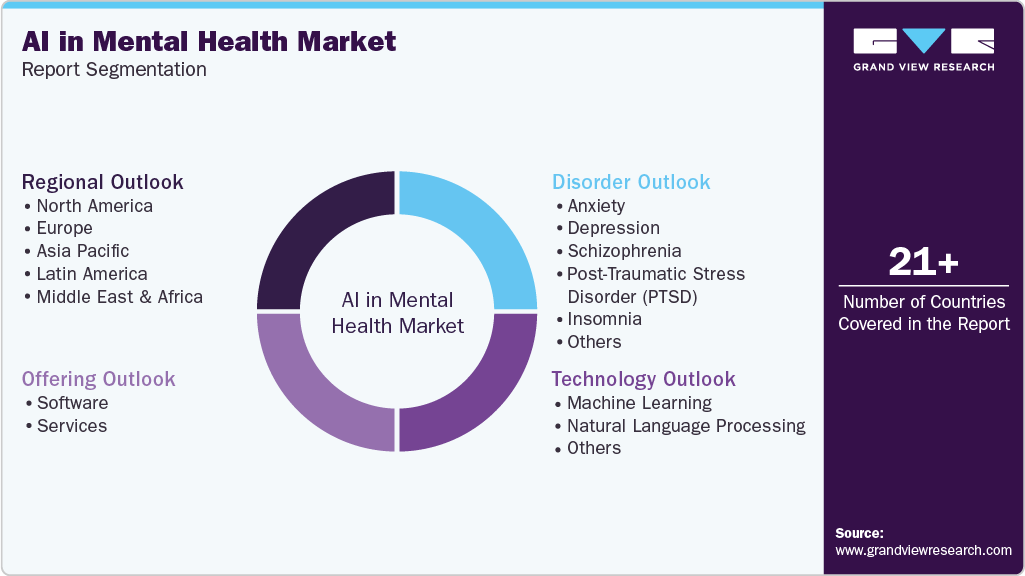
This report forecasts revenue growth at the global, regional, and country levels and provides an analysis of the latest industry trends in each of the sub-segments from 2021 to 2033. For this study, Grand View Research has segmented the global AI in mental health market report based on offering, technology, disorder, and region:
 To learn more about this report, Download Free Sample Report
 -
Offering Outlook (Revenue, USD Million, 2021 - 2033)
-
Software
-
Services
-
-
Technology Outlook (Revenue, USD Million, 2021 - 2033)
-
Machine Learning
-
Deep learning
-
Others
-
-
Natural Language Processing
-
Text Analytics
-
Speech Analytics
-
Smart Assistance
-
Others
-
-
Others
-
-
Disorder Outlook (Revenue, USD Million, 2021 - 2033)
-
Anxiety
-
Depression
-
Schizophrenia
-
Post-Traumatic Stress Disorder (PTSD)
-
Insomnia
-
Others
-
-
Regional Outlook (Revenue, USD Million, 2021 - 2033)
-
North America
-
U.S.
-
Canada
-
Mexico
-
-
Europe
-
Germany
-
UK
-
France
-
Italy
-
Spain
-
Denmark
-
Sweden
-
Norway
-
-
Asia Pacific
-
China
-
Japan
-
India
-
South Korea
-
Australia
-
Thailand
-
-
Latin America
-
Brazil
-
Argentina
-
-
MEA
-
South Africa
-
Saudi Arabia
-
UAE
-
Kuwait
-
-
Frequently Asked Questions About This Report
North America dominated with a 33.9% revenue share in 2025.
Key factors driving the market growth include increasing mental health issues, continuous advancements in AI and machine learning technologies, growing smartphone and internet penetration, and rising government initiatives to support mental health worldwide.
Asia Pacific is the fastest-growing region over the forecast period.
Software held the largest share (over 75.8%) in 2025 and is the fastest-growing.
Machine learning held the largest revenue share 47.0% in 2025, while Natural Language Processing (NLP) is the fastest-growing segment.
Anxiety segment led with a 32.1% revenue share in 2025, while schizophrenia disorder is the fastest-growing area.
The global AI in mental health market size was valued at USD 1.7 billion in 2025 and is estimated at USD 2.1 billion for 2026.
The global AI in mental health market is expected to grow at a CAGR of 23.3% from 2026 to 2033, reaching USD 9.1 billion.
Key players include Wysa Ltd; Woebot Health; Spring Care, Inc.; Lyra Health, Inc.; Syra Health; Limbic; Kintsugi Mindful Wellness, Inc.; Aiberry; Ellipsis Health; HEADSPACE HEALTH
About the Author(s)
Healthcare IT Research Team
Healthcare · Healthcare ITThis report was authored by the healthcare it research team at Grand View Research - comprising two research analysts, one senior research analyst, and one industry expert - with specialized expertise in the healthcare it segment of the healthcare industry. All findings are based on proprietary healthcare databases, executive interviews, and regulatory analysis, subject to internal peer review prior to publication.
Last Updated:
Speak to Analyst

Customize this report to your needs - add regions, segments, or data points, with 20% free customization.
Or view our licence options:


ISO 9001:2015 & 27001:2022 Certified
We are GDPR and CCPA compliant! Your transaction & personal information is safe and secure. For more details, please read our privacy policy.


