
- Home
- »
- Biotechnology
- »
-
3D Cell Culture Hydrogels Market Size & Share Report, 2033GVR Report cover

3D Cell Culture Hydrogels Market (2026 - 2033)
Size, Share & Trends Analysis Report By Type (Natural Hydrogels, Synthetic Hydrogels), By Application, By End Use (Academic & Research Institutes, Pharmaceutical & Biotechnology Companies), By Region, And Segment Forecasts
Market Size, 2025
$385.5MMarket Estimate, 2026
$422.1MMarket Forecast, 2033
$817.3MCAGR, 2026–2033
9.9%3D Cell Culture Hydrogels Market Summary
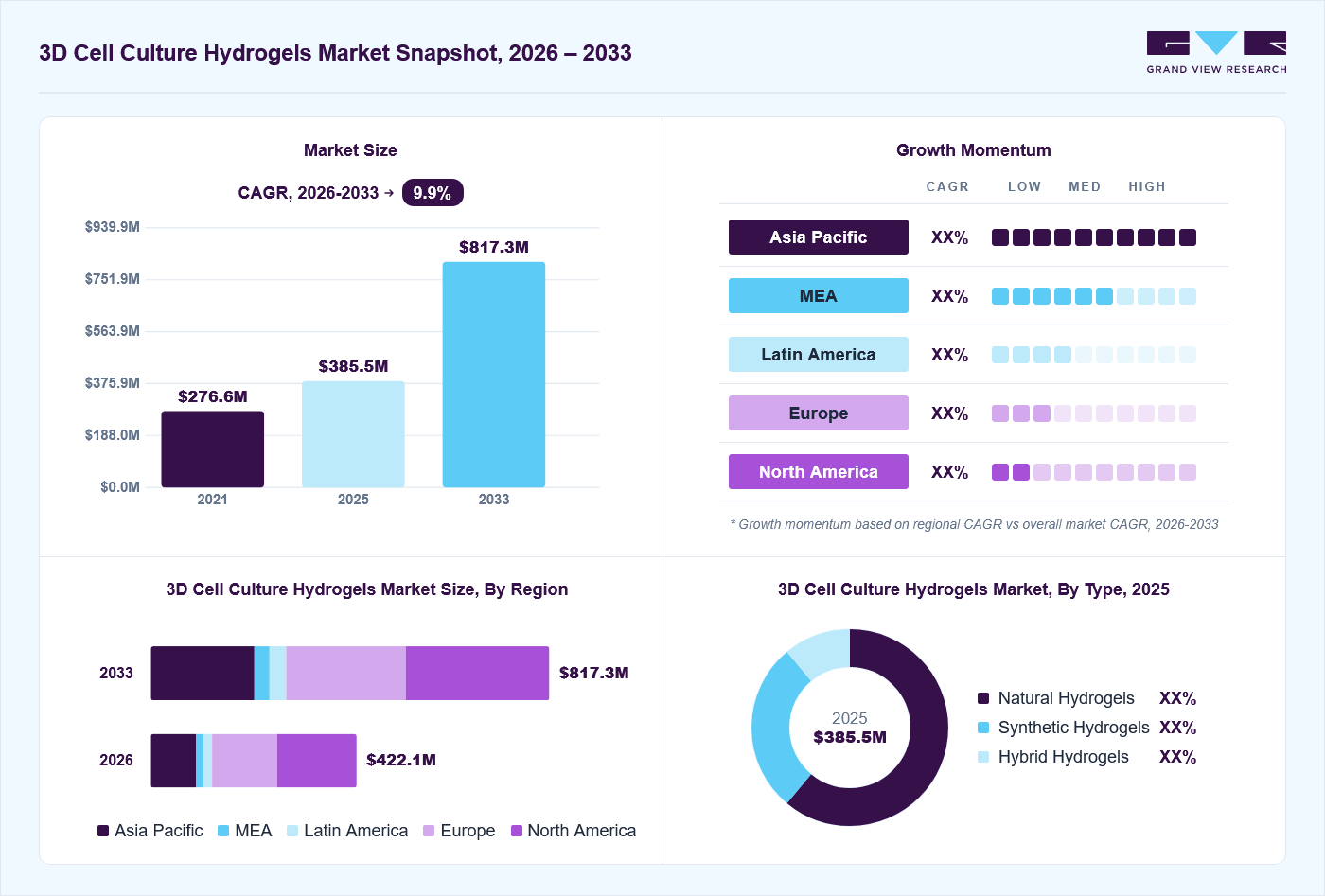
The global 3d cell culture hydrogels market size was valued at USD 385.5 million in 2025 and is projected to grow from USD 422.1 million in 2026 to USD 817.3 million by 2033, at a CAGR of 9.9% from 2026 to 2033. The market in North America dominated with a revenue share of 38.9% in 2025. The market growth is driven by increasing adoption of 3D cell culture models, growing demand for physiologically relevant and reproducible in vitro systems, and expanding applications of 3D cell culture hydrogels in organoid research, cancer research, drug discovery, toxicology testing, and tissue engineering.
 Source: Grand View Research, IR Documents, Primary Interviews, Paid DatabasesTo learn more about this report,
 Download Free Sample Report
Key Market Trends & Insights
- By type: Natural hydrogels segment held the largest market share of 61.0% in 2025.
- By application: Organoid & stem cell research segment held the largest market share of 34.2% in 2025.
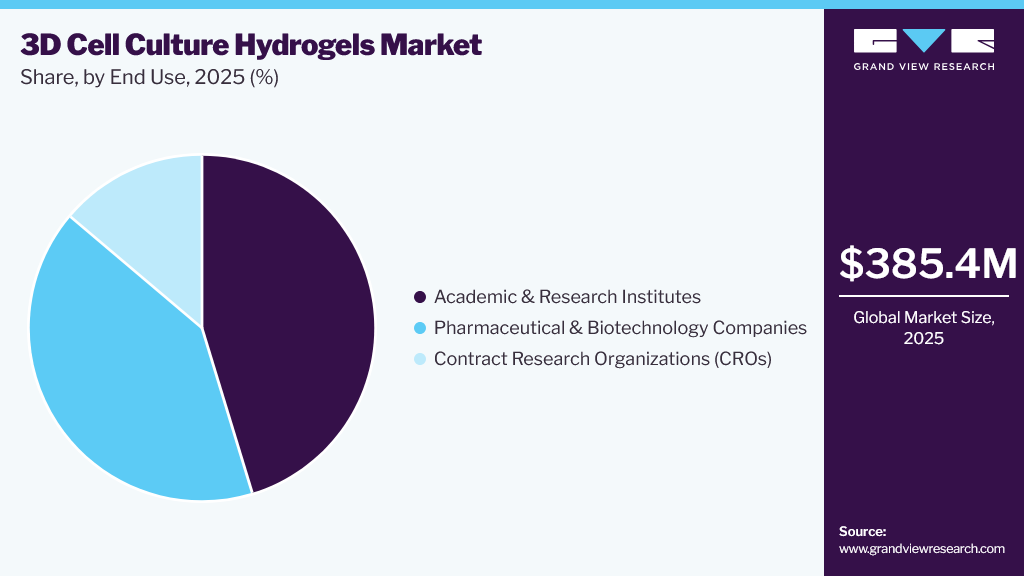
- By end use: Academic & research institutes segment held the largest market share of 45.3% in 2025.
Regional Highlights
- Largest regional market: North America (38.9% revenue share, 2025)
- Fastest-growing regional market: Asia Pacific (highest CAGR, 2026-2033)
- By country: The U.S. held the largest market share in 2025
Market Size & Forecast
- Market size in 2025: USD 385.5 Million
- Estimated market size in 2026: USD 422.1 Million
- Projected market size by 2033: USD 817.3 Million
- CAGR (2026-2033): 9.9%
Prism AI by Grand View Research Free to tryAsk a question about the 3D cell culture hydrogels marketTry asking✓Every figure cited from GVR research Prefer the report? Download free sample →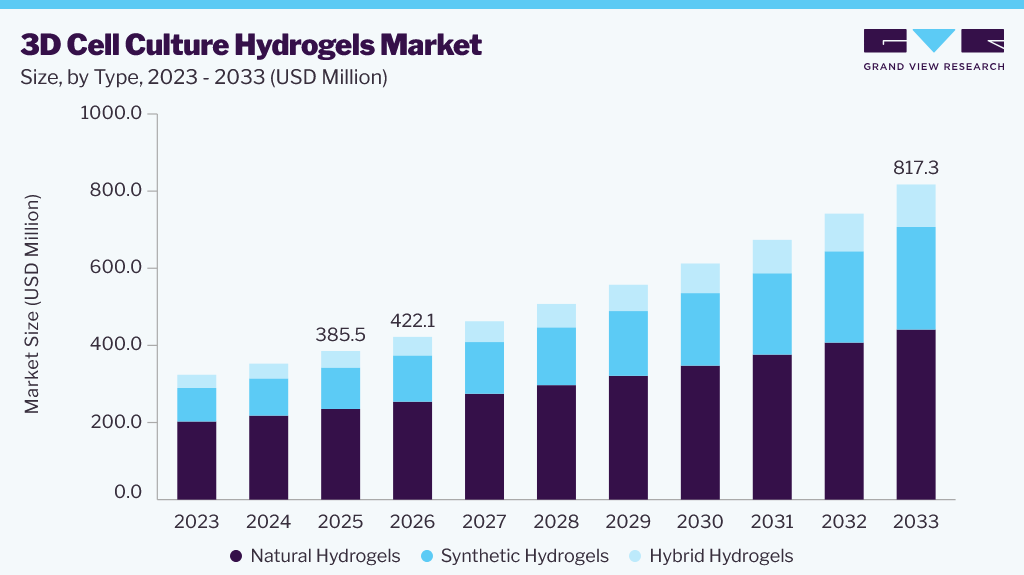 To learn more about this report, Download Free Sample Report
Market Dynamics
The 3D cell culture hydrogels industry is witnessing significant growth, driven by increasing demand for physiologically relevant and reproducible 3D cell culture models across organoid research, cancer research, drug discovery, toxicology testing, and tissue engineering. Growing adoption of advanced hydrogel systems is enabling the development of more controlled extracellular matrix environments, supporting cell growth, differentiation, proliferation, and tissue-specific functionality with greater consistency and scalability. In addition, expanding use of hydrogel-based 3D models for drug screening, disease modeling, biomarker discovery, and regenerative medicine is supporting market growth.
Increasing adoption of hydrogels for physiologically relevant 3D cell culture is driving the 3D cell culture hydrogel market by increasing demand for matrices that better replicate the extracellular environment and support complex cell models. Hydrogels are used to develop organoids and other 3D models for drug discovery, precision medicine, and cell therapy applications. For instance, in April 2024, Sartorius and TheWell Bioscience entered into a partnership to further develop and commercialize animal-free hydrogels and bioinks for 3D advanced cell models. The collaboration focused on supporting more human-relevant organoid models for drug discovery and expanding access to hydrogel-based 3D cell culture solutions.
In addition, the adoption of 3D culture is also supported by its ability to more closely reproduce the tissue environment than conventional 2D systems. 3D models allow cells to organize in three dimensions and maintain more representative cell–cell and cell–ECM interactions, improving their relevance for drug screening and disease modelling. A comparison of 2D and 3D culture systems highlights differences in tissue structure, physiological relevance, drug-response modelling, and scalability. The key differences are presented below.
Comparison of 2D and 3D cell culture systems
Feature
2D Cell Culture
Spheroids
3D Tissue Models
Structure
Flat, monolayer of cells
Spherical aggregates
Tissue-like architecture
Physiological relevance
Limited; lacks 3D architecture and ECM signaling
Improved; captures basic nutrient and oxygen gradients
High; reproduces tissue-specific microenvironments, stiffness, and signaling dynamics
Predictive accuracy
Poor; limited translational relevance
High; improved modelling of in vivo gradients
Excellent; closely replicates native tissue structure and function
Drug resistance modelling
Poor; lacks physiological diffusion barriers
Moderate; partial replication of in vivo drug gradients
Excellent; mimics cell–cell and ECM interactions influencing drug penetration and metabolism
Scalability
High; compatible with automation and screening platforms
High; suitable for medium-throughput assays
Moderate; requires specialized systems but offers enhanced reproducibility
Source: CELLINK, Secondary Research, Grand View Research Analysis
Batch-to-batch variability and reproducibility challenges may restrain the 3D cell culture hydrogel market, particularly when natural or biologically derived hydrogels are used for organoid and advanced cell culture applications. Variations in hydrogel composition and mechanical properties can affect cell growth, morphology, and experimental outcomes, increasing the need for material characterization and quality control. According to an article published in Biomedical Materials in May 2025, animal and tumor-derived extracellular matrix materials used in organoid cultures can show batch variability and uncertain composition, which can hinder reproducibility. These limitations may encourage researchers to seek more standardized hydrogel formulations.
The increasing adoption of additive manufacturing for hydrogel fabrication is creating opportunities for the 3D cell culture hydrogel market by enabling more precise and reproducible fabrication of hydrogel-based culture systems. According to an article published in Advances in Colloid and Interface Science in June 2024, additive manufacturing has enabled the development of complex 3D/4D hydrogels with improved reproducibility, accuracy, and precision, while hydrogel-based additive manufacturing is being used to design biomimicking 3D cell cultures.
Market Concentration & Characteristics
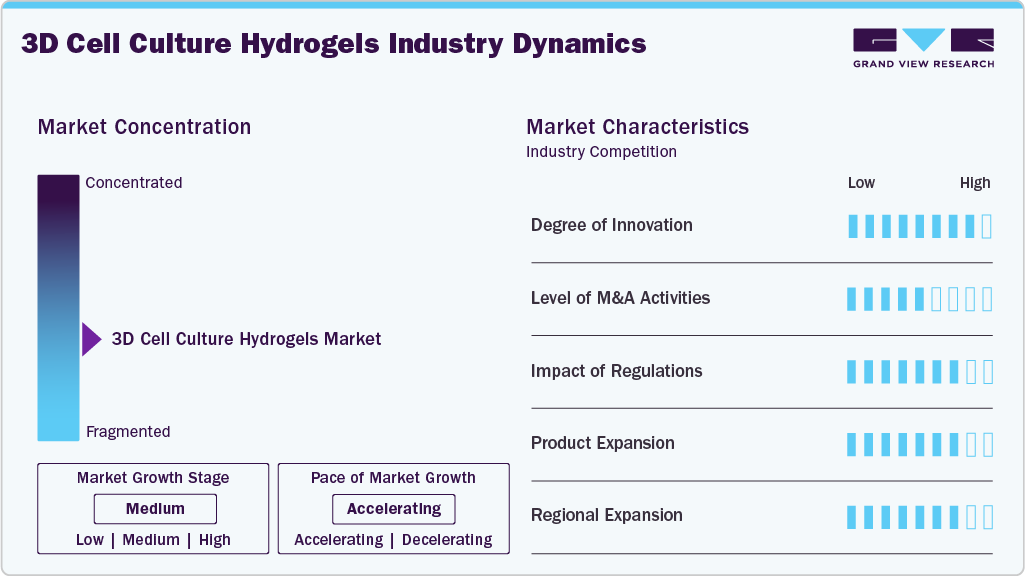
The degree of innovation in the 3D cell culture hydrogels market is high, driven by advances in biomimetic hydrogel design, tunable mechanical properties, controlled porosity and degradability, and functional modifications for improved cellular interactions. According to an article published in Polymers for Advanced Technologies in June 2026, recent advances in hydrogel engineering have enabled the development of physiologically relevant 3D culture environments capable of supporting complex cellular structures, including spheroids and organoids. These developments improve control over cellular behavior and enhance the biological relevance of 3D models, supporting applications in disease modeling, drug screening, and regenerative medicine.
The 3D cell culture hydrogels market is witnessing moderate M&A activity, as companies seek to strengthen their capabilities in advanced three-dimensional cell culture technologies. For instance, in December 2024, Merck acquired HUB Organoids Holding B.V., a company specializing in organoid technology and in-vitro cell culture models. The acquisition expanded Merck’s Life Science portfolio by adding HUB’s organoid technology and patent portfolio, supporting the development and application of advanced 3D cell culture models for drug development and disease research.
 To learn more about this report, Download Free Sample Report
“The use of organoids offers tremendous potential to improve the drug discovery process. HUB’s advanced technology, combined with our cell culture expertise and broad portfolio, makes us a valuable resource for researchers looking to leverage the power of 3D cell culture to understand the impact of drug response earlier in the development process.”
-Jean-Charles Wirth, Head of Science & Lab Solutions for the Life Science business of Merck KGaA, Darmstadt, Germany.
The 3D cell culture hydrogels market is increasingly influenced by regulatory guidelines encouraging the use of human-relevant alternatives to traditional animal testing. For instance, in April 2025, the U.S. FDA announced initiatives to promote New Approach Methodologies, including organoid-based testing, in drug development. The initiative encourages the consideration of data generated using human-relevant laboratory models and supports the development of alternative testing approaches. This regulatory direction is expected to support the adoption of hydrogel-based 3D culture systems used to develop organoids and other physiologically relevant models for drug safety and efficacy evaluation.
The 3D cell culture hydrogels industry is witnessing product expansion by the introduction of biomimetic hydrogel formulations for advanced three-dimensional cell culture. For instance, in May 2026, Kraken Regen launched Kraken Collagen Hydrogel, a Type I atelocollagen hydrogel designed for 3D cell culture and extrusion-based applications. The hydrogel supports direct cell encapsulation and natural fibrillogenesis, enabling the development of high-resolution 3D tissue constructs. The product expands hydrogel-based options for organoid development, tissue engineering, and other 3D biosystems applications.
“Our team has developed a high-performance, natural collagen hydrogel for researchers who no longer need to make trade-offs between biological relevance, long-term stability, and printability. Supported with extensive benchmark testing, Kraken Collagen Hydrogel outperforms the market-leaders, offering excellent shape fidelity and stiffness that cells thrive in. We’ve achieved an optimum balance in our hydrogel formulation to be able to address the needs of the Regenerative Medicine research market”
-Vanessa Worsfold, Head of Technology, Kraken Regen
The 3D cell culture hydrogels market is witnessing regional expansion as companies broaden the geographic availability of advanced 3D culture technologies. For instance, in February 2025, Gelomics announced an exclusive distribution partnership with Voden Medical in Italy, effective January 2025, to expand access to its 3D cell culture technologies in the Italian market. The expansion strengthened Gelomics’ presence in Europe and increased the availability of its 3D culture solutions to researchers and institutions across Italy, supporting broader adoption of advanced 3D cell culture technologies.
“At Gelomics, we believe that groundbreaking science thrives on strong partnerships. Collaborating with Voden Medical allows us to bring our transformative 3D cell culture technologies to the forefront of Italy’s world-class biomedical research landscape. Together, we’re not just delivering innovative tools; we’re fostering a new era of discovery that redefines how drugs are developed and human biology is understood.”
- Dr Christoph Meinert, CEO of Gelomics.
Analyst Perspective
The 3D cell culture hydrogels market is expected to witness moderate growth, supported by the increasing need for more controllable and biologically representative environments for advanced cell-based research. As researchers seek greater consistency in modeling complex cellular behavior, demand is expected to shift toward hydrogel systems offering precise control over matrix properties, cell interactions, and culture conditions. Growing emphasis on reproducibility and standardized experimental workflows is also encouraging the development of defined and customizable hydrogel platforms. Market participants are increasingly focusing on improving material performance, simplifying integration into existing research workflows, and developing application-specific solutions to support broader adoption of 3D cell culture technologies.Type Insights
Type Insights
The natural hydrogels segment accounted for the largest revenue share, over 61.0% in 2025, supported by increasing adoption of biomimetic 3D cell culture models and growing use of extracellular matrix (ECM)-derived materials for cancer and drug discovery research. For instance, in January 2025, AMSBIO launched MatriMix for PDX, a defined ECM hydrogel comprising collagen type I, laminin-511 E8 fragments, and hyaluronic acid for culturing patient-derived cancer cells in xenograft models. Moreover, this development highlights the increasing use of natural hydrogels for reproducible 3D cell culture and cancer research applications.
The hybrid hydrogels segment is expected to register the fastest CAGR during 2026-2033, driven by increasing demand for 3D culture matrices that combine the biological activity of natural materials with the tunability of synthetic polymers. Hybrid hydrogels can provide controlled mechanical properties while supporting cell adhesion, proliferation, and three-dimensional organization. For instance, according to an article published in Macromolecular Research in February 2025, researchers developed ionically crosslinked biohybrid gelatin PEG hydrogels for 3D cell culture. The hybrid matrix supported MCF-7 cell viability and spheroid formation while enabling recovery of encapsulated cells for downstream analysis. Moreover, this development highlights the use of hybrid hydrogels as 3D cell culture matrices.
Application Insights
The organoid & stem cell research segment dominated the market with a share of 34.2% in 2025, supported by increasing use of organoids for disease modeling and drug evaluation and growing research on stem cell differentiation and tissue development. Hydrogels provide a three-dimensional support matrix that enables researchers to control cell organization and interactions during organoid formation and stem cell culture. According to an article published in Chemical Science in August 2026, researchers reviewed hydrogel nanofiber-based 3D cell cultures and organoids, highlighting their applications in stem cell engineering, organoid development, and disease modeling. Moreover, the research highlights continued development of hydrogel-based platforms for improving the structural and functional characteristics of organoids and stem cell cultures.
The drug discovery & toxicology testing segment is expected to register the fastest CAGR during 2026-2033, driven by increasing demand for physiologically relevant models for evaluating drug efficacy, safety, and toxicity and growing adoption of 3D cell culture systems in preclinical research. Hydrogel-based 3D models provide a controlled cellular environment that can better reproduce tissue architecture and cell–matrix interactions, enabling more reliable assessment of drug responses, compound activity, and potential toxic effects. Moreover, the growing use of 3D hydrogel models in high-throughput screening and toxicity assessment is supporting their adoption as complementary tools to conventional 2D cell culture methods.
End Use Insights
Academic & research institutes segment accounted for approximately 45.3% share in 2025 making it a leading end use segment. Growth is driven by increasing research activities in cell biology, tissue engineering, regenerative medicine, and organoid development. Hydrogels are widely used in academic laboratories to create three-dimensional environments that enable researchers to study cell behavior, differentiation, tissue formation, and cell-matrix interactions under controlled conditions. Moreover, growing investments in life sciences research and the increasing adoption of advanced 3D cell culture techniques across universities and research institutions are supporting the use of hydrogels for experimental and translational research applications.
 To learn more about this report, Download Free Sample Report
Contract research organizations (CROs) segment is projected to witness the fastest CAGR during 2026–2033, supported by increasing outsourcing of preclinical research and growing demand for advanced in vitro models for drug screening and safety assessment. 3D cell culture hydrogels enable CROs to develop more physiologically relevant models for evaluating drug responses, disease mechanisms, and toxicity while supporting standardized and scalable testing workflows. Moreover, the growing use of 3D culture platforms in pharmaceutical and biotechnology research is encouraging CROs to expand their capabilities in hydrogel-based cell culture and advanced preclinical testing.
Regional Insights
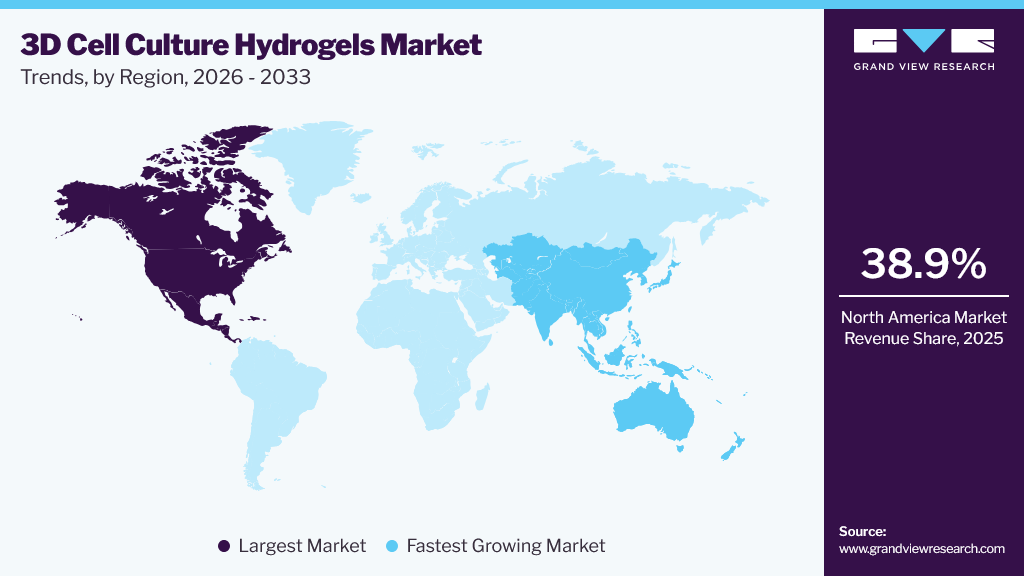
North America dominated the 3D cell culture hydrogels industry accounting for the largest revenue share of 38.9% in 2025, driven by increasing adoption of organoids and 3D models for drug discovery, disease modeling, and translational research. Strong biomedical research infrastructure and growing interest in alternatives to animal testing are supporting demand for advanced 3D culture platforms. In addition, advances in synthetic and tunable hydrogels are enabling more reproducible cell growth and tissue organization across pharmaceutical, biotechnology, and academic research applications.
 To learn more about this report, Download Free Sample Report
U.S. 3D Cell Culture Hydrogels Market Trends
The U.S. 3D cell culture hydrogels market is expected to grow over the forecast period, supported by increasing adoption of xeno-free and scalable 3D culture systems for stem cell and organoid research. For instance, in January 2026, New Jersey-based TheWell Bioscience launched the RocketCell 3D iPSC Xeno-Free Complete Growth Kit, combining its VitroGel STEM hydrogel with chemically defined growth media and supplements for scalable 3D induced pluripotent stem cell (iPSC) expansion. The launch strengthens the availability of defined hydrogel-based systems for advanced 3D cell culture applications.
“Researchers often rely on separate matrices, media, and supplements from different sources, which creates inconsistency and increases workflow complexity. With the RocketCell 3D iPSC Xeno-Free Complete Growth Kit, we have developed a fully defined, xeno-free ecosystem that not only simplifies the transition from 2D to 3D culture but also unlocks ultra-high expansion capacity- supporting up to 10 times higher cell density than traditional methods-while offering the flexibility of a weekend-free schedule.”
- John Huang, CEO of TheWell Bioscience.
Europe 3D Cell Culture Hydrogels Market Trends
Europe 3D cell culture hydrogels market is anticipated to grow significantly over the forecast period, supported by increasing adoption of organoid-based models, non-animal preclinical testing, and advanced 3D culture systems in drug discovery and biomedical research. The region is also witnessing development of more defined and reproducible hydrogel matrices to overcome limitations associated with conventional animal-derived extracellular matrices. In addition, growing research in personalized medicine, tissue engineering, and regenerative medicine is supporting demand for tunable hydrogels that can replicate tissue-specific microenvironments and improve the reproducibility of 3D cell culture models.
The UK 3D cell culture hydrogels market is expected to grow over the forecast period, driven by increasing adoption of organoid models and demand for reproducible synthetic alternatives to conventional extracellular matrices. According to an article published in Biomaterials Advances in March 2024, researchers at the University of Manchester optimized self-assembling peptide hydrogels as a Matrigel alternative for 3D mammary epithelial cell culture. The study demonstrated that optimizing hydrogel composition and mechanical properties enabled support for tissue-specific organoids, highlighting the application of engineered hydrogels in advanced 3D cell culture research
The 3D cell culture hydrogels market in Germany is anticipated to grow significantly over the forecast period, supported by increasing adoption of high-throughput 3D models for drug development and personalized medicine. According to an article published in Scientific Reports in April 2024, researchers developed the Oli-Up platform for high-throughput cultivation of 3D hydrogel cell cultures under defined hypoxic conditions. The platform enabled parallel culture of 48 hydrogel samples and was demonstrated using GelMA-encapsulated mesenchymal stem/stromal cells, supporting the development of scalable hydrogel-based 3D models for biomedical research.
Asia Pacific 3D Cell Culture Hydrogels Market Trends
Asia Pacific is expected to grow at the fastest CAGR of 12.6% during the forecast period, supported by expanding regenerative medicine and tissue engineering research and increasing investment in stem cell-based technologies. Growing biomedical research capabilities and adoption of advanced cell culture models are supporting demand for biomaterials that provide controlled three-dimensional environments for cell growth and differentiation. In addition, increasing research in organoids, drug discovery, and cell-based therapies is creating opportunities for hydrogel-based 3D culture systems across the region.
China’s 3D cell culture hydrogels market is expected to grow over the forecast period, supported by expanding organoid research and development of biomaterials for advanced 3D cell culture. According to an article published in Small in July 2025, researchers from Xi’an Jiaotong University and other Chinese institutions developed dynamic hydrogels with tunable mechanical properties for 3D organoid derivation. The study demonstrated that controlling hydrogel mechanics can regulate organoid formation and development, highlighting the application of engineered hydrogels in advanced 3D cell culture research.
Japan’s 3D cell culture hydrogels market is witnessing rapid growth driven by increasing research in stem cell-based therapies and advanced organoid models. According to an article published in Matrix Biology in October 2025, researchers at the University of Osaka developed a laminin-511-functionalized fibrin hydrogel that enabled three-dimensional proliferation of human induced pluripotent stem cells (iPSCs). In addition, this hydrogel provided a chemically defined and xeno-free alternative to Matrigel for 3D stem cell culture, supporting applications in organoid development, regenerative medicine, and drug discovery.
Latin America 3D Cell Culture Hydrogels Market Trends
The Latin America 3D cell culture hydrogels market is expected to grow steadily over the forecast period, supported by expanding biomedical research and increasing focus on tissue engineering and regenerative medicine. Growing research capabilities in cell-based therapies and biomaterials are encouraging the adoption of advanced three-dimensional culture techniques. In addition, increasing applications of organoids, spheroids, and 3D cell models in disease research and drug development are creating opportunities for hydrogel-based culture systems across the region.
MEA 3D Cell Culture Hydrogels Market Trends
The Middle East & Africa 3D cell culture hydrogels industry is growing steadily, supported by the localization of biotechnology and biomedical research capabilities and increasing investment in regional life sciences infrastructure. Efforts to develop local research and translational capabilities in stem cell biology, tissue engineering, and regenerative medicine are encouraging adoption of advanced cell culture technologies. In addition, the establishment of specialized research facilities and expansion of local biopharmaceutical capabilities are creating opportunities for three-dimensional culture systems, including hydrogel-based platforms, across the region.
-Mazen Darwazah, Hikma’s Executive Vice Chairman and President of MENA
Key 3D Cell Culture Hydrogels Company Insights
The 3D cell culture hydrogels market is moderately competitive, with key players focusing on natural hydrogels, synthetic hydrogels, peptide-based hydrogels, basement membrane extracts, collagen-based hydrogels, alginate-based hydrogels, and hybrid hydrogel systems. Companies are strengthening their market position through product launches, technological advancements, strategic collaborations, and expansion of 3D cell culture capabilities. Moreover, competitive positioning depends on product offerings, hydrogel properties, biocompatibility, reproducibility, geographic presence, customer base, and applications across organoid research, cancer research, drug discovery, toxicology testing, and tissue engineering.
Key 3D Cell Culture Hydrogels Companies
The following key companies have been profiled for this study on the 3d cell culture hydrogels market:
-
Corning Incorporated
-
Bio-Techne
-
Thermo Fisher Scientific Inc.
-
Merck KGaA
-
Advanced BioMatrix (acquired by BICO)
-
Cellendes GmbH
-
Inventia Life Science
-
TheWell Bioscience Inc.
-
Sartorius AG
-
Cell Guidance Systems Limited
Competitive Benchmarking
Category
Operating Strategies
Competitive Edge
Weakness
Established Players (Corning Incorporated; Bio-Techne; Thermo Fisher Scientific Inc.; Merck KGaA; Sartorius AG)
- Expanding hydrogel matrices through natural, synthetic, and hybrid systems; focusing on product development, R&D, partnerships, and integrated 3D culture solutions.
- Broad portfolios, strong biomaterials capabilities, established customer bases, global presence, and integrated 3D culture solutions.
- High R&D costs, specialized manufacturing requirements, integration complexity, infrastructure needs, and intense competition.
Emerging Players (Advanced BioMatrix, Inc.; Cellendes GmbH; Inventia Life Science; TheWell Bioscience Inc.; Cell Guidance Systems Limited)
- Expanding hydrogel matrices, synthetic scaffolds, peptide systems, and 3D culture solutions through product development and strategic partnerships.
- Specialized hydrogel technologies, differentiated products, research capabilities, and growing presence in 3D culture.
- Narrower market reach in some segments, high product costs, technical integration challenges, and competition from established players.
Recent Developments
- In February 2026, Bio-Techne Corporation launched Cultrex Synthetic Hydrogel, a fully defined synthetic extracellular matrix designed to support reproducible and scalable 3D stem cell and organoid culture. The hydrogel provides a synthetic alternative to traditional matrices, helping reduce lot-to-lot variability and supporting standardized 3D cell culture workflows.
“This product reflects the evolving needs of researchers as stem cell and organoid models move more quickly from discovery into translational workflows. Cultrex Synthetic Hydrogel expands our Cultrex ECM portfolio with a fully defined, scalable option that supports reproducibility and consistency as programs mature, without compromising the performance that researchers expect."
- Will Geist, President of the Protein Sciences Segment at Bio-Techne.
- In February 2026, TheWell Bioscience launched the VitroPrime 3D Culture and Imaging Plate, a specialized culture vessel designed for hydrogel-based 3D cell culture and organoid workflows. The plate incorporates sample-locking and disturbance-free media-exchange features to prevent hydrogel floating and sample loss, while supporting long-term culture, high-resolution imaging, and automation-ready workflows.
“For years, we’ve spoken with researchers around the world who struggle to find the right culture vessel for 3D organoid workflows-one that can prevent hydrogel floating, allow live-cell tracking, enable easy media exchange and sample fixation without sample loss, and support high-resolution imaging. It took several years of rational design and iterative development to translate these unmet needs into a practical, scalable solution.”
- John Huang, CEO of TheWell Bioscience.
- In September 2025, TheWell Bioscience launched VitroGel NEURON, a synthetic and xeno-free hydrogel specifically engineered for 3D and 2D neuronal cell culture. The hydrogel provides a defined, reproducible, and scalable environment for neuronal growth, differentiation, and network formation, supporting applications involving neural stem cells, dopaminergic neurons, neurite and axonal outgrowth, and advanced 3D cell culture models.
“After more than five years of dedicated R&D, we are proud to introduce the xeno-free VitroGel NEURON. To our knowledge, this is the first commercial synthetic hydrogel on the market that can effectively support 3D neuron outgrowth and network formation across a wide spectrum of applications. We believe this groundbreaking technology will not only provide a reliable and physiologically relevant platform for developing diverse 3D neuronal cell models, but also as a delivery system to advance cell therapy and regenerative medicine to the next level."
-John Huang, Ph.D., CEO of TheWell Bioscience Inc.
Cell Culture Hydrogels Market Report Scope Table
Report Attribute
Details
Market size in 2025
USD 385.5 million
Estimated market size in 2026
USD 422.1 million
Projected market size by 2033
USD 817.3 million
Growth rate
CAGR of 9.9% from 2026 to 2033
Historical data
2021 - 2025
Forecast period
2026 - 2033
Quantitative units
Revenue in USD million/billion, and CAGR from 2026 to 2033
Report coverage
Revenue forecast, company ranking, competitive landscape, growth factors, and trends
Segments covered
Type, application, end use, and region
Regional scope
North America; Europe; Asia Pacific; Latin America; MEA
Country scope
U.S.; Canada; Mexico; UK; Germany; France; Italy; Spain; Norway; Denmark; Sweden; China; Japan; India; South Korea; Australia; Thailand; Brazil; Argentina; Saudi Arabia; South Africa; UAE; Kuwait
Key companies profiled
Corning Incorporated; Bio-Techne; Thermo Fisher Scientific Inc.; Merck KGaA; Advanced BioMatrix (acquired by BICO); Cellendes GmbH; Inventia Life Science; TheWell Bioscience Inc.; Sartorius AG; Cell Guidance Systems Limited
Customization scope
Free report customization (equivalent up to 8 analysts' working days) with purchase. Addition or alteration to country, regional & segment scope.
Pricing and purchase options
Avail customized purchase options to meet your exact research needs. Explore purchase options
Global Cell Culture Hydrogels Market Report Segmentation
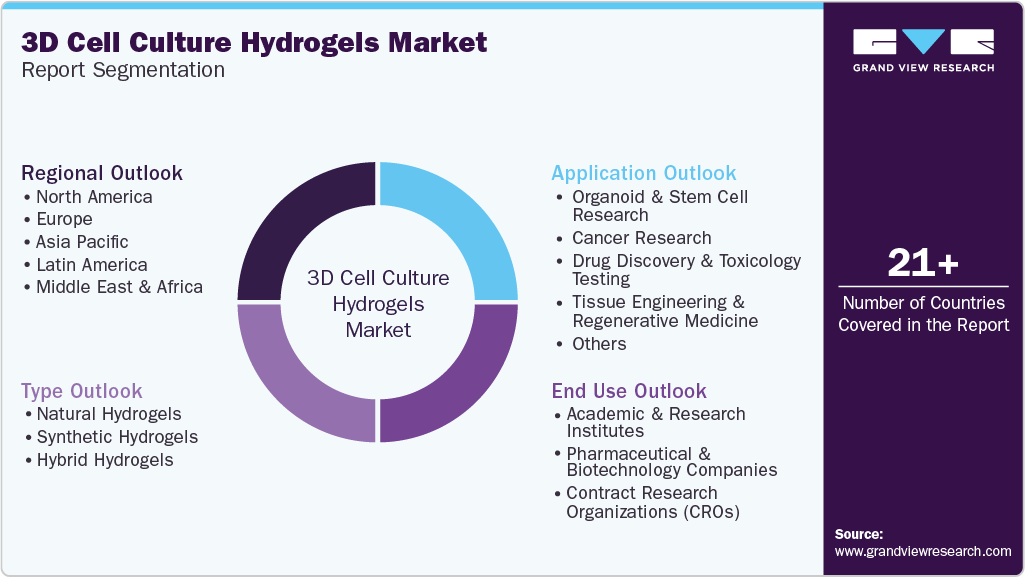
This report forecasts revenue growth and provides an analysis on the latest trends in each of the sub-segments from 2021 to 2033. For this report, Grand View Research has segmented the global 3D cell culture hydrogels market on the basis of type, application, end use and region:
 To learn more about this report, Download Free Sample Report
-
Type Outlook (Revenue, USD Million, 2021 - 2033)
-
Natural Hydrogels
-
Basement Membrane Extracts (Matrigel, Cultrex, Geltrex)
-
Collagen & Gelatin-based Hydrogels
-
Hyaluronic Acid-based Hydrogels
-
Alginate-based Hydrogels
-
Others (Fibrin, Agarose, Nanocellulose etc.)
-
-
Synthetic Hydrogels
-
PEG-based Hydrogels
-
Peptide-based (Self-assembling) Hydrogels
-
Others (PVA, Polyacrylamide, PNIPAAm etc.)
-
-
Hybrid Hydrogels
-
-
Application Outlook (Revenue, USD Million, 2021 - 2033)
-
Organoid & Stem Cell Research
-
Cancer Research
-
Drug Discovery & Toxicology Testing
-
Tissue Engineering & Regenerative Medicine
-
Others
-
-
End Use Outlook (Revenue, USD Million, 2021 - 2033)
-
Academic & Research Institutes
-
Pharmaceutical & Biotechnology Companies
-
Contract Research Organizations (CROs)
-
-
Regional Outlook (Revenue, USD Million, 2021 - 2033)
-
North America
-
U.S.
-
Canada
-
Mexico
-
-
Europe
-
UK
-
Germany
-
France
-
Italy
-
Spain
-
Denmark
-
Sweden
-
Norway
-
-
Asia Pacific
-
Japan
-
China
-
India
-
Australia
-
Thailand
-
South Korea
-
-
Latin America
-
Brazil
-
Argentina
-
-
Middle East and Africa (MEA)
-
South Africa
-
Saudi Arabia
-
UAE
-
Kuwait
-
-
Research Methodology
The cell culture hydrogels market figures in this report are based on a proven research process that combines executive interviews with secondary research from proprietary databases, company filings, and recognized regulatory and institutional sources. Market size is built through value-chain sizing-reconciling supply-side and demand-side estimates-and triangulated with bottom-up and top-down approaches. Every estimate passes multiple levels of expert validation before publication, with each cell culture hydrogels segment quantified using the revenue-capture definitions in the table below.
Segment Definition
Type
Revenue Capture Definition
Natural Hydrogels
Revenue generated from naturally derived hydrogel materials used in three-dimensional cell culture and related biomedical applications, including basement membrane extracts, collagen and gelatin-based hydrogels, hyaluronic acid-based hydrogels, alginate-based hydrogels, and other natural hydrogels such as fibrin, agarose, and nanocellulose.
Synthetic Hydrogels
This segment captures income from synthetically engineered hydrogel materials used in three-dimensional cell culture and related biomedical applications, including PEG-based hydrogels, peptide-based self-assembling hydrogels, and other synthetic hydrogels such as PVA, polyacrylamide, and PNIPAAm-based hydrogels.
Hybrid Hydrogels
Market value in this category stems from hydrogels combining two or more natural and/or synthetic hydrogel materials to provide tailored biological, structural, mechanical, and functional properties for three-dimensional cell culture and related biomedical applications.
Application
Revenue Capture Definition
Organoid & Stem Cell Research
Revenue generated from hydrogels used to support stem cell culture, expansion, differentiation, and three-dimensional organoid formation, growth, maturation, and modeling in research workflows.
Cancer Research
This segment captures income from hydrogels used to develop three-dimensional cancer models, tumor organoids, and tumor microenvironment models for studying cancer biology, disease mechanisms, cellular behavior, and therapeutic responses.
Drug Discovery & Toxicology Testing
Market value in this category stems from hydrogels used in three-dimensional cell and tissue models for drug screening, compound evaluation, efficacy assessment, toxicity testing, and related pharmaceutical research workflows.
Tissue Engineering & Regenerative Medicine
Revenue generated from hydrogels used as scaffolds or matrices to support cell growth, tissue formation, tissue repair, and development of engineered or regenerative tissue constructs.
Others
Revenue from hydrogel applications outside organoid and stem cell research, cancer research, drug discovery and toxicology testing, and tissue engineering and regenerative medicine, including other specialized biomedical and research applications.
End Use
Revenue Capture Definition
Academic & Research Institutes
Revenue generated from hydrogels used by universities, academic laboratories, and research institutes for cell culture, organoid research, stem cell studies, cancer research, tissue modeling, and other biomedical research activities.
Pharmaceutical & Biotechnology Companies
This segment captures income from hydrogels used by pharmaceutical and biotechnology companies for drug discovery, toxicology testing, cell-based research, tissue modeling, regenerative medicine research, and other bioapplication activities.
Contract Research Organizations (CROs)
Market value in this category stems from hydrogels used by contract research organizations to support outsourced drug discovery, toxicology testing, cell and organoid research, tissue modeling, and other biomedical research services.
Estimation Model
Stage
Description
Top-Down
Commodity Flow Analysis: Market value was estimated by assessing revenues from natural hydrogels, synthetic hydrogels, hybrid hydrogels, extracellular matrix products, bioinks, and specialized 3D cell culture matrices. Company financials, product portfolios, pricing, sales volumes, and commercial offerings were analyzed to quantify market revenue across major applications and end uses. Revenue contributions from specialized hydrogel products and 3D cell culture solutions were further evaluated to capture the overall market value.
Parent Market
Parent Market & Penetration-Based Analysis: The 3D cell culture hydrogels market was assessed within the broader cell culture matrices market based on hydrogel use in organoids, spheroids, drug discovery, cancer research, stem cell research, and tissue engineering. Penetration across research and pharmaceutical workflows was evaluated to establish the addressable opportunity. Commercially available hydrogels span extracellular matrix-based 3D cultures and synthetic, tunable hydrogel systems.
Segmentation
Country-Level Segment Share Modeling: Country-level shares were estimated using 3D cell culture activity, pharmaceutical R&D, biotechnology infrastructure, laboratory capacity, research funding, and adoption of advanced cell culture technologies. Differences in research intensity, drug discovery activity, technology availability, healthcare infrastructure, academic research, and biopharmaceutical development were incorporated to determine country and regional distributions across type, application, and end-use segments.
Validation
Data Triangulation & Validation Model: Market estimates were reconciled using company revenues, product volumes, hydrogel pricing, research activity, pharmaceutical R&D, 3D culture applications, and scientific evidence. The resulting estimates were cross-checked across hydrogel type, application, end use, country, and region to ensure consistency between volume-based and revenue-based calculations.
Forecasting
Forecasting & CAGR Modeling: Future demand was projected using observed expansion of 3D cell culture, organoid research, drug discovery, regenerative medicine, stem cell research, and biopharmaceutical development. Increasing adoption of advanced cell models, growing use of hydrogel-based matrices, technological improvements, and broader applications of 3D culture systems were incorporated into segment-level growth assumptions.
Delivered Customizations
This report has been delivered with the following In-depth customizations
Client Request
Customization Delivered
Value Adds
3D Cell Culture Hydrogel Cost & Pricing Assessment
Assessment of hydrogel pricing, preparation costs, material inputs, and major cost drivers across selected hydrogel types and applications.
Help clients understand cost structures, benchmark pricing, and identify opportunities for cost optimization.
3D Cell Culture Hydrogel Handling & Protocol Assessment
Assessment of hydrogel preparation, handling, gelation, cell encapsulation, culture conditions, and common workflow challenges.
Help clients understand practical usage requirements and identify opportunities to improve product usability and performance.
3D Cell Culture Hydrogel Cell Compatibility Assessment
Assessment of hydrogel compatibility with selected cell types based on viability, proliferation, differentiation, and matrix-related requirements.
Helps clients identify suitable hydrogel–cell combinations and support product development for specific research applications.
Frequently Asked Questions About This Report
The market growth is driven by increasing adoption of 3D cell culture models, growing demand for physiologically relevant and reproducible in vitro systems, and expanding applications of 3D cell culture hydrogels in organoid research, cancer research, drug discovery, toxicology testing, and tissue engineering.
North America dominated with a 38.9% revenue share in 2025.
Asia Pacific is the fastest-growing region over the forecast period.
The natural hydrogels segment led with 61.0 % revenue share in 2025, while hybrid hydrogels is the fastest-growing segment.
Organoid & stem cell research segment held the largest revenue share in 2025, while drug discovery & toxicology segment is the fastest-growing segment.
Key players include Corning Incorporated, Bio-Techne, Thermo Fisher Scientific Inc., Merck KGaA, Advanced BioMatrix (acquired by BICO), Cellendes GmbH, Inventia Life Science, TheWell Bioscience Inc., Sartorius AG, and Cell Guidance Systems Limited
The global 3d cell culture hydrogels market size was valued at USD 385.5 million in 2025 and is estimated at USD 422.1 million for 2026.
The global 3d cell culture hydrogels market is expected to grow at a CAGR of 9.9% from 2026 to 2033, reaching USD 817.3 million by 2033.
Academic & research institutes segment held the largest share (over 45.0%) in 2025 and contract research organizations (CROs) is the fastest growing segment.
About the Author(s)
Biotechnology Research Team
Healthcare · BiotechnologyThis report was authored by the biotechnology research team at Grand View Research - comprising two research analysts, one senior research analyst, and one industry expert - with specialized expertise in the biotechnology segment of the healthcare industry. All findings are based on proprietary healthcare databases, executive interviews, and regulatory analysis, subject to internal peer review prior to publication.
Last Updated:
Speak to Analyst

Customize this report to your needs - add regions, segments, or data points, with 20% free customization.
Or view our licence options:


ISO 9001:2015 & 27001:2022 Certified
We are GDPR and CCPA compliant! Your transaction & personal information is safe and secure. For more details, please read our privacy policy.


