
- Home
- »
- Biotechnology
- »
-
3D Cell Culture Scaffolds Market Size Report, 2026-2033GVR Report cover

3D Cell Culture Scaffolds Market (2026 - 2033)
Size, Share & Trends Analysis Report By Type (Polymeric Scaffolds, Nanofiber-based Scaffolds), By Format (Scaffold-integrated Multiwell Plates, Inserts & Discs), By Application, By End Use, By Region, And Segment Forecasts
Market Size, 2025
$201.5MMarket Estimate, 2026
$216.0MMarket Forecast, 2033
$389.8MCAGR, 2026–2033
8.8%3D Cell Culture Scaffolds Market Summary
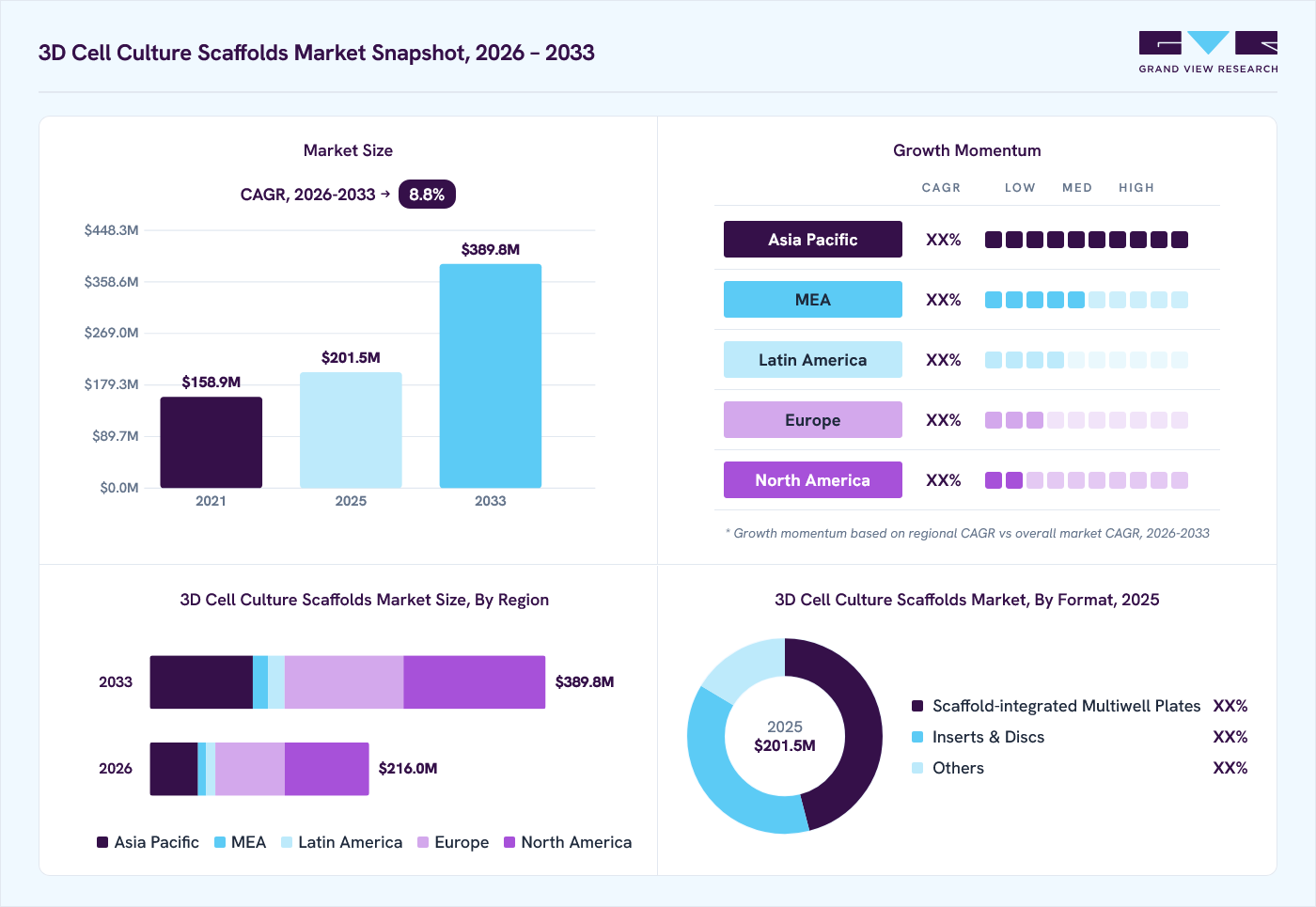
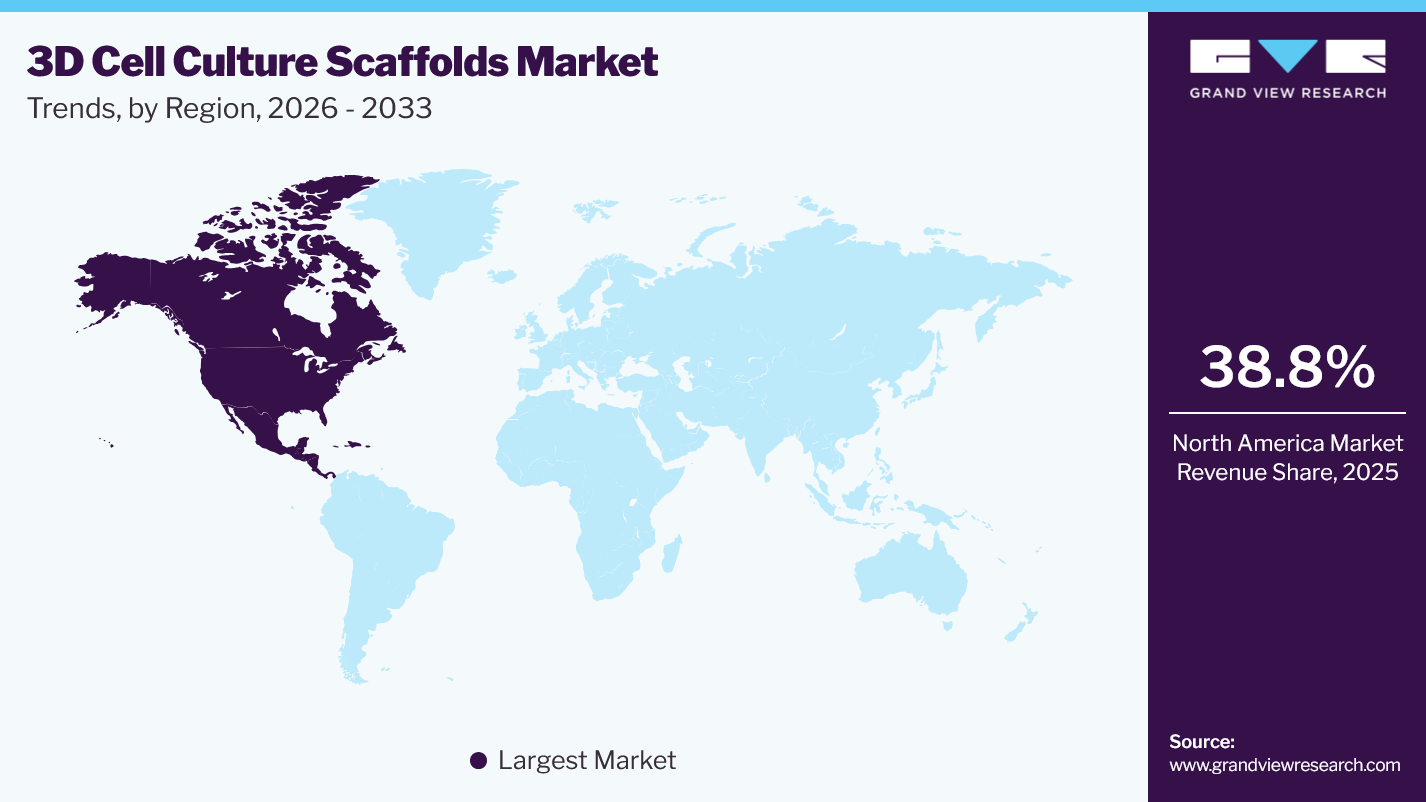
The global 3D cell culture scaffolds market size was valued at USD 201.5 million in 2025 and is projected to grow from USD 216.0 million in 2026 to USD 389.8 million by 2033, at a CAGR of 8.8% from 2026 to 2033. North America dominated the market, accounting for a revenue share of 38.8% in 2025. Market growth is driven by the regulatory shift toward human-relevant new approach methodologies (NAMs) that reduce reliance on animal testing, growing demand for reproducible 3D cell models in drug discovery and toxicology, and expanding applications of polymeric, nanofiber-based, and micropatterned scaffolds in tissue engineering, cancer research, and stem cell research.
 Source: Grand View Research, IR Documents, Primary Interviews, Paid DatabasesTo learn more about this report,
 Download Free Sample Report
Key Market Trends & Insights
- By type: Polymeric scaffolds segment held the largest market share of 51.8% in 2025.
- By format: Scaffold-integrated multiwell plates segment held the largest market share of 45.9% in 2025.
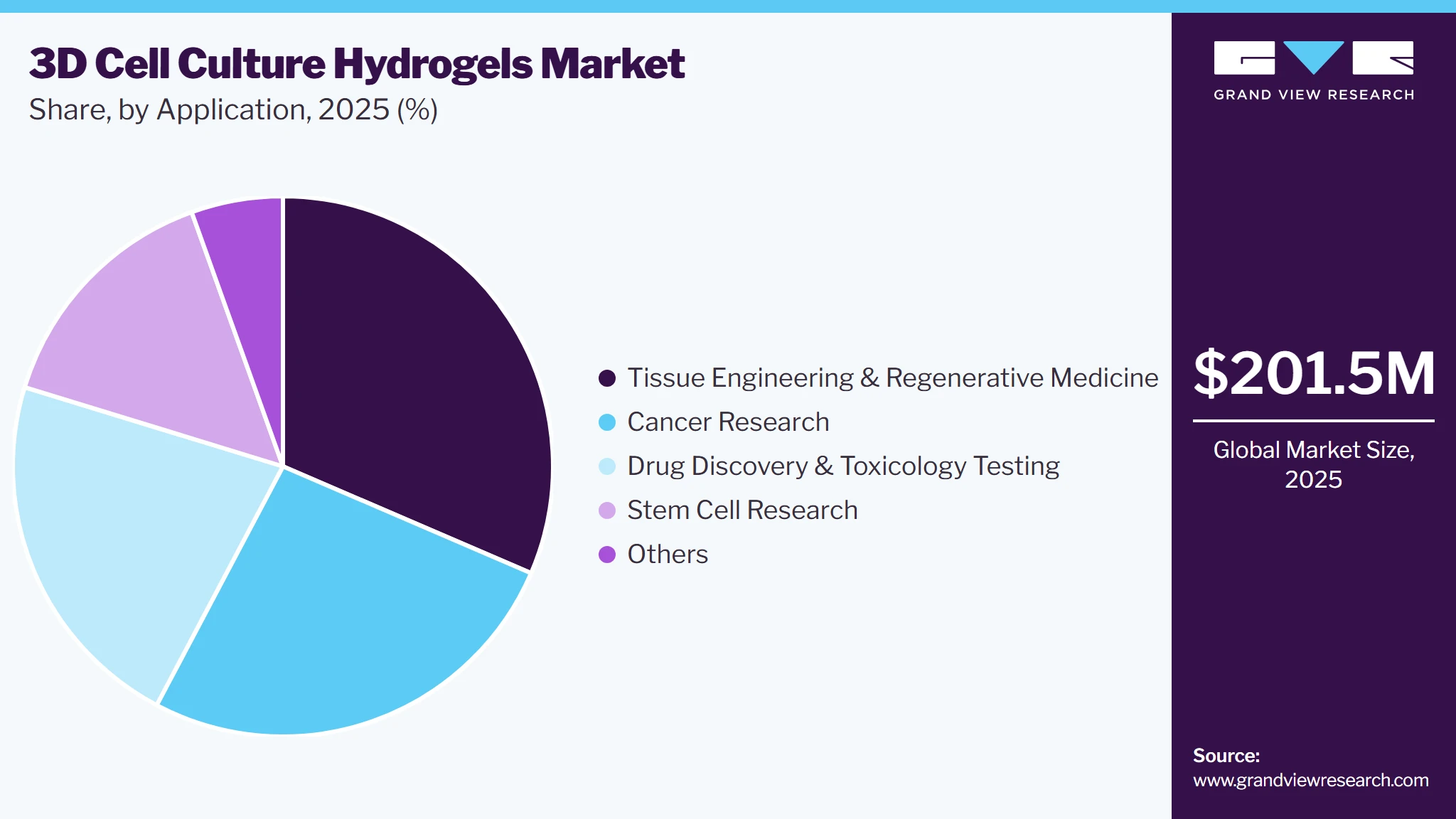
- By application: Tissue engineering & regenerative medicine segment held the largest market share of 31.5% in 2025.
- By end use: Academic & research institutes segment held the largest market revenue share of 48.2% in 2025.
Regional Highlights
- Largest regional market: North America (38.8% revenue share, 2025)
- By country: The U.S. held the largest market share in 2025
Market Size & Forecast
- Market Size in 2025: USD 201.5 Million
- Estimated market size in 2026: USD 216.0 Million
- Projected Market Size by 2033: USD 389.8 Million
- CAGR (2026-2033): 8.8%
Prism AI by Grand View Research Free to tryAsk a question about the 3D cell culture scaffolds marketTry asking✓Every figure cited from GVR research Prefer the report? Download free sample →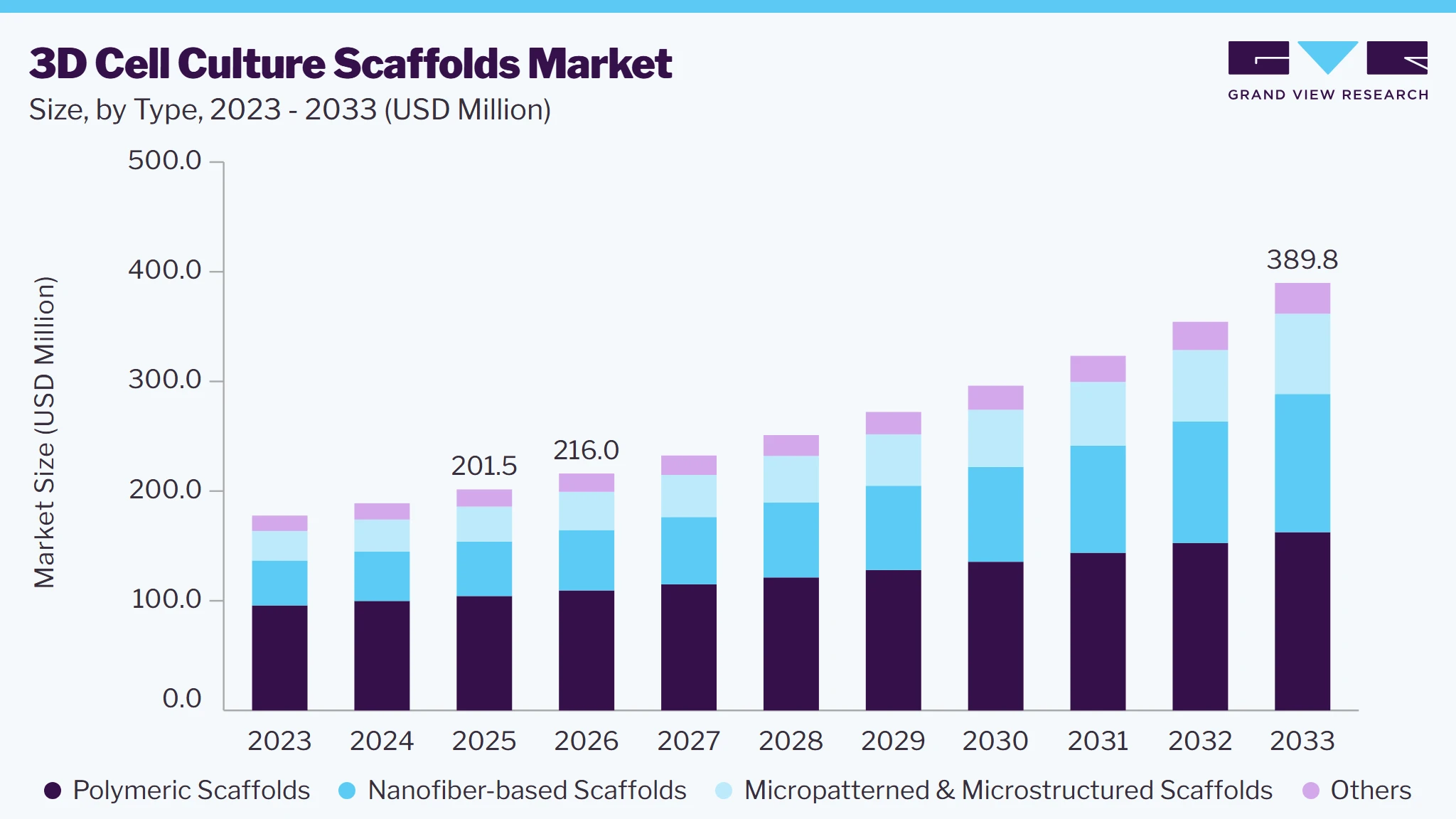 To learn more about this report, Download Free Sample Report
Market Dynamics
The 3D cell culture scaffolds market is experiencing steady growth, driven by the transition from two-dimensional monolayer culture to three-dimensional models that better replicate tissue architecture, cell-matrix interactions, and drug response. Pre-formed polymeric, nanofiber-based, and micropatterned scaffolds offer consistent geometry, mechanical stability, and compatibility with standard plate formats and imaging workflows. Growing regulatory support for non-animal methods, coupled with advances in electrospinning, 3D printing, and surface functionalization, is expected to improve model reproducibility and scalability, thereby creating new opportunities for market growth.
The growing regulatory emphasis on human-relevant new approach methodologies is driving demand for physiologically relevant 3D in vitro models in preclinical efficacy and safety testing. Scaffold-based 3D cultures provide well-defined, reproducible architectures that enable cells to grow, organize, and interact in three dimensions, thereby improving the translational value of in vitro data compared with conventional 2D cultures. The advantages and limitations of 2D culture, hydrogel-based 3D culture, and pre-formed scaffold-based 3D culture are presented in the following table.
Comparative analysis of 2D culture, hydrogel-based and scaffold-based 3D culture
Model
Advantages
Limitations
Best use cases
2D
Easy to establish and implement; Low cost; Compatible with standard high-throughput workflows
Lacks 3D tissue architecture and cell-matrix interactions; Limited physiological relevance
Routine cell expansion; Early-stage screening
Hydrogel
ECM-like soft microenvironment; Supports organoid formation; Tunable composition
Batch-to-batch variability of animal-derived matrices; Lower mechanical stability; Handling complexity
Organoid and stem cell research; Soft-tissue models
Scaffold
Defined, reproducible porous or fibrous architecture; Mechanical stability; Ready-to-use plate and insert formats; Animal-free materials
Limited standardization across materials and protocols; Imaging depth and cell retrieval can be challenging
Tissue engineering; Air-liquid interface and barrier models; 3D drug screening
Source: ACS Biomaterials Science & Engineering, Secondary Research, Primary Interviews, Grand View Research Analysis
For instance, in April 2025, the U.S. FDA announced a plan to phase out the animal testing requirement for monoclonal antibodies and other drugs, replacing it with new approach methodologies such as AI-based computational toxicity models and lab-grown human organoids and organ-on-a-chip systems, together with a pilot program allowing select developers to use primarily non-animal testing strategies. In April 2026, the FDA reported achieving the first-year goals of this roadmap, including draft guidance on reducing nonhuman primate testing in monoclonal antibody development. Such initiatives are encouraging drug developers and research laboratories to adopt structured 3D culture platforms, including pre-formed scaffolds, to generate reproducible human tissue models.
Limited standardization across scaffold materials, architectures, and culture protocols is a key restraint on the 3D cell culture scaffolds market. Variations in scaffold fabrication, cell seeding density, and culture conditions can produce inconsistent results between laboratories. According to a review published in ACS Biomaterials Science & Engineering in October 2025, standardization and reproducibility pose significant barriers for scaffold-based 3D models, while their scalability for high-throughput screening remains limited compared with traditional 2D systems.
In addition, the availability of hydrogel-based and scaffold-free 3D culture formats creates competition for laboratory budgets, and the need for protocol optimization, specialized imaging, and trained personnel can slow the adoption of pre-formed solid scaffolds, particularly among cost-sensitive academic laboratories and smaller biotechnology companies.
The integration of 3D cell models with high-throughput assay, reporter, and imaging technologies presents a significant opportunity for the 3D cell culture scaffolds market by making scaffold-based models more practical for drug discovery. Plate-compatible scaffold formats that work with automated liquid handling, plate readers, and high-content imaging can improve data quality and throughput, supporting wider use of scaffold-based models in screening laboratories.
For instance, according to a study published in Toxicology Reports in June 2025, researchers from Innovation Acta S.r.l. (Italy) and the Technical University of Denmark developed cancer cell and cancer-associated fibroblast mini-tumors on fibrous polycaprolactone (PCL) scaffolds in a 96-well plate format, in which paclitaxel showed an IC50 of ≥1,000 nM in 3D compared with ≥100 nM in 2D, highlighting the potential of plate-compatible scaffolds to deliver more predictive drug responses in screening workflows.
Market Concentration & Characteristics
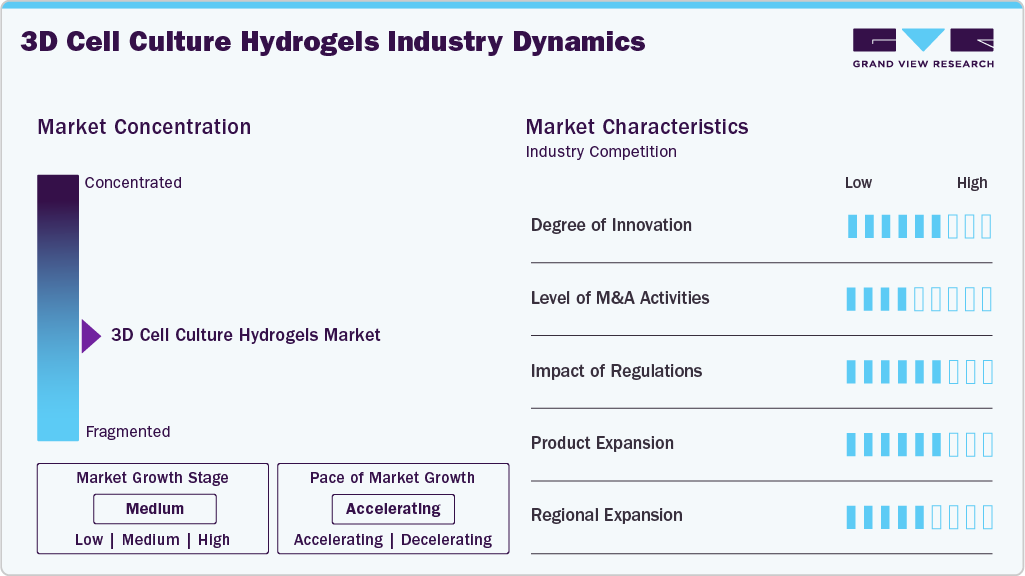
The 3D cell culture scaffolds industry is characterized by a moderately high degree of innovation, driven by advances in electrospinning, 3D printing, and surface functionalization that improve cell attachment and tissue relevance. For instance, according to an article published in ACS Omega in February 2026, researchers from Inha University in South Korea developed electrospun 3D polystyrene nanofiber scaffolds coated with tannic acid and silk sericin that improved surface wettability and supported superior keratinocyte adhesion, proliferation, and infiltration compared with uncoated scaffolds.
The industry is experiencing low-to-moderate M&A activity, with transactions focused on technologies that support complex 3D models. For instance, in December 2024, MilliporeSigma, the U.S. and Canada life science business of Merck KGaA, announced the acquisition of HUB Organoids Holding B.V., a Netherlands-based pioneer in adult stem cell-derived organoids, for approximately EUR 104 million, adding HUB's foundational organoid patent portfolio and its model generation, assay development, and screening services to its 2D and 3D cell culture portfolio.
 To learn more about this report, Download Free Sample Report
The market is positively influenced by regulations promoting alternatives to animal testing. For instance, in July 2026, the U.S. House of Representatives passed the FDA Modernization Act 3.0, following its Senate passage in December 2025. The bill requires the FDA to issue an interim final rule within one year of enactment that replaces references to animal tests in its regulations with nonclinical tests, aligning FDA regulations with the FDA Modernization Act 2.0. Increasing emphasis on validation, reproducibility, and standardized protocols is encouraging suppliers to offer well-characterized, ready-to-use scaffold formats.
The 3D cell culture scaffolds industry is witnessing product expansion through next-generation plasticware and scaffold platforms that extend 3D culture toward bioengineered tissue models. For instance, in April 2025, the University of Oregon reported that its spinout VivoTex, established in 2024, is commercializing melt electrowriting (MEW) microfiber scaffolds. The company's portfolio now includes sterile, ready-to-use Lattice scaffolds for organoid and epithelial constructs, Axis scaffolds for aligned musculoskeletal and neural tissue, IsoMesh scaffolds for skin and wound healing research, and GelControl inserts that stabilize hydrogel domes.
The market is experiencing moderate regional expansion, supported by global availability of 3D culture platforms and efforts to harmonize 3D model practices across countries. For instance, REPROCELL made Alvetex Advanced available globally from fall 2025, and in November 2025, an ISO organoid standards working group convened by the Institute of Zoology, Chinese Academy of Sciences launched international standards with participation from countries including South Korea, Japan, the U.S., Canada, the UK, Germany, and India.
Analyst Perspective
The 3D cell culture scaffolds market is expected to witness steady growth, driven by increasing adoption of physiologically relevant 3D cell culture models in drug discovery, toxicology, tissue engineering, and cancer research. Regulatory support for new approach methodologies in the U.S., Europe, and the UK is accelerating the shift from 2D culture and animal models toward reproducible human tissue models. Polymeric scaffolds remain the installed base, while nanofiber-based and micropatterned formats are gaining share owing to their ECM-like architecture and compatibility with high-throughput imaging. Market participants are focusing on plate- and insert-compatible formats, animal-free materials, functionalized surfaces, and strategic collaborations with assay and imaging providers to enhance model reproducibility and research applications.
Type Insights
The polymeric scaffolds segment accounted for the largest revenue share of 51.8% in 2025, driven by the wide availability of ready-to-use polystyrene, PCL, and PLGA/PLA scaffolds as well as collagen, chitosan, and silk sponges that fit standard culture plates and inserts. Within this segment, synthetic polymer scaffolds accounted for 68.5% of polymeric scaffold revenue in 2025, supported by their reproducible architecture and mechanical stability. For instance, in October 2025, REPROCELL launched Alvetex Advanced, extending its polystyrene scaffold-based Alvetex portfolio toward bioengineered tissue models with air-liquid interface capability and functional readouts.
The nanofiber-based scaffolds segment is expected to register the fastest CAGR of 12.5% over the forecast period, driven by the ability of electrospun fibers to replicate the fibrous architecture of the native extracellular matrix. For instance, according to an article published in the International Journal of Molecular Sciences in October 2025, researchers from Ajou University in South Korea reported that nanofibrous scaffolds enable epithelial cells to develop physiologically relevant 3D structures with proper polarity and functional differentiation, outperforming traditional 2D culture.
Format Insights
The scaffold-integrated multiwell plates segment accounted for the largest revenue share of 45.9% in 2025, owing to the compatibility of pre-formed scaffolds supplied in 24-, 96-, and 384-well plates with existing liquid handling, plate readers, and imaging systems used in screening laboratories. Their ease of use and suitability for standardized workflows make them the preferred entry point for pharmaceutical screening and academic laboratories adopting 3D culture.
The others segment, which includes scaffold sheets, membranes, and custom 3D-printed scaffolds, is expected to register the fastest CAGR of 9.9% over the forecast period, driven by the adoption of 3D printing and bioprinting to fabricate scaffolds with tailored geometry for tissue engineering. The inserts & discs segment is expected to grow at a CAGR of 9.4%, supported by the growing use of air-liquid interface and barrier-tissue models.
Application Insights
The tissue engineering & regenerative medicine segment accounted for the largest revenue share of 31.5% in 2025, driven by the extensive use of porous and fibrous scaffolds to guide cell organization, differentiation, and tissue formation in bone, cartilage, skin, and epithelial models. For instance, in October 2025, researchers from Ajou University reported in the International Journal of Molecular Sciences that nanofibrous scaffolds replicate native extracellular matrix architecture and support tissue-specific functions across various epithelial tissues.
 To learn more about this report, Download Free Sample Report
The drug discovery & toxicology testing segment is expected to register the fastest CAGR of 9.8% over the forecast period, driven by the regulatory transition toward human-relevant testing. For instance, in April 2025, the U.S. FDA announced its plan to phase out animal testing requirements for monoclonal antibodies and other drugs using new approach methodologies, and in April 2026, it released draft guidance on reducing nonhuman primate testing in monoclonal antibody development. These initiatives are expected to increase the use of reproducible scaffold-based 3D models in preclinical efficacy and safety screening.
End Use Insights
The academic & research institutes segment accounted for the largest revenue share of 48.2% in 2025, as universities and research institutes use 3D scaffolds extensively in tissue engineering, stem cell, and cancer biology research. For instance, in September 2025, the U.S. National Institutes of Health (NIH) established the Standardized Organoid Modeling (SOM) Center at the Frederick National Laboratory for Cancer Research with USD 87 million in funding for its first three years, to develop standardized and reproducible liver, lung, heart, and intestine models using AI and robotics, with open access to protocols, data, and samples for academic institutions and other researchers.
The CROs segment is expected to register the fastest CAGR of 10.7% over the forecast period, driven by the increasing outsourcing of in vitro efficacy and safety testing and the limited in-house expertise of many drug developers in generating regulator-ready data from complex 3D models. For instance, in April 2025, Crown Bioscience, a contract research organization, unveiled 3D bone marrow niche in vitro models at AACR 2025, in which patient-derived tumor cells are co-cultured with stromal and endothelial cells in biofunctional hydrogel scaffolds for high-content imaging-based drug screening in acute myeloid leukemia and multiple myeloma.
Regional Insights
North America dominated the 3D cell culture scaffolds industry, accounting for the largest revenue share of 38.8% in 2025, supported by strong pharmaceutical and academic R&D, early adoption of 3D models in drug discovery, and regulatory initiatives supporting non-animal methods. For instance, in April 2025, the U.S. FDA announced a plan to phase out animal testing requirements for monoclonal antibodies and other drugs, launching a pilot program for primarily non-animal testing strategies and supporting demand for human-relevant 3D models across the region.
 To learn more about this report, Download Free Sample Report
U.S. 3D Cell Culture Scaffolds Market Trends
The 3D cell culture scaffolds industry in the U.S. is expected to grow over the forecast period, supported by federal initiatives to prioritize human-based research, a large base of pharmaceutical and biotechnology companies, and strong academic research funding. For instance, in April 2025, the NIH announced the establishment of the Office of Research Innovation, Validation, and Application (ORIVA) to coordinate efforts to reduce animal use in research, with new funding opportunities evaluating methods based on human relevance, including organoids and tissue chips.
Europe 3D Cell Culture Scaffolds Market Trends
The 3D cell culture scaffolds market in Europe was identified as a lucrative region in this industry, supported by policy commitments to replace animal testing and strong academic tissue engineering research. For instance, in June 2026, the European Commission adopted a roadmap to phase out animal testing across 15 domains, including pharmaceuticals, chemicals, and pesticides, built on accelerating the validation of non-animal methods, leveraging AI and data-driven assessments, and strengthening collaboration.
The UK 3D cell culture scaffolds market is supported by established tissue engineering research, advanced in vitro modeling capabilities, and government commitments to alternative methods. For instance, in November 2025, the UK government published its Replacing Animals in Science strategy, which highlights organoids, 3D cell culture systems, organ-on-chip technologies, and induced pluripotent stem cells as alternatives, and commits GBP 30 million to a preclinical translational models hub and the establishment of the UK Centre for the Validation of Alternative Methods (UKCVAM).
The 3D cell culture scaffolds market in Germany is anticipated to grow significantly over the forecast period, supported by strong biomedical research capabilities and institutional programs dedicated to replacing animal experiments. For instance, the German Centre for the Protection of Laboratory Animals (Bf3R) at the German Federal Institute for Risk Assessment develops replacement methods, including 3D cell cultures such as organoids that recreate organ-like functions and bone-on-a-chip models, and maintains research funding programs for alternative methods, supporting the uptake of advanced 3D culture tools in German laboratories.
Asia Pacific 3D Cell Culture Scaffolds Market Trends
The 3D cell culture scaffolds industry in the Asia-Pacific is expected to grow at the fastest CAGR of 11.44% during the forecast period, supported by expanding biomedical research capacity, growing contract research activity, and increasing academic output on advanced scaffold materials. For instance, researchers in South Korea published studies in October 2025 and February 2026 on electrospun nanofibrous scaffolds for epithelial and keratinocyte culture, reflecting the region's growing capabilities in scaffold engineering and 3D tissue modeling.
The 3D cell culture scaffolds industry in China is emerging as a key center for 3D culture and organoid research, supported by growing investment in stem cell research and efforts to standardize 3D model practices. For instance, in November 2025, an International Organization for Standardization (ISO) organoid standards working group convened by the Institute of Zoology, Chinese Academy of Sciences, with the Beijing Institute for Stem Cells and Regenerative Medicine serving as secretariat, launched international standards addressing inconsistent laboratory criteria, supporting the adoption of 3D culture platforms in China.
The 3D cell culture scaffolds industry in Japan is expected to grow steadily, supported by a strong pharmaceutical industry and growing interest in human-relevant preclinical models. For instance, according to a survey of Japan Pharmaceutical Manufacturers Association member companies published in NAM Journal in July 2026, most companies recognized the FDA's 2025 roadmap for reducing animal testing, while approximately 44% had not yet conducted NAM research, indicating significant headroom for the adoption of 3D models, including scaffold-based systems.
Latin America 3D Cell Culture Scaffolds Market Trends
The 3D cell culture scaffolds industry in Latin America is expected to grow gradually, underpinned by regulatory moves away from animal testing and expanding biomedical research capabilities. For instance, in July 2025, Brazil enacted Law No. 15.183/2025, establishing a nationwide ban on testing cosmetics and personal care products on live vertebrate animals, with a two-year period for authorities to recognize alternative testing methods.
MEA 3D Cell Culture Scaffolds Market Trends
The 3D cell culture scaffolds industry in the Middle East and Africa is expected to grow steadily, supported by increasing research activity in tissue engineering, regenerative medicine, and cancer research. Growing investments in biomedical research infrastructure and collaborations among academic and research institutions are expected to strengthen regional capabilities and support the gradual adoption of 3D cell culture scaffold technologies.
Key 3D Cell Culture Scaffolds Company Insights
Several established life science tool providers and specialized scaffold developers operate in the 3D cell culture scaffolds market. Their portfolios span porous polymeric scaffolds, electrospun nanofiber scaffolds, micropatterned plates, natural polymer scaffolds, scaffold inserts, and 3D-printed scaffold solutions. Leading players include Merck KGaA, Corning Incorporated, Thermo Fisher Scientific Inc., REPROCELL Inc., and 3D Biotek, LLC. They maintain a strong market presence through product launches, plate- and insert-compatible formats, partnerships with assay and imaging providers, and expansion of animal-free materials. Their initiatives focus on improving model reproducibility, imaging and automation compatibility, and regulatory acceptance of human-relevant testing methods.
Key 3D Cell Culture Scaffolds Companies
The following key companies have been profiled for this study on the 3D cell culture scaffolds market
-
Merck KGaA
-
Corning Incorporated
-
Thermo Fisher Scientific Inc.
-
REPROCELL Inc.
-
3D Biotek, LLC
-
Nanofiber Solutions, LLC
-
The Electrospinning Company Ltd.
-
Matricel GmbH
-
Collagen Solutions
-
BICO Group AB
Competitive Benchmarking
Category
Operating Strategies
Competitive Edge
Weakness
Established Players (Merck KGaA, Corning Incorporated, Thermo Fisher Scientific Inc., REPROCELL Inc.)
- Focus on expanding 3D culture portfolios, plate- and insert-compatible scaffold formats, and partnerships with assay and imaging providers that support drug discovery, toxicology, and tissue engineering workflows.
- Broad product portfolios, global distribution networks, strong brand recognition, and established relationships with pharmaceutical companies and academic institutes.
- 3D scaffolds represent a small share of their overall revenue. Their offerings also face competition from hydrogel-based and scaffold-free 3D formats.
Emerging Players (3D Biotek, LLC, Nanofiber Solutions, LLC, The Electrospinning Company Ltd., Matricel GmbH, Collagen Solutions, BICO Group AB)
- Emphasize specialized electrospun, 3D-printed, and natural polymer scaffolds, often combined with customization and application support for research and industry partners.
- Differentiated scaffold architectures, customization capability, and agility in developing application-specific solutions aligned with the shift toward new approach methodologies.
- Limited scale, manufacturing capacity, and distribution reach compared with large life science companies, and dependence on funding and adoption cycles.
Recent Developments
- In October 2025, MilliporeSigma and Promega entered a partnership combining MilliporeSigma's organoid and synthetic chemistry expertise with Promega's assay and reporter technologies to develop real-time cellular activity tracking in 3D cell cultures, and signed a separate agreement to explore integrating MilliporeSigma's Duolink technology with Promega's HiBiT for studying protein interactions within cells.
"By combining our technological strengths, we are helping to create more relevant and accessible models for drug discovery."
- Tom Livelli, VP of Life Sciences Products & Services, Promega
-
In October 2025, REPROCELL launched Alvetex Advanced, a next-generation plasticware platform for 3D cell culture and bioengineered tissue models, offering controllable culture depth, air-liquid interface culture, a compartment seal to minimize leakage, and compatibility with functional measurements and downstream histology and molecular profiling.
-
In October 2025, Precision Cell Systems acquired BennuBio, developer of the Velocyt imaging flow cytometer for high-throughput analysis of 3D multicellular models, including spheroids, organoids, and stem cell aggregates, with complete sample recovery for downstream analysis, strengthening analytical capabilities for complex 3D culture workflows.
3D Cell Culture Scaffolds Market Report Scope Table
Report Attribute
Details
Market size in 2025
USD 201.5 million
Estimated market size in 2026
USD 216.0 million
Projected market size by 2033
USD 389.8 million
Growth rate
CAGR of 8.8% from 2026 to 2033
Historical data
2021 - 2025
Forecast period
2026 - 2033
Quantitative units
Revenue in USD million and CAGR from 2026 to 2033
Report coverage
Revenue forecast, company ranking, competitive landscape, growth factors, and trends
Segments covered
Type, format, application, end use, region
Regional scope
North America; Europe; Asia Pacific; Latin America; MEA
Country scope
U.S.; Canada; Mexico; UK; Germany; France; Italy; Spain; Norway; Denmark; Sweden; China; Japan; India; South Korea; Australia; Thailand; Brazil; Argentina; Saudi Arabia; South Africa; UAE; and Kuwait
Key companies profiled
Merck KGaA; Corning Incorporated; Thermo Fisher Scientific Inc.; REPROCELL Inc.; 3D Biotek, LLC; Nanofiber Solutions, LLC; The Electrospinning Company Ltd.; Matricel GmbH; Collagen Solutions; BICO Group AB
Customization scope
Free report customization (equivalent up to 8 analysts' working days) with purchase. Addition or alteration to country, regional & segment scope.
Pricing and purchase options
Avail customized purchase options to meet your exact research needs. Explore purchase options
Global 3D Cell Culture Scaffolds Market Report Segmentation
This report forecasts revenue growth and provides an analysis on the latest trends in each of the sub-segments from 2021 to 2033. For this report, Grand View Research has segmented the global 3D cell culture scaffolds market report on the basis of type, format, application, end use, and region:
-
Type Outlook (Revenue, USD Million, 2021 - 2033)
-
Polymeric Scaffolds
-
Synthetic Polymer Scaffolds (PS, PCL, PLGA/PLA)
-
Natural Polymer Scaffolds (Collagen, Chitosan, Silk)
-
Nanofiber-based Scaffolds
-
Micropatterned & Microstructured Scaffolds
-
Others (Ceramic, Composite, Decellularized)
-
-
Format Outlook (Revenue, USD Million, 2021 - 2033)
-
Scaffold-integrated Multiwell Plates
-
Inserts & Discs
-
Others (Sheets, Custom 3D-printed)
-
-
Application Outlook (Revenue, USD Million, 2021 - 2033)
-
Tissue Engineering & Regenerative Medicine
-
Cancer Research
-
Drug Discovery & Toxicology Testing
-
Stem Cell Research
-
Others
-
-
End Use Outlook (Revenue, USD Million, 2021 - 2033)
-
Academic & Research Institutes
-
Pharmaceutical & Biotechnology Companies
-
Contract Research Organizations (CROs)
-
-
Regional Outlook (Revenue, USD Million, 2021 - 2033)
-
North America
-
U.S.
-
Canada
-
Mexico
-
-
Europe
-
UK
-
Germany
-
France
-
Italy
-
Spain
-
Denmark
-
Sweden
-
Norway
-
-
Asia Pacific
-
Japan
-
China
-
India
-
Australia
-
Thailand
-
South Korea
-
-
Latin America
-
Brazil
-
Argentina
-
-
Middle East and Africa (MEA)
-
South Africa
-
Saudi Arabia
-
UAE
-
Kuwait
-
-
Research Methodology
The 3D cell culture scaffolds marketfigures in this report are based on a proven research process that combines executive interviews with secondary research from proprietary databases, company filings, and recognized regulatory and institutional sources. Market size is built through value-chain sizing-reconciling supply-side and demand-side estimates-and triangulated with bottom-up and top-down approaches. Every estimate passes multiple levels of expert validation before publication, with each3Dcell culture scaffolds segment quantified using the revenue-capture definitions in the table below.
Segment Definition
Segment- Type
Revenue Capture Definition
Polymeric Scaffolds
Revenue generated from pre-formed porous scaffolds made of synthetic polymers (polystyrene, PCL, PLGA/PLA) or natural polymers (collagen, chitosan, silk) that provide a three-dimensional structure for cell attachment, migration, and growth.
Synthetic Polymer Scaffolds
This sub-segment captures income from scaffolds fabricated from synthetic polymers such as polystyrene, polycaprolactone, and PLGA/PLA, offering reproducible architecture and mechanical stability.
Natural Polymer Scaffolds
Market value in this sub-segment stems from porous scaffolds made of collagen, chitosan, silk, and other naturally derived polymers that provide biological cues for cell attachment and differentiation.
Nanofiber-based Scaffolds
This segment captures income from electrospun or otherwise fabricated nanofiber scaffolds that mimic the fibrous architecture of the native extracellular matrix.
Micropatterned & Microstructured Scaffolds
Market value in this category stems from scaffolds and plate surfaces with engineered micro-cavities, micropatterns, or microstructures that control cell aggregation, spheroid formation, and tissue organization.
Others
Includes revenue from other solid 3D scaffolds, such as ceramic, composite, and decellularized matrix scaffolds, not covered in the categories above.
Segment- Format
Revenue Capture Definition
Scaffold-integrated Multiwell Plates
Revenue generated from pre-formed scaffolds supplied within multiwell plates for screening, imaging, and automated workflows.
Inserts & Discs
This segment captures income from scaffold inserts and discs placed in culture vessels, including formats supporting air-liquid interface and barrier-tissue culture.
Others
Market value in this category stems from scaffold sheets, membranes, and custom or 3D-printed scaffold formats.
Segment- Application
Revenue Capture Definition
Tissue Engineering & Regenerative Medicine
Revenue generated from scaffolds used to engineer tissue constructs and study tissue regeneration, including bone, cartilage, skin, and epithelial models.
Cancer Research
This segment captures income from scaffolds used to build tumor models and study the tumor microenvironment, invasion, and drug response.
Drug Discovery & Toxicology Testing
Market value in this category stems from scaffolds used in compound screening, efficacy, and safety/toxicology testing, including NAM-based preclinical studies as alternatives or complements to animal testing.
Stem Cell Research
Revenue arises from scaffolds used for stem cell expansion, differentiation, and organoid development research.
Others
Includes revenue from other applications, such as basic cell biology, infection, and disease modeling research.
Segment- End Use
Revenue Capture Definition
Academic & Research Institutes
Revenue generated from scaffolds used by universities, research institutes, and government laboratories for basic research, tissue engineering, and method development.
Pharmaceutical & Biotechnology Companies
This segment captures income from scaffolds used by pharmaceutical and biotechnology companies in discovery, preclinical, and translational research.
CROs
Market value in this category stems from contract research organizations that use scaffold-based 3D models to deliver outsourced efficacy, safety, and screening services.
Estimation Model
Approach
Subtitle
Description
Bottom-Up
Company Revenue Share Analysis
Market value was estimated by assessing 3D scaffold revenues of key suppliers, including Merck KGaA, Corning, Thermo Fisher Scientific, and REPROCELL. The share of each company's relevant segment attributable to 3D scaffolds was estimated from product portfolios and segment disclosures, converted to USD, and extrapolated to the total market using the players' estimated collective share.
Parent Market
Parent Market & Penetration Analysis
The market was assessed within the GVR Cell Culture Matrices market. The pre-formed solid scaffolds segment, net of its hydrogel-based share, established the parent-consistent opportunity and cross-checked the bottom-up estimate.
Segmentation
Country-Level Segment Share Modeling
Regional and country shares were derived from the parent market split and adjusted for research infrastructure, pharma R&D intensity and adoption of animal-free models. Shares were applied across type, format, application, and end use segments.
Validation
Data Triangulation & Validation Model
Estimates were reconciled using company revenues, the parent market, published nanofiber and micropatterned segment growth benchmarks, and expert inputs, and cross-checked across type, format, application, end use, country, and region.
Forecasting
Forecasting & CAGR Modeling
Future demand was projected using the parent pre-formed scaffold trajectory, regulatory shifts toward new approach methodologies (FDA, NIH, EU), adoption of nanofiber and micropatterned formats, and CRO outsourcing trends, incorporated into segment-level growth assumptions.
Delivered Customizations
This report has been delivered with the following In-depth customizations
Client Request
Customization Delivered
Value Adds
Scaffold Material & Format Benchmarking
Comparative assessment of polymeric, nanofiber-based, micropatterned, and natural polymer scaffolds by porosity, stiffness, imaging compatibility, plate/insert format, animal-free status, and price.
Helps clients select scaffold platforms aligned with specific cell types, assays, and throughput requirements, and identify portfolio gaps.
NAM Regulatory Adoption Impact Assessment
Assessment of FDA, NIH, EU, and UK initiatives on non-animal methods and their impact on 3D scaffold demand across drug discovery, toxicology, and academic research.
Helps clients quantify regulatory-driven demand, prioritize applications and regions, and align product strategy with validation requirements.
End-User Procurement & Pricing Analysis
Analysis of purchasing patterns, pricing per plate/insert, procurement channels, and switching behavior across academic, pharmaceutical, and CRO end users.
Enables clients to refine pricing, channel strategy, and target customer segments, and support investment decisions.
Frequently Asked Questions About This Report
The global 3D cell culture scaffolds market size was valued at USD 201.5 million in 2025 and is estimated at USD 216.0 million for 2026.
The global 3D cell culture scaffolds market is expected to grow at a CAGR of 8.8% from 2026 to 2033, reaching USD 389.8 million by 2033.
The polymeric scaffolds segment led with a 51.8% revenue share in 2025.
North America dominated with a 38.8% revenue share in 2025.
Market growth is driven by the regulatory shift toward human-relevant new approach methodologies (NAMs) that reduce reliance on animal testing, growing demand for reproducible 3D cell models in drug discovery and toxicology, and expanding applications of polymeric, nanofiber-based, and micropatterned scaffolds in tissue engineering, cancer research, and stem cell research.
Key players include Merck KGaA, Corning Incorporated, Thermo Fisher Scientific Inc., REPROCELL Inc., 3D Biotek, LLC, Nanofiber Solutions, LLC, The Electrospinning Company Ltd., Matricel GmbH, Collagen Solutions, and BICO Group AB
The scaffold-integrated multiwell plates segment led with a 45.9% revenue share in 2025.
The tissue engineering & regenerative medicine segment led with a 31.5% revenue share in 2025.
The academic & research institutes segment led with a 48.2% revenue share in 2025.
About the Author(s)
Biotechnology Research Team
Healthcare · BiotechnologyThis report was authored by the biotechnology research team at Grand View Research - comprising two research analysts, one senior research analyst, and one industry expert - with specialized expertise in the biotechnology segment of the healthcare industry. All findings are based on proprietary healthcare databases, executive interviews, and regulatory analysis, subject to internal peer review prior to publication.
Last Updated:
Speak to Analyst

Customize this report to your needs - add regions, segments, or data points, with 20% free customization.
Or view our licence options:


ISO 9001:2015 & 27001:2022 Certified
We are GDPR and CCPA compliant! Your transaction & personal information is safe and secure. For more details, please read our privacy policy.


