
- Home
- »
- Alcohol & Tobacco
- »
-
Tobacco Market Size, Share And Trends Report, 2026-2033GVR Report cover
![Tobacco Market (2026 - 2033)Report]()
Tobacco Market (2026 - 2033)
Size, Share & Trends Analysis Report By Product (Smokeless Tobacco, Cigarettes, Cigars & Cigarillos), By Distribution Channel (Supermarket/Hypermarket, Convenience Stores), By Region, And Segment Forecasts
Market Size, 2025
$926.0BMarket Estimate, 2026
$947.7BMarket Forecast, 2033
$1,144.2BCAGR, 2026–2033
2.7%Tobacco Market Summary
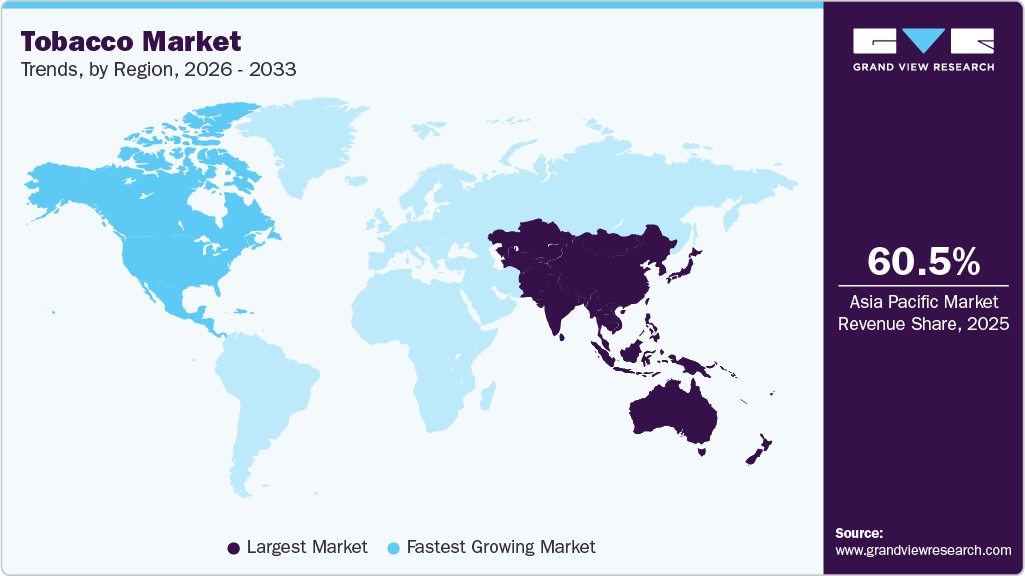
The global tobacco market size was valued at USD 926.0 billion in 2025 and is projected to grow from USD 947.7 billion in 2026 to USD 1,144.2 billion by 2033, at a CAGR of 2.7% from 2026 to 2033. Asia Pacific dominated the market with the largest revenue share of 60.5% in the global market in 2025. The market is undergoing a profound transformation driven by divergent forces in developed and emerging economies.

Key Market Trends & Insights
- By product: Cigarettes segment held the largest market share of 83.5% in 2025.
- By distribution channel: Supermarket/Hypermarket segment held the largest market share of 50.1% in 2025.
Regional Highlights
- Largest regional market: Asia Pacific (60.5% revenue share, 2025)
- Fastest-growing regional market: North America (highest CAGR, 2026-2033)
- By country: The U.S. held the largest market share in 2025.
Market Size & Forecast
- Market size in 2025: USD 926.0 Billion
- Estimated market size in 2026: USD 947.7 Billion
- Projected market size by 2033: USD 1,144.2 Billion
- CAGR (2026-2033): 2.7%
In high‑income regions, traditional cigarette volumes continue to contract as stricter nicotine‑product regulations, escalating excise taxes, and heightened public‑health awareness curb consumption. Simultaneously, the rapid ascent of reduced‑risk alternatives such as e‑cigarettes, heated‑tobacco devices, and nicotine pouches has reshaped the product mix, with many manufacturers reallocating R&D and marketing spend toward these categories to capture a younger, tech‑savvy cohort that values perceived harm reduction and novel flavors.The tobacco industry is witnessing a trend of new product launches, which intrigues consumers to consume tobacco and thereby drives the tobacco products market growth. The tobacco industry continues to thrive due to various influential factors, persisting despite ongoing endeavors to diminish tobacco consumption and address its detrimental effects. A prominent force behind its resilience lies in the addictive properties of nicotine, a substance inherently present in tobacco products. Nicotine engenders a formidable combination of physical and psychological dependence, thereby fueling an enduring demand for tobacco among its existing users.
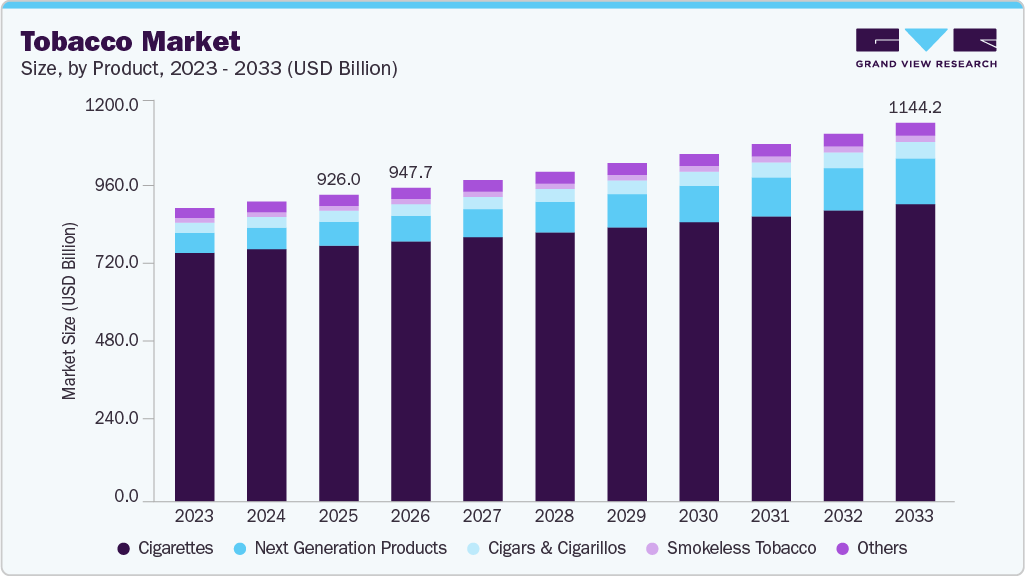
A major factor contributing to the market's resilience is the significant global consumer base. Despite increasing awareness of the health risks associated with the use, there are still millions of people worldwide who either choose to start smoking or struggle to quit. This large consumer base provides a consistent demand for tobacco products. In addition, regulatory trends such as flavor bans, plain‑pack mandates, and limits on advertising further accelerate the shift away from combustible cigarettes while creating a competitive arena for novel nicotine delivery systems that can navigate the evolving compliance landscape.
Although traditional cigarette smoking has declined globally from 1.38 billion users in 2000 to about 1.2 billion in 2024, tobacco firms are actively diversifying beyond combustibles by introducing next-generation products, especially e-cigarettes, heated tobacco systems, and nicotine pouches, to retain customers and capture new segments. This transition reflects both consumer demand for perceived “reduced risk” offerings and industry efforts to adapt to tightening regulations on conventional tobacco. These products are gaining notable traction, with e-cigarette use alone estimated at more than 100 million users worldwide (86 million adults and 15 million adolescents), indicating a shift toward alternative nicotine delivery formats even as overall smoked tobacco use declines.
Brands are increasingly investing in product diversification, including premium cigarettes with low tar, flavored tobacco variations, organic or additive-free blends, and niche specialty products that cater to evolving consumer tastes. Premium and flavored tobacco varieties now represent a meaningful share of product offerings, and around 45% of adult smokers globally prefer menthol or flavored options, reflecting consumers’ desire for differentiated experiences even within a regulated tobacco products market context.
Emerging consumer behavior trends show a gradual pivot toward online retail, mobile commerce, and direct-to-consumer engagement as complementary channels to traditional convenience and grocery outlets. While brick-and-mortar retail remains dominant, digital platforms are increasingly influencing access to tobacco products, especially next-gen alternatives, enhancing reach and brand engagement beyond local supermarkets and tobacco shops.
The addition of a new range of tobacco products shows a moderate increase in both the number of individuals who smoke and the percentage of people who try the new products. The use of several intriguing methods in the advertising strategy has resulted in considerable advancements and has proven to be a means of remaining competitive and sustaining smoking market dominance. For instance, specific products are promoted and advertised more intensely to specific demographic or racial groups. According to the Centers for Disease Control and Prevention (CDC) estimates, Marlboro, Newport, and Camel, whose marketing campaigns specifically targeted the youth, were the highest marketing spenders.
Major companies have diversified their strategies to develop new product ranges under the NGP category. Phillip Morris International, for instance, has carried out several investments in heated tobacco products. The company is strongly focused on delivering smoke-free heated tobacco products, as it envisions this category to be a game-changer in the industry. Regulations significantly impact the tobacco industry, affecting areas such as product development, marketing, and sales. Strict regulatory frameworks can influence product packaging and advertising restrictions, and impose limitations on where tobacco products can be sold or used. This can lead to increased compliance costs and impact the overall smoking market dynamics. Moreover, regulations such as public smoking bans and increased taxation on tobacco products aim to reduce tobacco consumption, thereby affecting industry revenues. Regulatory pressures also drive innovation in the industry as companies seek to adapt and comply with evolving legal standards.
Product substitutes for tobacco include nicotine replacement therapies like patches, gum, and lozenges, which help reduce cravings and withdrawal symptoms. Other alternatives include e-cigarettes and vaping products that deliver nicotine without combustion and non-nicotine options like herbal cigarettes. Smokeless tobacco products, such as snus or chewing tobacco, also serve as substitutes, though they carry their health risks. In addition, pharmaceutical aids like varenicline and bupropion are prescribed to assist in quitting smoking. These substitutes vary in their effectiveness and health implications.
Consumer Insights For The Tobacco Market
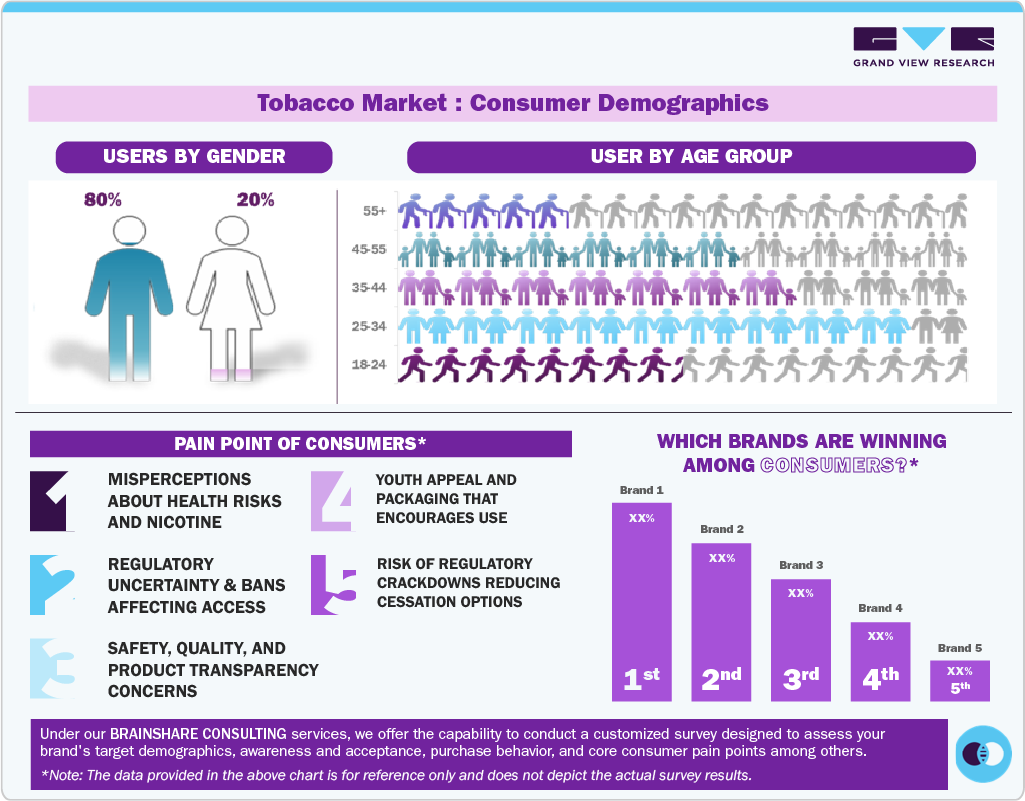
The increasing preference for non-combustible nicotine delivery formats as many consumers, especially current and former smokers, transition away from traditional cigarettes. Products such as e-cigarettes and nicotine pouches are increasingly viewed as smoke-free alternatives that may help reduce exposure to the harms of combustion. In a 2024 survey of adult nicotine pouch users in the U.S., 42 % reported using pouches to quit smoking, and 92 % of former smokers felt their well-being improved after making the switch, indicating consumer inclination toward perceived harm-reduction options.
Youth preferences continue to influence market dynamics, though with mixed signals. Survey data from the U.S. indicate that e-cigarettes remain the most commonly used tobacco product among youth, although youth e-cigarette use declined from 7.7 % to 5.9 % between 2023 and 2024. Nicotine pouches and other oral products have emerged as the second most common category among middle and high school respondents, reflecting the diversification of product choice among younger consumers.
Consumer behaviour among young adults and adolescents is increasingly characterized by multi-product nicotine use. Dual use of cigarettes and e-cigarettes is common, and the combination of vaping with oral nicotine pouches has also risen significantly. This pattern suggests that many users are experimenting with different formats rather than exclusively switching away from cigarettes, underscoring complex preference profiles shaped by accessibility, convenience, and perceived satisfaction.
Product Insights
The cigarettes led the market, accounting for a share of 83.5% in 2025. Cigarette consumption has remained stable due to the introduction of flavored and menthol cigarettes. This is driving cigarette market growth. It can also be attributed to the availability of small cigarettes that facilitate smaller amounts of tobacco consumption for smokers who wish to cut down on their smoking habit. Cigarettes have an inelastic demand, which is a major factor that has driven the cigarette market growth despite the heavy taxation that has been levied across the globe.
The rising popularity of partying and pub culture among millennials and working-class communities has especially fueled the demand for flavored and unflavored cigarettes around the world in recent years. Furthermore, emerging economies, such as India and Thailand, are seeing a significant increase in cigarette demand as a result of the rising youth population in these countries. The market is expected to benefit greatly from the launch of NGPs, which is also expected to become the fastest-growing segment over the forecast period.
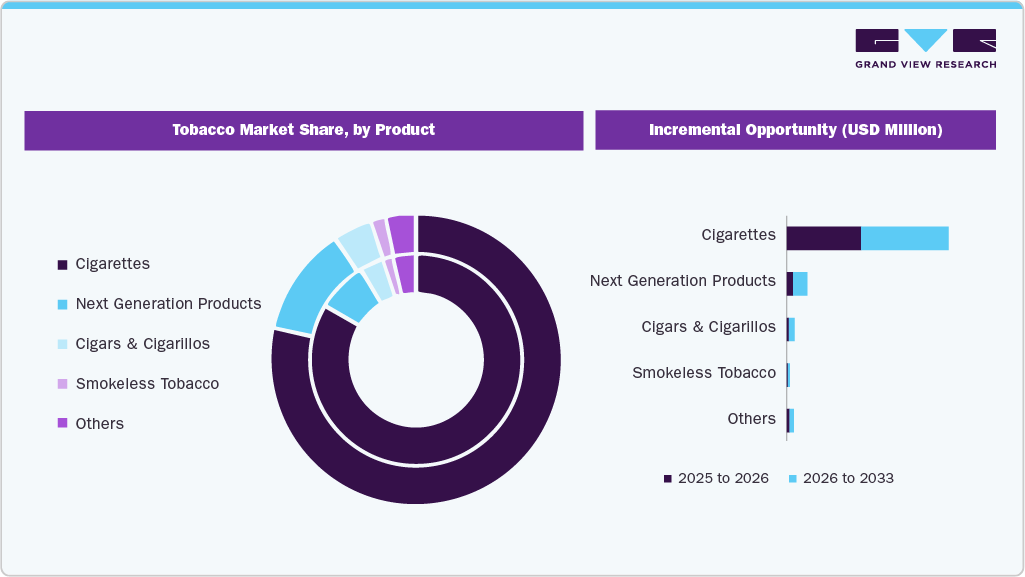
Next-generation tobacco products market is expected to grow at a CAGR of 8.6% from 2026 to 2033. The growth of next-generation products (NGPs) in the tobacco industry is influenced by various important factors. These innovative offerings, such as tobacco heating products, vapor products, snacks, and e-cigarettes, are aimed at minimizing the health hazards traditionally linked to smoking. This is a significant appeal for today's health-conscious consumers who are seeking alternatives to conventional smoking methods that pose fewer health risks. Moreover, improvements in device design, battery life, flavor customization, temperature control, and nicotine delivery precision enhance consumer appeal, especially among tech-savvy users. Manufacturers are integrating features like adjustable power settings and real-time usage monitoring to differentiate offerings and attract broader user segments.
Distribution Channel Insights
The sales of tobacco through supermarkets/hypermarkets led the market with a revenue share of 50.1% in 2025. A major driver for supermarkets and hypermarkets leading tobacco sales is consumer convenience and broad purchasing behavior. Many tobacco users prefer to buy products while doing routine grocery or household shopping, making large retail formats a one-stop option that combines tobacco with everyday goods. Supermarkets and hypermarkets also leverage competitive pricing strategies, promotions, and loyalty programs that attract repeat purchases; these retailers’ extensive physical footprint across urban and suburban markets increases product visibility and accessibility for a wide demographic, reinforcing their share. In addition, established chains integrate tobacco into checkout and impulse purchase zones, further boosting volumes in these high-footfall environments.
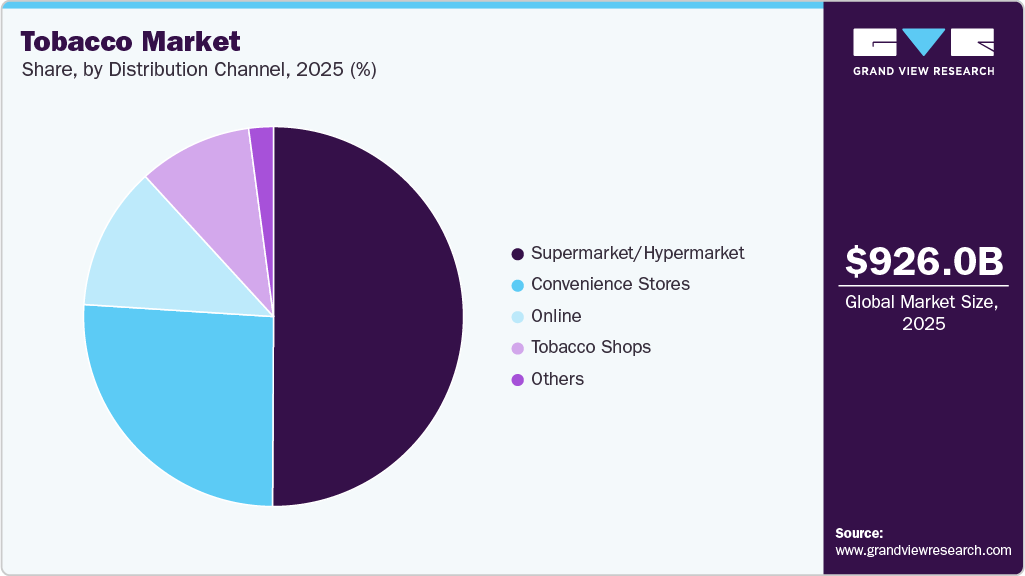
The sales of tobacco through tobacco shops are expected to grow at a CAGR of 3.4% from 2026 to 2033. Tobacco shops are expected to grow significantly because they cater specifically to tobacco product enthusiasts, offering specialized selections, expert advice, and premium or exclusive blends that are not always available in supermarkets or convenience stores. These shops often stock a wider variety of traditional, flavored, or handcrafted products appealing to discerning smokers and collectors—helping them build a loyal customer base over time.
Regional Insights
The tobacco market in North America is expected to grow at a CAGR of 3.6% from 2026 to 2033. North America’s market is being driven by the rapid expansion of next-generation products, including e-cigarettes, heated tobacco devices, and oral nicotine pouches. According to the U.S. Food and Drug Administration (FDA), e-cigarettes remain the most commonly used tobacco product among youth and young adults, indicating sustained demand for alternative nicotine formats. In addition, large tobacco manufacturers such as Philip Morris International (PMI) have reported increasing strategic focus on smoke-free products in North America, reinforcing portfolio transformation away from combustible cigarettes. Regulatory tightening on menthol cigarettes and flavored cigars is further accelerating the transition toward non-combustible offerings.
U.S. Tobacco Market Trends
The tobacco market in the U.S. accounted for the largest revenue share in North America in 2025. The U.S. market continues to account for the largest share within North America, driven by advertising of vaping products and high consumer adoption of smokeless and vapor products. Data from the Centers for Disease Control and Prevention (CDC) indicate that millions of U.S. adults use e-cigarettes, supporting sustained category demand. In addition, the expansion of nicotine pouch brands such as Swedish Match (a subsidiary of PMI) under the ZYN portfolio reflects rising interest in discreet, smoke-free formats. Premium cigarette segments and price segmentation strategies also sustain revenue stability despite overall smoking prevalence declines.
Europe Tobacco Market Trends
The tobacco market in Europe is expected to grow at a CAGR of 2.8% from 2026 to 2033. In Europe, growth during the forecast period is supported by product diversification and regulatory evolution under frameworks such as the European Commission Tobacco Products Directive (TPD). While cigarette consumption continues to decline gradually in Western Europe, heated tobacco products and vaping devices are expanding in markets such as Italy, Poland, and Eastern Europe. Major players, including British American Tobacco (BAT), have expanded reduced-risk portfolios across the region, driving innovation-led growth even amid strict advertising controls.
The UK tobacco market is expected to grow at a substantial CAGR of 4.1% from 2026 to 2033. The UK tobacco industry is being shaped by strong regulatory oversight combined with harm-reduction policy approaches. Public health bodies such as NHS England have supported vaping as a smoking cessation tool for adults, which has accelerated the adoption of e-cigarettes relative to traditional cigarettes. At the same time, continued excise tax increases on combustible tobacco products have shifted consumer preference toward vapor and heated alternatives. Retail channel innovation, including specialist vape shops and online distribution, also contributes to forecast growth.
Asia Pacific Tobacco Market Trends
The tobacco market in the Asia Pacific held the largest revenue share of 60.5% in 2025, primarily due to large smoking populations in China, Indonesia, Japan, and India. According to the World Health Organization (WHO), the Western Pacific region accounts for a substantial proportion of the world’s smokers, underpinning baseline demand. Growth is further driven by the expansion of heated tobacco systems in Japan and South Korea, along with rising disposable income and urbanization across Southeast Asia. Domestic manufacturing strength and strong retail penetration also sustain market leadership.
India tobacco market is expected to grow at a CAGR of 2.9% from 2026 to 2033. India’s tobacco market growth is influenced by its large adult population and diversified consumption patterns, including cigarettes, bidis, and smokeless tobacco. The Global Adult Tobacco Survey (GATS) has consistently reported significant adult tobacco usage across rural and urban areas, supporting volume demand. In addition, economic factors such as the affordability of low-cost tobacco formats and the expansion of retail networks contribute to steady consumption. Regulatory measures, including pictorial health warnings and GST taxation, shape product pricing strategies and segmentation within the tobacco industry.
Central & South America Tobacco Market Trends
The tobacco market in CSA is expected to grow at a CAGR of 2.1% from 2026 to 2033. In Central and South America, growth is driven by demographic expansion, rising urbanization, and gradual premiumization trends. Countries such as Brazil and Argentina maintain large consumer bases, while multinational players continue to invest in distribution and smoke-free alternatives. According to the Pan American Health Organization (PAHO), smoking prevalence remains significant in parts of the region, sustaining underlying demand despite regulatory tightening. Informal retail networks and cross-border trade dynamics also influence market performance.
Middle East & Africa Tobacco Market Trends
The tobacco market in the MEA is expected to grow at a CAGR of 3.1% from 2026 to 2033. The Middle East & Africa region is supported by population growth, increasing disposable income in Gulf countries, and strong demand for traditional tobacco formats such as shisha and waterpipe tobacco. The World Health Organization reports that tobacco use remains prevalent in several Middle Eastern and African nations, particularly among male populations. In parallel, modern retail expansion and the gradual introduction of vaping products in urban centers are contributing to the diversification of nicotine product offerings. Regulatory heterogeneity across countries creates both challenges and opportunities for manufacturers operating in the region.
Key Tobacco Company Insights
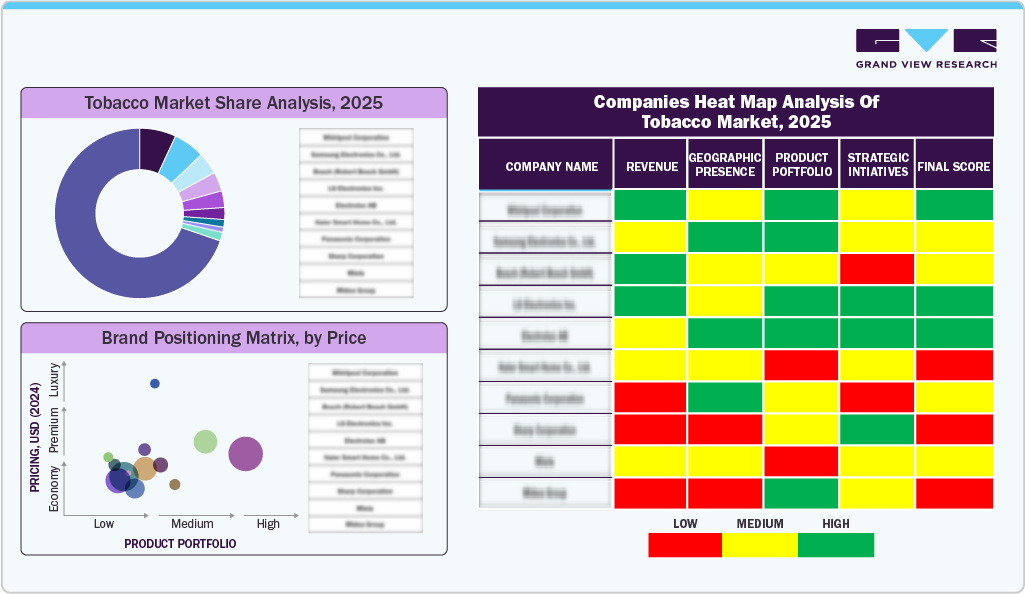
The global tobacco industry is highly concentrated, with a handful of multinational corporations controlling a major portion of global revenues and volumes. Leading firms include Philip Morris International (PMI), British American Tobacco (BAT), Japan Tobacco International (JTI), Imperial Brands, and Altria Group, alongside significant regional players such as China National Tobacco Corporation and ITC Limited in India. Collectively, these firms account for a majority share of global cigarette production and distribution, while also expanding into alternative categories like heated tobacco and oral nicotine products.
Key Tobacco Companies:
The following key companies have been profiled for this study on the tobacco market.
- Scandinavian Tobacco Group A/S
- Swedish Match AB
- Altria Group, Inc.
- KT&G Corp.
- Imperial Brands
- Philip Morris Products S.A.
- British American Tobacco
- Japan Tobacco Inc.
- China Tobacco
- ITC Ltd.
Recent Developments
-
In January 2026, launched as a next-gen heated tobacco system with adjustable heating modes and Bluetooth connectivity for enhanced user control, Ploom AURA debuted as part of JTI’s global portfolio expansion in 2025. This device represents the latest evolution in Japan Tobacco’s HTP lineup.
-
In January 2026, unveiled by a partnership between Hunan Tobacco and Heli Group, the Usonic Dual heated tobacco system uses omnidirectional heating and AI-driven temperature control. It won recognition in 2026, showcasing how HTP products are incorporating digital optimization features to enhance user experience.
-
In March 2025, BAT introduced VELO Smooth Peppermint Medium and VELO Breezy Mango Intense nicotine pouches in Japan, expanding flavor and strength options in its oral nicotine portfolio in early 2026.
Tobacco Market Report Scope
Report Attribute
Details
Market size in 2025
USD 926.0 billion
Estimated Market size in 2026
USD 947.7 billion
Projected Market size by 2033
USD 1,144.2 billion
Growth rate
CAGR of 2.7% from 2026 to 2033
Actuals
2021 - 2025
Forecast period
2026 - 2033
Quantitative units
Revenue in USD million/billion and CAGR from 2026 to 2033
Report coverage
Revenue forecast, company ranking, competitive landscape, growth factors, and trends
Segments covered
Product, distribution channel, region
Regional scope
North America; Europe; Asia Pacific; CSA; MEA
Country scope
U.S.; Canada; Mexico UK; Germany; France; Italy; Spain; Bulgaria; Scandinavia; India; Japan; China; Indonesia; Malaysia; Brazil; UAE; Egypt; South Africa
Key companies profiled
Scandinavian Tobacco Group A/S; Swedish Match AB; Altria Group, Inc.; KT&G Corp.; Imperial Brands; Philip Morris Products S.A.; British American Tobacco; Japan Tobacco Inc.; China Tobacco; ITC Ltd.
Customization scope
Free report customization (equivalent up to 8 analysts’ working days) with purchase. Addition or alteration to country, regional & segment scope.
Pricing and purchase options
Avail customized purchase options to meet your exact research needs. Explore purchase options
Global Tobacco Market Report Segmentation
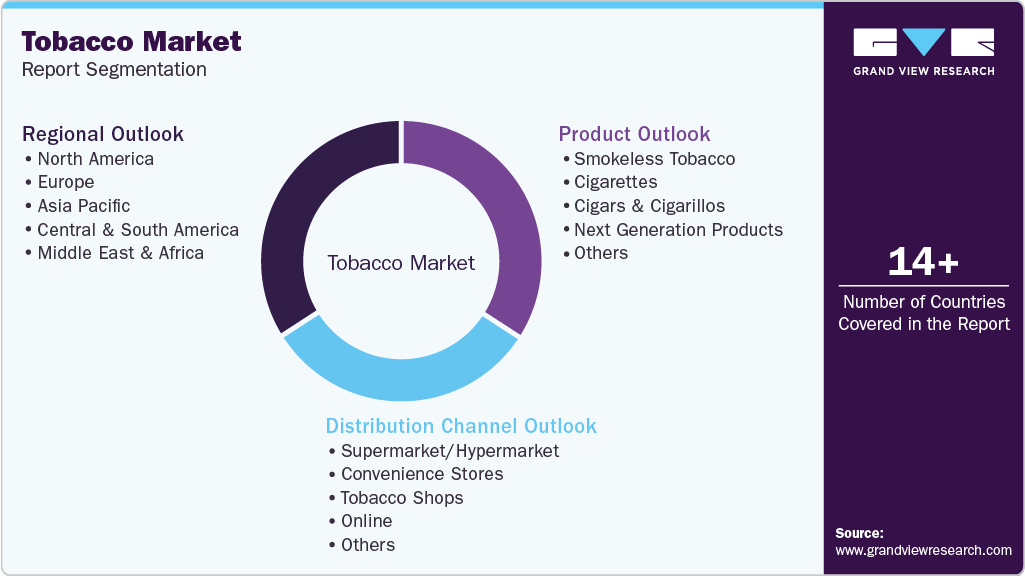
This report forecasts revenue growth at global, regional & country levels and provides an analysis of the latest trends and opportunities in each of the sub-segments from 2021 to 2033. For this study, Grand View Research has segmented the global tobacco market report based on product, distribution channel, and region:
-
Product Outlook (Revenue, USD Billion, 2021 - 2033)
-
Smokeless Tobacco
-
Cigarettes
-
Cigars & Cigarillos
-
Next Generation Products
-
Others
-
-
Distribution Channel Outlook (Revenue, USD Billion, 2021 - 2033)
-
Supermarket/Hypermarket
-
Convenience Stores
-
Tobacco Shops
-
Online
-
Others
-
-
Regional Outlook (Revenue, USD Billion, 2021 - 2033)
-
North America
-
U.S.
-
Canada
-
Mexico
-
-
Europe
-
UK
-
Germany
-
France
-
Italy
-
Spain
-
Bulgaria
-
Scandinavia
-
-
Asia Pacific
-
China
-
Japan
-
India
-
Indonesia
-
Malaysia
-
-
Central & South America
-
Brazil
-
-
Middle East & Africa
-
UAE
-
South Africa
-
Egypt
-
-
Frequently Asked Questions About This Report
North America is the fastest-growing region over the forecast period.
The cigarettes segment held the market with the largest revenue share of 83.5% in 2025, while next generation products is the fastest-growing segment.
Key players are Scandinavian Tobacco Group A/S, Swedish Match AB, Altria Group, Inc., KT&G Corp., Imperial Brands, Philip Morris Products S.A., British American Tobacco, Japan Tobacco Inc., China Tobacco, ITC Ltd.
Key factors include the addition of new smokers in the developing regions of Asia and Africa, excessive marketing campaigns run by major companies, and a trend of new product launches which intrigues consumers to consume tobacco.
Asia Pacific dominated with a revenue share of 60.5% in 2025.
The supermarkets/hypermarkets segment accounted for the largest share of 50.1% in 2025, while tobacco shops is the fastest-growing segment.
About the Author(s)
Alcohol & Tobacco Research Team
Consumer Goods · Alcohol & TobaccoThis report was authored by the alcohol & tobacco research team at Grand View Research - comprising two research analysts, one senior research analyst, and one industry expert - with specialized expertise in the alcohol & tobacco segment of the consumer goods industry. All findings are based on proprietary consumer goods databases, executive interviews, and regulatory analysis, subject to internal peer review prior to publication.
Last Updated:
Speak to Analyst


Customize this report to your needs — add regions, segments, or data points, with 20% free customization.
Or view our licence options:


ISO 9001:2015 & 27001:2022 Certified
We are GDPR and CCPA compliant! Your transaction & personal information is safe and secure. For more details, please read our privacy policy.












