
- Home
- »
- Pharmaceuticals
- »
-
Acute Pancreatitis Market Size & Share Report, 2026-2033GVR Report cover

Acute Pancreatitis Market (2026 - 2033)
Size, Share & Trends Analysis Report By Drug Class (Analgesics, Antibiotics, Enzyme Inhibitors), By Distribution Channel (Hospital Pharmacies, Retail Pharmacies, Online Pharmacies), By Region, And Segment Forecasts
Market Size, 2025
$3.6BMarket Estimate, 2026
$3.8BMarket Forecast, 2033
$5.6BCAGR, 2026–2033
5.6%Acute Pancreatitis Market Summary
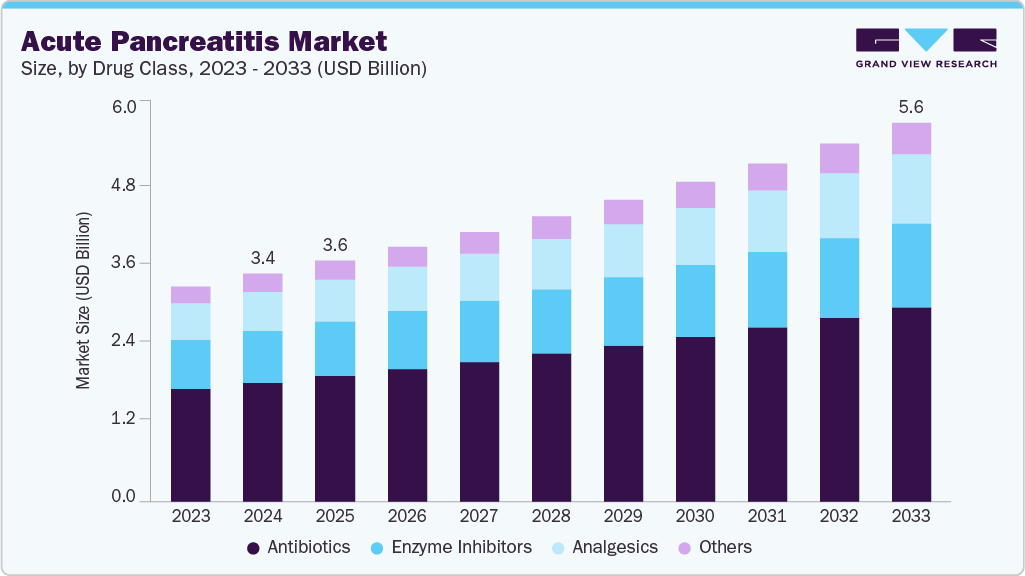
The global acute pancreatitis market size was valued at USD 3.6 billion in 2025 and is projected to grow from USD 3.8 billion in 2026 to USD 5.6 billion in 2033, at a CAGR of 5.8% from 2026 to 2033. North America dominated the market, accounting for a revenue share of 40.0% in 2025. The global market for acute pancreatitis is largely driven by rising awareness of pancreatic health, an increasing prevalence of lifestyle-related disorders, and advances in diagnostic and therapeutic approaches.
 Source: Grand View Research, IR Documents, Primary Interviews, Paid DatabasesTo learn more about this report,
 Download Free Sample Report
Key Market Trends & Insights
- By drug class: The antibiotics segment held the largest market share of over 50.0% in 2025.
- By distribution channel: The hospital pharmacies segment held the largest market share of around 60.0% in 2025.
Regional Highlights
- Largest regional market: North America (40.0% revenue share, 2025)
- Fastest-growing regional market: Asia Pacific (highest CAGR, 2026-2033)
Market Size & Forecast
- Market size in 2025: USD 3.6 Billion
- Estimated market size in 2026: USD 3.8 Billion
- Projected market size by 2033: USD 5.6 Billion
- CAGR (2026-2033): 5.8%
Prism AI by Grand View Research Free to tryAsk a question about the acute pancreatitis marketTry asking✓Every figure cited from GVR research Prefer the report? Download free sample →
Growing adoption of minimally invasive procedures, improved imaging technologies, and the development of novel enzyme replacement and anti-inflammatory treatments are further supporting market expansion. In addition, ongoing clinical research and enhanced healthcare infrastructure continue to strengthen growth prospects for acute pancreatitis management.The global market for acute pancreatitis is consistently growing, driven by evolving healthcare practices, lifestyle changes, and technological advancements. The increasing prevalence of risk factors such as gallstones, excessive alcohol intake, obesity, and metabolic disorders has contributed to a rising incidence of acute pancreatitis (AP), a serious inflammatory condition of the pancreas. Globally, AP affects approximately 30-40 individuals per 100,000 population annually, according to the National Library of Medicine, and is a major cause of gastrointestinal hospitalizations in the U.S. These dynamics are fueling demand for advanced diagnostic tools and therapeutic interventions. Cutting-edge imaging technologies, including endoscopic ultrasound (EUS), CT scans, and MRI, enhance early diagnosis and treatment precision, while minimally invasive procedures and enzyme replacement therapies improve recovery outcomes and shorten hospital stays.
Market Concentration & Characteristics
The market for acute pancreatitis exhibits moderate innovation, driven by the development of advanced therapeutic agents, enzyme inhibitors, and targeted anti-inflammatory treatments. Companies are investing in research to improve patient outcomes, reduce complications, and shorten hospital stays. Novel drug delivery systems, including intravenous formulations and enzyme replacement therapies, enhance treatment efficacy. Continuous clinical research and development help companies differentiate their offerings and gain a competitive edge in hospital and specialty care settings.
The market has high entry barriers due to substantial R&D costs, stringent clinical trial requirements, and complex regulatory approvals. Established hospital protocols and physician preferences for proven therapies pose additional challenges. Intellectual property protections and patent restrictions limit the adoption of generics and biosimilars. These factors collectively maintain moderate market concentration and restrict competition from new entrants.
Regulatory oversight strongly affects market dynamics by ensuring the safety, efficacy, and quality of therapeutics. Approval processes from agencies such as the FDA, EMA, and other national authorities are rigorous and time-consuming. Compliance with labeling, manufacturing, and post-market surveillance standards is mandatory. Regulatory changes in hospital formulary approvals and insurance reimbursement policies influence treatment adoption.
Non-pharmacological interventions, such as nutritional management, lifestyle modifications, and minimally invasive procedures, serve as alternatives. Within pharmaceuticals, enzyme replacement, biologics, and anti-inflammatory agents provide treatment options. The availability of supportive care and generic medications affects reliance on branded drugs, thereby influencing market growth and pricing.
Market growth is driven by the increasing prevalence of gallstones, alcohol-related pancreatitis, and metabolic disorders in emerging regions. Developed markets continue to dominate due to advanced hospital infrastructure, early diagnosis, and higher healthcare spending. Regional differences in healthcare policies, awareness, and treatment protocols influence market penetration. Companies leverage local partnerships and hospital networks to strengthen global presence and diversify revenue streams.
Analyst Perspective
The market is evolving as the global incidence of pancreatitis continues to rise, driven by increasing cases of gallstones, alcohol-related disorders, hypertriglyceridemia, and metabolic diseases. Early diagnosis and advances in critical care are improving patient management, while research efforts are focused on developing targeted therapies that address the underlying inflammatory processes. Expanding clinical pipelines are creating new treatment opportunities for patients with moderate and severe forms of the disease. Companies with strong gastroenterology expertise, innovative drug pipelines, and robust clinical development capabilities are likely to strengthen their market position. Market growth is expected to depend on successful clinical advancements, timely regulatory approvals, improved access to novel therapies, reduced complications, and improved patient outcomes.
Drug Class Insights
The antibiotics segment led the market, with a revenue share of over 50.0% in 2025, owing to its use in treating complications such as infected pancreatic necrosis and infections in patients with severe acute pancreatitis. Antibiotic prophylaxis is generally not recommended for all patients with mild or moderate acute pancreatitis. However, it becomes indispensable in cases of infected pancreatic necrosis and in patients with severe acute pancreatitis. Rising incidence of severe acute pancreatitis, coupled with effective diagnostic facilities, and the rising trends and guidelines of proactive interventions are driving their usage in the treatment and management of acute pancreatitis. Improved strategies and the development of individualized treatment methods may also play a role.
The analgesics segment is anticipated to grow at the fastest CAGR over the forecast period. It is driven by the rising prevalence of chronic pain conditions, such as arthritis, musculoskeletal disorders, and acute conditions such as pancreatitis, which often require effective pain management. Expanding healthcare access, particularly in emerging markets, and rising healthcare expenditures further fuel market growth.
Distribution Channel Insights
The hospital pharmacies segment led the market, accounting for around 60.0% of revenue in 2025. Pharmacists leverage their clinical expertise to ensure compliance with aggressive early management protocols. The hospital pharmacy segment is essential to the acute pancreatitis (AP) care pathway, driving therapeutic optimization and fiscal responsibility.
The online pharmacies segment is expected to grow at the fastest CAGR during the forecast period. These platforms streamline access to maintenance medications, such as costly pancreatic enzyme replacement therapy (PERT) and essential chronic pain management drugs, by offering convenient home delivery and potential cost savings. This directly combats non-adherence, a major driver of recurrence.
Regional Insights
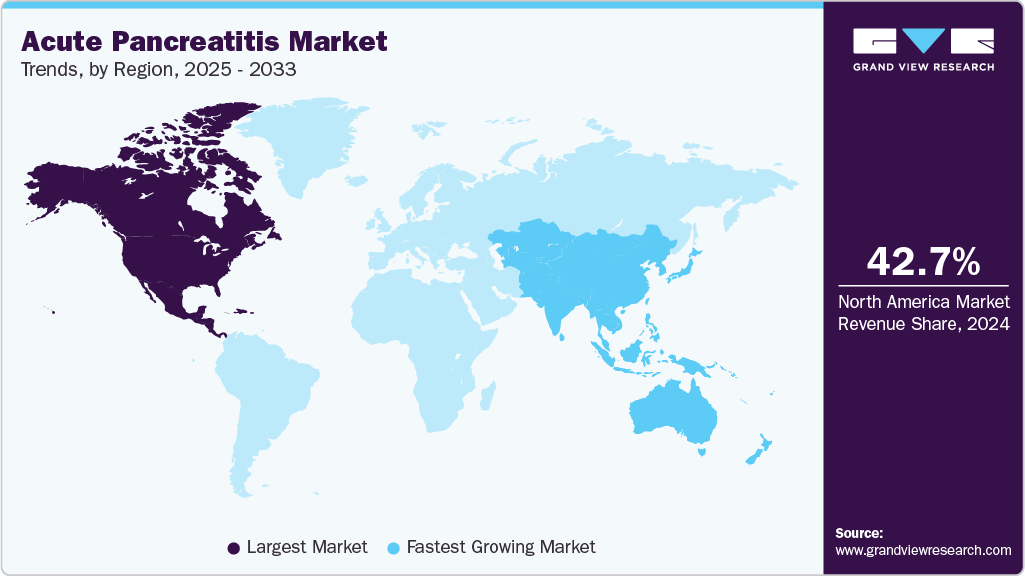
The acute pancreatitis industry in North America held the largest global market share of over 40.0% in 2025, driven by rising lifestyle-related risk factors such as obesity, gallstones, and excessive alcohol consumption. Increasing hospital admissions, high treatment costs, and the need for advanced diagnostic and therapeutic solutions fuel market demand. Strong healthcare infrastructure, growing awareness of pancreatic health, and ongoing research investments in targeted therapies further support market expansion, positioning North America as a leading region in the global acute pancreatitis landscape.
 To learn more about this report, Download Free Sample Report
U.S. Acute Pancreatitis Market Trends
The acute pancreatitis industry in the U.S. held the largest market share in 2025, owing to a growing volume of hospital admissions, rising rate of incidence of precipitating factors, including gallstones and alcohol disorders and a perpetual innovation in diagnostic as well as in treatment methods. Acute pancreatitis is known to be an indispensable form of the gastrointestinal-related admissions in U.S. Each year millions of these cases are admitted to hospital for acute pancreatitis treatment. The increasing focus on early illness diagnosis, timely treatment, and efficient treatment practices is expected to increase demand for appropriate and adjunctive therapies.
Europe Acute Pancreatitis Market Trends
The acute pancreatitis industry in Europe is expected to register significant growth over the forecast period. The rising incidence of pancreatic diseases fuels this growth, expanding healthcare expenditure and spurring innovations in diagnostic and treatment methodologies. Growing evidence-based approaches to the management of pancreatic disorders have significantly improved health outcomes and helped increase the adoption rate. The existence of well-established hospital systems and widespread accessibility to specialized medical care are boosting the growth of the market in the region.
The UK acute pancreatitis industry shows steady growth due to the increasing incidence of gallstone-related and alcohol-induced pancreatitis. Hospitals and gastroenterology clinics adopt evidence-based protocols for early diagnosis and intervention. Minimally invasive procedures, enzyme replacement therapies, and supportive care are widely used. National Health Service (NHS) initiatives enhance access to hospital care, while retail pharmacies support the availability of adjunct medications. Growing awareness among healthcare providers and patients drives timely management. Advanced therapeutic approaches and clinical guidelines support consistent market demand.
The acute pancreatitis industry in Germany represents a significant share of Europe’s market. High prevalence of gallstones and alcohol-related pancreatitis drives hospital admissions and therapeutic interventions. Advanced imaging techniques and intensive care units enable early diagnosis and treatment. Hospitals emphasize enzyme therapy, nutritional management, and minimally invasive procedures. The presence of leading pharmaceutical and medical device companies supports the adoption of novel formulations. Awareness campaigns and evidence-based clinical protocols increase treatment efficiency. Germany’s mature healthcare system ensures robust and consistent market performance.
France’s acute pancreatitis industry demonstrates moderate growth in acute pancreatitis treatments. Rising cases of gallstone- and drug-induced pancreatitis contribute to hospital-based demand. Hospitals and specialized clinics implement enzyme replacement, intravenous fluid therapy, and nutritional interventions. Retail pharmacies provide supportive medications for symptom management. Pharmaceutical companies focus on novel enzyme formulations and adjunctive therapies. National health coverage facilitates early diagnosis and intervention. Increasing awareness of risk factors, such as alcohol consumption and metabolic disorders, supports broader utilization. France’s structured healthcare network ensures steady market growth.
Asia Pacific Acute Pancreatitis Market Trends
The acute pancreatitis industry in Asia Pacific is anticipated to experience the fastest growth over the coming years. A robust trajectory is underpinned by a confluence of accelerating risk factors, notably the rising incidence of gallstones and hypertriglyceridemia, alongside increasing alcohol consumption across the region. Market growth is further fueled by improving healthcare access and infrastructure.
China’s acute pancreatitis industry is driven by rising obesity rates and changing dietary habits. Forecasts from South China Morning Post Publishers indicate that nearly 65% of the Chinese population will be overweight by 2030, significantly increasing the risk of obesity-related conditions, including acute pancreatitis. The growing burden of lifestyle diseases, expanding healthcare infrastructure, and improved diagnostic capabilities are fueling demand for advanced treatment options. Government initiatives promoting early diagnosis, hospital capacity expansion, and increased R&D in digestive health are further supporting market growth across China’s healthcare landscape.
The acute pancreatitis industry in Japan shows steady growth driven by an aging population and rising cases of metabolic syndrome-related pancreatitis. Hospitals and clinics focus on early detection and minimally invasive treatment approaches. Enzyme replacement therapy, intravenous fluids, and nutritional support are standard interventions. High penetration of specialty hospitals ensures access to advanced care. Awareness of post-surgical and drug-induced pancreatitis supports the adoption of adjunctive treatments. Japan’s developed healthcare system and strong clinical guidelines facilitate consistent market expansion.
Latin America Acute Pancreatitis Market Trends
The acute pancreatitis industry in Latin America shows moderate growth, driven by rising alcohol consumption and gallstone prevalence. Hospitals and gastroenterology clinics adopt evidence-based protocols for diagnosis and treatment. Nutritional support, enzyme therapy, and minimally invasive interventions are widely used. Emerging generic manufacturers enhance affordability and accessibility. Patient awareness and clinical adoption of modern treatment practices improve outcomes. Regional healthcare improvements and the expansion of hospital networks support steady market growth across the region.
The Brazil acute pancreatitis industry dominated the Latin America market in 2025 due to growing healthcare access and high prevalence of alcohol- and gallstone-related pancreatitis. Hospitals implement advanced diagnostic and minimally invasive treatment strategies. Retail and hospital pharmacies provide access to adjunctive therapies and nutritional supplements. Pharmaceutical companies focus on innovative enzyme formulations and supportive medications. Public health initiatives targeting early detection and lifestyle modification enhance treatment adoption. Brazil’s improving healthcare infrastructure ensures long-term market growth.
Middle East & Africa Acute Pancreatitis Market Trends
The acute pancreatitis industry in MEA demonstrates gradual growth, driven by increasing prevalence of alcohol- and gallstone-induced pancreatitis and improving healthcare infrastructure. Hospitals and clinics adopt advanced diagnostic techniques, enzyme therapy, and minimally invasive procedures. Awareness among clinicians and patients enhances early detection and the adoption of treatment. Regional players are expanding therapeutic options and hospital distribution networks. Healthcare improvements, combined with increasing adoption of supportive care and enzyme replacement therapies, support steady market expansion.
The Saudi Arabia acute pancreatitis industry represents the leading MEA market with growing demand for acute pancreatitis treatments. Hospitals and clinics focus on minimally invasive interventions, enzyme therapy, and nutritional support. The rising prevalence of gallstones and drug-induced pancreatitis drives hospital admissions. Retail pharmacies support the availability of adjunct medications. Healthcare providers adopt early detection and evidence-based treatment protocols. Awareness of lifestyle-related risk factors encourages timely management. Saudi Arabia’s advanced healthcare system ensures consistent market growth.
Key Acute Pancreatitis Company Insights
Key players in the global acute pancreatitis industry include AbbVie Inc., Amgen Inc., Baxter International Inc., Bayer AG, Boehringer Ingelheim International GmbH, and others lead with enzyme replacement and supportive care therapies. Baxter, Bayer, and Boehringer Ingelheim contribute through plasma-derived and adjunctive treatment solutions. Fresenius, Hikma, and J&J strengthen the market with nutritional and intravenous therapies. Merck, Novartis, and Sanofi focus on innovative drug formulations and hospital-based interventions. Strategic partnerships, clinical collaborations, and broad distribution networks enhance adoption and global market presence.
Key Acute Pancreatitis Companies:
The following key companies have been profiled for this study on the acute pancreatitis market:
-
AbbVie Inc.
-
Amgen Inc.
-
Baxter International Inc.
-
Bayer AG
-
Boehringer Ingelheim International GmbH
-
Lilly USA, LLC
-
Fresenius SE & Co. KGaA
-
Hikma Pharmaceuticals PLC
-
Johnson & Johnson
-
Merck & Co., Inc.
-
Novartis AG
-
Sanofi
Recent Developments
-
In June 2026, Ionis Pharmaceuticals received U.S. FDA approval for Tryngolza (olezarsen), the first therapy indicated to reduce the risk of acute pancreatitis in adults with severe hypertriglyceridemia, expanding preventive treatment options for high-risk patients.
-
In July 2024, Arrivo BioVentures received U.S. FDA Fast Track designation for RABI-767, an investigational therapy for patients with acute pancreatitis at risk of progressing to severe disease.
-
In June 2024, CalciMedica reported positive Phase 2b topline results for Auxora in patients with acute pancreatitis and systemic inflammatory response syndrome (SIRS), supporting its potential as a novel treatment for the condition.
Acute Pancreatitis Market Report Scope
Report Attribute
Details
Market size in 2025
USD 3.6 billion
Estimated market size in 2026
USD 3.8 billion
Projected market size by 2033
USD 5.6 billion
Growth rate
CAGR of 5.8% from 2026 to 2033
Base year for estimation
2025
Historical data
2021 - 2024
Forecast period
2026 - 2033
Quantitative units
Revenue in USD billion, and CAGR from 2026 to 2033
Report coverage
Revenue forecast, company ranking, competitive landscape, growth factors, and trends
Segments covered
Drug class, distribution channel, region
Regional Scope
North America; Europe; Asia Pacific; Latin America; Middle East & Africa
Country Scope
U.S.; Canada; Mexico; UK; Germany; France; Italy; Spain; Sweden; Norway; China; Japan; India; Australia; Thailand; South Korea; RoAPAC; Argentina; Brazil; Saudi Arabia; South Africa; Kuwait
Key companies profiled
AbbVie Inc.; Amgen Inc.; Baxter International Inc.; Bayer AG; Boehringer Ingelheim International GmbH; Lilly USA, LLC; Fresenius SE & Co. KGaA; Hikma Pharmaceuticals; Johnson & Johnson; Merck & Co., Inc.; Novartis AG; Sanofi
Customization scope
Free report customization (equivalent up to 8 analysts working days) with purchase. Addition or alteration to country, regional & segment scope.
Pricing and purchase options
Avail of customized purchase options to meet your exact research needs. Explore purchase options
Global Acute Pancreatitis Market Report Segmentation
This report forecasts revenue growth at global, regional, and country levels and provides an analysis of the latest industry trends and opportunities in each of the sub-segments from 2021 to 2033. For this study, Grand View Research has segmented the global acute pancreatitis market report based on drug class, distribution channel, and region:
- Drug Class Outlook (Revenue, USD Billion, 2021 - 2033)
- Analgesics
- Antibiotics
- Enzyme Inhibitors
- Others
- Distribution Channel Outlook (Revenue, USD Billion, 2021 - 2033)
- Hospital Pharmacies
- Retail Pharmacies
- Online Pharmacies
- Regional Outlook (Revenue, USD Billion, 2021 - 2033)
- North America
- U.S.
- Canada
- Mexico
- Europe
- Germany
- France
- Italy
- UK
- Spain
- Sweden
- Norway
- Asia Pacific
- China
- Japan
- India
- Australia
- Thailand
- South Korea
- RoAPAC
- Latin America
- Argentina
- Brazil
- Middle East & Africa
- Saudi Arabia
- South Africa
- Kuwait
- North America
Frequently Asked Questions About This Report
The global acute pancreatitis market size was valued at USD 3.6 billion in 2025 and is estimated at USD 3.8 billion for 2026.
The North America region dominated the global acute pancreatitis market, accounting for over 40.0% of revenue in 2025.
The antibiotics segment accounted for the largest revenue share of over 50.0% in 2025.
The global acute pancreatitis market is expected to grow at a CAGR of 5.8% from 2026 to 2033, reaching USD 5.6 billion.
Key players in the market include AbbVie Inc.; Amgen Inc.; Baxter International Inc.; Bayer AG; Boehringer Ingelheim International GmbH; Lilly USA, LLC; Fresenius SE & Co. KGaA; Hikma Pharmaceuticals; Johnson & Johnson; Merck & Co., Inc.; Novartis AG; Sanofi
About the Author(s)
Pharmaceuticals Research Team
Healthcare · PharmaceuticalsThis report was authored by the pharmaceuticals research team at Grand View Research - comprising two research analysts, one senior research analyst, and one industry expert - with specialized expertise in the pharmaceuticals segment of the healthcare industry. All findings are based on proprietary healthcare databases, executive interviews, and regulatory analysis, subject to internal peer review prior to publication.
Last Updated:
Speak to Analyst

Customize this report to your needs - add regions, segments, or data points, with 20% free customization.
Or view our licence options:


ISO 9001:2015 & 27001:2022 Certified
We are GDPR and CCPA compliant! Your transaction & personal information is safe and secure. For more details, please read our privacy policy.


