
- Home
- »
- Medical Devices
- »
-
Aesthetic Lasers Market Size, Share & Growth Report, 2033GVR Report cover

Aesthetic Lasers Market (2026 - 2033)
Size, Share & Trends Analysis Report By Application (Laser Hair Removal, IPL Laser Treatment, Laser Skin Resurfacing, Noninvasive Tightening, Laser-assisted Lipoplasty), By Region (North America, Europe, Asia Pacific, MEA), And Segment Forecasts
Market Size, 2025
$3.3BMarket Estimate, 2026
$3.6BMarket Forecast, 2033
$7.1BCAGR, 2026–2033
10.2%Aesthetic Lasers Market Summary
The global aesthetic lasers market size was valued at USD 3.3 billion in 2025 and is projected to grow from USD 3.6 billion in 2026 to USD 7.1 billion by 2033, growing at a CAGR of 10.2% from 2026 to 2033. The market in North America dominated with a revenue share of 40.8% in 2025. Continuous technological advancements, such as multi-wavelength and energy-efficient laser systems, are enhancing treatment safety and effectiveness.
 Source: Grand View Research, IR Documents, Primary Interviews, Paid DatabasesTo learn more about this report,
 Download Free Sample Report
 Key Market Trends & Insights
- By application: Laser hair removal segment held the largest market share of 29.1% in 2025.
- By application: Noninvasive skin tightening segment is experiencing rapid growth over forecast period.
Regional Highlights
- Largest regional market: North America (40.8% revenue share, 2025)
- Fastest-growing regional market: Asia Pacific (highest CAGR, 2026-2033)
- The aesthetic lasers industry in the U.S. held the largest revenue share in 2025.
Market Size & Forecast
- Market size in 2025: USD 3.3 Billion
- Estimated market size in 2026: USD 3.6 Billion
- Projected market size by 2033: USD 7.1 Billion
- CAGR (2026-2033): 10.2%
Three ways to get this report
Buy it, customize it, or ask a question.Ask an Analyst
Analyst response in 1 business day
- AccessReport author, directly
- Reply timeWithin 1 working day
- No sales callDirect answer only
- FormatEmail reply
- CostFree, no cost
Get the Full Report
What the study covers
- FormatsPDF · Excel · Dashboard
- Timeline2026–2033 annual, 2025 base
- Coverage20+ countries, 5 regions
- Companies10+ key players profiled
Customize the Report
20% free customization
- IncludeCountries, segments, points
- TailorTo your product definition
- ExtendDeeper competitor detail
- OrA fully bespoke study
- Turnaround5–10 working days
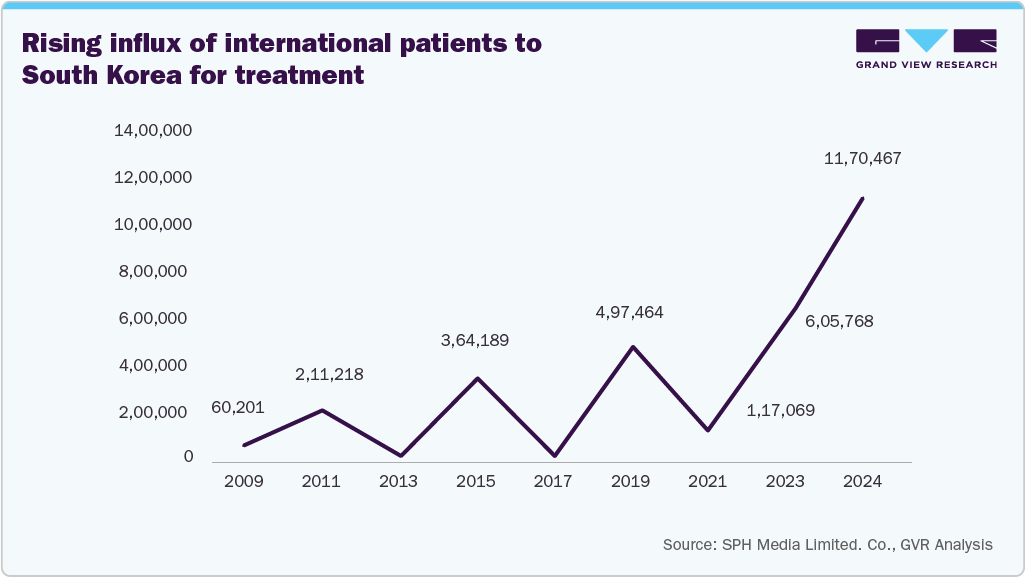
In addition, the expanding number of aesthetic clinics, favorable reimbursement trends in select regions, and strong demand from emerging markets further support market expansion. Medical aesthetic tourism has become a major demand-side catalyst for the global aesthetic lasers market, with South Korea standing out as a prime example. High concentrations of dermatology and cosmetic clinics particularly in areas such as Gangnam have positioned aesthetic procedures as a tourism-driven service rather than purely medical care. As international demand rises, a new segment has emerged: medical concierge services, which guide foreign patients to clinics and support them throughout their treatment journey, adding a new layer to the value chain.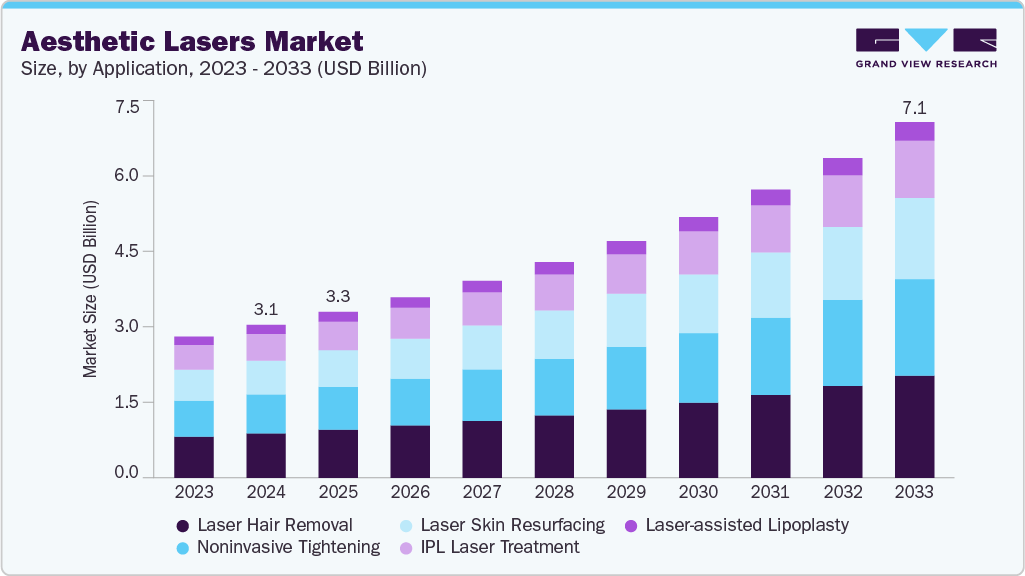 To learn more about this report, Download Free Sample Report
 In 2024 alone, 1.17 million foreign patients visited South Korea for medical treatment nearly double the number recorded in 2023 marking the highest level since records began in 2009. Importantly, dermatology accounted for 56.6% of these visits, overtaking plastic surgery for the first time.
 To learn more about this report, Download Free Sample Report
 Aesthetic laser procedures are uniquely suited to medical tourism because they are quick, minimally invasive, and require little to no downtime. As highlighted by Korean dermatologists, many laser-based skin treatments can be completed in under an hour, allowing patients to resume sightseeing the same day. This compatibility with short travel itineraries significantly increases the appeal of laser treatments over surgical procedures, which require longer recovery periods. As a result, clinics catering to international patients invest heavily in advanced laser systems to meet high patient volumes and diverse skin concerns. Han Hye-young, a physician at Highly Clinic Dermatology, further reinforces our statements by noting that,
“The reason dermatology is so popular is actually very simple it’s safe and effective. An injection or a laser procedure takes less than an hour and requires almost no downtime. Many tourists come for treatment in the morning and go sightseeing in the afternoon. Even without advertising on social media, we always have foreign clients walking in.”
Recent developments across dermatology, aesthetics, hair restoration, and ophthalmology highlight how next-generation laser technologies are expanding the scope, safety, and commercial adoption of aesthetic laser systems, acting as a strong demand-side driver for the global aesthetic lasers market. According to expert dermatologists at the Laser & Skin Surgery Center of New York (March 2024), laser and energy-based therapies remain the gold standard for non-surgical skin tightening due to their proven ability to stimulate collagen, improve firmness, and reduce wrinkles.
Below is a consolidated table of the top lasers and energy-based devices for skin tightening, along with their clinical positioning and benefits.
Laser / Device
Technology Type
Description & Key Benefits
Clear + Brilliant
Fractional non-ablative laser
Gentle resurfacing option for early aging; creates microscopic treatment zones to boost collagen, improve tone, reduce pigmentation, and maintain a radiant complexion with minimal downtime.
LaseMD Ultra
Non-ablative fractional laser (1927 nm)
Targets pigmentation, fine lines, and photoaging; penetrates dermal layers while preserving the epidermis, enabling quick recovery and customizable treatments.
Active FX
Fractional CO₂ laser
High-energy resurfacing for sun damage and fine wrinkles; treats a fraction of skin at a time to accelerate healing and reveal smoother skin.
Deep FX
Fractional CO₂ laser
Designed for deeper wrinkles and acne scars; delivers deeper thermal heating to tighten collagen, especially around eyes and mouth.
Fraxel Repair
Ablative fractional CO₂ laser
Intense resurfacing for advanced aging signs; vaporizes micro-columns of skin to stimulate strong collagen and elastin regeneration with long-lasting results.
Erbium YAG
Fractional ablative laser
Precisely removes micro-layers of skin by targeting water in cells; promotes collagen remodeling, smoother texture, and visible tightening with shorter downtime than CO₂.
Market Dynamics
Aesthetic laser solutions are gaining significant traction as they enable dermatology clinics, medical spas, and plastic surgeons to address, treat, and optimize skin health and body aesthetics through advanced energy-based platforms. These solutions integrate technologies such as multi-wavelength laser systems, picosecond and fractional laser devices, intense pulsed light (IPL) modules, smart cooling technologies, and cloud-connected practitioner dashboards to provide real-time control over pulse parameters, energy delivery, skin diagnostics, and treatment efficacy. Aesthetic laser platforms help healthcare providers and practitioners address the rising global demand for non-invasive cosmetic procedures by supporting personalized treatment plans, targeted skin resurfacing, safe hair or tattoo removal, and proactive anti-aging management.
Market Dynamics
The increasing prevalence of diabetes is a major factor driving the growth of the digital digital diabetes management market. Rising cases of both Type 1 and Type 2 diabetes, fueled by sedentary lifestyles, unhealthy dietary habits, obesity, and an aging population, have created a growing need for effective disease management solutions. Recent data further highlights the scale of this opportunity. According to the International Diabetes Federation (IDF), approximately 589 million adults were living with diabetes globally in 2024, and this number is projected to reach nearly 853 million by 2050. This rapid increase in the diabetic population is driving demand for digital health solutions that support continuous disease monitoring and self-management. Digital diabetes management platforms help patients continuously monitor blood glucose levels, track medication adherence, manage nutrition, and receive personalized health insights, enabling better control of the condition outside traditional clinical settings. Additionally, the growing demand for remote patient monitoring and personalized care is accelerating the adoption of connected diabetes management technologies.
While aesthetic lasers are often marketed based on their upfront purchase price, the true financial burden extends far beyond the initial investment, creating a significant restraint for market adoption especially among small clinics and emerging medspas. Advanced aesthetic laser systems frequently carry capital costs exceeding USD 100,000, but this figure represents only the starting point of ownership. The gap between the upfront price and the true investment is one of the biggest challenges. Clinics frequently underestimate expenses related to infrastructure modifications such as electrical upgrades, cooling systems, ventilation, and room preparation. These hidden setup costs are rarely included in vendor quotations but are essential for safe and compliant operation. In addition, operator training adds another layer of expense. Even experienced practitioners require system-specific instruction, and advanced training or retraining due to staff turnover further increases costs. Key cost-related restraints include:
• Hidden Setup and Infrastructure Costs
• Recurring Maintenance and Service Expenses
• High Cost of Repairs and Downtime
• Consumables and Proprietary Accessories
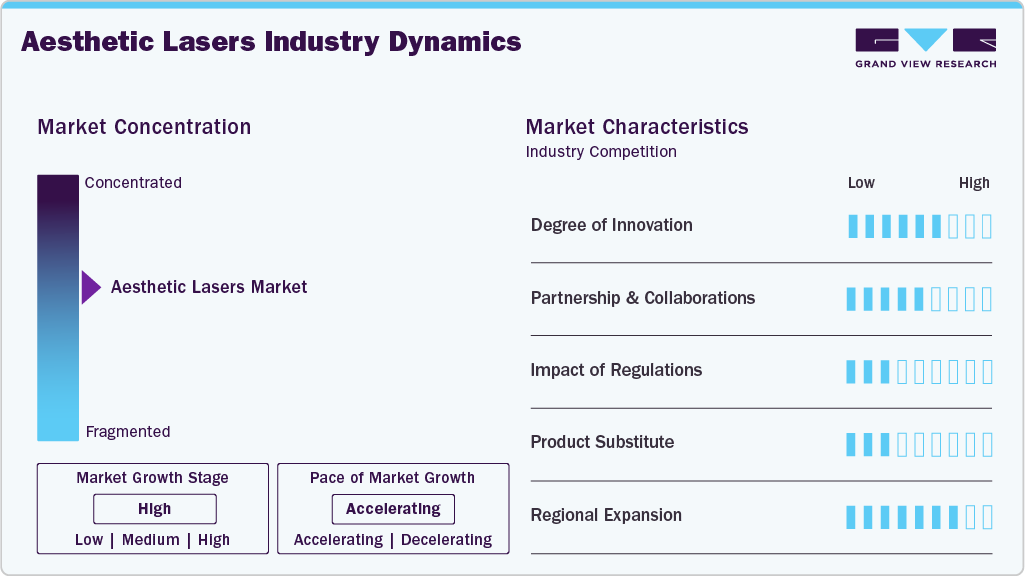
Market Concentration & Characteristics
The aesthetic lasers market is moderately concentrated, with a few established players accounting for a significant share due to strong brand presence, proprietary technologies, and extensive distribution networks. Key companies focus on continuous innovation in multi-wavelength platforms, energy-based devices, and AI-enabled systems to differentiate offerings. High capital investment, regulatory approvals, and clinical validation create entry barriers. However, emerging players are gaining traction through niche applications and cost-effective systems. The market is characterized by rapid technological upgrades, strong demand from dermatology and aesthetic clinics, and increasing preference for minimally invasive, customizable treatments.
The level of innovation in the aesthetic lasers industry is exceptionally high, with laser technologies expanding beyond traditional dermatology applications. Advances are transforming hair restoration, historically reliant on surgical transplants and long-term medications. The introduction of FoLix, the first FDA-cleared fractional laser for hair loss, highlights this shift by using controlled micro-injury to stimulate natural healing, circulation, and dormant hair follicles. Compared with passive red-light devices, this approach delivers more noticeable clinical results with short, anesthesia-free sessions and minimal downtime. Simultaneously, laser innovation is extending into vision-preserving therapies. Research from Aalto University demonstrates the potential of precisely dosed laser heat to activate cellular repair pathways for dry age-related macular degeneration. Together, these innovations emphasize growing multi-indication use, enhanced safety, faster treatments, and stronger clinical validation, positioning technological advancement as a central growth driver for the aesthetic lasers market.
 To learn more about this report, Download Free Sample Report
 Strategic partnerships and collaborations play a pivotal role in driving growth within the aesthetic lasers industry. These alliances help companies accelerate innovation, broaden geographic reach, and strengthen engagement with clinicians and patients. By combining technological expertise, clinical know-how, and distribution capabilities, partnerships enable faster commercialization of advanced solutions. For instance, in March 2025, ID Hospital signed an MOU with Sinclair to establish Asia’s largest regenerative aesthetics center. The collaboration focuses on advancing next-generation treatments, clinical education, and regional leadership, showcasing Sinclair’s portfolio, including Elansé, Silhouette Soft, and Prime Raze. Such initiatives highlight how partnerships are strengthening innovation pipelines and accelerating market expansion.
Regulatory frameworks play a critical role in shaping growth in the aesthetic lasers industry by ensuring product safety, clinical effectiveness, and patient protection. Stringent approval processes, such as clearance requirements from the U.S. Food and Drug Administration and conformity with CE marking standards in Europe, raise entry barriers but strengthen market credibility. Clear regulatory pathways encourage manufacturer investment in clinical trials, advanced safety features, and post-market surveillance. At the same time, evolving guidelines for energy-based devices support innovation while limiting unsafe or unproven technologies. Overall, well-defined regulations enhance physician confidence, promote patient trust, and enable sustainable adoption of aesthetic laser systems globally.
Product substitutes for aesthetic lasers include a range of non-laser and minimally invasive technologies used for similar cosmetic indications. These include radiofrequency and ultrasound-based devices for skin tightening, intense pulsed light (IPL) systems for pigmentation and hair reduction, and injectable treatments such as botulinum toxin and dermal fillers. Topical cosmeceuticals and medical-grade skincare also serve as lower-cost alternatives for mild conditions. In hair restoration, platelet-rich plasma (PRP) therapy and oral or topical medications act as substitutes. While these options may offer shorter recovery times or lower upfront costs, aesthetic lasers remain preferred for precision, durability of results, and broader treatment versatility.
The global aesthetic lasers industry is witnessing notable regional expansion, with companies adopting targeted strategies to strengthen their international footprint. For instance, in June 2024, Sinclair North America introduced the Primelase Diode Laser System, delivering advanced, multi-wavelength hair removal suitable for all skin types. As the manufacturer, Sinclair offers ongoing upgrades, comprehensive training, and technical support, enabling clinics to utilize a high-performance, reliable system that improves treatment efficiency, patient comfort, and outcomes. Such initiatives highlight how region-specific product launches and localized support are driving adoption and reinforcing market growth worldwide.
Analyst Perspective
The aesthetic lasers market is positioned at the intersection of several long-term healthcare and beauty industry trends, including the growing demand for minimally invasive cosmetic procedures, increasing consumer focus on appearance and skin health, and continuous advancements in laser-based treatment technologies. Rising concerns related to skin aging, pigmentation disorders, acne scars, unwanted hair growth, and body contouring are creating significant opportunities for aesthetic laser manufacturers and service providers as consumers seek effective, non-surgical solutions with minimal downtime. In addition, the expanding adoption of advanced laser platforms across dermatology clinics, medical spas, and aesthetic centers, coupled with technological innovations such as fractional lasers, picosecond lasers, multi-wavelength systems, and energy-based combination devices, is improving treatment precision, safety, and patient outcomes.
Application Insights
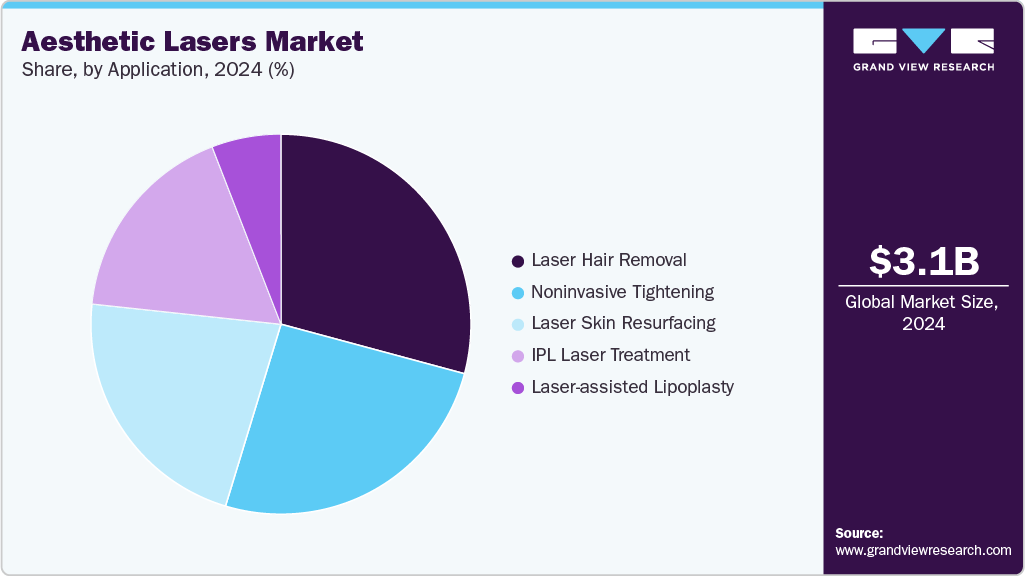
Based on application, the laser hair removal segment led the market with the largest revenue share of 29.1% in 2025. Laser hair removal remains one of the most widely recognized and adopted applications of aesthetic lasers among consumers. Many seek this treatment for its long-lasting results, reduced maintenance compared with shaving or waxing, and the convenience of a low-effort grooming routine, appealing especially to time-conscious individuals. Growth in this segment is fueled by technological advancements, including faster applicators, enhanced cooling, and safer energy delivery, which reduce pain and session times, improving the overall experience and encouraging first-time users. Manufacturers actively promote these features to highlight efficiency and comfort.
The rise of at-home laser devices further expands accessibility, appealing to consumers who prioritize privacy or lower per-use costs. For instance, in March 2025, Ulike showcased its latest IPL devices, including the Ulike Air 10, Air 3, and X, at the American Academy of Dermatology Annual Meeting, emphasizing salon-quality results at home and innovations for diverse skin tones and hair types.
Market developments underscore growing consumer preference for laser hair removal. In October 2025, Milan Laser Hair Removal opened a new clinic in Laredo, Texas, offering intense-pulsed-light services, while in November 2024, DermRays launched the V8S Pro at-home device, delivering professional-grade performance. These trends highlight increasing demand for accessible, effective, and convenient hair-removal solutions both in clinics and at home.
The noninvasive skin tightening segment is experiencing rapid growth, driven by patient demand for firmer, lifted skin without surgery or long recovery. Clinics favor these treatments for their minimal risk, repeatability, and ability to offer tiered or maintenance packages. Technological advancements have improved efficacy and safety, boosting clinician and consumer confidence. Busy, mid-life patients prefer minimally invasive options that fit their lifestyles. In 2024, over 1.23 million non-surgical skin tightening procedures were performed globally, up 38.9% year-over-year. Devices such as Bausch Health’s Thermage FLX, Clear + Brilliant, and Fraxel FTX illustrate the rising adoption of advanced aesthetic lasers for collagen stimulation and skin contouring.
Regional Insights
North America dominated the aesthetic lasers market with the largest revenue share of 40.8% in 2025. The North American aesthetic lasers marketis experiencing robust growth, driven by the U.S., Canada, and Mexico, which collectively represent a mature and high-demand region. A well-informed consumer base, advanced healthcare infrastructure, and a large network of aesthetic service providers fueling the market’s growth. Consumers increasingly prefer laser-based treatments for their visible results, minimal downtime, and lower risk compared to surgical alternatives. Notably, younger demographics are adopting preventive and maintenance-focused procedures, expanding the market across age groups. The rising popularity of non-invasive solutions further strengthens demand for advanced aesthetic lasers.
 To learn more about this report, Download Free Sample Report
 Key factors supporting this growth include the influence of digital beauty trends, social media, and celebrity culture, which have normalized cosmetic enhancements. Technological advancements have introduced versatile, safer, and more efficient laser platforms capable of addressing multiple skin concerns across various skin types. North America also benefits from a high number of certified practitioners, ensuring safe, reliable outcomes. In addition, rising disposable incomes and greater willingness to invest in self-care sustain market demand.
U.S. Aesthetic Lasers Market Trends
The aesthetic lasers market in the U.S. held the largest share in the North America region in 2025. Aesthetic lasers market in the U.S. is witnessing consistent growth, characterized by intense competition and strong domestic and international players. Leading U.S.-based companies such as Candela and Cutera coexist with global firms such as Lumenis, Sisram/Alma, Cynosure, and Lutronic, which maintain significant operations in the country. Specialist companies such as Sciton and STRATA are recognized for clinical expertise in resurfacing and niche procedures, while consumer-focused brands dominate the at-home segment. Many vendors operate direct sales networks, service centers, and training academies, making multi-platform systems, bundled practice solutions, and professional support key competitive differentiators.
Market growth is driven by rising consumer preference for minimally invasive aesthetic procedures. Clinics and med-spas increasingly offer treatments such as intense pulsed light (IPL) for vascular and pigmentation concerns, highlighting growing demand for advanced aesthetic lasers. Broader awareness and acceptance of cosmetic procedures have fueled the expansion of medical spas. According to the American Medical Spa Association (AmSpa), the U.S. medical spa sector grew from 8,899 facilities in 2022 to around 10,488 in 2023, reflecting steady growth over 15 years. This expansion indicates a dynamic industry with new entrants, increasing service offerings, and rising adoption of laser-based technologies across clinical and consumer-focused segments, further supporting market development.
Europe Aesthetic Lasers Market Trends
Aesthetic lasers market in Europe is growing rapidly, driven by rising demand for non-surgical cosmetic procedures in key economies such as the UK, Germany, France, Italy, and Spain. Consumers prefer laser treatments for their visible results and shorter recovery times compared to surgery. Popular procedures include laser hair removal, skin resurfacing, and lipoplasty. In 2024, Europe recorded approximately 892,000 aesthetic procedures, highlighting strong adoption of non-invasive treatments. In the UK, laser hair removal was the most searched aesthetic service in 2023, particularly in urban centers like Greater London, reflecting high consumer awareness and growing demand for minimally invasive laser solutions.
The UK aesthetic lasers market is steadily expanding, supported by key players such as Cutera, Candela, Lumenis, and local company Lynton, along with Sisram/Alma and Cynosure Lutronic through established distributors. Competition focuses on clinical education, regulatory compliance (MHRA/UKCA), and post-sale support, while niche suppliers such as Sciton and STRATA serve high-end dermatology centers. Growth is driven by rising demand for non-invasive treatments offering visible results and shorter recovery times. An aging population, desire for youthful appearance, and increasing obesity contribute to higher demand for skin resurfacing, wrinkle reduction, pigmentation correction, and fat-reduction procedures, as evidenced by the BAAPS 2023-2024 audit showing a 10% increase in liposuction.
Asia Pacific Aesthetic Lasers Market Trends
Aesthetic lasers market in APAC is experiencing strong growth, driven by rising demand for non-invasive cosmetic procedures and increasing awareness of aesthetic treatments. In countries like China, South Korea, Japan, and India, procedures such as skin rejuvenation, hair removal, pigmentation correction, lipoplasty, and acne scar treatment are becoming popular due to their effectiveness and short recovery times. In India and China, treatments for skin brightening and pigmentation removal are widely adopted, reflecting cultural preferences. Technological advances, including fractional and diode lasers, have improved safety, speed, and accessibility, encouraging more clinics to offer these services and boosting consumer adoption across urban and middle-class populations.
Aesthetic laser market in Japan is highly competitive and technology-focused, dominated by global players including Lumenis Be Ltd., Candela, Cutera, Cynosure Lutronic, Solta Medical, Sisram, Sciton, STRATA, and Sinclair, operating via local subsidiaries or distributors. Clinics prioritize clinical evidence, safety, and reliable post-sale support, favoring suppliers with local training and maintenance. Consumer brands such as Tria Beauty target the home-use segment. Market demand is rising due to demographic shifts, cultural factors, and healthcare awareness. Middle-aged and elderly consumers increasingly prefer non-surgical treatments for skin tightening, wrinkle reduction, and pigmentation correction, driving growth in laser-based aesthetic procedures.
Latin America Aesthetic Lasers Market Trends
The Latin America aesthetic lasers market is experiencing strong growth, mainly driven by strong cultural acceptance of cosmetic treatments and high patient interest in appearance-focused procedures. Several countries such as Brazil and Argentina have an aesthetic culture of decades where treatments such as laser hair removal, skin resurfacing, pigmentation correction, and acne scar reduction are easily embraced by different age groups. Particularly, Brazil has the highest number of aesthetic procedures globally, which makes it very attractive for clinics and dermatology centers to keep investing in advanced laser systems. The rising preference towards non-surgical and minimally invasive treatments is also a significant reason, as laser treatments deliver visible results in a short period of recovery as compared to surgery. This aligns well with the lifestyle needs of working professionals and younger consumers, especially in urban areas. Moreover, strong influence from social media, beauty trends, and local celebrities is increasing awareness of laser-based treatments, pushing more patients to seek professional aesthetic services.
The aesthetic lasers market in Brazilis growing, with major international players driving growth through strong brand presence and local partnerships. Lumenis Be Ltd., Candela Corporation, Cutera, Inc., Cynosure/Lutronic, and Sisram Medical are among the top suppliers, offering a wide range of hair removal, skin resurfacing, and body-contouring laser systems. These companies leverage distributor networks, training programs, and after-sales service to support dermatology and aesthetic clinics across the country.
Middle East & Africa Aesthetic Lasers Market Trends
The Middle East and Africa region is experiencing steady growth in demand for aesthetic lasers as more patients are choosing fast, low-downtime treatments such as laser hair removal, skin resurfacing, and pigment correction. Strong Gulf economies such as the UAE and Saudi Arabia are investing heavily in healthcare infrastructure and promoting medical tourism, which brings both international patients and higher clinic revenues that support purchases of advanced aesthetic laser systems. For instance, in 2023, Dubai welcomed more than 691,000 international medical tourists, reflecting strong growth in the country’s medical tourism ecosystem, supported by advanced healthcare facilities and premium cosmetic services.
Aesthetic lasers market in Saudi Arabiaisdriven by rising disposable incomes, increasing consumer interest in cosmetic and non-invasive procedures, and a growing focus on personal grooming and beauty. The market is supported by the rapid expansion of dermatology and medical-aesthetic clinics in major cities like Riyadh, Jeddah, and Dammam, often located in shopping malls and high-traffic urban areas, making aesthetic treatments more accessible to a broad consumer base. International and local laser device manufacturers are introducing innovative, high-safety platforms suitable for diverse skin types, meeting the demand for effective and low-downtime procedures. In addition, government initiatives promoting medical tourism, professional training for practitioners, and regulatory oversight ensuring safe practices are boosting consumer confidence and encouraging further investment, collectively driving the sustained growth of Saudi Arabia’s aesthetic-laser market.
Key Aesthetic Lasers Company Insights
The aesthetic lasers market is highly competitive, with key players such Sinclair, Lumenis Be Ltd., Solta Medical, Inc., Cynosure Lutronic, STRATA Skin Sciences, Candela Corporation, Cutera, Inc., Sisram Medical, Lynton Lasers Ltd, Sciton, Tria Beauty, SilkPro USA and among others. The major companies undertake various organic and inorganic strategies such as product introduction, collaborations, and regional expansion to serve the unmet needs of their customers.
Key Aesthetic Lasers Companies
The following key companies have been profiled for this study on the aesthetic lasers market.
-
Lumenis Be Ltd.
-
Solta Medical, Inc.
-
Cynosure Lutronic
-
STRATA Skin Sciences
-
Candela Corporation
-
Cutera, Inc.
-
Sisram Medical
-
Lynton Lasers Ltd
-
Sciton
-
Tria Beauty
-
SilkPro USA
-
Sinclair
Competitive Benchmarking
Category
Operating Strategies
Competitive Edge
Weakness
Established Players (Candela Corporation)
Focus on expanding comprehensive aesthetic treatment portfolios that include hair removal, skin resurfacing, skin tightening, body contouring, vascular lesion treatment, and pigmentation correction.
Invest in next-generation laser technologies, multi-platform systems, and practitioner training programs to enhance adoption and customer retention. Expand geographically through distributor networks and direct sales channels in emerging aesthetic markets.
Strong brand recognition and established relationships with dermatologists, plastic surgeons, and aesthetic practitioners. Extensive clinical validation, regulatory approvals, and large installed equipment base across developed markets.
Broad product portfolios covering multiple laser wavelengths and aesthetic applications, enabling cross-selling opportunities. Strong R&D capabilities support continuous product innovation and premium pricing strategies.
High research, development, and regulatory compliance costs associated with advanced laser systems. Significant capital investment requirements may limit adoption among smaller clinics and independent practitioners.
Dependence on discretionary consumer spending makes demand vulnerable to economic slowdowns. Increasing competition from alternative energy-based aesthetic technologies and lower-cost regional manufacturers may pressure pricing and margins.
Emerging Players (Lynton Lasers Ltd)
Focus on cost-effective laser platforms for hair removal, skin rejuvenation, pigmentation treatment, and body contouring. Emphasize affordability and user-friendly designs to attract small clinics, medical spas, and aesthetic centers.
Focus on niche applications, software-enabled treatment customization, and flexible financing or leasing models to accelerate market adoption. Expand presence in emerging markets where penetration of premium aesthetic laser systems remains limited.
Greater operational flexibility and faster deployment of innovative laser technologies. Ability to offer cost-effective systems tailored to independent clinics and regional aesthetic providers.
Strong focus on customer support, practitioner training, and specialized treatment applications helps build market presence in underserved segments.
Limited financial resources and smaller distribution networks compared with global aesthetic device leaders. Lower brand recognition and a relatively small installed equipment base may hinder customer acquisition.
Limited regulatory approvals and clinical validation compared to established players. Greater exposure to pricing pressure and rapid technological advancements from larger competitors.
Recent Developments
-
In April 2025, Lumenis Be Ltd. unveiled the enhanced SPLENDOR X at the American Society for Laser Medicine and Surgery Conference, presenting new clinical data that support its FDA-cleared dual-wavelength BLEND X technology. The system demonstrates improved hair removal outcomes across skin types and is now available in the U.S. and Canada.
-
In March 2023, Israel-based Sisram Medical, a global leader in medical aesthetic devices, announced that its wholly owned subsidiary Alma Lasers has acquired 60% of PhotonMed International for ¥270 million (approximately USD 38.7 million), forming a major joint venture. This acquisition strengthens Alma’s direct sales channels and brand presence in the People’s Republic of China (PRC), enhancing market penetration. PhotonMed, a strategic partner since 2003, has distributed Alma’s energy-based devices across the PRC. The move aligns with Sisram’s direct-to-consumer strategy and supports its global expansion. In 2022, Sisram posted record revenue of USD 354.5 million, up 20.5% year-over-year, with profits of USD 40.1 million.
-
In November 2023, Alma Lasers, a Sisram Medical company, launched a new subsidiary in Tokyo, Japan, marking its sixth Asia Pacific branch. This expansion strengthens Alma’s leadership in APAC, providing Japanese doctors direct access to its award-winning energy-based devices, enhancing brand presence, and supporting tailored, innovative aesthetic solutions in the rapidly growing Japanese market.
Aesthetic Lasers Market Report Scope
Report Attribute
Details
Market size in 2025
USD 3.3 billion
Estimated market size in 2026
USD 3.6 billion
Projected market size by 2033
USD 7.1 billion
Growth rate
CAGR of 10.2% from 2026 to 2033
Historical data
2021 - 2025
Forecast period
2026 - 2033
Quantitative units
Revenue in USD million/billion and CAGR from 2026 to 2033
Report coverage
Revenue forecast, company ranking, competitive landscape, growth factors, and trends
Segments covered
Application and region
Regional scope
North America; Europe; Asia Pacific; Latin America; MEA
Country scope
U.S.; Canada; Mexico; Germany; UK; France; Italy; Spain; Norway; Denmark; Sweden; China; Japan; India; South Korea; Australia; Thailand; Brazil; Argentina; Saudi Arabia; South Africa; UAE; Kuwait;
Key companies profiled
Sinclair; Lumenis Be Ltd.; Solta Medical, Inc.; Cynosure Lutronic; STRATA Skin Sciences; Candela Corporation; Cutera, Inc.; Sisram Medical; Lynton Lasers Ltd; Sciton; Tria Beauty; SilkPro USA
Customization scope
Free report customization (equivalent up to 8 analysts' working days) with purchase. Addition or alteration to country, regional & segment scope.
Pricing and purchase options
Avail customized purchase options to meet your exact research needs. Explore purchase options
Global Aesthetic Lasers Market Report Segmentation
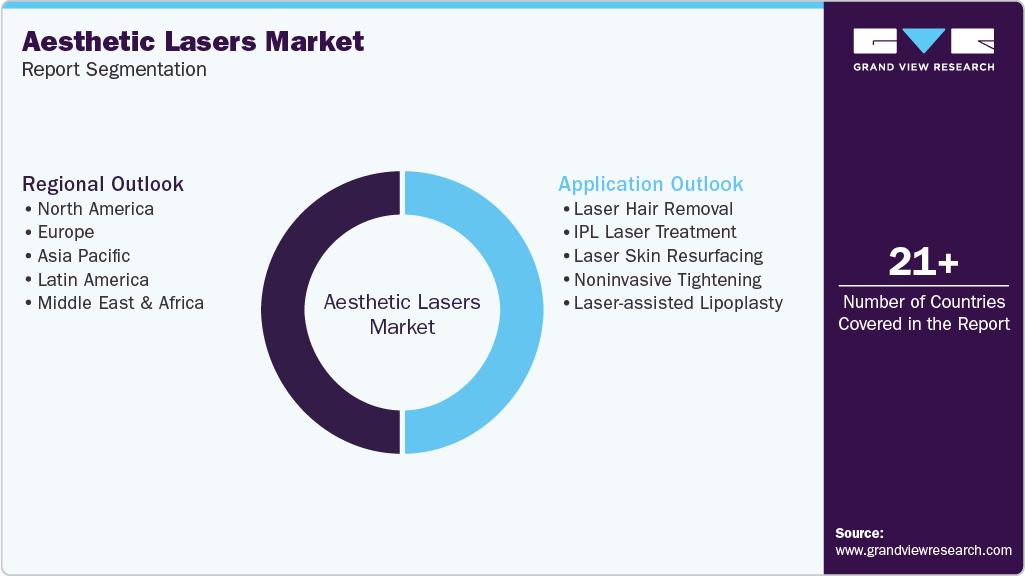
This report forecasts revenue growth at global, region and country levels and provides an analysis of the latest industry trends and opportunities in each of the sub-segments from 2021 to 2033. For the purpose of this study, Grand View Research has segmented the global aesthetic lasers market report on the basis of application, and region:
 To learn more about this report, Download Free Sample Report
 -
Application Outlook (Revenue, USD Million, 2021 - 2033)
-
Laser Hair Removal
-
IPL Laser Treatment
-
Laser Skin Resurfacing
-
Noninvasive Tightening
-
Laser-assisted Lipoplasty
-
-
Region Outlook (Revenue, USD Million, 2021 - 2033)
-
North America
-
U.S.
-
Canada
-
Mexico
-
-
Europe
-
UK
-
Germany
-
France
-
Italy
-
Spain
-
Denmark
-
Sweden
-
Norway
-
-
Asia Pacific
-
China
-
Japan
-
South Korea
-
Thailand
-
Australia
-
India
-
-
Latin America
-
Brazil
-
Argentina
-
-
Middle East & Africa
-
South Africa
-
Saudi Arabia
-
UAE
-
Kuwait
-
-
Research Methodology
Segment Definition
Segment - Application
Revenue capture definition
Laser Hair Removal
Revenue is generated through laser hair removal procedures, which use targeted light energy to damage hair follicles and reduce unwanted hair growth. The treatment provides longer-lasting results compared to conventional methods such as shaving, waxing, and depilatory creams. It is widely used across multiple body areas, including the face, legs, arms, underarms, and bikini line, and is suitable for a broad range of skin types.
IPL Laser Treatment
Revenue is generated through Intense Pulsed Light (IPL) treatments, which use broad-spectrum light energy to address a range of skin concerns, including pigmentation, sun damage, redness, acne, and vascular lesions. As a non-invasive and highly versatile aesthetic procedure, IPL enables practitioners to treat multiple skin conditions within a single session, enhancing treatment efficiency and patient satisfaction. The technology also promotes skin rejuvenation by stimulating collagen production, helping improve skin texture and tone.
Laser Skin Resurfacing
Revenue is generated through laser skin resurfacing procedures, which remove damaged outer layers of skin while stimulating collagen production and tissue renewal in deeper skin layers. The treatment is widely used to improve wrinkles, acne scars, uneven skin texture, sun damage, and pigmentation disorders. Available in both ablative and non-ablative forms, laser skin resurfacing allows practitioners to customize treatment intensity based on patient needs and desired outcomes.
Noninvasive Tightening
Revenue is generated through noninvasive skin tightening procedures that use laser or other energy-based technologies to deliver controlled heat, stimulating collagen and elastin production within the skin. These treatments help improve skin laxity and firmness across the face, neck, and body without the need for surgical intervention. Their quick treatment times, favorable safety profile, and minimal to no downtime make them an attractive option for individuals seeking aesthetic enhancement with limited disruption to daily activities.
Laser-Assisted Lipoplasty
Revenue flows through laser-assisted lipoplasty procedures, which combine laser energy with fat removal techniques to enhance body contouring and sculpting outcomes. The laser technology liquefies fat deposits before extraction, facilitating easier removal while simultaneously stimulating skin tightening in the treated area. Compared with traditional liposuction, the procedure is associated with reduced tissue trauma, less bruising, and shorter recovery times.
Estimation Model
Scope Definition
Build the Product Base
Estimate Penetration
Revenue Conversion
What is being sized?
How large is total addressable market?
What portion goes digital?
How does volume become revenue?
PROCESS STEPS
PROCESS STEPS
PROCESS STEPS
PROCESS STEPS
1. Define aesthetic lasers application categories
2. Scope Laser Hair Removal, IPL Laser Treatment, Laser Skin Resurfacing, and others
3. Set geographic boundaries (global/regional)
4. Align on base year & forecast horizon (2026–2033)1. Gather clinic and provider volumes by facility type
2. Estimate device installation base
3. Apply device type splits
4. Project forward using annual treatment growth rates and clinic expansion benchmarks1. Survey technology adoption rates by facility size
2. Map advanced vs. traditional systems split
3. Identify cloud-connected & software-enabled device mix
4. Triangulate with vendor shipment data and distributor sales disclosures1. Collect per-unit capital equipment costs and ongoing consumable/handpiece replacement fee ranges by product type
2. Segment by revenue streams
3. Apply end-use channel share
4. Cross-check against known import/export dataData Sources
ASDS, ISAPS, Industry ReportsData Sources
Clinic registries, healthcare establishment databases, medical device manufacturer filingsData Sources
Primary interviews, company filings, trade surveysData Sources
Distributor pricing sheets, procurement data, import/export databases, expert interviewsDelivered Customizations
This report has been delivered with the following In-depth customizations
Client Request
Customization Delivered
Value Adds
Technological Innovation And Platform Expansion of Advanced Laser Systems
Conducted a comprehensive assessment of technological integration, FDA/CE approvals, and platform scalability supporting the adoption of advanced aesthetic lasers across major markets. The analysis evaluated platform versatility including multiplatform hybrid systems, fractional laser technologies, picosecond/Q-switched lasers, and advanced cooling modules (such as contact and cryogen cooling). The study further assessed emerging features like AI-enabled pulse parameter calibration, real-time skin diagnostics, multi-wavelength blending (e.g., dual Alexandrite and Nd:YAG), and home-use medical grade laser portfolios that are expanding treatment indications and reducing patient downtime.
This analysis enables stakeholders to understand how continuous laser innovation and multi-wavelength system evolution influence clinic adoption and purchasing behaviors. It helps identify high-growth product segments (such as standalone vs. modular hybrid systems), supports targeted R&D allocation, and highlights feature-driven opportunities (like built-in AI diagnostics or reduced pain metrics) that improve practitioner retention and commercial ROI.
Macroeconomic Analysis
Conducted a detailed geographic assessment of the aesthetic lasers market across North America, Europe, Asia-Pacific, Latin America, and the Middle East & Africa. The study evaluated shifting macroeconomic factors, rising disposable income, medical tourism corridors, out-of-pocket elective health spending, and treatment accessibility across major countries. The analysis further examined demographic trends-specifically looking at expanding millennial demographics seeking early preventive treatments, aging populations requiring skin-laxity solutions, male aesthetic adoption, and the booming footprint of specialized Medical Spas (MedSpas) and dermatology clinics.
This analysis enables stakeholders to evaluate regional expansion opportunities, localized market maturity, and device distribution channels across key geographies. It supports international supply-chain planning, targeted marketing allocation, and the identification of high-growth developing markets where growing beauty consciousness and urban demographics are accelerating aesthetic clinic openings.
Competitive Landscape Analysis
Conducted a detailed assessment of leading aesthetic laser manufacturers and emerging energy-based device participants across major regions. The analysis evaluated global vendor positioning, product application portfolios (hair removal, skin resurfacing, tattoo removal, and vascular/pigmented lesion treatments), pricing tiers, strategic medical spa partnerships, and regulatory approval timelines. Furthermore, the study assessed competitive differentiation based on advanced wavelength modalities (CO₂, Diode, Erbium:YAG), software-upgradable platform lifecycles, global post-sales engineering support networks, and practitioner training programs.
This analysis enables stakeholders to understand intense market competition, benchmark market shares among top global laser developers, and identify white spaces in clinical indications or technology gaps. It supports corporate strategy, licensing or acquisition targeting, and product positioning efforts by uncovering competitor commercial frameworks, financing/leasing models, and next-generation pipeline developments.
Frequently Asked Questions About This Report
Some key players operating in the aesthetic lasers market include Solta Medical, Inc. (acquired by Valeant Pharmaceuticals); Lumenis; Cynosure, Inc.; STRATA Skin Sciences; Syneron Medical Ltd.; Lutronic; Cutera; Viora; Lynton Lasers; and Sciton, Inc.
Key factors that are driving the aesthetic lasers market growth include the increasing geriatric population, availability of surplus income middle class to spend on cosmetic surgeries, and increasing awareness and consciousness about appearance.
The global aesthetic lasers market size was estimated at USD 3.3 billion in 2025 and is expected to reach USD 3.6 billion in 2026.
The global aesthetic lasers market is expected to grow at a compound annual growth rate of 10.2% from 2026 to 2033 to reach USD 7.1 billion by 2033.
The laser hair removal segment led with a 29.1% revenue share in 2025, while noninvasive skin tightening is the fastest-growing segment.
North America dominated the aesthetic lasers market with a share of 40.8% in 2025. This is attributable to the growing aesthetic consciousness amongst the elderly population and rapid technological advancements.
Asia Pacific is the fastest-growing region over the forecast period.
About the Author(s)
Medical Devices Research Team
Healthcare · Medical DevicesThis report was authored by the medical devices research team at Grand View Research - comprising two research analysts, one senior research analyst, and one industry expert - with specialized expertise in the medical devices segment of the healthcare industry. All findings are based on proprietary healthcare databases, executive interviews, and regulatory analysis, subject to internal peer review prior to publication.
Last Updated:
Speak to Analyst

Customize this report to your needs - add regions, segments, or data points, with 20% free customization.
Or view our licence options:


ISO 9001:2015 & 27001:2022 Certified
We are GDPR and CCPA compliant! Your transaction & personal information is safe and secure. For more details, please read our privacy policy.


