
- Home
- »
- Healthcare IT
- »
-
AI In Drug Repurposing Market Size Report, 2026-2033GVR Report cover

Artificial Intelligence In Drug Repurposing Market (2026 - 2033)
Size, Share & Trends Analysis Report By Component (Software & Platform, Services), By Technology (Machine Learning), By Application (Oncology, Rare & Orphan Diseases), By End-use, By Region, And Segment Forecasts
Market Size, 2025
$1.3BMarket Estimate, 2026
$1.7BMarket Forecast, 2033
$7.7BCAGR, 2026–2033
24.5%AI in Drug Repurposing Market Summary
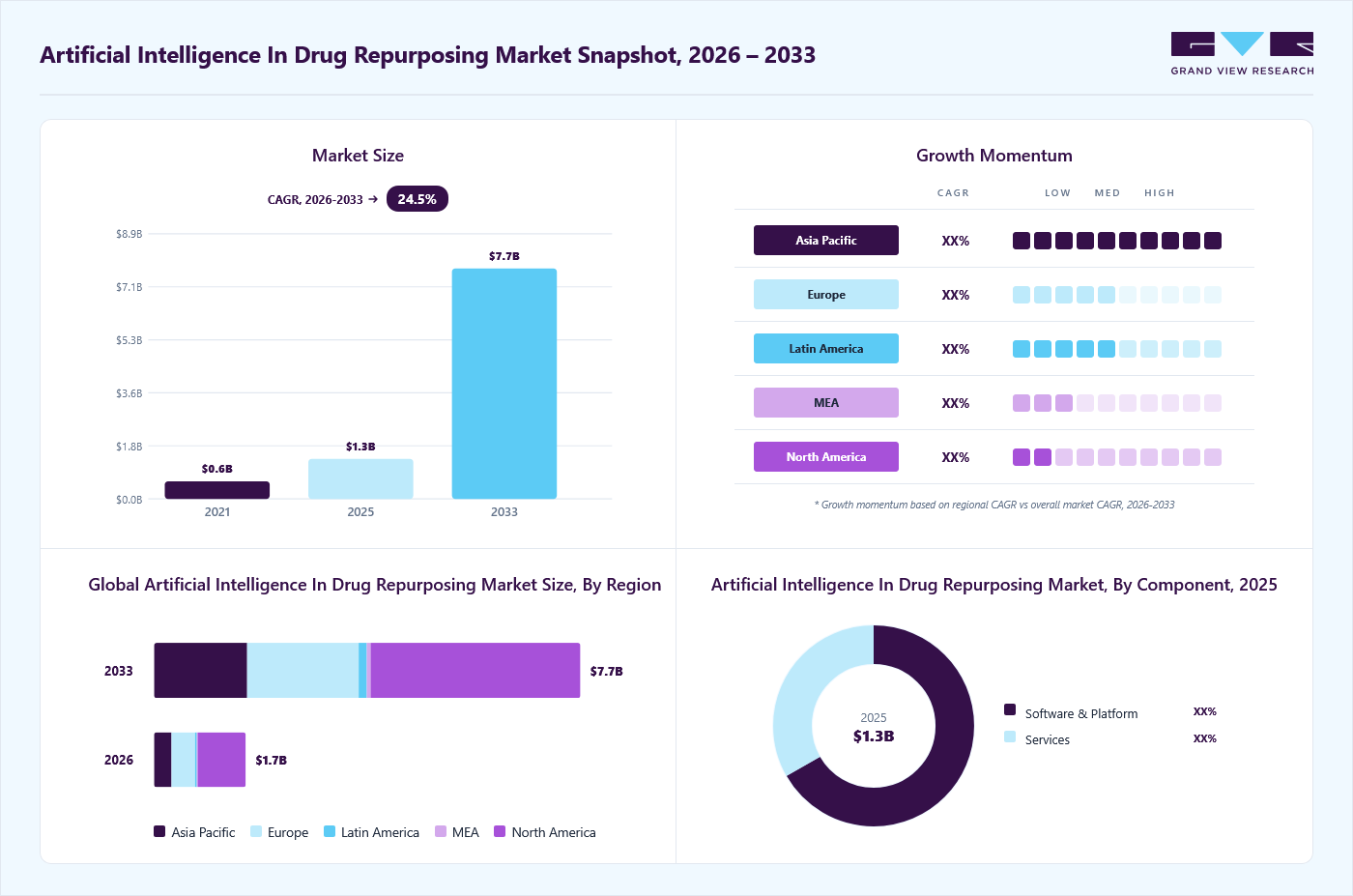
The global artificial intelligence in drug repurposing market size was valued at USD 1.3 billion in 2025 and is projected to grow from USD 1.7 billion in 2026 to USD 7.7 billion by 2033, at a CAGR of 24.5% from 2026 to 2033. The market in North America dominated with a revenue share of 52.9% in 2025. Rising demand for cost-effective drug development, increasing clinical trials in drug repurposing, and growing prevalence of rare and complex diseases are significant factors contributing to market growth.
 Source: Grand View Research, IR Documents, Primary Interviews, Paid DatabasesTo learn more about this report,
 Download Free Sample Report
 Key Market Trends & Insights
- By component: Software & platform segment held the largest market share of 66.6% in 2025.
- By technology: Machine learning/deep leaning segment held the largest market share of 45.8% in 2025.
- By application: Oncology segment held the largest market share of 36.7% in 2025.
- By end-use: Pharmaceutical & biotechnology companies segment held the largest market share of 59.2% in 2025.
Regional Highlights
- Largest regional market: North America (52.9% revenue share, 2025)
- Fastest-growing regional market: Asia Pacific (highest CAGR, 2026-2033)
- By country: U.S. held the largest market share in 2025
Market Size & Forecast
- Market size in 2025: USD 1.3 Billion
- Estimated market size in 2026: USD 1.7 Billion
- Projected market size by 2033: USD 7.7 Billion
- CAGR (2026-2033): 24.5%
Three ways to get this report
Buy it, customize it, or ask a question.Ask an Analyst
Analyst response in 1 business day
- AccessReport author, directly
- Reply timeWithin 1 working day
- No sales callDirect answer only
- FormatEmail reply
- CostFree, no cost
Get the Full Report
What the study covers
- FormatsPDF · Excel · Dashboard
- Timeline2026–2033 annual, 2025 base
- Coverage20+ countries, 5 regions
- Companies10+ key players profiled
Customize the Report
20% free customization
- IncludeCountries, segments, points
- TailorTo your product definition
- ExtendDeeper competitor detail
- OrA fully bespoke study
- Turnaround5–10 working days
In addition, growing focus on precision medicine and targeted drug development and improvements in computing power and cloud infrastructure are some other factors fueling market growth. The rising demand for cost-effective drug development strategies substantially drives the AI in drug repurposing market. Traditional drug discovery involves lengthy timelines, often exceeding a decade, and costs frequently exceed USD 2 billion per drug. Drug repurposing offers a strategy to bypass early-stage safety testing by focusing on approved or investigational drugs for new indications. AI accelerates this process by rapidly analyzing extensive biological, chemical, and clinical datasets to identify novel drug-disease associations. This reduces development timelines and costs, offering pharmaceutical companies and healthcare providers an economically viable alternative to de novo drug development. Integrating artificial intelligence into drug repurposing effectively addresses key industry challenges by enhancing productivity while reducing associated risks and investment costs.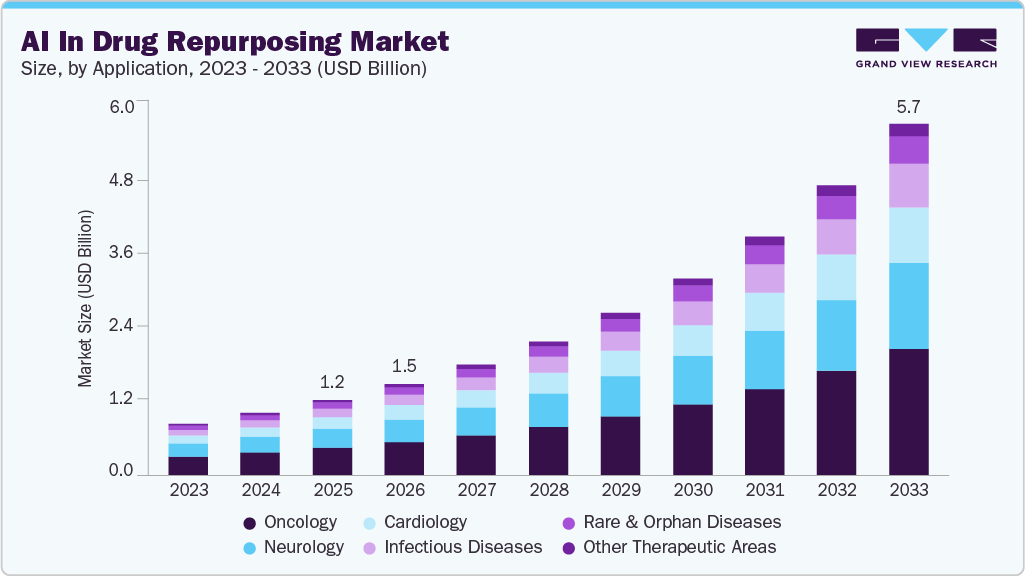 To learn more about this report, Download Free Sample Report
 AI systems integrate multi-omics data, including genomics, proteomics, and metabolomics, with biomedical literature and real-world patient records to identify subtle and previously unrecognized drug-target interactions. These methods enable the identification of polypharmacology candidates and synergistic drug combinations, overcoming limitations of traditional hypothesis-driven discovery. For instance, in April 2025, Plex Research partnered with Ginkgo Bioworks to use AI-powered analysis on the GDPx2 dataset, a large transcriptomics survey of compound-induced gene expression. This collaboration aims to identify novel disease mechanisms, discover new therapeutic applications, and accelerate drug repurposing, linking findings with experimental data for rigorous validation.
Furthermore, the rising prevalence of rare diseases further propels market growth. For instance, according to the data published by The Lancet Journal in March 2024, around 300 million people live with rare diseases, affecting around 3.5% - 5.9% of the global population. Moreover, around 80% of rare diseases are genetically caused, almost 70% of which are present in childhood. AI facilitates the analysis of limited datasets from rare disease cohorts, enabling the identification of therapeutic candidates from existing drugs and thereby expediting treatment access.
List of few AI-based drug repurposing instances
Company
Discovery
YearClinical
Validation YearRegulatory / Approval Year
Initiative
BenevolentAI
2020
2020-2021
2020-2022
Identified Baricitinib for COVID-19 treatment; EUA by FDA Nov 2020; full approval May 2022.
Insilico Medicine
2023
2023
N/A
Used generative AI (PandaOmics) to repurpose Lifitegrast for endometriosis, validated preclinically.
Atomwise & DNDi
2023-2025
Ongoing
N/A
AI-driven molecule screening to find drug candidates for Chagas disease.
DeepDrug
2025
Ongoing
N/A
AI framework identifying repurposed drug combinations for Alzheimer's disease.
Every Cure Initiative
2023
Ongoing
N/A
AI-powered platforms are mining drug repurpose opportunities for rare diseases.
Market Concentration & Characteristics
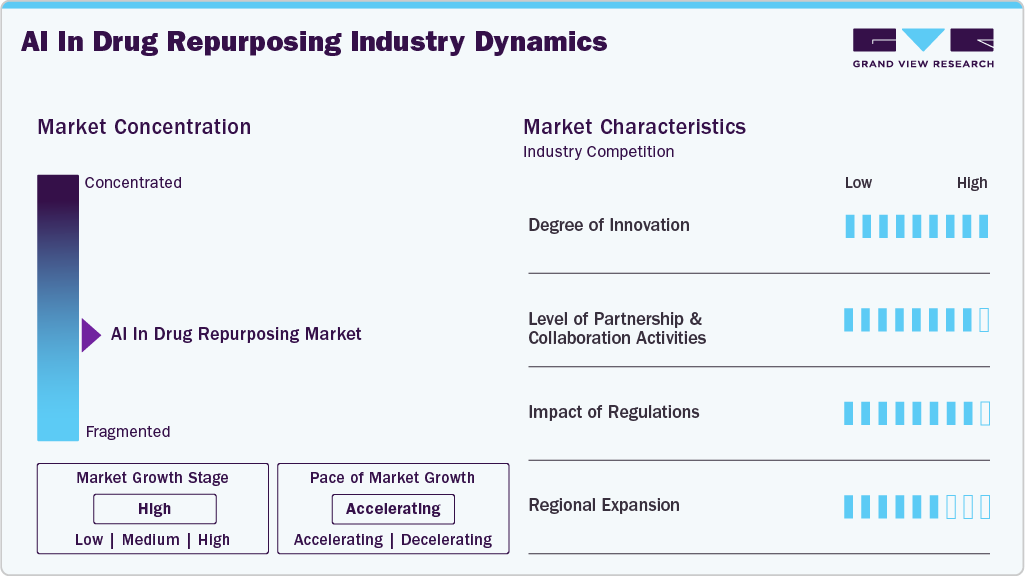
The chart below illustrates the relationship between industry concentration, industry characteristics, and industry participants. The x-axis represents the level of industry concentration, ranging from low to high. The y-axis represents various industry characteristics, including industry competition, level of partnerships & collaboration activities, degree of innovation, impact of regulations, and regional expansion. The AI in drug repurposing market slightly fragmented. However, several emerging players are entering the market, thereby contributing to increased fragmentation within the market. The degree of innovation and the level of partnership and collaboration activities and the impact of regulations is high. Moreover, the regional expansion of industry is moderate.
The degree of innovation in the AI in drug repurposing market is notably high, driven by the integration of advanced computational methods with vast biomedical datasets. Generative AI models hypothesize novel drug-target interactions, while natural language processing (NLP) systems mine biomedical literature, patents, and clinical trial data for hidden insights. Additionally, collaborations between AI firms, pharmaceutical companies, and academic institutions foster the creation of dedicated platforms tailored to repurpose workflows.
 To learn more about this report, Download Free Sample Report
 The industry is experiencing a moderate level of merger and acquisition activities undertaken by several key players. This is due to the desire to gain a competitive advantage in the industry, enhance technological capabilities, and consolidate in a rapidly growing market. For instance, in July 2025, Healx partnered with SCI Ventures in a USD 2 million collaboration to accelerate therapies for spinal cord injury (SCI) using AI-driven drug discovery focused on target discovery and drug repurposing.
Global regulations governing AI in the drug repurposing market emphasize ensuring the safety, efficacy, and transparency of AI-assisted therapeutic development. Regulatory agencies such as the U.S. FDA have issued draft guidances focused on incorporating AI into drug development and regulatory decision-making processes with a risk-based approach. The framework encourages rigorous validation, interpretability, and ongoing monitoring of AI models to prevent bias and errors.
The industry is witnessing moderate geographical expansion. Companies within the AI in drug repurposing industry seek geographic expansion strategies to maintain their foothold in emerging markets and attract customers from these regions.
Component Insights
Based on component, the software & platform segment held the largest revenue share of 66.6% in 2025. These solutions leverage large-scale datasets, including genomics, proteomics, and clinical trial data, to identify new therapeutic indications for existing compounds. Advanced algorithms support drug-target interaction mapping and biomarker discovery, accelerating translational research. For instance, in January 2025, NVIDIA and Innophore partnered to launch CavitOmiX, an AI-driven drug safety screening platform. Innophore’s AI-driven CavitOmiX platform, powered by NVIDIA, significantly supports drug repurposing by analyzing protein binding sites to identify hidden therapeutic opportunities between existing drugs and new targets.
The services segment is expected to grow at the fastest CAGR during the forecast period. The services segment encompasses specialized offerings that support the deployment, customization, and optimization of AI solutions for drug repurposing. These include data curation, annotation, algorithm training, model validation, and integration of AI tools into existing research workflows. Service providers also assist with regulatory compliance, ensuring AI-driven predictions align with evolving guidelines for drug development. Moreover, services are increasingly focused on collaborative projects that combine domain expertise in biology with advanced computational capabilities, propelling market growth further.
Technology Insights
Based on technology, the machine learning/deep leaning segment accounted for the largest revenue share of 45.8% in 2025. These technologies analyze genomic data, clinical trial results, molecular structures, and real-world patient records to identify unrecognized correlations. Deep learning models, especially neural networks, improve prediction accuracy by capturing non-linear relationships within complex biological systems. Such methods enable the rapid screening of thousands of compounds against multiple disease targets, significantly accelerating discovery timelines.
The generative ai & large language models (LLMs) segment is anticipated to register fastest growth from 2026 to 2033. The Generative AI and LLMs segment is transforming drug repurposing by enabling rapid hypothesis generation and molecular design through advanced natural-language and generative-modeling capabilities. LLMs can analyze vast biomedical literature, clinical trial records, and omics data to identify links between existing drugs and new disease indications. Generative AI enhances this process by designing novel molecular variations or predicting drug-disease interactions with high precision. These tools reduce the time spent on manual curation, creating a scalable framework for discovering repurposing opportunities.
Application Insights
Based on application, the oncology segment accounted for the largest revenue share of 36.7% in 2025. AI accelerates oncology drug repurposing by analyzing vast molecular datasets, clinical records, and therapeutic responses to identify novel cancer treatment candidates. Machine learning models reveal hidden drug-target interactions and potential synergistic drug combinations, facilitating precision oncology development. Recent advancements in AI algorithms have enhanced the prediction accuracy for oncologic indications, supporting the discovery of repurposed drugs with improved efficacy and safety profiles.
The infectious diseases segment is anticipated to grow at the fastest CAGR from 2026 to 2033. AI is being utilized to repurpose drugs for combating infectious diseases and antimicrobial resistance, leveraging computational models that analyze existing drug libraries, host pathogen interactions, and extensive biomedical datasets to identify promising therapeutic candidates. The "Artificial Intelligence for Drug Repurposing Against Infectious Diseases" article, published in December 2024, describes how AI-based virtual screening, predictive modeling, and data integration approaches accelerate the identification of potential therapies by leveraging the known safety profiles of existing drugs, thereby cutting time and costs compared with traditional drug discovery. For instance, such methods have been used to suggest existing approved drugs for viral or bacterial infections, thereby opening up new therapeutic possibilities without requiring a complete reevaluation from scratch.
End-use Insights
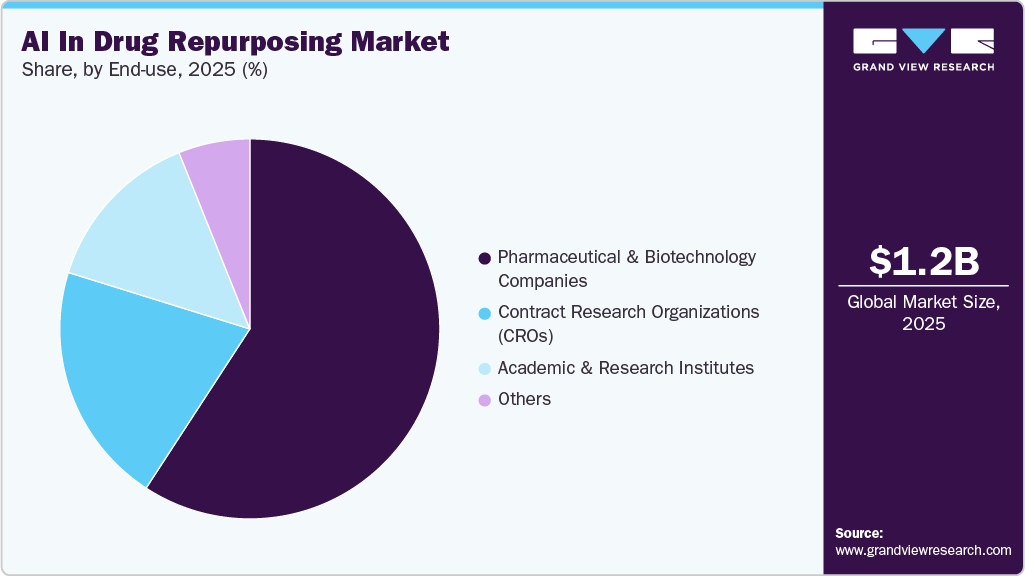
Based on end use, the pharmaceutical & biotechnology companies segment held the largest market share of 59.2% in 2025. In addition, this segment is anticipated to grow at the fastest CAGR during the forecast period. These organizations leverage AI-driven tools to mine clinical trial data, molecular profiles, and biomedical literature to identify new therapeutic uses for existing compounds. By reducing the costs and timelines traditionally associated with novel drug discovery, repurposing strategies allow companies to maximize ROI on their drug pipelines. AI further supports prioritization of candidates with higher translational potential, improving decision-making and portfolio management. For instance, in December 2024, Conduit Pharmaceuticals partnered with SARBORG Limited to leverage advanced AI and cybernetics technologies to optimize drug repurposing, discovery, and clinical trial monitoring.
 To learn more about this report, Download Free Sample Report
 The academic and research institutes segment is expected to grow significantly over the forecast period. These institutions harness extensive biomedical data and computational expertise to develop novel AI methodologies that accelerate drug repurposing efforts. Their focus encompasses algorithm development, predictive modeling, and multi-omics data integration, facilitating the identification of potential therapeutic candidates with high precision. Moreover, academic and research institutes are essential collaborators for pharmaceutical companies and AI startups, bridging the gap between scientific discovery and commercialization.
Regional Insights
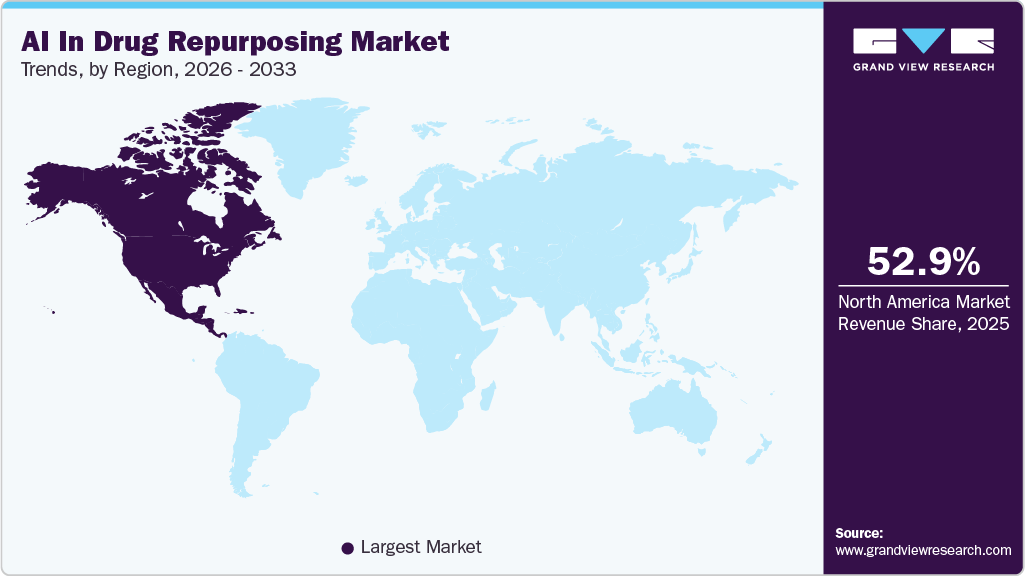
North America artificial intelligence in drug repurposing market accounted for the largest revenue share of 52.9% in 2025. The market is driven by substantial R&D investments from pharmaceutical and biotechnology firms, coupled with robust venture capital funding for AI-driven drug discovery startups. In addition, the presence of advanced healthcare IT infrastructure enables efficient integration of large-scale genomic and clinical datasets. Strategic collaborations between academia, pharma, and AI companies accelerate the translation of repurposing research into clinical applications.
 To learn more about this report, Download Free Sample Report
 U.S. Artificial Intelligence in Drug Repurposing Market Trends
The U.S. AI in drug repurposing market held the largest market share in 2025. The U.S. market benefits from the dominance of leading AI and pharmaceutical companies actively deploying AI for drug repurposing. The country has extensive biomedical data repositories, including EHRs, genomic databases, and clinical trial registries, which strengthen AI model training. Regulatory flexibility, including accelerated approval pathways for orphan drugs, encourages investment in AI-enabled repurposing.
Europe Artificial Intelligence in Drug Repurposing Market Trends
Europe AI in drug repurposing market is expected to witness significant growth during the forecast period, owing to the pan-European initiatives promoting digital health and AI integration into drug discovery. The presence of advanced healthcare systems with structured EHRs supports large-scale data utilization. In addition, the region’s robust spending on biology research and development contributes to market growth further.
The UK AI in drug repurposing market held the largest market share in the European region. The UK market benefits from the NHS’s centralized data infrastructure, which enables AI models to access high-quality, population-wide health records. Collaborations between AI startups, universities, and global pharmaceutical firms are rapidly accelerating clinical translation. For instance, in July 2025, UK-based Healx partnered with SCI Ventures to apply AI-powered drug discovery using Healx’s AI platform in developing therapies for spinal cord injury (SCI). This partnership aims to accelerate treatments through AI-driven target discovery and drug repurposing, with broader implications for neurological diseases like ALS, MS, and Alzheimer’s.
The Germany AI in drug repurposing market is expected to grow substantially over the forecast period. The Germany market is driven by its strong pharmaceutical industry and leadership in digital health innovation. For instance, Germany’s Merck KGaA focuses on AI-driven drug design through strategic partnerships with BenevolentAI and Exscientia to accelerate oncology, neurology, and immunology discovery. Moreover, the government’s Digital Healthcare Act encourages the integration of AI into clinical and research workflows, fostering drug repurposing initiatives.
Asia Pacific Artificial Intelligence in Drug Repurposing Market Trends
Asia Pacific AI in drug repurposing market is propelled by expanding AI adoption in healthcare, supported by government-led digital health initiatives in countries like China, India, and South Korea. Rapid growth in clinical trial activity across the region creates diverse datasets for repurposing applications. Pharma companies are increasingly collaborating with regional AI startups to accelerate drug development. The rising burden of chronic diseases and rare conditions fuels demand for affordable, repurposed therapies. Growing investments in cloud-based healthcare infrastructure enhance the scalability of AI platforms.
India AI in drug repurposing marketis expanding rapidly, driven by the high prevalence of chronic and rare diseases, government health initiatives, and technological innovation. Furthermore, the market is experiencing a growing adoption of AI technologies by biological research institutes in the country.
The Japan AI in drug repurposing market is driven by its aging population and rising incidence of chronic and rare diseases, necessitating cost-effective therapeutic options. Moreover, the Pharmaceuticals and Medical Devices Agency (PMDA) regulatory reforms aid accelerated pathways for innovative therapies, including repurposed drugs. Japan’s emphasis on precision medicine further supports AI-based repurposing strategies.
Latin America Artificial Intelligence in Drug Repurposing Market Trends
Latin America AI in drug repurposing market is anticipated to grow at a significant CAGR over the forecast period. Latin America’s market is driven by the increasing adoption of AI technologies in healthcare research and the rising focus on cost-effective drug development strategies. Moreover, the region benefits from its vast patient pool and rapidly growing clinical trial ecosystem, generating robust datasets for AI-based repurposing.
Middle East & Africa Artificial Intelligence in Drug Repurposing Market Trends
Middle East and Africa AI in drug repurposing market is expected to grow at a significant CAGR over the forecast period. The region is driven by government-led initiatives to modernize healthcare systems and adopt AI-driven solutions. Countries such as the UAE and Saudi Arabia are actively investing in digital health and precision medicine, fostering AI-based drug repurposing research. Collaborations between international pharmaceutical firms and regional research centers are gaining traction. In addition, the growing incidence of cancer, cardiovascular, and metabolic diseases create demand for innovative therapies. Furthermore, investment in genomic and clinical data infrastructure supports the development of AI-driven repurposing models.
Key Artificial Intelligence in Drug Repurposing Company Insights
Key players operating in the AI in drug repurposing market are undertaking various initiatives to strengthen their market presence and increase the reach of their products and services. Strategies such as new product launches and partnerships play a key role in propelling market growth.
Key Artificial Intelligence in Drug Repurposing Companies:
The following key companies have been profiled for this study on the artificial intelligence (AI) in drug repurposing market.
- BostonGene Corporation
- BenevolentAI
- Innophore
- Delta4.ai
- BioXcel Therapeutics Inc.
- BullFrog AI Holdings, Inc.
- Graphwise
- Owkin, Inc
- Insilico Medicine
- Healx
Recent Developments
-
In November 2025, Owkin, in collaboration with Gustave Roussy and Charité Comprehensive Cancer Center, unveiled a pan-European “agentic infrastructure” to make biomedical data AI-ready and support AI-native biology. The initiative is expected to harmonize and structure data across Europe, develop biology‑focused reasoning systems, while prioritizing strict data protection.
“This initiative demonstrates how Europe can turn its scientific excellence into tangible advances for patients. By combining data across borders with next-generation AI, we can accelerate the translation of discoveries into clinical impact, responsibly and securely.”
-Fabrice André, MD, PhD, Director of Research, Gustave Roussy
-
In November 2025, Insilico Medicine entered a research and licensing collaboration with Eli Lilly to co-discover and advance novel therapies using Insilico’s Pharma.AI platform. Insilico is anticipated to generate, design, and optimize compounds for Lilly-defined targets.
“We are delighted to collaborate with Lilly, a global leader in the pharmaceutical industry, renowned for its commitment to medical innovation. Lilly has been a valued user of our Pharma.AI software suite, and this expanded collaboration further recognizes Insilico’s AI-driven drug discovery capabilities while strengthening our longstanding partnership. By joining forces, we are accelerating the development of transformative therapies to address urgent patient needs worldwide.”
- Alex Zhavoronkov, PhD, Founder and Co-CEO of Insilico Medicine.
-
In August 2025, Fifty1 Labs and BioSpark AI partnered to transform over 10,000 unstructured clinical case reports into a structured, queryable database containing 2,000+ real-world patient treatment-outcome pathways. This AI-driven collaboration accelerates drug repurposing and functional medicine innovation by enabling prioritized candidate selection for chronic fatigue, neuroinflammation, and sleep disorders.
-
In May 2025, former Verbit CEO Tom Livne launched the startup Grace to repurpose abandoned drugs using advanced AI. Grace targets USD 10-20 million in funding to accelerate the rediscovery of drug candidates and address high attrition in clinical stages.
-
In May 2024, Every Cure and BioPhy partnered to transform drug repurposing using BioPhy’s AI platform, BioLogicAI, which identifies promising drug-disease matches and optimizes clinical trials to increase success rates and reduce costs.
Artificial Intelligence in Drug Repurposing Market Report Scope
Report Attribute
Details
Market size in 2025
USD 1.3 billion
Estimated Market size in 2026
USD 1.7 billion
Projected Market size by 2033
USD 7.7 billion
Growth rate
CAGR of 24.5% from 2026 to 2033
Actual data
2021 - 2025
Forecast period
2026 - 2033
Quantitative units
Revenue in USD million/billion, and CAGR from 2026 to 2033
Report coverage
Revenue forecast, company ranking, competitive landscape, growth factors, and trends
Segments covered
Component, technology, application, end-use, region
Regional scope
North America; Europe; Asia Pacific; Latin America; MEA
Country scope
U.S.; Canada; Mexico; Germany; UK; France; Italy; Spain; Denmark; Sweden; Norway; China; Japan; India; South Korea; Australia; Thailand; Brazil; Argentina; South Africa; Saudi Arabia; UAE; Kuwait
Key companies profiled
BostonGene Corporation; BenevolentAI; Innophore; Delta4.ai; BioXcel Therapeutics Inc.; BullFrog AI Holdings, Inc.; Graphwise; Owkin, Inc; Insilico Medicine; Healx
Customization scope
Free report customization (equivalent up to 8 analysts working days) with purchase. Addition or alteration to country, regional & segment scope.
Pricing and purchase options
Avail customized purchase options to meet your exact research needs. Explore purchase options
Global Artificial Intelligence In Drug Repurposing Market Report Segmentation
This report forecasts, revenue growth at global, regional, and country levels and provides an analysis of the latest industry trends in each of the sub-segments from 2021 to 2033. For this study, Grand View Research has segmented global artificial intelligence (AI) in drug repurposing market report based on component, technology, application, end-use, and region.
-
Component Outlook (Revenue, USD Million, 2021 - 2033)
-
Software & Platforms
-
Services
-
-
Technology Outlook (Revenue, USD Million, 2021 - 2033)
-
Machine Learning/Deep Learning
-
Natural Language Processing (NLP)
-
Knowledge Graphs & Network-Based AI
-
Generative AI & Large Language Models (LLMs)
-
Computer Vision
-
-
Application Outlook (Revenue, USD Million, 2021 - 2033)
-
Oncology
-
Neurology
-
Cardiology
-
Infectious Diseases
-
Rare & Orphan Diseases
-
Other Therapeutic Areas
-
-
End-use Outlook (Revenue, USD Million, 2021 - 2033)
-
Pharmaceutical & Biotechnology Companies
-
Contract Research Organizations (CROs)
-
Academic & Research Institutes
-
Others
-
-
Regional Outlook (Revenue, USD Million, 2021 - 2033)
-
North America
-
U.S.
-
Canada
-
Mexico
-
-
Europe
-
Germany
-
UK
-
France
-
Italy
-
Spain
-
Denmark
-
Sweden
-
Norway
-
-
Asia Pacific
-
China
-
Japan
-
India
-
South Korea
-
Australia
-
Thailand
-
-
Latin America
-
Brazil
-
Argentina
-
-
MEA
-
South Africa
-
Saudi Arabia
-
UAE
-
Kuwait
-
-
Frequently Asked Questions About This Report
The machine learning/deep leaning segment led with a 45.8% revenue share in 2025, while the generative ai & large language models (LLMs) segment is the fastest-growing.
The oncology segment led with a 36.7% revenue share in 2025, while the infectious diseases segment is the fastest-growing.
The pharmaceutical & biotechnology companies segment led with a 59.2% revenue share in 2025, while the academic and research institutes segment is the fastest-growing.
North America dominated with a 52.9% revenue share in 2025.
The global artificial intelligence in drug repurposing market size was estimated at USD 1.3 billion in 2025 and is expected to reach USD 1.7 billion in 2026.
The global artificial intelligence in drug repurposing market is expected to grow at a compound annual growth rate of 24.5% from 2026 to 2033 to reach USD 7.7 billion by 2033.
The software & platform segment held the largest market share of 66.6% in 2025.
Some key players operating in the artificial intelligence in drug repurposing market include BostonGene Corporation; BenevolentAI; Innophore; Delta4.ai; BioXcel Therapeutics Inc.; BullFrog AI Holdings, Inc.; Graphwise; Owkin, Inc; Insilico Medicine; Healx
Key factors that are driving the artificial intelligence (AI) in drug repurposing market are rising demand for cost-effective drug development, increasing clinical trials in drug repurposing, and growing prevalence of rare and complex diseases.
About the Author(s)
Healthcare IT Research Team
Healthcare · Healthcare ITThis report was authored by the healthcare it research team at Grand View Research - comprising two research analysts, one senior research analyst, and one industry expert - with specialized expertise in the healthcare it segment of the healthcare industry. All findings are based on proprietary healthcare databases, executive interviews, and regulatory analysis, subject to internal peer review prior to publication.
Last Updated:
Speak to Analyst

Customize this report to your needs - add regions, segments, or data points, with 20% free customization.
Or view our licence options:


ISO 9001:2015 & 27001:2022 Certified
We are GDPR and CCPA compliant! Your transaction & personal information is safe and secure. For more details, please read our privacy policy.


