
- Home
- »
- Healthcare IT
- »
-
AI In Endoscopy Market Size And Share Report, 2026-2033GVR Report cover

AI In Endoscopy Market (2026 - 2033) Size, Share & Trends Analysis Report By Type (CADe (Computer-Aided Detection), CADx (Computer-Aided Diagnosis)), By Component (AI-enabled devices), By Application (Gastrointestinal Endoscopy), By End Use, By Region, And Segment Forecasts
Market Size, 2025
$2.9BMarket Estimate, 2026
$3.7BMarket Forecast, 2033
$19.5BCAGR, 2026–2033
26.8%AI In Endoscopy Market Summary
The global AI in endoscopy market size was valued at USD 2.9 billion in 2025 and is projected to grow from USD 3.7 billion in 2026 to USD 19.5 billion by 2033, at a CAGR of 26.8% from 2026 to 2033. The North America AI in endoscopy market held the largest share of 52.9% of the global market in 2025. Increasing global burden of gastrointestinal diseases, including colorectal cancer and inflammatory bowel disease and a significant shift toward minimally invasive endoscopic procedures are significant factors contributing to market growth.
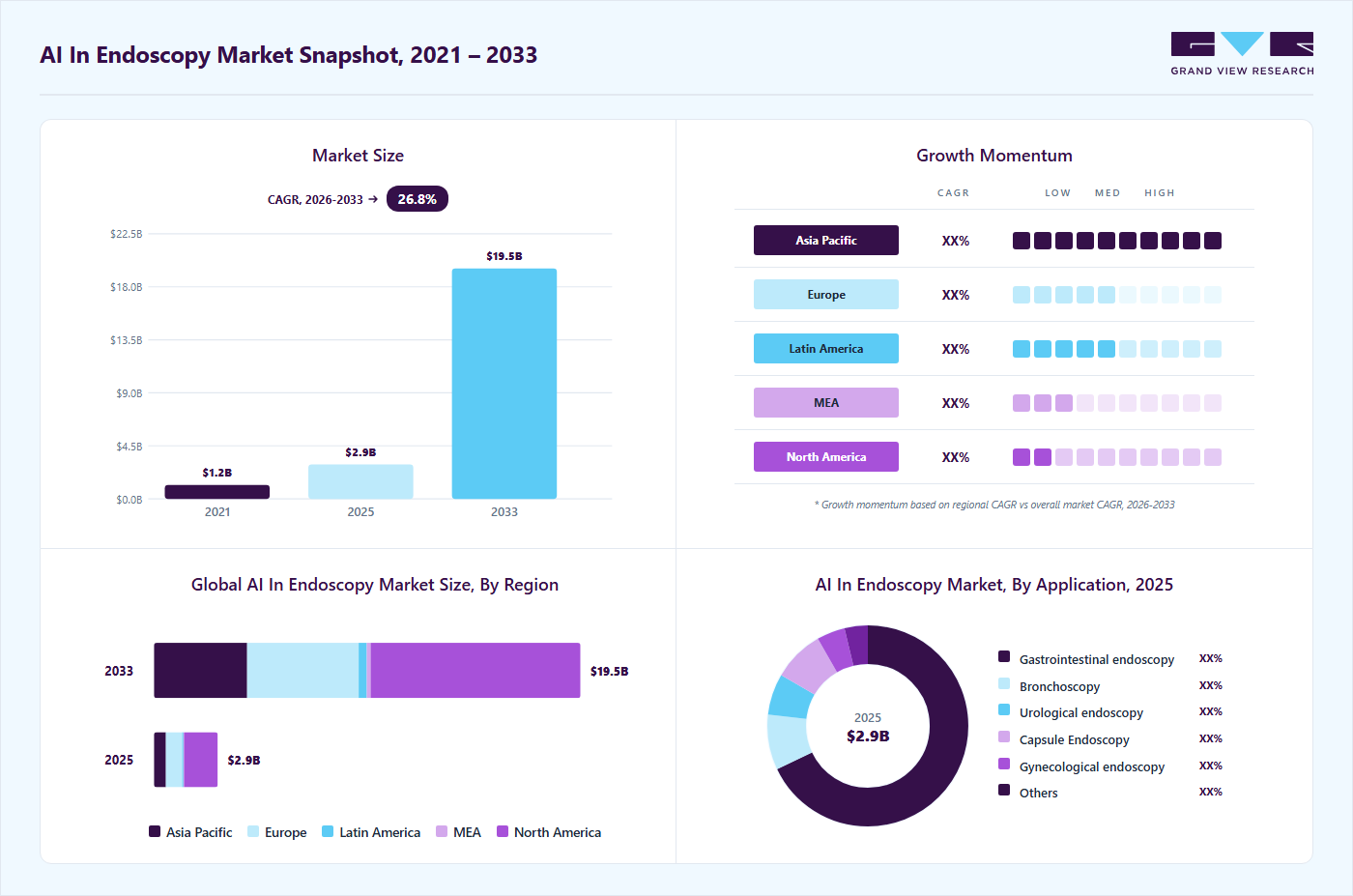 Source: Grand View Research, IR Documents, Primary Interviews, Paid DatabasesTo learn more about this report,
 Download Free Sample Report
 Key Market Trends & Insights
- By component: AI-enabled devices led the global AI in endoscopy industry and accounted for a share of 48.2% in 2025.
- By type: CADe (Computer-Aided Detection) segment led the market and accounted for a share of 66.6% in 2025.
- By application: Gastrointestinal endoscopy segment led the market and accounted for a share of 67.8% in 2025.
- By end use: Hospitals segment led the market and accounted for a share of 51.9% in 2025.
Regional Highlights
- Largest regional market: North America (52.9% revenue share, 2025)
- Fastest-growing regional market: Asia Pacific (highest CAGR, 2026-2033)
- By country: The U.S. held the largest revenue share in 2025.
Market Size & Forecast
- Market size in 2025: USD 2.9 Billion
- Estimated market size in 2026: USD 3.7 Billion
- Projected market size by 2033: USD 19.5 Billion
- CAGR (2026-2033): 26.8%
Three ways to get this report
Buy it, customize it, or ask a question.Ask an Analyst
Analyst response in 1 business day
- AccessReport author, directly
- Reply timeWithin 1 working day
- No sales callDirect answer only
- FormatEmail reply
- CostFree, no cost
Get the Full Report
What the study covers
- FormatsPDF · Excel · Dashboard
- Timeline2026–2033 annual, 2025 base
- Coverage20+ countries, 5 regions
- Companies10+ key players profiled
Customize the Report
20% free customization
- IncludeCountries, segments, points
- TailorTo your product definition
- ExtendDeeper competitor detail
- OrA fully bespoke study
- Turnaround5–10 working days
Additionally, rapid advancements in artificial intelligence, particularly in machine learning and computer vision, are driving innovation in the AI endoscopy market. The increasing global burden of gastrointestinal diseases, including colorectal cancer and inflammatory bowel disease, is a primary driver of AI in endoscopy market. For instance, according to the American Cancer Society estimates, in 2024, around 13,920 new small intestine cancer cases were diagnosed in the U.S., and 2,060 individuals died due to small intestine cancer. As the prevalence of small intestine cancer rises globally, there is a growing need for effective diagnostic and treatment procedures. Capsule endoscopy plays a crucial role in offering minimally invasive options to accurately diagnose, stage, and treat various forms of cancer.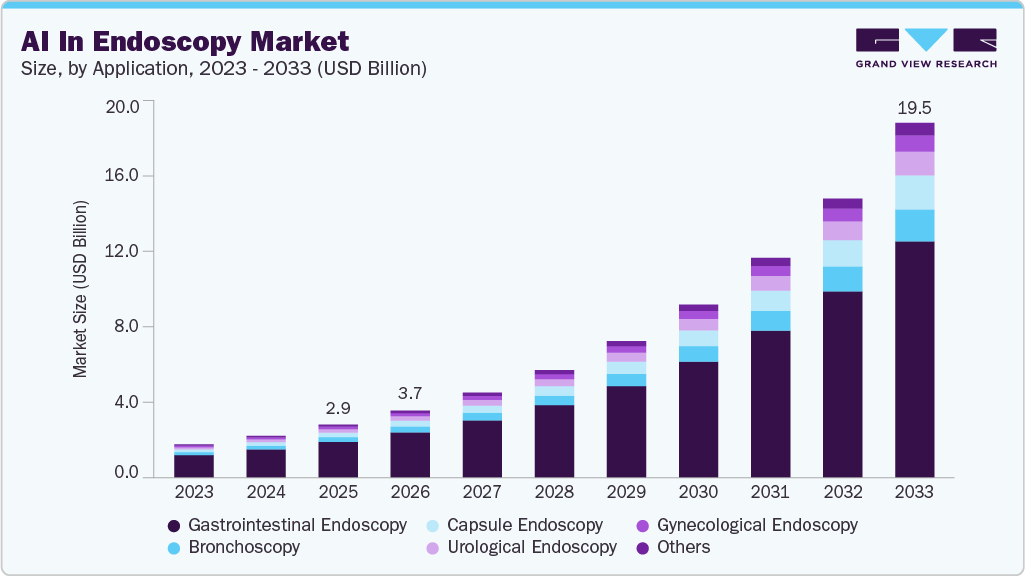 To learn more about this report, Download Free Sample Report
 Similarly, according to the World Cancer Research Fund, approximately 1.93 million new cases of colorectal cancer were reported globally in 2022, making it one of the most prevalent malignancies. The World Health Organization further emphasizes that regions such as Europe, Australia, and New Zealand exhibit the highest incidence rates, largely due to lifestyle factors, diet, and aging populations.
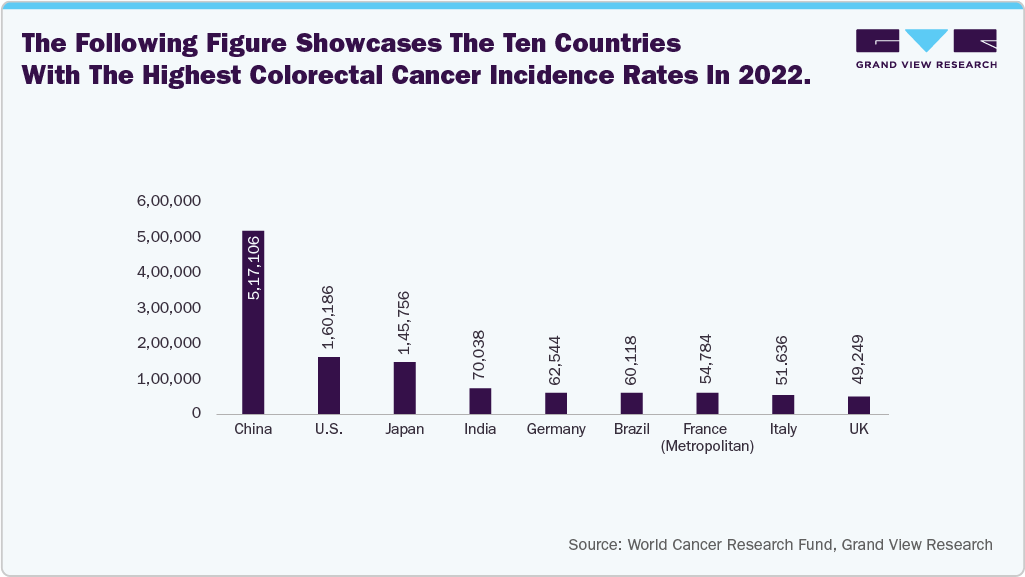 To learn more about this report, Download Free Sample Report
 Moreover, colonoscopy helps diagnose and monitor inflammatory bowel diseases (IBD) such as ulcerative colitis and Crohn’s disease. According to CDC data published in June 2024, the prevalence of IBD in the U.S. is estimated between 2.4 and 3.1 million. Similarly, the worldwide prevalence of ulcerative colitis was expected to be 5 million in 2023. Colonoscopy in ulcerative colitis helps determine if inflammation is controlled or if flare-ups are occurring. Regular colonoscopies assess mucosal healing or damage, which can influence treatment decisions. Thus, the rising prevalence of colorectal diseases is anticipated to propel the AI in endoscopy market.
Furthermore, rapid growth in artificial intelligence, especially in machine learning and computer vision, is driving new ideas in the AI endoscopy market. These tools enable automated image review, real-time support, and improved procedural steps, reducing errors and enhancing accuracy. Combining AI with robotic endoscopy, augmented reality, and online systems is improving care and efficiency. Ongoing research aims to make algorithms smarter and expand their uses beyond finding polyps to include advanced tissue studies. The integration of AI with high-quality imaging and telemedicine also expands the market by enabling remote consultations and collaboration among specialists.
Additionally, government initiatives and research funding are promoting the adoption of AI for early diagnosis and enhanced patient management. Healthcare providers are investing in digital health infrastructure to leverage AI for enhanced diagnostic accuracy and workflow optimization. Collaborations between medical device companies, technology firms, and research institutions are accelerating product development to increase market penetration.
Market Dynamics
Drivers – Rising Adoption of AI-Assisted Real-Time Diagnostic Imaging in Gastrointestinal Procedures
The global AI in endoscopy market is primarily driven by the increasing demand for real-time diagnostic accuracy and early disease detection during gastrointestinal procedures. Healthcare providers are adopting AI-enabled endoscopy systems to improve adenoma detection rates, reduce missed lesions, and enhance procedural efficiency. AI-powered computer-aided detection (CADe) and computer-aided diagnosis (CADx) platforms assist clinicians by identifying abnormal tissue patterns, polyps, and precancerous lesions during live procedures.
Moreover, technological advancements in deep learning, computer vision, and real-time image analytics are also contributing significantly to market growth. AI-enabled endoscopy platforms are being integrated with cloud-based data management systems and digital pathology tools to improve procedural documentation and optimize clinical workflows. Market participants are focusing on strategic collaborations, regulatory approvals, and product launches to strengthen their AI-assisted diagnostic portfolios. For instance, in April 2026, EndoSoft launched EndoVault 4, a cloud-based endoscopy platform for practices of all sizes. It supports procedure documentation, image management, scheduling, nursing notes, and AI-driven reporting.
Similarly, companies such as Medtronic, Fujifilm, and Wision AI are investing in advanced AI-assisted visualization systems to improve diagnostic confidence and reduce procedure-related variability. The increasing focus on preventive screening programs and value-based healthcare models is expected to accelerate the global adoption of AI-driven endoscopy technologies.
One of the major restraints affecting global AI in endoscopy market is the shortage of skilled professionals capable of effectively operating and interpreting AI-assisted endoscopic systems. Successful implementation of AI-driven platforms requires gastroenterologists, surgeons, and laboratory staff to understand advanced imaging analytics, algorithm-assisted diagnostics, and digital workflow integration. However, many healthcare facilities, particularly in low- and middle-income countries, face limited access to trained personnel and specialized technical expertise. For instance, according to an article published in the KevinMD Journal in January 2026, the U.S. faces a net deficit of gastroenterologists of around 400 per year.
In addition, resistance to adopting AI-supported clinical decision-making also remains a challenge among healthcare professionals who rely heavily on conventional diagnostic methods and manual interpretation. Physicians often require extensive clinical evidence and hands-on validation before integrating AI tools into routine procedures. In addition, continuous training programs and workflow adaptation are necessary to ensure the efficient use of AI-enabled systems, thereby increasing the operational burden on hospitals and diagnostic centers. The lack of standardized clinical protocols for AI-assisted endoscopy further creates uncertainty regarding interpretation consistency and treatment pathways.
Market Concentration & Characteristics
The chart below illustrates the relationship between industry concentration, industry characteristics, and industry participants. The x-axis represents the level of industry concentration, ranging from low to high. The y-axis represents various industry characteristics, including industry competition, level of merger & acquisition activities, degree of innovation, impact of regulations, and regional expansion. The AI in endoscopy market is slightly fragmented. However, several emerging players are entering the market, thereby contributing to increased fragmentation within the market. The degree of innovation is high. The level of merger & acquisition activities is moderate. Moreover, the impact of regulations and the regional expansion of industry is high.
AI in endoscopy market is characterized by constant innovation, with a strong focus on launching new platforms and devices to improve diagnostic accuracy and enhance care delivery. Prominent players are launching advanced solutions to sustain a competitive advantage. In addition, growing regulatory approvals propel market growth further. For instance, in October 2024, Olympus received CE approval for three cloud-based AI medical devices—CADDIE, CADU, and SMARTIBD—under the Medical Device Regulation (MDR) in Europe. These AI solutions assist in endoscopy by detecting colorectal polyps, analyzing dysplasia in Barrett’s Esophagus, and characterizing ulcerative colitis, aiming to enhance clinical decision-making and operational efficiency.
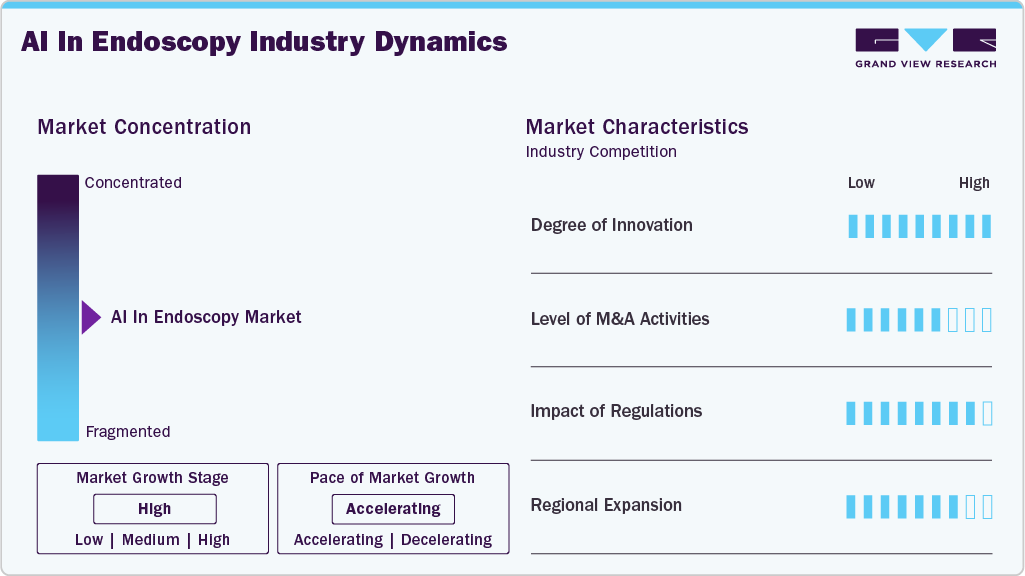 To learn more about this report, Download Free Sample Report
 "We are excited about this significant advancement in our technology innovation and patient care with our vision of the Intelligent Endoscopy Ecosystem. These solutions represent a transformative shift in endoscopy, where technology is delivered not only through new equipment but also through data, artificial intelligence, and continuous innovation that empower healthcare professionals and can ultimately improve patient outcomes.”
- Miquel-Àngel García, Global Head of Endoscopy Solutions Ecosystem at Olympus.
"The regulatory approvals for our three AI software medical devices under MDR demonstrate our commitment to quality and patient safety. By integrating AI and cloud-based technology, we are paving the way for a new era in endoscopy, where medical professionals can deliver the best possible care with unprecedented reliability and efficiency."
- added Dr. Karsten Klose, Global Head of the Digital R&D Unit at Olympus.
The industry is experiencing a moderate level of merger and acquisition activities undertaken by several key players. This is due to the desire to gain a competitive advantage in the industry, enhance technological capabilities, and consolidate in a rapidly growing market.
Regulations play a crucial role in shaping the AI landscape in the endoscopy market, ensuring ethical use, patient privacy, and data security. Stringent regulatory frameworks contribute to trust and acceptance, fostering innovation while safeguarding against potential risks. Compliance with these regulations is crucial for AI applications in healthcare to ensure the safe and secure handling of patient information, reducing the risk of data breaches and unauthorized access. In April 2021, the European Commission introduced the initial regulatory framework for AI within the EU. The proposal involves evaluating and categorizing AI systems capable of various applications based on the level of risk they present to users. The varying degrees of risk will determine the extent of regulatory measures applied to these AI systems.
The industry is witnessing high geographical expansion. Companies within the AI in endoscopy industry seek geographic expansion strategies to maintain their foothold in emerging markets and attract customers from these regions. For instance, in August 2022, Medtronic India launched the GI Genius AI-powered module for colonoscopy, which utilizes advanced AI software to highlight suspicious polyps in real-time with a sensitivity rate of 99.7% per lesion and a false-positive rate of less than 1%.
Component Insights
Based on component, AI-enabled devices segment held the largest market share of 48.19% in 2025. This segment encompasses endoscopy systems and processors with embedded artificial intelligence capabilities. These devices integrate real-time computer vision and deep learning algorithms directly into imaging hardware to assist clinicians during procedures. They support functions such as automated lesion detection, polyp characterization, and mucosal pattern recognition. Hardware-level integration enables low-latency performance, which is critical for real-time clinical decision support during endoscopic examinations.
The AI software and platform segment is expected to grow at the fastest CAGR during the forecast period. These platforms utilize artificial intelligence for real-time image analysis, lesion detection, and procedural support during endoscopic procedures. These platforms are designed to integrate seamlessly with existing endoscopy hardware, allowing clinicians to leverage AI for improved diagnostic accuracy and enhanced workflow efficiency. In addition, integration with electronic health records and interoperability with other clinical systems further enhance their utility in complex care environments.
Type Insights
Based on type, the CADe (Computer-Aided Detection) segment accounted for the largest revenue share of 66.64% in 2025. CADe software and algorithms are designed to assist clinicians in the real-time identification of lesions, polyps, and other abnormalities during endoscopic procedures. These tools are integrated into both hardware and software platforms, supporting various endoscopic modalities, including colonoscopy and gastroscopy. Moreover, CADe solutions in endoscopy are widely deployed in clinical settings, enabling faster and more accurate identification of precancerous and cancerous lesions. For instance, in May 2024, Fujifilm commercialized CAD EYE, an AI-powered system for real-time detection of colonic lesions during colonoscopy, and SCALE EYE, a novel technology for measuring colonic lesions.
“This system expansion from Fujifilm represents an exciting step forward at a time when quality in colonoscopy is a critical focus across the GI community. Leveraging AI for polyp detection support with CAD EYE, along with the introduction of SCALE EYE, a novel real-time polyp measurement solution - both seamlessly integrated with the innovative ELUXEO platform - Fujifilm is helping to address several key challenges and working alongside endoscopists to elevate quality standards in colonoscopy.”
- Jason B. Samarasena, MD, gastroenterologist with UCI Health.
The CADx (Computer-Aided Diagnosis) segment is anticipated to register fastest growth from 2026 to 2033. These systems use deep learning algorithms to analyze endoscopic images and histopathological data, providing clinicians with insights into malignancy risk, tissue type, and disease progression. By automating diagnostic workflows and delivering evidence-based recommendations, CADx tools enhance diagnostic accuracy and support clinical decision-making. The segment is growing rapidly, driven by the need for more precise and personalized endoscopic diagnostics.
Application Insights
Based on application, the gastrointestinal endoscopy segment held the largest revenue share of 67.81% in 2025, driven by high procedure volumes in colorectal and upper gastrointestinal cancer screening. The AI tools are integrated into colonoscopes, gastroscopes, and capsule endoscopes, supporting real-time lesion detection, characterization, and risk stratification. By automating image analysis and procedural workflows, AI enhances diagnostic accuracy, reduces missed lesions, and improves patient outcomes. Moreover, the segment is witnessing rapid adoption due to the increasing global burden of gastrointestinal diseases and the need for early and precise diagnosis.
The capsule endoscopy segment is anticipated to grow at the fastest CAGR from 2026 to 2033.As awareness of the clinical benefits of capsule endoscopy, patient convenience, and diagnostic accuracy continues to rise, more hospitals and healthcare providers are incorporating capsule endoscopy into their gastroenterology services. This adoption is driven by the demand for minimally invasive diagnostic procedures, especially for conditions that are difficult to diagnose with traditional endoscopy. Moreover, advancements in AI-assisted image analysis, wireless data transmission, and enhanced battery life have made capsule endoscopy more effective and reliable, enabling widespread use. The rise in specialized gastroenterology centers, hospitals, and ambulatory surgery clinics offering capsule endoscopy has contributed to market growth, making the procedure more accessible to patients.
End Use Insights
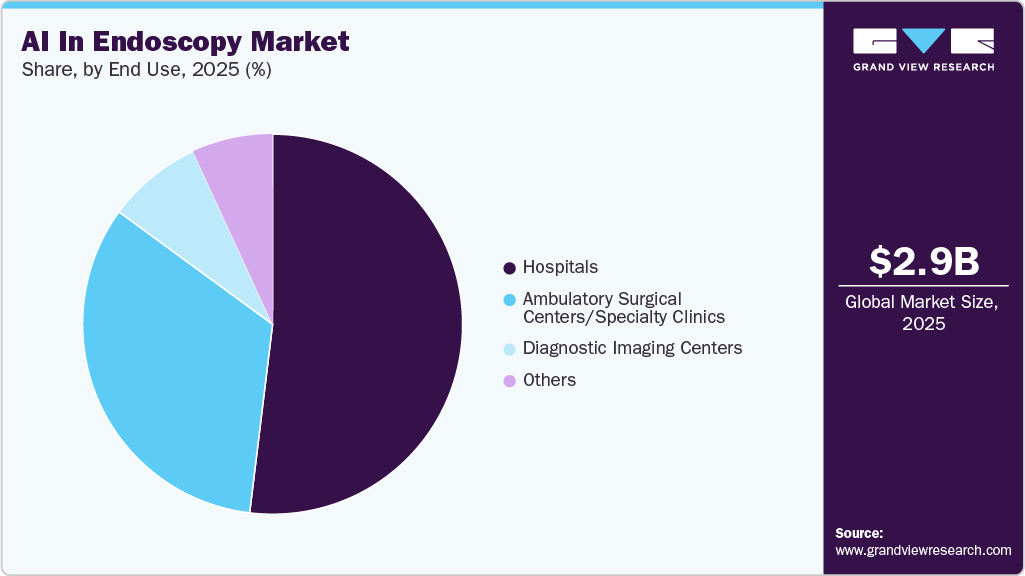
Based on end use, the hospitals segment held the largest market share of 51.94% in 2025. Hospitals are increasingly adopting AI-enabled endoscopy devices and software to enhance procedural accuracy, minimize diagnostic errors, and optimize workflows. These solutions integrate with existing endoscopy suites and support applications ranging from colorectal screening to therapeutic interventions. High patient volumes, dedicated endoscopy departments, and significant investment in digital health infrastructure drive this segment. Regulatory approvals and rising demand for precision medicine further accelerate adoption.
 To learn more about this report, Download Free Sample Report
 The ambulatory surgical centers/specialty clinics segment is anticipated to grow at the fastest CAGR from 2026 to 2033. These centers prioritize efficiency, cost-effectiveness, and rapid turnaround times, making AI-enabled devices and software platforms ideal for streamlining workflows and improving diagnostic accuracy. The segment benefits from increasing patient demand for minimally invasive procedures and early diagnosis, driving investments in advanced endoscopic technologies.
Regional Insights
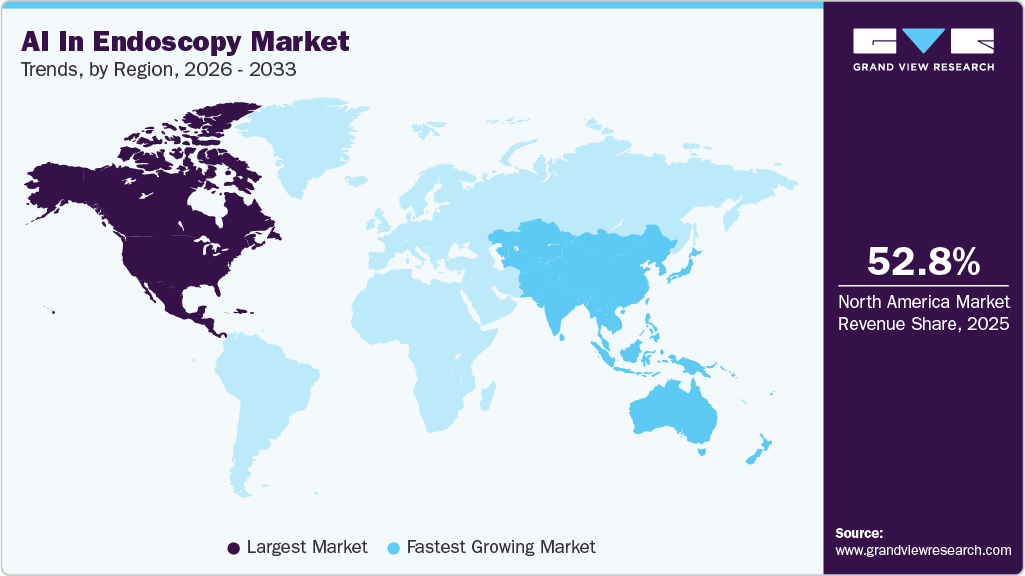
North America AI in endoscopy market accounted for the largest revenue share of 52.85% in 2025. This is attributed to the high prevalence of chronic diseases, strong reimbursement frameworks, and rapid integration of AI into digital health ecosystems. The U.S. leads with significant FDA clearances for AI-powered diagnostic and surgical devices, ensuring regulatory support for innovation. Moreover, rising collaborations between technology companies and healthcare providers further fuel innovation.
 To learn more about this report, Download Free Sample Report
 U.S. AI in Endoscopy Market Trends
The U.S. AI in endoscopy market held the largest market share in 2024. The country has witnessed a surge in approvals for AI-powered endoscopy software and devices, reflecting robust innovation in healthcare technology. For instance, in March 2024, Fujifilm received FDA 510(k) clearance for CAD EYE, its AI-powered endoscopic imaging system. CAD EYE enables the real-time detection of colonic lesions, such as polyps and adenomas, during colonoscopy, supporting endoscopists in identifying and removing pre-cancerous lesions regardless of size, shape, or color.
Furthermore, the rising prevalence of cancer, the growing geriatric population, which is susceptible to chronic illnesses requiring endoscopic procedures, and the increasing importance of timely disease diagnosis & early interventions are driving the demand for endoscopes. For instance, according to the American Cancer Society, approximately 30,300 new cases of stomach cancer and around 10,780 stomach cancer-related deaths were expected to be reported in 2025.
Europe AI in Endoscopy Market Trends
Europe AI in endoscopy market is expected to witness significant growth during the forecast period. This is attributed to the widespread adoption of AI technologies in healthcare and increasing investments by government and private organizations. Moreover, integrating 5G with healthcare drives Europe's market by enabling faster, more reliable connectivity for advanced medical technologies. In addition, increasing incidence of colon cancer and a growing emphasis on early detection are other factors fueling market growth.
For instance, according to a report published by the European Commission in March 2024, the European Cancer Information System recorded approximately 361,986 cases of colon cancer in Europe in 2022, accounting for about 13% of total cancer cases in the region. This rise in colorectal cancer (CRC) cases underscores the growing demand for effective screening programs to detect cancer at early stages, which can significantly improve treatment outcomes.
The UK AI in endoscopy market is expected to grow over the forecast period, owing to the robust healthcare infrastructure and increasing investments in AI technologies to enhance medical diagnosis and patient care. Moreover, the high prevalence of cancer & chronic diseases and the growing geriatric population are expected to drive the market growth in the country. According to Macmillan Cancer Support, in 2025, there were approximately 3.5 million patients suffering from cancer in the UK. In addition, the introduction of the National Awareness and Early Diagnosis Initiative has facilitated early diagnoses of cancer, along with increased access to optimal treatment, thereby playing a vital role in driving the market.
The Germany AI in endoscopy market held a significant revenue share in 2024 in the European market, attributed to increasing investments in healthcare technology and robust healthcare infrastructure. In addition, the increasing incidence of cancer in Germany is further expected to drive the demand for advanced diagnostic solutions such as screenings in the country. Furthermore, the presence of a substantial number of endoscopic device manufacturers in Germany, coupled with a surge in the development of capsule endoscopy, is fueling market growth in the region
Asia Pacific AI in Endoscopy Market Trends
Asia Pacific AI in endoscopy market is expected to grow at the fastest CAGR in the coming years. This growth is attributed to the rising healthcare expenditure, increasing adoption of AI in healthcare, and growing prevalence of chronic diseases. The rapidly developing healthcare infrastructure in major countries such as India, China, and Japan, and the booming medical tourism industry are propelling demand for endoscopic procedures in the region.
The China AI in endoscopy marketis expanding rapidly, owing to rapid technological advancements, rising efforts by the government to facilitate early diagnosis of cancer, and increasing strategic initiatives by key market players. Increasing collaborations among market players to develop advanced endoscopes is one of the key factors driving market growth. For instance, in July of 2023, HOYA Group and PENTAX Medical announced the opening of a new facility in Shanghai, China. This center would focus on manufacturing, R&D, and servicing endoscopes for the Chinese market under PENTAX Medical Shanghai Co., Ltd. The facility would produce PENTAX Medical’s endoscopic solutions tailored to the Chinese market.
"This is a great milestone in PENTAX Medical history to add a substantial local facility in China to produce, deliver and repair innovative endoscopic solutions for medical institutions in China. This will speed up delivery of PENTAX Medical's innovative endoscopic solutions to support enhancement of quality of care in China more than ever".
-Maha Guruswamy, President, PENTAX Medical Asia Pacific Region
AI in endoscopy market in Japan is expected to grow rapidly in the coming years. The increasing prevalence of disease and rising proportion of the geriatric population in the country is driving the demand for effective and advanced solutions in the country. In addition, increasing demand for early diagnosis and treatment of diseases is expected to boost the market. For instance, according to an article published by NCBI in September 2022, a Japanese prospective population‐based cohort study revealed that endoscopic screening lowered the occurrence of advanced gastric cancer by 22% and decreased gastric cancer mortality by 61% compared to no screening.
Latin America AI in Endoscopy Market Trends
Latin America AI in endoscopy market is anticipated to grow at a significant CAGR over the forecast period. This is attributed to the growing awareness about AI technologies, high prevalence of cancer and other chronic diseases, increasing government spending, and growing advancements in healthcare infrastructure.
Middle East and Africa AI in Endoscopy Market Trends
Middle East and Africa AI in endoscopy market is expected to grow at a significant CAGR over the forecast period. The market is characterized by a dynamic landscape driven by the growing adoption of technologically advanced medical devices, increasing healthcare expenditures, and supportive government policies. The significant integration of AI in healthcare technology across the region further contributes to market growth. Countries such as Saudi Arabia and the UAE are integrating AI into their healthcare infrastructure under strategic visions, including Saudi Vision 2030 and the UAE National Strategy for Artificial Intelligence 2031.
Key AI in Endoscopy Company Insights
Key players operating in the AI in endoscopy market are undertaking various initiatives to strengthen their market presence and increase the reach of their products and services. Strategies such as new product launches and partnerships play a key role in propelling market growth.
Key AI In Endoscopy Companies:
The following are the leading companies in the AI in endoscopy market. These companies collectively hold the largest Market share and dictate industry trends.
- FUJIFILM Corporation
- Olympus Corporation
- Medtronic
- MAGENTIQ EYE
- PENTAX Medical (HOYA Group)
- JINSHAN Science & Technology (Group) Co., Ltd.
- BioCam
- AnX Robotica
- Endovision
- EndoSoft
- Provation Software, Inc.
- ODIN VISION (ODIN MEDICAL LTD.)
Competitive Benchmarking
Operating Strategies
Competitive Edge
Weaknesses
Mature Players: Olympus Corporation
- Mature players focus on expanding integrated AI-enabled endoscopy portfolios combining computer-aided detection (CADe), computer-aided diagnosis (CADx), imaging platforms, and workflow optimization solutions.
- Leading participants actively invest in AI algorithm enhancement, cloud-based data integration, and regulatory approvals to expand global commercialization and product penetration.
- Established companies benefit from strong global distribution networks, extensive clinical validation capabilities, and established relationships with healthcare providers.
- Advanced imaging technologies, large diagnostic datasets, and integration with endoscopy hardware strengthen their competitive positioning in colorectal cancer screening and gastrointestinal diagnostics.
- Mature vendors face challenges related to high development costs, lengthy regulatory approval timelines, and complex integration with existing hospital IT infrastructure.
- Dependence on large healthcare networks and reimbursement uncertainties may limit rapid adoption across smaller healthcare facilities.
Emerging Players: EndoSoft
- Emerging players emphasize agile AI software development focused on real-time lesion detection, automated polyp characterization, and workflow enhancement applications.
- These companies prioritize niche innovation strategies, including cloud-native AI platforms, portable diagnostic solutions, and AI-assisted analytics for minimally invasive procedures.
- Emerging vendors benefit from faster innovation cycles, flexible deployment models, and a strong focus on next-generation AI algorithms for endoscopic image analysis.
- AI-driven automation capabilities improve adenoma detection rates, reduce diagnostic variability, and enhance procedural efficiency for healthcare providers.
- Emerging companies often face limitations associated with restricted financial resources, lower brand recognition, and smaller commercial distribution networks.
- Challenges in integrating AI platforms with legacy endoscopy systems and hospital infrastructures may hinder enterprise-scale adoption.
Recent Developments
-
In September 2025, Olympus launched its AI-powered OLYSENSE CAD/AI endoscopy portfolio in the U.S. and Europe, featuring cloud-based apps like CADDIE, CADU, and SMARTIBD for real-time lesion detection and characterization.
-
In May 2024, Magentiq partnered with PENTAX Medical (HOYA Group) to integrate its AI-based endoscopy solutions with PENTAX endoscopy systems. The collaboration focuses on integrating real-time computer-aided detection and diagnostic capabilities into clinical workflows in the U.S. market.
-
In April 2024, Medtronic unveiled ColonPRO, the next-generation AI software for its GI Genius intelligent endoscopy system.
-
In January 2024, AnX Robotica received FDA clearance for ProScan, an AI-assisted reading tool for small bowel video capsule endoscopy.
In February 2023, AnX Robotica introduced the NaviCam Small Bowel System in the U.S. It improves efficiency for clinicians and patients by significantly decreasing download and processing times, enabling clinicians to analyze studies and diagnose accurately.
“The launch of the NaviCam SB System is a significant achievement for AnX Robotica as we continue to build our NaviCam Platform. Video capsule endoscopy (VCE) is a valuable tool in the visualization of obscure GI bleeding as well as inflammatory bowel disease (IBD), making it an important diagnostic tool for Gastroenterologists.”
- Vice President of Marketing for AnX Robotica
AI In Endoscopy Market Report Scope
Report Attribute
Details
Market size in 2025
USD 2.9 billion
Estimated Market size in 2026
USD 3.7 billion
Projected Market size by 2033
USD 19.5 billion
Growth rate
CAGR of 26.8% from 2026 to 2033
Actual data
2021 - 2025
Forecast period
2026 - 2033
Quantitative units
Revenue in USD million and CAGR from 2026 to 2033
Report coverage
Revenue forecast, company ranking, competitive landscape, growth factors, and trends
Segments covered
Type, Application, Component, End Use, and Region
Regional scope
North America; Europe; Asia Pacific; Latin America; Middle East & Africa
Country scope
U.S.; Canada; Mexico; Germany; UK; France; Italy; Spain; Denmark; Sweden; Norway; China; Japan; India; South Korea; Australia; Thailand; Brazil; Argentina; South Africa; Saudi Arabia; UAE; Kuwait
Key companies profiled
FUJIFILM Corporation; Olympus Corporation; Medtronic; MAGENTIQ EYE; PENTAX Medical (HOYA Group); JINSHAN Science & Technology (Group) Co., Ltd.; BioCam; AnX Robotica; Endovision; EndoSoft; Provation Software, Inc.; ODIN VISION (ODIN MEDICAL LTD.)
Customization scope
Free report customization (equivalent up to 8 analysts working days) with purchase. Addition or alteration to country, regional & segment scope.
Pricing and purchase options
Avail customized purchase options to meet your exact research needs. Explore purchase options
Global AI In Endoscopy Market Report Segmentation
This report forecasts, revenue growth at global, regional, and country levels and provides an analysis of the latest industry trends in each of the sub-segments from 2021 to 2033. For this study, Grand View Research has segmented global AI in endoscopy market report based on component, type, application, end use, and region.
-
Type Outlook (Revenue, USD Million, 2021 - 2033)
-
CADe (Computer-Aided Detection)
-
CADx (Computer-Aided Diagnosis)
-
-
Component Outlook (Revenue, USD Million, 2021 - 2033)
-
AI-enabled devices
-
AI Software and Platforms
-
Services
-
-
Application Outlook (Revenue, USD Million, 2021 - 2033)
-
Gastrointestinal Endoscopy
-
Bronchoscopy
-
Urological Endoscopy
-
Capsule Endoscopy
-
Gynecological Endoscopy
-
Others
-
-
End Use Outlook (Revenue, USD Million, 2021 - 2033)
-
Hospitals
-
Ambulatory Surgical Centers/Specialty clinics
-
Diagnostic imaging centers
-
Others
-
-
Regional Outlook (Revenue, USD Million, 2021 - 2033)
-
North America
-
U.S.
-
Canada
-
Mexico
-
-
Europe
-
Germany
-
UK
-
France
-
Italy
-
Spain
-
Denmark
-
Sweden
-
Norway
-
-
Asia Pacific
-
China
-
Japan
-
India
-
South Korea
-
Australia
-
Thailand
-
-
Latin America
-
Brazil
-
Argentina
-
-
MEA
-
South Africa
-
Saudi Arabia
-
UAE
-
Kuwait
-
-
Delivered Customizations
This report has been delivered with the following In-depth customizations
Client Request
Customization Delivered
Value Adds
AI-assisted Gastrointestinal Disease Detection & Clinical Workflow Analysis
Developed a tailored analysis of the AI in endoscopy market focused on AI-assisted gastrointestinal disease detection, real-time lesion characterization, and workflow optimization across endoscopy procedures. The study incorporated assessments of AI adoption trends, colorectal cancer screening demand, improvements in polyp detection accuracy, procedure efficiency, and the integration of computer-aided detection (CADe) and computer-aided diagnosis (CADx) technologies across hospitals and diagnostic centers.
Enables stakeholders to understand the evolving clinical and technological landscape surrounding AI-enabled endoscopy, identify high-growth application areas, assess diagnostic efficiency improvements, and evaluate the impact of AI integration on early disease detection, procedural accuracy, workflow optimization, and long-term healthcare outcomes.
Endoscopy AI Adoption & Healthcare Utilization Trends
Delivered a customized evaluation of healthcare provider adoption and utilization patterns for AI-enabled endoscopy systems, including trend analysis of screening volumes, diagnostic accuracy requirements, clinician preferences, reimbursement developments, and demand drivers influencing adoption of AI-assisted gastrointestinal diagnostics and minimally invasive procedures.
Provides actionable insights into evolving healthcare adoption behavior, emerging technology utilization trends, and demand hotspots, helping clients identify commercially attractive AI endoscopy applications and align strategic initiatives with changing clinical and operational requirements.
Healthcare Infrastructure & AI-enabled Endoscopy Opportunity Assessment
Conducted a focused assessment of healthcare infrastructure readiness for AI-enabled endoscopy, including analysis of digital imaging capabilities, endoscopy suite modernization, AI software integration requirements, clinical workflow enhancements, and expenditure patterns across healthcare facilities. The analysis also evaluated gaps in AI integration capabilities, the availability of a trained workforce, and access to advanced endoscopic technologies across developed and emerging healthcare markets.
Supports investment planning for hospitals, ambulatory surgical centers, and diagnostic providers by quantifying market demand, identifying underserved healthcare segments, evaluating revenue potential from AI-assisted endoscopy solutions, and strengthening the business case for expanding digital infrastructure and investing in AI technologies.
Frequently Asked Questions About This Report
Asia Pacific is the fastest-growing region over the forecast period.
The global AI in endoscopy market size was estimated at USD 2.9 billion in 2025 and is expected to reach USD 3.7 billion in 2026.
The global AI in endoscopy market is expected to grow at a compound annual growth rate of 26.8% from 2026 to 2033 to reach USD 19.5 billion by 2033.
North America dominated with a 52.9% revenue share in 2025.
Some key players operating in the AI in endoscopy market include FUJIFILM Corporation; Olympus Corporation; Medtronic; MAGENTIQ EYE; PENTAX Medical (HOYA Group); JINSHAN Science & Technology (Group) Co., Ltd.; BioCam; AnX Robotica; Endovision; EndoSoft; Provation Software, Inc.; ODIN VISION (ODIN MEDICAL LTD.)
Key factors that are driving the AI in endoscopy market are increasing global burden of gastrointestinal diseases, including colorectal cancer and inflammatory bowel disease and a significant shift toward minimally invasive endoscopic procedures. In addition, rapid advancements in artificial intelligence, particularly in machine learning and computer vision, are fueling innovation in the AI endoscopy market.
The AI-enabled devices segment led with a 48.2% revenue share in 2025, while AI software and platform is the fastest-growing segment.
The CADe (Computer-Aided Detection) segment held the highest market share in 2025, while CADx (Computer-Aided Diagnosis) is the fastest-growing segment.
The gastrointestinal endoscopy segment held the highest market share in 2025, while capsule endoscopy is the fastest-growing segment.
The hospitals segment held the highest market share in 2025, while ambulatory surgical centers/specialty clinics is the fastest-growing segment.
About the Author(s)
Healthcare IT Research Team
Healthcare · Healthcare ITThis report was authored by the healthcare it research team at Grand View Research - comprising two research analysts, one senior research analyst, and one industry expert - with specialized expertise in the healthcare it segment of the healthcare industry. All findings are based on proprietary healthcare databases, executive interviews, and regulatory analysis, subject to internal peer review prior to publication.
Last Updated:
Speak to Analyst

Customize this report to your needs - add regions, segments, or data points, with 20% free customization.
Or view our licence options:


ISO 9001:2015 & 27001:2022 Certified
We are GDPR and CCPA compliant! Your transaction & personal information is safe and secure. For more details, please read our privacy policy.


