
- Home
- »
- Healthcare IT
- »
-
AI Platform For Clinical Conversations Market Report, 2033GVR Report cover

AI Platform For Clinical Conversations Market (2026 - 2033)
Size, Share & Trends Analysis Report By Component (Software & Platform, Services), By Application (Clinical Documentation Automation, Telehealth & Virtual Consultations), By End-use, By Region, And Segment Forecasts
Market Size, 2025
$671.8MMarket Estimate, 2026
$839.8MMarket Forecast, 2033
$4,187.8MCAGR, 2026–2033
25.8%AI Platform For Clinical Conversations Market Summary
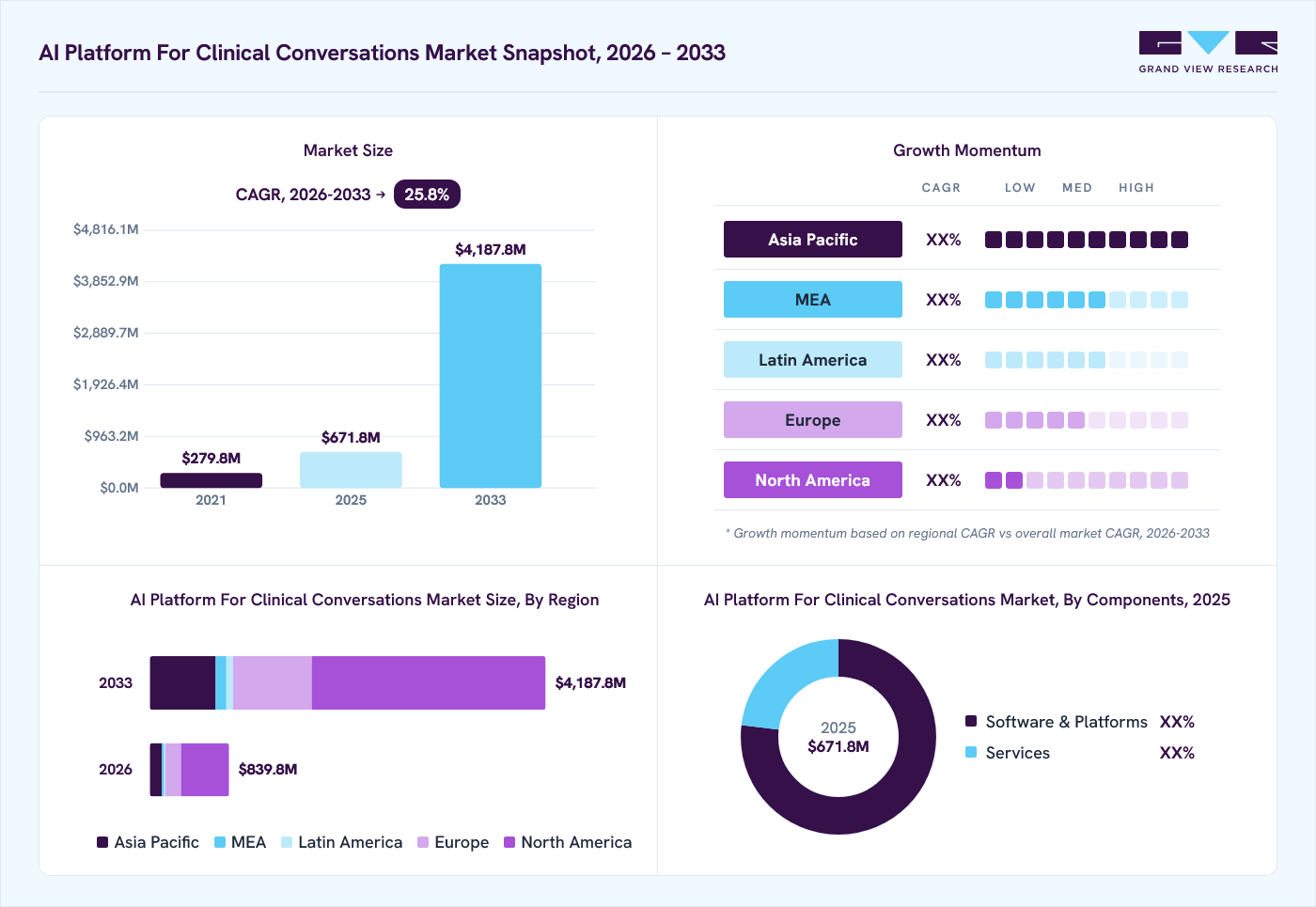
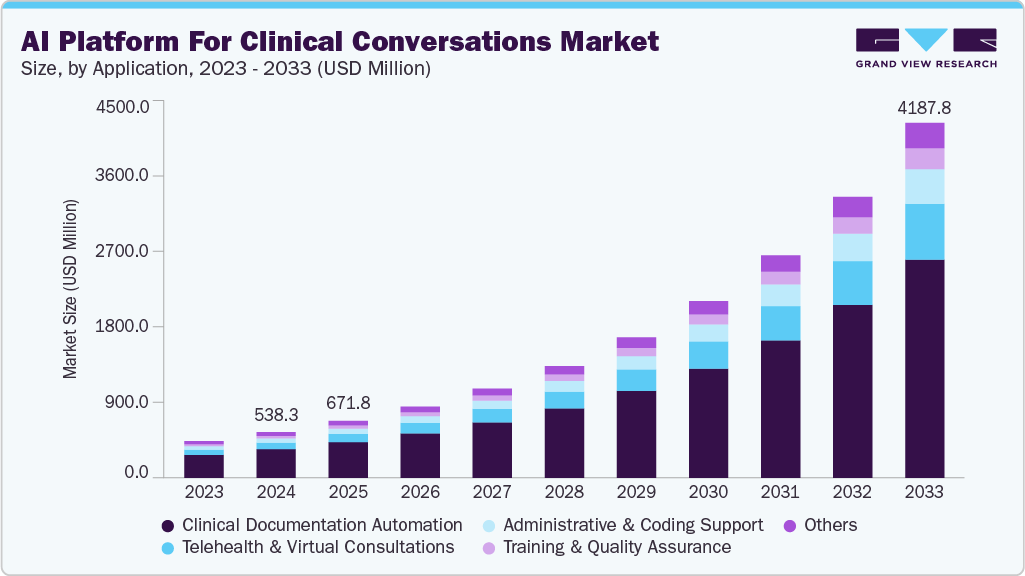
The global AI platform for clinical conversations market size was valued at USD 671.8 million in 2025 and is projected to grow from USD 839.8 million in 2026 to USD 4187.8 million by 2033, at a CAGR of 25.8% from 2026 to 2033. North America dominated the market, accounting for a revenue share of 60.8% in 2025. Rising clinician burnout, the need to reduce administrative burden, and a growing emphasis on personalized patient engagement and remote patient monitoring are significant factors contributing to market growth.
 Source: Grand View Research, IR Documents, Primary Interviews, Paid DatabasesTo learn more about this report,
 Download Free Sample Report
Key Market Trends & Insights
- By component: Software & platforms segment held the largest market share of 76.8% in 2025.
- By application: Clinical documentation automation segment held the largest market share of 62.5% in 2025.
- By end use: Hospital/inpatient wards segment held the largest market share of 54.0% in 2025.
Regional Highlights
- Largest regional market: North America (60.8% revenue share, 2025)
- By country: The U.S. held the largest market share in 2025.
Market Size & Forecast
- Market size in 2025: USD 671.8 Million
- Estimated market size in 2026: USD 839.8 Million
- Projected market size by 2033: USD 4187.8 Million
- CAGR (2026-2033): 25.8%
Prism AI by Grand View Research Free to tryAsk a question about the AI platform for clinical conversations marketTry asking✓Every figure cited from GVR research Prefer the report? Download free sample →
Additionally, the expansion of telehealth and virtual care services is another factor that is further fueling market growth. The rising demand for workflow efficiency and the reduction of administrative burden are primary drivers accelerating the global adoption of AI platforms for clinical conversations. Health systems are increasingly facing physician burnout due to manual documentation, coding complexity, and regulatory compliance requirements.AI-powered ambient scribe solutions streamline note-taking during patient-provider interactions, automatically capturing key details and structuring clinical documentation to enhance efficiency. This automation enables clinicians to focus on patient care, resulting in enhanced satisfaction, improved clinical accuracy, and increased workflow productivity. For instance, in October 2025, Northwell Health announced the deployment of Abridge’s ambient AI platform system-wide, automating clinical documentation to support 20,000 physicians and 22,000 nurses across 28 hospitals. The solution improves efficiency, reduces burnout, and integrates deeply with EMRs, helping clinicians manage over 50 million annual medical conversations with enterprise-grade security and multi-specialty support.
 To learn more about this report, Download Free Sample Report
“Physician wellness and resiliency is one of the most essential issues facing healthcare today and promoting it requires redesigning how we work. The patient and clinician interaction is precious and time is an invaluable resource. By reducing documentation burden, Abridge will help our clinicians return to what they do best: caring for our patients.”
-Jill Kalman, MD, executive vice president, chief medical officer and deputy physician-in-chief at Northwell Health
Recent advancements in natural language processing (NLP) and large language models (LLMs) are accelerating the development of AI-driven clinical conversation platforms, enabling healthcare organizations to deliver more efficient, informed, and patient-centric care. These technologies facilitate contextual understanding across a wide range of medical scenarios and specialties. For instance, in October 2025, VideaHealth launched Voice Notes, the first AI-powered ambient scribe specifically designed for dentistry. Built on the VideaAI platform trained on over one billion dental images, it converts chairside conversations into complete, compliant clinical notes without disrupting workflows. AI systems now summarize, transcribe, and interpret medical discourse across various accents, dialects, and languages. Enhanced multimodal capabilities enable integration of audio, textual, and image data for a unified patient view.
Significant investment, strategic partnerships, and rapid product launches mark the competitive landscape of the AI platform for clinical conversations industry. For instance, in September 2025, Philips SpeechLive partnered with Corti to integrate ambient AI into its dictation platform, delivering real-time, structured clinical documentation and instant medical insights. Leading technology firms, health IT vendors, and emerging startups are developing AI conversation platforms tailored for inpatient, outpatient, and specialty settings. In February 2025, Akron Children’s Hospital announced the expansion of its use of the Abridge generative AI platform across pediatric specialties, including primary care, gastroenterology, cardiology, and pediatric psychiatry.
Market Dynamics
Rising clinician burnout, the need to reduce administrative burden, and a growing emphasis on personalized patient engagement and remote patient monitoring are significant factors contributing to market growth.
The rising demand for workflow efficiency and the reduction of administrative burden are primary drivers accelerating the global adoption of AI platforms for clinical conversations. Healthcare systems are increasingly facing physician burnout due to manual documentation, coding complexity, and growing regulatory compliance requirements. AI-powered ambient clinical documentation solutions automatically capture patient-provider conversations, generate structured clinical notes, and integrate documentation directly into electronic medical records (EMRs), reducing the time clinicians spend on administrative tasks. This automation enables physicians and nurses to focus on patient care, improves documentation accuracy, and enhances overall clinical productivity. The expansion of telehealth, virtual care services, and digital health ecosystems is further supporting the adoption of AI-powered clinical conversation platforms across hospitals, ambulatory care centers, and specialty practices. For instance, in October 2025, Northwell Health announced the deployment of Abridge's ambient AI platform across its health system, supporting 20,000 physicians and 22,000 nurses across 28 hospitals, to reduce administrative burden and improve workflow efficiency. The platform automates clinical documentation, integrates with EMRs, and helps clinicians manage more than 50 million annual medical conversations, improving operational efficiency while reducing clinician burnout.
Continuous advancements in natural language processing (NLP), large language models (LLMs), speech recognition, and multimodal artificial intelligence are driving market growth. Modern AI platforms are able to accurately transcribe, summarize, and interpret complex medical conversations across multiple specialties, languages, accents, and clinical environments while generating compliant clinical documentation. Enhanced multimodal capabilities enable these platforms to combine voice, text, and medical imaging data, providing a comprehensive view of patient interactions. Strategic partnerships, product innovation, and increasing investments continue to strengthen the competitive landscape. For instance, in September 2025, Philips SpeechLive partnered with Corti to integrate ambient AI into its clinical dictation platform, enabling real-time documentation and clinical insights. Similarly, in October 2025, VideaHealth launched Voice Notes, an AI-powered ambient scribe for dentistry that automatically converts chairside conversations into structured clinical notes. These technological advancements, combined with expanding enterprise deployments across healthcare organizations, are significantly accelerating the adoption of AI platforms for clinical conversations worldwide.
The increasing adoption of AI platforms for clinical conversations has intensified concerns regarding patient data privacy, cybersecurity, and regulatory compliance. These platforms continuously capture, process, transcribe, and store highly sensitive patient-provider conversations, making them subject to stringent healthcare regulations such as the Health Insurance Portability and Accountability Act (HIPAA) in the U.S., the General Data Protection Regulation (GDPR) in Europe, and other regional healthcare data protection laws. Vendors must implement robust encryption, secure cloud infrastructure, identity and access management, audit trails, and mechanisms for consent management to ensure regulatory compliance. Healthcare organizations also require assurance that AI-generated documentation maintains patient confidentiality and complies with legal and clinical documentation standards. These regulatory obligations increase implementation complexity, extend procurement cycles, and raise operational costs, particularly for healthcare providers managing large volumes of patient information across multiple clinical settings.
Healthcare organizations remain cautious about deploying AI-powered clinical conversation platforms due to concerns regarding cybersecurity threats, algorithm transparency, and liability associated with AI-generated clinical documentation, which can delay routine adoption. Data breaches, ransomware attacks, or unauthorized access to recorded medical conversations can expose confidential patient information and disrupt healthcare operations. In addition, AI models must demonstrate high levels of accuracy, reliability, and explainability before being integrated into routine clinical workflows. Errors in transcription, summarization, or clinical interpretation may affect documentation quality and increase medico-legal risks. These concerns require vendors to conduct continuous model validation, cybersecurity monitoring, and software updates, increasing development costs and slowing enterprise-wide adoption.Market Concentration & Characteristics
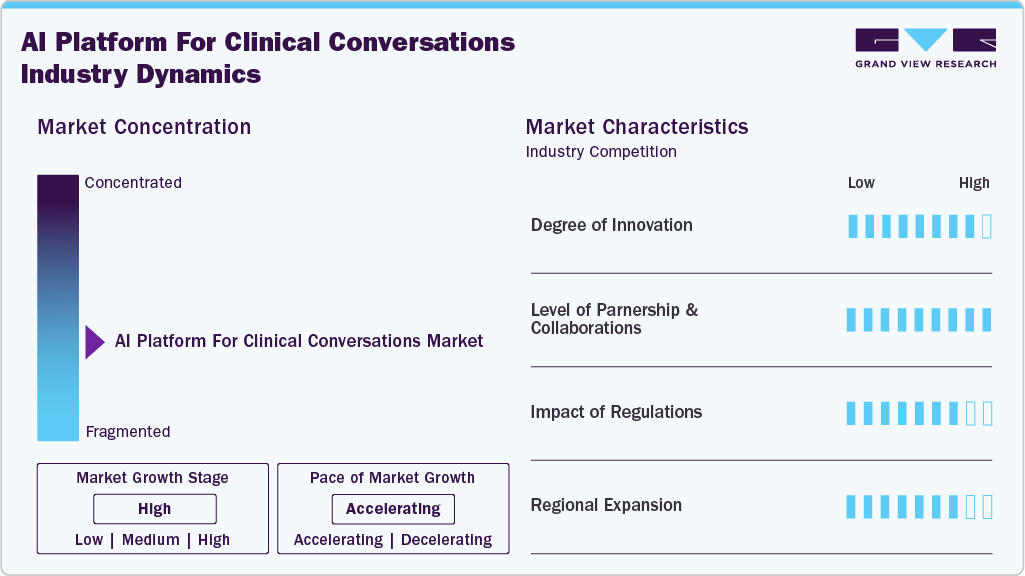
The chart below illustrates the relationship between industry concentration, characteristics, and participants. The x-axis represents the level of industry concentration, ranging from low to high. The y-axis represents various industry characteristics, including industry competition, level of partnerships & collaboration activities, degree of innovation, impact of regulations, and regional expansion. The AI platform for clinical conversations market is slightly fragmented. Moreover, several emerging players are entering the market, thereby contributing to increased fragmentation within the market. The degree of innovation, the level of partnerships & collaboration activities is high. In addition, the impact of regulations and the regional expansion of industry is also high.
The market is characterized by constant innovation, with a strong focus on launching new platforms or upgrading the existing platforms to save time, reduce cognitive burden, and minimize duplicate work. Prominent players are launching advanced solutions to sustain a competitive advantage. For instance, in June 2025, Abridge expanded its capabilities to support inpatient care settings and streamline outpatient orders through seamless integration with Epic Systems. “Abridge Inside for Inpatient” integrates seamlessly with Epic workflows (Haiku and Hyperspace), enabling automated bedside note generation, rapid charting, and management of multiple patients.
 To learn more about this report, Download Free Sample Report
“Abridge Inside automatically transforms bedside conversations into structured Epic notes, empowering inpatient clinicians who deliver the intricately balanced coordinated care for admitted patients to devote more time to patient care. Seamless Epic integration into a variety of note types makes it easy to use, and our admitting hospitalists, in particular, are thrilled.”
- Dr. Veena Jones, Vice President and Chief Medical Information Officer at Sutter Health, one of the early pilot partners
The AI platform for clinical conversations industry is experiencing a high level of partnerships and collaborations undertaken by several key players. This is due to the desire to gain a competitive advantage in the industry, enhance technological capabilities, and consolidate in a rapidly growing market. For instance, in September 2025, Abridge partnered with Hartford HealthCare to deploy its AI-powered clinical documentation platform across the system.
AI platforms for clinical conversationsare increasingly being classified as Software as a Medical Device (SaMD) under regulatory standards. In the U.S., the Food and Drug Administration (FDA) regulates AI-powered clinical conversation tools under its SaMD framework, emphasizing risk classification, clinical validation, and real-world performance monitoring. In Europe, AI-based clinical conversation platforms fall under the EU Medical Device Regulation (MDR) and the emerging AI Act.
The industry is witnessing high geographical expansion. Companies within the AI platform for clinical conversations industry seek geographic expansion strategies to maintain their foothold in emerging markets and attract customers from both developed and developing countries. For instance, in October 2025, UPMC expanded its partnership with Abridge, scaling the AI-powered ambient clinical intelligence platform enterprise-wide to over 12,000 clinicians by 2026. The platform integrates deeply with existing workflows across more than 40 hospitals and 800 outpatient sites.
Analyst Perspective
The AI platform for clinical conversations market is rapidly transforming healthcare documentation by enabling real-time capture, transcription, summarization, and structuring of patient-provider interactions. Growing physician burnout, increasing administrative workloads, and rising adoption of ambient clinical intelligence are accelerating demand for AI-driven platforms that reduce documentation time while improving clinical accuracy and workflow efficiency. Healthcare providers are increasingly integrating these solutions into electronic health records to support documentation, coding, and clinical decision-making without disrupting patient engagement.
The competitive landscape is increasingly focused on generative AI, advanced speech recognition, and large language models capable of producing clinically accurate, context-aware documentation across multiple specialties and care settings. Vendors that combine high transcription accuracy, secure and compliant data handling, seamless EHR interoperability, multilingual capabilities, and scalable cloud-native deployment are expected to strengthen their competitive position. As healthcare organizations prioritize clinician productivity and digital transformation, AI platforms for clinical conversations are evolving into essential components of modern clinical workflow infrastructure.
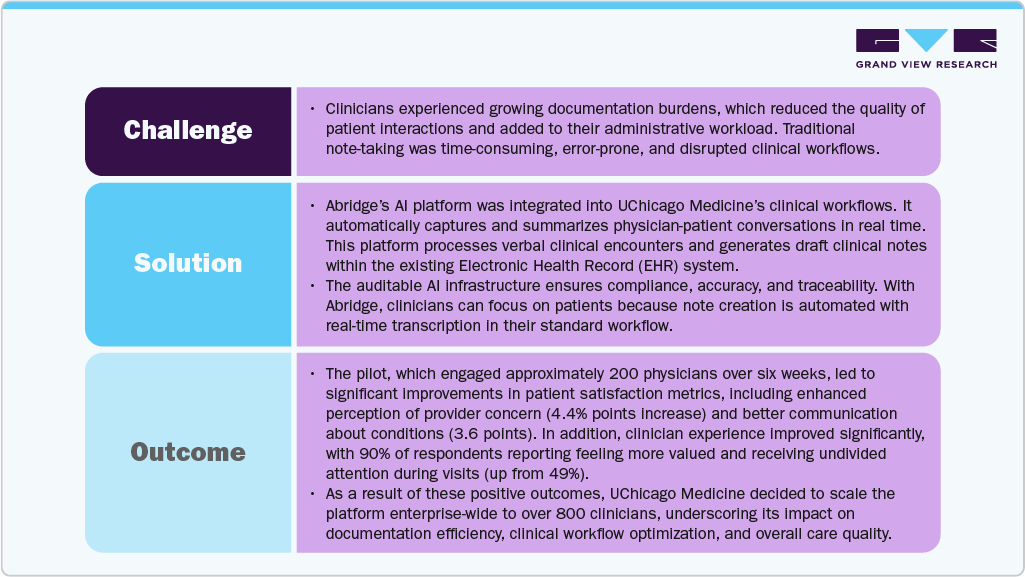
Case Study Insights: Enhancing Clinical Documentation and Patient Experience with Abridge AI at UChicago Medicine
UChicago Medicine piloted the Abridge AI platform, an advanced generative AI solution designed to transform patient-clinician conversations into structured, real-time clinical documentation. The initiative sought to address clinician burnout, improve note accuracy, and enhance patient engagement.
 To learn more about this report, Download Free Sample Report
Component Insights
By component, the software & platforms segment held the largest market share of 76.8% in 2025. However, the services segment is expected to witness the fastest growth with a CAGR over the forecast period. This can be attributed to the widespread adoption of AI-driven documentation systems integrated within electronic health records (EHRs). Hospitals, clinics, and telehealth providers increasingly rely on these platforms to automate transcription, summarization, and clinical note generation in real time. Leading solutions, such as Nuance DAX Copilot and Abridge, leverage large language models (LLMs) and ambient intelligence to reduce administrative workload and improve documentation accuracy. Their seamless interoperability with major EHR vendors, such as Epic, further strengthens enterprise-scale deployment and market penetration.
The services segment is expected to grow at the fastest CAGR during the forecast period, due to the increasing demand for implementation, integration, and workflow customization support. Services also include AI model tuning, data management, and continuous performance monitoring, which improve accuracy and outcomes. Providers increasingly seek outsourcing to manage AI platform operations, updates, and compliance with dynamic regulatory frameworks. As AI technology evolves rapidly, ongoing professional assistance is crucial to maintaining system effectiveness and addressing emerging clinical documentation and regulatory needs. This necessity fuels accelerated growth in this segment.
Application Insights
By application, the clinical documentation automation segment held the largest market share of 62.5% in 2025. However, the telehealth & virtual consultations segment is expected to witness the fastest growth with a CAGR over the forecast period. Automating documentation with advanced AI technologies, such as natural language processing and speech recognition, enables real-time transcription and organization of physician-patient interactions. This reduces clinician burnout, improves clinical record accuracy, and streamlines coding and billing. Healthcare providers are adopting these solutions to enhance compliance and patient care quality.
The telehealth & virtual consultations segment is anticipated to grow at the fastest CAGR from 2025 to 2033, due to rising demand for remote healthcare delivery. Additionally, the growth of remote specialty care and behavioral health consultations is further accelerating demand for AI transcription and summarization capabilities tailored for virtual environments.
End-use Insights
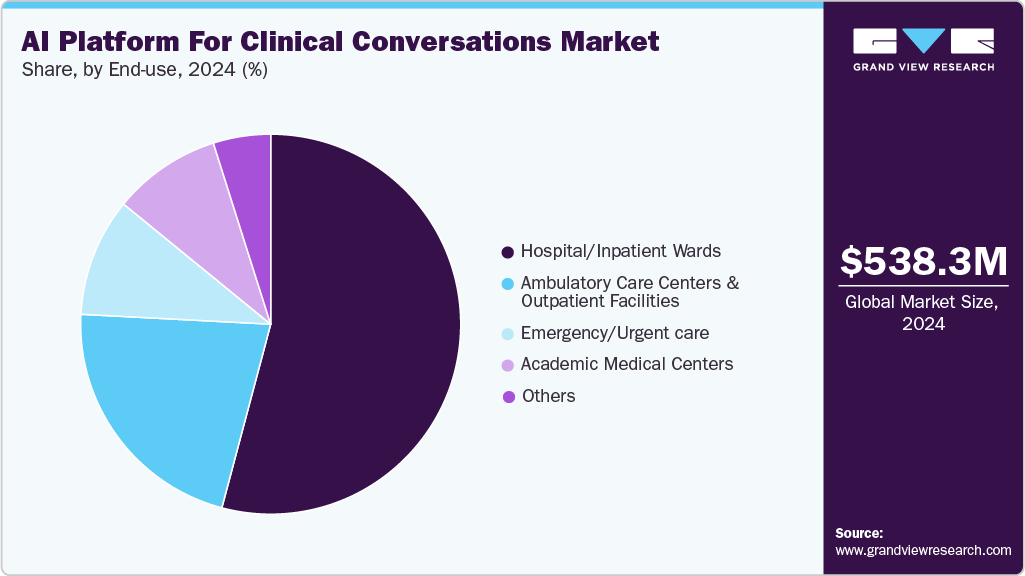
By end use, the hospital/inpatient wards segment held the largest market share of 54.0% in 2025. However, the ambulatory care centers & outpatient facilities segment is expected to witness the fastest growth with a CAGR over the forecast period. Hospitals require advanced AI tools to capture patient interactions seamlessly, reduce clinician administrative burden, and enable more face-to-face care. These platforms integrate deeply with electronic health records (EHRs), supporting diverse specialties and complex workflows typical in inpatient care. The high patient volume and acuity in hospitals drive sustained demand for scalable AI solutions.
 To learn more about this report, Download Free Sample Report
In addition, inpatient settings present complex challenges, including multidisciplinary care coordination, extensive documentation requirements, and regulatory compliance, which contribute to the increased adoption of AI platforms. For instance, in April 2025, Sharp HealthCare announced the implementation of the Abridge generative AI platform enterprise-wide to enhance clinical documentation.
The ambulatory care centers & outpatient facilities segment is anticipated to grow at the fastest CAGR from 2025 to 2033. These centers offer cost-effective care options with shorter wait times, driving higher patient volumes. AI platforms improve workflow efficiency and documentation accuracy, facilitating streamlined patient management in outpatient settings. The capability to support diverse specialties and integrate seamlessly with EHR systems aligns with the rising demand for scalable solutions.
Regional Insights
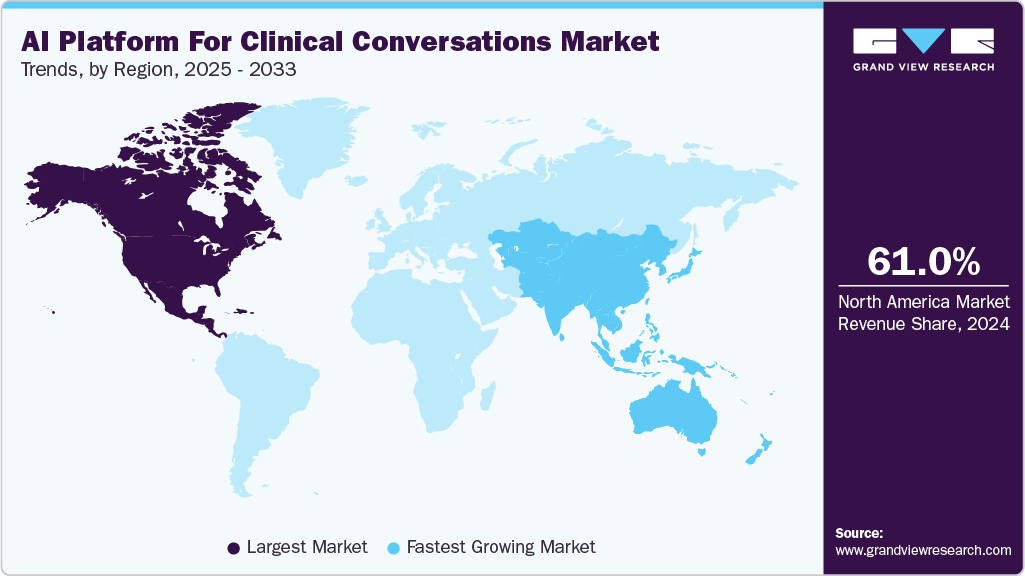
North America dominated the AI platform for clinical conversations market with the largest revenue share of 60.8% in 2025. This is attributed to the advanced healthcare infrastructure and widespread adoption of AI/ML technologies. Increasing telehealth adoption and integration of conversational AI in patient monitoring and hospital management enhances efficiency. Large integrated delivery networks (IDNs) and favorable reimbursement policies further boost expenditure on AI platforms.
 To learn more about this report, Download Free Sample Report
U.S. AI Platform For Clinical Conversations Market Trends
The AI platform for clinical conversations market in the U.S. held the largest share in the North America region in 2025. This is attributed to the country’s technological leadership and deep integration of AI within healthcare systems. The high adoption of telehealth and patient engagement tools creates a demand for conversational AI platforms. In addition, increasing partnerships between technology companies, healthcare providers, and research institutes propel market growth further. For instance, in March 2025, Memorial Sloan Kettering Cancer Center expanded its use of Abridge’s AI clinical documentation platform after a successful pilot in multiple oncology specialties.
“We are looking forward to expanding its use at MSK, bringing advanced digital tools to the bedside that help our clinicians focus on the care of their patients, not clicks in the EHR.”
-Peter Stetson, MD, MSK’s Chief Health Informatics Officer.
Europe AI Platform For Clinical Conversations Market Trends
The Europe AI platform for clinical conversations industry is growing, driven by the increasing government and private investments in healthcare digitization and AI integration. Countries such as Germany and the UK lead in infrastructure development and funding for digital health initiatives. Moreover, collaborative efforts between tech companies and healthcare providers enhance interoperability.
The UK AI platform for clinical conversations market is expected to grow over the forecast period. The UK market benefits from a robust healthcare system that is committed to digital transformation and the adoption of AI. Government initiatives, including substantial AI funding and strategic plans to foster healthcare innovation, strengthen the ecosystem.
The AI platform for clinical conversations market in Germanyheld the largest revenue share in 2024, attributed to increasing investments in healthcare technology and robust healthcare infrastructure. Additionally, the expansion of telemedicine and digital health will further propel market growth. The regulatory environment fosters responsible AI use and adherence to data privacy principles.
Asia Pacific AI Platform For Clinical Conversations Market Trends
The Asia Pacific AI platform for clinical conversations industry is expected to grow at the fastest CAGR during the forecast years. This growth is attributed to rising healthcare expenditures, the adoption of AI in healthcare, and the prevalence of chronic diseases. Countries such as China, Japan, South Korea, and India are leading innovation through government-backed AI healthcare policies. Moreover, collaborations between key market players expedite market growth. Private sector investment and research collaborations further contribute to technological development.
The India AI platform for clinical conversations marketis expected to grow significantly over the forecast period. India is experiencing rapid expansion, fueled by the digitalization of healthcare and high smartphone penetration, which enables widespread access to AI. Government initiatives promoting telemedicine and digital health infrastructure support the growth of conversational AI.
The AI platform for clinical conversations market in Japan is expected to grow rapidly in the coming years. This growth is driven by the rising demand for personalized medicine and the widespread adoption of AI in healthcare. Supportive government policies and digital transformation initiatives further promote the integration of AI. In addition, an aging population and increasing chronic diseases highlight the need for efficient clinical management. Growing investments in AI research and healthcare IT infrastructure also enable the development of advanced conversational AI applications.
Latin America AI Platform For Clinical Conversations Market Trends
The Latin America AI platform for clinical conversations industry is anticipated to grow at a significant CAGR over the forecast period. This is attributed to the growing awareness about AI technologies, increasing government spending, and growing advancements in healthcare infrastructure.
Middle East and Africa AI Platform for Clinical Conversations Market Trends
The MEA AI platform for clinical conversations industry is expected to grow at a significant CAGR over the forecast period. The market is characterized by a dynamic landscape driven by the growing adoption of technologically advanced medical devices, increasing healthcare expenditures, and supportive government policies. The significant integration of AI in healthcare technology across the region further contributes to market growth. Countries such as Saudi Arabia and the UAE are integrating AI into their healthcare infrastructure as part of their strategic visions, including Saudi Vision 2030 and the UAE National Strategy for Artificial Intelligence 2031.
Key AI Platform for Clinical Conversations Company Insights
Key players operating in the AI platform for clinical conversations market are undertaking various initiatives to strengthen their market presence and increase the reach of their products and services. Strategies such as new product launches and partnerships play a key role in propelling market growth.
Key AI Platform For Clinical Conversations Companies:
The following key companies have been profiled for this study on the AI platform for clinical conversations market.
- Abridge Al, Inc.
- Infinitus Systems
- IBM
- Suki AI, Inc.
- Nuance Communications (acquired by Microsoft)
- Sunoh.ai (by healow)
- Speechmatics
- Heidi
- Augmedix
- 3M (M*Modal)
- Regard
Competitive Benchmarking
Category
Operating Strategies
Competitive Edge
Weakness
Established Players (IBM, Nuance Communications (Microsoft), 3M (M*Modal), Augmedix, Regard)
- Expand AI-powered clinical conversation platforms through strategic acquisitions, partnerships with hospitals, health systems, EHR vendors, and cloud service providers. Invest in ambient clinical intelligence, generative AI, speech recognition, clinical documentation improvement (CDI), coding automation, multilingual NLP, and seamless integration with EHR platforms to streamline physician workflows and reduce documentation burden.
- Strong global market presence, extensive healthcare customer base, and proven AI and clinical documentation capabilities. Established relationships with health systems, robust cloud infrastructure, advanced natural language processing (NLP), regulatory expertise, and deep integration with leading EHR platforms enable enterprise-scale deployment and high clinician adoption.
- High implementation costs, complex enterprise integration, and longer deployment cycles may delay adoption among smaller healthcare organizations. Large enterprise platforms may have lower flexibility in rapidly addressing niche clinical specialties and evolving customer-specific workflow requirements.
Emerging & Specialized Players (Abridge AI, Inc., Infinitus Systems, Suki AI, Inc., Sunoh.ai (healow), Speechmatics, Heidi)
- Focus on AI-powered ambient scribing, real-time clinical documentation, virtual care automation, specialty-specific workflows, and generative AI assistants for healthcare providers. Leverage cloud-native architectures, rapid product innovation, API-based integrations, multilingual speech recognition, and customer-centric deployment models to expand adoption across hospitals, ambulatory care centers, physician practices, and telehealth providers.
- Greater agility in product innovation, faster deployment, and highly specialized AI models designed for clinical conversations and physician workflows. Ability to rapidly incorporate generative AI, large language models (LLMs), and specialty-specific documentation capabilities while delivering intuitive user experiences and lower implementation complexity.
- Limited enterprise-scale customer base, smaller commercial footprint, and lower financial resources compared with established healthcare technology vendors. Dependence on partnerships with EHR providers, healthcare organizations, and cloud infrastructure vendors, along with the need for continuous clinical validation and regulatory compliance, may constrain large-scale market expansion.
Recent Developments
- In September 2025, Seattle Children's Hospital implemented Abridge's AI platform enterprise-wide to automate clinical documentation. The solution captures, transcribes, and compiles provider-patient conversations, generating draft notes that are integrated with EHRs.
- In July 2025, Regard upgraded its AI platform to combine EHR chart data with physician-patient conversations, enabling more accurate proactive diagnoses and documentation.
"This is the first product to market that can intelligently combine the key information from the conversation that a doctor has with the data that's in the medical record to make a complete note,"
-Eli Ben-Joseph, founder and CEO of Regard, said in an interview with Fierce Healthcare.
- In July 2025, the Hospital for Special Surgery (HSS), a leading orthopedic health system, partnered with Abridge to enhance orthopedic clinical documentation through AI. Abridge’s platform captures clinical conversations in real time using ambient listening technology, enabling clinicians to focus on patient care rather than documentation.
- In July 2025, Regard launched an AI-powered platform that proactively combines patient chart data and patient-physician conversations to surface diagnostic insights and generate draft clinical notes before encounters. Featuring Max, a real-time AI agent, the platform enhances care quality, improves documentation accuracy, and boosts revenue while reducing the physician EHR burden for hospitals.
- In February 2025, Abridge partnered with Inova Health to deliver AI-powered clinical conversations. The solution records, transcribes, and summarizes provider-patient interactions, automatically generating draft notes for review.
"With Abridge, our providers will be able to spend less time on documentation and more time engaging directly with their patients. By streamlining workflows and reducing administrative burden, our goal is to improve the overall healthcare experience for both providers and patients." -Matt Kull, chief information and digital strategy officer for Inova
- In March 2023, Microsoft's Nuance Communications integrated OpenAI's GPT-4 into its Dragon Ambient eXperience (DAX) Express, a voice-enabled AI medical scribe.
AI Platform For Clinical Conversations Market Report Scope
Report Attribute
Details
Market size in 2025
USD 671.8 million
Estimated market size in 2026
USD 839.8 million
Projected market size by 2033
USD 4187.8 million
Growth rate
CAGR of 25.8% from 2026 to 2033
Historical data
2021 - 2025
Forecast period
2026 - 2033
Quantitative units
Revenue in USD million/billion and CAGR from 2026 to 2033
Report coverage
Revenue forecast, company ranking, competitive landscape, growth factors, and trends
Segments covered
Component, Application, End Use, and Region
Regional scope
North America; Europe; Asia Pacific; Latin America; MEA
Country scope
U.S.; Canada; Mexico; Germany; UK; France; Italy; Spain; Norway; Denmark; Sweden; Ireland, Austria, Russia, Netherlands, Switzerland, Belgium, China; Japan; India; South Korea; Australia; Thailand; New Zealand, Singapore, Malaysia, Indonesia, Philippines, Brazil; Argentina; Saudi Arabia; South Africa; UAE; Kuwait
Key companies profiled
Abridge Al, Inc.; Infinitus Systems; IBM; Suki AI, Inc.; Nuance Communications (acquired by Microsoft); Sunoh.ai (by healow); Speechmatics; Heidi; Augmedix; 3M (M*Modal); Regard
IQVIA Inc
Free report customization (equivalent up to 8 analysts' working days) with purchase. Addition or alteration to country, regional & segment scope.
Access Group
Avail customized purchase options to meet your exact research needs. Explore purchase options
Global AI Platform For Clinical Conversations Market Report Segmentation
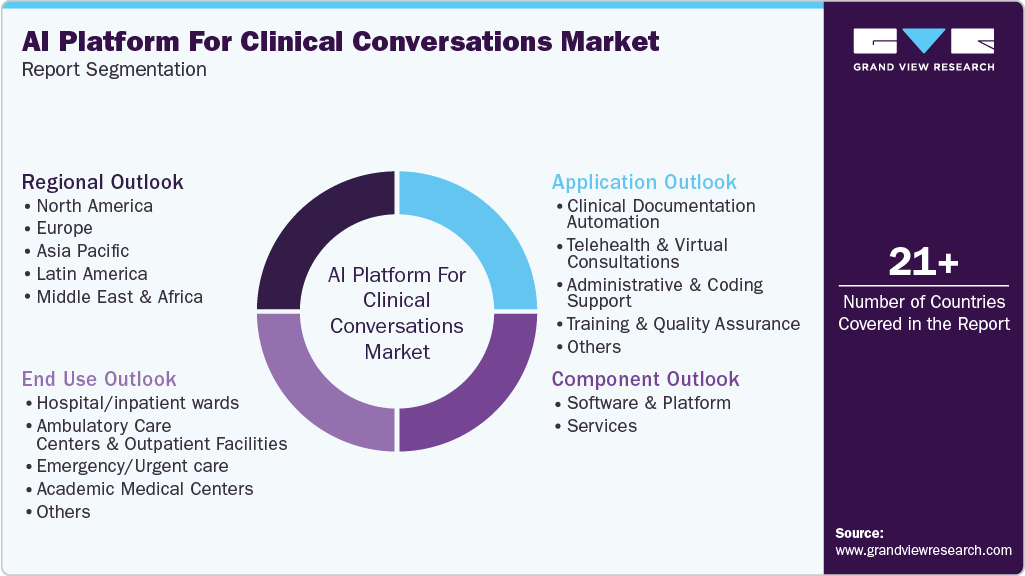
This report forecasts revenue growth at the global, regional, and country levels and provides an analysis of the latest industry trends in each of the sub-segments from 2021 to 2033. For this study, Grand View Research has segmented the global AI platform for clinical conversations market report based on component, application, end-use, and region:
 To learn more about this report, Download Free Sample Report
-
Component Outlook (Revenue, USD Million, 2021 - 2033)
-
Software & Platform
-
Services
-
-
Application Outlook (Revenue, USD Million, 2021 - 2033)
-
Clinical Documentation Automation
-
Telehealth & Virtual Consultations
-
Administrative & Coding Support
-
Training & Quality Assurance
-
Others
-
-
End Use Outlook (Revenue, USD Million, 2021 - 2033)
-
Hospital/inpatient wards
-
Ambulatory Care Centers & Outpatient Facilities
-
Emergency/Urgent care
-
Academic Medical Centers
-
Others
-
-
Regional Outlook (Revenue, USD Million, 2021 - 2033)
-
North America
-
U.S.
-
Canada
-
Mexico
-
-
Europe
-
Germany
-
UK
-
France
-
Italy
-
Spain
-
Denmark
-
Sweden
-
Norway
-
-
Asia Pacific
-
China
-
Japan
-
India
-
South Korea
-
Australia
-
Thailand
-
-
Latin America
-
Brazil
-
Argentina
-
-
Middle East & Africa
-
South Africa
-
Saudi Arabia
-
UAE
-
Kuwait
-
-
Research Methodology
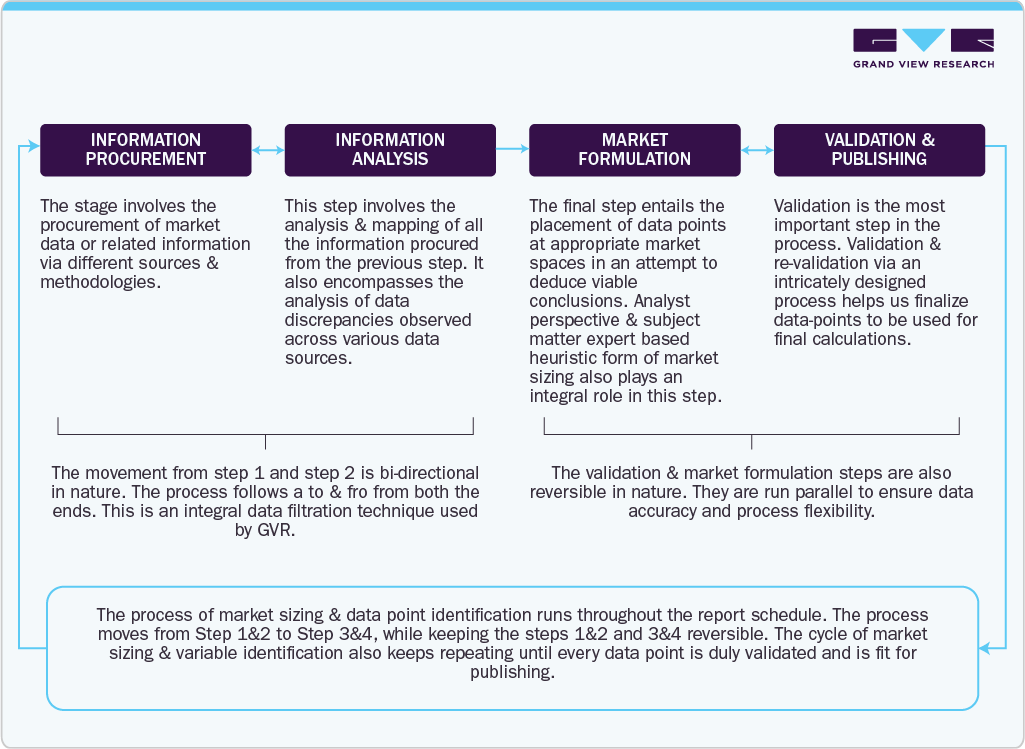
The AI platform for clinical conversations market figures in this report are based on a proven research process that combines executive interviews with secondary research from proprietary databases, company filings, and recognized regulatory and institutional sources. Market size is built through value-chain sizing - reconciling supply-side and demand-side estimates - and triangulated with bottom-up and top-down approaches. Every estimate passes multiple levels of expert validation before publication, with each AI platform for clinical conversations segment quantified using the revenue-capture definitions in the table below.
Segment Definition
Segment - Component
Revenue capture definition
Software & Platform
AI-powered software platforms that capture, transcribe, analyze, and summarize clinician-patient conversations using technologies such as automatic speech recognition (ASR), natural language processing (NLP), generative AI, and large language models (LLMs). These platforms automate clinical documentation, support decision-making, integrate with electronic health records (EHRs), and enhance clinical workflow efficiency.
Services
Professional services supporting the deployment, customization, integration, training, implementation, maintenance, regulatory compliance, and technical support of AI platforms for clinical conversations. These services ensure seamless integration with healthcare IT infrastructure and optimize platform performance.
Segment - Application
Revenue capture definition
Clinical Documentation Automation
Use of AI platforms to automatically generate clinical notes, progress notes, discharge summaries, referral letters, encounter documentation, and structured medical records from clinician-patient conversations. This application reduces documentation burden, minimizes physician burnout, and improves documentation accuracy.
Telehealth & Virtual Consultations
AI solutions that support virtual care by transcribing, summarizing, and analyzing telemedicine consultations in real time. These platforms facilitate remote documentation, patient communication, clinical decision support, and integration with telehealth workflows.
Administrative & Coding Support
AI applications that automate administrative tasks such as medical coding, billing documentation, charge capture, appointment summaries, referral documentation, insurance documentation, and compliance reporting by extracting relevant information from clinical conversations.
Training & Quality Assurance
AI-powered platforms used to evaluate clinical conversations for communication quality, documentation completeness, adherence to clinical protocols, patient engagement, and clinician performance. These solutions support staff training, quality improvement initiatives, and regulatory compliance.
Others
Includes applications such as multilingual clinical translation, patient engagement, clinical research documentation, informed consent management, medication reconciliation, clinical decision support, workflow analytics, and voice-enabled healthcare assistants.
Segment - End Use
Revenue capture definition
Hospital/Inpatient Wards
Acute care hospitals and inpatient departments that deploy AI clinical conversation platforms to automate documentation, improve interdisciplinary communication, reduce administrative workload, and enhance patient care across medical, surgical, and specialty units.
Ambulatory Care Centers & Outpatient Facilities
Physician offices, outpatient clinics, ambulatory surgery centers, and specialty care facilities that utilize AI platforms to streamline clinical documentation, improve workflow efficiency, support same-day patient encounters, and reduce physician documentation time.
Emergency/Urgent Care
Emergency departments and urgent care centers that implement AI-powered clinical conversation platforms to rapidly document patient encounters, support triage workflows, accelerate coding and billing, and improve care coordination in high-volume clinical environments.
Academic Medical Centers
University hospitals and teaching institutions that use AI clinical conversation platforms to support patient care, clinician training, medical education, clinical research, documentation standardization, and quality improvement initiatives.
Others
Includes rehabilitation centers, long-term care facilities, community health centers, telehealth providers, behavioral health clinics, home healthcare organizations, military and veterans' healthcare facilities, and other healthcare settings utilizing AI-powered clinical conversation solutions.
Estimation Model
Market Estimation Process
 To learn more about this report, Download Free Sample Report
Market-specific Research Models
Consensus-Based Estimates & Forecasting
The AI platform for clinical conversations market presents emerging to dominant opportunities, featuring global key players such as Abridge Al, Inc.; Infinitus Systems; IBM; Suki AI, Inc.; Nuance Communications (acquired by Microsoft); Sunoh.ai (by healow); Speechmatics; Heidi; Augmedix; 3M (M*Modal); Regard. To ensure a holistic approach, the GVR research team adopted a comprehensive methodology, considering multiple companies worldwide and utilizing various variables for data accuracy.
Our methodology included:
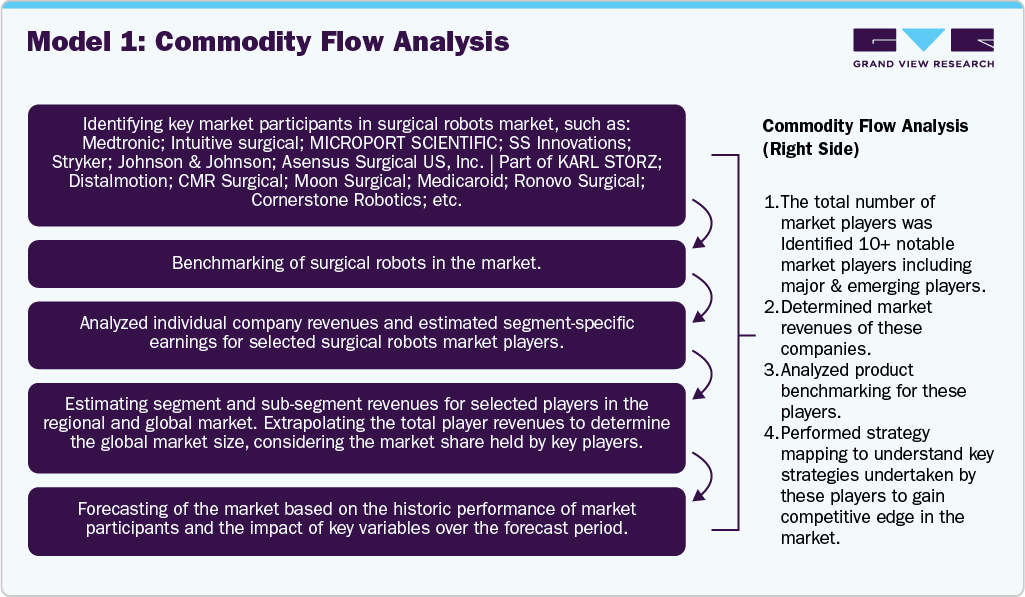
Model 1: Commodity Flow Analysis - For public players, annual reports were referenced. For private players, premium paid data sources such as S&P Global, Crunchbase, ZoomInfo, RocketReach, etc., were used for the latest revenue insights.
Model 2: Parent Market Analysis
Model 3: Country-level Multivariate Analysis Assumptions
Model 4: Segment-level Multivariate Analysis Assumptions
Model 5: AI Platform for Clinical Conversations Market CAGR Calculations
Model 1: Commodity Flow Analysis
 To learn more about this report, Download Free Sample Report
Commodity flow analysis was employed to track the movement of AI platform for clinical conversations through the value chain, from technology providers to end users. This analysis provided insights into demand generation points, intermediary roles, and ultimate consumption patterns.
Delivered Customizations
This report has been delivered with the following In-depth customizations
Client Request
Customization Delivered
Value Adds
AI Platform for Clinical Conversations Adoption & Clinical Documentation Workflow Analysis
Developed a tailored analysis of the global AI Platform for Clinical Conversations market focused on ambient clinical intelligence, AI-powered medical transcription, clinical documentation automation, conversational AI assistants, coding support, physician workflow optimization, and virtual clinical communication platforms. The study assessed adoption trends across hospitals, physician practices, ambulatory care centers, telehealth providers, and integrated healthcare systems while evaluating increasing administrative burden, clinician burnout, EHR documentation requirements, and demand for workflow efficiency driving market growth.
Enables stakeholders to understand evolving clinical documentation trends, identify high-growth AI application areas, assess healthcare workflow optimization opportunities, and evaluate the impact of conversational AI on physician productivity, documentation accuracy, patient engagement, and long-term market expansion.
Ambient AI, Natural Language Processing & Clinical Decision Support Assessment
Delivered a customized evaluation of AI platform utilization across real-time physician-patient conversation capture, automated note generation, medical coding assistance, clinical summarization, telehealth documentation, prior authorization support, patient communication, and quality reporting workflows. The analysis assessed advancements in natural language processing (NLP), large language models (LLMs), speech recognition technologies, ambient listening systems, multilingual clinical documentation, and EHR integration capabilities. Additionally, it evaluated technology innovations and implementation strategies from leading companies including Abridge AI, Infinitus Systems, IBM, Suki AI, Nuance Communications (Microsoft), Sunoh.ai (healow), Speechmatics, Heidi, Augmedix, 3M M*Modal, and Regard.
Provides actionable insights into commercially attractive AI workflow segments, emerging conversational AI technologies, evolving provider requirements, and growth opportunities associated with documentation automation, reduced clinician workload, improved coding accuracy, enhanced care quality, and streamlined healthcare operations.
Healthcare AI Infrastructure, Regulatory Environment & Competitive Landscape Assessment
Conducted a focused assessment of the AI Platform for Clinical Conversations ecosystem, including cloud infrastructure, speech recognition engines, EHR interoperability frameworks, cybersecurity requirements, healthcare data governance, regulatory compliance standards, and competitive positioning. The analysis evaluated implementation challenges, clinical validation requirements, privacy and security considerations, technology adoption barriers, reimbursement developments, healthcare provider acceptance, and competitive differentiation initiatives among leading market participants such as Abridge AI, Infinitus Systems, IBM, Suki AI, Nuance Communications (Microsoft), Sunoh.ai, Speechmatics, Heidi, Augmedix, 3M M*Modal, and Regard.
Supports strategic planning for AI platform deployment, healthcare IT modernization, digital health investments, provider partnerships, geographic expansion, and market entry strategies by identifying adoption drivers, operational challenges, regulatory considerations, revenue opportunities, infrastructure requirements, and competitive advantages across the global AI Platform for Clinical Conversations value chain.
Frequently Asked Questions About This Report
North America dominated with a revenue share of 60.8% in 2025.
The global AI platform for clinical conversations market size was valued at USD 671.8 million in 2025 and is estimated at USD 839.8 million for 2026.
The global AI platform for clinical conversations market is expected to grow at a CAGR of 25.8% from 2026 to 2033, reaching USD 4,187.8 million by 2033.
Key players in AI platform for clinical conversations market include Abridge Al, Inc.; Infinitus Systems; IBM; Suki AI, Inc.; Nuance Communications (acquired by Microsoft); Sunoh.ai (by healow); Speechmatics; Heidi; Augmedix; 3M (M*Modal); Regard
Rising clinician burnout, the need to reduce administrative burden, and a growing emphasis on personalized patient engagement and remote patient monitoring are significant factors contributing to market growth.
About the Author(s)
Healthcare IT Research Team
Healthcare · Healthcare ITThis report was authored by the healthcare it research team at Grand View Research - comprising two research analysts, one senior research analyst, and one industry expert - with specialized expertise in the healthcare it segment of the healthcare industry. All findings are based on proprietary healthcare databases, executive interviews, and regulatory analysis, subject to internal peer review prior to publication.
Last Updated:
Speak to Analyst

Customize this report to your needs - add regions, segments, or data points, with 20% free customization.
Or view our licence options:


ISO 9001:2015 & 27001:2022 Certified
We are GDPR and CCPA compliant! Your transaction & personal information is safe and secure. For more details, please read our privacy policy.


