
- Home
- »
- Biotechnology
- »
-
AI Protein Design Market Size And Share Report, 2026-2033GVR Report cover

AI Protein Design Market (2026 - 2033)
Size, Share & Trends Analysis Report By Technology (Generative AI, Machine Learning), By Protein Type (Therapeutic Proteins, Antibodies), By Application (Drug Discovery, Protein Engineering), By End Use, By Region, And Segment Forecasts
Market Size, 2025
$1.9BMarket Estimate, 2026
$2.5BMarket Forecast, 2033
$20.9BCAGR, 2026–2033
35.3%AI Protein Design Market Summary
The global AI protein design market size was valued at USD 1.9 billion in 2025 and is projected to grow from USD 2.5 billion in 2026 to USD 20.9 billion by 2033, at a CAGR of 35.3% from 2026 to 2033. North America dominated the market, accounting for a revenue share of 44.8% in 2025. The market growth is driven by increasing adoption of generative AI and protein foundation models, growing demand for faster protein engineering and biologics discovery, and expanding applications of AI-based protein design in drug discovery, therapeutic protein development, enzyme engineering, and synthetic biology.
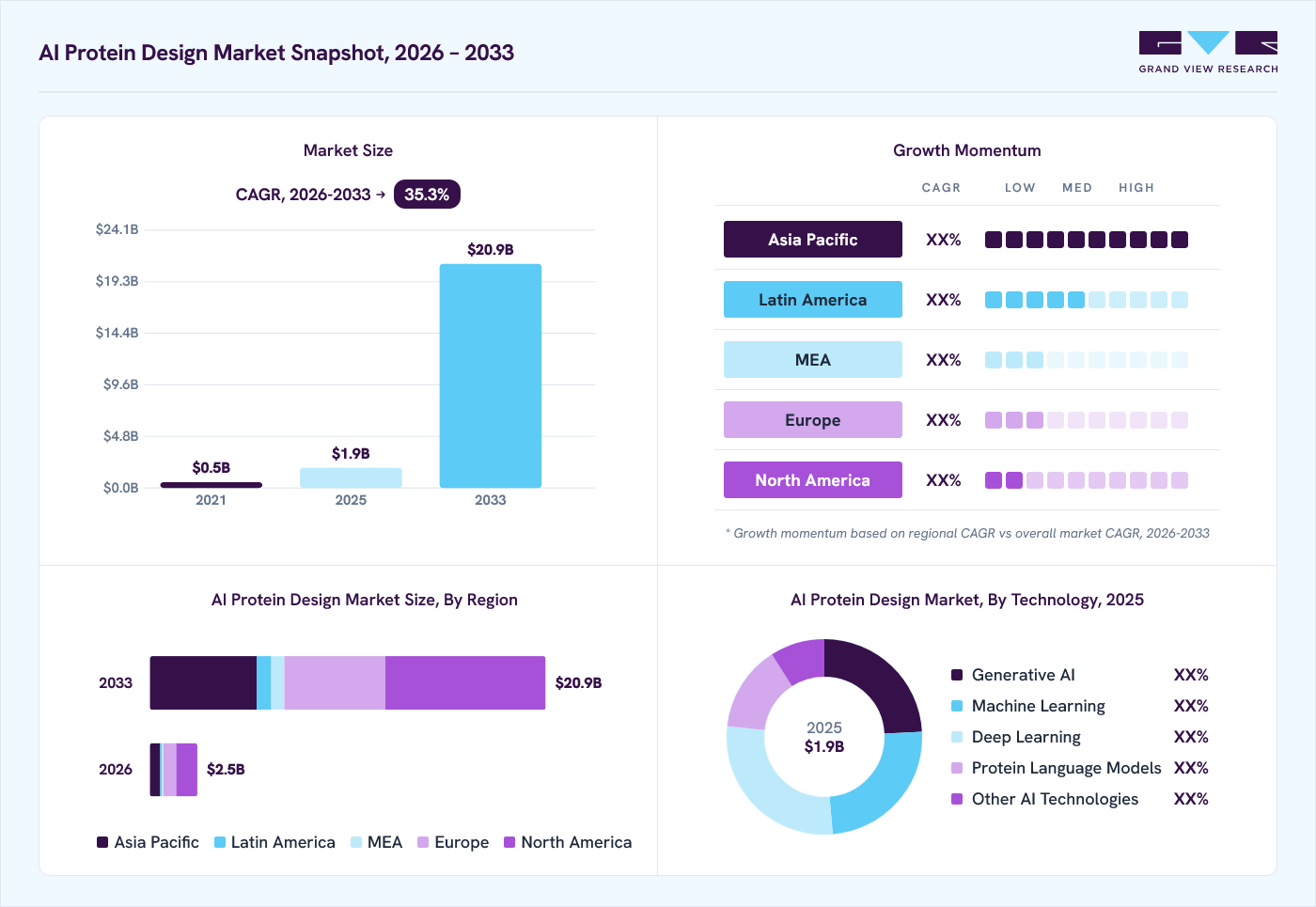 Source: Grand View Research, IR Documents, Primary Interviews, Paid DatabasesTo learn more about this report,
 Download Free Sample Report
 Key Market Trends & Insights
- By technology: Deep learning segment held the largest market share of 28.1% in 2025.
- By protein type: Antibodies segment led the market with a share of 31.2% in 2025.
- By application: Drug discovery segment held the largest share of 36.2% in 2025.
- By end use: Pharmaceutical & biotechnology dominated the market with a share of 56.7% in 2025.
Regional Highlights
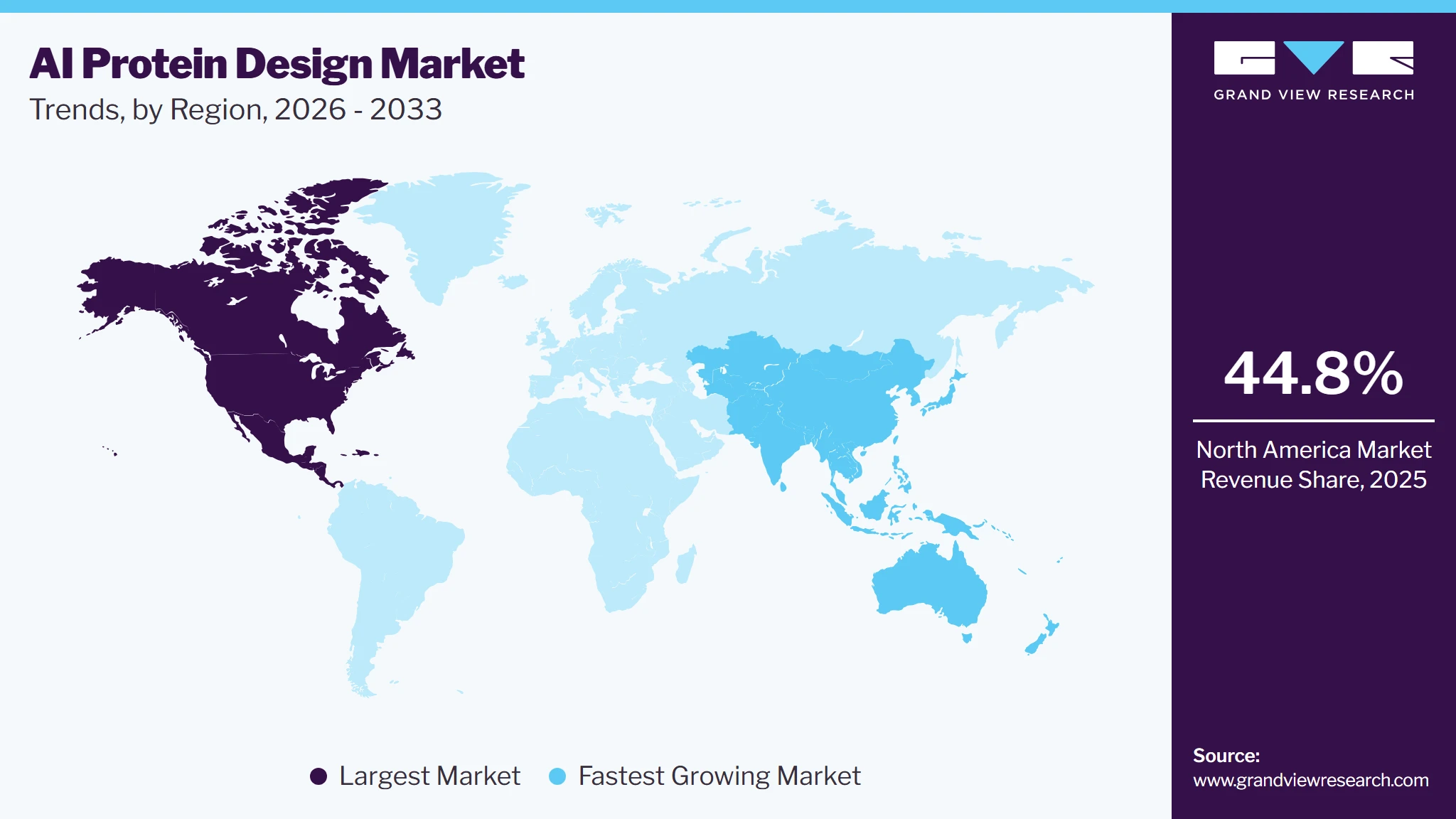
- Largest regional market: North America (44.8% revenue share, 2025)
- Fastest-growing regional market: Asia Pacific (highest CAGR, 2026-2033)
- By country: The U.S. held the largest market share in 2025
Market Size & Forecast
- Market size in 2025: USD 1.9 Billion
- Estimated market size in 2026: USD 2.5 Billion
- Projected market size by 2033: USD 20.9 Billion
- CAGR (2026-2033): 35.3%
Three ways to get this report
Buy it, customize it, or ask a question.Ask an Analyst
A direct answer, usually in 1 working day
- AccessReport author, directly
- Reply timeWithin 1 working day
- No sales callDirect answer only
- FormatEmail reply
- CostFree, no cost
Get the Full Report
What the study covers
- FormatsPDF · Excel · Dashboard
- Timeline2026–2033 annual, 2025 base
- Coverage20+ countries, 5 regions
- Companies10+ key players profiled
Customize the Report
20% free customization
- IncludeCountries, segments, points
- TailorTo your product definition
- ExtendDeeper competitor detail
- OrA fully bespoke study
- Turnaround5–10 working days
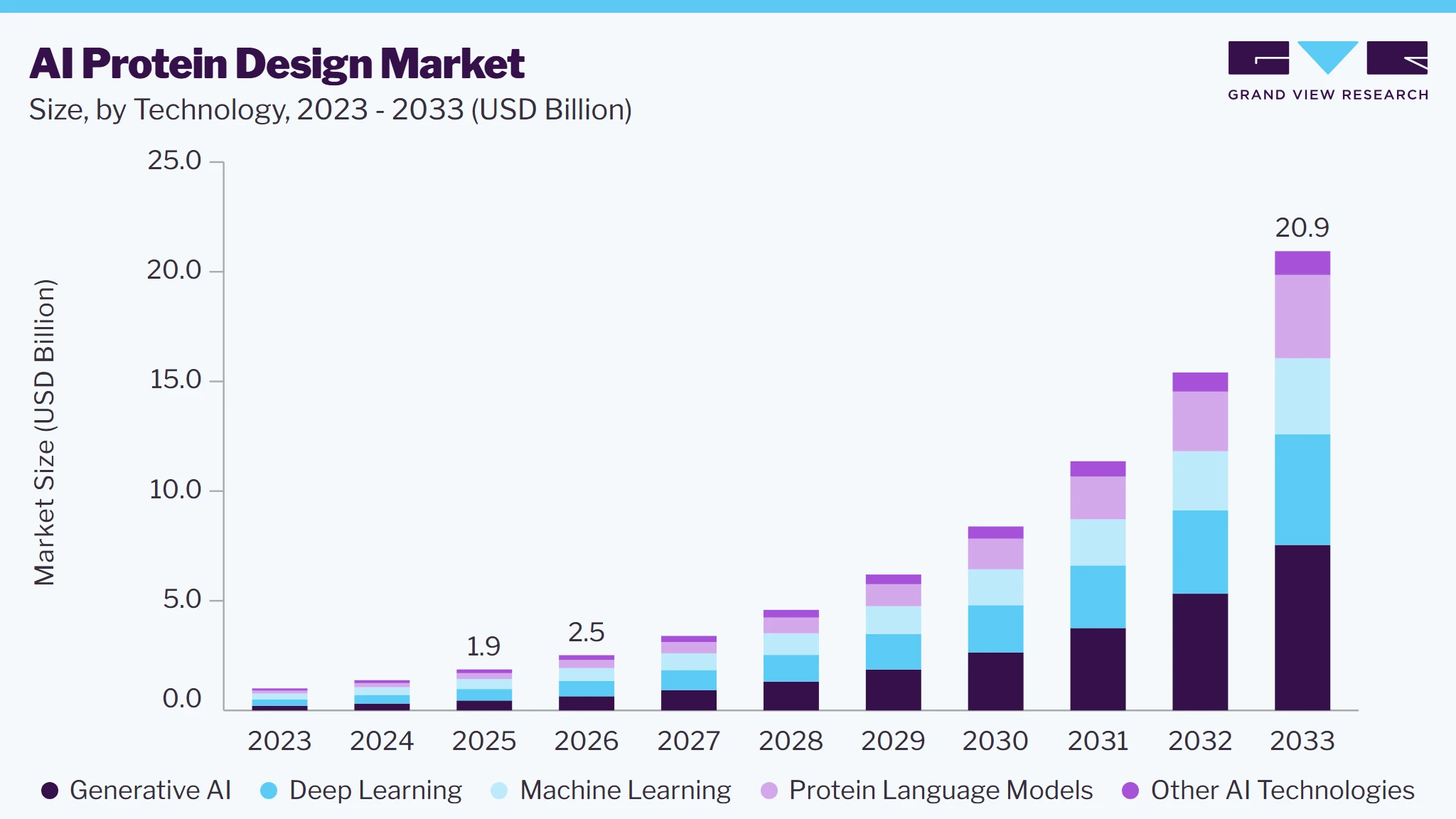 To learn more about this report, Download Free Sample Report
 Market Dynamics
The AI protein design market is witnessing significant growth, supported by increasing adoption of generative AI, protein language models, and structure-based computational technologies for designing and optimizing novel proteins. Growing demand for faster and more efficient protein engineering is expanding the use of AI across drug discovery, therapeutic protein and antibody development, enzyme engineering, and synthetic biology. In addition, advances in de novo protein generation, protein structure prediction, sequence optimization, and AI-guided protein-protein interaction design are enabling the development of proteins with targeted functions and improved properties. The integration of AI platforms with automated laboratory workflows and experimental validation is further accelerating protein-design cycles and supporting market expansion.
Growing adoption of generative AI for de novo protein design is driving the AI protein design market by enabling researchers to create novel protein sequences and functional molecules from scratch. AI-based protein models can accelerate the identification of promising protein designs by evaluating sequence, structure, and functional characteristics, reducing reliance on conventional protein engineering approaches. According to an article published in Science in January 2025, researchers demonstrated that ESM3, a generative protein language model, could generate novel functional proteins that were substantially different from known natural proteins. This ability to generate and experimentally validate previously unknown functional proteins demonstrates the potential of generative AI to accelerate protein discovery and engineering, thereby supporting the broader adoption of AI- protein design across biotechnology and therapeutic research.
The expanding technology landscape encompasses a range of AI-driven approaches, from structure-prediction models such as AlphaFold2 and AlphaFold3 to generative platforms such as RFdiffusion, VibeGen, and other AI protein design platforms that support applications ranging from structural biology and protein engineering to therapeutic discovery. Key AI-driven protein design technologies and platforms are summarized in the table below.
Key AI-driven protein design technologies and platforms
Technology / Platform
Type / Approach
Primary Capability
Application / Use
AlphaFold2
AI-based structure prediction
Predicts 3D protein structures from amino-acid sequences
Structural biology, drug target validation, protein research
AlphaFold3
AI-based structure prediction
Predicts structures and molecular interactions
Protein-ligand and biomolecular interaction research
RFdiffusion
Diffusion-based generative AI
Generates novel protein structures, binders and scaffolds
Enzymes, protein binders, protein-protein interaction designs
VibeGen
Generative protein design / language diffusion
Designs proteins with tailored dynamic properties
Mechanical and allosteric protein engineering
Copilot by 310.ai
Generative AI
Allows users to specify protein-design goals using natural-language prompts
Accessible protein design and drug-development research
DeepSeq.AI
AI protein-design platform
Integrates computational protein design with experimental workflows
Accelerating in silico design-to-lab iteration
Generate Biomedicines
AI-driven protein design platform/company
Designs novel therapeutic proteins with optimized properties
Oncology, immunology, infectious diseases and therapeutics
Isomorphic Labs
AI drug-discovery platform/company
Uses AI for protein-structure and protein-ligand interaction prediction
Small-molecule and biologic drug discovery
Technical limitations in AI-based protein design may restrain the market growth as computationally generated protein candidates still require experimental validation to confirm that they express, fold correctly, remain stable, and perform the intended biological function. Models may generate sequences that appear promising computationally but fail during laboratory testing because of aggregation, poor expression, or inadequate functional activity. According to an article published in Nature Machine Intelligence in 2025, protein structure generators can produce computationally plausible designs that do not necessarily express, fold, or function as intended in living cells, making experimental screening necessary to identify viable candidates. These limitations can increase laboratory validation requirements, development time, and costs, potentially slowing the commercialization of AI-designed proteins.
The expansion of AI-designed proteins into therapeutic applications is creating opportunities for the AI protein design market by enabling biotechnology companies to develop purpose-built proteins with tailored functional properties for drug discovery and cell therapy. For instance, in January 2025, Bio-Techne launched a portfolio of AI-engineered designer proteins, including an IL-2 heat-stable agonist, Activin A hyperactive, FGF basic heat-stable, and Wnt/RSPO agonists. The company stated that these proteins were engineered using AI-based design platforms and were developed for applications including cell therapy, regenerative medicine, stem cell culture, and organoid research. This commercialization of AI-engineered proteins demonstrates the expanding use of protein design technologies beyond computational research and into practical biotechnology and therapeutic development applications.
"Our growing portfolio of designer proteins combines cutting-edge AI technology and innovative protein engineering. This expanded portfolio empowers our customers with versatile, high-performance solutions to boost the production of immune cells and enhance regenerative medicine cell therapies. Bio-Techne remains committed to developing the tools and workflow solutions our customers need to advance innovative cell therapies in both clinical and research settings."
- Will Geist, President, Protein Sciences Segment.
Market Concentration & Characteristics
The degree of innovation in the AI protein design market is high, driven by advances in generative artificial intelligence, protein language models, and computational protein engineering. According to an article published in Nature Reviews Bioengineering in September 2025, researchers highlighted the use of AI-driven approaches for generating and optimizing proteins with desired structures and functions, enabling more efficient protein design and engineering workflows. This approach accelerates protein discovery and supports the development of novel proteins for therapeutic and biotechnology applications.
The AI protein design market is witnessing moderate M&A activity, as companies seek to strengthen computational capabilities for protein and biologics design. For instance, in January 2026, insitro acquired CombinAbleAI, an AI-driven biotechnology company developing an in-silico platform for designing and optimizing therapeutic antibodies. The acquisition expanded insitro’s AI capabilities for antibody design and protein structure optimization, supporting the development of advanced protein-based therapeutics.
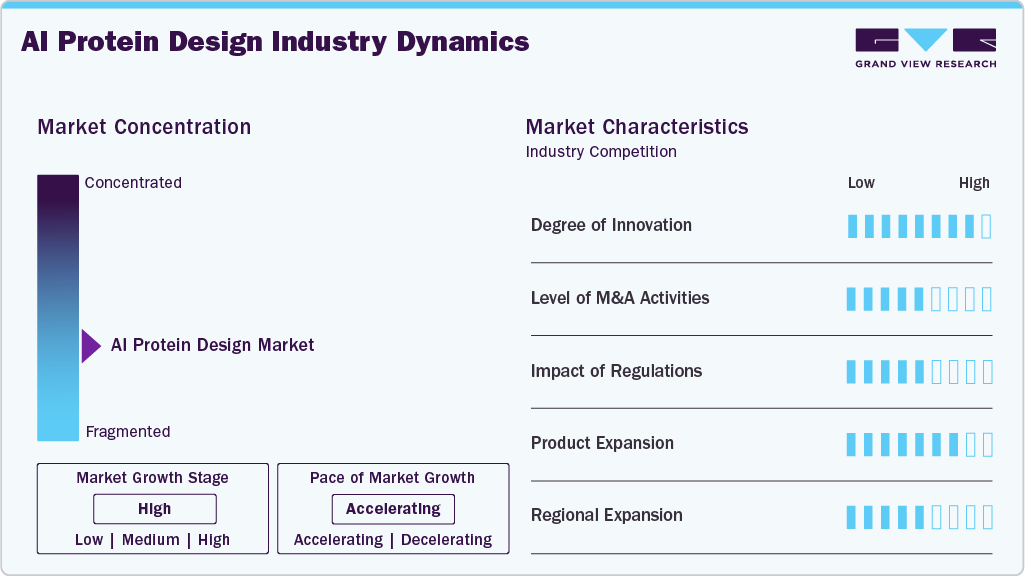 To learn more about this report, Download Free Sample Report
 “Drug discovery has traditionally optimised molecules for potency before assessing developability - often discovering that highly potent candidates face manufacturing constraints. By integrating CombinAbleAI's physics-informed, AI-driven design for complex biologic therapeutics with our causal biology platform, we treat potency and manufacturability as interdependent design criteria from the outset. This fundamentally changes the translation from biological insight to viable therapeutic - instead of optimising sequentially and hoping for serendipitous alignment, we're designing for both simultaneously.”
- Philip Tagari, chief scientific officer, insitro
The AI protein design market is influenced by regulatory guidelines governing the use of artificial intelligence in drug and biological product development. For instance, in January 2026, the U.S. FDA and European Medicines Agency issued guiding principles for good AI practice in drug development, emphasizing risk-based validation, data governance, model performance assessment, and a clear context of use. These principles support greater reliability, transparency, and regulatory oversight of AI-protein design applications used in biologics development.
The AI protein design market is witnessing product expansion through the introduction of generative AI platforms designed to accelerate de novo protein design and optimization. For instance, in July 2025, Latent Labs launched Latent-X, a generative AI model for de novo protein binder design that jointly generates protein structure and sequence for targeted binders. Moreover, the platform expands AI protein design solutions by providing a no-code approach for generating protein binders for therapeutic applications.
"We envision a future where effective therapeutics can be designed entirely in a computer, much like how space missions or semiconductors are designed today. Our platform empowers scientists with lab-validated protein binder design at their fingertips, whether they're experts or new to AI-powered drug design, and without needing AI infrastructure. This is the first step on our mission toward making biology programmable in order to make drug design instantaneous."
-Simon Kohl, CEO and founder of Latent Labs.
The AI protein design market is witnessing regional expansion as companies broaden their operations across key biotechnology markets. For instance, in December 2025, Cradle expanded its operations in the United States by building dedicated teams to support customers, scale deployment, and deepen partnerships.
"2025 was an exceptional year for Cradle. We made AI a powerful, everyday tool for scientists building a new era of biologics, and we're just getting started. From enhancing our platform to adding tremendous talent to our team to expanding our physical footprint across Europe and the U.S., building the AI infrastructure essential to deliver AI-designed therapeutics, enzymes and materials at unprecedented cost and speed. We're looking forward to welcoming more world-class R&D organizations to our customer base soon as we carry this momentum into 2026."
- Stef van Grieken, Co-founder and CEO of Cradle
Analyst Perspective
The AI protein design market is expected to witness strong growth, driven by advances in generative AI, protein language models, and deep learning-based structure prediction tools. These technologies are shortening protein design cycles and improving experimental success rates across antibodies, therapeutic proteins, enzymes, and peptides. Growing integration of AI with automated wet-lab validation and lab-in-the-loop workflows is further bridging computational design and experimental performance. Large funding rounds and strategic pharma-AI partnerships are accelerating commercialization. Market participants are expanding model capabilities, developing proprietary training datasets, and forming collaborations with biopharmaceutical companies to strengthen their presence across drug discovery, protein engineering, and de novo protein design.
Technology Insights
The deep learning segment accounted for the largest revenue share of 28.1% in 2025, owing to the widespread use of deep neural networks for protein structure prediction, protein-ligand interaction modeling, and sequence-to-function mapping, which form the foundation of most AI protein design workflows. For instance, in November 2024, Google DeepMind and Isomorphic Labs released the AlphaFold 3 model code and weights for academic use, following the model's launch in May 2024. AlphaFold 3 combines an improved Evoformer deep learning architecture with a diffusion network to predict the structures and interactions of proteins, DNA, RNA, and ligands, broadening access to deep learning-based structural modeling for protein design research.
The generative AI segment is expected to register the fastest CAGR of 42.1% during 2026-2033, driven by the growing ability of diffusion-based and multimodal generative models to create novel protein structures and binders from scratch with improving experimental success rates. For instance, in December 2025, the Institute for Protein Design at the University of Washington released RFdiffusion3 as open-source software. The all-atom generative model designs proteins that interact with DNA, small molecules, and other non-protein components, with experimental proof of concept for DNA-binding proteins and enzymes, thereby expanding the functional range of generative protein design.
Protein Type Insights
The antibodies segment dominated the market with a revenue share of 31.2% in 2025, supported by strong biopharmaceutical demand for therapeutic antibodies and the growing use of AI to design and optimize antibody sequences for binding affinity, specificity, and developability. For instance, in June 2025, Chai Discovery introduced Chai-2, a multimodal generative model for zero-shot de novo antibody design that achieved a hit rate of approximately 16% across 52 diverse targets, with the workflow from AI design to wet-lab validation completed in under two weeks. Such advances are reducing reliance on large-scale screening and accelerating AI-driven antibody discovery.
The peptides segment is projected to grow at the fastest CAGR of 38.2% during 2026-2033, driven by the rising therapeutic importance of peptide drugs, including GLP-1-based therapies, and advances in AI models that predict and optimize peptide properties. For instance, in July 2026, engineers at the University of Pennsylvania introduced PeptiVerse, an open-source AI platform described in Nature Communications that predicts key peptide properties such as solubility, cell permeability, toxicity, and stability, and can be paired with generative AI models to guide the design of new peptide drug candidates.
Application Insights
The drug discovery segment held the largest revenue share of 36.2% in 2025, owing to the extensive use of AI protein design to identify, design, and optimize protein-based and protein-targeting drug candidates, and to substantial investment flowing into AI-first drug design companies. For instance, in March 2025, Isomorphic Labs raised USD 600 million in its first external funding round, led by Thrive Capital with participation from GV and Alphabet, to advance its AI drug design engine and progress its therapeutic programs toward clinical development.
The de novo protein design segment is anticipated to register the fastest CAGR of 40.5% over the forecast period, driven by the increasing ability of deep learning tools to design entirely new proteins with targeted functions that do not exist in nature. For instance, in January 2025, researchers from the University of Washington and the Technical University of Denmark (DTU) published a study in Nature describing de novo designed proteins that neutralized lethal three-finger toxins from cobra venom, resulting in 80-100% survival in mice exposed to lethal toxin doses. This development highlights the potential of de novo protein design to address therapeutic challenges where conventional approaches have been ineffective.
End Use Insights
The pharmaceutical & biotechnology companies segment accounted for the largest revenue share of 56.7% in 2025, as drug developers increasingly integrate AI protein design platforms into biologics discovery pipelines through licensing agreements and strategic collaborations. For instance, in June 2026, Pfizer licensed Chai Discovery's AI drug discovery platform, gaining early access to the Chai-3 model and a custom model trained on Pfizer's proprietary data to support antibody design and biologics research.
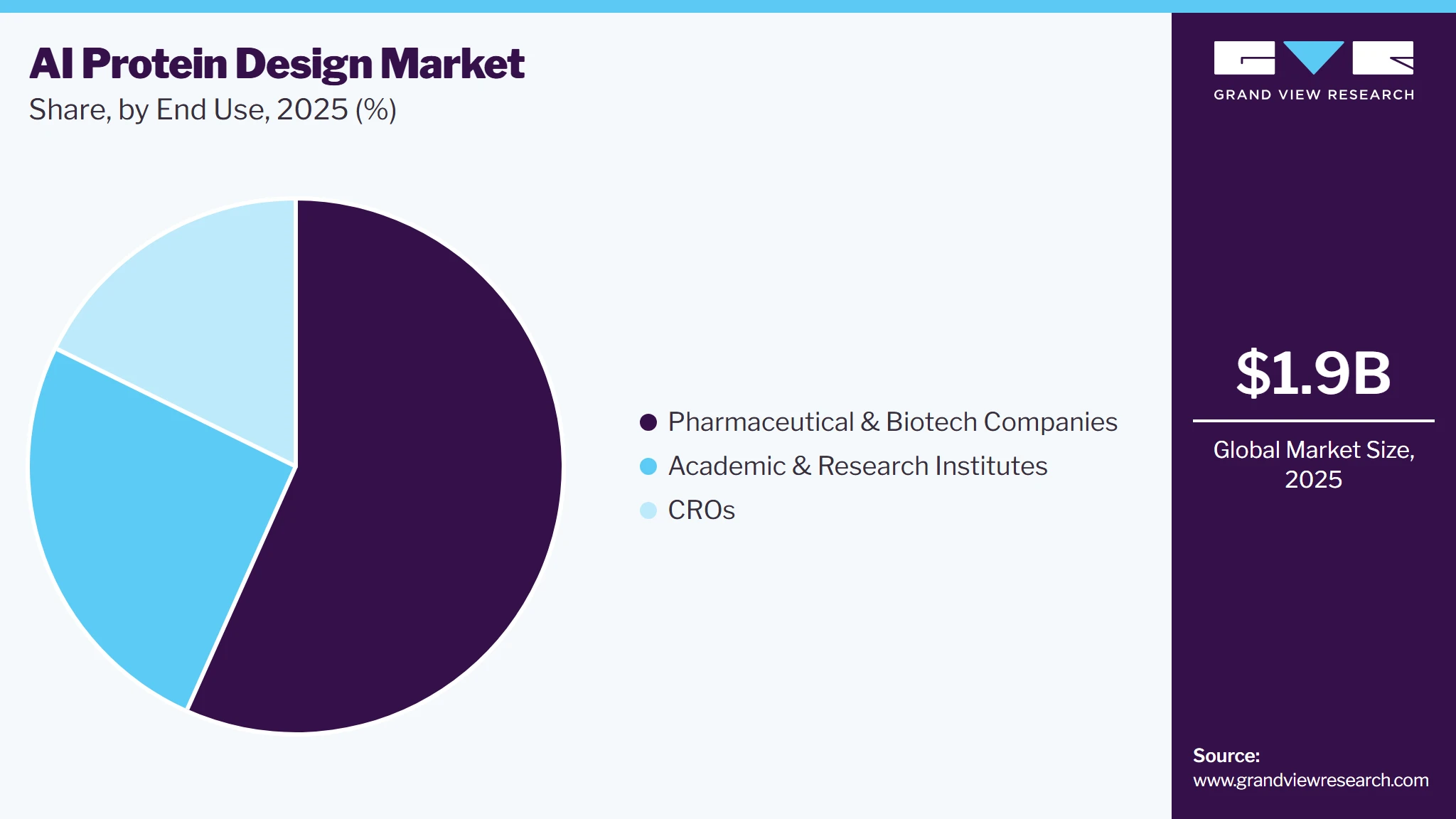 To learn more about this report, Download Free Sample Report
 The CROs segment is projected to witness the fastest CAGR of 39.9% during 2026-2033, as pharmaceutical and biotechnology companies increasingly outsource protein engineering and antibody discovery activities to service providers that integrate AI-driven design capabilities with wet-lab validation. For instance, Evotec offers AI-enhanced antibody engineering and optimization, including generative adversarial network (GAN)-driven design and developability assessment tools, within its integrated target-to-IND discovery platform. Such integration of AI with outsourced experimental workflows is expected to support the adoption of AI protein design across CRO-led research programs.
Regional Insights
North America AI protein design market dominated the market accounting for the largest revenue share of 44.8% in 2025, driven by advanced biotechnology infrastructure, strong pharmaceutical and academic R&D, and increasing integration of artificial intelligence into protein engineering and biologics development. For instance, in November 2024, Canada-based DiaGen AI partnered with Mila Quebec AI Institute to accelerate the design of bespoke therapeutic proteins using artificial intelligence. Moreover, this collaboration focuses on applying AI to optimize protein properties, including stability, synthesizability, and target binding, thereby supporting the development of AI protein design technologies in North America.
 To learn more about this report, Download Free Sample Report
 “Mila is pleased to welcome DiaGen to its community of partners. By combining our expertise and research capabilities, this collaboration could offer new opportunities for DiaGen to advance its protein design, addressing unmet healthcare needs in Quebec and across Canada”
- Stéphane Létourneau, Executive Vice-President of Mila.
U.S. AI Protein Design Market Trends
The U.S. AI protein design market is expected to grow over the forecast period, supported by strong biotechnology R&D, advances in artificial intelligence and machine learning, and increasing application of computational protein engineering across biomanufacturing and other life-science applications. For instance, in August 2025, the U.S. National Science Foundation announced an investment of nearly USD 32 million through its Use-Inspired Acceleration of Protein Design initiative to support five U.S. teams developing AI-based approaches to protein design and translating them into practical, market-ready solutions. This initiative is expected to accelerate the development and commercialization of AI protein design technologies across the U.S.
Europe AI Protein Design Market Trends
Europe AI protein design market is anticipated to grow significantly over the forecast period, supported by increasing public and academic investment in computational biology and cross-border research focused on next-generation protein engineering. For instance, in December 2024, researchers from Vrije Universiteit Brussel and the VIB-VUB Center for Structural Biology in Belgium, together with collaborators from Denmark and the U.S., reported an AI-driven approach for designing proteins capable of binding and sensing diverse small molecules. In addition, this research highlights the use of AI to create functional proteins with potential applications in molecular sensing and diagnostics, thereby expanding the role of AI- protein design in European life-science research.
Asia Pacific AI Protein Design Market Trends
Asia Pacific is expected to grow at the fastest CAGR of 39.3% during the forecast period, driven by the region’s expanding digital biotechnology ecosystem and increasing use of computational approaches to accelerate protein discovery and optimization. Rising availability of AI research platforms and growing collaboration between technology and life-science organizations are creating opportunities for faster and more efficient protein development, supporting market expansion across the region.
China’s AI protein design market is growing due to the integration of artificial intelligence with automated protein synthesis and experimental validation. For instance, in July 2026, the National Facility for Protein Science in Shanghai and Kangma (Shanghai) Biotechnology Co. jointly developed an automated platform capable of converting AI-designed proteins into physical samples for testing, with a reported capacity of up to 10,000 proteins per day. Moreover, this platform helps bridge the gap between computational protein design and laboratory validation, supporting faster development of novel proteins for pharmaceutical and biotechnology applications.
Latin America AI Protein Design Market Trends
AI protein design industry in Latin America is expected to grow steadily over the forecast period, supported by increasing adoption of computational biology, expansion of biotechnology research capabilities, and growing integration of artificial intelligence into drug discovery and protein engineering. In addition, rising investment in digital biology and increasing collaboration between academic institutions, biotechnology companies, and technology providers are expected to improve access to AI-based protein design and computational research tools across the region.
Key AI-Enabled Protein Design Company Insights
The AI protein design industry is highly competitive, with key players focusing on artificial intelligence, machine learning, generative AI, computational biology, protein engineering, and structure prediction technologies. Companies are strengthening their market position through product launches, technological advancements, strategic collaborations, and expansion of AI-driven protein design capabilities. Moreover, competitive positioning depends on product offerings, technological capabilities, accuracy, scalability, geographic presence, customer base, and applications across drug discovery, therapeutic development, enzyme engineering, antibody design, vaccine development, and synthetic biology.
Competitive Benchmarking
Category
Operating Strategies
Competitive Edge
Weakness
Established Players (Cradle; Profluent; Arzeda Corporation; Isomorphic Labs; Schrödinger, Inc.; Absci Corp.; XtalPi Holdings; Insilico Medicine; Generate:Biomedicines)
- Expanding generative AI, protein language models, proprietary datasets, and AI-driven protein discovery through partnerships and platform development.
- Advanced AI models, proprietary datasets, integrated AI-wet-lab capabilities, and strong biopharma partnerships.
- High R&D costs, data dependence, complex validation, and long development cycles.
Former / Organizationally Changed Player (EvolutionaryScale - acquired by Biohub)
- Developing AI platforms and generative models for protein, antibody, and enzyme design through partnerships and technology development.
- Specialized AI models, rapid innovation, differentiated design capabilities, and AI-experimental integration.
- Smaller scale, high computational costs, limited data access, funding dependence, and scaling challenges.
Key AI-Enabled Protein Design Companies
The following key companies have been profiled for this study on the AI protein design market.
-
Absci Corp.
-
Arzeda Corporation
-
Cradle
-
EvolutionaryScale (acquired by Biohub)
-
Generate:Biomedicines
-
Insilico Medicine
-
Isomorphic Labs
-
Profluent
-
Schrödinger, Inc.
-
XtalPi Holdings
Recent Developments
-
In January 2026, Bayer and Cradle entered a three-year strategic collaboration to deploy Cradle’s generative AI platform for protein design and engineering in Bayer’s therapeutic antibody pipeline. The platform likely to support AI antibody design, lead generation, and optimization, with the aim of improving potency, safety, and manufacturability while reducing optimization cycles.
“Bayer’s decision reflects a broader shift we’re seeing: leading drug discovery organizations want AI that scales across portfolios, formats, and teams without requiring every scientist to become an ML expert or limiting AI's impact to asset-based deals. Cradle brings enterprise-grade, lab-in-the-loop AI into the hands of the expert scientists working daily to design new molecules and treat diseases, helping reduce iterations while improving potency, developability, and manufacturability. We’re excited to work with Bayer to operationalize AI at scale and translate it into faster, higher-quality candidates for the clinic.”
- Stef van Grieken, Co-founder and CEO of Cradle
-
In August 2025, Absci Corp. and Almirall expanded their AI drug discovery collaboration to include a second dermatology target, following the successful delivery of AI-designed, functional antibody leads against a difficult-to-drug target. The collaboration combines Absci’s Integrated Drug Creation platform, which uses generative AI and wet-lab validation, with Almirall’s dermatology expertise to accelerate the development of novel therapeutic antibodies.
“Using advanced AI capabilities to design therapeutic candidates against historically challenging disease targets is a highly promising approach and Absci´s de-novo AI platform capabilities have already demonstrated early success. We are pleased to expand our collaboration as we continue to harness AI to help us develop innovative treatments for patients living with severe skin conditions.”
- Dr. Karl Ziegelbauer, Chief Scientific Officer at Almirall
-
In April 2025, Profluent introduced ProGen3, a frontier suite of generative AI language models for protein design trained on more than 3.4 billion protein sequences. The models enable de novo generation of full-length proteins and redesigning existing protein domains, with demonstrated applications in therapeutic antibody design and functional protein engineering.
AI Protein Design Market Report Scope Table
Report Attribute
Details
Market size in 2025
USD 1.9 billion
Estimated market size in 2026
USD 2.5 billion
Revenue forecast in 2033
USD 20.9 billion
Growth rate
CAGR of 35.3% from 2026 to 2033
Actual data
2021 - 2025
Forecast period
2026 - 2033
Quantitative units
Revenue in USD billion, and CAGR from 2026 to 2033
Report coverage
Revenue forecast, company ranking, competitive landscape, growth factors, and trends
Segments covered
Technology, protein type, application, end use,
region
Regional scope
North America; Europe; Asia Pacific; Latin America; MEA
Country scope
U.S.; Canada; Mexico; UK; Germany; France; Italy; Spain; Norway; Denmark; Sweden; China; Japan; India; South Korea; Australia; Thailand; Brazil; Argentina; Saudi Arabia; South Africa; UAE; Kuwait
Key companies profiled
EvolutionaryScale; Cradle; Profluent; Arzeda Corporation; Isomorphic Labs; Schrödinger, Inc.; Absci Corp.; XtalPi Holdings; Insilico Medicine; Generate:Biomedicines
Customization scope
Free report customization (equivalent up to 8 analysts' working days) with purchase. Addition or alteration to country, regional & segment scope.
Pricing and purchase options
Avail customized purchase options to meet your exact research needs. Explore purchase options
Global AI Protein Design Market Report Segmentation
This report forecasts revenue growth at the global, regional, and country level and provides an analysis on the latest trends in each of the sub-segments from 2021 to 2033. For this report, Grand View Research has segmented the global AI protein design market based on technology, protein type, application, end use, and region:
-
Technology Outlook (Revenue, USD Billion, 2021 - 2033)
-
Generative AI
-
Machine Learning
-
Deep Learning
-
Protein Language Models
-
Other AI Technologies
-
-
Protein Type Outlook (Revenue, USD Billion, 2021 - 2033)
-
Therapeutic Proteins
-
Antibodies
-
Enzymes
-
Peptides
-
Vaccines
-
Other Proteins
-
-
Application Outlook (Revenue, USD Billion, 2021 - 2033)
-
Drug Discovery
-
Protein Engineering
-
De Novo Protein Design
-
Antibody Design
-
Enzyme Design
-
-
End Use Outlook (Revenue, USD Billion, 2021 - 2033)
-
Pharmaceutical & Biotechnology Companies
-
Academic & Research Institutes
-
CROs
-
-
Regional Outlook (Revenue, USD Billion, 2021 - 2033)
-
North America
-
U.S.
-
Canada
-
Mexico
-
-
Europe
-
UK
-
Germany
-
France
-
Italy
-
Spain
-
Denmark
-
Sweden
-
Norway
-
-
Asia Pacific
-
Japan
-
China
-
India
-
Australia
-
Thailand
-
South Korea
-
-
Latin America
-
Brazil
-
Argentina
-
-
Middle East and Africa (MEA)
-
South Africa
-
Saudi Arabia
-
UAE
-
Kuwait
-
-
Research Methodology
The AI protein design market figures in this report are based on a proven research process that combines executive interviews with secondary research from proprietary databases, company filings, and recognized regulatory and institutional sources. Market size is built through value-chain sizing - reconciling supply-side and demand-side estimates - and triangulated with bottom-up and top-down approaches. Every estimate passes multiple levels of expert validation before publication, with each AI protein design segment quantified using the revenue-capture definitions in the table below.
Segment Definition
Technology
Revenue Capture Definition
Generative AI
Revenue generated from AI-based generative technologies that create novel protein sequences or structures by learning biological patterns and generating candidate proteins with desired structural, functional, or therapeutic characteristics.
Machine Learning
This segment captures income from machine learning technologies used to analyze protein sequence, structure, and functional data to predict protein properties and support protein design and optimization.
Deep Learning
Market value in this category stems from deep learning models that identify complex relationships within biological datasets to predict protein structures, functions, interactions, and sequence characteristics for protein design.
Protein Language Models
Revenue generated from protein language models trained on large protein sequence datasets to learn biological representations and generate, evaluate, or optimize protein sequences with desired properties.
Other AI Technologies
Revenue from AI technologies used for protein design that fall outside generative AI, machine learning, deep learning, and protein language models, including other specialized computational or AI-based approaches.
Protein Type
Revenue Capture Definition
Therapeutic Proteins
Revenue generated from AI based design of therapeutic proteins intended to achieve specific biological or pharmacological functions, including optimization of protein activity, stability, specificity, and other therapeutic properties.
Antibodies
This segment captures income from AI bases design and optimization of antibodies, including antibody sequences and structures developed to improve target binding, specificity, affinity, stability, and therapeutic performance.
Enzymes
Market value in this category stems from AI based design and optimization of enzymes to achieve desired catalytic activity, substrate specificity, stability, selectivity, or other functional characteristics.
Peptides
Revenue generated from AI based design and optimization of peptides for therapeutic, diagnostic, research, or other applications, focusing on sequence, activity, stability, specificity, and related functional properties.
Vaccines
This segment captures income from AI based design and optimization of protein and antigen components used in vaccines, including designs intended to improve antigenicity, stability, expression, or immune response.
Other Proteins
Revenue from AI based design and optimization of protein types outside therapeutic proteins, antibodies, enzymes, peptides, and vaccine-related proteins, including specialized research and industrial proteins.
Application
Revenue Capture Definition
Drug Discovery
Revenue generated from AI protein design technologies used to identify, design, optimize, or evaluate proteins and protein-related candidates supporting drug discovery and therapeutic development.
Protein Engineering
This segment captures income from AIprotein engineering approaches used to modify existing proteins and optimize characteristics such as activity, stability, specificity, expression, binding, or other functional properties.
De Novo Protein Design
Market value in this category stems from AI-based design of novel protein sequences and structures without relying primarily on existing natural protein templates, with designs tailored to specified structural or functional requirements.
Antibody Design
Revenue generated from AI-based approaches for designing or optimizing antibodies, including antibody sequences, binding regions, affinity, specificity, stability, and developability for therapeutic or research applications.
Enzyme Design
This segment captures income from AI based approaches used to design or optimize enzymes for targeted catalytic activity, substrate specificity, stability, selectivity, and other desired biochemical properties.
End Use
Revenue Capture Definition
Pharmaceutical & Biotechnology Companies
Revenue generated from AI-based protein design technologies and services used by pharmaceutical and biotechnology companies for therapeutic discovery, protein engineering, candidate optimization, and development of protein-based products.
Academic & Research Institutes
This segment captures income from AI-based protein design platforms, tools, and services used by academic and research institutions for protein research, computational biology, structural studies, and experimental design.
CROs
Market value in this category stems from AI- protein design technologies and services used by contract research organizations to support outsourced protein engineering, drug discovery, computational analysis, and related research programs for clients.
Estimation Model
Section
Details
Bottom-Up
Company Revenue Share Analysis Market value was estimated by assessing revenues of key AI-enabled protein design players including Schrödinger, Absci, Insilico Medicine, and Generate Biomedicines. The share of each company’s revenue attributable to AI-enabled protein design was estimated from segment disclosures, collaboration and licensing income, and platform revenues, and the bottom-up estimate was extrapolated to the total market using the players’ estimated collective share.
Parent Market
Parent Market & Penetration Analysis The AI-enabled protein design market was assessed within the broader AI in drug discovery and protein engineering markets. Penetration of AI-enabled design across discovery, preclinical, and advanced engineering applications and value chain development workflows was evaluated to establish the addressable opportunity and cross-check the bottom-up estimate.
Segmentation
Country-Level Segment Share Modeling Regional and country shares were estimated using biopharmaceutical R&D spending, AI computing infrastructure, life design density, AI hardware adoption, academic research output, and partnership activity. Shares were applied across technology, protein type, application, and end use segments.
Validation
Data Triangulation & Validation Model Estimates were reconciled using company revenues, funding and partnership data, publication and patent activity, and expert insights, and were cross-checked across technology, protein type, application, end use, country, and region to ensure internal consistency.
Forecasting
Forecasting & CAGR Modeling Future demand was projected using adoption trends in generative AI and protein language models, growth in pharma-AI collaborations and licensing deals, increased investment activity, and expected advances in experimental validation workflows, which were incorporated into segment-level growth assumptions.
Delivered Customizations
This report has been delivered with the following In-depth customizations
Client Request
Customization Delivered
Value Adds
AI-Designed Protein Validation & Experimental Assessment
Assessment of experimental validation methods, functional assays, laboratory testing, and validation requirements for AI-designed proteins.
Help clients understand the transition from computational design to experimental validation and identify key development requirements.
AI Protein Design Model Performance Assessment
Comparative assessment of selected AI models based on protein design accuracy, sequence generation, structure prediction, and functional prediction capabilities.
Help clients understand model-level differences and identify performance factors relevant to specific protein design requirements.
AI-Enabled Protein Design Development Cost Assessment
Assessment of computational resources, data requirements, model development, experimental validation, and iterative design costs.
Help clients understand key cost drivers and evaluate the economics of AI-assisted protein development.
Frequently Asked Questions About This Report
The global AI protein design market size was valued at USD 1.9 billion in 2025 and is estimated at USD 2.5 billion for 2026.
North America dominated with a 44.8% revenue share in 2025.
Asia Pacific is the fastest-growing region over the forecast period.
The global AI protein design market is expected to grow at a CAGR of 35.3% from 2026 to 2033, reaching USD 20.9 billion.
The market growth is driven by increasing adoption of generative AI and protein foundation models, growing demand for faster protein engineering and biologics discovery, and expanding applications of AI-enabled protein design in drug discovery, therapeutic protein development, enzyme engineering, and synthetic biology.
The deep learning segment led with 28.1 % revenue share in 2025, while generative AI is the fastest-growing segment.
Antibodies segment held the largest revenue share in 2025, while peptides segment is the fastest-growing segment.
Drug discovery segment held the largest share of 36.2% in 2025, supported by strong biopharmaceutical demand for therapeutic antibodies and the growing use of AI to design and optimize antibody sequences for binding affinity, specificity, and developability.
Key players include EvolutionaryScale, Cradle, Profluent, Arzeda Corporation, Isomorphic Labs, Schrödinger, Inc., Absci Corp., XtalPi Holdings, Insilico Medicine, and Generate:Biomedicines
About the Author(s)
Biotechnology Research Team
Industry · BiotechnologyThis report was authored by the biotechnology research team at Grand View Research - comprising two research analysts, one senior research analyst, and one industry expert - with specialized expertise in the biotechnology segment of the industry industry. All findings are based on proprietary industry databases, executive interviews, and regulatory analysis, subject to internal peer review prior to publication.
Last Updated:
Speak to Analyst

Customize this report to your needs - add regions, segments, or data points, with 20% free customization.
Or view our licence options:


ISO 9001:2015 & 27001:2022 Certified
We are GDPR and CCPA compliant! Your transaction & personal information is safe and secure. For more details, please read our privacy policy.


