
- Home
- »
- Medical Devices
- »
-
AI In Wound Imaging Devices Market Size Report, 2026-2033GVR Report cover

AI In Wound Imaging Devices Market (2026 - 2033)
Size, Share & Trends Analysis Report By Product (Hardware-Agnostic / EMR-Integrated Software SaaS, Smartphone-Based Apps), By Wound Type, By Imaging Technology, By End-use, By Region, And Segment Forecasts
Market Size, 2025
$247.3MMarket Estimate, 2026
$280.7MMarket Forecast, 2033
$804.9MCAGR, 2026–2033
16.2%AI In Wound Imaging Devices Market Summary
The global AI in wound imaging devices market size was valued at USD 247.3 million in 2025 and is projected to grow from USD 280.7 million in 2026 to USD 804.9 million by 2033, at a CAGR of 16.2% from 2026 to 2033. North America dominated the market, accounting for the largest revenue share of 46.5% in 2025.
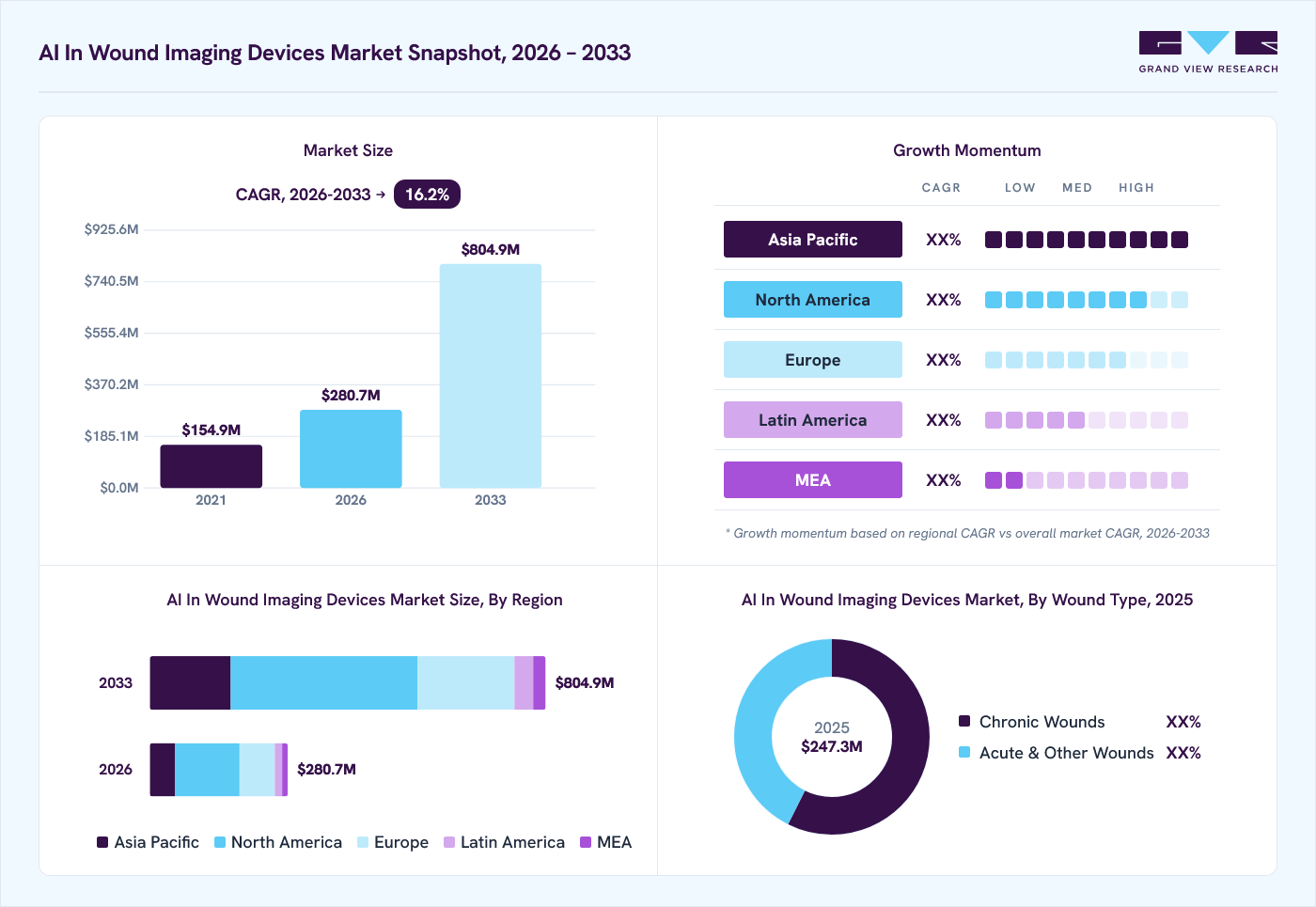 Source: Grand View Research, IR Documents, Primary Interviews, Paid DatabasesTo learn more about this report,
 Download Free Sample Report
Key Market Trends & Insights
- By product: Hardware-agnostic / EMR-integrated software SaaS held the largest revenue share in 2025
- By application/ usage: Wound assessment & measurement held the largest revenue share in 2025
- By wound type: Chronic wounds held the largest revenue share in 2025
- By imaging technology: Standard color & geometric (RGB / 3D) held the largest revenue share of 2025
- By end use: Hospitals & burn centers held the largest revenue share in 2025
Regional Highlights
- Largest regional market: North America (46.5% revenue share, 2025)
- Fastest-growing regional market: Asia Pacific (highest CAGR, 2026-2033)
- By country: The U.S. held the largest revenue share of North America in 2025
Market Size & Forecast
- Market Size in 2025: USD 247.3 Million
- Estimated Market Size in 2026: USD 280.7 Million
- Projected Market Size by 2033: USD 804.9 Million
- CAGR (2026-2033): 16.2%
Prism AI by Grand View Research Free to tryAsk a question about the AI in wound imaging devices marketTry asking✓Every figure cited from GVR research Prefer the report? Download free sample →
The increasing prevalence of chronic wounds, diabetic foot ulcers, and pressure injuries is driving demand for AI-enabled wound imaging devices that provide accurate, real-time wound assessment and monitoring. In addition, advancements in artificial intelligence, computer vision, and smartphone-based imaging technologies are accelerating the adoption of automated wound measurement and clinical decision-support solutions across healthcare settings.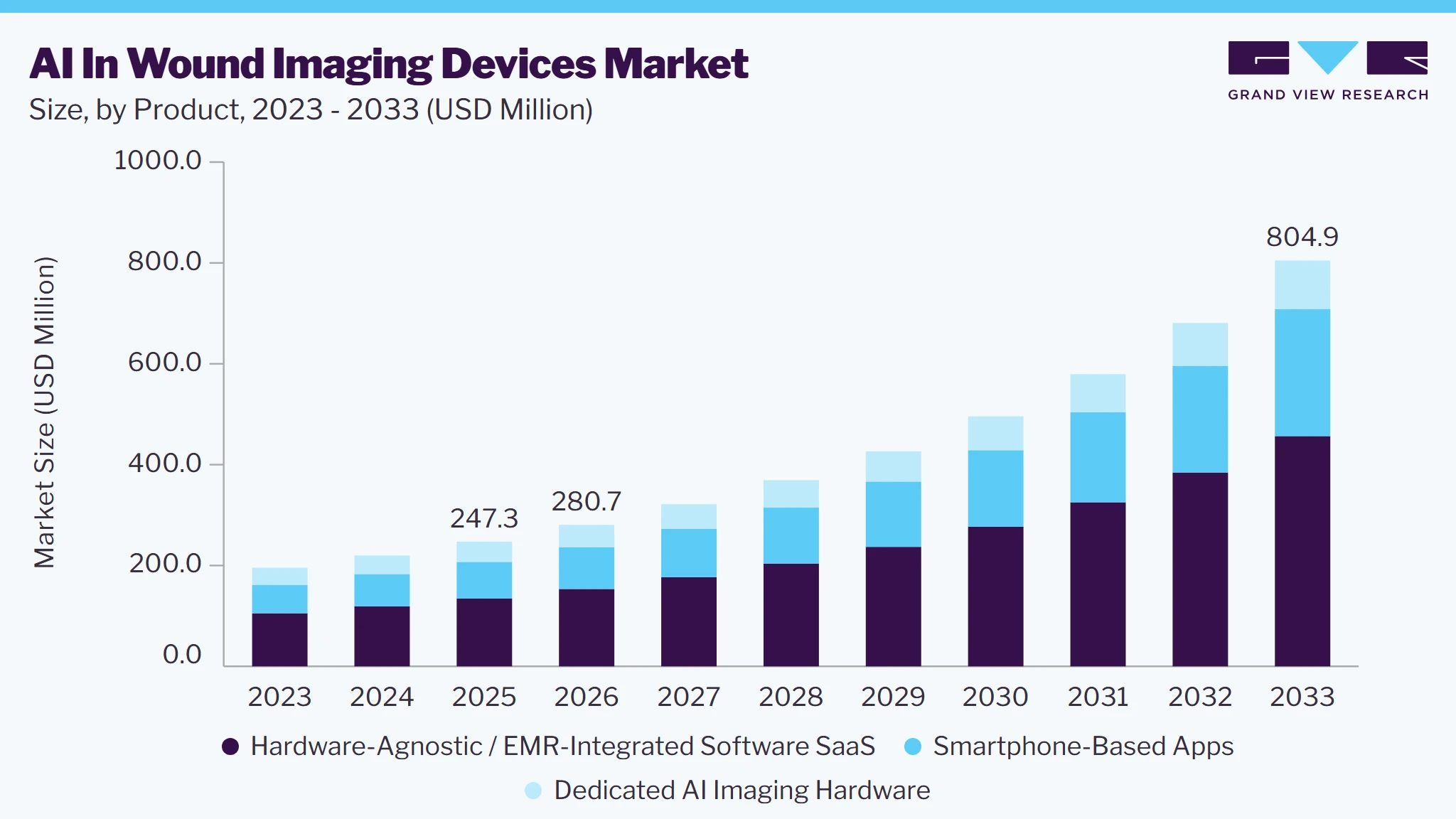 To learn more about this report, Download Free Sample Report
The rising prevalence of chronic wounds is a major driver of the AI in wound imaging devices industry, driven by the growing incidence of diabetic foot ulcers, pressure ulcers, venous leg ulcers, and other non-healing wounds. This has increased the need for accurate and continuous wound assessment, while AI-powered wound imaging solutions enable automated wound measurement, tissue analysis, and tracking of healing progression, helping clinicians make timely treatment decisions, improve patient outcomes, and reduce overall healthcare costs.
Chronic Wound Epidemiology and Community Care in Europe
-
Europe’s population was estimated at 744.7 million as of 28 January 2025, accounting for approximately 9.21% of the global population (based on United Nations estimates).
-
Chronic wounds had an estimated prevalence of 2.21 cases per 1,000 population across Europe.
-
Approximately 24% of the community population received care from community nursing services, highlighting the significant demand for wound management in community-based healthcare settings.
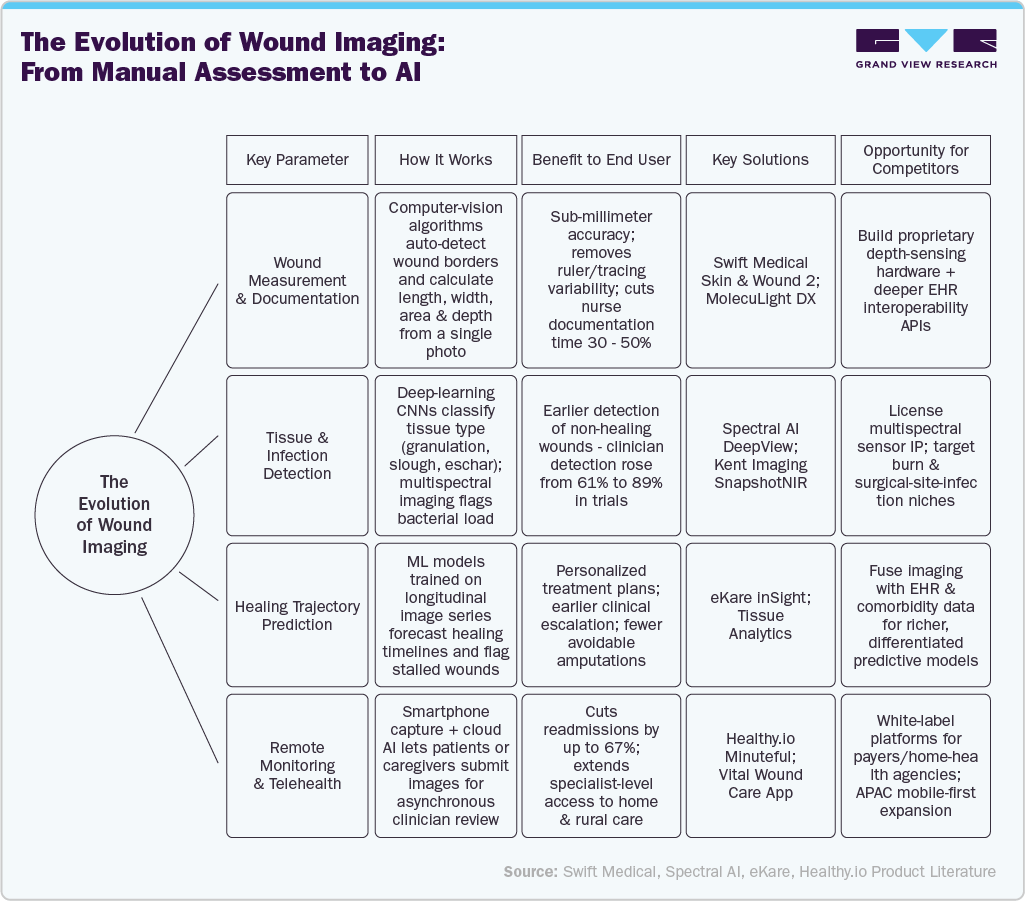
The evolution of wound imaging is transforming clinical wound management through greater accuracy, automation, and data-driven decision-making. The infographic below highlights key advancements reshaping wound assessment and creating new opportunities in the AI in wound imaging devices market.
 To learn more about this report, Download Free Sample Report
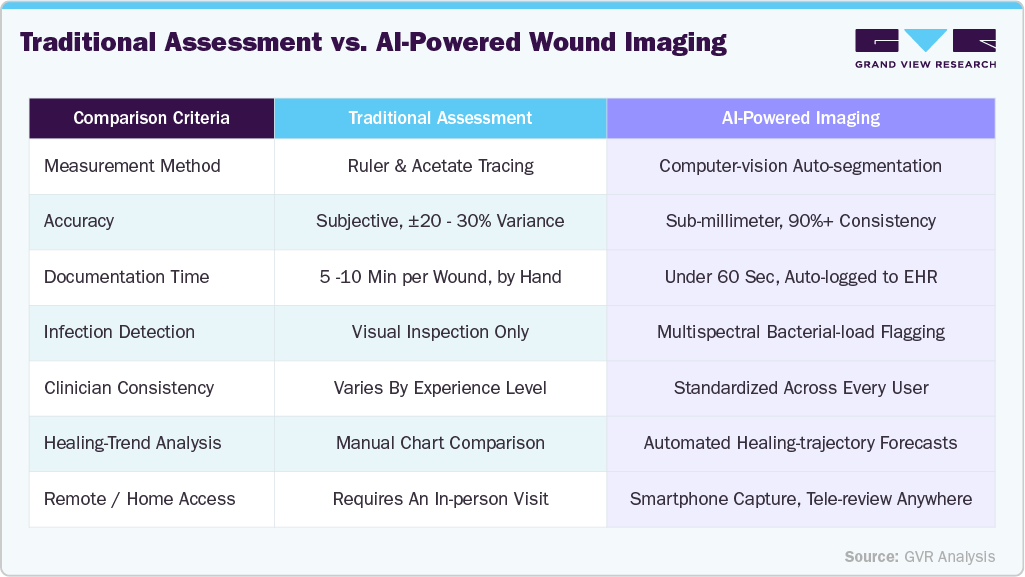
Furthermore, wound assessment is evolving from subjective, manual evaluation to intelligent, AI-driven imaging that delivers faster and more standardized clinical insights. The infographic below compares traditional wound assessment with AI-powered wound imaging across key clinical and operational parameters.
 To learn more about this report, Download Free Sample Report
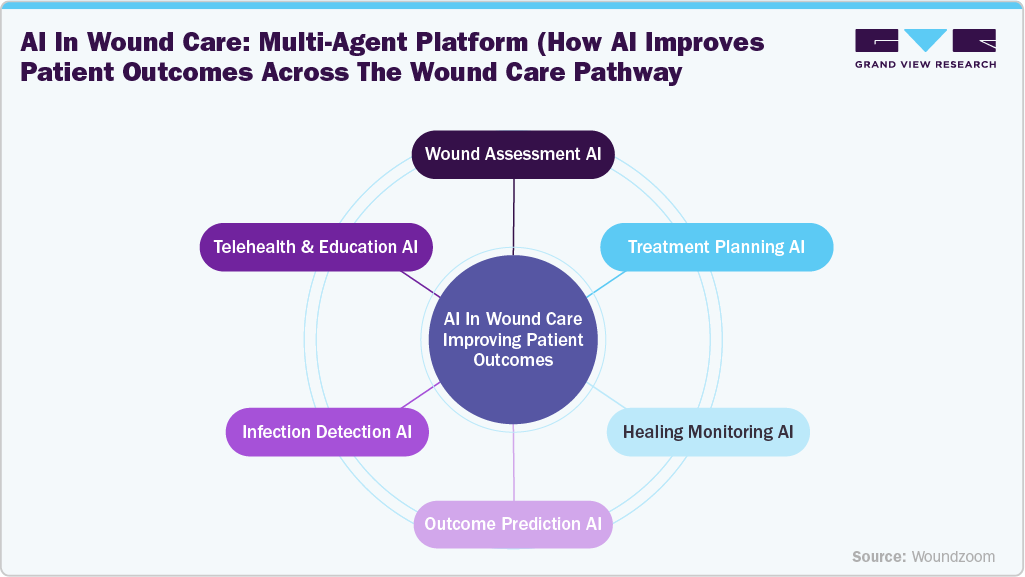
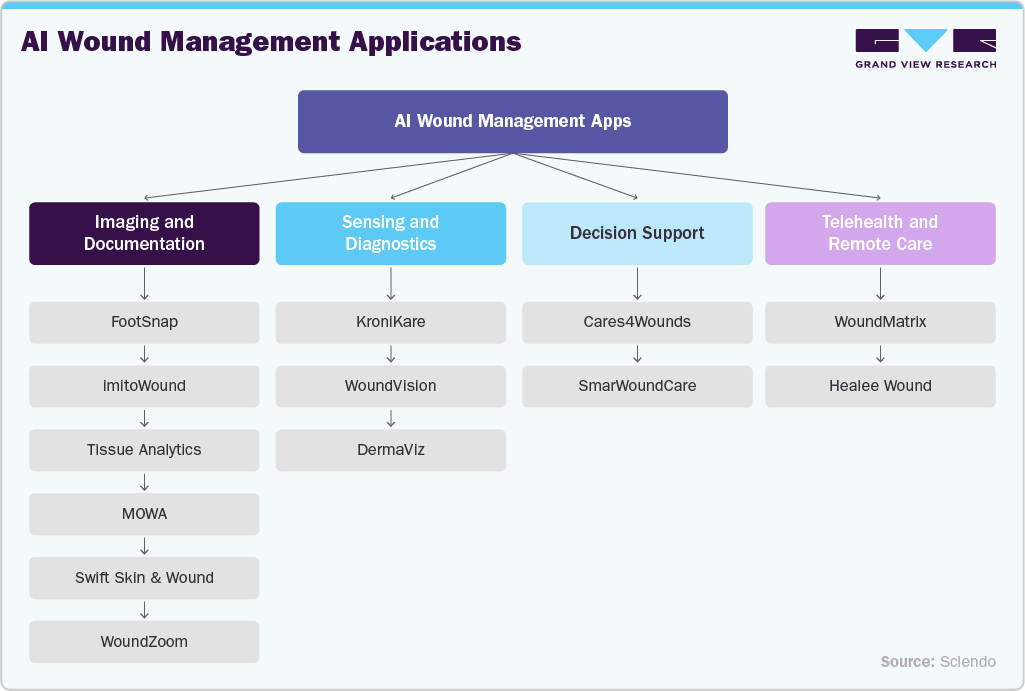
The growing adoption of AI and digital health technologies is a key driver of the AI in wound imaging devices market, as healthcare providers leverage artificial intelligence, cloud computing, and digital imaging to improve wound assessment and clinical decision-making. AI-enabled solutions automate wound measurement, support predictive healing analytics, and integrate with telehealth and electronic medical records (EMRs), enhancing care quality and operational efficiency.
 To learn more about this report, Download Free Sample Report
The growing adoption of AI and digital health technologies is accelerating the use of intelligent wound imaging solutions for automated assessment, documentation, and clinical decision-making. Integration with telehealth and electronic medical records (EMRs) is further enhancing workflow efficiency and patient care.
 To learn more about this report, Download Free Sample Report
Market Concentration & Characteristics
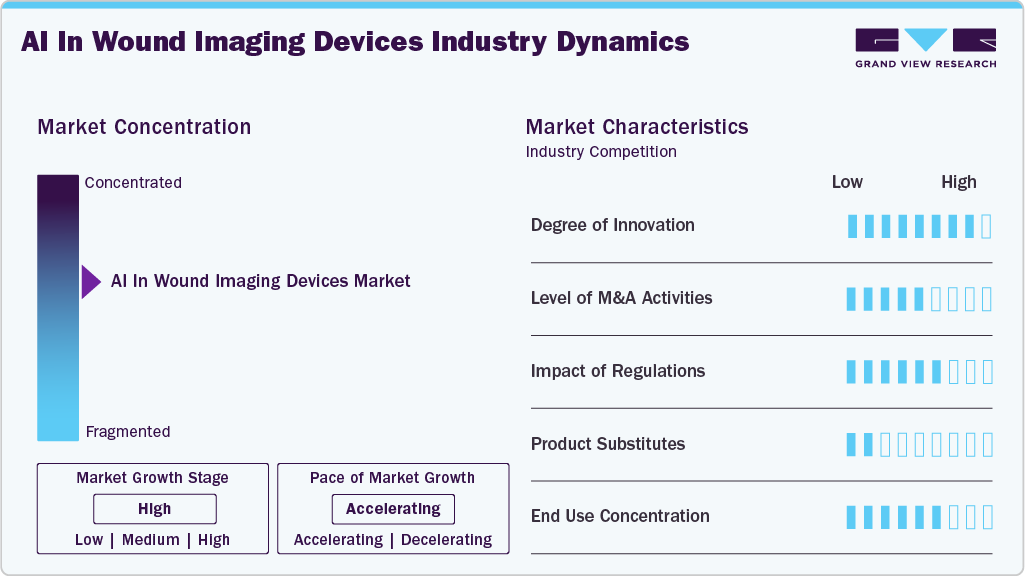
The AI in wound imaging devices market demonstrates a high degree of innovation, driven by advances in deep learning, computer vision, multispectral imaging, and cloud-based analytics. Continuous integration of AI-powered wound assessment, predictive healing algorithms, and telehealth-enabled monitoring enhancing diagnostic accuracy, workflow efficiency, and personalized wound care management. For instance, in September 2025, researchers at the University of California, Santa Cruz introduced a-Heal, an AI-enabled wearable wound care device that integrates imaging, bioelectronics, and machine learning to continuously monitor wound healing and automatically deliver personalized therapy, representing a significant advancement in intelligent wound management.
The AI in wound imaging devices industry is witnessing moderate merger and acquisition activity, with established wound care companies, digital health providers, and AI startups pursuing strategic partnerships and acquisitions to strengthen their imaging and analytics capabilities. These transactions are focused on expanding AI-enabled wound assessment portfolios, accelerating product innovation, and enhancing integrated digital wound care solutions. For instance, in March 2026, GE HealthCare completed the acquisition of Intelerad for a base purchase price of USD 2.3 billion in cash. The acquisition expanded GE HealthCare’s AI-enabled, cloud-first medical imaging portfolio by strengthening its presence in specialized clinics and ambulatory care settings, enhancing enterprise imaging capabilities, and accelerating the deployment of advanced AI-powered imaging solutions.
 To learn more about this report, Download Free Sample Report
In December 2025, Net Health announced the integration of MolecuLightDX with its Tissue Analytics AI-powered mobile wound imaging and analytics platform. The integration combines fluorescence-based bacterial detection with AI-driven wound analytics and enables HIPAA-compliant interoperability with Net Health WoundExpert and other Tissue Analytics-enabled electronic health record (EHR) systems, enhancing digital wound assessment and clinical decision-making.
“We are focused on delivering a wound intelligence solution that drives speed for providers and better patient care through precise insights,” said John Gresham, Wound Care Division President, Net Health. “This integration marks a key evolution for Tissue Analytics, extending our market-leading capabilities as the foundation of our broader platform strategy. We remain committed to interoperability, seamlessly embracing innovations like MolecuLight through our validated API program.”
“We are excited about the benefits of integrating through Tissue Analytics because of the additional reporting and insights it will bring to our clients and its seamless integration with WoundExpert,” said Anil Amlani, CEO of MolecuLight.
Regulatory frameworks have a high impact on the market, as AI-enabled imaging solutions must comply with stringent medical device regulations, software validation requirements, and data privacy standards before commercialization. Evolving regulatory guidance for AI/ML-based Software as a Medical Device (SaMD) is promoting the development of safe, clinically validated, and interoperable wound imaging technologies while supporting greater adoption across healthcare systems.
The market is moderately concentrated, with hospitals and specialized wound care clinics accounting for the largest share of adoption due to their high patient volumes and need for advanced wound assessment. However, utilization is expanding across ambulatory surgical centers, home healthcare, and telehealth settings as AI-enabled remote wound monitoring and digital care models gain traction.
Product Insights
Hardware-agnostic / EMR-integrated software SaaS dominated the AI in wound imaging devices market in 2025, driven by its ability to seamlessly integrate with existing electronic medical record (EMR) systems and operate across a wide range of imaging devices without requiring proprietary hardware. Its scalability, lower implementation costs, cloud-based accessibility, and support for AI-powered wound assessment and documentation have accelerated adoption across hospitals, wound care clinics, and home healthcare settings.
Smartphone-based apps are expected to witness the fastest growth during the forecast period, driven by the increasing adoption of mobile health (mHealth), telemedicine, and remote patient monitoring. Their affordability, ease of use, AI-powered wound analysis, and ability to capture and share wound images in real time are accelerating uptake among home healthcare providers, clinicians, and patients managing chronic wounds.
Application/ Usage Insights
Wound assessment & measurement dominated the AI in wound imaging devices industry in 2025, owing to the growing demand for accurate, standardized, and automated wound evaluation in clinical practice. AI-powered assessment tools enable precise wound sizing, tissue classification, and analysis of healing progression, improving clinical decision-making, documentation efficiency, and patient outcomes across hospitals and wound care centers.
Healing prediction & decision support is expected to witness significant growth during the forecast period, driven by increasing demand for predictive analytics and personalized wound care. AI-powered algorithms that forecast healing trajectories, identify complications early, and recommend evidence-based treatment strategies are improving clinical decision-making, reducing healing time, and optimizing healthcare resource utilization.
Wound Type Insights
The chronic wounds segment dominated the AI in wound imaging devices market in 2025 and is expected to grow at the fastest CAGR during the forecast period, driven by the rising prevalence of diabetic foot ulcers, pressure ulcers, venous leg ulcers, and other non-healing wounds that require continuous monitoring. AI-enabled wound imaging solutions improve the accuracy of wound assessment, track healing progression over time, and support timely clinical interventions, making them widely adopted in chronic wound management.
Acute wounds are expected to witness significant growth during the forecast period, driven by the increasing number of surgical procedures, trauma cases, and burn injuries requiring rapid wound assessment. AI-enabled imaging solutions facilitate early detection of complications, standardized documentation, and real-time monitoring, improving treatment outcomes and workflow efficiency in emergency and postoperative care settings.
Imaging Technology Insights
Standard color & geometric (RGB / 3D) imaging dominated the AI in wound imaging devices industry in 2025, owing to its widespread availability, cost-effectiveness, and ability to deliver accurate wound measurements and three-dimensional visualization. Combined with AI algorithms, RGB and 3D imaging enabled precise wound size estimation, tissue assessment, and tracking of healing progression, driving strong adoption across hospitals and wound care clinics.
Multispectral imaging (MSI) is expected to witness the fastest growth during the forecast period, driven by its ability to assess tissue oxygenation, perfusion, and wound composition beyond the visible spectrum. When combined with AI algorithms, MSI enables earlier detection of infection, improved healing prediction, and more accurate clinical decision-making, supporting its increasing adoption in advanced wound care.
End Use Insights
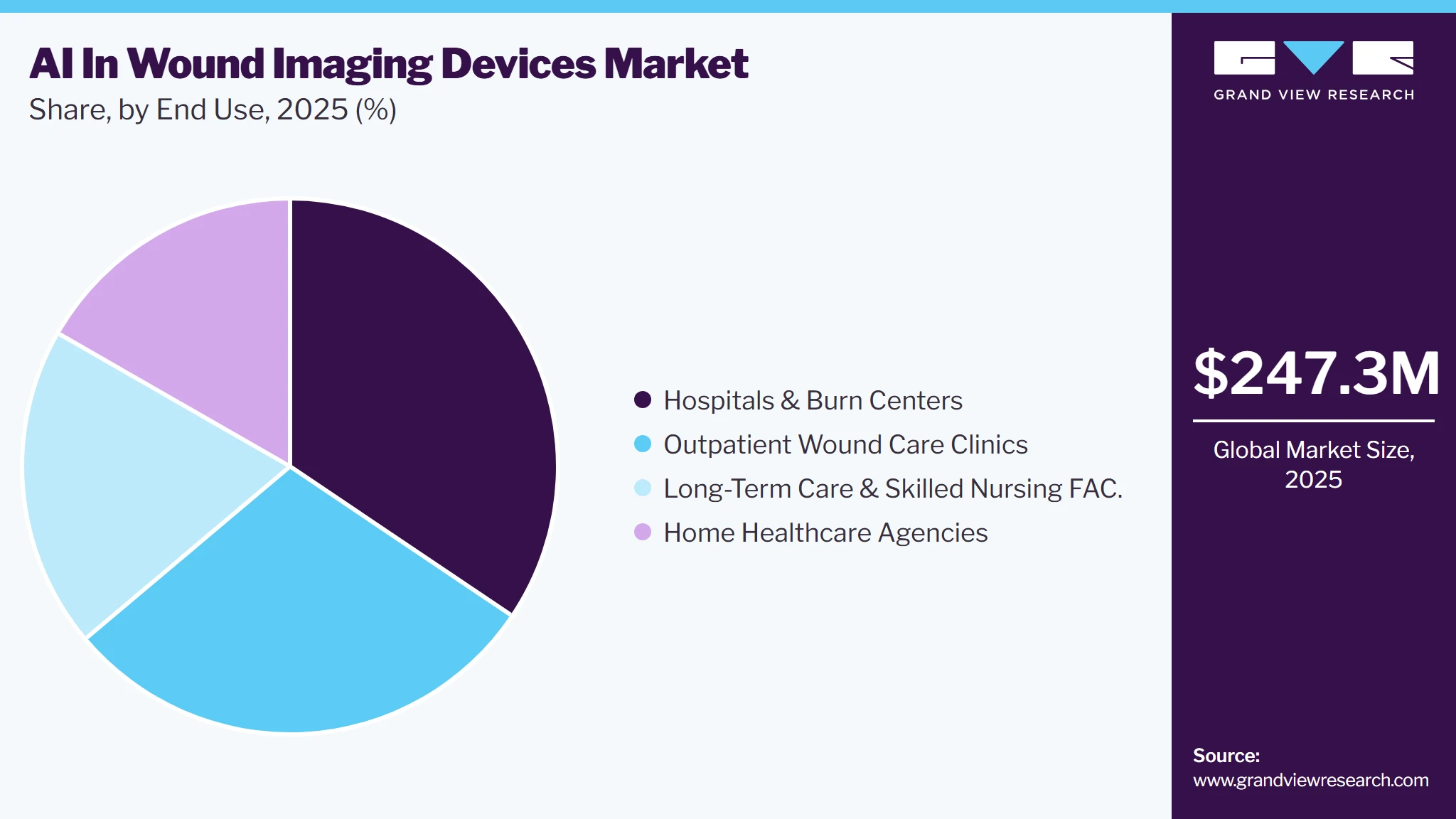
Hospitals & burn centers dominated the AI in wound imaging devices market in 2025, owing to the high volume of chronic and acute wound cases requiring continuous assessment and specialized care. These facilities increasingly adopted AI-enabled wound imaging solutions to improve diagnostic accuracy, streamline clinical workflows, monitor healing progression, and enhance patient outcomes through data-driven wound management.
 To learn more about this report, Download Free Sample Report
Home healthcare agencies are expected to witness significant growth during the forecast period, driven by the increasing preference for home-based chronic wound management and remote patient monitoring. AI-enabled smartphone wound types and cloud-connected imaging platforms allow clinicians to monitor wound healing remotely, reduce unnecessary hospital visits, and improve continuity of care for patients with chronic wounds.
Regional Insights
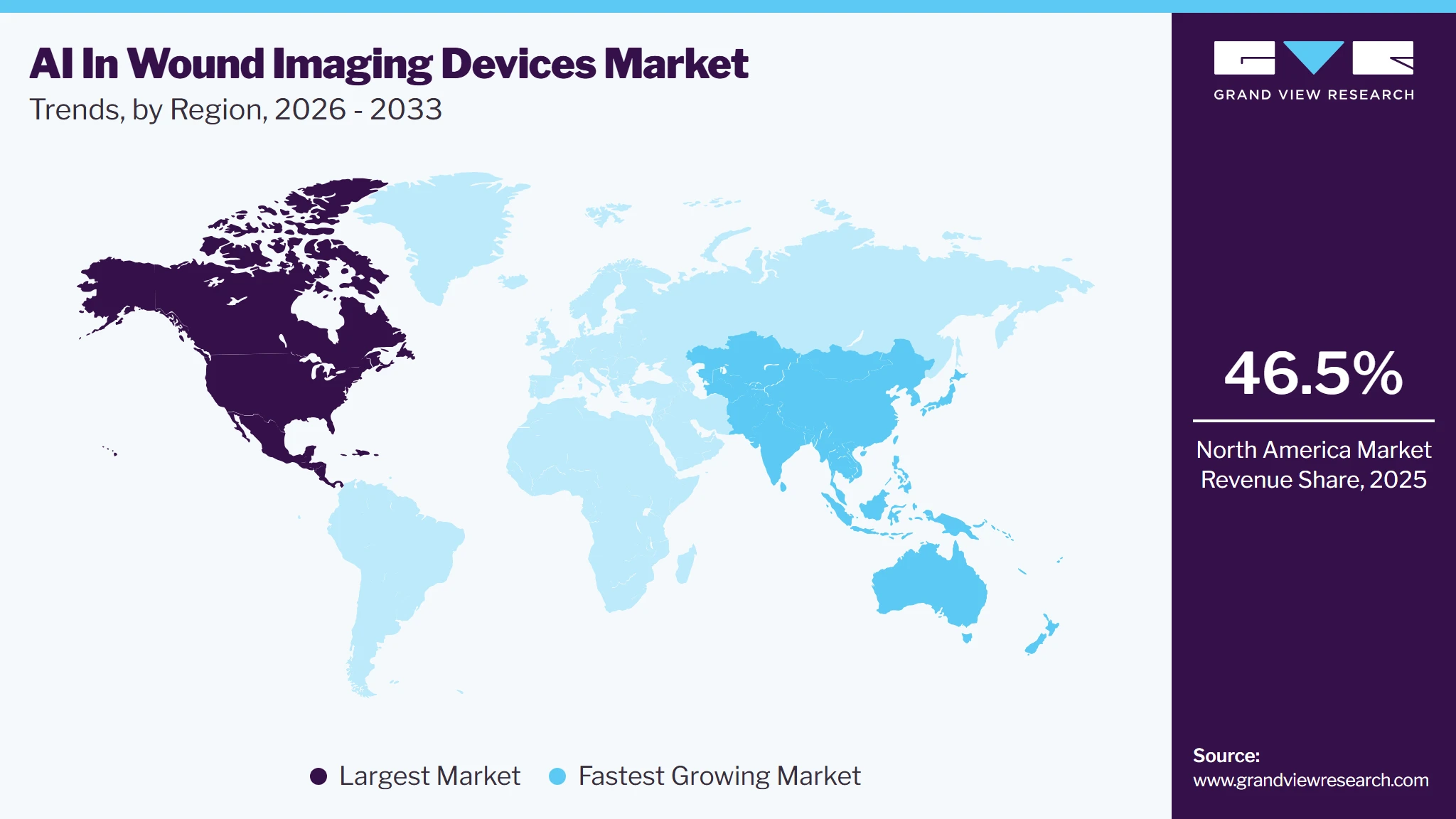
The North America AI in wound imaging devices market held the largest revenue share of 46.5% in 2025, attributed to the rapid adoption of AI-powered wound assessment platforms. These platforms are increasingly integrated with electronic medical records (EMRs) and telehealth for chronic wound management, while healthcare providers deploy smartphone-based imaging, cloud-enabled analytics, and predictive AI algorithms to improve diagnostic accuracy, monitor healing progression, and support value-based wound care across hospitals, wound clinics, and home healthcare settings.
 To learn more about this report, Download Free Sample Report
U.S. AI in Wound Imaging Devices Market Trends
The U.S. AI in wound imaging devices industry is witnessing strong growth, driven by the increasing prevalence of chronic wounds, widespread adoption of digital health technologies, and the expansion of home-based wound care. Healthcare providers are integrating AI-powered wound imaging solutions with electronic medical records (EMRs) and telehealth platforms to enable automated wound assessment, predictive healing analytics, and remote patient monitoring, improving clinical outcomes and operational efficiency.
Europe AI in Wound Imaging Devices Market Trends
The Europe AI in wound imaging devices industry is growing rapidly, driven by the rising burden of chronic wounds, the expanding adoption of digital healthcare, and supportive regulatory initiatives for AI-enabled medical devices. Healthcare providers are increasingly implementing AI-powered wound imaging solutions integrated with telemedicine and electronic health record (EHR) systems to improve wound assessment accuracy, facilitate remote monitoring, and optimize clinical workflows across hospitals and community care settings.
The UK AI in wound imaging devices market is experiencing significant growth, supported by the National Health Service (NHS) digital transformation initiatives, the increasing prevalence of chronic wounds, and the expanding use of virtual care services. Healthcare providers are adopting AI-powered wound imaging platforms to enable standardized wound assessment, remote monitoring, and integration with electronic patient records, improving clinical efficiency and patient outcomes across acute and community care settings.
The AI in wound imaging devices market in France is expanding rapidly, driven by the rising prevalence of chronic wounds, growing investments in healthcare digitalization, and the wider adoption of AI-assisted diagnostic technologies. Hospitals & burn centers and wound care centers are increasingly implementing AI-powered wound imaging solutions integrated with electronic health records (EHRs) and telemedicine platforms to improve wound assessment accuracy, streamline clinical workflows, and support personalized patient care.
Asia Pacific AI in Wound Imaging Devices Market Trends
The Asia Pacific AI in wound imaging devices industry is witnessing rapid growth, driven by the rising burden of diabetes and chronic wounds, expanding healthcare infrastructure, and increasing investments in digital health technologies. The growing adoption of AI-enabled smartphone-based wound imaging, telemedicine platforms, and cloud-based analytics is improving access to advanced wound assessment and remote patient monitoring across hospitals, clinics, and home healthcare settings.
The China AI in wound imaging devices market is experiencing strong growth, supported by rapid healthcare digitalization, increasing prevalence of diabetes-related chronic wounds, and government initiatives promoting artificial intelligence in healthcare. Hospitals & Burn Centers are adopting AI-powered wound imaging systems integrated with cloud platforms and hospital information systems to enhance wound assessment accuracy, optimize clinical workflows, and expand telemedicine-based wound care services.
Latin America AI in Wound Imaging Devices Market Trends
The Latin America AI in wound imaging devices industry is gaining momentum, driven by the rising prevalence of chronic wounds, increasing adoption of digital healthcare solutions, and expanding access to telemedicine services. Healthcare providers are gradually implementing AI-powered wound imaging technologies to improve wound assessment, enhance clinical decision-making, and support remote patient monitoring, particularly in urban hospitals and specialized wound care centers.
MEA AI in Wound Imaging Devices Market Trends
The MEA AI in wound imaging devices industry is growing, driven by investments in healthcare modernization, the rising incidence of diabetes and chronic wounds, and the expanding adoption of digital health technologies. Hospitals & burn centers and specialized wound care centers are increasingly deploying AI-enabled wound imaging solutions to improve diagnostic accuracy, support remote monitoring, and enhance wound management across urban and underserved regions.
Key AI In Wound Imaging Devices Company Insights
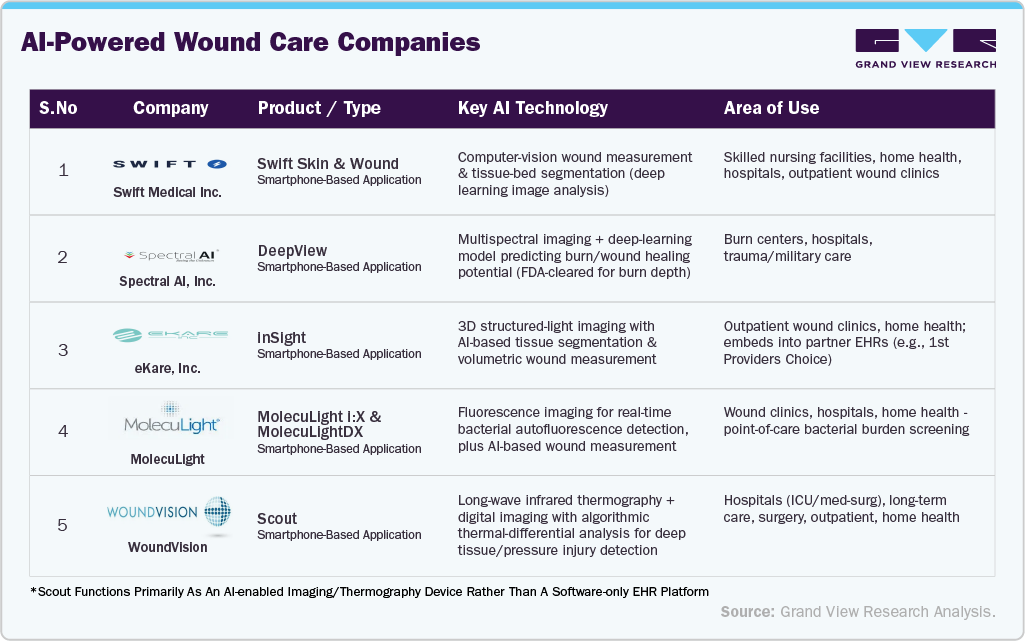
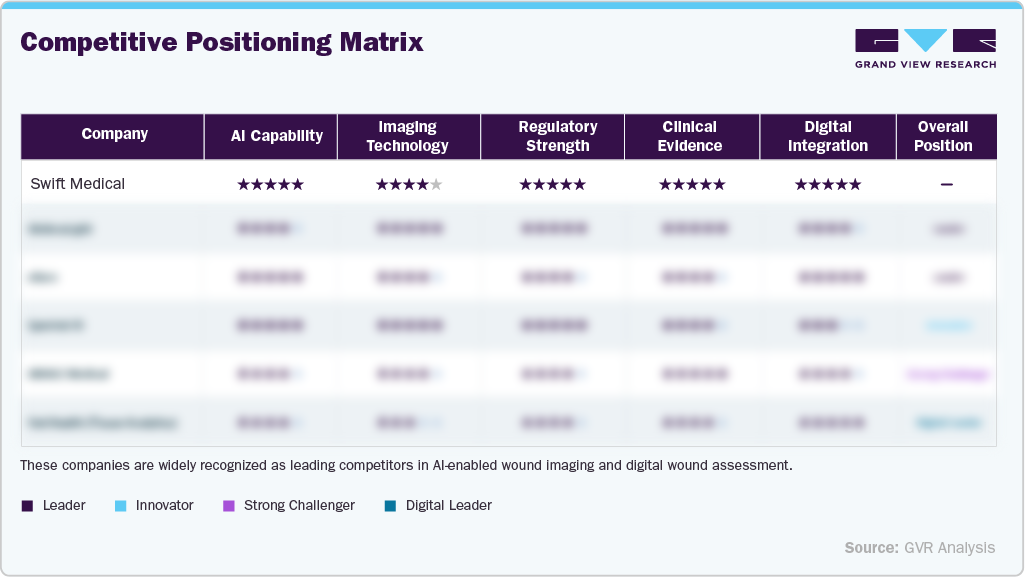
The AI in wound imaging devices market is moderately consolidated, with companies such as MolecuLight Inc.; Swift Medical Inc.; eKare Inc.; Net Health; Kent Imaging Inc.; and Healthy.io focusing on AI-driven wound assessment, digital imaging, and cloud-based wound management platforms. Competition is driven by continuous AI innovation, strategic collaborations, EMR integration, and expanded remote wound monitoring capabilities to strengthen market presence and gain a competitive advantage.
 To learn more about this report, Download Free Sample Report
 To learn more about this report, Download Free Sample Report
Key AI in Wound Imaging Devices Companies
The following key companies have been profiled for this study of the AI in wound imaging devices market.
-
Swift Medical Inc.
-
Spectral AI, Inc.
-
eKare, Inc.
-
1st Provider's Choice
-
imito AG
-
Net Health
-
WoundScribe AI
-
EkagraHealth AI.
-
WoundZoom
-
MolecuLight
-
WoundVision
-
Mimosa Diagnostics
-
Healthy.io Ltd
Recent Developments
-
In July 2026, MolecuLight announced that its MolecuLightDX point-of-care wound imaging system became available through the ModMed Marketplace, enabling seamless integration with ModMed’s Electronic Health Record (EHR) platform. This integration enhances clinical workflow efficiency, streamlines wound documentation, and supports broader adoption of AI-enabled wound imaging solutions.
-
In May 2026, Spectral AI received U.S. FDA De Novo classification for its DeepView System, an AI-powered diagnostic platform for wound care. The clearance recognizes the system’s innovative use of artificial intelligence to assess wound-healing potential, supporting more accurate diagnoses and timely clinical decision-making in burn and chronic wound management.
-
In January 2026, MolecuLight announced that the U.S. Food and Drug Administration (FDA) qualified its MolecuLightDX Wound Measurement technology as a Medical Device Development Tool (MDDT). The qualification recognizes the technology as a scientifically validated tool for generating reliable, FDA-accepted wound measurement data to support medical device development and clinical investigations.
-
In September 2025, BioLab Holdings, Inc. announced a strategic investment and commercialization partnership with cureVision to advance AI-enabled digital wound care solutions. The collaboration combines optical sensors, 3D imaging, and artificial intelligence to enhance wound analysis, diagnosis, and clinical decision-making, supporting the adoption of next-generation wound imaging technologies.
AI In Wound Imaging Devices Market Report Scope
Report Attribute
Details
Market size in 2025
USD 247.3 million
Estimated market size in 2026
USD 280.7 million
Projected market size by 2033
USD 804.9 million
Growth rate
CAGR of 16.2% from 2026 to 2033
Base year for estimation
2025
Historical data
2021 - 2024
Forecast period
2026 - 2033
Quantitative units
Revenue in USD million and CAGR from 2026 to 2033
Report coverage
Revenue forecast, company ranking, competitive landscape, growth factors, and trends
Segments covered
Product, application/usage, wound type, imaging technology, end use, region
Regional scope
North America; Europe; Asia Pacific; Latin America; MEA
Country scope
U.S.; Canada; Mexico; Germany; UK; France; Norway; Italy; Denmark; Sweden; Spain; China; Japan; India; South Korea; Australia; Brazil; KSA; UAE; South Africa
Key companies profiled
Swift Medical Inc.; Spectral AI, Inc.; eKare, Inc.; 1st Provider's Choice; imito AG; Net Health; WoundScribe AI; EkagraHealth AI.; WoundZoom; MolecuLight; WoundVision; Mimosa Diagnostics, Healthy.io Ltd
Customization scope
Free report customization (equivalent up to 8 analysts working days) with purchase. Addition or alteration to country, regional & segment scope.
Pricing and purchase options
Avail customized purchase options to meet your exact research needs. Explore purchase options
Global AI In Wound Imaging Devices Market Report Segmentation
This report forecasts revenue growth at the global, regional, and country levels and provides an analysis of the latest industry trends in each of the sub-segments from 2021 to 2033. For this study, Grand View Research has segmented the global AI in wound imaging devices market report based on product, application/ usage, wound type, imaging technology, end use, and region:
-
Product Outlook (Revenue, USD Million, 2021 - 2033)
-
Hardware-Agnostic / EMR-Integrated Software SaaS
-
Smartphone-Based Apps
-
Dedicated AI Imaging Hardware
-
-
Application/ UsageOutlook (Revenue, USD Million, 2021 - 2033)
-
Wound Assessment & Measurement
-
Tissue Characterization & Segmentation
-
Healing Prediction & Decision Support
-
Infection Detection
-
-
Wound Type Outlook (Revenue, USD Million, 2021 - 2033)
-
Chronic Wounds
-
Diabetic Foot Ulcers (DFUs)
-
Pressure Ulcers (PUs)
-
Venous Leg Ulcers (VLUs)
-
-
Acute Wounds
-
Surgical Wounds
-
Burns
-
Traumatic Wounds
-
-
-
Imaging Technology Outlook (Revenue, USD Million, 2021 - 2033)
-
Standard Color & Geometric (RGB / 3D)
-
Thermal / Infrared Imaging (LWIR)
-
Fluorescence Imaging
-
Multispectral Imaging (MSI)
-
Hyperspectral Imaging (HSI)
-
-
End Use Outlook (Revenue, USD Million; 2021 - 2033)
-
Hospitals & Burn Centers
-
Outpatient Wound Care Clinics
-
Long-Term Care & Skilled Nursing Facilities (SNFs)
-
Home Healthcare Agencies
-
-
Regional Outlook (Revenue, USD Million, 2021 - 2033)
-
North America
-
U.S.
-
Canada
-
Mexico
-
-
Europe
-
Germany
-
UK
-
France
-
Italy
-
Spain
-
Sweden
-
Denmark
-
Norway
-
-
Asia Pacific
-
Japan
-
China
-
India
-
Australia
-
South Korea
-
Thailand
-
-
Latin America
-
Brazil
-
Argentina
-
-
Middle East & Africa
-
South Africa
-
Saudi Arabia
-
UAE
-
Kuwait
-
-
Frequently Asked Questions About This Report
The global AI in wound imaging devices market size was estimated at USD 247.3 million in 2025 and is expected to reach USD 280.7 million in 2026.
The global AI in wound imaging devices market is expected to grow at a compound annual growth rate of 16.2% from 2026 to 2033 to reach USD 804.9 million by 2033.
The hardware-agnostic / EMR-integrated software SaaS segment led the market with the largest revenue share of 54.4% in 2025.
Asia Pacific is the fastest-growing region over the forecast period.
The hospitals & burn centers segment led the market with the largest revenue share of 34.4% in 2025.
Which imaging technology segment accounted for the largest AI in wound imaging devices market share?The standard color & geometric (RGB / 3D) segment led the market with the largest revenue share of 64.1% in 2025.
North America dominated the AI in wound imaging devices market with the largest revenue share of 46.5% in 2025.
The increasing prevalence of chronic wounds, diabetic foot ulcers, and pressure injuries is driving demand for AI-enabled wound imaging devices that provide accurate, real-time wound assessment and monitoring.
Some key players operating in the AI in wound imaging devices market include Swift Medical Inc., Spectral AI, Inc., eKare, Inc., 1st Provider's Choice, imito AG, Net Health, WoundScribe AI, EkagraHealth AI., WoundZoom, MolecuLight, WoundVision, Mimosa Diagnostics and Healthy.io Ltd.
Which application/ usage segment accounted for the largest AI in wound imaging devices market share?The wound assessment & measurement segment led the market with the largest revenue share of 44.4% in 2025.
About the Author(s)
Medical Devices Research Team
Healthcare · Medical DevicesThis report was authored by the medical devices research team at Grand View Research - comprising two research analysts, one senior research analyst, and one industry expert - with specialized expertise in the medical devices segment of the healthcare industry. All findings are based on proprietary healthcare databases, executive interviews, and regulatory analysis, subject to internal peer review prior to publication.
Last Updated:
Speak to Analyst

Customize this report to your needs - add regions, segments, or data points, with 20% free customization.
Or view our licence options:


ISO 9001:2015 & 27001:2022 Certified
We are GDPR and CCPA compliant! Your transaction & personal information is safe and secure. For more details, please read our privacy policy.


