
- Home
- »
- Plastics, Polymers & Resins
- »
-
Algae-based Bioplastics Market Size Report, 2026-2033GVR Report cover

Algae-based Bioplastics Market (2026 - 2033)
Size, Share & Trends Analysis Report By Product Type (Polyethylene (PE), Polypropylene (PP), Polylactic Acid (PLA), Polyhydroxyalkanoates (PHA)), By Application, By Region, And Segment Forecasts
Market Size, 2025
$111.7MMarket Estimate, 2026
$117.7MMarket Forecast, 2033
$173.2MCAGR, 2026–2033
5.7%Algae-based Bioplastics Market Summary
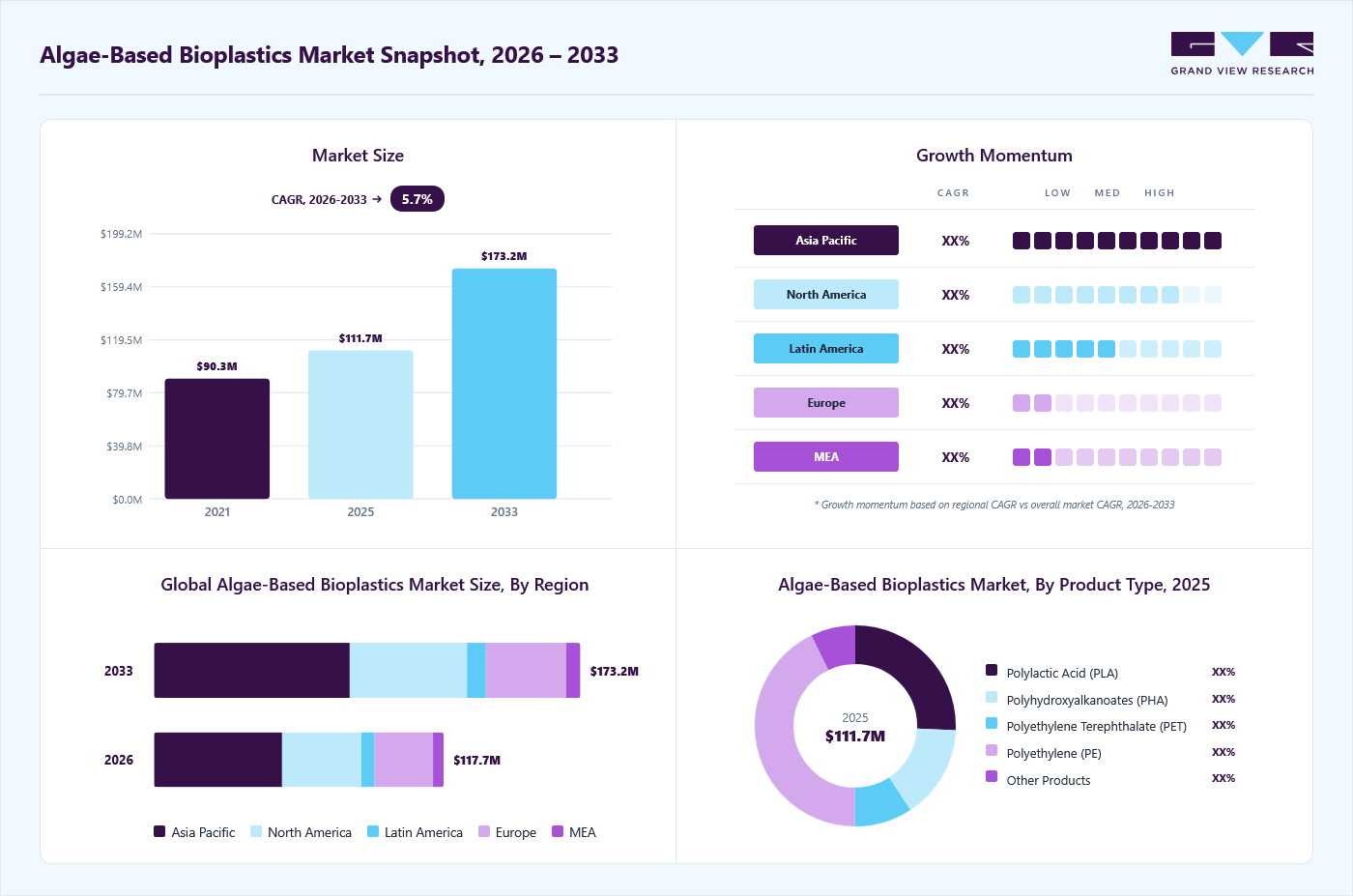
The global algae-based bioplastics market size was valued at USD 111.7 million in 2025 and is projected to grow from USD 117.7 million in 2026 to USD 173.2 million by 2033, at a CAGR of 5.7% from 2026 to 2033. Asia Pacific dominated the market and accounted for the largest revenue share of 44.0% in 2025. The algae-based bioplastics market is driven by rising environmental concerns over conventional plastics and increasing demand for sustainable, biodegradable packaging solutions.
 Source: Grand View Research, IR Documents, Primary Interviews, Paid DatabasesTo learn more about this report,
 Download Free Sample Report
 Key Market Trends & Insights
- By product type: Polyethylene segment held the largest market share of 42.7% in 2025.
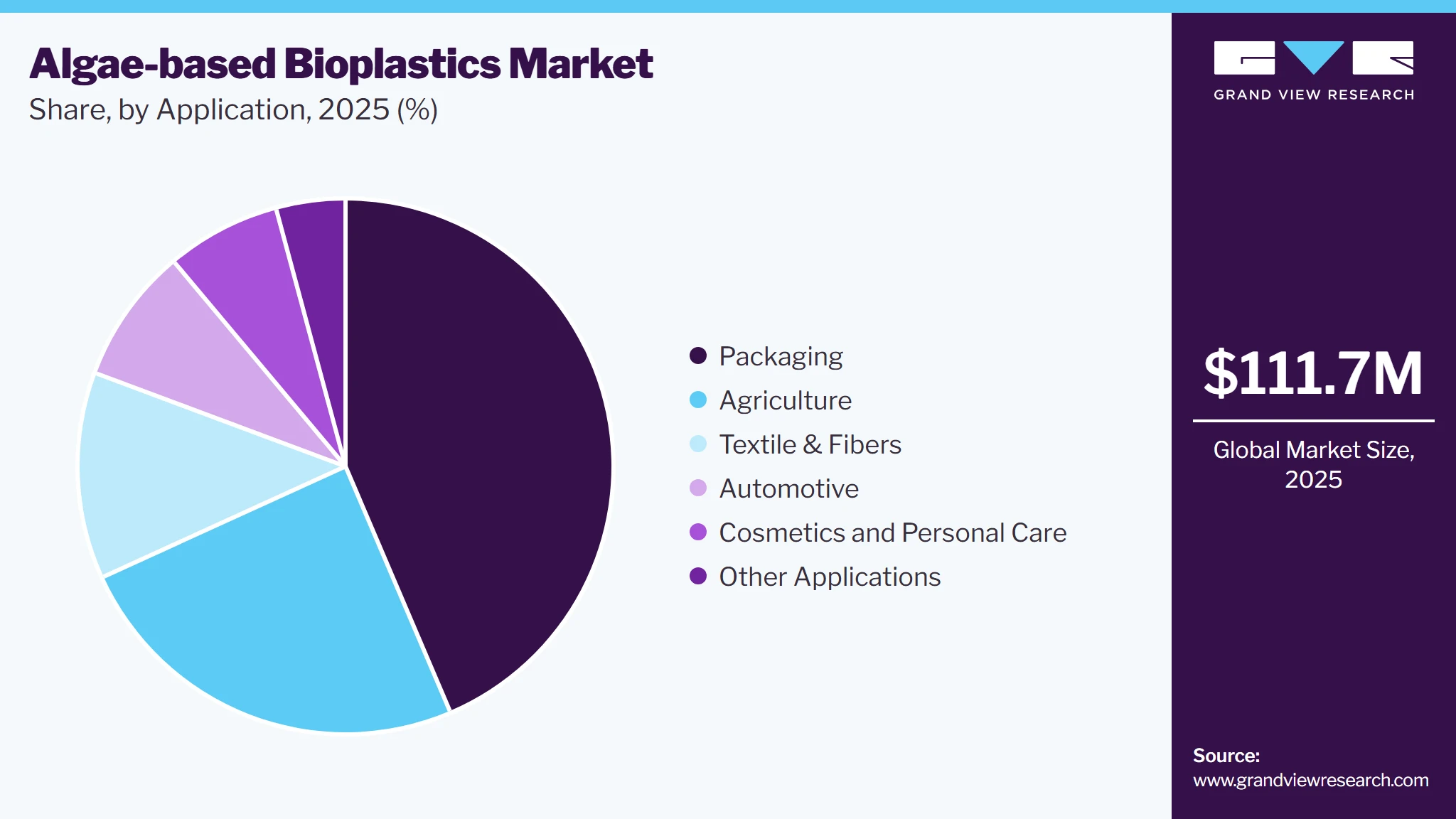
- By application: Packaging segment held the largest market share of 43.6% in 2025.
Regional Highlights
- Largest regional market: Asia Pacific (44.0% revenue share, 2025)
- By country: China held the largest market share in 2025.
Market Size & Forecast
- Market size in 2025: USD 111.7 Million
- Estimated market size in 2026: USD 117.7 Million
- Projected market size by 2033: USD 173.2 Million
- CAGR (2026-2033): 5.7%
Three ways to get this report
Buy it, customize it, or ask a question.Ask an Analyst
Analyst response in 1 business day
- AccessReport author, directly
- Reply timeWithin 1 working day
- No sales callDirect answer only
- FormatEmail reply
- CostFree, no cost
Get the Full Report
What the study covers
- FormatsPDF · Excel · Dashboard
- Timeline2026–2033 annual, 2025 base
- Coverage20+ countries, 5 regions
- Companies10+ key players profiled
Customize the Report
20% free customization
- IncludeCountries, segments, points
- TailorTo your product definition
- ExtendDeeper competitor detail
- OrA fully bespoke study
- Turnaround5–10 working days
In addition, algae's rapid growth rate and minimal resource requirements make it highly preferable renewable feedstock. The increasing public awareness and regulatory pressure to reduce dependency on petroleum-based plastics is driving the market growth as industries are actively seeking alternative materials with a lower carbon footprint. Algae-based bioplastics stand out due to their renewable nature, biodegradability, and lower greenhouse gas emissions during production.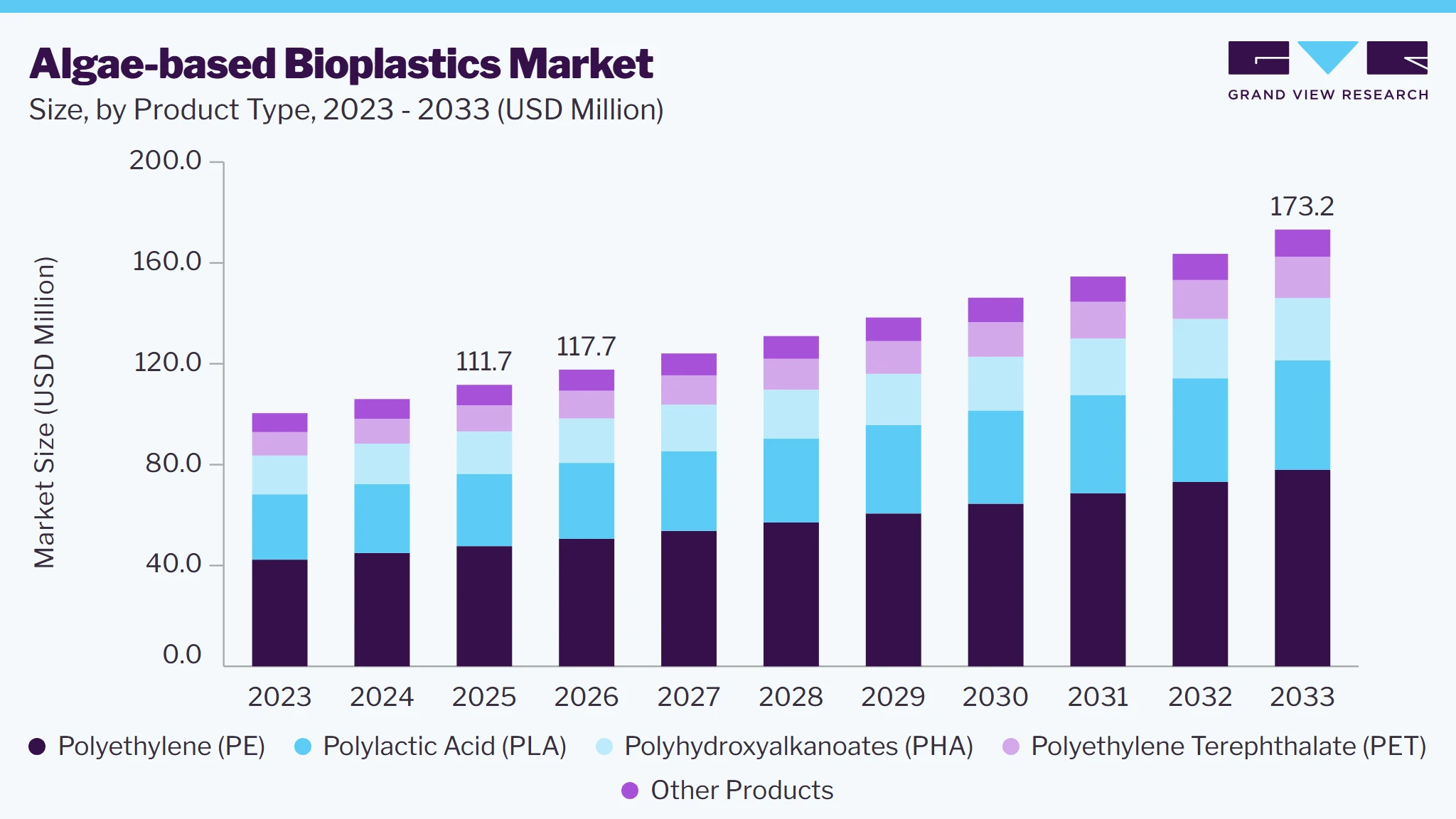 To learn more about this report, Download Free Sample Report
 The abundant and efficient biomass production capacity of algae is another driving factor of the market. Algae can be cultivated on non-arable land using wastewater, thus avoiding competition with food crops and reducing the strain on freshwater resources. Moreover, certain species of algae can double their biomass in a matter of hours, making them highly scalable for industrial applications. This high yield, along with the minimal need for fertilizers or pesticides, gives algae a significant advantage over other bioplastic feedstocks like corn or sugarcane, which require large-scale agricultural inputs and land use.
The market is also bolstered by the increasing adoption of algae-based materials in packaging, consumer goods, and agriculture. With global bans and restrictions on single-use plastics, there is rising demand for sustainable packaging solutions. Algae-based plastics can be molded into films, containers, and utensils that degrade naturally without leaving toxic residues. For instance, a startup called Loliware uses seaweed and algae to produce edible and compostable straws, which have gained popularity among environmentally conscious consumers and businesses looking to comply with plastic regulations.
Moreover, technological advancements and strategic investments are accelerating the commercialization of algae-based bioplastics. Research in bioengineering, extraction technologies, and polymer synthesis is improving the performance, cost-efficiency, and scalability of algae-derived plastics. Governments and private investors are also supporting R&D initiatives and pilot programs. For example, funding from the U.S. Department of Energy has supported several algae-based bioeconomy projects under its Bioenergy Technologies Office. These developments are making algae-based bioplastics increasingly competitive with traditional plastics, driving further market growth.
Market Dynamics
The market for algae-based bioplastics is developing as a specialized yet promising segment within the larger bioplastics industry, fueled by the growing need for sustainable and carbon-negative alternatives to traditional materials. This growth is bolstered by increasing regulatory demands to cut down on the use of fossil-based plastics, along with advancements in the technologies for algae cultivation and biopolymer extraction that enhance material viability and scalability. Algae-based bioplastics are becoming more popular in sectors such as packaging, consumer goods, and specialized applications, thanks to their biodegradability and minimal carbon impact. Nevertheless, the expansion of the market is still hindered by elevated production costs, a lack of large-scale commercial infrastructure, and technical difficulties in achieving consistent material performance when compared to standard plastics.
The main driver for the algae-derived bioplastics market is the growing transition towards carbon-negative and circular material frameworks, where the choice of materials is becoming more impacted by lifecycle emissions instead of solely performance and price. Algae-based resources are becoming more significant due to their capacity to sequester CO₂ during growth, their low requirement for arable land, and their potential to decrease dependence on fossil fuel-based inputs in the production of polymers.
This change is leading to the initial adoption of sustainable practices in packaging, consumer products, and specialized uses, where the focus on sustainability is becoming a crucial factor in material choice. As material systems advance beyond traditional definitions of bio-based options, bioplastics derived from algae are being assessed for their potential to provide measurable carbon reduction advantages, positioning them as a unique solution in high-end and sustainability-focused applications.
The primary limitation for the algae-based bioplastics market is the relatively high costs of production and the challenges associated with scaling up algae cultivation and polymer extraction methods. Although the technology has strong sustainability benefits, it is still capital-intensive, with significant operational expenses tied to controlled environments for cultivation, harvesting, and the downstream processes necessary to produce consistent polymer-grade materials. This cost structure makes it challenging to compete with traditional plastics and even well-established bioplastics in price-sensitive markets. Furthermore, the absence of developed large-scale production facilities and the variability in material performance hinder broader commercial adoption. Consequently, market penetration is mainly restricted to niche and premium sectors, where the sustainability advantages can balance out cost issues, hindering wider industrial-scale integration.
The market for bioplastics derived from algae offers substantial opportunities in the realm of high-value sustainable packaging and specialized materials, with a strong focus on reducing carbon footprints, renewability, and unique brand sustainability initiatives. Polymers sourced from algae are being increasingly assessed for their application in premium packaging options, single-use consumer goods, and specialized coatings, where the need for performance is weighed against environmental impact factors. As the demand for verifiable low-carbon materials rises within global supply chains, algae-based approaches are likely to gain an advantage from early uptake in industries aiming to stand out through superior sustainability credentials. Ongoing improvements in cultivation efficiency and polymer processing are projected to gradually broaden the range of applicable uses beyond specialized segments.
Analyst Perspective
The market for algae-based bioplastics is developing as a new segment within the wider biopolymers field, influenced by the growing focus on carbon-negative materials and innovative bio-based feedstocks. The growth of the market is primarily driven by the need for sustainable material alternatives, with algae-derived polymers being recognized for their ability to lower lifecycle emissions, decrease dependency on agricultural land, and fit into emerging circular economy principles. Nevertheless, the commercialization of these materials is still in its infancy, with demand mainly focused on pilot projects and premium applications that prioritize sustainability in packaging and specialty materials. The market still encounters fundamental challenges regarding scalability of production, competitive pricing, and consistency in material quality when compared to traditional bioplastics and conventional polymers, which limits immediate market penetration despite a strong potential for the future.
Product Type Insights
Based on product type, the polyethylene segment led the market with the largest revenue share of 42.7% in 2025. Algae-based PE is a sustainable alternative to conventional fossil-fuel-derived PE, offering similar structural and barrier properties. Derived using algae oil or biomass, it retains the flexibility, chemical resistance, and durability associated with traditional PE, making it suitable for packaging, bags, and films. The demand for algae-based PE is primarily driven by the growing environmental concerns around plastic pollution and the push for circular economic solutions.
Algae-derived PLA is a biodegradable thermoplastic made from lactic acid obtained via fermentation of algae biomass. It is used in a variety of applications such as disposable cutlery, packaging films, 3D printing materials, and medical implants. PLA is seeing increasing demand due to its compostability and low environmental footprint. Consumer preference for eco-friendly packaging, especially in foodservice and personal care sectors, along with governmental support for compostable materials, drives PLA adoption. Its non-toxic nature also makes it ideal for medical and food-contact applications.
Application Insights
Based on application, packaging segment dominated the market with the largest revenue share of 43.6% in 2025. Algae-based bioplastics are increasingly used in packaging applications, including food containers, bottles, films, and bags. These bioplastics offer biodegradability, lightweight characteristics, and minimal carbon footprint, making them ideal for sustainable packaging solutions in various sectors such as food & beverage, e-commerce, and pharmaceuticals.
 To learn more about this report, Download Free Sample Report
 Algae-based bioplastics are used to produce biodegradable films, plant pots, and mulch sheets in agriculture. These materials reduce the need for plastic retrieval after use, as they can degrade naturally in the soil without harmful residues. The increasing awareness of soil health and environmental sustainability in farming practices is promoting the shift from conventional plastics to biodegradable options. Supportive agricultural policies and subsidies for eco-friendly inputs further enhance adoption.
Region Insights
Asia Pacific dominated the market and accounted for the largest revenue share of 44.0% in 2025 and is anticipated to grow at the fastest CAGR of 6.2% over the forecast period. This dominance can be attributed to increasing environmental awareness coupled with stringent government regulations aimed at reducing plastic pollution. The region's natural advantages significantly contribute to its market leadership.
 To learn more about this report, Download Free Sample Report
 China Algae-based Bioplastics Market Trends
China Algae-based Bioplastics Market held the largest share in the Asia Pacific, accounting for 44.9% in 2025. China's algae-based bioplastics market growth can be attributed to its strategic government policies, vast aquatic resources, and established manufacturing infrastructure.
North America Algae-based Bioplastics Market Trends
The region benefits from substantial R&D investments, robust government support for sustainable initiatives, and a growing consumer demand for eco-friendly alternatives. The region's strong retail sector and environmentally conscious consumer base provide a ready market for these innovations, driving continued growth and investment in the algae bioplastics segment.
The growth of the U.S. algae-based bioplastics market is largely driven by significant government funding that has boosted research and development efforts. The Department of Energy has played a key role by investing heavily in algae biotechnology initiatives. Companies such as Algix LLC and BLOM have capitalized on these investments to advance commercial-scale production of algae-derived materials, showcasing the successful shift from laboratory research to market-ready products.
Europe Algae-based Bioplastics Market Trends
Europe’s growth in the algae-based bioplastics market is due to its stringent environmental regulations, robust sustainability initiatives, and consumer awareness. The European Union's Single-Use Plastics Directive and Circular Economy Action Plan have created a regulatory environment that actively discourages conventional plastics while incentivizing sustainable alternatives. These policies have effectively created market pull for innovations in biodegradable materials, with algae-based solutions being particularly favored for their minimal environmental footprint.
The algae-based bioplastics market in Germany is primarily driven by its robust combination of environmental policy commitment, technological innovation, and industrial infrastructure. The country's stringent environmental regulations and ambitious circular economy targets have created strong market pull for sustainable alternatives to conventional plastics. Germany's implementation of the European Single-Use Plastics Directive has been particularly aggressive, creating immediate market opportunities for algae-based solutions.
Key Algae-based Bioplastics Company Insights
The competitive environment of the algae-based bioplastics market is characterized by a mix of innovative startups and research-driven companies striving to commercialize sustainable alternatives to conventional plastics. The market remains in a nascent but rapidly evolving stage, with players focusing on R&D to improve cost-efficiency, scalability, and material properties of algae-derived polymers. Strategic partnerships between biotechnology firms, academic institutions, and packaging or consumer goods companies are common, aiming to accelerate product development and market adoption.
-
In September 2024, The Waste2Plastic project at Umea University has been awarded approximately USD 1.54 million from the Swedish Energy Agency and industrial partners to develop biodegradable plastics, specifically polyhydroxyalkanoates (PHA), using Nordic microalgae.
-
In February 2024, Somater, a manufacturer of plastic and polymer primary packaging, and French biotech start-up Eranova have collaborated to develop ALGX, a 100% bio-based polymer packaging material derived from green algae harvested from the Étang de Berre lagoon in France. This innovative packaging solution aims to replace fossil-based polymers with an environmentally friendly alternative by utilizing algae.
Key Algae-based Bioplastics Companies:
The following key companies have been profiled for this study on the algae-based bioplastics market.
-
Notpla Limited
-
Algix LLC
-
Lifeasible
-
Evoware
-
BZEOS
-
FLEXSEA
-
BLOM
-
Eranova
-
Sway Innovation Co.
-
ALGBIO
-
PT Seaweedtama Biopac Indonesia
Competitive Benchmarking
Category
Operating Strategies
Competitive Edge
Weakness
Established Players (Lifeasible, ALGIX LLC, Eranova, ALGBIO, PT Seaweedtama Biopac Indonesia)
- Focus on scaled bio-based material production with integration across algae cultivation, biopolymer extraction, and downstream material development. Emphasis on developing starch/algae-based polymers, bio-packaging solutions, and semi-commercial bioplastic applications for packaging, agriculture, and specialty materials.
- Relatively stronger process maturity in bio-feedstock utilization, established production capabilities in select regions, and broader material R&D pipelines. Better positioning in industrial partnerships and early commercialization pathways for bio-based materials.
- Limited global scale compared to petrochemical incumbents, high dependency on feedstock variability (algae/biomass), and constrained cost competitiveness versus conventional plastics and large-scale biopolymer producers.
Emerging Players (Notpla Limited, Evoware, BZEOS, FLEXSEA, BLOM, Sway Innovation Co.)
- Strong focus on innovation-led, niche bio-material solutions such as seaweed-based packaging, biodegradable films, edible packaging, and next-generation compostable alternatives. Targeting sustainability-driven applications in packaging, food service, and single-use plastic substitution.
- High innovation agility, strong sustainability positioning, rapid prototyping capability, and ability to align with regulatory bans on single-use plastics. Strong brand differentiation in eco-friendly and consumer-facing applications.
- Very limited scale-up capability, high production costs, dependence on pilot or early commercialization stage demand, and limited penetration into large industrial or mainstream packaging markets.
Algae-based Bioplastics Market Report Scope
Report Attribute
Details
Market size in 2025
USD 111.7 million
Estimated Market size in 2026
USD 117.7 million
Projected Market size by 2033
USD 173.2 million
Growth rate
CAGR of 5.7% from 2026 to 2033
Base year for estimation
2025
Historical data
2021 - 2024
Forecast period
2026 - 2033
Quantitative units
Volume in Kilotons, Revenue in USD million/billion, and CAGR from 2026 to 2033
Report coverage
Revenue forecast, company ranking, competitive landscape, growth factors, and trends
Segments covered
Product type, application, region
Regional scope
North America; Europe; Asia Pacific; Central & South America; Middle East & Africa
Country scope
U.S.; Canada; Mexico; Germany; UK; France; Italy; Spain; China; India, Japan; South Korea; Australia; Brazil; Argentina; South Africa; Saudi Arabia; UAE
Key companies profiled
Notpla Limited; Algix LLC; Lifeasible; Evoware; BZEOS; FLEXSEA; BLOM; Eranova; Sway Innovation Co.; ALGBIO; PT Seaweedtama Biopac Indonesia
Customization scope
Free report customization (equivalent up to 8 analysts' working days) with purchase. Addition or alteration to country, regional & segment scope.
Pricing and purchase options
Avail customized purchase options to meet your exact research needs. Explore purchase options
Global Algae-based Bioplastics Market Report Segmentation
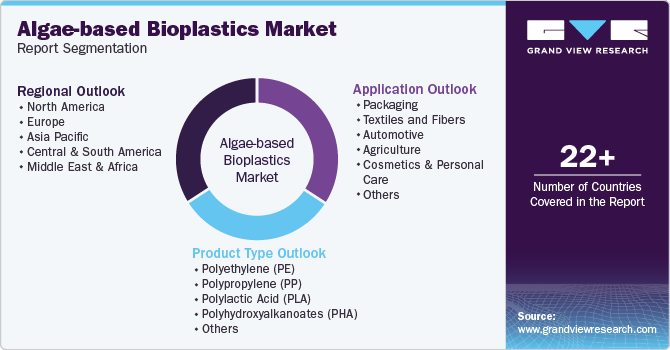
This report forecasts revenue growth at a global level and provides an analysis of the latest industry trends in each of the sub-segments from 2021 to 2033. For this study, Grand View Research has segmented the global algae-based bioplastics market report based on product type, application, and region:
 To learn more about this report, Download Free Sample Report
 -
Product Type Outlook (Volume, Tons; Revenue, USD Million, 2021 - 2033)
-
Polyethylene (PE)
-
Polypropylene (PP)
-
Polylactic Acid (PLA)
-
Polyhydroxyalkanoates (PHA)
-
Others
-
-
Application Outlook (Volume, Tons; Revenue, USD Million, 2021 - 2033)
-
Packaging
-
Textiles and Fibers
-
Automotive
-
Agriculture
-
Cosmetics and Personal Care
-
Others
-
-
Region Outlook (Volume, Tons; Revenue, USD Million, 2021 - 2033)
-
North America
-
U.S.
-
Canada
-
Mexico
-
-
Europe
-
Germany
-
France
-
UK
-
Italy
-
Spain
-
-
Asia Pacific
-
China
-
India
-
Japan
-
South Korea
-
Australia
-
-
Central & South America
-
Brazil
-
Argentina
-
-
Middle East & Africa
-
South Africa
-
Saudi Arabia
-
UAE
-
-
Research Methodology
The algae-based bioplastics market figures in this report are based on a proven research process that combines executive interviews with secondary research from proprietary databases, company filings, and recognized regulatory and institutional sources. Market size is built through value-chain sizing - reconciling supply-side and demand-side estimates - and triangulated with bottom-up and top-down approaches. Every estimate passes multiple levels of expert validation before publication, with each algae-based bioplastics segment quantified using the revenue-capture definitions in the table below.
Segment Definition
Segment - Product Type
Revenue capture definition
Polylactic Acid (PLA)
Revenue is captured through PLA-based applications in rigid packaging, disposable cutlery, food service ware, medical packaging, and 3D printing filaments. Demand is supported by its compostability, bio-based origin, and increasing substitution of conventional plastics in regulated and sustainability-focused applications.
Polyhydroxyalkanoates (PHA)
Revenue is generated through high-value biodegradable applications in medical devices, specialty packaging, agricultural films, and premium compostable products. PHA is positioned as a fully biodegradable polymer with strong environmental credentials, though limited by higher production costs.
Polyethylene Terephthalate (PET)
Revenue is derived from packaging applications such as beverage bottles, food containers, and textile fibers, including increasing incorporation of recycled PET (rPET). Demand is driven by circular economy initiatives and strong, established infrastructure in packaging and fibers.
Polyethylene (PE)
Revenue is generated through large-scale production and use of PE in packaging films, bags, agricultural films, bottles, and consumer goods applications. Its dominance is driven by low cost, high processability, and strong global demand across flexible and rigid packaging, making it the most widely consumed polymer in both conventional and bio-based/partially bio-based formats.
Other Products
Revenue is captured through specialty biopolymers, starch blends, bio-based engineering plastics, and emerging materials used in niche applications. These include experimental or hybrid formulations designed to improve biodegradability, cost efficiency, or performance characteristics across specific end-use industries.
Segment - Application
Revenue capture definition
Packaging
Revenue is generated through extensive use of bioplastics in flexible and rigid packaging applications such as films, bags, food containers, bottles, and wraps. Demand is primarily driven by strong substitution of conventional plastics, increasing regulatory restrictions on single-use plastics, and rising brand commitments toward sustainable and recyclable packaging solutions.
Agriculture
Revenue is captured through applications such as mulch films, seed coatings, controlled-release fertilizers, and greenhouse films. Growth is supported by increasing adoption of biodegradable materials aimed at improving soil health, reducing plastic residue in farmland, and enhancing sustainable farming practices.
Textile & Fibers
Revenue is generated through the use of biopolymers in fibers for apparel, non-wovens, and industrial textiles. Demand is driven by growing interest in bio-based and recycled materials in fashion and technical textile applications, supported by sustainability-driven procurement policies.
Automotive
Revenue is derived from bioplastics used in interior components, trims, panels, and non-structural parts. Adoption is supported by lightweighting initiatives and increasing focus on reducing vehicle carbon footprint across OEM supply chains.
Cosmetics and Personal Care
Revenue is captured through packaging applications such as bottles, jars, tubes, and disposable cosmetic accessories. Growth is driven by strong sustainability positioning of brands and increasing consumer preference for eco-friendly packaging formats.
Other Applications
Revenue is generated through niche uses such as medical products, consumer goods, electronics casings, and specialty applications where bio-based materials are used for specific performance or sustainability requirements.
Estimation Model
Layer Name
Key Question
Description
Global Plastic Consumption Base Layer
What is the total addressable plastic demand pool?
Captures overall demand for conventional and bio-based plastics across major end-use industries such as packaging, agriculture, automotive, textiles, and consumer goods, representing the theoretical maximum substitution opportunity for bioplastics.
Bioplastic Applicability Layer
Where can bioplastics functionally replace conventional plastics?
Identifies applications where bioplastics (PLA, PHA, PET, PE blends, etc.) can technically substitute fossil-based plastics based on performance, processing compatibility, and regulatory acceptance across packaging, agriculture, and specialty applications.
Adoption/Substitution Layer
What share of applicable demand is actually transitioning to bioplastics?
Defines the real adoption pool driven by regulatory bans, corporate sustainability commitments, brand-led substitution, and availability of cost-competitive bioplastic grades across regions and applications.
Revenue Realization Layer
How much monetized bioplastic demand is captured?
Represents actual market revenue generated from bioplastics consumption across applications, adjusted for material pricing, grade mix (PE, PLA, PHA, PET, blends), and regional penetration levels, with packaging contributing the largest share.
Delivered Customizations
This report has been delivered with the following In-depth customizations
Client Request
Customization Delivered
Value Adds
Competitive Benchmarking
We delivered a structured benchmarking of key algae-based bioplastics and bio-material players, mapping them across technology maturity, feedstock integration (algae-based vs hybrid bio-systems), product focus (films, packaging, specialty polymers), and commercialization stage. The assessment differentiated innovation-led entrants from early-stage commercial players based on scalability and application reach.
Enabled clear visibility into competitive positioning across the value chain, highlighting innovation intensity, scale limitations, and emerging leadership pockets. Supported identification of whitespace opportunities in scalable algae-derived polymer applications and strategic partner selection.
Pricing Analysis
We provided a pricing framework segmented by material type, production complexity, feedstock cost intensity, and end-use application (packaging, specialty, consumer goods). The analysis captured premium positioning of algae-based polymers versus conventional bioplastics and mapped cost sensitivity across early-stage commercialization models.
Delivered clarity on cost-to-performance trade-offs and premium pricing justification linked to carbon-negative attributes. Supported evaluation of commercial viability thresholds and pricing gaps relative to established biopolymer alternatives.
Sustainability & Environmental Impact Assessment
We conducted a lifecycle-oriented sustainability assessment covering carbon sequestration potential, feedstock sourcing (algae cultivation systems), land-use impact, water intensity, biodegradability performance, and end-of-life scenarios. The analysis benchmarked algae-based bioplastics against conventional fossil-based plastics and first-generation biopolymers.
Enabled quantification of environmental advantage positioning, particularly in carbon reduction and non-food-based feedstock utilization. Supported ESG positioning, regulatory alignment, and corporate sustainability strategy development for stakeholders seeking next-generation low-carbon material solutions.
Frequently Asked Questions About This Report
The global algae-based bioplastics market was estimated at around USD 111.7 million in the year 2025 and is expected to reach around USD 117.7 million in 2026.
The global algae-based bioplastics market is expected to grow at a compound annual growth rate of 5.7% from 2026 to 2033 to reach around USD 173.2 million by 2033.
Packaging dominated the application segment of the algae-based bioplastics market in 2025 with a 43.6% value share due to rising demand for sustainable and biodegradable alternatives to conventional plastic in the FMCG and food industries.
The key players in the algae-based bioplastics market include Notpla Limited; Algix LLC; Lifeasible; Evoware; BZEOS; FLEXSEA; BLOM; Eranova; Sway Innovation Co.; ALGBIO; and PT Seaweedtama Biopac Indonesia.
The algae-based bioplastics market is driven by growing demand for sustainable and biodegradable materials and increasing concerns over plastic pollution and fossil fuel dependency. Technological advancements in algae cultivation and biopolymer extraction further support market growth.
Asia Pacific dominated the algae-based bioplastics market with the largest revenue share of 44.0% in 2025. This dominance can be attributed to increasing environmental awareness coupled with stringent government regulations aimed at reducing plastic pollution.
China is the fastest-growing country in the Asia Pacific algae-based bioplastics market. China's algae-based bioplastics market growth can be attributed to its strategic government policies, vast aquatic resources, and established manufacturing infrastructure.
Based on product type, the polyethylene segment led the market with the largest revenue share of 42.7% in 2025. The demand for algae-based PE is primarily driven by the growing environmental concerns around plastic pollution and the push for circular economic solutions.
North America accounted for a significant share of the algae-based bioplastics market in 2025. The region benefits from substantial R&D investments, robust government support for sustainable initiatives, and a growing consumer demand for eco-friendly alternatives.
About the Author(s)
Plastics, Polymers & Resins Research Team
Bulk Chemicals · Plastics, Polymers & ResinsThis report was authored by the plastics, polymers & resins research team at Grand View Research - comprising two research analysts, one senior research analyst, and one industry expert - with specialized expertise in the plastics, polymers & resins segment of the bulk chemicals industry. All findings are based on proprietary bulk chemicals databases, executive interviews, and regulatory analysis, subject to internal peer review prior to publication.
Last Updated:
Speak to Analyst

Customize this report to your needs - add regions, segments, or data points, with 20% free customization.
Or view our licence options:


ISO 9001:2015 & 27001:2022 Certified
We are GDPR and CCPA compliant! Your transaction & personal information is safe and secure. For more details, please read our privacy policy.


