
- Home
- »
- Plastics, Polymers & Resins
- »
-
Anhydrous Hydrogen Fluoride Market Size Report 2026-2033GVR Report cover

Anhydrous Hydrogen Fluoride Market (2026 - 2033)
Size, Share & Trends Analysis Report By Application (Fluoropolymers, Fluorogases, Pesticides), By Region (North America, Europe, Asia Pacific, MEA), And Segment Forecasts
Market Size, 2025
$3.5BMarket Estimate, 2026
$3.7BMarket Forecast, 2033
$5.3BCAGR, 2026–2033
5.2%Anhydrous Hydrogen Fluoride Market Summary
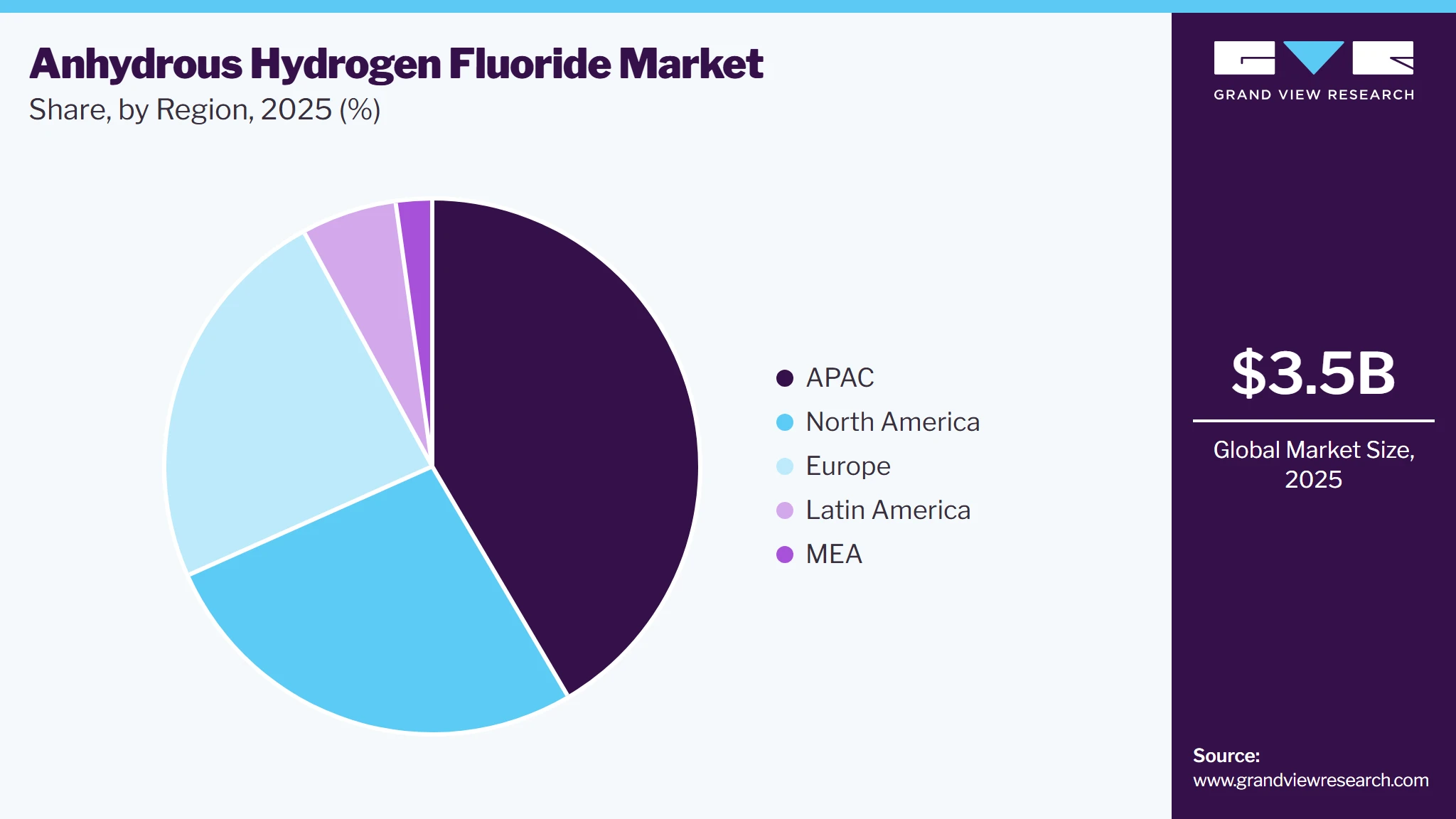
The global anhydrous hydrogen fluoride market size was valued at USD 3.5 billion in 2025 and is projected to grow from USD 3.7 billion in 2026 to USD 5.3 billion by 2033, at a CAGR of 5.2% from 2026 to 2033. The market in Asia Pacific dominated with a revenue share of 41.5% in 2025. The increasing demand for fluorinated products in sectors such as pharmaceuticals, agrochemicals, and electronics is a primary driver.
 Source: Grand View Research, IR Documents, Primary Interviews, Paid DatabasesTo learn more about this report,
 Download Free Sample Report
Key Market Trends & Insights
- By application: Fluorogases segment held the largest market share of 63.9% in 2025.
- The fluoropolymers segment is expected to grow significantly at 5.3% CAGR over forecast period.
Regional Highlights
- Largest regional market: Asia Pacific (41.5% revenue share, 2025)
- By country: China held the largest market share in 2025
Market Size & Forecast
- Market size in 2025: USD 3.5 Billion
- Estimated market size in 2026: USD 3.7 Billion
- Projected market size by 2033: USD 5.3 Billion
- CAGR (2026-2033): 5.2%
Three ways to get this report
Buy it, customize it, or ask a question.Ask an Analyst
Analyst response in 1 business day
- AccessReport author, directly
- Reply timeWithin 1 working day
- No sales callDirect answer only
- FormatEmail reply
- CostFree, no cost
Get the Full Report
What the study covers
- FormatsPDF · Excel · Dashboard
- Timeline2026–2033 annual, 2025 base
- Coverage20+ countries, 5 regions
- Companies10+ key players profiled
Customize the Report
20% free customization
- IncludeCountries, segments, points
- TailorTo your product definition
- ExtendDeeper competitor detail
- OrA fully bespoke study
- Turnaround5–10 working days
For instance, AHF is essential in the production of fluorinated intermediates used in the synthesis of pharmaceuticals and crop protection chemicals, contributing to the growth of these markets. A growing emphasis on sustainable energy solutions is propelling the global AHF market. Anhydrous hydrogen fluoride is used in the production of refrigerants that have a lower global warming potential compared to traditional refrigerants. As governments and regulatory bodies enforce stricter environmental regulations to combat climate change, the shift towards more eco-friendly alternatives is driving increased interest in AHF. This trend not only supports environmental initiatives but also positions AHF as a more attractive option for industries seeking sustainable practices.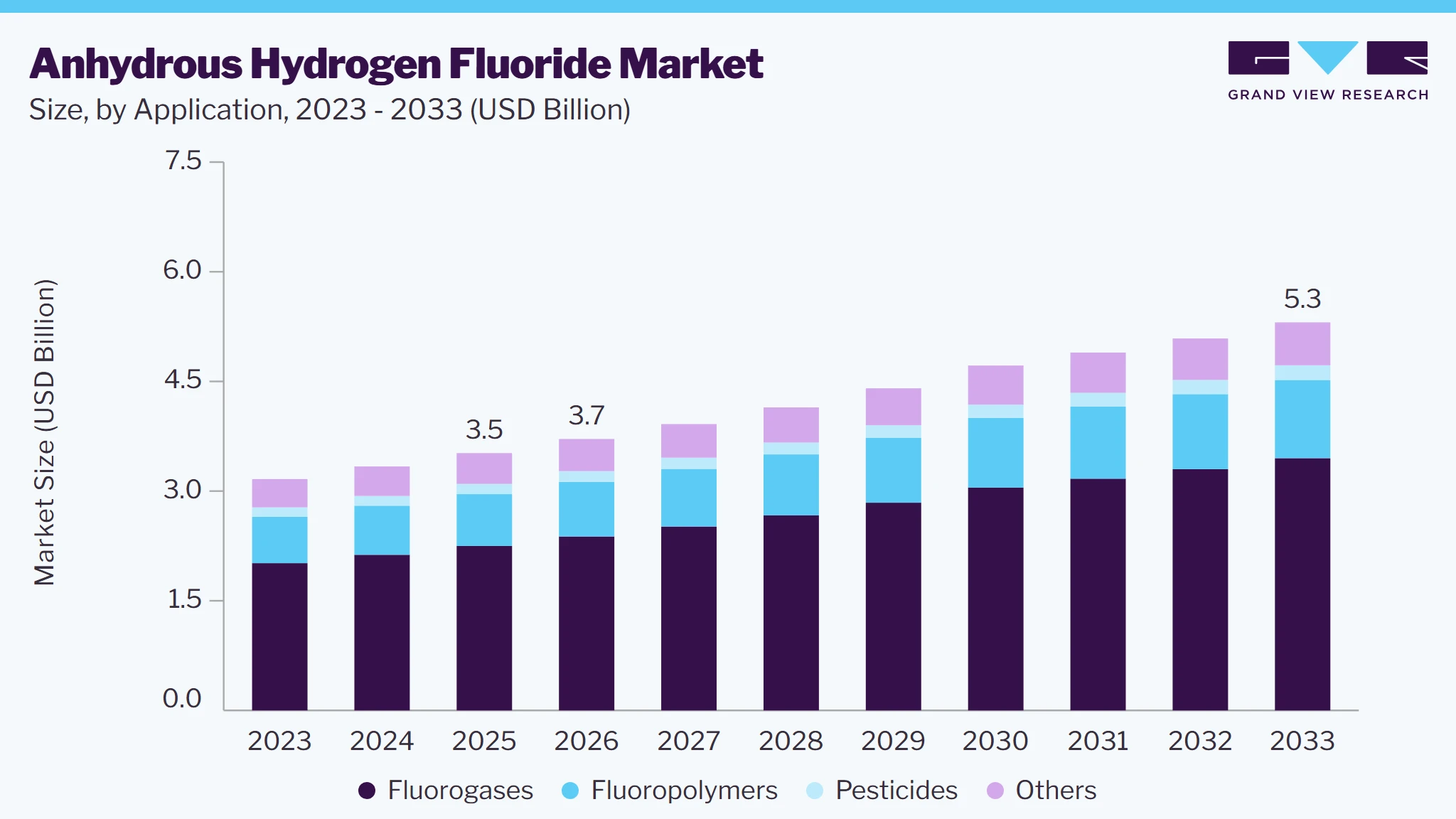 To learn more about this report, Download Free Sample Report
The adoption of anhydrous hydrogen fluoride in oil refining processes is another significant driver for the market. AHF is utilized as a catalyst in alkylation, a process that enhances the quality of gasoline by increasing its octane rating. With the global demand for cleaner and more efficient fuels rising, the oil refining sector increasingly relies on AHF to meet these standards. This growing requirement for high-quality fuels contributes to the sustained demand for anhydrous hydrogen fluoride within the energy sector, reinforcing its importance in the market
Market Dynamics
The anhydrous hydrogen fluoride market is expanding because the material is an essential feedstock for producing fluorochemicals, aluminum fluoride, and semiconductor grade chemicals. Rising semiconductor manufacturing and increasing production of fluoropolymers have created steady demand for high purity anhydrous hydrogen fluoride. Growth in aluminum smelting also contributes to higher consumption through aluminum fluoride production. Refrigerant manufacturing continues to require hydrogen fluoride for fluorinated compounds that comply with evolving environmental standards. Strong demand from chemical processing industries further sustains consumption across established and emerging manufacturing sectors.
Driver: Rising Semiconductor Production Increases Demand for High Purity Hydrogen Fluoride Materials
Anhydrous hydrogen fluoride is widely used in semiconductor manufacturing because it serves as a critical raw material for producing high purity fluorine based chemicals required in wafer fabrication and cleaning processes. The rapid expansion of semiconductor production driven by demand for consumer electronics, electric vehicles, artificial intelligence infrastructure, and advanced communication systems has increased the need for reliable supplies of high purity hydrogen fluoride. Manufacturers continue to invest in semiconductor fabrication facilities, creating long term consumption of this chemical across multiple stages of chip production.
The increasing complexity of semiconductor devices also requires higher quality process chemicals that maintain strict purity standards during manufacturing. This has encouraged chemical producers to expand production capacity and improve purification technologies for anhydrous hydrogen fluoride. Stable demand from the semiconductor industry provides consistent opportunities for suppliers while supporting long term investments in production facilities and supply chain development.
Anhydrous hydrogen fluoride is an extremely hazardous chemical that requires specialized equipment, trained personnel, and rigorous safety procedures throughout manufacturing, storage, and transportation. Regulatory authorities enforce strict occupational safety and environmental protection standards due to its toxic and corrosive nature. Compliance with these regulations increases operating expenses through investments in protective infrastructure, leak detection systems, emergency response measures, and employee training programs. Transportation is also subject to stringent packaging and handling requirements, limiting logistical flexibility and increasing distribution costs. These regulatory obligations can discourage new market participants, delay capacity expansion projects, and reduce profit margins for manufacturers operating in regions with strict chemical safety regulations.
Growing demand for high purity fluorochemicals used in semiconductor manufacturing, advanced batteries, pharmaceuticals, and specialty materials creates favorable opportunities for anhydrous hydrogen fluoride manufacturers. Companies can strengthen their market position by investing in modern purification technologies and expanding production facilities capable of supplying high purity grades that meet strict industrial specifications. Long term supply agreements with semiconductor and specialty chemical producers can improve revenue stability while supporting capacity utilization. Manufacturers that establish reliable supply chains, maintain consistent product quality, and develop regional production capabilities can benefit from increasing demand across high value applications where product purity and dependable supply are essential purchasing considerations.
Analyst Perspective
The anhydrous hydrogen fluoride market continues to demonstrate stable long term demand because it remains an indispensable raw material for fluorochemicals, semiconductor manufacturing, and aluminum fluoride production. Semiconductor investments and increasing consumption of high performance fluorinated materials are strengthening demand for high purity grades. Environmental regulations are encouraging manufacturers to improve process safety and product quality while maintaining supply reliability. Companies with integrated fluorochemical operations are better positioned to manage raw material availability and strengthen customer relationships. Market competition is expected to focus on product purity, operational efficiency, and expansion into high value specialty applications.
Application Insights
The fluorogases segment accounted for the largest share of the anhydrous hydrogen fluoride market, representing 63.9% of total revenue in 2025. Fluoropolymers segment is expected to grow significantly at 5.3% CAGR over forecast period. The increasing demand for high-performance materials is a significant driver for the fluoropolymers segment. Fluoropolymers are known for their exceptional properties, including chemical resistance, thermal stability, and low friction, making them ideal for applications in industries such as automotive, aerospace, electronics, and healthcare. As industries seek materials that can withstand extreme conditions and provide enhanced performance, the demand for fluoropolymers continues to grow, subsequently driving the need for anhydrous hydrogen fluoride in their production.
The rapid expansion of the electronics industry is another crucial driver for the fluoropolymers segment. Fluoropolymers, such as polytetrafluoroethylene (PTFE), are widely used in the manufacturing of insulating materials, coatings, and components for electronic devices, including smartphones, computers, and circuit boards. With the continuous advancements in technology and the increasing production of electronic devices, the demand for fluoropolymers is expected to rise, thereby boosting the consumption of AHF.
Regional Insights
The pharmaceutical and agrochemical sectors are also contributing to the demand for anhydrous hydrogen fluoride in North America. Anhydrous Hydrogen Fluoride (AHF) is used in synthesizing various pharmaceutical products and crop protection chemicals, making it essential for these industries. As the demand for innovative medications and agricultural solutions grows, the consumption of AHF is likely to rise.
 To learn more about this report, Download Free Sample Report
U.S. Anhydrous Hydrogen Fluoride Market Trends
The Anhydrous Hydrogen Fluoride market in U.S. The regulatory environment in the U.S. increasingly favors the use of eco-friendly chemicals, including anhydrous hydrogen fluoride, which is used to produce refrigerants with lower global warming potential. Stricter regulations aimed at reducing greenhouse gas emissions and promoting sustainable practices are driving industries to adopt more environmentally friendly alternatives, contributing to the growth of the AHF market.
Asia Pacific Anhydrous Hydrogen Fluoride Market Trends
Asia Pacific accounted for 41.5% of the anhydrous hydrogen fluoride market revenue in 2025, making it the largest regional market. The expansion of the chemical processing industry in Asia Pacific is another significant driver for the anhydrous hydrogen fluoride market. Anhydrous hydrogen fluoride is widely used in producing fluorinated compounds, which find applications in pharmaceuticals, agrochemicals, and other specialty chemicals. As the chemical processing sector continues to grow, driven by increasing demand for diverse chemical products, the consumption of AHF is expected to rise.
Europe Anhydrous Hydrogen Fluoride Market Trends
The push for renewable energy technologies in Europe is also contributing to the demand for anhydrous hydrogen fluoride. AHF is used in producing materials that are essential for renewable energy applications, such as photovoltaic cells for solar panels. As the region invests in renewable energy solutions to meet sustainability goals, the demand for AHF in these applications is likely to increase.
Key Anhydrous Hydrogen Fluoride Company Insights
Some of the key players operating in the market include Honeywell International Inc.; Solvay; Linde plc.
-
Honeywell International Inc. is a multinational conglomerate headquartered in Charlotte, North Carolina, known for its diverse range of technologies and manufacturing capabilities across various sectors, including aerospace, building technologies, performance materials, and safety solutions. In the context of anhydrous hydrogen fluoride, Honeywell is a prominent player, offering high-quality AHF as a key chemical intermediate for various applications, including the production of fluorinated chemicals, refrigerants, and electronic materials.
-
Solvay offers a range of high-purity products that cater to diverse applications, such as semiconductor manufacturing, fluorinated compounds production, and specialty chemicals. Their AHF products are renowned for their exceptional quality and reliability, supporting customers in achieving advanced technological applications while adhering to stringent environmental regulations.
Key Anhydrous Hydrogen Fluoride Companies:
The following key companies have been profiled for this study on the anhydrous hydrogen fluoride market.
-
Arkema
-
Lanxess
-
Navin Fluorine International Limited
-
Fubao Group
-
Foshan Nanhai Shuangfu Chemical Co., Ltd
-
Foosung, Co Ltd
-
Fluorchemie Dohna GmbH
-
Fluorsid S.p.A.
-
Derivados del Fluor SA
Competitive Benchmarking
Operating Strategies
Competitive Edge
Weaknesses
Mature Players: Arkema; Lanxess; Navin Fluorine International Limited; Foosung Co Ltd; Fluorsid S.p.A.; Derivados del Fluor S.A.
- Strengthen vertically integrated fluorochemical manufacturing operations and invest in advanced processing technologies to improve production efficiency and supply stability.
- · Focus on expanding long-term commercial agreements and enhancing global distribution capabilities to strengthen presence across industrial and specialty chemical markets.
- Maintain strong technological expertise, established fluorochemical manufacturing infrastructure, and diversified product portfolios serving multiple industrial applications.
- Benefit from robust regulatory compliance capabilities, large-scale production capacities, and long-standing relationships with global downstream manufacturers.
- Remain highly exposed to environmental compliance costs, hazardous chemical handling regulations, and operational risks associated with fluorochemical production.
- Capital-intensive manufacturing facilities and high infrastructure maintenance requirements may affect cost competitiveness and operational adaptability.
Emerging Players: Fubao Group; Foshan Nanhai Shuangfu Chemical Co., Ltd; Fluorchemie Dohna GmbH.
- Emphasize regional market expansion and development of specialized fluorochemical solutions tailored to industrial processing and chemical manufacturing applications.
- Increase collaboration activities with regional distributors and downstream industrial customers to improve customer reach and application-specific product development.
- Demonstrate greater operational flexibility and ability to address evolving customer requirements through customized fluorochemical product offerings.
- Benefit from faster decision-making capabilities and targeted regional strategies focused on niche industrial demand areas.
- Possess comparatively smaller production capacities and limited international market penetration relative to established multinational fluorochemical companies.
- Encounter challenges related to scaling global operations, expanding distribution infrastructure, and increasing investments in advanced manufacturing technologies.
Recent Developments
-
In September 2023, SOJITZ has selected Buss ChemTech’s hydrogen fluoride (HF) technology for a new HF plant in Japan. This decision underscores the importance of Buss ChemTech's reliable HF technology in this strategically vital project aimed at enhancing fluorine delivery in Japan.
-
In March 2022, Nutrien, in collaboration with its partner Arkema, completed the construction of an Anhydrous Hydrogen Fluoride (AHF) plant in Aurora, North Carolina, United States. Nutrien operates two major integrated phosphate facilities and four regional product enhancement facilities in the U.S.
Anhydrous Hydrogen Fluoride Market Report Scope
Report Attribute
Details
Market size in 2025
USD 3.5 billion
Estimated market size in 2026
USD 3.7 billion
Projected market size by 2033
USD 5.3 billion
Growth rate
CAGR of 5.2% from 2026 to 2033
Base year for estimation
2025
Historical data
2021 - 2024
Forecast period
2026 - 2033
Quantitative units
Revenue in USD million/billion and CAGR from 2026 to 2033
Report coverage
Revenue forecast, company ranking, competitive landscape, growth factors, and trends
Segments covered
Application, region
Regional scope
North America; Europe; Asia Pacific; Latin America; MEA
Country scope
U.S.; Canada; Mexico; Germany; UK; France; Italy; Spain; China; Japan; India; South Korea; Brazil; Argentina; Saudi Arabia; South Africa;
Key companies profiled
Honeywell International Inc.; Solvay; Linde plc; Arkema; Lanxess; Navin Fluorine International Limited; Fubao Group; Foshan Nanhai Shuangfu Chemical Co., Ltd; Foosung Co Ltd; Fluorchemie Dohna GmbH; Fluorsid S.p.A.; Derivados del Fluor SA
Customization scope
Free report customization (equivalent up to 8 analysts' working days) with purchase. Addition or alteration to country, regional & segment scope.
Pricing and purchase options
Avail customized purchase options to meet your exact research needs. Explore purchase options
Global Anhydrous Hydrogen Fluoride Market Report Segmentation
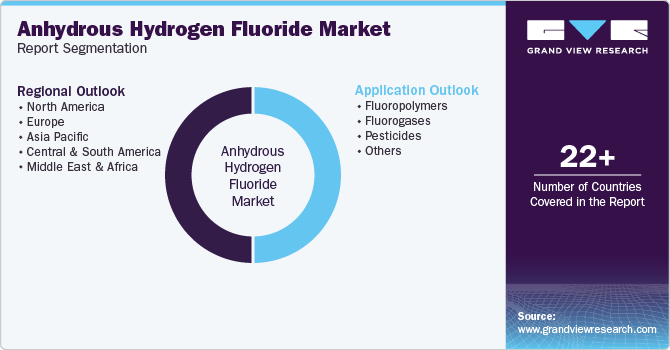
This report forecasts revenue growth at global, regional, and country levels and provides an analysis of the latest industry trends in each of the sub-segments from 2021 to 2033. For this study, Grand View Research has segmented the global anhydrous hydrogen fluoride market report based on application and region:
 To learn more about this report, Download Free Sample Report
-
Application Outlook (Volume, Kilotons, Revenue, USD Million; 2021 - 2033)
-
Fluoropolymers
-
Fluorogases
-
Pesticides
-
Others
-
-
Regional Outlook (Volume, Kilotons, Revenue, USD Million; 2021 - 2033)
-
North America
-
U.S.
-
Canada
-
Mexico
-
-
Europe
-
Germany
-
UK
-
France
-
Italy
-
Spain
-
-
Asia Pacific
-
China
-
India
-
Japan
-
South Korea
-
-
Central & South America
-
Brazil
-
Argentina
-
-
Middle East and Africa
-
Saudi Arabia
-
South Africa
-
-
Research Methodology
The anhydrous hydrogen fluoride market figures in this report are based on a proven research process that combines executive interviews with secondary research from proprietary databases, company filings, and recognized regulatory and institutional sources. Market size is built through value-chain sizing - reconciling supply-side and demand-side estimates - and triangulated with bottom-up and top-down approaches. Every estimate passes multiple levels of expert validation before publication, with each anhydrous hydrogen fluoride segment quantified using the revenue-capture definitions in the table below.
Segment Definition
Segment - Application
Revenue Capture Definition
Fluoropolymers
Revenue is generated through the supply of anhydrous hydrogen fluoride used as a primary feedstock in the production of fluoropolymers. Income is derived from recurring bulk purchases by chemical manufacturers producing high performance materials for electrical, automotive, aerospace, industrial equipment, and construction applications requiring chemical resistance and thermal stability.
Fluorogases
Revenue is captured through the sale of anhydrous hydrogen fluoride for manufacturing fluorogases used in refrigeration, air conditioning, electronics, and industrial cooling systems. Chemical producers generate consistent income from long term supply agreements with refrigerant manufacturers requiring reliable feedstock for continuous production operations.
Pesticides
Revenue is generated through the supply of anhydrous hydrogen fluoride used as an intermediate in the production of fluorinated pesticide ingredients. Value is captured from recurring demand by agrochemical manufacturers producing herbicides, insecticides, and fungicides that require fluorine based compounds to improve product effectiveness and stability.
Others Applications
Revenue is captured through the sale of anhydrous hydrogen fluoride for applications including aluminum fluoride production, petroleum refining, pharmaceuticals, specialty chemicals, and electronics manufacturing. Income is supported by recurring industrial demand where the chemical serves as a critical raw material or processing agent in diverse manufacturing operations.
Estimation Model
Layer Name
Key Question
Description
Fluorspar Supply Base Layer
What forms the demand base?
Identify global production and availability of fluorspar, the primary raw material used to manufacture anhydrous hydrogen fluoride, across major producing countries. This layer establishes the addressable production base by evaluating raw material availability, mining output, and supply chain capacity supporting hydrogen fluoride manufacturing.
Application Demand Layer
Where is anhydrous hydrogen fluoride consumed?
Estimate the penetration and consumption of anhydrous hydrogen fluoride across major applications including fluoropolymers, fluorogases, pesticides, aluminum fluoride production, petroleum refining, pharmaceuticals, semiconductors, and specialty chemicals. Demand is evaluated based on production volumes and industry specific consumption patterns.
Consumption Intensity Layer
How much anhydrous hydrogen fluoride is used?
Analyze the average consumption of anhydrous hydrogen fluoride per unit of finished product across different applications. Consumption intensity varies according to manufacturing processes, product specifications, purity requirements, production efficiency, and the formulation needs of downstream industries using fluorine based chemicals.
Revenue Layer
How is market revenue generated?
Market revenue is quantified through the sale of anhydrous hydrogen fluoride supplied to fluorochemical manufacturers, semiconductor producers, petroleum refineries, agrochemical companies, aluminum fluoride manufacturers, pharmaceutical producers, and specialty chemical manufacturers. Revenue is generated from recurring industrial demand for feedstock and process chemicals used across high volume manufacturing operations worldwide.
Delivered Customizations
This report has been delivered with the following In-depth customizations
Client Request
Customization Delivered
Value Adds
Regional Segmentation
Expanded regional assessment incorporating additional country-level analysis across Asia Pacific, Europe, and Latin America with detailed evaluation of fluorochemical production and industrial consumption trends.
Enable improved country-specific opportunity mapping and regional expansion planning through detailed understanding of demand and supply dynamics.
Cross-Segmentation
Comprehensive comparison of key market participants based on fluorochemical integration capabilities, production scale, regulatory compliance standards, strategic developments, and regional manufacturing presence.
Support competitive intelligence, supplier assessment, and strategic partnership evaluation through enhanced visibility into manufacturer positioning and operational strengths.
Opportunity Assessment
Identification of growth opportunities associated with electric vehicle battery materials, semiconductor manufacturing expansion, specialty refrigerants, and advanced fluoropolymer applications.
Help identify high-potential investment areas and emerging industrial demand pockets aligned with long-term fluorochemical market evolution.
Frequently Asked Questions About This Report
Some key players operating in the global anhydrous hydrogen fluoride market include Honeywell International Inc., Solvay, Linde plc,Arkema, Lanxess, Navin Fluorine International Limited, Fubao Group, Foshan Nanhai Shuangfu, Chemical Co., Ltd, Foosung,. Co Ltd, Fluorchemie, Dohna GmbH, Fluorsid S.p.A., Derivados del Fluor SA.
Key factors that are driving the market growth include growing utilization of anhydrous hydrogen fluoride in fluorogases and fluoropolymers as they are considered as a prominent chemical compounds in fluoride chemistry.
The fluorogases segment accounted for the largest share of the anhydrous hydrogen fluoride market, representing 63.9% of total revenue in 2025. The dominance is driven by strong demand for refrigerants and fluorinated gas production.
North America is expected to witness significant growth due to increasing semiconductor investments and rising demand for high purity hydrogen fluoride.
China holds the largest market share due to its extensive fluorochemical production base and semiconductor manufacturing activities.
Regulations influence the market through strict safety standards, hazardous chemical handling requirements, and environmental compliance obligations.
Asia Pacific dominated the global anhydrous hydrogen fluoride market with a share of 41.5% in 2025. The expansion of the chemical processing industry in Asia Pacific is a significant driver for the AHF market.
The global anhydrous hydrogen fluoride market size was valued at USD 3.5 billion in 2025 and is estimated at USD 3.7 billion for 2026.
The global anhydrous hydrogen fluoride market is expected to grow at a CAGR of 5.2% from 2026 to 2033, reaching USD 5.3 billion by 2033.
About the Author(s)
Plastics, Polymers & Resins Research Team
Bulk Chemicals · Plastics, Polymers & ResinsThis report was authored by the plastics, polymers & resins research team at Grand View Research - comprising two research analysts, one senior research analyst, and one industry expert - with specialized expertise in the plastics, polymers & resins segment of the bulk chemicals industry. All findings are based on proprietary bulk chemicals databases, executive interviews, and regulatory analysis, subject to internal peer review prior to publication.
Last Updated:
Speak to Analyst

Customize this report to your needs - add regions, segments, or data points, with 20% free customization.
Or view our licence options:


ISO 9001:2015 & 27001:2022 Certified
We are GDPR and CCPA compliant! Your transaction & personal information is safe and secure. For more details, please read our privacy policy.


