
- Home
- »
- Biotechnology
- »
-
Animal Model Market Size, Share, Trends Report, 2026-2033GVR Report cover

Animal Model Market (2026 - 2033)
Size, Share & Trends Analysis Report By Animal Type (Mice, Guinea Pigs), By Application (Cancer, Infectious Disease), By End-use (CRO, Academic Research Institute), By Region, And Segment Forecasts
Market Size, 2025
$2.6BMarket Estimate, 2026
$2.8BMarket Forecast, 2033
$5.4BCAGR, 2026–2033
9.6%Animal Model Market Summary
The global animal model market size was valued at USD 2.6 billion in 2025 and is projected to grow from USD 2.8 billion in 2026 to USD 5.4 billion by 2033, at a CAGR of 9.6% from 2026 to 2033. North America held the largest revenue share of 50.6% in 2025.
 Source: Grand View Research, IR Documents, Primary Interviews, Paid DatabasesTo learn more about this report,
 Download Free Sample Report
 Key Market Trends & Insights
- By animal type: Mice held the largest revenue share of 54.0% in 2025.
- By application: Cancer held the largest revenue share of 44.6% in 2025.
- By end use: Contract research organization is expected to grow at the fastest CAGR from 2026 to 2033.
Regional Highlights
- Largest regional market: North America (50.6% revenue share, 2025)
- Fastest-growing regional market: Asia Pacific (fastest CAGR, 2026-2033)
- By country: The U.S. led North America with the largest revenue share in 2025
Market Size & Forecast
- Market size in 2025: USD 2.6 Billion
- Estimated market size in 2026: USD 2.8 Billion
- Projected market size by 2033: USD 5.4 Billion
- CAGR (2026-2033): 9.6%
Three ways to get this report
Buy it, customize it, or ask a question.Ask an Analyst
A direct answer, usually in 1 working day
- AccessReport author, directly
- Reply timeWithin 1 working day
- No sales callDirect answer only
- FormatEmail reply
- CostFree, no cost
Get the Full Report
What the study covers
- FormatsPDF · Excel · Dashboard
- Timeline2026–2033 annual, 2025 base
- Coverage20+ countries, 5 regions
- Companies10+ key players profiled
Customize the Report
20% free customization
- IncludeCountries, segments, points
- TailorTo your product definition
- ExtendDeeper competitor detail
- OrA fully bespoke study
- Turnaround5–10 working days
 To learn more about this report, Download Free Sample Report
 The growth of the animal model industry is driven by rising demand for preclinical research, drug discovery applications, and translational biomedical studies, as well as increasing investments in biopharmaceutical R&D, advanced genetic engineering techniques, and the expanding use in personalized medicine development globally across major regions.
Market Dynamics
Advancements in genetic engineering technologies, particularly the widespread adoption of CRISPR-Cas9 and the development of sophisticated transgenic and knockout animal models, are significantly driving the growth of the animal model market. In December 2025, researchers at the Keck School of Medicine of USC in the United States developed STEM CAR T cells, demonstrating improved cancer cell targeting, reduced toxicity, and enhanced durability in preclinical mouse studies, as reported. These technologies enable highly precise genome editing, allowing researchers to replicate human disease pathways more accurately in vivo and thereby improving the predictive validity of preclinical studies. As a result, pharmaceutical and biotechnology companies are increasingly leveraging engineered animal models to accelerate target validation, drug screening, and toxicity assessment.
In addition, continuous improvements in gene-editing efficiency and the emergence of humanized animal models are expanding the scope of applications across oncology, neurology, immunology, and rare disease research, further strengthening market adoption.
Ethical concerns and stringent animal welfare regulations represent a significant restraint on the animal model market. Increasing public scrutiny over the use of animals in scientific research has led to stronger advocacy for alternative testing methods, including in vitro systems and computational models, particularly in developed regions such as North America and Europe. For instance, in September 2025, the National Institutes of Health (NIH) in the U.S. launched a USD 87 million initiative to develop standardized non-animal testing models using organoids to improve reproducibility and efficiency in preclinical research.
Moreover, regulatory bodies have also imposed strict compliance frameworks governing animal housing, handling, and experimental protocols, thereby increasing operational complexity for research institutions and pharmaceutical companies. These evolving ethical standards often result in longer approval timelines, higher compliance costs, and restrictions on certain types of studies, ultimately limiting the pace of market expansion and encouraging a gradual shift toward non-animal-based research methodologies.
Market Concentration & Characteristics
The animal model market is witnessing a high degree of innovation driven by advances in genetic engineering, CRISPR-based genome editing, and the development of humanized and disease-specific models. These innovations are significantly improving the physiological relevance of animal models, enabling more accurate replication of human disease conditions and enhancing translational research outcomes. In addition, integration of AI, imaging technologies, and advanced bioinformatics is further refining experimental design, data analysis, and predictive accuracy in preclinical studies, thereby expanding the utility of animal models across drug discovery and biomedical research.
The animal model industry is characterized by a moderate to high level of mergers and acquisitions, primarily driven by pharmaceutical companies, contract research organizations (CROs), and specialized biotechnology firms seeking to strengthen their preclinical research capabilities. Strategic acquisitions are commonly focused on gaining access to advanced genetically modified model portfolios, expanding geographic presence, and integrating complementary services such as breeding, testing, and model development. This consolidation trend is enhancing operational efficiency and enabling companies to offer more comprehensive end-to-end research solutions. For instance, in June 2026, Chewy agreed to acquire Modern Animal, expanding its pet healthcare ecosystem by integrating physical veterinary clinics with its e-commerce, pharmacy, AI-powered, and virtual care platforms.
 To learn more about this report, Download Free Sample Report
 Regulatory frameworks have a strong and complex impact on the animal model market, with stringent guidelines governing animal welfare, ethical research practices, and experimental approvals across major regions such as North America and Europe. Compliance with the 3Rs principle (Replacement, Reduction, and Refinement) increases operational requirements and research timelines while also encouraging the adoption of alternative testing methods. However, regulatory acceptance of animal models remains essential for drug approval processes, ensuring their continued relevance in preclinical research despite growing compliance burdens.
Geographical expansion in the animal model industry is driven by increasing investment in life sciences infrastructure and growing biopharmaceutical research activities in emerging economies, particularly across Asia Pacific and Latin America. Countries such as China, India, and South Korea are witnessing a rapid expansion of research institutions, CRO networks, and academic collaborations, supported by favorable government funding and policy initiatives. Meanwhile, established markets in North America and Europe continue to lead in the development of advanced models, creating a globally integrated ecosystem for animal-based research services.
Analyst Perspective
The animal model market is experiencing rapid growth, driven by rising demand for translational research, expanding pharmaceutical and biotechnology R&D pipelines, and stricter regulatory requirements for preclinical validation. Growth is further supported by advancements in genetically engineered and humanized models, which enhance disease relevance and predictive accuracy in drug discovery. However, ethical concerns, regulatory constraints on animal testing, and the gradual adoption of alternative in vitro and in silico models may moderate long-term growth. Overall, the market remains highly specialized, with strong reliance on CROs and academic-industry collaborations to support complex preclinical research needs.
Animal Type Insights
The mice segment dominated the animal model industry, accounting for the largest revenue share of 54.0% in 2025, and is expected to grow at the fastest CAGR from 2026 to 2033. Factors such as increasing investments and technological advancements in mouse model technology are anticipated to drive segment growth. In addition, the growing implications of mouse clinical trials for more predictive outcomes and the rising demand for personalized medicine are further contributing to the demand for mouse models.
The rat segment is expected to grow significantly throughout the forecast period, primarily due to its extensive use in preclinical research for pharmacokinetic, toxicology, and disease modeling studies. Rats are widely preferred because of their physiological and genetic similarities to humans, cost-effectiveness, ease of handling, and well-established experimental protocols, making them a standard model in pharmaceutical and academic research.
Application Insights
The cancer segment dominated the animal model market in 2025, with a revenue share of 44.6%, and is expected to register the fastest growth rate over the forecast period. This is due to the exponential increase in the use of animal models in drug screening and preclinical testing to evaluate the efficacy and safety of anti-cancer therapeutics. Moreover, animal models enable researchers to assess the therapeutic index, bioavailability, and pharmacokinetic properties of anticancer therapeutics before transitioning to human clinical trials.
The immunological disease segment is expected to grow significantly during the forecast period, driven by the rising prevalence of autoimmune and inflammatory disorders globally and the increasing demand for advanced preclinical animal models to support the development of targeted therapies and vaccines. Growing research focus on conditions such as rheumatoid arthritis, multiple sclerosis, and inflammatory bowel disease, coupled with expanding immunology-based drug pipelines in the pharmaceutical and biotechnology sectors, is further accelerating the adoption of relevant animal models in translational research.
End-use Insights
In 2025, the pharmaceutical & biotechnology companies segment led the animal model market, accounting for the largest share of 39.2%, primarily due to their dominant role in drug discovery, preclinical testing, and translational research activities. Their strong R&D investments, extensive use of advanced animal models for target validation and toxicity assessment, and increasing focus on developing innovative therapeutics further reinforced their leading position in the market.
 To learn more about this report, Download Free Sample Report
 The contract research organization (CRO) segment is expected to grow at the fastest CAGR during the forecast period, driven by increasing outsourcing of preclinical research, rising demand for specialized animal models, and the need for cost-effective drug development. Growing R&D investments, expanding drug pipelines, and CROs’ ability to provide scalable, regulatory-compliant research services are further supporting segment growth.
Regional Insights
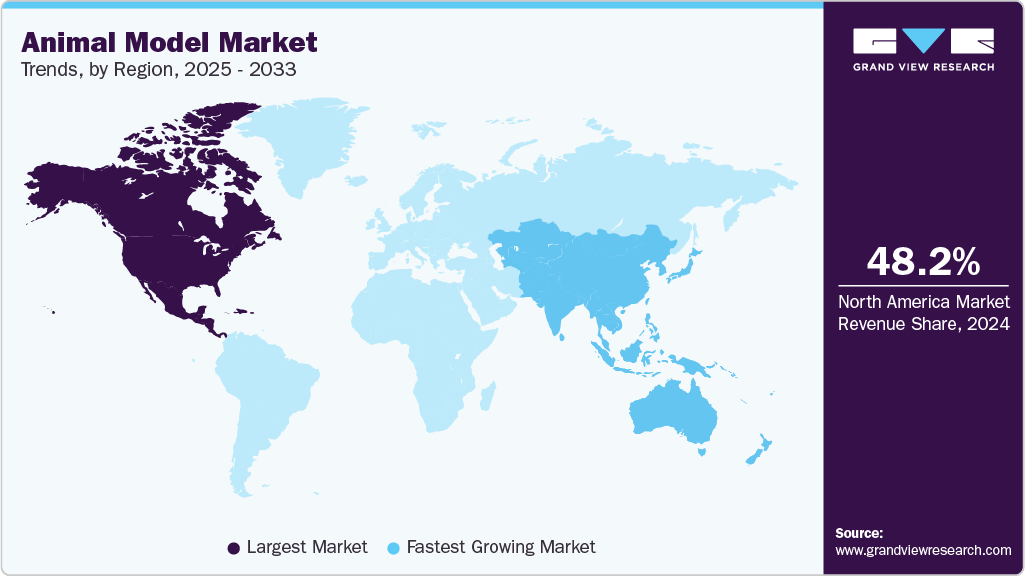
North America dominated the animal model market, accounting for a global revenue share of 50.6% in 2025, driven by substantial investments in biomedical research, a strong presence of pharmaceutical and biotechnology companies, increasing preclinical R&D activities, and widespread adoption of advanced animal models for drug discovery and disease research.
 To learn more about this report, Download Free Sample Report
 U.S. Animal Model Market Trends
The U.S. animal model industry is growing due to high R&D expenditure in the pharmaceutical and biotechnology sectors, the presence of leading research institutions, and stringent regulatory requirements that drive extensive preclinical testing. Regional market demand is also increasing due to a growing emphasis on genetically modified models, novel treatments, and research on chronic illnesses. For instance, in July 2025, AstraZeneca announced plans to invest USD 50 billion in the U.S. by 2030 to expand its manufacturing and R&D footprint, including a new drug substance manufacturing facility and multiple research expansions. The investment is expected to strengthen the country's pharmaceutical innovation ecosystem and support future demand for preclinical research and animal models.
For decades Americans have been reliant on foreign supply of key pharmaceutical products. President Trump and our nation’s new tariff policies are focused on ending this structural weakness. We are proud that AstraZeneca has made the decision to bring substantial pharmaceutical production to our shores. This historic investment is bringing tens of thousands of jobs to the US and will ensure medicine sold in our country is produced right here.”
-Howard Lutnick, US Secretary of Commerce
Europe Animal Model Market Trends
The Europe animal model industry is expanding due to the growing emphasis on precision medicine, increasing use of genetically modified models in disease-specific research, and strong innovation in biologics and advanced therapeutics development. The region's robust research infrastructure, coupled with rising demand for predictive preclinical models to improve clinical success rates, is supporting market growth.
Asia Pacific Animal Model Market Trends
The Asia Pacific animal model industry is expected to grow at the fastest CAGR of 10.9% during the forecast period. The region is benefiting from the rapid expansion of contract research services, increasing localization of drug development activities, and a growing focus on developing novel therapies for chronic and infectious diseases. In addition, rising investments in research facilities, a large patient population, and the increasing presence of global pharmaceutical companies are creating favorable conditions for market expansion.
The China animal model market is experiencing rapid growth, driven by increased investment in pharmaceutical and biotech research and development, the growing demand for preclinical testing, and supportive government policies. The emphasis on genetically engineered, transgenic, and disease-specific models to support drug discovery and translational research is also driving market growth across the region.
Growth of theanimal model market in Japan is driven by advanced pharmaceutical research, growing use of genetically modified and disease-specific models, and strong government support for biomedical innovation. Continued investments in translational research and active participation from leading pharmaceutical companies and research institutions further support market growth. In addition, strategic investments in the research ecosystem, such as Blackstone’s acquisition of a majority stake in CMIC Co., Ltd. in June 2026, are expected to strengthen preclinical and drug development capabilities in the country.
Latin America Animal Model Market Trends
Latin America’s animal model industry is growing steadily, driven by increasing investments in biomedical research, expanding pharmaceutical and biotechnology activities, and rising demand for preclinical testing services. The region is also benefiting from improving research infrastructure, growing collaborations between academic institutions and industry players, and increasing participation in global drug development programs.
Middle East & Africa Animal Model Market Trends
The animal model industry in the Middle East and Africa is experiencing stable growth, driven by rising investment in pharmaceutical R&D, the expansion of biotechnology research centers, and increasing demand for preclinical services. Moreover, increased awareness of advanced disease models and genetically modified species contributes to the adoption of animal models in the Middle East and Africa.
Key Animal Model Company Insights
The competitive landscape of the animal model market features key players such as Charles River Laboratories, The Jackson Laboratory, genOway, Taconic Biosciences, Inc., Janvier Labs, and BioModels. These market players are actively engaged in strategic initiatives, including mergers and acquisitions, to strengthen their market positions.
Key Animal Model Companies
The following key companies have been profiled for this study of the animal model market.
-
Charles River Laboratories
-
The Jackson Laboratory
-
genOway
-
Taconic Biosciences, Inc.
-
Janvier Labs
-
BioModels, LLC.
-
Crown Bioscience
-
Inotiv
-
BIOCYTOGEN
-
Hooke Laboratories
Competitive Benchmarking
Operating Strategies
Competitive Edge
Weaknesses
Established Players (Charles River Laboratories, The Jackson Laboratory, Taconic Biosciences, Inc.)
- Expand genetically engineered and disease-specific animal model portfolios through breeding capacity expansion, strategic collaborations, and integrated preclinical research services.
- Extensive model repositories, global research infrastructure, and strong relationships with pharmaceutical and biotechnology companies.
- High operational costs and increasing ethical and regulatory scrutiny surrounding animal-based research.
Emerging Players (genOway, Janvier Labs, BioModels)
- Focus on specialized transgenic, humanized, and immunology-focused animal models to address niche research requirements.
- Strong expertise in customized model generation and emerging disease-specific research applications.
- Limited global scale and lower brand recognition compared with established preclinical research providers.
Recent Developments
-
In February 2026, Covetrus agreed to merge with MWI Animal Health in a USD 3.5 billion transaction, creating an integrated animal health platform spanning distribution, veterinary technology, pharmacy, and practice management services
“As the animal health sector has grown and developed, so too have the needs of MWI’s stakeholders. This transaction positions MWI for success with a partner strategically focused on and dedicated to animal health, while allowing Cencora to further invest in our key growth priorities.”
-Bob Mauch, President and Chief Executive Officer of Cencora.
-
In July 2025, Twist Bioscience announced the launch of its humanized transgenic (HuTg) mouse model to enhance antibody discovery services, aiming to accelerate fully human antibody generation and streamline preclinical lead identification.
“The humanized transgenic mouse model complements our current in vivo antibody discovery platforms and can be paired with our DiversimAb mouse and B cell screening platforms, offering researchers multiple methods that can be used independently or together to generate more candidates with greater flexibility across varied disease areas.”
-Emily M. Leproust, CEO and co-founder of Twist Bioscience.
-
In August 2025, Taconic Biosciences and Cyagen partnered in North America and Europe to provide streamlined access to over 16,000 genetically engineered mouse and rat models, enhancing preclinical research efficiency.
Animal Model Market Report Scope
Report Attribute
Details
Market size in 2025
USD 2.6 billion
Estimated market size in 2026
USD 2.8 billion
Projected market size by 2033
USD 5.4 billion
Growth rate
CAGR of 9.6% from 2026 to 2033
Historical data
2021 - 2025
Forecast period
2026 - 2033
Quantitative units
Revenue in USD million/billion, and CAGR from 2026 to 2033
Report coverage
Revenue forecast, company ranking, competitive landscape, growth factors, and trends
Segments covered
Animal type, application, end-use, region
Regional scope
North America; Europe; Asia Pacific; Latin America; MEA
Country scope
U.S.; Canada; UK; Germany; Italy; France; Spain; Denmark; Sweden; Norway; Japan; China; India; South Korea; Australia; Thailand; Brazil; Mexico; Argentina; South Africa; Saudi Arabia; UAE; Kuwait
Key companies profiled
Charles River Laboratories; The Jackson Laboratory; genOway; Taconic Biosciences, Inc.; Janvier Labs; BioModels, LLC.; Crown Bioscience; Inotiv; BIOCYTOGEN; Hooke Laboratories
Customization scope
Free report customization (equivalent up to 8 analysts' working days) with purchase. Addition or alteration to country, regional & segment scope.
Pricing and purchase options
Avail customized purchase options to meet your exact research needs. Explore purchase options
Global Animal Model Market Report Segmentation
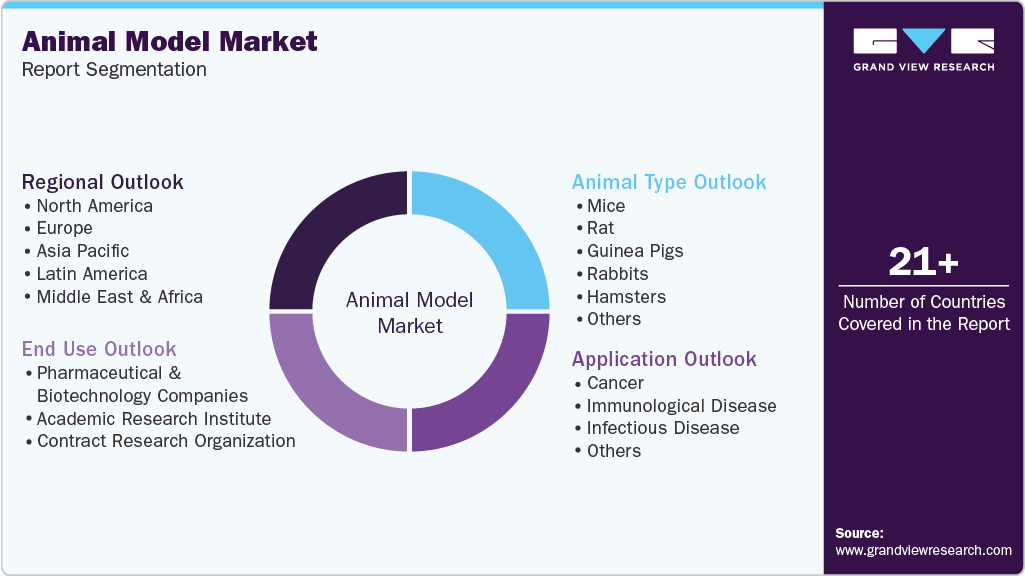
This report forecasts revenue growth and provides an analysis of the latest trends in each of the sub-segments from 2021 to 2033. For this study, Grand View Research has segmented the global animal model market report based on animal type, application, end-use, and region:
 To learn more about this report, Download Free Sample Report
 -
Animal Type Outlook (Revenue, USD Million/Billion, 2021 - 2033)
-
Mice
-
Rat
-
Guinea Pigs
-
Rabbits
-
Hamsters
-
Others
-
-
Application Outlook (Revenue, USD Million/Billion, 2021 - 2033)
-
Cancer
-
Immunological Disease
-
Infectious Disease
-
Others
-
-
End-use Outlook (Revenue, USD Million/Billion, 2021 - 2033)
-
Pharmaceutical & Biotechnology Companies
-
Academic Research Institute
-
Contract Research Organization
-
-
Regional Outlook (Revenue, USD Million/Billion, 2021- 2033)
-
North America
-
U.S.
-
Canada
-
Mexico
-
-
Europe
-
Germany
-
UK
-
France
-
Italy
-
Spain
-
Denmark
-
Sweden
-
Norway
-
-
Asia Pacific
-
China
-
India
-
Japan
-
South Korea
-
Australia
-
Thailand
-
South Korea
-
-
Latin America
-
Brazil
-
Argentina
-
-
Middle East and Africa (MEA)
-
South Africa
-
Saudi Arabia
-
UAE
-
Kuwait
-
-
Research Methodology
The animal model market figures in this report are based on a proven research process that combines executive interviews with secondary research from proprietary databases, company filings, and recognized regulatory and institutional sources. Market size is built through value-chain sizing-reconciling supply-side and demand-side estimates-and triangulated with bottom-up and top-down approaches. Every estimate passes multiple levels of expert validation before publication, with each animal model segment quantified using the revenue-capture definitions in the table below.
Segment Definition
Segment - Animal Type
Revenue capture definition
Mice
Revenue is generated from the sale, breeding, and use of mice animal models in biomedical research, including genetically modified, transgenic, knockout, and disease-specific strains utilized in drug discovery, toxicology, and preclinical studies.
Rat
Revenue is generated from rat animal models used in pharmacology, toxicology, neuroscience, cardiovascular, and metabolic disease research, supporting preclinical testing and translational studies.
Guinea Pigs
Revenue is generated from guinea pig models used in immunology, infectious diseases, respiratory research, and vaccine research, where their physiological responses are well-suited to specific experimental applications.
Rabbits
Revenue is generated from rabbit animal models used in antibody production, ophthalmology, cardiovascular research, toxicology studies, and medical device testing.
Hamsters
Revenue is generated from hamster models utilized in infectious disease, oncology, metabolic disorder, and virology research, including studies involving emerging pathogens.
Others
Revenue is generated from other animal models, including non-human primates, zebrafish, dogs, pigs, and other species used in specialized biomedical and translational research applications.
Segment - Application
Revenue capture definition
Cancer
Revenue is generated from animal models used in oncology research to study tumor biology, cancer progression, metastasis, and the safety and efficacy of anticancer therapeutics.
Immunological Disease
Revenue is generated from animal models utilized in the study of autoimmune disorders, inflammatory conditions, immune responses, and the development of immunotherapies and vaccines.
Infectious Disease
Revenue is generated from animal models used to investigate bacterial, viral, fungal, and parasitic diseases, supporting pathogen research, vaccine development, and anti-infective drug testing.
Others
Revenue is generated from animal models used in neurological, cardiovascular, metabolic, genetic, rare disease, and other research areas beyond the primary application categories.
Segment - End Use Mode
Revenue capture definition
Pharmaceutical & Biotechnology Companies
Revenue is generated from animal models purchased or utilized by pharmaceutical and biotechnology companies for drug discovery, preclinical development, safety assessment, and regulatory submission activities.
Academic Research Institute
Revenue is generated from animal models used by universities, research institutes, and government-funded organizations conducting basic, translational, and disease-focused scientific research.
Contract Research Organization (CRO)
Revenue is generated from animal models utilized by CROs providing outsourced preclinical research, efficacy testing, toxicology studies, and regulatory support services for pharmaceutical, biotechnology, and medical device companies.
Estimation Model
Layer Name
Key Question
Description
Bottom-Up
Commodity Flow Analysis
Aggregated revenues of providers and preclinical service vendors were mapped across genetically engineered, spontaneous disease, induced disease, and control models. Estimates were validated using company reports, investor presentations, databases, publications, and primary interviews to derive overall market size.
Top-Down
Top-Down Market Analysis and Penetration Rate Assessment
Derived the global market size based on demand for animal models across drug discovery, toxicology testing, translational research, and academic studies. The estimates were further distributed across regions and countries based on pharmaceutical R&D intensity, preclinical study volume, biotech funding levels, and regulatory requirements for animal testing.
Primary Research
Conducting Interviews with Industry Experts
Conducted interviews with industry experts, preclinical researchers, CRO professionals, laboratory animal suppliers, and biotechnology and pharmaceutical R&D teams. These interactions helped validate demand patterns, pricing structures, model preferences, and outsourcing trends in animal model procurement and usage.
Validation
Data Triangulation & Validation Model
Market estimates were validated through triangulation of secondary research, primary interviews, company-level revenue analysis, and end-user adoption assessment. This ensured consistency across animal model types, application areas, and geographic regions.
Forecasting
Forecasting & CAGR Modeling
Forecasts were developed using historical adoption trends, growth in drug discovery pipelines, expansion of translational research, increasing use of genetically modified models, and rising outsourcing to specialized animal model providers and CROs.
Delivered Customizations
This report has been delivered with the following In-depth customizations
Client Request
Customization Delivered
Value Adds
Pricing Structure & Commercial Benchmarking Analysis
Developed a comprehensive pricing intelligence framework across the animal model market, benchmarking cost structures by model type, study complexity, and service intensity. Covered pricing differentials across genetically engineered models, xenograft models, and standard laboratory animals, along with associated service layers such as breeding, cryopreservation, genotyping, and in vivo study execution.
Enables benchmarking of cost competitiveness across providers, identification of premium vs commoditized model segments, and margin optimization insights. Supports procurement strategy development for pharma/CRO buyers and pricing strategy refinement for model providers.
Volume Analysis
Developed a comprehensive volume assessment of the animal model market by quantifying demand across end-use segments such as pharmaceutical & biotechnology companies
Enables precise estimation of animal consumption intensity across research pipelines, identification of high-demand therapeutic areas, and forecasting of model strain requirements.
Small Animal Type Analysis
Developed a focused segmentation of the animal model market for small animal models, including mice, rats, guinea pigs, and hamsters
Enables precise understanding of small animal demand concentration across preclinical pipelines, supports strain capacity planning for breeders and CROs, and helps optimize model selection based on cost, scalability, and translational relevance in early drug discovery programs.
Frequently Asked Questions About This Report
the mice held the largest revenue share of 54.0% in 2025.
The cancer holds the largest market share of 44.6 in 2025, while immunological disease is the significant-growing segment.
The pharmaceutical & biotechnology companies holds the largest market share of 39.2% in 2025, while contract research organization (CRO) is the fastest-growing area.
Asia Pacific is the fastest-growing region over the forecast period.
The global animal model market size was estimated at USD 2.6 billion in 2025 and is expected to reach USD 2.8 billion in 2026.
The global animal model market is expected to grow at a compound annual growth rate of 9.6% from 2026 to 2033 to reach USD 5.4 billion by 2033.
North America dominated the animal model market with a share of 50.6% in 2025. This is attributable to the rising number of preclinical studies and the large number of pharmaceutical companies involved in drug discovery
Key players include Charles River Laboratories; The Jackson Laboratory; genOway; Taconic Biosciences, Inc.; Janvier Labs; BioModels, LLC.; Crown Bioscience; Inotiv; BIOCYTOGEN; Hooke Laboratories.
Key factors that are driving the market growth include the rising demand for preclinical research, drug discovery applications, and translational biomedical studies, as well as increasing investments in biopharmaceutical R&D, advanced genetic engineering techniques, and the expanding use in personalized medicine development globally across major regions.
About the Author(s)
Biotechnology Research Team
Healthcare · BiotechnologyThis report was authored by the biotechnology research team at Grand View Research - comprising two research analysts, one senior research analyst, and one industry expert - with specialized expertise in the biotechnology segment of the healthcare industry. All findings are based on proprietary healthcare databases, executive interviews, and regulatory analysis, subject to internal peer review prior to publication.
Last Updated:
Speak to Analyst

Customize this report to your needs - add regions, segments, or data points, with 20% free customization.
Or view our licence options:


ISO 9001:2015 & 27001:2022 Certified
We are GDPR and CCPA compliant! Your transaction & personal information is safe and secure. For more details, please read our privacy policy.


