
- Home
- »
- Animal Health
- »
-
Animal Wound Care Market Size & Share Report, 2026-2033GVR Report cover

Animal Wound Care Market (2026 - 2033)
Size, Share & Trends Analysis Report By Product, By Animal Type (Companion, Livestock), By Distribution Channel (Retail, E-commerce, Veterinary Hospitals/Clinic Pharmacy), By End-use, By Region, And Segment Forecasts
Market Size, 2025
$1.6BMarket Estimate, 2026
$1.7BMarket Forecast, 2033
$3.1BCAGR, 2026–2033
8.6%Animal Wound Care Market Summary
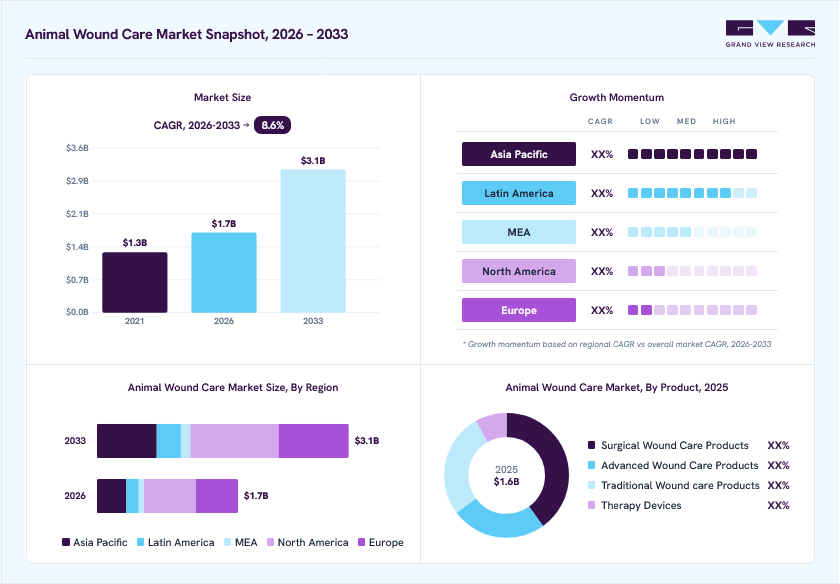
The global animal wound care market size was valued at USD 1.6 billion in 2025 and is projected to grow from USD 1.7 billion in 2026 to USD 3.1 billion by 2033, at a CAGR of 8.6% from 2026 to 2033. North America animal wound care market held the largest share of 36.7% of the global market in 2025. The market is expanding due to rising incidence of traumatic, surgical, and parasitic wounds across companion and production animals, increasing adoption of advanced antimicrobial, regenerative, and nanotechnology-based wound care products, expansion of companion animal insurance coverage and higher veterinary healthcare expenditure, and growing commercial livestock production with an increasing focus on animal health, welfare, and productivity.
 Source: Grand View Research, IR Documents, Primary Interviews, Paid DatabasesTo learn more about this report,
 Download Free Sample Report
Key Market Trends & Insights
- By product: Surgical wound care products segment dominated the market, holding the largest revenue share of 40.0% in 2025.
- By animal type: Companion animal segment held the largest market share in 2025.
- By type of wound: Non-surgical wound segment led the market with the largest revenue share of 60.3% in 2025.
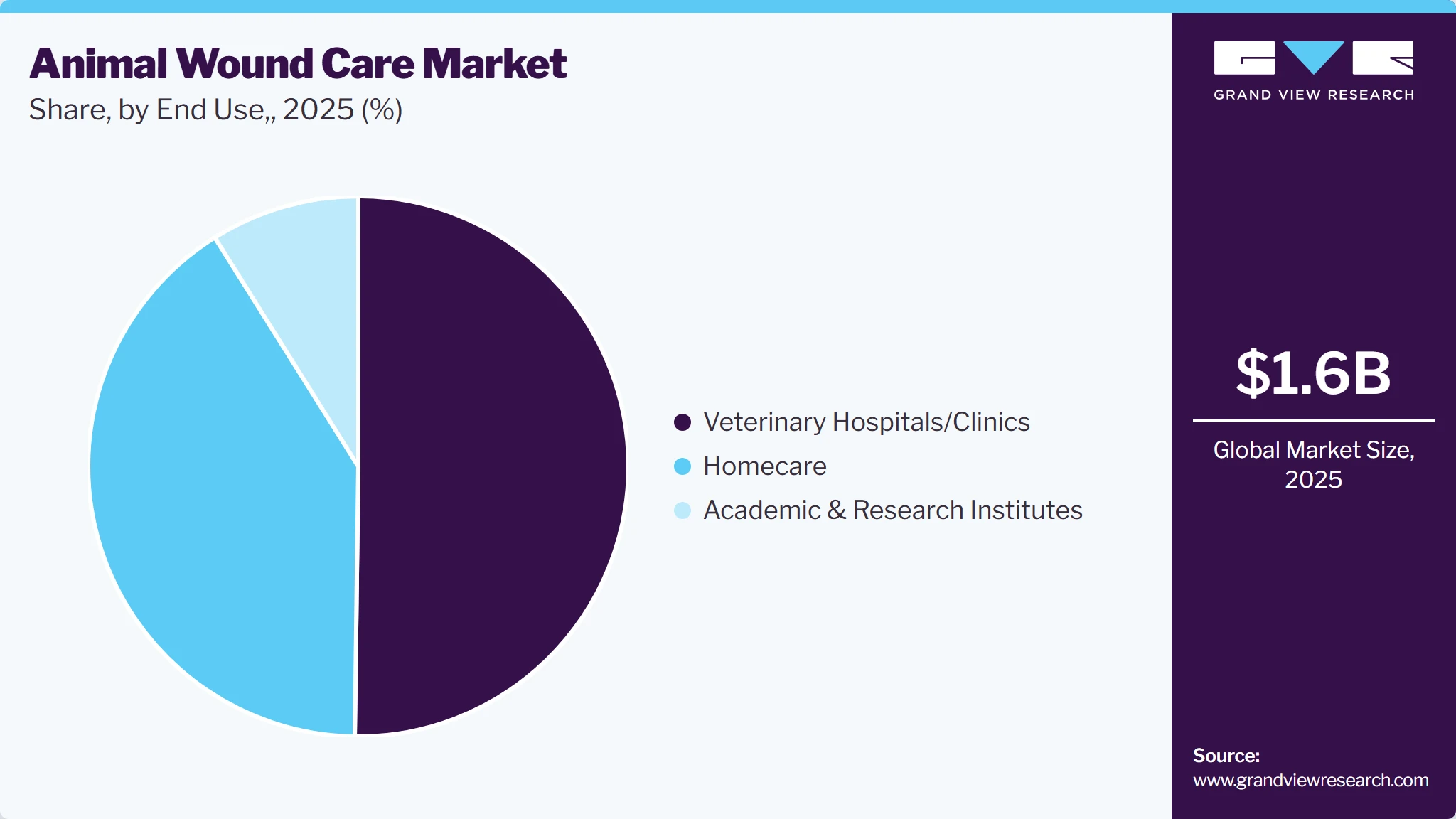
- By end use: Veterinary hospitals and clinics segment led the market with the largest revenue share of 50.2% in 2025.
Regional Highlights
- Largest regional market: North America (36.7% revenue share, 2025)
- Fastest-growing regional market: Asia Pacific (highest CAGR, 2026-2033)
- By country: The U.S. held the largest market share in 2025
Market Size & Forecast
- Market Size in 2025: USD 1.6 Billion
- Estimated market size in 2026: USD 1.7 Billion
- Projected Market Size by 2033: USD 3.1 Billion
- CAGR (2026-2033): 8.6%
Three ways to get this report
Buy it, customize it, or ask a question.Ask an Analyst
Analyst response in 1 business day
- AccessReport author, directly
- Reply timeWithin 1 working day
- No sales callDirect answer only
- FormatEmail reply
- CostFree, no cost
Get the Full Report
What the study covers
- FormatsPDF · Excel · Dashboard
- Timeline2026–2033 annual, 2025 base
- Coverage20+ countries, 5 regions
- Companies10+ key players profiled
Customize the Report
20% free customization
- IncludeCountries, segments, points
- TailorTo your product definition
- ExtendDeeper competitor detail
- OrA fully bespoke study
- Turnaround5–10 working days
These factors are driving the utilization of advanced wound dressings, tissue adhesives, antimicrobial formulations, and negative pressure wound therapy systems across veterinary healthcare settings. The market is characterized by sustained demand for advanced wound dressings, tissue adhesives, antimicrobial formulations, wound cleansers, sutures, staplers, and negative pressure wound therapy systems across veterinary hospitals and clinics. According to the World Organization for Animal Health (WOAH), animal diseases account for more than 20% of global animal production losses annually, while one in five people worldwide depends on livestock for their livelihoods, underscoring the economic importance of maintaining animal health and minimizing treatment-related losses. Furthermore, WOAH estimates that animal health receives as little as 0.6% of global health spending, despite increasing disease burden and the need for stronger veterinary services. These factors are encouraging governments, livestock producers, and veterinary healthcare providers to strengthen disease management, surgical care, and post-treatment wound management, supporting demand for advanced animal wound care products.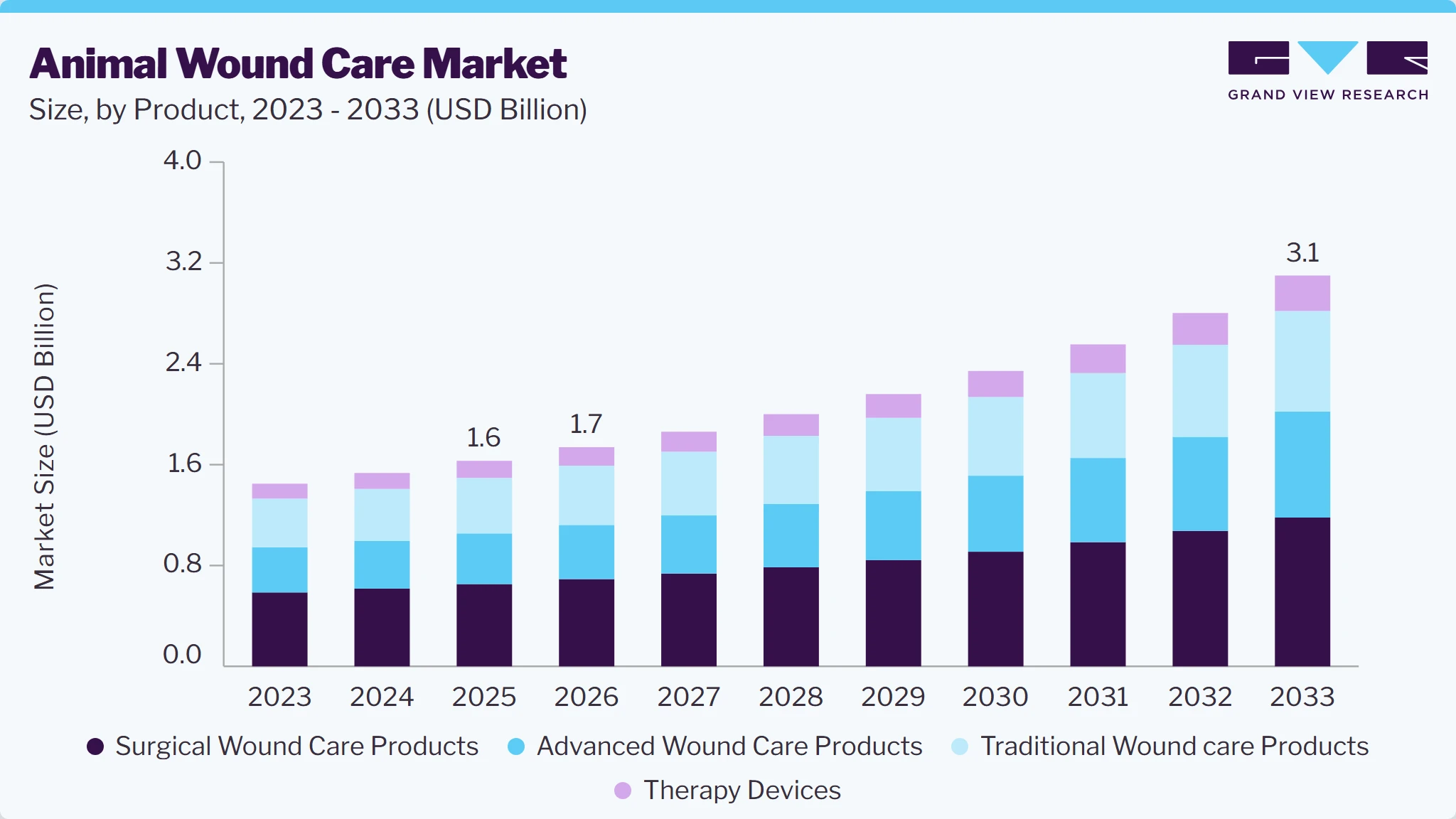 To learn more about this report, Download Free Sample Report
However, market growth is constrained by the high cost of advanced wound care products and uneven access to veterinary infrastructure across developing economies. Limited availability of trained veterinary professionals and delayed clinical intervention, particularly in rural livestock production systems, can reduce the adoption of standardized wound management practices. Additionally, increasing regulatory oversight on veterinary antimicrobial use, product safety, and species-specific efficacy requirements can extend product approval timelines and increase commercialization costs. Differences in veterinary regulatory frameworks and registration requirements across countries further create operational challenges for manufacturers expanding into international markets.
Market Dynamics
Expanding veterinary surgical interventions and increasing treatment volumes for traumatic injuries in companion and production animals are driving clinical demand for advanced wound management products. Orthopedic procedures, soft tissue surgeries, tumor excisions, cesarean sections, and routine livestock management practices such as dehorning and castration require effective wound closure and infection control to reduce healing time and post-operative complications. In commercial livestock systems, timely wound management minimizes secondary infections, supports animal welfare, and reduces production losses associated with delayed recovery. Veterinary professionals are increasingly adopting hydrogel dressings, foam dressings, tissue adhesives, antimicrobial formulations, wound cleansers, and negative pressure wound therapy to improve treatment outcomes across multiple animal species.
For instance, in June 2026, the U.S. Food and Drug Administration (FDA) issued an Emergency Use Authorization for F10 Antiseptic Wound Spray with Insecticide to prevent and treat New World screwworm infestations in cattle, sheep, goats, horses, birds, and captive wild animals. The authorization expanded access to a targeted wound management solution for parasite-associated wounds and highlights the growing clinical requirement for effective products that reduce wound-related complications across veterinary practice.
Animal wound care often requires a combination of clinical examination, wound cleansing, debridement, surgical intervention where necessary, antimicrobial therapy, repeated dressing replacement, and follow-up evaluations to achieve satisfactory healing outcomes. The cumulative use of veterinary services, pharmaceuticals, wound care products, and post-treatment monitoring increases the overall cost of treatment, particularly for severe trauma, burns, infected wounds, and post-surgical complications requiring prolonged care. Financial considerations are more significant for commercial livestock producers, where treatment decisions are evaluated against production economics and the economic value of individual animals, while companion animal owners may also limit expenditure on extended treatment protocols. Consequently, animal owners may postpone professional treatment, reduce follow-up care, or continue using conventional wound management approaches to minimize healthcare expenditure. These affordability constraints limit the adoption of comprehensive animal wound care solutions and continue to restrain the growth of the global animal wound care market.
Growing global efforts to reduce antimicrobial resistance are creating favorable conditions for the adoption of advanced animal wound care products that improve infection management while supporting responsible antimicrobial use. Regulatory agencies and international animal health organizations are encouraging veterinary professionals to implement evidence-based treatment protocols that reduce unnecessary antibiotic administration without compromising clinical outcomes. This transition is increasing demand for antimicrobial dressings, topical wound care formulations, regenerative therapies, and advanced wound management technologies that promote healing and minimize the risk of infection.
In May 2025, the World Health Assembly adopted the WHO Global Action Plan on Antimicrobial Resistance 2026–2035, strengthening international commitments toward responsible antimicrobial use across human and veterinary healthcare. Furthermore, the World Organization for Animal Health (WOAH) continues to expand antimicrobial stewardship initiatives through surveillance programs and veterinary guidance. These developments are expected to support product innovation, clinical adoption, and commercialization of advanced wound care solutions across companion animal and livestock healthcare.
The global animal wound care market operates within a broader animal health ecosystem that continues to face increasing pressure from animal diseases, growing livestock production, and the need for stronger Veterinary Services. According to the WOAH State of the World's Animal Health 2026, more than ~20% of global animal production is lost annually due to animal diseases, highlighting the importance of timely veterinary intervention, infection management, and wound treatment. Despite the increasing demand for animal healthcare, veterinary services remain underfunded globally, creating substantial opportunities for investments in veterinary infrastructure and medical technologies that support disease management and recovery.
Industry Structure Analysis
Key Data Points
Annual Animal production loss due to diseases
~20%
Animal health share of global health expenditure
~0.6%
Annual development aid for Veterinary Services
~ USD 1 Billion
Estimated annual investment required to strengthen Veterinary Services
~USD 2.3 Billion
Furthermore, the significant funding gap in veterinary services underscores the ongoing need for investment in veterinary healthcare infrastructure, clinical capacity, and disease prevention programs. As governments and private stakeholders expand veterinary services and improve access to animal healthcare, demand for advanced wound management products, including antimicrobial dressings, tissue adhesives, surgical wound closure products, and regenerative wound care solutions, is expected to increase across both companion animal and livestock healthcare settings
Market Concentration & Characteristics
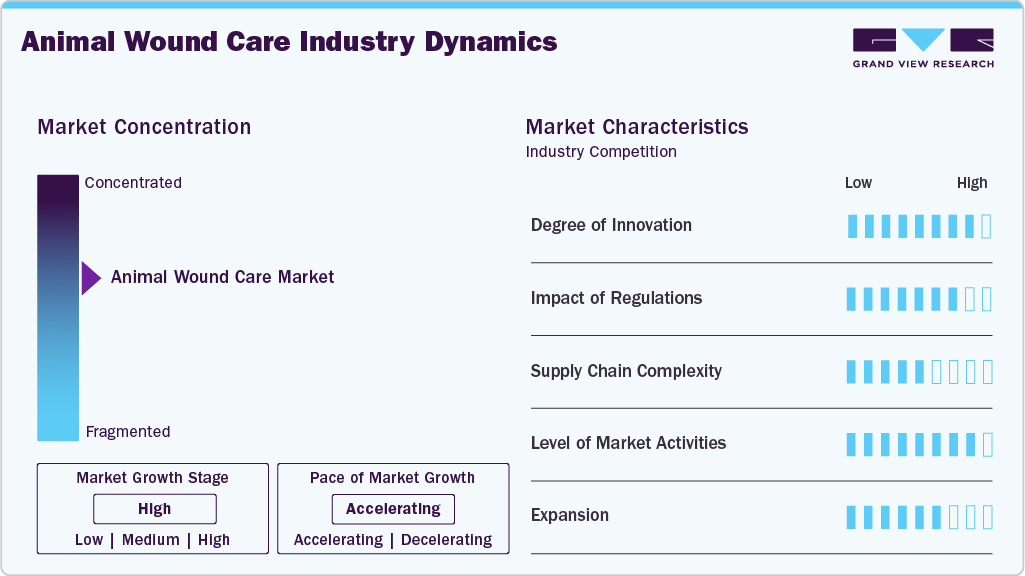
The global animal wound care market is in a moderate to moderate to high growth stage, supported by increasing companion animal ownership, expanding livestock healthcare expenditure, growing awareness of advanced wound management, and continuous investments in veterinary healthcare infrastructure. The market is witnessing increasing adoption of specialized wound care products across companion animals and livestock, while product innovation, improved access to veterinary services, and expanding distribution networks continue to strengthen commercial growth. Furthermore, manufacturers are focusing on product development, strategic collaborations, and geographic expansion to address the increasing demand for effective wound management solutions.
The market demonstrates a high degree of innovation, driven by the development of advanced wound dressings, bioactive wound care materials, antimicrobial formulations, tissue adhesives, regenerative therapies, and portable negative pressure wound therapy systems. Furthermore, manufacturers are investing in species-specific wound care formulations, improved dressing materials, sustained-release antimicrobial technologies, and digital wound assessment tools to improve clinical outcomes. Continuous research in biomaterials and regenerative medicine is expected to support future product innovation across companion animal and livestock healthcare.
 To learn more about this report, Download Free Sample Report
The market is subject to moderate to high regulatory oversight, with veterinary pharmaceuticals, medical devices, biologics, and wound management products regulated by national veterinary authorities to ensure product safety, efficacy, manufacturing quality, and post-market surveillance. Furthermore, regulatory requirements governing antimicrobial use, veterinary product registration, labeling, manufacturing standards, and pharmacovigilance continue to influence product development, commercialization timelines, and market entry across major countries.
The market demonstrates a globally integrated supply chain, with manufacturers sourcing active pharmaceutical ingredients, medical textiles, polymers, biologically derived materials, packaging components, and medical-grade consumables through international supplier networks. Furthermore, multinational companies continue to expand regional manufacturing, distribution partnerships, and localized production capabilities to improve product availability and strengthen supply chain resilience across developed and emerging markets.
The market is characterized by a high level of commercial activity, supported by continuous product launches, regulatory approvals, strategic partnerships, acquisitions, distribution agreements, and research collaborations among veterinary pharmaceutical companies and medical device manufacturers. Furthermore, increasing investments in veterinary healthcare, expansion of companion animal services, and growing participation of specialized veterinary hospitals and clinics continue to strengthen market competition and accelerate product commercialization.
The market is witnessing steady expansion through geographic penetration into emerging economies, broader product portfolios, increasing availability of advanced wound care products, and expansion of veterinary distribution networks. Furthermore, manufacturers continue to invest in production capacity, research and development, digital veterinary solutions, and strategic collaborations to strengthen market presence and improve access to animal wound care products across companion animal and livestock healthcare.
Analyst Perspective
The animal wound care market is shifting from conventional dressings to advanced, evidence-based treatments such as antimicrobials, hemostats, and regenerative therapies—to enhance healing and infection control. This transition is propelled by rising pet healthcare spending, specialized veterinary clinics, and broader access to advanced care. While demand grows for complex and chronic wound management across both companion animals and livestock, manufacturers face challenges balancing innovation, regulatory hurdles, and affordability. Ultimately, market success will depend on clinical efficacy, portfolio diversity, and strong distribution networks.
Product Insights
Based on product, the surgical wound care products segment led the market with the largest revenue share of 40.0% in 2025. Increasing volumes of veterinary orthopedic, soft tissue, oncological, and emergency surgical procedures continue to generate demand for sutures, tissue adhesives, hemostatic agents, and advanced surgical dressings used during intraoperative and post-operative wound management. Furthermore, veterinary hospitals are expanding the use of specialized wound closure products that reduce blood loss, lower the risk of surgical site complications, and improve recovery outcomes across companion animals and livestock. For instance, in June 2025, Cresilon entered a distribution agreement with McCarthy Vet to expand the availability of its VETIGEL hemostatic gel across Canada, increasing veterinary access to advanced surgical bleeding management solutions. Growing procedural volumes across companion animal and livestock healthcare, coupled with continued adoption of advanced surgical wound management products, are expected to maintain the segment's revenue leadership.
On the other hand, the advanced wound care products segment is expected to grow at the fastest CAGR over the forecast period. Growth is driven by increasing preference for advanced dressings that provide effective exudate management, maintain a moist wound-healing environment, and reduce the risk of infection compared with conventional wound care products. Rising volumes of surgical procedures, traumatic injuries, burns, and chronic wounds across companion animals and livestock are further supporting product adoption. Furthermore, manufacturers continue to expand portfolios of foam dressings, hydrogel dressings, superabsorbent dressings, silicone wound contact layers, and medical-grade honey dressings to address different stages of wound healing and improve clinical outcomes across veterinary practice.
Animal Type Insights
Based on animal type, the companion animal segment led the market with the largest revenue share of 63.2% in 2025 and is also estimated to be growing at the fastest rate over the forecast period. Rising ownership of dogs and cats, increasing expenditure on veterinary healthcare, and higher treatment rates for traumatic injuries, surgical wounds, and dermatological conditions continue to support demand for advanced wound care products. Furthermore, the expansion of specialty veterinary hospitals and pet insurance coverage is improving access to surgical and post-operative wound management. For instance, in January 2025, Zomedica entered a license and supply agreement with Cresilon to exclusively market and distribute the VETIGEL hemostatic gel portfolio in the U.S., expanding access to advanced surgical wound management solutions for companion animal practice. Growing adoption of advanced veterinary treatment is expected to maintain the segment's leading revenue position.
On the other hand, the livestock animals segment is expected to grow at the second-fastest CAGR over the forecast period. Increasing commercial livestock production and greater focus on animal health management are driving demand for wound care products following dehorning, castration, cesarean procedures, lameness treatment, and accidental injuries. Additionally, producers are adopting advanced wound-management products to reduce the risk of infection, improve recovery, and minimize productivity losses. For instance, in February 2026, Amferia signed a distribution agreement with Grovet BV to expand the availability of its antimicrobial veterinary wound dressing across the Benelux region, increasing access to advanced wound care products for veterinary professionals. Increasing investment in livestock health and preventive veterinary care is expected to support rapid growth in the segment
Type of Wound Insights
Based on the type of wound, the non-surgical wound segment accounted for the largest revenue share of 60.3% in 2025. Traumatic injuries, bite wounds, lacerations, abrasions, burns, pressure sores, and dermatological lesions represent a substantial proportion of veterinary cases managed in routine clinical practice, supporting consistent demand for wound cleansers, antimicrobial sprays, hydrogels, dressings, and bandages. Furthermore, early clinical intervention and routine wound management are increasingly prioritized to reduce infection risk, accelerate tissue repair, and improve recovery outcomes across companion animals and livestock. The high frequency of non-surgical wound presentations in veterinary practice is expected to maintain the segment's leading revenue contribution.
On the other hand, the surgical wound segment is expected to grow at the fastest CAGR over the forecast period. Increasing volumes of orthopedic procedures, soft-tissue surgeries, oncological interventions, and minimally invasive veterinary surgeries are driving demand for specialized surgical wound-management products. Surgical incisions require structured post-operative care to minimize surgical site infections, support tissue healing, and improve recovery following complex procedures. Additionally, the expansion of specialty veterinary hospitals and the increasing availability of advanced surgical services are supporting greater utilization of sutures, tissue adhesives, hemostatic agents, and advanced postoperative wound care products. Growing investment in veterinary surgical capabilities is expected to accelerate the expansion of the surgical wound segment.
End Use Insights
Based on end use, the veterinary hospitals and clinics segment led the market with the largest revenue share of 50.2% in 2025. Increasing volumes of surgical procedures, emergency trauma cases, and complex wound management continue to drive demand for advanced wound care products across veterinary hospitals and clinics. Furthermore, the availability of specialized surgical facilities, trained veterinary professionals, and comprehensive post-operative care is supporting the adoption of advanced dressings, hemostatic products, and therapy devices. For instance, in March 2025, Sonoma Pharmaceuticals secured Medicines and Healthcare products Regulatory Agency (MHRA) registrations for its wound irrigation solution and wound hydrogel in the U.K., expanding the availability of advanced wound care products for healthcare applications. The increasing concentration of advanced wound management within veterinary clinical settings is expected to maintain the segment's leading revenue contribution.
 To learn more about this report, Download Free Sample Report
Whereas the homecare segment is expected to grow at the fastest CAGR over the forecast period, increasing preference among pet owners for managing minor wounds, post-operative incisions, abrasions, and skin injuries at home is driving demand for veterinary wound care products that are easy to purchase and apply. Growing availability of wound sprays, hydrogels, antimicrobial dressings, bandages, and topical ointments through veterinary pharmacies, retail stores, and e-commerce platforms is enabling convenient at-home wound management under veterinary guidance. For instance, in May 2024, KeraVet Bio introduced KeraVet Gel, a prescription hydrogel developed to simplify wound and incision care, improve client compliance, and reduce the need for Elizabethan collars in companion animals. The increasing availability of owner-friendly wound care dressings and topical products is expected to support the rapid expansion of the homecare segment.
Distribution Channel Insights
Based on distribution channel, the veterinary hospitals/clinics pharmacy segment led the market with the largest revenue share of 41.3% in 2025. Veterinary hospitals and clinics remain the primary distribution channel due to direct product procurement for surgical procedures, emergency care, inpatient treatment, and routine clinical wound management. Furthermore, veterinary professionals determine product selection based on wound severity, clinical protocols, and treatment outcomes, supporting consistent demand for advanced dressings, hemostatic agents, and wound therapy products. Availability of specialized veterinary inventories and immediate access to prescription wound care solutions are expected to maintain the segment's leading revenue contribution.
On the other hand, the e-commerce segment is expected to grow at the fastest CAGR over the forecast period, increasing digital adoption among pet owners and veterinary professionals is supporting online purchases of wound sprays, hydrogels, dressings, bandages, and post-operative care products. Additionally, expanding product availability through manufacturer websites, veterinary e-pharmacies, and online retail platforms is improving accessibility, product comparison, and doorstep delivery. Growing internet penetration, increasing preference for convenient purchasing channels, and broader availability of veterinary healthcare products are expected to accelerate e-commerce adoption across the animal wound care market.
Regional Insights
North America dominated the animal wound care market with the largest revenue share of 36.7% in 2025. The region benefits from a broad network of accredited veterinary hospitals capable of managing trauma, surgical incisions, burns, bite injuries, and chronic skin lesions. Nearly 5,000 AAHA-accredited practices, representing approximately 15% of veterinary hospitals in North America, undergo regular assessment against clinical care and medical protocol standards. Canada further supports regional treatment capacity through approximately 16,359 veterinarians and 4,694 veterinary practices. This extensive clinical network strengthens access to advanced dressings, hemostatic products, antimicrobial solutions, and post-operative care, sustaining North America’s leading revenue position.
 To learn more about this report, Download Free Sample Report
U.S. Animal Wound Care Market Trends
The U.S. accounted for the largest share of the North America nimal wound care market in 2025, supported by increasing utilization of advanced veterinary procedures and continuous expansion of specialized companion animal healthcare services. Rising volumes of orthopedic surgeries, oncology procedures, dental interventions, and emergency trauma treatments are increasing demand for post-operative wound management products. Furthermore, the country continues to see investment in veterinary specialty hospitals and referral centers equipped to manage complex surgical cases that require advanced dressings, tissue adhesives, hemostatic agents, and infection-control solutions. The expanding availability of specialized veterinary care is expected to support continued growth of the U.S. animal wound care market.
The Mexico animal wound care market is anticipated to register a significant CAGR during the forecast period. Growth is driven by increasing companion animal ownership, expanding livestock production, and improving access to veterinary healthcare services. Rising awareness of animal welfare, increasing demand for surgical and post-operative care, and the expansion of veterinary clinics are supporting the adoption of advanced wound dressings, tissue adhesives, antimicrobial products, and other wound management solutions. Continued investment in veterinary infrastructure is expected to sustain market growth throughout the forecast period.
Europe Animal Wound Care Market Trends
The animal wound care market in Europe is a lucrative region for the animal wound care industry. Demand is supported by a large companion-animal population, established veterinary care networks, livestock welfare standards, and the continued development of species-specific wound-management products. According to FEDIAF data published in June 2026, Europe had approximately 306 billion pets across 140 billion households, with 49% of households owning at least one pet. This substantial treated animal base increases the requirement for surgical closure products, dressings, bandages, topical formulations, and post-operative wound management across veterinary settings. Product development is also extending beyond companion animals toward livestock and equine applications. The increasing pet population, coupled with rising veterinary expenditure and expanding availability of specialized wound care products, continues to support market growth across companion animal and livestock healthcare. Furthermore, continuous investments in veterinary research, product innovation, and regulatory approvals are expected to strengthen the commercialization of animal wound care products across major European markets.
The Germany animal wound care market accounted for the largest share of the European market in 2025. The country's leadership is supported by its advanced veterinary healthcare infrastructure, high companion animal ownership, well-established livestock industry, and broad availability of specialized veterinary services. Germany has a mature network of veterinary hospitals and referral centers performing a high volume of surgical procedures, creating sustained demand for wound dressings, tissue adhesives, antimicrobial products, and surgical wound closure solutions. Furthermore, increasing expenditure on companion animal healthcare and continued adoption of advanced veterinary treatment practices are expected to maintain Germany's leading position in the European animal wound care market.
The Sweden animal wound care market is anticipated to register the fastest CAGR during the forecast period. Market growth is supported by increasing companion animal ownership, strong animal welfare standards, and continued investment in advanced veterinary healthcare services. Sweden has a well-developed network of specialty veterinary hospitals and referral clinics that provide advanced surgical, orthopedic, emergency, and post-operative care, supporting the adoption of modern wound management products. Furthermore, veterinary providers continue to invest in clinical quality improvement, specialist training, and advanced treatment capabilities, increasing demand for wound dressings, tissue adhesives, and infection management products across companion animal healthcare.
Asia Pacific Animal Wound Care Market Trends
The animal wound care market in Asia Pacific is anticipated to grow at the fastest CAGR during the forecast period, supported by expanding companion animal ownership, modernization of livestock production systems, and increasing investment in veterinary healthcare across China, India, Japan, South Korea, and Australia. The region accounts for a substantial share of the global livestock population, creating sustained demand for wound management products used in surgical procedures, traumatic injuries, disease-related lesions, and routine husbandry practices. Furthermore, governments and private veterinary providers continue to expand veterinary hospitals, diagnostic capabilities, and animal healthcare services to improve disease management and animal welfare. Rising expenditure on companion animal healthcare and increasing availability of advanced wound care products through veterinary clinics and distribution networks are expected to further support regional market growth.
The China animal wound care market accounted for the largest share of the Asia Pacific market in 2025. Market leadership is supported by the country's large companion animal population, extensive livestock production, and continued expansion of veterinary healthcare infrastructure. Increasing pet ownership, rising expenditure on animal healthcare, and greater utilization of advanced veterinary services are driving demand for wound dressings, surgical wound closure products, tissue adhesives, and antimicrobial wound care solutions. Furthermore, government initiatives promoting animal disease prevention and livestock health management, together with the expansion of veterinary hospitals and specialty clinics, are expected to sustain China's leading position in the regional animal wound care market.
The India animal wound care market is anticipated to register the fastest CAGR during the forecast period. Market growth is driven by increasing companion animal ownership, one of the world's largest livestock populations, and improving access to veterinary healthcare services across urban and rural regions. Rising awareness regarding animal welfare, expanding veterinary hospital networks, and increasing demand for surgical and post-operative care are accelerating the adoption of wound management products across companion animal and livestock healthcare. Furthermore, government initiatives supporting livestock health, disease control, and veterinary infrastructure development, along with increasing participation from private veterinary service providers, are expected to drive sustained demand for advanced animal wound care products throughout the forecast period.
Latin America Animal Wound Care Market Trends
The animal wound care market in Latin America is expected to witness steady growth during the forecast period, supported by expanding commercial livestock production, increasing companion animal ownership, and improving access to veterinary healthcare services across Brazil, Argentina, Chile, and Mexico. The region has one of the world's largest cattle and poultry industries, where effective wound management is essential for maintaining animal health, productivity, and disease prevention. Furthermore, continued expansion of private veterinary clinics, increasing availability of veterinary pharmaceuticals, and broader distribution of animal healthcare products are improving access to wound management solutions across companion animal and livestock sectors. Continued investment in veterinary infrastructure and livestock health programs is expected to support long-term market development.
The Brazil animal wound care market accounted for the largest share of the Latin America market in 2025. Market dominance is supported by the country's large commercial livestock industry, expanding companion animal population, and well-established veterinary healthcare sector. Increasing demand for surgical procedures, trauma management, and infection prevention in both companion animals and livestock is driving the adoption of wound dressings, tissue adhesives, and antimicrobial wound care products. Continued investment in veterinary services and animal health is expected to sustain Brazil's leading market position over the forecast period.
The Argentina animal wound care market is expected to grow at a significant CAGR during the forecast period. Growth is supported by the country's large livestock population, expanding companion animal ownership, and increasing utilization of veterinary services across commercial livestock production and urban companion animal healthcare. Wound management products are increasingly used following surgical procedures, traumatic injuries, lameness-related lesions, and disease-associated skin conditions to improve recovery and reduce production losses. Furthermore, the expansion of veterinary clinics, increasing availability of animal healthcare products, and greater awareness regarding preventive veterinary care are expected to support demand for surgical wound care products, traditional wound care products, advanced dressings, and therapy devices across the country.
MEA Animal Wound Care Market Trends
The animal wound care market in the Middle East & Africa is expected to witness steady growth during the forecast period, supported by increasing investments in veterinary healthcare infrastructure, expanding companion animal ownership, and continued development of commercial livestock production across South Africa, Saudi Arabia, the UAE, and Kuwait. The growing adoption of specialized veterinary services, together with increasing awareness regarding animal welfare and preventive healthcare, is improving the utilization of surgical wound management products, advanced dressings, tissue adhesives, and infection control solutions. Furthermore, government initiatives aimed at strengthening livestock health and expanding veterinary services are expected to improve access to animal healthcare products and support long-term market growth across the region.
The South Africa animal wound care market accounted for the largest share of the Middle East & Africa market in 2025. Market leadership is driven by the country's well-established veterinary healthcare infrastructure, large commercial livestock sector, and growing companion animal population. Increasing demand for surgical procedures, trauma management, and infection prevention is supporting the adoption of advanced wound dressings, tissue adhesives, antimicrobial products, and surgical wound closure solutions. Furthermore, continued investment in veterinary services and animal health programs is expected to sustain South Africa's leading position in the regional market.
The Saudi Arabia animal wound care market is anticipated to witness significant growth during the forecast period, driven by increasing investments in veterinary healthcare infrastructure, expanding companion animal ownership, and government initiatives to strengthen animal health services. The country's growing livestock sector and rising availability of specialized veterinary clinics are supporting demand for wound management products used in surgical procedures, traumatic injuries, and infection management. In 2025, Saudi Arabia's Ministry of Environment, Water and Agriculture (MEWA) continued implementing Vision 2030 initiatives focused on sustainable livestock production, animal disease surveillance and control, veterinary vaccine development, and strengthening veterinary services. These initiatives are expected to improve animal health management and support demand for veterinary treatment, including wound care products.
Key Animal Wound Care Company Insights
Companies operating in the global animal wound care market are increasingly focusing on expanding their portfolios of advanced wound dressings, tissue adhesives, antimicrobial wound care products, surgical wound closure devices, and regenerative wound management solutions to meet the growing demand for effective treatments for companion animals and livestock. Furthermore, market participants are strengthening strategic collaborations with veterinary hospitals, research institutions, and distribution partners to improve product accessibility and accelerate the adoption of innovative wound care technologies. Increasing investments in product innovation, regulatory approvals, geographic expansion, and species-specific wound management solutions are expected to enhance treatment outcomes, broaden commercial reach, and strengthen competitive positioning across the global animal wound care market.
Key Animal Wound Care Companies
The following key companies have been profiled for this study on the animal wound care market.
-
B. Braun Melsungen AG
-
Medtronic
-
3M
-
Johnson & Johnson (Ethicon)
-
Virbac
-
Jorgen Kruuse A/S
-
Millpledge Ltd
-
Advancis Veterinary Ltd (Advancis Medical)
-
INNOVACYN, INC. (Vetericyn)
-
Orkla Wound Care AB (Snögg Animal Care)
Competitive Benchmarking
Category
Operating Strategies
Competitive Edge
Weakness
Established Players (B. Braun Melsungen AG; Medtronic; 3M; Johnson & Johnson (Ethicon); Virbac
- Established players focus on expanding comprehensive wound management portfolios through continuous product innovation, regulatory compliance, strategic acquisitions, and long-term collaborations with veterinary hospitals, distributors, and academic institutions. Their operating strategies include strengthening global manufacturing capacity, expanding regional distribution networks, developing advanced surgical wound closure technologies, and supporting veterinary professionals through clinical education and technical training programs.
- Established players benefit from diversified product portfolios covering surgical sutures, wound dressings, hemostatic agents, tissue adhesives, infection management products, and therapy devices. Their established regulatory expertise, global manufacturing infrastructure, strong brand recognition, and extensive commercial networks support broad market penetration across companion animal and livestock healthcare. Long-standing relationships with veterinary hospitals, specialty clinics, and distribution partners further strengthen customer retention and product accessibility.
- Established players may encounter longer product development and regulatory approval timelines because of complex organizational structures and extensive global compliance requirements. Premium product pricing and dependence on large-scale manufacturing and distribution operations may reduce competitiveness in cost-sensitive regional markets. Furthermore, managing broad healthcare portfolios across multiple business segments may limit the speed of introducing veterinary-specific innovations designed to address evolving clinical requirements.
Emerging Players (Jørgen Kruuse A/S; Millpledge Ltd; Advancis Veterinary Ltd (Advancis Medical); INNOVACYN, INC. (Vetericyn); Orkla Wound Care AB (Snögg Animal Care)
- Emerging players focus on expanding veterinary healthcare portfolios through targeted product launches, strategic partnerships, acquisitions, and investment in specialized animal health solutions. Their operating strategies include strengthening direct engagement with veterinary professionals, increasing digital education initiatives, expanding regional commercial presence, and developing differentiated products addressing companion animal wound management, infection prevention, and post-operative care requirements.
- Emerging players benefit from strong specialization in animal health, faster commercialization of veterinary-focused products, and close collaboration with veterinary practitioners. Their focused commercial strategies enable rapid response to changing clinical requirements, while dedicated animal health expertise supports development of products tailored to companion animal and livestock healthcare. Increasing investment in veterinary research and customer education further strengthens market positioning within specialized treatment segments.
- Emerging players generally operate with comparatively smaller wound care portfolios and lower global commercial reach than diversified multinational healthcare companies. Dependence on selected product categories, regional distribution partnerships, and limited manufacturing scale may constrain expansion into highly competitive international markets. Additionally, comparatively lower brand recognition in certain regions may require continued investment in commercial expansion, clinical validation, and veterinary awareness programs to strengthen long-term market presence.
Recent Developments
-
In November 2025, Elanco Animal Health received Emergency Use Authorization from the U.S. FDA for Credelio CAT to treat New World screwworm infestations in cats. Screwworm larvae invade living tissue and can produce severe open wounds, making the authorization directly relevant to parasitic wound management in companion animals.
-
In October 2025, Elanco Animal Health received the first U.S. FDA Emergency Use Authorization for Credelio to treat New World screwworm infestations in dogs. The authorization expanded treatment availability for a parasitic condition associated with progressive tissue injury and wound deterioration.
Global Animal Wound Care Market Report Scope
Report Attribute
Details
Market Size in 2025
USD 1.6 billion
Estimated market size in 2026
USD 1.7 billion
Projected Market Size by 2033
USD 3.1 billion
Growth rate
CAGR of 8.6% from 2026 to 2033
Historical data
2021 - 2025
Forecast period
2026 - 2033
Quantitative units
Revenue in USD million and CAGR from 2026 to 2033
Report coverage
Revenue forecast, company ranking, competitive landscape, growth factors, and trends
Segments covered
Product, animal type, type of wound, end use, distribution channel, region
Regional scope
North America; Europe; Asia Pacific; Latin America; MEA
Country Scope
U.S.; Canada; Mexico; UK; Germany; France; Italy; Spain; Denmark; Sweden; Norway; China; India; Japan; Australia; Thailand; South Korea; Brazil; Argentina; Saudi Arabia; UAE; South Africa; Kuwait, Oman, Qatar
Key companies profiled
B. Braun Melsungen AG, Medtronic, 3M, Johnson & Johnson (Ethicon), Virbac, Jørgen Kruuse A/S, Millpledge Ltd, Advancis Veterinary Ltd (Advancis Medical), INNOVACYN, INC. (Vetericyn), and Orkla Wound Care AB (Snögg Animal Care)
Customization scope
Free report customization (equivalent up to 8 analysts' working days) with purchase. Addition or alteration to country, regional & segment scope.
Pricing and purchase options
Avail customized purchase options to meet your exact research needs. Explore purchase options
Global Animal Wound Care Market Report Segmentation
This report forecasts revenue growth at a country level and provides an analysis of the latest industry trends in each of the sub-segments from 2021 to 2033. For this study, Grand View Research has segmented the global animal wound care market report based on product, animal type, type of wound, end use, distribution channel, and region:
-
Product Outlook (Revenue, USD Million, 2021 - 2033)
-
Surgical Wound Care Products
-
Sutures & staplers
-
Tissue Adhesive
-
-
Advanced Wound Care Products
-
Foam Dressings
-
Hydrocolloid dressing
-
Film Dressing
-
Hydrogel Dressing
-
Others
-
-
Traditional Wound care Products
-
Tapes
-
Bandages
-
Dressing
-
Absorbents
-
Others
-
-
Therapy Devices
-
-
Animal Type Outlook (Revenue, USD Million, 2021 - 2033)
-
Companion Animal
-
Dogs
-
Cats
-
Horses
-
Others (CA)
-
-
Livestock Animal
-
Bovine
-
Swine
-
Poultry
-
Other LA
-
-
-
Type of Wound Outlook (Revenue, USD Million, 2021 - 2033)
-
Surgical Wound
-
Non-surgical Wound
-
-
End Use Outlook (Revenue, USD Million, 2021 - 2033)
-
Veterinary Hospitals/Clinics
-
Homecare
-
Academic Research Institutes
-
-
Distribution Channel (Revenue, USD Million, 2021 - 2033)
-
Retail
-
E-commerce
-
Veterinary Hospitals/Clinic Pharmacy
-
-
Regional Outlook (Revenue, USD Million, 2021 - 2033)
-
North America
-
U.S.
-
Canada
-
Mexico
-
-
Europe
-
Germany
-
UK
-
France
-
Italy
-
Spain
-
Denmark
-
Sweden
-
Norway
-
-
Asia Pacific
-
China
-
Japan
-
India
-
South Korea
-
Australia
-
Thailand
-
-
Latin America
-
Brazil
-
Argentina
-
-
Middle East and Africa (MEA)
-
South Africa
-
Saudi Arabia
-
UAE
-
Qatar
-
Oman
-
Kuwait
-
-
Research Methodology
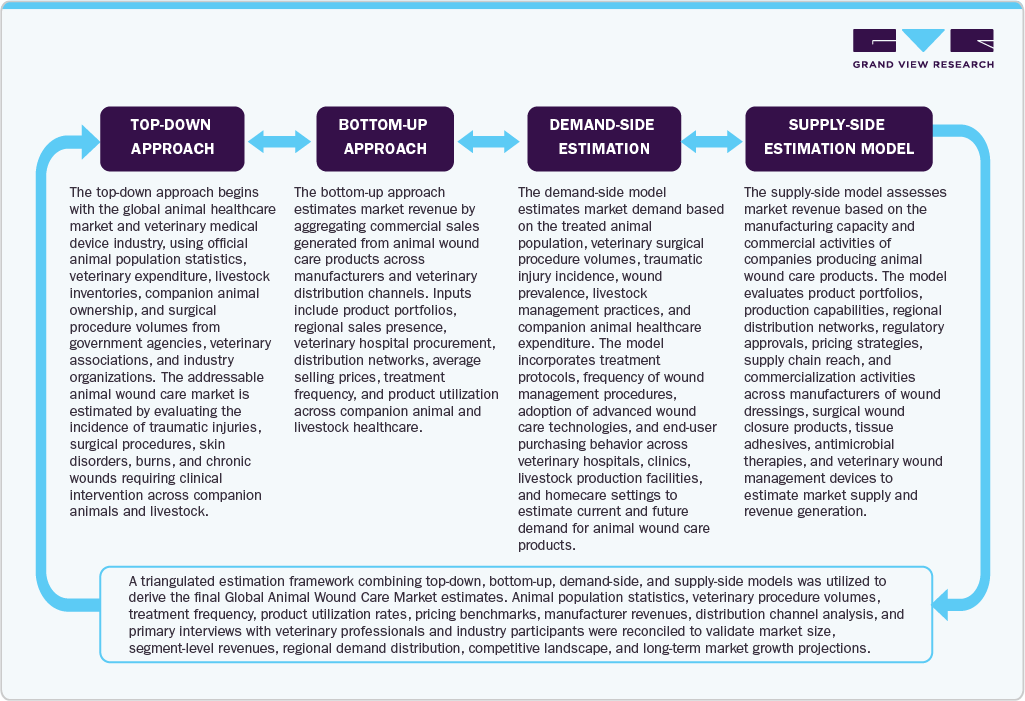
The animal wound care market figures in this report are based on a proven research process that combines executive interviews with secondary research from proprietary databases, company filings, and recognized regulatory and institutional sources. Market size is built through value-chain sizing - reconciling supply-side and demand-side estimates - and triangulated with bottom-up and top-down approaches. Every estimate passes multiple levels of expert validation before publication, with each animal wound care segment quantified using the revenue-capture definitions in the table below.
Segment Definition
Product Segment
Definition
Surgical Wound Care Products
This segment represents revenue generated from products used for the management and healing of wounds resulting from surgical procedures in animals. It includes wound closure products and post-operative wound management solutions.
Sutures & Staplers
This segment represents revenue generated from surgical sutures, staples, and stapling devices used for wound closure during veterinary surgical procedures. It includes absorbable and non-absorbable sutures and surgical staplers.
Tissue Adhesives
This segment represents revenue generated from veterinary tissue adhesives used for surgical incision and superficial wound closure. It includes cyanoacrylate-based and other veterinary-approved tissue sealants.
Advanced Wound Care Products
This segment represents revenue generated from specialized wound care products designed to accelerate healing, manage exudate, and reduce infection risk in animal wounds. It includes technologically advanced dressings and bioactive wound care products.
Foam Dressings
This segment represents revenue generated from foam-based wound dressings used for moderate to heavily exuding wounds in animals. It includes polyurethane and silicone foam dressings.
Hydrocolloid Dressings
This segment represents revenue generated from hydrocolloid dressings that maintain a moist wound environment for low to moderately exuding wounds. It includes adhesive hydrocolloid sheets and pads.
Film Dressings
This segment represents revenue generated from transparent semi-permeable film dressings used to protect superficial wounds while allowing moisture vapor exchange. It includes adhesive polyurethane film dressings.
Hydrogel Dressings
This segment represents revenue generated from hydrogel-based wound dressings designed to hydrate dry wounds and promote autolytic debridement. It includes sheet, gel, and amorphous hydrogel dressings.
Others (Advanced Wound Care Products)
This segment represents revenue generated from advanced wound care products not classified under foam, hydrocolloid, film, or hydrogel dressings. It includes alginate dressings, collagen dressings, antimicrobial dressings, and other bioactive wound care products.
Traditional Wound Care Products
This segment represents revenue generated from conventional wound management products used to clean, protect, and dress animal wounds during routine veterinary care. It includes basic wound dressings, fixation products, and topical wound care products.
Tapes
This segment represents revenue generated from medical adhesive tapes used to secure wound dressings and bandages in veterinary practice. It includes paper, cloth, and waterproof adhesive tapes.
Bandages
This segment represents revenue generated from veterinary bandages used to protect wounds, provide compression, and support injured tissues. It includes elastic, cohesive, and conforming bandages.
Dressings
This segment represents revenue generated from standard wound dressings used to cover and protect wounds during healing. It includes gauze pads, sterile dressings, and non-adherent wound coverings.
Absorbents
This segment represents revenue generated from absorbent wound care materials designed to manage wound exudate in veterinary applications. It includes absorbent pads, cotton products, and gauze rolls.
Others (Traditional Wound Care Products)
This segment represents revenue generated from conventional wound care products not classified under tapes, bandages, dressings, or absorbents. It includes topical wound care products such as creams, ointments, gels, sprays, wound cleansing solutions, cotton swabs, and other basic wound care accessories used in veterinary practice.
Therapy Devices
This segment represents revenue generated from medical devices used to promote wound healing through physical or mechanical therapies in animals. It includes negative pressure wound therapy systems, laser therapy devices, oxygen therapy devices, and electrical stimulation equipment.
Animal Segment
Definition
Companion Animal
This segment represents revenue generated from wound care products used for companion animals kept primarily as household pets. It includes products intended for veterinary treatment and homecare of pets.
Dogs
This segment represents revenue generated from wound care products used for canine patients across veterinary hospitals, clinics, and homecare settings.
Cats
This segment represents revenue generated from wound care products used for feline patients across veterinary hospitals, clinics, and homecare settings.
Horses
This segment represents revenue generated from wound care products used for equine patients, including sport, racing, working, and companion horses.
Other Companion Animals
This segment represents revenue generated from wound care products used for companion animals other than dogs, cats, and horses. It includes rabbits, guinea pigs, hamsters, ferrets, pet birds, reptiles, turtles, and other exotic pets.
Livestock Animal
This segment represents revenue generated from wound care products used for food-producing and commercial livestock animals. It includes products intended for herd health management and farm veterinary applications.
Bovine
This segment represents revenue generated from wound care products used for cattle, including dairy and beef cattle.
Swine
This segment represents revenue generated from wound care products used for pigs in commercial farming and breeding operations.
Poultry
This segment represents revenue generated from wound care products used for chickens, turkeys, ducks, geese, and other commercial poultry species.
Other Livestock Animals
This segment represents revenue generated from wound care products used for livestock species other than bovine, swine, and poultry. It includes sheep, goats, camelids, aquaculture species, and other farm animals.
End Use Segment
Definition
Veterinary Hospitals/Clinics
This segment represents revenue generated from animal wound care products purchased and used by veterinary hospitals, specialty veterinary centers, and veterinary clinics for the diagnosis, treatment, surgical wound management, and post-operative care of companion animals and livestock. It includes products utilized by veterinary professionals during inpatient, outpatient, emergency, and surgical procedures.
Homecare
This segment represents revenue generated from animal wound care products purchased for use by pet owners and livestock owners outside clinical settings under veterinary guidance. It includes wound sprays, hydrogels, dressings, bandages, topical antimicrobials, and other products used for routine wound management, post-operative recovery, and minor injury care at home.
Academic Research Institute
This segment represents revenue generated from animal wound care products purchased by academic institutions, veterinary schools, and research organizations for veterinary research, preclinical studies, product evaluation, and educational training. It includes products used to support animal health research, wound healing studies, regenerative medicine research, and veterinary clinical education.
Distribution Channel Segment
Definition
Retail
This segment represents revenue generated from wound care products sold through physical retail channels, including veterinary pharmacies, pet stores, agricultural supply stores, and pharmacies.
E-commerce
This segment represents revenue generated from wound care products sold through online channels, including manufacturer websites, veterinary e-pharmacies, pet care websites, and third-party online marketplaces.
Veterinary Hospitals/Clinics (Distribution Channel)
This segment represents revenue generated from wound care products distributed directly to veterinary hospitals, clinics, and specialty veterinary centers through institutional procurement and distributor networks.
Estimation Model
 To learn more about this report, Download Free Sample Report
Delivered Customizations
This report has been delivered with the following In-depth customizations
Client Request
Customization Delivered
Value Adds
Veterinary Wound Care Product Portfolio & Competitive Benchmarking
The study was customized to provide a detailed benchmarking assessment of leading manufacturers offering advanced wound dressings, tissue adhesives, antimicrobial products, surgical wound closure devices, and regenerative wound care solutions. The analysis compared product portfolios, technology differentiation, species coverage, pricing strategies, distribution channels, and recent commercial developments across key market participants.
Enabled identification of portfolio gaps, benchmarked competitive positioning, supported product development strategies, and identified opportunities for portfolio expansion across companion animal and livestock wound care markets.
Veterinary Hospital & Distribution Network Assessment
The report was expanded to evaluate procurement practices across veterinary hospitals, specialty clinics, livestock healthcare providers, and veterinary distributors. The assessment included purchasing behavior, product preferences, procurement criteria, regional distribution networks, and channel accessibility across major markets.
Supported channel expansion strategies, identified high-value distribution partners, improved market access planning, and enabled targeted commercial engagement across veterinary healthcare networks.
Livestock Wound Management & Commercial Opportunity Assessment
The study was customized to assess wound management practices across cattle, swine, poultry, sheep, goats, and equine production systems. The analysis evaluated treatment protocols, injury prevalence, surgical wound management requirements, biosecurity considerations, and product adoption across commercial livestock operations.
Identified high-growth livestock applications, supported product positioning strategies, prioritized commercial opportunities, and enabled demand forecasting across food-producing animal segments.
Regional Veterinary Infrastructure & Market Expansion Analysis
The report was customized to evaluate veterinary healthcare infrastructure, specialty referral hospitals, veterinary workforce availability, reimbursement landscape, regulatory environment, and animal healthcare investments across major global regions. The assessment also identified high-growth countries based on market maturity, healthcare accessibility, and commercial readiness.
Supported regional expansion planning, prioritized country-level investment opportunities, identified underserved markets, and enabled evidence-based market entry strategies for animal wound care manufacturers.
Frequently Asked Questions About This Report
Based on product, the surgical wound care products segment led the market with the largest revenue share of 40.0% in 2025.
Based on animal type, the companion animal segment led the market with the largest revenue share of 63.2% in 2025.
Based on distribution channel, the veterinary hospitals/clinics pharmacy segment led the market with the largest revenue share of 41.3% in 2025.
The global animal wound care market size was estimated at USD 1.6 billion in 2025 and is expected to reach USD 1.7 billion in 2026.
Asia Pacific is the fastest-growing region over the forecast period.
Key players include B. Braun Melsungen AG, Medtronic, 3M, Johnson & Johnson (Ethicon), Virbac, Jørgen Kruuse A/S, Millpledge Ltd, Advancis Veterinary Ltd (Advancis Medical), INNOVACYN, INC. (Vetericyn), and Orkla Wound Care AB (Snögg Animal Care).
Based on end use, the veterinary hospitals and clinics segment led the market with the largest revenue share of 50.2% in 2025.
The global animal wound care market is expected to grow at a compound annual growth rate of 8.6% from 2026 to 2033 to reach USD 3.1 billion by 2033.
Key factors include rising incidence of traumatic, surgical, and parasitic wounds across companion and production animals, increasing adoption of advanced antimicrobial, regenerative, and nanotechnology-based wound care products, expansion of companion animal insurance coverage and higher veterinary healthcare expenditure, and growing commercial livestock production with an increasing focus on animal health, welfare, and productivity.
About the Author(s)
Animal Health Research Team
Healthcare · Animal HealthThis report was authored by the animal health research team at Grand View Research - comprising two research analysts, one senior research analyst, and one industry expert - with specialized expertise in the animal health segment of the healthcare industry. All findings are based on proprietary healthcare databases, executive interviews, and regulatory analysis, subject to internal peer review prior to publication.
Last Updated:
Speak to Analyst

Customize this report to your needs - add regions, segments, or data points, with 20% free customization.
Or view our licence options:


ISO 9001:2015 & 27001:2022 Certified
We are GDPR and CCPA compliant! Your transaction & personal information is safe and secure. For more details, please read our privacy policy.


