
- Home
- »
- Animal Feed and Feed Additives
- »
-
Apiculture Market Size And Share, Industry Report, 2030GVR Report cover
![Apiculture Market Size, Share & Trends Report]()
Apiculture Market (2025 - 2030) Size, Share & Trends Analysis Report By Type (Honey, Beeswax, Propolis), By End Use (Medical, Food & Beverages, Cosmetics), By Region (North America, Asia Pacific), And Segment Forecasts
Market Size, 2024
$9.3BMarket Estimate, 2026
$9.7BMarket Forecast, 2030
$11.8BCAGR, 2025–2030
4.0%Apiculture Market Summary
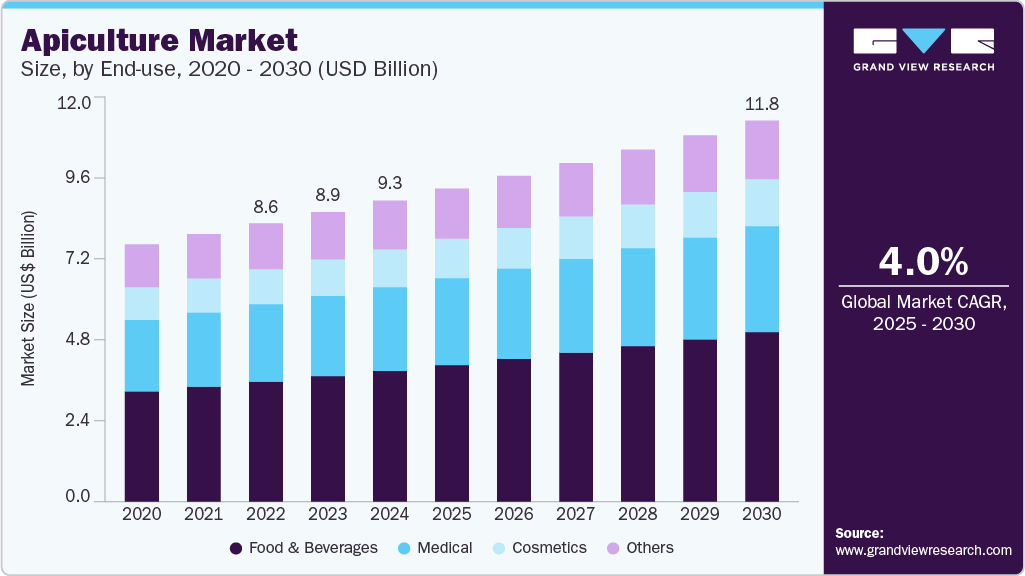
The global apiculture market size was estimated at USD 9.31 billion in 2024 and is projected to reach USD 11.78 billion by 2030, growing at a CAGR of 4.0% from 2025 to 2030, owing to the versatility of bee products that extends beyond food and beverages. They are integral to various sectors, including pharmaceuticals, cosmetics, and agriculture.
Key Market Trends & Insights
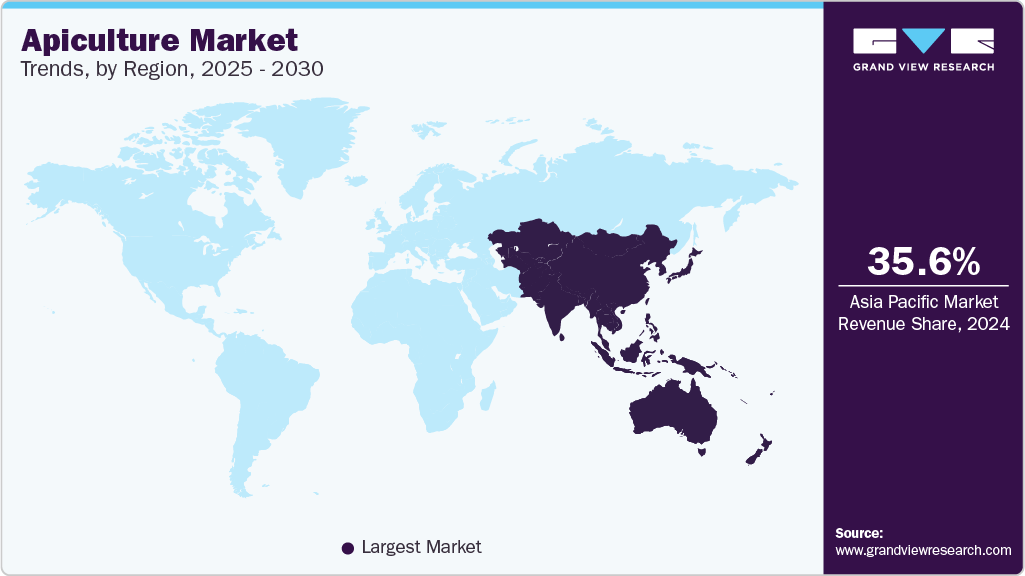
- The Asia Pacific dominated the global industry with a revenue share of 35.6% in 2024.
- By end use, the food & beverages segment dominated the market with the largest revenue share of 43.5% in 2024.
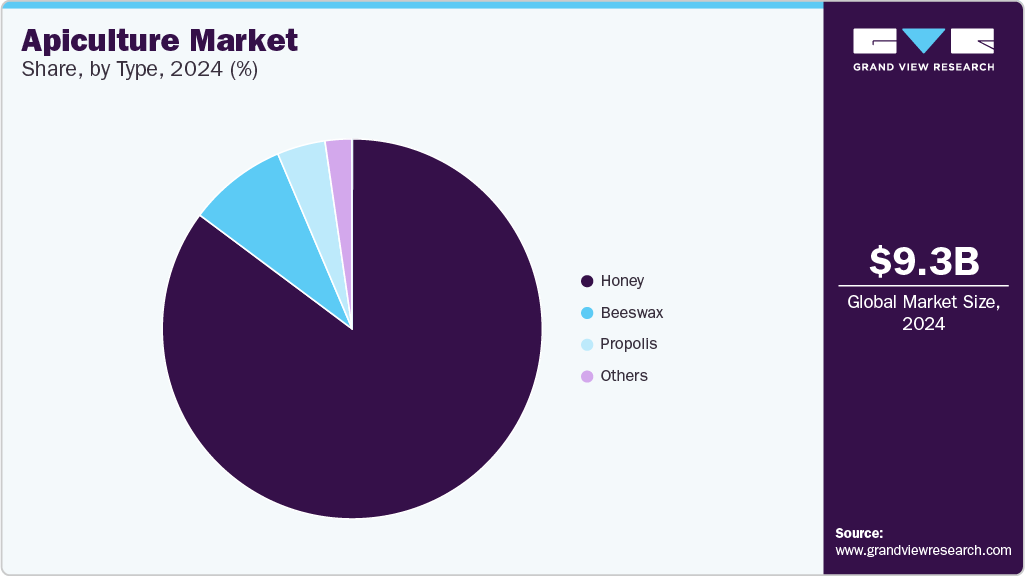
- By type, the honey products segment dominated the market with the largest revenue share in 2024.
Market Size & Forecast
- 2024 Market Size: USD 9.31 Billion
- 2030 Projected Market Size: USD 11.78 Billion
- CAGR (2025-2030): 4.0%
- Asia Pacific: Largest market in 2024
For instance, honey and royal jelly are commonly used in dietary supplements, while beeswax is a popular ingredient in skincare products. This broad applicability enhances the market's resilience and growth potential, as different industries increasingly invest in bee-related products to meet consumer demands. Moreover, beeswax is utilized in the pharmaceutical industry as a binding agent and a time-release mechanism for medications, enhancing the efficacy of drug delivery systems. The ongoing research into the medicinal properties of these products continues to unveil new applications, further solidifying their place in modern healthcare.The demand for bee products, particularly honey and its derivatives, is experiencing significant growth both in China and on a global scale. This surge is driven by various factors, including health consciousness, sustainability trends, and the versatility of these products across multiple industries.
One of the primary drivers of this market expansion is the increasing consumer preference for natural and organic products. As people become more health-conscious, they are turning away from artificial sweeteners and processed foods, opting instead for honey as a natural alternative. This shift is particularly evident in the food and beverage sector, where honey is being used not only as a sweetener but also as a flavor enhancer and a source of health benefits. The growing awareness of the nutritional advantages of honey, such as its antioxidant properties and potential health benefits, further fuels this demand.
In China, which is the largest honey-producing country, the government is actively promoting beekeeping as a sustainable agricultural practice. This support includes incentives for beekeepers and initiatives aimed at increasing awareness of the ecological benefits of bees, such as their role in pollination. The economic viability of beekeeping, characterized by low maintenance costs and high returns, is attracting more individuals and businesses to enter the market.
Market Dynamics
Apiculture products, including honey, beeswax, royal jelly, propolis, and bee pollen, are gaining substantial demand as consumers increasingly prefer natural, nutritious, and chemical-free food ingredients. Rising awareness of the health benefits of honey, such as immune support, antioxidant properties, and digestive support, is significantly contributing to market growth worldwide. The expanding use of bee-derived ingredients across the food & beverage, nutraceutical, cosmetic, and pharmaceutical industries is further strengthening product demand worldwide. In addition, the increasing popularity of organic food products and clean-label ingredients among health-conscious consumers is accelerating the adoption of apiculture products across developed and emerging economies.
The global health and wellness industry continues to expand steadily, supported by changing dietary habits, rising disposable incomes, and a growing preference for functional food products. Rising applications of beeswax and honey in skincare formulations, herbal healthcare products, and natural personal care applications are also supporting industry growth. Furthermore, increasing demand for organic honey varieties, premium bee products, and sustainable beekeeping practices is expected to create favorable long-term opportunities for the global apiculture market during the forecast period.
The apiculture industry is facing increasing operational challenges due to declining bee populations caused by climate change, pesticide exposure, habitat degradation, and the rising prevalence of bee diseases and parasites. Unpredictable weather conditions and seasonal fluctuations continue to impact honey yields and colony productivity across major honey-producing regions worldwide. In addition, concerns regarding product adulteration, inconsistent product quality, and traceability issues are affecting consumer confidence and creating additional pressure on manufacturers and suppliers. Limited raw material availability and fluctuations in production output may further restrain overall market expansion over the forecast period.
End Use Insights
Food & beverages dominated the market with the largest revenue share of 43.5% in 2024. The food and beverage sector remains the largest end-use application for bee products, particularly honey. As consumers become more health-conscious, there is a notable shift from artificial sweeteners to natural alternatives, with honey being a preferred choice due to its rich flavor and health benefits.
In the medical field, bee products are gaining recognition for their therapeutic properties. Honey, for instance, is known for its wound-healing capabilities and is increasingly used in medical-grade dressings. Its natural antibacterial properties make it effective in treating burns and other skin injuries.
Furthermore, royal jelly and propolis are being explored for their potential health benefits, including immune support and anti-inflammatory effects. The growing trend towards natural remedies and the increasing focus on preventive healthcare are significant factors driving the demand for bee products in the medical sector. As consumers seek alternatives to synthetic medications, the appeal of natural bee-derived products continues to rise.
The cosmetics industry is another major end-user of bee products, particularly beeswax and royal jelly. Beeswax is prized for its emollient properties, making it a popular ingredient in lip balms, creams, and lotions. Its ability to create a protective barrier on the skin while allowing it to breathe enhances its desirability in skincare formulations. Meanwhile, royal jelly is increasingly incorporated into anti-aging products due to its rich nutrient profile, which is believed to promote skin health and vitality. The growing consumer preference for organic and cruelty-free cosmetics is driving brands to invest in natural ingredients, further boosting the demand for bee products in this sector.
Type Insights
Honey products dominated the market with the largest revenue share in 2024. Honey is the most prominent product in the apiculture market, known for its natural sweetness and numerous health benefits. Initially valued primarily for its medicinal properties, honey has evolved into a staple ingredient in the food and beverage industry. Its popularity is driven by a rising consumer preference for natural sweeteners over artificial alternatives, leading to increased exploration and innovation within the honey sector.
Beeswax is another significant product derived from bees, valued for its multifunctional properties. It is widely used in the cosmetics industry, where it serves as a natural emulsifier and thickening agent in products such as lip balms, creams, and lotions. The increasing consumer shift towards organic and chemical-free personal care products has bolstered the demand for beeswax.
Additionally, beeswax is utilized in food packaging, particularly in eco-friendly wraps, and as a glazing agent in various food products. Its applications extend to the pharmaceutical sector, where it is used in ointments and as a coating for pills. The growing awareness of sustainability and the benefits of natural ingredients further enhances the appeal of beeswax across multiple industries.
Royal jelly is a nutrient-rich substance secreted by worker bees, primarily used to nourish queen bees and larvae. This product is gaining traction in the health and wellness market due to its potential health benefits, including immune system support and energy enhancement. Royal jelly is often marketed as a dietary supplement, available in various forms such as capsules, powders, and liquid extracts. The increasing consumer interest in natural health products and supplements is driving the demand for royal jelly, as more individuals seek out its unique properties to enhance their overall well-being. Its incorporation into health-focused diets positions royal jelly as a valuable product in the apiculture market.
Regional Insight
North America apiculture market is witnessing robust growth, driven by increasing consumer demand for natural products, heightened health awareness, and supportive government initiatives. This region, particularly the U.S. and Canada, plays a significant role in the global apiculture landscape.
U.S. Apiculture Market Trends
The apiculture market in the U.S. is characterized by a well-established ecosystem of commercial beekeepers, hobbyists, and value-added product manufacturers. With over 2.7 million managed bee colonies, the country plays a critical role in pollination services, particularly for high-value crops such as almonds in California, blueberries in Maine, and apples in Washington. The growing consumer shift toward natural and organic honey has fueled the rise of brands like Nature Nate’s, which emphasizes raw and unfiltered honey. In the personal care space, Burt’s Bees uses beeswax and other bee-derived ingredients to develop sustainable cosmetic products. The market is also seeing the integration of precision apiculture technologies, including smart hive sensors and GPS tracking, to improve colony health monitoring. Challenges such as colony collapse disorder, pesticide use, and declining forage availability have prompted federal initiatives and conservation efforts. As consumer awareness grows, traceability and eco-labeling are becoming central to U.S. market preferences.
Asia Pacific Apiculture Market Trends
The apiculture market in Asia Pacific dominated the global industry with a revenue share of 35.6% in 2024. The demand for honey is surging in the Asia Pacific region, fueled by a shift towards natural sweeteners in food and beverages. Consumers are increasingly aware of the health benefits of honey, which is being recognized as a healthier alternative to refined sugars and artificial sweeteners. This trend is further supported by the growing popularity of honey in culinary applications, including baking, cooking, and as a natural remedy for various ailments.
China is the world's leading honey producer, accounting for approximately 50.5% of global honey production. This dominance is supported by a vast number of beekeepers and a favorable climate for beekeeping. The country's extensive production capabilities enable it to meet both domestic and international demand, making it a key player in the global market.
Europe Apiculture Market Trends
European governments are increasingly recognizing the importance of bees for biodiversity and agriculture. Initiatives aimed at supporting beekeeping practices, including funding and educational programs, are contributing to the growth of the apiculture market. This support is crucial for maintaining bee populations and promoting sustainable practices.
Key Apiculture Companies Insights
Key players operating in the apiculture market are undertaking various initiatives to strengthen their presence and increase the reach of their products and services. Strategies such as expansion activities and partnerships are key in propelling the market growth.
Key Apiculture Companies:
The following are the leading companies in the apiculture market. These companies collectively hold the largest market share and dictate industry trends.
- Capilano Honey Ltd.
- Organic Bee Farms
- Dabur Ltd.
- NOW Foods
- Koster Keunen LLC
- Barkman Honey
- Heavenly Organics
- Strahl & Pitsch Inc.
- Miller’s Honey
- Durham’s Bee Farm
Competitive Benchmarking
Operating Strategies
Competitive Edge
Weaknesses
Mature Players: Capilano Honey Ltd.; Dabur Ltd.; NOW Foods; Koster Keunen LLC; Barkman Honey; Strahl & Pitsch Inc.
- Focus on expanding premium and organic bee product portfolios while strengthening sustainable sourcing and large-scale distribution capabilities across retail and industrial markets.
- Increase investments in branded product development, quality certification programs, and strategic partnerships across food, nutraceutical, and personal care industries to improve market presence.
- Possess established brand positioning, diversified apiculture product offerings, and extensive distribution networks across consumer and industrial channels.
- Benefit from strong supplier relationships, product quality assurance capabilities, and growing consumer trust associated with natural and wellness-focused products.
- Remain highly dependent on climatic conditions, bee health, and seasonal production cycles that may impact supply consistency and operational stability.
- Face growing challenges associated with product adulteration concerns, regulatory compliance requirements, and fluctuations in raw material availability.
Emerging Players: Organic Bee Farms; Heavenly Organics; Miller’s Honey; Durham’s Bee Farm
- Emphasize small-scale sustainable beekeeping operations, organic honey production, and direct-to-consumer sales strategies targeting health-conscious customer segments.
- Strengthen regional brand visibility and focus on specialty product offerings tailored toward premium natural food and wellness markets.
- Benefit from flexible operations and the ability to offer traceable, minimally processed, and specialty apiculture products aligned with evolving consumer preferences.
- Demonstrate stronger responsiveness toward niche demand trends associated with artisanal, organic, and sustainable food products.
- Operate with comparatively smaller production volumes and limited distribution reach compared to established multinational and large-scale honey producers.
- Encounter challenges related to scaling commercial operations, maintaining supply consistency, and expanding international market presence.
Recent Developments
-
In April 2025, Koster Keunen expanded its Oleogels products in the pharmaceutical market. system. They enable targeted topical and transdermal applications through wax-based gel matrices using gelators like beeswax, carnauba wax and Candelilla wax. This has potential for pediatric and water-scarce regions, offering stable, palatable drug delivery alternatives to traditional tablets.
-
In March 2024, RAK Samar Honey, sourced from the pristine and arid landscapes of Ras Al Khaimah in the United Arab Emirates, made its debut in the UK market. This raw and rare honey is celebrated for its unique flavor profile and nutritional benefits, making it a sought-after product among honey enthusiasts.
-
In August 2022, Bagrrys India expanded its product portfolio by launching Bagrrys Organic Wild Honey. This new offering aims to cater to the growing demand for natural and organic food products among health-conscious consumers.
Apiculture Market Report Scope
Report Attribute
Details
Market size value in 2025
USD 9.68 billion
Revenue forecast in 2030
USD 11.78 billion
Growth rate
CAGR of 4.0% from 2025 to 2030
Base year for estimation
2024
Historical data
2018 - 2023
Forecast period
2025 - 2030
Quantitative units
Revenue in USD million/billion and CAGR from 2025 to 2030
Report coverage
Revenue forecast, company ranking, competitive landscape, growth factors, and trends
Segments covered
Type, end use, and region
Regional scope
North America; Europe; Asia Pacific; Latin America; and Middle East & Africa
Country scope
U.S.; Canada; Mexico; Germany; UK; Italy; France; Spain; China; India; Japan; South Korea; Brazil; Argentina; South Africa; Saudi Arabia
Key companies profiled
Capilano Honey Ltd.; Organic Bee Farms; Dabur Ltd.; NOW Foods; Koster Keunen LLC; Barkman Honey; Heavenly Organics; Strahl & Pitsch Inc.; Miller’s Honey; Durham’s Bee Farm
Customization scope
Free report customization (equivalent up to 8 analysts working days) with purchase. Addition or alteration to country, regional & segment scope.
Pricing and purchase options
Avail customized purchase options to meet your exact research needs. Explore purchase options
Global Apiculture Market Report Segmentation
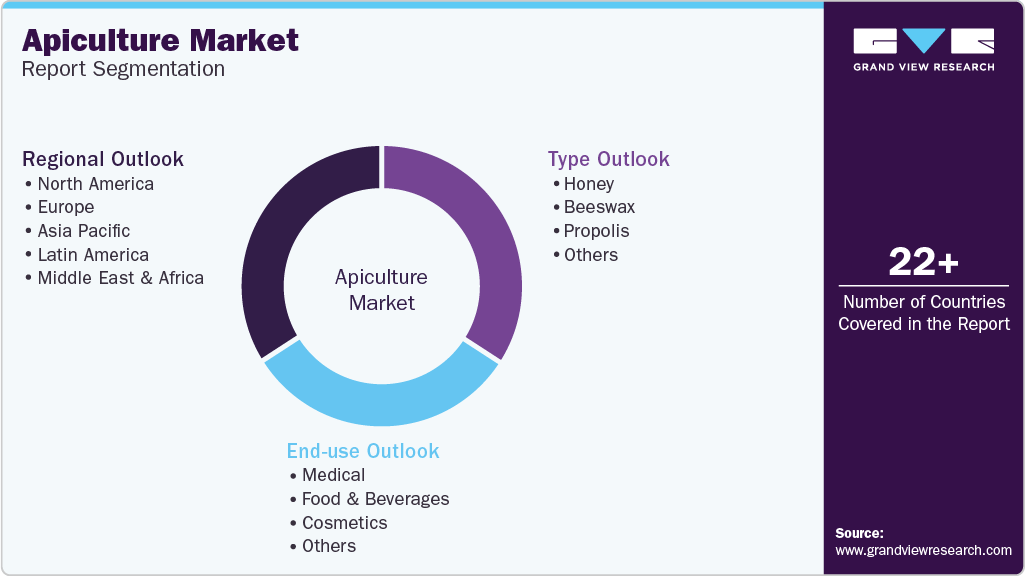
This report forecasts revenue growth at the global, regional, and country levels and provides an analysis of the latest industry trends in each of the sub-segments from 2018 to 2030. For this study, Grand View Research has segmented the global apiculture market report based on type, end use, and region.
-
Type Outlook (Revenue, USD Million, 2018 - 2030)
-
Honey
-
Beeswax
-
Propolis
-
Others
-
-
End Use Outlook (Revenue, USD Million, 2018 - 2030)
-
Medical
-
Food & Beverages
-
Cosmetics
-
Others
-
-
Regional Outlook (Revenue, USD Million, 2018 - 2030)
-
North America
-
U.S.
-
Canada
-
Mexico
-
-
Europe
-
Germany
-
UK
-
France
-
Italy
-
Spain
-
-
Asia Pacific
-
China
-
India
-
Japan
-
South Korea
-
-
Latin America
-
Brazil
-
Argentina
-
-
Middle East and Africa
-
Saudi Arabia
-
South Africa
-
-
Delivered Customizations
This report has been delivered with the following In-depth customizations
Client Request
Customization Delivered
Value Adds
Regional Segmentation
Expanded regional analysis covering additional country-level assessment of honey production, consumption patterns, and export-import dynamics across North America, Europe, and the Asia Pacific.
Support country-specific opportunity identification and regional expansion planning through a detailed understanding of production and demand trends.
Competitive Benchmarking
Comparative evaluation of apiculture product manufacturers based on organic certification capabilities, sourcing practices, product portfolio diversification, distribution strength, and strategic developments.
Assist in supplier assessment and competitive intelligence activities through enhanced visibility into manufacturer capabilities and market positioning.
Opportunity Assessment
Assessment of emerging growth opportunities associated with organic food consumption, clean-label product demand, sustainable farming practices, and increasing utilization of bee-derived ingredients in nutraceutical and personal care applications.
Help identify future revenue streams and high-potential application areas aligned with evolving consumer health and wellness preferences.
Frequently Asked Questions About This Report
The global apiculture market was valued at USD 9.3 billion in 2024 and is expected to reach USD 9.7 billion in 2025.
The global apiculture market was valued at USD 9.3 billion in 2024 and is projected to reach USD 11.78 billion by 2030, growing at a CAGR of 4.0% from 2025 to 2030
Asia Pacific dominated the market segment with a revenue share of 35.60% in 2024. The demand for honey is surging in the Asia Pacific region, fueled by a shift towards natural sweeteners in food and beverages
Some key players operating in the apiculture market include Capilano Honey Ltd. Organic Bee Farms, Dabur Ltd., NOW Foods, Koster Keunen LLC, Barkman Honey, Heavenly Organics, Strahl & Pitsch Inc., Miller’s Honey, Durham’s Bee Farm
Key factors that are driving the market growth include the versatility of bee products extends beyond food and beverages.
About the Author(s)
Animal Feed and Feed Additives Research Team
Specialty & Chemicals · Animal Feed and Feed AdditivesThis report was authored by the animal feed and feed additives research team at Grand View Research - comprising two research analysts, one senior research analyst, and one industry expert - with specialized expertise in the animal feed and feed additives segment of the specialty & chemicals industry. All findings are based on proprietary specialty & chemicals databases, executive interviews, and regulatory analysis, subject to internal peer review prior to publication.
Last Updated:
Speak to Analyst


Customize this report to your needs — add regions, segments, or data points, with 20% free customization.
Or view our licence options:


ISO 9001:2015 & 27001:2022 Certified
We are GDPR and CCPA compliant! Your transaction & personal information is safe and secure. For more details, please read our privacy policy.


