
- Home
- »
- Medical Devices
- »
-
Automated Bolus Injectors Market Size & Share Report, 2033GVR Report cover

Automated Bolus Injectors Market (2026 - 2033)
Size, Share & Trends Analysis Report By Product (On-Body Automated Bolus Injectors, Off-Body Automated Bolus Injectors), By Application (Diabetes, Autoimmune Diseases), By End Use, By Region, And Segment Forecasts
Market Size, 2025
$1.2BMarket Estimate, 2026
$1.3BMarket Forecast, 2033
$2.5BCAGR, 2026–2033
9.1%Automated Bolus Injectors Market Summary
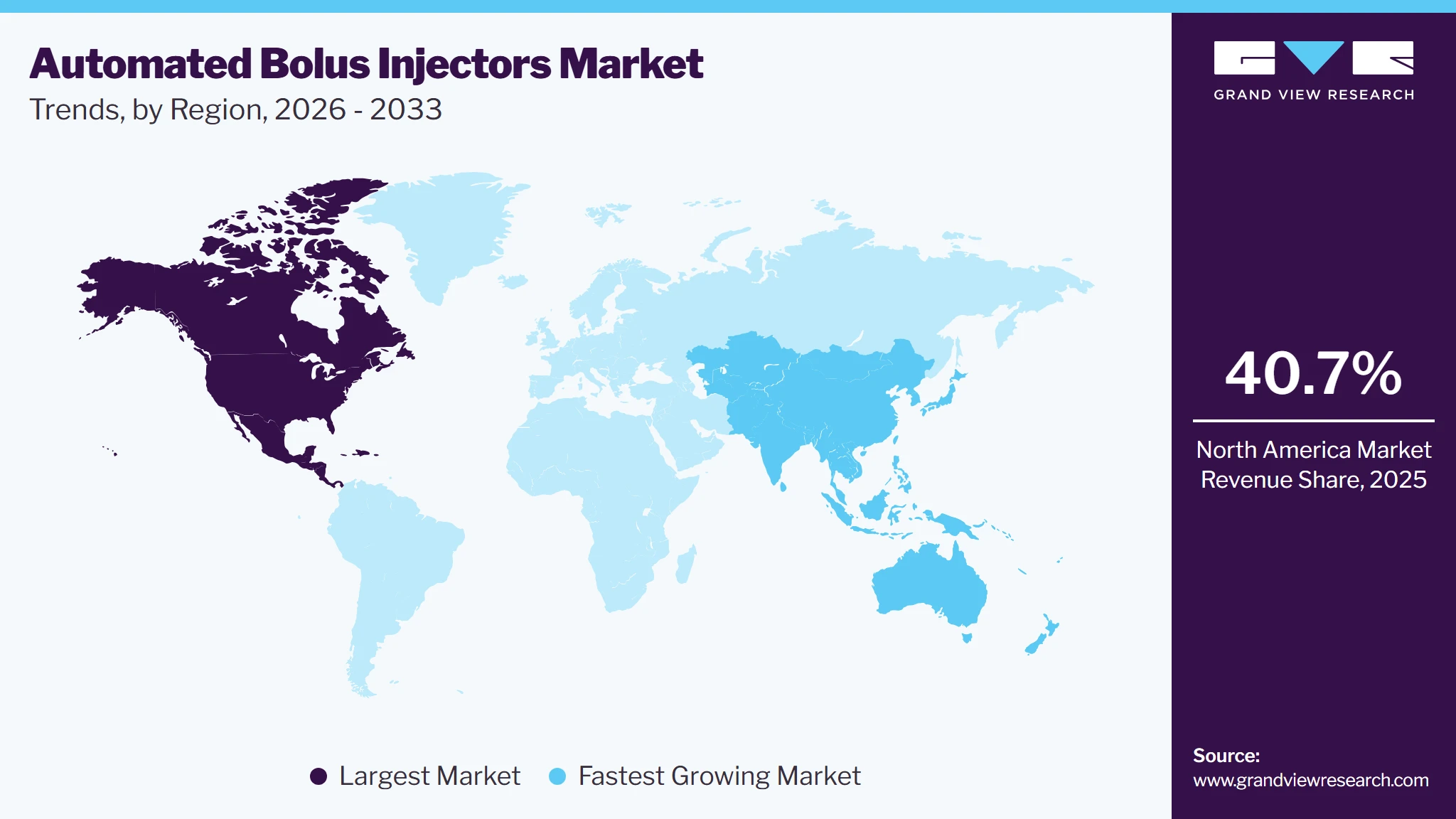
The global automated bolus injectors market size was valued at USD 1.2 billion in 2025 and is projected to grow from USD 1.3 billion in 2026 to USD 2.5 billion by 2033, at a CAGR of 9.1% from 2026 to 2033. The market in North America dominated with a revenue share of 40.7% in 2025. The growing prevalence of chronic diseases, increasing adoption of self-administered therapies, rising use of biologics and large-volume injectable drugs, and shift toward home-based healthcare are expected to support market growth.
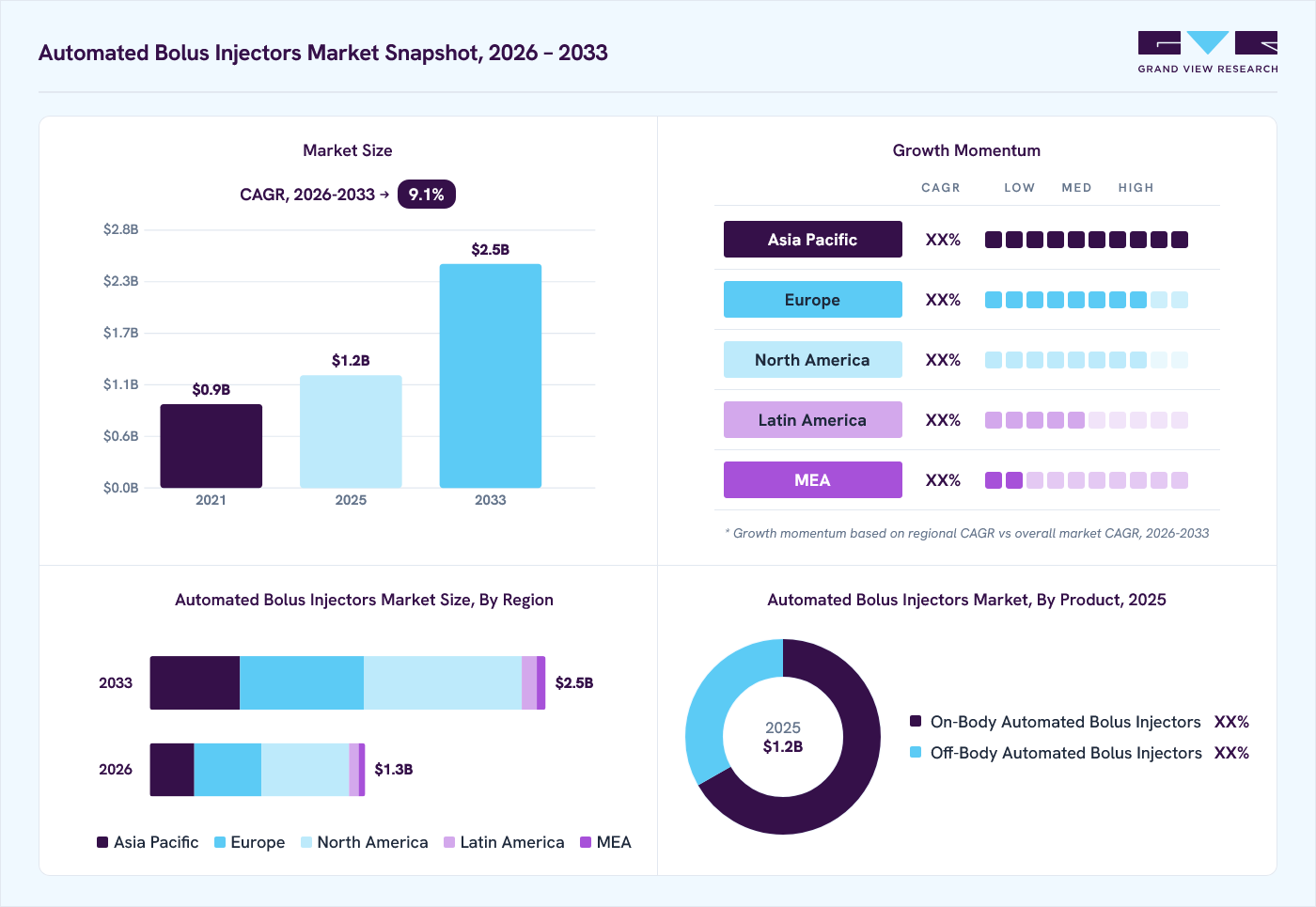 Source: Grand View Research, IR Documents, Primary Interviews, Paid DatabasesTo learn more about this report,
 Download Free Sample Report
 Key Market Trends & Insights
- By product: On-body automated bolus injectors segment held the largest market share of 66.7% in 2025.
- By application: Diabetes segment held the largest market share of 55.4% in 2025.
- By end use: Homecare settings segment held the largest market share of 54.2% in 2025.
Regional Highlights
- Largest regional market: North America (40.7% revenue share, 2025)
- Fastest-growing regional market: Asia Pacific (highest CAGR, 2026-2033)
- By country: The U.S. held the largest market share in 2025
Market Size & Forecast
- Market size in 2025: USD 1.2 Billion
- Estimated market size in 2026: USD 1.3 Billion
- Projected market size by 2033: USD 2.5 Billion
- CAGR (2026-2033): 9.1%
Three ways to get this report
Buy it, customize it, or ask a question.Ask an Analyst
A direct answer, usually in 1 working day
- AccessReport author, directly
- Reply timeWithin 1 working day
- No sales callDirect answer only
- FormatEmail reply
- CostFree, no cost
Get the Full Report
What the study covers
- FormatsPDF · Excel · Dashboard
- Timeline2026–2033 annual, 2025 base
- Coverage20+ countries, 5 regions
- Companies10+ key players profiled
Customize the Report
20% free customization
- IncludeCountries, segments, points
- TailorTo your product definition
- ExtendDeeper competitor detail
- OrA fully bespoke study
- Turnaround5–10 working days
Technological advancements in wearable and connected delivery devices are further improving dosing convenience, administration accuracy, and patient adherence. Increasing pharmaceutical investment in patient-centric drug-delivery systems and expansion of specialty injectable therapies are also creating opportunities for automated bolus injector manufacturers globally.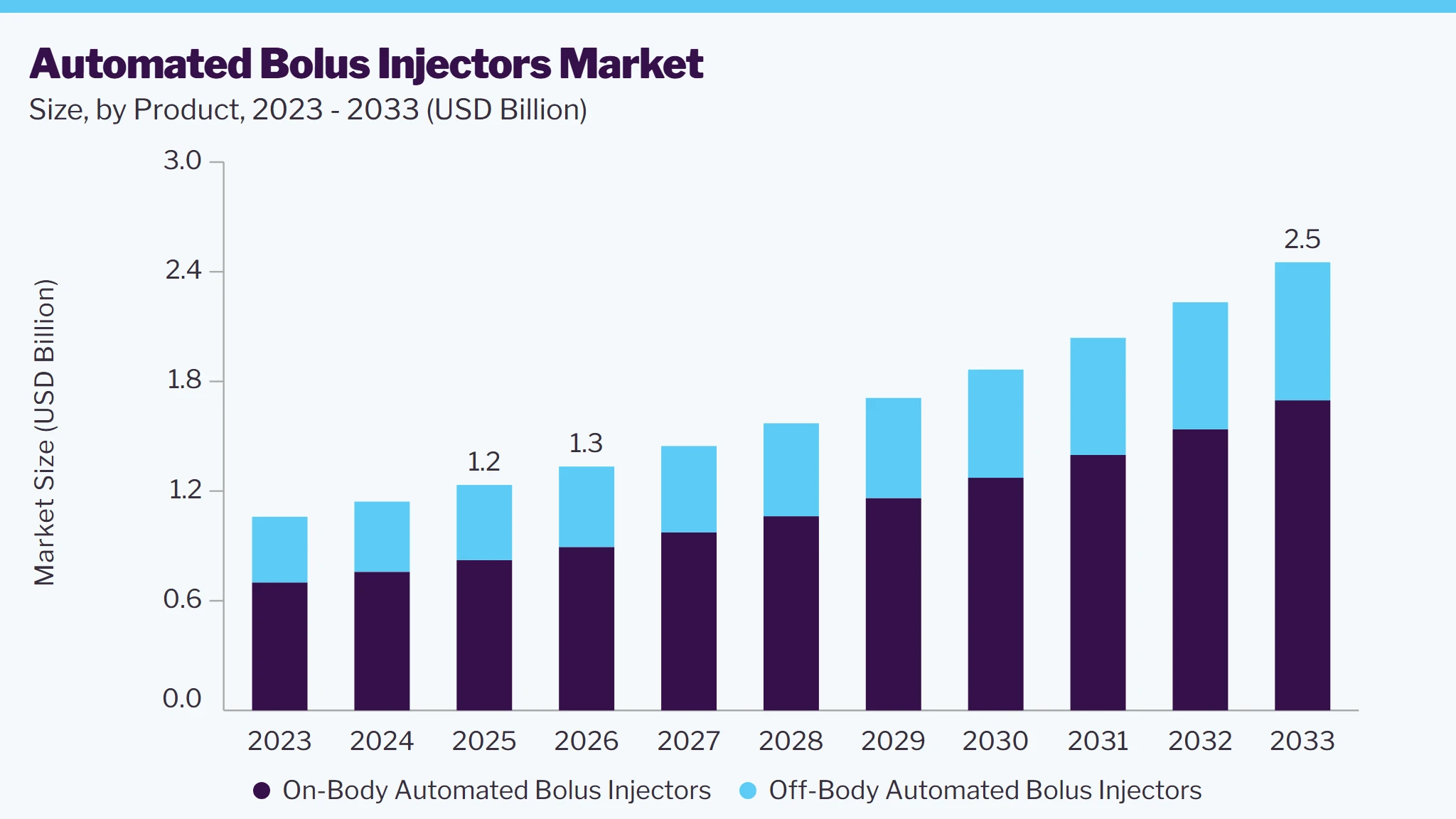 To learn more about this report, Download Free Sample Report
 The automated bolus injectors market is experiencing continued development as pharmaceutical companies and drug-delivery technology providers increasingly collaborate to commercialize patient-centric systems for subcutaneous administration. Market activity is particularly focused on wearable on-body delivery systems, large-volume injection, biologic and specialty therapies, home-based administration, and integrated drug-device combination products. Recent company developments indicate that manufacturers are moving beyond device development toward commercial-scale manufacturing, regulatory approvals, pharmaceutical integration, and international market expansion.
A notable recent development occurred on September 29, 2026, when Ypsomed and ten23 health announced the expansion of their strategic partnership for the YpsoDose large-volume wearable injector. Under the expanded collaboration, ten23 health is installing dedicated device-assembly capabilities for Ypsomed's YpsoDose platform, with the new equipment undergoing final qualification. The collaboration combines Ypsomed's large-volume wearable injector with ten23 health's formulation, sterile filling, analytical testing, quality-control, and now device-assembly capabilities. The companies initially established their partnership in April 2024 to provide pharmaceutical customers with an integrated development and manufacturing solution for drug-device combination products. The expanded offering includes 10 mL glass cartridges, YpsoDose wearable injector technology, formulation and filling services, analytical testing, quality control, and final device assembly. This development is significant for the market because it demonstrates the industry's movement toward integrated supply chains capable of taking a drug-device combination product from development through commercial manufacturing.
Manufacturing investment is another important component of this case. In January 2026, Enable Injections announced a USD 30 million investment from Sanofi to accelerate manufacturing capabilities. Such investment indicates that successful drug-device integration requires manufacturing capacity in addition to regulatory approval and clinical validation. As automated injectors move toward larger patient populations and higher-volume biologic therapies, manufacturers need scalable production and supply-chain capabilities to support commercial demand.
West Pharmaceutical Services is also demonstrating continued commercial activity in drug-delivery devices. In its first-quarter 2026 results, West reported USD 123.6 million in HVP Delivery Devices sales, representing 29.0% growth compared with the prior-year period. The company attributed the performance partly to increased sales of self-injection device platforms. West also reported that its West Vantage segment benefited from increased sales of self-injection devices for obesity and diabetes. Although this figure covers a broader category of delivery devices rather than automated bolus injectors alone, it provides evidence of continued commercial demand for advanced self-injection platforms.
Market Dynamics
The automated bolus injectors market is driven by the increasing prevalence of chronic diseases, growing demand for convenient self-administration of injectable therapies, rising adoption of biologics and high-volume injectable drugs, and the shift toward home-based healthcare. Automated bolus injectors enable controlled delivery of medications while reducing the complexity associated with conventional injections. Their use is expanding across diabetes, autoimmune diseases, oncology, neurological disorders, and other chronic conditions. Technology trends are centered on wearable on-body systems, off-body automated injectors, high-volume drug delivery, compact device designs, dose control, connectivity, and patient-centric features that support safe and convenient administration.
The rising prevalence of chronic diseases is a major driver of the automated bolus injectors market, as an increasing number of patients require long-term administration of injectable therapies. Diabetes, autoimmune diseases, cancer, and neurological disorders often require repeated or scheduled medication administration, creating demand for delivery systems that improve convenience and simplify treatment routines. Automated bolus injectors can provide controlled delivery of predetermined medication volumes, reducing the need for frequent manual injections and supporting administration outside traditional healthcare settings.
High device development and manufacturing costs are a significant restraint for the growth of the automated bolus injectors market, particularly for manufacturers developing sophisticated wearable and high-volume drug-delivery systems. Automated bolus injectors require specialized components, precision mechanisms, sensors, electronics, drug-contact materials, and delivery interfaces to ensure reliable and controlled medication administration. Additional costs may arise from device miniaturization, connectivity features, human-factors engineering, combination-product development, and compatibility testing with specific drug formulations.
Market Concentration & Characteristics
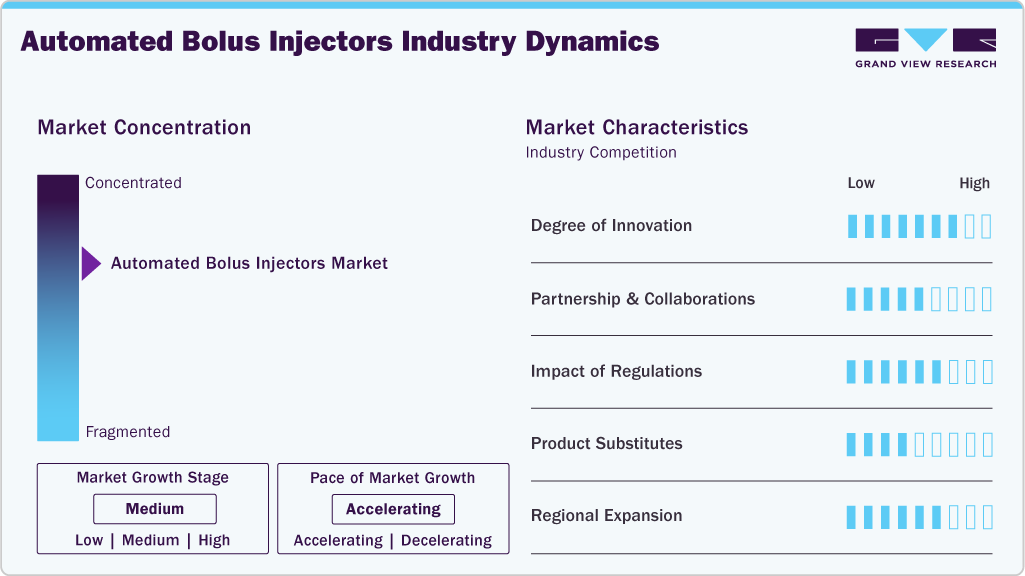
The automated bolus injectors market is moderately concentrated, with established drug-delivery and medical-device manufacturers maintaining strong positions through broad injectable drug-delivery portfolios, pharmaceutical partnerships, manufacturing capabilities, and global distribution networks. Key market participants include West Pharmaceutical Services, Enable Injections, Ypsomed, Becton, Dickinson and Company (BD), Nemera, Sonceboz, LTS Lohmann, Stevanato Group, Phillips-Medisize, and Bespak. Competition is increasingly focused on on-body and off-body delivery platforms, automated high-volume injection, device miniaturization, dose accuracy, connectivity, patient usability, and compatibility with biologics and specialty injectable therapies.
The automated bolus injectors market is characterized by a high degree of technological innovation, as manufacturers continue to advance automated drug-delivery mechanisms, wearable devices, injection-volume capabilities, connectivity, and patient-centric design to improve treatment convenience and administration reliability. Innovation is increasingly focused on on-body delivery systems, automated high-volume injection, compact and lightweight devices, integrated sensors, connectivity, status indicators, dose monitoring, and simplified user interfaces. These developments are intended to support self-administration, improve dosing consistency, reduce the complexity of injectable therapies, and enable the delivery of biologics and other specialty medications across chronic disease applications.
 To learn more about this report, Download Free Sample Report
 Partnerships and collaborations are becoming an important strategy in the automated bolus injectors market, as device manufacturers increasingly work with pharmaceutical and biotechnology companies to develop, validate, and commercialize patient-centric drug-delivery systems. These collaborations allow companies to combine drug-development expertise with specialized device engineering, manufacturing, regulatory, and combination-product capabilities. Such arrangements are particularly important for automated bolus injectors because the performance of the delivery system must be aligned with the formulation characteristics, dose volume, viscosity, administration route, injection time, and storage requirements of the drug or biologic. Partnerships therefore enable manufacturers to develop customized delivery platforms that are designed around the requirements of specific therapies rather than relying exclusively on standardized injector configurations.
A notable example is the strategic collaboration between Enable Injections, Inc. and Sobi involving the enFuse On-Body Delivery System. In May 2026, Enable Injections announced CE Certification of its enFuse on-body injector and syringe transfer system for use in combination with Aspaveli (pegcetacoplan). Under the collaboration, the combination is to be commercialized as ASPAVELI enFuse, with Sobi responsible for distribution across the European Union. The regulatory milestone demonstrates how partnerships between specialized drug-delivery manufacturers and pharmaceutical companies can facilitate the integration of automated on-body delivery technologies with established specialty medicines.
Aspaveli was initially approved by the European Commission in December 2021 for the treatment of paroxysmal nocturnal hemoglobinuria (PNH). In January 2026, the therapy received additional European approval for primary immune-complex membranoproliferative glomerulonephritis (IC-MPGN), while also becoming a treatment option for complement 3 glomerulopathy (C3G) and primary IC-MPGN in patients aged 12 years and older. The expansion of the therapy's approved indications increases the potential patient population that can be served by the associated delivery platform. The use of an on-body system provides an alternative method for subcutaneous administration and supports the broader trend toward flexible and patient-centered administration of specialty therapies.
Regulatory oversight has a significant impact on the automated bolus injectors market, as manufacturers must demonstrate device safety, performance, reliability, usability, and compatibility with intended drug-delivery applications before commercialization. In the U.S., automated injectors and related drug-delivery devices are subject to FDA medical-device requirements, with the applicable regulatory pathway depending on the device's design, intended use, and technological characteristics. Combination products may also require evaluation of the interaction between the delivery device and drug or biologic. Manufacturers must address device design, performance testing, human factors, labeling, quality systems, manufacturing controls, and applicable safety requirements. These regulatory requirements can increase development costs and commercialization timelines while supporting product safety and consistent performance.
The automated bolus injectors market faces substitution from alternative drug-delivery systems that can be selected according to the medication, dose volume, treatment frequency, patient preference, and care setting. Conventional prefilled syringes and autoinjectors represent important alternatives for therapies that require smaller or manually initiated doses. Infusion pumps can also substitute for automated bolus injectors when continuous or programmable medication delivery is required, while traditional syringes and vials remain widely used in clinical settings. Wearable or patch-based delivery technologies without automated bolus functionality may also compete for certain applications. The availability, cost, simplicity, and compatibility of these alternatives can influence adoption of automated bolus injector systems.
Regional expansion is an important growth strategy in the automated bolus injectors market, as manufacturers seek to broaden their geographic presence through regulatory approvals, localized manufacturing, pharmaceutical partnerships, distributor networks, and collaborations with healthcare providers. Manufacturers are also strengthening production and service capabilities to support supply reliability, reduce distribution complexity, and address region-specific regulatory and healthcare requirements. Expansion is particularly supported by the growing adoption of self-administration and home-based care, as well as increasing demand for biologics and specialty injectable therapies. Companies are therefore pursuing partnerships with pharmaceutical and biotechnology firms to introduce customized automated delivery systems across North America, Europe, Asia Pacific, and emerging markets.
Analyst Perspective
The automated bolus injectors market is driven by the increasing demand for controlled and automated drug delivery across chronic disease management. On-body and off-body automated bolus injectors provide flexible administration options, with adoption influenced by patient convenience, dosing accuracy, device portability, and ease of use. These systems are increasingly used across diabetes, autoimmune diseases, oncology, neurological disorders, and other chronic conditions. Demand is supported by the shift toward home-based care and self-administration, while hospitals, clinics, and ambulatory care settings continue to utilize automated delivery technologies for patients requiring controlled and scheduled medication administration.
Product Insights
The on-body automated bolus injectors segment dominated the market in 2025 and accounted for the 66.7% of the overall revenue. The segment's leading position is attributed to the growing preference for wearable and patient-centric drug delivery systems that enable convenient administration of injectable therapies outside traditional healthcare settings. On-body injectors provide hands-free delivery and can reduce the complexity associated with conventional injections, supporting greater flexibility for patients and caregivers. Increasing adoption of biologics, specialty injectable therapies, and high-volume subcutaneous formulations is further supporting demand for wearable delivery platforms. Rising emphasis on home-based care, self-administration, treatment convenience, and improved patient experience is also expected to sustain segment growth.
The off-body automated bolus injectors segment is expected to witness a significant CAGR of 8.0% over the forecast period. Growth is supported by increasing demand for automated drug-delivery systems that provide controlled and scheduled administration while offering flexibility in device configuration. Off-body systems can accommodate therapies requiring specific delivery interfaces, larger medication volumes, or administration through an external delivery mechanism. Rising adoption of biologics and specialty injectable therapies across autoimmune diseases, oncology, neurological disorders, and other chronic conditions is creating additional opportunities. Increasing healthcare expenditure, expansion of home-based treatment, and pharmaceutical companies' focus on patient-centric delivery platforms are further expected to support segment growth.
Application Insights
The diabetes segment dominated the automated bolus injectors market and held the largest revenue share in 2025. According to the International Diabetes Federation (IDF), approximately 589 million adults aged 20-79 years were living with diabetes globally in 2024, highlighting the substantial population requiring ongoing disease management and medication administration. The segment's leading position is supported by the increasing need for long-term injectable therapies and growing emphasis on convenient, patient-centric drug delivery. Automated bolus injectors can simplify medication administration by providing controlled dosing and reducing the complexity associated with conventional injections. Growing adoption of self-administration and home-based diabetes care is further supporting demand, while continued development of wearable and compact delivery technologies is expected to create additional opportunities.
The autoimmune diseases segment is expected to witness the fastest CAGR over the forecast period. Growth is supported by the increasing prevalence of autoimmune disorders and the expanding use of biologic and specialty injectable therapies that require regular subcutaneous administration. According to the National Stem Cell Foundation, more than 100 autoimmune diseases affect millions of people worldwide, highlighting the substantial need for long-term treatment options. Automated bolus injectors can provide controlled medication delivery while improving convenience and supporting self-administration in homecare settings. Increasing adoption of patient-centric drug-delivery systems, growing pharmaceutical investment in biologics, and development of wearable on-body and off-body delivery platforms are expected to further support segment growth.
End Use Insights
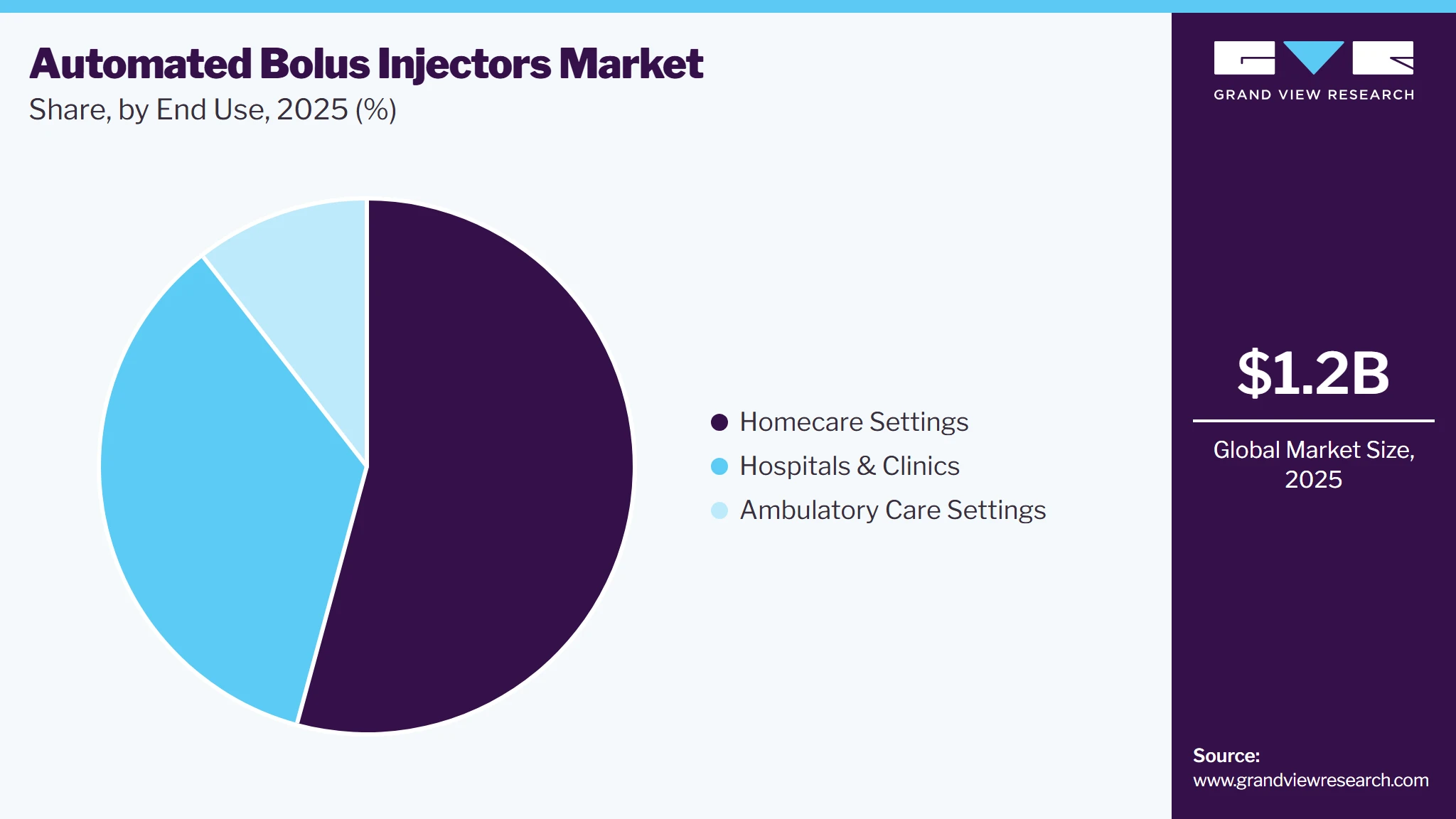
The homecare settings segment held the largest revenue share in 2025 and is expected to register the fastest growth over the forecast period. The segment's leading position is supported by the growing shift toward home-based treatment and self-administration of injectable therapies for chronic diseases. Automated bolus injectors enable patients and caregivers to administer medications with greater convenience while reducing dependence on frequent healthcare-facility visits. Increasing use of biologics and specialty injectable therapies for diabetes, autoimmune diseases, oncology, and other chronic conditions is further supporting adoption. In addition, pharmaceutical companies are increasingly developing patient-centric combination products designed for home use, creating opportunities for automated bolus injector manufacturers.
 To learn more about this report, Download Free Sample Report
 The hospitals & clinics segment is anticipated to grow at the second-fastest CAGR over the forecast period, supported by increasing adoption of injectable biologics and specialty therapies requiring controlled administration. Automated bolus injectors can improve dosing consistency and administration efficiency for patients receiving treatments in clinical settings. Growing use of subcutaneous therapies in oncology, autoimmune diseases, diabetes, and other chronic conditions is creating additional demand. For example, the FDA approved Sarclisa Escena in July 2026 for subcutaneous administration using the CirCLIQ on-body delivery system, supporting broader adoption of automated delivery technologies in oncology care.
Regional Insights
The North America automated bolus injectors market is supported by the region's advanced healthcare infrastructure, high prevalence of chronic diseases, growing adoption of self-administration, and strong presence of drug-delivery technology companies. Demand is increasing for on-body and off-body systems capable of delivering biologics, insulin, and other injectable therapies outside conventional hospital settings. The expansion of large-volume subcutaneous biologics is also creating opportunities for automated delivery systems that can improve patient convenience and reduce administration burden. Companies such as West Pharmaceutical Services offer wearable systems, including the SmartDose 10 On-Body Delivery System, which supports delivery volumes of up to 10 mL.
 To learn more about this report, Download Free Sample Report
 The U.S. automated bolus injectors market is supported by the country's large chronic-disease population, established specialty-pharmacy infrastructure, pharmaceutical innovation, and increasing development of biologic therapies suitable for subcutaneous administration. Demand is expanding across diabetes, autoimmune diseases, oncology, and other chronic conditions, particularly as pharmaceutical companies seek delivery systems that facilitate administration outside hospitals. The development of connected injection technologies is also supporting market advancement. In September 2025, Ypsomed received FDA 510(k) clearance for SmartPilot, a digital connectivity add-on designed to capture and transmit injection data, demonstrating continued development of connected drug-delivery technologies.
Europe Automated Bolus Injectors Market Trends
The Europe automated bolus injectors is supported by established healthcare systems, increasing adoption of self-injection, growing biologics utilization, and the shift toward home-based treatment. Demand for wearable and automated delivery systems is increasing as pharmaceutical companies develop larger-volume subcutaneous formulations for oncology, autoimmune diseases, metabolic disorders, and other chronic conditions. European regulatory requirements under the EU Medical Device Regulation also influence product development and commercialization. Enable Injections received CE Mark approval for its enFuse Syringe Transfer System in March 2025, demonstrating continued regulatory advancement for automated drug-delivery technologies in the region.
The UK automated bolus injectors market is supported by the country's established healthcare infrastructure, increasing use of self-administered therapies, and growing emphasis on delivering appropriate treatments closer to patients' homes. Demand is also influenced by the increasing use of biologics and specialty medicines requiring regular injectable administration. The country's regulatory environment, including MHRA requirements for medical devices and combination products, shapes commercialization strategies. Increasing pharmaceutical development of subcutaneous formulations and connected delivery technologies is expected to create opportunities for automated bolus injector manufacturers serving homecare and outpatient treatment pathways.
The Spain automated bolus injectors market is supported by the expansion of chronic disease management, increasing use of biologic medicines, and gradual movement toward patient-centric and home-based treatment. Automated delivery systems can support administration of therapies that would otherwise require repeated healthcare visits, particularly for chronic conditions. Increasing adoption of self-injection technologies across European markets and the development of large-volume biologic formulations are also creating opportunities for on-body and off-body injector platforms.
Asia Pacific Automated Bolus Injectors Market Trends
Asia Pacific automated bolus injectors market is expected to experience strong growth, supported by rising chronic disease prevalence, expanding pharmaceutical manufacturing capabilities, increasing healthcare expenditure, and growing adoption of advanced drug-delivery technologies. China, Japan, South Korea, and India represent important markets as healthcare systems increasingly emphasize decentralized care and patient-centric treatment. The region is also becoming increasingly important for pharmaceutical and device manufacturing, supporting development and commercialization of automated delivery platforms.
China's automated bolus injectors market is supported by a large chronic disease population, expansion of biologic therapies, increasing healthcare expenditure, and development of domestic medical-device manufacturing capabilities. Demand for automated delivery systems is also being supported by efforts to improve treatment accessibility and reduce the burden associated with repeated hospital visits. Expansion of large-volume subcutaneous biologics for oncology, autoimmune diseases, and metabolic disorders is creating opportunities for wearable delivery platforms.
South Korea's automated bolus injectors market is supported by advanced healthcare infrastructure, strong pharmaceutical and biotechnology industries, and increasing adoption of patient-centric drug-delivery technologies. Growing use of biologics and injectable therapies across oncology, autoimmune diseases, and chronic conditions is creating demand for convenient administration systems. The country's strong technology ecosystem also provides opportunities for connected and digitally enabled injection devices that can capture administration data and support treatment monitoring.
Latin America Automated Bolus Injectors Market Trends
The Latin America automated bolus injectors market is developing as healthcare systems expand access to advanced injectable therapies and pharmaceutical companies increase commercialization of biologics. Brazil and other major markets are supported by growing chronic disease burdens, increasing healthcare investment, and gradual expansion of homecare and outpatient treatment models. However, adoption varies across countries because of differences in healthcare expenditure, reimbursement, regulatory requirements, and access to specialty medicines. Regulatory approvals for advanced injector platforms are supporting gradual regional commercialization.
The Brazil automated bolus injectors market is supported by its large patient population, expanding pharmaceutical sector, and increasing demand for chronic disease therapies. The gradual expansion of biologics and specialty injectable medicines is creating opportunities for automated delivery systems that can facilitate administration in homecare and outpatient settings. Enable Injections received approval from Brazil's ANVISA for its technology in August 2025, providing an example of continued regulatory expansion of advanced drug-delivery platforms into the Brazilian market.
Middle East & Africa Automated Bolus Injectors Market Trends
The Middle East & Africa (MEA) automated bolus injectors market is supported by increasing healthcare investment, rising prevalence of chronic diseases, development of specialized healthcare facilities, and gradual adoption of advanced drug-delivery technologies. Adoption remains concentrated in countries with comparatively developed healthcare infrastructure, particularly Gulf countries. Increasing availability of biologic and specialty injectable therapies is creating opportunities for automated delivery systems, while homecare development and efforts to reduce hospital utilization can support adoption of patient-centric injection technologies.
The Saudi Arabia automated bolus injectors market is supported by healthcare modernization, increasing investment in specialized medical infrastructure, and the country's growing focus on chronic disease management. In 2025, healthcare service coverage across Saudi Arabia reached 97.5%, reflecting continued expansion of healthcare access and infrastructure under Vision 2030. Expansion of advanced pharmaceutical therapies and patient-centered care models is creating opportunities for automated injection systems across hospitals, clinics, and homecare settings. Healthcare transformation initiatives are also encouraging adoption of digital and technology-enabled solutions, potentially supporting connected and automated drug-delivery platforms. The country's substantial diabetes burden further supports demand for convenient injectable drug-delivery technologies.
Key Automated Bolus Injectors Company Insights
The automated bolus injectors market is competitive, with key players focusing on advancing wearable and off-body drug delivery technologies, improving dosing accuracy, device reliability, patient convenience, and administration flexibility. Market participants are increasingly emphasizing on-body delivery systems, high-volume and automated injection capabilities, connected and digitally enabled devices, compact device designs, and integration with combination therapies. Strategic partnerships with pharmaceutical and biotechnology companies, product innovation, customization, and expansion into home-based care are also shaping competition as manufacturers seek to address the growing demand for convenient self-administration of injectable therapies across chronic diseases.
Key Automated Bolus Injectors Companies
The following key companies have been profiled for this study on the automated bolus injectors market:
-
West Pharmaceutical Services, Inc.
-
Enable Injections, Inc.
-
Ypsomed AG
-
Becton, Dickinson and Company (BD)
-
Nemera
-
Sonceboz SA
-
LTS Lohmann Therapie-Systeme AG
-
Stevanato Group
-
Phillips-Medisize / Molex
-
Bespak / Recipharm
Competitive Benchmarking
Category
Operating Strategies
Competitive Edge
Weakness
Established Players (West Pharmaceutical Services, Inc., Becton, Dickinson and Company (BD), Ypsomed AG, Nemera, Stevanato Group)
- Focus on expanding on-body and off-body drug-delivery platforms through device miniaturization, higher dosing flexibility, connected-device capabilities, and integration with biologic and large-volume drug formulations. Strengthen relationships with pharmaceutical and biotechnology companies through combination-product development, customization, contract manufacturing, and global production capabilities.
- Strong manufacturing infrastructure, established relationships with pharmaceutical companies, broad drug-delivery portfolios, and extensive regulatory and commercialization experience support adoption. Their ability to provide integrated device-development and manufacturing services enables customers to accelerate commercialization of complex injectable therapies.
- High R&D, manufacturing, quality-control, and regulatory requirements increase development costs. Large established organizations may also face longer development and commercialization cycles when introducing highly customized or connected delivery platforms.
Emerging & Specialized Players (Enable Injections, Inc., Sonceboz SA, LTS Lohmann Therapie-Systeme AG, Phillips-Medisize / Molex, Bespak / Recipharm)
- Focus on differentiated wearable and automated delivery platforms offering high-volume drug administration, patient-centric designs, connectivity, and simplified self-administration. Expand through pharmaceutical partnerships, device customization, contract development and manufacturing, and targeted applications in chronic diseases such as diabetes, autoimmune disorders, and oncology.
- Specialized expertise in wearable and automated drug delivery enables these companies to develop compact, patient-centric systems for complex biologic formulations and larger injection volumes. Flexible development models and customization capabilities can support partnerships with pharmaceutical companies developing new injectable therapies.
- Smaller installed bases and comparatively narrower global commercialization networks can limit market penetration. Dependence on pharmaceutical partners for drug-device combination development and commercialization can also lengthen adoption timelines and increase development uncertainty.
Recent Development
-
In January 2026, Enable Injections received a USD 30 million investment from Sanofi to expand manufacturing capacity, strengthen supply-chain capabilities, and support commercial growth of its enFuse on-body delivery system. The investment aims to meet growing demand for large-volume subcutaneous drug delivery and advance Enable’s manufacturing and commercialization capabilities.
-
In January 2026, BD and Ypsomed expanded their partnership to develop a 5.5 mL BD Neopak XtraFlow glass prefillable syringe compatible with Ypsomed’s YpsoMate 5.5 autoinjector. The collaboration targets high-volume, high-viscosity biologics, supporting self-administration across oncology, autoimmune, rare, and metabolic diseases while improving injection efficiency and patient convenience.
Automated Bolus Injectors Market Report Scope
Report Attribute
Details
Market size in 2025
USD 1.2 billion
Estimated market size in 2026
USD 1.3 billion
Projected market size by 2033
USD 2.5 billion
Growth rate
CAGR of 9.1% from 2026 to 2033
Base year for estimation
2025
Historical data
2021 - 2024
Forecast period
2026 - 2033
Quantitative units
Revenue in USD million/billion and CAGR from 2026 to 2033
Report coverage
Revenue forecast, company ranking, competitive landscape, growth factors, and trends
Segments covered
Product, application, end use, and region
Regional scope
North America; Europe; Asia Pacific; Latin America; MEA
Country scope
U.S.; Canada; Mexico; UK; Germany; France; Italy; Spain; Denmark; Sweden; Norway; Japan; China; India; Australia; Thailand; South Korea; Brazil; Argentina; South Africa; Saudi Arabia; UAE; Kuwait
Key companies profiled
West Pharmaceutical Services, Inc.; Becton; Dickinson and Company (BD); Ypsomed AG; Nemera; Stevanato Group; Enable Injections, Inc.; Sonceboz SA; LTS Lohmann Therapie-Systeme AG; Phillips-Medisize/Molex; Bespak/Recipharm
Customization scope
Free report customization (equivalent up to 8 analyst’s working days) with purchase. Addition or alteration to country, regional, and segment scope
Pricing and purchase options
Avail customized purchase options to meet your exact research needs. Explore purchase options
Global Automated Bolus Injectors Market Report Segmentation
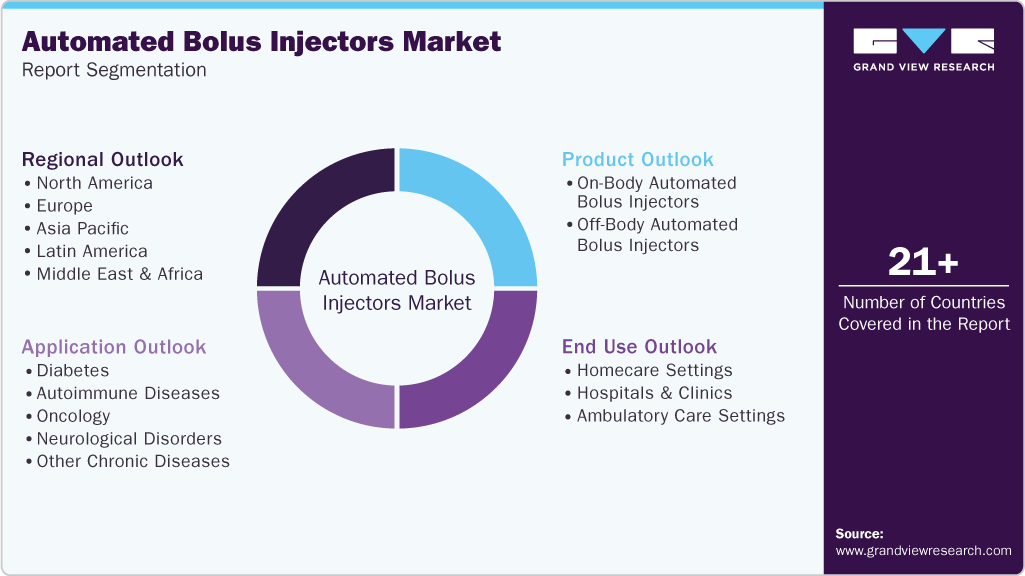
This report forecasts revenue growth at global, regional, and country levels and provides an analysis of the latest industry trends in each of the sub-segments from 2021 to 2033. For this study, Grand View Research has segmented the global automated bolus injectors market report based on product, application, end use, and region:
 To learn more about this report, Download Free Sample Report
 -
Product Outlook (Revenue, USD Million, 2021 - 2033)
-
On-Body Automated Bolus Injectors
-
Off-Body Automated Bolus Injectors
-
-
Application Outlook (Revenue, USD Million, 2021 - 2033)
-
Diabetes
-
Autoimmune Diseases
-
Oncology
-
Neurological Disorders
-
Other Chronic Diseases
-
-
End Use Outlook (Revenue, USD Million, 2021 - 2033)
-
Homecare Settings
-
Hospitals & Clinics
-
Ambulatory Care Settings
-
-
Region Outlook (Revenue, USD Million, 2021 - 2033)
-
North America
-
U.S.
-
Canada
-
Mexico
-
-
Europe
-
UK
-
Germany
-
France
-
Italy
-
Spain
-
Norway
-
Denmark
-
Sweden
-
-
Asia Pacific
-
China
-
Japan
-
South Korea
-
Thailand
-
Australia
-
India
-
-
Latin America
-
Brazil
-
Argentina
-
-
MEA
-
South Africa
-
Saudi Arabia
-
UAE
-
Kuwait
-
-
Research Methodology
The automated bolus injectors market figures in this report are based on a proven research process that combines executive interviews with secondary research from proprietary databases, company filings, and recognized regulatory and institutional sources. Market size is built through value-chain sizing-reconciling supply-side and demand-side estimates-and triangulated with bottom-up and top-down approaches. Every estimate passes multiple levels of expert validation before publication, with each automated bolus injectors segment quantified using the revenue-capture definitions in the table below.
Segment Definition
Product
Revenue capture definition
On-Body Automated Bolus Injectors
Revenue includes sales of wearable, body-worn automated bolus injector devices designed to deliver predetermined volumes of medication subcutaneously over a controlled period. Revenue may include the primary reusable or disposable delivery device and, where commercially bundled, associated disposable components, excluding the value of the drug or biologic administered.
Off-Body Automated Bolus Injectors
Revenue includes sales of automated bolus injector systems operated separately from the patient's body and connected to the injection site through an administration set or delivery interface. Revenue includes the injector device and associated delivery components when sold as part of the system, while excluding the pharmaceutical product or drug formulation.
Application
Revenue capture definition
Diabetes
Revenue includes automated bolus injector systems used for administering medications associated with diabetes management, including insulin and other injectable therapies. Revenue is attributed based on device sales intended for diabetes treatment, irrespective of whether the device is used in homecare, hospital, clinic, or ambulatory settings. Drug or biologic revenue is excluded.
Autoimmune Diseases
Revenue includes automated bolus injector systems intended for administration of injectable therapies used to manage autoimmune diseases, including biologic and other chronic injectable treatments. Revenue is captured from the delivery device or system rather than the administered medication, covering products supplied for homecare, clinical, and ambulatory treatment environments.
Oncology
Revenue includes sales of automated bolus injector systems designed for delivering injectable oncology therapies, including selected biologics and supportive treatments requiring controlled subcutaneous administration. Revenue is attributed to the injector system and applicable delivery components, excluding the value of the pharmaceutical formulation, regardless of whether administration occurs at home or in healthcare facilities.
Neurological Disorders
Revenue includes sales of automated bolus injector devices used to administer injectable therapies for neurological disorders requiring controlled or scheduled drug delivery. Revenue encompasses the injector and relevant delivery components sold with the system, while excluding medication value. Products used across homecare, hospitals, clinics, and ambulatory settings are included.
Other Chronic Diseases
Revenue includes automated bolus injector systems used for chronic conditions outside diabetes, autoimmune diseases, oncology, and neurological disorders. This includes device revenue associated with therapies requiring controlled injectable administration for other long-term diseases. Pharmaceutical or biologic drug revenue is excluded, regardless of the healthcare setting in which the device is utilized.
End Use
Revenue capture definition
Homecare Settings
Revenue includes automated bolus injector systems sold or supplied for medication administration in patients' homes, including devices intended for self-administration or caregiver-assisted administration. Revenue is based on the injector and associated delivery components and excludes the value of the medication. Devices distributed through pharmacies or specialty channels for home use are included.
Hospitals & Clinics
Revenue includes automated bolus injector systems purchased or utilized by hospitals, physician practices, and clinics for patient treatment and medication administration. Revenue covers the delivery device and associated components sold as part of the system, excluding pharmaceutical products. Both inpatient and outpatient use within these healthcare facilities is included.
Ambulatory Care Settings
Revenue includes automated bolus injector systems used in ambulatory healthcare environments, including ambulatory surgery centers, infusion centers, and other outpatient facilities. Revenue encompasses the injector device and applicable delivery components, excluding the medication administered. Systems used for scheduled or controlled injectable therapy outside traditional inpatient hospital settings are included.
Estimation Model
Stage
Key Question
Process Steps
Data Sources
Scope Definition
What products and applications are included in the automated bolus injectors market?
Define the scope of automated bolus injectors, including on-body and off-body systems designed for automated bolus administration.
Identify applicable device configurations, delivery mechanisms, and administration characteristics.
Segment the market by product, application, end use, and region.
Establish geographic and temporal scope
FDA/CLIA databases, FDA glucose monitoring guidance, CDC, CMS, WHO, national diabetes associations
Build the Product Base
How many injectable therapies and delivery opportunities are addressable by automated bolus injectors?
Estimate the number of patients receiving injectable therapies across diabetes, autoimmune diseases, oncology, neurological disorders, and other chronic diseases.
Determine the addressable population requiring recurring or scheduled injectable medication administration.
Estimate the number of injectable treatment administrations potentially addressable by automated bolus delivery.
Incorporate therapy characteristics such as dose volume, frequency, biologic use, and suitability for automated subcutaneous delivery.
Hospital utilization statistics, diabetes prevalence data, national health statistics, hospital surveys
Estimate Penetration
What proportion of addressable injectable therapies is delivered through automated bolus injectors?
Assess adoption of automated bolus injectors across major therapeutic applications and end-use settings.
Estimate the proportion of eligible therapies/patients using automated bolus injector systems rather than conventional delivery methods.
Apply penetration assumptions separately for on-body/off-body products, therapeutic applications, and end-use settings.
Validate penetration assumptions using company product launches, regulatory approvals, clinical adoption, partnerships, and published industry evidence.
FDA/CLIA clearance and waiver databases, hospital surveys, healthcare provider interviews, manufacturer information
Revenue Conversion
How does penetration translate into market revenue?
Collect device ASPs based on injector type, configuration, and disposable/reusable characteristics.
Calculate revenue based on estimated injector volumes × applicable ASPs.
Account for device replacement cycles, disposable components, reusable devices, and recurring administration requirements.
Cross-check the resulting market value against company revenues, product launches, manufacturing capacity, and publicly disclosed commercial information.
Manufacturer price lists and financial filings, distributor pricing, hospital procurement/tender databases
Delivered Customizations
Client Request
Customization Delivered
Value Adds
Segmentation Analysis
Conducted a detailed segmentation analysis of the global automated bolus injectors market based on product type, application, and end use. Product analysis covers on-body and off-body automated bolus injectors. Application analysis covers diabetes, autoimmune diseases, oncology, neurological disorders, and other chronic diseases. End-use analysis includes homecare settings, hospitals & clinics, and ambulatory care settings.
Enables stakeholders to identify high-potential product categories, therapeutic applications, and end-use environments, while supporting assessment of adoption patterns and revenue opportunities across different segments.
Competitive Landscape
Conducted a comprehensive assessment of key automated bolus injector manufacturers, including West Pharmaceutical Services, Enable Injections, Ypsomed, BD, Nemera, Sonceboz, LTS, Stevanato Group, Phillips-Medisize/Molex, and Bespak/Recipharm. The analysis evaluated product portfolios, on-body/off-body platforms, large-volume delivery capabilities, partnerships, manufacturing capabilities, innovation focus, and geographic presence.
Enables stakeholders to understand competitive positioning, technology differentiation, strategic partnerships, product development priorities, and emerging opportunities within automated drug-delivery systems.
PESTEL Analysis
Conducted a comprehensive PESTEL analysis covering political, economic, social, technological, environmental, and legal factors influencing the automated bolus injectors market. Key considerations included regulatory requirements for drug-device combination products, healthcare expenditure, increasing chronic disease burden, shift toward home-based care, biologics adoption, technological advancements, sustainability requirements, and product safety standards.
Enables stakeholders to assess macro-level opportunities and risks affecting market growth, identify external factors influencing adoption, and evaluate regulatory, technological, economic, and healthcare trends shaping the market.
Frequently Asked Questions About This Report
The global automated bolus injectors market size was valued at USD 1.2 billion in 2025 and is estimated at USD 1.3 billion for 2026.
North America automated bolus injectors market held the largest share of 40.7% of the global market in 2025.
The automated bolus injectors market is driven by rising demand for convenient, precise, and simplified insulin delivery, particularly among patients requiring frequent bolus doses. Growing diabetes prevalence, increasing focus on medication adherence, and technological advances in connected and user-friendly insulin delivery devices are further supporting market growth.
The key players in the automated bolus injectors market include West Pharmaceutical Services, Inc., Becton, Dickinson and Company (BD), Ypsomed AG, Nemera, Stevanato Group, Enable Injections, Inc., Sonceboz SA, LTS Lohmann Therapie-Systeme AG, Phillips-Medisize / Molex, Bespak / Recipharm
Asia Pacific is the fastest-growing region over the forecast period.
By application, the diabetes segment held a leading market share of 55.4% in 2025.
The homecare settings segment led with a 54.2% revenue share in 2025.
The global automated bolus injectors market is expected to grow at a CAGR of 9.1% from 2026 to 2033, reaching USD 2.5 billion by 2033.
By product, the on-body automated bolus injectors segment held the highest market share of 66.7% in 2025.
About the Author(s)
Medical Devices Research Team
Healthcare · Medical DevicesThis report was authored by the medical devices research team at Grand View Research - comprising two research analysts, one senior research analyst, and one industry expert - with specialized expertise in the medical devices segment of the healthcare industry. All findings are based on proprietary healthcare databases, executive interviews, and regulatory analysis, subject to internal peer review prior to publication.
Last Updated:
Speak to Analyst

Customize this report to your needs - add regions, segments, or data points, with 20% free customization.
Or view our licence options:


ISO 9001:2015 & 27001:2022 Certified
We are GDPR and CCPA compliant! Your transaction & personal information is safe and secure. For more details, please read our privacy policy.


