
- Home
- »
- Medical Devices
- »
-
Automated Medical Washer Disinfector Market Report, 2033GVR Report cover

Automated Medical Washer Disinfector Market (2025 - 2033) Size, Share & Trends Analysis Report By Product (Floor Standing, Benchtop), By Capacity, By Chamber Type, By Device Classification (Critical, Semi Critical), By End-use (Hospitals, Clinics), By Region, And Segment Forecasts
Automated Medical Washer Disinfector Market Summary
The global automated medical washer disinfector market size was estimated at USD 1.24 billion in 2024 and is projected to reach USD 2.18 billion by 2033, growing at a CAGR of 6.45% from 2025 to 2033. This market growth is attributed to the rising global demand for efficient, standardized, and infection-compliant instrument reprocessing across healthcare settings.
Key Market Trends & Insights
- North America dominated the automated medical washer disinfector market with the largest revenue share of 33.29% in 2024.
- The automated medical washer disinfector market in the U.S. accounted for the largest market revenue share of 84.86% in North America in 2024.
- Based on product, the floor standing segment led the market with the largest revenue share of 72.81% in 2024.
- Based on capacity, the large capacity (>200 L) segment led the market with the largest revenue share of 54.81% in 2024.
- Based on chamber type, the single chamber segment dominated the market in 2024 and is expected to witness the fastest CAGR over the forecast period.
Market Size & Forecast
- 2024 Market Size: USD 1.24 Billion
- 2033 Projected Market Size: USD 2.18 Billion
- CAGR (2025-2033): 6.45%
- North America: Largest market in 2024
- Asia Pacific: Fastest growing market
Three ways to get this report
Buy it, customize it, or ask a question.Ask an Analyst
Analyst response in 1 business day
- AccessReport author, directly
- Reply timeWithin 1 working day
- No sales callDirect answer only
- FormatEmail reply
- CostFree, no cost
Get the Full Report
What the study covers
- FormatsPDF · Excel · Dashboard
- Timeline2025–2033 annual, 2024 base
- Coverage20+ countries, 5 regions
- Companies10+ key players profiled
Customize the Report
20% free customization
- IncludeCountries, segments, points
- TailorTo your product definition
- ExtendDeeper competitor detail
- OrA fully bespoke study
- Turnaround5–10 working days
The market is driven by increased surgical volumes, central sterile services departments (CSSDs) expansion, and growing awareness of healthcare-associated infection (HAI) prevention. Hospitals and outpatient surgical centers are increasingly adopting these systems to improve workflow efficiency, reduce manual errors, and comply with regulatory guidelines from bodies such as the FDA, CDC, WHO, and ISO. Consolidating sterilization functions into centralized sterile processing departments has fueled the need for large-capacity, high-performance washer-disinfectors. These systems improve workflow efficiency, minimize contamination risk, and support infection prevention protocols across complex hospital networks.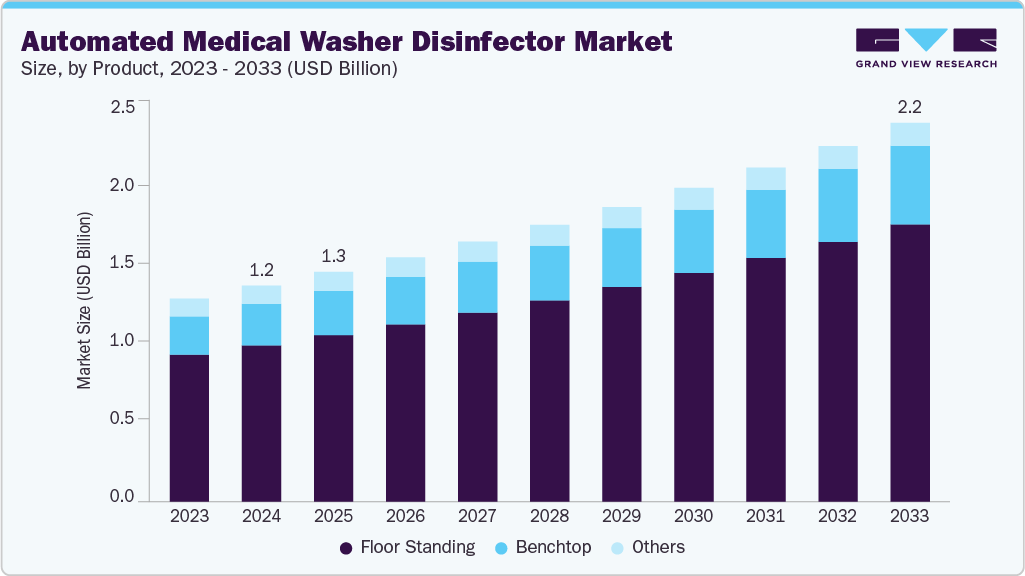 Source: Grand View Research, IR Documents, Primary Interviews, Paid DatabasesTo learn more about this report,
 Download Free Sample Report
 In addition, compliance with international sterilization standards like ISO 15883, FDA guidelines, and European Medical Device Regulation (EU MDR) drives demand for automated washers that offer thermal disinfection validation, cycle documentation, and automated reporting, helping facilities maintain regulatory readiness.
The rising number of surgeries, particularly among the aging population, significantly drives the demand for automated instrument reprocessing systems, as they help reduce manual labor, enhance throughput, and ensure consistent sterilization standards. Procedural volume data underscore this trend. For instance, the American College of Rheumatology reported in February 2024 that approximately 544,000 hip and 790,000 total knee replacements are performed annually in the U.S. alone. Similarly, according to the Canadian Institute for Health Information (CIHI), hospitals in Canada performed 58,635 hip and knee replacement surgeries in 2021-2022, an increase from 55,300 procedures in 2020-2021. These figures highlight the growing burden on central sterile supply departments (CSSDs) and reinforce the need for efficient, high-capacity automated washer disinfectors to support surgical workflows and infection control.
Increasing awareness of hospital-acquired infections (HAIs) and cross-contamination risks has significantly boosted investment in automated reprocessing equipment within healthcare facilities. These systems offer consistent, validated cleaning and disinfection cycles that support infection control protocols. In the U.S., regulatory bodies are actively reinforcing this trend. For instance, the Healthcare-Associated Infections (HAI) Program under the California Department of Public Health’s Center for Health Care Quality is key in preventing, monitoring, reporting, and responding to HAIs and antimicrobial resistance (AR). Such initiatives underscore the critical need for high-performance, automated washer disinfectors that support public health goals and compliance with infection prevention standards.
The growing shift toward central sterile supply departments (CSSDs) is a major driver of the automated medical dishwasher market. As hospitals and surgical centers move toward centralized, standardized, and high-throughput reprocessing of surgical instruments and medical devices, CSSDs consolidate all sterilization and disinfection tasks into a dedicated unit, reducing cross-contamination risk, improving compliance with infection prevention guidelines, and ensuring consistency in cleaning processes.
Introducing new and advanced washer disinfectors plays a critical role in propelling growth in the automated medical washer disinfectors market. Modern product launches often feature technological innovations such as shorter cycle times, lower water and energy consumption, automated cycle tracking, and digital connectivity, enhancements that align with hospital demands for efficiency, sustainability, and compliance with infection control standards. These new systems help healthcare facilities meet the increasing reprocessing load driven by higher surgical volumes and stricter sterilization protocols.
Technological Advancements
Company Name
Product Launch
KOLs
Olympus
In June 2023, Olympus announced the launch of its latest endoscope reprocessing solution, the Olympus ETD, available in two versions: ETD Basic and ETD Premium. This new addition to the company’s Infection Prevention portfolio is designed to enhance the efficiency and sustainability of endoscope reprocessing, while delivering high-performance cleaning and disinfection outcomes. Developed with a focus on operational ease and environmental responsibility, the ETD models aim to support healthcare facilities in achieving improved infection control standards.
"As a leading global medical technology company in endoscopy, patient safety along the entire care pathway is our top priority. Our new Olympus ETD washer disinfector helps healthcare professionals provide the best possible care for their patients by delivering cleaning and disinfection results that exceed standard requirements,” said Oliver Burghardt, Director Olympus EMEA Medical Endoscopy Group."
Getinge
In April 2024, Getinge introduced the GEW 888 neo, a next-generation cGMP washer specifically engineered to enhance cleanroom efficiency within the biopharmaceutical industry. Designed to meet the industry's most stringent regulatory and operational standards, the GEW 888 neo offers advanced performance while optimizing space utilization in cleanroom environments, making it a valuable solution for facilities focused on compliance, productivity, and cleanliness.
“Robert Hohner, Product Line Manager Life Science washers at Getinge, said: “One of the features of the GEW 888 neo is its ability to deliver sustainable performance while ensuring high-quality cleaning results.”
Source: Olympus, Getinge, Grand View Research
Market Concentration & Characteristics
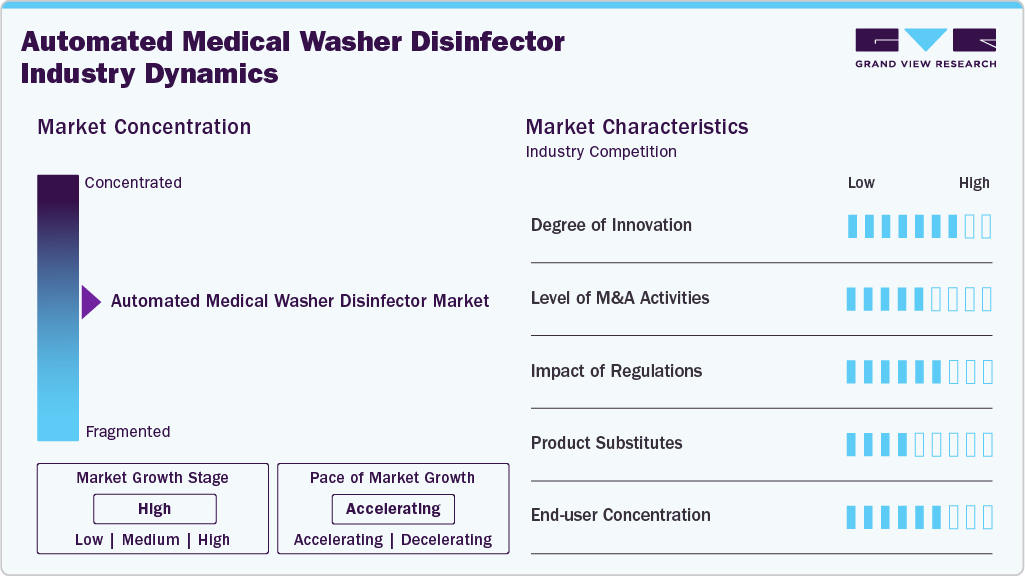
The automated medical washer disinfector industry is experiencing a high degree of innovation, driven by continuous technological advancements to improve efficiency, sustainability, and infection control compliance. Recent innovations include integrating smart cycle tracking, IoT-enabled remote diagnostics, touchscreen interfaces, and automated dosing systems, all enhancing workflow precision and reducing human error. Furthermore, manufacturers focus on eco-friendly features, such as reduced water and detergent usage, heat recovery systems, and compact designs for space-constrained settings like ambulatory surgical centers (ASCs). Developing multi-chamber systems to support high-throughput environments and compatibility with digital hospital infrastructure further reflects the market’s commitment to innovation.
Regulations have a significant effect on the growth and design of the automated medical washer disinfector industry, as these devices are directly linked to infection prevention and patient safety. Regulatory bodies such as the U.S. FDA, European Medicines Agency (EMA), and standards like ISO 15883 mandate strict guidelines for cleaning efficacy, thermal disinfection, chemical compatibility, and device validation. These frameworks ensure that washer-disinfectors consistently deliver high-level disinfection of surgical instruments, endoscopes, and labware. As regulations become more rigorous, especially with the rise in antimicrobial resistance and hospital-acquired infections, manufacturers must innovate around traceability, cycle documentation, and automated compliance reporting. While this adds complexity and cost to product development, it also elevates product quality and fosters trust among healthcare providers.
 To learn more about this report, Download Free Sample Report
 The automated medical washer disinfector industry has seen moderate merger and acquisition activity as leading manufacturers seek to bolster their technological capabilities, expand geographic footprints, and consolidate production capacity. Established players have acquired or merged with specialized sterilization and clean‑processing equipment firms to integrate IoT connectivity, data analytics, and cGMP‑compliant systems into their portfolios. At the same time, regional and niche companies have found attractive exit opportunities by joining larger groups that can provide broader distribution networks and regulatory support. While headline transactions are fewer than in adjacent segments (such as large‑scale sterilization services), strategic deals continue to shape the market, driving economies of scale, accelerating product innovation, and enhancing service offerings for hospital CSSDs and biopharma cleanrooms. For instance, in June 2024, Steelco and Belimed joined forces in the Infection Control and Life Science sectors, creating a landmark joint venture under the new brand SteelcoBelimed. This partnership combines both companies’ expertise and resources to deliver advanced sterilization and decontamination solutions, marking a significant milestone for the industry.
“Our goal is to become the world’s most customer-centric, innovative and reliable provider of cleaning, disinfection and sterilization equipment in our industries”, says Dr Christian Kluge, newly appointed CEO of SteelcoBelimed”.
Automated washer disinfectors are the gold standard for instrument reprocessing in modern healthcare settings. Several alternatives are product substitutes in environments where automation may be impractical or cost-prohibitive. These include manual cleaning and disinfection using brushes, detergent, and high-level chemical disinfectants; ultrasonic cleaners, which leverage cavitation to remove debris from intricate instrument parts; and standalone steam sterilizers (autoclaves) that combine cleaning and sterilization in a single chamber. These manual or semi-automated methods remain prevalent in smaller clinics, ambulatory centers, or resource-limited facilities due to lower upfront costs and simpler infrastructure requirements.
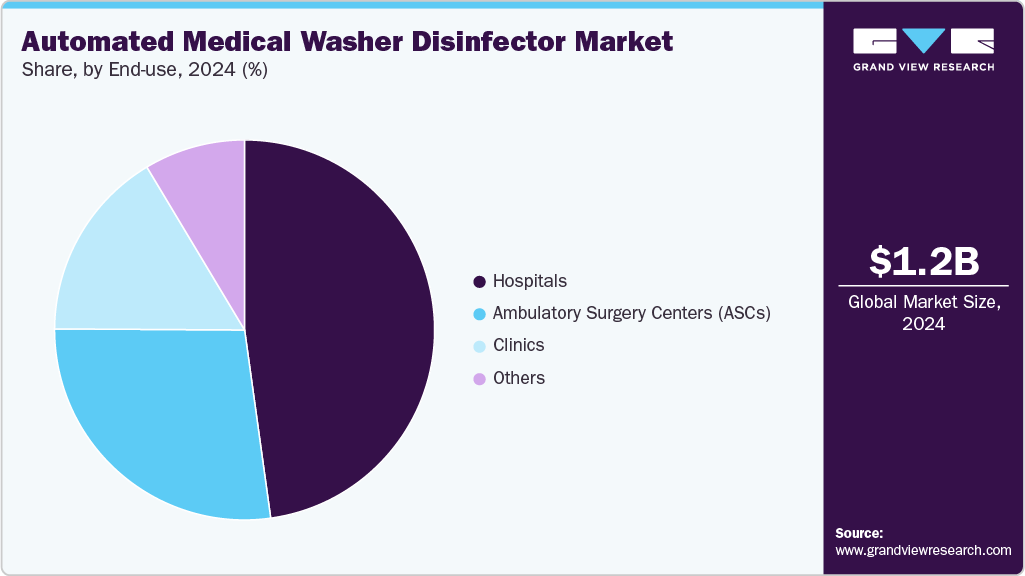
The end-user base for automated medical washer disinfectors is primarily concentrated in large hospitals and centralized sterile processing departments (CSSDs), which dominate system installations due to their high instrument throughput and strict requirements for validated reprocessing protocols. Following closely are ambulatory surgical centers (ASCs), which increasingly invest in compact and efficient washer-disinfectors to support high volumes of same-day procedures with limited space and staff. Meanwhile, specialty clinics, including endoscopy, dental, ophthalmic centers, and biopharmaceutical cleanrooms, represent smaller, steadily expanding segments. These facilities often require models tailored for sensitive instruments and highly regulated environments.
Product Insights
Based on product, the floor standing segment held the largest shareof 72.81% in 2024. This growth can be attributed to its widespread use in large hospitals and central sterile supply departments (CSSDs). These systems are designed to handle high volumes of surgical instruments, trays, and containers, offering superior capacity, advanced cycle customization, and compliance with strict disinfection protocols. Floor-standing units are favored for their robust performance, integration with conveyor and loading systems, and compatibility with a wide range of surgical tools, making them ideal for high-throughput environments. In addition, the growing number of surgical procedures and expansion of hospital sterilization infrastructure have fueled demand for reliable, full-scale washer disinfectors that can support continuous reprocessing workflows, reinforcing the segment’s market leadership.
The benchtop segment is expected to witness significant growth over the forecast period. Owing to the rising demand from small to mid-sized healthcare facilities, including ambulatory surgical centers (ASCs), dental clinics, endoscopy units, and laboratories, these compact systems offer a cost-effective and space-efficient solution for facilities with lower reprocessing volumes but stringent infection control requirements. As more outpatient settings adopt minimally invasive procedures, the need for validated, automated instrument cleaning, without the infrastructure or budget for large-scale floor-standing units, is accelerating.
Capacity Insights
On the basis of capacity, the large capacity (>200 L) segment held the largest shareof 54.81% in 2024. These high-capacity systems are designed to efficiently process bulk volumes of surgical instruments, trays, and containers, making them essential in high-throughput settings where time and consistency are critical. Their ability to handle multiple daily cycles with advanced automation, shorter turnaround times, and validated disinfection protocols makes them ideal for facilities performing a high volume of procedures. In addition, integration with loading trolleys, conveyor belts, and digital monitoring systems further enhances their appeal for hospitals aiming to optimize sterilization workflow, reduce manual labor, and meet stringent regulatory standards.
Medium capacity (100-200 L) is expected to witness the fastest CAGR of 6.98% over the forecast period. This growth can be attributed to the rising demand from mid-sized hospitals, ambulatory surgical centers (ASCs), and specialty clinics that require a balance between processing volume and space efficiency. These washer disinfectors offer a versatile solution, large enough to handle many instruments, yet compact enough to fit into facilities with space or infrastructure constraints. The growing preference for decentralized sterilization units, combined with expanding outpatient surgical volumes, is encouraging healthcare providers to adopt medium-capacity systems that are cost-effective, energy-efficient, and compliant with infection control standards.
Chamber Type Insights
Based on chamber type, the single chamber segment dominated the market in 2024 and is expected to witness the fastest CAGR over the forecast period. Single-chamber washer-disinfectors are valued for their simplicity, reliability, and cost-efficiency, making them the preferred choice for central sterile supply departments (CSSDs), ambulatory surgical centers (ASCs), and clinics handling routine instrument reprocessing. These systems can complete cleaning, disinfection, and drying in a single cycle, ensuring workflow continuity with minimal operator intervention. Their ability to process a broad range of medical instruments within a compact footprint and comply with regulatory standards like ISO 15883 further contributes to their widespread use. As hospitals modernize sterilization infrastructure, the versatility and lower operational cost of single-chamber units solidified their dominance in the market.
Device Classification Insights
On the basis of device classification, the critical segment dominated the market in 2024 and is expected to witness the fastest CAGR over the forecast period. This dominance is attributed to the growing volume of complex surgical procedures and the increased emphasis on infection control and patient safety in operating rooms and specialty departments. Critical instruments require validated, high-level cleaning and thermal disinfection, which automated washer disinfectors are specifically designed to deliver. As global healthcare regulations tighten and awareness of healthcare-associated infections (HAIs) increases, hospitals and surgical centers prioritize investments in advanced washer disinfectors with traceability, compliance documentation, and high-cycle performance.
End-use Insights
On the basis of end use, hospitals dominated the market in 2024. This can be attributed to the high volume of surgical procedures, central sterile supply departments (CSSDs), and strict adherence to infection control protocols. Hospitals require robust, high-capacity washer disinfectors capable of handling diverse instruments across multiple departments, including surgery, endoscopy, and intensive care. With increasing regulatory scrutiny and the growing burden of healthcare-associated infections (HAIs), hospitals have prioritized adopting automated systems that provide standardized cleaning, thermal disinfection, and digital traceability. Furthermore, infrastructure upgrades and infection prevention mandates across public and private hospital networks have fueled substantial investments in modern washer-disinfectant systems.
 To learn more about this report, Download Free Sample Report
 However, the ambulatory surgical centers segment is projected to witness the fastest growth rate over the forecast period. This can be attributed to the rapid expansion of same-day, minimally invasive procedures and the growing shift of surgeries from hospitals to outpatient settings. ASCs increasingly require compact, efficient, and cost-effective washer-disinfectors that meet sterilization standards while operating within smaller spaces and tighter budgets. As regulatory bodies emphasize infection control in all healthcare environments, ASCs invest in automated reprocessing solutions that offer reliable cleaning cycles, faster turnaround, and lower resource consumption. This, combined with the increasing number of ASCs across both developed and emerging regions, is accelerating demand for mid-sized and benchtop washer-disinfectant systems tailored to their operational needs, fueling rapid market expansion in this segment.
Regional Insights
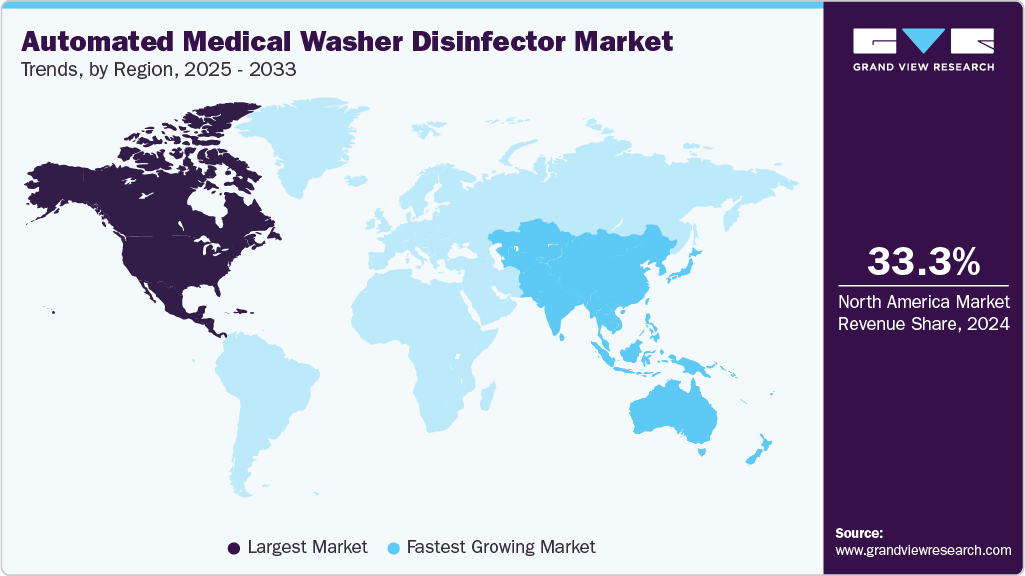
North America dominated the automated medical washer disinfector market with the largest revenue share of 33.29% in 2024. The growth is attributed to its advanced healthcare infrastructure, high surgical volumes, and strict infection control regulations. The presence of numerous large hospitals, ambulatory surgical centers (ASCs), and central sterile supply departments (CSSDs) drives consistent demand for automated and validated reprocessing equipment. Moreover, ongoing investments in hospital modernization, increasing awareness of healthcare-associated infections (HAIs), and the region’s early adoption of smart, eco-efficient technologies have further strengthened North America’s leading position in this market.
 To learn more about this report, Download Free Sample Report
 U.S. Automated Medical Washer Disinfector Market Trends
The automated medical washer disinfector market in the U.S. is experiencing steady growth, driven by increasing surgical volumes, stringent infection control regulations, and a shift toward technologically advanced, eco-efficient reprocessing solutions. With over 1.3 million joint replacement surgeries performed annually in the U.S. (American College of Rheumatology, 2024), the demand for high-throughput and validated instrument cleaning systems continues to rise across hospitals and surgical centers. Regulatory pressure from agencies like the CDC and FDA and initiatives like the California HAI Program push healthcare facilities to adopt washer-disinfectors that meet ISO 15883 standards.
Europe Automated Medical Washer Disinfector Market Trends
The automated medical washer disinfector market in Europe is driven by stringent regulatory mandates, rising surgical volumes, and growing hospital infrastructure modernization investments. Implementing the European Medical Device Regulation (EU MDR 2017/745) and compliance with EN ISO 15883 standards have made automated washer-disinfectors essential for validating cleaning and thermal disinfection processes. Furthermore, increasing awareness of healthcare-associated infections (HAIs) and the need for traceable, standardized reprocessing systems across hospitals and clinics has accelerated adoption. Countries like Germany, France, and the UK are leading the shift, with hospitals prioritizing eco-efficient and digital-ready washer-disinfectors that reduce water and energy usage while supporting sustainability targets.
The UK automated medical washer disinfector market is experiencing stable growth, driven by a strong focus on infection prevention and NHS modernization efforts. The National Health Service (NHS) has been actively investing in upgrading decontamination units and CSSDs (Central Sterile Supply Departments) across major hospitals to align with infection control guidelines. In April 2024, the Department of Health and Social Care reinforced its commitment to hospital infrastructure upgrades through a £3.7 billion funding plan, part of which supports sterile services modernization.
Asia Pacific Automated Medical Washer Disinfector Market Trends
The automated medical washer disinfector market in Asia Pacific is experiencing the fastest CAGR of 7.89% from 2025 to 2033. Fueled by a rapid healthcare infrastructure development, rising surgical volumes, and growing awareness of infection control standards. Countries such as China, India, Japan, and South Korea are significantly expanding their hospital networks and investing in modern sterilization departments, fueled by public and private healthcare initiatives. For instance, China's "Healthy China 2030" plan and India's hospital infrastructure upgrade programs create strong demand for validated, automated cleaning systems. In addition, rising incidence of healthcare-associated infections (HAIs), increasing medical tourism, and adopting international hygiene and disinfection protocols have accelerated the shift toward automated, traceable washer-disinfection systems in urban and semi-urban healthcare settings.
China automated medical washer disinfector market is driven by large-scale hospital expansion, rising surgical volumes, and heightened focus on infection prevention and control (IPC). As part of the government's "Healthy China 2030" initiative, there has been substantial investment in upgrading healthcare infrastructure, including establishing modern CSSDs (Central Sterile Supply Departments) in public and private hospitals. The surge in minimally invasive and robotic surgeries and increasing awareness of hospital-acquired infections (HAIs) has created strong demand for automated, validated reprocessing systems that meet global hygiene standards.
Latin America Automated Medical Washer Disinfector Market Trends
The automated medical washer disinfector market in Latin America is experiencing steady growth, driven by hospital modernization efforts, raising awareness of infection control, and government investments in public healthcare systems. Countries such as Brazil and Argentina are increasingly adopting automated sterilization technologies to comply with international hygiene standards and reduce the incidence of healthcare-associated infections (HAIs). For instance, Brazil’s Ministry of Health has emphasized the importance of infection prevention in surgical environments, leading to greater demand for validated, high-efficiency reprocessing equipment in both public and private hospitals.
Middle East Africa Automated Medical Washer Disinfector Market Trends
The automated medical washer disinfector market in the Middle East & Africa is witnessing moderate growth, fuelled by ongoing healthcare infrastructure development, infection control mandates, and a rising focus on medical tourism in Saudi Arabia, UAE, and South Africa. Government-backed initiatives like Saudi Vision 2030 and the UAE's National Health Strategy drive substantial investments in hospital modernization, including deploying advanced CSSDs (Central Sterile Supply Departments) with automated reprocessing systems.
Key Automated Medical Washer Disinfector Company Insights
The market is extremely fragmented, with major and local competitors. Because the current market players are stepping up their efforts to grab the majority, fierce competition is anticipated, with the degree of competitiveness rising even higher. Many market participants engage in various strategic activities, such as product launches, mergers and acquisitions, and geographic growth, to gain a competitive edge over rivals. Thus, with various strategies adopted by the market players, the market is predicted to impel during the forecast period.
Key Automated Medical Washer Disinfector Companies:
The following are the leading companies in the automated medical washer disinfector market. These companies collectively hold the largest market share and dictate industry trends.
- Steelco S.p.A
- STERIS
- Shinva Medical Instrument Co., Ltd.
- Getinge
- HOYA Corporation
- Olympus
- MELAG Medizintechnik GmbH & Co. KG
- Tuttnauer
- Ecolab Inc.
- Smeg
- Skytron, LLC
- Spire Integrated Solutions.
- SCHLUMBOHM Medizin-Labor-Technologie-Hamburg GmbH
- KEN Hygiene Systems
- MMM Group
Recent Developments
-
In June 2024, Metall Zug and Miele finalized their joint venture, officially uniting Steelco and Belimed in Infection Control and Life Science. This strategic collaboration marks a significant milestone in the industry, leading to the creation of a new brand, SteelcoBelimed, which combines the strengths and expertise of both companies to deliver advanced, integrated solutions for sterile processing and life science applications.
-
In November 2023, HOYA Corporation acquired the remaining 49% stake in WASSENBURG Medical B.V., making it the sole shareholder of the Netherlands-based medical reprocessing company. WASSENBURG Medical is recognized globally for its comprehensive portfolio of systems, consumables, and services supporting every endoscope reprocessing cycle stage. This full acquisition strengthens HOYA’s strategic position in the infection control sector and will enable deeper collaboration between WASSENBURG Medical and PENTAX Medical, HOYA’s flexible endoscopy division. By combining WASSENBURG’s engineering expertise with PENTAX’s clinical innovation, the company aims to advance the development of next-generation endoscope reprocessing solutions.
-
In June 2023, Olympus announced the launch of its latest endoscope reprocessing solution, the Olympus ETD, available in two versions: ETD Basic and ETD Premium. This new addition to the company’s Infection Prevention portfolio is designed to enhance the efficiency and sustainability of endoscope reprocessing, while delivering high-performance cleaning and disinfection outcomes. Developed with a focus on operational ease and environmental responsibility, the ETD models aim to support healthcare facilities in achieving improved infection control standards.
-
In April 2024, Getinge introduced the GEW 888 neo, a next-generation cGMP washer specifically engineered to enhance cleanroom efficiency within the biopharmaceutical industry. Designed to meet the industry's most stringent regulatory and operational standards, the GEW 888 neo offers advanced performance while optimizing space utilization in cleanroom environments, making it a valuable solution for facilities focused on compliance, productivity, and cleanliness.
Automated Medical Washer Disinfector Market Report Scope
Report Attribute
Details
Market size value in 2025
USD 1.32 billion
Revenue forecast in 2033
USD 2.18 billion
Growth rate
CAGR of 6.45% from 2025 to 2033
Base year for estimation
2024
Historical data
2021 - 2023
Forecast period
2025 - 2033
Quantitative units
Revenue in USD million/billion and CAGR from 2025 to 2033
Report coverage
Revenue forecast, company ranking, competitive landscape, growth factors, and trends
Segments covered
Product, capacity, chamber type, device classification, end-use, region
Regional scope
North America; Europe; Asia Pacific; Latin America; Middle East & Africa (MEA)
Country scope
U.S.; Canada; UK; Germany; France; Italy; Spain; Denmark; Sweden; Norway; Japan; China; India; Australia; Thailand; South Korea; Brazil; Mexico; Argentina; South Africa; Saudi Arabia; Kuwait; UAE
Key companies profiled
Steelco S.p.A; STERIS; Shinva Medical Instrument Co., Ltd.; Getinge; HOYA Corporation; Olympus; MELAG Medizintechnik GmbH & Co. KG; Tuttnauer; Ecolab Inc.; Smeg; Skytron, LLC; Spire Integrated Solutions; SCHLUMBOHM Medizin-Labor-Technologie-Hamburg GmbH; KEN Hygiene Systems; MMM Group
Customization scope
Free report customization (equivalent up to 8 analysts working days) with purchase. Addition or alteration to country, regional & segment scope.
Pricing and purchase options
Avail customized purchase options to meet your exact research needs. Explore purchase options
Global Automated Medical Washer Disinfector Market Report Segmentation
This report forecasts revenue growth at the global, regional, and country levels and provides an analysis of the latest industry trends in each of the sub-segments from 2021 to 2033. For this study, Grand View Research has segmented the global automated medical washer disinfector market report based on product, capacity, chamber type, device classification, end-use, and region:
-
Product Outlook (Revenue, USD Million, 2021 - 2033)
-
Floor Standing
-
Benchtop
-
Others
-
-
Capacity Outlook (Revenue, USD Million, 2021 - 2033)
-
Small Capacity (<100 L)
-
Medium Capacity (100-200 L)
-
Large Capacity (>200 L)
-
-
Chamber Type Outlook (Revenue, USD Million, 2021 - 2033)
-
Single Chamber
-
Multi Chamber
-
-
Device Classification Outlook (Revenue, USD Million, 2021 - 2033)
-
Critical
-
Semi Critical
-
-
End-use Outlook (Revenue, USD Million, 2021 - 2033)
-
Hospitals
-
Ambulatory Surgical Centers (ASCs)
-
Clinics
-
Others
-
-
Regional Outlook (Revenue, USD Million, 2021 - 2033)
-
North America
-
U.S.
-
Canada
-
Mexico
-
-
Europe
-
UK
-
Germany
-
France
-
Italy
-
Spain
-
Denmark
-
Sweden
-
Norway
-
-
Asia Pacific
-
Japan
-
China
-
India
-
Australia
-
Thailand
-
South Korea
-
-
Latin America
-
Brazil
-
Argentina
-
-
Middle East & Africa
-
South Africa
-
Saudi Arabia
-
UAE
-
Kuwait
-
-
Frequently Asked Questions About This Report
The global automated medical washer disinfector market size was estimated at USD 1.24 billion in 2024 and is expected to reach USD 1.32 billion in 2025.
The global automated medical washer disinfector market is expected to grow at a compound annual growth rate of 6.45 % from 2025 to 2033 to reach USD 2.18 billion by 2033.
North America dominated the automated medical washer disinfector market with a share of 33.29% in 2024. This is attributable to its advanced healthcare infrastructure, high surgical volumes, and strict infection control regulations. The presence of numerous large hospitals, ambulatory surgical centers (ASCs), and central sterile supply departments (CSSDs) drives consistent demand for automated and validated reprocessing equipment.
Some key players operating in the automated medical washer disinfector market include Steelco S.p.A; STERIS; Shinva Medical Instrument Co., Ltd.; Getinge; HOYA Corporation; Olympus; MELAG Medizintechnik GmbH & Co. KG; Tuttnauer; Ecolab Inc.; Smeg; Skytron, LLC; Spire Integrated Solutions.
Key factors that are driving the market growth include the rising global demand for efficient, standardized, and infection-compliant instrument reprocessing across healthcare settings. The market is being driven by an increase in surgical volumes, the expansion of central sterile services departments (CSSDs), and growing awareness about healthcare-associated infection (HAI) prevention.
About the Author(s)
Medical Devices Research Team
Healthcare · Medical DevicesThis report was authored by the medical devices research team at Grand View Research - comprising two research analysts, one senior research analyst, and one industry expert - with specialized expertise in the medical devices segment of the healthcare industry. All findings are based on proprietary healthcare databases, executive interviews, and regulatory analysis, subject to internal peer review prior to publication.
Last Updated:
Speak to Analyst

Customize this report to your needs - add regions, segments, or data points, with 20% free customization.
Or view our licence options:


ISO 9001:2015 & 27001:2022 Certified
We are GDPR and CCPA compliant! Your transaction & personal information is safe and secure. For more details, please read our privacy policy.


