
- Home
- »
- Next Generation Technologies
- »
-
Data Analytics Market Size And Share Report, 2026-2033GVR Report cover

Data Analytics Market (2026 - 2033)
Size, Share & Trends Analysis Report By Type (Prescriptive Analytics, Predictive Analytics), By Solution (Security Intelligence, Data Management), By Application, By Region, And Segment Forecasts
Market Size, 2025
$85.5BMarket Estimate, 2026
$107.0BMarket Forecast, 2033
$738.6BCAGR, 2026–2033
31.8%Data Analytics Market Summary
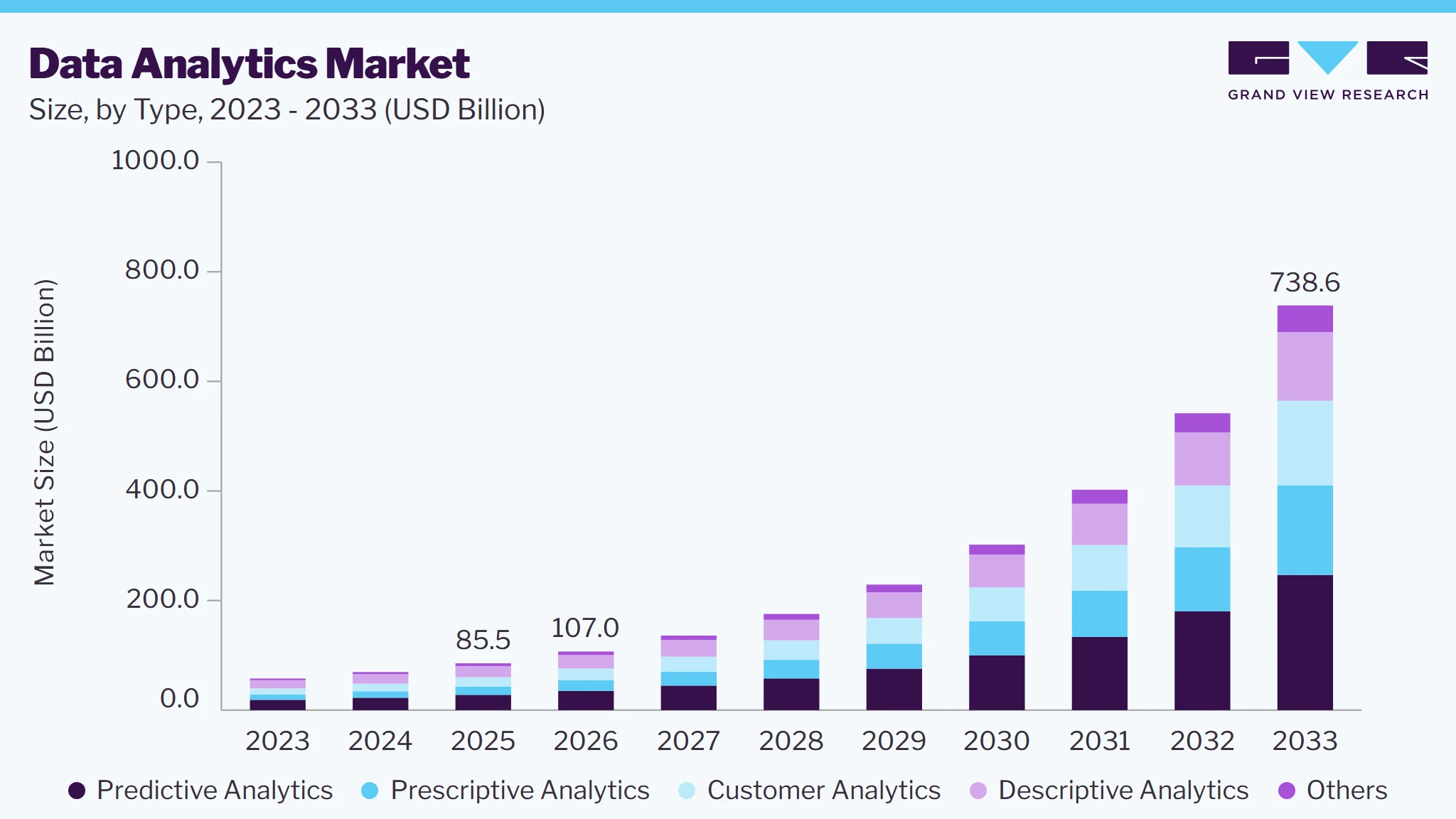
The global data analytics market size was valued at USD 85.5 billion in 2025 and is projected to grow from USD 107.0 billion in 2026 to USD 738.6 billion by 2033, at a CAGR of 31.8% from 2026 to 2033. North America dominated the data analytics market with the largest revenue share of 33.4% in 2025. The market is driven by the accelerating adoption of big data analytics, machine learning, predictive analytics, business intelligence (BI), data visualization, cloud analytics, and real-time data processing solutions, as organizations increasingly leverage data-driven insights to optimize operations, improve customer experiences, and support strategic decision-making across industries.
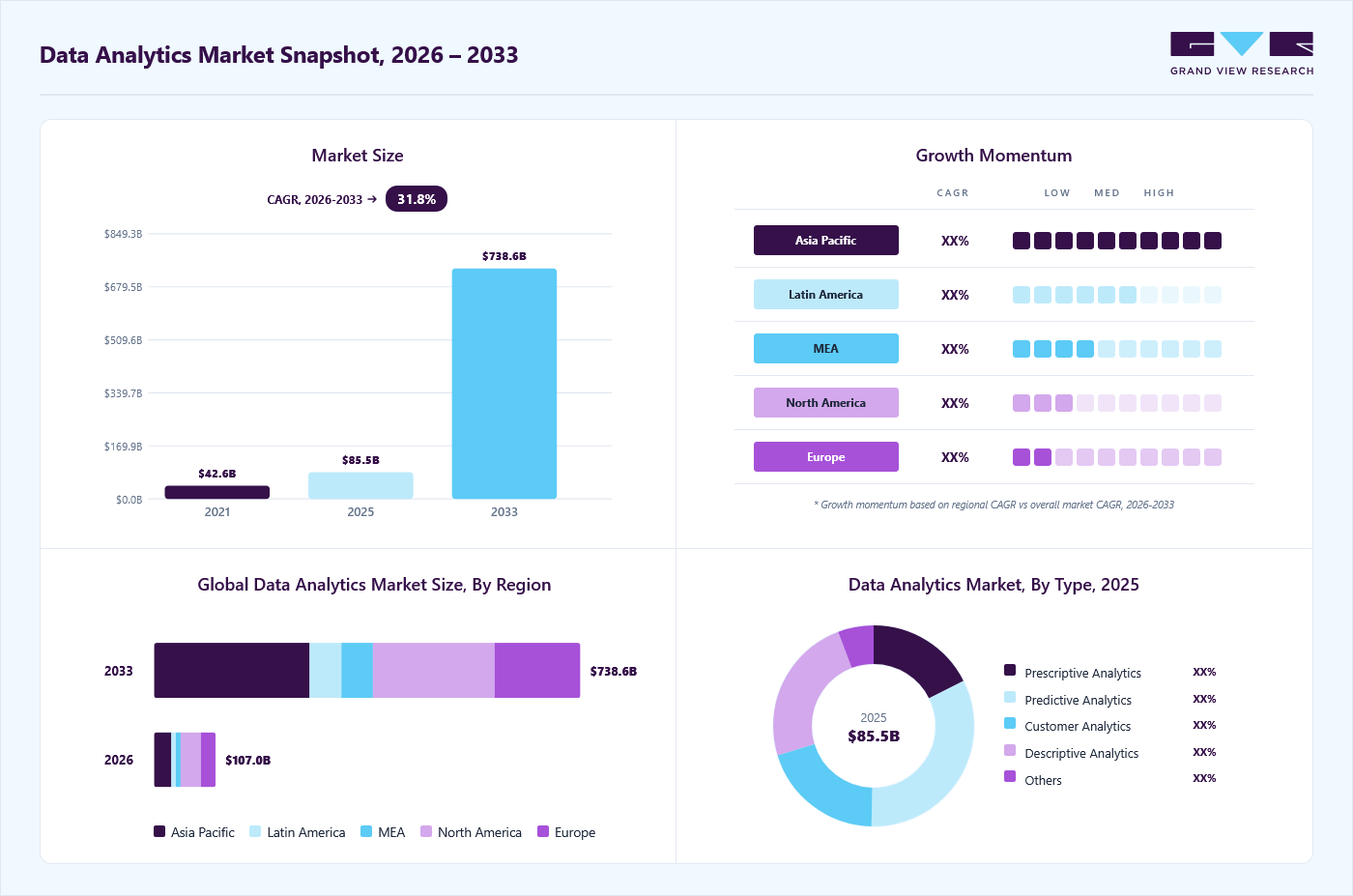 Source: Grand View Research, IR Documents, Primary Interviews, Paid DatabasesTo learn more about this report,
 Download Free Sample Report
 Key Market Trends & Insights
- By type: Predictive analytics segment dominated the market, with a revenue share of 32.7% in 2025.
- By solution: Security intelligence segment held the largest market share of 36.1% in 2025.
- By application: Supply chain management segment has a significant revenue share of 30.8% in 2025.
Regional Highlights
- Largest regional market: North America (33.4% revenue share, 2025)
- By country: The U.S. held the largest market share in 2025.
Market Size & Forecast
- Market size in 2025: USD 85.5 Billion
- Estimated market size in 2026: USD 107.0 Billion
- Projected market size by 2033: USD 738.6 Billion
- CAGR (2026-2033): 31.8%
Three ways to get this report
Buy it, customize it, or ask a question.Ask an Analyst
A direct answer, usually in 1 working day
- AccessReport author, directly
- Reply timeWithin 1 working day
- No sales callDirect answer only
- FormatEmail reply
- CostFree, no cost
Get the Full Report
What the study covers
- FormatsPDF · Excel · Dashboard
- Timeline2026–2033 annual, 2025 base
- Coverage20+ countries, 5 regions
- Companies10+ key players profiled
Customize the Report
20% free customization
- IncludeCountries, segments, points
- TailorTo your product definition
- ExtendDeeper competitor detail
- OrA fully bespoke study
- Turnaround5–10 working days
The increasing adoption of smart applications, emerging social media platforms, and the industrial revolution is expected to produce massive databases. The rise of big data analytics, increasing security Intelligence technology expenditures, and large amounts of data generated by virtual offices are all driving the expansion of the data analytics industry. Enterprises can improve crucial business processes, goals, and activities by utilizing big data analytics. Multiple healthcare providers and organizations come together to use big data for predictive analytics in patient care. For instance, projects such as the predictive model at Mount Sinai Medical Center, a prominent healthcare system in New York City, help hospitals forecast patient admissions by analyzing historical data.The rise in health-conscious eating further fuels this trend, as people become more selective about their food choices, preferring products high in protein and low in sugar or artificial ingredients. Innovations in the protein bar market have also contributed to its growth, with a wide array of flavors, formulations, and dietary options available. This diversity caters to various dietary preferences and health needs, such as plant-based or gluten-free options, expanding the appeal of protein bars to a broader audience. The burgeoning fitness and wellness culture also plays a role, as protein bars are increasingly integrated into fitness routines and wellness practices.
 To learn more about this report, Download Free Sample Report
 Equipment used in agriculture, including smart machines, GPS-equipped tractors, and soil sensors, generate massive data sets. Moreover, data analytics is applied in agriculture to analyze huge data sets, including advanced risk assessment, natural trends, supply tracks, ideal crops, and more, which leads to market growth. Moreover, an enormous volume of data is generated from social media platforms, including Facebook, YouTube videos, Instagram, Snapchat, and others. Thus, rising databases across industries will fuel the data analytics industry growth.
Cloud-based data platforms are increasingly integrating with other tools and services to create seamless workflows. This integration enables more scalable and efficient analytics solutions for businesses. For instance, in December 2024, ClickHouse, Inc., a U.S.-based data analytics company, partnered with AWS for a five-year collaboration to enhance real-time data analytics, integrating ClickHouse Cloud with AWS tools. This collaboration aims to optimize performance, improve query capabilities, and support advanced applications for customers.
The need for connected devices is growing, accelerating the implementation of edge computing. Unlike Security Intelligence, edge computing solutions place processors closer to the data source or destination. Organizations achieve greater responsiveness and efficiency with data analytics operations at the edge. Edge computing is particularly applicable to the IoT due to its ability to process data in real time and with faster response time. For instance, in March 2023, Minima Global Ltd, a Europe-based blockchain platform developer, collaborated with Inferrix Limited, a software company in the UK, by combining Minima's blockchain technology with Inferrix's IoT edge and AI offerings. This partnership aims to develop IoT solutions by ensuring efficient and secure sensor communication.
Market Dynamics
The data analytics market is experiencing accelerated growth driven by the increasing adoption of big data analytics, artificial intelligence (AI), machine learning (ML), cloud analytics, predictive analytics, business intelligence (BI), and real-time data processing solutions across enterprises. Organizations are leveraging advanced analytics platforms to transform large volumes of structured and unstructured data into actionable insights that support strategic decision-making, operational optimization, and customer experience enhancement. The integration of generative AI, augmented analytics, data fabric architectures, and intelligent automation is reshaping enterprise analytics ecosystems and expanding analytics use cases across industries. However, data privacy concerns cybersecurity risks, data governance complexities, and talent shortages continue to challenge widespread adoption. Nevertheless, advancements in AI-powered analytics platforms, cloud-native data management solutions, and self-service analytics tools are creating significant growth opportunities for market participants.
The growing deployment of generative AI, machine learning, predictive analytics, and augmented analytics solutions is emerging as a key driver for the data analytics market. Recent product innovations from leading technology providers have focused on integrating AI copilots, natural language query capabilities, automated insight generation, and intelligent data discovery into analytics workflows, enabling enterprises to extract business value from data more efficiently. Organizations are increasingly investing in cloud analytics platforms, data lakes, data fabric architectures, and real-time analytics solutions to improve forecasting accuracy, automate decision-making processes, and enhance operational agility. The rapid expansion of enterprise AI initiatives is further increasing demand for scalable analytics infrastructure capable of supporting advanced AI and data-intensive workloads. As businesses prioritize data-driven transformation strategies, the adoption of AI-powered analytics solutions continues to accelerate across BFSI, healthcare, retail, manufacturing, and telecommunications sectors.
Recent developments indicate strong momentum toward unified analytics ecosystems that combine data integration, data engineering, business intelligence, and AI capabilities within a single platform. Enterprises are increasingly deploying self-service analytics, conversational analytics, and intelligent dashboard solutions to democratize access to insights across business functions. The growing demand for real-time data processing, customer analytics, and predictive modeling is encouraging vendors to enhance their analytics offerings with generative AI and automation capabilities. Furthermore, increasing investments in enterprise AI infrastructure and cloud-based analytics environments are strengthening the foundation for next-generation analytics adoption. This trend is expected to significantly contribute to market expansion throughout the forecast period.
The increasing volume of sensitive enterprise and consumer data being processed through analytics platforms is creating significant challenges related to data privacy, cybersecurity, and regulatory compliance. Organizations deploying big data analytics, cloud analytics, and AI-driven analytics solutions must comply with evolving data protection regulations while ensuring secure access, storage, and management of critical information assets. The growing frequency of cyberattacks, ransomware incidents, and data breaches is raising concerns regarding the security of analytics environments and enterprise data ecosystems. Additionally, the complexity of managing data across hybrid and multi-cloud infrastructures often results in governance gaps, inconsistent data quality, and limited data visibility. These challenges can increase operational risks and delay analytics implementation initiatives, particularly in highly regulated industries.
As organizations expand the use of generative AI, automated analytics, and machine learning models, concerns regarding data lineage, model transparency, explainability, and responsible AI governance are becoming increasingly prominent. Enterprises frequently encounter difficulties in establishing standardized governance frameworks capable of supporting large-scale analytics deployments across diverse data sources. The lack of skilled professionals with expertise in data governance, cybersecurity, and advanced analytics further compounds implementation challenges. Moreover, rising compliance costs associated with data protection and risk management initiatives can impact return on investment for analytics projects. Consequently, data security and governance concerns remain critical barriers to the full-scale adoption of advanced analytics technologies.
The rapid evolution of generative AI, agentic AI, autonomous analytics, and intelligent data platforms is creating substantial opportunities within the data analytics market. Organizations are increasingly seeking analytics solutions that can automate data preparation, insight generation, forecasting, anomaly detection, and decision support processes with minimal human intervention. The integration of large language models (LLMs), AI copilots, conversational business intelligence, and natural language analytics is enabling broader adoption of analytics tools among non-technical users. This shift is accelerating the democratization of data and expanding the use of analytics across enterprise functions such as marketing, finance, operations, and customer service. As a result, demand for AI-enabled analytics platforms is expected to increase significantly over the coming years.
Recent advancements in intelligent data management, metadata-driven analytics, knowledge graphs, and automated machine learning (AutoML) are further expanding the capabilities of modern analytics ecosystems. Vendors are introducing next-generation data intelligence platforms that combine data integration, governance, observability, and AI-powered analytics into unified environments. The growing focus on data monetization, hyper-personalization, digital transformation, and real-time business intelligence is creating new opportunities for analytics providers to deliver differentiated value propositions. Furthermore, increasing investments in cloud-native analytics infrastructure and enterprise AI initiatives are enabling organizations to scale analytics deployments more effectively. These developments position autonomous analytics and AI-driven data intelligence platforms as one of the most significant growth opportunities for the market during the forecast period.
Market Concentration & Characteristics
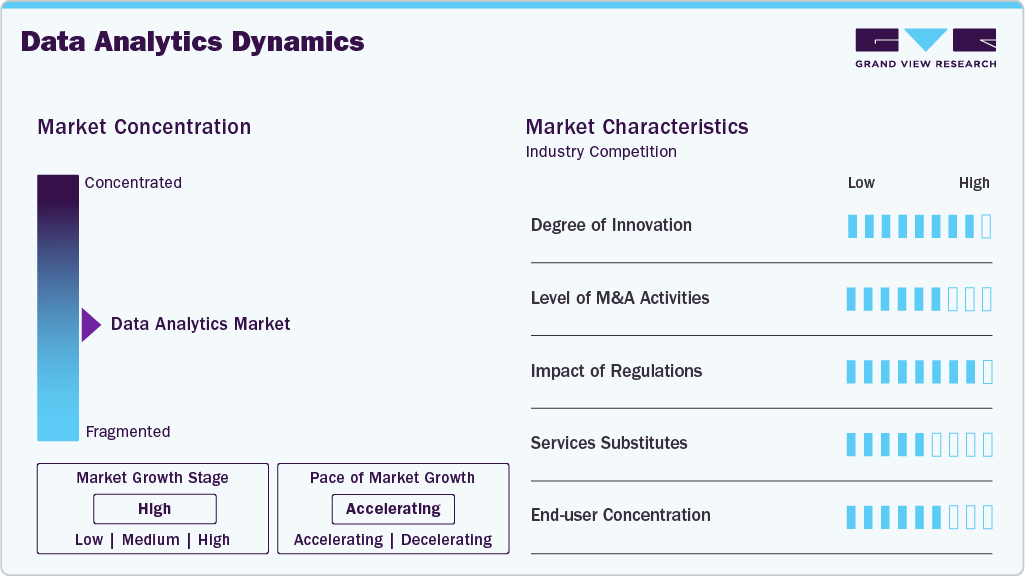
The data analytics market demonstrates a moderately concentrated competitive landscape, characterized by the presence of established analytics platform providers alongside a growing number of specialized vendors offering solutions in big data analytics, predictive analytics, business intelligence (BI), cloud analytics, and AI-powered analytics. The market is currently in a high-growth stage, supported by accelerating enterprise investments in digital transformation, data-driven decision-making, machine learning (ML), and generative AI technologies. A high degree of innovation remains a defining characteristic of the industry, with continuous advancements in augmented analytics, data fabric architectures, real-time analytics, self-service analytics, and intelligent automation reshaping enterprise data strategies. These developments are enabling organizations to extract greater value from structured and unstructured data while improving operational efficiency, customer intelligence, and business agility.
 To learn more about this report, Download Free Sample Report
 Furthermore, the market is witnessing an accelerating pace of growth supported by increasing adoption across BFSI, healthcare, retail, manufacturing, telecommunications, and government sectors. Merger and acquisition activities remain moderate to high as market participants seek to expand AI capabilities, strengthen data management portfolios, and enhance cloud-native analytics offerings. Regulatory requirements related to data privacy, cybersecurity, AI governance, and data sovereignty continue to exert a significant influence on product development, deployment strategies, and data management practices. Additionally, the relatively low availability of direct substitutes and the broad distribution of enterprise users across industries reinforce sustained demand for advanced analytics platforms, data intelligence solutions, and real-time business insights.
Analyst Perspective
The data analytics market is poised for substantial growth, driven by the increasing adoption of business intelligence, predictive analytics, artificial intelligence, machine learning, and cloud-based analytics platforms across enterprises. Organizations are increasingly leveraging advanced analytics solutions to transform growing volumes of structured and unstructured data into actionable insights that support operational efficiency, customer engagement, and strategic decision-making. The integration of generative AI, augmented analytics, real-time data processing, and self-service analytics tools is further accelerating market expansion by improving accessibility and automation of data-driven insights. Additionally, rising investments in digital transformation initiatives, data management platforms, and intelligent automation technologies are creating new opportunities across multiple industry verticals. As enterprises continue to prioritize data-centric business models and competitive differentiation, demand for scalable and AI-enabled analytics solutions is expected to remain strong throughout the forecast period.
Type Insights
Based on Type, the predictive analytics segment led the market with the largest revenue share of 32.7% in 2025. Predictive Analytics provides accurate and reliable insights, helping organizations to solve problems and identify opportunities, including fraud detection, marketing campaign optimization, improvement in decision-making and efficiency in operations. The growth is majorly driven by factors such as increased adoption across various industries, advancements in machine learning, and the exponential growth of big data. The integration of artificial intelligence and IoT technologies is enhancing the capabilities of predictive analytics tools, making them more effective for forecasting trends and behaviors. Moreover, government investments in data initiatives are further fueling this growth, particularly in regions like Asia-Pacific. Companies are integrating predictive models to help health plans and providers anticipate patient needs and deliver proactive care. For instance, in October 2024, Clarify, a U.S.-based healthcare data and analytics company, and Prealize Health partnered to enhance predictive analytics for health plans and providers. This collaboration integrates Prealize's MetisAI with Clarify's Atlas Platform, enhancing predictive analytics and enabling proactive, data-driven decisions.
With the increasing demand for client experience management, customer retention, and better lead management, the customer analytics segment is expected to register prominent CAGR over the forecast period. Customer analytics is used in retail to create personalized communications and marketing campaigns. Customers' increasing demand for an omnichannel experience in the retail industry has fueled the segment's growth. Well-known companies such as Walmart and Amazon have successfully leveraged the benefits of various social media sites such as Facebook. The segment is expected to grow as more retail businesses focus on providing omnichannel Predictive Analytics to their customers.
Solution Insights
Based on solution, the security intelligence segment led the market with the largest revenue share of 36.1% in 2025. The growing adoption of advanced analytics to identify fraudulent activity, optimize processes, and address data risks drives the segment's growth. Increased solution of business intelligence software to provide controlled access to customer databases, transaction security, and improved customer experience is also expected to drive segment growth over the forecast period. Security intelligence is becoming more popular because it employs a risk-reduction strategy that integrates internal and external threat, security, and business intelligence across an organization.
Data mining is used in diverse applications such as marketing, banking, healthcare, telecom industries, and other areas, leading to the segment's growth. Data mining benefits manufacturing and service companies because any significant amount of data is analyzed to help the business make strategic decisions to gain a competitive advantage. Many e-commerce sites use data mining to cross-sell and upsell their products. For instance, Amazon.com Inc. uses text mining to find the product's lowest price. Moreover, Netflix, Inc. uses data mining insights to determine how to make a movie or series popular among customers.Consortiums such as the Knowledge Discovery and Data Mining (KDD) community bring together businesses, universities, and research institutions to share data mining methods, tools, and findings. They promote collaboration in developing new algorithms and applications across fields such as finance, healthcare, and marketing.
Application Insights
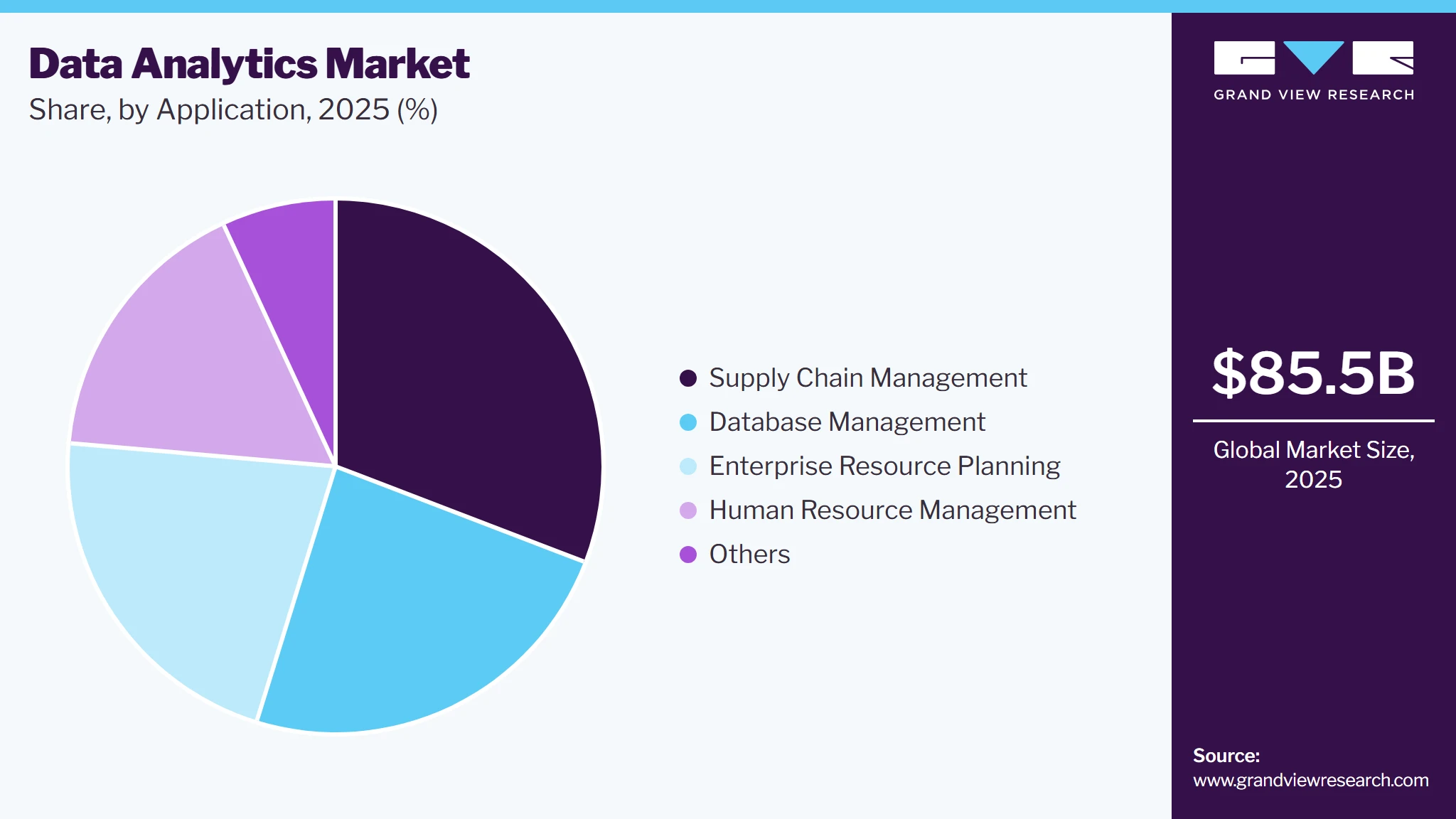
Based on application, the supply chain management segment has a significant revenue share of 30.8% in 2025. Data analytics in supply chain management help organizations increase profits through efficient production planning. The use of data analytics in supply chain management encourages the use of advanced technologies such as artificial intelligence and machine learning to uncover hidden patterns and gain valuable insights from available supply chain data. Manufacturing companies can use data analytics in sales and operations planning, capacity planning, business intelligence, and demand forecasting to optimize their supply chain processes, which propels the segment's growth.
 To learn more about this report, Download Free Sample Report
 The enterprise resource planning segment is expected to grow at the fastest CAGR during the forecast period. Data analytics applications can bridge data warehouses, traditional databases, and data lakes to incorporate Big Data with business application data to improve forecasting, analysis, and planning. Moreover, as organizations increasingly rely on data-driven decision-making, there is a greater need to access and analyze databases. The rapid advancements in hybrid Security Intelligence, artificial intelligence, IoT, and edge computing led to the exponential growth of big data, generating even more complexity for businesses to manage, resulting in the segment's growth.
Regional Insights
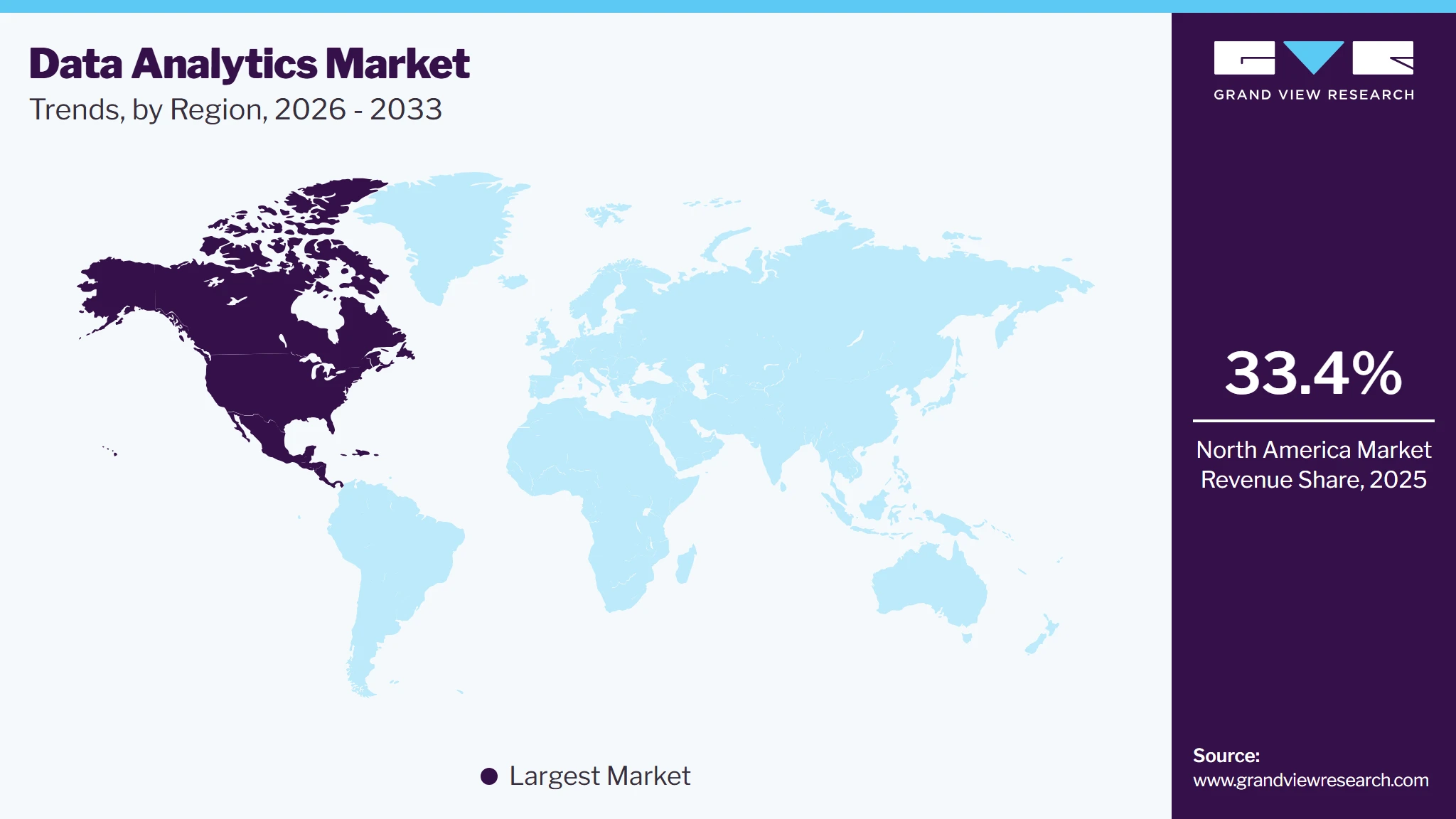
North America dominated the data analytics market with the largest revenue share of 33.4% in 2025. The region is home to prominent businesses from all industries, and the software are being widely implemented. For instance, Facebook, Twitter, and Instagram collect user information using data analytics about their preferences and send targeted advertisements. The availability of infrastructure that supports data analytics and the increased use of advanced technologies such as AI and machine learning are responsible for the market growth in North America.
 To learn more about this report, Download Free Sample Report
 U.S. Data Analytics Market Trends
The Data analytics market in the U.S. held the largest share in the North America region in 2025. The U.S. data analytics market is experiencing significant growth. This growth is driven by the increasing adoption of big data solutions across various sectors, particularly in IT, healthcare, and retail. The rise of technologies like artificial intelligence and machine learning is further enhancing data analytics capabilities, allowing businesses to derive actionable insights more efficiently. In addition, the market for Data-as-a-Service (DaaS) is expected to grow rapidly, indicating a shift towards cloud-based analytics solutions. Overall, the data analytics landscape in the U.S. is evolving rapidly, fueled by technological advancements and a growing demand for data-driven decision-making.
Europe Data Analytics Market Trends
The Europe data analytics market is witnessing steady growth. This growth is primarily driven by the rapid digitalization of processes and a pressing demand for skilled data professionals, particularly in Northwestern European countries like the UK, Germany, and France. Moreover, the integration of artificial intelligence (AI) and machine learning (ML) into analytics is transforming operations, allowing businesses to derive insights more effectively and efficiently. Therefore, the European data analytics landscape is evolving rapidly, fueled by technological advancements and an increasing need for resilience in business operations.
Asia Pacific Data Analytics Market Trends
The Asia Pacific data analytics market is emerging as a major player driven by the rising adoption of social media platforms, the internet, and smartphones; advancements in communication technologies, and digitalization are all expected to increase the market share of data analytics. Many Asian countries, including India, China, and Japan, are using the features of information-intensive AI and ML technologies in various industries, which leads to the growing use of data analytics. The growing adoption of big data analytics tools and solutions is also increasing market growth.
Key Data Analytics Company Insights
The market is characterized by strong competition, with a few major worldwide competitors owning a significant market share. The major focus is developing new products and collaborating among the key players.
-
IBM is a global leader in technology and consulting, providing a wide range of services that empower businesses to solve complex problems. Key offerings include data analytics solutions that leverage advanced technologies such as artificial intelligence and quantum computing. IBM's Watson platform plays a crucial role in transforming data into actionable insights, enhancing decision-making processes across various industries. Additionally, IBM supports workforce development through initiatives like IBM SkillsBuild, which focuses on providing education and career opportunities in technology to underrepresented communities. With a commitment to innovation, IBM integrates infrastructure, software, and consulting services to facilitate the digital transformation of mission-critical operations for its clients.
-
Oracle Corporation is a leading technology company known for its comprehensive suite of data analytics and cloud solutions. The company offers the Oracle Autonomous Database, a revolutionary self-managing database that enhances performance and security through automation, making it a cornerstone of modern data analytics. Oracle's cloud infrastructure supports businesses in leveraging data for insights, enabling them to make informed decisions rapidly. In addition to database management, Oracle provides a wide range of enterprise SaaS applications designed for various industries, facilitating seamless integration and operational efficiency.
Key Data Analytics Companies:
The following key companies have been profiled for this study on the data analytics market.
-
Amazon Web Services Inc.
-
International Business Machines Corporation
-
Looker Data Sciences, Inc.
-
Mu Sigma
-
Oracle Corporation
-
SAP SE
-
Sisense Inc.
-
Tableau Software LLC.
-
ThoughtSpot Inc.
-
Zoho Corporation Pvt. Ltd.
Competitive Benchmarking
Operating Strategies
Competitive Edge
Weaknesses
Mature Players: Amazon Web Services Inc., International Business Machines Corporation, Oracle Corporation, SAP SE, Tableau Software LLC.
- Mature players focus on expanding cloud analytics, AI-powered business intelligence, real-time analytics, and enterprise data management platforms. Their strategies emphasize integrating generative AI capabilities, strengthening data governance, and enhancing enterprise-wide analytics adoption.
- Their competitive advantage stems from strong enterprise customer bases, extensive cloud infrastructure, broad analytics portfolios, and significant investments in AI, machine learning, and data intelligence technologies.
- These companies often face challenges related to legacy system integration, high implementation costs, increasing compliance requirements, and slower responsiveness to niche analytics demands.
Emerging Players: Looker Data Sciences, Inc., Mu Sigma, Sisense Inc., ThoughtSpot Inc., Zoho Corporation Pvt. Ltd.
- Emerging players focus on augmented analytics, embedded analytics, self-service business intelligence, and industry-specific analytics solutions. Their strategies prioritize ease of use, rapid deployment, and enhanced data accessibility for business users.
- Their competitive edge is driven by specialized analytics capabilities, agile innovation, intuitive user experiences, and strong expertise in data visualization and decision intelligence.
- Limited brand recognition, smaller partner ecosystems, and comparatively lower investment capacity can restrict their ability to compete with larger enterprise analytics providers at a global scale.
Recent Developments
-
In March 2024, Zoho Corp. officially launched its first two data centers in Saudi Arabia, located in Riyadh and Jeddah, marking a significant step in enhancing local data storage capabilities. This initiative aligns with the Kingdom's Personal Data Protection Laws and supports Zoho's commitment to data sovereignty. The announcement was made during the LEAP technology conference, where CEO Sridhar Vembu emphasized the company's dedication to serving local businesses through its brands, ManageEngine and Zoho.
-
In March 2023, Computer Age Management Predictive Analytics Ltd (CAMS), an Indian technology-driven financial infrastructure and Predictive Analytics provider, acquired Think Analytics India Private Ltd, a software company. This acquisition is intended to help CAMS fulfill its vision of offering technologically superior products in the rapidly growing capital markets and BFSI sectors.
Data Analytics Market Report Scope
Report Attribute
Details
Market size in 2025
USD 85.5 billion
Estimated market size in 2026
USD 107.0 billion
Projected market size by 2033
USD 738.6 billion
Growth rate
CAGR of 31.8% from 2026 to 2033
Base year for estimation
2025
Historical data
2021 - 2024
Forecast period
2026 - 2033
Quantitative units
Revenue in USD million/billion and CAGR from 2026 to 2033
Report coverage
Revenue forecast, company ranking, competitive landscape, growth factors, and trends
Segments covered
Solution, application, type, region
Regional scope
North America; Europe; Asia Pacific; Latin America; MEA
Country scope
U.S.; Canada; Mexico; Germany; UK; France; China; Japan; India; South Korea; Australia; Brazil; Saudi Arabia; South Africa; UAE
Key companies profiled
Amazon Web Services Inc., International Business Machines Corporation, Looker Data Sciences, Inc., Mu Sigma, Oracle Corporation, SAP SE, Sisense Inc., Tableau Software LLC., Zoho Corporation Pvt. Ltd.
Customization scope
Free report customization (equivalent up to 8 analysts' working days) with purchase. Addition or alteration to country, regional & segment scope.
Pricing and purchase options
Avail customized purchase options to meet your exact research needs. Explore purchase options
Global Data Analytics Market Report Segmentation
This report forecasts revenue growth on global, regional, and country levels and provides an analysis of the industry trends in each of the sub-segments from 2021 to 2033. For this study, Grand View Research has segmented the global data analytics market report based on type, solution, application, and region:
 To learn more about this report, Download Free Sample Report
 -
Type Outlook (Revenue, USD Billion, 2021 - 2033)
-
Prescriptive Analytics
-
Predictive Analytics
-
Customer Analytics
-
Descriptive Analytics
-
Others
-
-
Solution Outlook (Revenue, USD Billion, 2021 - 2033)
-
Security Intelligence
-
Data Management
-
Data Monitoring
-
Data Mining
-
-
Application Outlook (Revenue, USD Billion, 2021 - 2033)
-
Supply Chain Management
-
Enterprise Resource Planning
-
Database Management
-
Human Resource Management
-
Others
-
-
Regional Outlook (Revenue, USD Billion, 2021 - 2033)
-
North America
-
U.S.
-
Canada
-
Mexico
-
-
Europe
-
UK
-
Germany
-
France
-
-
Asia Pacific
-
China
-
Japan
-
India
-
South Korea
-
Australia
-
-
Latin America
-
Brazil
-
-
Middle East and Africa
-
Kingdom of Saudi Arabia (KSA)
-
UAE
-
South Africa
-
-
Research Methodology
The data analytics market figures in this report are based on a proven research process that combines executive interviews with secondary research from proprietary databases, company filings, and recognized regulatory and institutional sources. Market size is built through value-chain sizing - reconciling supply-side and demand-side estimates - and triangulated with bottom-up and top-down approaches. Every estimate passes multiple levels of expert validation before publication, with each data analytics segment quantified using the revenue-capture definitions in the table below.
Segment Definition
Segment - Type
Revenue capture definition
Prescriptive Analytics
The Prescriptive Analytics segment generates revenue from platforms that recommend optimal business actions through scenario modeling, optimization engines, and AI-driven guidance tools. These offerings assist enterprises in improving resource utilization, process effectiveness, and strategic execution across complex operational environments.
Predictive Analytics
This segment captures revenue from solutions that forecast future outcomes using statistical algorithms, machine learning models, and trend forecasting capabilities. Organizations utilize these tools to anticipate demand shifts, assess potential risks, and support proactive business planning.
Customer Analytics
The Customer Analytics segment derives revenue from technologies designed to evaluate consumer interactions, purchasing behaviors, and engagement patterns across multiple touchpoints. These solutions enable targeted marketing, audience segmentation, loyalty enhancement, and personalized customer experiences.
Descriptive Analytics
This segment generates revenue from reporting, visualization, and performance assessment tools that transform historical information into meaningful business insights. Enterprises deploy these solutions to evaluate operational results, monitor performance metrics, and identify emerging patterns.
Others
The Others segment includes revenue from specialized analytical applications such as diagnostic analytics, location intelligence, fraud detection, and social media analysis. These offerings address industry-specific requirements and niche operational challenges across diverse sectors.
Segment - Solution
Revenue capture definition
Security Intelligence
The Security Intelligence segment generates revenue from platforms that identify cyber threats, suspicious activities, and security vulnerabilities through advanced analytical techniques. These solutions strengthen risk mitigation strategies by providing real-time threat visibility and incident response capabilities.
Data Management
This segment captures revenue from technologies focused on organizing, governing, integrating, and maintaining enterprise information assets. These offerings help organizations improve information consistency, accessibility, compliance, and overall data reliability.
Data Monitoring
The Data Monitoring segment derives revenue from systems that continuously track information flows, application performance, and operational health indicators. Businesses implement these solutions to ensure system stability, detect anomalies, and maintain process continuity.
Data Mining
This segment generates revenue from software that uncovers hidden relationships, patterns, and trends within large and complex datasets. Organizations leverage these capabilities to support market evaluation, behavioral analysis, and evidence-based decision-making initiatives.
Segment - Application
Revenue capture definition
Supply Chain Management
The Supply Chain Management segment captures revenue from analytical solutions used to enhance procurement activities, logistics coordination, inventory planning, and supplier performance evaluation. These platforms improve visibility across supply networks and support operational resilience.
Enterprise Resource Planning
This segment generates revenue from analytical tools integrated with enterprise systems to evaluate financial operations, production activities, procurement processes, and organizational performance. These capabilities support informed planning and enterprise-wide resource optimization.
Database Management
The Database Management segment derives revenue from solutions focused on storage optimization, performance assessment, governance oversight, and information lifecycle administration. These technologies enable organizations to maximize the efficiency and value of enterprise repositories.
Human Resource Management
This segment captures revenue from workforce intelligence platforms used for talent acquisition, employee assessment, workforce planning, and organizational development. These solutions assist businesses in improving workforce effectiveness and human capital outcomes.
Others
The Others segment generates revenue from analytical applications supporting functions such as financial analysis, marketing performance evaluation, risk assessment, customer relationship management, and healthcare administration. These solutions provide actionable intelligence tailored to specific operational and strategic objectives.
Estimation Model
Layer Name
Key Questions
Description
Enterprise Data Generation & Digital Transformation Layer
Who generates demand for data analytics solutions?
Identify organizations generating large volumes of structured and unstructured data across BFSI, healthcare, retail & e-commerce, manufacturing, telecommunications, government, media & entertainment, transportation & logistics, and energy sectors. This layer establishes the total addressable demand base for data analytics solutions by assessing digital transformation initiatives, data-driven decision-making requirements, and enterprise data generation trends.
Data Infrastructure & Cloud Analytics Adoption Layer
Who invests in the infrastructure required to support analytics workloads?
Apply adoption rates of cloud computing platforms, data warehouses, data lakes, hybrid cloud environments, edge computing systems, and enterprise data management solutions. This layer estimates the transition from traditional data processing environments to modern analytics ecosystems capable of supporting real-time analytics, big data processing, and AI-enabled data intelligence applications.
Analytics Platform & Business Intelligence Deployment Layer
Who deploys analytics platforms and data intelligence solutions?
Apply penetration rates of business intelligence (BI) platforms, predictive analytics tools, descriptive analytics solutions, prescriptive analytics systems, customer analytics platforms, data visualization software, and self-service analytics applications. This layer captures enterprise adoption of advanced analytics capabilities across operational, strategic, and customer-facing use cases.
Data Analytics Revenue Realization Layer
How much revenue is generated through data analytics adoption?
Estimate market revenue by multiplying active analytics deployments by average spending on analytics software subscriptions, cloud analytics services, data management platforms, consulting services, implementation projects, training programs, maintenance contracts, and support services. This layer captures total market revenue generated through the deployment, operation, optimization, and expansion of data analytics solutions across industries.
Delivered Customizations
This report has been delivered with the following In-depth customizations
Client Request
Customization Delivered
Value Adds
Data Analytics Technology Adoption & Growth Assessment
Performed a comprehensive analysis of Data Analytics market trends, including business intelligence (BI), predictive analytics, prescriptive analytics, customer analytics, data visualization, augmented analytics, self-service analytics, cloud analytics, data fabric architectures, and AI-powered analytics adoption across major industry verticals.
This assessment enables stakeholders to identify high-growth analytics segments, evaluate evolving data-driven decision-making trends, prioritize technology investments, and strengthen competitive positioning within the rapidly expanding Data Analytics market.
Industry-Specific Data Analytics Deployment Analysis
Assessed demand for Data Analytics solutions across healthcare, BFSI, retail & e-commerce, manufacturing, telecommunications, government, transportation & logistics, and media & entertainment sectors, including real-time analytics, customer intelligence, operational analytics, risk analytics, workforce analytics, and supply chain analytics applications.
Provides strategic insights into industry-specific analytics adoption patterns, deployment requirements, digital transformation initiatives, and long-term revenue opportunities, supporting market expansion planning and targeted business growth strategies.
AI-Powered Analytics, Cloud Analytics & Advanced Data Intelligence Opportunity Assessment
Evaluated adoption trends for AI-powered analytics, machine learning-driven insights, cloud-based analytics platforms, data management solutions, real-time data processing, data governance frameworks, intelligent automation, and next-generation business intelligence technologies across global markets.
Supports investment and product development strategies by identifying emerging analytics opportunities, accelerating innovation roadmaps, enabling solution differentiation, and facilitating data-driven decision-making across high-growth segments of the Data Analytics market.
Frequently Asked Questions About This Report
Key factors driving the data analytics market growth include are the growing adoption of machine learning and artificial intelligence to offer the increased acceptance of social networking platforms, individualized consumer experiences, and the rise of online shopping
Predictive analytics segment dominated the market, with a revenue share of 32.7% in 2025, while prescriptive analytics is the fastest-growing segment.
The security intelligence segment led the market with the largest revenue share of 36.1% in 2025.
Supply chain management segment has a significant revenue share of 30.8% in 2025, while enterprise resource planning is the fastest-growing segment.
The global data analytics market size was valued at USD 85.5 billion in 2025 and is expected to reach USD 107.0 billion in 2026.
The global data analytics market is expected to grow at a compound annual growth rate of 31.8% from 2026 to 2033, reaching USD 738.6 billion by 2033.
North America dominated the data analytics market, accounting for 33.4% of the market in 2025.
Some key players operating in the data analytics market include Amazon Web Services Inc., International Business Machines Corporation, Looker Data Sciences, Inc., Mu Sigma, Oracle Corporation, SAP SE, Sisense Inc., Tableau Software LLC., ThoughtSpot Inc., Zoho Corporation Pvt. Ltd.
About the Author(s)
Next Generation Technologies Research Team
Technology · Next Generation TechnologiesThis report was authored by the next generation technologies research team at Grand View Research - comprising two research analysts, one senior research analyst, and one industry expert - with specialized expertise in the next generation technologies segment of the technology industry. All findings are based on proprietary technology databases, executive interviews, and regulatory analysis, subject to internal peer review prior to publication.
Last Updated:
Speak to Analyst

Customize this report to your needs - add regions, segments, or data points, with 20% free customization.
Or view our licence options:


ISO 9001:2015 & 27001:2022 Certified
We are GDPR and CCPA compliant! Your transaction & personal information is safe and secure. For more details, please read our privacy policy.


