
- Home
- »
- Animal Health
- »
-
Ayurveda Veterinary Medicine Market Size Report 2026-2033GVR Report cover

Ayurveda Veterinary Medicine Market (2026 - 2033)
Size, Share & Trends Analysis Report By Product (Pharmaceuticals, Nutritional Supplements), By Animal (Companion Animals, Production Animals), By Route of Administration (Oral, Topical), By Distribution Channel, By Region, And Segment Forecasts
Market Size, 2025
$1.9BMarket Estimate, 2026
$2.1BMarket Forecast, 2033
$5.2BCAGR, 2026–2033
14.2%Ayurveda Veterinary Medicine Market Summary
The global ayurveda veterinary medicine market size was valued at USD 1.9 billion in 2025 and is projected to grow from USD 2.1 billion in 2026 to USD 5.2 billion by 2033, at a CAGR of 14.2% from 2026 to 2033. Asia Pacific dominated the ayurveda veterinary medicine market with the largest revenue share of 42.2% in 2025. The market growth is driven by rising preference for natural and holistic animal care, increasing concerns over antimicrobial resistance (AMR) and supportive regulatory approvals and government initiatives.
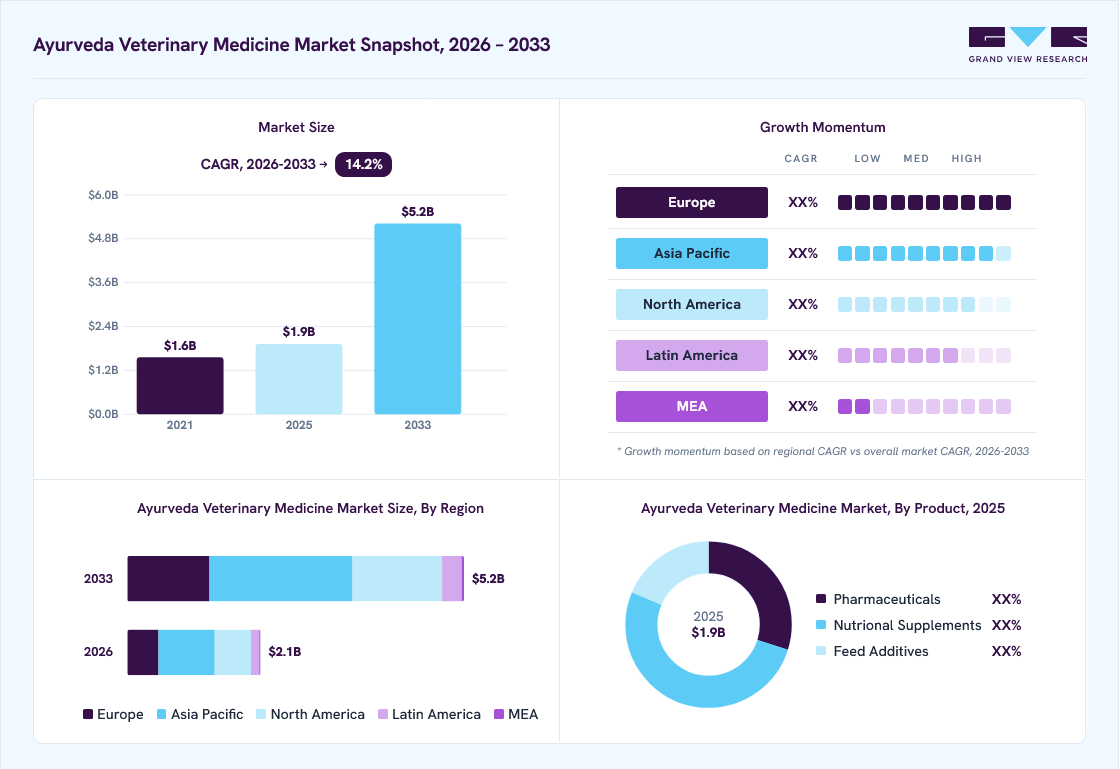 Source: Grand View Research, IR Documents, Primary Interviews, Paid DatabasesTo learn more about this report,
 Download Free Sample Report
Key Market Trends & Insights
- By product: Nutritional supplements segment held the largest market share of 51.4% in 2025.
- By animal: Production animal segment held the largest market share of 59.6% in 2025.
- By route of administration: Oral segment held the largest market share of 51.2% in 2025.
- By distribution channel: Retail/specialty stores segment held the largest market share of 42.5% in 2025.
Regional Highlights
- Largest regional market: Asia Pacific (42.2% revenue share, 2025)
- By country: India held the largest market share in 2025
Market Size & Forecast
- Market size in 2025: USD 1.9 Billion
- Estimated market size in 2026: USD 2.1 Billion
- Projected market size by 2033: USD 5.2 Billion
- CAGR (2026-2033): 14.2%
Prism AI by Grand View Research Free to tryAsk a question about the ayurveda veterinary medicine marketTry asking✓Every figure cited from GVR research Prefer the report? Download free sample →
Growing awareness among pet owners and livestock farmers about the potential side effects of chemical-based veterinary drugs is creating a strong inclination toward natural, safe, and holistic treatments. Global trends in wellness and herbal therapy are influencing animal healthcare purchasing decisions, especially in emerging economies. For instance, in June 2025, experts of Agrovet highlighted Veterinary Ayurveda as a sustainable, observation-based science offering eco-friendly solutions, zoonotic threats, and industrial farming fatigue, advocating its integration in modern animal healthcare. This demonstrated increasing preference for nature-derived, holistic animal wellness solutions over synthetic chemical treatments. This shift encourages higher demand for Ayurveda veterinary medicines that are plant-based, free from antibiotics, and focus on overall animal wellness. It boosts adoption among veterinarians, increases retail shelf presence of herbal veterinary supplements, and drives new product development for immunity boosters, skin care, digestion enhancers, and stress management solutions. To learn more about this report, Download Free Sample Report
In addition, excessive use of antibiotics in livestock and pets has led to a global rise in antimicrobial resistance (AMR), which poses a major threat to both animal and human health. Governments, veterinary associations, and regulatory bodies are promoting reductions in antibiotic usage, especially in preventive care and feed supplements. For instance, in September 2025, Department of Animal Husbandry and Dairying (DAHD) hosted a nationwide virtual awareness program on Ethno Veterinary Medicine (EVM), emphasizing Ayurveda-based livestock care to one lakh farmers. Officials highlighted EVM’s role in treating diseases sustainably and reducing antibiotic dependence. This aligns with growing concerns over AMR, emphasizing the demand for Ayurveda veterinary solutions as safer alternatives to conventional antibiotics. Ayurvedic formulations, which are known for their anti-inflammatory and antimicrobial properties, are increasingly used as natural substitutes, particularly in poultry, dairy, and companion animal care, thus accelerating market penetration and increasing investments in herbal veterinary R&D.
Furthermore, some of the countries are promoting herbal veterinary healthcare through supportive regulatory frameworks, subsidies for herbal product development, and incentives for sustainable livestock management. Traditional medicine authorities, such as India’s AYUSH Ministry, are actively encouraging Ayurvedic integration in veterinary healthcare systems. For instance, in October 2024, Union Ministry of Animal Husbandry released new Standard Veterinary Treatment Guidelines (SVTG) to regulate antibiotic usage and formally integrate Ayurvedic drugs for livestock and poultry treatment, ensuring safer, standardized care. In addition, regulatory validation increases consumer trust, accelerates product registrations, and opens new global export opportunities for Ayurveda veterinary products. This creates a favorable platform for investments, cross-border partnerships, and expansion of herbal animal health brands. Hence, local manufacturers scale operations for global players to enter space, for accelerated commercialization and structured growth.
 To learn more about this report, Download Free Sample Report
Market Dynamics
The market is driven by rising preference for natural and holistic animal healthcare, increasing concerns over antimicrobial resistance (AMR), supportive government initiatives promoting traditional veterinary medicine, and expanding scientific research and commercialization of Ayurvedic veterinary formulations. Growing awareness among pet owners and livestock farmers regarding the adverse effects associated with prolonged use of synthetic veterinary drugs is increasing demand for plant-based therapeutic alternatives for preventive and supportive care. Ayurveda veterinary medicine is gaining wider acceptance across companion animal and livestock healthcare owing to its focus on improving immunity, digestive health, reproductive performance, skin health, and overall animal well-being.
Furthermore, government agencies are encouraging responsible antimicrobial usage through traditional veterinary practices, creating favorable conditions for herbal product adoption. Increasing availability of standardized herbal formulations, feed supplements, and botanical therapeutics through organized distribution channels is further contributing to market expansion. Continuous research validating the efficacy and safety of medicinal plants is expected to support product innovation and wider commercial adoption during the forecast period.
Growing awareness regarding preventive healthcare and long-term animal wellness is increasing demand for Ayurveda veterinary medicines across companion animals and livestock. Pet owners and livestock farmers are increasingly selecting herbal formulations for routine health management, immunity enhancement, digestive health, skin disorders, joint care, and stress management due to their plant-derived composition and lower dependence on synthetic chemicals. The growing acceptance of integrative veterinary medicine is encouraging veterinarians to include complementary herbal therapies alongside conventional treatment protocols for selected clinical conditions.
For instance, in June 2025, experts from Agrovet highlighted Veterinary Ayurveda as a sustainable and observation-based healthcare system capable of addressing zoonotic challenges, production-related stress, and intensive farming practices through natural therapeutic approaches. Furthermore, growing commercial availability of standardized herbal formulations, nutraceuticals, and feed supplements is improving product accessibility across veterinary hospitals, retail channels, and online platforms. Increasing consumer preference for sustainable and residue-free animal healthcare continues to support product innovation and broader market adoption.
The market faces challenges due to limited clinical validation and lack of globally harmonized quality standards for several Ayurveda veterinary formulations. Product efficacy often varies depending on raw material quality, botanical sourcing, extraction techniques, formulation practices, and manufacturing consistency. These variations create challenges for veterinarians seeking standardized therapeutic outcomes across different animal species and disease conditions. Furthermore, regulatory requirements for herbal veterinary medicines differ considerably across countries, creating additional complexities for product registration and international commercialization.
Limited availability of large-scale controlled clinical studies further affects confidence among veterinary practitioners, particularly in developed markets where evidence-based treatment protocols remain the primary standard of care. In addition, differences in pharmacological characterization, dosage standardization, and quality control procedures may slow broader institutional adoption. These factors collectively limit wider integration of Ayurveda veterinary medicines into routine veterinary practice despite increasing interest in natural healthcare alternatives.
Government initiatives promoting traditional veterinary medicine and sustainable livestock management are creating significant opportunities for Ayurveda veterinary medicine manufacturers. National programs encouraging responsible antimicrobial usage and preservation of indigenous veterinary knowledge are increasing awareness regarding herbal therapeutic alternatives. For instance, in September 2025, the Department of Animal Husbandry and Dairying conducted a nationwide virtual awareness program on Ethno Veterinary Medicine, promoting Ayurveda-based livestock healthcare among approximately one lakh farmers while encouraging reduced dependence on antibiotics.
Furthermore, in October 2024, the Union Ministry of Animal Husbandry released the Standard Veterinary Treatment Guidelines, formally incorporating Ayurvedic drugs into livestock and poultry treatment protocols to promote standardized veterinary practices. These initiatives are expected to encourage investments in product development, scientific validation, manufacturing expansion, and commercialization. Increasing collaboration among government institutions, veterinary universities, and herbal medicine manufacturers is anticipated to improve product acceptance and create additional export opportunities over the forecast period.
Market Concentration & Characteristics
The Ayurveda veterinary medicine industry is moderately concentrated, and the pace is accelerating, with a mix of established Ayurvedic healthcare firms and emerging animal health startups. Leading players focus on herbal formulations, R&D, and regional expansion. Strategic collaborations with veterinary clinics and government-backed initiatives enhance market positioning, while niche brands target livestock-specific conditions, gradually intensifying competition within the sector.
The market is witnessing a gradual but steady rise in innovation, driven by the development of polyherbal formulations targeting immunity, digestion, skin repair, and detoxification in livestock. Innovation is also driven by demand for residue-free, safe alternatives to antibiotics, motivating R&D investment in standardized herbal veterinary products. For instance, in September 2025, Ayurvedic medicine manufacturers in India are exploring legal routes to access ‘bhasmam’ (major component of Ayurvedic medicines) derived from incinerated animal horns and tusks.
 To learn more about this report, Download Free Sample Report
Mergers and acquisitions remain limited but are expected to increase as Ayurveda veterinary firms seek scalability and global reach. Larger herbal healthcare companies are witnessing veterinary segments to diversify their portfolios, and international nutraceutical players may collaborate with Indian Ayurveda brands. For instance, in December 2023, Zenex acquired Ayurvet to integrate herbal and Ayurvedic products into its global animal health portfolio, enhancing product diversity, geographic reach, and export growth, particularly in the EU region.
Government regulations promoting antibiotic stewardship and encouraging herbal alternatives are accelerating Ayurveda veterinary adoption. Standard Veterinary Treatment Guidelines (SVTG) in India and residue-free compliance norms globally enhance market access. However, the lack of standardized approval frameworks and inconsistent international licensing regulations poses challenges.Conventional allopathic veterinary drugs, nutraceuticals, probiotics, and homeopathic treatments act as substitutes to Ayurveda veterinary products. Farmers often prefer antibiotics due to faster results, although residues and resistance concerns are shifting demand toward herbal alternatives.
Regional expansion strategies are escalating, with Indian Ayurveda veterinary brands expanding across South Asia, the Middle East, Africa, and Latin America due to rising demand for natural livestock care solutions. Companies are forming export partnerships, tapping into dairy-intensive markets, and aligning formulations with regional livestock diseases.
Analyst Perspective
The Ayurveda veterinary medicine market is evolving from a niche traditional healthcare segment into a more structured part of the global animal health industry, supported by growing emphasis on sustainable livestock production and preventive veterinary care. Demand is expanding for standardized herbal formulations targeting immunity enhancement, mastitis management, gastrointestinal health, reproductive performance, stress reduction, and skin disorders across companion and production animals. Government initiatives promoting Ethno Veterinary Medicine and responsible antimicrobial use are further supporting adoption, particularly in Asia Pacific. Manufacturers investing in scientific validation, standardized manufacturing, and quality assurance are expected to strengthen market acceptance.
Product Insights
On the basis of product, the nutritional supplements segment held the largest revenue share of 51.39% in 2024, owing to rising awareness of livestock and companion animal health through conduction of virtual programs. For instance, in September 2025, DAHD conducted a virtual program promoting Ayurveda-based veterinary practices to over one lakh farmers, supporting sustainable livestock care and reducing antibiotic dependence. Furthermore, nutritional supplements, including herbal immunity boosters, vitamins, minerals, and digestive enhancers, address malnutrition, improve productivity, and support overall wellness. Integration of Ayurvedic formulations with conventional feeding practices, coupled with government support for sustainable livestock management, reinforces the segment’s growth.
The pharmaceuticals segment is projected to be the fastest growing segment over the forecast period, driven by increasing demand for safe, effective, and natural alternatives to conventional drugs. This segment includes herbal formulations, anti-inflammatory agents, antimicrobial treatments, and immunity boosters designed for both livestock and companion animals. Rising awareness of antibiotic resistance, regulatory support for herbal veterinary solutions, and growing adoption of preventive healthcare practices accelerate pharmaceutical uptake. Rising product innovation, clinical validation, and expansion into urban and rural veterinary networks further propel market growth.
Animal Insights
Based on animal, the production animal segment led the market with the largest revenue share of 59.6% in 2025 and other products segment is expected to grow at the fastest CAGR over the forecast period, This segment includes cattle, poultry, swine and other production animals. The growth of this segment is contributing to high demand by farmers for natural solutions to enhance productivity, immunity, and general animal health. Ayurvedic formulations such as herbal feed supplements, immunity boosters, and digestive aids help improve milk yield, egg production, and growth rates while reducing reliance on synthetic drugs. Government initiatives supporting sustainable livestock practices and rising awareness of herbal alternatives further strengthen adoption.
Companion animals, including dogs, cats, horses and others are projected to register the fastest CAGR during the forecast period. Rising pet ownership, urbanization, and the humanization of pets drive demand for safe, natural, and holistic treatments. Growing awareness of preventive healthcare, chronic disease management, and wellness-focused pet care, coupled with e-commerce and veterinary clinic distribution, accelerates market growth.
Route of Administration Insights
Based on route of administration, the oral segment led the market with the largest revenue share of 51.2% in 2025. The oral route is preferred due to ease of administration, cost-effectiveness, and proven efficacy in improving overall health, productivity, and immunity. Growing awareness among farmers and pet owners about natural, residue-free alternatives, coupled with government initiatives promoting sustainable animal care, further fuels adoption. Moreover, most of the of herbal feed supplements, immunity boosters, digestive aids, and vitamin-mineral formulations are consumed orally and are used widely for both livestock and companion animals.
 To learn more about this report, Download Free Sample Report
Topical formulations are projected to be the second-fastest growing segment over the forecast period, driven by their ease of application, quick local action, and rising preference for non-invasive treatments. Pet owners and livestock farmers are increasingly opting for herbal ointments, sprays, and gels to manage skin infections, wounds, inflammations, and parasitic conditions.
Distribution Channel Insights
Based on distribution channel, the retail/specialty stores segment led the market with the largest revenue share of 42.5% in 2025 and e-commerce is expected to grow at the fastest growth rate over the forecast period. The market is expanding due to widespread accessibility and consumer preference for direct, in-person purchases. These outlets provide a diverse range of herbal supplements, feed additives, topical formulations, and preventive care products for livestock and companion animals. The segment benefits from growing awareness of natural, residue-free treatments, personalized customer guidance, and promotional campaigns. Expanding networks of veterinary pharmacies, Ayurvedic wellness centers and rural retail chains further enhance reach, making retail and specialty stores the primary channel generating maximum revenue.
E-commerce represents the fastest growing segment in the market, fueled by increasing digital adoption, convenience, and wider product availability. Online platforms enable farmers and pet owners to access herbal supplements, feed additives, immunity boosters, and topical treatments with doorstep delivery. Personalized recommendations, subscription models, and competitive pricing enhance customer engagement.
Regional Insights
The Ayurveda veterinary medicine industry in North America is anticipated to grow over the forecast period. The market is driven by rising competition as demand surged due to growing preference for natural and holistic animal care. Startups promoting herbal formulations are entering alongside global Ayurvedic brands expanding regionally. Established animal healthcare firms are exploring partnerships and product diversification into herbal therapeutics to meet growing demand, driving innovation and competitive differentiation.
U.S. Ayurveda Veterinary Medicine Market Trends
The ayurveda veterinary medicine industry in the U.S. accounted for the largest market share in the North America market, owing to rising pet humanization, growing demand for natural and plant-based treatments, and increased awareness of holistic pet wellness. Companies expanded portfolios with plant-based nutraceuticals and holistic remedies. For instance, in February 2023, Bioved Pharmaceuticals’ launched its Shwan Ayurved line, featuring clinically validated human-grade products adapted for dogs, intensified market competition.
The Canada ayurveda veterinary medicine industry is expected to grow at a significant CAGR during the forecast periodpropelled by increasing distrust of chemical-based treatments, increasing veterinary openness to integrative medicine and growing influence of immigrant communities’ familiar with Ayurveda. Companies are expanding its distribution through e-commerce and specialty pet health channels.
Europe Ayurveda Veterinary Medicine Market Trends
The Ayurveda veterinary medicine industry in Europe is projected to grow over the forecast period due to expansion of e-commerce platforms and shift toward preventive healthcare. Some of the key players such as Bioved Pharmaceuticals, Ayurvet Ltd., and Himalaya Wellness expanded their presence through partnerships, clinical validation, and distribution collaborations across European countries. In addition, companies focus on R&D, clinical validation, and organic certifications to gain trust, particularly in Germany, France, and UK.
The Ayurveda veterinary medicine industry in the UK is expected to grow significantly over the forecast period. The market is characterized by government push toward ayurveda integration, humanization of pets and growing awareness of side effects of synthetic drugs. Regulatory support strengthened, as witnessed in September 2024 of the UK’s APPG on Indian Traditional Sciences advocated for integrating Ayurvedic principles into mainstream healthcare systems, indirectly increasing acceptance of Ayurveda veterinary applications.
The Germany ayurveda veterinary medicine industry held a significant market share in 2024. The country’s growth is influenced by rising cases of chronic conditions in companion animals and increased availability of online retail platforms offering imported Ayurvedic pet supplements. Companies compete by offering herbal supplements focused on immunity, digestion, and joint care. Partnerships with veterinary clinics and e-commerce expansion enhanced market penetration.
Asia Pacific Ayurveda Veterinary Medicine Market Trends
Asia Pacific dominated the ayurveda veterinary medicine market with the largest revenue share of 42.2% in 2025. The region benefits from a long-standing tradition of herbal medicine, large livestock and companion animal populations, and growing demand for sustainable veterinary healthcare. Increasing awareness regarding antimicrobial resistance has encouraged adoption of plant-based veterinary formulations across livestock production systems. Furthermore, supportive government initiatives promoting traditional medicine, expanding veterinary infrastructure, and increasing commercialization of standardized herbal products continue to strengthen regional market growth.
 To learn more about this report, Download Free Sample Report
The Ayurveda veterinary medicine industry in China is witnessing new growth opportunities due to growing interest in holistic pet and livestock care intersected with the rising influence of Indian herbal brands. Traditional Chinese Medicine (TCM) dominated the market, and major companies expand their presence through partnerships, e-commerce platforms, and cross-border trade. The market demand is driven by urban pet humanization, increasing livestock health awareness, and awareness to alternative therapies complementing existing TCM-based veterinary care.
The ayurveda veterinary medicine market in the India held the largest share in the Asia Pacific region in 2025. The country's leadership is attributed to its well-established Ayurveda ecosystem, abundant availability of medicinal plants, and government support for integrating traditional medicine into veterinary practice. Initiatives such as the Standard Veterinary Treatment Guidelines (SVTG) and nationwide promotion of Ethno Veterinary Medicine have accelerated product adoption across livestock and companion animal healthcare. In addition, the presence of domestic herbal veterinary manufacturers and growing awareness among farmers further support market expansion.
Latin America Ayurveda Veterinary Medicine Market Trends
The ayurveda veterinary medicine industry in Latin America is driven by the expansion of veterinary services. The market is driven by expansion of herbal medicine market and supportive regulatory environment. The region focuses on product innovation, partnerships with veterinary clinics, and distribution expansion to capture growing demand for natural animal care. Companies increasingly utilize digital marketing and e-commerce channels to enhance reach and brand recognition.
Brazil ayurveda veterinary medicine industry is gaining momentum, supported by several key factors, such as e-commerce and online veterinary platforms and rising livestock health awareness. Increasing regulatory support for alternative medicine and cultural acceptance of herbal treatments further intensifies competition among market participants in Brazil.
Middle East & Africa Ayurveda Veterinary Medicine Market Trends
The Ayurveda veterinary medicine industry in MEA is anticipated to grow over the forecast period, attributed to moderate competition among regional distributors and global herbal medicine companies. The region’s growth is also driven by increasing pet ownership, rising awareness of natural treatments, and demand for preventive livestock care. Regulatory support for alternative therapies and expanding veterinary healthcare infrastructure further intensify competition across markets such as UAE, Saudi Arabia, South Africa, and Egypt.
South Africa ayurveda veterinary medicine industry is expanding, fueled with moderate competition among local herbal product manufacturers and a few international players. Key strategies include product innovation, collaborations with veterinary clinics, and expanding distribution channels. Cultural acceptance of herbal remedies and growing regulatory support for alternative veterinary solutions further intensify competition in the market.
UAE Ayurveda veterinary medicine industry is experiencing growth due to growing awareness of animal wellness and government support and regulations. Strong consumer preference for high-quality, natural products, coupled with supportive regulations for alternative veterinary medicines, intensifies market competition in the UAE.
Key Ayurveda Veterinary Medicine Company Insights
The Ayurveda veterinary medicine industry is characterized by a blend of traditional Ayurvedic companies and global animal health firms expanding into herbal segments. These companies focus on product innovation, strategic partnerships, and expanding distribution channels to capture the growing demand for Ayurveda veterinary medicines. For instance, in September 2025, Arya Vaidya Sala (AVS), Kottakkal, one of the known institution in India partnered with the National Dairy Development Board to promote Ayurveda veterinary medicines for livestock health. This collaboration supports wider adoption of natural, residue-free treatments.
Key Ayurveda Veterinary Medicine Companies:
The following key companies have been profiled for this study on the ayurveda veterinary medicine market.
-
Himalaya Wellness Company
-
AYURSUN PHARMA
-
Vetraise Remedies
-
Garuda Trade Kft.
-
Zenex Health Animal Health
-
Bioved
-
Curafyt
-
Euro Herbals
-
SaluVet GmbH
-
Natural Remedies
-
Shelter Pharma
-
Indian Herbs
Competitive Benchmarking
Category
Operating Strategies
Competitive Edge
Weakness
Established Players (Himalaya Wellness Company, Natural Remedies, Indian Herbs, SaluVet GmbH, Shelter Pharma, Zenex Animal Health)
- Established companies focus on expanding their Ayurveda veterinary medicine portfolios through scientific validation of herbal formulations, product innovation, quality standardization, regulatory compliance, and geographic expansion. Their strategies include investment in botanical research, development of standardized phytopharmaceuticals, expansion of companion animal and livestock product lines, collaborations with veterinary institutions, and strengthening domestic and international distribution networks. They also focus on integrating traditional Ayurvedic knowledge with modern manufacturing technologies and quality assurance systems.
- These companies benefit from strong brand recognition, extensive manufacturing infrastructure, established distribution networks, proprietary herbal formulations, experienced R&D teams, and long-standing relationships with veterinarians, livestock producers, and distributors. Their ability to manufacture standardized, clinically supported herbal products enables wider commercial acceptance across domestic and international markets.
- High investment requirements for product standardization, clinical validation, quality assurance, and regulatory compliance increase operational costs. Expansion into highly regulated international markets requires additional scientific evidence and product registration. Dependence on medicinal plant availability, raw material quality, and agricultural supply chains may also affect manufacturing consistency and commercial scalability.
Emerging Players (AYURSUN PHARMA, Vetraise Remedies, Garuda Trade Kft., Animal Health Bioved, Curafyt, Euro Herbals)
- Emerging companies compete by expanding regional product portfolios, introducing cost-effective herbal veterinary medicines, strengthening distributor partnerships, targeting underserved livestock markets, and developing species-specific formulations for cattle, poultry, companion animals, and small ruminants. Their strategies include increasing manufacturing capacity, expanding online and retail distribution, obtaining regulatory registrations in new markets, and introducing innovative herbal feed supplements and nutraceuticals.
- These companies offer competitive pricing, greater operational flexibility, faster product launches, and stronger regional market knowledge. Their focused portfolios allow quicker response to local veterinary requirements and increasing demand for herbal veterinary medicines in developing markets.
- Limited international commercial presence, comparatively smaller research budgets, narrower product portfolios, and lower brand recognition may restrict expansion into highly regulated markets. Limited distribution reach and lower investment capacity for large-scale clinical validation may affect competitiveness against established herbal animal healthcare companies.
Recent Developments
-
In October 2025, CKK Eduveda and Fur Ball Story introduced the world’s first Ayurveda veterinary course series, aimed at educating veterinarians and pet owners worldwide. The initiative promotes holistic animal care and global Ayurveda adoption.
-
In October 2025, Uniray Lifesciences highlighted strong growth of Ayurvedic Propaganda Cum Distribution (PCD) and third-party manufacturing models due to low investment, rising herbal demand, and healthcare expansion. This model supports rapid Ayurveda veterinary market entry.
-
In September 2025, CCRAS and Telangana Veterinary University signed a MoU to merge Ayurveda with veterinary science through collaborative research in livestock health, nutrition, and diagnostics. The alliance boosts evidence-based Ayurveda veterinary solutions.
Ayurveda Veterinary Medicine Market Report Scope
Report Attribute
Details
Market size in 2025
USD 1.9 billion
Estimated market size in 2026
USD 2.1 billion
Projected market size by 2033
USD 5.2 billion
Growth rate
CAGR of 14.2% from 2026 to 2033
Historical data
2021 - 2024
Forecast period
2026 - 2033
Quantitative units
Revenue in USD million/billion and CAGR from 2026 to 2033
Report coverage
Revenue forecast, company ranking, competitive landscape, growth factors, and trends
Segments covered
Product, animal, route of administration, and distribution channel
Regional scope
North America; Europe; Asia Pacific; Latin America; MEA
Country scope
U.S.; Canada; Mexico; Germany; UK; France; Italy; Spain; Norway; Denmark; Sweden; China; Japan; India; South Korea; Australia; Thailand; Brazil; Argentina; Saudi Arabia; South Africa; UAE; Kuwait; Oman; Qatar.
Key companies profiled
Himalaya Wellness Company; AYURSUN PHARMA; Vetraise Remedies; Garuda Trade Kft.; Zenex Health; Animal Health Bioved; Curafyt; Euro Herbals; SaluVet GmbH; Natural Remedies; Shelter Pharma; Indian Herbs
Customization scope
Free report customization (equivalent up to 8 analysts' working days) with purchase. Addition or alteration to country, regional & segment scope.
Pricing and purchase options
Avail customized purchase options to meet your exact research needs. Explore purchase options
Global Ayurveda Veterinary Medicine Market Report Segmentation
This report forecasts revenue growth at global, regional, and country levels and provides an analysis of the latest industry trends in each of the sub-segments from 2021 to 2033. For this study, Grand View Research has segmented the Ayurveda veterinary medicine market report based on product, animal, route of administration, distribution channel, and region.
-
Product Outlook (Revenue, USD Million, 2021 - 2033)
-
Pharmaceuticals
-
Antimicrobial
-
Anti-inflammatory
-
Analgesics
-
Others
-
-
Nutritional Supplements
-
Feed Additives
-
-
Animal Outlook (Revenue, USD Million, 2021 - 2033)
-
Companion Animals
-
Dogs
-
Cats
-
Horses
-
Other Companion Animals
-
-
Production Animals
-
Cattle
-
Poultry
-
Swine
-
Other Production Animals
-
-
-
Route of Administration Outlook (Revenue, USD Million, 2021 - 2033)
-
Oral
-
Topical
-
Others
-
-
Distribution Channel Outlook (Revenue, USD Million, 2021 - 2033)
-
Veterinary Hospitals/Clinic Pharmacies
-
Retail/Specialty Stores
-
E-Commerce
-
Others
-
-
Regional Outlook (Revenue, USD Million, 2021 - 2033)
-
North America
-
U.S.
-
Canada
-
Mexico
-
-
Europe
-
UK
-
Germany
-
France
-
Italy
-
Spain
-
Denmark
-
Sweden
-
Norway
-
-
Asia Pacific
-
Japan
-
China
-
India
-
Australia
-
Thailand
-
South Korea
-
-
Latin America
-
Brazil
-
Argentina
-
-
Middle East & Africa
-
South Africa
-
UAE
-
Saudi Arabia
-
Kuwait
-
Qatar
-
Oman
-
-
Research Methodology
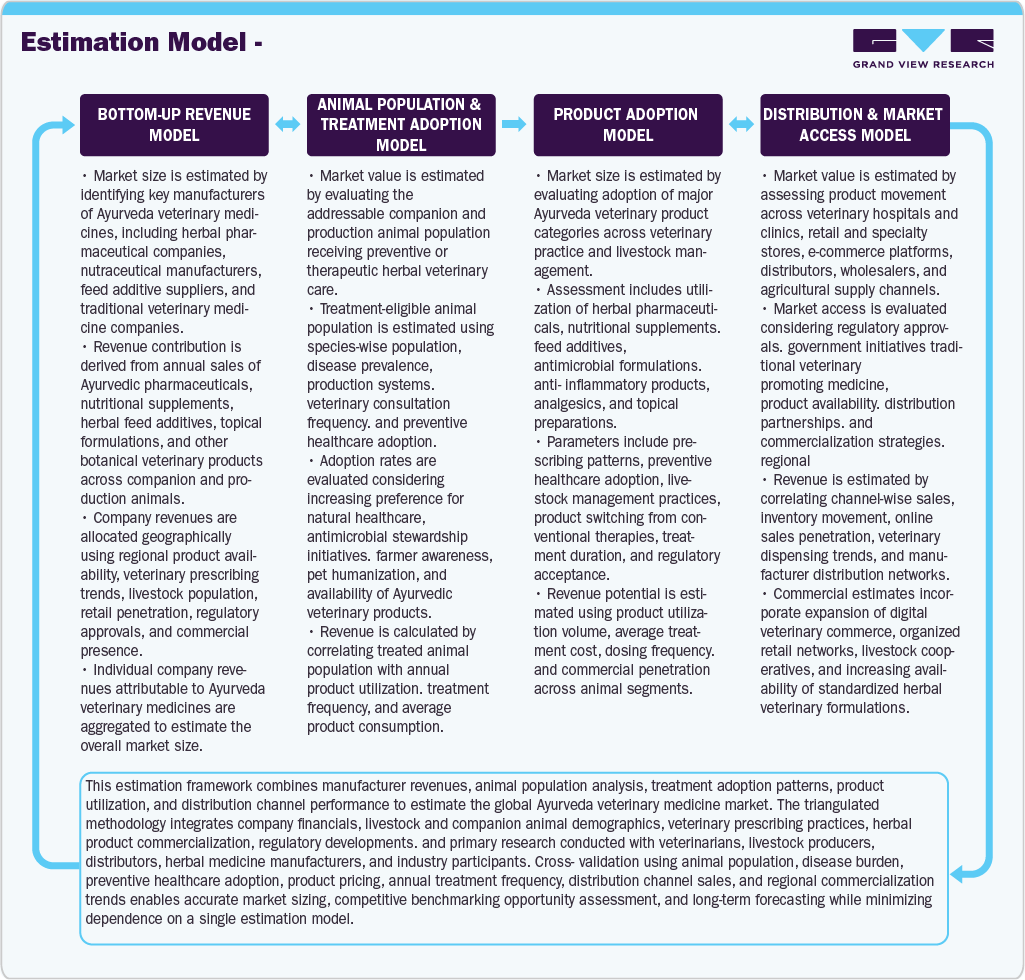
The ayurveda veterinary medicine market figures in this report are based on a proven research process that combines executive interviews with secondary research from proprietary databases, company filings, and recognized regulatory and institutional sources. Market size is built through value-chain sizing - reconciling supply-side and demand-side estimates - and triangulated with bottom-up and top-down approaches. Every estimate passes multiple levels of expert validation before publication, with each ayurveda veterinary medicine segment quantified using the revenue-capture definitions in the table below.
Segment Definition
Segment - Product
Revenue Capture Definition
Pharmaceuticals
Revenue generated from Ayurveda veterinary pharmaceutical formulations used for the prevention, management, and treatment of animal diseases and health conditions across companion and production animals.
Antimicrobial
Revenue generated from Ayurveda veterinary antimicrobial formulations utilized to manage bacterial, fungal, parasitic, and microbial infections using plant-derived active ingredients.
Anti-inflammatory
Revenue generated from Ayurveda veterinary anti-inflammatory formulations administered to reduce inflammation associated with musculoskeletal disorders, infections, injuries, and chronic inflammatory conditions.
Analgesics
Revenue generated from Ayurveda veterinary analgesic formulations used for pain management in animals suffering from injuries, post-operative conditions, arthritis, and other painful disorders.
Others
Revenue generated from other Ayurveda veterinary pharmaceutical products, including formulations for respiratory health, liver support, reproductive health, metabolic disorders, dermatological conditions, and immune modulation.
Nutritional Supplements
Revenue generated from Ayurveda-based nutritional supplements formulated to improve immunity, digestive health, growth, productivity, reproductive performance, and overall animal wellness.
Feed Additives
Revenue generated from herbal feed additives incorporated into animal feed to improve nutrient utilization, gut health, feed efficiency, productivity, and disease resistance.
Segment - Animal
Revenue Capture Definition
Companion Animals
Revenue generated from Ayurveda veterinary medicines administered to companion animals for preventive healthcare, disease management, nutritional support, and overall wellness.
Dogs
Revenue generated from Ayurveda veterinary products administered to dogs for management of skin disorders, digestive conditions, joint health, stress, immunity, wound healing, and other health conditions.
Cats
Revenue generated from Ayurveda veterinary products prescribed for cats to support digestive health, dermatological conditions, urinary health, immunity, stress management, and general wellness.
Horses
Revenue generated from Ayurveda veterinary products utilized in horses for musculoskeletal health, digestive disorders, respiratory support, wound management, performance recovery, and overall health maintenance.
Other Companion Animals
Revenue generated from Ayurveda veterinary medicines administered to companion animals including rabbits, birds, small mammals, and exotic pets for preventive and therapeutic healthcare.
Production Animals
Revenue generated from Ayurveda veterinary medicines utilized in livestock for disease prevention, productivity enhancement, reproductive health, nutritional support, and sustainable animal production.
Cattle
Revenue generated from Ayurveda veterinary products administered to cattle for mastitis management, reproductive health, digestive disorders, immunity enhancement, metabolic disorders, and productivity improvement.
Poultry
Revenue generated from Ayurveda veterinary products utilized in poultry for gut health, immunity enhancement, respiratory health, stress reduction, disease prevention, and feed efficiency improvement.
Swine
Revenue generated from Ayurveda veterinary formulations administered to swine for digestive health, immune support, reproductive performance, disease management, and growth optimization.
Other Production Animals
Revenue generated from Ayurveda veterinary medicines administered to sheep, goats, buffaloes, aquaculture species, and other production animals for preventive and therapeutic healthcare.
Segment - Route of Administration
Revenue Capture Definition
Oral
Revenue generated from Ayurveda veterinary medicines administered orally in the form of tablets, powders, boluses, syrups, liquids, granules, feed supplements, or medicated feed.
Topical
Revenue generated from Ayurveda veterinary formulations applied externally as ointments, creams, oils, gels, sprays, lotions, and wound-care preparations for localized treatment.
Others
Revenue generated from Ayurveda veterinary products administered through other routes, including intranasal, ophthalmic, intrauterine, and other specialized veterinary applications.
Segment - Distribution Channel
Revenue Capture Definition
Veterinary Hospitals/Clinic Pharmacies
Revenue generated from sales of Ayurveda veterinary medicines through veterinary hospitals, clinics, institutional pharmacies, and licensed veterinary healthcare facilities.
Retail/Specialty Stores
Revenue generated from Ayurveda veterinary products sold through retail pharmacies, pet specialty stores, agricultural input retailers, livestock supply outlets, and herbal product stores.
E-Commerce
Revenue generated from Ayurveda veterinary medicines and supplements distributed through online pharmacies, company websites, digital marketplaces, and e-commerce platforms.
Others
Revenue generated from Ayurveda veterinary product sales through distributors, wholesalers, cooperatives, government procurement programs, veterinary camps, and other distribution channels.
Estimation Model
 To learn more about this report, Download Free Sample Report
Delivered Customizations
This report has been delivered with the following In-depth customizations
CLIENT REQUEST
CUSTOMIZATION DELIVERED
VALUE ADDS
Animal Health Burden & Ayurveda Treatment Landscape Assessment
Evaluated the prevalence of major health conditions across companion and production animals, including mastitis, gastrointestinal disorders, parasitic infections, respiratory diseases, reproductive disorders, skin conditions, and metabolic disorders. Assessed treatment eligibility, preventive healthcare adoption, Ethno Veterinary Medicine utilization, species-wise disease burden, and application of Ayurveda formulations across key regional markets.
Enables stakeholders to identify high-demand therapeutic applications, quantify the addressable treatment population, prioritize disease segments with greater commercialization potential, and align product development with preventive and sustainable animal healthcare trends.
Competitive Portfolio & Regulatory Benchmarking
Assessed Ayurveda veterinary product portfolios across pharmaceuticals, nutritional supplements, herbal feed additives, and topical formulations. Evaluated regulatory frameworks, government initiatives supporting traditional veterinary medicine, product standardization efforts, manufacturing capabilities, commercialization strategies, distribution partnerships, and competitive positioning of leading herbal veterinary medicine manufacturers across regional markets.
Supports identification of portfolio expansion opportunities, partnership prospects, product differentiation strategies, regulatory readiness, and market gaps while facilitating expansion into domestic and international herbal veterinary medicine markets.
Veterinary Adoption, Distribution Channel & Commercial Opportunity Assessment
Evaluated prescribing and utilization trends across veterinary hospitals, livestock farms, veterinary pharmacies, retail outlets, and e-commerce platforms. Assessed product adoption by animal type, route of administration, preventive healthcare practices, farmer awareness, veterinary recommendations, distribution channel performance, and regional purchasing patterns.
Enables companies to optimize commercialization strategies, strengthen distribution networks, identify high-growth customer segments, improve market penetration, prioritize investment opportunities, and expand the availability of Ayurveda veterinary medicines across companion animal and livestock healthcare sectors.
Frequently Asked Questions About This Report
The global ayurveda veterinary medicine market size was valued at USD 1.9 billion in 2025 and is estimated at USD 2.1 billion for 2026.
The global ayurveda veterinary medicine market is expected to grow at a CAGR of 14.2% from 2026 to 2033, reaching USD 5.2 billion by 2033.
Some key players operating in the ayurveda veterinary medicine market include Himalaya Wellness Company, AYURSUN PHARMA, Vetraise Remedies, Garuda Trade Kft., Zenex Health, Animal Health Bioved, Curafyt, Euro Herbals, SaluVet GmbH, Natural Remedies, Shelter Pharma, Indian Herbs.
Key factors that are driving the market growth include rising preference for natural and holistic animal care, increasing concerns over antimicrobial resistance (AMR) and supportive regulatory approvals and government initiatives.
Based on product, the nutritional supplements segment led the market with the largest revenue share of 51.4% in 2025 and other products segment is expected to grow at the fastest CAGR over the forecast period.
Based on animal, the production animal segment led the market with the largest revenue share of 59.6% in 2025.
Based on route of administration, the oral segment led the market with the largest revenue share of 51.2% in 2025.
Based on distribution channel, the retail/specialty stores segment led the market with the largest revenue share of 42.5% in 2025 and e-commerce is expected to grow at the fastest growth rate over the forecast period.
Asia Pacific dominated the ayurveda veterinary medicine market with the largest revenue share of 42.2% in 2025. The region benefits from a long-standing tradition of herbal medicine, large livestock and companion animal populations, and growing demand for sustainable veterinary healthcare.
About the Author(s)
Animal Health Research Team
Healthcare · Animal HealthThis report was authored by the animal health research team at Grand View Research - comprising two research analysts, one senior research analyst, and one industry expert - with specialized expertise in the animal health segment of the healthcare industry. All findings are based on proprietary healthcare databases, executive interviews, and regulatory analysis, subject to internal peer review prior to publication.
Last Updated:
Speak to Analyst

Customize this report to your needs - add regions, segments, or data points, with 20% free customization.
Or view our licence options:


ISO 9001:2015 & 27001:2022 Certified
We are GDPR and CCPA compliant! Your transaction & personal information is safe and secure. For more details, please read our privacy policy.


